Imagine we're sitting and having a beer together and I'm chatting to you about my amazing eCommerce business. You're naturally curious, of course, and ask about how many visitors I have, how often they come, and what the conversion rate is—all logical questions given the topic we're discussing. To which, however, I look blankly back at you and say, “I don't know”!
You'd either think I'd gone crazy or was a completely incompetent businessperson. The thought of not having analytics running on a digital property is somewhat ludicrous and would be almost unheard of. This is, however, the reality of most physical spaces in the world and begs the question: why?
Well, you could start with the question: why would I want analytics in my physical spaces ? The simple answer to that is for exactly the same reasons you have them on a digital property, and for many more.
Let's think about some of the key metrics you track on your digital properties and how they are applicable in a physical environment.
Visitor Numbers
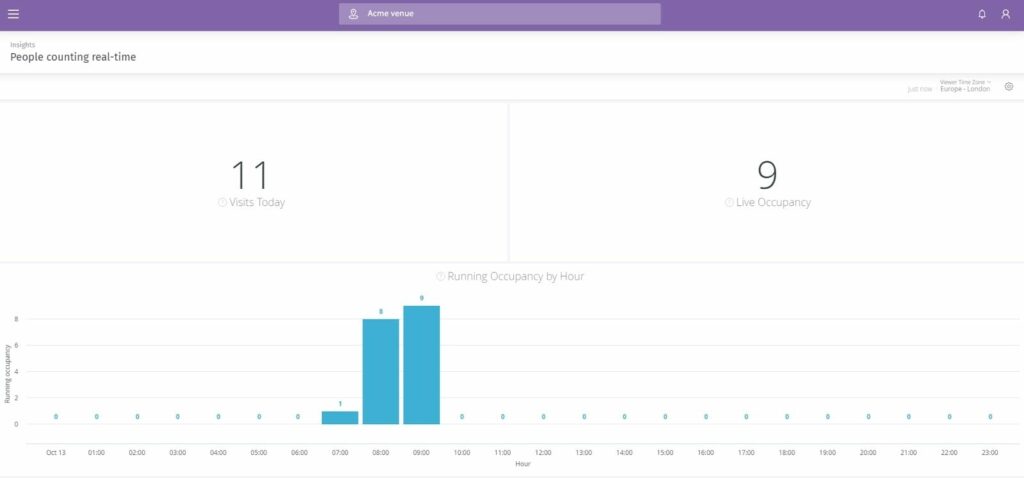
Probably the most looked-at statistic and often the starting point in your data journey, understanding this will tell you the possibility of achieving your goals, whether they be signing up for a newsletter, making a purchase, registering for an event, or some other objective. This should be no different in the real world, but it extends further; for example, it can inform staffing requirements by the hour and day. Given the Covid world we live in, this is even more important in making sure occupancy is at safe levels, both in real-time and historically.
Conversion
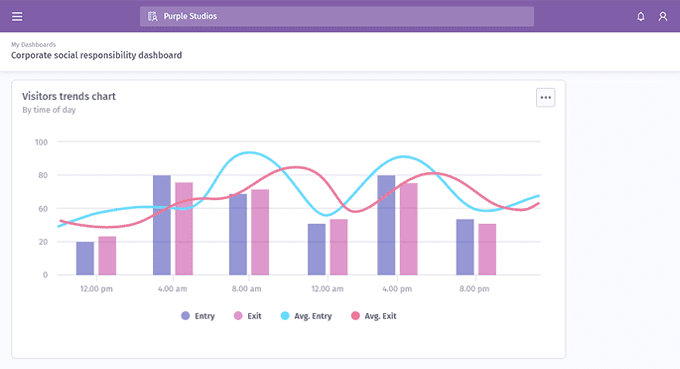
In a digital world, we may look at the conversion of campaigns across social, PPC, email, or other channels into website visitors. We can also track that in the physical world, but instead of a click-through rate, we now have a walk-through rate. We also have another great measure in the real world, which is the conversion of people passing a storefront to coming inside. We can then perhaps borrow from the online world and do some A/B testing with window displays, signage, etc., to see if we can increase that conversion rate.
Bounce Rate
One of the most important metrics for a website. We've done all the hard work, spent all that money to get someone there, and they then bounce straight off . So, we look at the reasons why that might be, and perhaps do some A/B testing to improve. This is all relevant for the physical world, and we can look at additional influences like whether it was busy at the time, what the staff-to-visitor ratios were, whether it's the store layout, and if different stores perform better and why.
Engagement
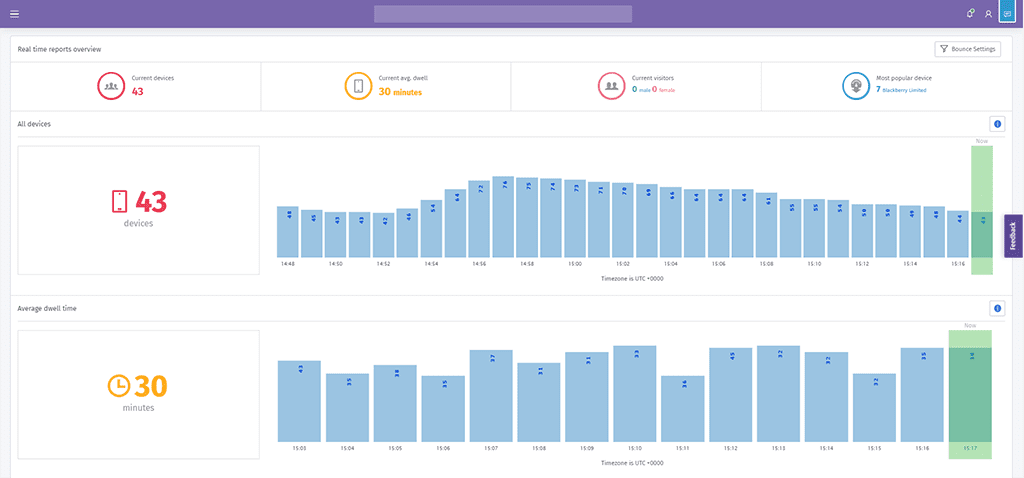
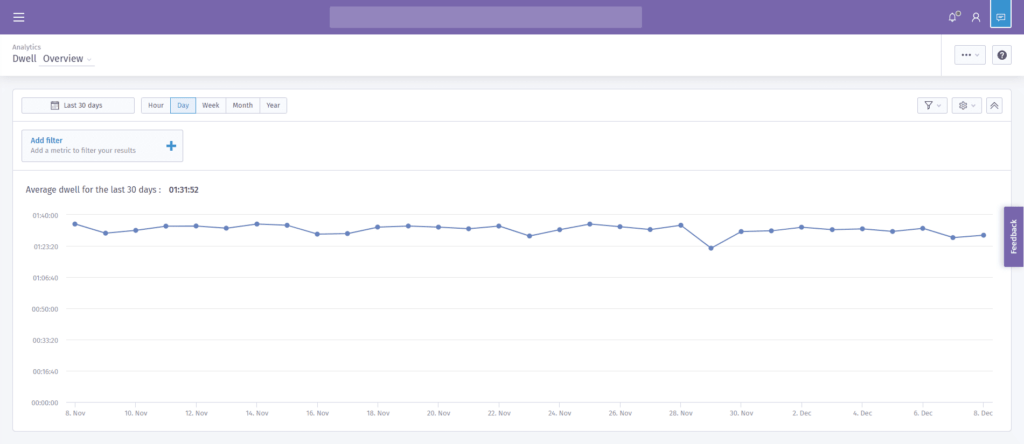
So they haven't bounced—hooray! All our hard work on optimisation, getting staffing levels right, store layout, and occupancy control has paid off. But how engaged are they? How long do they stay? Your goal for this will differ from a Quick Serve Restaurant to a Mall, whereas online, typically, the longer the better is the goal.
Signups
This may be a goal on a website for the newsletter, creating an account, or some other outcome that allows you to capture a person's details so you can continue the conversation long after they have left the website. Again, this should be no different offline. Let's get them registered on the Guest WiFi network and perhaps use that channel to sign them up for the loyalty programme.

Pages
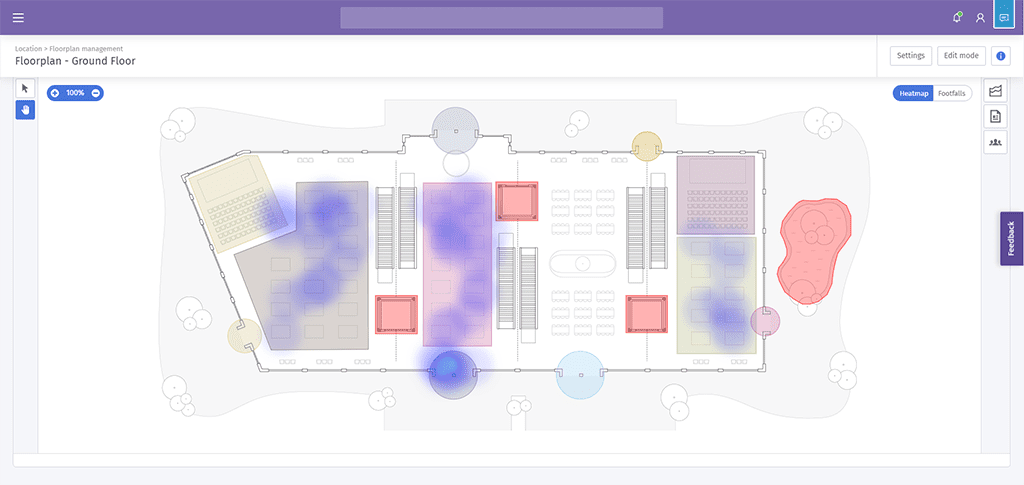
Online, we'll be looking at the pages that people visit, the paths they take through the site, which yield the highest dwell times and conversions, which attract more visitors, and which have people bouncing (the bad kind). In the real world, these are your zones: childrenswear, the restaurant, jewellery, a concession, or a stand at an exhibition. We should be considering all these same things, and we should also be looking at choke points, crowding heatmaps, etc., to improve the layout or staff placement.
I could go on, but this could end up being a book, not a blog, and hopefully, I've made my point. The measures we have online are just as relevant offline, and honestly, even more so. Therefore, to the question of why I would want analytics in physical spaces, I would answer: duh!
The next question surely then is: why haven't people done it? Well, there is a get-out-of-jail card here. For a long time, people just didn't know how. There have been some technologies that answer some of the questions, like footfall counters , but they are often inaccurate and can't figure out direction, so the numbers in and out get messed up. The world has changed a lot in recent years, and now that is completely possible. I am proud to say Purple was fundamental to making that happen.
We changed the perception of Guest WiFi from a utility that needed a sticker in the window to utilising it to both capture data and provide analytics for many of the above questions. But that was only the start of our journey. Having acquired an Indoor Wayfinding business last year, we brought the outdoor maps we're so used to from Google, Apple, and others indoors, where they typically don't work, and also made them personal to that experience. More recently, we have launched our sensor products, which can be deployed with 3D or existing 2D cameras to both improve our existing use cases and introduce new ones where accurate occupancy is essential.
The last thing I would say is that pre-Covid, this was unbelievably important for spaces to survive and thrive. With the new world we are in, I would say it is imperative that the physical world catches up with its digital cousins.
Naturally, we're here to help on that journey.