Customer loyalty is one of the most important variables for retailers to consider when forecasting revenue, but in this post-COVID environment where consumers are looking to tighten their wallets, seeking out competitive deals trumps any pre-existing loyalty.
In this blog, we're going to take a deep dive into the survey results of Purple's consumer research report 'Retail. Not Dead, Just Different' and reveal how everyday consumers' shopping behaviour, and the impact of retailers providing reward programmes.
Where do consumers prefer to shop?
In this section, we asked survey respondents to tell us what channels they have used for their retail goods and necessities over the past 12 months. The response we saw was heavily one-sided with all 3 regions doing the majority of their shopping in-store.
US
Consumers in the United States had a larger amount of consumers preferring to do their retail shopping in-store rather than online. 92% of respondents said in the last 12 months that they have shopped in-store vs 81% have shopped online.
How have consumer shopping trends in the US changed across retail types?
Large-format retail in the US
The majority of respondents (39%) in the US stated no change in their shopping habits, however, 35% have shopped online in the last 12 months compared to 26% increasing their in-store shopping.
Fashion retail in the US
Fashion & apparel retailers saw a large shift in consumer behaviour. Influenced by the pandemic, 51% of consumers increased their use of e-commerce to make purchases compared to a 17% increase in consumers shopping in-store.
32% of respondents stated their shopping behaviours had not changed in the last 12 months.
Consumer changes for grocery retailers in the US
Grocery retail in the US saw 42% of respondents buying groceries through online channels more frequently, while 24% stated they increased visits to physical stores to make purchases.
34% of consumers say their preferences have not changed with 60% making at least one trip for groceries per week.
India
Respondents in India showed the highest percentage of shoppers utilising both physical and e-commerce channels. We identified that 92% of respondents have shopped in both physical and online retail spaces in the last 12 months.
How have retail shopping trends changed in India?
While in-store shopping is clearly the preferred method for Indian consumers, we have identified a rapid growth in the use of online shopping across all retail sectors.
Large-format retail in India
Large-format retailers in India didn't see a large shift in behaviour with 51% of respondents stating their habits have not changed in the last 12 months.
However, in comparison with the US, large-format retailers in India also had a greater number of consumers utilising e-commerce. 34% of shoppers stated they now shop online more frequently, and 15% have increased their in-store shopping.
Fashion retail in India
As seen in the US market, fashion & apparel retailers in India had a large increase in online shopping with 61% of consumers increasing their use of e-commerce vs a smaller increase of 13% making more frequent in-store purchases, and 26% showing no change in their shopping behaviour at all.
Grocery retail in India
48% of shoppers have increased their use of e-commerce channels since the end of the pandemic. We were also able to see that 24% of respondents are shopping in-store more than online and 28% say their preferences have not changed.
Despite the great increase in online consumption for the Indian grocery sector, 69% of respondents stated they shop in-store at least once a week highlighting the importance of grocery venues to everyday consumers.
Mexico
As the region most impacted by on-again off-again lockdown measures, we have identified that Mexican consumers have the largest disparity between the retail channels used when shopping for groceries. Over the last 12 months, 95% of consumers in Mexico have shopped in-store, while 73% have shopped online.
How have retail shopping trends changed in Mexico?
Large-format retail in Mexico
Survey respondents in Mexico have revealed that the large-format sector in this region saw the greatest increase in online and offline shopping when compared with large-format retailers in the US and India. 38% of consumers have increased their use of e-commerce post-pandemic and 30% are more frequently shopping in-store. We have also witnessed that 32% of consumers have had no change in their large-format shopping preferences.
Fashion retail in Mexico
Following the same trend seen in the US and India, fashion & apparel retailers in Mexico gained a majority increase in e-commerce purchases with 57% of consumers stating they shop more frequently online. In comparison, 22% of respondents have increased their in-store trips, revealing that physical stores are still a necessity in this region.
This in turn signifies 21% of respondents showed no change in behaviour, utilising both online and offline channels at the same level when compared to the pre-COVID environment.
Grocery retail in Mexico
Since the pandemic, Mexico has seen the greatest increase in online shopping adoption with 55% of consumers using e-commerce channels for their grocery purchases. Despite this increase, 23% of consumers have begun visiting in-store more frequently, while 22% have had no change in their shopping preferences.
Consumers are looking for a blended shopping experience
From the data seen above we can identify that in all 3 global markets, shoppers aren't having to choose between shopping online or just offline, they're looking for a mix of both. With all 3 regions having similar percentages for in-store shopping and no change in preference it's clear that e-commerce is evolving to become a part of a larger consumer journey of unified commerce .
Are retailers actively promoting reward programmes?
As mentioned at the beginning, due to the current financial climate consumers are increasingly on the lookout for ways to cut costs and make the most of timely bargains. In this section, we're going to identify whether retailers are doing enough to promote their reward programmes, and the effect it will have on customer loyalty.
Are retailers promoting reward programmes in-store?
With in-store shopping being the primary choice for consumers, retailers must make the most of every opportunity to promote their reward programmes and the potential benefits consumers can reap when they sign up.
The following statistics show on average, how often consumers are told about reward programmes when in-store.
13% of consumers are never told about reward programmes when in-store
48% of consumers are occasionally told about reward programmes when in-store
27% of consumers are told about reward programmes most of the time when shopping in-store
12% of consumers are told about reward programmes every time they visit in-store
From this data, we can see that when consumers are in-store, retailers aren't fully seizing the opportunity to increase customer loyalty through reward programmes.
Are retailers promoting reward programmes online?
19% of consumers are never told about reward programmes when shopping online
47% of consumers are occasionally told about reward programmes when shopping online
23% of consumers are told about reward programmes most of the time they shop online
10% of consumers are told about reward programmes every time they shop online
Similarly to when consumers shop in-store, retailers are missing a great opportunity to promote reward programmes through online shopping channels.
As consumers continue to adopt e-commerce alongside visiting physical stores, retailers must take the opportunity to link online and offline shopping, promote reward programmes, and boost customer loyalty.
How important is it for retailers to promote reward schemes?
After looking at the frequency with which retailers are promoting their reward programmes, let's see if they are meeting consumer expectations.
In the US, 66% of consumers are already members of at least one active retail reward programme membership with 63% of surveyed consumers saying it is important for retailers to promote reward programmes.
On average 52% of Indian consumers already have at least one active reward programme membership, and 69% of surveyed consumers feel it is important for retailers to promote their reward programmes. Introduced in 2006, the Reliance One card was the first pan-India supermarket loyalty card influencing Indian consumers to become greatly receptive to the idea of reward programmes with 81% of consumers surveyed stating they were part of a grocery retail reward programme.
With the highest expectation of all 3 regions, 76% of consumers in Mexico feel it is important for retailers to promote reward programmes, however, only 47% of consumers have an active reward programme membership. This disparity between consumers' expectations and the availability of reward programmes is likely to negatively affect customer loyalty.
How can retailers influence reward programme adoption in-store?
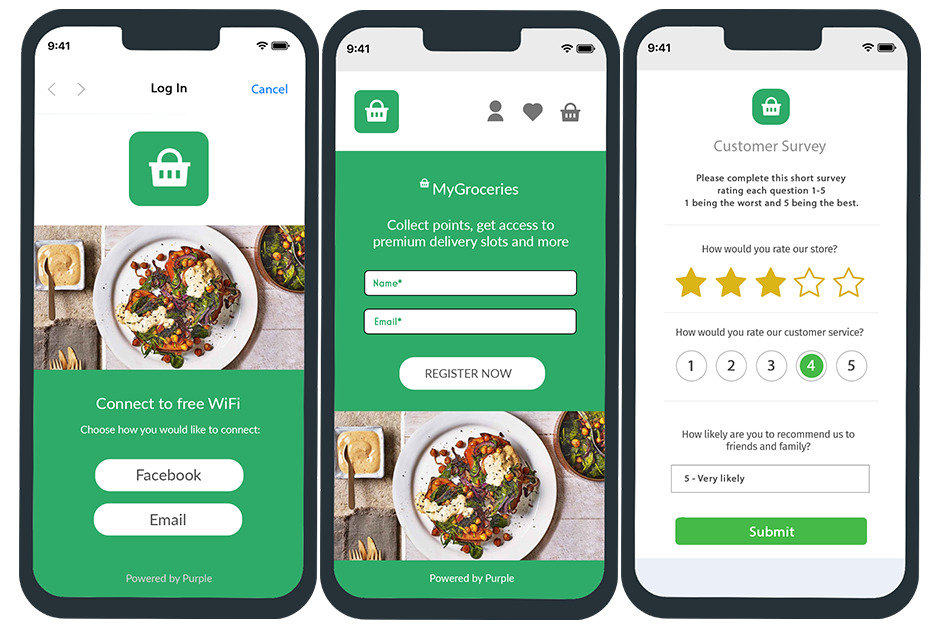
Utilise existing WiFi
Free guest WiFi is an expectation in every public venue with 71% of consumers saying they will access it when in-store. Despite this fact, businesses continue to fail to gain any benefit in return for this service.
By enhancing existing WiFi infrastructures with captive portal access journeys retailers can promote their reward programmes to all users who log in.
Real-time offers
While it's possible for offers to be delivered through print-out advertisements they quite often can miss the mark when encouraging visitors to buy. Why? Because they're not personalised or delivered in real time.
By enhancing the existing WiFi infrastructure to collect demographic information, retailers can segment data to influence in-store purchases by keeping offers personalised. When using this tool, retailers can promote additional personalised offers only available by signing up for existing reward programmes.
64% of consumers state the offers they receive influence their loyalty when choosing where to shop.
How can retailers influence reward programme adoption online?
Other than the online advertising options that are available to all businesses, let's see how retailers can directly influence their customers to sign up for reward programmes post-visit.
Personalised messages through Email and SMS
The customer data collected when logging into the guest WiFi enables retailers to deliver timely notifications post-visit through automated email and SMS comms, keeping offers and promotions top of mind.
By automatically segmenting collected data to understand their most receptive audiences and encourage them to sign-up to reward programmes, retailers can increase return rates by up to 24%!
Making the most of every customer interaction is vital to improving customer loyalty.
What's next for the retail sector?
Retail business will always be a necessity, but customer loyalty has never been more important for survival. Retailers must shift their focus and put the customer experience first, and the main ways to achieve this are through personalisation and customer loyalty.