

रिटेल WiFi: ट्रैफ़िक एनालिटिक्स से व्यक्तिगत इन-स्टोर अनुभवों तक
यह तकनीकी संदर्भ मार्गदर्शिका रिटेल परिवेशों में लेगेसी गेस्ट WiFi से इंटेलिजेंट एज प्लेटफ़ॉर्म में आर्किटेक्चरल बदलाव का विवरण देती है। यह IT लीडर्स के लिए पहचान-आधारित नेटवर्क तैनात करने, एनालिटिक्स को CRM सिस्टम के साथ एकीकृत करने और व्यक्तिगत इन-स्टोर अनुभवों के माध्यम से मापने योग्य ROI प्राप्त करने पर कार्रवाई योग्य मार्गदर्शन प्रदान करती है। RF डिज़ाइन और Captive Portal ऑप्टिमाइज़ेशन से लेकर क्लाइंटेलिंग इंटीग्रेशन और GDPR कंप्लायंस तक, यह मार्गदर्शिका संपूर्ण एंड-टू-एंड डिप्लॉयमेंट लाइफ़साइकिल को कवर करती है।
🎧 Listen to this Guide
View Transcript
कार्यकारी सारांश
रिटेल और हॉस्पिटैलिटी IT लीडर्स के लिए, कनेक्टिविटी प्रदान करना अब पर्याप्त नहीं है; नेटवर्क को सक्रिय रूप से व्यावसायिक मूल्य उत्पन्न करना चाहिए। यह मार्गदर्शिका लेगेसी कॉस्ट-सेंटर गेस्ट नेटवर्क से राजस्व-उत्पादक इंटेलिजेंट एज प्लेटफ़ॉर्म में आर्किटेक्चरल बदलाव का विवरण देती है। मजबूत एनालिटिक्स और पहचान-आधारित एक्सेस का लाभ उठाकर, वेन्यू ऑपरेटर विस्तृत फ़ुटफ़ॉल डेटा कैप्चर कर सकते हैं, CRM प्लेटफ़ॉर्म के साथ एकीकृत कर सकते हैं और बड़े पैमाने पर व्यक्तिगत क्लाइंटेलिंग रणनीतियों को निष्पादित कर सकते हैं। हम एक लचीला, अनुपालनशील और अत्यधिक लाभदायक ओमनीचैनल WiFi समाधान तैनात करने के लिए आवश्यक तकनीकी डिप्लॉयमेंट मॉडल, डेटा फ़्लो आर्किटेक्चर और जोखिम शमन रणनीतियों का पता लगाते हैं। उद्देश्य नेटवर्क आर्किटेक्ट्स और ओमनीचैनल डायरेक्टर्स को पहचान-आधारित प्रमाणीकरण लागू करने, मौजूदा टेक स्टैक को एकीकृत करने और लक्षित इन-स्टोर पर्सनलाइज़ेशन के माध्यम से मापने योग्य ROI प्राप्त करने के लिए आवश्यक सटीक फ़्रेमवर्क से लैस करना है।
तकनीकी गहन विश्लेषण
आर्किटेक्चरल अवलोकन: इंटेलिजेंट एज
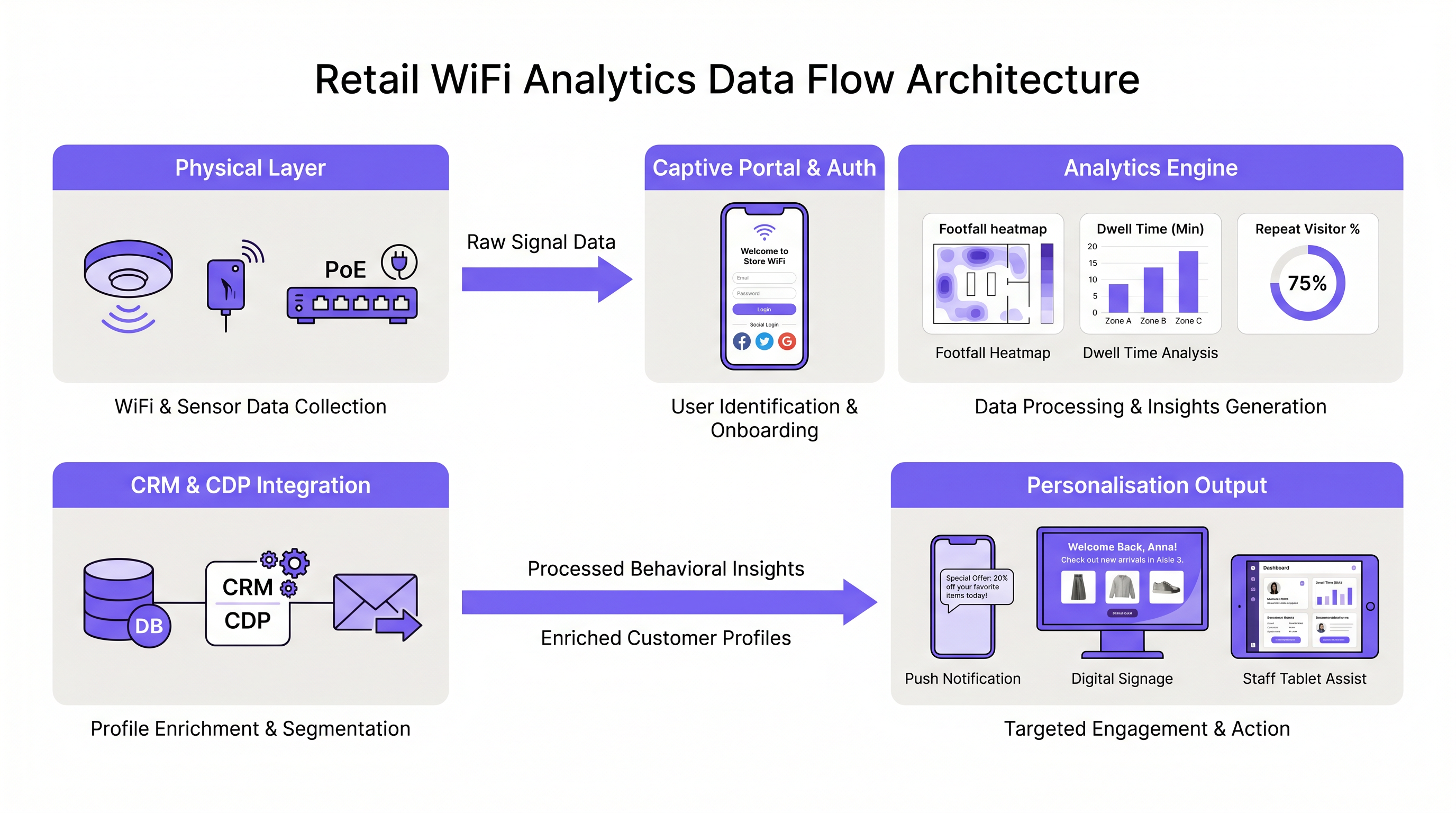
व्यक्तिगत इन-स्टोर अनुभवों में संक्रमण के लिए नेटवर्क एज को देखने के तरीके में एक मौलिक बदलाव की आवश्यकता है। यह साधारण पैकेट फ़ॉरवर्डिंग से आगे बढ़कर एक वितरित सेंसर और पहचान प्रबंधन परत बन जाता है। इस आर्किटेक्चर में आमतौर पर तीन मुख्य टियर शामिल होते हैं।
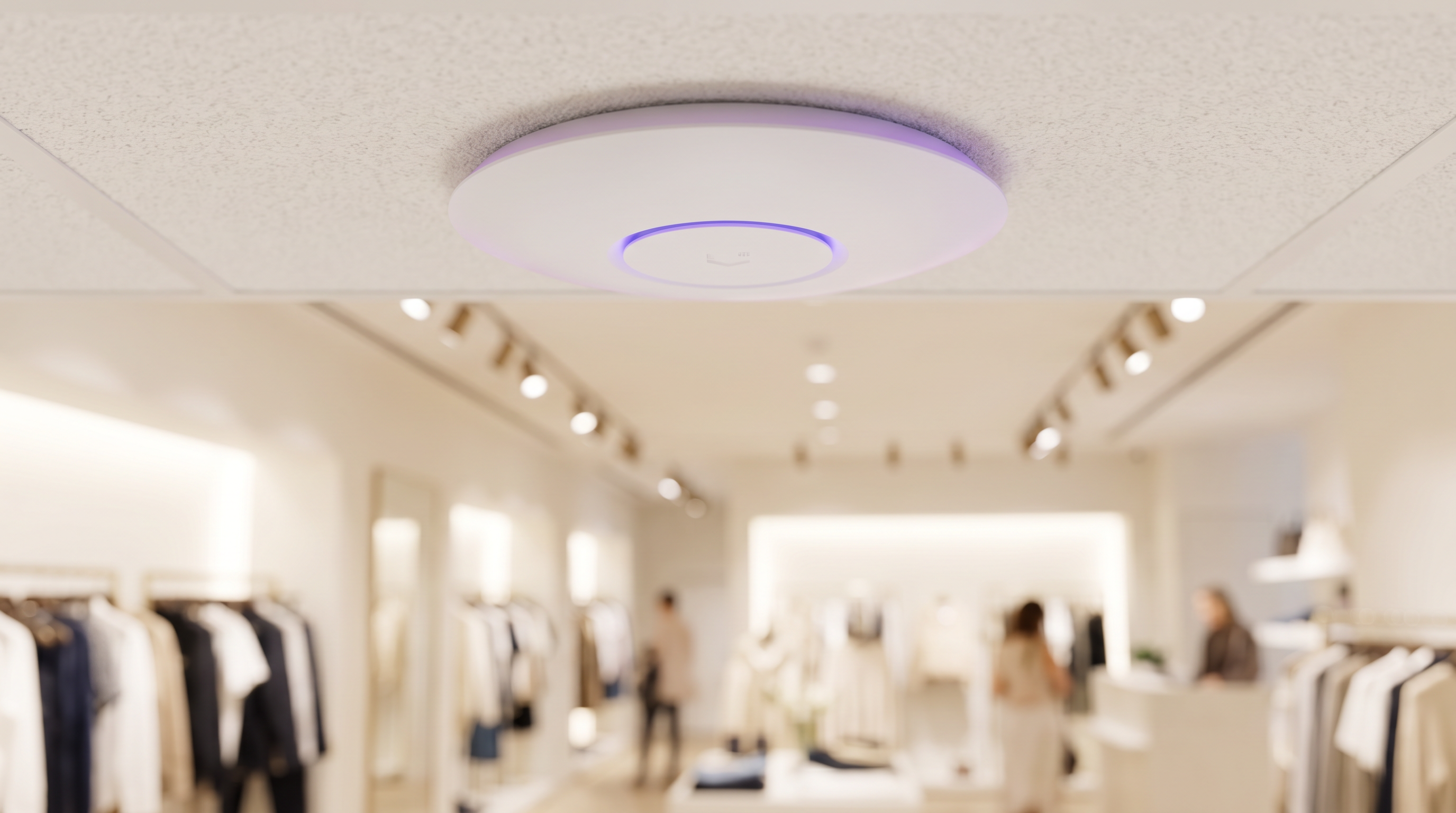
फ़िज़िकल एक्सेस लेयर में उच्च-घनत्व वाले एक्सेस पॉइंट (APs) की तैनाती शामिल है जो मजबूत क्लाइंट कनेक्टिविटी और पैसिव डिवाइस स्कैनिंग (प्रोब रिक्वेस्ट) दोनों में सक्षम हैं। इन APs का घनत्व और प्लेसमेंट सटीक ट्राइलैटरेशन और लोकेशन एनालिटिक्स के लिए महत्वपूर्ण हैं। एंटरप्राइज़-ग्रेड डिप्लॉयमेंट के लिए, Wi-Fi 6 (802.11ax) या Wi-Fi 6E APs की अनुशंसा की जाती है, जो उच्च-घनत्व वाले रिटेल परिवेशों में आवश्यक थ्रूपुट और मल्टी-यूज़र MIMO क्षमताएं प्रदान करते हैं।
पहचान और नीति इंजन वह जगह है जहाँ रॉ MAC एड्रेस को ज्ञात ग्राहक प्रोफाइल में अनुवादित किया जाता है। एक आइडेंटिटी प्रोवाइडर (IdP) के साथ एकीकृत Captive Portal का उपयोग करते हुए, सिस्टम सोशल लॉगिन, लॉयल्टी ऐप क्रेडेंशियल या मानक ईमेल पंजीकरण के माध्यम से उपयोगकर्ताओं को प्रमाणित करता है। यह टियर कंप्लायंस (जैसे GDPR, CCPA) को लागू करता है और सहमति का प्रबंधन करता है, यह सुनिश्चित करता है कि सभी डेटा संग्रह वैध और ऑडिट करने योग्य हो।
एनालिटिक्स और इंटीग्रेशन लेयर कोर इंटेलिजेंस इंजन है। यह उपस्थिति डेटा, ठहरने का समय और उपयोगकर्ता प्रोफाइल को एकत्रित करता है, इस समृद्ध डेटा को APIs के माध्यम से व्यापक रिटेल टेक्नोलॉजी स्टैक — CRM, CDP, मार्केटिंग ऑटोमेशन और क्लाइंटेलिंग एप्लिकेशन — तक पहुंचाता है।
डेटा अधिग्रहण और पहचान समाधान
इन-स्टोर पर्सनलाइज़ेशन का आधार सटीक डेटा अधिग्रहण है। इसमें दो अलग-अलग डेटा स्ट्रीम को कैप्चर करना शामिल है।
अप्रमाणित उपस्थिति डेटा समग्र फ़ुटफ़ॉल, कैप्चर दरों (गुज़रने वाले बनाम प्रवेश करने वाले) और कुल ठहरने के समय को मापने के लिए 802.11 प्रोब रिक्वेस्ट की पैसिव स्कैनिंग का लाभ उठाता है। जबकि MAC रैंडमाइज़ेशन (जैसे iOS 14+, Android 10+) ने अद्वितीय विज़िटर ट्रैकिंग के लिए इस डेटा की निरंतरता को भौतिक रूप से प्रभावित किया है, यह उच्च-स्तरीय ट्रेंड विश्लेषण, ज़ोन ऑक्यूपेंसी और क्यू मैनेजमेंट के लिए मूल्यवान बना हुआ है।
प्रमाणित प्रोफ़ाइल डेटा महत्वपूर्ण मोड़ का प्रतिनिधित्व करता है। जब कोई उपयोगकर्ता Captive Portal के माध्यम से Guest WiFi से कनेक्ट होता है, तो सिस्टम वर्तमान (संभावित रूप से रैंडमाइज़्ड) MAC एड्रेस को एक स्थायी उपयोगकर्ता पहचान (ईमेल, सोशल ID, CRM ID) से जोड़ता है। यह प्रक्रिया — जिसे अक्सर MAC बाइंडिंग या डिवाइस ऑनबोर्डिंग कहा जाता है — एक एकीकृत ग्राहक दृश्य बनाती है जो विज़िट और चैनलों में बनी रहती है।
एकीकरण की अनिवार्यता: ऑनलाइन-से-ऑफ़लाइन लूप को बंद करना
एक स्टैंडअलोन WiFi Analytics प्लेटफ़ॉर्म सीमित मूल्य प्रदान करता है। सच्चे पर्सनलाइज़ेशन के लिए मौजूदा एंटरप्राइज़ आर्किटेक्चर के साथ गहन, द्वि-दिशात्मक एकीकरण की आवश्यकता होती है।
CRM और CDP एकीकरण सबसे महत्वपूर्ण एकीकरण बिंदु है। WiFi प्लेटफ़ॉर्म वास्तविक समय की उपस्थिति घटनाओं (जैसे, "उच्च-मूल्य वाले ग्राहक जॉन डो ने स्टोर 47 में प्रवेश किया है") को CRM पर भेजता है। इसके विपरीत, CRM व्यक्तिगत Captive Portal अनुभवों, लक्षित डिजिटल साइनेज सामग्री, या ज़ोन-विशिष्ट पुश नोटिफिकेशन को ट्रिगर करने के लिए सेगमेंटेशन डेटा को WiFi प्लेटफ़ॉर्म पर वापस भेज सकता है।
क्लाइंटेलिंग एप्लिकेशन उच्च-स्पर्श रिटेल परिवेशों के लिए उच्चतम-मूल्य उपयोग के मामले का प्रतिनिधित्व करते हैं। कर्मचारियों के टैबलेट या वियरेबल्स पर रूट किए गए वास्तविक समय के अलर्ट सहयोगियों को ग्राहक के खरीद इतिहास, प्राथमिकताओं और लॉयल्टी टियर तक तत्काल पहुंच प्रदान करते हैं जैसे ही वे स्टोर में प्रवेश करते हैं — एक सामान्य इंटरैक्शन को एक व्यक्तिगत सेवा अनुभव में बदलते हुए।
HubSpot जैसे प्लेटफ़ॉर्म को एकीकृत करने से इस क्षमता में काफी वृद्धि हो सकती है। इस विशिष्ट एकीकरण पर विस्तृत मार्गदर्शन के लिए, हमारे गाइड देखें HubSpot एवं Guest WiFi: लीड संवर्धन और विभाजन या HubSpot और गेस्ट WiFi: लीड एनरिचमेंट और सेगमेंटेशन ।
कार्यान्वयन मार्गदर्शिका
एक इंटेलिजेंट Retail WiFi समाधान तैनात करने के लिए स्थिरता, सुरक्षा और मापने योग्य प्रभाव सुनिश्चित करने के लिए एक चरणबद्ध, व्यवस्थित दृष्टिकोण की आवश्यकता होती है।
चरण 1: इंफ्रास्ट्रक्चर तत्परता और RF डिज़ाइन
एनालिटिक्स लागू करने से पहले, मूलभूत RF परिवेश को कवरेज और क्षमता दोनों के लिए अनुकूलित किया जाना चाहिए।
एक प्रेडिक्टिव और एक्टिव साइट सर्वे करें: उच्च घनत्व के लिए डिज़ाइन करने हेतु उद्योग-मानक टूल (जैसे, Ekahau, Airmagnet) का उपयोग करें, विशिष्ट रिटेल फिक्स्चर से क्षीणन (जैसे., मेटल शेल्विंग, शीशे, ग्लास पार्टिशन्स)। एक प्रेडिक्टिव मॉडल को डिप्लॉयमेंट के बाद के एक्टिव सर्वे के साथ वैलिडेट किया जाना चाहिए।
लोकेशन सर्विसेज़ के लिए AP प्लेसमेंट को ऑप्टिमाइज़ करें: यदि ग्रैन्युलर लोकेशन ट्रैकिंग (ट्रायलैटरेशन) की आवश्यकता है, तो AP प्लेसमेंट को पेरिमीटर-हैवी डिज़ाइन को प्राथमिकता देनी चाहिए ताकि यह सुनिश्चित हो सके कि डिवाइस को एक साथ कम से कम तीन APs द्वारा "सुना" जा सके। सटीक लोकेशन डेटा के लिए एक सीधी-लाइन वाली सेंट्रल-आइल डिप्लॉयमेंट अपर्याप्त है।
मज़बूत बैकहॉल सुनिश्चित करें: एनालिटिक्स, रियल-टाइम API कॉल्स और रिच मीडिया Captive Portal से बढ़े हुए डेटा पेलोड के लिए पर्याप्त WAN बैंडविड्थ और मज़बूत SD-WAN आर्किटेक्चर की आवश्यकता होती है। इस बारे में अधिक जानकारी के लिए, देखें आधुनिक व्यवसायों के लिए मुख्य SD WAN लाभ ।
फेज़ 2: Captive Portal और ऑथेंटिकेशन डिज़ाइन
Captive Portal फिजिकल स्टोर में प्राथमिक डिजिटल टचपॉइंट है। इसका डिज़ाइन सीधे ऑथेंटिकेशन दरों को प्रभावित करता है — उन विज़िटर्स का प्रतिशत जो पहचान योग्य डेटा प्रदान करते हैं।
फ्रिक्शनलेस ऑनबोर्डिंग: एक सिंगल टैप तक फ्रिक्शन को कम करने के लिए सोशल लॉगिन (Google, Facebook, Apple) लागू करें। यदि ईमेल रजिस्ट्रेशन का उपयोग कर रहे हैं, तो फॉर्म फ़ील्ड्स को न्यूनतम रखें (केवल नाम, ईमेल)। प्रत्येक अतिरिक्त फ़ील्ड अनुमानित 10-15% तक कन्वर्ज़न को कम करता है।
वैल्यू एक्सचेंज: कनेक्ट करने के लाभ को स्पष्ट रूप से बताएं। "आज की खरीदारी पर 10% की छूट के लिए कनेक्ट करें" या "एक्सक्लूसिव इन-स्टोर मैप्स और नए आगमन अलर्ट एक्सेस करें" जैसे प्रॉम्प्ट, सामान्य "Free WiFi" प्रॉम्प्ट से लगातार बेहतर प्रदर्शन करते हैं।
डिज़ाइन द्वारा कंप्लायंस: मार्केटिंग कम्युनिकेशंस और डेटा प्रोसेसिंग के लिए स्पष्ट, ग्रैन्युलर कंसेंट मैकेनिज़्म सुनिश्चित करें, जो GDPR आर्टिकल 7 की आवश्यकताओं का कड़ाई से पालन करते हों। कंसेंट स्वतंत्र रूप से दिया गया, विशिष्ट, सूचित और स्पष्ट होना चाहिए।
फेज़ 3: एनालिटिक्स कॉन्फ़िगरेशन और इंटीग्रेशन
ज़ोन और जियोफेंस परिभाषित करें: एनालिटिक्स डैशबोर्ड के भीतर फिजिकल स्पेस को लॉजिकल ज़ोन (जैसे, "मेंसवेयर," "चेकआउट," "विंडो डिस्प्ले") में मैप करें ताकि विशिष्ट ड्वेल टाइम और कन्वर्ज़न फ़नल को ट्रैक किया जा सके। ज़ोन-लेवल डेटा स्टोर-लेवल एग्रीगेट्स की तुलना में काफी अधिक कार्रवाई योग्य होता है।
API वेबहुक्स कॉन्फ़िगर करें: CRM या क्लाइंटेलिंग एप्लिकेशन पर प्रेज़ेंस इवेंट्स को पुश करने के लिए रियल-टाइम वेबहुक्स सेट करें। सुनिश्चित करें कि पेलोड में अद्वितीय ग्राहक पहचानकर्ता, दर्ज किया गया विशिष्ट ज़ोन और एक टाइमस्टैम्प शामिल हो। रेज़िलिएंस के लिए एक्सपोनेंशियल बैकऑफ़ के साथ रिट्राई लॉजिक लागू करें।
बेसलाइन स्थापित करें: एक्टिव पर्सनलाइज़ेशन कैंपेन लॉन्च करने से पहले फुटफॉल, ड्वेल टाइम और कैप्चर दरों के लिए बेसलाइन मेट्रिक्स स्थापित करने हेतु सिस्टम को 2-4 सप्ताह के लिए "केवल सुनने" मोड में चलाएं।
सर्वोत्तम अभ्यास
हज़ारों एंटरप्राइज़ वेन्यू में डिप्लॉयमेंट के आधार पर — जिसमें प्रमुख हॉस्पिटैलिटी चेन, ट्रांसपोर्ट हब और हेल्थकेयर फैसिलिटीज़ शामिल हैं — निम्नलिखित अभ्यास लगातार बेहतर परिणाम देते हैं।
वैल्यू एक्सचेंज को प्राथमिकता दें। ग्राहक तभी डेटा देंगे जब उन्हें मिलने वाला मूल्य अधिक होगा। सामान्य "Free WiFi" अब पर्याप्त प्रोत्साहन नहीं है। ऑथेंटिकेशन दरों को अधिकतम करने के लिए कनेक्टिविटी को लॉयल्टी प्रोग्राम या तत्काल इन-स्टोर लाभों से जोड़ें।
आक्रामक रूप से सेगमेंट करें। सभी कनेक्टेड यूज़र्स के साथ समान व्यवहार न करें। एकत्रित डेटा का उपयोग करके विशिष्ट सेगमेंट (जैसे, "बार-बार खरीदारी करने वाले," "पहली बार आने वाले विज़िटर," "अधिक समय बिताने वाले/कोई खरीदारी नहीं") बनाएं और तदनुसार डिजिटल और फिजिकल अनुभव को अनुकूलित करें।
प्रोफ़ाइल-आधारित ऑथेंटिकेशन अपनाएं। शेयर्ड PSKs (प्री-शेयर्ड कीज़) या दैनिक रूप से बदलने वाले पासवर्ड से दूर हटें। लौटने वाले विज़िटर्स के लिए निर्बाध, सुरक्षित रीकनेक्शन सुनिश्चित करने हेतु आइडेंटिटी-ड्रिवन एक्सेस (जैसे, Passpoint/Hotspot 2.0 या CRM प्रोफ़ाइल से जुड़ा MAC-आधारित ऑथेंटिकेशन) का उपयोग करें।
क्रॉस-फंक्शनल अलाइनमेंट गैर-परक्राम्य है। एक सफल डिप्लॉयमेंट के लिए IT (इन्फ्रास्ट्रक्चर), मार्केटिंग (Captive Portal डिज़ाइन और CRM) और स्टोर ऑपरेशंस (क्लाइंटेलिंग और स्टाफ ट्रेनिंग) के बीच मज़बूत अलाइनमेंट की आवश्यकता होती है। केवल IT डिप्लॉयमेंट लगातार खराब प्रदर्शन करते हैं।
ट्रबलशूटिंग और जोखिम न्यूनीकरण
सामान्य विफलता मोड
निम्नलिखित तालिका सबसे अधिक बार सामने आने वाले विफलता मोड और उनके न्यूनीकरण को सारांशित करती है:
| विफलता मोड | लक्षण | मूल कारण | न्यूनीकरण |
|---|---|---|---|
| खाली फ़नल | उच्च निष्क्रिय फुटफॉल, कम ऑथेंटिकेशन | जटिल पोर्टल, कोई वैल्यू एक्सचेंज नहीं, मज़बूत 5G कवरेज | लॉगिन को सरल बनाएं, वैल्यू प्रपोज़िशन में सुधार करें, साइनेज में सुधार करें |
| गलत लोकेशन डेटा | डिवाइस ज़ोन के पार "जंप" कर रहे हैं | कोलिनियर AP प्लेसमेंट, अपर्याप्त AP डेंसिटी | पेरिमीटर कवरेज और ट्रायलैटरेशन के लिए RF को फिर से डिज़ाइन करें |
| डेटा साइलो | डेटा एकत्र किया गया लेकिन कोई डाउनस्ट्रीम कार्रवाई ट्रिगर नहीं हुई | API रेट लिमिट, बेमेल ID, वेबहुक विफलताएं | सुसंगत प्राइमरी की (ईमेल) स्थापित करें, रिट्राई लॉजिक लागू करें |
| रोग AP खतरा | संभावित क्रेडेंशियल हार्वेस्टिंग | WIDS/WIPS मॉनिटरिंग की कमी | WIDS/WIPS डिप्लॉय करें और सक्रिय रूप से मॉनिटर करें |
| PCI स्कोप क्रीप | गेस्ट नेटवर्क ट्रैफ़िक POS सिस्टम तक पहुंच रहा है | अपर्याप्त नेटवर्क सेगमेंटेशन | सख्त VLAN/फ़ायरवॉल सेगमेंटेशन, नियमित पेनेट्रेशन टेस्टिंग |
सुरक्षा और कंप्लायंस जोखिम
रोग APs और एविल ट्विन्स: अधिकृत नेटवर्क को स्पूफ करने और क्रेडेंशियल हार्वेस्ट करने का प्रयास करने वाले अनधिकृत एक्सेस पॉइंट का पता लगाने और उन्हें कम करने के लिए मज़बूत WIDS/WIPS (वायरलेस इंट्रूज़न डिटेक्शन/प्रिवेंशन सिस्टम) लागू करें। यह किसी भी PCI-स्कोप वाले एनवायरनमेंट में एक अनिवार्य कंट्रोल है।
डेटा प्राइवेसी उल्लंघन: स्पष्ट कंसेंट प्राप्त करने या निष्क्रिय डेटा को ठीक से एनोनिमाइज़ करने में विफलता से GDPR के तहत गंभीर नियामक जुर्माना (वैश्विक वार्षिक टर्नओवर का 4% तक) लग सकता है। सुनिश्चित करें कि Captive Portal फ्लो का कानूनी और कंप्लायंस टीमों द्वारा नियमित रूप से ऑडिट किया जाता है।
PCI DSS स्कोप क्रीप: सुनिश्चित करें कि गेस्ट/एनालिटिक्स नेटवर्क को कॉर्पोरेट नेटवर्क से लॉजिकली और फिजिकली सेगमेंट किया गया है जो पॉइंट ऑफ़ सेल (POS) ट्रांज़ैक्शन को हैंडल करता है। PCI DSS कंप्लायंस बनाए रखने के लिए सख्त ACLs और फ़ायरवॉल नियमों के साथ डेडिकेटेड VLANs का उपयोग करें।
ROI और बिज़नेस इंपैक्ट
कॉस्ट-सेंटर से रेवेन्यू-जनरेटिंग एसेट में बदलाव के लिए ROI मापने के लिए एक मज़बूत फ्रेमवर्क की आवश्यकता होती है।
प्रमुख प्रदर्शन संकेतक
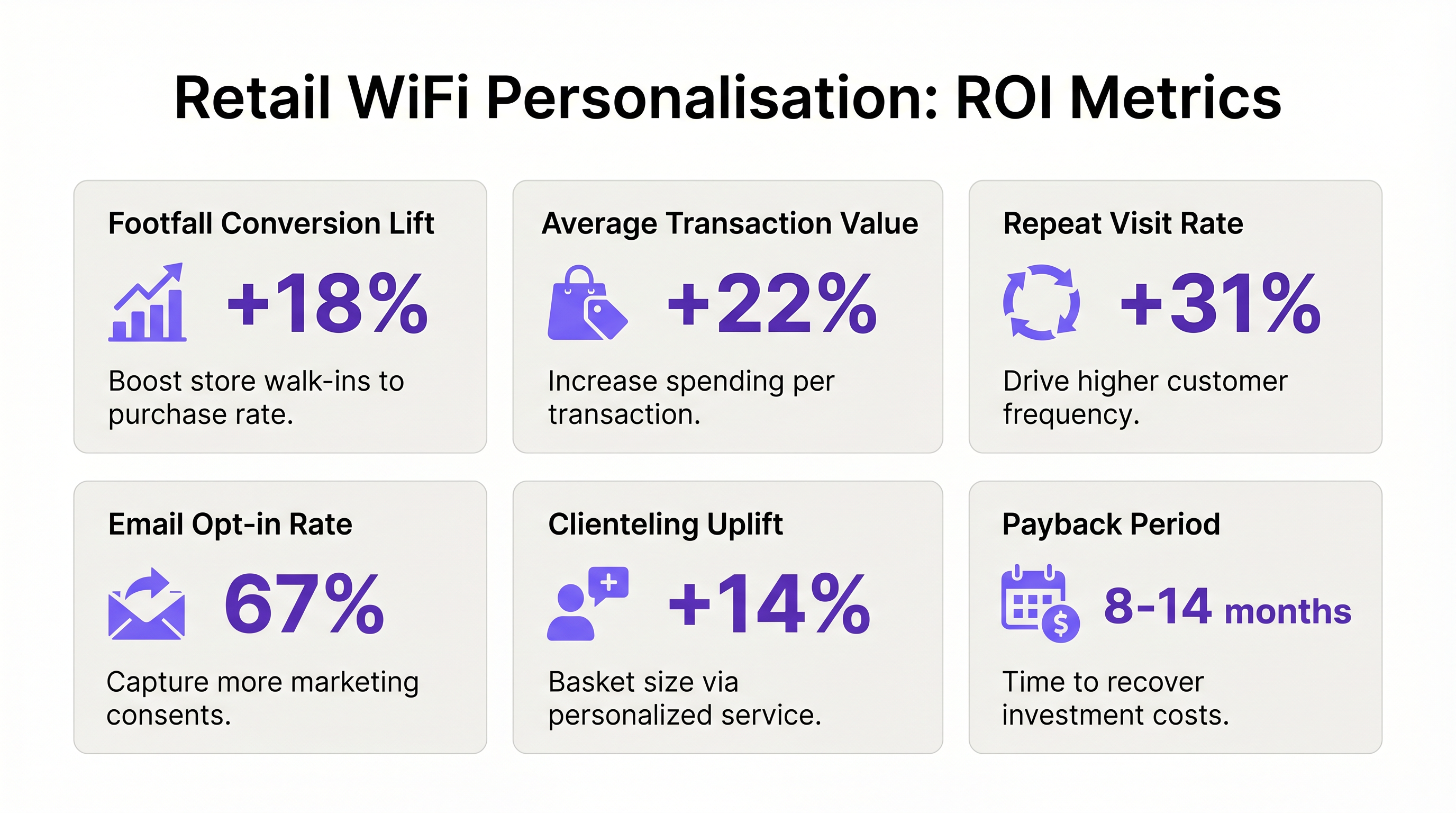
निम्नलिखित KPI एक खुदरा WiFi वैयक्तिकरण परिनियोजन के लिए मुख्य मापन ढाँचा बनाते हैं:
| KPI | परिभाषा | लक्ष्य बेंचमार्क |
|---|---|---|
| कैप्चर दर | स्टोर में प्रवेश करने वाले राहगीरों का % | बेसलाइन + रुझान |
| प्रमाणीकरण दर | स्टोर में आने वाले उन आगंतुकों का % जो कनेक्ट और प्रमाणित करते हैं | कनेक्टेड डिवाइसों का >35% |
| ज़ोन के अनुसार ठहरने का समय | निर्धारित स्टोर ज़ोन में बिताया गया औसत समय | बेसलाइन + रुझान |
| क्लाइंटेलिंग उत्थान | जब सहयोगी उपस्थिति डेटा का उपयोग करता है तो ATV में वृद्धि | +10-20% |
| डेटाबेस वृद्धि दर | प्रति माह जोड़े गए नए अनुपालक प्रोफाइल | फुटफॉल की मात्रा पर निर्भर करता है |
| ईमेल ऑप्ट-इन दर | विपणन के लिए सहमति देने वाले प्रमाणित उपयोगकर्ताओं का % | >60% |
ROI मॉडल
खुदरा WiFi वैयक्तिकरण के लिए एक मानक ROI मॉडल आमतौर पर तीन प्राथमिक चालकों पर केंद्रित होता है।
बढ़ी हुई मार्केटिंग पहुंच कैप्टिव पोर्टल के माध्यम से प्राप्त नए ईमेल और SMS ऑप्ट-इन के मूल्य को निर्धारित करता है, जिसकी गणना संगठन के प्रति ग्राहक औसत राजस्व और पहले से अज्ञात ग्राहकों तक पहुंचाई गई वृद्धिशील पहुंच के आधार पर की जाती है।
बेहतर इन-स्टोर रूपांतरण लक्षित इन-स्टोर प्रचारों द्वारा उत्पन्न वृद्धिशील राजस्व को मापता है — उदाहरण के लिए, जब कोई ग्राहक शू डिपार्टमेंट में पांच मिनट से अधिक समय तक रहता है तो भेजा गया एक पुश नोटिफिकेशन, या एक क्लाइंटेलिंग अलर्ट जो एक वैयक्तिकृत अपसेल को सक्षम बनाता है।
परिचालन दक्षता भविष्य कहनेवाला फुटफॉल एनालिटिक्स के आधार पर स्टाफ शेड्यूलिंग को अनुकूलित करने से होने वाली लागत बचत को दर्शाता है, यह सुनिश्चित करता है कि पीक स्टाफिंग केवल ऐतिहासिक लेनदेन मात्रा के बजाय पीक आगंतुक यातायात के साथ संरेखित हो।
एंटरप्राइज़ खुदरा WiFi वैयक्तिकरण परिनियोजन के लिए विशिष्ट भुगतान अवधि 8 से 14 महीने तक होती है, जिसमें बढ़ते फर्स्ट-पार्टी डेटा एसेट के चक्रवृद्धि मूल्य से संचालित वार्षिक रिटर्न जारी रहता है।
Key Terms & Definitions
MAC Binding
The process of associating a potentially randomised or ephemeral device MAC address with a persistent, known user identity (e.g., email address) during the captive portal authentication process.
Critical for tracking returning visitors and building unified customer profiles despite OS-level privacy features like MAC randomisation in iOS 14+ and Android 10+.
Passpoint (Hotspot 2.0)
A Wi-Fi Alliance standard that enables seamless, secure, and automatic authentication to WiFi networks without requiring user interaction or a captive portal, often utilising credentials from a mobile operator or loyalty application.
Used to create frictionless, secure connectivity for high-value returning customers, bypassing captive portal fatigue and MAC randomisation issues.
Trilateration
The process of determining absolute or relative locations of points by measurement of distances, using the geometry of circles, spheres or triangles. In WiFi, it uses signal strength (RSSI) from at least three APs to locate a device.
Essential for granular in-store location tracking, zone analysis, and heatmapping. Requires perimeter-heavy AP placement to function accurately.
Captive Portal
A web page that a user of a public-access network is obliged to view and interact with before network access is granted. Typically used for authentication, payment, or accepting terms of use.
The primary digital touchpoint for customer acquisition and first-party data collection in a physical venue. Authentication rate is the key performance metric.
Probe Request
A management frame transmitted by a client device (such as a smartphone) to discover available 802.11 networks in its proximity, broadcast on all channels.
The foundation of passive footfall analytics, allowing venues to count and track devices even if they do not connect to the network. Accuracy is impacted by MAC randomisation.
Clienteling
A retail technique used by sales associates to establish long-term relationships with key customers based on data about their preferences, behaviours, and purchase history.
WiFi presence data acts as the real-time trigger for clienteling applications, alerting staff when a specific customer enters the store and surfacing relevant profile data.
WIDS/WIPS
Wireless Intrusion Detection System / Wireless Intrusion Prevention System. Security infrastructure that monitors the radio spectrum for unauthorised access points (rogue APs) and wireless attacks.
Crucial for maintaining PCI DSS compliance and protecting the integrity of the guest network against evil twin attacks and credential harvesting.
Webhook
An HTTP-based callback mechanism that allows one application to send real-time data to another application as soon as a specified event occurs, rather than requiring the receiving application to poll for updates.
The primary mechanism for pushing real-time WiFi presence events (e.g., 'User X entered Zone Y') to a CRM or clienteling system. Must include retry logic and error handling for production deployments.
Capture Rate
The ratio of people who enter a venue to the total number of people who pass by the venue exterior, expressed as a percentage.
A key retail performance metric that can be measured using WiFi passive scanning data at the perimeter versus interior of a venue.
Case Studies
A national fashion retail chain with 500 locations wants to implement real-time clienteling. When a 'VIP' loyalty member enters a store, the store manager's tablet must receive an alert with the customer's purchase history within 30 seconds. How should the network and integration architecture be designed?
- Authentication: Implement Passpoint (Hotspot 2.0) tied to the retailer's loyalty app. This ensures the VIP's device connects automatically and securely without a captive portal prompt upon entering the store, eliminating friction for the highest-value customers. 2. Edge Processing: The local AP or Controller detects the association event and forwards the payload (MAC address + Location Zone) to the central WiFi Analytics platform via a local MQTT broker or direct API call. 3. Identity Resolution: The Analytics platform resolves the MAC address to the persistent Customer ID via its internal binding database, established during the customer's initial loyalty app registration. 4. Webhook Integration: The Analytics platform fires a real-time webhook payload (containing Customer ID, Store ID, and Zone) to the central CRM/CDP. The webhook endpoint must respond within 200ms to avoid timeout failures. 5. Clienteling App Routing: The CRM identifies the VIP status, retrieves the last 10 purchase records and stated preferences, and pushes an immediate push notification to the specific store manager's tablet application via a dedicated API channel. Total end-to-end latency target: under 15 seconds.
A large conference centre is experiencing a high volume of 'walk-by' traffic detected by passive scanning, but a very low authentication rate (under 8%) on their captive portal. The marketing team needs to increase the first-party database size by 40% within six months. What technical and strategic steps should the IT team take?
- RF Audit: Conduct an active survey to ensure the guest network signal strength is sufficient outside the venue perimeter to trigger the native OS Captive Portal Assistant (CPA) on iOS and Android devices immediately upon association. A signal below -75 dBm at the entrance will prevent the CPA from triggering reliably. 2. Portal Optimisation: Reduce the captive portal form from its current 5 fields (Name, Email, Phone, Postcode, DOB) to 2 fields (Name, Email) or implement one-click Social Login (Google/Apple). Each removed field is estimated to increase conversion by 10-15%. 3. Value Exchange Implementation: Work with marketing to rebrand the SSID from 'VenueGuest_WiFi' to a benefit-led name. Configure the captive portal to immediately deliver a digital discount code or exclusive content upon successful authentication. 4. Signage and Awareness: Deploy physical QR code signage at all high-traffic entry points linking directly to the captive portal URL, bypassing the CPA dependency entirely for users on cellular. 5. Measurement: Implement A/B testing on portal variants to continuously optimise conversion rates, tracking authentication rate as the primary KPI.
Scenario Analysis
Q1. A retail client wants to trigger a personalised digital signage advertisement when a specific demographic (loyalty members aged 25-34) dwells in the 'New Arrivals' zone for more than 2 minutes. What is the most critical integration point required to achieve this, and what data must flow between systems?
💡 Hint:Consider where the demographic data lives versus where the location and dwell time data is generated.
Show Recommended Approach
The critical integration point is a real-time, bi-directional API link between the WiFi Analytics platform (which holds the location and dwell time data) and the CRM/CDP (which holds the demographic and loyalty tier data). The WiFi platform must fire a webhook upon the 2-minute dwell threshold being reached in the 'New Arrivals' zone, containing the Customer ID and zone name. The CRM must instantly evaluate the user's demographic profile and loyalty status. If the criteria are met, the CRM (or a connected CMS) must push the specific content variant to the digital signage controller for that zone. The entire chain must complete within 10-15 seconds to be contextually relevant.
Q2. You are reviewing the RF design for a new 2,000 sq metre flagship retail store. The primary goal is highly accurate location tracking for heatmapping and zone dwell time analysis. The initial design shows 8 APs placed in two straight lines down the centre of the store to maximise coverage with the fewest APs. What is your recommendation, and why?
💡 Hint:Review the mathematical principles of trilateration and what AP geometry is required.
Show Recommended Approach
The design must be rejected and reworked. A straight-line 'hallway' deployment provides coverage but makes accurate trilateration impossible, as any device on the floor can only be measured linearly — the geometry does not allow for accurate 2D positioning. The design must be changed to a perimeter-heavy layout, with APs positioned along the walls and corners of the store. This ensures that any device on the floor is within the optimal listening range of at least three non-collinear APs, providing the angular diversity required for accurate trilateration. The total AP count may need to increase to achieve both coverage and location accuracy simultaneously.
Q3. Following a recent iOS update that aggressively randomises MAC addresses even while connected to a network, a client reports that their 'Repeat Visitor' metric has dropped by 60% in the analytics dashboard, even though overall footfall appears steady. How do you diagnose and resolve this?
💡 Hint:How do we move away from relying on hardware identifiers as the primary key for identity?
Show Recommended Approach
The root cause is clear: the analytics platform is using the device MAC address as the primary identifier for unique and repeat visitor tracking. With persistent MAC randomisation now active, each visit by the same device appears as a new, unique visitor. The solution is to shift to Profile-Based Authentication as the primary identity mechanism. Configure the network to utilise Passpoint (Hotspot 2.0) or an app-based SDK, where the device authenticates via a secure certificate or profile tied to their user account, rather than relying on the hardware MAC address. For authenticated users, the repeat visit metric should be recalculated based on the persistent Customer ID rather than the MAC address. Passive (unauthenticated) footfall metrics will remain impacted and should be treated as directional trend data only.
Key Takeaways
- ✓Retail WiFi must transition from a cost-centre utility to a revenue-generating sensor and identity management layer.
- ✓Accurate personalisation requires integrating physical presence data with persistent CRM profiles via MAC binding at the captive portal.
- ✓Frictionless onboarding and a clear value exchange are the primary drivers of high authentication rates — this is a UX and marketing problem, not a network problem.
- ✓Real-time webhooks enable immediate in-store actions, including staff clienteling alerts, targeted push notifications, and dynamic digital signage.
- ✓RF design for location analytics requires perimeter-heavy AP placement to enable accurate trilateration — central-aisle deployments are insufficient.
- ✓Profile-based authentication (Passpoint) is the correct long-term solution to MAC randomisation for returning customers.
- ✓Typical payback periods for enterprise retail WiFi personalisation deployments range from 8 to 14 months, with compounding returns from the growing first-party data asset.




