

CCPA vs GDPR: Guest WiFi डेटा के लिए वैश्विक गोपनीयता अनुपालन
यह गाइड Guest WiFi डिप्लॉयमेंट के लिए CCPA और GDPR की आवश्यकताओं की एक व्यापक तकनीकी तुलना प्रदान करता है। यह IT लीडर्स और नेटवर्क आर्किटेक्ट्स के लिए एक एकीकृत, दोहरी-अनुपालक सहमति फ्रेमवर्क बनाने हेतु कार्रवाई योग्य रणनीतियाँ प्रदान करता है, जो नियामक जोखिम को कम करता है और फर्स्ट-पार्टी डेटा के व्यावसायिक मूल्य को बनाए रखता है।
🎧 Listen to this Guide
View Transcript

कार्यकारी सारांश
एंटरप्राइज़ IT लीडर्स और वेन्यू ऑपरेटर्स के लिए, Guest WiFi अब केवल एक कनेक्टिविटी सुविधा मात्र नहीं है; यह एक महत्वपूर्ण फर्स्ट-पार्टी डेटा अधिग्रहण चैनल है। हालांकि, इस डेटा को कैप्चर करना—जो MAC एड्रेस और ईमेल आइडेंटिफ़ायर से लेकर सेशन ड्वेल टाइम तक होता है—संगठनों को यूरोपीय संघ के जनरल डेटा प्रोटेक्शन रेगुलेशन (GDPR) और कैलिफ़ोर्निया कंज्यूमर प्राइवेसी एक्ट (CCPA), जैसा कि कैलिफ़ोर्निया प्राइवेसी राइट्स एक्ट (CPRA) द्वारा संशोधित किया गया है, दोनों के तहत महत्वपूर्ण नियामक जवाबदेही के अधीन करता है।
यह गाइड कानूनी अस्पष्टता को दूर करते हुए दोहरी अनुपालन के लिए एक तकनीकी, वेंडर-न्यूट्रल रोडमैप प्रदान करता है। हम GDPR के ऑप्ट-इन जनादेश और CCPA के ऑप्ट-आउट फ्रेमवर्क के बीच मूलभूत वास्तुशिल्प तनाव का पता लगाते हैं। इससे भी महत्वपूर्ण बात यह है कि, हम बताते हैं कि नेटवर्क आर्किटेक्ट्स और गोपनीयता अधिकारी कैसे एक एकल, एकीकृत सहमति पोर्टल को डिप्लॉय कर सकते हैं जो उपयोगकर्ता अनुभव को खराब किए बिना या अंतर्निहित डेटा पाइपलाइनों को विभाजित किए बिना दोनों व्यवस्थाओं को संतुष्ट करता है। उच्च-मानक अनुपालन स्थिति पर मानकीकरण करके, Retail , Hospitality , और Transport में वैश्विक ब्रांड आत्मविश्वास से अपने Guest WiFi डिप्लॉयमेंट और WiFi Analytics पहलों को बढ़ा सकते हैं।
तकनीकी गहन-विश्लेषण: वास्तुशिल्प तनाव
विश्व स्तर पर अनुपालक Guest WiFi आर्किटेक्चर को डिज़ाइन करने में मुख्य चुनौती दो प्राथमिक नियामक फ्रेमवर्क के परस्पर विरोधी सहमति मॉडल में निहित है।
GDPR: ऑप्ट-इन अनिवार्यता
GDPR के तहत, व्यक्तिगत डेटा संग्रह के लिए एक वैध आधार की आवश्यकता होती है। मार्केटिंग और एनालिटिक्स उद्देश्यों के लिए, यह आधार लगभग विशेष रूप से स्पष्ट, स्वेच्छा से दी गई, सूचित सहमति [1] है। इस जनादेश का तकनीकी कार्यान्वयन अडिग है:
- सक्रिय पुष्टि: उपयोगकर्ताओं को सहमति देने के लिए एक अनचेक बॉक्स पर सक्रिय रूप से टिक करना होगा। पहले से टिक किए गए बॉक्स सख्त वर्जित हैं।
- बारीकी: सहमति को बंडल नहीं किया जा सकता है। एक उपयोगकर्ता को मार्केटिंग संचार स्वीकार करने के लिए मजबूर किए बिना नेटवर्क नियमों और शर्तों को स्वीकार करने में सक्षम होना चाहिए।
- ऑडिट करने की क्षमता: सिस्टम को सहमति घटना का एक अपरिवर्तनीय रिकॉर्ड लॉग करना होगा, जिसमें टाइमस्टैम्प, उपयोगकर्ता पहचानकर्ता, प्रस्तुत की गई सटीक शब्दावली और लागू गोपनीयता सूचना का विशिष्ट संस्करण शामिल है।
CCPA/CPRA: ऑप्ट-आउट जनादेश
इसके विपरीत, CCPA एक ऑप्ट-आउट मॉडल पर काम करता है। कनेक्शन पर वेन्यू डिफ़ॉल्ट रूप से डेटा एकत्र कर सकते हैं। हालांकि, यदि वेन्यू इस डेटा को "बेचता" या "साझा" करता है—जिसे कानून विज्ञापन प्रौद्योगिकी भागीदारों या क्रॉस-कॉन्टेक्स्ट बिहेवियरल एडवरटाइजिंग प्लेटफॉर्म पर डेटा ट्रांसफर करने सहित पर्याप्त रूप से व्यापक रूप से परिभाषित करता है—तो उसे ऑप्ट-आउट करने के लिए एक स्पष्ट तंत्र प्रदान करना होगा [2]।
- "Do Not Sell" लिंक: पोर्टल में प्रमुखता से "Do Not Sell or Share My Personal Information" लिंक या टॉगल होना चाहिए।
- स्थायी सम्मान: एक बार जब कोई उपभोक्ता ऑप्ट-आउट कर लेता है, तो सिस्टम को सभी डाउनस्ट्रीम सिस्टम में उस प्राथमिकता का लगातार सम्मान करना चाहिए।
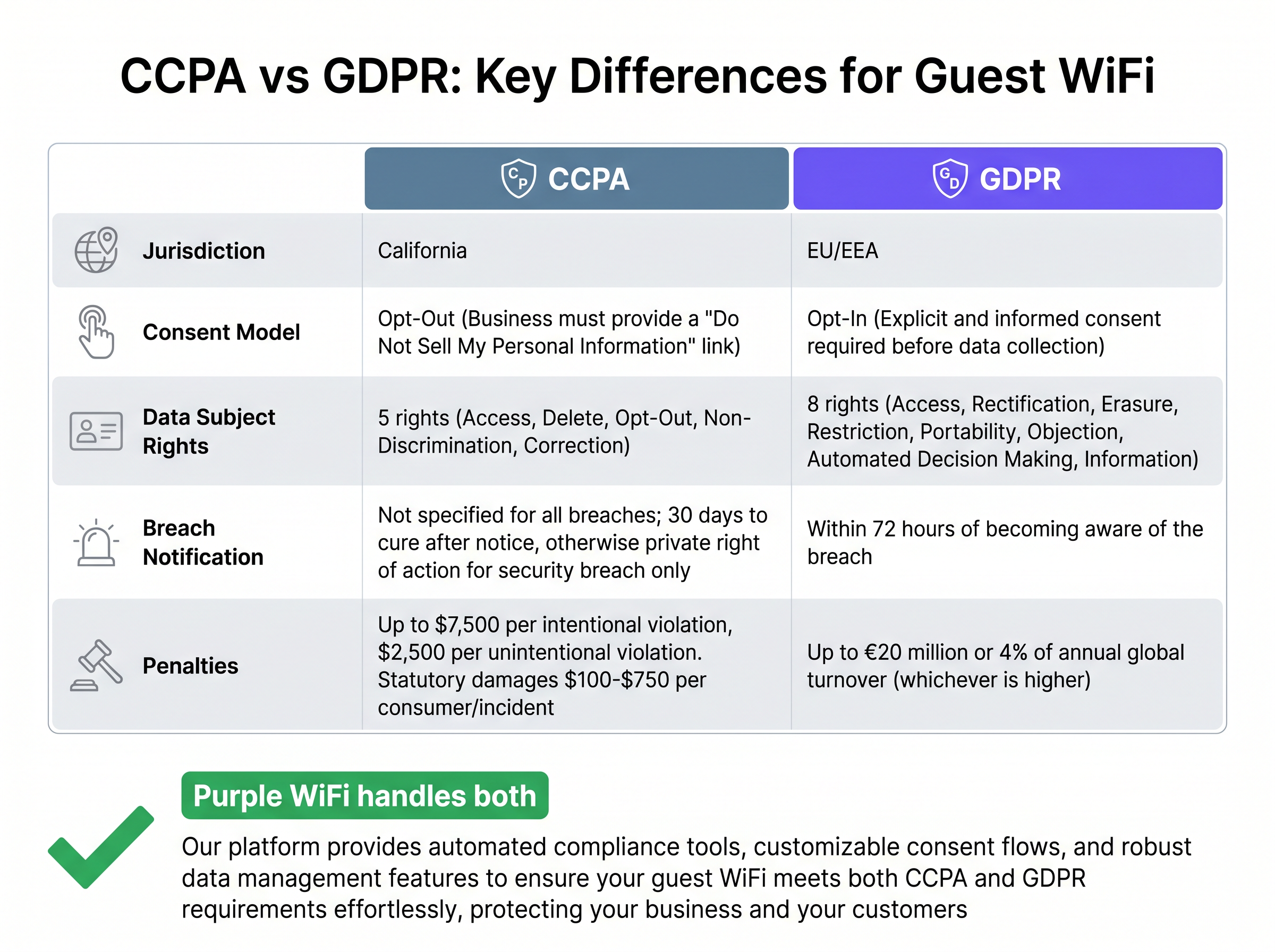
WiFi डिप्लॉयमेंट में विनियमित डेटा श्रेणियाँ
दोनों फ्रेमवर्क विनियमित डेटा क्या होता है, इस पर एक व्यापक जाल डालते हैं। एक विशिष्ट एंटरप्राइज़ डिप्लॉयमेंट में, निम्नलिखित डेटा बिंदु नियामक जांच के दायरे में आते हैं:
- पहचानकर्ता: MAC एड्रेस, IP एड्रेस, ईमेल एड्रेस, फ़ोन नंबर और प्रमाणीकरण के लिए उपयोग किए जाने वाले सोशल मीडिया हैंडल।
- सेशन मेट्रिक्स: कनेक्शन टाइमस्टैम्प, AP एसोसिएशन लॉग और बैंडविड्थ खपत।
- स्थान डेटा: RSSI-आधारित ट्राइलैटरेशन डेटा जिसका उपयोग Wayfinding या हीटमैपिंग के लिए किया जाता है, विशेष रूप से जब किसी विशिष्ट डिवाइस पहचानकर्ता से सहसंबद्ध हो।
चूंकि विनियमित डेटा में ओवरलैप लगभग कुल है, इसलिए एक विभाजित डेटा आर्किटेक्चर शायद ही कभी आवश्यक होता है। इसके बजाय, ध्यान इनटेक मैकेनिज्म—कैप्टिव पोर्टल पर होना चाहिए।
कार्यान्वयन गाइड: दोहरी-अनुपालक पोर्टल का निर्माण
दोहरी-अनुपालक आर्किटेक्चर को डिप्लॉय करने के लिए उपयोगकर्ता रूटिंग, UI डिज़ाइन और बैकएंड डेटा प्रबंधन के लिए एक व्यवस्थित दृष्टिकोण की आवश्यकता होती है। निम्नलिखित चरण एक मजबूत कार्यान्वयन रणनीति की रूपरेखा प्रस्तुत करते हैं।
चरण 1: भू-पहचान और रूटिंग
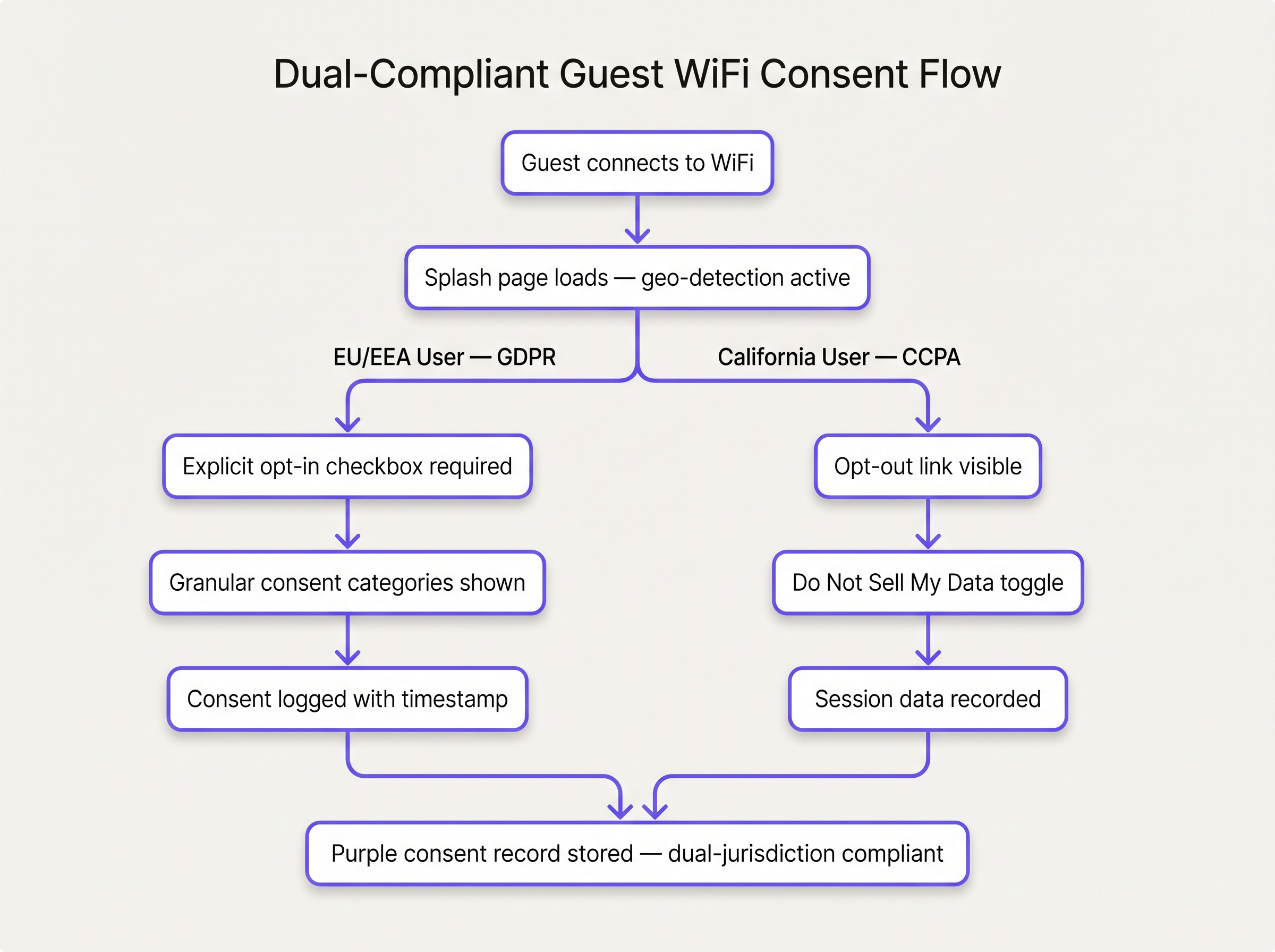
रक्षा की पहली पंक्ति उपयोगकर्ता के नियामक क्षेत्राधिकार की पहचान करना है। आपके कैप्टिव पोर्टल इंफ्रास्ट्रक्चर में भू-IP लुकअप क्षमताएं शामिल होनी चाहिए ताकि यह पता चल सके कि कनेक्टिंग डिवाइस EU/EEA IP स्पेस से उत्पन्न होता है या कैलिफ़ोर्नियाई IP स्पेस से।
जबकि VPN का उपयोग वास्तविक स्थान को अस्पष्ट कर सकता है, भू-IP रूटिंग नियामकों द्वारा अपेक्षित "उचित तकनीकी उपायों" मानक को पूरा करता है। इस पहचान के आधार पर, पोर्टल गतिशील रूप से उपयुक्त UI पेलोड प्रदान करता है।
चरण 2: उच्च-मानक UI डिज़ाइन
सबसे रक्षात्मक वास्तुशिल्प विकल्प यह है कि वैश्विक आधारभूत रेखा को GDPR मानक के अनुसार डिज़ाइन किया जाए, जबकि लागू उपयोगकर्ताओं के लिए CCPA आवश्यकताओं को स्तरित किया जाए।
- वैश्विक आधारभूत रेखा (GDPR मानक): सभी उपयोगकर्ताओं को मार्केटिंग और एनालिटिक्स डेटा संग्रह के लिए एक स्पष्ट, अनचेक ऑप्ट-इन बॉक्स प्रस्तुत करें। यह यूरोपीय उपयोगकर्ताओं के लिए GDPR अनुपालन सुनिश्चित करता है और विश्व स्तर पर एक अत्यधिक रक्षात्मक, गोपनीयता-प्रथम स्थिति स्थापित करता है।
- CCPA लेयरिंग: कैलिफ़ोर्निया में पहचाने गए उपयोगकर्ताओं के लिए, UI में प्रमुखता से "Do Not Sell or Share My Personal Information" लिंक भी प्रदर्शित होना चाहिए, भले ही उन्होंने मार्केटिंग के लिए ऑप्ट-इन न किया हो। यह उस परिदृश्य को कवर करता है जहां परिचालन डेटा (जैसे, सेशन लॉग) को तीसरे पक्ष के साथ इस तरह से साझा किया जा सकता है जो CCPA के तहत "बिक्री" का गठन करता है।
चरण 3: अपरिवर्तनीय ऑडिट लॉगिंग
प्रमाण के बिना सहमति अर्थहीन है। प्रमाणीकरण बैकएंड (आमतौर पर एक सहमति प्रबंधन डेटाबेस के साथ एकीकृत RADIUS सर्वर) को लिखना चाहिएप्रत्येक सेशन शुरू होने के लिए एक अपरिवर्तनीय लॉग। इस लॉग में ये जानकारी होनी चाहिए:
- डिवाइस MAC एड्रेस (रेस्ट पर हैश किया गया या एन्क्रिप्टेड)
- टाइमस्टैम्प (UTC)
- सहमति स्थिति (ऑप्ट-इन: सही/गलत)
- प्रस्तुत की गई विशिष्ट गोपनीयता नीति संस्करण ID
- अधिकार क्षेत्र फ़्लैग (जैसे, EU, CA, ROW)
चरण 4: एकीकृत डेटा विषय अनुरोध (DSR) वर्कफ़्लो
दोनों व्यवस्थाएँ व्यक्तियों को उनके डेटा तक पहुँचने, उसे हटाने और नियंत्रित करने का अधिकार देती हैं। GDPR जवाब देने के लिए 30 दिन देता है; CCPA 45 दिन देता है। IT टीमों को एक एकीकृत DSR पाइपलाइन बनानी होगी।
जब कोई अनुरोध प्राप्त होता है (एक वेब फ़ॉर्म या समर्पित ईमेल के माध्यम से), तो सिस्टम को उपयोगकर्ता के प्राथमिक पहचानकर्ता (आमतौर पर ईमेल या MAC एड्रेस) का उपयोग करके सभी डेटा स्टोर—WiFi एनालिटिक्स डेटाबेस, CRM, मार्केटिंग ऑटोमेशन प्लेटफ़ॉर्म और किसी भी एकीकृत Sensors डेटाबेस—से क्वेरी करनी होगी। सख्त 30-दिवसीय समय-सीमा के भीतर अनुपालन सुनिश्चित करने के लिए विलोपन या निष्कर्षण स्क्रिप्ट को सभी सिस्टमों में एक साथ निष्पादित होना चाहिए।
सर्वोत्तम अभ्यास और वास्तविक-विश्व केस स्टडीज़
केस स्टडी 1: वैश्विक हॉस्पिटैलिटी ब्रांड
परिदृश्य: EU और US में संचालित 500-संपत्ति वाली एक होटल चेन को अपने गेस्ट WiFi लॉगिन को मानकीकृत करने की आवश्यकता थी। ऐतिहासिक रूप से, US संपत्तियाँ MAC कैशिंग के माध्यम से चुपचाप ईमेल एड्रेस एकत्र करती थीं, जबकि EU संपत्तियाँ एक बोझिल, बहु-पृष्ठीय GDPR फ़ॉर्म का उपयोग करती थीं।
कार्यान्वयन: नेटवर्क आर्किटेक्चर टीम ने Purple के एकीकृत सहमति फ्रेमवर्क को तैनात किया। उन्होंने विश्व स्तर पर एक सिंगल-पेज स्प्लैश पोर्टल लागू किया। नेटवर्क तक पहुँचने के लिए, मेहमानों ने एक ईमेल एड्रेस प्रदान किया और सेवा की शर्तों को स्वीकार किया। मार्केटिंग सहमति के लिए एक अलग, अनचेक बॉक्स प्रदान किया गया था। कैलिफ़ोर्नियाई IP एड्रेस के लिए, पोर्टल में एक स्थायी "गोपनीयता विकल्प" फ़ुटर डाला गया था।
परिणाम: मार्केटिंग ऑप्ट-इन दरें विश्व स्तर पर 42% पर स्थिर हो गईं—जो पिछले US बेसलाइन से कम थीं, लेकिन एक अत्यधिक संलग्न, कानूनी रूप से अनुपालन करने वाले डेटाबेस का प्रतिनिधित्व करती थीं। इससे भी महत्वपूर्ण बात यह है कि IT टीम ने तीन पुराने पोर्टल सर्वर को बंद कर दिया, जिससे रखरखाव का खर्च कम हुआ और उनके DSR प्रतिक्रिया समय को 72 घंटे से कम पर मानकीकृत किया गया।
केस स्टडी 2: उच्च-घनत्व स्टेडियम परिनियोजन
परिदृश्य: कैलिफ़ोर्निया में एक प्रमुख स्पोर्ट्स फ़्रैंचाइज़ी को 60,000 प्रशंसकों के लिए एक साथ उच्च-थ्रूपुट ऑनबोर्डिंग की आवश्यकता थी, जबकि CCPA अनुपालन सुनिश्चित करना और खुदरा प्रायोजक एट्रिब्यूशन के लिए डेटा कैप्चर करना भी ज़रूरी था।
कार्यान्वयन: ऑनबोर्डिंग घर्षण को कम करने के लिए ( उच्च-घनत्व WiFi डिज़ाइन: स्टेडियम और एरेना सर्वोत्तम अभ्यास में एक महत्वपूर्ण कारक), IT टीम ने प्रोफ़ाइल-आधारित प्रमाणीकरण (OpenRoaming के समान) का उपयोग किया। पहली बार आने वाले आगंतुकों ने एक स्पष्ट CCPA ऑप्ट-आउट लिंक के साथ एक त्वरित ऑनबोर्डिंग प्रवाह पूरा किया। लौटने वाले डिवाइसों को MAC कैशिंग के माध्यम से चुपचाप प्रमाणित किया गया था, लेकिन बैकएंड सिस्टम ने सहमति को ताज़ा करने और यह सुनिश्चित करने के लिए कि गोपनीयता सूचना वर्तमान बनी रहे, हर 90 दिनों में समय-समय पर एक पुनः-प्रमाणीकरण प्रवाह शुरू किया।
परिणाम: स्थल ने नेटवर्क से 68% अटैचमेंट दर हासिल की, जबकि अपनी खुदरा मीडिया मुद्रीकरण रणनीति के लिए पूरी तरह से ऑडिट करने योग्य सहमति ट्रेल बनाए रखा।
समस्या निवारण और जोखिम न्यूनीकरण
एक अनुपालनकारी आर्किटेक्चर को तैनात करना 'सेट-एंड-फॉरगेट' वाला काम नहीं है। IT टीमों को इन सामान्य विफलता मोडों की सक्रिय रूप से निगरानी करनी चाहिए:
- MAC रैंडमाइजेशन समस्या: आधुनिक मोबाइल ऑपरेटिंग सिस्टम (iOS 14+, Android 10+) डिफ़ॉल्ट रूप से रैंडमाइज्ड MAC एड्रेस का उपयोग करते हैं। यह पुरानी सहमति ट्रैकिंग को बाधित करता है जो केवल हार्डवेयर MAC पर निर्भर करती है। शमन: सहमति को डिवाइस MAC के बजाय एक स्थायी उपयोगकर्ता पहचानकर्ता (जैसे, ईमेल या फ़ोन नंबर) से जोड़ें। एक सत्यापित पहचान स्थापित करने के लिए गेस्ट WiFi के लिए SMS बनाम ईमेल सत्यापन: किसे चुनें पर विचार करें।
- पुरानी सहमति: सहमति समय के साथ कम होती जाती है। तीन साल पहले के ऑप्ट-इन पर भरोसा करना जोखिम भरा है, खासकर यदि आपके डेटा प्रोसेसिंग के उद्देश्य विकसित हुए हों। शमन: एक अनिवार्य पुनः-प्रमाणीकरण नीति (जैसे, हर 12 महीने में) लागू करें जिसमें उपयोगकर्ताओं को वर्तमान गोपनीयता शर्तों को फिर से स्वीकार करना पड़े।
- थर्ड-पार्टी डेटा लीकेज: बिना डेटा प्रोसेसिंग एग्रीमेंट (DPA) के कच्चे सेशन लॉग को थर्ड-पार्टी एनालिटिक्स वेंडर को भेजना GDPR और CCPA दोनों का उल्लंघन करता है। शमन: सभी API वेबहुक और डेटा निर्यात का ऑडिट करें। सुनिश्चित करें कि सभी थर्ड-पार्टी वेंडर प्रोसेसर या सेवा प्रदाताओं के रूप में अनुबंध से बंधे हों।
ROI और व्यावसायिक प्रभाव
एक मजबूत, दोहरे-अनुपालन वाले गेस्ट WiFi आर्किटेक्चर में निवेश करने से केवल जोखिम से बचने से परे मापने योग्य रिटर्न मिलते हैं:
- परिचालन दक्षता: एक एकल, एकीकृत सहमति प्रबंधन प्लेटफ़ॉर्म को बनाए रखने से क्षेत्रीय पोर्टल वेरिएंट के प्रबंधन से जुड़े इंजीनियरिंग ओवरहेड कम हो जाते हैं।
- डेटा गुणवत्ता: एक स्पष्ट ऑप्ट-इन डेटाबेस, हालांकि ऑप्ट-आउट डेटाबेस से संभावित रूप से छोटा हो सकता है, डाउनस्ट्रीम मार्केटिंग अभियानों में काफी उच्च जुड़ाव दर और कम बाउंस दर प्रदर्शित करता है।
- रणनीतिक चपलता: एक उच्च-मानक अनुपालन स्थिति संगठन को US में उभरते राज्य-स्तरीय गोपनीयता कानूनों (जैसे, VCDPA, CPA) और विकसित हो रहे अंतर्राष्ट्रीय मानकों के खिलाफ भविष्य के लिए सुरक्षित करती है।
गोपनीयता अनुपालन को कानूनी बाद के विचार के बजाय एक मुख्य वास्तुशिल्प आवश्यकता के रूप में मानकर, IT लीडर गेस्ट WiFi को एक नियामक देयता से एक सुरक्षित, उच्च-मूल्य वाली संपत्ति में बदल सकते हैं।
साथी ब्रीफिंग सुनें:
संदर्भ
[1] General Data Protection Regulation (GDPR), Article 4(11) and Article 7. https://gdpr-info.eu/ [2] California Consumer Privacy Act (CCPA), Civil Code Section 1798.120. https://oag.ca.gov/privacy/ccpa
Key Terms & Definitions
Lawful Basis
The legal justification required under GDPR to process personal data. For guest WiFi marketing, this is almost always 'Consent'.
Without a documented lawful basis, any data captured by the access point is toxic and must be purged.
Opt-In Framework
A regulatory model (like GDPR) where data collection is prohibited by default until the user explicitly grants permission.
Requires unchecked boxes on splash pages; pre-ticked boxes result in compliance failures.
Opt-Out Framework
A regulatory model (like CCPA) where data collection is permitted by default, but the user must be given a clear mechanism to stop the sharing or sale of that data.
Drives the requirement for 'Do Not Sell' links on California-facing portals.
MAC Randomisation
A privacy feature in modern mobile OSs that generates a temporary MAC address for each network, preventing long-term device tracking.
Forces IT teams to rely on authenticated user identities (email/SMS) rather than hardware addresses for analytics.
Data Subject Request (DSR)
A formal request from an individual to access, correct, or delete the data an organisation holds about them.
Requires IT to have unified querying capabilities across all databases to respond within statutory deadlines (30-45 days).
Immutable Audit Log
A database record of a consent event that cannot be altered or deleted, serving as cryptographic proof of compliance.
Essential for surviving regulatory audits; must include timestamp, identifier, and exact policy version.
Cross-Context Behavioural Advertising
Targeting advertising to a consumer based on their personal information obtained across different businesses or services.
Under CCPA, sharing WiFi data for this purpose constitutes a 'sale' and requires an opt-out mechanism.
Pseudonymisation
Replacing direct identifiers (like a name) with artificial identifiers (like a token), while retaining the ability to re-identify the data with a separate key.
Unlike true anonymisation, pseudonymised data is still regulated under GDPR and requires full compliance controls.
Case Studies
A global retail chain is deploying guest WiFi across 200 stores in the UK, Germany, and California. The marketing director wants to use MAC address tracking to measure store-to-store conversion rates. How should the network architect design the consent flow?
The architect must deploy a geo-aware captive portal. Upon connection, the portal identifies the user's region. For all regions, the portal presents the Terms of Service. Below this, an explicit, unchecked opt-in box is provided: 'I consent to the use of my device data to analyse visit patterns.' If the user does not check the box, MAC tracking must be disabled or heavily anonymised (hashed with a rotating salt) to prevent re-identification. For California users, a persistent 'Do Not Sell My Personal Information' link is added to the portal footer. The backend RADIUS server logs the MAC address against the consent timestamp and status.
A hotel guest submits a Data Subject Request (DSR) via email, stating: 'Delete all data you hold on me.' The guest frequently visits properties in both London and Los Angeles. What is the required technical response?
The IT team must treat this as a high-priority erasure request. The system must query the central consent database using the guest's email address. The query must identify all associated MAC addresses and session logs. An automated script must then execute a deletion command across the core WiFi database, the CRM, and any third-party marketing platforms integrated via API. The entire process must be completed, and confirmation sent to the user, within 30 days to satisfy the stricter GDPR timeline.
Scenario Analysis
Q1. Your marketing team wants to implement a 'seamless onboarding' experience where users agree to terms and marketing communications with a single click of a 'Connect' button. They argue this will increase the database size by 40%. As the network architect, how do you evaluate this request?
💡 Hint:Consider the GDPR requirement for granular and explicit consent.
Show Recommended Approach
The request must be rejected. Under GDPR, consent cannot be bundled. The 'Connect' button serves as agreement to the network Terms of Service (a contractual necessity for access). Marketing consent requires a separate, un-ticked checkbox. Implementing a single-click bundled consent would render the entire captured database legally invalid and expose the organisation to significant fines.
Q2. A venue in Los Angeles uses a third-party analytics vendor to generate footfall heatmaps. The vendor receives raw MAC addresses and RSSI data directly from the access points. The venue does not pay the vendor; instead, the vendor uses the data to improve its own algorithms. Does this require a CCPA 'Do Not Sell' link?
💡 Hint:Review the CCPA definition of 'Sale'.
Show Recommended Approach
Yes. Under CCPA, a 'sale' is not limited to monetary exchange; it includes sharing personal data for 'other valuable consideration'. Because the vendor uses the data for its own algorithmic improvement (valuable consideration), this constitutes a sale. The venue must provide a 'Do Not Sell' link on the splash page and ensure the vendor can process opt-out signals.
Q3. During an audit, you discover that your radius server logs consent (True/False) but does not record the specific version of the privacy policy that was active at the time of connection. Why is this a critical vulnerability?
💡 Hint:Think about the burden of proof required during a regulatory investigation.
Show Recommended Approach
Under GDPR, the data controller bears the burden of proof to demonstrate that consent was informed. If you cannot prove exactly what text the user agreed to (because the policy version was not logged), you cannot prove the consent was informed. This invalidates the consent log, meaning all data collected under that flawed process must be treated as non-compliant.
Key Takeaways
- ✓GDPR requires explicit, un-ticked opt-in for data collection; CCPA allows collection but mandates an opt-out mechanism for data sharing/selling.
- ✓Guest WiFi data, including MAC addresses, IP addresses, and session logs, is heavily regulated under both frameworks.
- ✓The most efficient global architecture applies the stricter GDPR opt-in standard universally, while layering CCPA opt-out links for Californian users.
- ✓Consent must be recorded in an immutable audit log containing the timestamp, user ID, and exact privacy policy version.
- ✓IT teams must build unified Data Subject Request (DSR) workflows capable of querying and deleting data across all integrated systems within 30 days.
- ✓Consent is not perpetual; venues should implement forced re-authentication cycles to refresh consent and maintain compliance.
- ✓Modern MAC randomisation requires venues to tie consent to verified identities (like email or SMS) rather than hardware addresses.




