Stadium technology and fan engagement advisor
Size the WiFi a bowl needs for a sell-out, and model the fan data, concession lift and sponsor inventory it creates.
Matchday and venue inputs
Architecture note
Concentrated 90-minute match flow, turnstile surges before kick-off and a 15-minute half-time concession peak.
Connected fans per event
10,350
45% of the crowdMarketing opt-ins per event
6,210
60% of connected fansAnnual impact
Opted-in sessions count repeat attendees each time; unique fans will be lower for a season-ticket crowd.
Planning a stadium WiFi upgrade?
Ask Purple engineers for a venue survey and a high-density portal demo.
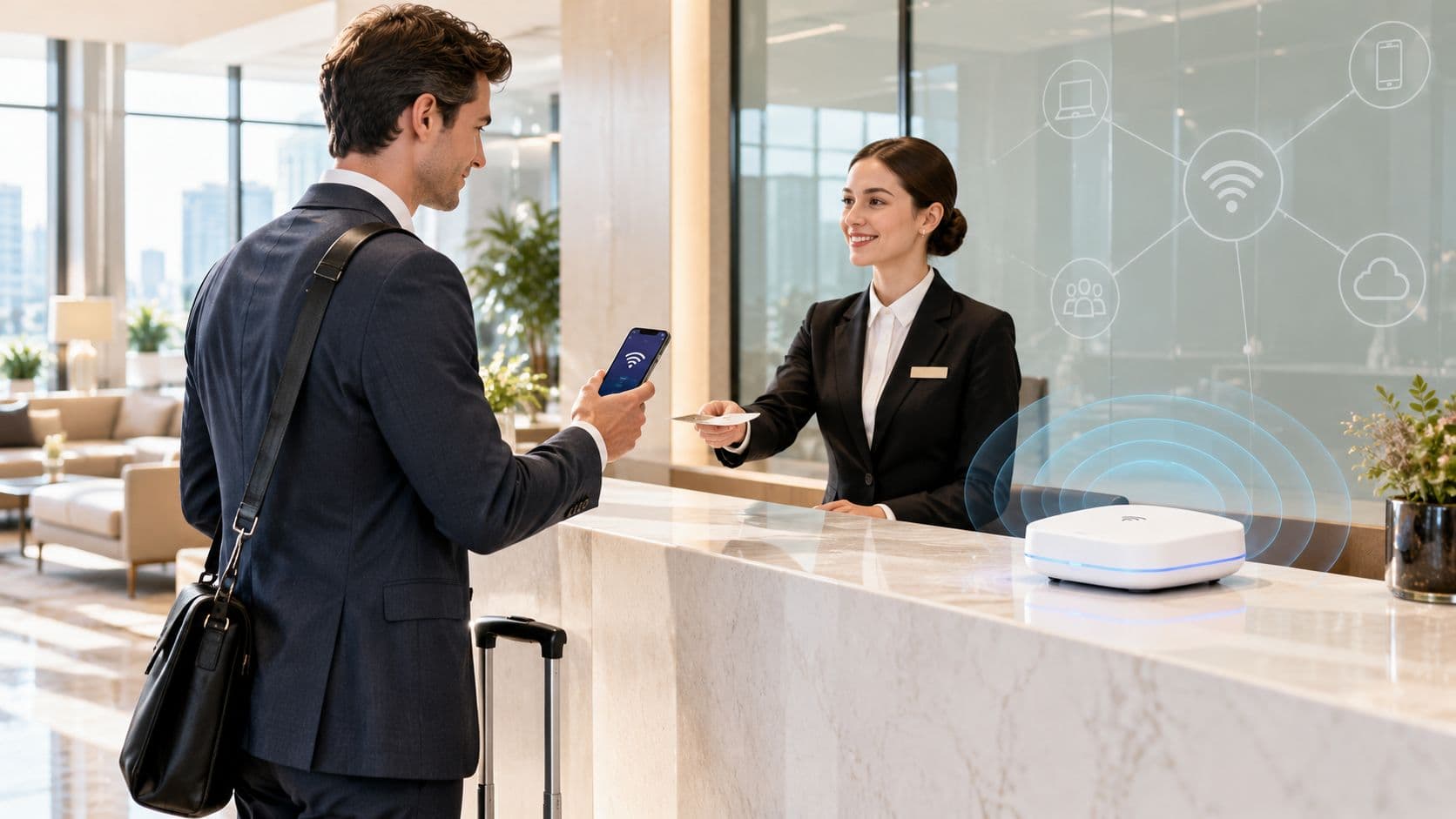
Stadium technology underpins every aspect of modern matchday execution. Fans rarely notice background infrastructure when operations run smoothly. However, if guest WiFi disconnects, entrance queues build at turnstiles, or fans struggle to find concessions, the negative impact on customer satisfaction is immediate. Mobile ticketing, contactless payments, sponsor activations, and personalised offers all rely on high-density wireless networks. Without foundational infrastructure, matchday operations stall.
Key takeaways: Stadium technology & fan engagement
- High-density WiFi infrastructure: Modern stadiums require custom access point placement and channel planning to connect tens of thousands of concurrent fans during matchdays. Learn more in our stadium WiFi solutions guide.
- Verified first-party fan data capture: Turn guest WiFi logins into an active CRM channel that captures opt-in fan contact details and attendance patterns. Explore our WiFi marketing guide.
- Interactive wayfinding & queue reduction: Digital venue maps direct fans to turnstiles, seats, and underused concessions, cutting halftime wait times. Read our guest WiFi guide.
- Operational & POS security: Isolate ticketing turnstiles, POS food stalls, and security systems on dedicated secondary VLANs for PCI-DSS compliance. Check our captive portal guide.
- Hardware integration: Purple integrates seamlessly with major wireless hardware platforms including Cisco Meraki, HPE Aruba, Ruckus, Juniper Mist, and Extreme Networks to analyse crowd density and optimise matchday operations.
Why stadium technology is critical for modern sports venues
High-density sports venues and arenas face unique networking challenges. Tens of thousands of fans connect simultaneously within a confined physical footprint, putting immense strain on RF spectrum and cellular networks. Leaving venue networks unmanaged wastes substantial commercial opportunities while creating operational vulnerabilities.
Deploying a cloud-managed stadium WiFi solution combined with interactive mapping delivers three vital advantages for venue operators:
- Verified first-party fan data capture: Gather GDPR-compliant fan contact records (email, phone, demographics) during portal login, building a reusable CRM database for future ticket and merchandise sales.
- Automated matchday engagement: Trigger real-time, location-aware notifications for food specials, merchandise discounts, or upcoming fixture tickets based on fan movement.
- Operational crowd intelligence: Analyse spectator flow patterns across turnstiles, concourses, and exit gates to prevent congestion and deploy security staff efficiently.
Core pillars of high-performance venue connectivity
1. High-density Guest WiFi & captive portals
Guest WiFi provides reliable internet connectivity throughout the stadium footprint - from entrance plazas to upper deck seating. By implementing a branded captive portal, fans authenticate using single-click email, SMS verification, or social media logins. This login step collects verified opt-in data while delivering instant access to team apps, food ordering, and live match statistics.
2. Interactive venue maps & digital wayfinding
Large multi-tier stadiums can present complex navigation hurdles for first-time visitors. Interactive venue maps integrated into the stadium mobile app or web portal give fans step-by-step navigation to their exact seat section, nearest restrooms, and shortest concession lines. Real-time location services help redistribute crowd density away from overcrowded food stalls toward underused concessions.
3. PCI-DSS compliant operational network isolation
Point-of-sale (POS) terminals, digital turnstiles, security cameras, and press room networks must be completely separated from public spectator traffic. Configuring isolated VLANs with strict firewall policies ensures card transactions remain secure and PCI-DSS compliant during peak halftime purchasing periods.
Stadium technology deployment models compared
| Deployment Model | Primary Function | Fan Data Capture | Security Profile | Best Suited For |
|---|---|---|---|---|
| High-Density Guest WiFi Captive Portal | Fan connectivity & sponsor outreach | High (Email, SMS, Social opt-in) | Isolated Guest VLAN (PCI Compliant) | Stadiums, arenas & event centres |
| Passpoint (802.11u) Secure Roaming | Encrypted automatic roaming | High (Automated profile sync) | WPA3-Enterprise Encrypted | Multi-purpose arenas & sports complexes |
| Interactive Digital Wayfinding | Turnstile, seat & facility navigation | Medium (Location dwell data) | HTTPS Web / App Integrated | Large venues, racecourses & stadiums |
| Operational IoT & Staff Network | Concession POS, turnstiles & CCTV | N/A (Internal operational traffic) | High (802.1X / WPA3-Enterprise) | Venue infrastructure & staff till systems |
Driving revenue through fan data and location analytics
Capturing verified fan data during WiFi authentication shifts guest connectivity from a cost center into a direct revenue driver. Venue commercial teams can connect guest profiles with ticketing and POS purchase data to execute targeted campaigns:
- Sponsor activation & monetization: Deliver high-visibility sponsor branding on captive portals and splash screens, commanding higher sponsorship package fees.
- Post-match survey automation: Send targeted SMS or email satisfaction surveys 30 minutes after full-time to gather immediate feedback on venue facilities.
- Targeted retail promotions: Offer merchandise discounts to fans seated in specific concourse sectors during pre-match warmups to increase retail store footfall.
Transform your stadium into a connected fan data hub
Purple connects directly to your venue access points to capture verified fan data, eliminate entry queues, and boost matchday concession revenue.
Frequently asked questions about stadium technology
How many access points are required for high-density stadium WiFi?
Access point requirements depend on stadium capacity, bowl geometry, and construction materials. High-density stadium deployments typically place under-seat or handrail directional access points every 50 to 100 seats in bowl areas, supplemented by overhead directional antennas on concourses to ensure seamless coverage for tens of thousands of concurrent devices.
How does stadium WiFi capture fan data without requiring a dedicated mobile app?
Spectators connect directly to the open venue WiFi network on their smartphone, which automatically triggers a captive portal splash screen. Fans log in using email, phone number, or social media credentials. This browser-based authentication captures verified opt-in contact data without forcing fans to download a native mobile application.
How do interactive venue maps reduce concession queue times during halftime?
Interactive digital venue maps utilize location analytics to display real-time crowd density and queue lengths. By notifying fans of shorter wait times at adjacent food stalls or sending targeted pre-order links, venues redistribute spectator footfall evenly across concourses, reducing halftime queue bottlenecks.
Conclusion
Foundational stadium technology - including high-density Guest WiFi, captive portal data capture, and interactive venue maps - forms the backbone of modern sports venue operations. By connecting guest wireless networks to venue marketing platforms, stadium operators elevate the fan experience, streamline matchday logistics, and unlock substantial recurring commercial value.