Passpoint WiFi architecture and readiness calculator
Calculate recovered guest connections, cellular offload bandwidth, and enterprise hardware compatibility when upgrading from captive portals or shared passphrases to Hotspot 2.0.
Access point deployment specification: Cisco Catalyst & Meraki
OI: 5A-03-BA-00-00 (OpenRoaming consortium)Full ANQP element exchange supported. Meraki dashboard allows 1-click Passpoint SSID provisioning with automatic Cloud RADIUS alignment.
Passpoint WiFi (also known as Hotspot 2.0 or IEEE 802.11u) is an enterprise wireless standard designed to automate network discovery, authentication, and WPA2/WPA3-Enterprise encryption. Passpoint enables mobile devices to connect automatically to secure WiFi networks without captive portal splash screens, manual web forms, or recurring password prompts.
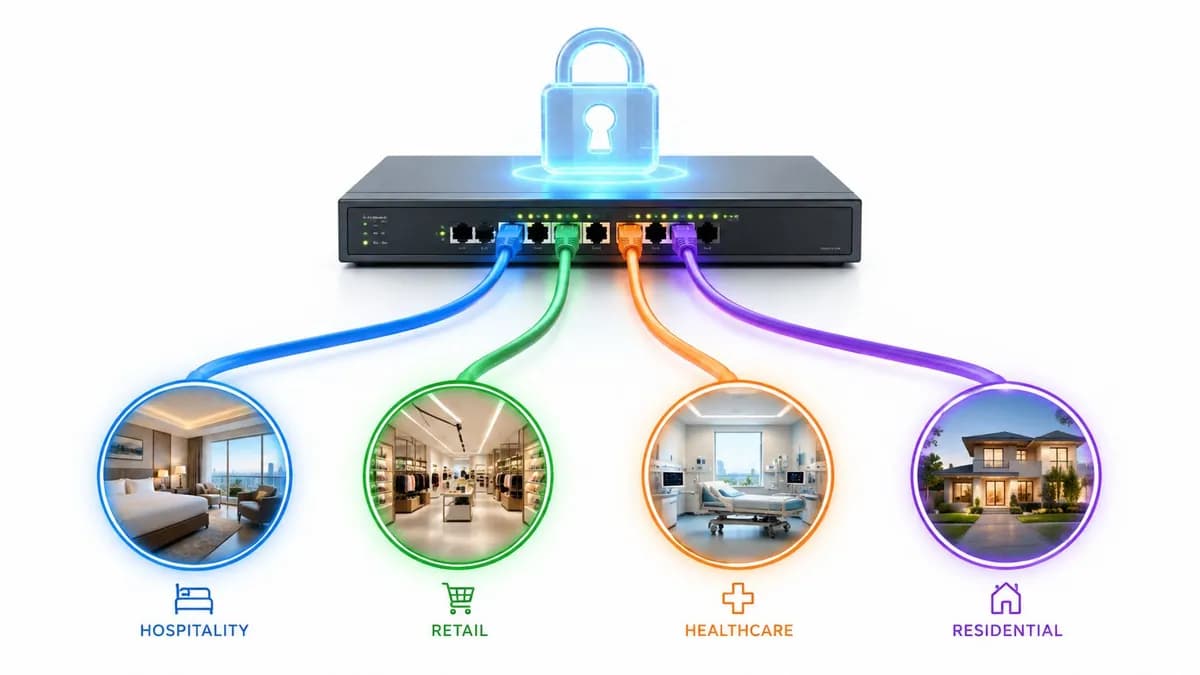
By eliminating friction from guest WiFi onboarding while encrypting over-the-air communications, Passpoint provides carrier-grade connectivity for enterprise venues, hospitality properties, retail chains, and transit hubs.
What is Passpoint WiFi and how does it work?
Traditional public guest WiFi networks require users to open browser splash pages, fill out form fields, or manually enter pre-shared keys. This creates user friction and leaves open networks vulnerable to unencrypted eavesdropping and evil twin attacks.
Passpoint solves these limitations by using Access Network Query Protocol (ANQP) during the initial 802.11 association. Before a device connects, ANQP allows the device and access point to exchange information regarding network identity, supported service providers, and authentication methods behind the scenes.
Key Takeaways
- Zero-Click Auto-Connect: Devices automatically discover and authenticate on Passpoint-enabled networks without manual intervention.
- WPA3-Enterprise Security: Every user session gets unique per-device encryption keys, preventing side-channel sniffing on public WiFi.
- Cellular Offload Integration: Mobile carriers and venues offload data traffic from congested 5G/LTE spectrum directly onto high-speed WiFi networks.
- Seamless Multi-Site Roaming: Users authenticate once and roam across thousands of participating locations automatically.
Passpoint WiFi vs traditional guest WiFi
Understanding how Passpoint compares to open guest networks and splash portals helps IT teams choose the optimal network architecture:
| Feature | Open Guest WiFi | Captive Portal | Passpoint WiFi (Hotspot 2.0) |
|---|---|---|---|
| User Onboarding | Manual SSID selection | Web splash page & form fill | Automatic zero-click connect |
| Encryption | None (Unencrypted open) | None post-authentication | WPA2/WPA3-Enterprise (802.1X) |
| Repeat Visits | MAC re-authentication | Frequent portal re-prompts | Instant background re-connection |
| Cellular Offload | Not supported | Not supported | Carrier-grade SIM & profile offload |
Core benefits of Passpoint for enterprise venues
Implementing Passpoint delivers strategic advantages for venue operators, enterprise network architects, and IT departments:
1. Enhanced enterprise WiFi security
Unlike open public networks, Passpoint utilises EAP-TTLS or EAP-TLS protocols under WPA2/WPA3-Enterprise. This ensures every data packet transmitted over the air is encrypted, protecting users from man-in-the-middle attacks and packet sniffing.
2. Zero-friction guest experience
Visitors install a Passpoint profile once - via an app, QR code, or email link - and automatically connect whenever they enter any participating location. There are no web forms to complete or passwords to remember.
3. Cellular offloading and carrier partnerships
Major cellular providers use Passpoint to offload data traffic from congested mobile towers onto venue WiFi networks. Venues can partner with carriers to monetise network infrastructure while ensuring visitors maintain fast connectivity.
How Purple Cloud RADIUS simplifies Passpoint deployment
Deploying Passpoint traditionally required complex on-premise RADIUS infrastructure, custom digital certificate authorities, and manual client profile provisioning. Purple Cloud RADIUS streamlines this process into a centralized cloud platform.
Purple integrates directly with leading enterprise hardware providers - including Cisco Meraki, HPE Aruba, Ruckus Wireless, and Juniper Mist - allowing network administrators to push Passpoint configurations across thousands of access points instantly.
Deploy Passpoint WiFi across your enterprise network
See how Purple Cloud RADIUS and Passpoint provisioning automate secure guest connectivity and cellular offloading for your venue.
Explore Purple Guest WiFiFrequently asked questions about Passpoint WiFi
Is Passpoint WiFi safe?
Yes. Passpoint uses enterprise-grade WPA2/WPA3-Enterprise security with 802.1X authentication. Unlike open public WiFi networks, Passpoint encrypts all traffic between the device and access point using unique session keys.
What is the difference between Passpoint and Hotspot 2.0?
Hotspot 2.0 is the technical specification developed by the WiFi Alliance and IEEE (802.11u standard). Passpoint is the official certification program managed by the WiFi Alliance to verify device and access point interoperability.
Do smartphones support Passpoint WiFi?
Yes. Modern operating systems - including iOS, Android, macOS, and Windows 10/11 - natively support Passpoint and Hotspot 2.0 profile installation and auto-connection.
How does Passpoint differ from OpenRoaming?
OpenRoaming is a global federation framework built on Passpoint technology. While Passpoint specifies the underlying authentication and encryption protocol, OpenRoaming provides the trust federation that connects identity providers (such as Google, Apple, or cellular carriers) with network providers worldwide.