

Purple AI: The Definitive Guide to Our WiFi Analytics and Guest WiFi Management Platform
This guide provides a comprehensive technical overview of the Purple AI platform, an enterprise-grade WiFi intelligence solution. It details the platform's features, architecture, and benefits for IT managers and venue operators, focusing on transforming guest WiFi into a tool for data analytics, customer engagement, and revenue generation.
🎧 Listen to this Guide
View Transcript

Executive Summary
This guide provides a comprehensive technical overview of the Purple AI platform for IT managers, network architects, CTOs, and venue operations directors. Purple AI is an enterprise-grade WiFi intelligence platform that transforms guest WiFi from a simple amenity into a powerful tool for data analytics, customer engagement, and revenue generation. By leveraging your existing WiFi infrastructure, Purple provides deep insights into visitor behaviour, enables personalised marketing, and ensures robust security and compliance. For organisations in hospitality, retail, large public venues, and the public sector, Purple AI offers a significant return on investment (ROI) by enhancing the customer experience, improving operational efficiency, and creating new revenue streams. This document details the platform's architecture, features, implementation best practices, and real-world business impact, providing the actionable guidance needed to deploy and maximise the value of Purple AI in your environment.
Technical Deep-Dive
Purple AI is a cloud-based overlay platform that integrates seamlessly with your existing WiFi hardware from leading vendors like Cisco, Juniper, and Ruckus. The platform's architecture is designed for scalability, security, and ease of management.
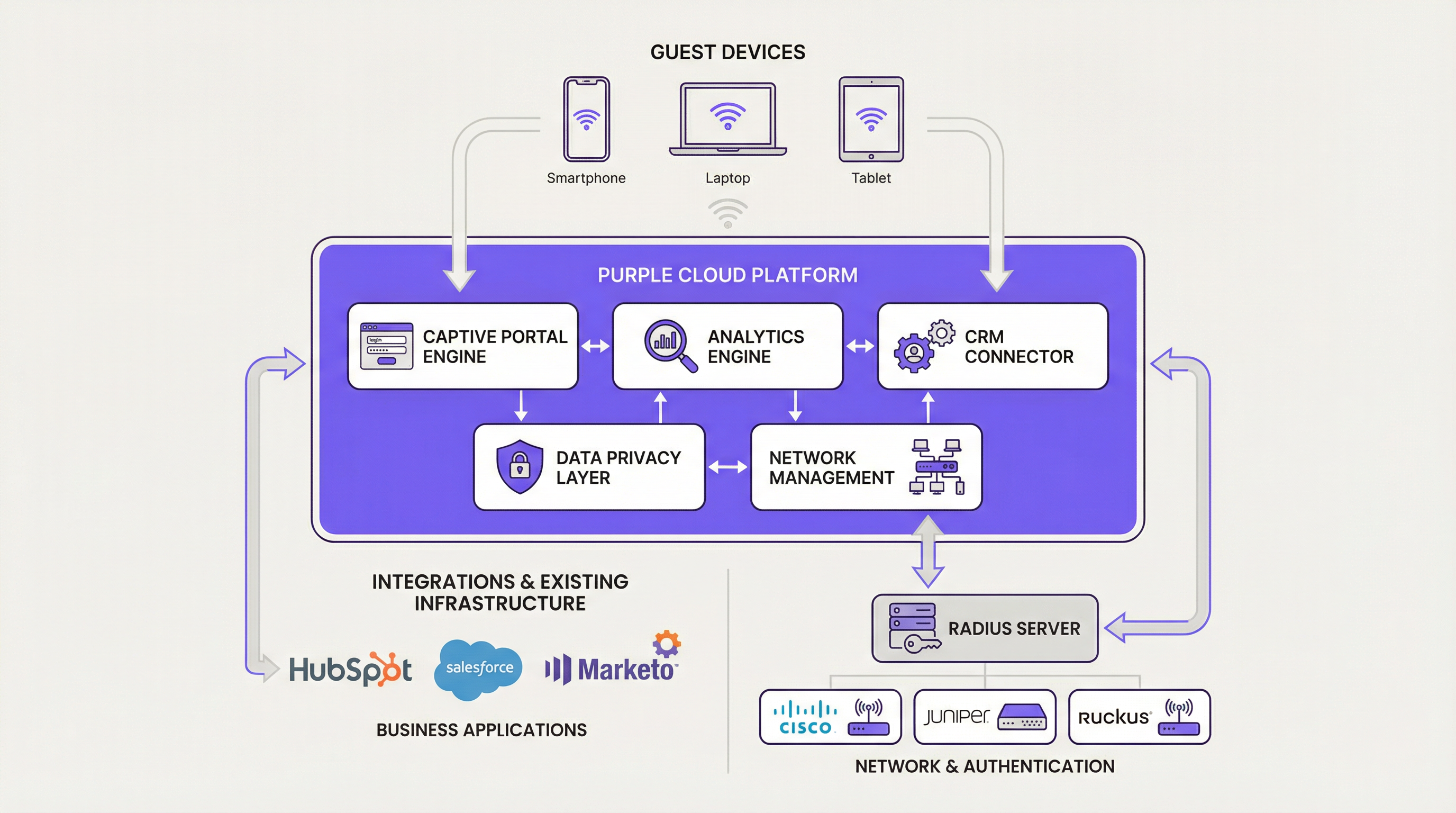
Core Platform Components
Captive Portal Engine: The captive portal is the gateway for guest WiFi access and the primary point of data capture. Purple's highly customisable captive portal allows you to create branded splash pages with a variety of authentication methods, including social login (Facebook, X, LinkedIn), custom forms, and click-to-connect. The portal supports over 25 languages with automatic device detection and is designed for a frictionless user experience. For enhanced security and seamless access, the platform also supports Passpoint (Hotspot 2.0) and profile authentication, allowing trusted users to connect automatically and securely without repeated logins.
Analytics Engine: At the heart of Purple AI is a powerful analytics engine that processes data from WiFi connections to provide actionable insights. Key analytics capabilities include:
- Footfall Analysis: Track visitor numbers, dwell times, and visit frequency across single or multiple venues.
- Heatmaps: Visualise visitor density and movement patterns within a physical space to optimise layout and staffing.
- Demographics and Behaviour: Gain insights into visitor demographics (age, gender), interests, and online behaviour.
- New vs. Repeat Visitors: Differentiate between new and returning visitors to tailor engagement strategies.

CRM Connector: Purple AI integrates with over 400 third-party applications, including leading CRM and marketing automation platforms like HubSpot, Salesforce, and Marketo. This allows you to automatically sync captured visitor data, creating a single source of truth and enabling highly targeted marketing campaigns.
Data Privacy Layer: Compliance with global data privacy regulations is a core design principle of the Purple platform. The Data Privacy Layer ensures adherence to GDPR, CCPA, and other major data protection acts. Purple is ISO 27001 certified, providing enterprise-grade security and peace of mind. The platform includes features like email address verification (Purple Verify) to ensure data integrity and clear opt-in mechanisms for marketing communications.
Network Management: The cloud-based dashboard provides a centralised view of your entire WiFi network. IT teams can remotely monitor network health, track performance metrics like speed and coverage, and troubleshoot issues, significantly reducing the need for on-site engineer visits.
Security and Compliance Standards
Purple AI is built on a foundation of robust security. The platform supports the latest industry standards to protect your network and your users:
- WPA3-Enterprise: For the highest level of security, Purple supports WPA3-Enterprise, which leverages IEEE 802.1X for authentication and provides stronger encryption than previous standards.
- IEEE 802.1X: This standard provides port-based network access control, ensuring that only authorised devices and users can connect to your network. Each user or device is required to present unique credentials, eliminating the risks associated with shared passwords.
- RADIUS Server Integration: Purple integrates with your existing RADIUS (Remote Authentication Dial-In User Service) server for centralised authentication, authorisation, and accounting (AAA).
- Content Filtering (Purple Shield): Protect your guests and your brand with integrated content filtering that blocks access to malicious or inappropriate websites.
Implementation Guide
Deploying Purple AI is a straightforward process that can be completed with minimal disruption to your existing network operations.
- Hardware Compatibility Check: Verify that your existing WiFi access points are compatible with Purple. The platform supports a wide range of hardware from major vendors.
- Cloud Account Setup: Create your Purple account and add your venue(s). The cloud-based nature of the platform means there is no on-premise server hardware to install or maintain.
- AP Configuration: Configure your access points to point to the Purple cloud platform. This typically involves updating the SSID settings and pointing to Purple's RADIUS servers.
- Captive Portal Customisation: Design your captive portal splash pages using the intuitive drag-and-drop editor. Add your branding, select authentication methods, and customise the user journey.
- Integration Setup: Connect Purple to your CRM and other marketing tools using the extensive library of pre-built connectors.
- Testing and Go-Live: Test the guest WiFi experience thoroughly before making it live to the public.
Best Practices
- Tiered Bandwidth: Offer a free tier of WiFi with limited bandwidth and session duration, and a premium paid tier with faster speeds and longer access. This can create a new revenue stream, as demonstrated by AGS Airports, which achieved an 842% ROI with this model.
- Promote Loyalty Programmes: Use the captive portal to promote your loyalty programme and offer a seamless sign-up process. Harrods increased loyalty programme sign-ups by 14% among WiFi users by asking a simple question on the splash page.
- A/B Test Your Splash Pages: Experiment with different branding, messaging, and authentication methods on your captive portal to optimise for conversion and data capture.
- Leverage Data for Operations: Use footfall and heatmap data to make informed decisions about staffing levels, store layout, and opening hours.
Troubleshooting & Risk Mitigation
- Poor Network Performance: Monitor network analytics in the Purple dashboard to identify areas of poor coverage or high congestion. Use the AP calculator to ensure you have adequate hardware for your venue size and user density.
- Low User Adoption: If you are seeing low connection rates, review your captive portal journey. Is it too complex? Are you asking for too much information? Simplify the process to encourage adoption.
- Data Privacy Concerns: Be transparent with your users about what data you are collecting and how you are using it. Ensure your privacy policy is clearly accessible from the captive portal.
ROI & Business Impact
The business case for Purple AI is compelling. By turning guest WiFi into an intelligence platform, organisations can achieve significant returns through:
- Increased Revenue: Create new revenue streams through paid WiFi tiers and drive sales through targeted marketing. Harrods achieved a 57x ROI from purchases made by customers who opted into marketing via the WiFi.
- Enhanced Customer Experience: Provide a seamless and secure connectivity experience that enhances guest satisfaction and loyalty.
- Improved Operational Efficiency: Reduce IT overhead with cloud-based management and remote troubleshooting. McDonald's Belgium saw a 90% reduction in the need for IT engineers to visit sites physically.
- Data-Driven Decision Making: Make smarter business decisions based on real-world data about how visitors interact with your physical spaces.

Key Terms & Definitions
Captive Portal
A web page that is displayed to newly connected users of a WiFi network before they are granted broader access to network resources.
This is the primary tool for user authentication and data capture in a guest WiFi environment. IT teams configure it to enforce access policies and marketing teams brand it to capture user data for engagement.
Passpoint (Hotspot 2.0)
A standard that enables mobile devices to automatically discover and authenticate to WiFi hotspots without user intervention.
For frequent visitors or staff, Passpoint provides a seamless and secure connection experience, similar to cellular roaming. This reduces login friction and is a key feature for improving user satisfaction in high-traffic venues.
IEEE 802.1X
An IEEE standard for port-based Network Access Control (PNAC). It provides an authentication mechanism to devices wishing to attach to a LAN or WLAN.
This is the enterprise-grade standard for securing WiFi networks. Unlike a single pre-shared key (PSK) for everyone, 802.1X requires each user to have unique credentials, dramatically improving security and accountability.
WPA3-Enterprise
The latest generation of WiFi security, offering enhanced encryption and authentication, specifically designed for enterprise environments using 802.1X.
Implementing WPA3-Enterprise is a critical step for CTOs and network architects to mitigate risks from sophisticated cyber threats and ensure the highest level of data protection on their wireless networks.
RADIUS
Remote Authentication Dial-In User Service, a networking protocol that provides centralized Authentication, Authorization, and Accounting (AAA) management for users who connect and use a network service.
Purple integrates with your existing RADIUS server, allowing you to maintain a centralized user database and consistent security policies across your entire network infrastructure.
Footfall Analytics
The measurement and analysis of the number of people who enter a physical space, such as a store, mall, or stadium.
Venue operations directors use footfall data to measure the effectiveness of marketing campaigns, optimize staffing levels, and understand peak visitor times to improve operational efficiency.
Dwell Time
The amount of time a visitor spends in a specific area or within a venue as a whole.
High dwell time can indicate strong engagement, but can also highlight bottlenecks. Analyzing this metric helps operations teams improve layout, reduce queues, and enhance the overall visitor experience.
First-Party Data
Data that a company collects directly from its customers and owns.
In an era of increasing privacy restrictions on third-party data, collecting first-party data via the guest WiFi portal is a strategic imperative. It allows for direct, consent-based marketing and a deeper understanding of your own customer base.
Case Studies
A 200-room luxury hotel wants to increase direct bookings and enhance guest loyalty. They have an existing Cisco Meraki WiFi network but capture no guest data.
Deploy Purple AI's 'Capture' plan. Configure a branded captive portal with a social login option and a custom form field asking for loyalty program interest. Integrate with the hotel's HubSpot CRM to sync guest data. Redirect guests who express interest to the loyalty program sign-up page, pre-filled with their details. Use the analytics to identify peak check-in times and optimize front desk staffing.
A large shopping mall with 150+ retail tenants needs to provide public WiFi, justify tenant rental costs, and improve visitor flow.
Implement Purple AI's 'Engage' plan across the entire mall. Use footfall analytics and heatmaps to provide tenants with detailed reports on visitor traffic and dwell times in their zone, justifying rental costs. Use the platform to create customized access journeys, redirecting shoppers to specific tenant offers based on their location within the mall. Implement tiered bandwidth, offering a free basic service and a paid premium service for high-bandwidth users.
Scenario Analysis
Q1. You are the CTO of a retail chain with 50 stores. You want to measure the impact of a new window display campaign on in-store footfall. How would you use Purple AI to do this?
💡 Hint:Think about how you can compare data before and after the campaign launch.
Show Recommended Approach
First, establish a baseline by using the footfall analytics in the Purple dashboard to measure average daily visitor counts for the two weeks prior to the campaign. Once the new window displays are installed, continue to track daily footfall. After two weeks, compare the average daily footfall during the campaign period to the baseline period. You can also analyze dwell time and new vs. repeat visitor data to see if the campaign is attracting a new audience or encouraging existing customers to stay longer.
Q2. A stadium is experiencing WiFi network congestion during major events, leading to poor user experience. How can an IT manager use Purple AI to diagnose and mitigate this issue?
💡 Hint:Consider both the analytics and network management features.
Show Recommended Approach
The IT manager should use the network analytics in Purple to monitor bandwidth usage and device connections in real-time during an event. The heatmaps will show exactly where the highest density of users is, helping to identify specific access points that are overloaded. Based on this data, they can implement a tiered bandwidth solution, offering a free, lower-speed connection for basic use and a paid, high-speed option for streaming. This segments traffic and can reduce congestion on the free tier while creating a new revenue stream.
Q3. A conference centre hosts multiple events for different corporate clients simultaneously. How can they provide a customized and secure WiFi experience for each client?
💡 Hint:Think about how you can create separate, branded experiences on a shared physical network.
Show Recommended Approach
The conference centre can use Purple's multi-tenancy features. They can create a separate, branded captive portal for each corporate client, even if they are all sharing the same physical WiFi infrastructure. Each portal can have its own authentication methods and redirect URLs. For security, they can use 802.1X and integrate with each client's RADIUS server if required, ensuring that only authorized attendees for each specific event can access the network. This provides a secure, customized, and professional experience for each client.
Key Takeaways
- ✓Purple AI is a cloud-based software overlay that enhances existing WiFi hardware without requiring replacement.
- ✓The platform provides deep analytics on visitor behavior, including footfall, dwell time, and heatmaps.
- ✓Customizable captive portals with social logins and forms enable rich, first-party data capture.
- ✓Purple integrates with over 400 CRM and marketing platforms to automate data sync and personalized marketing.
- ✓The platform is built with enterprise-grade security, supporting WPA3-Enterprise, 802.1X, and is ISO 27001 certified and GDPR compliant.
- ✓Real-world case studies show significant ROI through new revenue streams (tiered WiFi) and data-driven marketing.
- ✓Implementation is straightforward, involving a simple configuration change to point your access points to the Purple cloud.




