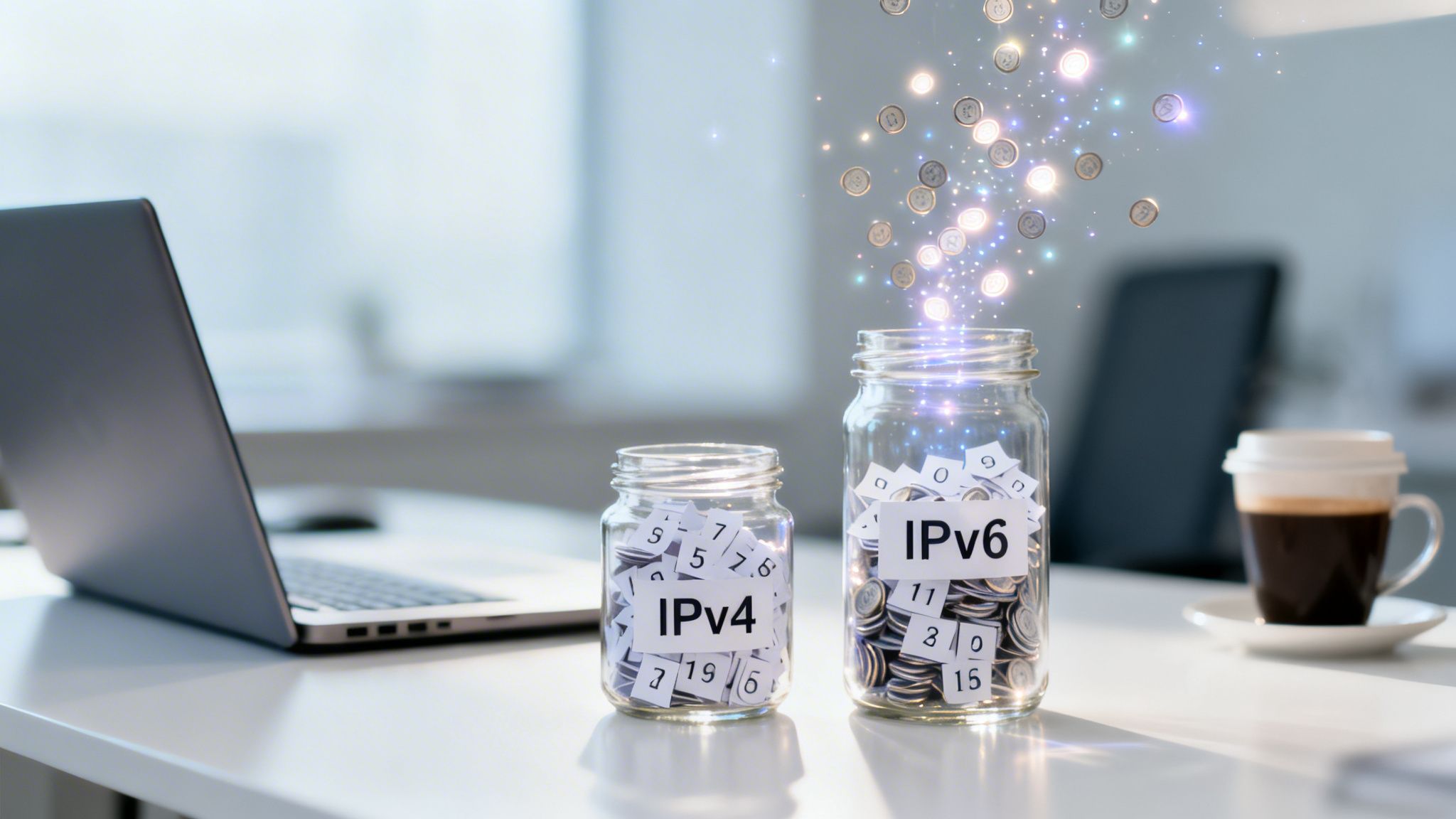
Fundamentally, the difference between IPv4 and IPv6 comes down to one critical factor: address space. IPv4 was the internet's foundation, but its supply of roughly 4.3 billion unique addresses has been completely exhausted. In contrast, IPv6 offers a virtually infinite number of addresses, ensuring every device can obtain its own unique, public IP for decades to come.
An Executive Summary of IPv4 vs. IPv6
As the internet has grown exponentially, the limitations of IPv4 have become a significant challenge for businesses. The shortage of addresses has forced network administrators to use complex and costly workarounds like Network Address Translation (NAT), which makes network management cumbersome and can negatively impact performance.
For businesses in the UK—especially in hospitality, retail, and large public venues—this is not just a technical problem; it is a strategic one. The transition to IPv6 is focused on gaining scalability, enhanced security, and simpler network operations. Understanding the key differences is the first step for any IT leader or network administrator looking towards the future.
Key Differences at a Glance
The most widely discussed difference is the sheer volume of addresses. IPv4's 32-bit address pool was exhausted years ago, whereas IPv6’s 128-bit addresses provide a staggering 340 undecillion unique identifiers. This massive capacity eliminates the need for NAT, allowing true end-to-end connections for every single device, from a hotel guest's smartphone to an IoT sensor in a shopping centre.
However, it is not just about having more addresses. IPv6 was designed from the ground up with modern networking in mind.
IPv6 makes routing packets significantly simpler with a clean, fixed-length header. It also places security at the forefront by requiring support for IPsec, which provides end-to-end encryption. This is a major upgrade from IPv4, where IPsec is merely an optional addition.
For busy administrators and business leaders, this table summarises the most important differences for a quick overview.
Key Differences IPv4 vs IPv6 at a Glance
Ultimately, transitioning from IPv4 to IPv6 is not just a technical upgrade. It is a fundamental business move required to build scalable, secure, and efficient networks capable of handling the next wave of internet-connected services.
Understanding the Address Architecture
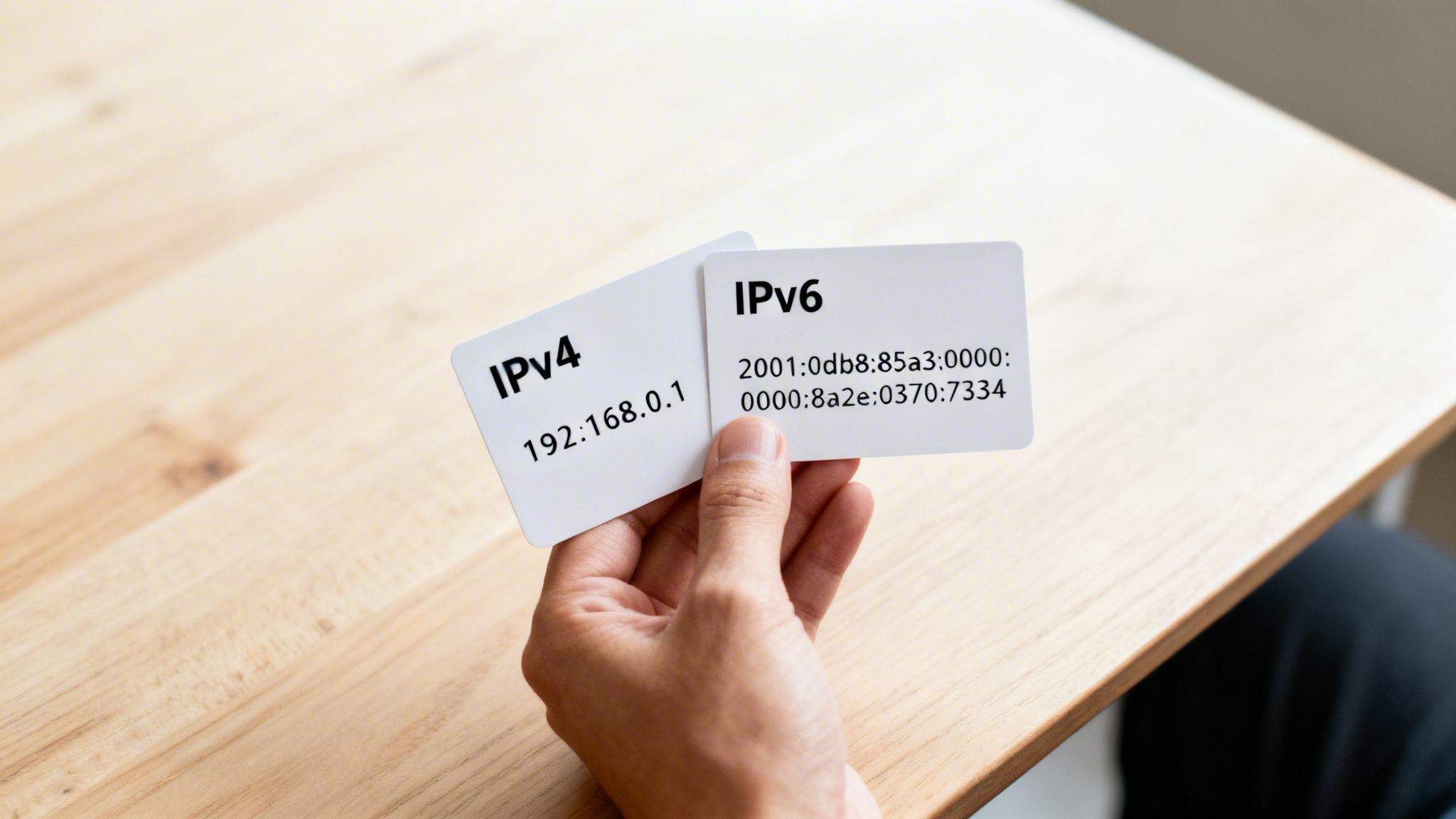
While it is easy to focus on the massive number of new addresses, the real difference between IPv6 and IPv4 is rooted in their fundamental architecture. This is not merely about adding more numbers; it is a ground-up redesign that changes how we build, manage, and secure networks.
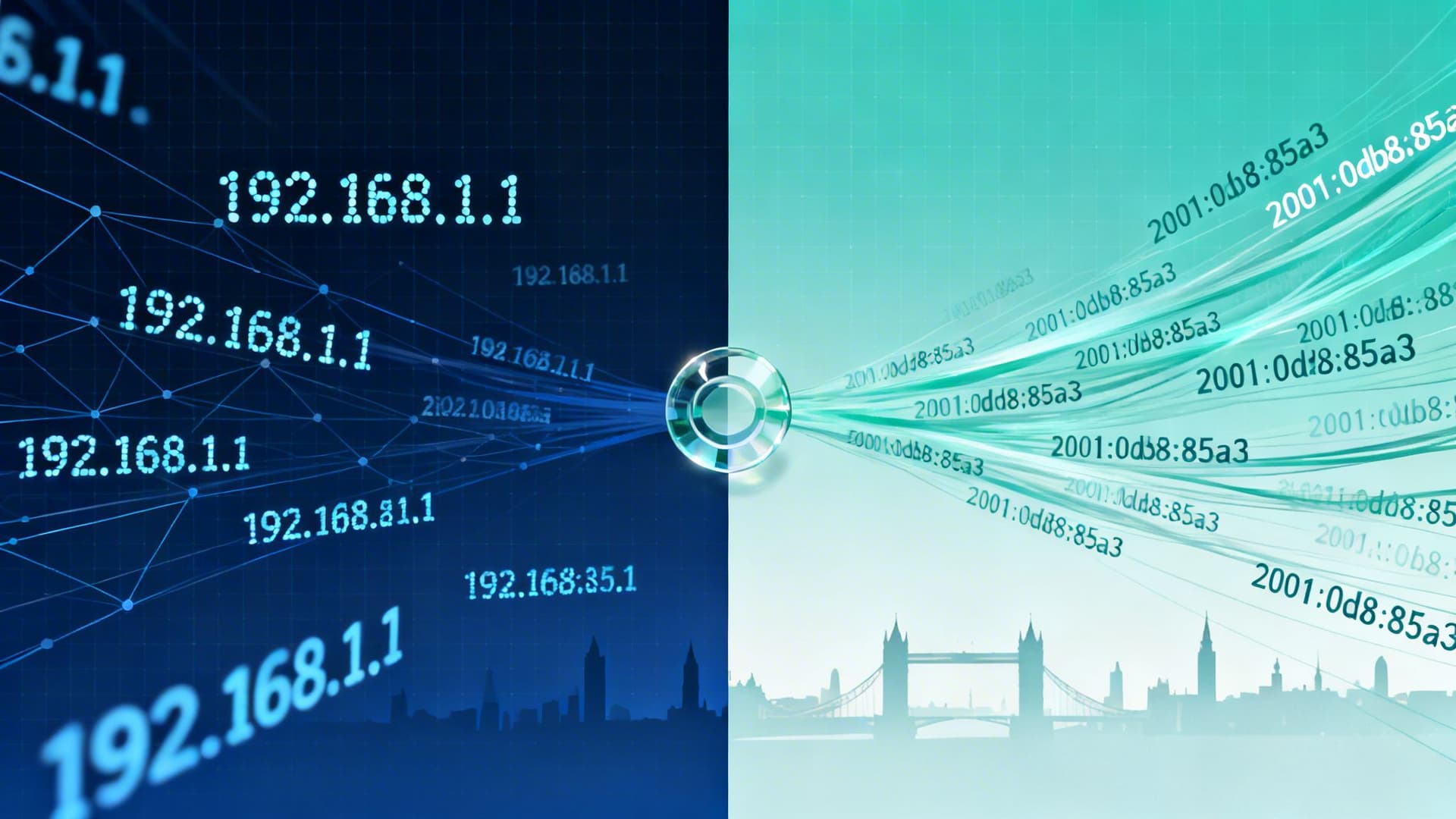
IPv4 addresses are 32-bit numbers, giving us a pool of roughly 4.3 billion unique identifiers. Back in the 1980s, that seemed like an infinite supply. Today, we know it was not nearly enough for a world filled with billions of internet-connected devices. We recognise them in the familiar dotted-decimal format, such as 192.168.1.1, which is relatively easy for humans to read.
In stark contrast, IPv6 vastly expands the possibilities with its 128-bit address space. This is not just a marginal increase; it is an exponential leap to a staggering 340 undecillion addresses. To give that some scale, if the entire IPv4 address space were the size of a postage stamp, the IPv6 space would be as vast as our solar system.
Deconstructing the Address Formats
Such a massive address space required a new formatting method. IPv6 addresses are shown as eight groups of four hexadecimal digits, all separated by colons. For instance, a typical IPv6 address looks like this: 2001:0db8:85a3:0000:0000:8a2e:0370:7334.
That looks quite cumbersome, so to simplify matters, IPv6 incorporates a few convenient shorthand rules:
- You can drop any leading zeros in a group. So,
0db8becomesdb8. - A single, consecutive block of all-zero groups can be replaced with a double colon
::.
Applying those rules, our example address shrinks to 2001:db8:85a3::8a2e:0370:7334, which is much cleaner. This is not just for aesthetics; the structure is built for more efficient, hierarchical network organisation and routing.
The core architectural benefit of IPv6's immense address space is the elimination of Network Address Translation (NAT). This single change restores the internet's original principle of end-to-end connectivity, simplifying network management and improving security.
The Business Impact of Eliminating NAT
For decades, businesses across the UK have relied on Network Address Translation (NAT) as an effective workaround to preserve the dwindling supply of IPv4 addresses. NAT allows an entire office or hotel full of devices on a private network to share just one public IPv4 address.
While it was an effective solution, NAT introduces a layer of complexity and a host of problems. It acts as an intermediary, constantly rewriting packet headers as they move between the private network and the public internet. This consumes router resources, can add latency, and frequently disrupts applications that rely on direct connections, such as VoIP or online gaming.
With IPv6, every single device can obtain its own globally unique public address. The implications for network planning are immense:
- True End-to-End Connectivity: Devices can finally communicate directly with each other without a NAT device interfering. This is a game-changer for IoT devices, real-time communications, and secure remote access.
- Simplified Network Architecture: Your IT team no longer has to struggle with complex NAT tables and port forwarding rules, freeing them from troubleshooting issues to focus on more strategic work.
- Enhanced Security Foundation: Giving every device a unique, traceable address makes it far easier to apply granular security policies. This is a vital cornerstone for modern zero-trust security models, which are essential for protecting both guest and corporate networks in large retail venues or multi-tenant properties.
How Protocol Headers Impact Network Performance
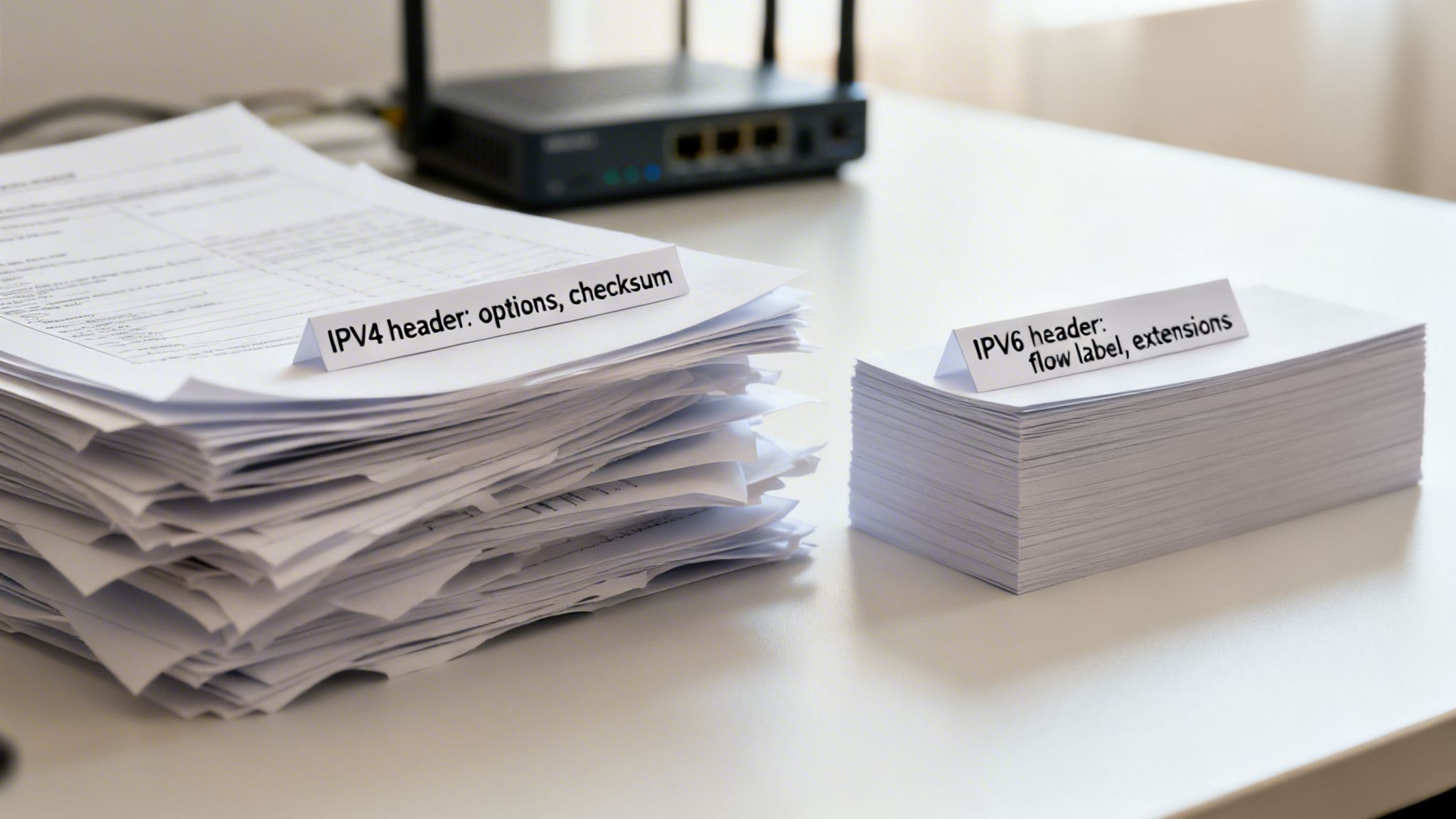
Beyond the address itself, a critical difference between IPv6 and IPv4 is hidden in the design of their protocol headers—the ‘address label’ on every single data packet. This might sound like a minor technical detail, but it has a massive impact on network performance, influencing everything from router efficiency to the user experience in a high-density venue.
Consider an IPv4 header as a complicated, multi-part shipping label that sometimes includes extra, optional instructions. This header has a variable length, usually between 20 and 60 bytes, because it can contain optional fields that aren't always used. Every router along the way has to check for and process these options, adding a small but significant processing burden to every packet.
In contrast, the IPv6 header is a modern, standardised shipping label. It has a simple, fixed length of 40 bytes. All the non-essential and optional information has been stripped out of the main header and placed into separate "extension headers" that are only attached when absolutely necessary.
This design refinement means routers can process IPv6 packets significantly faster. They no longer waste valuable processing cycles checking for variable options on every packet, which leads to lower latency and more predictable network behaviour.
The Checksum and Its Performance Cost
Another key performance difference is how each protocol approaches error checking. The IPv4 header includes a checksum field. This is a value calculated by the sending device, which is then recalculated and verified by every single router the packet passes through on its journey.
While this effectively ensures the header has not been corrupted, it comes at a performance cost. Each router has to spend CPU cycles recalculating that checksum for every packet. In a high-traffic environment, this constant verification process accumulates, consuming router resources and contributing to network latency.
IPv6 eliminates the header checksum entirely. The designers realised that modern network layers, like Ethernet and TCP, already perform their own robust error checking. This makes the checksum in the IP header redundant, adding unnecessary workload for routers.
By offloading error checking to other layers, IPv6 lets core network hardware focus on its primary job: forwarding packets as quickly as possible. For UK businesses managing high-density WiFi in places like stadiums, transport hubs, or large hotels, this efficiency boost provides tangible benefits. It means quicker WiFi authentication for guests and a smoother, more responsive online experience, even during peak hours. If you want to dig deeper into network performance, you might find our guide to effective bandwidth management techniques useful.
Introducing Flow Labels for Smarter Traffic Management
IPv6 does not just simplify operations; it also introduces powerful new tools. One of the most important additions to the IPv6 header is the 20-bit Flow Label field. This lets a source device mark a sequence of packets as all belonging to the same "flow" or conversation.
A flow could be anything from a VoIP call to a video stream or a specific application session. Routers along the path can then use this label to identify and handle all packets from that flow in the same way, without needing to perform deep inspection on every single one. This is a game-changer for implementing effective Quality of Service (QoS).
For instance, a network administrator can create policies that give high priority to packets with a flow label for a video conference, ensuring it gets the bandwidth it needs even on a congested network. This is a critical feature for delivering a reliable experience for real-time applications over guest WiFi, making it a clear and powerful advantage of IPv6 over IPv4.
A New Paradigm for Security and Configuration
The transition from IPv4 to IPv6 goes far beyond simply getting more addresses. It marks a fundamental shift in how we think about network security and device configuration. Where IPv4 security often feels like an afterthought added to an older system, IPv6 was designed from the ground up with modern security principles built-in.
You can see this most clearly in its approach to IPsec (Internet Protocol Security). IPsec is a framework that authenticates and encrypts every packet, creating a secure, private channel for communication. In the IPv4 world, it’s entirely optional. While effective, configuring IPsec can be complex and inconsistent, which is why many network administrators often rely on other security layers instead.
IPv6, on the other hand, makes IPsec support a core, mandatory part of the protocol. Although not every connection will use it by default, the framework is always available. This native integration makes deploying end-to-end encryption and authentication much simpler, helping to ensure data integrity and confidentiality are inherent, not added as an afterthought.
Reimagining Device Configuration with SLAAC
Another major point of difference is how devices actually get their IP addresses. For decades, IPv4 networks have relied on the Dynamic Host Configuration Protocol (DHCP). This involves a central server leasing out addresses from a limited pool, a process that requires a dedicated server, ongoing maintenance, and careful management.
IPv6 revolutionises this with a more streamlined and decentralised method called Stateless Address Autoconfiguration (SLAAC). Using SLAAC, a device can essentially give itself a globally unique IP address. It simply listens for router advertisements on the local network to get the network prefix, then combines it with its own unique identifier (often derived from its MAC address).
This self-configuration capability drastically simplifies operations for network administrators. You no longer have to manage complex DHCP scopes or worry about a central server acting as a single point of failure.
The combination of native IPsec and SLAAC creates a powerful synergy for modern security. Because every device can self-assign a globally unique and persistent address, it becomes possible to build true zero-trust networks where identity is tied directly to the endpoint, not a temporary, shared address.
This principle is a cornerstone of any robust security architecture. As organisations move away from the outdated "castle-and-moat" security model, they need the ability to enforce policies on a per-device basis, no matter where it is. You can explore how this applies to wireless environments in our post on building a secure wireless networking strategy .
Security and Management in Practice
For UK network administrators in sectors like healthcare, enterprise, or hospitality, these differences bring tangible benefits.
- Enhanced Security in Healthcare: A hospital might have thousands of medical devices, staff tablets, and guest phones on its network. With IPv6, each one gets a unique, traceable address. This makes it far easier to isolate sensitive medical equipment from the guest WiFi and enforce strict access controls.
- Simplified Management in Retail: For a large shopping centre with hundreds of tenants and thousands of daily visitors, managing a DHCP server for the guest WiFi network is a huge operational challenge. SLAAC lets guest devices connect seamlessly and get an address automatically, cutting down on administrative overhead.
- Foundation for Zero-Trust: By eliminating Network Address Translation (NAT), IPv6 ensures that a device’s unique address is visible from one end of the connection to the other. This end-to-end traceability is vital for implementing zero-trust security, where every single connection request must be verified.
This direct, verifiable identity model closes many security gaps associated with the shared, anonymous nature of NAT-based IPv4 networks. It prevents malicious actors from hiding within a large pool of shared addresses and provides a clear audit trail for every device on the network—a significant operational advantage.
It is easy to get overwhelmed by the technical details when comparing IPv6 and IPv4. But for network administrators in hospitality, retail, and healthcare, what really matters is how this transition is playing out in the real world. This is not a distant, hypothetical event; it is happening right now, and the UK market provides a perfect snapshot of why a strategy is essential.
The shift is being driven by simple economics. The global pool of available IPv4 addresses was exhausted years ago, creating a secondary market where purchasing old IPv4 blocks is becoming increasingly expensive. For any business looking to expand its network—whether for guest smartphones in a hotel or IoT sensors in a shopping centre—relying on a scarce and costly resource simply is not a sustainable plan anymore.
The UK's Adoption Journey
In the United Kingdom, the transition to IPv6 has accelerated significantly. Adoption has skyrocketed from a mere 0.19% in spring 2014 to a substantial 48.6% by autumn 2024. It’s a stark contrast to IPv4's situation, which is restricted to its 4.3 billion addresses, while IPv6 offers a practically bottomless pool of 340 undecillion.
Major ISPs are leading this initiative. Vodafone UK, for example, initiated a limited IPv6 trial for its fixed broadband customers at the end of 2023. As of early 2025, they’ve already enabled 76% of subscribers and are on track for 100% by the end of March 2025, a plan you can read about in their latest rollout announcements .
When the country's major internet providers fully commit to IPv6, it serves as a clear signal for businesses. As the infrastructure your customers and staff depend on becomes IPv6-native, sticking with an IPv4-only strategy just adds complexity and risks creating performance bottlenecks. The question is no longer if you should adapt, but how.
Even with this rapid adoption, the reality for the foreseeable future is a dual-stack world. Your network must be able to handle both IPv4 and IPv6 traffic simultaneously to ensure everyone, on any device, can get connected.
This infographic gives a great visual summary of the key differences, particularly around security and configuration.
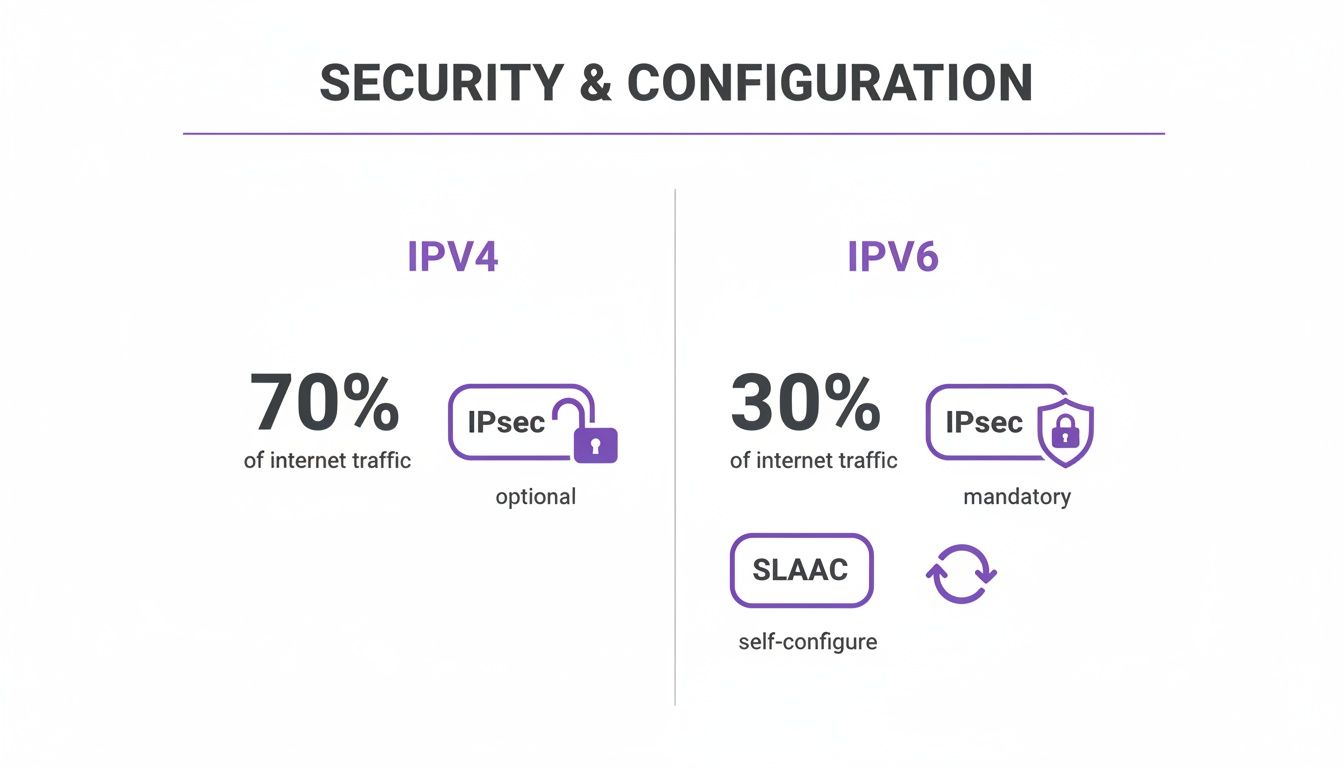
You can see how IPv6 was designed with security in mind, making IPsec support mandatory, unlike IPv4 where it's an optional extra. It also streamlines device setup with features like SLAAC, making network management simpler.
Strategic Implications for UK Businesses
For anyone making IT decisions, these trends mean it’s time to be proactive. A dual-stack environment means your network hardware, software, and security policies all need to be configured to handle both protocols properly. This is not just about checking a compatibility box; it is about preparing your network for the future.
Here are the key takeaways for UK venues:
- Future-Proofing Infrastructure: An IPv6-ready network is your ticket to scalability. It means you can support a growing number of connected devices without hitting the wall of IPv4 address limits and costs.
- Enhancing Security Posture: As mentioned, IPv6's built-in support for IPsec and its ability to give every device a unique address provide a much stronger foundation for modern security models like zero-trust.
- Simplifying Network Management: Moving away from the complex web of NAT reduces your operational challenges, makes troubleshooting easier, and ultimately improves network reliability.
By aligning your internal network strategy with these national and global shifts, businesses in retail, hospitality, and healthcare can build an infrastructure that is robust, secure, and ready for the next wave of digital services. Simply put, ignoring the transition to IPv6 is no longer an option.
Strategic Guidance for UK Network Administrators
Understanding the technical differences between IPv4 and IPv6 is just the beginning. If you’re a UK network administrator managing the complex WiFi environments in hotels, shopping centres, or hospitals, the real challenge is turning that knowledge into an actionable plan. For now, we live in a dual-stack world. Your goal should be to support both protocols seamlessly, while actively preparing for an IPv6-first future.
The first practical step is to conduct a comprehensive network audit. You need to identify which components of your infrastructure—from your core routers and switches to your wireless access points and firewalls—are actually IPv6-capable. Most enterprise-grade equipment purchased in the last decade will support IPv6, but you will often need to review firmware updates and specific settings to enable it correctly. This audit will serve as the foundation of your migration plan.
For venues like hotels or large retail spaces, a phased rollout using a dual-stack approach makes the most sense. This allows you to introduce IPv6 without disrupting your existing IPv4 services that everyone relies on. Modern network platforms from vendors like Meraki, Aruba, and Ruckus have straightforward controls for enabling both protocols. This ensures that newer client devices can connect via IPv6, while older ones continue to use IPv4.
Leveraging Modern Authentication Platforms
This transition is also a perfect opportunity to modernise your entire access control setup. Modern identity-based networking platforms like Purple are built to function seamlessly in a dual-stack environment. By integrating with cloud identity providers like Entra ID or Google Workspace, you can finally transition away from outdated RADIUS servers. Instead, you can adopt certificate-based, zero-trust access for your staff and simple, passwordless authentication for your guests.
An IPv6-ready network, combined with an advanced authentication solution, unlocks a superior guest experience and richer analytics. Because each device receives a unique, persistent global address, you can gather more accurate data on visitor behaviour, device types, and dwell times, helping to prove ROI and personalise marketing efforts.
This direct device identification is a significant upgrade from the limitations of IPv4 and NAT. You can also optimise your network architecture from the ground up by following our guide on how to properly design a network for today's demands.
Aligning with UK Adoption Realities
The pressure to adapt is very real, especially when you observe what is happening in the UK. While IPv4 remains dominant and handles most of the traffic, its scarcity is forcing rapid structural adjustments. For instance, the UK recently saw the highest global increase of 6.57 million IPv4 addresses, a clear sign of a constrained market. In stark contrast, UK ISPs like Vodafone are reporting 76% IPv6 enablement on fixed broadband, pushing the new protocol directly to your customers' devices. You can explore the full story behind this shift by checking out the latest data on IP address allocation trends .
Your strategy needs to reflect this reality. Prioritise IPv6 for any new deployments and, where possible, segment your network to trial IPv6-only services—perhaps for specific IoT devices or internal staff networks. By taking these deliberate, strategic steps, UK network administrators can do more than just navigate the IPv4 to IPv6 transition; you can build a more secure, efficient, and future-ready network.
Frequently Asked Questions
When it comes to the IPv4 vs IPv6 debate, the technical details are one thing, but what does it all mean in practice? Let us bypass the jargon and focus directly on the real-world implications.
Here are the answers to the questions we hear most often from UK network administrators and business leaders who are navigating this transition.
Is IPv6 Faster Than IPv4?
This is a common question, and the answer is not a simple yes or no. While IPv6 is not automatically faster in terms of clock speed, its design almost always leads to a more responsive, efficient network experience.
The primary reason is the streamlined, fixed-length protocol header in IPv6. It is much simpler for routers to process, which reduces latency. Think of it as an express lane for your data packets. IPv6 also completely eliminates the need for Network Address Translation (NAT), a necessary but complex workaround in the IPv4 world. This means devices can connect directly, which is a massive advantage for real-time applications like VoIP and video conferencing that often get slowed down by NAT.
Will My Existing Devices Work with IPv6?
For the vast majority of businesses, the answer is a confident yes. If your hardware—smartphones, laptops, routers, and switches—was manufactured in the last decade, it almost certainly has full IPv6 support built-in.
The transition is handled gracefully using a "dual-stack" approach, ensuring you do not have to worry about older equipment suddenly becoming disconnected.
A dual-stack network is one that runs both IPv4 and IPv6 protocols simultaneously. This intelligent setup guarantees that every device, new or old, can connect seamlessly, ensuring a completely uninterrupted experience for everyone on your network.
Do I Need to Switch to IPv6 Immediately?
There is no official "switch-off" date for IPv4 that will force immediate action. However, delaying an IPv6 strategy is becoming a risky and expensive proposition for UK businesses.
Relying on the dwindling and increasingly costly supply of IPv4 addresses simply is not a sustainable model for any growing organisation. Transitioning to IPv6 now future-proofs your network. It also unlocks enhanced security through native IPsec support and helps you build a much simpler, more streamlined network architecture. Starting the transition today is not just about keeping pace; it is about giving your business a significant long-term competitive advantage.
Ready to simplify your network with secure, identity-based access that is built for the dual-stack world? Learn how Purple can modernise your guest and corporate WiFi at https://www.purple.ai .