
Hotel WiFi platforms for direct bookings: turning guest sign-ins into lower OTA commission
You will be able to choose a hotel WiFi platform that turns guest sign-ins into consented, first-party contacts, segment OTA bookers by stay type and booking source, and model the net commission each converted direct stay saves. You can then score vendors on PMS matching and consent syncing, and launch a measured pilot without new hardware.
By Dean CooksonPublished
📖 12 min read2,789 words3 worked examples12 key definitions
Part of our core series: WiFi marketing and first-party data: the complete guide →
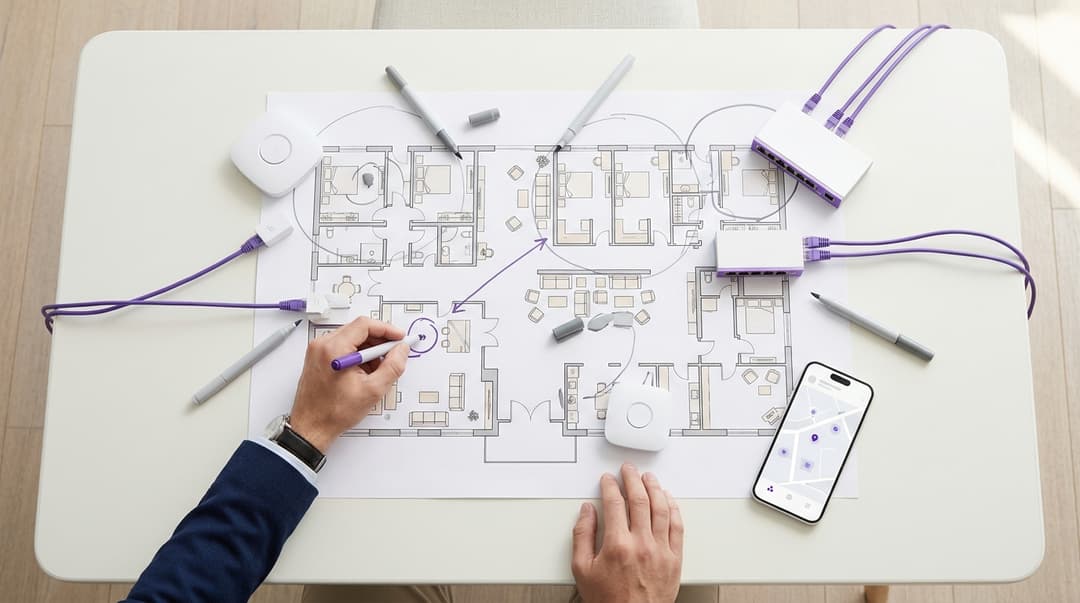
Hotel WiFi platforms turn guest sign-ins into direct bookings by capturing CCPA/CPRA-compliant consented emails at captive portals without hardware replacements on networks like Cisco Meraki. Integrating sign-in data with PMS reservation records enables hotels to segment OTA-booked guests and automate rebooking offers, saving an estimated net $35 per converted stay.
Why do OTA-booked guests rarely leave usable contact details?
An OTA booking gives you a name, dates and a rate. It rarely gives you a contact you can market to. Booking.com and Expedia both pass partner hotels masked relay email addresses that route messages through their own platforms. Their partner terms also limit how you can use booking data for your own marketing.
The result is predictable. A guest who found you on an OTA checks out as the OTA's contact, not yours. When they come back, they search the OTA again, and you pay commission on a guest you have already won once.
WiFi sign-in is one of the few moments when an OTA guest deals with you directly, on their own device, with a reason to engage. A Guest WiFi captive portal turns that moment into a consented, first-party contact. A captive portal is the web page a guest sees before the network lets them online. Purple handles 500 million users and logins a year across 80,000+ live venues in more than 90 countries. That gives a sense of how routine this moment is for guests.
Which kind of hotel WiFi platform should you choose for direct bookings?
Four types of system end up on hotel shortlists. Only one closes the full loop from sign-in to rebooking.
| Platform type | Consented email capture | Segmentation by stay type and source | Automated rebooking emails | Hardware needed | Who it suits |
|---|---|---|---|---|---|
| Access point vendor's built-in splash page | Click-through terms or a basic form, no consent management | None; contacts exported by hand | None | Existing access points | Basic legal terms acceptance without guest marketing features |
| Connectivity-only hotel internet provider portal | Room number and last name login; marketing opt-in is not the core product | Not offered | Not offered | Provider's gateway and access points | Bandwidth delivery and network access control without guest data workflows |
| CRM or customer data platform on its own | Only contacts you already hold, such as direct bookers and loyalty members | Full, on data it already holds | Yes | None at the network edge | Groups managing existing direct guest profiles |
| Purple guest WiFi with the Engage plan | Conscious-choice opt-in, kept separate from WiFi access | Segments built from sign-in data and attributes you pass in | Automated campaigns triggered by stay data | Existing Cisco Meraki, HPE Aruba, Ruckus, Juniper Mist, Ubiquiti UniFi, Cambium, Extreme or Fortinet access points | Hotels and groups converting OTA guests to direct |
The CRM row is the one that catches most marketing teams out. A CRM can segment and send, but it cannot reach a guest whose only record is an OTA relay address. The WiFi layer is what feeds it. Purple sits as a cloud overlay on the network you already run, so you add capture without a rip and replace. Why your next WiFi upgrade doesn't need new hardware covers the overlay model in more detail.
Where hotel WiFi platforms genuinely differ on direct bookings
Demos tend to look alike, with a branded login page and a dashboard of sign-ins. The real differences sit in four places.
Consent capture at check-in and in the room
Compliant capture under US regulations (such as the TCPA and CAN-SPAM) as well as CCPA/CPRA rests on a few clear rules:
- Consent must be a clear affirmative act. Regulations define consent this way, confirming that pre-checked boxes do not count. The marketing box starts unchecked.
- Access cannot depend on marketing consent. Consent is not freely given when a service depends on it. Guests must get online whether or not they opt in.
- Withdrawal must be as easy as giving consent. Every email needs a working unsubscribe that syncs back to the platform.
- US email and SMS marketing also falls under the TCPA and CAN-SPAM. Federal regulations govern unsolicited marketing messages, and guidance from the FTC and state attorneys general explains how compliance works.
Purple builds this around conscious-choice opt-ins. The guest chooses marketing separately from connecting. Purple is ISO 27001, Cyber Essentials and B Corp certified, and supports CCPA/CPRA compliance. Hotel WiFi login page: What guests see and fixes walks through the guest-facing side of the page.
Placement matters as much as wording. An in-room captive portal reaches every staying guest, including OTA bookers. Public-area portals in the lobby, bar, restaurant and meeting rooms also reach non-residents: diners, event attendees and day visitors. Tag these separately, because a non-resident diner needs a different offer from a returning business guest.
Identity and stay data from the PMS
An email alone tells you who connected. It does not tell you how they booked or why they stayed. Segmenting by OTA source needs the reservation record from your property management system (PMS). That record holds booking channel, rate code, stay dates and room type. Ask every vendor how a sign-in is matched to a reservation, and how often that data refreshes.
Segmentation by stay type and booking source
Purple's Engage plan lets you build segments from sign-in data and the attributes you pass in, then trigger campaigns automatically. WiFi Analytics adds visit frequency and dwell time, which help separate a one-off leisure stay from a regular midweek traveler.
Automated rebooking campaigns and attribution
A rebooking email only earns its keep if you can show it moved a stay direct. Each campaign needs a unique booking-engine link or offer code. You then reconcile it against PMS reservations whose channel is "direct". Without that link, the saving is anecdote, not evidence.
Which segments should drive your rebooking emails?
Start with segments where the next stay is predictable and the commission at stake is highest. The matrix below maps each one to its signal, timing and offer.
| Segment | Signal you need | When to send | Offer that moves the stay direct |
|---|---|---|---|
| OTA-booked business traveler | PMS channel = OTA; midweek stay; corporate or flexible rate code | 7 days after checkout, then before their usual travel month | Member rate below OTA price plus guaranteed early check-in |
| OTA-booked leisure guest | PMS channel = OTA; weekend or holiday stay; two or more guests | 10 to 11 months after the stay | Anniversary offer with breakfast or dinner included |
| Direct-booked repeat guest | PMS channel = direct; two or more stays in 12 months | Before peak dates sell out | Priority access to peak inventory, no discount needed |
| Event or conference delegate | Sign-in on meeting-room portal; stay dates match an event | 8 to 10 weeks before next year's event | Pre-release delegate rate at your property |
| Non-resident diner or bar visitor | Sign-in on public-area portal; no matching reservation | After the second visit | Local overnight package, such as dinner, bed and breakfast |
The first two rows carry the commission saving. The direct repeat guest row protects bookings you already own. Do not discount for guests who would book direct anyway.
Before you offer an email-only rate below the OTA price, check the rate parity terms in your OTA contracts. Closed-group rates for opted-in members are the usual route. Confirm the wording with whoever owns your distribution agreements.
What each one costs to run, and what a converted stay saves
Platform costs differ in shape. A vendor splash page sits inside your access point license. An internet provider portal sits inside a bandwidth contract. A CRM is a separate subscription that still needs a data source. Purple is priced by plan, Connect, Capture and Engage, and the segmentation and automated campaigns sit in Engage. Whichever you choose, the return depends on one figure: the net commission saved per converted stay.
The per-stay model
Net saving per converted stay = (ADR x nights x OTA commission rate) - (direct incentive + direct booking costs)
ADR is your average daily rate. Direct booking costs cover booking engine fees and payment processing. Use your own contract commission rate, not an industry average.
Here is a worked example. Every figure is an assumption for illustration:
- ADR $130 for two nights gives room revenue of $260.
- At an 18% commission rate, the OTA would take $46.80.
- A 5% member discount costs $13.
- Booking engine and payment costs of 3% add $7.80.
- Net saving: $26 per converted stay.
Swap in your own figures. The model also shows where incentives go wrong: a discount above the commission rate loses you money.
Got questions about your specific setup?
Our team works with venue operators, IT managers, and network engineers across 80,000 venues. Book a 20-minute call and we will show you how others like you solved it.
Guaranteed response within 4 business hours - No commitment required
Where each approach fits: two worked scenarios
Both scenarios below use illustrative assumptions, shown so you can rerun them with your own numbers. They show the method, not reported results.
A 200-room city-center business hotel
Situation. The hotel runs at 78% occupancy with an average stay of two nights. That gives 56,940 room nights and roughly 28,470 stays a year. OTAs deliver 45% of stays, about 12,810, and the hotel holds no usable email for those guests.
What was done. The hotel put an in-room captive portal on its existing access points, with a separate portal for meeting rooms. Marketing consent sat as an unchecked box, separate from connecting. Sign-ins were matched to PMS reservations to pull channel and rate code. OTA-booked midweek guests went into a business segment. That segment received a member-rate offer seven days after checkout.
Modeled outcome. Assume 60% of OTA guests sign in and 35% of those opt in. That gives 2,690 consented OTA contacts a year. The table shows annual savings at different rebooking rates, using the $26 net saving per stay.
| Rebooking rate among consented OTA contacts | Converted guests | Saving if each books once | Saving if each books three times a year |
|---|---|---|---|
| 2% | 54 | $1,404 | $4,212 |
| 4% | 108 | $2,808 | $8,424 |
| 6% | 161 | $4,186 | $12,558 |
| 8% | 215 | $5,590 | $16,770 |
The right-hand column is where business travel pays off. A guest who visits the same city every quarter saves commission on every later stay once they book direct. Count only guests who would have returned anyway. Your saving is the commission you no longer pay, not new demand.
A 90-room coastal leisure hotel
Situation. The hotel runs at 70% occupancy with an average stay of three nights, about 7,665 stays a year. OTAs deliver half of them, roughly 3,830. Most guests are couples and families who return once a year, if at all.
What was done. In-room and restaurant portals captured consent separately. Leisure guests booked through OTAs got an anniversary email 10 to 11 months after their stay. The offer was dinner included, rather than a room discount. Non-resident restaurant visitors got a dinner, bed and breakfast package after their second visit.
Modeled outcome. Take an ADR of $180 over three nights, or $540 of room revenue. At 18% commission the OTA would take $97.20. A dinner costing the hotel $30 plus 3% booking costs ($16.20) leaves a net saving of $51 per stay. Assume 55% of OTA guests sign in and 40% opt in, giving 843 contacts. A 7% anniversary rebooking rate then converts 59 stays and saves $3,009 a year. Swapping the discount for a dinner keeps the saving high, because the incentive costs the hotel less than its face value to the guest.
The two scenarios point to the same lesson. The business hotel's return comes from frequency, the leisure hotel's from stay value. Segment accordingly.
What should you ask WiFi platform vendors about PMS and email integration?
Put these questions in writing and score the answers. Vague answers on integration are the most common reason a capture project stalls after launch.
- Which PMS platforms do you connect to, and how? Ask whether the link is live and two-way or a nightly file. Nightly files delay post-stay emails by a day.
- How is a WiFi sign-in matched to a reservation? You need booking channel, rate code and stay dates on each record to segment by OTA source.
- Which email and CRM platforms do you integrate with, and how is consent passed? Consent status and its timestamp should travel with the contact, not sit in a separate export.
- How do unsubscribes sync back? An opt-out in your email platform must update the WiFi platform too, or you risk emailing someone who withdrew consent.
- Can you run separate captive portals for rooms, public areas and meeting spaces on one network? Separate portals give you separate segments without extra hardware.
- Which access point vendors do you support without new hardware? Purple runs on Cisco Meraki, HPE Aruba, Ruckus, Juniper Mist, Ubiquiti UniFi, Cambium, Extreme and Fortinet.
- How do you attribute a direct booking to a campaign? Ask to see the report that links a campaign to PMS reservations.
- Who owns the data, and where is it held? You should own your first-party data outright. Ask for certifications, such as ISO 27001, SOC 2 Type II, and the data residency position for your region.
How to decide for your hotel or estate
Run the decision in five steps:
- Measure your exposure. Pull last year's stays by channel from the PMS and total the commission paid. This is the ceiling on what direct conversion can save.
- Set your net saving per stay. Use the formula above with your contract rates and a realistic incentive. If the number is small, change the incentive before you change the platform.
- Check what your network already supports. If your access points are on the hardware list above, capture is a software decision, not a refresh.
- Score vendors on the eight questions. Weight PMS matching and consent syncing highest. These two decide whether you can segment by OTA source and stay compliant.
- Start with two segments. Launch OTA business and OTA leisure first, measure 90 days of attributed direct bookings, then add delegates and non-residents.
For groups, run the pilot at one city property and one leisure property. The two scenarios above show why the results will differ. A single blended figure would hide where the saving comes from. See how Purple supports Hotels across single sites and multi-property estates.
Frequently asked questions
Does Purple work with the access points we already have?
Yes. Purple is hardware-agnostic and runs as a cloud overlay on Cisco Meraki, HPE Aruba, Ruckus, Juniper Mist, Ubiquiti UniFi, Cambium, Extreme and Fortinet access points. You configure the captive portal on your existing network rather than replacing hardware. That means a direct-booking project is a software and integration decision, and most of the effort goes into PMS matching, consent wording and campaign design rather than installation.
Can we email guests who booked through Booking.com or Expedia?
Yes, if they opt in directly with you at WiFi sign-in. Consent given on your captive portal is a separate relationship from the OTA booking, so it does not rely on the OTA's relay address or booking data. Keep the opt-in unticked and separate from WiFi access. Then use the PMS record to tag the contact by booking channel for segmentation.
Is collecting email at WiFi login compliant with CCPA/CPRA?
Yes, when consent is a clear affirmative act and WiFi access does not depend on it. Regulations rule out pre-checked boxes, and rules mean guests must get online whether or not they opt in. In the US, the TCPA and CAN-SPAM also govern marketing email. Purple uses conscious-choice opt-ins and is ISO 27001 certified, with support for CCPA/CPRA and CCPA compliance.
Do we need to replace our PMS or email platform?
No. Purple integrates with CRM and marketing platforms, so the WiFi layer feeds the systems you already run rather than replacing them. Ask which PMS and email platforms connect natively, how consent status passes between them, and how unsubscribes sync back. Those answers decide how quickly post-stay campaigns can go out after checkout.
Which Purple plan do we need for direct-booking campaigns?
You need the Engage plan. Purple is priced by plan: Connect, Capture and Engage. Segmentation by guest attributes and automated rebooking campaigns sit in Engage, which is what turns sign-ins into direct bookings. If you only want branded access and a consented contact list for your existing CRM, compare that scope against the Capture plan.
How do we prove the commission saving to finance?
Give every rebooking campaign a unique booking-engine link or offer code. Then reconcile it against PMS reservations whose channel is direct. Multiply each attributed stay by your net saving per stay: room revenue times your OTA commission rate, minus the incentive and booking costs. Count only guests who were originally OTA bookers, so the figure reflects commission avoided rather than new demand.
Should guests have to give an email address to get online?
No. Make WiFi access and marketing consent separate choices. Tying access to marketing consent conflicts with CCPA/CPRA requirements and erodes guest trust at check-in. Guests who opt in freely are also the contacts most likely to respond to a rebooking offer. A smaller, consented list outperforms a larger one built on forced sign-ups.
Key Definitions
Captive portal
The web page a guest sees before the network lets them online. The IETF describes the architecture in RFC 8952, covering how a network holds a device in a restricted state until the user completes an interaction such as accepting terms or signing in.
Your IT team configures it on existing access points. Separate portals for rooms, public areas and meeting spaces give marketing separate segments without extra hardware.
CCPA/CPRA consent
CCPA/CPRA and state privacy regulations define valid consent as a freely given, specific, informed and unambiguous indication of wishes by a clear affirmative act. Pre-checked boxes or inactivity do not constitute consent.
This sets how the marketing box on your login page must behave: unchecked by default and actively chosen by the guest.
Conditional consent
CCPA/CPRA regulations require that, when assessing whether consent is freely given, account is taken of whether provision of a service is made conditional on consent that is not necessary for that service.
Guests must get online whether or not they opt in. Tying WiFi access to marketing consent undermines compliance and guest trust.
Right to withdraw consent
Under the TCPA and CAN-SPAM, the data subject has the right to withdraw consent at any time and requires that withdrawing is as easy as giving consent.
Every rebooking email needs a working unsubscribe that syncs back to the WiFi platform, so ask each vendor how opt-outs flow between systems.
CAN-SPAM Act
The CAN-SPAM Act governs commercial electronic mail messages. The FTC and state attorneys general publish guidance on how electronic communications laws interact with state privacy regulations.
Any US hotel sending post-stay rebooking emails must satisfy the TCPA and CAN-SPAM as well as CCPA/CPRA.
Conscious-choice opt-in
Purple's consent model, in which the guest chooses marketing as a separate action from connecting to WiFi. It is designed around CCPA/CPRA privacy compliance requirements.
This is the mechanism that lets you email a guest who booked through an OTA, because consent is given directly to you at sign-in.
Property management system (PMS)
The hotel's reservation system of record, holding booking channel, rate code, stay dates and room type for each reservation.
Segmenting by OTA source depends on matching sign-ins to PMS records. A live two-way link avoids the one-day delay of a nightly file.
OTA relay email address
A masked email address that an online travel agency such as Booking.com or Expedia passes to partner hotels, routing messages through the OTA's own platform rather than to the guest directly.
It explains why a CRM alone cannot reach OTA bookers and why the WiFi layer is needed to feed it.
Average daily rate (ADR)
Room revenue divided by room nights sold. It is the base figure in the per-stay model: net saving = (ADR x nights x OTA commission rate) - (direct incentive + direct booking costs).
Finance will test your business case on ADR and your contract commission rate, so use your own figures, not an industry average.
Rate parity
Contract terms in OTA distribution agreements that restrict the rates a hotel may offer through other channels relative to the OTA price.
Check these terms before offering an email-only member rate. Closed-group rates for opted-in members are the usual route.
Cloud overlay
Purple's deployment model, in which the platform runs in the cloud on top of existing access points from Cisco Meraki, HPE Aruba, Ruckus, Juniper Mist, Ubiquiti UniFi, Cambium, Extreme and Fortinet.
If your access points are on this list, adding consented capture is a software and integration decision, not a hardware refresh.
ISO 27001
ISO/IEC 27001 is the international standard specifying requirements for establishing, implementing, maintaining and continually improving an information security management system.
Ask every vendor for certifications such as ISO 27001 and SOC 2 Type II and their data residency position before you hand over guest data. Purple is ISO 27001 certified.
Worked Examples
A 200-room city-center business hotel runs at 78% occupancy with two-night average stays, about 28,470 stays a year. OTAs deliver roughly 12,810 of them, and the hotel holds no usable email for those guests. How can it move them direct?
The hotel deployed an in-room captive portal on its existing access points, plus a separate meeting-room portal. Marketing consent sat in an unchecked box, separate from connecting, to meet the TCPA and CAN-SPAM. Sign-ins were matched to PMS reservations to pull booking channel and rate code. OTA-booked midweek guests entered a business segment and received a member-rate offer seven days after checkout. Using illustrative assumptions of 60% sign-in and 35% opt-in, the hotel gains 2,690 consented OTA contacts a year. At a $26 net saving per stay, a 4% rebooking rate saves $2,808 if each guest books once, or $8,424 if each books three times. Frequency is where business travel pays off, because every later direct stay avoids commission.
A 90-room coastal leisure hotel runs at 70% occupancy with three-night average stays, about 7,665 stays a year, half via OTAs. Most guests are couples and families who return once a year at most. What offer protects the saving?
The hotel ran separate in-room and restaurant portals with consent captured apart from access. OTA-booked leisure guests received an anniversary email 10 to 11 months after their stay, offering dinner included rather than a room discount. Non-resident restaurant visitors received a dinner, bed and breakfast package after their second visit. On illustrative figures of $540 room revenue, 18% commission ($97.20), a $30 dinner cost and $16.20 booking costs, the net saving is $51 per stay. With 843 consented contacts and a 7% rebooking rate, 59 converted stays save $3,009 a year. The dinner costs the hotel less than its face value to the guest, so the saving stays high.
A revenue manager wants to know whether a direct-booking incentive will save or lose money before launching rebooking campaigns. How should the figure be set?
Use the per-stay model: net saving equals ADR times nights times your contract OTA commission rate, minus the direct incentive and direct booking costs. On illustrative figures of a $130 ADR over two nights, room revenue is $260. An 18% commission would cost $46.80. A 5% member discount costs $13 and 3% booking engine and payment costs add $7.80, leaving $26 per converted stay. The model exposes the main risk: any discount above the commission rate loses money. If the result is small, change the incentive before changing the platform, and avoid discounting guests who already book direct.
Frequently asked questions
Does Purple work with the access points we already have?
Yes. Purple is hardware-agnostic and runs as a cloud overlay on Cisco Meraki, HPE Aruba, Ruckus, Juniper Mist, Ubiquiti UniFi, Cambium, Extreme and Fortinet access points. You configure the captive portal on your existing network rather than replacing hardware. That means a direct-booking project is a software and integration decision, and most of the effort goes into PMS matching, consent wording and campaign design rather than installation.
Can we email guests who booked through Booking.com or Expedia?
Yes, if they opt in directly with you at WiFi sign-in. Consent given on your captive portal is a separate relationship from the OTA booking, so it does not rely on the OTA's relay address or booking data. Keep the opt-in unchecked and separate from WiFi access. Then use the PMS record to tag the contact by booking channel for segmentation.
Is collecting email at WiFi login compliant with privacy laws?
Yes, when consent is a clear affirmative act and WiFi access does not depend on it. Under the TCPA and CAN-SPAM regulations, opt-in forms must not use pre-checked boxes, and guests must be able to get online whether or not they opt in to marketing emails. Purple uses conscious-choice opt-ins and is ISO 27001 certified, with support for CCPA/CPRA compliance.
Do we need to replace our PMS or email platform?
No. Purple integrates with CRM and marketing platforms, so the WiFi layer feeds the systems you already run rather than replacing them. Ask which PMS and email platforms connect natively, how consent status passes between them, and how unsubscribes sync back. Those answers decide how quickly post-stay campaigns can go out after checkout.
Which Purple plan do we need for direct-booking campaigns?
You need the Engage plan. Purple is priced by plan: Connect, Capture and Engage. Segmentation by guest attributes and automated rebooking campaigns sit in Engage, which is what turns sign-ins into direct bookings. If you only want branded access and a consented contact list for your existing CRM, compare that scope against the Capture plan.
How do we prove the commission saving to finance?
Give every rebooking campaign a unique booking-engine link or offer code. Then reconcile it against PMS reservations whose channel is direct. Multiply each attributed stay by your net saving per stay: room revenue times your OTA commission rate, minus the incentive and booking costs. Count only guests who were originally OTA bookers, so the figure reflects commission avoided rather than new demand.
Should guests have to give an email address to get online?
No. Make WiFi access and marketing consent separate choices. Tying access to marketing consent conflicts with privacy best practices and CCPA/CPRA guidelines, while eroding guest trust at check-in. Guests who opt in freely are also the contacts most likely to respond to a rebooking offer. A smaller, consented list outperforms a larger one built on forced sign-ups.
Continue reading in this series
Hotel spa and leisure club WiFi platforms: member sign-in, day guest offers and treatment rebooking
Use this guide to shortlist a hotel spa WiFi platform that runs separate sign-in flows for members, hotel guests and day guests on your existing access points. You can then set consent wording that meets the TCPA and CAN-SPAM. You can also configure visit-based segments that trigger treatment rebooking and membership offers.
Food hall and market WiFi providers checklist: trader card terminals, diner sign-in and repeat-visit emails
Use this checklist to shortlist food hall WiFi providers and set up a multi-trader network. You will be able to isolate each trader's card terminals with their own key and keep QR ordering fast behind a one-screen diner sign-in. You can also filter DNS for diners only and report repeat visits by day part for consented email campaigns.
Racetrack and outdoor venue WiFi platforms: raceday sign-in, hospitality boxes and sponsor data
You will be able to choose a racetrack WiFi platform setup and test a shortlist against your schedule calendar. The guide compares three setups, shows how to segment registers, scanners and broadcast kit, and sets out consent wording for marketing by event. It also covers sponsor data sharing and return-visit reporting that proves which events convert first-time racegoers.
Got questions about your specific setup?
Our team works with venue operators, IT managers, and network engineers across 80,000 venues. Book a 20-minute call and we will show you how others like you solved it.
Guaranteed response within 4 business hours - No commitment required