

Autenticación por SMS para WiFi: Cómo funciona y cuándo usarla
A technical reference for IT managers and venue operators on implementing SMS-based WiFi authentication. This guide details the technical workflow, compares it against social login, and provides actionable best practices for deployment in enterprise environments like hotels, retail, and stadiums.
🎧 Listen to this Guide
View Transcript
Resumen ejecutivo
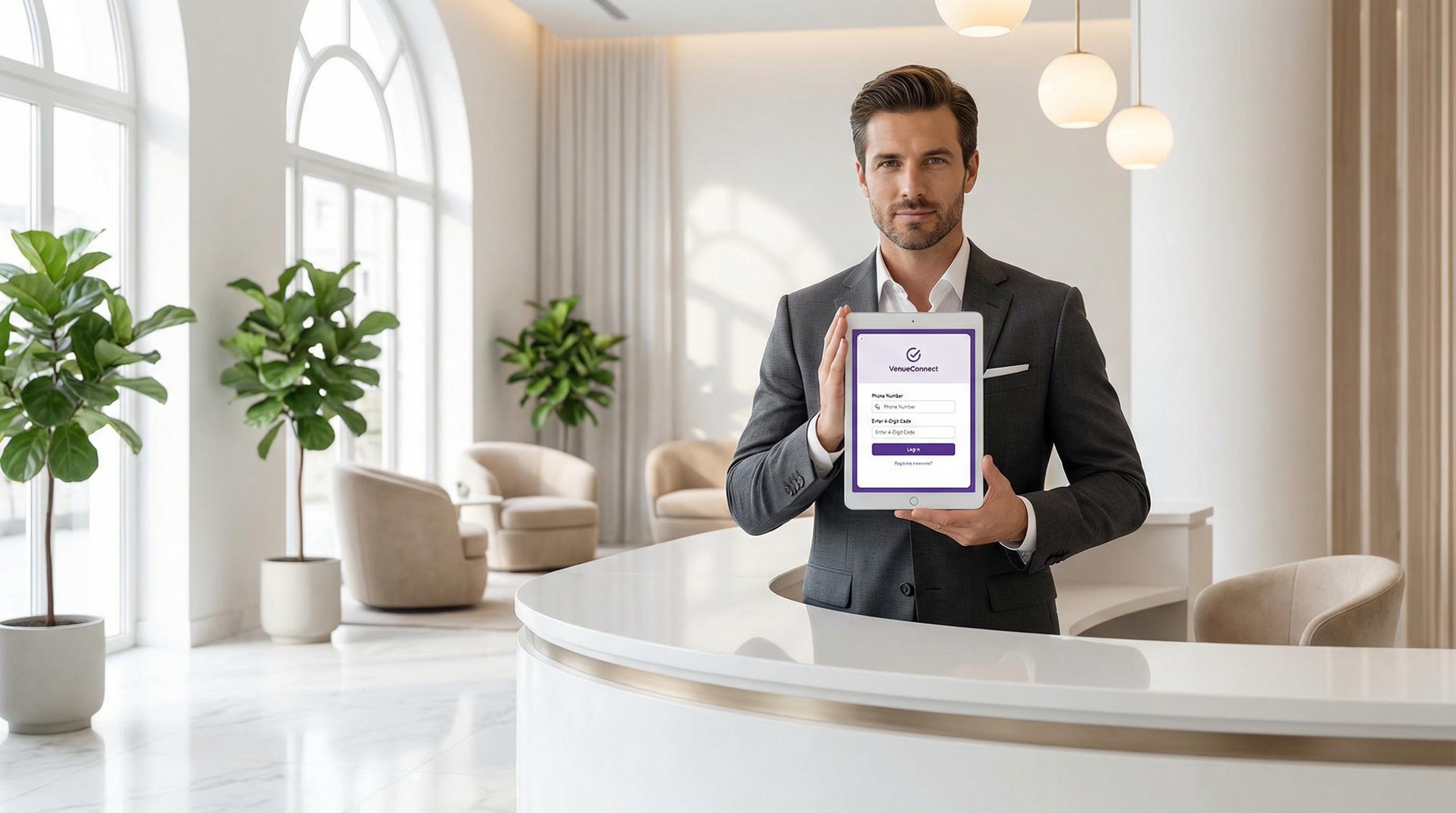
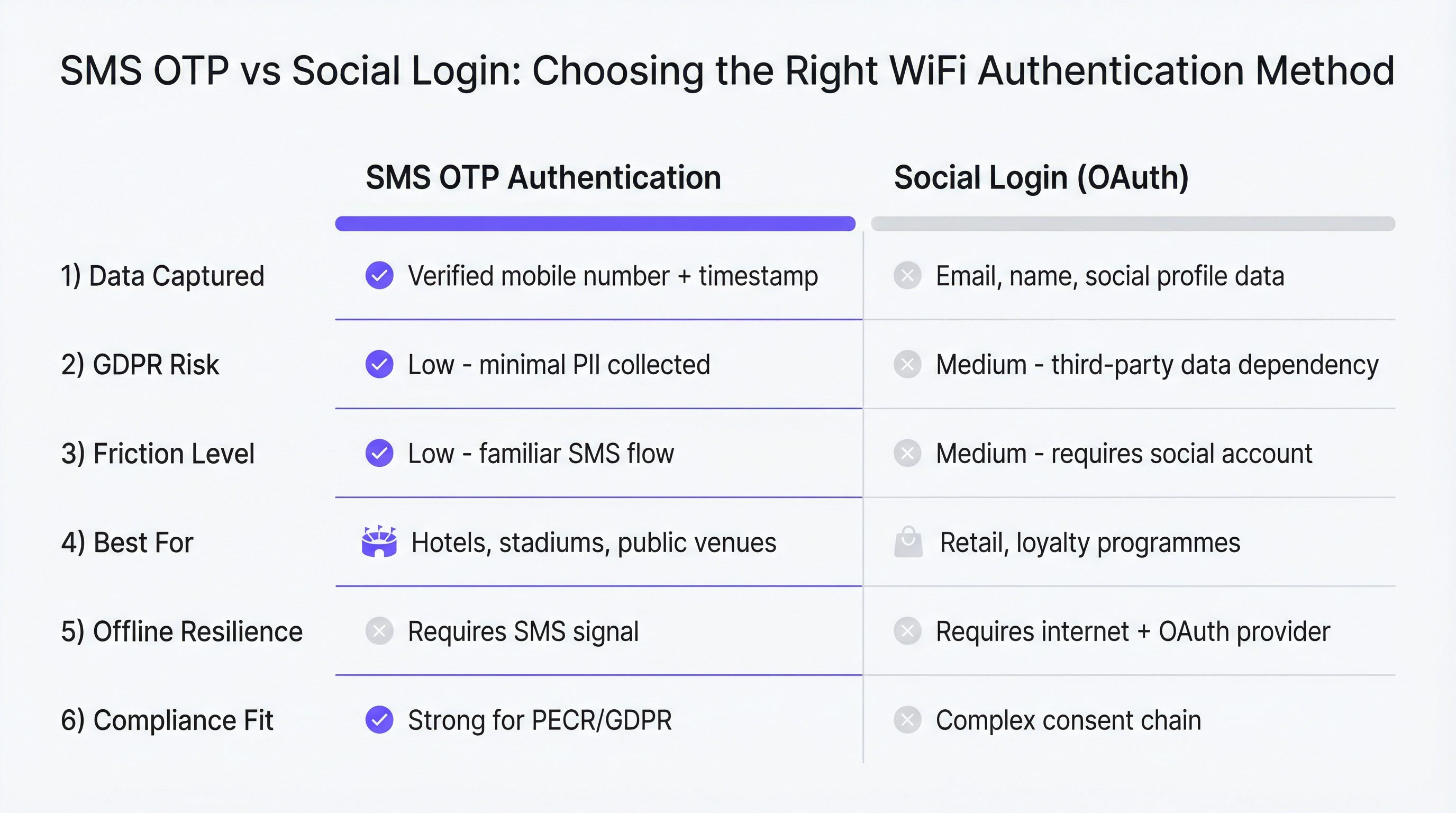
Para los ejecutivos de TI y operadores de recintos, implementar WiFi para invitados ya no se trata solo de brindar conectividad; es una herramienta estratégica para la adquisición de datos, el marketing y la mejora de la experiencia del visitante. La elección del método de autenticación es una decisión crítica con implicaciones directas en el cumplimiento normativo, la calidad de los datos y el retorno de inversión. La autenticación por SMS, mediante un código de acceso de un solo uso (OTP) enviado al teléfono móvil del usuario, ha surgido como un método robusto, seguro y altamente efectivo para implementaciones a gran escala. A diferencia de los inicios de sesión con redes sociales, que introducen dependencias de datos de terceros y cadenas de consentimiento complejas, el OTP por SMS proporciona un enlace directo y verificado con el usuario a través de su número móvil. Este enfoque de datos optimizado simplifica el cumplimiento del GDPR y PECR, al tiempo que captura un anclaje de identidad persistente y procesable. Esta guía proporciona una descripción general técnica y estratégica completa de la autenticación WiFi por SMS, ofreciendo esquemas de implementación independientes del proveedor, estrategias de mitigación de riesgos y métricas claras de ROI para CTOs, arquitectos de red y directores de operaciones.
Análisis técnico detallado
El flujo de trabajo de autenticación por SMS se inicia cuando un invitado se conecta al SSID público y es redirigido a un Captive Portal. Este proceso, regido por estándares como RFC 7710, intercepta la solicitud HTTP inicial del usuario y presenta una página de inicio de sesión con la marca. Los componentes principales de esta arquitectura incluyen:
- Captive Portal: La interfaz web donde los usuarios interactúan con el sistema de autenticación. Captura el número móvil del usuario.
- Servidor RADIUS/Controlador de acceso: El sistema backend (como Purple) que gestiona la lógica de autenticación, las políticas de usuario y se comunica con el hardware de red.
- Puerta de enlace SMS (Gateway): Un servicio de terceros (ej. Twilio, Vonage) que maneja el envío y la entrega del OTP al dispositivo móvil del usuario mediante una llamada a la API.
- Infraestructura de red: Los puntos de acceso y controladores WiFi (ej. Cisco Meraki, Aruba, Ruckus) que aplican las políticas de acceso definidas por el servidor RADIUS.
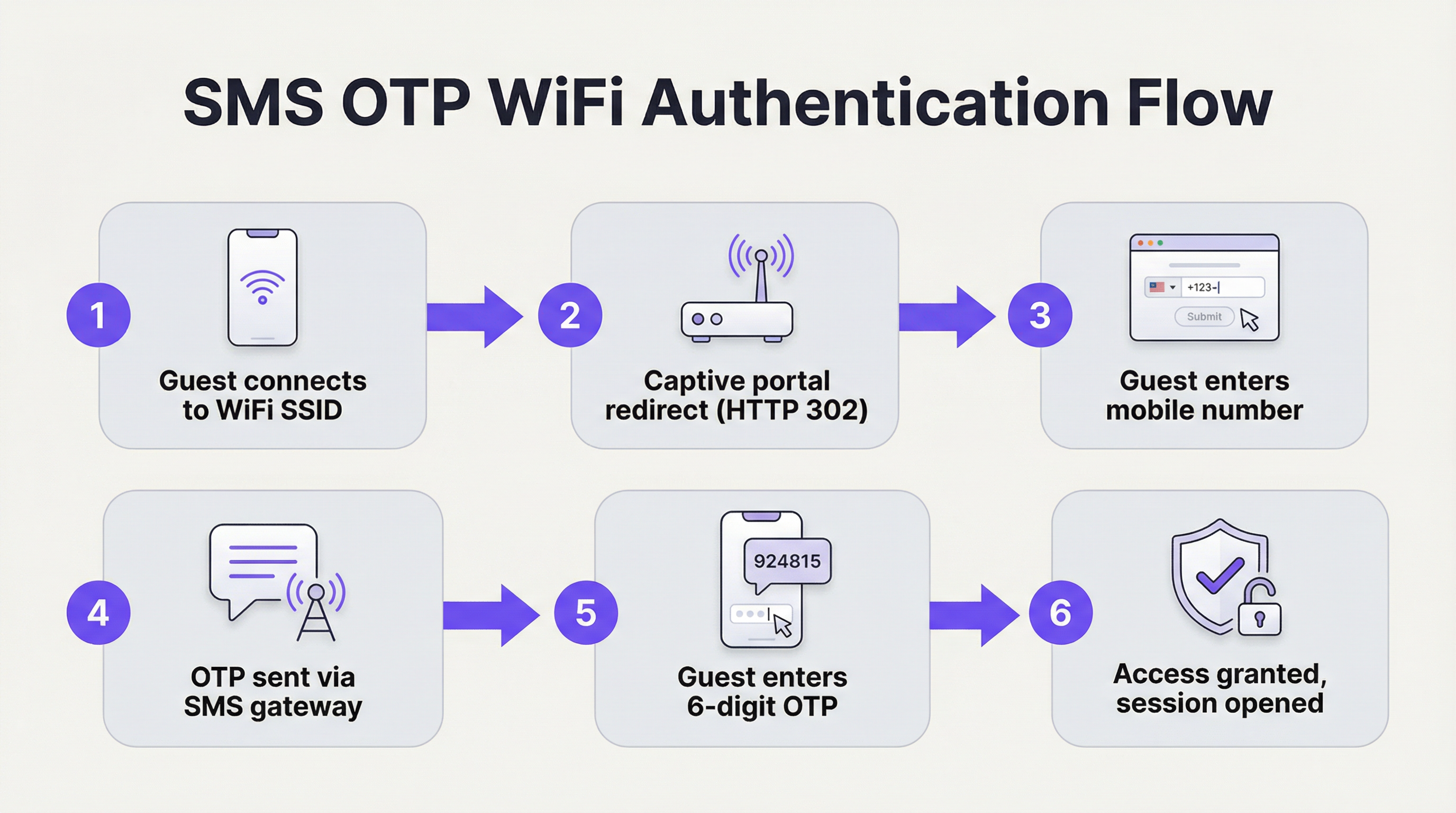
El flujo es el siguiente: el usuario ingresa su número, la plataforma envía un OTP a través de la puerta de enlace, el usuario ingresa el OTP y, tras una validación exitosa, el controlador de acceso abre una sesión para la dirección MAC del dispositivo. Esto crea un registro de datos verificado que vincula el dispositivo, el número de teléfono y el tiempo de la sesión, proporcionando un potente conjunto de datos para análisis y marketing.
Guía de implementación
La implementación de un sistema de autenticación por SMS resiliente requiere una planificación cuidadosa. Los siguientes pasos proporcionan un marco de trabajo independiente del proveedor para un lanzamiento exitoso:
- Evaluación de la infraestructura: Asegúrese de que su hardware de red admita la redirección al Captive Portal y la integración con RADIUS. La mayoría de los proveedores de nivel empresarial son compatibles.
- Selección de plataforma: Elija una plataforma de inteligencia WiFi que ofrezca funciones robustas de autenticación por SMS, incluyendo soporte para múltiples puertas de enlace y análisis detallados.
- Configuración de la puerta de enlace: Seleccione y configure al menos dos proveedores de puertas de enlace SMS para tener redundancia. Priorice a los proveedores con altas tasas de entrega en sus principales regiones de operación.
- Diseño del portal: Diseñe un Captive Portal limpio y optimizado para dispositivos móviles (mobile-first). Debe incluir un selector de código de marcación internacional, un llamado a la acción claro y casillas de verificación separadas y sin marcar para el consentimiento de marketing y la aceptación de los términos de servicio.
- Definición de políticas: Configure las políticas de sesión, incluyendo la duración de la sesión, los límites de ancho de banda y las ventanas de reautenticación. Para un hotel, una sesión de 24 horas es estándar; para una conferencia, una sesión de 4 horas podría ser más apropiada.
- Pruebas y lanzamiento: Pruebe el flujo de extremo a extremo con múltiples tipos de dispositivos y números internacionales antes de la implementación completa.
Mejores prácticas
- La redundancia es clave: Nunca dependa de una sola puerta de enlace SMS. Las condiciones de la red y las interrupciones del proveedor pueden afectar la entrega del OTP. Configure la conmutación por error (failover) automática.
- Priorice la experiencia del usuario: El proceso de inicio de sesión debe ser sin fricciones. Proporcione instrucciones y mensajes de error claros. Ofrezca un método de autenticación alternativo (ej. correo electrónico) para usuarios sin servicio celular.
- Cumplimiento desde el diseño: Integre la privacidad de los datos en el sistema. Capture el consentimiento explícito y desglosado para las comunicaciones de marketing. Asegúrese de que sus políticas de retención de datos estén alineadas con los requisitos del GDPR.
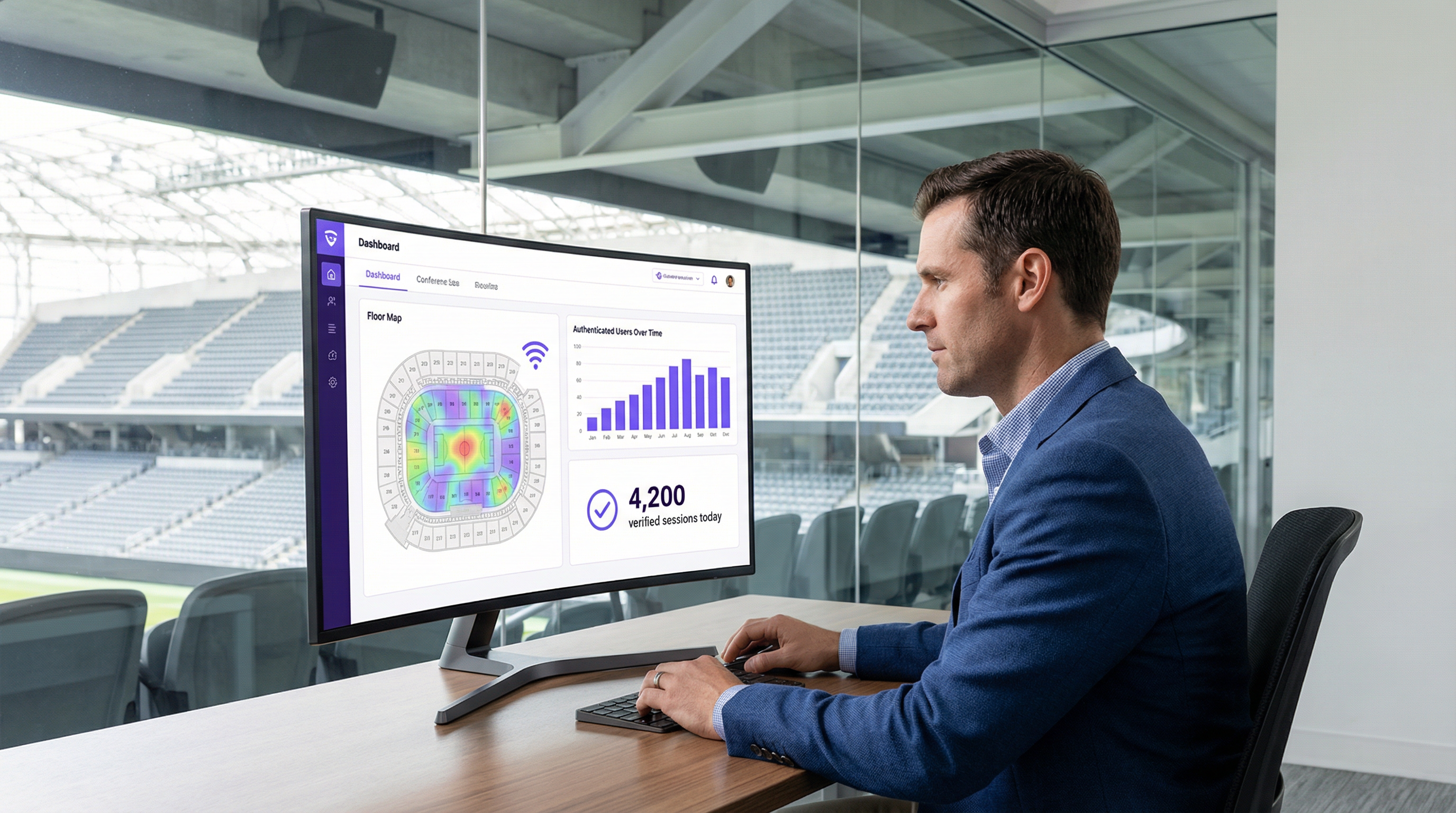
- Monitoreo y análisis: Utilice los datos capturados para comprender el comportamiento de los visitantes, los tiempos de permanencia y los patrones de afluencia. Integre estos datos con su CRM y plataformas de automatización de marketing para impulsar el engagement.
Solución de problemas y mitigación de riesgos
- Fallo en la entrega del OTP: El problema más común. Causado por una mala cobertura celular en el recinto o problemas de capacidad de entrega de la puerta de enlace. Mitigue esto con redundancia en la puerta de enlace y ofreciendo un método de autenticación alternativo.
- Problemas con números internacionales: El manejo incorrecto del formato de números E.164 puede evitar que los invitados internacionales reciban los OTP. Realice pruebas exhaustivas.
- Inflado de SMS/Fraude de peaje (Toll Fraud): Actores malintencionados pueden abusar del formulario OTP para generar altos volúmenes de mensajes SMS, elevando los costos. Mitigue esto con una limitación estricta de la tasa (ej. máximo 3 solicitudes de OTP por número por hora) y la implementación de CAPTCHA.
ROI e impacto comercial
La inversión en un sistema de autenticación por SMS genera retornos en múltiples funciones comerciales:
- Marketing: Construye una base de datos verificada y de alta calidad de números móviles para campañas de marketing por SMS dirigidas, impulsando visitas recurrentes y aumentando el valor del ciclo de vida del cliente.
- Operaciones: Proporciona análisis detallados sobre la afluencia de visitantes, tiempos de permanencia y patrones de movimiento, lo que permite la optimización del personal, la distribución del espacio y la asignación de recursos.
- TI y Seguridad: Reduce la carga de cumplimiento normativo en comparación con el inicio de sesión social y proporciona un registro seguro y auditable del acceso a la red, cumpliendo con los requisitos legales para la provisión de WiFi público en muchas jurisdicciones.
Key Terms & Definitions
Captive Portal
A web page that the user of a public-access network is obliged to view and interact with before access is granted. It intercepts traffic and redirects the user to a login page.
This is the primary user interface for any guest WiFi authentication method, including SMS OTP. Its design and usability directly impact guest experience and data capture rates.
SMS Gateway
A service that allows a computer to send or receive Short Message Service (SMS) transmissions to or from a telecommunications network. Most gateways use APIs to integrate with software platforms.
This is the engine that powers SMS authentication. The choice of gateway provider affects OTP delivery speed, reliability, and cost.
RADIUS (Remote Authentication Dial-In User Service)
A networking protocol that provides centralized Authentication, Authorization, and Accounting (AAA) management for users who connect and use a network service.
In a guest WiFi context, the RADIUS server is the brain that communicates with the network hardware to grant or deny access based on the authentication result from the captive portal.
E.164
An international telephone numbering plan that ensures each device on the public switched telephone network has a globally unique number.
Your captive portal must correctly process numbers in E.164 format (e.g., +447123456789) to successfully authenticate international guests. Failure to do so is a common point of failure.
SSID (Service Set Identifier)
The primary name associated with an 802.11 wireless local area network (WLAN). It's the human-readable name a user sees when they scan for WiFi networks.
IT teams will often configure separate SSIDs for guest and corporate networks. The guest SSID is the one configured to trigger the captive portal and SMS authentication.
MAC Address (Media Access Control Address)
A unique identifier assigned to a network interface controller (NIC) for use as a network address in communications within a network segment.
The access controller uses the MAC address to identify a specific device during a session. While MAC randomization on modern devices complicates long-term tracking, the verified phone number becomes the persistent identifier.
GDPR (General Data Protection Regulation)
A regulation in EU law on data protection and privacy in the European Union and the European Economic Area.
SMS authentication, with its minimal data collection and clear consent model, provides a straightforward path to GDPR compliance for guest WiFi services.
SMS Pumping (Toll Fraud)
A type of fraud where attackers exploit a business's SMS services by triggering a high volume of OTPs to premium-rate numbers they control.
This is a significant financial risk for any large-scale SMS auth deployment. It must be mitigated with strict rate-limiting and security measures like CAPTCHA.
Case Studies
A 200-room luxury hotel in central London needs to replace its insecure, open WiFi network. The goal is to capture guest data for marketing, understand guest movements between the lobby, bar, and spa, and ensure compliance with UK GDPR. The guest demographic is highly international.
Deploy a new WPA2-secured SSID named 'TheGrand_GuestWiFi'. Configure a captive portal with SMS authentication as the primary method. The portal will feature the hotel's branding and an international number input. Select two SMS gateways: a UK-based provider for domestic numbers and a global provider like Vonage for international numbers, with automatic failover. Set a 24-hour session time. The portal will include a separate, un-ticked checkbox for guests to opt-in to the hotel's 'VIP Offers' SMS list. The Purple platform will be used to track device movements between APs in different zones (bar, spa, lobby) to build a behavioral profile.
A large exhibition centre hosting multiple B2B and B2C events per week needs to provide reliable WiFi for up to 10,000 concurrent users. They need to segment data by event and provide sponsors with post-event analytics on attendee engagement.
Implement a robust WiFi infrastructure with high-density APs. Use SMS authentication with event-specific SSIDs or access codes. Set short session times (e.g., 4 hours) to align with event durations and capture fresh data for each event. Implement strict rate limiting and CAPTCHA to prevent SMS toll fraud during high-traffic periods. Use the WiFi analytics platform to create separate dashboards for each event, tracking metrics like total authenticated users, peak concurrency, and popular zones. This data can be packaged into a post-event report for sponsors.
Scenario Analysis
Q1. You are deploying guest WiFi in a new-build, 50-story office tower with a mixed-use ground floor (cafes, retail). The building has a DAS (Distributed Antenna System) for cellular, but coverage can be inconsistent in elevator cores and basements. How do you design the authentication flow to maximize both security and user convenience?
💡 Hint:Consider the physical environment and potential points of failure. A single authentication method may not be sufficient.
Show Recommended Approach
The recommended approach is a multi-factor authentication strategy. The primary method should be SMS OTP due to its security and data quality benefits. However, to mitigate the risk of poor cellular coverage in specific areas, the captive portal must offer a clear, secondary option for 'email-based verification'. This ensures that users who cannot receive an SMS can still get online. The portal logic should prioritize SMS but make the email fallback easily accessible after a single failed SMS attempt.
Q2. A retail chain with 300 stores wants to use WiFi analytics to measure the effectiveness of a new window display. They need to know how many people walk past a store vs. how many enter. They are currently using a simple 'click-to-connect' open network. Why is this method insufficient, and what should they replace it with?
💡 Hint:Think about what data is needed to differentiate between a passer-by and an in-store visitor. How can you reliably identify a returning visitor?
Show Recommended Approach
'Click-to-connect' is insufficient because it doesn't provide a persistent user identifier. Due to MAC address randomization, you can't reliably tell if a device seen outside is the same one that later connects inside. They should replace it with SMS authentication. By capturing a verified phone number, they create a persistent ID for each visitor. This allows them to correlate 'probe requests' (from devices outside) with 'connection events' (from devices inside) and accurately measure their walk-in rate, as well as track repeat visits over time.
Q3. Your CFO has questioned the monthly cost of your SMS gateway service. Prepare a business case justifying the expense. What are the three key pillars of your argument?
💡 Hint:Frame the cost as an investment, not an expense. What is the tangible business value generated by the data you are collecting?
Show Recommended Approach
The business case rests on three pillars: 1) Enhanced Marketing ROI: The verified mobile numbers collected are a high-quality asset for targeted SMS marketing, leading to measurable increases in repeat visits and customer spend. 2) Operational Intelligence: The analytics derived from authenticated sessions (footfall, dwell time) allow us to optimize staffing and layout, leading to direct cost savings and revenue uplift. 3) Compliance & Risk Mitigation: SMS auth provides a robust, auditable trail of network access, fulfilling legal obligations and reducing the company's risk profile compared to less secure methods. The gateway cost is a small investment to unlock this significant business value.
Key Takeaways
- ✓SMS authentication provides a verified, persistent mobile number, a high-value asset for marketing and analytics.
- ✓The technical flow involves a captive portal redirect, phone number submission, and OTP validation via an SMS gateway.
- ✓Compared to social login, SMS auth offers a simpler GDPR compliance profile and is not dependent on third-party social media platforms.
- ✓Key deployment best practices include using redundant SMS gateways, implementing strict rate limiting, and capturing explicit marketing consent.
- ✓The primary risk is OTP delivery failure due to poor cellular coverage, which should be mitigated with a fallback authentication method.
- ✓The ROI of SMS auth is driven by improved marketing effectiveness, operational insights from analytics, and a stronger compliance posture.
- ✓SMS auth is the preferred method for large, diverse-audience venues like hotels, stadiums, and public-sector organizations.




