

WiFi डेटा कैप्चर: गोपनीयता, अनुपालन और सर्वोत्तम प्रथाओं के लिए एक व्यापक गाइड
This guide provides IT leaders with a comprehensive technical reference for implementing WiFi data capture solutions. It focuses on navigating the complex landscape of privacy, legal compliance (GDPR, CCPA), and data ethics, offering actionable best practices for venue operators in hospitality, retail, and large public spaces.
🎧 Listen to this Guide
View Transcript

कार्यकारी सारांश
आधुनिक एंटरप्राइज़ के लिए, भौतिक स्थान को समझना उतना ही महत्वपूर्ण है जितना कि डिजिटल स्थान को समझना। WiFi डेटा कैप्चर वेन्यू ऑपरेटरों के लिए विज़िटर के व्यवहार, फुटफॉल और स्थानिक उपयोग के बारे में गहन, कार्रवाई योग्य इनसाइट्स प्राप्त करने के लिए एक शक्तिशाली टूल के रूप में उभरा है। WiFi-सक्षम डिवाइसों द्वारा निष्क्रिय रूप से उत्सर्जित प्रोब रिक्वेस्ट्स का विश्लेषण करके, संगठन लेआउट को अनुकूलित करने, ग्राहक अनुभव को बेहतर बनाने और परिचालन दक्षता बढ़ाने के लिए परिवर्तनकारी इंटेलिजेंस को अनलॉक कर सकते हैं। हालाँकि, यह क्षमता महत्वपूर्ण कानूनी और नैतिक दायित्वों के साथ आती है। विश्व स्तर पर नियामक, GDPR और CCPA जैसे फ्रेमवर्क के तहत, MAC एड्रेस जैसे डिवाइस आइडेंटिफ़ायर को व्यक्तिगत डेटा के रूप में वर्गीकृत करते हैं। नतीजतन, उनका संग्रह और प्रोसेसिंग सहमति, अनामीकरण और डेटा गवर्नेंस से संबंधित कड़े नियमों के अधीन हैं। यह गाइड CTO, IT प्रबंधकों और नेटवर्क आर्किटेक्ट्स के लिए एक व्यावहारिक, आधिकारिक संदर्भ के रूप में कार्य करती है। यह अकादमिक सिद्धांत से आगे बढ़कर एक ऐसे WiFi एनालिटिक्स प्रोग्राम को लागू करने के लिए वेंडर-न्यूट्रल, परिनियोजन-तैयार रणनीतियाँ प्रदान करती है जो न केवल शक्तिशाली है बल्कि सुरक्षित, अनुपालन-युक्त और उपयोगकर्ता की गोपनीयता का सम्मान करने वाला भी है। हम तकनीकी आर्किटेक्चर का पता लगाएंगे, मजबूत कार्यान्वयन पद्धतियों की रूपरेखा तैयार करेंगे, और जोखिम को कम करने और ROI को अधिकतम करने के लिए स्पष्ट, कार्रवाई योग्य सर्वोत्तम प्रथाएं प्रदान करेंगे।
तकनीकी डीप-डाइव
WiFi एनालिटिक्स की नींव 802.11 मैनेजमेंट फ्रेम, विशेष रूप से प्रोब रिक्वेस्ट्स के कैप्चर में निहित है। प्रत्येक WiFi-सक्षम डिवाइस (स्मार्टफोन, लैपटॉप, टैबलेट) आस-पास के वायरलेस नेटवर्क को खोजने के लिए समय-समय पर इन रिक्वेस्ट्स को ब्रॉडकास्ट करता है। प्रत्येक फ्रेम में कई महत्वपूर्ण जानकारियां होती हैं, लेकिन एनालिटिक्स के लिए सबसे महत्वपूर्ण डिवाइस का मीडिया एक्सेस कंट्रोल (MAC) एड्रेस है—जो एक विशिष्ट हार्डवेयर आइडेंटिफ़ायर है। इन फ़्रेमों को सुनने के लिए सेंसर तैनात करके या मौजूदा एक्सेस पॉइंट को कॉन्फ़िगर करके, एक सिस्टम भौतिक स्थान के भीतर डिवाइसों की उपस्थिति, स्थान और गतिविधि का पता लगा सकता है।
डेटा कैप्चर विधियाँ:
- पैसिव कैप्चर: इस पद्धति में ऐसे सेंसर शामिल होते हैं जो उपयोगकर्ताओं को नेटवर्क से कनेक्ट होने की आवश्यकता के बिना प्रोब रिक्वेस्ट्स को निष्क्रिय रूप से सुनते हैं। यह किसी क्षेत्र में सभी डिवाइसों का एक व्यापक दृश्य प्रदान करता है, जो कुल फुटफॉल और मूवमेंट पैटर्न पर समृद्ध डेटा प्रदान करता है। हालाँकि, चूंकि उपयोगकर्ता के साथ कोई सीधा संपर्क नहीं होता है, इसलिए स्पष्ट सहमति प्राप्त करना चुनौतीपूर्ण होता है, जिससे मजबूत और तत्काल अनामीकरण सर्वोपरि हो जाता है।
- एक्टिव कैप्चर (Captive Portal): इस पद्धति में उपयोगकर्ता को वेन्यू के गेस्ट WiFi नेटवर्क से सक्रिय रूप से कनेक्ट होने की आवश्यकता होती है। कनेक्शन प्रक्रिया एक Captive Portal द्वारा मध्यस्थता की जाती है, जो एक लॉगिन या स्प्लैश पेज प्रस्तुत करता है। किसी भी डेटा को प्रोसेस करने से पहले स्पष्ट, सूचित उपयोगकर्ता सहमति प्राप्त करने के लिए यह उद्योग-मानक तंत्र है। हालांकि यह केवल कनेक्टेड उपयोगकर्ताओं से डेटा कैप्चर करता है, यह डेटा प्रोसेसिंग के लिए बहुत मजबूत कानूनी आधार प्रदान करता है और यदि उपयोगकर्ता प्रमाणित करता है तो यह अधिक समृद्ध, पहचान-लिंक्ड एनालिटिक्स को सक्षम बनाता है।
अनामीकरण की अनिवार्यता: GDPR के तहत, MAC एड्रेस को व्यक्तिगत डेटा माना जाता है। इसलिए, इसे इसके मूल प्रारूप में संग्रहीत नहीं किया जा सकता है। सर्वोत्तम प्रथा यह है कि कैप्चर करते ही रोटेटिंग साल्ट के साथ वन-वे क्रिप्टोग्राफ़िक हैश (जैसे, SHA-256) लागू किया जाए। यह प्रक्रिया, जिसे स्यूडोनिमाइज़ेशन के रूप में जाना जाता है, MAC एड्रेस को एक अपरिवर्तनीय, विशिष्ट आइडेंटिफ़ायर में बदल देती है जिसे मूल डिवाइस तक वापस ट्रेस नहीं किया जा सकता है। इस अनामीकृत ID का उपयोग फिर व्यक्तिगत डेटा संग्रहीत किए बिना, बार-बार आने वाले विज़िट्स की गणना करने जैसे एनालिटिक्स के लिए किया जा सकता है।
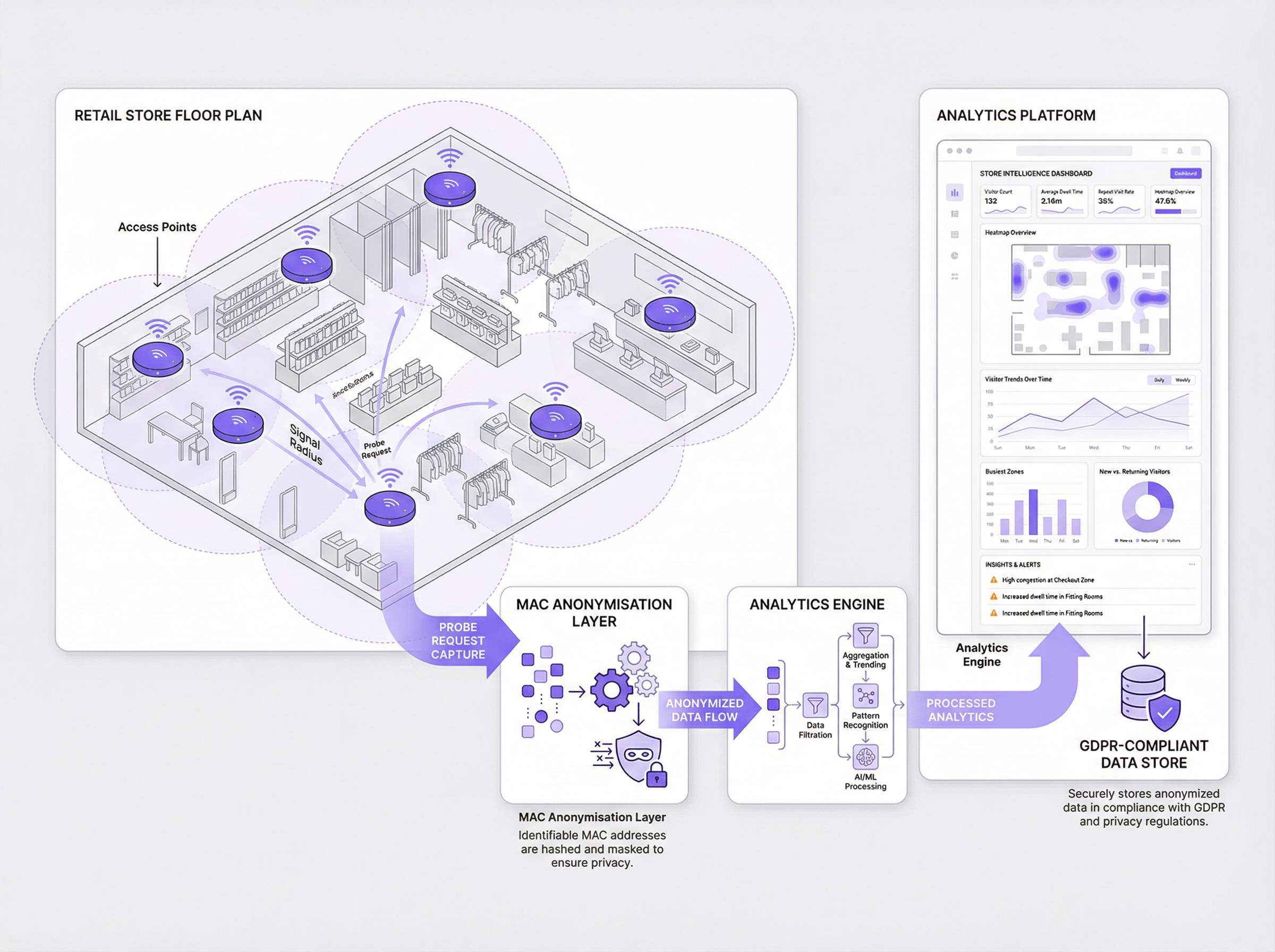
MAC एड्रेस रैंडमाइज़ेशन का प्रभाव: आधुनिक मोबाइल ऑपरेटिंग सिस्टम (iOS 14+ और Android 10+) ने उपयोगकर्ता की गोपनीयता बढ़ाने के लिए MAC एड्रेस रैंडमाइज़ेशन लागू किया है। ये डिवाइस प्रत्येक नए WiFi नेटवर्क के लिए एक अलग, रैंडमाइज़्ड MAC एड्रेस ब्रॉडकास्ट करते हैं जिसके लिए वे प्रोब करते हैं। हालांकि यह एक प्रो-प्राइवेसी सुविधा है, यह पारंपरिक एनालिटिक्स प्लेटफ़ॉर्म के लिए एक महत्वपूर्ण चुनौती प्रस्तुत करता है, क्योंकि एक ही डिवाइस कई अद्वितीय विज़िटर्स के रूप में दिखाई दे सकता है। Purple के जैसे परिष्कृत एनालिटिक्स इंजन, इन रैंडमाइज़्ड एड्रेस को समझदारी से पहचानने और मिलान करने के लिए उन्नत एल्गोरिदम का उपयोग करते हैं, जिससे विज़िटर मेट्रिक्स की सटीकता सुनिश्चित होती है। यह किसी भी आधुनिक WiFi एनालिटिक्स परिनियोजन के लिए एक महत्वपूर्ण तकनीकी क्षमता है。
कार्यान्वयन गाइड
एक अनुपालन-युक्त WiFi डेटा कैप्चर समाधान को तैनात करने के लिए 'प्राइवेसी बाय डिज़ाइन' के सिद्धांत पर आधारित एक संरचित, बहु-चरणीय दृष्टिकोण की आवश्यकता होती है।
चरण 1: इन्फ्रास्ट्रक्चर मूल्यांकन अपने मौजूदा WiFi इन्फ्रास्ट्रक्चर का ऑडिट करके शुरुआत करें। Cisco, Meraki, Aruba और Ruckus जैसे वेंडर्स के आधुनिक एंटरप्राइज़-ग्रेड एक्सेस पॉइंट्स में अक्सर एनालिटिक्स सर्वर पर मैनेजमेंट फ्रेम स्ट्रीम करने की अंतर्निहित क्षमताएं होती हैं। निर्धारित करें कि क्या आपका हार्डवेयर इसका समर्थन करता है या समर्पित सेंसर की आवश्यकता है। उन सभी क्षेत्रों में पर्याप्त कवरेज सुनिश्चित करें जहां आप डेटा कैप्चर करने का इरादा रखते हैं।
चरण 2: अपनी डेटा नीति और सहमति तंत्र को परिभाषित करें अनुपालन के लिए यह सबसे महत्वपूर्ण कदम है। यह परिभाषित करने के लिए अपनी कानूनी और अनुपालन टीमों के साथ काम करें:
- आप कौन सा डेटा एकत्र करेंगे: विशिष्ट रहें (उदा., "
Key Terms & Definitions
MAC Address (Media Access Control)
A unique, 48-bit hardware number that identifies each device on a network. Under GDPR, it is considered Personal Identifiable Information (PII).
This is the core piece of data captured by WiFi analytics. IT teams must ensure it is never stored in its raw format and is anonymized immediately upon capture.
Probe Request
An 802.11 management frame sent by a WiFi-enabled device to discover nearby wireless networks.
These are the signals that WiFi analytics systems listen for. Understanding the volume and signal strength of probe requests allows the system to determine footfall and location.
Captive Portal
A web page that a user must view and interact with before being granted access to a public WiFi network.
This is the primary and most effective mechanism for an IT team to obtain explicit, informed consent from users before collecting and processing their data for analytics purposes.
Pseudonymization (Hashing)
The process of replacing a data identifier (like a MAC address) with a pseudonym (a cryptographic hash). It is a reversible process if the key is known, but one-way hashing makes it irreversible.
This is the critical technical process for making WiFi data compliant. A raw MAC address is PII; a hashed MAC address is an anonymized data point that can be used for analysis.
MAC Address Randomization
A privacy feature in modern mobile operating systems (iOS, Android) where the device uses a fake, temporary MAC address when searching for networks.
IT teams must be aware that this feature can severely skew analytics data. A modern analytics platform is required to correctly interpret these randomized addresses and avoid overcounting visitors.
GDPR (General Data Protection Regulation)
A comprehensive data protection law in the European Union that governs the processing of personal data.
This is the key regulation governing WiFi data capture in Europe. Any organisation with a European presence or that serves European citizens must ensure their analytics deployment is fully GDPR-compliant.
Data Controller
The entity that determines the purposes and means of processing personal data.
When a venue deploys WiFi analytics, the venue owner (e.g., the retail chain, the hotel) is the Data Controller and is legally responsible for ensuring compliance.
Dwell Time
A metric that measures the average amount of time visitors spend in a specific, defined area.
This is one of the most valuable business insights from WiFi analytics. It helps operations directors understand engagement, identify bottlenecks, and measure the success of marketing displays or layout changes.
Case Studies
A 50-store retail chain wants to understand customer behaviour in their flagship stores to inform a nationwide redesign. They need to measure dwell times in different departments, identify popular paths, and understand repeat visitor frequency, all while ensuring strict GDPR compliance.
- Infrastructure: Deploy a Purple-compatible WiFi analytics solution using their existing Meraki MR access points. Configure the Meraki dashboard to stream analytics data to the Purple cloud.
- Consent: Implement a branded captive portal for the guest WiFi network. The portal will feature a single, clear opt-in checkbox: "I agree to allow Purple to analyse my anonymized visit data to help improve the store layout and experience. This data is fully anonymized and will not be used for marketing." A link to the full privacy policy is provided.
- Anonymization: Configure the system to use Purple's patented Cryptographic Anonymization, which hashes the MAC address at the moment of capture. This ensures no PII is ever stored.
- Analysis: Use the Purple dashboard to create zones for each department (e.g., Menswear, Womenswear, Checkout). Track anonymized visitor flow between these zones and measure average dwell times. Use the repeat visitor metric to understand customer loyalty.
- Action: After 90 days, the data reveals that the Menswear department has high traffic but low dwell time. The chain redesigns the department layout to be more open and improves product displays. They then measure the impact of these changes over the next 90 days.
A large conference centre with multiple exhibition halls hosts a variety of third-party events. They want to offer event organisers data on attendee flow and booth popularity, but they are concerned about the privacy implications of tracking attendees across different, unrelated events.
- Data Segregation: The key is to treat each event as a separate entity. The WiFi analytics platform must be configured to use a different rotating salt for its hashing algorithm for each event. This means an anonymized ID from Event A will not be the same as the anonymized ID for the same device at Event B.
- Organiser Portals: Provide each event organiser with a separate, sandboxed view of the analytics data for their event only. They should not have access to historical data from other events or raw data of any kind.
- Consent per Event: The captive portal for each event must be unique and clearly state which organiser is the data controller for that event. Attendees must provide consent for each event they attend.
- Reporting: The platform can then generate reports on footfall, hall traffic, and booth dwell times for each specific event. This data can be sold to organisers as a premium service.
- Data Purge: Implement a strict data retention policy to purge all data associated with an event 30 days after the event concludes.
Scenario Analysis
Q1. A stadium is deploying a new WiFi analytics system to manage crowd flow on match days. Their legal team is concerned about storing location data. What is the most important technical control to implement regarding location?
💡 Hint:Think about the principle of data minimisation.
Show Recommended Approach
The most important control is to not store raw or fine-grained location data (e.g., X-Y coordinates). Instead, the stadium should be divided into large, pre-defined zones (e.g., "North Stand, Level 1", "West Entrance Gate"). The system should only record which zone a device is in, not its precise location within that zone. This minimises the sensitivity of the location data while still providing the necessary operational insights for crowd management.
Q2. A shopping mall uses a third-party to manage its guest WiFi. The third-party offers a 'free' analytics package. What is the number one question the mall's CTO should ask the third-party vendor?
💡 Hint:Who is the Data Controller and what are their responsibilities?
Show Recommended Approach
The CTO must ask: "Where and how is the MAC address anonymized?" They need to get a specific, technical answer. If the vendor cannot confirm that the MAC address is hashed with a salt, on-premise, before it is sent to their cloud, it is a major compliance red flag. The mall, as the Data Controller, is ultimately liable for any data breach or non-compliance, even if it is caused by their vendor.
Q3. A user logs into your guest WiFi and consents to analytics. They later submit a 'Right to be Forgotten' request under GDPR. You have stored their data as a hashed, anonymized ID. What is your technical obligation?
💡 Hint:How does pseudonymization relate to a user's rights?
Show Recommended Approach
Even though the data is pseudonymized, it is still linked to a specific individual, and the user's rights still apply. The analytics platform must have a mechanism to process these requests. When the user made the request, they would have provided an identifier (e.g., the email they used to log in). The platform needs a secure, audited process to look up the anonymized IDs associated with that user account and permanently delete them from the analytics database. Simply saying 'the data is anonymous' is not a compliant response.
Key Takeaways
- ✓WiFi data capture offers powerful insights but carries significant privacy obligations.
- ✓A MAC address is personal data under GDPR; it must be anonymized at the point of capture.
- ✓Explicit user consent via a captive portal is the best practice for compliance.
- ✓Modern analytics platforms are essential to handle challenges like MAC address randomization.
- ✓Adopt a 'Privacy by Design' approach, building compliance into your architecture from day one.
- ✓Transparency with users is not just a legal requirement; it is crucial for building trust.
- ✓Regularly audit your system and policies to ensure ongoing compliance and risk mitigation.




