

तुमचे स्वतःचे Captive Portal ॲप तयार करा: डेव्हलपर्ससाठी मार्गदर्शक (कोड उदाहरणांसह)
This technical guide provides developers and IT leaders with a comprehensive framework for building custom captive portal applications. It covers architectural design, platform selection (iOS, Android, Web), security best practices (802.1X, GDPR), and API integration strategies to transform guest WiFi into a powerful tool for customer engagement and data analytics.
🎧 Listen to this Guide
View Transcript
कार्यकारी सारांश
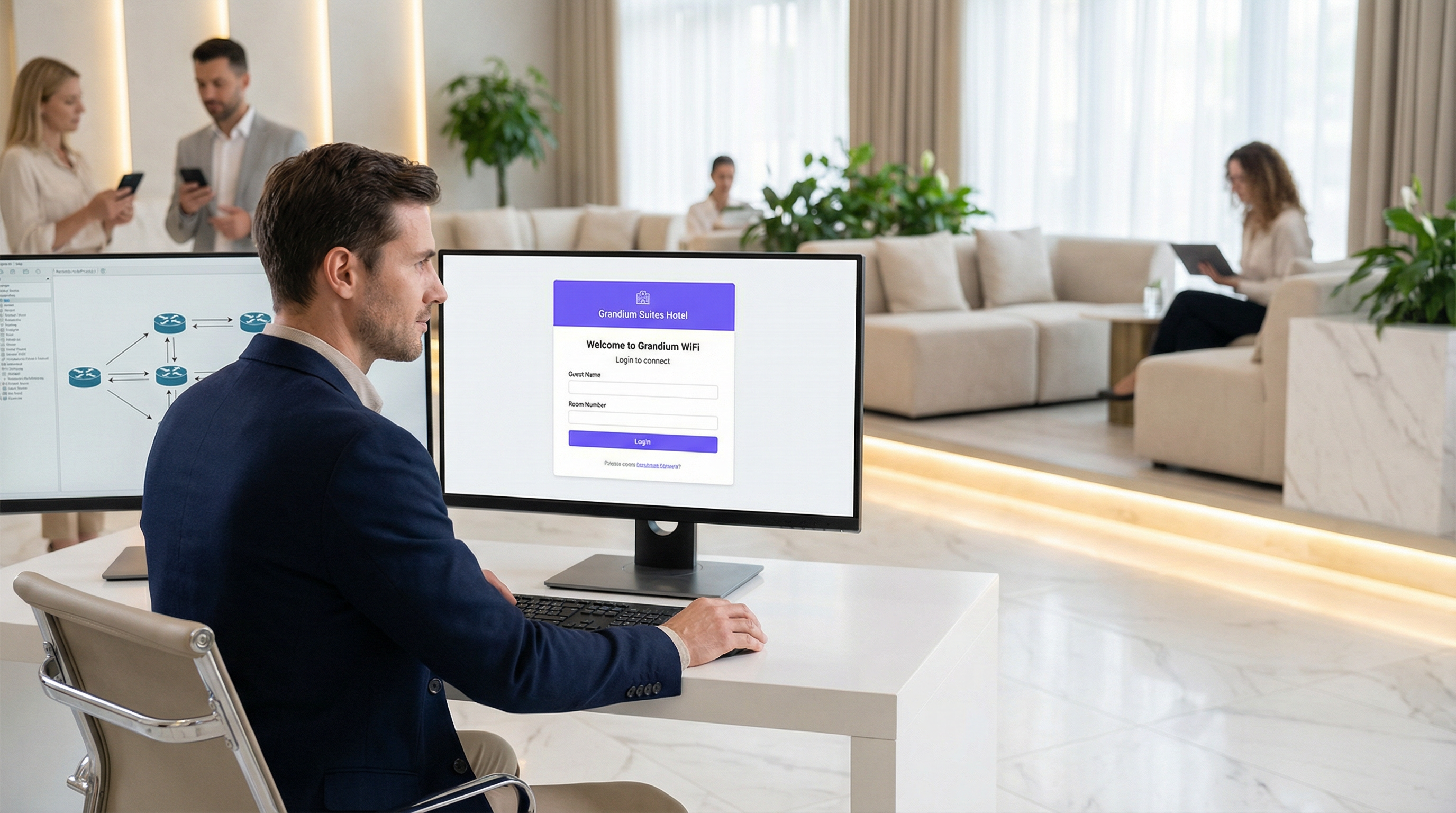
हे मार्गदर्शक आयटी मॅनेजर्स, नेटवर्क आर्किटेक्ट्स आणि डेव्हलपर्ससाठी कस्टम Captive Portal ॲप्लिकेशन्स तयार करण्यासाठी एक सर्वसमावेशक तांत्रिक संदर्भ प्रदान करते. हे अतिथींचा सहभाग आणि डेटा ॲनालिटिक्ससाठी मौल्यवान संधी निर्माण करताना नेटवर्क ॲक्सेस नियंत्रित करण्याच्या ठिकाणांच्या महत्त्वपूर्ण गरजेला संबोधित करते. आम्ही यशस्वी डिप्लॉयमेंटसाठी आवश्यक असलेले आर्किटेक्चरल निर्णय, प्लॅटफॉर्म पर्याय (iOS, Android, वेब) आणि सुरक्षा प्रोटोकॉलचा सखोल अभ्यास करतो. CTO साठी, हे मार्गदर्शक चांगल्या प्रकारे अंमलात आणलेल्या Captive Portal धोरणाच्या ROI, अनुपालन धोके आणि व्यावसायिक प्रभावाचा धोरणात्मक आढावा देते, जे केवळ साध्या कनेक्टिव्हिटी गेटवेच्या पलीकडे जाऊन ग्राहकांचा अनुभव वाढवण्यासाठी आणि महसूल मिळवण्यासाठी एक शक्तिशाली साधन बनते.
तांत्रिक सखोल माहिती
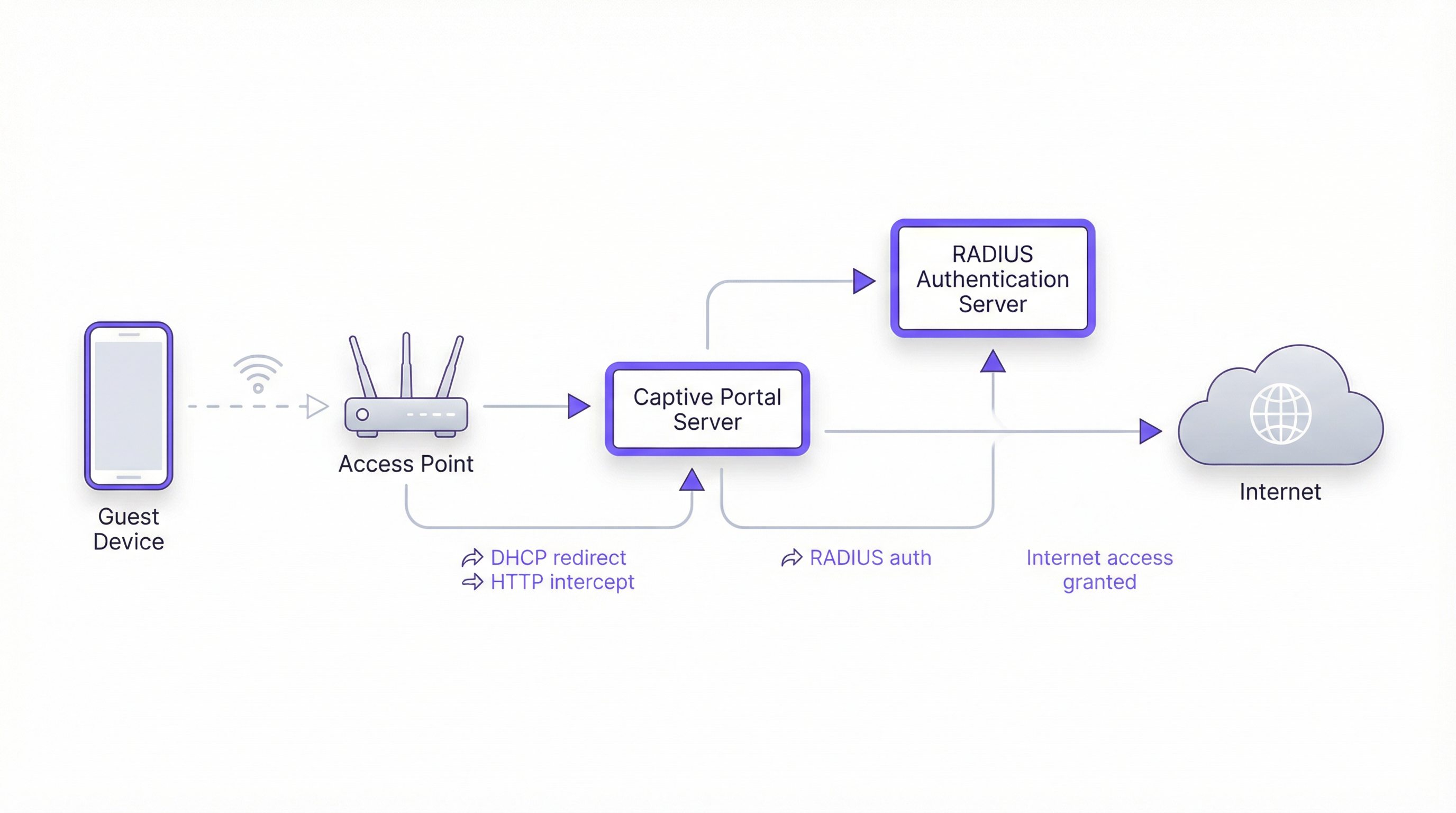
Captive Portal तयार करण्यामध्ये नेटवर्क प्रोटोकॉल, वेब तंत्रज्ञान आणि बॅकएंड ऑथेंटिकेशन सिस्टीम यांच्यातील गुंतागुंतीचा परस्परसंवाद समाविष्ट असतो. वापरकर्त्याच्या वेब ट्रॅफिकला अडवणे आणि त्यांना व्यापक नेटवर्क ॲक्सेस देण्यापूर्वी ऑथेंटिकेशनसाठी एका समर्पित पोर्टलवर पुनर्निर्देशित करणे हे याचे मूळ उद्दिष्ट आहे. ही प्रक्रिया काही प्रमुख घटकांवर अवलंबून असते.
मुख्य आर्किटेक्चर
- ॲक्सेस पॉईंट (AP): वायरलेस हार्डवेअर जे WiFi सिग्नल प्रसारित करते. आधुनिक एंटरप्राइझ-ग्रेड APs मध्ये Captive Portals ला सपोर्ट करण्यासाठी अंगभूत क्षमता असतात.
- DHCP सर्व्हर: कनेक्ट होणाऱ्या डिव्हाइसला IP ॲड्रेस नियुक्त करतो. Captive Portal सेटअपमध्ये, DHCP सर्व्हर Captive Portal API एंडपॉईंटची URL देखील प्रदान करू शकतो (DHCP Option 114 द्वारे), ही RFC7710bis मध्ये प्रमाणित केलेली एक पद्धत आहे जी Android 11+ सारख्या आधुनिक क्लायंट्सवर शोधण्याची विश्वासार्हता सुधारते.
- DNS इंटरसेप्शन/रीडायरेक्ट: जेव्हा वापरकर्त्याचे डिव्हाइस डोमेन नेम (उदा.
google.com) रिझॉल्व्ह करण्याचा प्रयत्न करते, तेव्हा नेटवर्कचा DNS सर्व्हर सुरुवातीला Captive Portal सर्व्हरचा IP ॲड्रेस परत करतो. हा एक क्लासिक "वॉल्ड गार्डन" दृष्टिकोन आहे. - Captive Portal सर्व्हर: एक वेब सर्व्हर जो लॉगिन/स्प्लॅश पेज होस्ट करतो. हे ते ॲप्लिकेशन आहे ज्याच्याशी अंतिम वापरकर्ता संवाद साधतो. लॉगिन फॉर्म सादर करणे, क्रेडेन्शियल्स प्रमाणित करणे आणि ऑथेंटिकेशन बॅकएंडशी संवाद साधणे ही याची जबाबदारी असते.
- ऑथेंटिकेशन सर्व्हर (RADIUS): रिमोट ऑथेंटिकेशन डायल-इन युजर सर्व्हिस (RADIUS) हे नेटवर्क ऑथेंटिकेशनसाठी इंडस्ट्री-स्टँडर्ड बॅकएंड आहे. जेव्हा एखादा वापरकर्ता पोर्टलवर त्याचे क्रेडेन्शियल्स सबमिट करतो, तेव्हा पोर्टल सर्व्हर ते RADIUS सर्व्हरकडे फॉरवर्ड करतो, जो अधिकृत वापरकर्त्यांच्या डेटाबेसशी त्यांची पडताळणी करतो. IEEE 802.1X मानकांवर आधारित धोरणे लागू करण्यासाठी हे मध्यवर्ती आहे.
प्लॅटफॉर्म आणि फ्रेमवर्कचे पर्याय
वापरकर्त्याला दिसणारे Captive Portal ॲप्लिकेशन तयार करण्यासाठी डेव्हलपर्सकडे तीन प्राथमिक मार्ग आहेत. या निवडीचा डिप्लॉयमेंट, वापरकर्त्याचा अनुभव आणि देखभालीच्या खर्चावर महत्त्वपूर्ण परिणाम होतो.
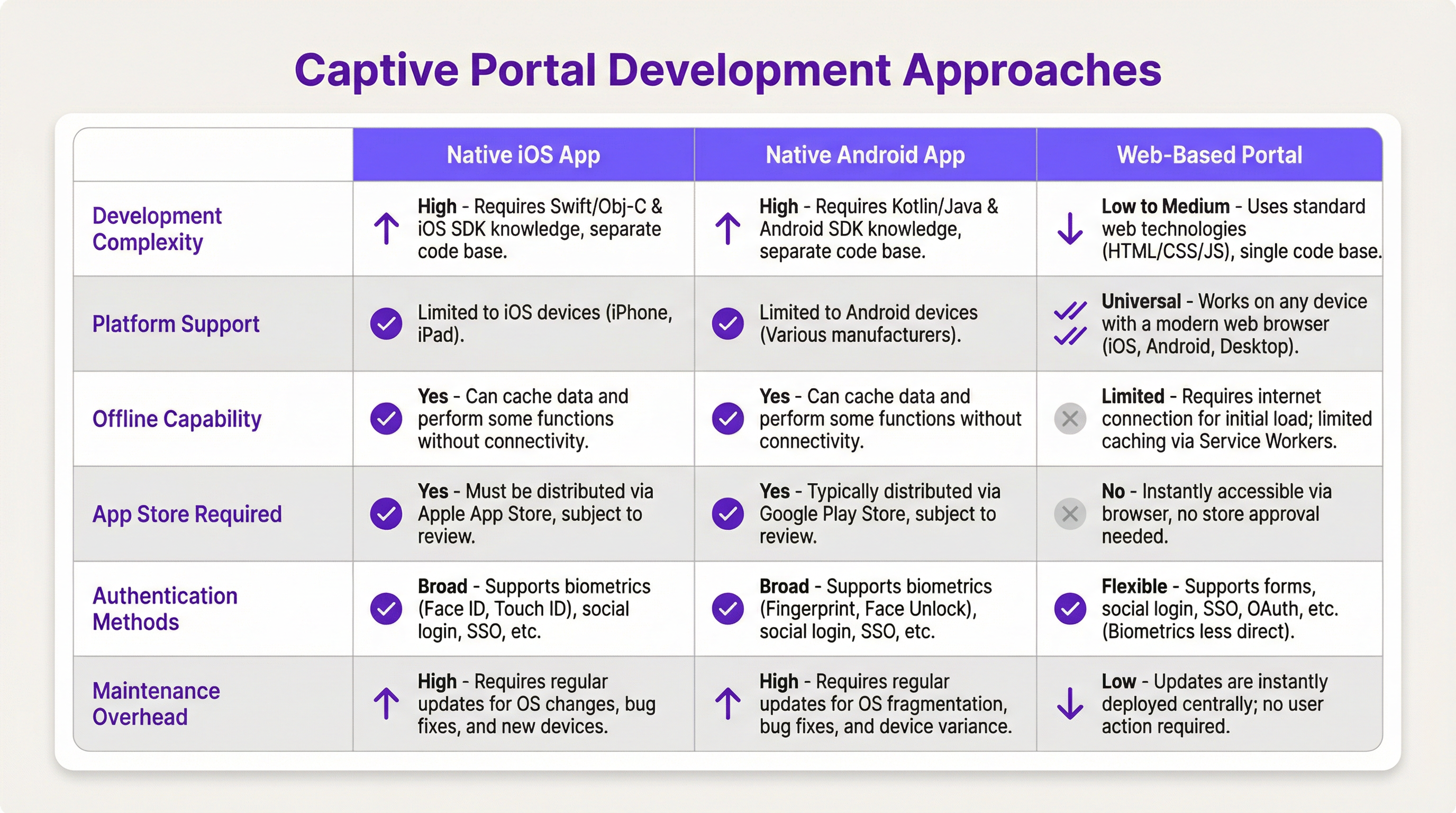
- नेटिव्ह iOS/Android ॲप: बायोमेट्रिक्स (फेस आयडी, फिंगरप्रिंट) आणि ऑफलाइन क्षमतांसारख्या डिव्हाइस वैशिष्ट्यांसह अखंड एकत्रीकरणासह सर्वात समृद्ध वापरकर्ता अनुभव देते. तथापि, या मार्गासाठी स्वतंत्र कोडबेसेस (iOS साठी Swift/Objective-C, Android साठी Kotlin/Java), ॲप स्टोअर पुनरावलोकन प्रक्रिया आवश्यक आहेत आणि वापरकर्त्यांना ॲप्लिकेशन डाउनलोड करण्यास भाग पाडते, जो प्रवेशासाठी एक मोठा अडथळा असू शकतो.
- वेब-आधारित पोर्टल: सर्वात सामान्य आणि लवचिक दृष्टिकोन. वापरकर्त्याच्या ब्राउझरवर एक रिस्पॉन्सिव्ह वेब ॲप्लिकेशन (HTML, CSS, JavaScript) सर्व्ह केले जाते. हे प्लॅटफॉर्म-अज्ञेयवादी (platform-agnostic) आहे, याला कोणत्याही इन्स्टॉलेशनची आवश्यकता नाही आणि अपडेट्स त्वरित डिप्लॉय केले जातात. सर्व्हिस वर्कर्ससारखे आधुनिक वेब तंत्रज्ञान काही ऑफलाइन कार्यक्षमता प्रदान करू शकतात, परंतु ते साधारणपणे नेटिव्ह ॲप्सपेक्षा अधिक मर्यादित असते.
अंमलबजावणी मार्गदर्शक
हा विभाग वेब-आधारित Captive Portal डिप्लॉय करण्यासाठी उच्च-स्तरीय, व्हेंडर-न्यूट्रल मार्गदर्शक तत्त्वे प्रदान करतो.
पायरी 1: नेटवर्क आणि हार्डवेअर सेटअप
- एंटरप्राइझ-ग्रेड APs निवडा: Cisco Meraki, Ruckus किंवा Aruba सारख्या व्हेंडर्सकडून ॲक्सेस पॉईंट्स निवडा जे बाह्य Captive Portals आणि RADIUS ऑथेंटिकेशनला स्पष्टपणे सपोर्ट करतात.
- VLANs कॉन्फिगर करा: समर्पित VLAN वापरून तुमच्या अंतर्गत कॉर्पोरेट नेटवर्कवरून अतिथी ट्रॅफिक वेगळे करा. हा एक अत्यंत महत्त्वाचा सुरक्षा उपाय आहे.
- DHCP आणि DNS सेट करा: अतिथी VLAN वर IPs नियुक्त करण्यासाठी तुमचा DHCP सर्व्हर आणि तुमच्या पोर्टल सर्व्हरवर प्रारंभिक रीडायरेक्ट करण्यासाठी तुमचा DNS सर्व्हर कॉन्फिगर करा.
पायरी 2: वेब पोर्टल ॲप्लिकेशन विकसित करा
- फ्रंटएंड: डायनॅमिक वापरकर्ता अनुभवासाठी React, Vue किंवा Svelte सारखे आधुनिक JavaScript फ्रेमवर्क वापरा. डिझाईन रिस्पॉन्सिव्ह आणि मोबाईल-फर्स्ट असल्याची खात्री करा.
- बॅकएंड: फ्रंटएंड सर्व्ह करण्यासाठी आणि RADIUS सर्व्हरशी संवाद हाताळण्यासाठी हलक्या वजनाचे बॅकएंड (उदा. Express सह Node.js, Flask सह Python) आवश्यक आहे.
- ऑथेंटिकेशन लॉजिक: मुख्य कार्यप्रवाह खालीलप्रमाणे आहे:
- वापरकर्ता WiFi शी कनेक्ट होतो.
- डिव्हाइस पोर्टल URL वर रीडायरेक्ट केले जाते.
- वापरकर्ता क्रेडेन्शियल्स सबमिट करतो (उदा. खोली क्रमांक आणि आडनाव, ईमेल, सोशल लॉगिन).
- पोर्टल बॅकएंड वापरकर्त्याच्या क्रेडेन्शियल्ससह RADIUS सर्व्हरला
Access-Requestपाठवतो. - RADIUS सर्व्हर क्रेडेन्शियल्स प्रमाणित करतो आणि यशस्वी झाल्यास,
Access-Acceptसंदेश परत करतो. - पोर्टल बॅकएंड वापरकर्त्याच्या डिव्हाइस MAC ॲड्रेससाठी ॲक्सेस उघडण्यासाठी नेटवर्क कंट्रोलर/गेटवेला सिग्नल देतो.
पायरी 3: API इंटिग्रेशन्स
- प्रॉपर्टी मॅनेजमेंट सिस्टीम (PMS): हॉटेल्ससाठी, PMS (उदा. Oracle Opera) सोबत इंटिग्रेशन केल्याने अतिथींच्या आरक्षणाविरुद्ध (खोली क्रमांक + आडनाव) ऑथेंटिकेशन करण्याची अनुमती मिळते.
- CRM: Salesforce सारख्या CRM सोबत गोळा केलेला डेटा (उदा. ईमेल ॲड्रेस) सिंक केल्याने शक्तिशाली मार्केटिंग ऑटोमेशन सक्षम होते.
- सोशल लॉगिन: वापरकर्त्यांना त्यांच्या सोशल मीडिया अकाउंट्स (Facebook, Google, LinkedIn) द्वारे लॉगिन करण्याची अनुमती देण्यासाठी OAuth2 वापरा. हे अधिक समृद्ध डेमोग्राफिक डेटा प्रदान करते परंतु यासाठी GDPR अंतर्गत गोपनीयता आणि संमती काळजीपूर्वक हाताळणे आवश्यक आहे.
सर्वोत्तम पद्धती
- सुरक्षा प्रथम: ट्रान्झिटमध्ये वापरकर्त्याचे क्रेडेन्शियल्स एन्क्रिप्ट करण्यासाठी तुमच्या Captive Portal साठी नेहमी HTTPS वापरा. ब्रूट-फोर्स हल्ले रोखण्यासाठी रेट लिमिटिंग लागू करा. तुम्ही पेमेंट्सवर प्रक्रिया करत असल्यास PCI DSS चे पालन करा.
- अनुपालन: डेटा संकलनाबाबत पारदर्शक रहा. तुमच्या पोर्टलच्या स्प्लॅश पेजवर तुमच्या गोपनीयता धोरणाची स्पष्ट लिंक समाविष्ट असणे आवश्यक आहे आणि GDPR आणि इतर डेटा संरक्षण नियमांनुसार स्पष्ट संमती मिळवणे आवश्यक आहे.
- वापरकर्ता अनुभव: लॉगिन प्रक्रिया शक्य तितकी सोपी आणि अडथळामुक्त ठेवा. मल्टी-साइट ठिकाणांसाठी, अखंड रोमिंग लागू करा जेथे एका ठिकाणी ऑथेंटिकेट केलेला वापरकर्ता दुसऱ्या ठिकाणी आपोआप कनेक्ट होतो.
- बँडविड्थ व्यवस्थापन: योग्य बँडविड्थ वाटप सुनिश्चित करण्यासाठी आणि काही वापरकर्त्यांना सर्वांचा अनुभव खराब करण्यापासून रोखण्यासाठी क्वालिटी ऑफ सर्व्हिस (QoS) धोरणे लागू करा.
समस्यानिवारण आणि जोखीम कमी करणे
- डिव्हाइस शोधण्याच्या समस्या: सर्वच डिव्हाइसेस Captive Portals सोबत चांगल्या प्रकारे काम करत नाहीत. iOS आणि Android मधील रँडमाइज्ड MAC ॲड्रेसकडे जाण्याच्या प्रवृत्तीमुळे डिव्हाइस ट्रॅकिंग गुंतागुंतीचे होऊ शकते. Captive Portal API (RFC7710bis) ही सर्वात विश्वासार्ह शोध पद्धत आहे.
- लॉगिन अपयश: ऑथेंटिकेशन समस्यांचे निदान करण्यासाठी तुमच्या पोर्टल आणि RADIUS सर्व्हरवर मजबूत लॉगिंग लागू करा. सामान्य समस्यांमध्ये चुकीचे क्रेडेन्शियल्स, कालबाह्य झालेली खाती किंवा पोर्टल आणि RADIUS सर्व्हरमधील नेटवर्क कनेक्टिव्हिटी समस्यांचा समावेश होतो.
- सुरक्षा धोके: अयोग्यरित्या सुरक्षित केलेले Captive Portal मॅन-इन-द-मिडल हल्ल्यांसाठी एक माध्यम असू शकते. सर्व संवाद एन्क्रिप्ट केलेले असल्याची आणि तुमचा पोर्टल सर्व्हर सामान्य वेब भेद्यतेपासून (vulnerabilities) सुरक्षित असल्याची खात्री करा.
ROI आणि व्यावसायिक प्रभाव
Captive Portal हा केवळ एक IT खर्च नाही; ती एक धोरणात्मक संपत्ती आहे. ROI खालीलप्रमाणे मोजला जातो:
- वाढलेला ग्राहक सहभाग: ऑन-साइट सेवांचा प्रचार करण्यासाठी, इव्हेंटचे वेळापत्रक प्रदर्शित करण्यासाठी किंवा विशेष सवलती देण्यासाठी पोर्टलचा वापर करा.
- सुधारित डेटा ॲनालिटिक्स: लॉगिन डेटाचे विश्लेषण करून, ठिकाणे फूट ट्रॅफिक पॅटर्न, थांबण्याची वेळ आणि ग्राहकांची डेमोग्राफिक्स समजू शकतात, ज्यामुळे चांगले ऑपरेशनल निर्णय घेता येतात.
- नवीन महसूल स्रोत: कॉन्फरन्स सेंटर्स किंवा विमानतळांसाठी, टायर्ड ॲक्सेस (उदा. मोफत बेसिक WiFi, सशुल्क प्रीमियम WiFi) थेट महसूल मिळवू शकतो. पोर्टलचा वापर थर्ड-पार्टी जाहिरातींसाठी देखील केला जाऊ शकतो.
- सुधारित ब्रँड धारणा: एक अखंड, विश्वासार्ह WiFi अनुभव ही आता एक मूलभूत अपेक्षा आहे. एक व्यावसायिक Captive Portal तुमच्या ब्रँडची आधुनिक आणि ग्राहकाभिमुख म्हणून धारणा वाढवते.
Key Terms & Definitions
Captive Portal
A web page that the user of a public-access network is obliged to view and interact with before access is granted. It intercepts traffic until the user completes a required action, such as authentication or accepting terms of service.
This is the core component IT teams build to manage guest WiFi. It's the gateway that controls access and provides a branding and data collection opportunity.
RADIUS (Remote Authentication Dial-In User Service)
A client/server protocol (IETF standard) that provides centralized Authentication, Authorization, and Accounting (AAA) management for users who connect and use a network service.
For developers, this is the definitive backend protocol for network authentication. Your captive portal app will act as a RADIUS client to validate users against a central directory.
IEEE 802.1X
An IEEE standard for port-based Network Access Control (PNAC). It provides an authentication mechanism to devices wishing to attach to a LAN or WLAN.
This is the enterprise-grade security standard that underpins secure WiFi. While a captive portal is a web-layer solution, 802.1X provides a deeper, more secure authentication framework that can work in conjunction with it.
VLAN (Virtual Local Area Network)
A logical grouping of devices in the same broadcast domain. A VLAN partitions a single physical network into multiple, isolated logical networks.
This is a critical security tool for network architects. Guest WiFi traffic must always be segregated onto its own VLAN to prevent any possibility of access to the internal corporate network.
DHCP (Dynamic Host Configuration Protocol)
A network management protocol used on IP networks for automatically assigning IP addresses and other communication parameters to devices.
In a captive portal context, DHCP is not just for IP assignment. Using DHCP Option 114, it can also inform client devices of the captive portal API location, improving detection reliability.
GDPR (General Data Protection Regulation)
A regulation in EU law on data protection and privacy for all individuals within the European Union and the European Economic Area. It also addresses the transfer of personal data outside the EU and EEA areas.
If your venue serves European citizens (regardless of where the venue is located), your captive portal's data collection and handling practices must be GDPR compliant. This has major implications for consent and data transparency.
PCI DSS (Payment Card Industry Data Security Standard)
An information security standard for organizations that handle branded credit cards from the major card schemes.
If your captive portal involves any form of payment (e.g., for premium access), the entire application and infrastructure falls within the scope of PCI DSS, requiring stringent security controls and regular audits.
OAuth 2.0
An open standard for access delegation, commonly used as a way for Internet users to grant websites or applications access to their information on other websites but without giving them the passwords.
This is the framework developers use to implement 'Login with Google/Facebook' functionality. It provides a secure way to authenticate users and retrieve profile data without handling their actual social media passwords.
Case Studies
A 500-room luxury hotel wants to replace its generic WiFi login with a branded captive portal. The goal is to authenticate guests using their room number and last name, offer tiered bandwidth options (free standard, paid premium), and promote spa services. The existing network uses Cisco Meraki hardware.
- Architecture: Deploy a web-based captive portal hosted on a cloud server (AWS/Azure). 2. Network Configuration: Configure the Meraki dashboard to use an external captive portal, pointing to the URL of your new web app. Create two SSIDs on a guest VLAN: 'HotelGuest_Free' and 'HotelGuest_Premium'. 3. Application Development: Build a responsive web app. The landing page will have fields for 'Room Number' and 'Last Name'. 4. API Integration: Use the hotel's PMS API (e.g., Oracle Hospitality) to validate the guest credentials in real-time. On successful validation, the app makes a RADIUS request. 5. RADIUS Configuration: Set up a RADIUS server (e.g., FreeRADIUS) with policies. If the user is on the 'Premium' SSID, the RADIUS server returns attributes to the Meraki controller to unlock higher bandwidth for that user's MAC address. 6. Post-Login Experience: After authentication, redirect the user to a page featuring a prominent advertisement for the hotel spa with a 'Book Now' button.
A national retail chain with 200 stores wants to offer free guest WiFi to gather customer email addresses for its loyalty program. The solution must be centrally managed, GDPR compliant, and provide basic analytics on visitor counts and dwell times.
- Architecture: A centralized, cloud-hosted, multi-tenant web portal is the only viable option for this scale. 2. Authentication: The portal will feature a simple form asking for an email address. A checkbox for 'I agree to the terms and consent to receive marketing communications' is mandatory and must not be pre-checked. 3. Backend: The portal backend validates the email format and sends it via API to the central CRM/loyalty database. It then sends a RADIUS Access-Request. 4. RADIUS & Analytics: The RADIUS server logs the authentication event (with a timestamp and the store ID, passed as a RADIUS attribute from the local AP). This data is used for analytics. The RADIUS accounting records (Start and Stop messages) provide the data needed to calculate session duration (dwell time). 5. Deployment: The same portal URL is configured across all 200 stores. The local network at each store is configured to pass a unique 'NAS-Identifier' attribute to the RADIUS server so that analytics can be segmented by location.
Scenario Analysis
Q1. A stadium with a capacity of 50,000 needs to provide guest WiFi. The primary goal is to manage congestion and ensure fair bandwidth usage. A secondary goal is to display advertisements for upcoming events. What is the most critical technical feature to implement?
💡 Hint:Think about network performance at scale, not just authentication.
Show Recommended Approach
The most critical feature is Quality of Service (QoS) and bandwidth throttling. With 50,000 potential users, the network would be unusable without strict policies to limit each user's bandwidth and prevent a small number of users from consuming all available throughput. While authentication and advertising are important, ensuring the core service is stable is the top priority.
Q2. A hospital wants to provide WiFi for patients and visitors. They need to comply with HIPAA regulations regarding data privacy. They also want to allow users to access the hospital's patient portal. How should they design their captive portal authentication?
💡 Hint:Consider the sensitivity of healthcare data and the need for secure, but simple, access.
Show Recommended Approach
The solution requires a two-tiered approach. 1. A simple, click-through captive portal for general internet access that collects no personal data, thus minimizing HIPAA scope. This portal should clearly state the terms of use. 2. For access to the patient portal, the user should be redirected to the portal's separate, secure login page, which uses multi-factor authentication. The captive portal itself should not handle patient portal credentials. The guest network must be strictly isolated from the hospital's internal clinical network via VLANs and firewalls.
Q3. You are deploying a captive portal for a coffee shop chain. The marketing team wants to allow login via Facebook to gather customer demographic data. What are the key technical and compliance steps you must take?
💡 Hint:Focus on the intersection of OAuth, data collection, and privacy regulations like GDPR.
Show Recommended Approach
- Technical: Implement the OAuth 2.0 protocol to securely connect with Facebook's API. Ensure you only request the minimum necessary data permissions (e.g., public profile and email). 2. Compliance (GDPR): On the login page, before the user clicks 'Login with Facebook', you must display a clear statement explaining what data will be collected and for what purpose. You must include a link to your privacy policy. The user must actively consent (e.g., by clicking the login button after reading the notice); you cannot assume consent. 3. Backend: Your backend must securely store the access tokens and handle the collected data in accordance with your privacy policy.
Key Takeaways
- ✓A captive portal is a strategic asset for controlling network access and driving guest engagement.
- ✓The industry-standard architecture uses a web-based portal with a RADIUS server for authentication.
- ✓Always segregate guest traffic onto a dedicated VLAN and enforce HTTPS for security.
- ✓Compliance with GDPR and other privacy laws requires explicit, informed user consent before data collection.
- ✓Leverage API integrations with PMS and CRM systems to automate authentication and marketing.
- ✓Focus on a frictionless user experience to enhance brand perception and guest satisfaction.
- ✓Measure ROI through increased engagement, data analytics, and new revenue opportunities.




