

Captive Portal लॉगिन ॲप्स: तुमच्या व्यवसायासाठी योग्य उपाय निवडणे (वैशिष्ट्ये, सुरक्षा आणि किंमत)
This guide provides a comprehensive technical reference for IT leaders evaluating, deploying, and managing captive portal login solutions across enterprise venues. It covers critical features, security protocols, authentication methods, pricing models, and integration capabilities to help businesses enhance network security, ensure regulatory compliance, and maximise the ROI of their guest WiFi infrastructure.
🎧 Listen to this Guide
View Transcript

कार्यकारी सारांश
आधुनिक एंटरप्राइझसाठी, अतिथी WiFi आता केवळ एक साधी सुविधा राहिलेली नाही — ती एक महत्त्वपूर्ण पायाभूत सुविधा आहे जी थेट सुरक्षा स्थिती, नियामक अनुपालन आणि ग्राहक सहभागावर परिणाम करते. एक Captive Portal लॉगिन ॲप या मालमत्तेचे प्राथमिक प्रवेशद्वार म्हणून काम करते, जे वापरकर्त्यांना प्रमाणित करणारे, स्वीकारार्ह-वापर धोरणे लागू करणारे आणि प्रत्येक कनेक्शनमधून कृती करण्यायोग्य व्यवसाय बुद्धिमत्ता (business intelligence) उघडणारे डिजिटल द्वारपाल म्हणून कार्य करते. Captive Portal उपायांचे स्वरूप गुंतागुंतीचे आहे, ज्यामध्ये मूलभूत क्लिक-थ्रू करारांपासून ते एंटरप्राइझ आयडेंटिटी प्रोव्हायडर्ससह एकत्रित केलेल्या अत्याधुनिक, ओळख-आधारित ॲक्सेस सिस्टम्सचा समावेश आहे. चुकीचा उपाय निवडल्यास महत्त्वपूर्ण सुरक्षा धोके निर्माण होतात, GDPR आणि PCI DSS सारख्या नियमांनुसार कायदेशीर जोखीम वाढते आणि नेटवर्क ट्रॅफिक डेटामधून मूल्य मिळवण्याची संधी गमावली जाते. हे मार्गदर्शक CTOs, IT व्यवस्थापक आणि नेटवर्क आर्किटेक्ट्सना योग्य Captive Portal उपायाचे मूल्यांकन आणि निवड करण्यासाठी एक व्हेंडर-न्यूट्रल फ्रेमवर्क प्रदान करते. आम्ही मुख्य तांत्रिक घटकांचे विश्लेषण करतो, प्रमाणीकरण आर्किटेक्चरची तुलना करतो, टप्प्याटप्प्याने डिप्लॉयमेंट पद्धतीची रूपरेषा देतो आणि व्यवसायावरील परिणाम आणि ROI मोजण्यासाठी एक स्पष्ट मॉडेल प्रदान करतो. हॉस्पिटॅलिटी, रिटेल आणि मोठ्या सार्वजनिक ठिकाणांवरील व्यापक व्यावसायिक उद्दिष्टांना समर्थन देणाऱ्या सुरक्षित, अनुपालन करणाऱ्या आणि बुद्धिमान नेटवर्क ॲक्सेस लेयरकडे साध्या लॉगिन पेजच्या पलीकडे जाण्यावर यात लक्ष केंद्रित केले आहे.
तांत्रिक सखोल माहिती (Technical Deep-Dive)
नव्याने कनेक्ट केलेल्या डिव्हाइसवरून येणारे सर्व वेब ट्रॅफिक रोखणे आणि ते एका समर्पित वेब पेजवर पुनर्निर्देशित करणे, एक 'वॉल्ड गार्डन' तयार करणे हे Captive Portal चे प्राथमिक कार्य आहे. जोपर्यंत वापरकर्ता या पेजवर आवश्यक कृती यशस्वीरित्या पूर्ण करत नाही तोपर्यंत व्यापक इंटरनेटचा ॲक्सेस अवरोधित केला जातो. या प्रक्रियेमध्ये क्लायंट डिव्हाइस, वायरलेस ॲक्सेस पॉइंट (AP), नेटवर्क गेटवे किंवा कंट्रोलर आणि अनेकदा क्लाउड-आधारित व्यवस्थापन प्लॅटफॉर्म यांच्यातील समन्वित क्रमाचा समावेश असतो.
मुख्य आर्किटेक्चर आणि ट्रॅफिक फ्लो
योग्य कॉन्फिगरेशन आणि समस्यानिवारणासाठी तांत्रिक क्रम समजून घेणे आवश्यक आहे. जेव्हा एखादे डिव्हाइस अतिथी SSID शी जोडले जाते तेव्हा हा प्रवाह सुरू होतो. डिव्हाइस त्वरित HTTP कनेक्टिव्हिटी प्रोब पाठवते — उदाहरणार्थ, iOS डिव्हाइसेस http://captive.apple.com ला क्वेरी करतात आणि Android डिव्हाइसेस http://connectivitycheck.gstatic.com ला क्वेरी करतात. नेटवर्कचा फायरवॉल किंवा गेटवे कोणत्याही अनधिकृत MAC पत्त्यावरून येणारे हे प्रारंभिक ट्रॅफिक रोखण्यासाठी आणि DNS रीडायरेक्ट करण्यासाठी कॉन्फिगर केलेले असते, जे कायदेशीर गंतव्य IP ऐवजी Captive Portal सर्व्हरच्या IP पत्त्यासह प्रतिसाद देते. यामुळे डिव्हाइसच्या Captive Network Assistant (CNA) किंवा ब्राउझरला पोर्टलचे लॉगिन पेज लोड करणे भाग पडते. यशस्वी प्रमाणीकरणानंतर, पोर्टल बॅकएंड गेटवेला त्याचे सेशन टेबल अपडेट करण्याची सूचना देते, ज्यामुळे डिव्हाइसचा MAC पत्ता अधिकृत म्हणून चिन्हांकित होतो. त्यानंतर गेटवे त्या डिव्हाइसवरील ट्रॅफिकला पूर्वनिर्धारित सेशन कालावधीसाठी इंटरनेटवर जाण्याची परवानगी देतो.
प्रमाणीकरण पद्धती: एक तुलनात्मक विश्लेषण
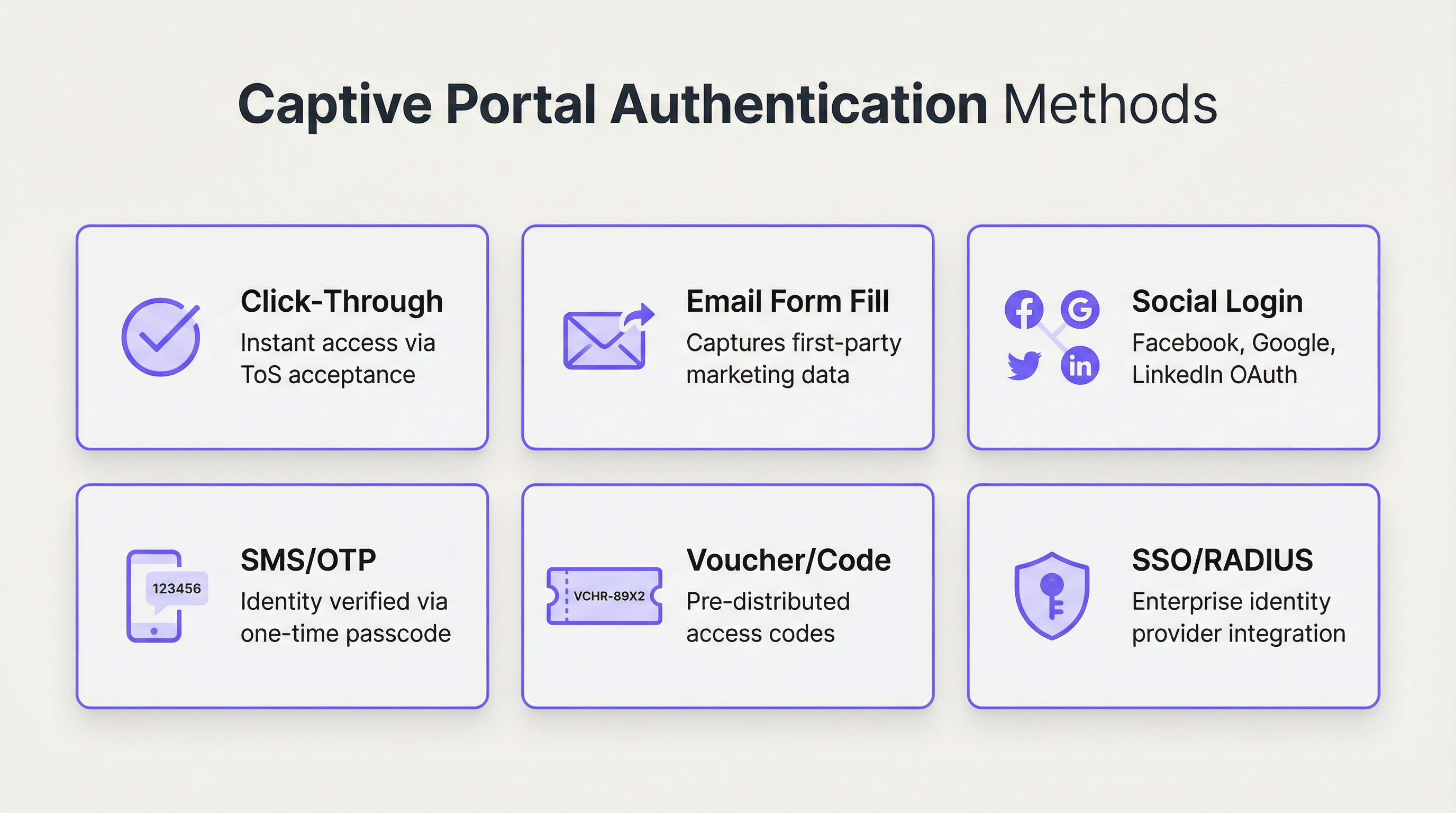
प्रमाणीकरण पद्धतीची निवड हा सर्वात महत्त्वाचा डिझाइन निर्णय आहे, जो सुरक्षा आवश्यकता आणि डेटा संकलन उद्दिष्टांच्या तुलनेत वापरकर्त्याच्या अडचणींचा थेट समतोल राखतो. आधुनिक एंटरप्राइझ प्लॅटफॉर्म्स विविध पर्यायांना समर्थन देतात, जे प्रत्येकी वेगवेगळ्या ऑपरेशनल वातावरणासाठी योग्य असतात.
| पद्धत | प्राथमिक वापर प्रकरण (Use Case) | सुरक्षा पातळी | डेटा कॅप्चर क्षमता | वापरकर्ता अडचण (User Friction) |
|---|---|---|---|---|
| क्लिक-थ्रू (Click-Through) | सार्वजनिक ठिकाणे, क्विक-सर्व्हिस रिटेल | अत्यंत कमी | काहीही नाही | अत्यंत कमी |
| ईमेल / फॉर्म भरणे | मार्केटिंग-केंद्रित रिटेल, हॉस्पिटॅलिटी | कमी | उच्च (फर्स्ट-पार्टी डेटा) | मध्यम |
| सोशल लॉगिन | ग्राहक मार्केटिंगला लक्ष्य करणारी ठिकाणे | कमी-मध्यम | मध्यम (सोशल प्रोफाइल) | कमी-मध्यम |
| SMS / OTP | हॉटेल्स, कॉन्फरन्स सेंटर्स, वाहतूक | मध्यम | मध्यम (फोन नंबर) | मध्यम |
| व्हाउचर / कोड | सशुल्क WiFi, इव्हेंट्स, मर्यादित ॲक्सेस | मध्यम | कमी | मध्यम-उच्च |
| RADIUS / 802.1X | कॉर्पोरेट, शिक्षण, सरकारी | अत्यंत उच्च | उच्च (डिरेक्टरी डेटा) | कमी (वापरकर्त्यांसाठी) |
| SSO (SAML / OIDC) | एंटरप्राइझ अतिथी आणि अंतर्गत ॲक्सेस | अत्यंत उच्च | उच्च (IdP डेटा) | अत्यंत कमी |
सुरक्षा प्रोटोकॉल आणि मानके
एक मजबूत Captive Portal उपाय मजबूत, उद्योग-मान्यताप्राप्त सुरक्षा मानकांच्या पायावर तयार केलेला असणे आवश्यक आहे. कोणत्याही एंटरप्राइझ संदर्भात अनएनक्रिप्टेड ओपन नेटवर्कवर अवलंबून राहणे आता स्वीकार्य नाही.
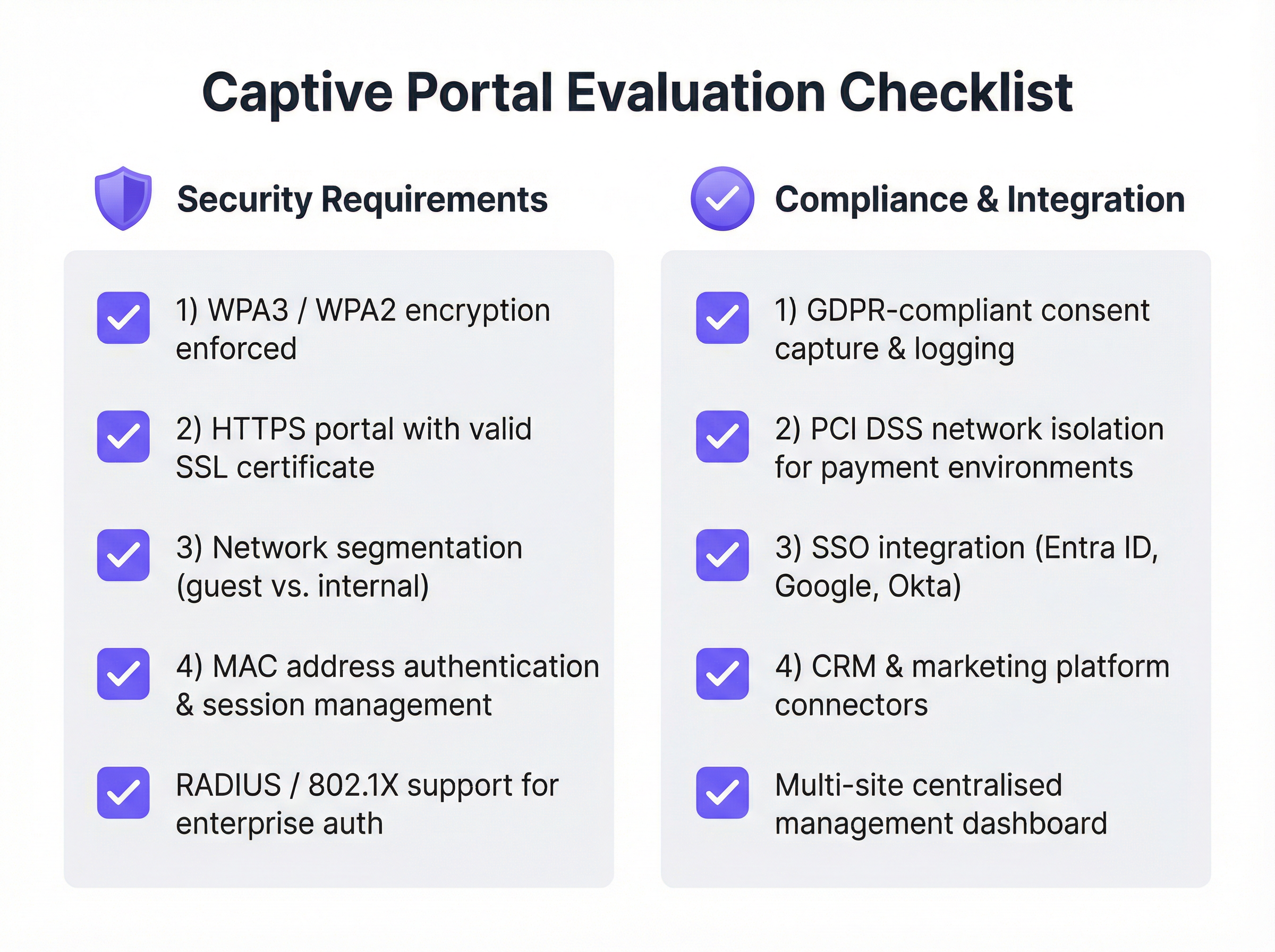
वायरलेस लेयरवर WPA3 / WPA2-Enterprise लागू केले जावे, अनेकदा IEEE 802.1X च्या संयोगाने. हे अगदी पहिल्या डेटा पॅकेटपासून क्लायंट डिव्हाइस आणि ॲक्सेस पॉइंट दरम्यानचे ट्रॅफिक एनक्रिप्ट करते, ज्यामुळे पॅसिव्ह इव्हस्ड्रॉपिंग (passive eavesdropping) टळते. Captive Portal पेज स्वतः एका वैध, सार्वजनिकरित्या विश्वासार्ह SSL प्रमाणपत्रासह HTTPS वर सर्व्ह केले जाणे आवश्यक आहे. हे मॅन-इन-द-मिडल (man-in-the-middle) हल्ल्यांना प्रतिबंधित करते जिथे एखादा हल्लेखोर क्रेडेन्शियल्स चोरण्यासाठी पोर्टल पेज स्पूफ करू शकतो. नेटवर्क सेगमेंटेशन हे सर्वात गंभीर सुरक्षा नियंत्रण आहे: VLANs आणि कठोर फायरवॉल नियमांचा वापर करून अतिथी नेटवर्क अंतर्गत कॉर्पोरेट नेटवर्कपासून पूर्णपणे वेगळे केले जाणे आवश्यक आहे. शेवटी, कनेक्ट केलेल्या अतिथी डिव्हाइसेसना एकमेकांशी संवाद साधण्यापासून रोखण्यासाठी ॲक्सेस पॉइंट्सवर क्लायंट आयसोलेशन सक्षम केले जावे, ज्यामुळे मालवेअरचा प्रसार कमी होतो.
अंमलबजावणी मार्गदर्शक
एंटरप्राइझ-ग्रेड Captive Portal उपाय तैनात करण्यासाठी काळजीपूर्वक नियोजन आणि टप्प्याटप्प्याने दृष्टिकोन आवश्यक आहे. IT आणि व्यवसाय या दोन्ही आवश्यकता पूर्ण करणारी सुरक्षित, विश्वासार्ह आणि स्केलेबल प्रणाली हे याचे उद्दिष्ट आहे.
टप्पा 1: आवश्यकता संकलन आणि व्हेंडर निवड. प्राथमिक उद्दिष्ट निश्चित करा — मग ते साधे सुरक्षित ॲक्सेस, लीड जनरेशन, टायर्ड सेवा ऑफरिंग किंवा नियामक अनुपालन असो. सर्व आवश्यकता कॅप्चर केल्या गेल्या आहेत याची खात्री करण्यासाठी IT, मार्केटिंग, कायदेशीर आणि ऑपरेशन्ससह सर्व भागधारकांना ओळखा. आधुनिक Captive Portal उपायांसह सुसंगततेसाठी तुमच्या वर्तमान नेटवर्क हार्डवेअरचे (APs, स्विचेस, फायरवॉल्स) ऑडिट करा, कारण बहुतांश आघाडीचे प्लॅटफॉर्म्स Cisco Meraki, Aruba आणि Ubiquiti सह प्रमुख व्हेंडर्ससोबत एकत्रित होतात. खालील चेकलिस्ट वापरून व्हेंडर्सचे मूल्यांकन करा, स्केलेबिलिटीसाठी क्लाउड-मॅनेज्ड प्लॅटफॉर्म्सना प्राधान्य द्या आणि पूर्ण डिप्लॉयमेंट करण्यापूर्वी मर्यादित क्षेत्रात प्रूफ-ऑफ-कन्सेप्ट (proof-of-concept) चालवा.
टप्पा 2: डिझाइन आणि कॉन्फिगरेशन. अतिथी ट्रॅफिक सेगमेंटेशनसाठी VLAN डिझाइन, IP ॲड्रेसिंग आणि DNS कॉन्फिगरेशनसह नेटवर्क आर्किटेक्चर अंतिम करा. तुमच्या उद्दिष्टांशी संरेखित होणारी प्रमाणीकरण पद्धत किंवा पद्धती निवडा आणि RADIUS सर्व्हर किंवा SSO आयडेंटिटी प्रोव्हायडर सारख्या कोणत्याही बाह्य प्रणालींसह इंटिग्रेशन्स कॉन्फिगर करा. सुसंगत ब्रँडिंग आणि स्पष्ट वापरकर्ता प्रवासासह वापरकर्त्यासमोरील पोर्टल पेजेस डिझाइन करा. तुमच्या कायदेशीर टीमच्या सहकार्याने स्वीकारार्ह वापर धोरण (AUP) तयार करा आणि सेशन वेळ मर्यादा, बँडविड्थ थ्रॉटलिंग आणि कंटेंट फिल्टरिंग नियमांसह वापरकर्ता धोरणे कॉन्फिगर करा.
टप्पा 3: डिप्लॉयमेंट आणि टेस्टिंग. उपाय प्रथम एकाच साइटवर किंवा मोठ्या ठिकाणाच्या छोट्या भागात तैनात करा. वेगवेगळ्या Captive Network Assistants वर सुसंगत वर्तन सुनिश्चित करण्यासाठी iOS, Android, Windows आणि macOS — अशा विविध डिव्हाइसेसवर संपूर्ण वापरकर्ता प्रवासाची चाचणी घ्या. वापरकर्त्यांना कशी मदत करावी आणि सामान्य समस्यांचे निवारण कसे करावे याबद्दल ऑन-साइट कर्मचाऱ्यांना प्रशिक्षित करा.
टप्पा 4: मॉनिटरिंग आणि ऑप्टिमायझेशन. कनेक्शन यश दर, वापरकर्ता संख्या आणि हार्डवेअर स्थितीचे परीक्षण करण्यासाठी प्लॅटफॉर्मच्या ॲनालिटिक्स डॅशबोर्डचे नियमितपणे पुनरावलोकन करा. अडचणीचे मुद्दे ओळखण्यासाठी वापरकर्ते आणि कर्मचाऱ्यांकडून अभिप्राय गोळा करा आणि पोर्टल डिझाइन सुधारण्यासाठी, बँडविड्थ धोरणे समायोजित करण्यासाठी आणि एकूण अनुभव ऑप्टिमाइझ करण्यासाठी डेटाचा वापर करा.
सर्वोत्तम पद्धती (Best Practices)
पहिल्या दिवसापासून सुरक्षेला प्राधान्य द्या. कधीही ओपन, अनएनक्रिप्टेड अतिथी नेटवर्क तैनात करू नका. WPA3 किंवा WPA2 लागू करा आणि तुमचे पोर्टल HTTPS वर चालत असल्याची खात्री करा. डिप्लॉयमेंटचा आकार काहीही असो, अतिथी आणि अंतर्गत ट्रॅफिकमधील नेटवर्क सेगमेंटेशन अनिवार्य आहे.
केंद्रीकृत क्लाउड व्यवस्थापनाचा अवलंब करा. मल्टी-साइट संस्थांसाठी, सुसंगत धोरण अंमलबजावणी, केंद्रीकृत रिपोर्टिंग आणि सुलभ प्रशासनासाठी क्लाउड-आधारित व्यवस्थापन प्लॅटफॉर्म आवश्यक आहे. केवळ ऑन-प्रिमाइस उपायांमुळे महत्त्वपूर्ण ऑपरेशनल ओव्हरहेड निर्माण होते आणि साइट्सवर कॉन्फिगरेशन ड्रिफ्ट (configuration drift) येते.
डेटा गोपनीयता नियमांचे पालन करा. जर तुम्ही कोणताही वैयक्तिक डेटा गोळा करत असाल — ज्यामध्ये ईमेल पत्ता किंवा सोशल प्रोफाइल समाविष्ट आहे — तर तुम्ही GDPR, CCPA आणि इतर लागू स्थानिक नियमांचे पालन करणे आवश्यक आहे. यासाठी स्पष्ट, माहितीपूर्ण संमती मिळवणे, ती संमती टाइमस्टॅम्पसह लॉग करणे आणि वापरकर्त्यांना त्यांचा डेटा व्यवस्थापित करण्यासाठी किंवा हटवण्यासाठी स्पष्ट यंत्रणा प्रदान करणे आवश्यक आहे. गो-लाइव्ह (go-live) पूर्वी अनुपालन करणारे AUP आणि गोपनीयता धोरण तयार करण्यासाठी कायदेशीर सल्लागारासोबत काम करा.
वापरकर्ता अनुभवासाठी डिझाइन करा. एक निराशाजनक लॉगिन प्रक्रिया तुमच्या ब्रँडवर वाईट प्रभाव पाडते आणि सपोर्ट ओव्हरहेड वाढवते. डिझाइन स्वच्छ ठेवा, क्लिक्सची संख्या कमीत कमी करा आणि स्पष्ट सूचना द्या. एंटरप्राइझ वातावरणासाठी, खऱ्या अर्थाने अखंड अनुभवासाठी SSO किंवा प्रमाणपत्र-आधारित प्रमाणीकरणाचा लाभ घ्या ज्यामध्ये वापरकर्त्याच्या कोणत्याही हस्तक्षेपाची आवश्यकता नसते.
तुमच्या विद्यमान स्टॅकसह एकत्रित करा. आधुनिक Captive Portal ची खरी ताकद इंटिग्रेशनद्वारे उघड होते. मार्केटिंग ऑटोमेशनसाठी ते तुमच्या CRM शी, वैयक्तिकृत अनुभवांसाठी हॉस्पिटॅलिटीमधील तुमच्या प्रॉपर्टी मॅनेजमेंट सिस्टम (PMS) शी किंवा सखोल फूटफॉल ॲनालिटिक्ससाठी तुमच्या बिझनेस इंटेलिजन्स प्लॅटफॉर्मशी कनेक्ट करा.
समस्यानिवारण आणि जोखीम कमी करणे
| समस्या किंवा जोखीम | जोखीम कमी करण्याची रणनीती (Mitigation Strategy) |
|---|---|
| पोर्टल पेज लोड होत नाही | गेटवेवरील DNS इंटरसेप्शन आणि रीडायरेक्शन नियमांची पडताळणी करा. पोर्टल सर्व्हरचा ॲक्सेस ब्लॉक करणारे फायरवॉल नियम तपासा. डिव्हाइसकडे अतिथी DHCP स्कोपमधून वैध IP पत्ता असल्याची खात्री करा. |
| SSL प्रमाणपत्र चेतावणी | वैध, सार्वजनिकरित्या विश्वासार्ह SSL प्रमाणपत्र वापरा. सेल्फ-साइंड प्रमाणपत्रे सर्व आधुनिक ब्राउझर आणि ऑपरेटिंग सिस्टम्सवर सुरक्षा चेतावणी ट्रिगर करतात आणि iOS व Android वर ॲक्सेस ब्लॉक करतील. |
| डिव्हाइस कनेक्टिव्हिटी लूप्स | काही Android डिव्हाइसेस आक्रमकपणे कनेक्टिव्हिटी तपासणीचा पुन्हा प्रयत्न करतात. पोर्टल कार्यक्षम असल्याची आणि गेटवे सर्व प्रमुख ऑपरेटिंग सिस्टम्ससाठी आवश्यक कनेक्टिव्हिटी-चेक URLs योग्यरित्या व्हाइटलिस्ट करत असल्याची खात्री करा. |
| GDPR अनुपालन उल्लंघन | कोणताही वैयक्तिक डेटा गोळा करण्यापूर्वी स्पष्ट, लॉग केलेली संमती मिळवा. डेटा रिटेन्शन धोरण आणि वापरकर्त्यांना डेटा हटवण्याची विनंती करण्यासाठी एक यंत्रणा लागू करा. मोठ्या प्रमाणावरील डिप्लॉयमेंटसाठी डेटा प्रोटेक्शन इम्पॅक्ट असेसमेंट (DPIA) आयोजित करा. |
| अतिथी नेटवर्क भंग (Breach) | अतिथी नेटवर्कला एक अविश्वासू, प्रतिकूल वातावरण म्हणून वागवा. कठोर VLAN सेगमेंटेशन आणि क्लायंट आयसोलेशन लागू करा. Captive Portal चे वेब-आधारित हल्ल्यांपासून संरक्षण करण्यासाठी वेब ॲप्लिकेशन फायरवॉल (WAF) तैनात करण्याचा विचार करा. |
| उच्च सपोर्ट कॉल व्हॉल्यूम | स्पष्ट, साध्या पोर्टल UX डिझाइनमध्ये गुंतवणूक करा. कर्मचाऱ्यांना क्विक-रेफरन्स समस्यानिवारण मार्गदर्शक प्रदान करा. शक्य असेल तिथे सेल्फ-सर्व्हिस पासवर्ड किंवा व्हाउचर रिसेट यंत्रणा लागू करा. |
ROI आणि व्यवसायावरील परिणाम
एंटरप्राइझ Captive Portal उपायातील गुंतवणूक सुरक्षा, ऑपरेशन्स आणि मार्केटिंगमध्ये मोजता येण्याजोगे परतावे देते. या परताव्याचे प्रमाण ठरवण्यासाठी तीन डोमेन्समधील मेट्रिक्सचा मागोवा घेणे आवश्यक आहे.
सुरक्षा आणि अनुपालन मेट्रिक्स मध्ये अतिथी ॲक्सेसशी संबंधित IT सपोर्ट तिकिटांमध्ये घट, PCI DSS आणि GDPR साठी अनुपालन ऑडिटमधील यशस्वी परिणाम आणि अतिथी नेटवर्कमधून उद्भवणाऱ्या शून्य सुरक्षा घटनांचा समावेश आहे. एकाच डेटा भंगाची किंमत — ज्यामध्ये नियामक दंड, प्रतिष्ठेचे नुकसान आणि उपाययोजना खर्चाचा समावेश आहे — सामान्यतः एका मजबूत Captive Portal उपायाच्या वार्षिक खर्चापेक्षा खूप जास्त असते.
ऑपरेशनल मेट्रिक्स मध्ये अतिथी WiFi चा वाढलेला वापर, सकारात्मक वापरकर्ता समाधान स्कोअर आणि अतिथी ऑनबोर्डिंगसाठी लागणारा कमी वेळ यांचा समावेश आहे. हॉटेलसाठी, पोर्टलला PMS सह एकत्रित केल्याने WiFi ॲक्सेससाठी मॅन्युअल चेक-इन पायरी दूर होते, ज्यामुळे फ्रंट-डेस्कचा कामाचा ताण थेट कमी होतो.
मार्केटिंग आणि बिझनेस मेट्रिक्स मध्ये मार्केटिंग ईमेल डेटाबेसची वाढ, पोर्टलद्वारे लॉयल्टी प्रोग्राम साइन-अप्सची संख्या, टायर्ड किंवा सशुल्क ॲक्सेस टायर्समधून मिळणारा महसूल आणि WiFi ॲनालिटिक्सद्वारे कॅप्चर केलेल्या फूटफॉल आणि ड्वेल टाइम डेटाचे मूल्य यांचा समावेश आहे. दरमहा 10,000 नवीन ग्राहक ईमेल पत्ते कॅप्चर करणाऱ्या रिटेल चेनसाठी, एकाच लक्ष्यित ईमेल मोहिमेतून मिळणारा वाढीव महसूल संपूर्ण वार्षिक प्लॅटफॉर्म खर्चाचे समर्थन करू शकतो. पोस्ट-लॉगिन वेलकम पेजवर स्पा पॅकेजची जाहिरात करणाऱ्या हॉटेलसाठी, रूपांतरण दर (conversion rate) थेट मोजता येण्याजोगा आणि श्रेय देण्याजोगा असतो. एक आधुनिक Captive Portal अतिथी WiFi ला एका आवश्यक खर्च केंद्रातून (cost centre) धोरणात्मक, ROI-सकारात्मक मालमत्तेत रूपांतरित करते.
Key Terms & Definitions
Captive Portal
A web-based gateway that intercepts all HTTP/HTTPS traffic from a newly connected device on a WiFi network, redirecting it to a controlled landing page where the user must complete an action before being granted internet access.
IT teams encounter captive portals as the primary mechanism for managing guest WiFi access. Understanding their architecture is essential for correct configuration, troubleshooting, and security design.
RADIUS (Remote Authentication Dial-In User Service)
A networking protocol that provides centralised Authentication, Authorisation, and Accounting (AAA) management for users connecting to a network service, typically integrating with a directory service such as Microsoft Active Directory.
For enterprise IT teams, RADIUS is the robust, scalable method for integrating WiFi authentication with a central user directory. It enables user-based policies, provides a detailed audit log, and is a cornerstone of IEEE 802.1X-based network access control.
IEEE 802.1X
An IEEE standard for port-based Network Access Control (PNAC) that provides an authentication mechanism for devices wishing to attach to a LAN or WLAN, preventing unauthorised devices from connecting before credentials are verified.
Network architects specify 802.1X when designing high-security wireless environments. It works in conjunction with RADIUS to ensure that a device must be authenticated by the network before it receives an IP address or can communicate with any other network resource.
WPA3 (Wi-Fi Protected Access 3)
The third generation of the WPA security certification programme, offering enhanced protection against offline dictionary attacks via Simultaneous Authentication of Equals (SAE), and providing Opportunistic Wireless Encryption (OWE) for open networks.
CTOs and security architects should mandate WPA3 support as a minimum requirement for any new wireless hardware procurement. It is a critical component of a modern, forward-looking security posture.
Network Segmentation (VLAN)
The practice of dividing a physical network into multiple, logically isolated virtual networks (VLANs) using network switches and firewalls, ensuring that traffic from one segment cannot reach another without explicit permission.
This is the single most important security control in a guest WiFi deployment. Without strict VLAN segmentation, a compromised guest device could potentially access internal corporate systems, POS terminals, or sensitive data stores.
SSO (Single Sign-On)
An authentication scheme that allows a user to authenticate once with a central identity provider (IdP) and gain access to multiple systems without re-entering credentials, typically implemented using SAML 2.0 or OpenID Connect (OIDC) protocols.
Enterprise IT managers use SSO to allow employees to access the corporate WiFi network using their existing credentials from providers like Microsoft Entra ID, Google Workspace, or Okta. This eliminates password management overhead and provides a seamless, secure user experience.
Passpoint (Hotspot 2.0)
A Wi-Fi Alliance certification programme based on the IEEE 802.11u standard that enables mobile devices to automatically discover and securely connect to WiFi networks without requiring any user interaction or captive portal login.
Venue operators and network architects should be aware of Passpoint as the emerging alternative to traditional captive portals. It provides a cellular-like connection experience and is increasingly supported by major identity federations through OpenRoaming.
GDPR (General Data Protection Regulation)
A regulation in EU law on data protection and privacy that mandates how organisations collect, store, process, and protect the personal data of EU residents, with significant financial penalties for non-compliance.
Any organisation deploying a captive portal that collects personal data — including email addresses, phone numbers, or social profiles — must ensure their solution and processes are fully GDPR-compliant. This includes obtaining explicit, informed consent, providing a clear privacy policy, and enabling users to exercise their data rights.
iPSK (Individual Pre-Shared Key)
A security method where each device or user is assigned a unique, individually managed pre-shared key to access a WiFi network, providing device-level accountability without requiring 802.1X infrastructure.
IT teams use iPSK as a pragmatic solution for connecting devices that do not support 802.1X, such as IoT sensors, smart displays, or legacy hardware. It provides a level of accountability and revocability that a single shared password cannot offer.
Case Studies
A 250-room upscale hotel wants to replace its outdated, unreliable guest WiFi system. The goals are to provide a seamless, secure experience for guests, reduce front-desk support calls, and use the WiFi to promote on-site amenities like the spa and restaurant. How should the captive portal be configured?
Step 1 — Infrastructure: Deploy a cloud-managed WiFi solution (such as Purple integrated with Cisco Meraki or Aruba hardware) with full venue coverage and redundant access points in high-density areas such as the lobby and conference rooms.
Step 2 — Network Design: Create two primary SSIDs. A secure WPA3-Enterprise network for staff, authenticated via RADIUS integrated with Active Directory. A guest SSID using WPA2 with a captive portal. Implement strict VLAN segmentation between guest, staff, and management networks, with firewall rules preventing any cross-VLAN traffic.
Step 3 — Guest Authentication: Configure the captive portal with a primary authentication method of 'Room Number + Surname', integrated with the hotel's Property Management System (PMS) via API. This ensures only registered guests can connect, eliminates anonymous access, and ties WiFi sessions to a known guest record.
Step 4 — Portal Logic: Upon successful PMS authentication, present guests with a branded welcome page featuring dynamic content: a 'Book a Spa Treatment' button (deep-linking to the spa booking page) and a 'View Restaurant Menu' link. These are served dynamically based on the guest's stay dates and any existing bookings.
Step 5 — Tiered Access: Implement a two-tier bandwidth policy. A complimentary 5 Mbps tier for standard browsing and email. A premium 50 Mbps tier offered for a daily fee, targeted at business travellers and families streaming content. This is presented as a clear upsell option on the welcome page.
Step 6 — Staff Training: Train front-desk staff to assist guests with the PMS login process and explain the premium speed option, with a simple troubleshooting guide for the five most common issues.
A retail chain with 50 stores across the country wants to understand customer behaviour in-store and grow its loyalty programme. They currently offer a basic, unsecured guest WiFi network with no login. What captive portal strategy should they adopt?
Step 1 — Platform Selection: Choose a captive portal platform with strong analytics, CRM integration, and multi-site management capabilities. The platform must support centralised policy management so that changes can be pushed to all 50 stores simultaneously.
Step 2 — Authentication Strategy: Set the primary authentication method to 'Email Form Fill' with an optional 'Social Login' (Google or Facebook). To incentivise sign-ups, present a 10% discount voucher on the welcome page, delivered to the user's email address after successful login. This creates a clear value exchange.
Step 3 — Loyalty Integration: Use the platform's API to connect the captive portal to the chain's loyalty programme database. When a known loyalty member logs in with their registered email, the portal displays their current points balance and a personalised offer, enhancing the experience for existing customers.
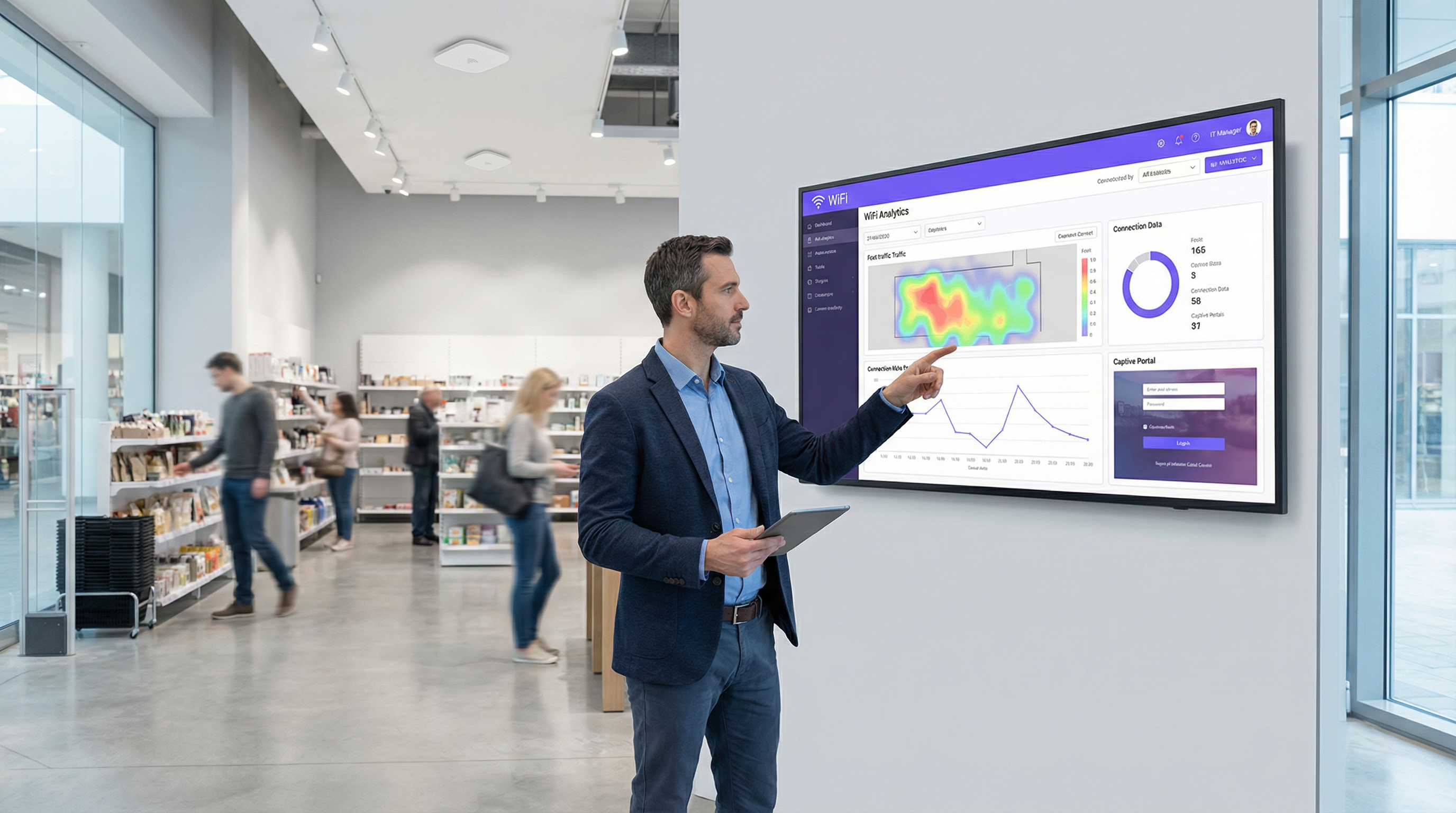
Step 4 — Analytics Deployment: Activate the platform's WiFi analytics features to generate foot traffic heatmaps, dwell time reports, and visit frequency data for each store. This data is surfaced in a centralised dashboard accessible to the operations and marketing teams.
Step 5 — Marketing Automation: Configure an integration with the company's CRM (such as HubSpot or Salesforce). All new email addresses captured via the portal are automatically added to a 'New In-Store WiFi Subscribers' segment, triggering a welcome email series and enrolling them in the loyalty programme.
Step 6 — Staged Rollout: Deploy and test at three to five pilot stores before a full chain-wide rollout. Monitor analytics to measure the impact on loyalty sign-ups, email list growth, and customer dwell time before scaling.
Scenario Analysis
Q1. You are the network architect for a large conference centre that hosts multiple simultaneous events for different corporate clients. Each client wants a branded WiFi experience for their attendees, and access must be restricted to registered attendees only. How would you design the captive portal solution to support this multi-tenant requirement?
💡 Hint:Consider how you can provide multi-tenancy and dynamic branding while ensuring secure, segregated access for each event running concurrently.
Show Recommended Approach
Implement a cloud-managed captive portal platform that supports multi-tenancy and dynamic portal customisation via API. For each event, create a unique SSID or a unique portal URL, each mapped to a separate VLAN to ensure complete traffic isolation between events. Use the Voucher or Code authentication method. Generate a batch of unique, single-use access codes for each event and provide them to the event organiser for distribution to their registered attendees. The portal for each event is dynamically branded with the client's logo, colours, and welcome message, configured via the platform's API or management dashboard. All event networks are on separate VLANs with firewall rules preventing inter-event traffic. A centralised dashboard allows the venue's IT team to monitor all events simultaneously.
Q2. A city council wants to provide free public WiFi in its downtown core. The legal department is concerned about liability for illicit user activity and the IT department is concerned about network abuse. The marketing department wants to gather data to justify the ongoing expense. What captive portal configuration would you recommend?
💡 Hint:Balance the need for maximum public accessibility with the requirements for legal protection, network stability, and justifiable data collection.
Show Recommended Approach
Deploy a Click-Through portal as the primary access method to ensure the lowest possible friction for public access. The portal must present a clear and concise Acceptable Use Policy that users must explicitly accept before connecting, with consent logged server-side. This provides a layer of legal protection by establishing that users have agreed to the terms of use. To address the IT department's concerns, implement per-user bandwidth throttling (for example, 5 Mbps per device) and DNS-based content filtering to block known malicious and illegal sites. For the marketing department, include an optional, clearly marked email sign-up form on the portal page, with a transparent explanation of how the data will be used. This captures data on a fully consented, GDPR-compliant basis while keeping the primary access path friction-free. Monthly analytics reports on connection volumes, peak usage times, and geographic distribution of access points provide the data needed to justify the infrastructure investment.
Q3. Your company is deploying a new guest WiFi network across 100 global offices. The CISO demands that guest access be as secure and auditable as employee access. The Head of HR wants employees to be able to connect their personal devices to the guest network without needing to contact IT for a password. How do you reconcile these requirements in a single architecture?
💡 Hint:Consider enterprise-grade authentication methods that provide both high security and a seamless user experience. How can you differentiate between trusted employees and external guests on the same network?
Show Recommended Approach
Deploy a unified captive portal solution that supports multiple authentication methods on the same SSID. Configure the primary authentication method as Single Sign-On integrated with the company's identity provider, for example Microsoft Entra ID. Employees can then connect their personal devices to the guest network by authenticating with their corporate credentials. This satisfies the CISO's requirement for security and auditability, as every connection is tied to a known corporate identity and logged in the IdP's audit trail. It also satisfies HR's requirement, as employees can self-serve without contacting IT. For non-employee guests and visitors, configure a secondary option on the portal for self-registration via email or SMS OTP, generating a time-limited session (for example, 8 hours) that requires renewal. This creates a two-tiered system on a single network infrastructure, with different session policies and bandwidth allocations applied based on the authentication method used. All connections are logged centrally, providing the CISO with a complete audit trail.
Key Takeaways
- ✓A captive portal is a strategic network gateway that enforces authentication, compliance, and engagement at the point of WiFi access — it is far more than a simple login page.
- ✓The choice of authentication method is the most consequential design decision, requiring a deliberate balance between user friction, security requirements, and data collection objectives.
- ✓Security is non-negotiable: enforce WPA3 or WPA2 encryption, serve the portal over HTTPS with a valid certificate, and implement strict VLAN segmentation to isolate guest traffic from internal systems.
- ✓Modern cloud-managed platforms offer centralised multi-site control, deep analytics, and seamless integration with CRM, identity providers, and property management systems.
- ✓Compliance with GDPR and other data privacy regulations is a legal requirement for any portal that collects personal data, necessitating explicit consent, audit logging, and a clear privacy policy.
- ✓Real-world deployments in hospitality and retail demonstrate that a well-configured captive portal can generate measurable ROI through ancillary revenue, loyalty programme growth, and actionable footfall analytics.
- ✓The industry is evolving towards seamless, identity-based access via Passpoint and OpenRoaming, but traditional captive portals remain the most effective tool for venues that require user engagement, data capture, or explicit terms acceptance.




