
Nightclub and late-night venue WiFi providers: content filtering, peak capacity and staff access
Use this guide to shortlist nightclub WiFi providers against five late-night requirements: first-hour sign-in capacity, licence-led content filtering, hard separation for staff and devices, reporting for licensing questions and consented event lists. You can size your portal from your own door data, set a filtering policy and decide which Purple components your venue needs.
By Iain JewittPublished
📖 14 min read3,207 words3 worked examples12 key definitions
Part of our core series: Guest WiFi: the complete guide →
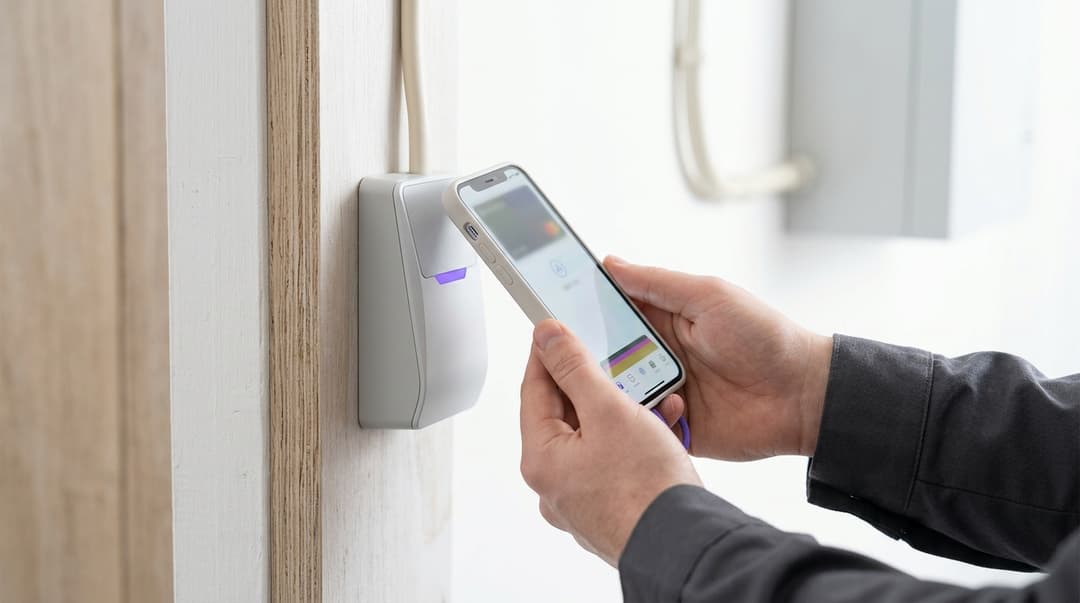
A nightclub WiFi provider must handle peak sign-in spikes while securing staff devices and filtering content. Platforms like Purple deliver this using IEEE 802.1X and iPSK segmentation, integrating with Microsoft Entra ID for staff authentication, and supporting 500 million users and logins a year across 80,000+ venues in 90 countries on existing hardware.
What should a late-night venue require from a WiFi provider?
A late-night venue loads a network differently from a hotel lobby or a shop floor. Demand arrives as a wave when doors open, peaks before midnight and stays dense until close. That same airspace carries the devices that keep you trading and licensed: door scanners, card terminals, tills and security equipment.
Put five requirements on any shortlist of nightclub WiFi providers:
- Sign-in capacity for the first hour. The captive portal is the web page a guest sees before getting online. It must absorb a burst of sign-ins without a queue forming on the dance floor.
- Content filtering the licence holder controls. The premises licence holder decides what the guest network can reach. The provider enforces that policy on every guest session.
- Hard separation for staff and devices. Door scanners, tills and security devices sit on their own networks, out of reach of guest traffic.
- Reporting you can hand over. When the licensing authority or police ask about network use, you can show sessions, times and the filtering policy in force.
- Consented lists for the next event. A sign-in becomes a marketing contact only when the guest makes a conscious choice to opt in.
Purple covers these with three products. Purple Access separates guest, staff and device networks. Purple Shield filters content on the guest network. Purple Engage turns consented event-night sign-ins into a list you can market to.
Purple runs as a cloud overlay on Cisco Meraki, HPE Aruba, Ruckus, Juniper Mist, Ubiquiti UniFi, Cambium, Extreme and Fortinet access points. Meeting these requirements rarely means new hardware. Why your next WiFi upgrade doesn't need new hardware explains how the overlay model works.
Where nightclub WiFi providers genuinely differ
Most providers can put a splash page in front of a guest network. The differences show up at 23:00 on a sold-out Saturday, and again when someone asks what the network was used for.
How much sign-in capacity does a venue need in the first hour?
Size for the busiest 15 minutes after doors open, not the average across the night. Plan from your own door data rather than your licensed capacity alone.
Here is the planning arithmetic for a 1,000-capacity club. Assume your door system logs 600 admissions in the first hour. Assume 40% of those arrive in the busiest 15 minutes. That gives 240 arrivals in 15 minutes, or 16 a minute. If every arriving guest tries to connect, the portal must complete 16 sign-ins a minute. It does this while still serving everyone already inside. Add headroom for retries when a guest mistypes or flips between mobile data and WiFi.
Capacity has two layers, and a provider must answer for both.
Radio capacity. Your access points must carry every connected device at once. A packed room absorbs radio signal, so a design that works at 18:00 can fail at midnight. Mount access points overhead where bodies cannot block them. Use your hardware vendor's high-density design guidance for client counts per radio. WiFi 6 (IEEE 802.11ax) adds OFDMA, which lets one access point serve several devices in a single transmission. WiFi 6 802.11ax explained covers the gains in dense rooms. Do not fill coverage gaps with repeaters. WiFi extender vs Access point: Which one do you need? explains why extenders halve usable airtime.
Platform capacity. The sign-in service must not become the bottleneck. Purple handles 500 million users and logins a year across 80,000+ live venues in 90 countries, and runs at 99.999% uptime (Purple's own data). Ask any provider for their equivalent figures and how their portal behaves under burst load.
Fewer sign-ins in the first place. Returning guests should not need to queue at the portal again. Passpoint, also called Hotspot 2.0, is the industry standard for automatic, encrypted WiFi sign-in. OpenRoaming is a Wireless Broadband Alliance federation that uses Passpoint to connect devices to participating networks automatically. Purple supports OpenRoaming, which takes repeat visitors off the sign-in peak entirely.
Finally, stop a few devices taking the airtime everyone needs. Session length and bandwidth limits keep a guest streaming the DJ set from slowing the room. How to Implement Time and Bandwidth Restrictions on Guest WiFi walks through the settings.
Which content should a late-night guest network block, and how?
In England and Wales, the Licensing Act 2003 sets four licensing objectives. These are the prevention of crime and disorder, public safety, the prevention of public nuisance and the protection of children from harm. The premises licence holder must promote them across the premises they run. A guest network is part of that premises, so a written filtering policy is a sensible control.
Build the policy in two tiers.
The baseline every venue should block:
- Child sexual abuse content. Ask whether the provider's filter uses the Internet Watch Foundation (IWF) URL list.
- Known malware and phishing domains, which protect guests' phones and your own reputation.
- Anonymising proxies and filter-avoidance services, which would otherwise let any guest switch the policy off.
The policy choices the licence holder makes:
- Adult content, gambling and other categories, depending on your clientele, events and licence conditions.
- Peer-to-peer file sharing and large downloads, which consume capacity you need at peak.
Most guest filtering works at the DNS level. DNS is the lookup that turns a site name into an address. A DNS filter answers lookups for blocked sites with a block page instead. It works on every phone without installing software. Some browsers send lookups over encrypted DNS (DNS over HTTPS), which can bypass a network filter. Ask how the provider handles that.
Purple Shield applies content filtering to the guest network only. Staff and device networks run under their own policies, so a guest rule never blocks a till update.
How are door scanners, tills and security devices kept off the guest network?
Separation starts with a distinct network name (SSID) for each group. Each SSID maps to its own VLAN, a virtual LAN that runs as a separate logical network on the same switches. Firewall rules then block any traffic from the guest VLAN to the device VLANs. Client isolation on the guest network stops guests reaching each other's phones.
Then decide how each group proves who it is.
Staff phones and laptops should use IEEE 802.1X. This standard makes each person sign in with their own credentials, checked by a RADIUS server, the service that approves or refuses each connection. Purple's cloud RADIUS connects to Microsoft Entra ID, Okta or Google Workspace. When a bar manager leaves, you disable their account and their WiFi access goes with it. If you use casual or agency staff, a shared staff password outlives every person who ever learned it.
Door scanners, card terminals, tills and security devices often cannot run 802.1X. Use iPSK (individual pre-shared key) instead, sometimes called PPSK. Each device or group of devices gets its own key on the same SSID, mapped to its own VLAN. You can revoke one lost scanner's key without re-keying every till. Use WPA3 encryption wherever the device supports it.
Card terminals and tills carry an extra obligation. PCI DSS treats any system that can connect to the cardholder data environment as in scope for your assessment. Segmenting payment devices away from guest WiFi keeps the guest network out of that scope.
Separation also needs uplink capacity. If guests and devices share one internet line, reserve bandwidth for the device VLAN at your gateway. A crowd can then saturate the guest network without stalling the door. Purple Access delivers these separated guest, staff and device networks from one dashboard.
What reporting helps if the venue is asked about network use?
Questions come from a licensing review, a police enquiry or a complaint from a guest. Make sure your provider can produce:
- Session records: device identifier, connection start and end, and the access point or zone.
- Sign-in records: when each guest authenticated and what consent they gave.
- Filtering records: the policy in force on a given night, and when it last changed.
- Staff access records: who connected to the staff network and when, from 802.1X logs.
Keep records only as long as you need them. The UK GDPR storage limitation principle requires that, and your privacy notice should state the retention period. When police request data, your data protection lead decides what to release. The Data Protection Act 2018, Schedule 2, permits disclosure for the prevention or detection of crime.
Reporting also feeds your own planning. WiFi Analytics shows connections by hour, so you see when the real peak hits and staff the door to match. Purple is ISO 27001 certified, Cyber Essentials certified and GDPR compliant.
How can event-night sign-ins become a list for the next event?
Under UK GDPR Article 7, consent must be freely given. You cannot make it a condition of getting online. The Privacy and Electronic Communications Regulations (PECR), regulation 22, require consent before you send marketing emails or texts to individuals. In practice, put an unticked marketing opt-in on the portal, separate from accepting the terms.
Purple's conscious-choice opt-ins follow that model. Purple Engage turns consented event-night sign-ins into first-party data you own. Purple integrates with CRM and marketing platforms, so the list reaches the tools your promoters already use. Record which night each guest signed in, and you can invite the people who came to a given night to its next date. Venues with private events use the same pattern. Golf club WiFi platforms: members, visitors and clubhouse events on one network shows it applied to clubhouse functions.
How the three types of provider compare
| Requirement | Broadband bundle router | Access point vendor's built-in splash page | Purple cloud guest WiFi platform |
|---|---|---|---|
| First-hour sign-ins | Shared password, no sign-in record | Basic splash page on the vendor's cloud | Cloud captive portal, 500 million users and logins a year, OpenRoaming for return visits |
| Content filtering | Router-level filter, if the ISP offers one | Vendor or third-party filter, configured separately | Purple Shield on the guest network |
| Staff and device separation | One guest network plus one shared staff password | SSIDs and VLANs on that vendor's hardware only | Purple Access: 802.1X via Entra ID, Okta or Google Workspace, plus iPSK for devices |
| Reporting for licensing questions | No per-session records | Session logs in the vendor dashboard | Sessions, sign-ins, consent and analytics in one platform |
| Event-night marketing list | None | Email capture without CRM integration | Purple Engage with conscious-choice opt-ins and CRM integration |
| Hardware | ISP-supplied router | Locked to one vendor | Hardware-agnostic across eight named vendors |
Got questions about your specific setup?
Our team works with venue operators, IT managers, and network engineers across 80,000 venues. Book a 20-minute call and we will show you how others like you solved it.
Where each option fits
The worked scenarios below use stated assumptions. Swap in your own door counts and opt-in rates to size your venue.
Worked scenario: a 1,200-capacity city-centre club
Situation. The club ran one guest network shared with its door scanners and card terminals. On sold-out nights, scanners lost connection as the room filled, and the door queue backed up onto the street. The licence carried an ID scanning condition, so a scanner outage became a compliance problem as well as a queue.
What was done. The club kept its existing access points and added Purple as a cloud overlay. Purple Access split the network into three. Guests use the captive portal with session and bandwidth limits. Door scanners and tills use iPSK on their own VLANs with reserved uplink capacity. Door supervisors and bar staff use 802.1X through Microsoft Entra ID. Purple Shield applied the licence holder's filtering policy to guests only.
Measurable outcome. Guest traffic can no longer reach or starve the scanner VLAN, so the door no longer depends on the crowd. The club measures this weekly as scanner disconnections between 22:00 and 01:00. On the marketing side, assume 700 portal sign-ins a night and a 25% opt-in rate. Four Saturdays then produce 700 consented contacts, each tagged to the night they attended.
Worked scenario: a hotel rooftop bar open until 02:00
Situation. A 200-room hotel runs a rooftop bar with DJ nights at weekends. Non-resident guests share the bar with hotel residents. The general manager wanted local bar-goers on a separate list from hotel residents. The licence holder wanted a filtering policy that covered the bar without touching the hotel's back-office network.
What was done. The hotel added a bar-specific guest network with its own captive portal and opt-in wording. Purple Shield filtered the bar's guest network. Bar tills moved to their own iPSK-secured VLAN, taking them out of the guest network's PCI DSS scope. Purple Engage tagged each bar sign-in to its event night. Our Hotels page covers the wider hotel deployment.
Measurable outcome. The bar now produces its own list instead of merging into the hotel's resident data. Assume 150 sign-ins on each of eight DJ nights and a 30% opt-in rate. That gives 360 consented local contacts for the next season's events. The hotel can show the licensing authority which policy applied to the bar on any given night.
Where the simpler options stop
A broadband bundle router suits a home office, not a licensed venue. It gives you no per-session records, no staff identity and no consented list. An access point vendor's splash page works on that vendor's hardware only. It leaves filtering, consent and CRM integration as separate projects. A single-room bar without door scanners can start on Purple Connect and move to Capture or Engage when it starts running events.
What each option costs to run
Compare total running cost, not the licence line alone. Five costs decide it.
Hardware. Replacing working access points is the largest avoidable cost. A hardware-agnostic overlay keeps your existing Cisco Meraki, HPE Aruba, Ruckus, Juniper Mist, Ubiquiti UniFi, Cambium, Extreme or Fortinet estate in service. Budget for extra access points only where your high-density survey shows gaps.
Licences. Purple sells three plans: Connect, Capture and Engage. SecurePass, Verify and Shield are add-ons. Most late-night venues need Shield for filtering and Engage for event lists. Ask any provider to quote each component separately so you can compare like for like.
Staff time. Shared passwords cost time every time someone leaves. With 802.1X tied to Microsoft Entra ID, Okta or Google Workspace, one account change revokes WiFi access. With iPSK, a lost scanner means one revoked key, not a re-key of every device.
Downtime at the door. A scanner or till outage at 23:00 costs admissions and bar sales, and may breach a licence condition. Separated device networks remove the guest crowd as a cause.
The list. A venue without consented sign-ins pays to reach the same people again through paid promotion. First-party data from your own guest WiFi is the return side of the ledger.
How to decide for your estate
Match your situation to the requirement it creates, then check each provider against it.
| Your situation | What to require | Purple component |
|---|---|---|
| Door scanners or ID scanning written into your licence | Device VLAN with iPSK and reserved uplink capacity | Purple Access |
| Card terminals or tills on WiFi | Payment devices segmented out of guest network PCI DSS scope | Purple Access |
| Casual or agency staff on rotas | 802.1X sign-in tied to Microsoft Entra ID, Okta or Google Workspace | Purple Access with cloud RADIUS |
| Licence holder wants control of guest content | Guest-only filtering with IWF list and anti-proxy blocking | Purple Shield |
| 500+ admissions in the first hour | Burst-tested captive portal, high-density radio design, OpenRoaming | Purple Guest WiFi |
| Promoter-led event nights | Conscious-choice opt-ins tagged to the event night, CRM integration | Purple Engage |
| Several venues on mixed hardware | One platform across vendors | Hardware-agnostic cloud overlay |
Before you sign, ask each provider on the shortlist five questions:
- What sign-in rate per minute does your portal sustain, and what evidence supports it?
- Which devices on my estate need iPSK, and how do I revoke one key?
- Does your filter use the IWF list, and how does it handle encrypted DNS?
- What session, consent and filtering records can I export for a licensing review?
- Which of my existing access points do you support today?
Our Guest WiFi page sets out how Purple answers each one.
Frequently asked questions
Does Purple work with the access points we already have?
Yes, Purple runs on Cisco Meraki, HPE Aruba, Ruckus, Juniper Mist, Ubiquiti UniFi, Cambium, Extreme and Fortinet access points. Purple is hardware-agnostic and deploys as a cloud overlay, so you keep your existing estate. You may still need extra access points if a high-density survey shows coverage gaps on the dance floor. That decision comes from your radio design, not from the guest WiFi platform you choose.
How is Purple priced for a single club or a group of venues?
Purple prices by plan, with Connect, Capture and Engage tiers and SecurePass, Verify and Shield as add-ons. A late-night venue running event nights typically needs Engage for consented lists and Shield for guest content filtering. Your quote reflects the number of venues and the plan and add-ons you choose. Ask for each component priced separately so you can compare providers like for like.
Can we move from our current guest WiFi provider without closing the venue?
Yes, because Purple runs as a cloud overlay, switching is a configuration change on your existing access points rather than a rip and replace. Schedule the cutover for a closed day or a quiet early session. Then test the guest portal, staff sign-in and every door scanner and till before doors open. Export any consented contacts from your current provider first, keeping the consent record attached.
Is collecting guest details at sign-in GDPR compliant?
Yes, when marketing consent is a separate, unticked choice and getting online does not depend on it. UK GDPR Article 7 requires consent to be freely given, and PECR requires consent before marketing emails or texts. Purple uses conscious-choice opt-ins and is GDPR compliant and ISO 27001 certified. Publish your retention period in the privacy notice shown on the captive portal.
Why not use the free WiFi that came with our broadband?
Because a bundled router puts guests, staff and devices on networks with no identity, no per-session records and no consented list. A crowd surge can then disconnect door scanners and tills. You also have nothing to show the licensing authority if asked about network use. A dedicated guest WiFi platform separates those networks and records each session against a sign-in.
Do door scanners need 802.1X support to connect securely?
No, devices that cannot run 802.1X connect with iPSK, which gives each device or group of devices its own key. Each key maps to its own VLAN, keeping scanners off the guest network. If a scanner goes missing, you revoke its key without re-keying any other device. Use WPA3 encryption wherever the scanner supports it.
How much work is deployment for a single venue?
For a venue with supported access points, deployment is a configuration project rather than a hardware project. The work is defining SSIDs and VLANs, setting the guest portal and opt-in wording, and agreeing the filtering policy with the licence holder. It also covers issuing iPSK keys to devices and connecting staff sign-in to Microsoft Entra ID, Okta or Google Workspace. Test everything on a closed day before the first event night.
Key Definitions
Captive portal
The web page a guest sees before getting online, where they authenticate, accept terms and make any marketing choice. It sits in front of the guest SSID and records each sign-in against a session.
In a late-night venue the portal must absorb a burst of sign-ins after doors open. In the guide's 1,000-capacity example, that means 16 sign-ins a minute plus headroom for retries.
IEEE 802.1X
The IEEE standard for port-based network access control. Each person signs in with their own credentials, which an authentication server checks before the access point grants a connection.
Use it for staff phones and laptops. With Purple's cloud RADIUS connected to Microsoft Entra ID, Okta or Google Workspace, disabling a leaver's account removes their WiFi access.
RADIUS
Remote Authentication Dial-In User Service, the authentication protocol defined in IETF RFC 2865. A RADIUS server approves or refuses each 802.1X connection request.
Purple provides cloud RADIUS, so you do not run a server on site. It also produces the staff access logs you may need for a licensing review.
iPSK (PPSK)
Individual pre-shared key, also called private pre-shared key. Each device or group of devices gets its own key on the same SSID, and each key maps to its own VLAN.
Door scanners, card terminals and tills often cannot run 802.1X. iPSK lets you revoke one lost scanner's key without re-keying every till.
VLAN
Virtual LAN, defined in IEEE 802.1Q. It runs as a separate logical network on the same physical switches, with traffic tagged to keep groups apart.
Each SSID maps to its own VLAN, and firewall rules stop the guest VLAN reaching device VLANs. This keeps a crowd from disrupting door scanners.
IEEE 802.11ax (WiFi 6) and OFDMA
IEEE 802.11ax is the WiFi 6 amendment. It adds orthogonal frequency-division multiple access (OFDMA), which lets one access point serve several devices in a single transmission.
Dense dance floors absorb radio signal, so a design that works at 18:00 can fail at midnight. WiFi 6 improves how each radio shares airtime at peak.
Passpoint (Hotspot 2.0) and OpenRoaming
Passpoint, also called Hotspot 2.0, is the industry standard for automatic, encrypted WiFi sign-in. OpenRoaming is a Wireless Broadband Alliance federation that uses Passpoint to connect devices to participating networks automatically.
Purple supports OpenRoaming, which connects returning guests without the portal. That takes repeat visitors off the first-hour sign-in peak.
DNS filtering and DNS over HTTPS
A DNS filter answers lookups for blocked sites with a block page, working on every phone without software. DNS over HTTPS (IETF RFC 8484) encrypts lookups inside HTTPS, which can bypass a network-level filter.
Most guest filtering, including Purple Shield on the guest network, works at this level. Ask every provider how it handles encrypted DNS.
IWF URL list
The Internet Watch Foundation's list of web addresses hosting child sexual abuse content, supplied to filtering providers for blocking.
Blocking this content is part of the baseline every venue should apply. Ask whether the provider's filter uses the IWF list.
PCI DSS scope
The Payment Card Industry Data Security Standard treats any system that can connect to the cardholder data environment as in scope for assessment.
Segmenting card terminals and tills onto their own iPSK-secured VLAN keeps the guest network out of your PCI DSS assessment.
Licensing Act 2003 objectives
In England and Wales, the Act sets four licensing objectives: prevention of crime and disorder, public safety, prevention of public nuisance and protection of children from harm.
The premises licence holder must promote these across the premises, including the guest network. A written filtering policy is a sensible control.
UK GDPR Article 7 and PECR regulation 22
UK GDPR Article 7 sets the conditions for valid consent, which must be freely given. PECR regulation 22 requires consent before sending marketing emails or texts to individuals.
Consent cannot be a condition of getting online. Use an unticked opt-in on the portal, separate from accepting the terms.
Worked Examples
A 1,200-capacity city-centre club shares one guest network with its door scanners and card terminals. On sold-out nights scanners drop as the room fills, and the licence carries an ID scanning condition. What should it do?
The club kept its existing access points and added Purple as a cloud overlay. Purple Access split the network into three. Guests use the captive portal with session and bandwidth limits. Door scanners and tills use iPSK on their own VLANs with reserved uplink capacity. Door supervisors and bar staff use 802.1X through Microsoft Entra ID. Purple Shield applies the licence holder's filtering policy to guests only. Guest traffic can no longer reach or starve the scanner VLAN, and the club tracks scanner disconnections between 22:00 and 01:00 weekly. Assuming 700 sign-ins a night and a 25% opt-in rate, four Saturdays produce 700 consented contacts tagged to the night attended.
A 200-room hotel runs a rooftop bar with weekend DJ nights until 02:00. It wants local bar-goers on a separate list from residents, and filtering that covers the bar without touching back-office systems. How is that set up?
The hotel added a bar-specific guest network with its own captive portal and opt-in wording. Purple Shield filtered that guest network only, leaving the back-office network under its own policy. Bar tills moved to their own iPSK-secured VLAN, taking them out of the guest network's PCI DSS scope. Purple Engage tagged each bar sign-in to its event night. The bar now produces its own list rather than merging into resident data. Assuming 150 sign-ins on each of eight DJ nights and a 30% opt-in rate, that gives 360 consented local contacts for next season. The hotel can also show the licensing authority which policy applied on any given night.
A 1,000-capacity club needs to know what sign-in rate its captive portal must sustain after doors open. How should it size the requirement?
Size for the busiest 15 minutes, not the average across the night, and plan from door data. Assume the door system logs 600 admissions in the first hour, with 40% arriving in the busiest 15 minutes. That gives 240 arrivals in 15 minutes, or 16 a minute. If every guest tries to connect, the portal must complete 16 sign-ins a minute while serving everyone already inside. Add headroom for retries when guests mistype or switch between mobile data and WiFi. Then cover the radio layer with overhead access points and your vendor's high-density guidance. Use OpenRoaming to take returning guests off the portal entirely.
Frequently asked questions
Does Purple work with the access points we already have?
Yes, Purple runs on Cisco Meraki, HPE Aruba, Ruckus, Juniper Mist, Ubiquiti UniFi, Cambium, Extreme and Fortinet access points. Purple is hardware-agnostic and deploys as a cloud overlay, so you keep your existing estate. You may still need extra access points if a high-density survey shows coverage gaps on the dance floor. That decision comes from your radio design, not from the guest WiFi platform you choose.
How is Purple priced for a single club or a group of venues?
Purple prices by plan, with Connect, Capture and Engage tiers and SecurePass, Verify and Shield as add-ons. A late-night venue running event nights typically needs Engage for consented lists and Shield for guest content filtering. Your quote reflects the number of venues and the plan and add-ons you choose. Ask for each component priced separately so you can compare providers like for like.
Can we move from our current guest WiFi provider without closing the venue?
Yes, because Purple runs as a cloud overlay, switching is a configuration change on your existing access points rather than a rip and replace. Schedule the cutover for a closed day or a quiet early session. Then test the guest portal, staff sign-in and every door scanner and till before doors open. Export any consented contacts from your current provider first, keeping the consent record attached.
Is collecting guest details at sign-in GDPR compliant?
Yes, when marketing consent is a separate, unticked choice and getting online does not depend on it. UK GDPR Article 7 requires consent to be freely given, and PECR requires consent before marketing emails or texts. Purple uses conscious-choice opt-ins and is GDPR compliant and ISO 27001 certified. Publish your retention period in the privacy notice shown on the captive portal.
Why not use the free WiFi that came with our broadband?
Because a bundled router puts guests, staff and devices on networks with no identity, no per-session records and no consented list. A crowd surge can then disconnect door scanners and tills. You also have nothing to show the licensing authority if asked about network use. A dedicated guest WiFi platform separates those networks and records each session against a sign-in.
Do door scanners need 802.1X support to connect securely?
No, devices that cannot run 802.1X connect with iPSK, which gives each device or group of devices its own key. Each key maps to its own VLAN, keeping scanners off the guest network. If a scanner goes missing, you revoke its key without re-keying any other device. Use WPA3 encryption wherever the scanner supports it.
How much work is deployment for a single venue?
For a venue with supported access points, deployment is a configuration project rather than a hardware project. The work is defining SSIDs and VLANs, setting the guest portal and opt-in wording, and agreeing the filtering policy with the licence holder. It also covers issuing iPSK keys to devices and connecting staff sign-in to Microsoft Entra ID, Okta or Google Workspace. Test everything on a closed day before the first event night.
Continue reading in this series
Switching guest WiFi providers: a migration checklist for multi-site venues
You will be able to plan a multi-site guest WiFi provider switch in the right order, from contract dates and consent-backed data export to pilot, wave cutover and report sign-off. You will also know which access point settings fail most often and what to budget, so no site goes dark and no marketing list is lost.
Golf club WiFi platforms: members, visitors and clubhouse events on one network
Use this guide to pick one golf club WiFi platform that runs member, visitor and staff networks on the access points you already own. You will be able to assign each group its route in, take tills off the guest network, size a society day and build a consented email list from visitor sign-ins.
Marina WiFi providers: berth holders, visiting boats and seasonal capacity
You will be able to shortlist marina WiFi providers against five tests: network separation, pontoon coverage, summer capacity, berth-level key control and consented visitor data. You will also know what to write into the contract, from a signed concurrent device figure to event uplift, and which 10 questions to send every provider.
Got questions about your specific setup?
Our team works with venue operators, IT managers, and network engineers across 80,000 venues. Book a 20-minute call and we will show you how others like you solved it.