
WPA3 and WPA2 security guides
The WiFi security modes, what changed in WPA3, and when an upgrade is worth it.
In short
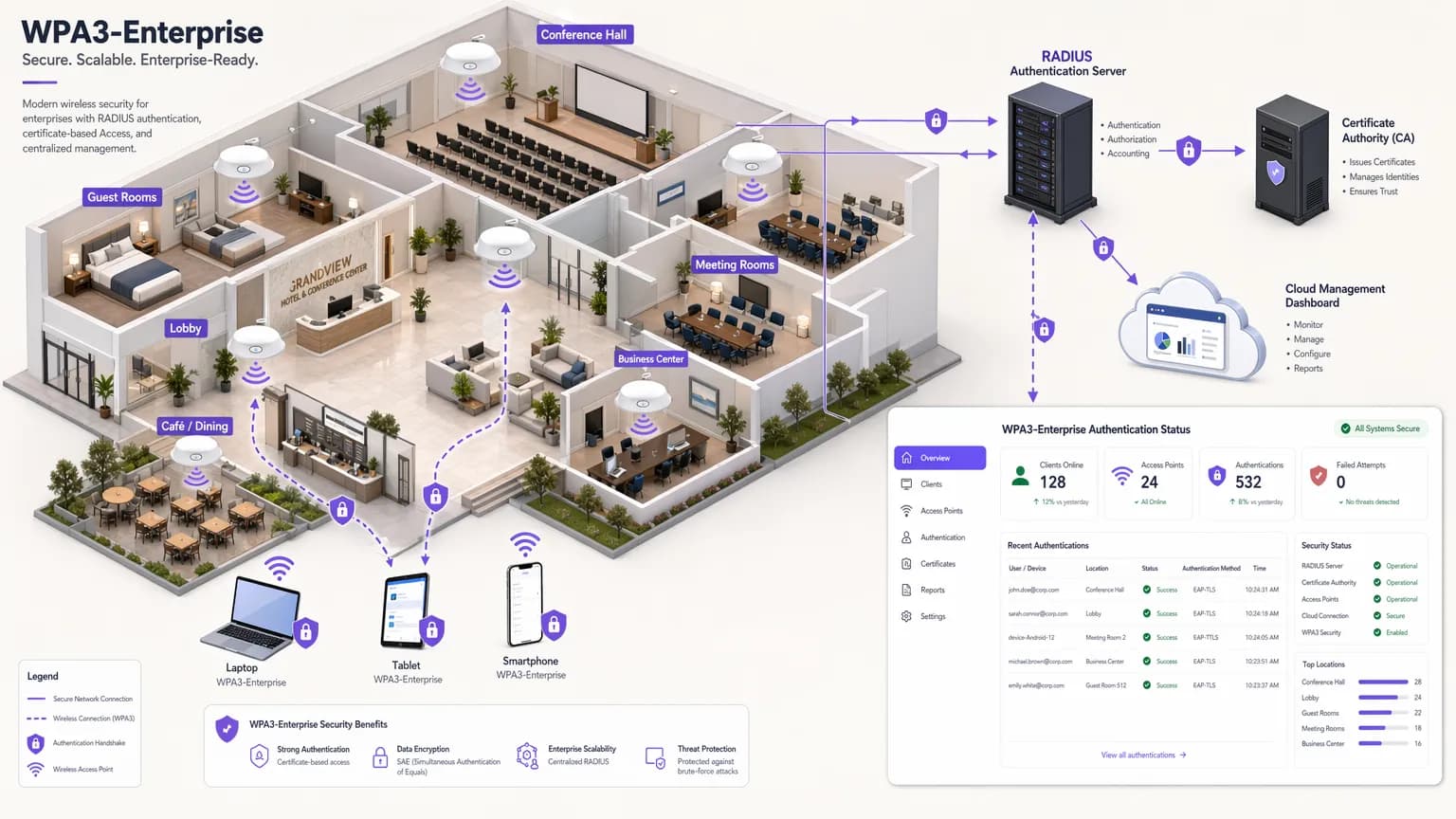
WPA3 is the current WiFi security standard. WPA3-Personal replaces the WPA2 pre-shared key handshake with SAE, which resists offline password guessing. WPA3-Enterprise adds an optional 192-bit mode, and protected management frames become mandatory. Enhanced Open, or OWE, encrypts open guest networks without asking for a password.
All 14 guides






Frequently asked questions
What is the difference between WPA3-Personal and WPA3-Enterprise?
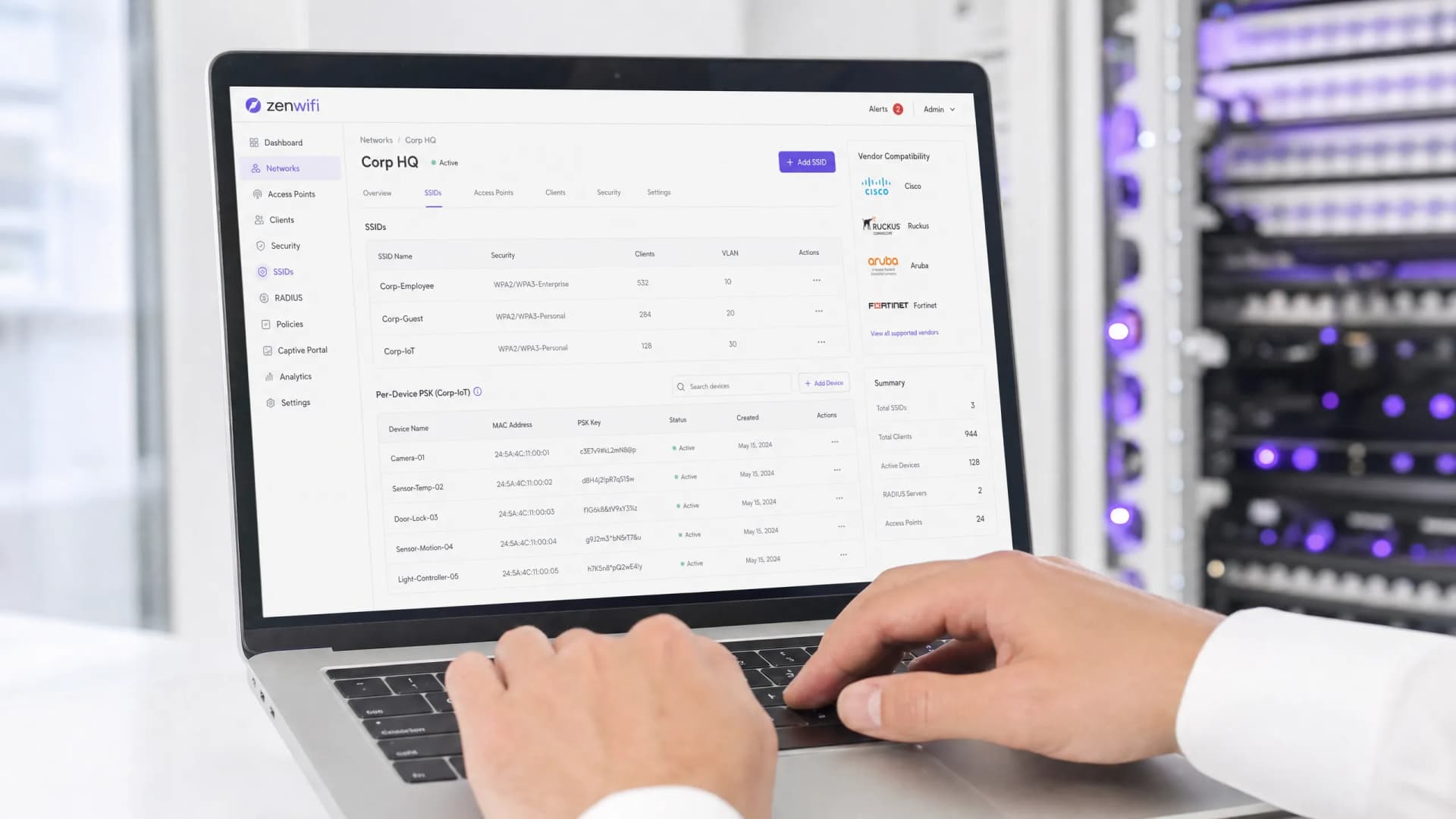
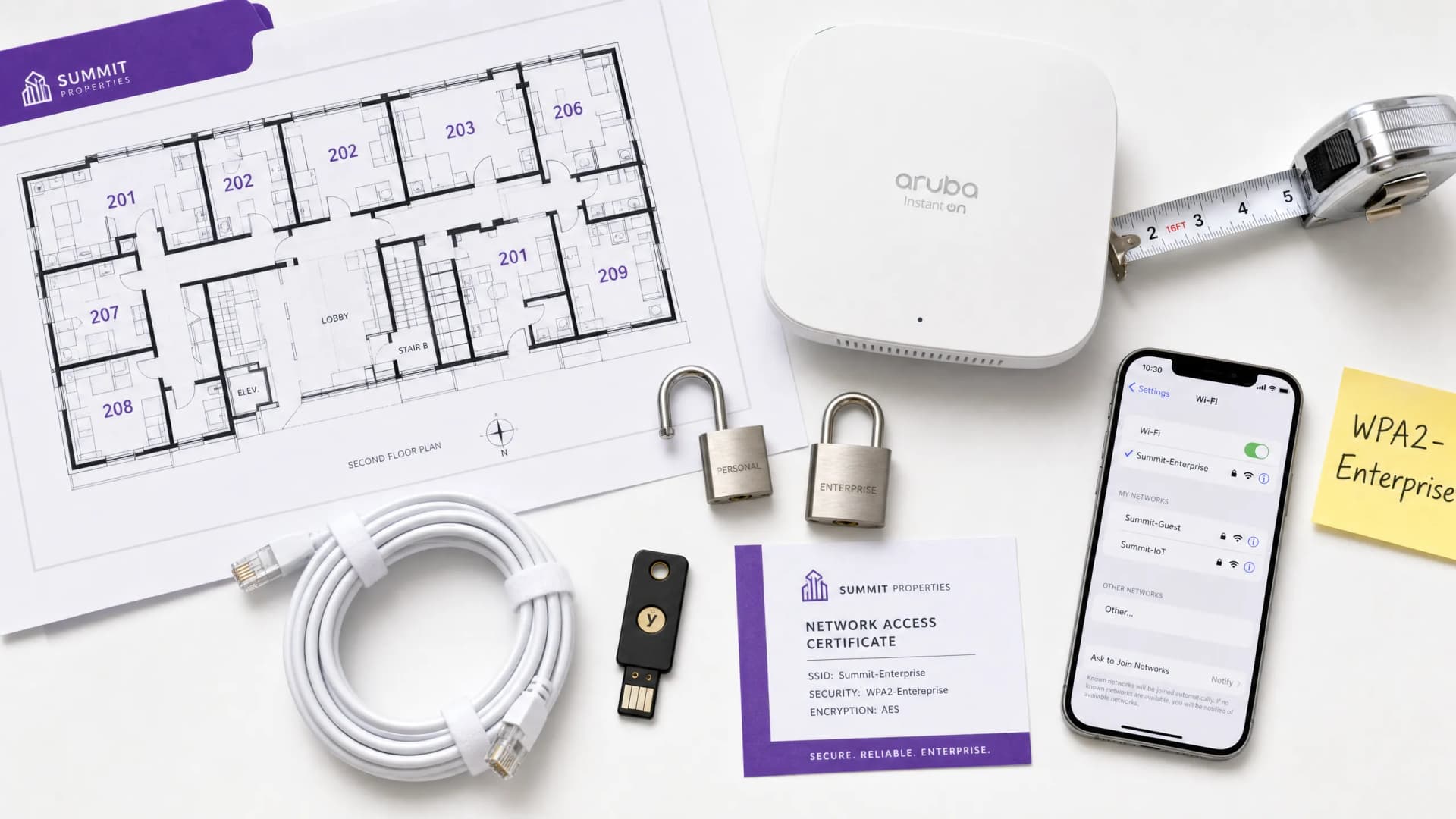
Personal uses one shared password, protected by SAE. Enterprise authenticates each user or device individually through 802.1X and RADIUS, so access can be granted and revoked per person.
Should I move from WPA2 to WPA3?
For new networks, yes. For existing ones, WPA3 transition mode lets WPA2 and WPA3 devices share an SSID while older devices are replaced.
Is WPA2 still safe?
WPA2-Enterprise with EAP-TLS remains strong. The weak point is WPA2-Personal, where one shared password is written down, passed around and rarely changed.
Can guest WiFi be encrypted without a password?
Yes. Enhanced Open (OWE) encrypts each connection on an open network, so guests still join without a password but their traffic is not readable over the air.