

EAP-TLS बनाम PEAP: आपके नेटवर्क के लिए कौन सा प्रमाणीकरण प्रोटोकॉल सही है?
EAP-TLS और PEAP प्रमाणीकरण प्रोटोकॉल की एक व्यापक तकनीकी तुलना, जिसमें सुरक्षा आर्किटेक्चर, परिनियोजन जटिलता और अनुपालन निहितार्थ शामिल हैं। यह मार्गदर्शिका आतिथ्य, खुदरा, आयोजनों और सार्वजनिक क्षेत्र के वातावरण में IT लीडर्स के लिए कार्रवाई योग्य निर्णय फ्रेमवर्क प्रदान करती है, जिन्हें अपने एंटरप्राइज़ WiFi इंफ्रास्ट्रक्चर के लिए सही 802.1X प्रमाणीकरण विधि का चयन करने की आवश्यकता है।
🎧 Listen to this Guide
View Transcript

कार्यकारी सारांश
सही प्रमाणीकरण प्रोटोकॉल का चयन एक महत्वपूर्ण वास्तुशिल्प निर्णय है जो सुरक्षा स्थिति और परिचालन लागत दोनों को प्रभावित करता है। जटिल वातावरण में काम करने वाले IT प्रबंधकों, नेटवर्क आर्किटेक्ट्स और CTOs के लिए — जैसे आतिथ्य , खुदरा , स्टेडियम और सार्वजनिक क्षेत्र के संगठन — EAP-TLS और PEAP के बीच का चुनाव अक्सर मजबूत सुरक्षा और परिनियोजन व्यवहार्यता के बीच संतुलन निर्धारित करता है।
EAP-TLS (एक्सटेंसिबल ऑथेंटिकेशन प्रोटोकॉल-ट्रांसपोर्ट लेयर सिक्योरिटी) को एंटरप्राइज़ WiFi सुरक्षा के लिए व्यापक रूप से स्वर्ण मानक माना जाता है, जो पारस्परिक प्रमाणपत्र-आधारित प्रमाणीकरण पर निर्भर करता है। PEAP (प्रोटेक्टेड एक्सटेंसिबल ऑथेंटिकेशन प्रोटोकॉल), इसके विपरीत, एक एन्क्रिप्टेड TLS टनल के भीतर मानक पासवर्ड-आधारित प्रमाणीकरण को समाहित करता है, जिससे परिनियोजन जटिलता काफी कम हो जाती है।
यह तकनीकी संदर्भ मार्गदर्शिका दोनों प्रोटोकॉल में एक विक्रेता-तटस्थ, वास्तुशिल्प गहन-विश्लेषण प्रदान करती है। हम उनके परिचालन यांत्रिकी का पता लगाते हैं, परिनियोजन जटिलताओं का मूल्यांकन करते हैं, और यह सुनिश्चित करने के लिए कार्रवाई योग्य सिफारिशें प्रदान करते हैं कि आपका नेटवर्क इंफ्रास्ट्रक्चर आधुनिक सुरक्षा मानकों — जिसमें PCI DSS और GDPR अनुपालन शामिल है — को पूरा करता है, जबकि आपके उपयोगकर्ताओं के लिए निर्बाध कनेक्टिविटी बनाए रखता है।
तकनीकी गहन-विश्लेषण: प्रोटोकॉल आर्किटेक्चर
एक सूचित निर्णय लेने के लिए, यह समझना आवश्यक है कि ये प्रोटोकॉल 802.1X प्रमाणीकरण फ्रेमवर्क को कैसे सुरक्षित करते हैं। दोनों प्रोटोकॉल प्रमाणीकरण अनुरोधों को संभालने के लिए एक RADIUS सर्वर का उपयोग करते हैं, लेकिन पहचान को मान्य करने के उनके तरीके मौलिक रूप से भिन्न होते हैं। RADIUS इंफ्रास्ट्रक्चर की मूलभूत समझ के लिए, RADIUS क्या है? RADIUS सर्वर WiFi नेटवर्क को कैसे सुरक्षित करते हैं पर हमारी मार्गदर्शिका देखें।
EAP-TLS: पारस्परिक प्रमाणपत्र प्रमाणीकरण
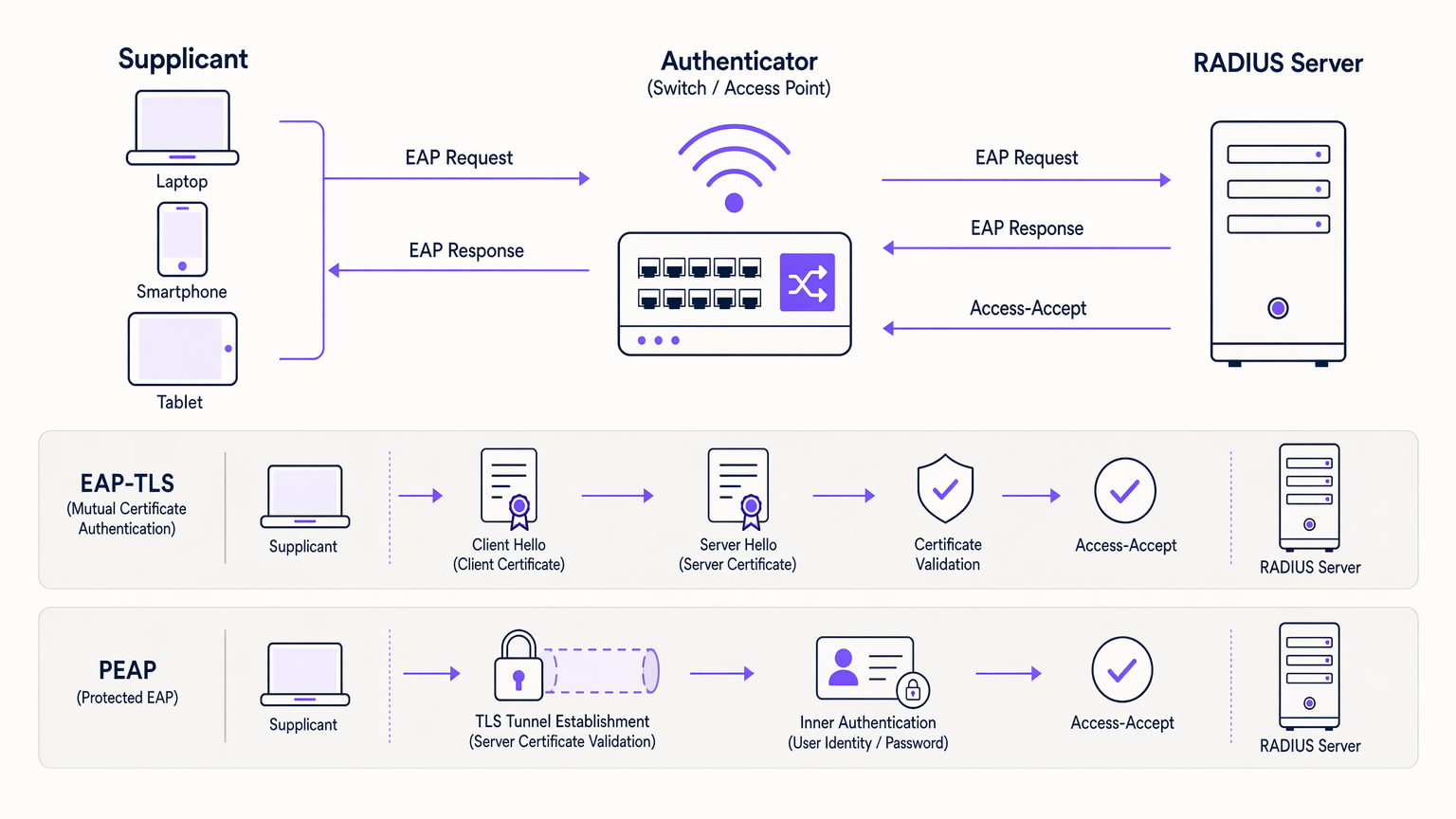
EAP-TLS पारस्परिक प्रमाणीकरण के सिद्धांत पर काम करता है। कनेक्शन स्थापित करने के लिए क्लाइंट डिवाइस (सप्लिकेंट) और प्रमाणीकरण सर्वर (RADIUS) दोनों को वैध डिजिटल प्रमाणपत्र प्रस्तुत करने होंगे।
हैंडशेक: जब कोई डिवाइस कनेक्ट करने का प्रयास करता है, तो RADIUS सर्वर अपना प्रमाणपत्र क्लाइंट को प्रस्तुत करता है। क्लाइंट इस प्रमाणपत्र को अपने विश्वसनीय रूट सर्टिफिकेट अथॉरिटीज (CAs) के विरुद्ध मान्य करता है। एक बार सर्वर सत्यापित हो जाने के बाद, क्लाइंट अपना स्वयं का अद्वितीय प्रमाणपत्र सर्वर को वापस प्रस्तुत करता है। यदि दोनों प्रमाणपत्र वैध हैं और रद्द नहीं किए गए हैं — CRL या OCSP के माध्यम से जांच की गई है — तो एक सुरक्षित TLS सत्र स्थापित किया जाता है और नेटवर्क एक्सेस प्रदान किया जाता है।
यह पारस्परिक सत्यापन EAP-TLS को क्रेडेंशियल चोरी, डिक्शनरी हमलों और मैन-इन-द-मिडिल (MitM) हमलों के प्रति अत्यधिक प्रतिरोधी बनाता है। चूंकि कोई पासवर्ड प्रसारित नहीं होते हैं, इसलिए समझौता किए गए उपयोगकर्ता क्रेडेंशियल का उपयोग नेटवर्क में सेंध लगाने के लिए नहीं किया जा सकता है।
PEAP: टनल किया गया पासवर्ड प्रमाणीकरण
PEAP को EAP-TLS के अधिक परिनियोजन योग्य विकल्प के रूप में विकसित किया गया था, जो क्लाइंट-साइड प्रमाणपत्रों की आवश्यकता को समाप्त करता है जबकि अभी भी मजबूत सुरक्षा प्रदान करता है।
टनल स्थापना: RADIUS सर्वर अपना प्रमाणपत्र क्लाइंट को प्रस्तुत करता है। क्लाइंट सर्वर को मान्य करता है, एक एन्क्रिप्टेड TLS टनल स्थापित करता है। इस सुरक्षित टनल के भीतर, क्लाइंट एक पहचान प्रदाता जैसे एक्टिव डायरेक्टरी के विरुद्ध मानक पासवर्ड-आधारित प्रमाणीकरण — आमतौर पर MSCHAPv2 — करता है। RADIUS सर्वर क्रेडेंशियल को मान्य करता है और एक्सेस प्रदान करता है।
हालांकि PEAP सही ढंग से कॉन्फ़िगर किए जाने पर अत्यधिक सुरक्षित है, यह उपयोगकर्ताओं द्वारा मजबूत पासवर्ड बनाए रखने पर निर्भर करता है। महत्वपूर्ण रूप से, यदि किसी उपयोगकर्ता का डिवाइस सर्वर प्रमाणपत्र को मान्य करने के लिए कॉन्फ़िगर नहीं किया गया है, तो एक दुर्भावनापूर्ण एक्सेस पॉइंट क्रेडेंशियल को इंटरसेप्ट कर सकता है। यह एक सैद्धांतिक जोखिम नहीं है; यह वास्तविक दुनिया के प्रवेश परीक्षणों में उपयोग किया जाने वाला एक सुस्थापित हमला वेक्टर है।
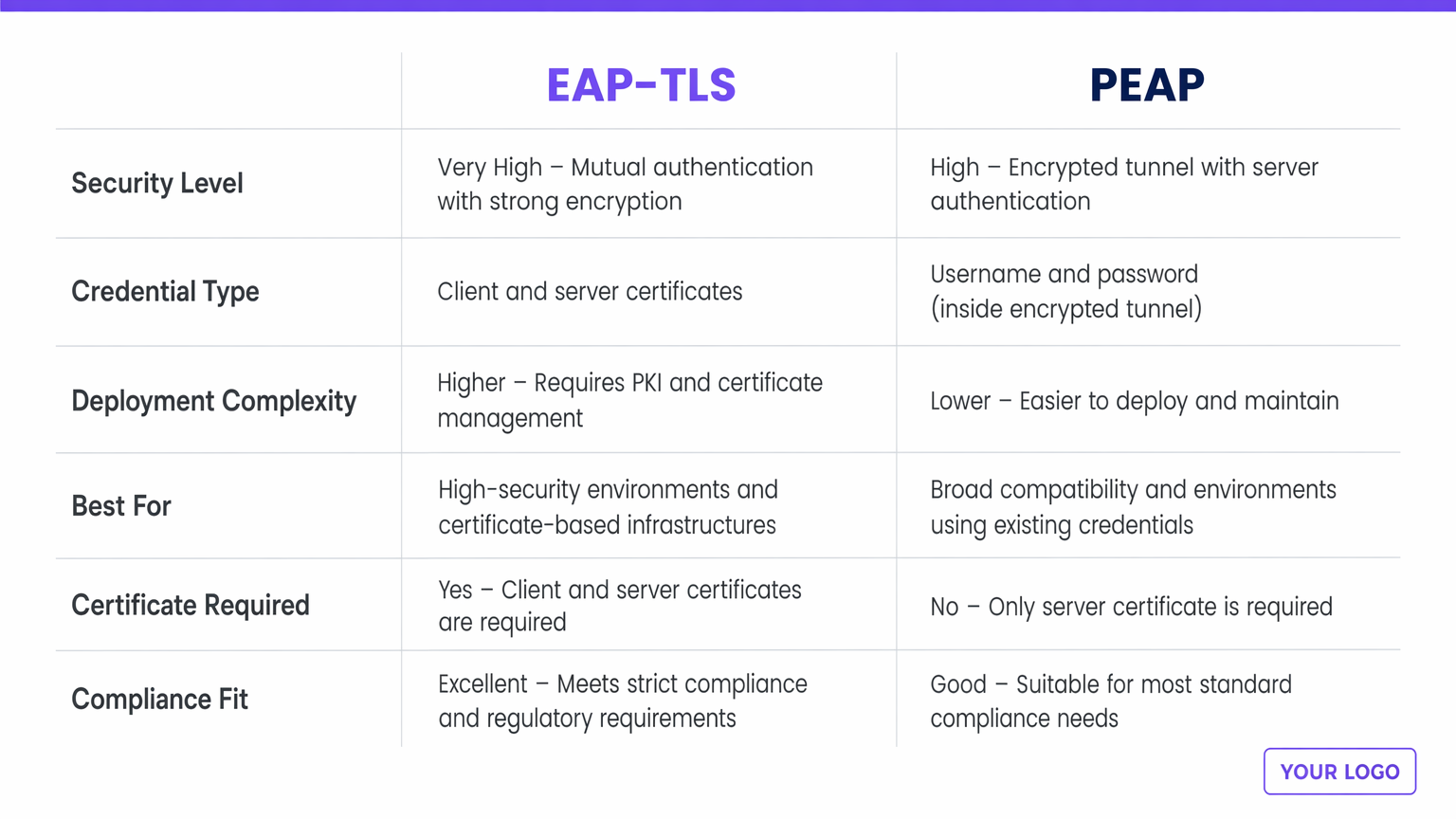
| आयाम | EAP-TLS | PEAP |
|---|---|---|
| सुरक्षा स्तर | बहुत उच्च — पारस्परिक प्रमाणपत्र प्रमाणीकरण | उच्च — एन्क्रिप्टेड टनल, केवल सर्वर प्रमाणपत्र |
| क्रेडेंशियल प्रकार | क्लाइंट और सर्वर डिजिटल प्रमाणपत्र | उपयोगकर्ता नाम और पासवर्ड (TLS टनल के भीतर) |
| परिनियोजन जटिलता | उच्च — PKI और MDM की आवश्यकता है | कम — मौजूदा डायरेक्टरी सेवाओं के साथ एकीकृत होता है |
| इसके लिए सबसे अच्छा | कॉर्पोरेट-स्वामित्व वाले डिवाइस फ्लीट, विनियमित उद्योग | BYOD वातावरण, PKI के बिना संगठन |
| क्लाइंट प्रमाणपत्र आवश्यक | हाँ | नहीं |
| PCI DSS / GDPR उपयुक्तता | उत्कृष्ट — उच्च-अनुपालन वातावरण के लिए पसंदीदा | अच्छा — सर्वर सत्यापन लागू होने पर अनुपालन योग्य |
कार्यान्वयन मार्गदर्शिका: परिनियोजन रणनीतियाँ
EAP-TLS और PEAP के बीच प्राथमिक अंतर उनकी परिनियोजन जटिलता और जीवनचक्र प्रबंधन में निहित है।
EAP-TLS परिनियोजित करना
EAP-TLS को लागू करने के लिए नेटवर्क पर प्रत्येक डिवाइस के लिए प्रमाणपत्र जारी करने, प्रबंधित करने और रद्द करने के लिए एक मजबूत पब्लिक की इंफ्रास्ट्रक्चर (PKI) की आवश्यकता होती है। बड़े पैमाने पर एंडपॉइंट्स को प्रमाणपत्र प्रावधान को स्वचालित करने के लिए मोबाइल डिवाइस मैनेजमेंट (MDM) या एंटरप्राइज़ मोबिलिटी मैनेजमेंट (EMM) समाधान व्यावहारिक रूप से अनिवार्य हैं। IT टीमों को प्रमाणपत्र जीवनचक्र का प्रबंधन करना चाहिए, समाप्ति से पहले नवीनीकरण को संभालना चाहिए और खोए हुए डिवाइस या छोड़ने वाले कर्मचारियों के लिए तत्काल निरस्तीकरण सुनिश्चित करना चाहिए। EAP-TLS कॉर्पोरेट-स्वामित्व वाले उपकरणों वाले कॉर्पोरेट नेटवर्क, स्वास्थ्य सेवा या वित्त जैसे अत्यधिक विनियमित वातावरण, और शून्य-विश्वास आर्किटेक्चर के लिए सबसे उपयुक्त है।
PEAP परिनियोजित करना
PEAP को परिनियोजित करना काफी आसान है क्योंकि यह क्लाइंट प्रमाणपत्रों की आवश्यकता के बिना मौजूदा पहचान स्टोर — एक्टिव डायरेक्टरी, LDAP, या क्लाउड डायरेक्टरी — का लाभ उठाता है। एक वैध सर्वर प्रमाणपत्र वाला RADIUS सर्वर (आदर्श रूप से fएक सार्वजनिक CA से) और आपकी मौजूदा डायरेक्टरी सेवा के साथ एकीकरण शुरू करने के लिए पर्याप्त है। परिचालन संबंधी खर्च न्यूनतम है: उपयोगकर्ता अपने मानक कॉर्पोरेट क्रेडेंशियल के साथ प्रमाणित होते हैं। पासवर्ड रोटेशन नीतियां लागू होती हैं, जिससे पासवर्ड बदलने के बाद उपयोगकर्ताओं द्वारा अपने WiFi प्रोफाइल को अपडेट करना भूल जाने पर मामूली हेल्पडेस्क ओवरहेड हो सकता है। PEAP BYOD वातावरण, शिक्षा क्षेत्रों और स्थापित PKI या MDM इंफ्रास्ट्रक्चर के बिना संगठनों के लिए सबसे उपयुक्त है।
सर्वोत्तम अभ्यास और उद्योग मानक
चुने गए प्रोटोकॉल के बावजूद, जोखिम को कम करने के लिए उद्योग मानकों का पालन करना अनिवार्य है।
सर्वर प्रमाणपत्र सत्यापन लागू करें: PEAP डिप्लॉयमेंट में सबसे आम भेद्यता गलत कॉन्फ़िगर किए गए क्लाइंट डिवाइस हैं जो RADIUS सर्वर के प्रमाणपत्र को मान्य नहीं करते हैं। यह हमलावरों को अनधिकृत एक्सेस पॉइंट स्थापित करने और क्रेडेंशियल एकत्र करने की अनुमति देता है। IT को प्रत्येक एंडपॉइंट पर कठोर सर्वर सत्यापन लागू करने के लिए समूह नीतियों या MDM प्रोफाइल का उपयोग करना चाहिए।
RADIUS रिडंडेंसी लागू करें: प्रमाणीकरण एक महत्वपूर्ण मार्ग है। सुनिश्चित करें कि आपका RADIUS इंफ्रास्ट्रक्चर अत्यधिक उपलब्ध है। क्लाउड-आधारित RADIUS समाधान ऑन-प्रिमाइसेस एकल विफलता बिंदुओं को कम कर सकते हैं। वितरित नेटवर्क लचीलेपन के लिए वास्तुशिल्प विचारों पर आधुनिक व्यवसायों के लिए कोर SD WAN लाभ में आगे चर्चा की गई है।
आधुनिक पहचान प्रदाताओं के साथ एकीकृत करें: सार्वजनिक स्थानों के लिए, एक मजबूत गेस्ट WiFi प्लेटफॉर्म का लाभ उठाना जो एक सुरक्षित पहचान प्रदाता के रूप में कार्य करता है, सुरक्षा बनाए रखते हुए एक्सेस को सुव्यवस्थित कर सकता है। उदाहरण के लिए, Purple का कनेक्ट लाइसेंस OpenRoaming जैसी सेवाओं के लिए एक मुफ्त पहचान प्रदाता प्रदान करता है, जो एंटरप्राइज़-ग्रेड सुरक्षा और सहज अतिथि ऑनबोर्डिंग के बीच के अंतर को पाटता है।
प्रमाणीकरण के बाद नेटवर्क सेगमेंटेशन: एक सफल 802.1X प्रमाणीकरण को पूरे कॉर्पोरेट सबनेट तक अप्रतिबंधित पहुंच प्रदान नहीं करनी चाहिए। उपयोगकर्ताओं को प्रतिबंधित ACLs के साथ उपयुक्त नेटवर्क सेगमेंट में रखने के लिए डायनामिक VLAN असाइनमेंट नीतियों का उपयोग करें।
समस्या निवारण और जोखिम न्यूनीकरण
802.1X नेटवर्क का प्रबंधन करते समय, IT टीमों को सामान्य विफलता मोड के लिए तैयार रहना चाहिए।
प्रमाणपत्र की समय-सीमा समाप्त होना (EAP-TLS): यदि CA प्रमाणपत्र या RADIUS सर्वर प्रमाणपत्र की समय-सीमा समाप्त हो जाती है, तो सभी प्रमाणीकरण एक साथ विफल हो जाएंगे। प्रमाणपत्र वैधता अवधियों के लिए आक्रामक निगरानी और अलर्टिंग लागू करें — समय-सीमा समाप्त होने से 90, 30 और 7 दिन पहले अलर्ट सेट करें।
सप्लीकेंट गलत कॉन्फ़िगरेशन (PEAP): सर्वर प्रमाणपत्र को मान्य करने में विफलता एक गंभीर जोखिम है। यह सुनिश्चित करने के लिए एंडपॉइंट कॉन्फ़िगरेशन का नियमित रूप से ऑडिट करें कि "सर्वर प्रमाणपत्र मान्य करें" सख्ती से लागू किया गया है। इसे अपनी सुरक्षा ऑडिट चेकलिस्ट में एक मानक आइटम के रूप में शामिल करें।
RADIUS टाइमआउट समस्याएँ: वायरलेस कंट्रोलर और RADIUS सर्वर के बीच, या RADIUS सर्वर और एक्टिव डायरेक्टरी के बीच उच्च विलंबता, EAP टाइमआउट और प्रमाणीकरण विफलता का कारण बन सकती है। मजबूत कनेक्टिविटी सुनिश्चित करें और वितरित साइटों के लिए स्थानीय RADIUS प्रॉक्सी पर विचार करें। यह मल्टी-साइट ट्रांसपोर्ट और रिटेल डिप्लॉयमेंट के लिए विशेष रूप से प्रासंगिक है।
अनधिकृत एक्सेस पॉइंट हमले: अनधिकृत APs का पता लगाने के लिए समय-समय पर वायरलेस सुरक्षा आकलन करें। आपके एक्सेस पॉइंट इंफ्रास्ट्रक्चर में एकीकृत वायरलेस घुसपैठ पहचान प्रणाली (WIDS) निरंतर निगरानी प्रदान कर सकती है।
ROI और व्यावसायिक प्रभाव
EAP-TLS और PEAP के बीच का निर्णय तकनीकी वास्तुकला से परे महत्वपूर्ण व्यावसायिक निहितार्थ रखता है।
EAP-TLS को PKI और MDM समाधानों के लिए उच्च प्रारंभिक CapEx की आवश्यकता होती है, साथ ही प्रमाणपत्र प्रबंधन के लिए चल रहे OpEx की भी। हालांकि, यह क्रेडेंशियल-आधारित उल्लंघनों के खिलाफ उच्चतम स्तर का जोखिम न्यूनीकरण प्रदान करता है, जिसके परिणामस्वरूप विनाशकारी वित्तीय और प्रतिष्ठा संबंधी क्षति हो सकती है। संवेदनशील डेटा को संभालने वाले या सख्त नियामक अनुपालन के तहत काम करने वाले स्थानों के लिए, EAP-TLS का ROI टाली गई उल्लंघन लागतों और सुव्यवस्थित अनुपालन ऑडिट के माध्यम से प्राप्त होता है। रिटेल या हॉस्पिटैलिटी वातावरण में एक एकल क्रेडेंशियल-आधारित उल्लंघन से सुधार, नियामक जुर्माना और ब्रांड क्षति में लाखों का खर्च आ सकता है।
PEAP तेजी से टाइम-टू-वैल्यू और कम कार्यान्वयन लागत प्रदान करता है। यह उन वातावरणों के लिए अत्यधिक प्रभावी है जहां प्राथमिक लक्ष्य डिवाइस प्रबंधन के ओवरहेड के बिना सुरक्षित, एन्क्रिप्टेड एक्सेस है। PEAP को एक व्यापक WiFi Analytics समाधान के साथ एकीकृत करके, स्थान नेटवर्क उपयोग डेटा से मूल्यवान परिचालन अंतर्दृष्टि निकालते हुए सुरक्षित रूप से एक्सेस का प्रबंधन कर सकते हैं — प्रमाणीकरण इंफ्रास्ट्रक्चर को मापने योग्य व्यावसायिक परिणामों जैसे कि ठहरने के समय का विश्लेषण, फुटफॉल पैटर्न और वापसी आगंतुक दरों से जोड़ना।
Key Terms & Definitions
EAP (Extensible Authentication Protocol)
An authentication framework defined in IEEE 802.1X that provides the transport mechanism for various authentication methods over network access infrastructure.
EAP is the umbrella framework; EAP-TLS and PEAP are specific methods that run within it. IT teams encounter EAP when configuring RADIUS policies and wireless supplicant profiles.
Supplicant
The client device — laptop, smartphone, scanner, or IoT device — that initiates the authentication request to join the network.
IT teams must ensure supplicants are correctly configured, particularly regarding certificate validation, to prevent Man-in-the-Middle attacks. Supplicant configuration is the most common source of PEAP vulnerabilities.
Authenticator
The network device — typically a wireless access point or managed switch — that blocks all traffic from the supplicant until the RADIUS server confirms successful authentication.
The authenticator acts as the gatekeeper, passing EAP messages between the supplicant and the RADIUS server without processing the authentication itself.
RADIUS Server
Remote Authentication Dial-In User Service. The centralised server that receives authentication requests from the authenticator, validates credentials against an identity store, and returns an Access-Accept or Access-Reject response.
The RADIUS server is the brain of the 802.1X architecture. High availability and low latency between the RADIUS server and the identity store (Active Directory, LDAP) are critical for reliable authentication.
PKI (Public Key Infrastructure)
The framework of roles, policies, hardware, and software needed to create, manage, distribute, and revoke digital certificates.
A robust PKI is an absolute prerequisite for deploying EAP-TLS successfully at scale. Without PKI, certificate lifecycle management becomes unmanageable and creates significant operational risk.
MDM (Mobile Device Management)
Software used by IT to monitor, manage, and secure corporate mobile devices, including the ability to push configuration profiles, certificates, and policies silently to enrolled devices.
MDM is critical for EAP-TLS deployments to automate the silent provisioning of client certificates to end-user devices. Microsoft Intune, Jamf, and VMware Workspace ONE are common MDM platforms.
Mutual Authentication
A security process where both parties in a communications link authenticate each other before data is exchanged — as opposed to one-way authentication where only one party is verified.
The defining feature of EAP-TLS. Mutual authentication ensures the client knows it is talking to the legitimate network server, and the server knows it is talking to an authorised client device.
MSCHAPv2 (Microsoft Challenge Handshake Authentication Protocol v2)
A password-based authentication protocol commonly used as the inner authentication method within PEAP tunnels. It uses a challenge-response mechanism to avoid transmitting passwords in plaintext.
MSCHAPv2 hashes can be captured and cracked offline if the PEAP tunnel is compromised by a rogue access point. This is why server certificate validation in PEAP is non-negotiable.
OpenRoaming
A WiFi federation standard that allows users to automatically and securely connect to participating networks across different venues and operators without re-authenticating, using certificate-based authentication.
Purple acts as a free identity provider for OpenRoaming under its Connect licence, enabling venues to offer seamless, secure connectivity that aligns with EAP-TLS certificate authentication principles.
Case Studies
A national retail chain with 500 locations needs to secure corporate network access for store managers' tablets and handheld inventory scanners. They currently use a shared WPA2-PSK across all sites. They have Microsoft Intune deployed for device management.
Deploy EAP-TLS. Since the organisation already utilises Microsoft Intune, the heavy lifting of certificate deployment is already solved. Configure Intune to push unique client certificates to all corporate-owned tablets and scanners via a SCEP or PKCS certificate profile. The wireless infrastructure is reconfigured to use 802.1X pointing to a central or cloud-based RADIUS server (such as Microsoft NPS or a cloud RADIUS service). The RADIUS server is configured to accept authentication only from devices presenting certificates issued by the organisation's internal CA. Post-authentication, dynamic VLAN assignment places devices into the appropriate store operations segment.
A large conference centre needs to provide secure WiFi for 3,000 internal staff using their own personal devices (BYOD). They use Google Workspace for corporate identity but do not manage staff personal phones or laptops.
Deploy PEAP (specifically PEAP-MSCHAPv2 or EAP-TTLS/PAP against Google Secure LDAP). The IT team sets up a RADIUS server integrated with Google Workspace Secure LDAP. Staff members connect to the 'Staff_WiFi' SSID using their standard Google Workspace email and password. The IT team provides onboarding documentation — ideally via a captive portal or network onboarding tool — instructing staff to configure their devices to trust the specific RADIUS server certificate and to validate the server's domain name. A separate guest SSID is maintained for event attendees, managed through Purple's Guest WiFi platform for analytics and access control.
Scenario Analysis
Q1. A university IT department is deploying secure WiFi across campus for 20,000 students. Students bring their own laptops and smartphones running a mix of Windows, macOS, iOS, and Android. The IT director insists on maximum security and proposes EAP-TLS. What is your architectural recommendation?
💡 Hint:Consider the operational overhead of certificate management on unmanaged, personally-owned devices across a heterogeneous device estate.
Show Recommended Approach
Advise against EAP-TLS for this specific use case. While EAP-TLS offers the highest security, deploying and managing 20,000+ client certificates on unmanaged student devices without an MDM solution will create an insurmountable support burden. Students change devices frequently, and the onboarding process for certificate installation across iOS, Android, Windows, and macOS is complex without MDM automation. Recommend PEAP (or EAP-TTLS) integrated with the university's student directory service. Ensure robust onboarding tools are used to configure student devices to strictly validate the server certificate. Optionally, deploy EAP-TLS on a separate SSID for staff devices that are university-managed, creating a tiered security architecture.
Q2. During a security audit, a penetration tester successfully harvests user credentials from your PEAP-secured wireless network by setting up a rogue access point broadcasting the same SSID. What is the root cause of this vulnerability, and what is the remediation?
💡 Hint:Think about what happens during the TLS tunnel establishment phase in PEAP, and what the client device is — or is not — checking.
Show Recommended Approach
The root cause is supplicant misconfiguration. The client devices are not configured to strictly validate the RADIUS server's digital certificate. When the rogue AP presented a fraudulent certificate, the client devices blindly trusted it, established the TLS tunnel with the attacker, and transmitted the MSCHAPv2 authentication exchange. The attacker can crack this offline. The remediation is threefold: (1) enforce strict server certificate validation via Group Policy or MDM profiles on all client devices; (2) specify the exact expected RADIUS server domain name in the supplicant configuration to prevent acceptance of certificates from other domains; (3) deploy a Wireless Intrusion Detection System (WIDS) to detect and alert on rogue access points.
Q3. A healthcare provider is upgrading its network to support mobile nursing workstations that access patient records. These workstations are corporate-owned, strictly managed by IT via Microsoft Intune, and the environment must comply with healthcare data protection regulations. Should they deploy PEAP or EAP-TLS?
💡 Hint:Evaluate the regulatory environment, the level of device control, and the sensitivity of the data being accessed.
Show Recommended Approach
Deploy EAP-TLS without hesitation. The healthcare environment requires strict compliance and maximum security against credential theft — a compromised password in a healthcare network can expose patient records and trigger significant regulatory penalties under GDPR and sector-specific data protection requirements. Because the devices are corporate-owned and strictly managed via Microsoft Intune, deploying client certificates is operationally feasible and can be fully automated. EAP-TLS provides the necessary mutual authentication to ensure only authorised, corporate-managed devices can access the clinical network. Additionally, EAP-TLS simplifies compliance audits — auditors reviewing the network architecture will see a certificate-based, passwordless authentication system that is inherently more defensible than password-based alternatives.




