

EAP-TLS प्रमाणीकरण की व्याख्या: सर्टिफिकेट-आधारित WiFi सुरक्षा
EAP-TLS एंटरप्राइज WiFi सुरक्षा के लिए गोल्ड स्टैंडर्ड है, जो असुरक्षित पासवर्ड-आधारित प्रमाणीकरण को मजबूत, पारस्परिक रूप से प्रमाणित डिजिटल सर्टिफिकेट से बदल देता है। यह गाइड IT प्रबंधकों और नेटवर्क आर्किटेक्ट्स को EAP-TLS हैंडशेक, आर्किटेक्चरल आवश्यकताओं और मिश्रित-डिवाइस वातावरण के लिए व्यावहारिक परिनियोजन रणनीतियों के बारे में विस्तृत तकनीकी जानकारी प्रदान करती है।
🎧 इस गाइड को सुनें
ट्रांसक्रिप्ट देखें
कार्यकारी सारांश
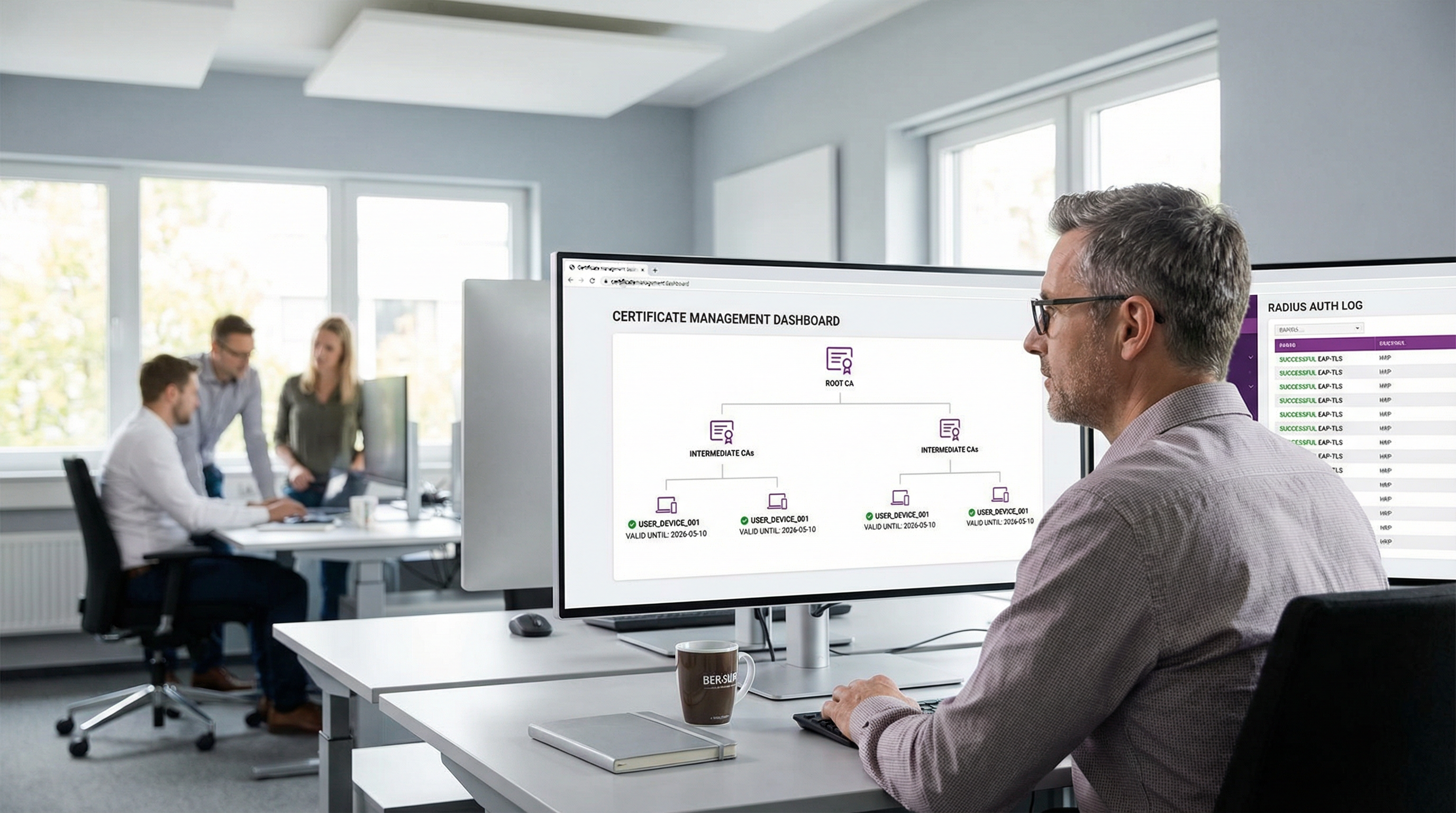
कॉर्पोरेट मुख्यालयों से लेकर Retail चेन और Healthcare सुविधाओं तक के एंटरप्राइज वातावरण के लिए, वायरलेस एक्सेस को सुरक्षित करना अब केवल एक परिचालन आवश्यकता नहीं है—यह एक महत्वपूर्ण अनुपालन जनादेश है। ऐतिहासिक रूप से, संगठनों ने PEAP-MSCHAPv2 पर भरोसा किया है, जो TLS टनल के भीतर यूजरनेम और पासवर्ड को सुरक्षित करता है। हालांकि, व्यापक क्रेडेंशियल हार्वेस्टिंग और परिष्कृत फ़िशिंग हमलों के युग में, WiFi पर पासवर्ड-आधारित प्रमाणीकरण एक महत्वपूर्ण भेद्यता का प्रतिनिधित्व करता है।
पेश है EAP-TLS (एक्सटेंसिबल ऑथेंटिकेशन प्रोटोकॉल - ट्रांसपोर्ट लेयर सिक्योरिटी)। EAP-TLS 802.1X नेटवर्क एक्सेस कंट्रोल में गोल्ड स्टैंडर्ड का प्रतिनिधित्व करता है। यूजर-जनरेटेड पासवर्ड पर भरोसा करने के बजाय, EAP-TLS X.509 डिजिटल सर्टिफिकेट का उपयोग करके पारस्परिक प्रमाणीकरण को अनिवार्य बनाता है। नेटवर्क एक्सेस दिए जाने से पहले क्लाइंट डिवाइस और प्रमाणीकरण सर्वर दोनों को अपनी पहचान साबित करनी होगी। यह दृष्टिकोण क्रेडेंशियल चोरी के जोखिम को समाप्त करता है, मैन-इन-द-मिडल (MitM) हमलों को कम करता है, और प्रबंधित डिवाइसों के लिए एक सहज, जीरो-टच कनेक्शन अनुभव प्रदान करता है। यह तकनीकी संदर्भ गाइड EAP-TLS हैंडशेक की कार्यप्रणाली की खोज करती है, इसकी तुलना पुराने तरीकों से करती है, और आधुनिक उद्यमों के लिए एक व्यावहारिक परिनियोजन आर्किटेक्चर की रूपरेखा तैयार करती है।
कार्यकारी अवलोकन के लिए हमारे सहयोगी तकनीकी ब्रीफिंग पॉडकास्ट को सुनें:
तकनीकी गहन जानकारी
EAP-TLS हैंडशेक की व्याख्या
EAP-TLS का मौलिक लाभ इसकी क्रिप्टोग्राफिक कठोरता में निहित है। प्रमाणीकरण प्रक्रिया सप्लीकेंट (क्लाइंट डिवाइस), ऑथेंटिकेटर (WiFi एक्सेस पॉइंट या स्विच), और ऑथेंटिकेशन सर्वर (आमतौर पर एक RADIUS सर्वर) के बीच एक बहु-चरणीय बातचीत है।
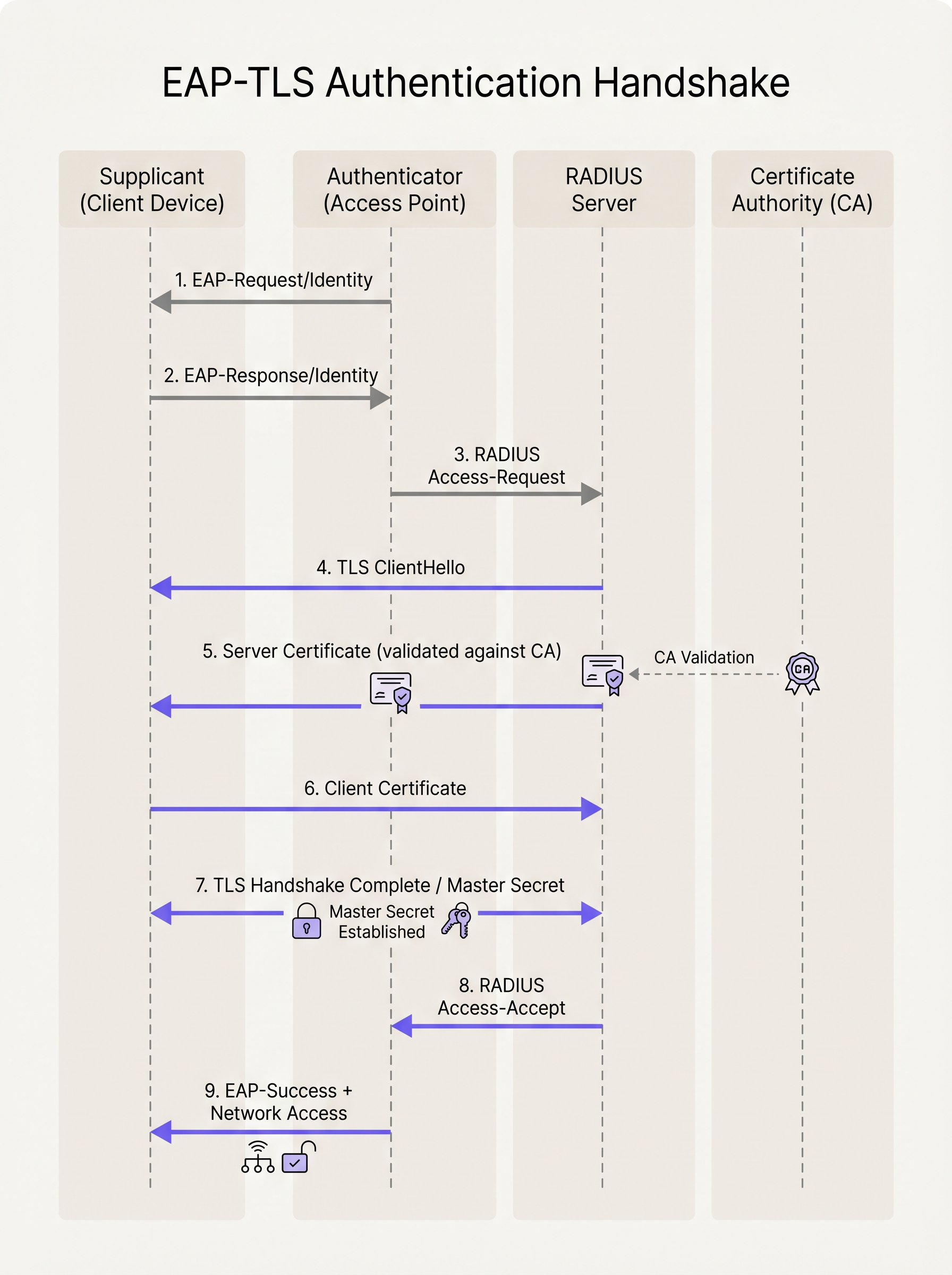
- आरंभीकरण (Initialization): जब कोई डिवाइस SSID से कनेक्ट करने का प्रयास करता है, तो एक्सेस पॉइंट LAN (EAPoL) फ्रेम पर EAP को छोड़कर सभी ट्रैफिक को ब्लॉक कर देता है। AP डिवाइस को
EAP-Request/Identityभेजता है। - पहचान प्रतिक्रिया (Identity Response): डिवाइस
EAP-Response/Identity(अक्सर गोपनीयता के लिए एक अनाम बाहरी पहचान) के साथ प्रतिक्रिया करता है, जिसे AP RADIUS सर्वर को फॉरवर्ड करता है। - TLS टनल स्थापना: RADIUS सर्वर अपने स्वयं के डिजिटल सर्टिफिकेट के साथ
TLS ServerHelloभेजकर TLS हैंडशेक शुरू करता है। - सर्वर सत्यापन: क्लाइंट डिवाइस सर्वर के सर्टिफिकेट की जांच करता है। यह वैधता तिथियों, सब्जेक्ट अल्टरनेटिव नेम (SAN) की जांच करता है, और महत्वपूर्ण रूप से, यह सत्यापित करता है कि सर्टिफिकेट उसके स्थानीय ट्रस्ट स्टोर में इंस्टॉल किए गए विश्वसनीय रूट सर्टिफिकेट अथॉरिटी (CA) द्वारा हस्ताक्षरित था।
- क्लाइंट सर्टिफिकेट प्रस्तुति: सर्वर के मान्य होने के बाद, क्लाइंट डिवाइस अपना स्वयं का X.509 सर्टिफिकेट (और वैकल्पिक रूप से इसकी सर्टिफिकेट चेन) वापस RADIUS सर्वर को भेजता है।
- पारस्परिक प्रमाणीकरण: RADIUS सर्वर अपने CA या आइडेंटिटी प्रोवाइडर (IdP) इंटीग्रेशन के विरुद्ध क्लाइंट के सर्टिफिकेट को मान्य करता है। यह रिवोकेशन (CRL या OCSP के माध्यम से) की जांच करता है और यूजर या डिवाइस की पहचान सत्यापित करता है।
- की (Key) व्युत्पत्ति: सफल पारस्परिक सत्यापन पर, TLS हैंडशेक पूरा हो जाता है। दोनों पक्ष स्वतंत्र रूप से एक मास्टर सेशन की (MSK) प्राप्त करते हैं।
- नेटवर्क एक्सेस: RADIUS सर्वर AP को एक
RADIUS Access-Acceptसंदेश भेजता है, जिसमें MSK होता है। AP इस की का उपयोग क्लाइंट के साथ अंतिम WPA2/WPA3 एन्क्रिप्शन की (PTK/GTK) स्थापित करने के लिए करता है, और मानक IP ट्रैफिक के लिए नेटवर्क पोर्ट खोलता है।
EAP-TLS बनाम PEAP-MSCHAPv2
माइग्रेशन की योजना बनाने वाले नेटवर्क आर्किटेक्ट्स के लिए EAP-TLS और PEAP के बीच अंतर को समझना महत्वपूर्ण है।
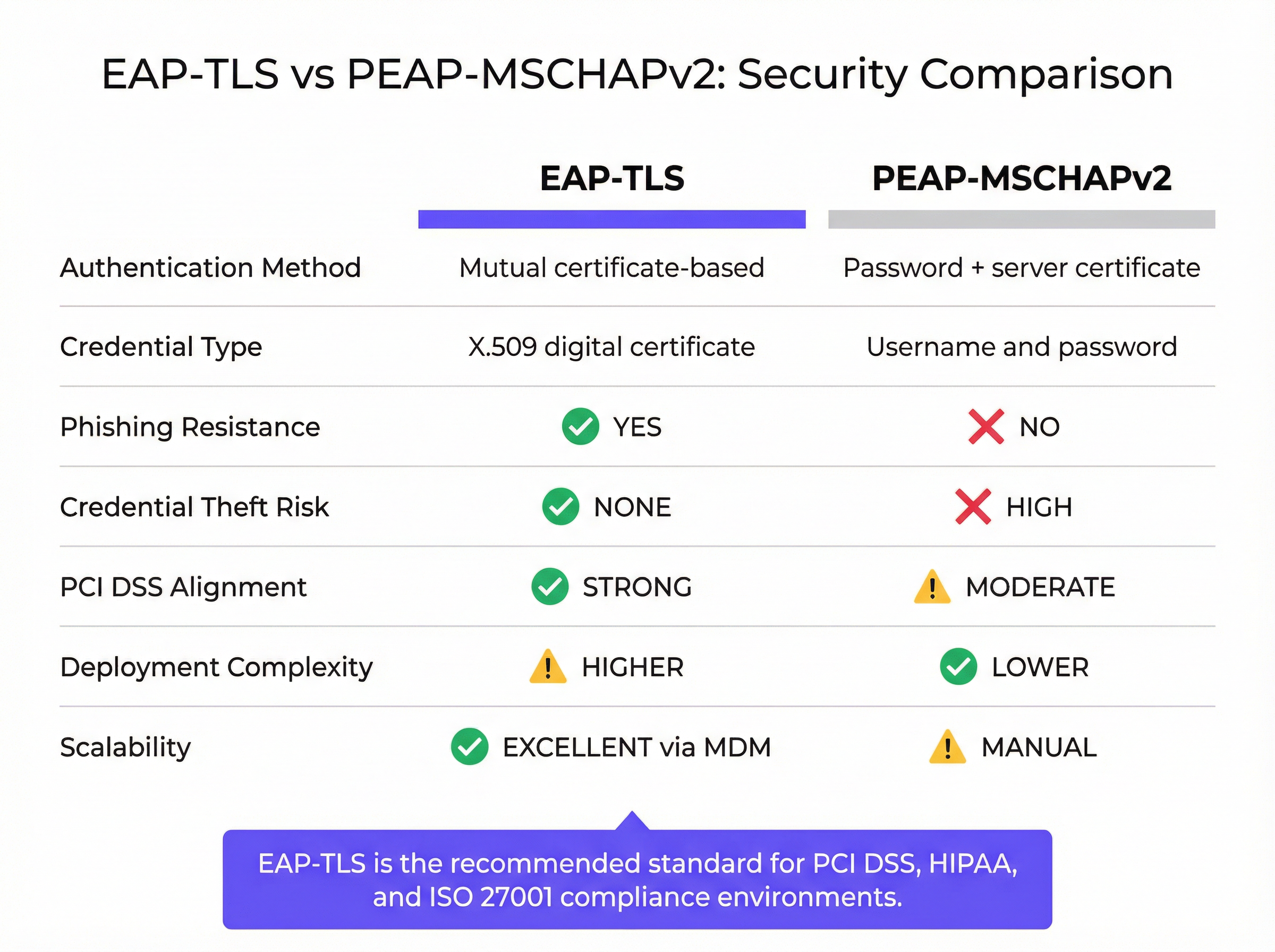
जबकि PEAP एक सुरक्षित TLS टनल (सर्वर-साइड प्रमाणीकरण) स्थापित करता है, आंतरिक प्रमाणीकरण अभी भी MSCHAPv2, एक पासवर्ड-आधारित प्रोटोकॉल पर निर्भर करता है। यदि कोई यूजर किसी दुर्भावनापूर्ण "ईविल ट्विन" एक्सेस पॉइंट से जुड़ता है और सर्वर सर्टिफिकेट चेतावनी को अनदेखा करता है, तो उनके हैश किए गए पासवर्ड को कैप्चर किया जा सकता है और ऑफलाइन क्रैक किया जा सकता है। EAP-TLS इस खतरे को पूरी तरह से समाप्त कर देता है; क्लाइंट सर्टिफिकेट के अनुरूप प्राइवेट की के बिना, एक हमलावर प्रमाणित नहीं कर सकता, भले ही उनके पास यूजर का पासवर्ड हो।
कार्यान्वयन गाइड
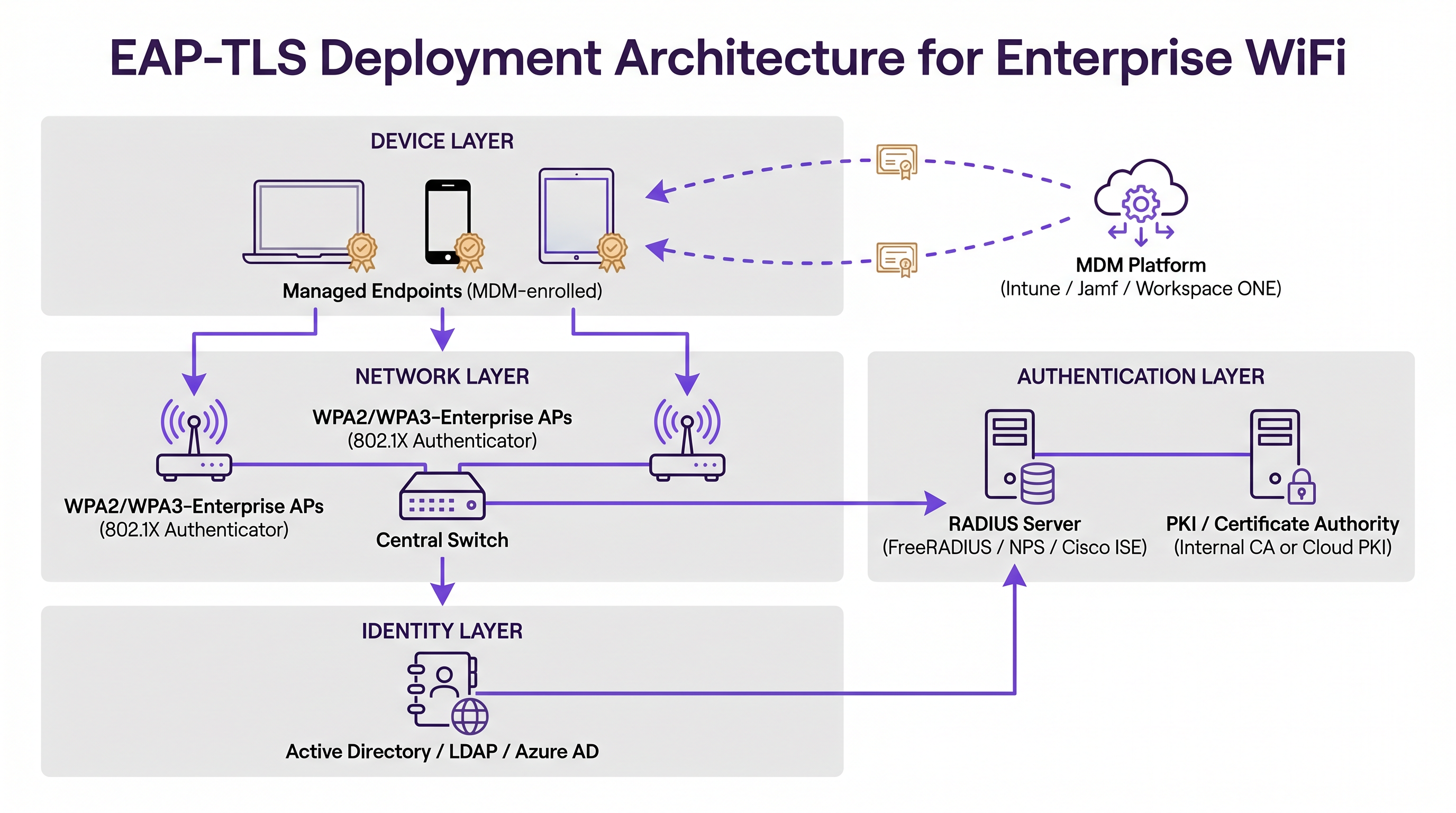
EAP-TLS को तैनात करने के लिए तीन प्राथमिक बुनियादी स्तंभों में समन्वय की आवश्यकता होती है: नेटवर्क लेयर, ऑथेंटिकेशन लेयर और आइडेंटिटी/एंडपॉइंट मैनेजमेंट लेयर।
1. पब्लिक की इंफ्रास्ट्रक्चर (PKI)
आपके पास X.509 सर्टिफिकेट जारी करने और प्रबंधित करने के लिए एक तंत्र होना चाहिए। ऐतिहासिक रूप से, इसका मतलब ऑन-प्रिमाइसेस माइक्रोसॉफ्ट एक्टिव डायरेक्टरी सर्टिफिकेट सर्विसेज (AD CS) वातावरण तैनात करना था। आज, आधुनिक आर्किटेक्चर क्लाउड PKI समाधानों का लाभ उठाते हैं जो Azure AD, Okta, या Google Workspace जैसे आइडेंटिटी प्रोवाइडर्स (IdPs) के साथ एकीकृत होते हैं। ये क्लाउड-नेटिव CAs जारी करने और रिवोकेशन लाइफसाइकिल को सरल बनाते हैं।
2. RADIUS ऑथेंटिकेशन सर्वर
RADIUS सर्वर (जैसे, FreeRADIUS, Cisco ISE, Aruba ClearPass, या क्लाउड-आधारित RADIUS) को EAP-TLS का समर्थन करने के लिए कॉन्फ़िगर किया जाना चाहिए। इसके लिए अपने स्वयं के सर्वर सर्टिफिकेट की आवश्यकता होती है, जो सभी क्लाइंट डिवाइसों द्वारा विश्वसनीय CA द्वारा हस्ताक्षरित हो। यदि आप एक आधुनिक IdP के साथ एकीकृत कर रहे हैं, तो आपको क्लाउड आइडेंटिटी को ऑन-प्रिमाइसेस नेटवर्क हार्डवेयर के साथ जोड़ने के लिए Okta and RADIUS: Extending Your Identity Provider to WiFi Authentication पर हमारी गाइड विशेष रूप से उपयोगी लग सकती है।
3. मोबाइल डिवाइस मैनेजमेंट (MDM)
EAP-TLS परिनियोजन में सबसे बड़ी बाधा क्लाइंट डिवाइसों को सर्टिफिकेट प्रदान करना है। मैन्युअल इंस्टॉलेशन स्केलेबल नहीं है। आपको इस प्रक्रिया को स्वचालित करने के लिए एक MDM प्लेटफॉर्म (जैसे माइक्रोसॉफ्ट इनट्यून, जैमफ प्रो, या वीएमवेयर वर्कस्पेस वन) का लाभ उठाना चाहिए। MDM प्रोफाइल को निम्नलिखित तैनात करना चाहिए:
- रूट CA सर्टिफिकेट (RADIUS सर्वर पर भरोसा करने के लिए)।
- व्यक्तिगत क्लाइंट सर्टिफिकेट (अक्सर SCEP या EST प्रोटोकॉल के माध्यम से उत्पन्न)।
- WPA2/WPA3-Enterprise, EAP-TLS का उपयोग करने के लिए कॉन्फ़िगर किया गया WiFi प्रोफाइल, और विशेष रूप से तैनात सर्टिफिकेट का संदर्भ देना।
सर्वोत्तम प्रथाएं
- सर्टिफिकेट लाइफसाइकिल मैनेजमेंट को स्वचालित करें: सर्टिफिकेट समाप्त हो जाते हैं। यदि आपके पास स्वचालित नवीनीकरण तंत्र (जैसे MDM के माध्यम से SCEP/EST) की कमी है, तो सर्टिफिकेट समाप्त होने पर डिवाइस चुपचाप नेटवर्क से हट जाएंगे, जिससे सपोर्ट टिकटों में भारी वृद्धि होगी। ऐसी वैधता अवधि निर्धारित करें जो सुरक्षा (जैसे, 1 वर्ष) को परिचालन ओवरहेड के साथ संतुलित करे।
- सख्त सर्वर सत्यापन लागू करें: RADIUS सर्वर के सर्टिफिकेट को सख्ती से मान्य करने के लिए क्लाइंट WiFi प्रोफाइल कॉन्फ़िगर करें। प्रोफाइल में सटीक सर्वर नाम और विश्वसनीय रूट CAs निर्दिष्ट करें। यूजर्स को सर्टिफिकेट चेतावनियों को बायपास करने की अनुमति न दें।
- मजबूत रिवोकेशन लागू करें: सुनिश्चित करें कि आपका RADIUS सर्वर सर्टिफिकेट रिवोकेशन लिस्ट (CRLs) की जांच करता है या ऑनलाइन सर्टिफिकेट स्टेटस प्रोटोकॉल (OCSP) का उपयोग करता है। जब कोई कर्मचारी छोड़ता है या कोई डिवाइस खो जाता है, तो सर्टिफिकेट रद्द करने से नेटवर्क एक्सेस तुरंत समाप्त हो जाना चाहिए।
- मिश्रित-डिवाइस बेड़े को संभालें: EAP-TLS प्रबंधित कॉर्पोरेट डिवाइसों के लिए एकदम सही है। हालांकि, आपको अप्रबंधित BYOD (ब्रिंग योर ओन डिवाइस) और गेस्ट डिवाइसों का सामना करना पड़ेगा। मेहमानों के लिए, Purple के Guest WiFi जैसा एक मजबूत Captive Portal समाधान तैनात करें। स्टाफ BYOD के लिए, एक ऑनबोर्डिंग पोर्टल पर विचार करें जो अस्थायी रूप से सर्टिफिकेट प्रदान करता है, या कोर कॉर्पोरेट नेटवर्क से अलग, एक अलग प्रमाणीकरण विधि के साथ एक अलग SSID का उपयोग करें।
समस्या निवारण और जोखिम शमन
जब EAP-TLS विफल हो जाता है, तो लक्षण अक्सर एंड-यूजर के लिए अस्पष्ट होते हैं। डिवाइस बस कनेक्ट होने में विफल रहता है। IT टीमों को डायग्नोस्टिक्स के लिए RADIUS लॉग पर निर्भर रहना चाहिए।
- त्रुटि: "Unknown CA" या "Untrusted Root": क्लाइंट डिवाइस के ट्रस्ट स्टोर में वह रूट CA सर्टिफिकेट नहीं है जिसने RADIUS सर्वर के सर्टिफिकेट पर हस्ताक्षर किए थे। MDM पेलोड सत्यापित करें।
- त्रुटि: "Certificate Expired": या तो क्लाइंट सर्टिफिकेट या सर्वर सर्टिफिकेट अपनी
NotAfterतिथि पार कर चुका है। सर्टिफिकेट लाइफसाइकिल ऑटोमेशन की जांच करें। - त्रुटि: "Client Certificate Not Found": डिवाइस EAP-TLS का प्रयास कर रहा है लेकिन WiFi प्रोफाइल में निर्दिष्ट मानदंडों से मेल खाने वाला वैध सर्टिफिकेट नहीं ढूंढ पा रहा है। सुनिश्चित करें कि सर्टिफिकेट MDM द्वारा सफलतापूर्वक तैनात किया गया था और सब्जेक्ट अल्टरनेटिव नेम (SAN) अपेक्षित प्रारूप (जैसे, यूजर प्रिंसिपल नेम या MAC एड्रेस) से मेल खाता है।
- क्लॉक स्क्यू: TLS सटीक समय-पालन पर निर्भर करता है। यदि किसी डिवाइस की सिस्टम क्लॉक RADIUS सर्वर के साथ महत्वपूर्ण रूप से सिंक से बाहर है, तो सर्टिफिकेट सत्यापन विफल हो जाएगा क्योंकि सर्टिफिकेट "अभी तक मान्य नहीं" या "समाप्त" दिखाई देंगे।
ROI और व्यावसायिक प्रभाव
EAP-TLS पर संक्रमण एक संगठन की सुरक्षा स्थिति की महत्वपूर्ण परिपक्वता का प्रतिनिधित्व करता है। निवेश पर प्राथमिक प्रतिफल (ROI) जोखिम शमन है। पासवर्ड-आधारित WiFi प्रमाणीकरण को समाप्त करके, आप क्रेडेंशियल चोरी और नेटवर्क के भीतर लेटरल मूवमेंट के लिए हमले की सतह को काफी कम कर देते हैं। यह Hospitality और एंटरप्राइज वातावरण में विशेष रूप से महत्वपूर्ण है जहां नेटवर्क सेगमेंटेशन सर्वोपरि है।
इसके अलावा, EAP-TLS एंड-यूजर अनुभव को बेहतर बनाता है। एक बार MDM के माध्यम से प्रावधानित होने के बाद, कनेक्शन पूरी तरह से जीरो-टच होता है। जब उनका कॉर्पोरेट पासवर्ड समाप्त हो जाता है, तो यूजर्स को कभी भी WiFi पासवर्ड अपडेट नहीं करना पड़ता है, जिससे कनेक्टिविटी समस्याओं से संबंधित हेल्पडेस्क कॉल कम हो जाते हैं। प्रबंधित स्टाफ डिवाइसों के लिए EAP-TLS को मेहमानों के लिए इंटेलिजेंट WiFi Analytics और Captive Portal के साथ जोड़कर, वेन्यू एक सुरक्षित, उच्च-प्रदर्शन वाला वायरलेस वातावरण प्राप्त कर सकते हैं जो परिचालन सुरक्षा और ग्राहक जुड़ाव दोनों का समर्थन करता है।
मुख्य शब्द और परिभाषाएं
EAP-TLS (Extensible Authentication Protocol - Transport Layer Security)
An 802.1X authentication method that requires mutual authentication using digital certificates on both the client and the server, eliminating the need for passwords.
The most secure standard for enterprise WiFi authentication, widely mandated for compliance in high-security environments.
Supplicant
The client device (laptop, smartphone, tablet) attempting to connect to the secure network.
The supplicant software must support EAP-TLS and have access to the device's certificate store.
Authenticator
The network device (typically a WiFi Access Point or network switch) that facilitates the authentication process by passing EAP messages between the Supplicant and the Authentication Server.
The AP does not perform the authentication itself; it acts as a gatekeeper until the RADIUS server issues an Access-Accept.
RADIUS Server
Remote Authentication Dial-In User Service. The central server that validates the credentials (certificates in the case of EAP-TLS) and authorizes network access.
The RADIUS server integrates with the PKI or Identity Provider to verify the validity and revocation status of the client certificate.
PKI (Public Key Infrastructure)
The framework of roles, policies, hardware, software, and procedures needed to create, manage, distribute, use, store, and revoke digital certificates.
You need a PKI (either on-premise or cloud-based) to issue the certificates required for EAP-TLS.
X.509 Certificate
A standard format for public key certificates, digital documents that securely associate cryptographic key pairs with identities such as websites, individuals, or organizations.
This is the 'digital passport' used in EAP-TLS instead of a password.
SCEP / EST
Simple Certificate Enrollment Protocol / Enrollment over Secure Transport. Protocols used by MDM platforms to automate the request and installation of certificates onto client devices.
Crucial for scaling EAP-TLS deployments, ensuring devices receive and renew certificates without user intervention.
Evil Twin Attack
A rogue WiFi access point that masquerades as a legitimate corporate network to eavesdrop on wireless communications or harvest credentials.
EAP-TLS defeats Evil Twin attacks because the rogue AP cannot present a valid server certificate signed by the company's trusted Root CA.
केस स्टडीज
A large [Retail](/industries/retail) chain with 500 locations needs to secure WiFi access for their corporate-issued point-of-sale (POS) tablets. They currently use a single Pre-Shared Key (PSK) across all stores, which was recently leaked. They use Microsoft Intune for device management. How should they secure the network?
- Deploy a Cloud PKI integrated with their Azure AD environment.
- Configure Intune to use SCEP (Simple Certificate Enrollment Protocol) to automatically generate and push unique device certificates to each POS tablet.
- Push a new WiFi profile via Intune configured for WPA3-Enterprise and EAP-TLS, specifying the new client certificate and the trusted Root CA.
- Configure the central RADIUS server to authenticate the tablets based on these certificates.
- Once all tablets are successfully authenticating via EAP-TLS, disable the legacy PSK SSID.
A [Transport](/industries/transport) hub (airport) wants to provide secure WiFi for its operational staff (baggage handlers, security) using managed iPads, while keeping guest traffic completely separate.
- Implement EAP-TLS on a dedicated, hidden SSID (e.g., 'Airport-Ops-Secure') for the managed iPads, pushing certificates via their MDM platform.
- Ensure the RADIUS server maps these authenticated devices to a specific, restricted VLAN that only has access to necessary operational servers.
- Deploy a separate, open SSID (e.g., 'Airport-Free-WiFi') for passengers, utilizing a captive portal for terms-of-service acceptance and bandwidth limiting.
परिदृश्य विश्लेषण
Q1. Your organisation is migrating from PEAP to EAP-TLS. During the pilot phase, several Windows laptops fail to connect. The RADIUS logs show 'Unknown CA' errors during the TLS handshake. What is the most likely cause?
💡 संकेत:Think about the 'Mutual' part of mutual authentication. What does the client need to trust the server?
अनुशंसित दृष्टिकोण दिखाएं
The client devices are missing the Root CA certificate in their local trust store that signed the RADIUS server's certificate. The MDM payload needs to be updated to ensure the Root CA is pushed to the devices alongside the client certificate.
Q2. A hotel wants to use EAP-TLS for all devices, including guest smartphones, to ensure maximum security. Is this a viable strategy?
💡 संकेत:Consider the provisioning process for EAP-TLS.
अनुशंसित दृष्टिकोण दिखाएं
No, this is not a viable strategy. EAP-TLS requires client certificates to be installed on the device. While this is easy for managed corporate devices via MDM, you cannot force guests to install certificates or MDM profiles on their personal devices. For guests, a captive portal (like Purple Guest WiFi) combined with WPA2/WPA3-Personal (or OWE) is the industry standard.
Q3. You have successfully deployed EAP-TLS. An employee reports their corporate laptop was stolen. What is the immediate technical action required to secure the network?
💡 संकेत:How do you invalidate a digital certificate before its expiration date?
अनुशंसित दृष्टिकोण दिखाएं
You must revoke the client certificate associated with that specific laptop within your PKI/CA. Ensure that your RADIUS server is configured to check the Certificate Revocation List (CRL) or use OCSP, so that the revoked certificate is immediately rejected upon the next connection attempt.
मुख्य निष्कर्ष
- ✓EAP-TLS is the most secure 802.1X authentication method, replacing passwords with mutual certificate-based authentication.
- ✓It eliminates the risk of credential theft and Evil Twin attacks inherent in password-based protocols like PEAP-MSCHAPv2.
- ✓A successful deployment requires coordination between a PKI (to issue certificates), a RADIUS server (to authenticate), and an MDM platform (to provision devices).
- ✓Automated certificate lifecycle management (via SCEP/EST) is critical to prevent mass connectivity outages when certificates expire.
- ✓EAP-TLS is ideal for managed corporate devices; unmanaged BYOD and guest devices require separate onboarding or captive portal strategies.
- ✓Implementing EAP-TLS strongly aligns with compliance mandates like PCI DSS and ISO 27001 by securing network access control.




