

मल्टी-टेनंट WiFi: आर्किटेक्चर आणि व्यवस्थापन
This authoritative technical reference guide provides IT managers, network architects, and venue operators with a comprehensive framework for designing, deploying, and managing multi-tenant WiFi networks across complex environments such as hotels, retail centres, stadiums, and multi-dwelling units (MDUs). It covers the critical architectural differences between single-venue and multi-tenant deployments, with a focus on tenant isolation, bandwidth management, and compliance. By leveraging Purple's enterprise WiFi intelligence platform, organisations can transform shared network infrastructure into a secure, scalable, and commercially valuable service.
🎧 हे मार्गदर्शक ऐका
ट्रान्सक्रिप्ट पहा
कार्यकारी सारांश
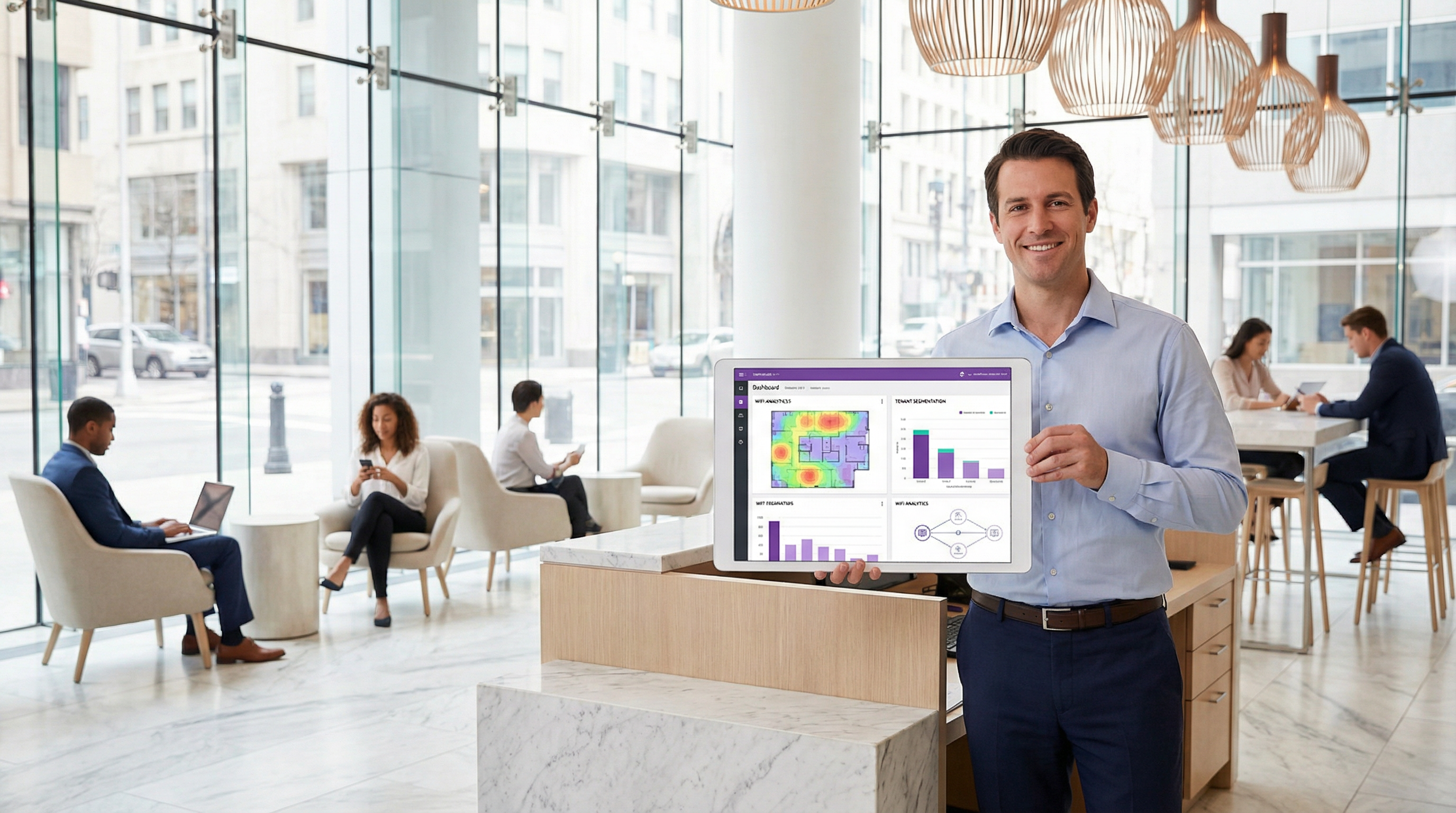
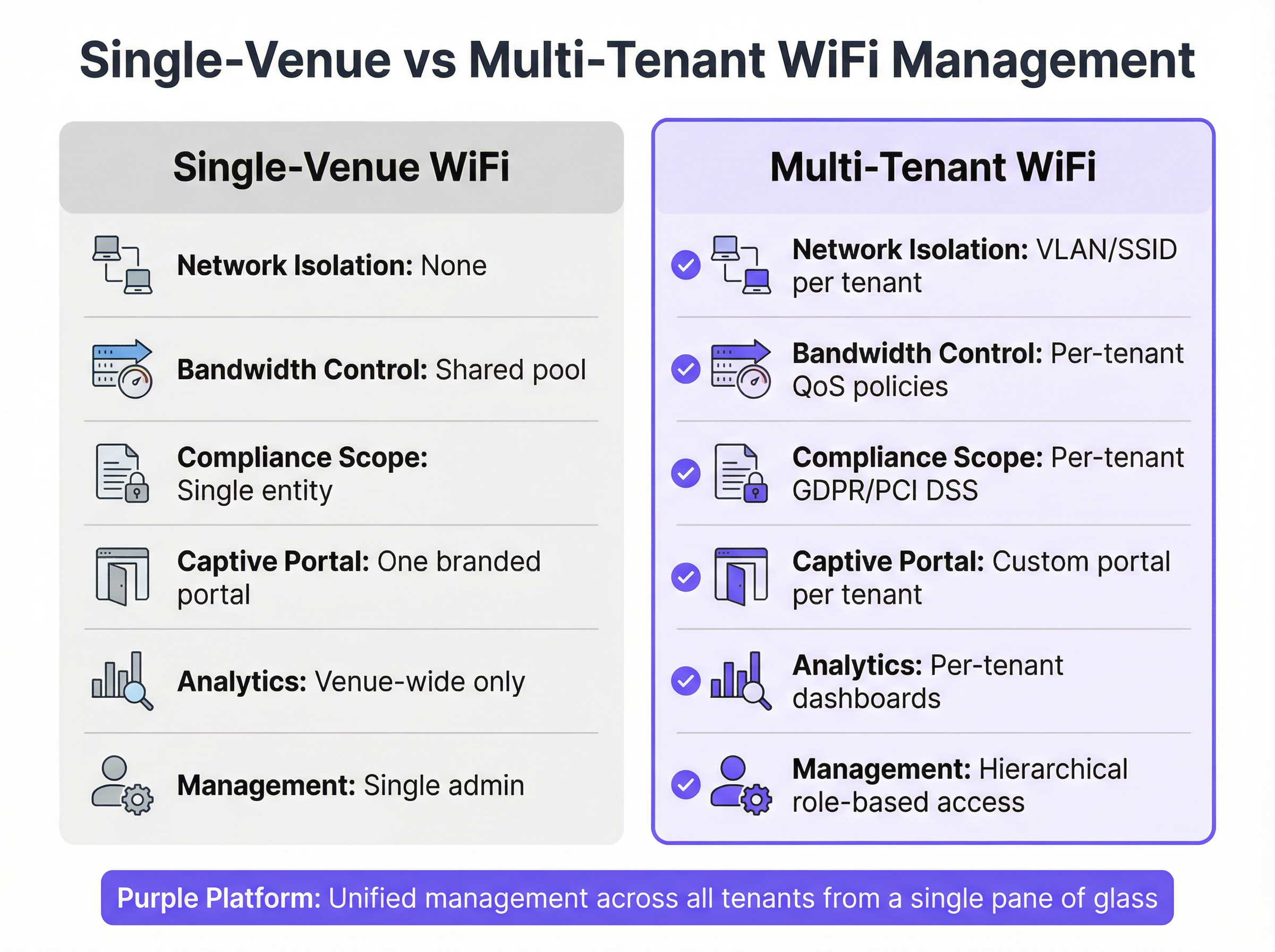
हे मार्गदर्शक मल्टी-टेनंट WiFi नेटवर्कचे आर्किटेक्चर, व्यवस्थापन आणि व्यावसायिक प्रभावाचे सखोल तांत्रिक विश्लेषण प्रदान करते. हे आयटी व्यवस्थापक, नेटवर्क आर्किटेक्ट आणि व्हेन्यू ऑपरेटर्ससाठी डिझाइन केले आहे जे हॉटेल्स, रिटेल सेंटर्स, स्टेडियम्स आणि व्यवस्थापित निवासी मालमत्ता (MDUs) सारख्या गुंतागुंतीच्या, बहु-रहिवासी वातावरणात सुरक्षित, उच्च-कार्यक्षमता वायरलेस कनेक्टिव्हिटी प्रदान करण्यासाठी जबाबदार आहेत. आम्ही सिंगल-व्हेन्यू आणि मल्टी-टेनंट डिप्लॉयमेंटमधील महत्त्वपूर्ण फरकांचा शोध घेऊ, ज्यामध्ये टेनंट आयसोलेशन, ग्रॅन्युलर बँडविड्थ व्यवस्थापन आणि केंद्रीकृत नियंत्रणाच्या आर्किटेक्चरल आवश्यकतांवर लक्ष केंद्रित केले जाईल. ही सामग्री केवळ शैक्षणिक सिद्धांताच्या पलीकडे जाऊन सामायिक WiFi इन्फ्रास्ट्रक्चर डिझाइन करणे, तैनात करणे आणि त्यातून कमाई करण्यासाठी व्यावहारिक, कृतीयोग्य मार्गदर्शन देते, तसेच सुरक्षिततेचे धोके कमी करते आणि PCI DSS आणि GDPR सारख्या मानकांचे पालन सुनिश्चित करते. Purple सारख्या अत्याधुनिक व्यवस्थापन प्लॅटफॉर्मचा वापर करून, मालमत्ता मालक सामायिक सुविधेचे महत्त्वपूर्ण मूल्यवर्धनात रूपांतर करू शकतात, टेनंटचे समाधान वाढवू शकतात, नवीन महसूल प्रवाह तयार करू शकतात आणि तपशीलवार विश्लेषणेद्वारे सखोल ऑपरेशनल इनसाइट्स मिळवू शकतात.
सखोल तांत्रिक विश्लेषण
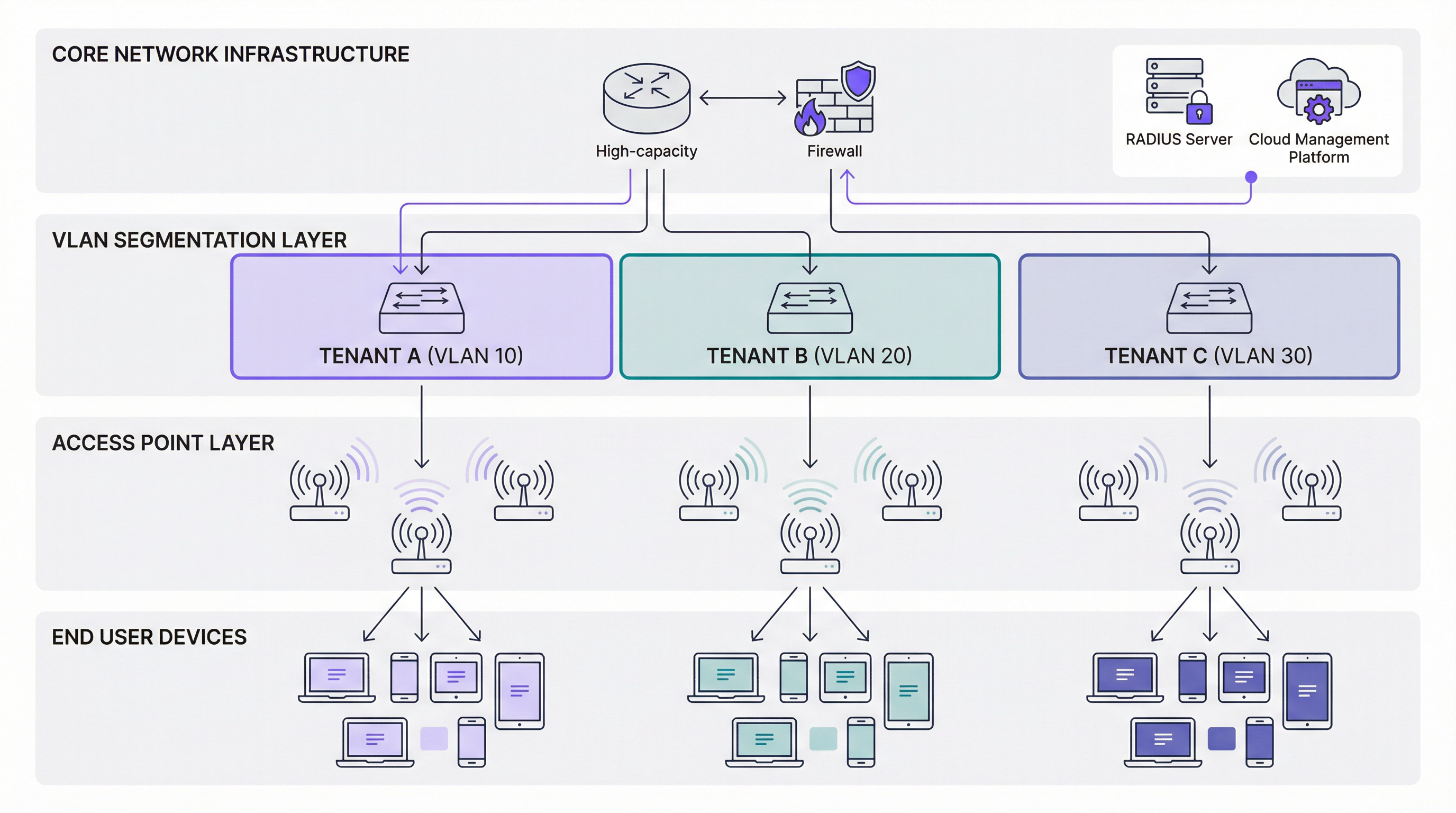
सिंगल-ऑक्युपंटवरून मल्टी-टेनंट WiFi आर्किटेक्चरकडे जाण्यासाठी नेटवर्क डिझाइन तत्त्वज्ञानामध्ये मूलभूत बदल आवश्यक आहे — एका फ्लॅट, विश्वासार्ह वातावरणाकडून सेगमेंटेड, झिरो-ट्रस्ट फ्रेमवर्ककडे. सुरक्षा, कार्यक्षमता किंवा गोपनीयतेशी कोणतीही तडजोड न करता एकाच भौतिक इन्फ्रास्ट्रक्चरवर अनेक स्वतंत्र टेनंट्स एकत्र राहू शकतील हे सुनिश्चित करणे हा प्राथमिक उद्देश आहे. हे आयसोलेशन आणि नियंत्रणाच्या स्तरित दृष्टिकोनातून साध्य केले जाते.
VLANs आणि सेगमेंटेशनची मूलभूत भूमिका
कोणत्याही मल्टी-टेनंट नेटवर्कचा पाया व्हर्च्युअल लोकल एरिया नेटवर्क (VLAN) आहे. IEEE 802.1Q मानकानुसार, VLANs एकाच भौतिक नेटवर्क स्विचला अनेक, तार्किकदृष्ट्या स्वतंत्र ब्रॉडकास्ट डोमेन्समध्ये विभागण्याची परवानगी देतात. व्यवहारात, याचा अर्थ असा की एका टेनंटचा ट्रॅफिक — उदाहरणार्थ, VLAN 10 वरील रिटेल स्टोअर — दुसऱ्या टेनंटच्या ट्रॅफिकसाठी पूर्णपणे अदृश्य आणि अगम्य असतो, जसे की VLAN 20 वरील कॉर्पोरेट ऑफिस, जरी त्यांचे डिव्हाइसेस एकाच भौतिक ऍक्सेस पॉईंटशी जोडलेले असले तरीही.
मुख्य तत्त्व: योग्य VLAN अंमलबजावणीशिवाय, टेनंट सेपरेशन केवळ वरवरचे असते. एकाच, फ्लॅट LAN वरील अनेक SSIDs कोणताही अर्थपूर्ण सुरक्षितता देत नाहीत, कारण सर्व डिव्हाइसेस एकाच ब्रॉडकास्ट डोमेनमध्ये राहतात, ज्यामुळे दुर्भावनायुक्त घटकांद्वारे संभाव्य लॅटरल मूव्हमेंट शक्य होते.
ऑथेंटिकेशन आणि ऍक्सेस कंट्रोल: एका पासवर्डच्या पलीकडे
मल्टी-टेनंट वातावरणामध्ये, ऑथेंटिकेशनसाठी 'वन-साईझ-फिट्स-ऑल' (सर्वांसाठी एकच) दृष्टिकोन पूर्णपणे अपुरा आहे. वेगवेगळ्या टेनंट्सच्या सुरक्षेच्या गरजा खूप वेगळ्या असतात आणि एका मजबूत आर्किटेक्चरने एकाच वेळी अनेक ऑथेंटिकेशन पद्धतींना समर्थन दिले पाहिजे. कॉर्पोरेट किंवा उच्च-सुरक्षा टेनंट्ससाठी, IEEE 802.1X ऑथेंटिकेशनसह WPA3-Enterprise हे सुवर्ण मानक आहे. यासाठी प्रत्येक वापरकर्त्याला RADIUS (रिमोट ऑथेंटिकेशन डायल-इन युजर सर्व्हिस) सर्व्हरवर युनिक क्रेडेंशियल्ससह — युजरनेम आणि पासवर्ड, किंवा डिजिटल प्रमाणपत्र — ऑथेंटिकेट करणे आवश्यक आहे. हे प्रति-वापरकर्ता उत्तरदायित्व, तपशीलवार ऑडिट लॉगिंग आणि वापरकर्ता ओळख किंवा गट सदस्यत्वावर आधारित डायनॅमिक पॉलिसी असाइनमेंट सक्षम करते.
गेस्ट नेटवर्क, सार्वजनिक ठिकाणे किंवा रिटेल टेनंट्ससाठी, वापरकर्ता ऑनबोर्डिंगसाठी Captive Portal ही प्राथमिक यंत्रणा आहे. Purple सारख्या प्लॅटफॉर्मसह एकत्रित केलेले आधुनिक पोर्टल्स साध्या स्प्लॅश पेजेसच्या खूप पुढे जातात. ते प्रत्येक टेनंटनुसार वेगळ्या ब्रँडिंगसह पूर्णपणे सानुकूलित केले जाऊ शकतात, अटी आणि शर्ती लागू करू शकतात, GDPR-सुसंगत पद्धतीने मार्केटिंगसाठी वापरकर्ता डेटा कॅप्चर करू शकतात आणि सोशल लॉगिन किंवा पेमेंट गेटवेसह एकत्रित होऊ शकतात. IoT सेन्सर्ससारख्या हेडलेस डिव्हाइसेससाठी, संपूर्ण 802.1X इन्फ्रास्ट्रक्चरची आवश्यकता न ठेवता टेनंटच्या आयसोलेटेड नेटवर्क सेगमेंटमध्ये ऍक्सेस प्रदान करण्यासाठी युनिक किंवा डायनॅमिक प्री-शेअर्ड कीज (PSKs) नियुक्त केल्या जाऊ शकतात.
| ऑथेंटिकेशन पद्धत | यासाठी सर्वोत्तम | मानक | मुख्य फायदा |
|---|---|---|---|
| WPA3-Enterprise + 802.1X | कॉर्पोरेट टेनंट्स, वित्तीय सेवा | IEEE 802.1X, RFC 2865 | प्रति-वापरकर्ता ओळख, डायनॅमिक पॉलिसी |
| Captive Portal (एन्हान्स्ड ओपन) | गेस्ट WiFi, रिटेल, सार्वजनिक ऍक्सेस | WPA3-OWE | ब्रँडेड ऑनबोर्डिंग, डेटा कॅप्चर |
| डायनॅमिक PSK | IoT डिव्हाइसेस, तात्पुरता ऍक्सेस | WPA3-Personal | सोपे डिप्लॉयमेंट, प्रति-डिव्हाइस की |
ग्रॅन्युलर QoS सह कार्यक्षमता सुनिश्चित करणे
कार्यक्षमता आयसोलेशन हे सुरक्षा आयसोलेशनइतकेच महत्त्वाचे आहे. उच्च-बँडविड्थ ऍप्लिकेशन चालवणाऱ्या एका टेनंटला — व्हिडिओ स्ट्रीमिंग, मोठ्या फाईल ट्रान्सफर किंवा सॉफ्टवेअर अपडेट पुश — इतर सर्व टेनंट्सची सेवा खराब करण्याची परवानगी दिली जाऊ शकत नाही. हे नेटवर्क लेयरवर लागू केलेल्या क्वालिटी ऑफ सर्व्हिस (QoS) पॉलिसींद्वारे व्यवस्थापित केले जाते. एक अत्याधुनिक मल्टी-टेनंट प्लॅटफॉर्म ॲडमिनिस्ट्रेटर्सना प्रति-टेनंट, प्रति-वापरकर्ता किंवा अगदी प्रति-ऍप्लिकेशन आधारावर अचूक बँडविड्थ नियंत्रणे परिभाषित करण्यास सक्षम करतो. रेट लिमिटिंग प्रत्येक टेनंटच्या SSID ला उपलब्ध असलेल्या कमाल अपस्ट्रीम आणि डाउनस्ट्रीम बँडविड्थवर मर्यादा घालते, तर बँडविड्थ गॅरंटीज मिशन-क्रिटिकल टेनंट्ससाठी किमान वाटप राखून ठेवतात, जसे की लाईव्ह-स्ट्रीम इव्हेंट होस्ट करणारा कॉर्पोरेट क्लायंट. ट्रॅफिक शेपिंग कमी तातडीच्या डेटा ट्रान्सफरपेक्षा वेळ-संवेदनशील प्रोटोकॉल्स — VoIP, व्हिडिओ कॉन्फरन्सिंग — यांना प्राधान्य देऊन हे अधिक परिष्कृत करते. या पॉलिसीज नेटवर्क संसाधनांचे अंदाजित आणि न्याय्य वितरण सुनिश्चित करतात, जे टेनंट्ससोबत सर्व्हिस लेव्हल ॲग्रीमेंट्स (SLAs) पूर्ण करण्यासाठी आवश्यक आहे.
अंमलबजावणी मार्गदर्शक
मल्टी-टेनंट WiFi नेटवर्क तैनात करणे ही एक संरचित प्रक्रिया आहे जी प्रारंभिक नियोजनापासून ते डिप्लॉयमेंट-नंतरच्या प्रमाणीकरणापर्यंत पाच वेगवेगळ्या टप्प्यांमधून जाते.
पहिला टप्पा आवश्यकता विश्लेषण आणि टेनंट प्रोफाइलिंग आहे. कोणतेही हार्डवेअर खरेदी करण्यापूर्वी किंवा कॉन्फिगर करण्यापूर्वी, प्रत्येक संभाव्य टेनंटसोबत सखोल डिस्कव्हरी प्रक्रिया आयोजित करा. त्यांची सुरक्षा स्थिती (त्यांना 802.1X ची आवश्यकता आहे का? ते PCI DSS किंवा HIPAA च्या अधीन आहेत का?), त्यांच्या कार्यक्षमतेच्या गरजा (त्यांच्या पीक बँडविड्थच्या मागण्या काय आहेत? ते लेटन्सी-संवेदनशील ऍप्लिकेशन्स चालवतात का?), आणि त्यांच्या ऑनबोर्डिंग प्राधान्ये (त्यांना कस्टम-ब्रँडेड Captive Portal ची आवश्यकता आहे का? ते किती समवर्ती वापरकर्त्यांची अपेक्षा करतात?) समजून घेणे हा उद्देश आहे. ही माहिती थेट प्रत्येक पुढील डिझाइन निर्णयाला सूचित करते.
दुसरा टप्पा हार्डवेअर निवड आणि नेटवर्क डिझाइन आहे. एंटरप्राइझ-ग्रेड ऍक्सेस पॉईंट्स आणि मॅनेज्ड स्विचेस आवश्यक आहेत. ऍक्सेस पॉईंट्सनी 802.1Q VLAN टॅगिंग आणि प्रगत QoS क्षमतांसह एकाधिक SSIDs ला समर्थन दिले पाहिजे. स्विचेस पुरेशा पोर्ट डेन्सिटीसह पूर्णपणे व्यवस्थापित केले पाहिजेत आणि 802.1Q ट्रंक आणि ऍक्सेस पोर्ट्ससाठी समर्थन असले पाहिजे. एक हाय-थ्रूपुट गेटवे किंवा फायरवॉल नेटवर्कच्या काठावर बसतो, जो इंटर-VLAN राउटिंग पॉलिसीज व्यवस्थापित करतो आणि सुरक्षा नियम लागू करतो. हार्डवेअर निवडीसोबतच, एक तार्किक आणि स्केलेबल IP ॲड्रेसिंग स्कीम डिझाइन करा, प्रत्येक टेनंटला एक युनिक VLAN ID आणि संबंधित IP सबनेट नियुक्त करा आणि या स्कीमचे बारकाईने दस्तऐवजीकरण करा.
तिसरा टप्पा केंद्रीकृत व्यवस्थापन प्लॅटफॉर्म कॉन्फिगरेशन आहे. Purple च्या प्लॅटफॉर्मचा वापर करून, ॲडमिनिस्ट्रेटर्स टेनंट प्रोफाइल्स परिभाषित करतात, त्यांच्या संबंधित VLANs वर मॅप केलेले SSIDs तयार करतात, ऑथेंटिकेशन पद्धती कॉन्फिगर करतात, QoS आणि रेट-लिमिटिंग पॉलिसीज स्थापित करतात आणि ब्रँडेड Captive Portal डिझाइन करतात. हा डिप्लॉयमेंटचा ऑपरेशनल गाभा आहे — सिंगल पेन ऑफ ग्लास ज्यावरून संपूर्ण मल्टी-टेनंट वातावरण नियंत्रित केले जाते.
चौथा टप्पा फिजिकल डिप्लॉयमेंट आणि स्टेज्ड रोलआउट आहे. प्रत्येक टेनंट झोनसाठी पुरेशी कव्हरेज आणि क्षमता सुनिश्चित करून, RF प्लॅननुसार ऍक्सेस पॉईंट्स आणि स्विचेस स्थापित करा. व्यवस्थापन प्लॅटफॉर्मवरून कॉन्फिगरेशन्स लागू करा आणि व्यापक वातावरणावर परिणाम होण्यापूर्वी कोणत्याही कॉन्फिगरेशन समस्यांना वेगळे करण्यासाठी एका वेळी एक टेनंट सक्रिय करून स्टेज्ड रोलआउट आयोजित करा.
पाचवा आणि अंतिम टप्पा प्रमाणीकरण आणि सतत देखरेख आहे. प्रत्येक टेनंटसाठी कठोर चाचणी प्रक्रिया आयोजित करा, आयसोलेशन, कार्यक्षमता आणि ऑथेंटिकेशन सर्व डिझाइन केल्याप्रमाणे कार्य करत आहेत याची पडताळणी करा. एका टेनंटच्या VLAN वरील डिव्हाइस दुसऱ्याच्या डिव्हाइसपर्यंत पोहोचू शकत नाही याची पुष्टी करण्यासाठी पॅकेट कॅप्चर टूल्स वापरा. रिअल-टाइममध्ये विसंगती शोधण्यासाठी व्यवस्थापन प्लॅटफॉर्ममध्ये सतत मॉनिटरिंग डॅशबोर्ड्स आणि अलर्ट थ्रेशोल्ड्स स्थापित करा.

सर्वोत्तम पद्धती
सर्वात प्रभावी मल्टी-टेनंट डिप्लॉयमेंट्स ऑपरेशनल तत्त्वांचा एक समान संच सामायिक करतात. पहिल्या दिवसापासून झिरो-ट्रस्ट मॉडेलचा अवलंब करणे सर्वोपरि आहे — डीफॉल्टनुसार कोणताही वापरकर्ता किंवा डिव्हाइस विश्वासार्ह नाही असे गृहीत धरा आणि नेटवर्कवर कोठूनही उगम पावत असला तरीही प्रत्येक कनेक्शनसाठी कठोर ऑथेंटिकेशन आणि ऑथोरायझेशन लागू करा.
रोल-बेस्ड ऍक्सेस कंट्रोल (RBAC) तितकेच महत्त्वाचे आहे. हायराकिकल ॲडमिनिस्ट्रेशनला समर्थन देणारा व्यवस्थापन प्लॅटफॉर्म मालमत्ता मालकाच्या IT टीमला ग्लोबल ॲडमिनिस्ट्रेटिव्ह अधिकार राखून ठेवण्याची परवानगी देतो, तर वैयक्तिक टेनंट्सना त्यांचे स्वतःचे ॲनालिटिक्स पाहण्यासाठी किंवा त्यांचे स्वतःचे Captive Portal व्यवस्थापित करण्यासाठी मर्यादित, स्कोप्ड ऍक्सेस देतो. हे मॉडेल सामायिक इन्फ्रास्ट्रक्चरच्या अखंडतेशी तडजोड न करता टेनंटच्या स्वायत्ततेचा आदर करते.
नियमित ऑडिटिंग आणि अनुपालन पडताळणी शेड्यूल केली पाहिजे, रिॲक्टिव्ह नसावी. PCI DSS च्या अधीन असलेल्या टेनंट्ससाठी, तपशीलवार ऍक्सेस लॉग्स राखून ठेवा आणि कार्डहोल्डर डेटा वातावरण योग्यरित्या आयसोलेटेड असल्याचे प्रदर्शित करण्यासाठी तयार रहा. Captive Portal द्वारे वापरकर्ता डेटा कॅप्चर करणाऱ्या कोणत्याही टेनंटसाठी, डेटा संकलन, स्टोरेज आणि प्रक्रियेच्या पद्धती GDPR शी पूर्णपणे सुसंगत असल्याची खात्री करा, ज्यामध्ये ऑथेंटिकेशनच्या वेळी सादर केलेल्या स्पष्ट आणि प्रवेशयोग्य गोपनीयता सूचनेचा समावेश आहे.
शेवटी, व्यवस्थापन प्लॅटफॉर्मच्या APIs द्वारे टेनंट ऑनबोर्डिंग आणि ऑफबोर्डिंग स्वयंचलित करणे ऑपरेशनल ओव्हरहेड नाटकीयरित्या कमी करते, मानवी कॉन्फिगरेशन त्रुटीचा धोका कमी करते आणि जेव्हा एखादा टेनंट जागा रिकामी करतो तेव्हा ऍक्सेस त्वरित आणि पूर्णपणे रद्द केला जातो हे सुनिश्चित करते.
ट्रबलशूटिंग आणि जोखीम कमी करणे
चांगल्या प्रकारे डिझाइन केलेल्या मल्टी-टेनंट नेटवर्क्सना देखील ऑपरेशनल आव्हानांचा सामना करावा लागतो. खालील तक्ता सर्वात सामान्य बिघाड मोड्स त्यांच्या मूळ कारणांशी आणि शिफारस केलेल्या उपायांशी मॅप करतो.
| लक्षण | संभाव्य मूळ कारण | शिफारस केलेला उपाय |
|---|---|---|
| सर्व टेनंट्समध्ये खराब कार्यक्षमता | प्राथमिक इंटरनेट अपलिंकचे सॅच्युरेशन किंवा फायरवॉल बॉटलनेक | एकूण बँडविड्थ वापराचे निरीक्षण करा; गेटवेवर टॉप-लेव्हल QoS लागू करा; अपलिंक अपग्रेडचा विचार करा |
| वापरकर्ते विशिष्ट SSID वर ऑथेंटिकेट करू शकत नाहीत | चुकीचा PSK, अवैध 802.1X क्रेडेंशियल्स, किंवा चुकीच्या पद्धतीने कॉन्फिगर केलेला RADIUS सर्व्हर | व्यवस्थापन प्लॅटफॉर्ममध्ये क्लायंट ऑथेंटिकेशन लॉग्स तपासा; अयशस्वी प्रयत्नांसाठी RADIUS सर्व्हर इव्हेंट लॉग्सचे पुनरावलोकन करा |
| सुरक्षा ऑडिटमध्ये इंटर-VLAN ट्रॅफिक आढळले | चुकीच्या पद्धतीने कॉन्फिगर केलेला स्विच ट्रंक पोर्ट किंवा अति-परवानगी देणारे फायरवॉल ACL | सर्व स्विच पोर्ट कॉन्फिगरेशन्सचे पुनरावलोकन करा; डीफॉल्ट-डिनाय इंटर-VLAN फायरवॉल नियम लागू करा; ACLs चे ऑडिट करा |
| टेनंटसाठी Captive Portal योग्यरित्या रेंडर होत नाही | DNS रिझोल्यूशन अपयश किंवा चुकीचे पोर्टल URL कॉन्फिगरेशन | टेनंट VLAN साठी DNS सेटिंग्ज सत्यापित करा; टेनंटच्या सबनेटमधून पोर्टल URL रिझोल्यूशनची चाचणी करा |
| टेनंट अधूनमधून कनेक्टिव्हिटीची तक्रार करतो | RF इंटरफेरन्स, को-चॅनेल कंजेक्शन, किंवा AP ओव्हरलोड | व्यवस्थापन प्लॅटफॉर्ममध्ये RF हीटमॅप्सचे पुनरावलोकन करा; चॅनेल असाइनमेंट्स आणि ट्रान्समिट पॉवर समायोजित करा; अतिरिक्त AP कव्हरेजचा विचार करा |
मल्टी-टेनंट वातावरणातील सर्वात मोठा धोका म्हणजे लॅटरल मूव्हमेंट — एका टेनंटच्या नेटवर्कवरील तडजोड केलेल्या डिव्हाइसची दुसऱ्यावरील डिव्हाइसेसवर हल्ला करण्याची क्षमता. योग्य VLAN सेगमेंटेशन, कठोर इंटर-VLAN फायरवॉल नियमांसह एकत्रित, या धोक्याविरूद्ध प्राथमिक नियंत्रण आहे. उच्च सुरक्षा आवश्यकता असलेल्या टेनंट्सना होस्ट करणाऱ्या कोणत्याही वातावरणासाठी सेगमेंटेशन सीमांच्या नियमित पेनिट्रेशन टेस्टिंगची जोरदार शिफारस केली जाते.
ROI आणि व्यावसायिक प्रभाव
योग्यरित्या आर्किटेक्ट केलेले मल्टी-टेनंट WiFi नेटवर्क हे कॉस्ट सेंटर नाही; ही अनेक, मोजता येण्याजोग्या परताव्यांसह एक धोरणात्मक संपत्ती आहे. सर्वात थेट महसूल संधी म्हणजे नेटवर्क मॉनेटायझेशन — टेनंट्सना टायर्ड बँडविड्थ पॅकेजेस ऑफर करणे, प्रीमियम इव्हेंट कनेक्टिव्हिटीसाठी शुल्क आकारणे, किंवा कस्टम-ब्रँडेड पोर्टल्स आणि ॲनालिटिक्स डॅशबोर्ड्सच्या ऍक्सेससाठी बिलिंग करणे. मॅनेज्ड प्रॉपर्टी ऑपरेटरसाठी, हे भांडवली खर्चाचे आवर्ती महसूल प्रवाहात रूपांतर करू शकते.
थेट कमाईच्या पलीकडे, उच्च-गुणवत्तेचे व्यवस्थापित WiFi स्पर्धात्मक बाजारपेठांमध्ये एक शक्तिशाली वेगळेपण निर्माण करणारे आहे. मल्टी-ड्वेलिंग युनिट (MDU WiFi) क्षेत्रात, विश्वासार्ह आणि व्यावसायिकरित्या व्यवस्थापित केलेले सामायिक WiFi इन्फ्रास्ट्रक्चर हे टेनंट संपादन आणि टिकवून ठेवण्यासाठी वाढत्या प्रमाणात निर्णायक घटक बनत आहे. व्यावसायिक मालमत्ता क्षेत्रात, टेनंट्स एंटरप्राइझ-ग्रेड कनेक्टिव्हिटीची मूलभूत सुविधा म्हणून अपेक्षा करतात; ते प्रदान करण्यात अयशस्वी झाल्यास चर्न (सोडून जाण्याचा) धोका निर्माण होतो.
केंद्रीकृत व्यवस्थापनातून मिळणारे ऑपरेशनल कार्यक्षमतेचे फायदे देखील लक्षणीय आहेत. एकच IT टीम एकाच डॅशबोर्डवरून मालमत्तांचा पोर्टफोलिओ — प्रत्येकामध्ये अनेक टेनंट्स — व्यवस्थापित करू शकते, ज्यामुळे नियमित कॉन्फिगरेशन बदलांसाठी ऑन-साइट भेटींची आवश्यकता दूर होते. यामुळे ऑपरेशनल खर्च कमी होतो आणि प्रतिसाद वेळ वेगवान होतो.
कदाचित सर्वात धोरणात्मकदृष्ट्या मौल्यवान फायदा म्हणजे डेटा-आधारित इनसाइट. सर्व टेनंट्समधील अनामित, संमती-आधारित डेटा एकत्रित करून, मालमत्ता मालकांना फूटफॉल पॅटर्न, अभ्यागतांचा थांबण्याचा वेळ, पीक वापराचे कालावधी आणि जागेचा वापर यावर अमूल्य माहिती मिळते. हा डेटा मालमत्ता गुंतवणूक, टेनंट मिक्स आणि ऑपरेशनल शेड्यूलिंगवरील निर्णयांना सूचित करतो, जो नेटवर्कच्या पलीकडे जाणारा परतावा देतो.
महत्त्वाच्या संज्ञा आणि व्याख्या
Multi-Tenant WiFi
A wireless network architecture in which a single physical infrastructure — access points, switches, and uplinks — is logically partitioned to serve multiple independent organisations or user groups, each with their own isolated network segment, authentication method, and management controls.
IT teams encounter this term when managing properties with multiple occupants, such as shopping centres, hotels, office parks, or multi-dwelling units. It is the foundational concept that distinguishes enterprise venue networking from a simple shared hotspot.
VLAN (Virtual Local Area Network)
A logical network segment created within a physical switched network, as defined by the IEEE 802.1Q standard. VLANs create separate broadcast domains, ensuring that traffic on one VLAN cannot be seen or accessed by devices on another VLAN without explicit routing and firewall permission.
VLANs are the primary mechanism for tenant isolation in a multi-tenant WiFi deployment. Network architects must assign a unique VLAN ID to each tenant and ensure that all switches and access points are correctly configured to tag and carry traffic for each VLAN.
IEEE 802.1X
An IEEE standard for port-based network access control that provides an authentication framework for devices attempting to connect to a LAN or WLAN. It uses the Extensible Authentication Protocol (EAP) and requires a supplicant (the client device), an authenticator (the access point or switch), and an authentication server (typically a RADIUS server).
802.1X is the recommended authentication standard for corporate tenants and any environment requiring individual user accountability. It eliminates the security risks of shared passwords and enables dynamic policy assignment based on user identity.
RADIUS (Remote Authentication Dial-In User Service)
A networking protocol and server infrastructure that provides centralised Authentication, Authorisation, and Accounting (AAA) management for users connecting to a network. In a multi-tenant WiFi context, the RADIUS server validates user credentials for 802.1X-authenticated SSIDs and can dynamically assign users to specific VLANs based on their identity or group membership.
Network architects must plan for RADIUS server redundancy (at least two servers in an active-passive configuration) to prevent authentication failures from causing a network outage. Cloud-hosted RADIUS services are increasingly common in multi-tenant deployments.
Captive Portal
A web page that intercepts a user's initial HTTP/HTTPS request when they connect to a WiFi network, requiring them to complete an action — such as accepting terms of service, entering credentials, or providing contact information — before granting full internet access. In a multi-tenant context, each tenant can have a fully customised captive portal with their own branding and data capture requirements.
Captive portals are the primary onboarding mechanism for guest and public WiFi networks. When deploying portals that capture personal data (email addresses, social login profiles), operators must ensure compliance with GDPR, including providing a clear privacy notice and obtaining explicit consent for marketing communications.
QoS (Quality of Service)
A set of network management techniques that prioritise certain types of traffic or allocate specific bandwidth resources to defined users, applications, or network segments. In a multi-tenant WiFi deployment, QoS policies are used to enforce per-tenant bandwidth limits (rate limiting), guarantee minimum throughput for premium tenants, and prioritise latency-sensitive applications such as VoIP.
QoS configuration is essential for preventing the 'noisy neighbour' problem, where a single tenant's high-bandwidth usage degrades the experience for all other tenants on the shared infrastructure. Network architects should define QoS policies as part of the tenant onboarding process, not as a reactive measure after complaints arise.
MDU WiFi (Multi-Dwelling Unit WiFi)
A specific application of multi-tenant WiFi architecture in residential properties such as apartment blocks, student accommodation, and managed housing developments. In an MDU context, each residential unit or floor is treated as a tenant, with isolated network segments providing privacy between residents and a centralised management platform enabling the property operator to deliver a managed connectivity service.
MDU WiFi deployments have specific regulatory considerations, particularly around data privacy for residential users. Property operators must be especially careful to ensure that residents cannot see each other's network traffic, and that any data captured through the network is handled in strict compliance with GDPR.
WPA3-Enterprise
The latest generation of the Wi-Fi Protected Access enterprise security protocol, introduced by the Wi-Fi Alliance. WPA3-Enterprise mandates the use of 192-bit cryptographic strength (in its highest security mode) and eliminates the vulnerabilities present in WPA2-Enterprise, including susceptibility to PMKID attacks and dictionary attacks against captured handshakes. It is used in conjunction with IEEE 802.1X for user authentication.
Network architects should specify WPA3-Enterprise as the minimum security standard for any SSID serving corporate tenants, financial services, healthcare, or any environment with elevated data sensitivity. Legacy devices that do not support WPA3 may require a separate, isolated SSID with WPA2-Enterprise as a transitional measure.
RBAC (Role-Based Access Control)
An access control model in which permissions are assigned to roles rather than to individual users, and users are assigned to roles based on their responsibilities. In a multi-tenant WiFi management platform, RBAC enables a hierarchical administration model where property owners have global access, while individual tenants have scoped access only to their own network segment and analytics data.
RBAC is a critical governance control in any multi-tenant management platform. Without it, a tenant administrator could potentially view or modify the configurations of neighbouring tenants, creating both a security risk and a significant liability for the property operator.
Lateral Movement
A cyberattack technique in which an attacker who has compromised one device on a network uses that foothold to move horizontally across the network, accessing other devices and systems. In a multi-tenant WiFi context, inadequate VLAN segmentation or overly permissive inter-VLAN firewall rules can enable lateral movement from a compromised device in one tenant's network to devices in another tenant's network.
Preventing lateral movement is the primary security objective of tenant isolation in a multi-tenant WiFi architecture. Network architects must validate that VLAN boundaries are impermeable through regular penetration testing and that firewall rules enforce a default-deny policy for all inter-VLAN traffic.
केस स्टडीज
A 350-room full-service hotel needs to provide WiFi to four distinct groups simultaneously: hotel guests in rooms and public areas, a 1,200-capacity conference centre that hosts multiple concurrent events from different corporate clients, a ground-floor retail tenant (a coffee shop) that processes card payments, and the hotel's own back-of-house operational network used for PMS, CCTV, and POS systems. How should the network be architected to meet the security, performance, and compliance requirements of each group?
This deployment requires a minimum of four isolated network segments, each with distinct security and performance profiles. The hotel guest network (VLAN 10) should use a captive portal with WPA3-Enhanced Open, with a rate limit of 20 Mbps per device and a Purple-managed splash page for branded onboarding and GDPR-compliant data capture. The conference centre (VLAN 20) requires a more sophisticated approach: it should be sub-segmented using dynamic VLANs assigned at authentication time via 802.1X, so that delegates from Event A (VLAN 21) are isolated from delegates from Event B (VLAN 22). Each event organiser can be given a temporary admin credential in Purple to manage their own captive portal and view their own analytics. Bandwidth guarantees of 50 Mbps per event should be configured, with burst allowances up to 100 Mbps if capacity is available. The retail coffee shop (VLAN 30) processes card payments, placing it within PCI DSS scope. This segment must be strictly isolated with no inter-VLAN routing permitted under any circumstances. The POS terminals should be on a dedicated sub-VLAN (VLAN 31) with a whitelist-only firewall policy permitting traffic only to the payment processor's IP range. The back-of-house operational network (VLAN 40) should have no internet access whatsoever, operating as a fully air-gapped private LAN for internal systems. All four VLANs are configured and monitored from a single Purple dashboard, with RBAC ensuring that the conference manager can only see their own event data, the retail tenant can only see their own network, and the hotel IT team has full visibility across all segments.
A large urban shopping centre with 120 retail units across three floors wants to deploy a shared WiFi infrastructure managed centrally by the property management company. Each retail tenant should have their own branded guest WiFi for customers, their own analytics dashboard showing visitor dwell times and return visit rates, and their own bandwidth allocation. The property management company also wants to offer a premium 'anchor tenant' tier with guaranteed throughput and priority support. How should this be structured using Purple's multi-tenant platform?
The deployment begins with a hierarchical management structure in Purple. The property management company holds the top-level 'Organisation' account, with each retail tenant provisioned as a sub-account with scoped permissions. Each tenant receives a dedicated SSID mapped to a unique VLAN, with a Purple-managed captive portal fully branded with their own logo, colour scheme, and promotional messaging. The portal is configured to capture email addresses and opt-in marketing consent in compliance with GDPR, with the data flowing into the tenant's own Purple analytics dashboard. Standard tenants are allocated a 10 Mbps per-device rate limit with a 50 Mbps SSID cap, sufficient for typical retail customer browsing. Anchor tenants — large department stores or flagship brands — are provisioned on a premium tier with a 100 Mbps guaranteed bandwidth allocation, a dedicated SSID with WPA3-Enterprise for their own staff devices, and a separate guest SSID for customers. The property management company's IT team monitors the entire estate from the top-level Purple dashboard, with alerts configured for any tenant whose network utilisation exceeds 80% of their allocation (a signal to upsell to a higher tier) or drops below 10% (a signal of a potential configuration issue). Monthly analytics reports are automatically generated per tenant, showing visitor counts, dwell times, and return visit rates, which the property management company packages as a value-added service in the tenant's lease agreement.
परिस्थिती विश्लेषण
Q1. A university campus wants to deploy a shared WiFi infrastructure serving four groups: undergraduate students, postgraduate researchers, visiting conference delegates, and the university's own administrative staff. The research network handles sensitive grant data and must meet Cyber Essentials Plus requirements. The conference delegate network needs to be provisioned and decommissioned on a per-event basis. How would you architect the VLAN structure and authentication model to meet these requirements?
💡 संकेत:Consider the compliance requirements of the research network carefully — Cyber Essentials Plus mandates specific access control and patch management requirements. Also consider how the conference network's temporary nature should influence your provisioning approach: can you use a template-based deployment model?
शिफारस केलेला दृष्टिकोन दाखवा
The architecture requires a minimum of four VLANs: VLAN 10 for undergraduate students (captive portal with social login, 10 Mbps rate limit), VLAN 20 for postgraduate researchers (WPA3-Enterprise with 802.1X, integrated with the university's Active Directory, access restricted to authorised devices via certificate-based authentication to meet Cyber Essentials Plus), VLAN 30 for conference delegates (captive portal, provisioned from a pre-built template in Purple that can be activated and deactivated on demand with a custom event SSID and branded portal), and VLAN 40 for administrative staff (WPA3-Enterprise with 802.1X, integrated with AD, with access to internal university systems via a site-to-site VPN or private routing). The research VLAN must have a default-deny firewall policy with explicit whitelist rules for required services, and all access must be logged for audit purposes. The conference VLAN template approach in Purple allows the IT team to onboard a new event in under 30 minutes without touching switch or firewall configurations.
Q2. You are the network architect for a managed office provider with 50 buildings across the UK, each hosting between 10 and 40 small business tenants. You need to design a scalable multi-tenant WiFi service that can be managed by a central IT team of five people. What management architecture and automation strategy would you recommend to make this operationally viable?
💡 संकेत:With 50 buildings and up to 2,000 tenants, manual configuration is not viable. Consider how Purple's API and hierarchical management model can be used to automate tenant provisioning, and how you would structure the management hierarchy to delegate appropriate access to building managers without compromising central governance.
शिफारस केलेला दृष्टिकोन दाखवा
The solution requires a three-tier management hierarchy in Purple: the managed office provider at the top level with full administrative access, building managers at the second level with access scoped to their specific building, and individual tenants at the third level with access only to their own captive portal design and analytics dashboard. Tenant provisioning must be fully automated via Purple's API, integrated with the company's CRM or property management system. When a new tenant signs a lease, the CRM triggers an API call to Purple that creates the tenant profile, provisions the SSID, assigns the VLAN (from a pre-allocated pool per building), sets the bandwidth tier based on the contracted service level, and generates a branded captive portal from a template. When a tenant vacates, the offboarding workflow automatically deactivates the SSID and releases the VLAN back to the pool. This automation reduces the per-tenant provisioning time from hours to minutes and eliminates the risk of orphaned configurations. The central IT team's role shifts from manual configuration to policy governance, exception handling, and performance monitoring across the estate.
Q3. A stadium operator hosts 40 events per year, ranging from 20,000-capacity football matches to 5,000-capacity corporate conferences. During a football match, the primary use case is fan engagement (social media, team apps, live stats). During corporate conferences, the primary use case is business productivity (video conferencing, cloud applications). How would you configure the QoS and bandwidth management policies to optimise the network for each event type, and how would you switch between configurations efficiently?
💡 संकेत:Consider that the two event types have fundamentally different traffic profiles: football matches generate massive concurrent bursts of social media uploads and streaming, while conferences require consistent, low-latency throughput for video calls. A single QoS policy cannot optimise for both. Think about how event-type templates in the management platform could solve this.
शिफारस केलेला दृष्टिकोन दाखवा
The solution is to create two distinct QoS policy templates in Purple: a 'Fan Engagement' template and a 'Corporate Conference' template. The Fan Engagement template prioritises high-throughput, burst-tolerant traffic by setting a relatively high per-device rate limit (e.g., 5 Mbps) to accommodate simultaneous social media uploads, while deprioritising or throttling streaming video to prevent any single user from consuming disproportionate bandwidth during peak moments (e.g., a goal). The Corporate Conference template inverts these priorities: it sets a lower per-device rate limit for general browsing (e.g., 2 Mbps) but implements strict QoS prioritisation for DSCP-marked video conferencing traffic (e.g., Zoom, Teams), ensuring that video calls receive consistent, low-latency throughput even under load. Switching between templates is handled through Purple's event management workflow: the operations team selects the event type when creating the event in the platform, and the appropriate QoS template is automatically applied to all relevant SSIDs. This eliminates the risk of a corporate conference running on a fan engagement QoS profile, which would result in degraded video call quality.
महत्त्वाचे निष्कर्ष
- ✓Multi-tenant WiFi requires VLAN-based network segmentation as its foundational security control — multiple SSIDs without proper VLAN tagging provide no meaningful tenant isolation and create a significant security liability.
- ✓Authentication must be matched to tenant type: WPA3-Enterprise with IEEE 802.1X for corporate and regulated tenants; GDPR-compliant captive portals for guest and public access; dynamic PSKs for IoT and headless devices.
- ✓QoS and rate-limiting policies are not optional — they are essential for preventing the 'noisy neighbour' problem and for meeting SLA commitments with tenants who have contracted for specific bandwidth tiers.
- ✓Compliance requirements must be assessed per-tenant at onboarding: PCI DSS mandates strict isolation and default-deny firewall policies for any tenant processing card payments; GDPR governs all captive portal data capture.
- ✓Centralised, cloud-based management platforms like Purple are the operational enabler for multi-tenant WiFi at scale — they provide the single pane of glass for configuration, monitoring, RBAC, and analytics across an entire property portfolio.
- ✓Lateral movement prevention is the primary security benefit of proper tenant isolation — VLAN boundaries and default-deny inter-VLAN firewall rules contain the blast radius of any compromised device to a single tenant segment.
- ✓A well-architected multi-tenant WiFi network is a revenue-generating asset, not a cost centre — it enables tiered service monetisation, provides tenants with valuable visitor analytics, and is a demonstrable differentiator in competitive property markets.




