

नेटवर्क ॲक्सेस कंट्रोलसाठी डिव्हाइस पोश्चर असेसमेंट
हे तांत्रिक मार्गदर्शक नेटवर्क ॲक्सेस कंट्रोल (NAC) साठी डिव्हाइस पोश्चर असेसमेंट कसे कार्य करते हे स्पष्ट करते, ज्यामध्ये एंटरप्राइझ आणि वेन्यू वातावरणात Zero Trust WiFi लागू करण्यासाठी आवश्यक आर्किटेक्चर, MDM इंटिग्रेशन आणि रेमेडिएशन फ्लोचा तपशील दिला आहे.
🎧 हे मार्गदर्शक ऐका
ट्रान्सक्रिप्ट पहा
कार्यकारी सारांश
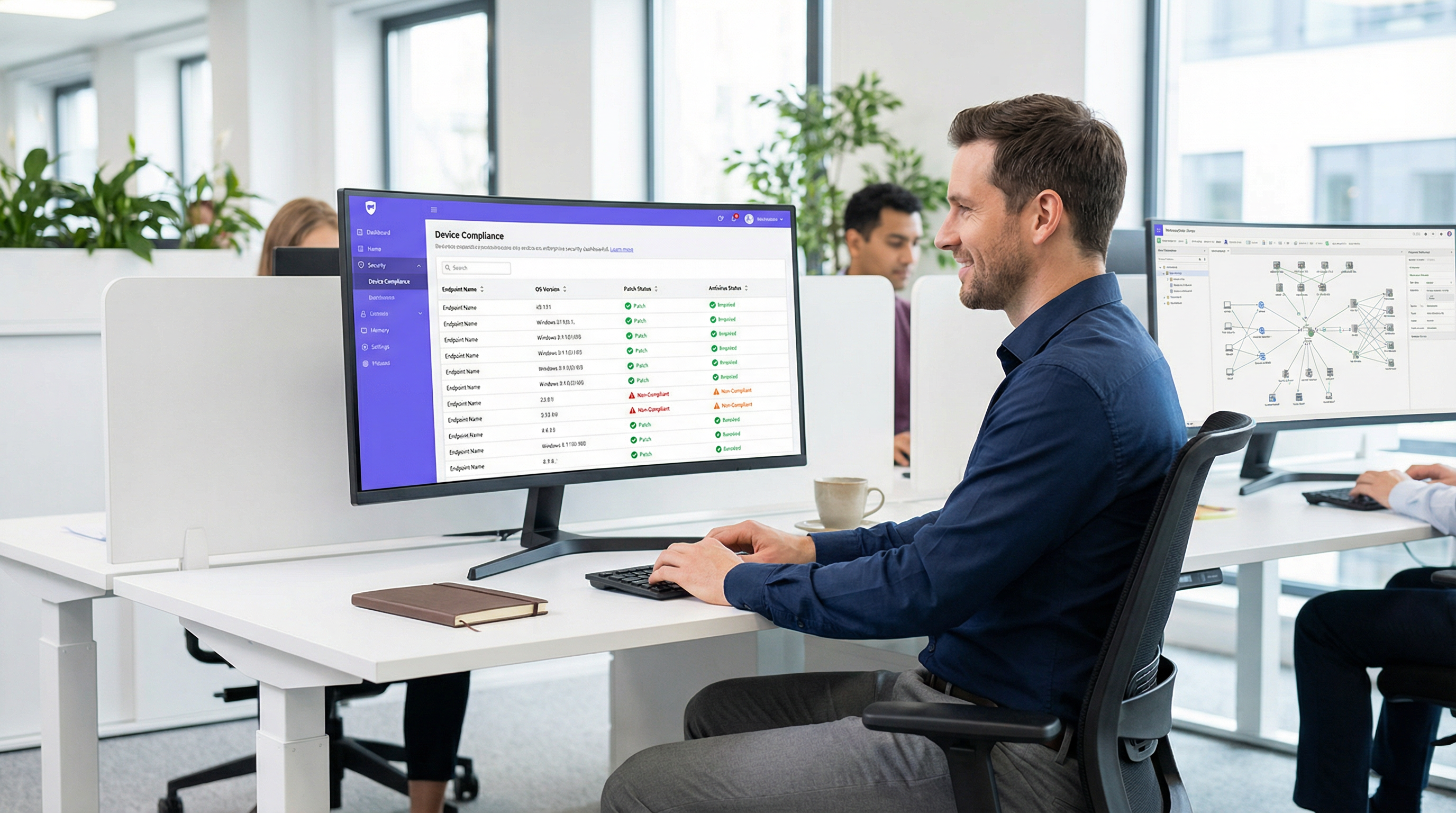
जसजशी एंटरप्राइझ नेटवर्कची सीमा पुसट होत आहे, तसतसे पारंपारिक ओळख-आधारित ऑथेंटिकेशन आता पुरेसे राहिलेले नाही. 802.1X किंवा Captive Portal द्वारे वापरकर्ता तोच आहे ज्याचा तो दावा करतो हे प्रमाणित केल्याने तो वापरत असलेल्या डिव्हाइसमुळे उद्भवणारा धोका कमी होत नाही. डिव्हाइस पोश्चर असेसमेंट हा Zero Trust आर्किटेक्चरमधील संरक्षणाचा एक महत्त्वाचा पुढचा स्तर आहे, जो नेटवर्क ॲक्सेस देण्यापूर्वी एंडपॉइंटचे आरोग्य आणि अनुपालन स्थिती तपासतो.
हॉटेल्स, रिटेल चेन्स, स्टेडियम्स आणि सार्वजनिक क्षेत्रातील सुविधांसारख्या जटिल वातावरणाचे व्यवस्थापन करणाऱ्या IT मॅनेजर्स आणि नेटवर्क आर्किटेक्ट्ससाठी, पोश्चर-आधारित नेटवर्क ॲक्सेस हे सुनिश्चित करते की अनपॅच केलेले, अनमॅनेज्ड किंवा तडजोड केलेले डिव्हाइसेस कॉर्पोरेट VLANs मध्ये फिरू शकत नाहीत. हे मार्गदर्शक नेटवर्क ॲक्सेस कंट्रोलसाठी डिव्हाइस पोश्चर असेसमेंट लागू करण्यासाठी एक व्यावहारिक, वेंडर-न्यूट्रल ब्लूप्रिंट प्रदान करते. यामध्ये आर्किटेक्चरल मॉडेल्स, RADIUS आणि Mobile Device Management (MDM) प्लॅटफॉर्मसह इंटिग्रेशन पॉइंट्स आणि IT हेल्पडेस्कवर ताण न पडता नॉन-कंप्लायंट डिव्हाइसेस हाताळण्यासाठी आवश्यक असलेले महत्त्वपूर्ण रेमेडिएशन वर्कफ्लो समाविष्ट आहेत. या मार्गदर्शकाच्या शेवटी, तुमच्याकडे WiFi वर एंडपॉइंट कंप्लायन्स चेक तैनात करण्यासाठी, तुमचा अटॅक सरफेस कमी करण्यासाठी आणि PCI DSS आणि GDPR सारख्या फ्रेमवर्क्ससह सतत अनुपालन राखण्यासाठी एक स्पष्ट फ्रेमवर्क असेल.
तांत्रिक सखोल माहिती: पोश्चर असेसमेंटचे आर्किटेक्चर
डिव्हाइस पोश्चर असेसमेंट पारंपारिक नेटवर्क ऑथेंटिकेशन फ्लोमध्ये मूलभूत बदल करते. क्रेडेंशियल्सवर आधारित बायनरी हो/नाही निर्णयाऐवजी, नेटवर्क ॲक्सेस कंट्रोल (NAC) सिस्टम एक कंडिशनल स्थिती सादर करते जिथे ॲक्सेस हा डिव्हाइस विशिष्ट आरोग्य निकष पूर्ण करण्यावर अवलंबून असतो.
तीन आर्किटेक्चरल मॉडेल्स
डिव्हाइस पोश्चर असेसमेंट लागू करण्यासाठी तुमच्या एंडपॉइंट मॅनेजमेंट स्ट्रॅटेजीशी सुसंगत असे आर्किटेक्चरल मॉडेल निवडणे आवश्यक आहे. यासाठी तीन प्राथमिक दृष्टिकोन आहेत:
- एजंट-आधारित पोश्चर असेसमेंट: ही सर्वात व्यापक पद्धत आहे. एंडपॉइंटवर स्थापित केलेला एक हलका सॉफ्टवेअर एजंट तपशीलवार टेलिमेट्री गोळा करतो—जसे की OS व्हर्जन, पॅच लेव्हल, अँटीव्हायरस स्थिती आणि चालू असलेल्या प्रक्रिया—आणि हा डेटा NAC पॉलिसी इंजिनला पाठवतो. हे कम्युनिकेशन सामान्यतः सुरुवातीच्या 802.1X ऑथेंटिकेशननंतर लगेच सुरक्षित प्रोटोकॉल किंवा API द्वारे होते. एजंट-आधारित असेसमेंट उच्च दर्जाचा डेटा प्रदान करत असले तरी, एजंट तैनात करण्यासाठी एंडपॉइंटवर प्रशासकीय नियंत्रण आवश्यक असते, ज्यामुळे ते अनमॅनेज्ड किंवा BYOD वातावरणासाठी अनुपयुक्त ठरते.
- एजंटलेस (MDM-इंटिग्रेटेड) पोश्चर असेसमेंट: या मॉडेलमध्ये, NAC सिस्टम API द्वारे Mobile Device Management (MDM) किंवा Unified Endpoint Management (UEM) प्लॅटफॉर्मला क्वेरी करून डिव्हाइसच्या आरोग्याचा अंदाज घेते. जेव्हा एखादे डिव्हाइस ऑथेंटिकेट होते, तेव्हा RADIUS सर्व्हर डिव्हाइसचा कंप्लायन्स रेकॉर्ड मिळवण्यासाठी Microsoft Intune किंवा Jamf सारख्या प्लॅटफॉर्मवर कॉल करतो. हा दृष्टिकोन मॅनेज्ड कॉर्पोरेट डिव्हाइसेससाठी अत्यंत प्रभावी आहे आणि समर्पित NAC एजंटची गरज काढून टाकतो. तथापि, हे MDM प्लॅटफॉर्मकडे अद्ययावत माहिती असण्यावर अवलंबून असते; जर डिव्हाइस ऑफलाइन असेल, तर कंप्लायन्स स्थिती जुनी असू शकते.
- नेटवर्क-आधारित असेसमेंट: या पॅसिव्ह दृष्टिकोनामध्ये NAC सिस्टम SNMP क्वेरी, WMI कॉल्स किंवा ट्रॅफिक फिंगरप्रिंटिंग यांसारख्या तंत्रांचा वापर करून कनेक्ट होणाऱ्या डिव्हाइसला स्कॅन करते. यासाठी कोणत्याही एजंट किंवा MDM नावनोंदणीची आवश्यकता नसते, ज्यामुळे ते IoT डिव्हाइसेस किंवा लेगसी सिस्टम्सच्या प्रोफाइलिंगसाठी उपयुक्त ठरते. तथापि, इतर मॉडेल्सच्या तुलनेत माहितीची खोली लक्षणीयरीत्या मर्यादित असते आणि ते पॅच लेव्हल किंवा अँटीव्हायरस सिग्नेचरची अद्ययावतता विश्वसनीयपणे ठरवू शकत नाही.
RADIUS आणि 802.1X इंटिग्रेशन फ्लो
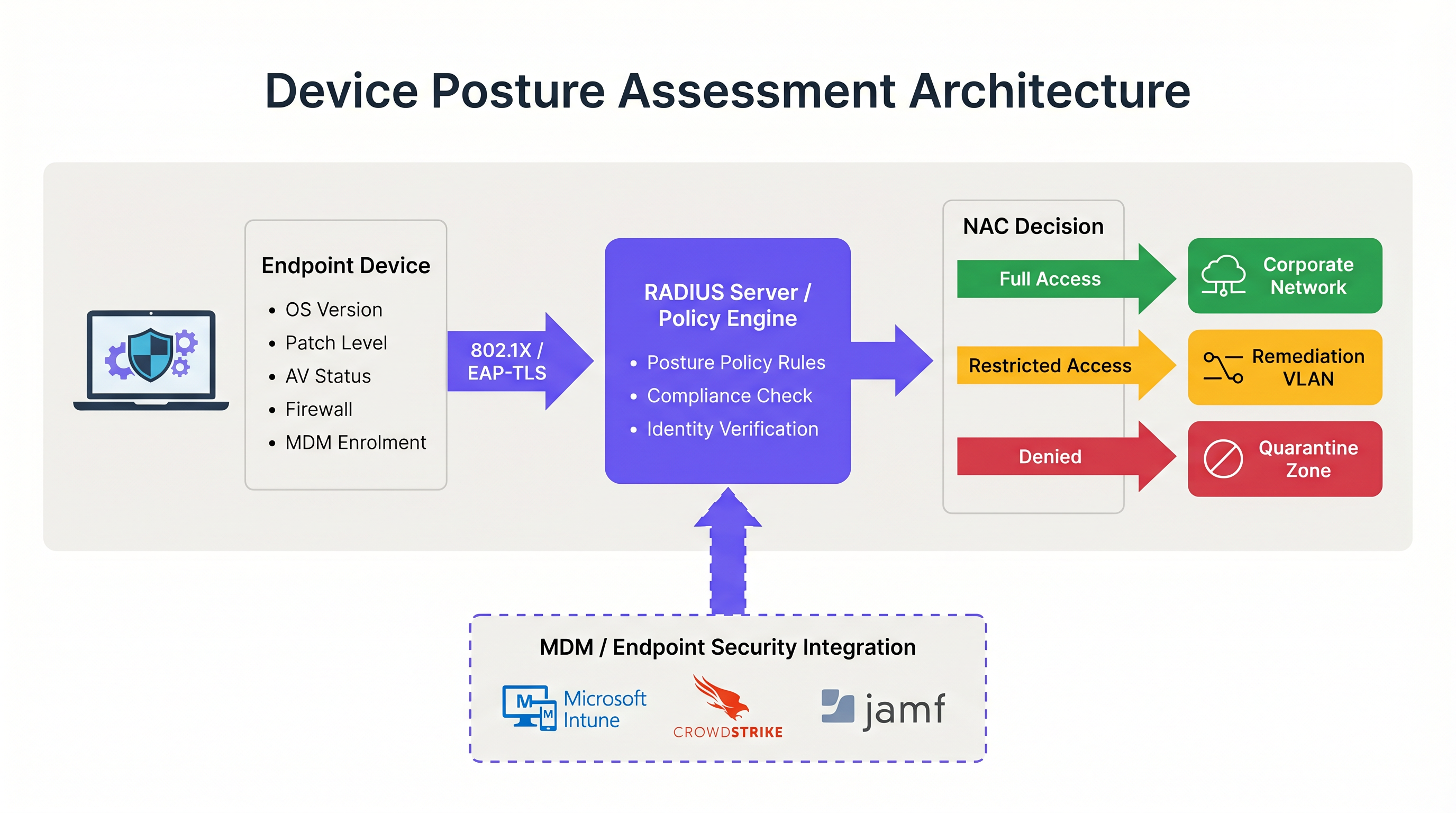
802.1X ऑथेंटिकेशनसह पोश्चर असेसमेंटचे इंटिग्रेशन हे आर्किटेक्चर कार्यान्वित करते. ही प्रक्रिया प्रामुख्याने RADIUS प्रोटोकॉलवर आणि विशेषतः RFC 5176 मध्ये परिभाषित केलेल्या Change of Authorization (CoA) मेकॅनिझमवर अवलंबून असते.
जेव्हा एखादे सप्लिकंट (डिव्हाइस) 802.1X कनेक्शन सुरू करते, तेव्हा ते ऑथेंटिकेटरला (वायरलेस ॲक्सेस पॉइंट किंवा स्विच) क्रेडेंशियल्स सादर करते. ऑथेंटिकेटर हे क्रेडेंशियल्स RADIUS सर्व्हरकडे पाठवतो. यशस्वी ओळख पडताळणीनंतर, RADIUS सर्व्हर Access-Accept मेसेज परत पाठवतो. तथापि, पोश्चर-अवेअर वातावरणात, ही सुरुवातीची स्वीकृती डिव्हाइसला एका मर्यादित स्थितीत ठेवते—बहुतेकदा समर्पित क्वारंटाइन किंवा पोश्चर VLAN मध्ये.
या मर्यादित VLAN मध्ये असताना, पोश्चर असेसमेंट केले जाते. पॉलिसी इंजिन कॉन्फिगर केलेल्या नियमावलीनुसार डिव्हाइसचे मूल्यमापन करते. जर डिव्हाइस यशस्वी झाले, तर पॉलिसी इंजिन ऑथेंटिकेटरला RADIUS CoA मेसेज जारी करते, ज्यामुळे डिव्हाइसला पोश्चर VLAN मधून योग्य प्रोडक्शन VLAN मध्ये हलवण्याच्या सूचना मिळतात. जर डिव्हाइस अयशस्वी झाले, तर ते मर्यादित VLAN मध्येच राहते किंवा रेमेडिएशन VLAN मध्ये हलवले जाते जिथे ते आवश्यक अपडेट सर्व्हरमध्ये प्रवेश करू शकते.
इष्टतम सुरक्षेसाठी, या फ्लोमध्ये EAP-TLS चा वापर केला पाहिजे. EAP-TLS सर्टिफिकेट-आधारित ऑथेंटिकेशन प्रदान करते, ज्यामुळे RADIUS सर्व्हरला पोश्चर चेक सुरू होण्यापूर्वीच डिव्हाइसची ओळख क्रिप्टोग्राफिक पद्धतीने पडताळता येते. हे सुनिश्चित करते की पोश्चर डेटा स्पुफ केलेल्या MAC ॲड्रेसऐवजी ज्ञात, विश्वसनीय एंडपॉइंटकडून येत आहे. डिव्हाइस ॲक्सेस सुरक्षित करण्याबद्दल अधिक माहितीसाठी, आमचे मार्गदर्शक 802.1X ऑथेंटिकेशन: आधुनिक डिव्हाइसेसवर नेटवर्क ॲक्सेस सुरक्षित करणे पहा.
अंमलबजावणी मार्गदर्शक: पोश्चर-आधारित ॲक्सेस तैनात करणे
थेट एंटरप्राइझ वातावरणात डिव्हाइस पोश्चर असेसमेंट तैनात करण्यासाठी व्यवसायाच्या कामकाजात व्यत्यय येऊ नये म्हणून सूक्ष्म नियोजनाची आवश्यकता असते. कॉर्पोरेट ऑफिसपासून हॉस्पिटॅलिटी वेन्यूजपर्यंतच्या वातावरणासाठी खालील टप्प्याटप्प्याने दृष्टिकोन शिफारसीय आहे.
टप्पा १: बेसलाइन व्हिजिबिलिटी (मॉनिटर मोड)
तैनातीमधील सर्वात महत्त्वाचा टप्पा म्हणजे बेसलाइन स्थापित करणे. पहिल्याच दिवशी ब्लॉकिंग किंवा रेमेडिएशन पॉलिसी कधीही सक्षम करू नका. त्याऐवजी, केवळ मॉनिटर मोडमध्ये पोश्चर चेक चालवण्यासाठी NAC सिस्टम कॉन्फिगर करा. या टप्प्यादरम्यान, सिस्टम डिव्हाइसेसचे मूल्यमापन करते आणि निकाल नोंदवते परंतु VLAN असाइनमेंट बदलत नाही किंवा ॲक्सेस मर्यादित करत नाही.
हा टप्पा किमान चार आठवडे चालवा. नॉन-कंप्लायंट डिव्हाइसेसची टक्केवारी, वारंवार अयशस्वी होणारे विशिष्ट गुणधर्म (उदा. जुने OS विरुद्ध अक्षम केलेले फायरवॉल) आणि विविध डिव्हाइस प्रकारांमधील बिघाडांचे वितरण ओळखण्यासाठी लॉगचे विश्लेषण करा. हा डेटा तुम्हाला तुमच्या पॉलिसी थ्रेशोल्ड कॅलिब्रेट करण्यास अनुमती देतो. उदाहरणार्थ, जर तुमच्या ४०% डिव्हाइसेस १४ दिवसांच्या पॅचची आवश्यकता पूर्ण करण्यात अयशस्वी ठरले, तर हेल्पडेस्कवर ताण येऊ नये म्हणून तुम्हाला सुरुवातीला थ्रेशोल्ड ३० दिवसांपर्यंत समायोजित करावा लागू शकतो.
टप्पा २: VLAN सेगमेंटेशन डिझाइन
पॉलिसी लागू करण्यापूर्वी, तुम्ही विविध पोश्चर स्थिती हाताळणारे नेटवर्क सेगमेंट्स डिझाइन केले पाहिजेत. एका मजबूत पोश्चर-आधारित नेटवर्क ॲक्सेस आर्किटेक्चरसाठी किमान तीन स्वतंत्र VLAN आवश्यक आहेत:
- प्रोडक्शन VLAN: अनुपालन करणाऱ्या, मॅनेज्ड डिव्हाइसेससाठी कॉर्पोरेट संसाधनांचा पूर्ण ॲक्सेस.
- रेमेडिएशन VLAN: मर्यादित ॲक्सेस जो केवळ अपडेट सर्व्हर (उदा. Windows Update, WSUS), MDM प्लॅटफॉर्म आणि NAC रेमेडिएशन पोर्टलसह कम्युनिकेशनला अनुमती देतो. अंतर्गत सबनेट्स किंवा सामान्य इंटरनेट ब्राउझिंगला ॲक्सेस नाही.
- गेस्ट/BYOD VLAN: अनमॅनेज्ड वैयक्तिक डिव्हाइसेससाठी सेगमेंटेड इंटरनेट-ओन्ली ॲक्सेस ज्यांचे पोश्चर-चेक केले जाऊ शकत नाही.
तुमचे वायरलेस ॲक्सेस पॉइंट्स आणि कोअर स्विचेस RADIUS ॲट्रिब्युट्सद्वारे डायनॅमिक VLAN असाइनमेंटला सपोर्ट करण्यासाठी कॉन्फिगर केलेले असल्याची खात्री करा. तुमच्या ॲक्सेस पॉइंट्सची भूमिका समजून घेणे येथे महत्त्वाचे आहे; अधिक माहितीसाठी, वायरलेस ॲक्सेस पॉइंट्सची व्याख्या: तुमचे अंतिम २०२६ मार्गदर्शक पहा.
टप्पा ३: पोश्चर रूल्ससेट परिभाषित करणे
तुमच्या मॉनिटर-मोड डेटा आणि अनुपालन आवश्यकतांवर आधारित एक व्यावहारिक नियमावली विकसित करा. मानक एंटरप्राइझ बेसलाइनमध्ये खालील गोष्टींचा समावेश होतो:
- ऑपरेटिंग सिस्टम: समर्थित व्हर्जन असणे आवश्यक आहे (उदा. Windows 10 22H2 किंवा नंतरचे, macOS 13 किंवा नंतरचे).
- पॅच लेव्हल: गेल्या ३० दिवसांत लागू केलेले महत्त्वपूर्ण सुरक्षा अपडेट्स.
- एंडपॉइंट प्रोटेक्शन: मान्यताप्राप्त अँटीव्हायरस/EDR एजंट स्थापित, चालू आणि गेल्या ७ दिवसांत सिग्नेचर अपडेट केलेले असणे.
- होस्ट फायरवॉल: सर्व नेटवर्क प्रोफाइलसाठी सक्षम.
- डिस्क एन्क्रिप्शन: सिस्टम ड्राइव्हसाठी BitLocker किंवा FileVault सक्षम.
टप्पा ४: रेमेडिएशन वर्कफ्लो लागू करणे
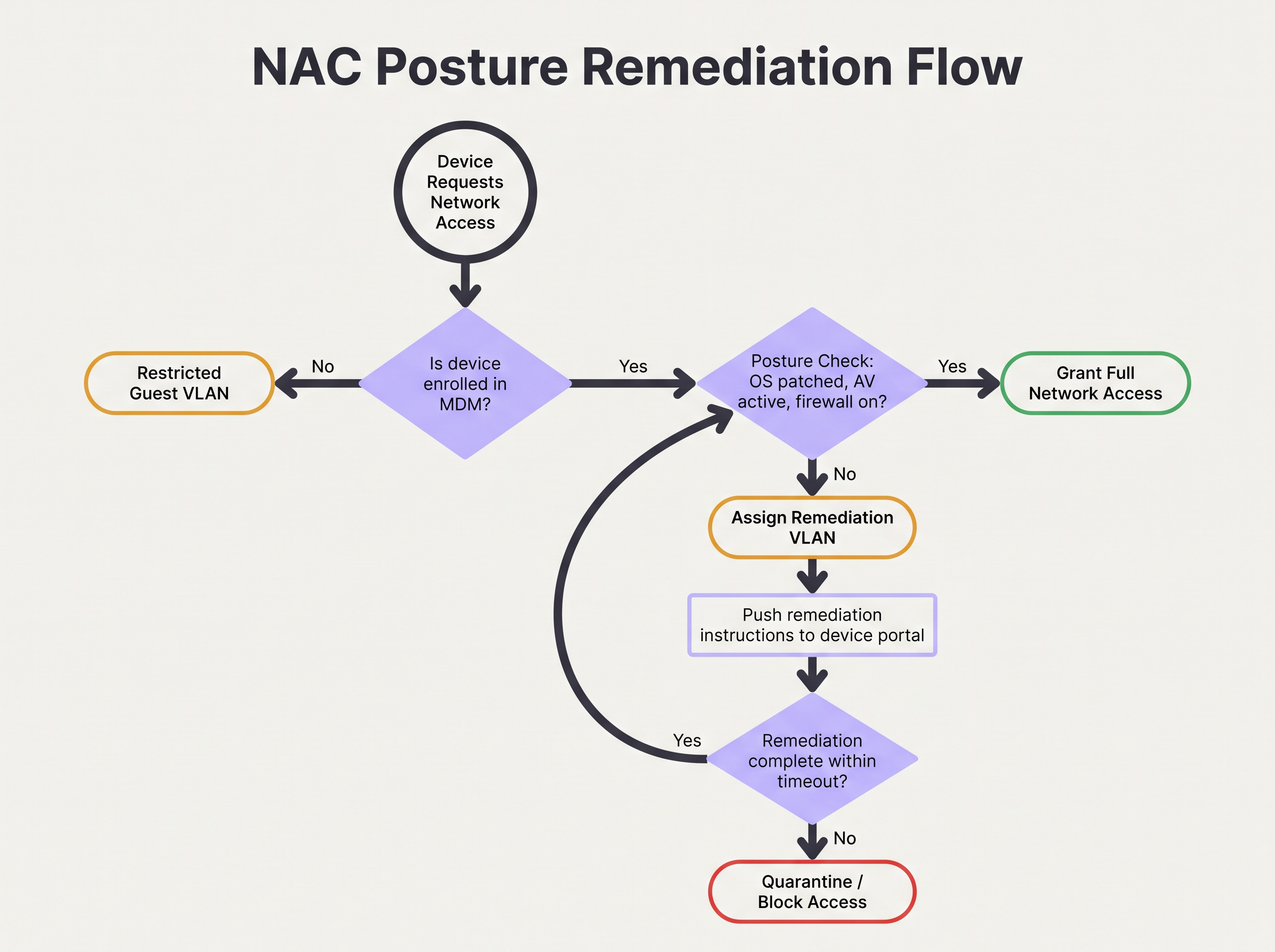
जेव्हा एखादे डिव्हाइस पोश्चर चेक मध्ये अयशस्वी होते, तेव्हा रेमेडिएशन वर्कफ्लो स्वयंचलित आणि वापरकर्त्यासाठी स्पष्ट असावा. डिव्हाइसला रेमेडिएशन VLAN मध्ये नियुक्त केले जाते आणि HTTP/HTTPS ट्रॅफिक Captive Portal कडे रिडायरेक्ट केले जावे. या पोर्टलने वापरकर्त्याला त्यांचे डिव्हाइस क्वारंटाइन का केले गेले आहे हे स्पष्टपणे कळवले पाहिजे (उदा. "तुमचा अँटीव्हायरस जुना आहे") आणि समस्या सोडवण्यासाठी कृती करण्यायोग्य पावले किंवा लिंक्स प्रदान केल्या पाहिजेत.
रेमेडिएशन टाइमआउट कॉन्फिगर करा. उदाहरणार्थ, एखाद्या डिव्हाइसला आवश्यक पॅच मिळवण्यासाठी रेमेडिएशन VLAN मध्ये २४ तास दिले जाऊ शकतात. जर डिव्हाइसने या कालावधीत अनुपालन साध्य केले नाही, तर IT हस्तक्षेपापर्यंत सर्व ॲक्सेस ब्लॉक करून त्याला कडक क्वारंटाइन VLAN मध्ये हलवले जावे.
जटिल वातावरणासाठी सर्वोत्तम पद्धती
रिटेल किंवा मोठ्या सार्वजनिक वेन्यूजसारख्या जटिल वातावरणात पोश्चर असेसमेंट लागू करणे अनन्य आव्हाने निर्माण करते, विशेषतः डिव्हाइस विविधता आणि स्केलच्या बाबतीत.
BYOD आणि IoT हाताळणे
ट्रान्सपोर्ट हब किंवा Guest WiFi ऑफर करणाऱ्या रिटेल स्पेससारख्या मोठ्या प्रमाणात अनमॅनेज्ड डिव्हाइसेस असलेल्या वातावरणात, प्रत्येक डिव्हाइसवर पोश्चर चेक लागू करणे कार्यान्वित करणे अशक्य आहे. ज्या डिव्हाइसेसचे असेसमेंट केले जाऊ शकत नाही त्यांच्यासाठी तुम्ही स्पष्ट धोरणे स्थापित केली पाहिजेत.
ऑथेंटिकेशन फ्लोमध्ये या डिव्हाइसेसचे लवकर वर्गीकरण करण्यासाठी MAC Authentication Bypass (MAB) किंवा आयडेंटिटी प्रोफाइलिंग वापरणे ही सर्वोत्तम पद्धत आहे. अनमॅनेज्ड BYOD डिव्हाइसेस स्वयंचलितपणे गेस्ट VLAN कडे वळवले जावेत. IoT डिव्हाइसेस (सेन्सर्स, डिस्प्ले) समर्पित, मायक्रो-सेगमेंटेड VLAN मध्ये कडक Access Control Lists (ACLs) सह ठेवले जावेत जे त्यांचे कम्युनिकेशन विशिष्ट कंट्रोलर्सपुरते मर्यादित ठेवतात. Purple चे प्लॅटफॉर्म या विविध डिव्हाइस प्रकारांना ओळखण्यात आणि व्यवस्थापित करण्यात मदत करू शकते; अधिक माहितीसाठी आमची Sensors वैशिष्ट्ये पहा.
हाय-डेन्सिटी वेन्यूसाठी ऑप्टिमाइझ करणे
स्टेडियम्ससारख्या हाय-डेन्सिटी वातावरणात, पोश्चर असेसमेंटमुळे निर्माण होणारी लॅटन्सी ऑथेंटिकेशन टाइमआउट आणि कनेक्शन बिघाड कारणीभूत ठरू शकते. एजंट-आधारित चेक कनेक्शन प्रक्रियेत काही सेकंद जोडू शकतात.
हे कमी करण्यासाठी, पोश्चर कॅशिंग लागू करा. ठराविक कालावधीसाठी (उदा. ४ ते ८ तास) डिव्हाइसची कंप्लायंट स्थिती कॅश करण्यासाठी NAC पॉलिसी इंजिन कॉन्फिगर करा. जेव्हा एखादे डिव्हाइस ॲक्सेस पॉइंट्स दरम्यान रोमिंग करते किंवा थोड्या वेळासाठी डिस्कनेक्ट होते, तेव्हा RADIUS सर्व्हर पूर्ण असेसमेंटचा भार टाळून त्वरित ॲक्सेस देण्यासाठी कॅश केलेल्या पोश्चर निकालाचा वापर करू शकतो. थ्रूपुट आणि सकारात्मक वापरकर्ता अनुभव राखण्यासाठी हे आवश्यक आहे. अंतर्निहित नेटवर्क आर्किटेक्चर देखील यात भूमिका बजावते; आधुनिक व्यवसायांसाठी मुख्य SD WAN फायदे मध्ये चर्चा केलेल्या फायद्यांचा विचार करा.
ट्रबलशूटिंग आणि जोखीम कमी करणे
काळजीपूर्वक नियोजन करूनही, पोश्चर-आधारित ॲक्सेस कंट्रोल अयशस्वी होऊ शकते. नेटवर्क उपलब्धता राखण्यासाठी सामान्य बिघाड मोड समजून घेणे महत्त्वपूर्ण आहे.
CoA बिघाड
सर्वात वारंवार येणारी तांत्रिक समस्या म्हणजे RADIUS Change of Authorization (CoA) मेसेजचा बिघाड. जर NAC सिस्टमने ठरवले की डिव्हाइस कंप्लायंट आहे परंतु ॲक्सेस पॉइंट CoA पॅकेट सोडून देतो किंवा त्याकडे दुर्लक्ष करतो, तर डिव्हाइस मर्यादित VLAN मध्येच अडकून राहते.
उपाय: सर्व नेटवर्क ॲक्सेस डिव्हाइसेसवर CoA स्पष्टपणे सक्षम असल्याची आणि RADIUS सर्व्हर विश्वसनीय CoA क्लायंट म्हणून कॉन्फिगर केल्याची खात्री करा. RADIUS सर्व्हर आणि ॲक्सेस पॉइंट्समधील फायरवॉल्सद्वारे UDP पोर्ट ३७९९ (मानक CoA पोर्ट) ब्लॉक केलेले नाही याची पडताळणी करा. तुमच्या RADIUS लॉगमध्ये CoA acknowledgement (ACK) दरांचे निरीक्षण करा.
MDM API रेट लिमिटिंग
एजंटलेस तैनातीमध्ये, ऑथेंटिकेट होणाऱ्या डिव्हाइसेसचा अचानक ओघ (उदा. सकाळी ९:०० वाजता येणारे कर्मचारी) NAC सिस्टमला MDM प्लॅटफॉर्मवर API विनंत्यांचा भडिमार करण्यास कारणीभूत ठरू शकतो. यामुळे API रेट लिमिटिंग ट्रिगर होऊ शकते, ज्यामुळे पोश्चर चेक अयशस्वी होतात किंवा टाइम आउट होतात.
उपाय: NAC प्लॅटफॉर्ममध्ये API विनंती बॅचिंग किंवा कॅशिंग लागू करा. जर MDM वेबहुक्सला सपोर्ट करत असेल, तर NAC सिस्टमने प्रत्येक ऑथेंटिकेशनवर MDM ला पोल करण्याऐवजी, MDM ला कंप्लायन्स स्थितीतील बदल प्रोॲक्टिव्हली NAC सिस्टमकडे ढकलण्यासाठी कॉन्फिगर करा.
ROI आणि व्यवसायावर होणारा परिणाम
डिव्हाइस पोश्चर असेसमेंट लागू करण्याचा व्यवसायावर होणारा परिणाम तात्काळ जोखीम कमी करण्यापलीकडे जातो. हे संस्थेची सुरक्षा स्थिती मूलभूतपणे बदलते आणि मोजता येण्याजोगा परतावा प्रदान करते.
जोखीम कमी करणे आणि अनुपालन
प्राथमिक ROI म्हणजे तडजोड केलेल्या एंडपॉइंट्सद्वारे होणारी लॅटरल मूव्हमेंट रोखणे. केवळ निरोगी डिव्हाइसेस कॉर्पोरेट नेटवर्कमध्ये प्रवेश करतात याची खात्री करून, संस्था रॅन्समवेअर प्रसाराची शक्यता लक्षणीयरीत्या कमी करतात. शिवाय, स्वयंचलित पोश्चर असेसमेंट PCI DSS, HIPAA आणि GDPR साठी ऑडिट आवश्यकता पूर्ण करण्यासाठी आवश्यक असलेले सतत मॉनिटरिंग प्रदान करते, ज्यामुळे मॅन्युअल कंप्लायन्स रिपोर्टिंगचा खर्च आणि प्रयत्न कमी होतात.
ऑपरेशनल कार्यक्षमता
सुरुवातीच्या तैनातीसाठी प्रयत्नांची आवश्यकता असली तरी, सुव्यवस्थित पोश्चर असेसमेंट सिस्टम IT वरील ऑपरेशनल भार कमी करते. स्वयंचलित रेमेडिएशन वर्कफ्लो वापरकर्त्यांना हेल्पडेस्क तिकिटे न काढता किरकोळ अनुपालन समस्या (जसे की जुन्या सिग्नेचर्स) सोडवण्यास सक्षम करतात. पोश्चर चेकना व्यापक नेटवर्क ॲनालिटिक्ससह—जसे की WiFi Analytics —एकात्मिक करून, IT टीम्सना त्यांच्या डिव्हाइस इस्टेटच्या आरोग्याबद्दल अभूतपूर्व व्हिजिबिलिटी मिळते, ज्यामुळे रिॲक्टिव्ह ऐवजी प्रोॲक्टिव्ह मॅनेजमेंट शक्य होते. त्यांचा एकूण नेटवर्क अनुभव अपग्रेड करू पाहणाऱ्या वेन्यूजसाठी, तुमच्या पाहुण्यांसाठी पात्र असलेली आधुनिक हॉस्पिटॅलिटी WiFi सोल्यूशन्स वरील आमची मते पहा.
महत्त्वाच्या संज्ञा आणि व्याख्या
Device Posture Assessment
The process of evaluating an endpoint's security and compliance state (e.g., OS version, patch level, antivirus status) before or during network authentication.
Crucial for Zero Trust architecture, ensuring that compromised or vulnerable devices cannot access sensitive network segments even if the user has valid credentials.
RADIUS CoA (Change of Authorization)
An extension to the RADIUS protocol (RFC 5176) that allows a RADIUS server to dynamically modify the authorization attributes of an active session, such as changing a device's VLAN.
The essential mechanism in posture assessment that moves a device from a quarantine/remediation VLAN to a production VLAN once the health check passes.
Remediation VLAN
A restricted network segment designed specifically for devices that fail posture checks. It provides limited access only to the resources needed to fix the compliance issue (e.g., update servers, MDM).
Used to isolate vulnerable devices while allowing them to self-correct without requiring manual IT intervention.
Agentless Posture Assessment
Evaluating device health without installing dedicated NAC software on the endpoint, typically by querying an MDM/UEM platform via API for the device's compliance record.
Preferred for corporate environments with robust MDM deployments as it reduces endpoint software bloat and simplifies management.
Dissolvable Agent
A temporary, lightweight application downloaded via a captive portal that performs a posture check and then removes itself from the device.
Commonly used in BYOD or guest environments where permanent agent installation is impossible or unacceptable to the user.
EAP-TLS (Extensible Authentication Protocol-Transport Layer Security)
An 802.1X authentication method that requires both the server and the client (device) to present valid digital certificates for mutual authentication.
The most secure foundation for posture assessment, as it cryptographically proves the device identity before health checks are evaluated.
Posture Caching
Storing the result of a successful posture check for a defined period so that subsequent authentications (e.g., roaming between APs) do not require a full re-evaluation.
Vital for maintaining network performance and reducing latency in high-density environments like stadiums or large offices.
Zero Trust Network Access (ZTNA)
A security framework requiring all users and devices, whether inside or outside the organization's network, to be authenticated, authorized, and continuously validated before being granted access.
Device posture assessment is a foundational pillar of ZTNA, providing the 'continuous validation' of the device state.
केस स्टडीज
A 500-user corporate office is implementing device posture assessment. They currently use 802.1X (PEAP-MSCHAPv2) for all corporate laptops. They want to ensure no laptop connects unless its CrowdStrike Falcon agent is running and Windows is fully patched. How should they design the integration and remediation flow?
- Architecture Selection: Since all laptops are corporate-managed, an agentless approach via MDM integration (e.g., Intune) is recommended to avoid deploying a separate NAC agent. The NAC policy engine will query Intune for compliance status.
- VLAN Design: Create three VLANs: VLAN 10 (Corporate Production), VLAN 20 (Remediation), VLAN 30 (Guest).
- Policy Configuration: Configure Intune compliance policies to require CrowdStrike running and Windows updates within 30 days. Configure the NAC policy engine to map Intune 'Compliant' status to VLAN 10, and 'Non-Compliant' to VLAN 20.
- Authentication Flow: When a laptop authenticates via PEAP, the RADIUS server places it in VLAN 20 and queries Intune. If Intune returns 'Compliant', the RADIUS server sends a CoA message to the access point to switch the port/session to VLAN 10.
- Remediation: If Intune returns 'Non-Compliant', the laptop remains in VLAN 20. DHCP provides an IP, and DNS/firewall rules redirect HTTP traffic to a portal explaining the failure and allowing access only to CrowdStrike and Windows Update servers.
A large university campus wants to implement posture checks, but 80% of the devices are student BYOD laptops and phones. They cannot force MDM enrolment on these devices. How should they approach posture assessment?
- Architecture Selection: A hybrid approach is necessary. Use agentless/MDM checks for staff/faculty corporate devices, and a captive portal with a dissolvable agent or network-based assessment for student BYOD.
- BYOD Flow: Students connect to the 'Student-WiFi' SSID. They authenticate via a captive portal using university credentials.
- Dissolvable Agent: Upon login, the portal prompts the user to run a lightweight, temporary applet (dissolvable agent) that checks basic posture (e.g., minimum OS version, active firewall) without requiring admin rights or permanent installation.
- Enforcement: If the dissolvable agent reports a pass, the device is granted access to the student VLAN. If it fails, the portal displays instructions on how to update their OS.
- Alternative (Network-based): If dissolvable agents cause too much friction, use passive network profiling (DHCP fingerprinting, HTTP user-agent parsing) to detect grossly outdated OS versions and block them, accepting a lower level of assurance for BYOD.
परिस्थिती विश्लेषण
Q1. Your organisation is rolling out posture assessment for 2,000 corporate laptops. You have configured the policy to require Windows 11 and an active EDR agent. On Monday morning, you plan to enable the policy in enforcement mode. What critical step have you missed?
💡 संकेत:Consider the impact on the helpdesk if your assumptions about the fleet's health are wrong.
शिफारस केलेला दृष्टिकोन दाखवा
You have missed the 'Monitor Mode' phase. Before enforcing a blocking policy, the system must run in monitor-only mode for several weeks to establish a baseline of compliance. Enabling enforcement on day one without this data will likely result in a massive spike in helpdesk tickets from users who unexpectedly fail the posture check.
Q2. A device successfully authenticates via 802.1X and passes the MDM posture check. The RADIUS server logs show an Access-Accept and a successful posture evaluation, but the user reports they still cannot access the internet or corporate resources. What is the most likely point of failure in the architecture?
💡 संकेत:Think about how the network access device (the AP or switch) is instructed to change the user's access level after the posture check completes.
शिफारस केलेला दृष्टिकोन दाखवा
The most likely failure is the RADIUS Change of Authorization (CoA). The device was likely placed in a restricted posture VLAN initially. Even though the posture check passed on the server side, if the CoA message was dropped, blocked by a firewall, or not processed by the access point, the device will remain stuck in the restricted VLAN.
Q3. You manage the WiFi for a retail chain. Corporate devices are managed via Intune, but store managers often connect personal iPads to the staff network. You want to implement posture checks for corporate devices. How should you handle the personal iPads?
💡 संकेत:Consider whether you can perform agentless or agent-based checks on devices you don't own.
शिफारस केलेला दृष्टिकोन दाखवा
You cannot reliably perform deep posture checks on unmanaged personal devices without causing significant user friction. The best approach is to use identity profiling or MAB to identify the personal iPads and automatically route them to a segmented Guest or BYOD VLAN with internet-only access, bypassing the strict posture requirements applied to the corporate devices.
महत्त्वाचे निष्कर्ष
- ✓Device posture assessment evaluates endpoint health (OS, patches, AV) before granting network access, moving beyond simple identity verification.
- ✓It is a foundational element of Zero Trust architecture, preventing vulnerable devices from moving laterally on the network.
- ✓Architectures include agent-based (deepest visibility), agentless via MDM integration (best for corporate fleets), and network-based profiling.
- ✓The process relies heavily on RADIUS Change of Authorization (CoA) to dynamically move devices between Posture, Remediation, and Production VLANs.
- ✓Always deploy posture policies in monitor-only mode for several weeks to establish a baseline before enforcing blocking rules.
- ✓Robust remediation workflows are essential to allow users to self-correct compliance issues without overwhelming the IT helpdesk.
- ✓For BYOD and high-density environments, utilize posture caching and explicit routing to guest VLANs to minimize user friction and latency.




