

अखंड कनेक्टिव्हिटीचे भविष्य: Passpoint आणि OpenRoaming स्पष्टीकरण
हे तांत्रिक संदर्भ मार्गदर्शक IT नेत्यांना पारंपारिक Captive Portal कडून Passpoint आणि OpenRoaming कडे जाण्यासाठी कृतीयोग्य अंतर्दृष्टी प्रदान करते. यामध्ये IEEE 802.11u आणि WPA3 मानके, सुरक्षित प्रमाणीकरण प्रवाह आणि एंटरप्राइझ स्थळांमध्ये अखंड कनेक्टिव्हिटी सुधारण्यासाठी, सुरक्षा वाढवण्यासाठी आणि मोजता येण्याजोगा ROI मिळवण्यासाठी वास्तविक-जगातील उपयोजन धोरणांचा तपशील दिला आहे.
🎧 हे मार्गदर्शक ऐका
ट्रान्सक्रिप्ट पहा

कार्यकारी सारांश
गेल्या दशकापासून, अतिथी WiFi हे Captive Portal वर अवलंबून आहे—हे एक अडथळ्यांनी भरलेले मॉडेल आहे जे वापरकर्त्यांना निराश करते, ब्रँड अनुभवाचा दर्जा खालावते आणि महत्त्वपूर्ण सुरक्षा त्रुटी निर्माण करते. हॉस्पिटॅलिटी , रिटेल आणि सार्वजनिक क्षेत्रातील स्थळे WiFi Analytics आणि स्थान-आधारित सेवांना चालना देण्यासाठी उच्च अटॅच रेटची मागणी करत असल्याने, उद्योग आता अखंड, सेल्युलर-सारख्या कनेक्टिव्हिटीकडे वळत आहे.
Passpoint (Hotspot 2.0) आणि OpenRoaming हे एंटरप्राइझ वायरलेस ॲक्सेसचे निश्चित भविष्य दर्शवतात. IEEE 802.11u मानकावर आधारित आणि Wireless Broadband Alliance (WBA) द्वारे व्यवस्थापित, ही इकोसिस्टम झिरो-टच, सुरक्षित (WPA3) प्रमाणीकरण सक्षम करते. ओळख प्रदात्यांना (जसे की Apple, Google आणि मोबाईल कॅरियर्स) ॲक्सेस नेटवर्कसह एकत्रित करून, स्थळे मॅन्युअल SSID निवड किंवा स्प्लॅश पेजेसशिवाय अतिथींना स्वयंचलितपणे ऑनबोर्ड करू शकतात. हे मार्गदर्शक IT व्यवस्थापक आणि नेटवर्क आर्किटेक्ट्सना Passpoint आणि OpenRoaming चे मूल्यमापन, डिझाइन आणि उपयोजन करण्यासाठी एक व्यावहारिक, व्हेंडर-न्यूट्रल रोडमॅप प्रदान करते, ज्यामुळे अतिथी WiFi चे रूपांतर एका खर्चाच्या केंद्रातून सुरक्षित, डेटा-समृद्ध मालमत्तेमध्ये होते.
तांत्रिक सखोल माहिती
Passpoint आणि OpenRoaming आर्किटेक्चर
हा बदल समजून घेण्यासाठी, आपण मूळ तंत्रज्ञान आणि त्याचे प्रमाण वाढवणारे फेडरेशन यातील फरक ओळखला पाहिजे.
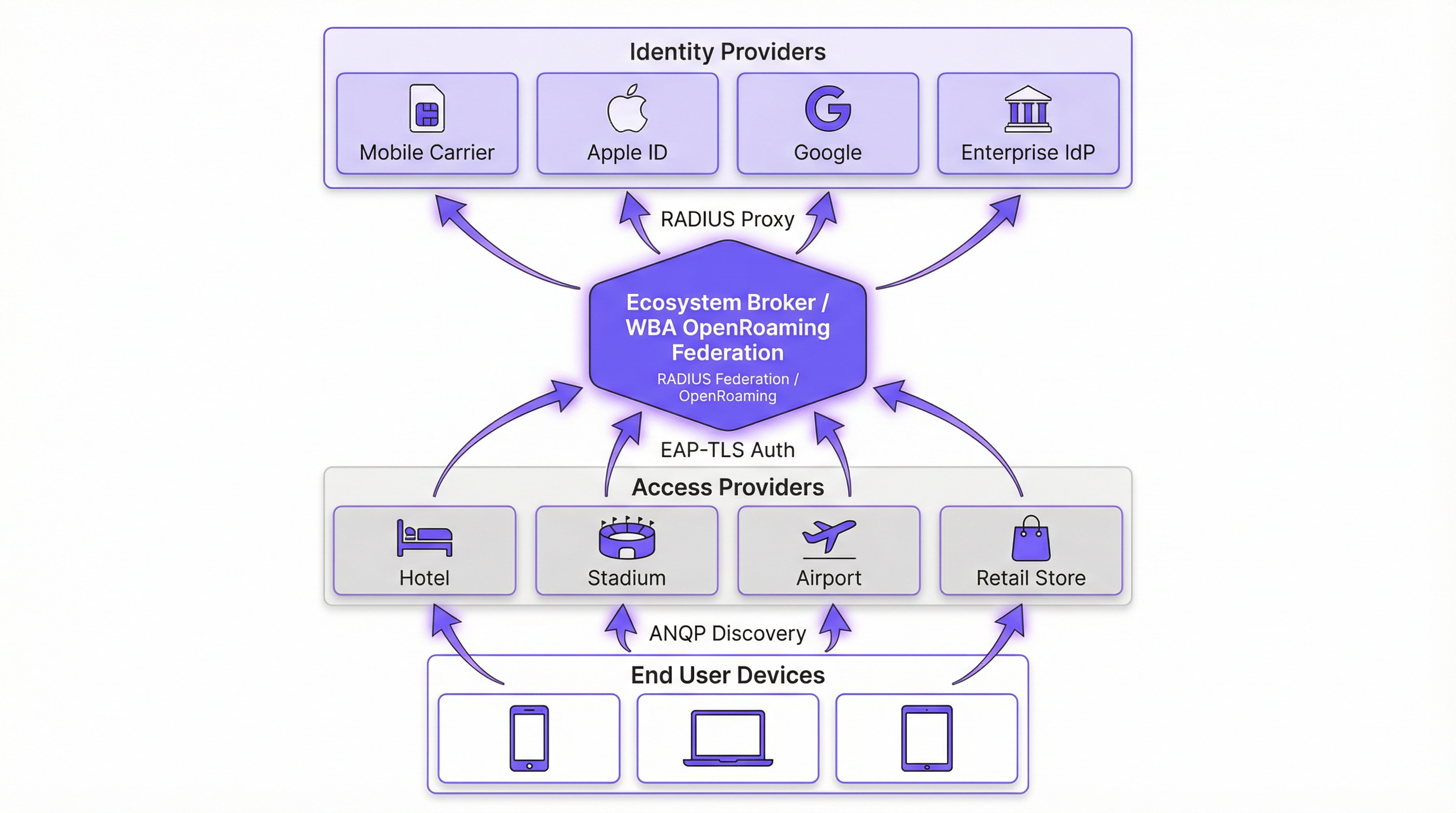
Passpoint (Hotspot 2.0) हे IEEE 802.11u मानकावर आधारित Wi-Fi Alliance प्रमाणपत्र आहे. हे उपकरणांसाठी नेटवर्क शोधण्याची आणि स्वयंचलितपणे प्रमाणीकृत करण्याची यंत्रणा परिभाषित करते. याचा मुख्य प्रोटोकॉल Access Network Query Protocol (ANQP) आहे, जो क्लायंट उपकरणाला असोसिएशनपूर्वी Access Point (AP) ची चौकशी करण्याची परवानगी देतो. उपकरण AP च्या जाहिरात केलेल्या Roaming Consortium Organizationally Unique Identifiers (OUIs) ची त्याच्या स्थानिक पातळीवर प्रदान केलेल्या प्रोफाइलशी तुलना करते. जुळणी आढळल्यास, उपकरण Extensible Authentication Protocol (EAP) कनेक्शन (सहसा EAP-TLS किंवा EAP-TTLS) सुरू करते.
OpenRoaming हे Passpoint वर तयार केलेले जागतिक फेडरेशन आहे. Passpoint स्थानिक उपकरण-ते-AP संवाद हाताळत असताना, OpenRoaming RADIUS प्रॉक्सी इन्फ्रास्ट्रक्चर प्रदान करते जे लाखो AP ला हजारो ओळख प्रदात्यांशी (IdPs) जोडते. यामुळे स्थळांना वैयक्तिक रोमिंग करारांची वाटाघाटी करण्याची किंवा बाह्य अतिथींसाठी जटिल Public Key Infrastructure (PKI) व्यवस्थापित करण्याची आवश्यकता उरत नाही.
सुरक्षा पॅराडाइम शिफ्ट
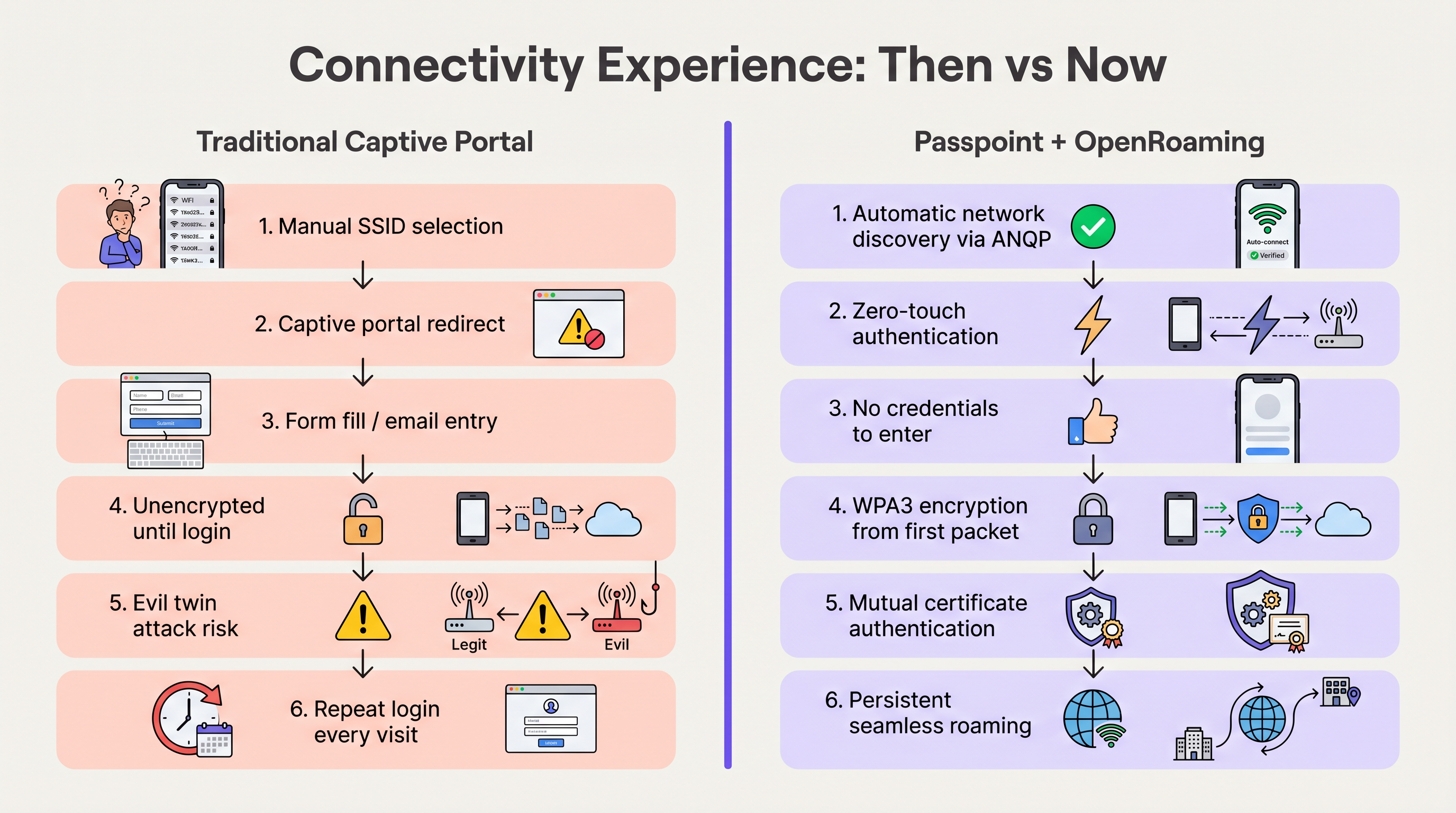
Captive Portal असलेली पारंपारिक खुली नेटवर्क्स वापरकर्त्याने लॉगिन प्रक्रिया पूर्ण करेपर्यंत डेटा अनएनक्रिप्टेड स्वरूपात प्रसारित करतात. हे वापरकर्त्यांना "evil twin" हल्ल्यांच्या धोक्यात आणते, जिथे दुर्भावनायुक्त घटक क्रेडेंशियल मिळवण्यासाठी स्थळाच्या SSID ची नक्कल करतात.
Passpoint मूलभूतपणे हे जोखीम प्रोफाइल बदलते. प्रमाणीकरण 802.1X द्वारे होत असल्याने, कनेक्शन पहिल्या पॅकेटपासूनच WPA2-Enterprise किंवा WPA3-Enterprise एनक्रिप्शनसह सुरक्षित केले जाते. शिवाय, EAP-TLS मधील परस्पर प्रमाणीकरणामुळे उपकरण कोणतेही क्रेडेंशियल पाठवण्यापूर्वी नेटवर्कच्या प्रमाणपत्राची पडताळणी करते, ज्यामुळे evil twin त्रुटी प्रभावीपणे नष्ट होतात. नेटवर्क ॲक्सेस कंट्रोलसाठी डिव्हाइस पोश्चर असेसमेंट वरील आमच्या मार्गदर्शकामध्ये तपशीलवार सांगितल्याप्रमाणे, उपकरणाचा विश्वास प्रस्थापित करणे सर्वोपरि आहे आणि Passpoint हे काठावर (edge) लागू करते.
अंमलबजावणी मार्गदर्शक
OpenRoaming उपयोजित करण्यासाठी तुमच्या Wireless LAN Controller (WLC), तुमचे RADIUS इन्फ्रास्ट्रक्चर आणि WBA फेडरेशन यांच्यात समन्वयाची आवश्यकता असते. खालील व्हेंडर-न्यूट्रल पायऱ्या मानक एंटरप्राइझ उपयोजनाची रूपरेषा दर्शवतात.
टप्पा १: इन्फ्रास्ट्रक्चर सज्जता मूल्यांकन
कॉन्फिगरेशन करण्यापूर्वी, तुमचे विद्यमान हार्डवेअर आवश्यक मानकांना समर्थन देते की नाही याची पडताळणी करा. गेल्या पाच वर्षांत रिलीज झालेले बहुतेक एंटरप्राइझ AP (उदा. Cisco, Aruba, Ruckus) मूळतः 802.11u आणि Passpoint ला समर्थन देतात. तुमचे WLC फर्मवेअर WPA3 आणि Protected Management Frames (PMF) ला समर्थन देण्यासाठी अपडेट केले असल्याची खात्री करा, जे Passpoint Release 3 साठी अनिवार्य आहेत.
टप्पा २: RADIUS आणि फेडरेशन एकत्रीकरण
तुमच्या स्थानिक नेटवर्कला OpenRoaming फेडरेशनशी जोडणे हा महत्त्वाचा एकत्रीकरण बिंदू आहे. हे सुरक्षित RADIUS प्रॉक्सी कनेक्शन स्थापित करून साध्य केले जाते.
- क्लाउड RADIUS प्रदाता निवडा: प्रमाणित OpenRoaming इकोसिस्टम ब्रोकर (उदा. IronWiFi, Cisco Spaces) असलेला प्रदाता निवडा.
- RadSec टनेल स्थापित करा: RadSec (RADIUS over TLS) वापरून क्लाउड RADIUS सर्व्हरकडे प्रमाणीकरण विनंत्या फॉरवर्ड करण्यासाठी तुमचे WLC कॉन्फिगर करा. हे इंटरनेटवर प्रमाणीकरण ट्रॅफिक सुरक्षित करते. तपशीलवार कॉन्फिगरेशनसाठी, RadSec : TLS सह RADIUS प्रमाणीकरण ट्रॅफिक सुरक्षित करणे पहा.
- Realm Routing कॉन्फिगर करा: OpenRoaming डोमेनशी (उदा.
apple.openroaming.net) जुळणाऱ्या विनंत्या WBA फेडरेशनकडे फॉरवर्ड करण्यासाठी RADIUS सर्व्हरवर राउटिंग नियम सेट करा.
टप्पा ३: WLAN कॉन्फिगरेशन
आवश्यक ANQP घटक प्रसारित करण्यासाठी तुमच्या WLC वर विशिष्ट SSID कॉन्फिगर करा.
- 802.11u सक्षम करा: लक्ष्यित WLAN साठी Hotspot 2.0/Passpoint वैशिष्ट्ये चालू करा.
- Roaming Consortium OUIs परिभाषित करा: AP च्या बीकनमध्ये WBA द्वारे प्रदान केलेले विशिष्ट OUIs (उदा. OpenRoaming-Settlement-Free साठी
5A-03-BA) जोडा. - सुरक्षा कॉन्फिगर करा: 802.1X प्रमाणीकरणासह लेयर २ सुरक्षा WPA2/WPA3-Enterprise वर सेट करा.
टप्पा ४: वापरकर्ता ऑनबोर्डिंग धोरण
फेडरेटेड वापरकर्ते (उदा. Apple किंवा Google प्रोफाइल असलेले) स्वयंचलितपणे कनेक्ट होतील, परंतु ज्या वापरकर्त्यांकडे आधीपासून प्रोफाइल नाहीत त्यांच्यासाठी तुम्ही नियोजन केले पाहिजे. ऑनलाइन साइन-अप (OSU) सर्व्हर लागू करा किंवा तुमच्या स्थळाच्या मोबाईल ॲपमध्ये प्रोफाइल प्रोव्हिजनिंग समाकलित करा. हे वापरकर्त्यांना त्यांच्या पहिल्या भेटीदरम्यान Passpoint प्रोफाइल डाउनलोड करण्याची परवानगी देते, ज्यामुळे पुढील सर्व भेटींसाठी अखंड कनेक्टिव्हिटी सुनिश्चित होते.
सर्वोत्तम पद्धती
- संक्रमण काळात हायब्रिड दृष्टिकोन ठेवा: तुमचे जुने Captive Portal त्वरित अक्षम करू नका. जुन्या उपकरणांना आणि प्रोफाइल नसलेल्या वापरकर्त्यांना सामावून घेण्यासाठी तुमच्या खुल्या Guest WiFi नेटवर्कसह Passpoint-सक्षम SSID समांतर चालवा. उघडे नेटवर्क सुरक्षितपणे कधी बंद करायचे हे ठरवण्यासाठी अटॅच रेटचे निरीक्षण करा.
- RadSec ला प्राधान्य द्या: इंटरनेटवर RADIUS ट्रॅफिक कधीही अनएनक्रिप्टेड पाठवू नका. तुमचे WLC आणि क्लाउड RADIUS प्रदाता यांच्यातील संवाद सुरक्षित करण्यासाठी नेहमी RadSec वापरा.
- ॲप एकत्रीकरणाचा लाभ घ्या: हॉस्पिटॅलिटी आणि रिटेल स्थळांसाठी, तुमच्या ब्रँडच्या लॉयल्टी ॲपमध्ये Passpoint प्रोफाइल प्रोव्हिजनिंग एम्बेड करा. हे वापरकर्त्याचे सुरक्षितपणे प्रमाणीकरण झाल्याची खात्री देते आणि नेटवर्क उपस्थिती थेट त्यांच्या ग्राहक प्रोफाइलशी जोडते.
- प्रमाणपत्र कालबाह्यतेचे निरीक्षण करा: Passpoint प्रामुख्याने PKI वर अवलंबून असते. अचानक प्रमाणीकरण अपयश टाळण्यासाठी सर्व RADIUS आणि वेब सर्व्हर प्रमाणपत्रांसाठी स्वयम्मतित मॉनिटरिंग आणि अलर्टिंग लागू करा.
समस्या निवारण आणि जोखीम कमी करणे
Passpoint उपयोजित करताना, IT टीम्सना सहसा विशिष्ट बिघाड मोडचा सामना करावा लागतो. सुरळीत रोलआउटसाठी या जोखमी समजून घेणे महत्त्वाचे आहे.
- ANQP टाइमआउट समस्या: जर AP ओव्हरलोड झाले असतील किंवा कंट्रोलर सुस्त असेल, तर ANQP प्रतिसाद टाइमआउट होऊ शकतात, ज्यामुळे उपकरणांना नेटवर्क शोधण्यापासून रोखले जाते. निवारण: AP पुरेसे प्रोव्हिजन केलेले असल्याची खात्री करा आणि कंट्रोल प्लेन CPU वापराचे निरीक्षण करा. उच्च-घनता असलेल्या वातावरणासाठी, बीकन इंटरव्हल ऑप्टिमाइझ करण्याचा विचार करा.
- प्रमाणपत्र ट्रस्ट अपयश: जर क्लायंट उपकरण RADIUS सर्व्हरच्या प्रमाणपत्रावर स्वाक्षरी करणाऱ्या Root CA वर विश्वास ठेवत नसेल, तर EAP-TLS हँडशेक शांतपणे अयशस्वी होईल. निवारण: सार्वजनिक-मुखी RADIUS सर्व्हरसाठी नेहमी व्यापकपणे मान्यताप्राप्त सार्वजनिक प्रमाणपत्र प्राधिकरणांनी (उदा. DigiCert, Let's Encrypt) जारी केलेली प्रमाणपत्रे वापरा. अतिथी प्रवेशासाठी स्व-स्वाक्षरी केलेली प्रमाणपत्रे टाळा.
- RadSec कनेक्टिव्हिटी ड्रॉप्स: फायरवॉल किंवा इंटरमीडिएट राउटिंग समस्या RadSec साठी आवश्यक TCP कनेक्शन तोडू शकतात. निवारण: RadSec टनेल स्थितीवर मजबूत मॉनिटरिंग लागू करा आणि फेलओव्हरसाठी दुय्यम RADIUS सर्व्हर कॉन्फिगर करा.
ROI आणि व्यवसायावर होणारा परिणाम
Passpoint आणि OpenRoaming कडे संक्रमण हे केवळ IT अपग्रेड नाही; ते एक धोरणात्मक व्यवसाय सक्षमकर्ता आहे. Captive Portal चे अडथळे दूर करून, स्थळांना मुख्य मेट्रिक्समध्ये त्वरित सुधारणा दिसून येते.
- वाढलेले अटॅच रेट: स्थळांना सामान्यतः नेटवर्कशी कनेक्ट होणाऱ्या उपकरणांच्या संख्येत ४०-६०% वाढ दिसून येते. हे थेट WiFi Analytics आणि सेन्सर्स साठी सॅम्पल साइज वाढवते, ज्यामुळे अधिक अचूक फूटफॉल आणि ड्वेल टाइम डेटा मिळतो.
- वर्धित ग्राहक सहभाग: रिटेल आणि हॉस्पिटॅलिटीमध्ये, अखंड कनेक्टिव्हिटी स्थळांना अतिथी दारातून आत येताच त्यांच्या ॲप्सद्वारे स्थान-आधारित सूचना ट्रिगर करण्यास अनुमती देते, ज्यामुळे त्वरित सहभाग वाढतो.
- कमी झालेला सपोर्ट ओव्हरहेड: Captive Portal काढून टाकल्याने लॉगिन अपयश, ब्राउझर रीडायरेक्ट आणि विसरलेले पासवर्ड याशी संबंधित हेल्पडेस्क तिकिटे मोठ्या प्रमाणात कमी होतात, ज्यामुळे IT संसाधने मोकळी होतात.
- डेटा मॉनिटायझेशन: वेफाइंडिंग आणि लॉयल्टी प्लॅटफॉर्मसह समाकलित करून, स्थळे भौतिक उपस्थितीचा खरेदी वर्तनाशी संबंध जोडू शकतात, ज्यामुळे नेटवर्क गुंतवणुकीचे समर्थन करणारी कृतीयोग्य अंतर्दृष्टी मिळते.
या विषयावरील आमच्या सर्वसमावेशक ब्रीफिंगला ऐका:
महत्त्वाच्या संज्ञा आणि व्याख्या
Passpoint (Hotspot 2.0)
A Wi-Fi Alliance certification based on the IEEE 802.11u standard that enables devices to automatically discover and securely connect to Wi-Fi networks without user intervention.
IT teams deploy Passpoint to replace legacy captive portals, providing a cellular-like roaming experience for enterprise and guest WiFi.
OpenRoaming
A global roaming federation managed by the Wireless Broadband Alliance (WBA) that connects Identity Providers (IdPs) with Access Networks using Passpoint technology.
Venues join OpenRoaming to allow guests to authenticate using existing credentials (e.g., Apple ID, Google, Carrier SIM) without managing local accounts.
ANQP (Access Network Query Protocol)
A Layer 2 protocol defined in 802.11u that allows a client device to request information from an Access Point (such as supported roaming partners) before associating with the network.
ANQP is the mechanism that allows a smartphone to 'know' if it can connect to a Passpoint network silently in the background.
RadSec (RADIUS over TLS)
A protocol that secures RADIUS authentication traffic by wrapping it in a TLS tunnel, typically using TCP port 2083.
Essential for OpenRoaming deployments to ensure that authentication requests sent from the venue to the cloud RADIUS provider cannot be intercepted.
OUI (Organizationally Unique Identifier)
A 24-bit number that uniquely identifies a vendor, manufacturer, or organization, used in Passpoint to identify supported roaming consortiums.
Network admins configure specific OUIs on their WLCs to broadcast which identity providers or federations (like OpenRoaming) are supported at the venue.
EAP-TLS (Extensible Authentication Protocol - Transport Layer Security)
A highly secure authentication framework that requires mutual certificate-based authentication between the client and the server.
The gold standard for Passpoint authentication, ensuring that both the user's device and the venue's network verify each other's identities before connecting.
OSU (Online Sign-Up)
A standardized mechanism in Passpoint Release 2 and later that allows a device to securely obtain network credentials and a profile from a provisioning server.
Used to onboard new guests who do not already have a Passpoint profile installed on their device.
Evil Twin Attack
A wireless attack where a malicious actor sets up a rogue Access Point broadcasting the same SSID as a legitimate network to intercept user traffic and credentials.
Passpoint eliminates this risk by requiring the network to present a valid certificate (mutual authentication) before the device will connect.
केस स्टडीज
A global hotel chain with 200 properties wants to improve guest connectivity and increase the adoption of its loyalty app. Guests currently complain about having to log in to the captive portal every day of their stay, and attach rates are low.
The hotel deploys Passpoint across all properties. Instead of a captive portal, they integrate Passpoint profile provisioning into their loyalty app. When a guest downloads the app and logs in, a Passpoint profile is silently installed on their device. The APs are configured to broadcast the hotel's specific Roaming Consortium OUI. The WLC uses RadSec to forward authentication requests to a cloud RADIUS provider. When the guest arrives at any property globally, their device detects the OUI, authenticates via EAP-TLS using the profile, and connects instantly with WPA3 encryption.
A large conference centre needs to provide secure WiFi for 10,000 attendees. Managing temporary credentials for a 3-day event via a captive portal is operationally heavy and insecure.
The venue implements OpenRoaming. They configure their WLC to broadcast the WBA OpenRoaming OUIs and establish a RadSec connection to an OpenRoaming Ecosystem Broker. Attendees arriving at the venue who already have an OpenRoaming profile (e.g., via their mobile carrier or a previous venue) connect automatically. For attendees without a profile, the venue provides QR codes around the concourse that direct users to an Online Sign-Up (OSU) server to download a temporary event profile.
परिस्थिती विश्लेषण
Q1. You are the IT Director for a retail chain. Marketing wants to track repeat customer visits accurately using WiFi analytics, but the current open guest network with a captive portal has a 15% attach rate. Customers complain the login takes too long. How do you redesign the network access strategy to meet Marketing's goals while improving the customer experience?
💡 संकेत:Consider how you can tie network authentication to an asset the customer already values, removing the friction of the captive portal entirely.
शिफारस केलेला दृष्टिकोन दाखवा
Implement Passpoint and integrate the profile provisioning into the retailer's existing mobile loyalty app. When customers download or update the app, the Passpoint profile is silently installed. Upon entering any store, their device authenticates automatically via EAP-TLS. This removes the captive portal friction, dramatically increases the attach rate (providing Marketing with accurate repeat visit data), and secures the connection with WPA3.
Q2. During a pilot deployment of OpenRoaming at a stadium, the network team notices that while authentication requests are reaching the local WLC, they are failing to reach the cloud RADIUS provider. The firewall team confirms that standard RADIUS ports (UDP 1812/1813) are open outbound. What is the most likely cause of the failure?
💡 संकेत:OpenRoaming Ecosystem Brokers mandate secure communication for authentication traffic over the internet.
शिफारस केलेला दृष्टिकोन दाखवा
The WLC is likely attempting to send standard, unencrypted RADIUS traffic, but OpenRoaming deployments require RadSec (RADIUS over TLS) for communication with the cloud broker. The firewall team needs to ensure that TCP port 2083 (the standard port for RadSec) is open outbound, and the WLC must be configured to establish the TLS tunnel using the correct certificates.
Q3. A hospital wants to deploy Passpoint to provide seamless roaming for doctors moving between the main campus and satellite clinics. However, the Information Security Officer (ISO) is concerned about 'evil twin' attacks where a malicious actor might spoof the hospital's SSID at a nearby coffee shop to steal credentials. How does Passpoint address this specific concern?
💡 संकेत:Focus on the specific EAP methods used in Passpoint and how the client device verifies the network before transmitting data.
शिफारस केलेला दृष्टिकोन दाखवा
Passpoint mitigates the evil twin risk through mutual authentication, typically using EAP-TLS or EAP-TTLS. Before the doctor's device sends any authentication credentials, the AP (via the RADIUS server) must present a valid digital certificate. The device verifies this certificate against its trusted Root CAs. If a malicious actor spoofs the SSID, they will not possess the valid private key/certificate for the hospital's RADIUS server, and the device will silently abort the connection before any credentials are exchanged.
महत्त्वाचे निष्कर्ष
- ✓Passpoint (802.11u) eliminates captive portals by enabling devices to discover and connect to networks automatically and securely.
- ✓OpenRoaming scales Passpoint by creating a global federation, allowing users to authenticate using existing trusted identities (Apple, Google, Carriers).
- ✓Security is drastically improved through WPA3 encryption from the first packet and mutual certificate authentication, neutralizing 'evil twin' attacks.
- ✓Deploying Passpoint requires WPA3-capable access points, a cloud RADIUS provider, and RadSec (RADIUS over TLS) for secure external communication.
- ✓Integrating Passpoint profile provisioning into venue loyalty apps drives higher network attach rates and richer location-based analytics.
- ✓Venues should run a hybrid model during transition, broadcasting both the legacy captive portal SSID and the Passpoint SSID until adoption reaches critical mass.
- ✓OpenRoaming simplifies GDPR compliance by relying on anonymised persistent tokens rather than collecting personal data via splash pages.




