

RADIUS के साथ डायनेमिक VLAN असाइनमेंट: भूमिका के आधार पर उपयोगकर्ताओं का विभाजन
यह गाइड RADIUS एट्रिब्यूट्स का उपयोग करके डायनेमिक VLAN असाइनमेंट को लागू करने का एक व्यापक तकनीकी अवलोकन प्रदान करती है। इसमें विस्तार से बताया गया है कि कैसे एंटरप्राइज वेन्यू सुरक्षा बढ़ाने और मैन्युअल कॉन्फ़िगरेशन ओवरहेड को कम करने के लिए स्टाफ, मेहमानों और IoT उपकरणों के लिए नेटवर्क सेगमेंटेशन को ऑटोमेट कर सकते हैं।
🎧 इस गाइड को सुनें
ट्रांसक्रिप्ट देखें
कार्यकारी सारांश
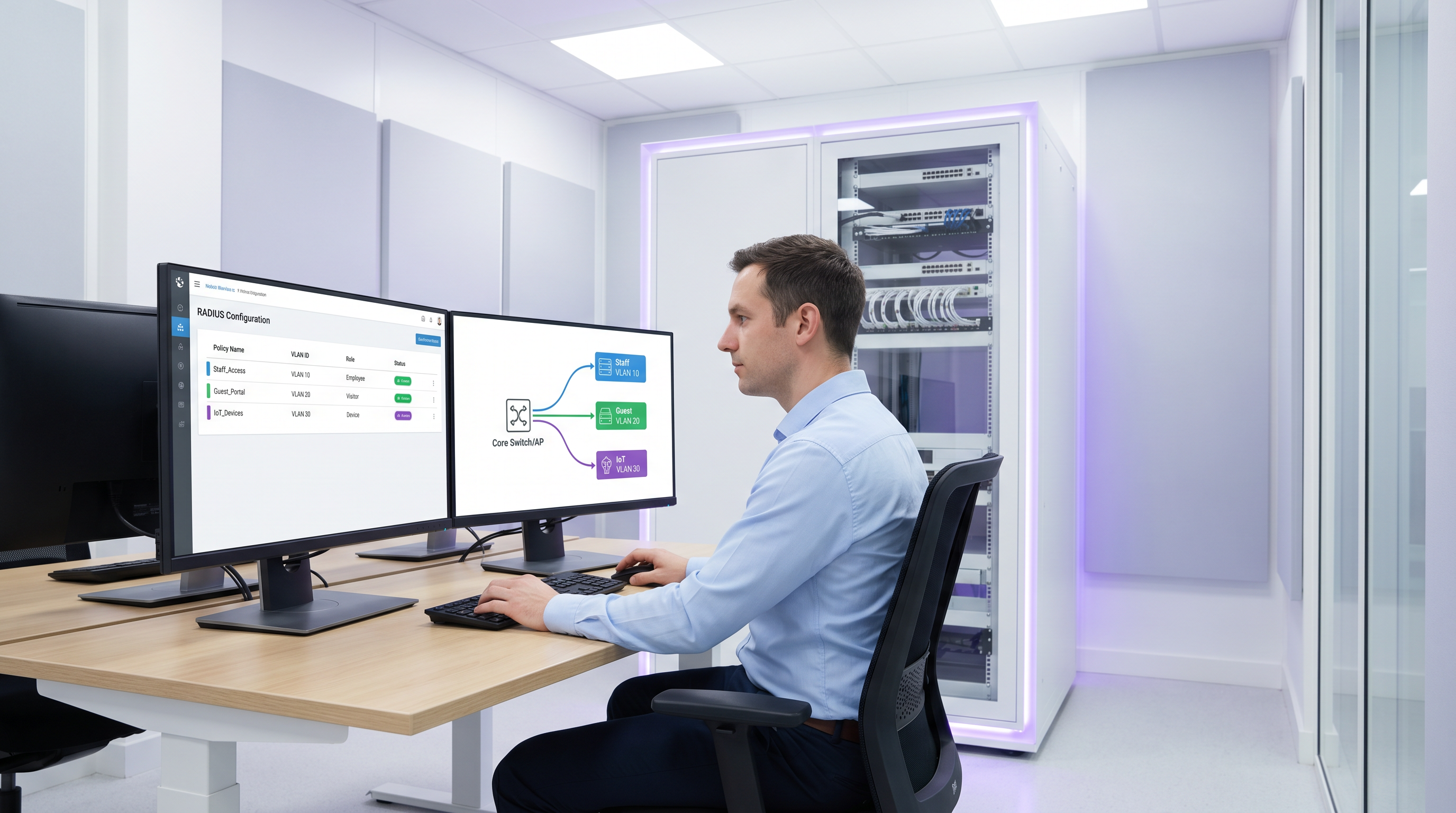
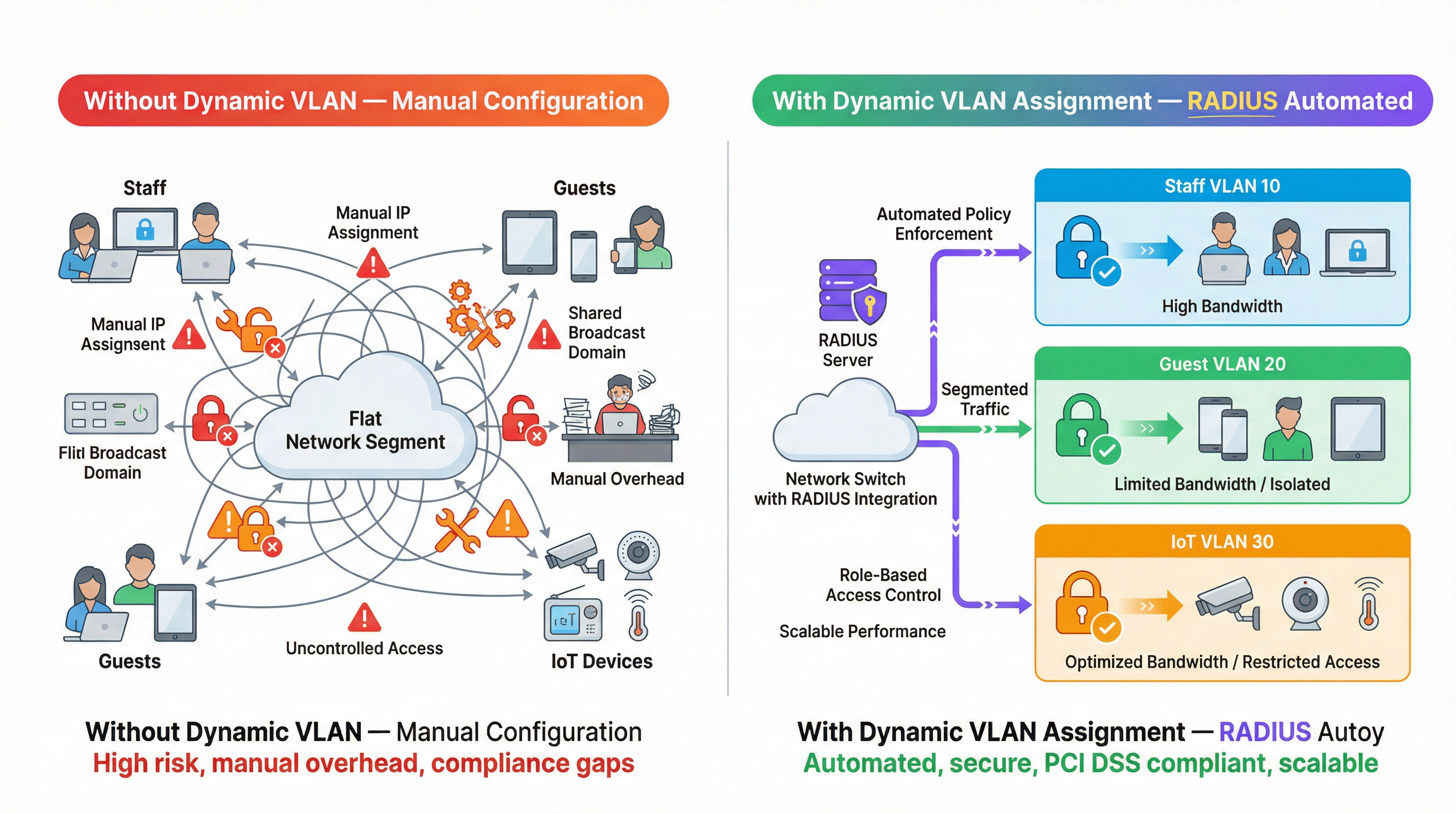
मल्टी-वेन्यू ऑपरेटरों के लिए, मैन्युअल रूप से नेटवर्क सेगमेंटेशन को मैनेज करना एक महत्वपूर्ण ऑपरेशनल बाधा है। जैसे-जैसे हॉस्पिटैलिटी, रिटेल और सार्वजनिक क्षेत्र के वातावरण में कनेक्टेड डिवाइसों की संख्या बढ़ती है, प्रति पोर्ट स्टैटिक VLAN कॉन्फ़िगरेशन या दर्जनों SSID प्रसारित करने पर निर्भर रहना टिकाऊ नहीं रह जाता है। यह गाइड बताती है कि ऑथेंटिकेशन के समय भूमिका के आधार पर उपयोगकर्ताओं और डिवाइसों को स्वचालित रूप से विभाजित करने के लिए RADIUS के साथ डायनेमिक VLAN असाइनमेंट का लाभ कैसे उठाया जाए। विशिष्ट RADIUS एट्रिब्यूट्स (जैसे Tunnel-Pvt-Group-ID) को पास करके, नेटवर्क आर्किटेक्ट उपयोगकर्ताओं को सही VLAN में डायनेमिक रूप से असाइन कर सकते हैं, जिससे सख्त सुरक्षा नीतियां लागू होती हैं, GDPR और PCI DSS जैसे मानकों का अनुपालन सुनिश्चित होता है, और मैन्युअल IT ओवरहेड में भारी कमी आती है।
तकनीकी गहराई
डायनेमिक VLAN असाइनमेंट पोर्ट-आधारित नेटवर्क एक्सेस कंट्रोल के लिए IEEE 802.1X मानक पर निर्भर करता है, जो सेंट्रलाइज्ड ऑथेंटिकेशन, ऑथोराइजेशन और अकाउंटिंग (AAA) के लिए RADIUS (रिमोट ऑथेंटिकेशन डायल-इन यूजर सर्विस) सर्वर के साथ संयुक्त है। जब कोई क्लाइंट डिवाइस नेटवर्क से कनेक्ट करने का प्रयास करता है, तो ऑथेंटिकेटर (आमतौर पर एक वायरलेस एक्सेस पॉइंट या नेटवर्क स्विच) एक मध्यस्थ के रूप में कार्य करता है, जो एक्सटेंसिबल ऑथेंटिकेशन प्रोटोकॉल (EAP) के माध्यम से क्लाइंट के क्रेडेंशियल्स को RADIUS सर्वर पर फॉरवर्ड करता है।
यदि क्रेडेंशियल्स मान्य हैं, तो RADIUS सर्वर Access-Accept संदेश के साथ प्रतिक्रिया देता है। डायनेमिक VLAN असाइनमेंट के लिए महत्वपूर्ण तंत्र इस Access-Accept पैकेट के भीतर विशिष्ट IETF मानक RADIUS एट्रिब्यूट्स का समावेश है। तीन आवश्यक एट्रिब्यूट्स हैं:
- Tunnel-Type (Attribute 64): इसे
VLAN(वैल्यू 13) पर सेट किया जाना चाहिए। - Tunnel-Medium-Type (Attribute 65): इसे
IEEE-802(वैल्यू 6) पर सेट किया जाना चाहिए। - Tunnel-Private-Group-ID (Attribute 81): इसमें वास्तविक VLAN ID स्ट्रिंग होती है (जैसे, "10", "20", "Guest_VLAN")।
जब ऑथेंटिकेटर को ये एट्रिब्यूट्स प्राप्त होते हैं, तो यह डायनेमिक रूप से उपयोगकर्ता के ट्रैफ़िक को निर्दिष्ट VLAN ID के साथ टैग करता है, जिससे उन्हें भौतिक पोर्ट या SSID की परवाह किए बिना उपयुक्त नेटवर्क सेगमेंट में रखा जाता है।
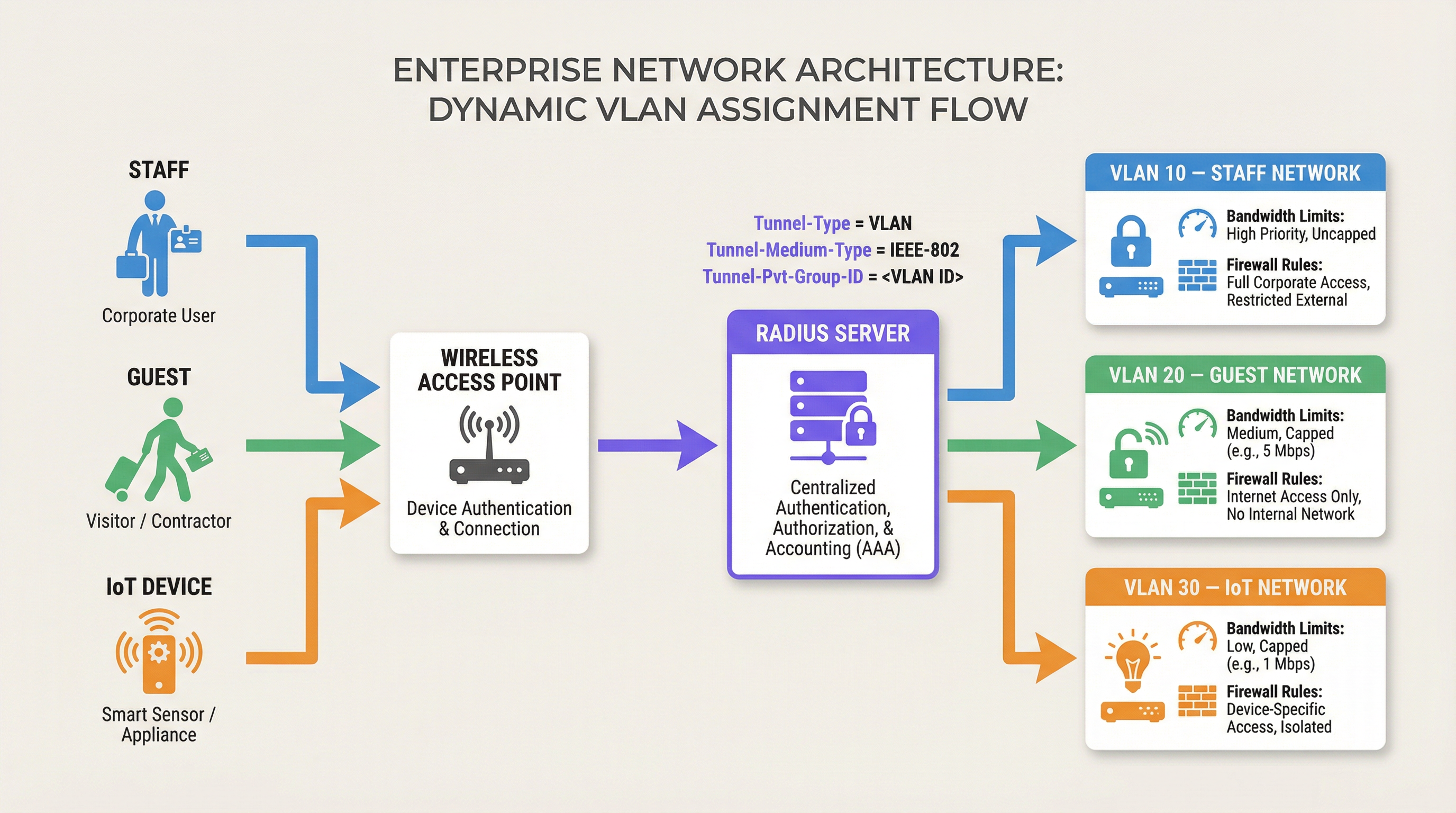
यह आर्किटेक्चर भूमिका-आधारित नेटवर्क एक्सेस कंट्रोल को सक्षम बनाता है। एक सिंगल SSID सुरक्षित रूप से कई अलग-अलग उपयोगकर्ता समूहों की सेवा कर सकता है, उन्हें उनके स्वयं के फ़ायरवॉल नियमों, बैंडविड्थ सीमाओं और रूटिंग नीतियों के साथ अलग-थलग नेटवर्क सेगमेंट में डाल सकता है। उदाहरण के लिए, Purple के Guest WiFi समाधान अक्सर यह सुनिश्चित करने के लिए RADIUS के साथ एकीकृत होते हैं कि मेहमानों को एक अलग VLAN पर रखा जाए, जिससे आंतरिक संसाधनों की सुरक्षा हो सके।
कार्यान्वयन गाइड
डायनेमिक VLAN असाइनमेंट को तैनात करने के लिए RADIUS सर्वर और नेटवर्क इंफ्रास्ट्रक्चर (एक्सेस पॉइंट या स्विच) दोनों पर कॉन्फ़िगरेशन की आवश्यकता होती है। हालांकि सटीक सिंटैक्स वेंडरों (जैसे, Cisco ISE, Aruba ClearPass, FreeRADIUS) के बीच भिन्न होता है, मूल सिद्धांत सुसंगत रहते हैं।
चरण 1: RADIUS सर्वर कॉन्फ़िगरेशन
उपयोगकर्ता समूहों या डिवाइस प्रोफाइल के आधार पर आवश्यक एट्रिब्यूट्स वापस करने के लिए अपने RADIUS सर्वर को कॉन्फ़िगर करें। उदाहरण के लिए, आप ऐसी नीतियां बना सकते हैं जो कहती हैं:
- यदि User Group = "Staff", तो Tunnel-Private-Group-ID = "10" लौटाएं।
- यदि User Group = "Contractors", तो Tunnel-Private-Group-ID = "20" लौटाएं।
- यदि Device Type = "IoT Sensor" (MAC ऑथेंटिकेशन बाईपास के माध्यम से), तो Tunnel-Private-Group-ID = "30" लौटाएं।
चरण 2: ऑथेंटिकेटर कॉन्फ़िगरेशन (एक्सेस पॉइंट/स्विच)
RADIUS सर्वर से क्वेरी करने और लौटाए गए एट्रिब्यूट्स को प्रोसेस करने के लिए अपने नेटवर्क डिवाइस को कॉन्फ़िगर करें। इसमें आमतौर पर शामिल है:
- RADIUS सर्वर IP एड्रेस और शेयर्ड सीक्रेट को परिभाषित करना।
- संबंधित SSID या स्विच पोर्ट पर 802.1X ऑथेंटिकेशन सक्षम करना।
- डायनेमिक VLAN असाइनमेंट (कभी-कभी "AAA Override" या "RADIUS VLAN assignment" कहा जाता है) सक्षम करना।
वेंडर-विशिष्ट विचार
- Cisco: WLCs पर, सुनिश्चित करें कि WLAN कॉन्फ़िगरेशन पर "AAA Override" सक्षम है। स्विच के लिए,
authentication port-control autoऔरdot1x pae authenticatorकॉन्फ़िगर करें। - Aruba: ArubaOS में, सुनिश्चित करें कि AAA प्रोफाइल में "RADIUS Server" कॉन्फ़िगर किया गया है और सर्वर ग्रुप को VLAN व्युत्पत्ति के लिए सर्वर नियमों को प्रोसेस करने के लिए सेट किया गया है।
- Ubiquiti UniFi: UniFi नेटवर्क एप्लिकेशन में, "RADIUS MAC Authentication" या "WPA2/WPA3 Enterprise" सक्षम करें और सुनिश्चित करें कि नेटवर्क सेटिंग्स में "Enable RADIUS assigned VLAN" चेक किया गया है।
सर्वोत्तम प्रथाएं
एक मजबूत और स्केलेबल परिनियोजन सुनिश्चित करने के लिए, निम्नलिखित उद्योग-मानक सिफारिशों का पालन करें:
- VLAN IDs को विश्व स्तर पर मानकीकृत करें: साइटों के बीच असंगत VLAN नामकरण एक बड़ी खामी है। यदि साइट A पर VLAN 10 "Staff" है लेकिन साइट B पर "Guest" है, तो डायनेमिक असाइनमेंट अराजकता पैदा करेगा। डायनेमिक असाइनमेंट लागू करने से पहले एक ग्लोबल VLAN नंबरिंग योजना स्थापित करें।
- फ़ॉलबैक तंत्र लागू करें: RADIUS की अनुपलब्धता एक गंभीर विफलता मोड है। अपने एक्सेस पॉइंट्स पर एक "क्रिटिकल VLAN" या "फ़ॉलबैक VLAN" कॉन्फ़िगर करें। यदि RADIUS सर्वर पहुंच योग्य नहीं है, तो AP को डिवाइस को एक प्रतिबंधित VLAN में डाल देना चाहिए जो शायद केवल इंटरनेट एक्सेस की अनुमति देता है, जिससे आंतरिक सुरक्षा से समझौता किए बिना कनेक्टिविटी बनी रहती है।
- हेडलेस डिवाइसों के लिए MAC ऑथेंटिकेशन बाईपास (MAB) का उपयोग करें: IoT डिवाइस जैसे Sensors या स्मार्ट थर्मोस्टैट अक्सर 802.1X ऑथेंटिकेशन नहीं कर सकते हैं। इन डिवाइसों को उनके MAC एड्रेस के आधार पर ऑथेंटिकेट करने के लिए MAB का उपयोग करें, उन्हें एक लॉक-डाउन IoT VLAN में असाइन करें।
- एनालिटिक्स का लाभ उठाएं: ऑथेंटिकेशन ट्रेंड्स की निगरानी करने, विसंगतियों की पहचान करने और भूमिका-आधारित उपयोग पैटर्न के आधार पर नेटवर्क प्रदर्शन को अनुकूलित करने के लिए Purple के WiFi Analytics जैसे प्लेटफॉर्म का उपयोग करें।
समस्या निवारण और जोखिम शमन
डायनेमिक VLAN असाइनमेंट लागू करते समय, सामान्य समस्याओं के निवारण के लिए तैयार रहें:
- क्लाइंट को डिफ़ॉल्ट VLAN में रखा गया: यह आमतौर पर तब होता है जब RADIUS सर्वर सही एट्रिब्यूट्स भेजने में विफल रहता है, या यदि ऑथेंटिकेटर उन्हें प्रोसेस करने के लिए कॉन्फ़िगर नहीं किया गया है (जैसे, "AAA Override" अक्षम है)।
Access-Acceptसंदेश की सामग्री को सत्यापित करने के लिए पैकेट कैप्चर का उपयोग करें। - ऑथेंटिकेशन टाइमआउट: यदि डिवाइस ऑथेंटिकेट करने में विफल रहते हैं, तो ऑथेंटिकेटर और RADIUS सर्वर के बीच नेटवर्क कनेक्टिविटी की जांच करें। शेयर्ड सीक्रेट को सत्यापित करें और सुनिश्चित करें कि RADIUS सर्वर में ऑथेंटिकेटर एक मान्य क्लाइंट के रूप में कॉन्फ़िगर किया गया है।
- DHCP समस्याएं: डिवाइस को डायनेमिक रूप से VLAN में असाइन किए जाने के बाद, उसे उस सबनेट के लिए IP एड्रेस प्राप्त करना होगा। सुनिश्चित करें कि DHCP सर्वर सभी डायनेमिक VLAN के लिए सही ढंग से कॉन्फ़िगर किया गया है और यदि आवश्यक हो तो IP हेल्पर एड्रेस मौजूद हैं।
ROI और व्यावसायिक प्रभाव
डायनेमिक VLAN असाइनमेंट लागू करना मैन्युअल कॉन्फ़िगरेशन ओवरहेड को कम करके और सुरक्षा जोखिमों को कम करके निवेश पर महत्वपूर्ण रिटर्न प्रदान करता है।
- ऑपरेशनल दक्षता: प्रति पोर्ट स्टैटिक VLAN को मैन्युअल रूप से कॉन्फ़िगर करने या विभिन्न उपयोगकर्ता समूहों के लिए कई SSID प्रसारित करने की आवश्यकता को समाप्त करता है, जिससे IT टीमों के प्रशासनिक कार्य के घंटों की बचत होती है।
- बढ़ी हुई सुरक्षा: सख्त भूमिका-आधारित एक्सेस कंट्रोल लागू करता है, यह सुनिश्चित करता है कि समझौता किए गए डिवाइस या अनधिकृत उपयोगकर्ता महत्वपूर्ण व्यावसायिक प्रणालियों से अलग रहें। यह Retail वातावरण में PCI DSS जैसे मानकों के अनुपालन के लिए आवश्यक है।
- बेहतर उपयोगकर्ता अनुभव: स्टाफ और मेहमानों के लिए एक सहज ऑथेंटिकेशन अनुभव प्रदान करता है, क्योंकि वे एक ही SSID से जुड़ सकते हैं और स्वचालित रूप से उपयुक्त नेटवर्क एक्सेस विशेषाधिकार प्राप्त कर सकते हैं।
अधिक जानकारी के लिए हमारे तकनीकी ब्रीफिंग पॉडकास्ट को सुनें:
अपने नेटवर्क को सुरक्षित करने के बारे में अधिक जानकारी के लिए, 802.1X Authentication: Securing Network Access on Modern Devices पर हमारी गाइड देखें।
मुख्य शब्द और परिभाषाएं
Dynamic VLAN Assignment
The process of automatically assigning a device to a specific Virtual Local Area Network (VLAN) based on its identity or role during authentication, rather than its physical connection point.
Essential for scalable network segmentation in enterprise environments, eliminating the need for manual port configuration.
RADIUS (Remote Authentication Dial-In User Service)
A networking protocol that provides centralized Authentication, Authorization, and Accounting (AAA) management for users who connect and use a network service.
The core engine that evaluates credentials and dictates network policy, including VLAN assignment.
802.1X
An IEEE Standard for port-based Network Access Control (PNAC), providing an authentication mechanism to devices wishing to attach to a LAN or WLAN.
The framework that allows devices to securely transmit credentials to the network infrastructure before gaining access.
Tunnel-Private-Group-ID
RADIUS Attribute 81, used to specify the VLAN ID or VLAN name that the authenticator should assign to the user's session.
The specific data field in the RADIUS response that dictates the network segment.
MAC Authentication Bypass (MAB)
A technique used to authenticate devices that do not support 802.1X (like printers or IoT sensors) by using their MAC address as their identity.
Crucial for integrating headless devices into a dynamically segmented network architecture.
Authenticator
The network device (such as a wireless access point or switch) that facilitates the authentication process between the client and the RADIUS server.
The device responsible for enforcing the VLAN assignment policy returned by the RADIUS server.
Access-Accept
The RADIUS message sent to the authenticator indicating that the user's credentials are valid and access should be granted.
This packet carries the crucial VLAN assignment attributes.
AAA Override
A configuration setting on many authenticators (like Cisco WLCs) that allows the RADIUS server to override the default VLAN or policy configured on the device.
Must be enabled for dynamic VLAN assignment to function correctly.
केस स्टडीज
A 500-room luxury hotel needs to segment its network for guests, staff, and IoT devices (smart thermostats and door locks). They currently broadcast 5 different SSIDs, causing significant co-channel interference and confusing guests. How can dynamic VLAN assignment solve this?
The hotel should consolidate to two SSIDs: 'Hotel_Guest' (Open/Captive Portal) and 'Hotel_Secure' (802.1X). For 'Hotel_Secure', staff authenticate using their corporate credentials. The RADIUS server verifies the credentials against Active Directory and returns Tunnel-Private-Group-ID = '10' (Staff VLAN). For IoT devices, which cannot use 802.1X, the network uses MAC Authentication Bypass (MAB). The RADIUS server recognizes the MAC addresses of the thermostats and locks, returning Tunnel-Private-Group-ID = '30' (IoT VLAN). Guests connect to 'Hotel_Guest' and are placed in VLAN 20 via standard captive portal workflows, potentially integrated with Purple's Hospitality solutions.
A large retail chain is deploying point-of-sale (POS) terminals across 50 locations. To comply with PCI DSS, these terminals must be strictly isolated from the corporate and guest networks. How can dynamic VLAN assignment ensure compliance even if a terminal is moved to a different port?
The IT team configures the network switches to require 802.1X authentication on all edge ports. The POS terminals are configured with certificates for EAP-TLS authentication. When a terminal connects to any port, it authenticates with the RADIUS server. The RADIUS server verifies the certificate and returns Tunnel-Private-Group-ID = '40' (PCI VLAN). The switch dynamically assigns the port to VLAN 40, applying strict ACLs that only allow communication with the payment processing gateways.
परिदृश्य विश्लेषण
Q1. You are deploying dynamic VLAN assignment across a university campus. The RADIUS server is successfully sending the Access-Accept message with Tunnel-Private-Group-ID set to '50' for faculty members. However, faculty devices are still being placed in the default VLAN (VLAN 1) configured on the SSID. What is the most likely cause?
💡 संकेत:Check the configuration on the wireless access point or controller.
अनुशंसित दृष्टिकोण दिखाएं
The most likely cause is that the authenticator (the Wireless LAN Controller or Access Point) does not have 'AAA Override' (or the equivalent setting, such as 'Enable RADIUS assigned VLAN') enabled for that specific SSID. Even if the RADIUS server sends the correct attributes, the authenticator will ignore them and use the default configuration unless explicitly instructed to process dynamic assignments.
Q2. A hospital needs to connect hundreds of new smart infusion pumps to the network. These devices do not support 802.1X supplicants. How can the IT team ensure these devices are automatically placed into a secure, isolated clinical IoT VLAN?
💡 संकेत:Consider how devices without 802.1X capabilities can be identified by the network.
अनुशंसित दृष्टिकोण दिखाएं
The IT team should implement MAC Authentication Bypass (MAB). The MAC addresses of all infusion pumps must be added to the RADIUS server's database. When a pump connects to the network, the switch or AP will use its MAC address as the identity for authentication. The RADIUS server will recognize the MAC address and return an Access-Accept message containing the Tunnel-Private-Group-ID for the clinical IoT VLAN.
Q3. Your enterprise network relies heavily on dynamic VLAN assignment. During a scheduled maintenance window, the primary and secondary RADIUS servers become temporarily unreachable. What configuration must be in place to ensure business-critical devices maintain some level of connectivity?
💡 संकेत:Look for features related to authentication failure or fallback scenarios on the switch or AP.
अनुशंसित दृष्टिकोण दिखाएं
The network infrastructure must be configured with a 'Critical VLAN' or 'Fallback VLAN'. When the authenticator detects that the RADIUS servers are dead (unreachable), it automatically places connecting devices into this pre-defined Critical VLAN. This VLAN should have strict ACLs applied, perhaps only allowing internet access or access to essential remediation services, ensuring basic connectivity without exposing the internal network.
मुख्य निष्कर्ष
- ✓Dynamic VLAN assignment automates network segmentation based on user role or device identity.
- ✓It relies on 802.1X authentication and specific RADIUS attributes (Tunnel-Type, Tunnel-Medium-Type, Tunnel-Pvt-Group-ID).
- ✓This approach eliminates the need for manual port configuration and reduces SSID bloat.
- ✓MAC Authentication Bypass (MAB) is essential for segmenting headless IoT devices.
- ✓Global standardisation of VLAN IDs is critical for successful multi-site deployments.
- ✓Always configure fallback mechanisms (Critical VLAN) to handle RADIUS server outages.




