

ক্লাউড-ভিত্তিক বনাম অন-প্রিমিজ Captive Portal: আপনার ব্যবসার জন্য কোনটি সঠিক?
ক্লাউড-ভিত্তিক বনাম অন-প্রিমিজ Captive Portal আর্কিটেকচারের একটি বিস্তারিত প্রযুক্তিগত তুলনা। এই নির্দেশিকাটি স্থাপনার গতি, খরচ কাঠামো, স্কেলেবিলিটি এবং সম্মতিগত প্রভাবগুলি মূল্যায়ন করে যাতে আইটি নেতারা সুচিন্তিত অবকাঠামো সিদ্ধান্ত নিতে পারেন।
🎧 এই গাইডটি শুনুন
ট্রান্সক্রিপ্ট দেখুন
কার্যনির্বাহী সারসংক্ষেপ
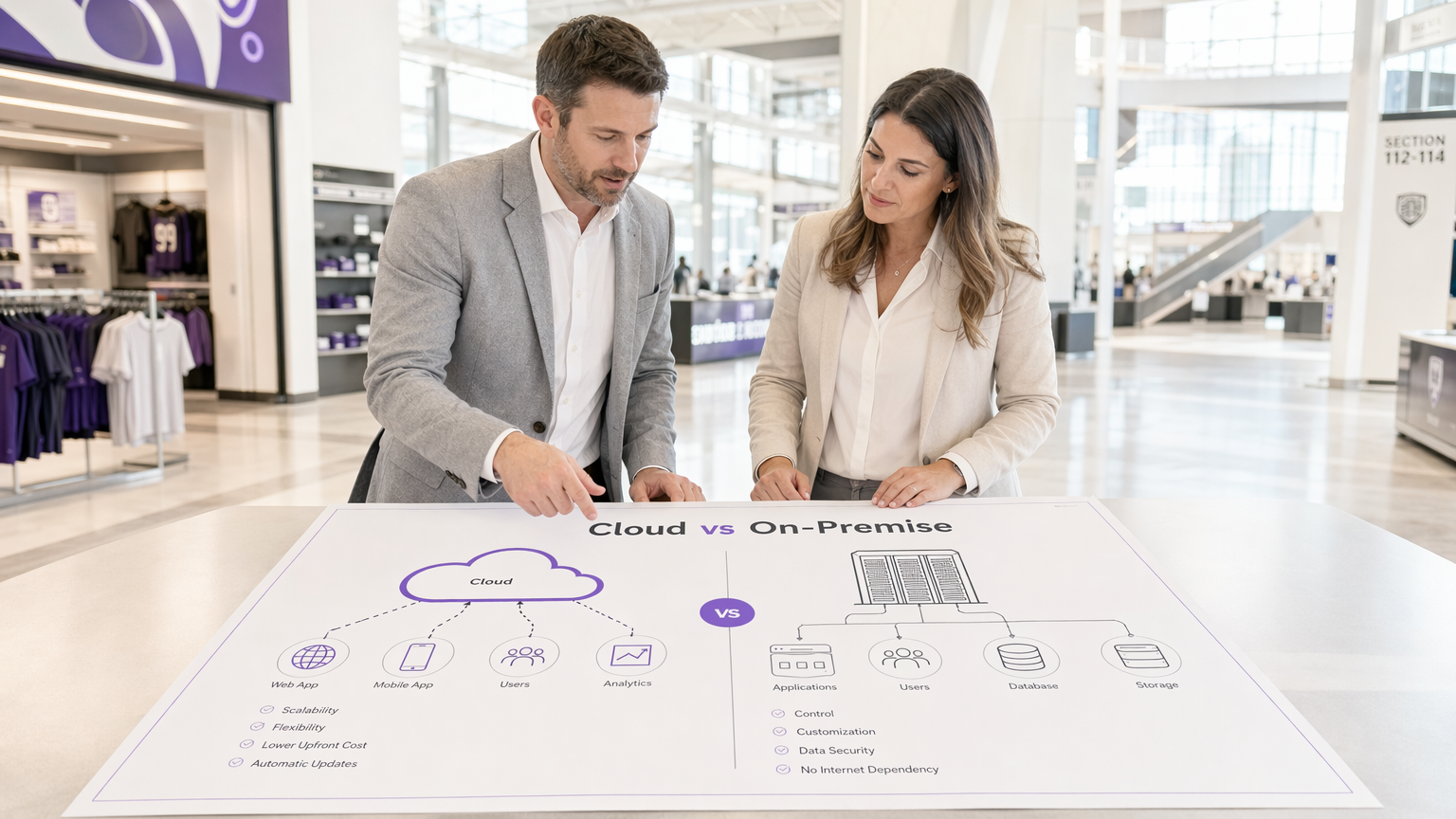
একটি গেস্ট WiFi আর্কিটেকচার ডিজাইন করার সময়, একটি ক্লাউড-ভিত্তিক Captive Portal এবং একটি অন-প্রিমিজ Captive Portal সার্ভারের মধ্যে নির্বাচন আপনার অবকাঠামো খরচ, অপারেশনাল ওভারহেড এবং স্থাপনার জীবনচক্রের জন্য সম্মতিগত অবস্থান নির্ধারণ করে। আইটি ম্যানেজার, নেটওয়ার্ক আর্কিটেক্ট এবং সিটিওদের জন্য, এটি কেবল একটি সফটওয়্যার পছন্দ নয়; এটি একটি মৌলিক স্থাপত্যগত সিদ্ধান্ত।
একটি ক্লাউড-ভিত্তিক Captive Portal প্রমাণীকরণ এবং পোর্টাল রেন্ডারিংয়ের কাজগুলি একটি বিক্রেতা-পরিচালিত পরিবেশে স্থানান্তরিত করে, যা স্থিতিস্থাপক স্কেলেবিলিটি এবং উল্লেখযোগ্যভাবে হ্রাসকৃত রক্ষণাবেক্ষণ সরবরাহ করে। বিপরীতভাবে, একটি অন-প্রিমিজ Captive Portal সিস্টেম আপনার স্থানীয় নেটওয়ার্ক পরিধির মধ্যে সমস্ত ডেটা এবং প্রমাণীকরণ যুক্তি ধরে রাখে, যা উচ্চতর মূলধন ব্যয় এবং অপারেশনাল বোঝার বিনিময়ে সম্পূর্ণ নিয়ন্ত্রণ প্রদান করে।
এই নির্দেশিকাটি উভয় স্থাপনা মডেলের একটি কঠোর প্রযুক্তিগত তুলনা প্রদান করে। আমরা স্থাপত্য পরীক্ষা করব, মালিকানার মোট খরচ মূল্যায়ন করব এবং নির্দিষ্ট বাস্তবায়ন পরিস্থিতি তুলে ধরব যাতে আপনি নির্ধারণ করতে পারেন কোন Captive Portal সফটওয়্যার আপনার ব্যবসার উদ্দেশ্য এবং নিয়ন্ত্রক প্রয়োজনীয়তার সাথে সঙ্গতিপূর্ণ।
প্রযুক্তিগত গভীর-পর্যালোচনা: স্থাপত্য এবং প্রমাণীকরণ প্রবাহ
একটি হোস্ট করা Captive Portal এবং একটি অন-প্রিমিজ সমাধানের মধ্যে পার্থক্য বুঝতে হলে প্রমাণীকরণ প্রবাহ এবং যেখানে অন্তর্নিহিত প্রক্রিয়াগুলি কার্যকর হয় তা পরীক্ষা করা প্রয়োজন।
ক্লাউড-ভিত্তিক Captive Portal স্থাপত্য
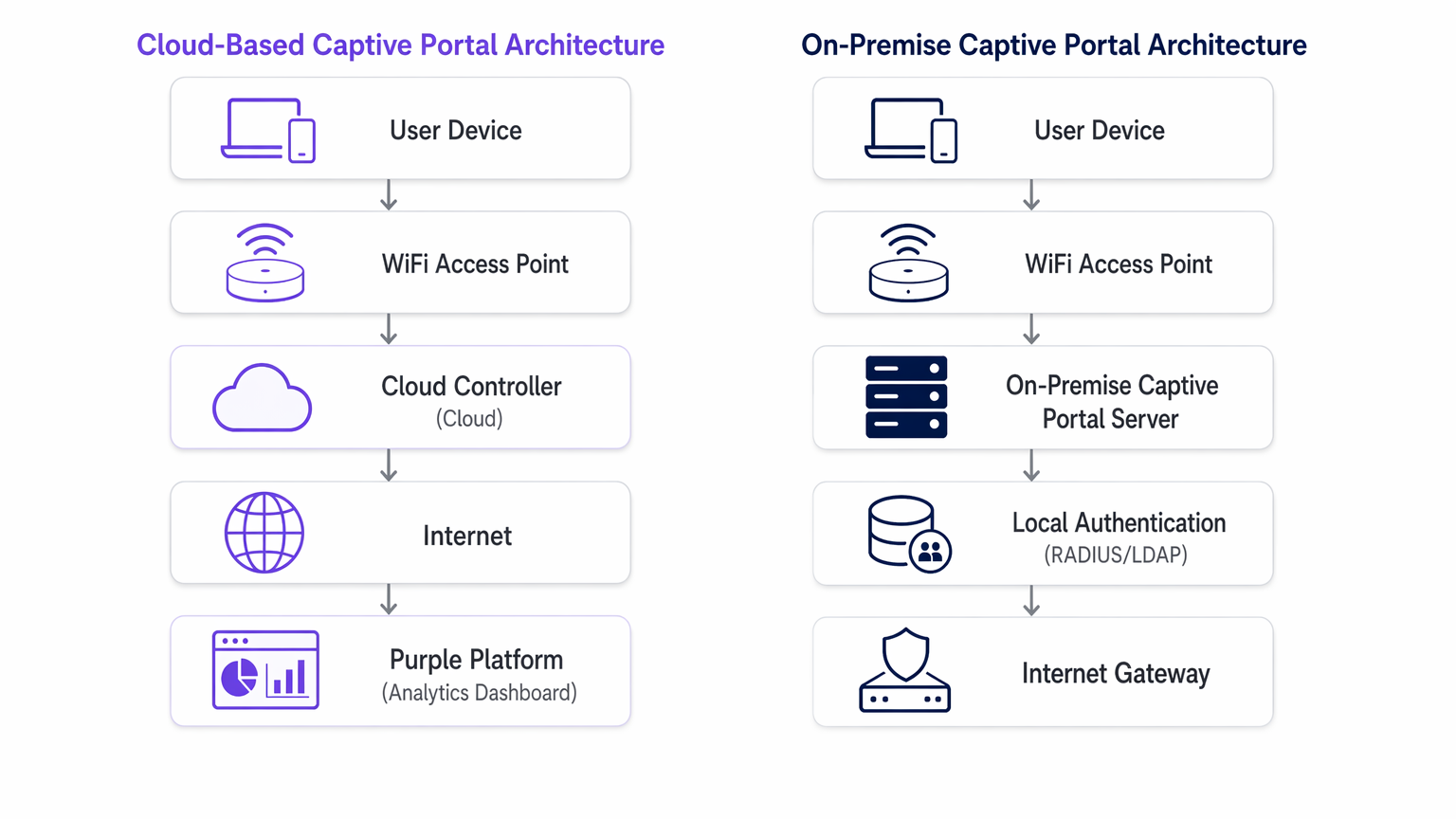
একটি ক্লাউড-ভিত্তিক মডেলে, Captive Portal লজিক, RADIUS প্রমাণীকরণ এবং ডেটা ক্যাপচার ডেটাবেসগুলি Purple-এর মতো একজন বিক্রেতা দ্বারা পরিচালিত তৃতীয় পক্ষের অবকাঠামোতে (যেমন, AWS, Azure, GCP) থাকে।
যখন একটি ক্লায়েন্ট ডিভাইস গেস্ট SSID-এর সাথে সংযুক্ত হয়, তখন স্থানীয় অ্যাক্সেস পয়েন্ট (AP) বা ওয়্যারলেস ল্যান কন্ট্রোলার (WLC) প্রাথমিক HTTP/HTTPS অনুরোধটি আটকায়। যেহেতু ডিভাইসটি অপ্রমাণিত, তাই কন্ট্রোলার ব্রাউজারটিকে একটি ক্লাউড-হোস্ট করা URL-এ পুনঃনির্দেশিত করে। ব্যবহারকারী পোর্টালের সাথে ইন্টারঅ্যাক্ট করে—শর্তাবলী গ্রহণ করে, সোশ্যাল লগইনের মাধ্যমে প্রমাণীকরণ করে, অথবা একটি ফর্ম পূরণ করে। সফল প্রমাণীকরণের পর, ক্লাউড প্ল্যাটফর্ম স্থানীয় কন্ট্রোলারের সাথে (প্রায়শই RADIUS বা একটি বিক্রেতা-নির্দিষ্ট API-এর মাধ্যমে) যোগাযোগ করে ক্লায়েন্টের MAC ঠিকানা অনুমোদন করতে, ইন্টারনেট অ্যাক্সেস প্রদান করে।
এই স্থাপত্য অত্যন্ত স্থিতিস্থাপক। সর্বোচ্চ লোডের সময়—যেমন একটি স্টেডিয়ামে হাফ-টাইম বা Retail -এ একটি বড় বিক্রয় চলাকালীন—ক্লাউড অবকাঠামো স্বয়ংক্রিয়ভাবে হাজার হাজার সমসাময়িক প্রমাণীকরণ অনুরোধ পরিচালনা করার জন্য স্কেল করে, স্থানীয় হার্ডওয়্যার আপগ্রেডের প্রয়োজন ছাড়াই। উপরন্তু, Purple-এর মতো প্ল্যাটফর্মগুলি Guest WiFi অ্যানালিটিক্স প্রদান করে এবং Connect লাইসেন্সের অধীনে OpenRoaming-এর মতো পরিষেবাগুলির জন্য একটি বিনামূল্যে পরিচয় প্রদানকারী হিসাবে কাজ করে, যা মৌলিক অ্যাক্সেস নিয়ন্ত্রণের বাইরেও উল্লেখযোগ্য মূল্য যোগ করে।
অন-প্রিমিজ Captive Portal সার্ভার স্থাপত্য
একটি অন-প্রিমিজ Captive Portal সার্ভারের জন্য আপনার স্থানীয় নেটওয়ার্ক অবকাঠামোর মধ্যে ডেডিকেটেড হার্ডওয়্যার বা ভার্চুয়াল মেশিন (VMs) স্থাপন করা প্রয়োজন। পোর্টাল ওয়েব সার্ভার, RADIUS সার্ভার (যেমন, FreeRADIUS, Microsoft NPS), এবং ব্যবহারকারী ডেটাবেস সবই আপনার আইটি দল দ্বারা স্থানীয়ভাবে রক্ষণাবেক্ষণ করা হয়।
পুনঃনির্দেশ প্রক্রিয়াটি একই রকম, তবে ক্লায়েন্টকে একটি পাবলিক URL-এর পরিবর্তে একটি অভ্যন্তরীণ IP ঠিকানায় নির্দেশিত করা হয়। প্রমাণীকরণ লেনদেন সম্পূর্ণরূপে স্থানীয় এরিয়া নেটওয়ার্ক (LAN) এর মধ্যে ঘটে। এই মডেলটি নিশ্চিত করে যে প্রমাণীকরণ পর্বের সময় কোনো গেস্ট ডেটা পাবলিক ইন্টারনেট অতিক্রম করে না, যা প্রায়শই কঠোর ডেটা সার্বভৌমত্ব নীতি দ্বারা পরিচালিত Healthcare বা সরকারি সুবিধাগুলির জন্য একটি কঠোর প্রয়োজনীয়তা।
তবে, একটি অন-প্রিমিজ সিস্টেমের থ্রুপুট সরবরাহকৃত হার্ডওয়্যার দ্বারা কঠোরভাবে সীমাবদ্ধ। ক্ষমতা পরিকল্পনায় সর্বোচ্চ সমসাময়িক সেশনগুলির জন্য হিসাব রাখতে হবে, যার ফলে প্রায়শই উল্লেখযোগ্য অতিরিক্ত-প্রভিশনিং হয়। উপরন্তু, আইটি দল ওএস প্যাচিং, SSL সার্টিফিকেট নবায়ন, ডেটাবেস রক্ষণাবেক্ষণ এবং উচ্চ-উপস্থিতি ফেইলওভার পেয়ার কনফিগার করার জন্য সম্পূর্ণ দায়িত্ব গ্রহণ করে।
বাস্তবায়ন নির্দেশিকা: বিক্রেতা-নিরপেক্ষ সুপারিশ
সঠিক স্থাপত্য নির্বাচন আপনার নির্দিষ্ট অপারেশনাল সীমাবদ্ধতার উপর নির্ভর করে।
কখন একটি ক্লাউড-ভিত্তিক Captive Portal বেছে নেবেন
- মাল্টি-সাইট স্থাপনা: আপনি যদি একটি বিতরণকৃত পোর্টফোলিও পরিচালনা করেন, যেমন একটি Hospitality চেইন বা Transport হাবের একটি নেটওয়ার্ক, তাহলে একটি ক্লাউড-ভিত্তিক Captive Portal কেন্দ্রীভূত ব্যবস্থাপনা প্রদান করে। আপনি শত শত সাইটে একই সাথে পোর্টাল আপডেট, ব্র্যান্ডিং পরিবর্তন এবং নীতি পরিবর্তনগুলি প্রয়োগ করতে পারেন।
- স্লিম আইটি অপারেশনস: যখন আপনার নেটওয়ার্ক দল অ্যাপ্লিকেশন রক্ষণাবেক্ষণের পরিবর্তে মূল অবকাঠামোর উপর মনোযোগ দেয়, তখন Captive Portal সিস্টেমকে একটি SaaS প্রদানকারীর কাছে অফলোড করা অপারেশনাল ওভারহেড হ্রাস করে।
- মার্কেটিং এবং অ্যানালিটিক্স ইন্টিগ্রেশন: ক্লাউড প্ল্যাটফর্মগুলি সহজাতভাবে ডেটা একত্রীকরণকে সহজ করে। যদি আপনার উদ্দেশ্য গ্রাহক ব্যস্ততা বাড়াতে WiFi Analytics ব্যবহার করা হয়, তাহলে একটি হোস্ট করা Captive Portal প্রয়োজনীয় ইন্টিগ্রেশনগুলি আউট-অফ-দ্য-বক্স প্রদান করে।
কখন একটি অন-প্রিমিজ Captive Portal বেছে নেবেন
- কঠোর ডেটা সার্বভৌমত্ব: যদি নিয়ন্ত্রক কাঠামো আপনার শারীরিক প্রাঙ্গণ বা জাতীয় সীমানা থেকে গেস্ট ডেটা বাইরে যেতে নিষেধ করে, তাহলে একটি অন-প্রিমিজ স্থাপনা বাধ্যতামূলক।
- এয়ার-গ্যাপড বা উচ্চ-ল্যাটেন্সি পরিবেশ: অনির্ভরযোগ্য ইন্টারনেট আপলিঙ্ক সহ স্থানগুলি একটি ক্লাউড প্রমাণীকরণ গেটওয়ের উপর নির্ভর করতে পারে না। যদি WAN লিঙ্ক ব্যর্থ হয়, একটি ক্লাউড পোর্টাল ব্যর্থ হয়; একটি অন-প্রিমিজ পোর্টাল এখনও স্থানীয় নেটওয়ার্ক অ্যাক্সেসের জন্য ব্যবহারকারীদের প্রমাণীকরণ করতে পারে।
- ডিp কাস্টম ইন্টিগ্রেশন: যখন পোর্টালকে সরাসরি লিগ্যাসি, স্থানীয়ভাবে হোস্ট করা প্রপার্টি ম্যানেজমেন্ট সিস্টেম (PMS) এর সাথে ইন্টারফেস করতে হয় মালিকানাধীন API-এর মাধ্যমে যা ইন্টারনেটে প্রকাশ করা যায় না।
Captive Portal স্থাপনের সেরা অনুশীলন
স্থাপনার মডেল নির্বিশেষে, নিরাপত্তা এবং ব্যবহারকারীর অভিজ্ঞতার জন্য শিল্প মান মেনে চলা অত্যন্ত গুরুত্বপূর্ণ।
- VLAN সেগমেন্টেশন: গেস্ট WiFi নেটওয়ার্ককে সর্বদা একটি ডেডিকেটেড VLAN-এ আলাদা করুন, যা কর্পোরেট সংস্থানগুলি থেকে সম্পূর্ণ বিচ্ছিন্ন থাকবে।
- SSL/TLS সার্টিফিকেট ম্যানেজমেন্ট: একটি Captive Portal-কে অবশ্যই HTTPS এর মাধ্যমে তার পৃষ্ঠাগুলি পরিবেশন করতে হবে। মেয়াদোত্তীর্ণ সার্টিফিকেটগুলি গুরুতর ব্রাউজার সতর্কতা ট্রিগার করবে, যা প্রমাণীকরণ প্রবাহকে থামিয়ে দেবে। অন-প্রিমিজ স্থাপনার জন্য, ACME (যেমন, Let's Encrypt) এর মতো প্রোটোকল ব্যবহার করে সার্টিফিকেট নবায়ন স্বয়ংক্রিয় করুন। ক্লাউড বিক্রেতারা এটি স্বয়ংক্রিয়ভাবে পরিচালনা করে।
- WPA3 এবং 802.1X বিবেচনা: যদিও 802.1X সহ WPA3-Enterprise কর্পোরেট ডিভাইসগুলির জন্য স্বর্ণমান, তবে গেস্ট নেটওয়ার্কগুলির জন্য এটি অবাস্তব যেখানে আপনি অপ্রশাসিত ডিভাইসগুলিতে সার্টিফিকেট বিতরণ করতে পারবেন না। অতএব, একটি Captive Portal সহ একটি উন্মুক্ত নেটওয়ার্ক, অথবা WPA3-Personal (Opportunistic Wireless Encryption - OWE), জনসাধারণের অ্যাক্সেসের জন্য মান হিসাবে রয়ে গেছে।
- ডেটা প্রসেসিং চুক্তি (DPA): একটি হোস্ট করা Captive Portal ব্যবহার করার সময়, বিক্রেতার DPA পুঙ্খানুপুঙ্খভাবে পর্যালোচনা করুন। নিশ্চিত করুন যে তারা GDPR, PCI DSS মেনে চলে এবং তাদের সাব-প্রসেসর এবং ডেটা রেসিডেন্সি অবস্থানগুলি স্পষ্টভাবে সংজ্ঞায়িত করে।
সমস্যা সমাধান এবং ঝুঁকি প্রশমন
দুটি আর্কিটেকচারের মধ্যে সাধারণ ব্যর্থতার ধরণগুলি উল্লেখযোগ্যভাবে ভিন্ন।
ক্লাউড-ভিত্তিক ঝুঁকি
- WAN বিভ্রাট: প্রাথমিক ঝুঁকি হল ইন্টারনেট সংযোগের ক্ষতি। একটি আপলিঙ্ক ছাড়া, ক্লাউড কন্ট্রোলারে পৌঁছানো যায় না এবং প্রমাণীকরণ ব্যর্থ হয়। অপ্রয়োজনীয় WAN লিঙ্ক (যেমন, প্রাথমিক ফাইবার, সেকেন্ডারি 5G/LTE) ব্যবহার করে এটি প্রশমিত করুন অথবা উচ্চ প্রাপ্যতা নিশ্চিত করতে The Core SD WAN Benefits for Modern Businesses বিবেচনা করুন।
- DNS রেজোলিউশন ব্যর্থতা: যদি স্থানীয় DNS ক্লাউড পোর্টাল URL সমাধান করতে ব্যর্থ হয়, তাহলে পুনঃনির্দেশ ভেঙে যায়। শক্তিশালী স্থানীয় DNS অবকাঠামো নিশ্চিত করুন।
অন-প্রিমিজ ঝুঁকি
- হার্ডওয়্যার ব্যর্থতা: একটি একক Captive Portal সার্ভার ব্যর্থতার একটি একক বিন্দু। উচ্চ প্রাপ্যতা নিশ্চিত করতে আপনাকে একটি সক্রিয়-প্যাসিভ বা সক্রিয়-সক্রিয় ক্লাস্টারে স্থাপন করতে হবে।
- ক্ষমতা নিঃশেষ: ব্যবহারকারীর ঘনত্বের অপ্রত্যাশিত বৃদ্ধি স্থানীয় RADIUS সার্ভার বা ওয়েব সার্ভারকে অভিভূত করতে পারে, যার ফলে টাইমআউট হয়। CPU, মেমরি এবং সমসাময়িক সেশন মেট্রিক্স কঠোরভাবে নিরীক্ষণ করুন।
- প্যাচ ম্যানেজমেন্ট: প্যাচবিহীন পোর্টাল সার্ভারগুলি শোষণের প্রধান লক্ষ্য। কঠোর দুর্বলতা ব্যবস্থাপনা এবং প্যাচ স্থাপনার সময়সূচী বাস্তবায়ন করুন।
যেসব পরিস্থিতিতে পোর্টাল মূল্যের চেয়ে বেশি ঘর্ষণ সৃষ্টি করছে, সেগুলোর জন্য How to Remove a Captive Portal Login (And When You Should) দেখুন।
ROI এবং ব্যবসায়িক প্রভাব
এই আর্কিটেকচারগুলির জন্য আর্থিক মডেলগুলি মৌলিকভাবে ভিন্ন।
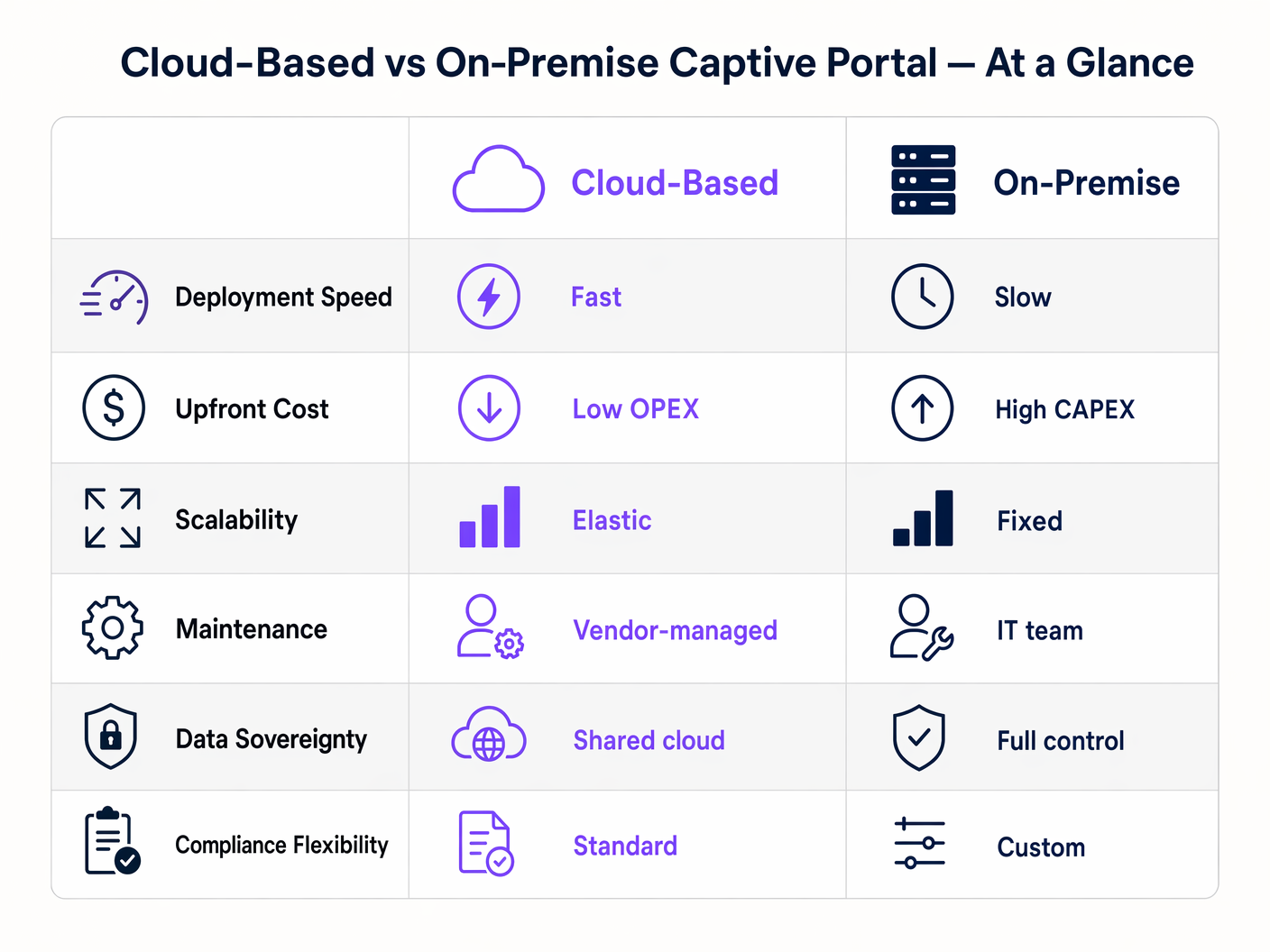
একটি অন-প্রিমিজ Captive Portal সফটওয়্যার স্থাপন একটি ক্যাপিটাল এক্সপেন্ডিচার (CAPEX) মডেল। হার্ডওয়্যার, হাইপারভাইজার লাইসেন্সিং এবং অপ্রয়োজনীয় অবকাঠামোর জন্য আপনার উল্লেখযোগ্য অগ্রিম খরচ হয়। চলমান খরচগুলি আপনার আইটি দলের রক্ষণাবেক্ষণ এবং সমস্যা সমাধানে ব্যয় করা সময়ের অপারেশনাল এক্সপেন্ডিচার (OPEX) এর মধ্যে লুকানো থাকে।
একটি ক্লাউড-ভিত্তিক Captive Portal একটি OPEX মডেলে কাজ করে। অগ্রিম খরচ ন্যূনতম, যা অ্যাক্সেস পয়েন্ট এবং প্রাথমিক কনফিগারেশনের মধ্যে সীমাবদ্ধ। আপনি একটি অনুমানযোগ্য, পুনরাবৃত্ত সাবস্ক্রিপশন ফি প্রদান করেন। একটি ক্লাউড প্ল্যাটফর্মের ROI প্রায়শই আইটি কাজের চাপ হ্রাস এবং উন্নত বিশ্লেষণ ও বিপণন ইন্টিগ্রেশনগুলির মাধ্যমে সংগৃহীত ডেটার মুদ্রাকরণের মাধ্যমে উপলব্ধি করা হয়, যা গেস্ট WiFi-কে একটি ব্যয় কেন্দ্র থেকে একটি রাজস্ব-উৎপাদনকারী সম্পদে রূপান্তরিত করে।
মূল শব্দ ও সংজ্ঞা
Captive Portal
A web page that a user of a public access network is obliged to view and interact with before access is granted.
The primary mechanism for authenticating guests and capturing marketing consent on public WiFi networks.
RADIUS (Remote Authentication Dial-In User Service)
A networking protocol that provides centralized Authentication, Authorization, and Accounting (AAA) management for users who connect and use a network service.
The backend protocol used by both cloud and on-premise portals to signal the access point that a user is authorized.
Data Sovereignty
The concept that data is subject to the laws and governance structures within the nation it is collected.
A critical deciding factor for government and healthcare venues evaluating cloud vs. on-premise architectures.
MAC Address Authorization
The process of using a device's Media Access Control address to identify it and grant network access after initial authentication.
How the network controller remembers a device so the user doesn't have to log in every time they roam between access points.
WPA3-Enterprise
The latest Wi-Fi security standard requiring 802.1X authentication and a RADIUS server, providing individualized encryption.
The standard for corporate networks, which operates separately from the open/OWE guest network where the captive portal resides.
VLAN Segmentation
The practice of dividing a physical network into multiple logical networks.
Essential for security, ensuring guest WiFi traffic (and the captive portal) is isolated from internal corporate data.
Data Processing Agreement (DPA)
A legally binding contract that states the rights and obligations of each party concerning the protection of personal data.
Mandatory documentation when utilizing a hosted captive portal to ensure GDPR compliance.
OpenRoaming
A federation of Wi-Fi networks that allows users to automatically and securely connect to participating networks without manual login.
An advanced authentication method supported by platforms like Purple, offering a frictionless alternative to traditional captive portals.
কেস স্টাডিজ
A national retail chain with 400 locations needs to deploy a standardized guest WiFi experience. Their IT team consists of 5 network engineers based at headquarters. They require detailed analytics on customer dwell time and visit frequency to integrate with their CRM.
Deploy a cloud-based captive portal system. The lean IT team cannot manage 400 on-premise portal servers or complex VPN routing back to a centralized on-premise data center. A hosted captive portal allows centralized policy management, immediate scalability, and native API integration for CRM data syncing.
A large NHS hospital trust requires guest WiFi across its campus. Strict patient data confidentiality policies dictate that no MAC addresses, device identifiers, or user information can be stored on servers outside the UK, and all authentication traffic must remain within the hospital's private network.
Deploy an on-premise captive portal server. The hospital must provision a high-availability cluster of portal servers within their local data center, integrated with their local Active Directory or a dedicated FreeRADIUS instance for guest accounts.
দৃশ্যপট বিশ্লেষণ
Q1. A hotel chain is experiencing frequent authentication timeouts during large conferences because their local captive portal server reaches maximum CPU utilization. What is the most operationally efficient architectural solution?
💡 ইঙ্গিত:Consider which deployment model handles elastic scaling automatically.
প্রস্তাবিত পদ্ধতি দেখুন
Migrate to a cloud-based captive portal system. Cloud architectures provide elastic scalability, automatically absorbing authentication spikes without requiring the local IT team to provision, configure, or maintain additional hardware.
Q2. A government facility must deploy guest WiFi but has a strict policy that no external DNS resolution or outbound internet traffic is permitted from the management VLAN. Which captive portal architecture must be deployed?
💡 ইঙ্গিত:Evaluate how a cloud portal redirects clients.
প্রস্তাবিত পদ্ধতি দেখুন
An on-premise captive portal server must be deployed. A cloud-based portal requires the client to resolve and reach an external URL for authentication. Without outbound internet access from the management/guest VLAN, the redirection will fail. The authentication process must be handled entirely locally.
Q3. You are calculating the total cost of ownership (TCO) for an on-premise captive portal deployment. Beyond the initial server hardware and software licensing, what critical infrastructure component must be included to ensure network resilience?
💡 ইঙ্গিত:Consider the impact of a single server failure.
প্রস্তাবিত পদ্ধতি দেখুন
You must include the cost of a secondary server configured for high availability (active-passive or active-active failover). Relying on a single on-premise server creates a single point of failure; if it goes offline, the entire guest network becomes inaccessible.




