
WiFi 7 MLO स्पष्टीकरण: सीमलेस रोमिंगसाठी मल्टी-लिंक ऑपरेशन
हे तांत्रिक संदर्भ मार्गदर्शक एंटरप्राइझ नेटवर्क आर्किटेक्ट्स आणि आयटी लीडर्ससाठी WiFi 7 मल्टी-लिंक ऑपरेशन (MLO) ची सर्वसमावेशक सखोल माहिती प्रदान करते. हे तीन MLO ऑपरेटिंग मोड्स (eMLSR, NSTR, आणि STR) स्पष्ट करते, MLO लेगसी बँड स्टिअरिंगची जागा कशी घेते हे समजावून सांगते आणि वायरलेस ब्रॉडबँड अलायन्सच्या वास्तविक-जगातील चाचणी डेटाद्वारे समर्थित कृती करण्यायोग्य डिप्लॉयमेंट मार्गदर्शन देते. हॉस्पिटॅलिटी, रिटेल आणि मोठ्या सार्वजनिक ठिकाणांमधील व्हेन्यू ऑपरेटर्सना WiFi 7 गुंतवणुकीच्या निर्णयांना समर्थन देण्यासाठी ठोस अंमलबजावणी धोरणे आणि ROI पुरावे मिळतील.
हे मार्गदर्शक ऐका
पॉडकास्ट ट्रान्सक्रिप्ट पहा

कार्यकारी सारांश
एंटरप्राइझ आयटी लीडर्स आणि नेटवर्क आर्किटेक्ट्ससाठी, IEEE 802.11be (WiFi 7) मधील संक्रमण वायरलेस कनेक्टिव्हिटीमध्ये एक महत्त्वपूर्ण बदल घडवून आणते. या मानकाचा मुख्य आधार मल्टी-लिंक ऑपरेशन (MLO) आहे, जे Wi-Fi CERTIFIED 7 डिव्हाइसेससाठी एक अनिवार्य वैशिष्ट्य आहे जे ॲक्सेस पॉइंट्स आणि क्लायंट रेडिओ फ्रिक्वेन्सी स्पेक्ट्रमवर कसा संवाद साधतात हे मूलभूतपणे बदलते. ट्रॅफिकमध्ये व्यत्यय आणणाऱ्या नेटवर्क-चालित रिअसोसिएशनवर अवलंबून असलेल्या लेगसी बँड स्टिअरिंगच्या विपरीत, MLO एकाच वेळी, क्लायंट-समन्वित मल्टी-बँड कनेक्शन्स सक्षम करते.
वायरलेस ब्रॉडबँड अलायन्सने घेतलेल्या अलीकडील एंटरप्राइझ फील्ड चाचण्यांनी उच्च-घनतेच्या वातावरणात MLO चा सखोल प्रभाव दर्शविला. लाइव्ह ऑफिस वातावरणातील चाचणीमध्ये गंभीर को-चॅनेल हस्तक्षेपाखाली अपलिंक थ्रूपुटमध्ये 116% सुधारणा, तसेच अपलिंक लेटन्सीमध्ये 66% घट दिसून आली. स्टेडियम, कॉन्फरन्स सेंटर्स आणि मोठ्या रिटेल फूटप्रिंट्सचे व्यवस्थापन करणाऱ्या ऑपरेशन्स डायरेक्टर्ससाठी, MLO थेट मिशन-क्रिटिकल ॲप्लिकेशन्ससाठी लवचिक कनेक्टिव्हिटीमध्ये रूपांतरित होते. हे मार्गदर्शक MLO चे तांत्रिक आर्किटेक्चर स्पष्ट करते, तीन प्राथमिक ऑपरेटिंग मोड्सचे विश्लेषण करते आणि आधुनिक एंटरप्राइझ डिप्लॉयमेंटसाठी कृती करण्यायोग्य अंमलबजावणी धोरणे प्रदान करते.
तांत्रिक सखोल माहिती: मल्टी-लिंक ऑपरेशनचे आर्किटेक्चर
WiFi 7 MLO चा मूलभूत शोध म्हणजे मल्टी-लिंक डिव्हाइस (MLD) आर्किटेक्चरची निर्मिती जी लॉजिकल नेटवर्क कनेक्शनमधून फिजिकल रेडिओ लिंक्स वेगळे करते. मागील पिढ्यांमध्ये, WiFi 6E सह, क्लायंट डिव्हाइस कोणत्याही एका क्षणी फक्त एकाच बँडशी (2.4 GHz, 5 GHz, किंवा 6 GHz) जोडू शकत होते. जर हस्तक्षेपामुळे ती लिंक खराब झाली, तर क्लायंट किंवा ॲक्सेस पॉइंटला वेगळ्या बँडवर पूर्ण रिअसोसिएशन सुरू करावे लागत असे — एक प्रक्रिया ज्यामध्ये साधारणपणे 100 मिलिसेकंदांपेक्षा जास्त लेटन्सी आणि अपरिहार्य पॅकेट लॉस होतो.
802.11be MLO सह, MAC लेयर अप्पर MAC (U-MAC) आणि लोअर MAC (L-MAC) मध्ये विभागलेला आहे. U-MAC सर्वसमावेशक सुरक्षा असोसिएशन, एन्क्रिप्शन आणि सिक्वेन्स नंबरिंग हाताळते, तर L-MAC प्रत्येक वैयक्तिक रेडिओ लिंकसाठी फिजिकल चॅनेल ॲक्सेस आणि बीकनिंग व्यवस्थापित करते. हे आर्किटेक्चर एकाच लॉजिकल कनेक्शनला एकाच वेळी अनेक फिजिकल बँड्सवर विस्तारण्याची परवानगी देते. क्लायंट आणि ॲक्सेस पॉइंट सुरुवातीच्या असोसिएशन टप्प्यात या क्षमतांवर वाटाघाटी करतात, विशिष्ट प्रति-लिंक MAC ॲड्रेससह प्राथमिक MLD MAC ॲड्रेस स्थापित करतात.
MLO चे तीन मोड्स
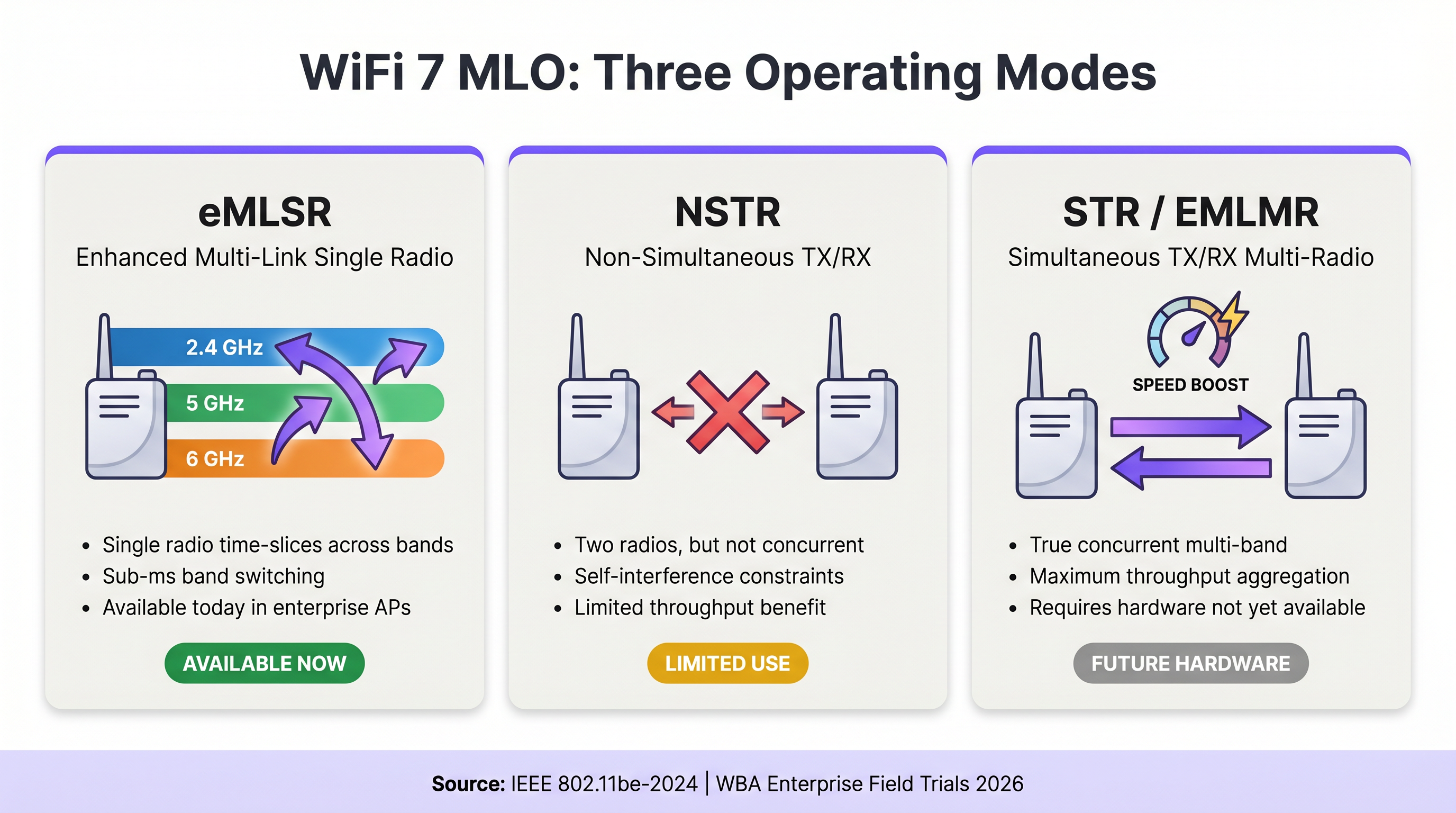
मार्केटिंग सामग्री अनेकदा MLO ला एकच मोठे वैशिष्ट्य म्हणून सादर करत असली तरी, IEEE 802.11be मानक तीन भिन्न ऑपरेटिंग मोड्स परिभाषित करते. हार्डवेअर क्षमतांचे मूल्यमापन करणाऱ्या आणि डिप्लॉयमेंट टाइमलाइनचे नियोजन करणाऱ्या नेटवर्क आर्किटेक्ट्ससाठी हे मोड्स समजून घेणे महत्त्वाचे आहे.
1. एन्हान्स्ड मल्टी-लिंक सिंगल रेडिओ (eMLSR)
एन्हान्स्ड मल्टी-लिंक सिंगल रेडिओ ही सध्याच्या एंटरप्राइझ ॲक्सेस पॉइंट्स आणि क्लायंट डिव्हाइसेसमध्ये उपलब्ध असलेली मूलभूत MLO अंमलबजावणी आहे. या मोडमध्ये, क्लायंट डिव्हाइस एकाच रेडिओचा वापर करते जे वेगाने अनेक बँड्सवर टाइम-स्लाइस करते. विशेष म्हणजे, डिव्हाइस स्वतंत्र रिसीव्ह चेन्स राखते, ज्यामुळे ते एकाच वेळी 5 GHz आणि 6 GHz बँड्स ऐकू शकते. जेव्हा ट्रान्समिट किंवा रिसीव्ह करण्याची संधी येते, तेव्हा ते डायनॅमिकपणे आपला प्राथमिक रेडिओ इष्टतम बँडवर स्विच करते.
eMLSR खऱ्या अर्थाने एकाच वेळी ट्रान्समिशन आणि रिसेप्शन प्रदान करत नसले तरी, ते सब-मिलिसेकंद बँड स्विचिंग ऑफर करते. हे लेगसी बँड स्टिअरिंगच्या तुलनेत एक मोठी झेप दर्शवते, जे जवळजवळ-सीमलेस फेलओव्हर प्रदान करते आणि गर्दीच्या वातावरणात लेटन्सी लक्षणीयरीत्या कमी करते. 2025 आणि 2026 मधील एंटरप्राइझ डिप्लॉयमेंटसाठी, eMLSR हे MLO चे बहुतांश तात्काळ फायदे देणारे व्यावहारिक वास्तव आहे. वायरलेस ब्रॉडबँड अलायन्सच्या फेज 2 एंटरप्राइझ फील्ड चाचण्यांनी पुष्टी केली की eMLSR को-चॅनेल हस्तक्षेपाखाली 75% डाउनलिंक आणि 116% अपलिंक थ्रूपुट सुधारणा देते, तसेच रिअल-टाइम ट्रॅफिकसाठी डाउनलिंक लेटन्सीमध्ये 44% पर्यंत घट करते.
2. नॉन-सायमल्टेनियस ट्रान्समिट अँड रिसीव्ह (NSTR)
नॉन-सायमल्टेनियस ट्रान्समिट अँड रिसीव्ह एकाधिक फिजिकल रेडिओ वापरते परंतु सेल्फ-इंटरफेरन्स (स्वयं-हस्तक्षेप) मर्यादांमुळे त्यांना एकाच वेळी ऑपरेट करण्यापासून प्रतिबंधित करते. जर एखादे डिव्हाइस 5 GHz बँडवर ट्रान्समिट करत असेल, तर परिणामी रेडिओ फ्रिक्वेन्सी नॉइज त्याला एकाच वेळी 6 GHz बँडवर विश्वासार्हपणे डेटा प्राप्त करण्यापासून प्रतिबंधित करतो. eMLSR च्या डायनॅमिक चपळतेच्या किंवा खऱ्या अर्थाने एकाच वेळी ऑपरेशनच्या अंतिम ध्येयाच्या तुलनेत NSTR कडे मर्यादित वास्तविक-जगातील उपयुक्तता असलेली एक मध्यवर्ती पायरी म्हणून पाहिले जाते.
3. सायमल्टेनियस ट्रान्समिट अँड रिसीव्ह (STR / EMLMR)
मल्टी-लिंक ऑपरेशन स्पेसिफिकेशनचे शिखर म्हणजे सायमल्टेनियस ट्रान्समिट अँड रिसीव्ह, जे एन्हान्स्ड मल्टी-लिंक मल्टी-रेडिओ (EMLMR) सक्षम करते. हा मोड डिव्हाइसला एकाच वेळी अनेक बँड्सवर डेटा ट्रान्समिट आणि रिसीव्ह करण्याची परवानगी देतो, थ्रूपुट एकत्रित करतो आणि WiFi 7 चे सैद्धांतिक कमाल कार्यप्रदर्शन देतो. STR साध्य करण्यासाठी सब-मायक्रोसेकंद टायमिंग अलाइनमेंट आणि सेल्फ-इंटरफेरन्स कमी करण्यासाठी अत्याधुनिक स्पेक्ट्रम रिसोर्स शेड्युलिंग (SRS) सक्षम असलेल्या अत्यंत प्रगत हार्डवेअरची आवश्यकता असते. 2026 च्या सुरुवातीपर्यंत, कोणतेही ग्राहक किंवा एंटरप्राइझ हार्डवेअर खऱ्या अर्थाने STR ची पूर्णपणे अंमलबजावणी करत नाही, ज्यामुळे तो सध्याच्या डिप्लॉयमेंट विचाराऐवजी भविष्यातील क्षमता बनतो.
अंमलबजावणी मार्गदर्शक: MLO वि. लेगसी बँड स्टिअरिंग
WiFi 7 रोलआउट्सचे नियोजन करणाऱ्या नेटवर्क इंजिनिअर्ससाठी, सर्वात तात्काळ ऑपरेशनल बदल म्हणजे पारंपारिक बँड स्टिअरिंग कालबाह्य होणे. ऐतिहासिकदृष्ट्या, एंटरप्राइझ वायरलेस LAN कंट्रोलर्स ड्युअल-बँड क्लायंट्सना 2.4 GHz वरील त्यांच्या प्रोब विनंत्यांकडे दुर्लक्ष करून कमी गर्दीच्या 5 GHz स्पेक्ट्रमवर सक्तीने पाठवण्यासाठी बँड स्टिअरिंगचा वापर करत असत. हा नेटवर्क-केंद्रित दृष्टीकोन मूळतः व्यत्यय आणणारा होता, कारण क्लायंट डिव्हाइस स्टिअरिंग लॉजिकबद्दल अनभिज्ञ राहायचे आणि सक्तीच्या संक्रमणादरम्यान कनेक्शन ड्रॉपचा अनुभव घ्यायचे.
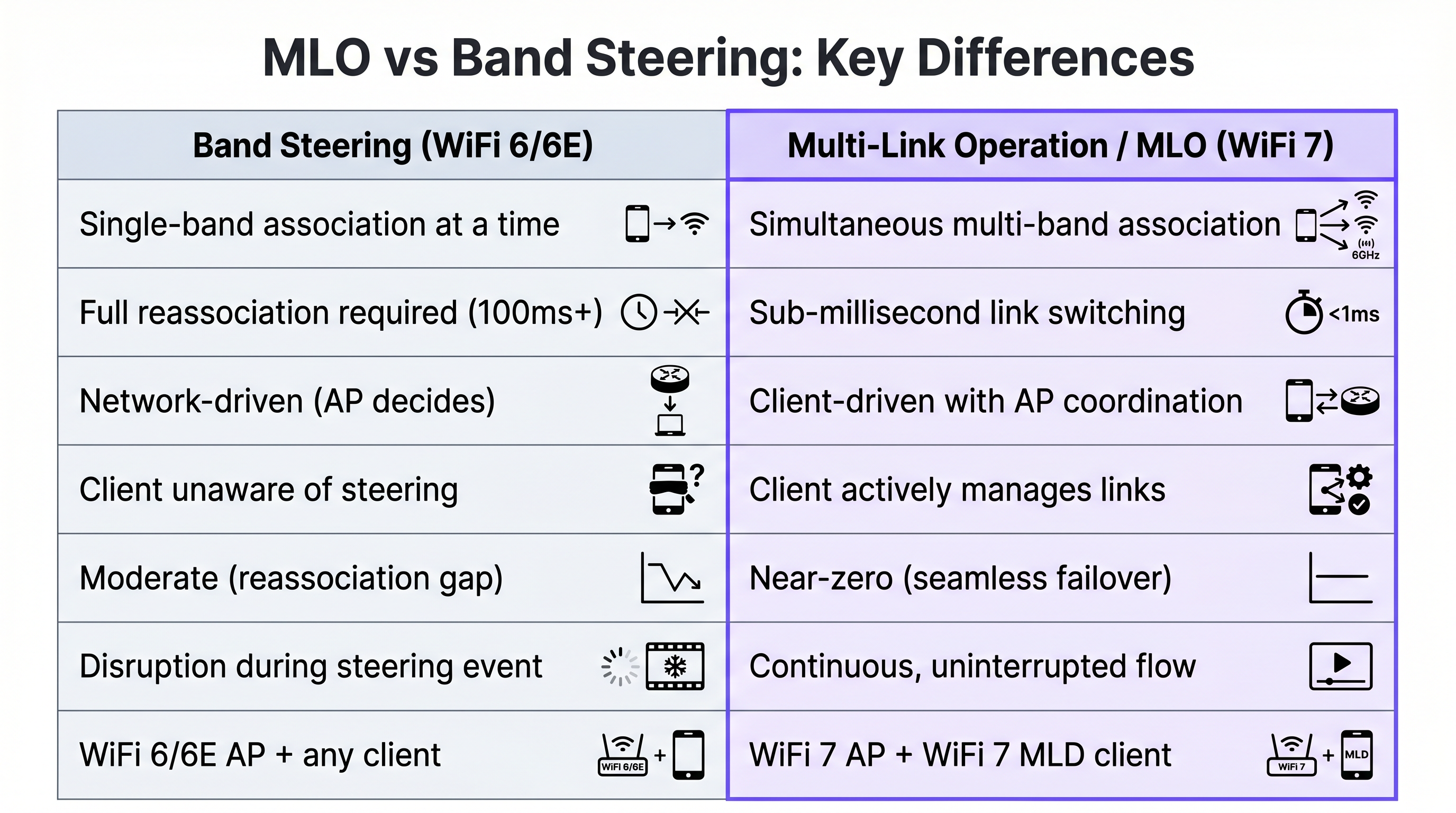
MLO या पॅराडाइमला क्लायंट-चालित, AP-समन्वित दृष्टिकोनाने बदलते. क्लायंट एकाच वेळी अनेक लिंक्सची जागरूकता राखत असल्यामुळे, ते अंतर्निहित लॉजिकल कनेक्शन न तोडता रिअल-टाइम चॅनेल परिस्थितीवर आधारित ट्रॅफिक अखंडपणे हलवू शकते. हे विशेषतः उच्च-घनतेच्या ठिकाणी Guest WiFi डिप्लॉयमेंटसाठी महत्त्वपूर्ण आहे जेथे रोमिंग आणि हस्तक्षेप ही सततची आव्हाने असतात. विमानतळ आणि रेल्वे टर्मिनल्स सारख्या Transport हबसाठी, जेथे प्रवासी कव्हरेज झोनमधून वेगाने फिरतात, रिअसोसिएशन विलंब दूर केल्याने मोबाइल चेक-इन आणि वेफाइंडिंग ॲप्लिकेशन्सची गुणवत्ता थेट सुधारते.
डिप्लॉयमेंट तयारी आणि इकोसिस्टम
MLO डिप्लॉयमेंटचे यश पूर्णपणे क्लायंट इकोसिस्टमवर अवलंबून असते. WiFi 7 ॲक्सेस पॉइंट फक्त तेव्हाच MLO चा फायदा घेऊ शकतो जेव्हा तो WiFi 7 MLD-सक्षम क्लायंटशी संवाद साधत असतो. लेगसी WiFi 6 आणि 6E डिव्हाइसेस सामान्यपणे कनेक्ट होतील परंतु त्यांना मल्टी-लिंक क्षमतांचा फायदा होणार नाही.
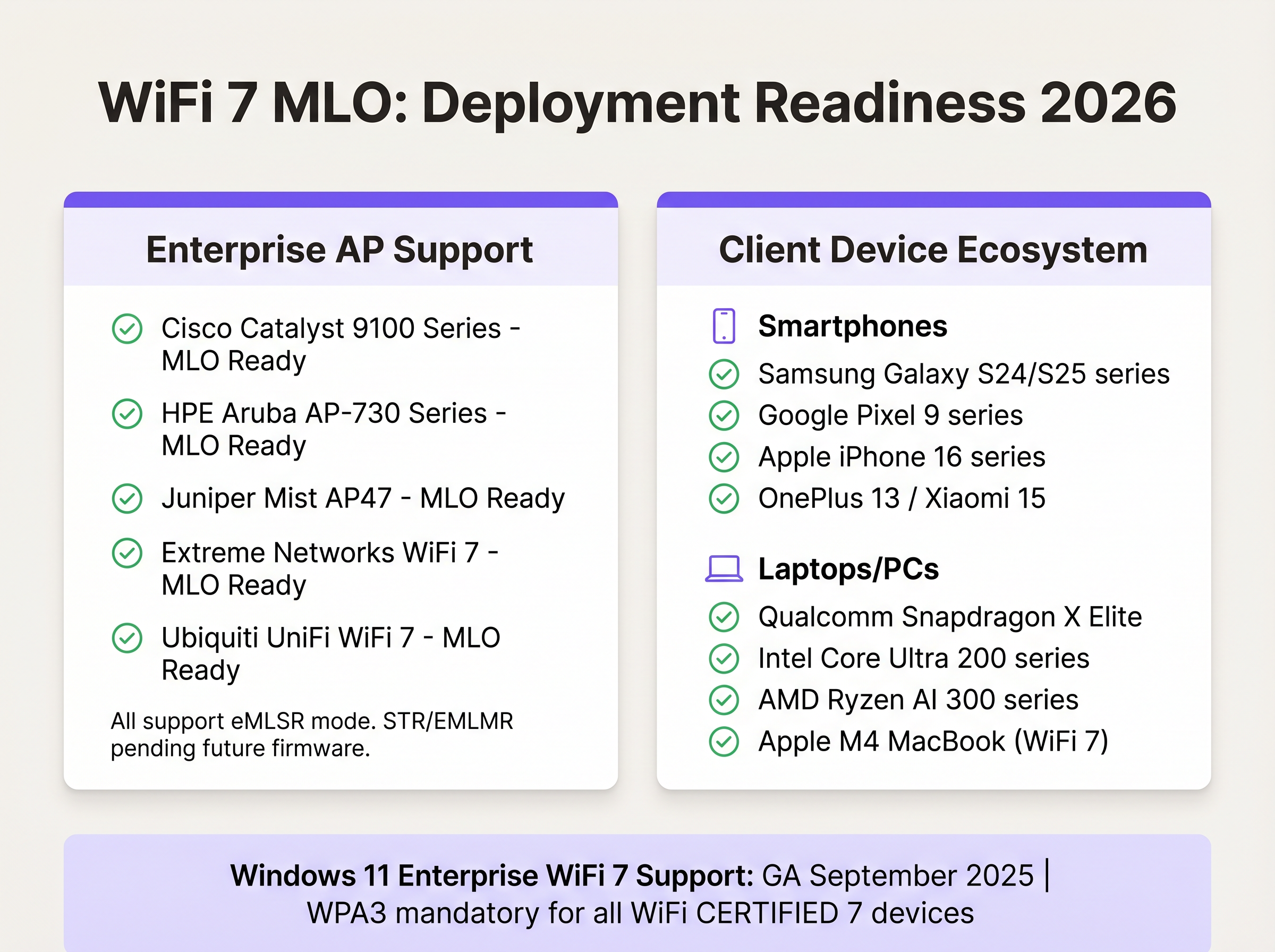
2026 पर्यंत, एंटरप्राइझ इकोसिस्टम वेगाने परिपक्व होत आहे. Cisco, HPE Aruba, आणि Juniper Mist यांसारखे प्रमुख ॲक्सेस पॉइंट व्हेंडर्स eMLSR ला सपोर्ट करणारे मजबूत WiFi 7 हार्डवेअर ऑफर करतात. क्लायंटच्या बाजूने, Samsung Galaxy S24/S25 सिरीज आणि Apple iPhone 16 सिरीज सारखे फ्लॅगशिप स्मार्टफोन्स, तसेच Qualcomm Snapdragon X Elite आणि Intel Core Ultra प्रोसेसर्सद्वारे समर्थित लॅपटॉप्स, नेटिव्ह MLO सपोर्ट प्रदान करतात. शिवाय, सप्टेंबर 2025 मध्ये Windows 11 एंटरप्राइझ WiFi 7 सपोर्टच्या सामान्य उपलब्धतेने व्यापक कॉर्पोरेट अवलंबनाचा मार्ग मोकळा केला आहे.
| व्हेंडर | प्लॅटफॉर्म | MLO मोड | स्थिती |
|---|---|---|---|
| Cisco | Catalyst 9100 Series | eMLSR | उपलब्ध |
| HPE Aruba | AP-730 Series | eMLSR | उपलब्ध |
| Juniper Mist | AP47 | eMLSR | उपलब्ध |
| Extreme Networks | WiFi 7 APs | eMLSR | उपलब्ध |
| Ubiquiti | UniFi WiFi 7 | eMLSR | उपलब्ध |
| All vendors | STR / EMLMR | ट्रू सायमल्टेनियस | भविष्यातील फर्मवेअर |
एंटरप्राइझ रोलआउट्ससाठी सर्वोत्तम पद्धती
WiFi 7 नेटवर्क डिझाइन करताना, आर्किटेक्ट्सनी MLO चे जास्तीत जास्त फायदे मिळवण्यासाठी त्यांच्या RF प्लॅनिंगमध्ये बदल करणे आवश्यक आहे. SSID द्वारे बँड्स आक्रमकपणे वेगळे करण्याचा पारंपारिक दृष्टीकोन आता इष्टतम राहिलेला नाही आणि तो MLO कार्यप्रदर्शनासाठी सक्रियपणे हानिकारक आहे.
युनिफाइड SSID कॉन्फिगरेशन. MLO सक्षम करण्यासाठी, ॲक्सेस पॉइंट्सनी सर्व सहभागी बँड्सवर (सामान्यतः 5 GHz आणि 6 GHz, आणि वैकल्पिकरित्या 2.4 GHz) एक युनिफाइड SSID ब्रॉडकास्ट करणे आवश्यक आहे. फ्रिक्वेन्सीनुसार SSIDs विभाजित करणे (उदा., 'Corp-5G' आणि 'Corp-6G') मूलभूतपणे MLO कार्यक्षमता खंडित करते, कारण क्लायंटने बँड्सना एकच लॉजिकल एंटिटी म्हणून समजणे आवश्यक आहे. हा युनिफाइड दृष्टीकोन आधुनिक Guest WiFi आर्किटेक्चरशी चांगला जुळतो जेथे सीमलेस ऑनबोर्डिंग सर्वोपरि आहे.
अनिवार्य WPA3 अंमलबजावणी. Wi-Fi अलायन्स सर्व Wi-Fi CERTIFIED 7 डिव्हाइसेससाठी WPA3 सुरक्षा अनिवार्य करते. शिवाय, MLO ला जटिल वाटाघाटी आणि लिंक व्यवस्थापन प्रक्रिया सुरक्षित करण्यासाठी प्रोटेक्टेड मॅनेजमेंट फ्रेम्स (PMF) ची आवश्यकता असते. नेटवर्क ॲडमिनिस्ट्रेटर्सनी WiFi 7 मायग्रेशन सुरू करण्यापूर्वी RADIUS सर्व्हर्स आणि आयडेंटिटी प्रोव्हायडर्स WPA3-एंटरप्राइझ आवश्यकतांचे पूर्णपणे पालन करत असल्याची खात्री करणे आवश्यक आहे. तपशीलवार अनुपालन धोरणांसाठी, आमचे ISO 27001 Guest WiFi: A Compliance Primer पहा. PCI DSS किंवा GDPR दायित्वांतर्गत काम करणाऱ्या संस्थांनी हे लक्षात घ्यावे की WPA3 च्या वर्धित क्रिप्टोग्राफिक आवश्यकता (GCMP-256 आणि SAE-GDH सह) WPA2 पेक्षा अधिक मजबूत अनुपालन बेसलाइन प्रदान करतात.
ट्रॅफिक आयडेंटिफायर (TID) मॅपिंग. प्रगत एंटरप्राइझ डिप्लॉयमेंटने TID-टू-लिंक मॅपिंग (T2LM) चा फायदा घेतला पाहिजे. हे वैशिष्ट्य ॲक्सेस पॉइंटला नियुक्त केलेल्या लिंक्सवर ट्रॅफिकच्या विशिष्ट श्रेणी नियुक्त करण्याची परवानगी देते. उदाहरणार्थ, लेटन्सी-संवेदनशील व्हॉइस आणि व्हिडिओ ट्रॅफिक केवळ क्लीन 6 GHz बँडवर मॅप केले जाऊ शकते, तर मोठ्या प्रमाणातील डेटा ट्रान्सफर 5 GHz बँडवर पाठवले जाते. हे ग्रॅन्युलर नियंत्रण Healthcare वातावरणासाठी आवश्यक आहे जेथे रुग्णांच्या मनोरंजनाच्या ट्रॅफिकपेक्षा टेलिमेट्री डेटाला प्राधान्य दिले जाणे आवश्यक आहे. Retail वातावरणात, कार्यप्रदर्शन आणि सुरक्षा या दोन्ही कारणांसाठी पॉइंट-ऑफ-सेल ट्रान्झॅक्शन ट्रॅफिक सामान्य अतिथी ब्राउझिंगपासून वेगळे केले जाऊ शकते.
DNS फिल्टरिंग इंटिग्रेशन. अतिथी ॲक्सेससाठी युनिफाइड MLO SSIDs डिप्लॉय करताना, DNS फिल्टरिंग अधिक गंभीर बनते कारण एकच SSID आता सर्व बँड्सवरील उपकरणांच्या विस्तृत श्रेणीला सेवा देतो. WiFi 7 रोलआउटला पूरक असलेल्या अंमलबजावणी मार्गदर्शनासाठी DNS Filtering for Guest WiFi: Blocking Malware and Inappropriate Content वरील आमचे मार्गदर्शक पहा.
ट्रबलशूटिंग आणि रिस्क मिटिगेशन (जोखीम कमी करणे)
त्याचे फायदे असूनही, MLO नेटवर्क ट्रबलशूटिंगमध्ये नवीन गुंतागुंत आणते. प्राथमिक धोक्यामध्ये असिमेट्रिक लिंक क्वालिटी (असममित लिंक गुणवत्ता) समाविष्ट आहे, जेथे क्लायंट गंभीरपणे खराब झालेल्या बँडवर कनेक्शन राखतो कारण दुय्यम बँड वरवर पाहता स्थिर दिसतो.
असिमेट्रिक पॉवर लेव्हल्स. जर 6 GHz रेडिओची ट्रान्समिट पॉवर 5 GHz रेडिओपेक्षा लक्षणीयरीत्या कमी असेल, तर क्लायंट 'स्टिकी' वर्तन अनुभवू शकतात, 6 GHz लिंक प्रभावीपणे वापरण्यास नकार देऊ शकतात. नेटवर्क इंजिनिअर्सनी RF डिझाइन टप्प्यात बँड्सवर सेल आकार काळजीपूर्वक संतुलित करणे आवश्यक आहे.
लेगसी क्लायंट स्टार्व्हेशन. मिश्र वातावरणात, लेगसी WiFi 6 क्लायंट्सना आक्रमक WiFi 7 MLD क्लायंट्स विरुद्ध एअरटाइमसाठी स्पर्धा करण्यासाठी संघर्ष करावा लागू शकतो जे वेगाने बँड्स दरम्यान हॉप करू शकतात. संक्रमण कालावधीत कठोर एअरटाइम फेअरनेस धोरणे लागू करणे महत्त्वपूर्ण आहे. Hospitality वातावरणात ही एक विशेषतः तीव्र चिंता आहे जेथे अतिथी उपकरणांचे मिश्रण एकाधिक WiFi पिढ्यांमध्ये पसरलेले असते.
Captive Portal मधील व्यत्यय. Retail आणि Hospitality वातावरणात, आक्रमक लिंक स्विचिंग कधीकधी खराब कॉन्फिगर केलेल्या Captive Portal वर खोटे री-ऑथेंटिकेशन ट्रिगर करू शकते. नेटवर्क इन्फ्रास्ट्रक्चर प्रति-लिंक MAC ॲड्रेस ऐवजी MLD MAC ॲड्रेस वापरून ARPs योग्यरित्या रिझॉल्व्ह करते याची खात्री केल्याने ही समस्या सुटते. Purple चे Guest WiFi प्लॅटफॉर्म MLD MAC ॲब्स्ट्रॅक्शन नेटिव्हली हाताळते, या प्रकारच्या ऑनबोर्डिंग अपयशाला प्रतिबंधित करते.
ॲनालिटिक्स व्हिजिबिलिटी. MAC ॲड्रेसद्वारे क्लायंटचा मागोवा घेणाऱ्या पारंपारिक WiFi Analytics प्लॅटफॉर्म्सना MLO वातावरणात आव्हानांचा सामना करावा लागू शकतो जेथे प्रति-लिंक MAC ॲड्रेस MLD MAC पेक्षा भिन्न असतात. अचूक क्लायंट ट्रॅकिंग, ड्वेल टाइम ॲनालिसिस आणि फूटफॉल रिपोर्टिंगसाठी MLD MAC ॲड्रेस कोरिलेट करण्यासाठी तुमचे ॲनालिटिक्स इन्फ्रास्ट्रक्चर अपडेट केले असल्याची खात्री करा.
ROI आणि व्यावसायिक प्रभाव
WiFi 7 मायग्रेशनसाठी गुंतवणुकीवरील परतावा (ROI) केवळ वेगापेक्षा ऑपरेशनल कार्यक्षमता आणि वापरकर्ता अनुभवाद्वारे चालविला जातो. स्टेडियम किंवा कॉन्फरन्स सेंटरसाठी, आपत्तीजनक लेटन्सी स्पाइक्सशिवाय हजारो समवर्ती कनेक्शन्सना सपोर्ट करण्याची क्षमता थेट महसूल निर्मितीवर परिणाम करते, मोबाइल कन्सेशन्स ऑर्डरिंगपासून ते इंटरएक्टिव्ह फॅन अनुभवांपर्यंत.
बँड स्टिअरिंगमध्ये अंतर्निहित व्यत्यय आणणारे रिअसोसिएशन दूर करून, MLO 'ड्रॉप कनेक्शन्स' किंवा 'पुअर रोमिंग' शी संबंधित हेल्पडेस्क तिकिटे नाटकीयरित्या कमी करते. WBA फेज 2 फील्ड चाचण्यांनी हे सिद्ध केले की हस्तक्षेप होतो तेव्हा eMLSR कार्यप्रदर्शन राखते, नॉन-MLO उपकरणांमध्ये दिसणारी कार्यप्रदर्शनातील घट टाळते — दाट गर्दीच्या ठिकाणी हा एक महत्त्वपूर्ण फरक आहे.
शिवाय, वायरलेस नेटवर्कची वर्धित विश्वासार्हता IoT इन्फ्रास्ट्रक्चरचा अवलंब करण्यास गती देते, समर्पित ओव्हरले नेटवर्कची आवश्यकता न ठेवता Wayfinding आणि पर्यावरणीय Sensors सारख्या उपक्रमांना समर्थन देते. LAFC स्टेडियम रोलआउट — WiFi 7 डिप्लॉय करणारे पहिले MLS ठिकाण — सारख्या अलीकडील मोठ्या प्रमाणावरील डिप्लॉयमेंट्समध्ये दाखवल्याप्रमाणे, MLO एंटरप्राइझ मोबिलिटीच्या पुढील दशकासाठी आवश्यक असलेला लवचिक पाया प्रदान करते.
लास्ट-माईल ॲक्सेस लेयर म्हणून WiFi 7 ला एकत्रित करणाऱ्या SD-WAN आर्किटेक्ट्ससाठी, MLO च्या विश्वासार्हतेतील सुधारणा The Core SD-WAN Benefits for Modern Businesses मध्ये चर्चा केलेल्या WAN-स्तरीय रिडंडन्सीला थेट पूरक आहेत. मल्टी-पाथ WAN आणि मल्टी-लिंक WiFi चे संयोजन खऱ्या अर्थाने लवचिक एंड-टू-एंड आर्किटेक्चर तयार करते.
| मेट्रिक | लेगसी WiFi 6 (बँड स्टिअरिंग) | WiFi 7 MLO (eMLSR) | सुधारणा |
|---|---|---|---|
| बँड स्विचिंग लेटन्सी | 100–300 ms | < 1 ms | ~200x वेगवान |
| हस्तक्षेपाखाली अपलिंक थ्रूपुट | बेसलाइन | +116% | WBA फील्ड ट्रायल |
| हस्तक्षेपाखाली डाउनलिंक थ्रूपुट | बेसलाइन | +75% | WBA फील्ड ट्रायल |
| अपलिंक लेटन्सी (रिअल-टाइम ट्रॅफिक) | बेसलाइन | -66% | WBA फील्ड ट्रायल |
| बँड स्विच दरम्यान पॅकेट लॉस | मध्यम | जवळपास-शून्य | सीमलेस फेलओव्हर |
संदर्भ
[1] IEEE Standards Association. "IEEE 802.11be-2024: Extremely High Throughput (EHT)." 2024. [2] Wireless Broadband Alliance. "Phase 2 Wi-Fi 7 MLO Enterprise Field Trials Report." मार्च 2026. [3] HPE Aruba Networking. "Wi-Fi 7 Features and Benefits Technical Documentation." डिसेंबर 2025. [4] RTINGS. "The Disappointing Truth About Wi-Fi 7: The Dream Of Multi-Link Operation Isn't Yet Here." फेब्रुवारी 2026. [5] Microsoft. "Introducing Wi-Fi 7 for enterprise connectivity — Windows IT Pro Blog." सप्टेंबर 2025. [6] Forbes. "What Every CIO Can Learn From MLS's First Wi-Fi 7 Stadium." मार्च 2026.
महत्वाच्या व्याख्या
मल्टी-लिंक ऑपरेशन (MLO)
एक अनिवार्य WiFi 7 (IEEE 802.11be) वैशिष्ट्य जे मल्टी-लिंक डिव्हाइसेसना एकाच लॉजिकल कनेक्शनद्वारे एकाच वेळी अनेक फ्रिक्वेन्सी बँड्सवर (2.4, 5, आणि 6 GHz) असोसिएट आणि संवाद साधण्यास सक्षम करते, सीमलेस फेलओव्हर आणि कमी लेटन्सी प्रदान करते.
लेगसी बँड स्टिअरिंगची जागा घेणारे मूलभूत तंत्रज्ञान. WiFi 7 हार्डवेअर स्पेसिफिकेशन्सचे मूल्यमापन करताना आणि नवीन डिप्लॉयमेंटसाठी SSID आर्किटेक्चरचे नियोजन करताना IT टीम्सना ही संज्ञा आढळते.
मल्टी-लिंक डिव्हाइस (MLD)
कोणताही नेटवर्क नोड — क्लायंट डिव्हाइस किंवा ॲक्सेस पॉइंट — जो मल्टी-लिंक ऑपरेशनला सपोर्ट करण्यास सक्षम आहे. MLD एका MLD MAC ॲड्रेस आणि एकाधिक प्रति-लिंक MAC ॲड्रेससह एकाच MAC-लेयर एंटिटीमध्ये एकाधिक फिजिकल रेडिओ ॲब्स्ट्रॅक्ट करते.
MLO साठी नेटवर्क तयारीचे ऑडिट करताना, IT टीम्सनी हे सत्यापित करणे आवश्यक आहे की ॲक्सेस पॉइंट्स आणि एंड-यूझर एंडपॉइंट्स दोन्ही प्रमाणित MLDs आहेत. लेगसी WiFi 6 डिव्हाइसेस MLDs नाहीत आणि ते MLO मध्ये सहभागी होऊ शकत नाहीत.
एन्हान्स्ड मल्टी-लिंक सिंगल रेडिओ (eMLSR)
एक MLO ऑपरेटिंग मोड जेथे डिव्हाइस एकाच वेळी अनेक बँड्स ऐकण्यासाठी स्वतंत्र रिसीव्ह चेन्स राखते, आणि नंतर इष्टतम बँडवर ट्रान्समिट किंवा रिसीव्ह करण्यासाठी त्याच्या सिंगल रेडिओला वेगाने टाइम-स्लाइस करते. स्विचिंग सब-मिलिसेकंद टाइमफ्रेममध्ये होते.
2025/2026 एंटरप्राइझ हार्डवेअरमध्ये लागू केलेला प्राथमिक MLO मोड. नेटवर्क आर्किटेक्ट्सनी प्रोक्युअरमेंट आवश्यकतांमध्ये eMLSR सपोर्ट स्पष्टपणे नमूद केला पाहिजे.
सायमल्टेनियस ट्रान्समिट अँड रिसीव्ह (STR / EMLMR)
एक प्रगत MLO मोड जो डिव्हाइसला एका बँडवर ट्रान्समिट करताना एकाच वेळी दुसऱ्या बँडवर रिसीव्ह करण्यास सक्षम करतो, एकूण थ्रूपुट वाढवतो. यासाठी सब-मायक्रोसेकंद हार्डवेअर टायमिंग अलाइनमेंट आवश्यक आहे जे अद्याप शिपिंग एंटरप्राइझ उपकरणांमध्ये उपलब्ध नाही.
भविष्यातील-स्थिती क्षमता. IT लीडर्सनी व्हेंडर मार्केटिंगबद्दल सावधगिरी बाळगली पाहिजे जे सूचित करते की STR आज उपलब्ध आहे; 2026 च्या सुरुवातीपर्यंत कोणत्याही शिपिंग एंटरप्राइझ ॲक्सेस पॉइंटमध्ये ते उपस्थित नाही.
TID-टू-लिंक मॅपिंग (T2LM)
एक WiFi 7 प्रोटोकॉल वैशिष्ट्य जे नेटवर्कला विशिष्ट ट्रॅफिक आयडेंटिफायर्स (TIDs) — जसे की व्हॉइस, व्हिडिओ किंवा बॅकग्राउंड डेटा — समर्पित फिजिकल फ्रिक्वेन्सी बँड्सवर नियुक्त करण्याची परवानगी देते, पॉलिसी-चालित ट्रॅफिक प्राधान्य सक्षम करते.
मोठ्या प्रमाणातील डेटा ट्रान्सफरपासून मिशन-क्रिटिकल लेटन्सी-संवेदनशील ॲप्लिकेशन्स वेगळे करण्यासाठी नेटवर्क आर्किटेक्ट्सद्वारे वापरले जाते. विशेषतः आरोग्यसेवा, औद्योगिक आणि आर्थिक व्यापार वातावरणात मौल्यवान.
अप्पर MAC (U-MAC)
सर्व फिजिकल लिंक्सवर सर्वसमावेशक कनेक्शन स्थिती, सुरक्षा असोसिएशन (PMKSA), एन्क्रिप्शन आणि सिक्वेन्स नंबरिंगसाठी जबाबदार असलेल्या MLD आर्किटेक्चरचा लॉजिकल भाग.
हे सुनिश्चित करते की जेव्हा क्लायंट बँड्स दरम्यान स्विच करतो, तेव्हा त्याला सुरक्षा कीज पुन्हा निगोशिएट करण्याची किंवा सेशन रीस्टार्ट करण्याची आवश्यकता नसते, खऱ्या अर्थाने सीमलेस रोमिंग सक्षम करते.
लोअर MAC (L-MAC)
विशिष्ट फ्रिक्वेन्सी बँडसाठी चॅनेल ॲक्सेस, बीकनिंग, RTS/CTS कंट्रोल फ्रेम्स आणि हार्डवेअर-स्तरीय ट्रान्समिशनसाठी जबाबदार असलेल्या MLD आर्किटेक्चरचा फिजिकल भाग.
प्रत्येक बँडसाठी स्वतंत्रपणे रॉ रेडिओ फ्रिक्वेन्सी कंटेंशन व्यवस्थापित करते, ज्यामुळे U-MAC ला स्थानिक हस्तक्षेप इव्हेंट्सपासून ॲब्स्ट्रॅक्ट राहण्याची परवानगी मिळते.
प्रोटेक्टेड मॅनेजमेंट फ्रेम्स (PMF)
एक IEEE 802.11w सुरक्षा यंत्रणा जी नेटवर्क मॅनेजमेंट ट्रॅफिक एन्क्रिप्ट करते, मॅनेजमेंट प्लेनवरील डीऑथेंटिकेशन हल्ले, स्पूफिंग आणि मॅन-इन-द-मिडल हल्ले प्रतिबंधित करते.
सर्व WiFi 7 डिप्लॉयमेंटसाठी अनिवार्य आणि MLO साठी पूर्वअट. PMF सपोर्ट नसलेले लेगसी क्लायंट्स आधुनिक सुरक्षित MLO नेटवर्क्समध्ये सामील होऊ शकणार नाहीत, ज्यासाठी काळजीपूर्वक संक्रमण नियोजन आवश्यक आहे.
सोडवलेली उदाहरणे
एका 400-खोल्यांच्या लक्झरी हॉटेलमध्ये स्मार्ट रूम IoT (लायटिंग, HVAC) आणि हाय-बँडविड्थ गेस्ट स्ट्रीमिंगला सपोर्ट करण्यासाठी WiFi 7 वर अपग्रेड केले जात आहे. सध्याच्या WiFi 6 नेटवर्कमध्ये आक्रमक बँड स्टिअरिंगमुळे कर्मचारी मजल्यांदरम्यान फिरताना VoIP कॉल्स ड्रॉप होण्याची समस्या आहे. हे सोडवण्यासाठी नेटवर्क आर्किटेक्टने नवीन WiFi 7 इन्फ्रास्ट्रक्चर कसे कॉन्फिगर करावे?
आर्किटेक्टने सर्व कॉरिडॉर आणि उच्च-घनतेच्या भागात eMLSR ला सपोर्ट करणारे WiFi 7 ॲक्सेस पॉइंट्स डिप्लॉय केले पाहिजेत, विशेषतः जिने आणि लिफ्ट लॉबीजमध्ये कव्हरेज ओव्हरलॅपवर लक्ष दिले पाहिजे जेथे रोमिंग इव्हेंट्स वारंवार होतात. महत्त्वपूर्ण कॉन्फिगरेशन बदल म्हणजे सर्व फ्रिक्वेन्सी बँड्स एकाच, युनिफाइड SSID अंतर्गत एकत्रित करणे — उदाहरणार्थ, 'Hotel_Staff_Secure' — जे 5 GHz आणि 6 GHz दोन्हीवर ब्रॉडकास्ट होते. फ्रिक्वेन्सी बँडनुसार SSIDs विभाजित करणे स्पष्टपणे टाळले पाहिजे, कारण ते क्लायंटच्या अप्पर MAC ला मल्टी-लिंक असोसिएशन स्थापित करण्यापासून प्रतिबंधित करते आणि नेटवर्कला लेगसी सिंगल-बँड वर्तनाकडे परत आणते. प्रोटेक्टेड मॅनेजमेंट फ्रेम्स अनिवार्य सेट करून WPA3-एंटरप्राइझ लागू केले पाहिजे. शेवटी, वायरलेस LAN कंट्रोलरवर TID-टू-लिंक मॅपिंग कॉन्फिगर केले पाहिजे जेणेकरून व्हॉइस ट्रॅफिक (TID 6 आणि 7) काटेकोरपणे 6 GHz बँडवर मॅप केले जाईल, कर्मचारी उपकरणांसाठी उत्कृष्ट VoIP कार्यप्रदर्शन सुनिश्चित करेल आणि अतिथी स्ट्रीमिंग ट्रॅफिकला रिअल-टाइम उपलब्धतेवर आधारित डायनॅमिकपणे 5 GHz किंवा 6 GHz वापरण्याची अनुमती देईल.
एका मोठ्या रिटेल डिस्ट्रिब्युशन वेअरहाऊसमध्ये ऑटोनॉमस गायडेड व्हेइकल्स (AGVs) डिप्लॉय केले जात आहेत ज्यांना सेफ्टी शटडाउन टाळण्यासाठी सब-20ms लेटन्सी आवश्यक आहे. वेअरहाऊसमध्ये लक्षणीय मेटॅलिक रॅकिंग आहे ज्यामुळे गंभीर मल्टीपाथ हस्तक्षेप आणि जलद सिग्नल डिग्रेडेशन होते. या विशिष्ट आव्हानासाठी लेगसी WiFi 6 पेक्षा WiFi 7 MLO हा एक चांगला उपाय का आहे आणि प्रोक्युअरमेंट आवश्यकतांमध्ये कोणता विशिष्ट मोड नमूद केला पाहिजे?
प्रोक्युअरमेंट स्पेसिफिकेशनमध्ये eMLSR मोडला सपोर्ट करणारे WiFi 7 ॲक्सेस पॉइंट्स आणि क्लायंट मॉड्यूल्स आवश्यक असले पाहिजेत. लेगसी WiFi 6 सिंगल-बँड असोसिएशनवर अवलंबून असते: जेव्हा एखादे AGV मेटॅलिक रॅकच्या मागे जाते आणि त्याचा 5 GHz सिग्नल गमावते, तेव्हा त्याला 2.4 GHz बँडवर पूर्ण रिअसोसिएशन सुरू करावे लागते. या प्रक्रियेस 100-300 मिलिसेकंद लागतात, जे 20ms सुरक्षा थ्रेशोल्ड ओलांडते आणि AGV ला इमर्जन्सी स्टॉप ट्रिगर करण्यास कारणीभूत ठरते. eMLSR मोडमध्ये WiFi 7 MLO सह, AGV क्लायंट एकाधिक बँड्सवर एकाच वेळी लॉजिकल असोसिएशन राखतो. तो एकाच वेळी 5 GHz आणि 2.4 GHz दोन्ही सक्रियपणे ऐकतो. जेव्हा मेटॅलिक रॅकिंगमुळे 5 GHz सिग्नल खराब होतो, तेव्हा AGV त्याचे ट्रान्समिशन 1 मिलिसेकंदापेक्षा कमी वेळेत 2.4 GHz लिंकवर स्विच करतो — जे 20ms सुरक्षा आवश्यकतेच्या आत आरामात बसते. प्रोक्युअरमेंट स्पेसिफिकेशनमध्ये TID-टू-लिंक मॅपिंग सपोर्ट देखील आवश्यक असावा जेणेकरून सेफ्टी-क्रिटिकल टेलिमेट्री स्ट्रीम नेहमी सर्वात विश्वासार्ह उपलब्ध बँडवर पिन केली जाऊ शकेल.
सराव प्रश्न
Q1. तुमचे युनिव्हर्सिटी कॅम्पस WiFi 7 वर मायग्रेट होत आहे. सध्याचे नेटवर्क स्वतंत्र SSIDs वापरते: 'Campus-Legacy' (2.4 GHz) आणि 'Campus-Fast' (5 GHz आणि 6 GHz). IT डायरेक्टरला WiFi 7 चिपसेट्स असलेल्या नवीन विद्यार्थ्यांच्या लॅपटॉप्ससाठी मल्टी-लिंक ऑपरेशनचे जास्तीत जास्त फायदे मिळवायचे आहेत. तुम्ही नवीन WiFi 7 ॲक्सेस पॉइंट्सवर SSIDs कसे कॉन्फिगर करावे आणि का?
टीप: MLO चे अप्पर MAC फिजिकल लिंक्सना एकाच लॉजिकल कनेक्शनमध्ये कसे ॲब्स्ट्रॅक्ट करते आणि त्या ॲब्स्ट्रॅक्शनला कार्य करण्यासाठी कोणते SSID कॉन्फिगरेशन आवश्यक आहे याचा विचार करा.
नमुना उत्तर पहा
तुम्ही नेटवर्क्स एकाच, युनिफाइड SSID मध्ये एकत्रित करणे आवश्यक आहे — उदाहरणार्थ, 'Campus-Secure' — जे सर्व उपलब्ध बँड्सवर (2.4, 5, आणि 6 GHz) ब्रॉडकास्ट केले जाते. फ्रिक्वेन्सीनुसार SSIDs विभाजित केल्याने क्लायंटच्या अप्पर MAC ला मल्टी-लिंक असोसिएशन स्थापित करण्यापासून प्रतिबंधित केले जाते, MLO कार्यक्षमता पूर्णपणे अक्षम होते आणि डिव्हाइसला लेगसी सिंगल-बँड ऑपरेशनमध्ये परत जाण्यास भाग पाडले जाते. युनिफाइड SSID क्लायंटला असोसिएशन दरम्यान AP सोबत मल्टी-लिंक क्षमतांवर वाटाघाटी करण्याची परवानगी देतो, सीमलेस बँड स्विचिंग आणि eMLSR चे पूर्ण विश्वासार्हता फायदे सक्षम करतो.
Q2. एक हॉस्पिटल IT डायरेक्टर वॉर्ड डिप्लॉयमेंटसाठी दोन WiFi 7 ॲक्सेस पॉइंट्सचे मूल्यमापन करत आहे. व्हेंडर A 'कमाल थ्रूपुटसाठी सायमल्टेनियस ट्रान्समिट अँड रिसीव्ह (STR)' चे जोरदार मार्केटिंग करतो. व्हेंडर B 'सब-मिलिसेकंद फेलओव्हर आणि सिद्ध विश्वासार्हतेसाठी ऑप्टिमाइझ्ड eMLSR' वर भर देतो. पेशंट मॉनिटरिंग उपकरणे वाहून नेणाऱ्या मोबाइल टेलिमेट्री कार्ट्ससाठी सतत, अखंड कनेक्टिव्हिटी सुनिश्चित करणे ही हॉस्पिटलची प्राथमिक आवश्यकता आहे. 2026 च्या डिप्लॉयमेंटसाठी कोणत्या व्हेंडरचा दृष्टीकोन अधिक सुसंगत आहे आणि IT डायरेक्टरने व्हेंडर A ला कोणता प्रश्न विचारला पाहिजे?
टीप: मार्केटिंग दाव्यांच्या विरूद्ध हार्डवेअर क्षमतांच्या सद्य स्थितीचे मूल्यमापन करा आणि विशिष्ट वापर केस आवश्यकतेसह तंत्रज्ञान निवडीची सांगड घाला.
नमुना उत्तर पहा
व्हेंडर B चा eMLSR वरील फोकस 2026 च्या डिप्लॉयमेंटसाठी अधिक सुसंगत आणि वास्तववादी आहे. 2026 च्या सुरुवातीपर्यंत, खऱ्या STR ला हार्डवेअर सिंक्रोनायझेशन क्षमतांची आवश्यकता आहे जी अद्याप शिपिंग एंटरप्राइझ उपकरणांमध्ये उपलब्ध नाही. शिवाय, हॉस्पिटलची प्राथमिक गरज विश्वासार्हता आहे — टेलिमेट्रीसाठी सतत कनेक्टिव्हिटी — केवळ थ्रूपुट नाही. eMLSR वॉर्ड्समधून कार्ट्स फिरत असताना लवचिक कनेक्शन्स राखण्यासाठी आवश्यक असलेले जलद, सब-मिलिसेकंद बँड स्विचिंग प्रदान करते. IT डायरेक्टरने व्हेंडर A ला विचारले पाहिजे: 'तुमचे हार्डवेअर IEEE 802.11be मध्ये परिभाषित केल्यानुसार EMLMR, SRS, आणि STR-MLMR लागू करते का, आणि या क्षमता क्लायंट्सना ॲडव्हर्टाइज केल्या जात असल्याची पुष्टी करणारे बीकन फ्रेम कॅप्चर्स तुम्ही देऊ शकता का?' जर व्हेंडर हा पुरावा देऊ शकत नसेल, तर STR मार्केटिंग दावा कार्यात्मक असण्याऐवजी केवळ महत्त्वाकांक्षी असण्याची शक्यता आहे.
Q3. रिटेल वातावरणात WiFi 7 च्या पायलट डिप्लॉयमेंट दरम्यान, इंजिनिअर्सच्या लक्षात आले की लेगसी WiFi 6 बारकोड स्कॅनर्सना वाढलेली लेटन्सी आणि ड्रॉप झालेल्या पॅकेट्सचा अनुभव येत आहे, तर नवीन WiFi 7 टॅब्लेट्स निर्दोषपणे कार्य करत आहेत. WiFi 7 APs युनिफाइड SSIDs आणि WPA3 सह योग्यरित्या कॉन्फिगर केलेले आहेत. लेगसी डिव्हाइस डिग्रेडेशनचे संभाव्य कारण काय आहे आणि कोणता कॉन्फिगरेशन बदल लागू केला पाहिजे?
टीप: सामायिक RF वातावरणात जुन्या, सिंगल-बँड उपकरणांसाठी उपलब्ध असलेल्या एअरटाइमवर एकाधिक बँड्स आणि जलद लिंक स्विचिंग वापरणाऱ्या प्रगत क्लायंट्सचा कसा परिणाम होऊ शकतो याचा विचार करा.
नमुना उत्तर पहा
संभाव्य कारण एअरटाइम स्टार्व्हेशन आहे. eMLSR वापरणारे WiFi 7 MLD क्लायंट्स क्लीन स्पेक्ट्रम शोधण्यासाठी वेगाने बँड्स दरम्यान हॉप करू शकतात, उपलब्ध एअरटाइम आक्रमकपणे वापरतात. मिश्र वातावरणात, लेगसी WiFi 6 बारकोड स्कॅनर्स — जे एकाच बँडवर चालतात आणि जुन्या कंटेंशन यंत्रणेचा वापर करतात — ट्रान्समिशनच्या संधींसाठी स्पर्धा करण्यासाठी संघर्ष करतात. यावर उपाय म्हणजे वायरलेस LAN कंट्रोलरवर कठोर एअरटाइम फेअरनेस धोरणे लागू करणे. हे सुनिश्चित करते की लेगसी उपकरणांना रेडिओ संसाधनांची हमी दिलेली टक्केवारी मिळते, संक्रमण कालावधीत WiFi 7 क्लायंट्सना उपलब्ध एअरटाइमची मक्तेदारी करण्यापासून प्रतिबंधित करते. दीर्घकालीन, संस्थेने लेगसी स्कॅनर्सना WiFi 7 MLD-सक्षम हार्डवेअरसह बदलण्याची योजना आखली पाहिजे.
या मालिकेमध्ये पुढे वाचा
Wi-Fi 7 (802.11be) स्पष्टीकरण: Enterprise WiFi मध्ये काय बदलणार
हे मार्गदर्शक 2026–2027 मध्ये इन्फ्रास्ट्रक्चर रिफ्रेशचे नियोजन करणाऱ्या IT मॅनेजर्स, नेटवर्क आर्किटेक्ट्स आणि CTOs साठी Wi-Fi 7 (IEEE 802.11be) वर एक निश्चित तांत्रिक संदर्भ प्रदान करते. यात चार मुख्य आर्किटेक्चरल प्रगती — Multi-Link Operation (MLO), 320 MHz चॅनेल्स, 4K-QAM मॉड्युलेशन, आणि Multi-RU — कव्हर केल्या आहेत, सोबत Wi-Fi 6E शी स्पष्ट तुलना, हॉस्पिटॅलिटी आणि रिटेलमधील रिअल-वर्ल्ड डिप्लॉयमेंट सिनेरिओज, आणि आवश्यक हार्डवेअर आणि स्विचिंग अपग्रेड्सचे स्पष्ट मूल्यांकन दिले आहे. Purple हार्डवेअर-अज्ञेयवादी (hardware-agnostic) आहे आणि कोणत्याही Wi-Fi 7 डिप्लॉयमेंटला सपोर्ट करते, ज्यामुळे हे मार्गदर्शक AP रिफ्रेशसोबत त्यांच्या गेस्ट WiFi आणि ऍनालिटिक्स स्टॅकचे मूल्यांकन करणाऱ्या टीम्ससाठी एक नैसर्गिक एंट्री पॉईंट बनते.
Wi-Fi 6E विरुद्ध Wi-Fi 7: तुम्ही 6E वगळून थेट 7 कडे जावे का?
2026 च्या वायरलेस हार्डवेअर रिफ्रेशचे मूल्यमापन करणाऱ्या आयटी डायरेक्टर्स आणि नेटवर्क आर्किटेक्ट्ससाठी एक सर्वसमावेशक निर्णय मार्गदर्शक. हे Wi-Fi 6E आणि Wi-Fi 7 ची तांत्रिक तुलना, सध्याचे व्हेंडर प्राईसिंग मॅट्रिक्स आणि हॉस्पिटॅलिटी, रिटेल आणि सार्वजनिक क्षेत्रातील हाय-डेन्सिटी ठिकाणांसाठी कृती करण्यायोग्य डिप्लॉयमेंट शिफारसी प्रदान करते — ज्यामुळे टीम्सना त्यांच्या विशिष्ट ऑपरेशनल आवश्यकतांसाठी Wi-Fi 7 चा प्रीमियम योग्य आहे की नाही हे ठरवण्यास मदत होते.
हाय-डेन्सिटी व्हेन्यूजसाठी Wi-Fi 7: स्टेडियम्स, कॉन्फरन्स हॉल्स आणि टर्मिनल्स
हे टेक्निकल रेफरन्स गाईड IT लीडर्स आणि नेटवर्क आर्किटेक्ट्सना स्टेडियम्स आणि ट्रान्झिट टर्मिनल्स सारख्या हाय-डेन्सिटी व्हेन्यूजमध्ये Wi-Fi 7 डिप्लॉय करण्यासाठी ॲक्शनेबल स्ट्रॅटेजीज प्रदान करते. हे मल्टी-लिंक ऑपरेशन (MLO), 4K-QAM आणि अंडर-सीट AP डिझाइन क्षमता कशी सुधारतात, हार्डवेअर आवश्यकता कशी कमी करतात आणि मोजता येण्याजोगा ROI कसा देतात हे एक्सप्लोर करते.