
WiFi সাইন-ইনের জন্য ইমেল ভেরিফিকেশন: ডেটার মান উন্নত করা
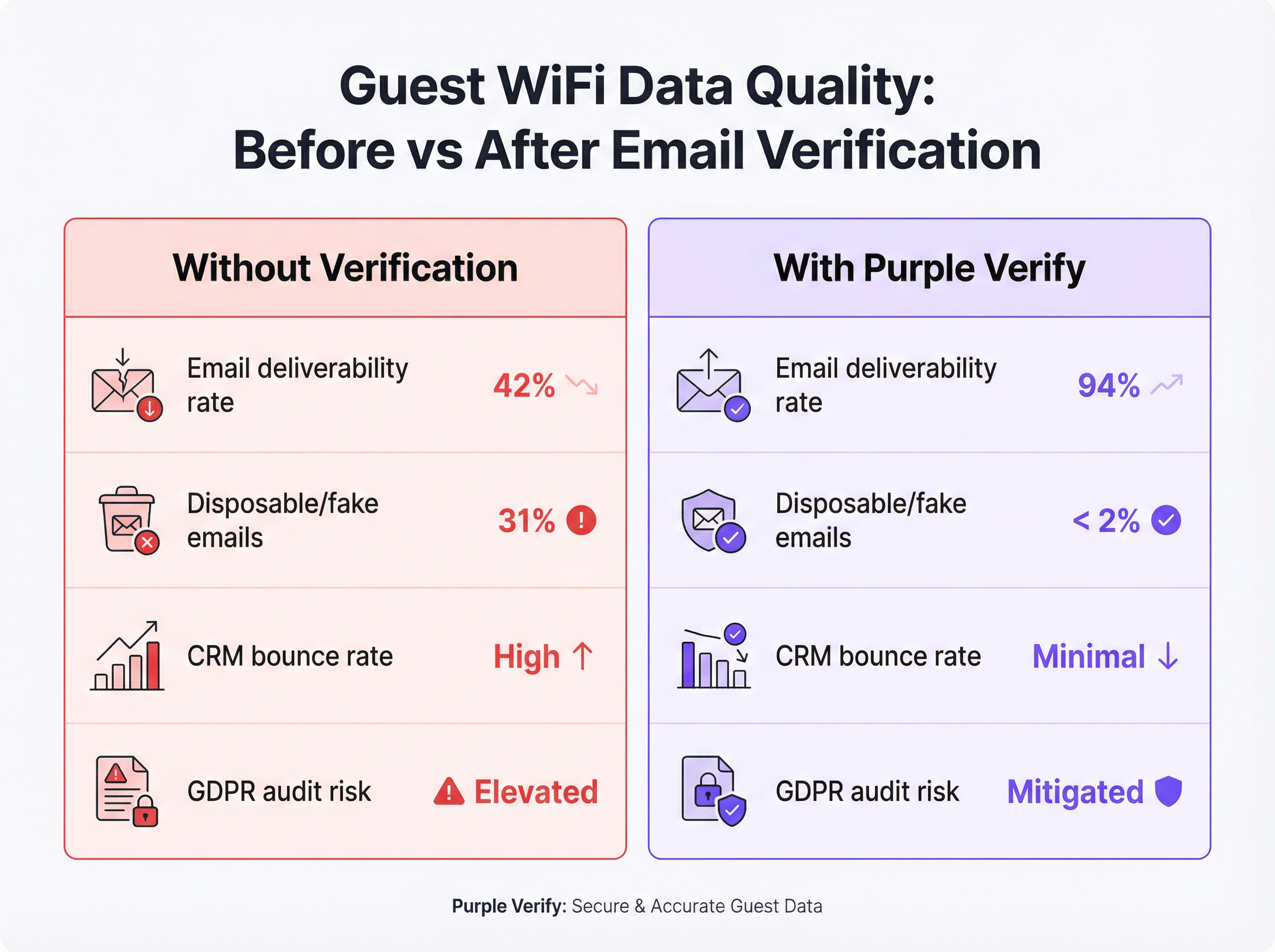
এই গাইডটি আইটি ম্যানেজার, নেটওয়ার্ক আর্কিটেক্ট এবং ভেন্যু অপারেশন ডিরেক্টরদের WiFi সাইন-ইনের জন্য ইমেল ভেরিফিকেশনের ওপর একটি চূড়ান্ত প্রযুক্তিগত রেফারেন্স প্রদান করে, যা ব্যাখ্যা করে কেন গেস্ট WiFi পরিবেশগুলি অবনমিত ইমেল ডেটা তৈরি করে, কীভাবে Purple-এর Verify ফিচার একটি স্তরযুক্ত ভ্যালিডেশন আর্কিটেকচার প্রয়োগ করে এবং ডিপ্লয়মেন্টের পরে অপারেটররা কী পরিমাপযোগ্য উন্নতি আশা করতে পারেন। এটি সম্পূর্ণ ভেরিফিকেশন স্ট্যাক কভার করে — RFC 5322 সিনট্যাক্স চেকিং থেকে শুরু করে DNS MX রেকর্ড ভ্যালিডেশন, ডিসপোজেবল-ইমেল ব্লকলিস্টিং এবং OTP কনফার্মেশন পর্যন্ত — পাশাপাশি GDPR কমপ্লায়েন্স বিবেচনা এবং CRM ইন্টিগ্রেশন নির্দেশিকা। যেসব ভেন্যু অপারেটর এই নির্দেশিকা অনুযায়ী কাজ করেন তারা অবৈধ ইমেলের হার শিল্প-গড় ২৫-৩৫% থেকে ২%-এর নিচে নামিয়ে আনার আশা করতে পারেন, যা মার্কেটিং ROI, প্রেরকের সুনাম এবং নিয়ন্ত্রক সমর্থনযোগ্যতাকে বস্তুগতভাবে উন্নত করে।
এই গাইডটি শুনুন
পডকাস্ট ট্রান্সক্রিপ্ট দেখুন

এক্সিকিউটিভ সামারি
গেস্ট WiFi হলো ভেন্যু অপারেটরদের জন্য উপলব্ধ সর্বোচ্চ-ভলিউমের ফার্স্ট-পার্টি ডেটা সংগ্রহের টাচপয়েন্টগুলির মধ্যে একটি, তবে এটি থেকে প্রাপ্ত ইমেল ডেটা প্রায়শই অবিশ্বস্ত হয়। ক্যাপচারের সময় সক্রিয় ভেরিফিকেশন ছাড়া, Captive Portal-এর মাধ্যমে জমা দেওয়া ইমেল ঠিকানাগুলির ২৫% থেকে ৩৫% হয় সিনট্যাক্টিক্যালি ত্রুটিপূর্ণ, অস্তিত্বহীন ডোমেনকে নির্দেশ করে, অথবা রেজিস্ট্রেশনের প্রয়োজনীয়তা এড়াতে বিশেষভাবে ডিজাইন করা ডিসপোজেবল ইমেল পরিষেবার অন্তর্গত। এর ডাউনস্ট্রিম পরিণতিগুলি তাৎপর্যপূর্ণ: স্ফীত CRM ডেটাবেস, ইমেল প্রেরকের সুনামের অবনতি, ক্যাম্পেইনের অপচয়িত খরচ এবং অনুচ্ছেদ 5(1)(d)-এর নির্ভুলতা নীতির অধীনে উচ্চতর GDPR কমপ্লায়েন্স ঝুঁকি।
Purple-এর Verify ফিচারটি ইনফ্রাস্ট্রাকচার লেয়ারে এর সমাধান করে, একটি চার-স্তরের ভ্যালিডেশন পাইপলাইন প্রয়োগ করে — সিনট্যাক্স চেক, DNS MX রেকর্ড লুকআপ, ডিসপোজেবল-ইমেল ডোমেন ব্লকলিস্টিং এবং ঐচ্ছিক ওয়ান-টাইম পাসকোড (OTP) কনফার্মেশন — রিয়েল টাইমে, একজন গেস্টকে নেটওয়ার্ক অ্যাক্সেস দেওয়ার আগে। হসপিটালিটি, রিটেইল এবং ইভেন্ট ভার্টিকাল জুড়ে ডিপ্লয়মেন্টগুলি ধারাবাহিকভাবে অবৈধ ইমেলের হার ২%-এর নিচে নামিয়ে আনার প্রমাণ দেয়, যেখানে অ্যাক্টিভেশনের ৬০ দিনের মধ্যে ইমেল ডেলিভারিবিলিটি রেট সাধারণ ৪২% বেসলাইন থেকে ৯০%-এর উপরে উঠে যায়।
এই ত্রৈমাসিকের ডেটা কোয়ালিটি রোডম্যাপ মূল্যায়নকারী CTO-এর জন্য: ইমেল ভেরিফিকেশন WiFi কোনো শখের বিষয় নয়। এটি একটি মৌলিক নিয়ন্ত্রণ যা নির্ধারণ করে যে আপনার গেস্ট WiFi বিনিয়োগ কার্যকর বুদ্ধিমত্তা তৈরি করবে নাকি একটি ব্যয়বহুল দায়বদ্ধতায় পরিণত হবে।
টেকনিক্যাল ডিপ-ডাইভ
গেস্ট WiFi কেন খারাপ ইমেল ডেটা তৈরি করে
এর মূল কারণ কাঠামোগত, দুর্ঘটনাজনিত নয়। যখন কোনো গেস্ট একটি Captive Portal-এর সাথে কানেক্ট করেন, তখন আদান-প্রদানটি মৌলিকভাবে অপ্রতিসম হয়: গেস্ট অবিলম্বে ইন্টারনেট অ্যাক্সেস চান এবং অপারেটর এর বিনিময়ে একটি বৈধ ইমেল ঠিকানা চান। গেস্টের ঘর্ষণ (friction) কমানোর সবরকম প্রণোদনা থাকে এবং অপারেটরের — ভেরিফিকেশন কন্ট্রোল ছাড়া — সাবমিশনের সময় ডেটার মান প্রয়োগ করার কোনো মেকানিজম থাকে না。
এটি চার ধরনের খারাপ ডেটা তৈরি করে। টাইপোগ্রাফিক ত্রুটি সবচেয়ে নিরীহ: একজন গেস্ট সত্যিই তার আসল ঠিকানা দিতে চান কিন্তু সময়ের চাপে বা ছোট মোবাইল কীবোর্ডে ভুল টাইপ করেন। বানোয়াট ঠিকানা ইচ্ছাকৃত: test@test.com বা noemail@noemail.com-এর মতো স্ট্রিং যা যুক্তিসঙ্গত মনে হলেও বাস্তবে কোনো অস্তিত্ব নেই। মেয়াদোত্তীর্ণ বা অবৈধ ডোমেন তখন দেখা দেয় যখন কোনো গেস্ট প্রাক্তন নিয়োগকর্তার ডোমেন, বন্ধ হয়ে যাওয়া ISP বা এমন কোনো ব্যক্তিগত ডোমেনের ঠিকানা জমা দেন যা তিনি আর ব্যবহার করেন না। ডিসপোজেবল ইমেল ঠিকানা হলো সবচেয়ে অত্যাধুনিক ক্যাটাগরি: Mailinator, Guerrilla Mail এবং Temp Mail-এর মতো পরিষেবাগুলি সম্পূর্ণ কার্যকরী ইনবক্স প্রদান করে যার মেয়াদ কয়েক মিনিট বা ঘন্টা পরে শেষ হয়ে যায়, যা একজন গেস্টকে দীর্ঘমেয়াদী মার্কেটিং যোগাযোগের কোনো সুযোগ না দিয়েই একটি সাধারণ ডেলিভারিবিলিটি চেক পাস করতে দেয়।
IEEE 802.11 স্ট্যান্ডার্ড WiFi নেটওয়ার্কের রেডিও এবং MAC-লেয়ারের আচরণ নিয়ন্ত্রণ করে কিন্তু কানেক্ট করা ব্যবহারকারীদের পরিচয় যাচাইয়ের ওপর কোনো বাধ্যবাধকতা আরোপ করে না। Captive Portal-এর আচরণ RFC 7710 এবং এর উত্তরসূরি RFC 8910-এ বর্ণনা করা হয়েছে, যার কোনোটিতেই ইমেল ভ্যালিডেশন বাধ্যতামূলক নয়। তাই ডেটার মানের সমস্যাটি সম্পূর্ণভাবে একটি অ্যাপ্লিকেশন-লেয়ারের বিষয়, যা নেটওয়ার্ক স্ট্যাকের উপরে থাকে এবং এটি অবশ্যই Captive Portal সফ্টওয়্যার লেভেলে সমাধান করতে হবে।
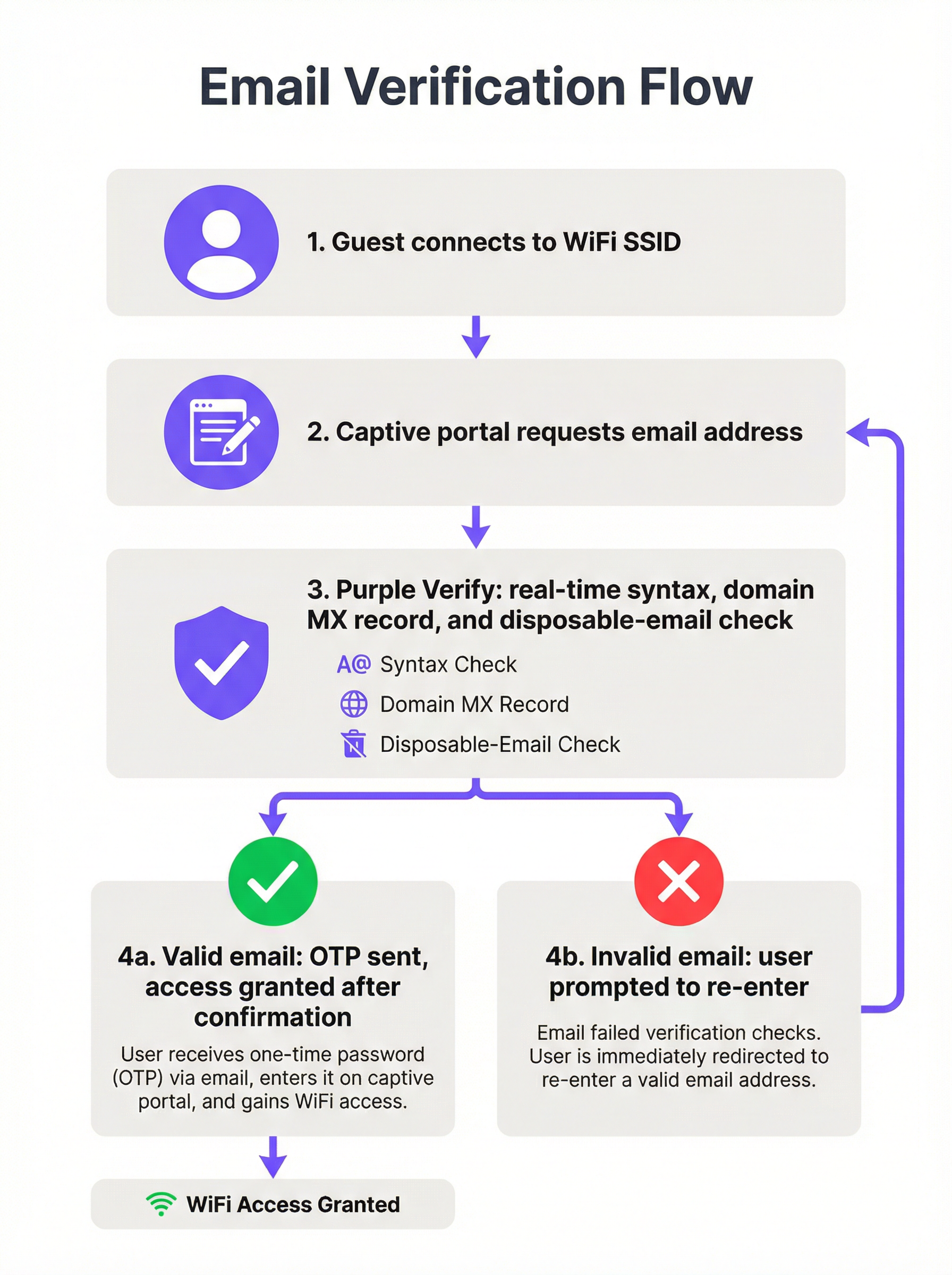
ফোর-লেয়ার ভেরিফিকেশন আর্কিটেকচার
একটি প্রোডাকশন-গ্রেড ইমেল ভেরিফিকেশন WiFi ডিপ্লয়মেন্ট চারটি স্বতন্ত্র ভ্যালিডেশন লেয়ার প্রয়োগ করে, যার প্রতিটি ক্রমবর্ধমান কোয়ালিটি অ্যাসুরেন্স প্রদান করে।
লেয়ার ১ — সিনট্যাক্স ভ্যালিডেশন (RFC 5322): জমা দেওয়া স্ট্রিংটি ইন্টারনেট মেসেজ ফরম্যাট স্ট্যান্ডার্ডের বিপরীতে পার্স করা হয়। এটি একটি লোকাল পার্ট, একটি অ্যাট-সিম্বল এবং অন্তত একটি ডট সহ একটি ডোমেন কম্পোনেন্টের উপস্থিতি নিশ্চিত করে। এটি অবৈধ অক্ষর, একাধিক অ্যাট-সিম্বল এবং অন্যান্য কাঠামোগত লঙ্ঘন সহ স্ট্রিংগুলিকে প্রত্যাখ্যান করে। শুধুমাত্র সিনট্যাক্স ভ্যালিডেশন প্রায় ১৫-২০% খারাপ সাবমিশন ধরে ফেলে এবং নগণ্য লেটেন্সি (সাব-মিলিসেকেন্ড, ক্লায়েন্ট-সাইড) যোগ করে।
লেয়ার ২ — ডোমেন এবং MX রেকর্ড ভেরিফিকেশন: একটি DNS লুকআপ নিশ্চিত করে যে জমা দেওয়া ডোমেনটির অস্তিত্ব আছে এবং একটি বৈধ মেইল এক্সচেঞ্জ (MX) রেকর্ড রয়েছে, যা নির্দেশ করে যে এটি ইমেল গ্রহণের জন্য কনফিগার করা হয়েছে। এই চেকটি সার্ভার-সাইডে করা হয় এবং সাধারণত ১০০-৩০০ মিলিসেকেন্ডের মধ্যে সম্পন্ন হয়। এটি মেয়াদোত্তীর্ণ ডোমেন, কাল্পনিক ডোমেন এবং ডিকমিশন করা কর্পোরেট ডোমেনের ঠিকানাগুলিকে বাদ দেয় — এমন একটি ক্যাটাগরি যা সিনট্যাক্স ভ্যালিডেশন শনাক্ত করতে পারে না।
লেয়ার ৩ — ডিসপোজেবল ইমেল ডোমেন ব্লকলিস্টিং: ডোমেন কম্পোনেন্টটিকে পরিচিত ডিসপোজেবল এবং অস্থায়ী ইমেল পরিষেবা প্রদানকারীদের একটি ক্রমাগত আপডেট হওয়া ব্লকলিস্টের বিপরীতে ক্রস-রেফারেন্স করা হয়। এখানেই ইন্টেলিজেন্স লেয়ারটি গুরুত্বপূর্ণ হয়ে ওঠে। একটি স্ট্যাটিক ব্লকলিস্ট — যা রিয়েল টাইমে আপডেট হয় না — নতুন চালু হওয়া ডিসপোজেবল পরিষেবাগুলিকে মিস করবে এবং সময়ের সাথে সাথে এর কার্যকারিতা হ্রাস পাবে। Purple-এর Verify ফিচার একটি লাইভ-আপডেট হওয়া ব্লকলিস্ট বজায় রাখে, যা ঐতিহাসিক স্ন্যাপশটের পরিবর্তে বর্তমান ডিসপোজেবল ইমেল ইকোসিস্টেমের কভারেজ নিশ্চিত করে।
লেয়ার ৪ — ওয়ান-টাইম পাসকোড (OTP) কনফার্মেশন: জমা দেওয়া ইমেল ঠিকানায় একটি সময়-সীমিত নিউমেরিক কোড পাঠানো হয়। প্রমাণীকরণ সম্পূর্ণ করতে গেস্টকে অবশ্যই তাদের আসল ইনবক্স থেকে এই কোডটি পুনরুদ্ধার করতে হবে এবং এটি Captive Portal-এ প্রবেশ করাতে হবে। এটি হলো মালিকানার চূড়ান্ত প্রমাণ: একটি বানোয়াট ঠিকানা, ভুল টাইপ করা ঠিকানা বা মেয়াদোত্তীর্ণ ডিসপোজেবল ইনবক্স দিয়ে এটি পাস করা অসম্ভব। OTP কনফার্মেশন মাল্টি-ফ্যাক্টর অথেনটিকেশন নীতির সাথে সামঞ্জস্যপূর্ণ এবং সংগৃহীত ইমেল ঠিকানাটি বৈধ এবং গেস্টের কাছে অ্যাক্সেসযোগ্য হওয়ার সবচেয়ে শক্তিশালী নিশ্চয়তা প্রদান করে।
| ভ্যালিডেশন লেয়ার | যা ধরে ফেলে | লেটেন্সি ইমপ্যাক্ট | যার জন্য প্রস্তাবিত |
|---|---|---|---|
| সিনট্যাক্স (RFC 5322) | ত্রুটিপূর্ণ স্ট্রিং | < ১ মি.সে. | সমস্ত ডিপ্লয়মেন্ট |
| ডোমেন / MX রেকর্ড | অস্তিত্বহীন ডোমেন | ১০০-৩০০ মি.সে. | সমস্ত ডিপ্লয়মেন্ট |
| ডিসপোজেবল ইমেল ব্লকলিস্ট | অস্থায়ী ইনবক্স | ৫০-১০০ মি.সে. | মার্কেটিং-কেন্দ্রিক ডিপ্লয়মেন্ট |
| OTP কনফার্মেশন | সমস্ত অবৈধ ঠিকানা | ৩০-১২০ সেকেন্ড (ব্যবহারকারী-নির্ভর) | হসপিটালিটি, ইভেন্ট, লয়্যালটি প্রোগ্রাম |
কমপ্লায়েন্স এবং স্ট্যান্ডার্ডস কনটেক্সট
WiFi সাইন-ইন পয়েন্টে ইমেল ভেরিফিকেশন সরাসরি বেশ কয়েকটি নিয়ন্ত্রক এবং স্ট্যান্ডার্ড ফ্রেমওয়ার্কের সাথে প্রাসঙ্গিক যা ভেন্যু অপারেটরদের মেনে চলতে হতে পারে।
GDPR অনুচ্ছেদ 5(1)(d)-এর প্রয়োজন যে ব্যক্তিগত ডেটা নির্ভুল হতে হবে এবং প্রয়োজনে আপ-টু-ডেট রাখতে হবে। একটি যাচাই না করা ঠিকানা সংগ্রহ করে পরে তা পরিষ্কার করার চেষ্টার চেয়ে ক্যাপচারের সময় একটি যাচাইকৃত ইমেল ঠিকানা সংগ্রহ করা সুপারভাইজরি অথরিটি অডিটে অনেক বেশি সমর্থনযোগ্য। ভেরিফিকেশন প্রক্রিয়াটি আপনার অনুচ্ছেদ 30 রেকর্ডস অফ প্রসেসিং অ্যাক্টিভিটিজ-এ নথিভুক্ত করা উচিত।
GDPR অনুচ্ছেদ 7-এর প্রয়োজন যে মার্কেটিং যোগাযোগের জন্য সম্মতি অবাধে প্রদত্ত, নির্দিষ্ট, তথ্যপূর্ণ এবং দ্ব্যর্থহীন হতে হবে। একটি OTP কনফার্মেশন ধাপ একটি সমসাময়িক রেকর্ড প্রদান করে যে সম্মতির সময় ডেটা সাবজেক্টের জমা দেওয়া ইমেল ঠিকানায় অ্যাক্সেস ছিল, যা অডিট ট্রেইলকে শক্তিশালী করে।
PCI DSS v4.0 সরাসরি ইমেল ভেরিফিকেশন নিয়ন্ত্রণ করে না, তবে প্রয়োজনীয়তা 8 (ব্যবহারকারীদের শনাক্ত করা এবং অ্যাক্সেস প্রমাণীকরণ) এবং বিস্তৃত নেটওয়ার্ক সেগমেন্টেশনের প্রয়োজনীয়তাগুলি প্রাসঙ্গিক যদি আপনার গেস্ট WiFi কার্ডহোল্ডার ডেটা এনভায়রনমেন্টের সংলগ্ন কোনো নেটওয়ার্ক সেগমেন্টে থাকে। OTP ভেরিফিকেশন দ্বারা প্রদত্ত আইডেন্টিটি অ্যাসুরেন্স একটি সমর্থনযোগ্য অ্যাক্সেস কন্ট্রোল পোসচারে অবদান রাখে।
ISO/IEC 27001:2022 অ্যানেক্স A কন্ট্রোল 5.14 (ইনফরমেশন ট্রান্সফার) এবং কন্ট্রোল 8.5 (সিকিউর অথেনটিকেশন) ISMS-এর অধীনে গেস্ট WiFi পরিচালনাকারী সংস্থাগুলির জন্য প্রাসঙ্গিক। ইমেল ভেরিফিকেশন নেটওয়ার্ক অ্যাক্সেস পয়েন্টে একটি নথিভুক্ত, অডিটযোগ্য আইডেন্টিটি চেক প্রদান করে।
ইমপ্লিমেন্টেশন গাইড
প্রি-ডিপ্লয়মেন্ট অ্যাসেসমেন্ট
ইমেল ভেরিফিকেশন সক্রিয় করার আগে, একটি পরিমাণগত বেসলাইন স্থাপন করুন। আপনার বিদ্যমান গেস্ট WiFi ডেটাবেস থেকে অন্তত ৫,০০০ ইমেল ঠিকানার একটি প্রতিনিধিত্বমূলক নমুনা এক্সপোর্ট করুন এবং সেগুলিকে একটি বাল্ক ইমেল ভ্যালিডেশন পরিষেবার মাধ্যমে চালান। আপনার ইমেল মার্কেটিং প্ল্যাটফর্ম থেকে আপনার বর্তমান অবৈধ হার, ডিসপোজেবল ইমেল হার এবং হার্ড বাউন্স রেট রেকর্ড করুন। এই পরিসংখ্যানগুলি সেই বেসলাইন তৈরি করে যার বিপরীতে আপনি উন্নতি পরিমাপ করবেন এবং ডিপ্লয়মেন্টের জন্য অভ্যন্তরীণ বিজনেস কেস তৈরি করবেন।
আপনার ভেরিফিকেশন ডেপথ নির্বাচন করা
উপযুক্ত ভেরিফিকেশন কনফিগারেশন তিনটি বিষয়ের ওপর নির্ভর করে: আপনার গেস্ট সম্পর্কের প্রকৃতি (ট্রানজ্যাকশনাল বনাম দীর্ঘমেয়াদী), আপনার গেস্ট ডেমোগ্রাফিকের ঘর্ষণ (friction) সহ্য করার ক্ষমতা এবং সংগৃহীত ডেটার ডাউনস্ট্রিম ব্যবহার।
উচ্চ-ফুটফল ট্রানজিয়েন্ট এনভায়রনমেন্টের জন্য — ট্রান্সপোর্ট হাব, শপিং সেন্টার, কুইক-সার্ভিস রেস্তোরাঁ — ডিসপোজেবল ইমেল ব্লকিং সহ সিনট্যাক্স এবং ডোমেন ভ্যালিডেশন হলো প্রস্তাবিত ন্যূনতম ব্যবস্থা। OTP ধাপটি এমন ঘর্ষণ তৈরি করে যা ডেটার মূল্যের তুলনায় অসামঞ্জস্যপূর্ণ হতে পারে এমন একটি প্রেক্ষাপটে যেখানে গেস্ট সম্পর্ক সংক্ষিপ্ত এবং প্রাথমিক ব্যবহার হলো ব্যক্তিগত মার্কেটিংয়ের পরিবর্তে সামগ্রিক অ্যানালিটিক্স।
হসপিটালিটি এবং ইভেন্টের জন্য — হোটেল, কনফারেন্স সেন্টার, স্টেডিয়াম — সম্পূর্ণ OTP কনফার্মেশন দৃঢ়ভাবে সুপারিশ করা হয়। গেস্ট সম্পর্ক দীর্ঘতর হয়, একটি যাচাইকৃত ইমেলের মার্কেটিং মূল্য বেশি থাকে এবং এই পরিবেশের গেস্টরা সাধারণত সাইন ইন করার জন্য যে ডিভাইসটি ব্যবহার করছেন তাতেই তাদের ইমেল অ্যাক্সেস করতে পারেন। অতিরিক্ত ৩০-৬০ সেকেন্ডের ঘর্ষণ গ্রহণযোগ্য সীমার মধ্যেই থাকে।
লয়্যালটি-ইন্টিগ্রেটেড রিটেইলের জন্য — যেখানে WiFi সাইন-ইন সরাসরি একটি লয়্যালটি প্রোগ্রাম বা পার্সোনালাইজেশন ইঞ্জিনে ফিড করে — OTP কনফার্মেশন অপরিহার্য। লয়্যালটি ডেটাবেসের অখণ্ডতা অন্তর্নিহিত ইমেল আইডেন্টিফায়ারগুলির স্বকীয়তা এবং নির্ভুলতার ওপর নির্ভর করে।
Purple-এ কনফিগারেশন ধাপসমূহ
১. Purple ড্যাশবোর্ডে Venue Settings > Captive Portal > Authentication-এ নেভিগেট করুন। ২. অথেনটিকেশন পদ্ধতি হিসেবে Email নির্বাচন করুন এবং Verify টগলটি সক্রিয় করুন。 ৩. আপনার ভেরিফিকেশন ডেপথ বেছে নিন: Standard (সিনট্যাক্স + ডোমেন + ডিসপোজেবল ব্লকলিস্ট) অথবা Full (Standard + OTP কনফার্মেশন)। ৪. OTP ইমেল টেমপ্লেট কনফিগার করুন — নিশ্চিত করুন যে এটিতে আপনার ভেন্যুর ব্র্যান্ডিং এবং একটি স্পষ্ট সাবজেক্ট লাইন রয়েছে (যেমন, "আপনার [Venue Name] WiFi অ্যাক্সেস কোড")। ৫. OTP-এর মেয়াদ শেষ হওয়ার উইন্ডো সেট করুন। একটি ১০-মিনিটের উইন্ডো সুপারিশ করা হয়; ছোট উইন্ডো পরিত্যাগ বাড়ায়, দীর্ঘ উইন্ডো নিরাপত্তা কমায়। ৬. Captive Portal UI-তে retry and error messaging কনফিগার করুন। সিনট্যাক্স ব্যর্থতা, ডোমেন ব্যর্থতা এবং ডিসপোজেবল ইমেল প্রত্যাখ্যানের জন্য আলাদা ত্রুটি বার্তা নির্দিষ্ট করুন। ৭. Purple API বা ওয়েবহুক ইন্টিগ্রেশনের মাধ্যমে আপনার সংযুক্ত CRM বা মার্কেটিং প্ল্যাটফর্মে verification metadata passthrough সক্ষম করুন। ৮. একটি পর্যায়ক্রমিক রোলআউট পরিচালনা করুন: প্রথমে একটি ভেন্যু বা SSID-তে সক্রিয় করুন, ৭ দিনের জন্য ভেরিফিকেশন পাস রেট এবং OTP কমপ্লিশন রেট নিরীক্ষণ করুন, তারপর সম্পূর্ণ এস্টেটে রোলআউট করুন।
ডাউনস্ট্রিম সিস্টেমের সাথে ইন্টিগ্রেশন
ইমেল ভেরিফিকেশনের মান তখনই সম্পূর্ণরূপে উপলব্ধি করা যায় যখন যাচাইকৃত স্ট্যাটাসটি ডাউনস্ট্রিম সিস্টেমে প্রচার করা হয়। আপনার CRM এবং ইমেল মার্কেটিং প্ল্যাটফর্মে email_verified বুলিয়ান ফ্ল্যাগ — এবং যেখানে OTP ব্যবহার করা হয়েছিল, সেখানে otp_confirmed ফ্ল্যাগ — পাস করার জন্য আপনার Purple ইন্টিগ্রেশন কনফিগার করুন। আপনার গেস্ট ডেটাবেস সেগমেন্ট করতে এই ফ্ল্যাগটি ব্যবহার করুন: পার্সোনালাইজড ক্যাম্পেইনের জন্য OTP-নিশ্চিত ঠিকানাগুলিকে আপনার সর্বোচ্চ-মানের টিয়ার হিসেবে বিবেচনা করুন এবং কম-অগ্রাধিকার যোগাযোগের জন্য শুধুমাত্র ডোমেন-যাচাইকৃত ঠিকানাগুলি ব্যবহার করুন।
বেস্ট প্র্যাকটিস
ইমেল ভেরিফিকেশনকে একটি ডেটা গভর্ন্যান্স কন্ট্রোল হিসেবে বিবেচনা করুন, সিকিউরিটি কন্ট্রোল হিসেবে নয়। প্রাথমিক সুবিধা হলো ডেটার মান এবং GDPR কমপ্লায়েন্স, নেটওয়ার্ক নিরাপত্তা নয়। অভ্যন্তরীণ বিজনেস কেস তৈরি করার সময় সেই অনুযায়ী ডিপ্লয়মেন্ট ফ্রেম করুন।
একটি লাইভ-আপডেট হওয়া ডিসপোজেবল ইমেল ব্লকলিস্ট ব্যবহার করুন। একটি স্ট্যাটিক ব্লকলিস্ট দ্রুত ক্ষয়প্রাপ্ত হয়। প্রতি সপ্তাহে নতুন ডিসপোজেবল ইমেল পরিষেবা চালু হয়। নিশ্চিত করুন যে আপনার ভেরিফিকেশন প্রোভাইডার — তা Purple হোক বা কোনো থার্ড-পার্টি পরিষেবা — একটি ক্রমাগত আপডেট হওয়া ব্লকলিস্ট বজায় রাখে।
প্রকৃত ব্যবহারকারীর কথা মাথায় রেখে এরর UX ডিজাইন করুন। ভেরিফিকেশনে ব্যর্থ হওয়া বেশিরভাগ গেস্টই প্রকৃত টাইপো করেছেন, সিস্টেমকে ফাঁকি দেওয়ার ইচ্ছাকৃত চেষ্টা নয়। ত্রুটি বার্তাগুলি নির্দিষ্ট, সহায়ক এবং অভিযোগহীন হওয়া উচিত। একটি সাধারণ "অবৈধ ইমেল ঠিকানা" বার্তার চেয়ে "আমরা সেই ইমেল ডোমেনটি খুঁজে পাইনি — অনুগ্রহ করে চেক করুন এবং আবার চেষ্টা করুন" বেশি কার্যকর।
একটি লিডিং ইন্ডিকেটর হিসেবে আপনার OTP কমপ্লিশন রেট মনিটর করুন। একটি ক্রমহ্রাসমান OTP কমপ্লিশন রেট ডেলিভারি লেটেন্সি সমস্যা, সেশন টাইমআউট সমস্যা বা আপনার গেস্ট জনসংখ্যার একটি ডেমোগ্রাফিক পরিবর্তন নির্দেশ করতে পারে। কমপ্লিশন রেট একটি থ্রেশহোল্ডের নিচে নেমে গেলে স্বয়ংক্রিয় অ্যালার্ট সেট আপ করুন (সাধারণত হসপিটালিটি পরিবেশের জন্য ৭০% একটি যুক্তিসঙ্গত বেসলাইন)।
GDPR অনুচ্ছেদ 30 কমপ্লায়েন্সের জন্য আপনার ভেরিফিকেশন প্রক্রিয়া নথিভুক্ত করুন। আপনার রেকর্ডস অফ প্রসেসিং অ্যাক্টিভিটিজ-এ ডেটা সংগ্রহের সময় প্রয়োগ করা ভেরিফিকেশন ধাপ, প্রসেসিংয়ের আইনি ভিত্তি এবং ভেরিফিকেশন লগের রিটেনশন পিরিয়ড বর্ণনা করা উচিত।
আপনার এস্টেট জুড়ে আনুপাতিকভাবে ভেরিফিকেশন ডেপথ প্রয়োগ করুন। একটি মাল্টি-সাইট ডিপ্লয়মেন্ট বিভিন্ন ভেন্যু প্রকারে বিভিন্ন ভেরিফিকেশন কনফিগারেশনকে সমর্থন করতে পারে। এস্টেট জুড়ে সর্বনিম্ন সাধারণ ডিনোমিনেটরে ডিফল্ট করার পরিবর্তে প্রতিটি লোকেশনে উপযুক্ত ডেপথ প্রয়োগ করতে Purple-এর প্রতি-ভেন্যু কনফিগারেশন ক্ষমতা ব্যবহার করুন।
ট্রাবলশুটিং এবং রিস্ক মিটিগেশন
সাধারণ ফেইলিওর মোড
ফেইলিওর মোড ১: উচ্চ OTP অ্যাবানডনমেন্ট রেট। যদি আপনার OTP কমপ্লিশন রেট ৬০%-এর নিচে হয়, তবে সবচেয়ে সাধারণ কারণগুলি হলো: ইমেল ডেলিভারি লেটেন্সি ৬০ সেকেন্ডের বেশি হওয়া; Captive Portal সেশন টাইমআউট খুব ছোট সেট করা (৫ মিনিটের নিচে); অথবা গেস্টরা এমন ওয়েবমেইল ক্লায়েন্ট ব্যবহার করছেন যার জন্য মোবাইলে অ্যাপ পরিবর্তন করতে হয়, যার ফলে Captive Portal সেশন রিসেট হয়ে যায়। প্রতিকার: আপনার SMTP প্রোভাইডারের সাথে আপনার ইমেল ডেলিভারি SLA চেক করুন, সেশন টাইমআউট অন্তত ৮ মিনিটে বাড়ান এবং যেসব গেস্ট সিঙ্গেল-ট্যাপ কনফার্মেশন পছন্দ করেন তাদের জন্য নিউমেরিক কোডের বিকল্প হিসেবে একটি "ম্যাজিক লিঙ্ক" প্রয়োগ করার কথা বিবেচনা করুন।
ফেইলিওর মোড ২: বৈধ কর্পোরেট ইমেল ঠিকানা প্রত্যাখ্যাত হওয়া। কিছু কর্পোরেট ইমেল ডোমেনের অস্বাভাবিক MX রেকর্ড কনফিগারেশন থাকে — উদাহরণস্বরূপ, যেসব সংস্থা নন-স্ট্যান্ডার্ড DNS রেকর্ড সহ একটি থার্ড-পার্টি সিকিউরিটি গেটওয়ের মাধ্যমে ইমেল রাউট করে। যদি আপনি বৈধ বলে মনে হওয়া ঠিকানাগুলির প্রত্যাখ্যান দেখতে পান, তবে আপনার ডোমেন ভ্যালিডেশন লজিক পর্যালোচনা করুন এবং ফলস পজিটিভ তৈরি করছে এমন পরিচিত এন্টারপ্রাইজ ডোমেনগুলির জন্য একটি হোয়াইটলিস্ট প্রয়োগ করার কথা বিবেচনা করুন।
ফেইলিওর মোড ৩: ডিসপোজেবল ইমেল ব্লকলিস্ট নতুন পরিষেবাগুলিকে কভার করছে না। ডিসপোজেবল ইমেল পেনিট্রেশনের লক্ষণগুলির জন্য আপনার পোস্ট-ভেরিফিকেশন ডেটাবেস মনিটর করুন — উদাহরণস্বরূপ, একটি অপরিচিত ডোমেন থেকে ঠিকানার হঠাৎ বৃদ্ধি। যদি আপনি একটি নতুন ডিসপোজেবল পরিষেবা শনাক্ত করেন যা ব্লক করা হচ্ছে না, তবে ব্লকলিস্টে অন্তর্ভুক্তির জন্য আপনার ভেরিফিকেশন প্রোভাইডারকে রিপোর্ট করুন।
ফেইলিওর মোড ৪: ভেরিফিকেশন মেটাডেটা CRM-এ পৌঁছাচ্ছে না। যদি আপনার ইমেল মার্কেটিং প্ল্যাটফর্ম email_verified ফ্ল্যাগ না পায়, তবে আপনার Purple ওয়েবহুক কনফিগারেশন চেক করুন এবং নিশ্চিত করুন যে রিসিভিং এন্ডপয়েন্ট পেলোডটি সঠিকভাবে পার্স করছে। প্রোডাকশনে নির্ভর করার আগে ইন্টিগ্রেশন ভ্যালিডেট করতে Purple-এর ওয়েবহুক টেস্ট টুল ব্যবহার করুন।
রিস্ক রেজিস্টার
| ঝুঁকি | সম্ভাবনা | প্রভাব | প্রশমন |
|---|---|---|---|
| OTP ডেলিভারি ব্যর্থতা (SMTP আউটেজ) | নিম্ন | উচ্চ | একটি সেকেন্ডারি SMTP রিলে কনফিগার করুন; শুধুমাত্র ডোমেন ভ্যালিডেশনে গ্রেসফুল ফলব্যাক প্রয়োগ করুন |
| ডিসপোজেবল ইমেল পরিষেবা ব্লকলিস্টে নেই | মাঝারি | মাঝারি | লাইভ-আপডেট হওয়া ব্লকলিস্ট ব্যবহার করুন; পোস্ট-ভেরিফিকেশন ডেটাবেসের মান মনিটর করুন |
| ভেরিফিকেশন ডেটা রিটেনশনের ওপর GDPR চ্যালেঞ্জ | নিম্ন | উচ্চ | রিটেনশন পলিসি নথিভুক্ত করুন; ৩০ দিন পর OTP লগ মুছে ফেলুন |
| OTP ঘর্ষণের কারণে গেস্টের পরিত্যাগ | মাঝারি | মাঝারি | ইমেল ডেলিভারি লেটেন্সি অপ্টিমাইজ করুন; সেশন টাইমআউট বাড়ান; বিকল্প অথেনটিকেশন পদ্ধতি অফার করুন |
| বৈধ ঠিকানার ফলস পজিটিভ প্রত্যাখ্যান | নিম্ন | মাঝারি | ডোমেন হোয়াইটলিস্ট প্রয়োগ করুন; ভেন্যু স্টাফদের জন্য ম্যানুয়াল ওভাররাইড পাথ প্রদান করুন |
ROI এবং বিজনেস ইমপ্যাক্ট
সাফল্য পরিমাপ করা
একটি ইমেল ভেরিফিকেশন WiFi ডিপ্লয়মেন্টের প্রাথমিক KPI-গুলি তিনটি ক্যাটাগরিতে পড়ে: ডেটা কোয়ালিটি মেট্রিক্স, মার্কেটিং পারফরম্যান্স মেট্রিক্স এবং কমপ্লায়েন্স মেট্রিক্স।
ডেটা কোয়ালিটি মেট্রিক্সের মধ্যে রয়েছে অবৈধ ইমেল প্রত্যাখ্যানের হার (প্রতিটি ভেরিফিকেশন লেয়ারে প্রত্যাখ্যাত জমা দেওয়া ঠিকানার শতাংশ), OTP কমপ্লিশন রেট এবং আপনার ইমেল মার্কেটিং প্ল্যাটফর্ম থেকে পোস্ট-ডিপ্লয়মেন্ট হার্ড বাউন্স রেট। একটি সু-কনফিগার করা ডিপ্লয়মেন্টের WiFi-উৎসিত পরিচিতিগুলিতে ২%-এর নিচে একটি অবৈধ ইমেল হার এবং ০.৫%-এর নিচে একটি হার্ড বাউন্স রেট অর্জন করা উচিত।
মার্কেটিং পারফরম্যান্স মেট্রিক্সের মধ্যে রয়েছে অন্যান্য অ্যাকুইজিশন চ্যানেলের তুলনায় WiFi-উৎসিত সেগমেন্টের জন্য ইমেল ডেলিভারিবিলিটি রেট, ক্যাম্পেইন ওপেন রেট এবং ক্লিক-থ্রু রেট। যাচাইকৃত WiFi পরিচিতিগুলি ধারাবাহিকভাবে এই মেট্রিক্সগুলিতে যাচাই না করা পরিচিতিগুলিকে ছাড়িয়ে যায় কারণ অন্তর্নিহিত ডেটা নির্ভুল এবং গেস্ট OTP ধাপটি সম্পূর্ণ করে সক্রিয় অভিপ্রায় প্রদর্শন করেছেন।
কমপ্লায়েন্স মেট্রিক্সের মধ্যে রয়েছে নির্ভুলভাবে পূরণ করা যেতে পারে এমন GDPR ডেটা সাবজেক্ট অ্যাক্সেস রিকোয়েস্টের সংখ্যা (একটি পরিচ্ছন্ন ডেটাবেস ভুল ব্যক্তির কাছে ব্যক্তিগত ডেটা পাঠানোর ঝুঁকি কমায়), এবং আপনার অনুচ্ছেদ 30 রেকর্ডের অডিট প্রস্তুতি।
কস্ট-বেনিফিট ফ্রেমওয়ার্ক
ইমেল ভেরিফিকেশন ডিপ্লয় করার প্রত্যক্ষ খরচ ন্যূনতম: Purple-এর Verify ফিচারটি প্ল্যাটফর্ম সাবস্ক্রিপশনের মধ্যেই অন্তর্ভুক্ত থাকে এবং ক্রমবর্ধমান অপারেশনাল ওভারহেড প্রাথমিক কনফিগারেশন এবং চলমান মনিটরিংয়ের মধ্যে সীমাবদ্ধ। পরোক্ষ খরচগুলি হলো সাইন-ইন ঘর্ষণে প্রান্তিক বৃদ্ধি এবং কাঁচা ডেটা ভলিউমে সামান্য হ্রাস (যেহেতু কিছু গেস্ট যারা আগে জাল ঠিকানা জমা দিতেন তারা এখন আসল ঠিকানা দেওয়ার পরিবর্তে সাইন-ইন ফ্লো পরিত্যাগ করবেন)।
সুবিধাগুলি পরিমাপযোগ্য। ৫০টি প্রপার্টি সহ একটি হোটেল গ্রুপের জন্য, যার প্রতিটিতে প্রতিদিন গড়ে ১৫০টি গেস্ট WiFi সাইন-ইন হয়, বার্ষিক ডেটা ভলিউম প্রায় ২.৭ মিলিয়ন রেকর্ড। ৩০% যাচাই না করা অবৈধ হারে, এটি প্রতি বছর ৮১০,০০০ মূল্যহীন রেকর্ড — যার প্রতিটি CRM স্টোরেজ, ইমেল সেন্ড বাজেট খরচ করে এবং সম্ভাব্যভাবে GDPR এক্সপোজার তৈরি করে। প্রতি সেন্ডে £0.002-এর একটি সাধারণ ইমেল মার্কেটিং প্ল্যাটফর্ম খরচে, শুধুমাত্র অবৈধ ঠিকানাগুলিতে সরাসরি অপচয়িত খরচ প্রতি ক্যাম্পেইনে বছরে £1,600 ছাড়িয়ে যায়। বছরে ১২টি ক্যাম্পেইন চালানো একজন অপারেটরের জন্য, এটি £19,000-এর বেশি সরাসরি অপচয় — প্রকৃত সাবস্ক্রাইবারদের কাছে ডেলিভারিবিলিটি প্রভাবিত করে এমন উচ্চ বাউন্স রেটের সুনামের খরচ হিসাব করার আগেই।
ROI গণনাটি সোজা: ভেরিফিকেশনের খরচ কার্যকরভাবে শূন্য (এটি একটি বিদ্যমান প্ল্যাটফর্ম সাবস্ক্রিপশনে একটি কনফিগারেশন টগল), এবং সুবিধাগুলি — হ্রাসকৃত অপচয়, উন্নত ক্যাম্পেইন পারফরম্যান্স এবং প্রশমিত কমপ্লায়েন্স ঝুঁকিতে — ডিপ্লয়মেন্টের ৬০-৯০ দিনের মধ্যে বস্তুগত এবং পরিমাপযোগ্য।
এই গাইডটি এন্টারপ্রাইজ WiFi ইন্টেলিজেন্স প্ল্যাটফর্ম Purple দ্বারা প্রকাশিত। ডিপ্লয়মেন্ট সহায়তা বা প্রযুক্তিগত পরামর্শের জন্য, আপনার Purple অ্যাকাউন্ট টিমের সাথে যোগাযোগ করুন বা purple.ai ভিজিট করুন।
মূল সংজ্ঞাসমূহ
Captive Portal
একটি WiFi নেটওয়ার্কের সাথে কানেক্ট করার চেষ্টা করা গেস্টের কাছে উপস্থাপিত একটি ওয়েব পেজ, যেখানে নেটওয়ার্ক অ্যাক্সেস দেওয়ার আগে প্রমাণীকরণ বা শর্তাবলী গ্রহণের প্রয়োজন হয়। Captive Portal-এর আচরণ RFC 8910-এ বর্ণনা করা হয়েছে। পোর্টালটি হলো একটি গেস্ট WiFi ডিপ্লয়মেন্টের প্রাথমিক ডেটা সংগ্রহের ইন্টারফেস এবং সেই পয়েন্ট যেখানে ইমেল ভেরিফিকেশন প্রয়োগ করা হয়।
আইটি টিমগুলি তাদের গেস্ট WiFi ডিপ্লয়মেন্টের ফ্রন্ট-এন্ড ইন্টারফেস হিসেবে Captive Portal-এর সম্মুখীন হয়। Captive Portal-এর ডিজাইন এবং কনফিগারেশন — এর ভেরিফিকেশন লজিক এবং ত্রুটি বার্তা সহ — সরাসরি সংগৃহীত ডেটার মান নির্ধারণ করে।
MX Record (Mail Exchange Record)
একটি DNS রিসোর্স রেকর্ড যা একটি ডোমেনের পক্ষে ইমেল বার্তা গ্রহণের জন্য দায়ী মেইল সার্ভারকে নির্দিষ্ট করে। ইমেল ভেরিফিকেশনের সময়, জমা দেওয়া ডোমেনের MX রেকর্ডের জন্য একটি DNS লুকআপ নিশ্চিত করে যে ডোমেনটি ইমেল গ্রহণের জন্য কনফিগার করা হয়েছে। একটি MX রেকর্ডের অনুপস্থিতি নির্দেশ করে যে ডোমেনটি ইমেল গ্রহণ করতে পারে না, যা যোগাযোগের উদ্দেশ্যে সেই ডোমেনের যেকোনো ঠিকানাকে অবৈধ করে তোলে।
আইটি টিমগুলি ইমেল ভেরিফিকেশনের ডোমেন ভ্যালিডেশন লেয়ারের অংশ হিসেবে MX রেকর্ড চেকের সম্মুখীন হয়। নন-স্ট্যান্ডার্ড DNS কনফিগারেশন সহ বৈধ কর্পোরেট ইমেল ঠিকানাগুলির ফলস পজিটিভ প্রত্যাখ্যান নির্ণয় করার জন্যও MX রেকর্ড বোঝা প্রাসঙ্গিক।
Disposable Email Address (DEA)
একটি ডিসপোজেবল ইমেল পরিষেবা (যেমন Mailinator, Guerrilla Mail বা Temp Mail) দ্বারা প্রদত্ত একটি অস্থায়ী ইমেল ঠিকানা যা অল্প সময়ের জন্য — সাধারণত কয়েক মিনিট থেকে কয়েক ঘন্টা — কার্যকরী থাকে এবং তারপর মেয়াদ শেষ হয়ে যায়। DEA-গুলি বিশেষভাবে ডিজাইন করা হয়েছে যাতে ব্যবহারকারীরা একটি স্থায়ী, যোগাযোগযোগ্য ইমেল ঠিকানা প্রদান না করেই পরিষেবাগুলির জন্য নিবন্ধন করতে পারেন। এগুলি গেস্ট WiFi ডিপ্লয়মেন্টে অবৈধ ইমেল ডেটার সবচেয়ে অত্যাধুনিক ক্যাটাগরির প্রতিনিধিত্ব করে।
আইটি এবং মার্কেটিং টিমগুলি গেস্ট WiFi ডেটাবেসে ডেটার মান অবনতির প্রাথমিক উৎস হিসেবে DEA-এর সম্মুখীন হয়। DEA ব্যবহারকারী একজন গেস্ট সিনট্যাক্স এবং ডোমেন ভ্যালিডেশন পাস করবেন কিন্তু পরবর্তী কোনো মার্কেটিং বা ট্রানজ্যাকশনাল যোগাযোগের জন্য তার সাথে যোগাযোগ করা যাবে না।
One-Time Passcode (OTP)
একটি অথেনটিকেশন বা ভেরিফিকেশন ফ্লোর অংশ হিসেবে ব্যবহারকারীর ইমেল ঠিকানায় (বা মোবাইল নম্বরে) পাঠানো একটি সময়-সীমিত নিউমেরিক বা আলফানিউমেরিক কোড। ইমেল ভেরিফিকেশন WiFi-এর প্রেক্ষাপটে, OTP জমা দেওয়া ইমেল ঠিকানায় পাঠানো হয় এবং সাইন-ইন সম্পূর্ণ করতে Captive Portal-এ প্রবেশ করাতে হয়। সফল OTP এন্ট্রি জমা দেওয়া ঠিকানার মালিকানার প্রমাণ গঠন করে।
আইটি টিমগুলি Captive Portal অথেনটিকেশন ফ্লোর অংশ হিসেবে OTP ডেলিভারি কনফিগার করে। মূল কনফিগারেশন প্যারামিটারগুলির মধ্যে রয়েছে OTP মেয়াদ শেষ হওয়ার উইন্ডো (সাধারণত ৫-১০ মিনিট), ডেলিভারির জন্য ব্যবহৃত SMTP রিলে এবং Captive Portal-এ সেশন টাইমআউট (যা গেস্টকে কোডটি পুনরুদ্ধার করতে এবং প্রবেশ করাতে দেওয়ার জন্য যথেষ্ট দীর্ঘ হতে হবে)।
Email Deliverability Rate
পাঠানো ইমেলগুলির শতাংশ যা সফলভাবে প্রাপকের ইনবক্সে পৌঁছায়, বাউন্স হওয়া (আনডেলিভারেবল হিসেবে ফিরে আসা) বা স্প্যামে ফিল্টার হওয়ার বিপরীতে। ডেলিভারিবিলিটি রেট হলো অন্তর্নিহিত ইমেল তালিকার মান এবং ইন্টারনেট সার্ভিস প্রোভাইডারদের (ISP) কাছে প্রেরকের সুনামের একটি ফাংশন। একটি তালিকায় অবৈধ ঠিকানার উচ্চ অনুপাত হার্ড বাউন্স তৈরি করবে, যা প্রেরকের সুনাম নষ্ট করে এবং এমনকি বৈধ ঠিকানাগুলিতেও ডেলিভারিবিলিটি কমিয়ে দেয়।
মার্কেটিং ম্যানেজাররা ইমেল তালিকার স্বাস্থ্যের প্রাথমিক সূচক হিসেবে ডেলিভারিবিলিটি রেট ব্যবহার করেন। আইটি টিমগুলি তখন জড়িত হয় যখন ডেলিভারিবিলিটি সমস্যাগুলি পরিকাঠামোগত সমস্যার সাথে যুক্ত থাকে — যেমন WiFi-উৎসিত পরিচিতিগুলি থেকে অতিরিক্ত বাউন্স রেটের কারণে ISP-গুলি দ্বারা একটি প্রেরক ডোমেনকে উচ্চ-ঝুঁকিপূর্ণ হিসেবে ফ্ল্যাগ করা।
Hard Bounce
একটি অবৈধ, অস্তিত্বহীন বা ব্লক করা প্রাপকের ঠিকানার কারণে একটি স্থায়ী ইমেল ডেলিভারি ব্যর্থতা। হার্ড বাউন্সগুলিকে সফট বাউন্স (পূর্ণ ইনবক্স বা সার্ভার অনুপলব্ধতার কারণে অস্থায়ী ডেলিভারি ব্যর্থতা) থেকে আলাদা করা হয়। ইমেল মার্কেটিং প্ল্যাটফর্মগুলি হার্ড বাউন্স রেট ট্র্যাক করে এবং সাধারণত হার্ড বাউন্স তৈরি করা ঠিকানাগুলিকে বাদ দেয়। ২%-এর উপরে একটি হার্ড বাউন্স রেট সাধারণত প্রেরকের সুনামের ঝুঁকির জন্য একটি থ্রেশহোল্ড হিসেবে বিবেচিত হয়।
আইটি এবং মার্কেটিং টিমগুলি দুর্বল ইমেল ডেটা কোয়ালিটির প্রাথমিক পরিমাপযোগ্য লক্ষণ হিসেবে হার্ড বাউন্সের সম্মুখীন হয়। WiFi-উৎসিত পরিচিতিগুলি থেকে একটি উচ্চ হার্ড বাউন্স রেট প্রায়শই একটি ইমেল ভেরিফিকেশন ডিপ্লয়মেন্ট প্রকল্পের ট্রিগার হয়।
RFC 5322 (Internet Message Format)
ইন্টারনেট ইঞ্জিনিয়ারিং টাস্ক ফোর্স (IETF) স্ট্যান্ডার্ড যা ইমেল ঠিকানার বিন্যাস সহ ইমেল বার্তাগুলির সিনট্যাক্স সংজ্ঞায়িত করে। RFC 5322 নির্দিষ্ট করে যে একটি ইমেল ঠিকানা একটি লোকাল পার্ট (অ্যাট-সিম্বলের আগে) এবং একটি ডোমেন (অ্যাট-সিম্বলের পরে) নিয়ে গঠিত, যেখানে অনুমোদিত অক্ষর এবং কাঠামো নিয়ন্ত্রণকারী নির্দিষ্ট নিয়ম রয়েছে। ইমেল ভেরিফিকেশনে সিনট্যাক্স ভ্যালিডেশন RFC 5322 প্রয়োজনীয়তার বিপরীতে জমা দেওয়া ঠিকানাগুলি পরীক্ষা করে।
ইমেল ভ্যালিডেশন লজিক কনফিগার বা মূল্যায়ন করার সময় আইটি টিমগুলি RFC 5322 রেফারেন্স করে। স্ট্যান্ডার্ডটি বোঝা সিনট্যাক্টিক্যালি বৈধ ঠিকানা (যা RFC 5322 মেনে চলে) এবং ডেলিভারেবল ঠিকানাগুলির (যার জন্য অতিরিক্তভাবে একটি বৈধ ডোমেন এবং MX রেকর্ড প্রয়োজন) মধ্যে পার্থক্য করতে সাহায্য করে।
Sender Reputation
বাউন্স রেট, স্প্যাম অভিযোগের হার এবং সেন্ডিং ভলিউম প্যাটার্ন সহ বিভিন্ন বিষয়ের ওপর ভিত্তি করে ইন্টারনেট সার্ভিস প্রোভাইডার (ISP) এবং ইমেল ফিল্টারিং পরিষেবাগুলি দ্বারা একটি সেন্ডিং ডোমেন এবং IP ঠিকানাকে দেওয়া একটি স্কোর। একটি অবনমিত প্রেরকের সুনাম ইমেলগুলিকে স্প্যামে ফিল্টার করতে বা সরাসরি প্রত্যাখ্যান করতে বাধ্য করে, এমনকি বৈধ প্রাপকের ঠিকানার জন্যও। প্রেরকের সুনাম সরাসরি অন্তর্নিহিত ইমেল তালিকার মান দ্বারা প্রভাবিত হয়: অবৈধ ঠিকানাগুলি থেকে উচ্চ বাউন্স রেট হলো সুনাম নষ্ট করার অন্যতম দ্রুততম উপায়।
আইটি টিমগুলি সাধারণত প্রেরকের সুনামের সমস্যাগুলিতে জড়িত থাকে যখন ইমেল মার্কেটিং প্ল্যাটফর্ম ডেলিভারিবিলিটি সমস্যাগুলি ফ্ল্যাগ করে যা পরিকাঠামোতে ফিরে যায় — যেমন একটি সেন্ডিং ডোমেন ব্লকলিস্ট হওয়া। মার্কেটিং ম্যানেজাররা ক্যাম্পেইন ওপেন রেটে অব্যক্ত পতন হিসেবে প্রেরকের সুনামের অবনতি অনুভব করেন। ইমেল ভেরিফিকেশন WiFi অবৈধ ঠিকানাগুলিকে তালিকায় প্রবেশ করতে বাধা দিয়ে সরাসরি প্রেরকের সুনাম রক্ষা করে।
GDPR Article 5(1)(d) — Accuracy Principle
জেনারেল ডেটা প্রোটেকশন রেগুলেশনের বিধান যার প্রয়োজন যে ব্যক্তিগত ডেটা 'নির্ভুল এবং প্রয়োজনে আপ-টু-ডেট রাখতে হবে', এবং ভুল ব্যক্তিগত ডেটা বিলম্ব না করে মুছে ফেলা বা সংশোধন করা নিশ্চিত করতে 'প্রতিটি যুক্তিসঙ্গত পদক্ষেপ' নিতে হবে। গেস্ট WiFi ডেটা সংগ্রহের প্রেক্ষাপটে, এই নীতির প্রয়োজন যে অপারেটররা সাইন-ইনের সময় সংগৃহীত ইমেল ঠিকানাগুলি নির্ভুল তা নিশ্চিত করার জন্য যুক্তিসঙ্গত পদক্ষেপ নেবেন — একটি প্রয়োজনীয়তা যা ইমেল ভেরিফিকেশন সরাসরি সমাধান করে।
ডেটা প্রোটেকশন অফিসার এবং আইটি কমপ্লায়েন্স টিমগুলি ইমেল ভেরিফিকেশন ডিপ্লয়মেন্টের আইনি ভিত্তি মূল্যায়ন করার সময় অনুচ্ছেদ 5(1)(d) রেফারেন্স করে। নীতিটি বিজনেস কেসের জন্য নিয়ন্ত্রক অ্যাঙ্কর প্রদান করে: যাচাই না করা ইমেল ঠিকানা সংগ্রহ করা এবং সেগুলিকে একটি CRM-এ সংরক্ষণ করা GDPR-এর অধীনে একটি সম্ভাব্য কমপ্লায়েন্স ঝুঁকি, এবং ভেরিফিকেশন হলো সবচেয়ে সরাসরি প্রশমন।
সমাধানকৃত উদাহরণসমূহ
একটি ১২-প্রপার্টির ইউকে হোটেল গ্রুপ ইমেল ভেরিফিকেশন ছাড়াই ১৮ মাস ধরে গেস্ট WiFi পরিচালনা করছে। তাদের CRM-এ WiFi সাইন-ইন থেকে প্রাপ্ত প্রায় ১৪৪,০০০ গেস্ট রেকর্ড রয়েছে, কিন্তু তাদের ইমেল মার্কেটিং প্ল্যাটফর্ম ৩১% হার্ড বাউন্স রেটের কারণে তাদের প্রেরক ডোমেনটিকে উচ্চ-ঝুঁকিপূর্ণ হিসেবে ফ্ল্যাগ করছে। মার্কেটিং ডিরেক্টর WiFi-উৎসিত পরিচিতিগুলি ব্যবহার করে একটি লয়্যালটি প্রোগ্রাম চালু করতে চান। প্রস্তাবিত পদ্ধতি কী?
বিদ্যমান ডেটাবেস নিয়ে কাজ করার আগে নতুন অবৈধ ডেটার প্রবাহ বন্ধ করা হলো তাৎক্ষণিক অগ্রাধিকার। ধাপ ১: সমস্ত ১২টি প্রপার্টিতে সম্পূর্ণ OTP কনফার্মেশন সহ Purple Verify সক্রিয় করুন। একটি ব্র্যান্ডেড OTP ইমেল টেমপ্লেট কনফিগার করুন এবং সেশন টাইমআউট ৮ মিনিটে সেট করুন। এটি নতুন অবৈধ রেকর্ড জমা হওয়া বন্ধ করে। ধাপ ২: অবৈধ, ডিসপোজেবল এবং আনডেলিভারেবল ঠিকানাগুলি শনাক্ত করতে একটি বাল্ক ইমেল ভ্যালিডেশন পরিষেবার মাধ্যমে বিদ্যমান ১৪৪,০০০-রেকর্ডের ডেটাবেসটি চালান। ভবিষ্যতের সমস্ত সেন্ড থেকে অবিলম্বে এগুলিকে বাদ দিন — তাদের পুনরায় যুক্ত করার চেষ্টা করবেন না, কারণ এটি করলে প্রেরকের সুনাম আরও ক্ষতিগ্রস্ত হবে। ধাপ ৩: অবশিষ্ট বৈধ পরিচিতিগুলিতে একটি রি-পারমিশন ক্যাম্পেইন প্রয়োগ করুন, তাদের নতুন লয়্যালটি প্রোগ্রামে অপ্ট-ইন করার জন্য আমন্ত্রণ জানান। এটি একই সাথে তালিকাটি পরিষ্কার করে এবং GDPR-এর উদ্দেশ্যে একটি নতুন, নথিভুক্ত সম্মতি রেকর্ড স্থাপন করে। ধাপ ৪: CRM-এ otp_confirmed ফ্ল্যাগ পাস করার জন্য Purple API ইন্টিগ্রেশন কনফিগার করুন এবং একটি সেগমেন্টেশন নিয়ম তৈরি করুন যা সমস্ত নতুন WiFi পরিচিতিকে তাদের ভেরিফিকেশন টিয়ার দিয়ে ট্যাগ করে। ধাপ ৫: Google Postmaster Tools বা Microsoft SNDS-এর মতো টুল ব্যবহার করে সাপ্তাহিক প্রেরকের রেপুটেশন স্কোর মনিটর করুন। অবৈধ ঠিকানাগুলি বাদ দেওয়া এবং নতুন যাচাইকৃত পরিচিতিগুলি তাদের প্রতিস্থাপন করার ফলে ৬০ দিনের মধ্যে বাউন্স রেট ০.৫%-এর নিচে স্বাভাবিক হওয়ার আশা করুন।
৪৭টি স্টোর পরিচালনাকারী একটি রিটেইল চেইন ইন-স্টোর ডিজিটাল সাইনেজ পার্সোনালাইজ করতে এবং একটি লয়্যালটি প্রোগ্রামে ফিড দিতে গেস্ট WiFi সাইন-ইন ডেটা ব্যবহার করতে চায়। তাদের বর্তমান WiFi ডিপ্লয়মেন্ট এস্টেট জুড়ে প্রতিদিন প্রায় ৩,২০০ সাইন-ইন ক্যাপচার করে, কিন্তু ডেটা টিম রিপোর্ট করে যে ডুপ্লিকেট এবং ঘোস্ট অ্যাকাউন্টের উচ্চ অনুপাতের কারণে তাদের কাস্টমার সেগমেন্টেশন মডেলগুলি অবিশ্বস্ত। আইটি ম্যানেজার উদ্বিগ্ন যে OTP ভেরিফিকেশন যোগ করলে একটি উচ্চ-ফুটফল, দ্রুত-টার্নওভার রিটেইল পরিবেশে সাইন-ইন কমপ্লিশন রেট কমে যাবে। কোন ভেরিফিকেশন কনফিগারেশন সুপারিশ করা হয় এবং ডেটা কোয়ালিটি ও কনভার্সন রেটের মধ্যে ট্রেড-অফ কীভাবে পরিচালনা করা উচিত?
একটি উচ্চ-ফুটফল রিটেইল পরিবেশের জন্য, প্রস্তাবিত কনফিগারেশন হলো সিনট্যাক্স ভ্যালিডেশনের সাথে ডোমেন/MX রেকর্ড চেকিং এবং ডিসপোজেবল ইমেল ব্লকিং, OTP ধাপ ছাড়াই। এই কনফিগারেশনটি বেশিরভাগ নিম্ন-মানের ডেটা — বানোয়াট ঠিকানা, অস্তিত্বহীন ডোমেন এবং ডিসপোজেবল ইনবক্স — দূর করে এবং সাইন-ইন ফ্লোতে মাত্র ২০০-৪০০ মিলিসেকেন্ড লেটেন্সি যোগ করে, যা গেস্টের কাছে অদৃশ্য। OTP ধাপটি বাদ দেওয়া হয়েছে কারণ একটি রিটেইল প্রেক্ষাপটে গেস্ট সম্পর্ক সাধারণত সংক্ষিপ্ত হয় এবং ডিভাইস-সুইচিং ঘর্ষণ (Captive Portal থেকে ইমেল অ্যাপ এবং আবার ফিরে আসা) একটি দ্রুত-টার্নওভার পরিবেশে প্রাপ্ত মূল্যের তুলনায় অসামঞ্জস্যপূর্ণ। ডুপ্লিকেট অ্যাকাউন্ট সমস্যার বিশেষভাবে সমাধান করতে, সাইন-ইনের সময় ইমেলের স্বকীয়তা প্রয়োগ করতে Purple প্ল্যাটফর্ম কনফিগার করুন: যদি কোনো গেস্ট এমন একটি ঠিকানা জমা দেন যা ডেটাবেসে আগে থেকেই বিদ্যমান, তবে একটি নতুন রেকর্ড তৈরি করার পরিবর্তে বিদ্যমান রেকর্ডের সাথে সেশন ডেটা মার্জ করুন। এটি OTP-এর প্রয়োজন ছাড়াই সরাসরি ঘোস্ট অ্যাকাউন্ট বৃদ্ধির সমাধান করে। লয়্যালটি প্রোগ্রাম ইন্টিগ্রেশনের জন্য, একটি টিয়ারড ট্রাস্ট মডেল প্রয়োগ করুন: ডোমেন ভ্যালিডেশন সহ WiFi ফ্লোর মাধ্যমে অর্জিত পরিচিতিগুলিকে 'স্ট্যান্ডার্ড' টিয়ার হিসেবে বিবেচনা করা হয়; যেসব পরিচিতি অতিরিক্তভাবে একটি সোশ্যাল লগইনের মাধ্যমে প্রমাণীকরণ করেছেন (যা OAuth ফ্লোর মাধ্যমে অন্তর্নিহিত ইমেল ভেরিফিকেশন প্রদান করে) তাদের 'ভেরিফাইড' টিয়ার হিসেবে বিবেচনা করা হয় এবং তারা উচ্চ-মূল্যের পার্সোনালাইজেশনের জন্য যোগ্য। এই ডিপ্লয়মেন্টের প্রাথমিক KPI হিসেবে মাসিক ডুপ্লিকেট অ্যাকাউন্ট রেট মনিটর করুন।
অনুশীলনী প্রশ্নসমূহ
Q1. একটি কনফারেন্স সেন্টার বছরে ২০০টি ইভেন্ট হোস্ট করে, যার মধ্যে ৫০-ব্যক্তির বোর্ড মিটিং থেকে শুরু করে ৫,০০০-ডেলিগেটের ইন্ডাস্ট্রি কনফারেন্স রয়েছে। তাদের গেস্ট WiFi বর্তমানে কোনো ভেরিফিকেশন ছাড়াই বছরে প্রায় ১৮০,০০০ ইমেল ঠিকানা ক্যাপচার করে। ইভেন্ট টিম এই ডেটা পোস্ট-ইভেন্ট মার্কেটিং এবং ডেলিগেট রি-এনগেজমেন্টের জন্য ব্যবহার করতে চায়। আইটি ম্যানেজার বিদ্যমান যাচাই না করা ডেটাবেসের কমপ্লায়েন্স প্রভাব নিয়ে উদ্বিগ্ন। নতুন ডেটা সংগ্রহের জন্য আপনি কোন ভেরিফিকেশন কনফিগারেশন সুপারিশ করবেন এবং আপনি বিদ্যমান ডেটাবেসটি কীভাবে পরিচালনা করবেন?
ইঙ্গিত: ইভেন্টের ধরন এবং ডেলিগেট প্রোফাইলের পরিবর্তনশীলতা বিবেচনা করুন। একটি ৫,০০০-ব্যক্তির কনফারেন্সে একটি ৫০-ব্যক্তির বোর্ড মিটিংয়ের চেয়ে ভিন্ন ডেটা কোয়ালিটির প্রয়োজনীয়তা এবং গেস্ট আচরণের প্যাটার্ন থাকে। এটিও বিবেচনা করুন যে কনফারেন্স ডেলিগেটদের সাধারণত তাদের ডিভাইসে তাদের কর্পোরেট ইমেল অ্যাক্সেসযোগ্য থাকে।
মডেল উত্তর দেখুন
নতুন ডেটা সংগ্রহের জন্য, সমস্ত ইভেন্টের জন্য সম্পূর্ণ OTP কনফার্মেশন ডিপ্লয় করুন। কনফারেন্স ডেলিগেটরা পোস্ট-ইভেন্ট মার্কেটিংয়ের জন্য একটি উচ্চ-মূল্যের অডিয়েন্স, এবং OTP ধাপটি এই প্রেক্ষাপটের জন্য উপযুক্ত: ডেলিগেটরা সাইন ইন করার জন্য যে ডিভাইসটি ব্যবহার করছেন তাতেই তাদের কর্পোরেট ইমেল অ্যাক্সেসযোগ্য থাকে এবং সাইন-ইন ঘর্ষণ সম্পর্কের মূল্যের সাথে আনুপাতিক। বিশ্বাস এবং কমপ্লিশন রেট বাড়াতে ইভেন্ট-নির্দিষ্ট ব্র্যান্ডিং সহ OTP ইমেল কনফিগার করুন (ইভেন্টের নাম এবং তারিখ সন্নিবেশ করতে Purple-এর ডায়নামিক টেমপ্লেট ভেরিয়েবল ব্যবহার করে)। বড় ইভেন্টগুলির জন্য (৫০০+ ডেলিগেট), ইভেন্ট শুরুর সময় পিক OTP সেন্ড ভলিউম পরিচালনা করতে SMTP রিলে ক্যাপাসিটি প্রি-স্টেজ করুন। ১৮০,০০০ ঠিকানার বিদ্যমান যাচাই না করা ডেটাবেসের জন্য, অবিলম্বে একটি বাল্ক ভ্যালিডেশন অডিট চালান এবং ডোমেন ও MX চেক ব্যর্থ হওয়া সমস্ত ঠিকানা বাদ দিন। অবশিষ্ট ঠিকানাগুলির জন্য, নতুন লয়্যালটি বা ডেলিগেট প্রোগ্রামকে কেন্দ্র করে একটি রি-পারমিশন ক্যাম্পেইন চালান — এটি একই সাথে তালিকাটি পরিষ্কার করে এবং নতুন GDPR সম্মতি রেকর্ড স্থাপন করে। অডিট এবং রি-পারমিশন প্রক্রিয়াটি অনুচ্ছেদ 30 রেকর্ডস অফ প্রসেসিং অ্যাক্টিভিটিজ-এ নথিভুক্ত করুন, প্রতিকার অনুশীলনের তারিখ এবং ব্যবহৃত পদ্ধতি উল্লেখ করে।
Q2. একটি স্থানীয় কর্তৃপক্ষ ২৩টি লাইব্রেরি এবং কমিউনিটি সেন্টার জুড়ে বিনামূল্যে পাবলিক WiFi ডিপ্লয় করছে। প্রকল্পটি আংশিকভাবে কাউন্সিলের প্ল্যানিং ডিপার্টমেন্টকে বেনামী ফুটফল অ্যানালিটিক্স প্রদানের ভিত্তিতে অর্থায়ন করা হয়েছে। ডেটা প্রোটেকশন অফিসার কাউন্সিল-পরিচালিত পরিকাঠামোতে জনসাধারণের কাছ থেকে ইমেল ঠিকানা সংগ্রহের বিষয়ে উদ্বেগ প্রকাশ করেছেন। আইটি টিম মূল্যায়ন করছে যে আদৌ ইমেল সাইন-ইন প্রয়োজন কিনা, এবং যদি তাই হয়, তবে কী ভেরিফিকেশন প্রয়োগ করতে হবে। আপনার সুপারিশ কী?
ইঙ্গিত: GDPR অনুচ্ছেদ 5(1)(c)-এর অধীনে ডেটা মিনিমাইজেশন নীতি বিবেচনা করুন — শুধুমাত্র নির্দিষ্ট উদ্দেশ্যের জন্য প্রয়োজনীয় ডেটা সংগ্রহ করুন। যদি প্রাথমিক উদ্দেশ্য বেনামী ফুটফল অ্যানালিটিক্স হয়, তবে কি ইমেল সংগ্রহ আদৌ প্রয়োজন? যদি ইমেল সংগ্রহ বজায় রাখা হয়, তবে আইনি ভিত্তি কী এবং কোন ভেরিফিকেশন ডেপথ আনুপাতিক?
মডেল উত্তর দেখুন
ডেটা মিনিমাইজেশন নীতিটি এখানে প্রধান বিবেচ্য বিষয়। যদি প্রাথমিক উদ্দেশ্য বেনামী ফুটফল অ্যানালিটিক্স হয়, তবে ইমেল সংগ্রহের প্রয়োজন নেই — ডিভাইস প্রেজেন্স ডিটেকশন (MAC অ্যাড্রেস র্যান্ডমাইজেশন-অ্যাওয়ার কাউন্টিং পদ্ধতি ব্যবহার করে) কোনো ব্যক্তিগত ডেটা সংগ্রহ ছাড়াই ফুটফল ডেটা প্রদান করতে পারে। মার্কেটিং ব্যবহারের ক্ষেত্র থেকে অ্যানালিটিক্স ব্যবহারের ক্ষেত্রটিকে আলাদা করার সুপারিশ করুন: সাধারণ পাবলিক অ্যাক্সেসের জন্য একটি নো-রেজিস্ট্রেশন WiFi বিকল্প ডিপ্লয় করুন (বেনামী ডেটা দিয়ে ফুটফল অ্যানালিটিক্সের প্রয়োজনীয়তা পূরণ করে), এবং যেসব ব্যবহারকারী কাউন্সিলের যোগাযোগ বা লয়্যালটি সুবিধা পেতে চান তাদের জন্য একটি ঐচ্ছিক ইমেল রেজিস্ট্রেশন পাথ অফার করুন। ঐচ্ছিক রেজিস্ট্রেশন পাথের জন্য, ন্যূনতম হিসেবে সিনট্যাক্স ভ্যালিডেশন এবং ডোমেন/MX চেকিং প্রয়োগ করুন — পাবলিক-সেক্টর প্রেক্ষাপট এবং DPO-এর উদ্বেগের কারণে OTP কনফার্মেশন সুপারিশ করা হয়, কারণ এটি অবহিত সম্মতি এবং নির্ভুল ডেটা সংগ্রহের সবচেয়ে শক্তিশালী উপলব্ধ প্রমাণ প্রদান করে। অনুচ্ছেদ 30 রেকর্ডে ইমেল প্রসেসিংয়ের আইনি ভিত্তি (সম্ভবত বৈধ স্বার্থ বা সম্মতি, ব্যবহারের ক্ষেত্রের ওপর নির্ভর করে) নথিভুক্ত করুন এবং নিশ্চিত করুন যে Captive Portal প্রাইভেসি নোটিশ স্পষ্টভাবে বেনামী অ্যানালিটিক্স প্রসেসিং এবং ঐচ্ছিক ইমেল রেজিস্ট্রেশন প্রসেসিংয়ের মধ্যে পার্থক্য করে।
Q3. একটি ৩০০-আউটলেট ফাস্ট-ফুড চেইনের একজন আইটি ম্যানেজার সমস্ত আউটলেট জুড়ে সিনট্যাক্স, ডোমেন এবং ডিসপোজেবল ইমেল ব্লকিং (কোনো OTP নেই) সহ Purple Verify সক্রিয় করেছেন। ডিপ্লয়মেন্টের তিন মাস পর, মার্কেটিং টিম রিপোর্ট করে যে তাদের ইমেল ডেলিভারিবিলিটি রেট ৪৮% থেকে ৭১%-এ উন্নত হয়েছে — একটি উল্লেখযোগ্য উন্নতি, কিন্তু এখনও ৯০%+ লক্ষ্যের নিচে। আইটি ম্যানেজার সন্দেহ করছেন যে বর্তমান ভেরিফিকেশন স্ট্যাকের মধ্য দিয়ে অবৈধ ঠিকানার একটি নতুন ক্যাটাগরি পার হয়ে যাচ্ছে। আপনি কোন ডায়াগনস্টিক পদক্ষেপের সুপারিশ করবেন এবং কোন অতিরিক্ত কনফিগারেশন পরিবর্তনগুলি ব্যবধানটি পূরণ করতে পারে?
ইঙ্গিত: তিন-স্তরের ভেরিফিকেশন (OTP ছাড়া) ডিপ্লয় করার পর ৭১% ডেলিভারিবিলিটি রেট নির্দেশ করে যে ঠিকানাগুলির একটি উল্লেখযোগ্য অনুপাত তিনটি চেকই পাস করছে কিন্তু এখনও আনডেলিভারেবল। বিবেচনা করুন কোন ক্যাটাগরির ঠিকানা সিনট্যাক্স, ডোমেন এবং ডিসপোজেবল ইমেল চেক পাস করতে পারে কিন্তু তারপরও আনডেলিভারেবল হতে পারে।
মডেল উত্তর দেখুন
সবচেয়ে সম্ভাব্য ব্যাখ্যাটি হলো দুটি বিষয়ের সংমিশ্রণ: রোল-ভিত্তিক ইমেল ঠিকানা (যেমন info@, noreply@, admin@, বা postmaster@) যা সিনট্যাক্টিক্যালি বৈধ, বৈধ MX রেকর্ড রয়েছে এবং ডিসপোজেবল পরিষেবা নয়, কিন্তু কোনো ব্যক্তির দ্বারা মনিটর করা হয় না এবং সফট বাউন্স বা স্প্যাম অভিযোগ তৈরি করে; এবং বৈধ ডোমেনে ঠিকানা যেখানে নির্দিষ্ট মেইলবক্সের অস্তিত্ব নেই (ডোমেনটি বৈধ, MX রেকর্ডটি বৈধ, কিন্তু লোকাল পার্ট — ব্যবহারকারীর নাম — বানোয়াট)। নির্ণয় করতে: ভেরিফিকেশন পাস করেছে কিন্তু বাউন্স তৈরি করেছে এমন ১,০০০ ঠিকানার একটি নমুনা এক্সপোর্ট করুন এবং বাউন্সের ধরন ও ঠিকানার প্যাটার্ন অনুযায়ী সেগুলিকে শ্রেণিবদ্ধ করুন। যদি রোল-ভিত্তিক ঠিকানাগুলি একটি উল্লেখযোগ্য ক্যাটাগরি হয়, তবে ভেরিফিকেশন কনফিগারেশনে একটি রোল-ভিত্তিক ঠিকানা ফিল্টার যোগ করুন। মেইলবক্স-অস্তিত্ব সমস্যার জন্য, একমাত্র নির্ভরযোগ্য সমাধান হলো OTP কনফার্মেশন — যা যাচাই করে যে নির্দিষ্ট মেইলবক্সটির অস্তিত্ব আছে এবং জমা দেওয়া গেস্টের কাছে অ্যাক্সেসযোগ্য। ফাস্ট-ফুড প্রেক্ষাপট বিবেচনা করে, আইটি ম্যানেজারের মূল্যায়ন করা উচিত যে একটি সীমিত OTP ডিপ্লয়মেন্ট — উদাহরণস্বরূপ, শুধুমাত্র লয়্যালটি প্রোগ্রাম সাইন-ইন ফ্লোতে, সাধারণ WiFi অ্যাক্সেস ফ্লোতে নয় — সম্পূর্ণ গেস্ট জনসংখ্যার ওপর OTP ঘর্ষণ আরোপ না করেই অবশিষ্ট ব্যবধানটি পূরণ করবে কিনা। এই টিয়ারড পদ্ধতিটি একটি উচ্চ-ফুটফল পরিবেশে ডেটা কোয়ালিটি এবং কনভার্সন রেটের মধ্যে একটি ব্যবহারিক আপস।
এই সিরিজে পড়া চালিয়ে যান
রিটার্ন ভিজিট বাড়ানোর জন্য কীভাবে SMS মার্কেটিংয়ের সেরা অনুশীলনগুলি ব্যবহার করবেন
এই নির্দেশিকাটিতে বিস্তারিত রয়েছে যে কীভাবে ভেন্যু অপারেটররা Guest WiFi-এর মাধ্যমে যাচাইকৃত ফার্স্ট-পার্টি ফোন ডেটা সংগ্রহ করে পরিমাপযোগ্য রিটার্ন ভিজিট বাড়াতে SMS মার্কেটিং ব্যবহার করতে পারেন। এটি টেকনিক্যাল আর্কিটেকচার, কমপ্লায়েন্স ফ্রেমওয়ার্ক, সেগমেন্টেশন স্ট্র্যাটেজি এবং বাস্তব-জগতের ডেপ্লয়মেন্টের দৃশ্যপট কভার করে।
রিটার্ন ভিজিট বাড়াতে SMS মার্কেটিংয়ের সুবিধা কীভাবে কাজে লাগাবেন
এই প্রযুক্তিগত নির্দেশিকাতে বিস্তারিত আলোচনা করা হয়েছে কীভাবে IT এবং অপারেশনাল লিডাররা বিদ্যমান এন্টারপ্রাইজ WiFi অবকাঠামো ব্যবহার করে ফার্স্ট-পার্টি ডেটা সংগ্রহ করতে পারেন এবং স্বয়ংক্রিয় SMS মার্কেটিংয়ের মাধ্যমে রিটার্ন ভিজিট ২৪% বৃদ্ধি করতে পারেন। এটি ডেপ্লয়মেন্ট আর্কিটেকচার, GDPR কমপ্লায়েন্স এবং Purple Engage ব্যবহার করে আচরণগত সেগমেন্টেশন কৌশলগুলি কভার করে।
রিটার্ন ভিজিট বাড়াতে কীভাবে SMS মার্কেটিং নিউজকে কাজে লাগাবেন
এই টেকনিক্যাল গাইডটিতে ব্যাখ্যা করা হয়েছে যে কীভাবে ভেন্যু অপারেটর এবং IT টিমগুলো ফার্স্ট-পার্টি ডেটা সংগ্রহ করতে এবং পরিমাপযোগ্য রিটার্ন ভিজিট বাড়াতে বিদ্যমান Guest WiFi-এর ওপর SMS মার্কেটিং ইনফ্রাস্ট্রাকচার স্থাপন করতে পারে। এটি হসপিটালিটি, রিটেইল এবং ইভেন্ট পরিবেশের জন্য আর্কিটেকচার ইন্টিগ্রেশন, GDPR কমপ্লায়েন্স এবং ব্যবহারিক স্থাপনার পদক্ষেপগুলো কভার করে।