
The Compliance Playbook: GDPR এবং Guest WiFi ডেটা প্রাইভেসি
এই ব্যাপক নির্দেশিকাটি IT ম্যানেজার এবং ভেন্যু অপারেটরদের GDPR-সম্মত guest WiFi নেটওয়ার্ক আর্কিটেক্ট করার জন্য একটি প্রযুক্তিগত কাঠামো প্রদান করে। এটি সম্মতি মেকানিক্স, নেটওয়ার্ক সেগমেন্টেশন, স্বয়ংক্রিয় ডেটা রিটেনশন এবং কীভাবে সম্মতিকে একটি নিয়ন্ত্রক দায়বদ্ধতা থেকে একটি ডিফেন্সিবল ফার্স্ট-পার্টি ডেটা অ্যাসেটে রূপান্তর করা যায় তা বিস্তারিতভাবে বর্ণনা করে।
এই গাইডটি শুনুন
পডকাস্ট ট্রান্সক্রিপ্ট দেখুন
আমাদের মূল সিরিজের অংশ: Guest WiFi Guide →

Executive Summary
Guest WiFi হল ডেটা সংগ্রহের জন্য একটি নিয়ন্ত্রিত এন্ডপয়েন্ট। প্রতিটি হোটেল, রিটেইল চেইন, স্টেডিয়াম এবং কনফারেন্স সেন্টার যা একটি সর্বজনীন নেটওয়ার্ক অ্যাক্সেস প্রদান করে, কোনো অতিথি সংযোগ করার সাথে সাথেই General Data Protection Regulation (GDPR) এর অধীনে একটি ডেটা কন্ট্রোলার হয়ে ওঠে। মেনে না চলার ক্ষেত্রে Information Commissioner's Office (ICO) ২০ মিলিয়ন ইউরো বা বিশ্বব্যাপী বার্ষিক টার্নওভারের ৪% পর্যন্ত জরিমানা আরোপ করতে পারে।
এই নির্দেশিকাটি IT ম্যানেজার, নেটওয়ার্ক আর্কিটেক্ট এবং অপারেশনস ডিরেক্টরদের তাদের Guest WiFi পরিষেবাগুলি সম্পূর্ণরূপে অনুগত রয়েছে তা নিশ্চিত করার জন্য একটি ব্যবহারিক, কার্যকর কাঠামো প্রদান করে। আমরা Guest WiFi এর মাধ্যমে সংগৃহীত নির্দিষ্ট ডেটার প্রকার, সম্মতি এবং ডেটা প্রক্রিয়াকরণের আইনি প্রয়োজনীয়তা এবং একটি অনুগত সমাধান বাস্তবায়নের জন্য বিক্রেতা-নিরপেক্ষ সেরা অনুশীলনগুলি পরীক্ষা করব।
আপনি শিখবেন কীভাবে একটি নিরাপদ সিস্টেম ডিজাইন করার মাধ্যমে Non-Compliance সংক্রান্ত আইনি এবং আর্থিক ঝুঁকিগুলি হ্রাস করা যায় - Captive Portal ডিজাইন থেকে শুরু করে ডেটা সংরক্ষণের নীতিগুলির স্বয়ংক্রিয়করণ পর্যন্ত। এই নীতিগুলি মেনে চলার মাধ্যমে, সংস্থাগুলি তাদের Guest WiFi কে একটি সম্ভাব্য কমপ্লায়েন্স ঝুঁকি থেকে একটি কৌশলগত সম্পদে রূপান্তর করতে পারে যা ব্যবহারকারীর গোপনীয়তাকে সম্মান করার পাশাপাশি ব্যবসার প্রবৃদ্ধি বাড়ায়।
Technical Deep-Dive
Guest WiFi এর জন্য GDPR কমপ্লায়েন্স বোঝার বিষয়টি প্রক্রিয়াকৃত ডেটার একটি স্পষ্ট মূল্যায়নের মাধ্যমে শুরু হয়। প্রবিধান অনুসারে, ব্যক্তিগত ডেটাকে ব্যাপকভাবে এমন কোনো তথ্য হিসেবে সংজ্ঞায়িত করা হয় যা একজন চিহ্নিত বা সনাক্তযোগ্য প্রাকৃতিক ব্যক্তির সাথে সম্পর্কিত। একটি Guest WiFi নেটওয়ার্কের প্রেক্ষাপটে, এটি অনেক সংস্থার ধারণার চেয়েও আরও বিস্তৃত পরিসরের ডেটা পয়েন্ট অন্তর্ভুক্ত করে। এই ডেটাগুলির একটি ত্রুটিপূর্ণ শ্রেণীবিভাগ কমপ্লায়েন্স কৌশলে একটি মৌলিক ভুল।
Guest WiFi-তে ডেটা ক্যাটাগরি
একটি Guest WiFi নেটওয়ার্কের মাধ্যমে সংগৃহীত ডেটা মূলত চারটি প্রধান ক্যাটাগরিতে বিভক্ত করা যেতে পারে। প্রতিটিরই GDPR কমপ্লায়েন্সের ক্ষেত্রে ভিন্ন ভিন্ন প্রভাব রয়েছে, বিশেষ করে প্রক্রিয়াকরণের আইনি ভিত্তি এবং প্রয়োজনীয় সংরক্ষণের মেয়াদের ক্ষেত্রে।
১. নিবন্ধন ডেটা: নাম, ইমেল ঠিকানা, ফোন নম্বর এবং সোশ্যাল মিডিয়া প্রোফাইল ডেটা। এগুলি হলো সেই স্পষ্ট তথ্য যা অতিথিরা আপনার Captive Portal-এ প্রদান করেন। এর প্রাথমিক আইনি ভিত্তি হলো সম্মতি, এবং এটি অবশ্যই অবাধে, নির্দিষ্ট ক্ষেত্রে, অবহিত উপায়ে এবং দ্ব্যর্থহীনভাবে প্রদান করতে হবে। ২. ডিভাইস এবং সেশন ডেটা: MAC অ্যাড্রেস, IP অ্যাড্রেস, সংযোগের টাইমস্ট্যাম্প এবং সেশনের সময়কাল। এগুলি স্বয়ংক্রিয়ভাবে সংগ্রহ করা হয়। এর আইনি ভিত্তি সাধারণত নেটওয়ার্ক ম্যানেজমেন্ট এবং নেটওয়ার্ক সুরক্ষার জন্য একটি বৈধ স্বার্থ, তবে শর্ত থাকে যে আপনি একটি স্বার্থের মূল্যায়ন (Legitimate Interest Assessment) সম্পন্ন করেছেন। ৩. অবস্থান ডেটা: শারীরিক অবস্থানের স্থানাঙ্ক, থাকার সময়কাল এবং চলাচলের পথ, যা WiFi অ্যাক্সেস পয়েন্টের ট্রায়াঙ্গুলেশন থেকে প্রাপ্ত হয়। এটি WiFi Analytics সিস্টেম দ্বারা প্রক্রিয়া করা হয়। যেহেতু অবস্থান ট্র্যাকিং অনুপ্রবেশকারী হতে পারে, তাই এটির জন্য স্পষ্ট প্রকাশের এবং প্রায়শই সুনির্দিষ্ট সম্মতির প্রয়োজন হয়, বিশেষ করে যখন এটি প্রোফাইলিংয়ের জন্য ব্যবহৃত হয়। ৪. ব্যবহারের ডেটা: অ্যাপ্লিকেশনের ব্যবহার, ব্রাউজিং আচরণ এবং ব্যান্ডউইথের ব্যবহার। আপনি যদি ট্রাফিকের বিষয়বস্তু পরীক্ষা করেন, তবে আপনার একটি অত্যন্ত স্পষ্ট আইনি ভিত্তি প্রয়োজন। এই ট্রাফিকটি কীভাবে নিরাপদে পরিচালনা করবেন সে সম্পর্কে নির্দেশনার জন্য আমাদের গাইড Bandwidth Management: A Practical Guide for 2026 দেখুন।
Captive Portal কমপ্লায়েন্স আর্কিটেকচার
কমপ্লায়েন্সের জন্য Captive Portal হলো আপনার প্রাথমিক ইন্টারফেস। এখানেই আপনি ডেটা প্রক্রিয়াকরণের জন্য আইনি ভিত্তি তৈরি করেন।
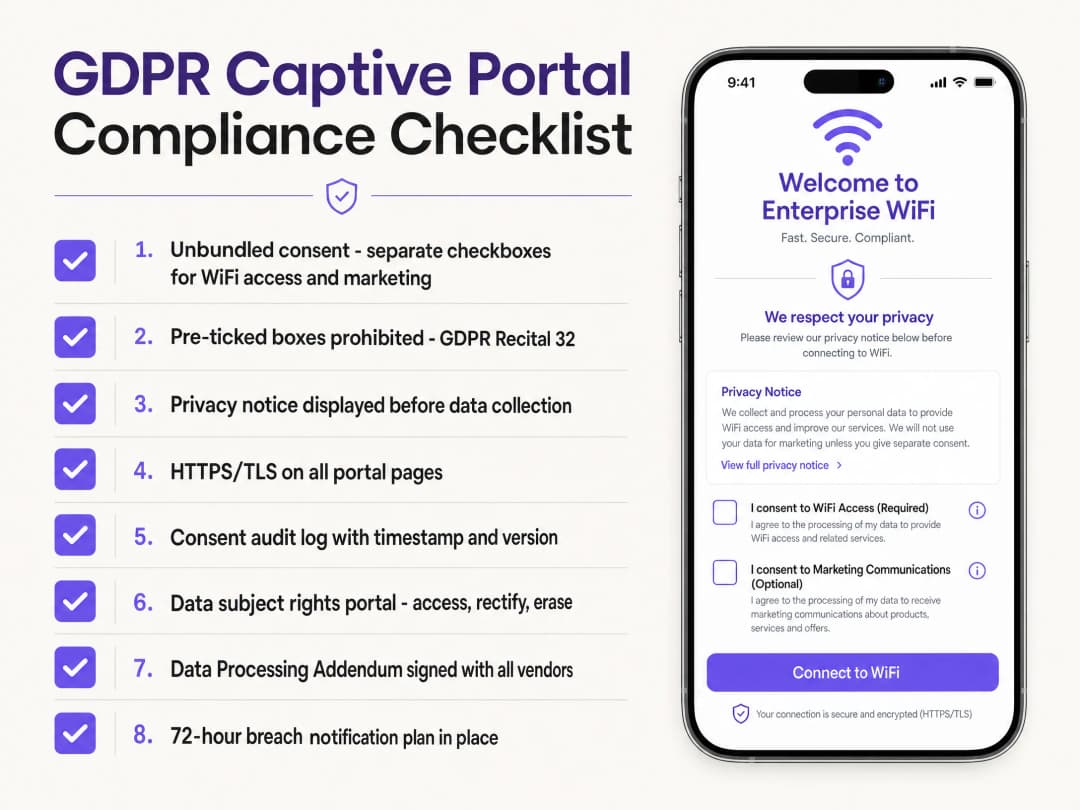
সবচেয়ে সাধারণ আর্কিটেকচারাল ভুল হলো জোরপূর্বক লিঙ্কিং। আপনি যদি কোনো অতিথির নেটওয়ার্ক অ্যাক্সেস করার জন্য মার্কেটিং ইমেল গ্রহণ করা বাধ্যতামূলক করেন, তবে সেই সম্মতি অবাধে দেওয়া হয় না এবং GDPR-এর ৭ নম্বর অনুচ্ছেদ অনুযায়ী তা অবৈধ। আপনাকে অবশ্যই একটি আলাদা সম্মতি ব্যবস্থা বাস্তবায়ন করতে হবে।
আপনার Captive Portal-এ কমপক্ষে দুটি পৃথক সম্মতির উপাদান থাকতে হবে:
- নেটওয়ার্ক অ্যাক্সেসের জন্য ব্যবহারের শর্তাবলী গ্রহণ করার জন্য একটি বাধ্যতামূলক চেকবক্স।
- মার্কেটিং যোগাযোগের সম্মতির জন্য একটি ঐচ্ছিক, আগে থেকে টিক চিহ্ন না দেওয়া চেকবক্স।
GDPR-এর রিসাইটেল ৩২ স্পষ্টভাবে আগে থেকে টিক চিহ্ন দেওয়া বক্স নিষিদ্ধ করে। তাছাড়া, ১৩ নম্বর অনুচ্ছেদ অনুযায়ী ব্যবহারকারী কোনো ডেটা জমা দেওয়ার আগে আপনার পোর্টালকে অবশ্যই একটি স্পষ্ট গোপনীয়তা নীতি প্রদর্শন করতে হবে। এই নীতিতে ব্যাখ্যা করতে হবে যে আপনি কী ডেটা সংগ্রহ করছেন, কেন করছেন, কতক্ষণ তা সংরক্ষণ করবেন এবং কার সাথে শেয়ার করবেন।
সবচেয়ে গুরুত্বপূর্ণ বিষয় হলো, আপনার সিস্টেমে একটি সম্মতির অডিট লগ রাখতে হবে। এই লগে অবশ্যই রেকর্ড করতে হবে কে সম্মতি দিয়েছে, কখন দিয়েছে, কিসে সম্মতি দিয়েছে এবং গোপনীয়তা নীতির ঠিক কোন সংস্করণটি প্রদর্শিত হয়েছিল। এটিই আপনার কমপ্লায়েন্সের প্রমাণ। প্রমাণ। প্রমাণ।
নেটওয়ার্ক সেগমেন্টেশন এবং নিরাপত্তা
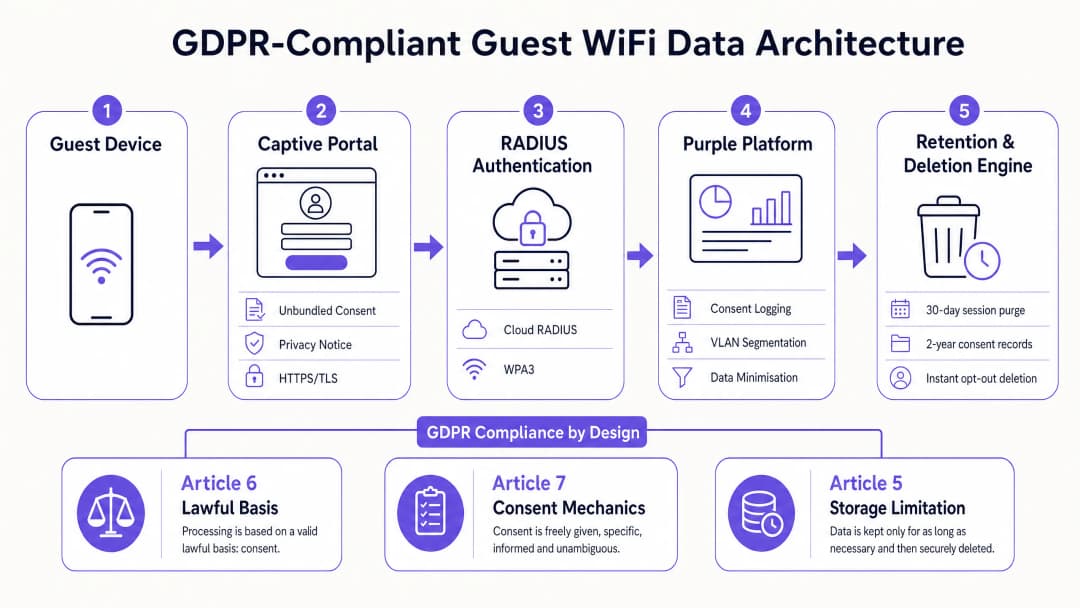
নেটওয়ার্ক আর্কিটেকচারের দৃষ্টিকোণ থেকে, সেগমেন্টেশন আবশ্যক। আপনার গেস্ট WiFi ট্রাফিক অবশ্যই একটি ডেডিকেটেড VLAN (Virtual Local Area Network) এ আইসোলেট করতে হবে, যা আপনার কর্পোরেট নেটওয়ার্ক থেকে সম্পূর্ণ আলাদা। গেস্ট ডিভাইসগুলো যাতে ইন্টারনাল সাবনেটে প্রবেশ করতে না পারে সেজন্য অ্যাক্সেস কন্ট্রোল লিস্ট ব্যবহার করুন এবং গেস্ট ডিভাইসগুলোর নিজেদের মধ্যে যোগাযোগ বন্ধ করতে ক্লায়েন্ট আইসোলেশন সক্রিয় করুন। এটি গেস্ট এবং আপনার কর্পোরেট সম্পদ উভয়কেই সুরক্ষিত রাখে। এই নীতিগুলো সম্পর্কে আরও জানতে দেখুন What Is Secure WiFi: Essential Guide for Business 2026।
অথেনটিকেশনের জন্য, আপনার ওয়্যারলেস ল্যান কন্ট্রোলারকে একটি ক্লাউড RADIUS সার্ভারের সাথে ইন্টিগ্রেট করুন। যখন কোনো ব্যবহারকারী Captive Portal ফ্লো সম্পন্ন করেন, তখন প্ল্যাটফর্মটি অ্যাক্সেস দেওয়ার জন্য কন্ট্রোলারে একটি RADIUS-Access-Accept বার্তা পাঠায়। এটি অথেনটিকেশন লেয়ার এবং ডেটা সংগ্রহ লেয়ারের মধ্যে একটি পরিষ্কার বিভাজন নিশ্চিত করে। এনক্রিপশনের ক্ষেত্রে, আপনার গেস্ট SSID তে WPA3 ব্যবহার করা উচিত, যদি আপনার হার্ডওয়্যার এটি সাপোর্ট করে। অন্তত AES এনক্রিপশন সহ WPA2 বাধ্যতামূলক করুন। এছাড়াও, আপনার Captive Portal অবশ্যই একটি বৈধ TLS সার্টিফিকেট সহ HTTPS এর মাধ্যমে পরিবেশন করা উচিত। HTTP এর মাধ্যমে ব্যক্তিগত ডেটা সংগ্রহের ফর্ম পরিবেশন করা একটি গুরুতর নিরাপত্তা ত্রুটি।
আপনার নির্দিষ্ট সেটআপ নিয়ে কোনো প্রশ্ন আছে?
আমাদের টিম ৮০,০০০ ভেন্যুতে ভেন্যু অপারেটর, IT ম্যানেজার এবং নেটওয়ার্ক ইঞ্জিনিয়ারদের সাথে কাজ করে। একটি ২০ মিনিটের কল বুক করুন এবং আপনার মতো অন্যরা কীভাবে এর সমাধান করেছেন তা আমরা আপনাকে দেখাব।
ইমপ্লিমেন্টেশন গাইড
একটি GDPR-সম্মত গেস্ট WiFi নেটওয়ার্ক তৈরি করার জন্য হার্ডওয়্যার, সফটওয়্যার এবং পলিসি লেয়ার জুড়ে একটি কাঠামোগত পদ্ধতির প্রয়োজন।
- হার্ডওয়্যার নির্বাচন: নিশ্চিত করুন যে আপনার অ্যাক্সেস পয়েন্টগুলো VLAN ট্যাগিং, ক্লায়েন্ট আইসোলেশন এবং WPA3 সাপোর্ট করে। Purple এর প্ল্যাটফর্ম হার্ডওয়্যার-স্বাধীন এবং Cisco Meraki, HPE Aruba, Ruckus, Juniper Mist, Ubiquiti, UniFi, Cambium, Extreme Networks এবং Fortinet এর সাথে নির্বিঘ্নে ইন্টিগ্রেট হয়। সাধারণ গ্রাহক-পর্যায়ের হার্ডওয়্যার ব্যবহার করবেন না; দেখুন কেন সাধারণ গ্রাহক-পর্যায়ের WiFi ডিভাইস আপনার গেস্ট নেটওয়ার্কের জন্য উপযুক্ত নয়।2. Captive Portal ডিজাইন: একটি বিচ্ছিন্ন সম্মতি সহ স্প্ল্যাশ পেজ তৈরি করুন। ডেটা সাবমিট করার আগে গোপনীয়তা নীতি অ্যাক্সেসযোগ্য তা নিশ্চিত করুন। আপনি যদি এমন অঞ্চলে কাজ করেন যেখানে নির্দিষ্ট সোশ্যাল লগইনগুলির প্রয়োজন হয়, তবে ডেটা শেয়ারিং স্বচ্ছ তা নিশ্চিত করুন। উদাহরণস্বরূপ, আমাদের Integration der WeChat-WiFi-Authentifizierung: Captive Portal Onboarding für APAC-Kunden গাইডটি দেখুন।
- ডেটা ধারণ অটোমেশন: আপনার ধারণ নীতি অনুসারে ডেটা স্বয়ংক্রিয়ভাবে মুছে ফেলার জন্য আপনার প্ল্যাটফর্মটি কনফিগার করুন। বিশাল পরিমাণ ডেটার জন্য ম্যানুয়ালি মুছে ফেলা বাস্তবসম্মত নয়।
- সরবরাহকারী চুক্তি: আপনার গেস্ট WiFi সরবরাহকারী, CRM সরবরাহকারী এবং এই ডেটা প্রক্রিয়াকরণকারী অন্য যেকোনো তৃতীয় পক্ষের সাথে একটি স্বাক্ষরিত ডেটা প্রসেসিং চুক্তি (DPA) রয়েছে তা নিশ্চিত করুন।
সর্বোত্তম অনুশীলনসমূহ
সম্মতি বজায় রাখতে এবং বিশ্বাস গড়ে তুলতে, এই শিল্প-মান সর্বোত্তম অনুশীলনগুলি মেনে চলুন:
- ডেটা মিনিমাইজেশন: শুধুমাত্র আপনার অত্যন্ত প্রয়োজনীয় ডেটা সংগ্রহ করুন। আপনার যদি ফোন নম্বরের জন্য কোনো নির্দিষ্ট ব্যবসায়িক ব্যবহারের কেস না থাকে, তবে Captive Portal-এ এটি জিজ্ঞাসা করবেন না।
- স্বয়ংক্রিয় স্টোরেজ সীমাবদ্ধতা: কঠোর ডেটা ধারণের সময়সীমা প্রয়োগ করুন। সেশন লগগুলি ৩০ দিন পর মুছে ফেলা উচিত। সম্মতি সংক্রান্ত রেকর্ডগুলি পরিষেবার সম্পর্কের সময়কাল এবং অতিরিক্ত দুই বছর পর্যন্ত রাখা উচিত। সম্মতি প্রত্যাহারের পরপরই মার্কেটিং প্রোফাইলগুলি মুছে ফেলতে হবে।
- ডেটা সাবজেক্ট রাইটস সক্রিয় করা: একটি সেলফ-সার্ভিস প্রেফারেন্স সেন্টার প্রদান করুন যেখানে গেস্টরা তাদের সম্মতি পরিচালনা করতে, ডেটা অ্যাক্সেসের অনুরোধ করতে বা মুছে ফেলার (ভুলে যাওয়ার অধিকার) অনুরোধ করতে পারেন। এটি ডেটা সাবজেক্ট অ্যাক্সেস রিকোয়েস্ট (DSARs) পরিচালনার জন্য অপারেশনাল ওভারহেড নাটকীয়ভাবে হ্রাস করে।
- একটি DPIA পরিচালনা করা: GDPR-এর অনুচ্ছেদ ৩৫ অনুযায়ী আপনার ডেপ্লয়মেন্টে যদি বড় আকারের লোকেশন ট্র্যাকিং বা আচরণগত প্রোফাইলিং জড়িত থাকে, তবে একটি ডেটা প্রোটেকশন ইমপ্যাক্ট অ্যাসেসমেন্ট আইনত বাধ্যতামূলক।
সমস্যা সমাধান এবং ঝুঁকি প্রশমন
এমনকি একটি শক্তিশালী আর্কিটেকচারের পরেও ঝুঁকি থেকে যায়। এই সাধারণ ব্যর্থতার ক্ষেত্রগুলিকে সক্রিয়ভাবে সমাধান করুন:
- সম্মতি ক্লান্তি: আপনার পোর্টাল যদি খুব জটিল হয়, তবে ব্যবহারকারীরা সংযোগ বিচ্ছিন্ন করে দেবে বা অন্ধভাবে ক্লিক করে চলে যাবে। মূল্যের বিনিময়টি স্পষ্ট রাখুন: একটি ইমেল ঠিকানা এবং ঐচ্ছিক মার্কেটিং-এর বিনিময়ে দ্রুত, বিনামূল্যে WiFi।
- অনুপস্থিত DPA: আপনার গেস্ট WiFi প্ল্যাটফর্ম সরবরাহকারী একজন ডেটা প্রসেসর। আপনি যদি একটি স্বাক্ষরিত DPA ছাড়াই তাদের সাথে ব্যক্তিগত ডেটা শেয়ার করেন, তবে আপনি নিয়ম লঙ্ঘন করছেন। ডেটা আদান-প্রদান শুরু হওয়ার আগেই চুক্তিগুলি সম্পন্ন হয়েছে তা নিশ্চিত করুন।* ডেটা লঙ্ঘনের বিলম্বে রিপোর্টিং: GDPR আর্টিকেল 33 অনুযায়ী, আপনি ডেটা লঙ্ঘন সম্পর্কে জানার 72 ঘণ্টার মধ্যে অবশ্যই সুপারভাইজরি কর্তৃপক্ষকে জানাতে হবে। এই সময়সীমাটি আপনার ইনসিডেন্ট রেসপন্স প্ল্যানে যুক্ত করুন; তদন্ত শেষ হওয়া পর্যন্ত রিপোর্টিংয়ের জন্য অপেক্ষা করবেন না।
ROI এবং ব্যবসায়িক প্রভাব
কমপ্লায়েন্স কেবল একটি নিয়ন্ত্রক বাধা নয়, বরং এটি একটি কৌশলগত সহায়ক। একটি GDPR-সম্মত Guest WiFi প্ল্যাটফর্ম আপনাকে বিশ্বব্যাপী আয়ের 4% পর্যন্ত জরিমানা থেকে রক্ষা করে, পাশাপাশি এটি একটি পরিমাপযোগ্য ROI প্রদান করে।
ডিকাপল্ড, সচেতন অপ্ট-ইন প্রয়োগ করার মাধ্যমে আপনি ফার্স্ট-পার্টি ডেটার একটি উচ্চ-মানের ডেটাবেস তৈরি করতে পারেন। যদিও নন-কমপ্লায়েন্ট, জোরপূর্বক অপ্ট-ইন পদ্ধতির তুলনায় বিপণন অপ্ট-ইনের মোট পরিমাণ কিছুটা কম হতে পারে, তবে ব্যবহারকারীদের সক্রিয় অংশগ্রহণের কারণে ইন্টারঅ্যাকশন রেট (যেমন ওপেন রেট, ক্লিক-থ্রু রেট এবং কনভার্সন) উল্লেখযোগ্যভাবে বেশি হয়।
এছাড়াও, একটি কমপ্লায়েন্ট প্ল্যাটফর্ম নৈতিক উপায়ে সংগৃহীত বিজনেস ইন্টেলিজেন্স প্রদান করে। Retail এবং Hospitality-এর মতো শিল্পগুলিতে এই ডেটাগুলো ব্যবসায়িক উন্নতিতে সাহায্য করে - যার মধ্যে ভিজিটরদের উপস্থিতির ওপর ভিত্তি করে স্টাফিং অপ্টিমাইজ করা থেকে শুরু করে অতিথিদের অভিজ্ঞতাকে ব্যক্তিগতকরণ করা পর্যন্ত সবকিছু অন্তর্ভুক্ত রয়েছে। Purple-এর ISO 27001 সার্টিফাইড প্ল্যাটফর্ম ইতিমধ্যে 440 মিলিয়ন লগইন পরিচালনা করেছে এবং 29 বিলিয়ন ডেটা পয়েন্ট সংগ্রহ করেছে, যা প্রমাণ করে যে স্কেলেবিলিটি এবং কঠোর কমপ্লায়েন্স একসাথে সফলভাবে সহাবস্থান করতে পারে।
মূল সংজ্ঞাসমূহ
ডেটা কন্ট্রোলার
যে সত্তা ব্যক্তিগত ডেটা প্রক্রিয়াকরণের উদ্দেশ্য এবং মাধ্যম নির্ধারণ করে। যখন একটি ভেন্যু guest WiFi অফার করে, তখন এটি ডেটা কন্ট্রোলার হিসাবে কাজ করে এবং প্রাথমিক আইনি দায়িত্ব বহন করে।
IT ম্যানেজারদের অবশ্যই বুঝতে হবে যে WiFi প্ল্যাটফর্মের আউটসোর্সিং আইনি দায়বদ্ধতাকে আউটসোর্স করে না।
ডেটা প্রসেসর
একটি সত্তা যা ডেটা কন্ট্রোলারের পক্ষে ব্যক্তিগত ডেটা প্রসেস করে। Purple, WiFi প্ল্যাটফর্ম সরবরাহকারী হিসাবে, ডেটা প্রসেসর হিসাবে কাজ করে।
ভেন্যুর অতিথির ডেটা আইনিভাবে পরিচালনা করার জন্য একটি আনুষ্ঠানিক ডেটা প্রসেসিং অ্যাডেন্ডাম (DPA) প্রয়োজন।
Captive Portal
স্প্ল্যাশ পেজ বা ওয়েব পেজ যা কোনো ব্যবহারকারীকে পাবলিক নেটওয়ার্কে অ্যাক্সেস দেওয়ার আগে অবশ্যই দেখতে হবে এবং ইন্টারঅ্যাক্ট করতে হবে।
এটি হল প্রাথমিক ইন্টারফেস যেখানে ভেন্যুগুলি গোপনীয়তার নোটিশ উপস্থাপন করে এবং বৈধ সম্মতি গ্রহণ করে।
আনবান্ডিলড সম্মতি
অন্যান্য শর্তাবলী থেকে সম্মতির অনুরোধগুলিকে আলাদা করার অভ্যাস। মার্কেটিং সম্মতি পরিষেবার শর্ত হতে পারে না।
সম্মতি যেন GDPR-এর অধীনে 'অবাধ দেওয়া' বলে গণ্য হয় তা নিশ্চিত করার জন্য captive portal ডিজাইনে এটি অপরিহার্য।
MAC Address
মিডিয়া অ্যাক্সেস কন্ট্রোল অ্যাড্রেস; একটি নেটওয়ার্ক ইন্টারফেস কন্ট্রোলারের জন্য নির্ধারিত একটি অনন্য আইডেন্টিফায়ার। GDPR-এর অধীনে, কোনো ব্যবহারকারীর সাথে যুক্ত হলে এটিকে ব্যক্তিগত ডেটা হিসাবে বিবেচনা করা হয়।
এমনকি যদি কোনো ব্যবহারকারী ইমেল প্রদান নাও করেন, তবুও তাদের MAC address লগ করা ব্যক্তিগত ডেটা প্রক্রিয়াকরণের আওতায় পড়ে।
VLAN সেগমেন্টেশন
একটি ফিজিক্যাল নেটওয়ার্ককে একাধিক লজিক্যাল নেটওয়ার্কে বিভক্ত করা। Guest WiFi ট্রাফিক অবশ্যই কর্পোরেট ট্রাফিক থেকে আলাদা রাখতে হবে।
অভ্যন্তরীণ কোম্পানির অ্যাসেটগুলিতে অতিথিদের ডিভাইসগুলির অ্যাক্সেস রোধ করার জন্য একটি মৌলিক নিরাপত্তা নিয়ন্ত্রণ।
RADIUS
রিমোট অথেন্টিকেশন ডায়াল-ইন ইউজার সার্ভিস - একটি নেটওয়ার্কিং প্রোটোকল যা সেন্ট্রালাইজড অথেন্টিকেশন, অথরাইজেশন এবং অ্যাকাউন্টিং ম্যানেজমেন্ট প্রদান করে।
নেটওয়ার্ক অ্যাক্সেস দেওয়ার আগে যে সমস্ত ব্যবহারকারী captive portal ফ্লো সম্পন্ন করেছেন তাদের নিরাপদে প্রমাণীকরণ করতে ব্যবহৃত হয়।
DSAR
Data Subject Access Request; কোনো ব্যক্তি তার ব্যক্তিগত ডেটার একটি অনুলিপি অনুরোধ করতে অথবা সেটি সংশোধন বা মুছে ফেলার অনুরোধ করার একটি মাধ্যম।
ভেন্যুগুলির অবশ্যই ৩০ দিনের মধ্যে এগুলো পরিচালনা করার প্রক্রিয়া থাকতে হবে। সেলফ-সার্ভিস প্রেফারেন্স সেন্টারগুলি এই কাজের চাপকে স্বয়ংক্রিয় করে তোলে।`ক্রিয় করে দেয়।`} ⏎`json` ⏎
সমাধানকৃত উদাহরণসমূহ
একটি ২০০ রুমের হোটেল তাদের লয়্যালটি প্রোগ্রামে সাইন-আপ বাড়াতে অতিথিদের ইমেল সংগ্রহ করতে চায়। তাদের বর্তমান সিস্টেমে অনলাইনে যাওয়ার শর্ত হিসেবে অতিথিদের মার্কেটিং ইমেল গ্রহণ করতে হয়।
হোটেলটিকে অবশ্যই আনবান্ডিলড সম্মতি সহ একটি সম্মত captive portal স্থাপন করতে হবে। তাদের দুটি পৃথক টিক বক্স প্রয়োগ করতে হবে: নেটওয়ার্ক অ্যাক্সেসের জন্য পরিষেবার শর্তাবলী মেনে নেওয়ার জন্য একটি বাধ্যতামূলক বক্স, এবং মার্কেটিং সম্মতির জন্য একটি ঐচ্ছিক, আনটিক করা টিক বক্স। ডেটা জমা দেওয়ার বোতামের আগে গোপনীয়তার নোটিশটি স্পষ্টভাবে লিঙ্ক করা থাকতে হবে।
একটি স্টেডিয়ামের IT টিম ভিড়ের ঘনত্ব নিরীক্ষণ করতে এবং ইভেন্টগুলিতে নিরাপত্তা পরিচালনা করতে WiFi অ্যানালিটিক্স ব্যবহার করতে চায়। আইনি দল চিন্তিত যে স্পষ্ট সম্মতি ছাড়া ডিভাইসের অবস্থান ট্র্যাক করা GDPR লঙ্ঘন করে।
সমাধানটি দ্বিমুখী। প্রথমত, লেজিটিমেট ইন্টারেস্ট-এর অধীনে ভিড় ব্যবস্থাপনা এবং সুরক্ষার উদ্দেশ্যে লোকেশন ডেটা প্রসেস করা হচ্ছে তা স্পষ্টভাবে প্রকাশ করার জন্য captive portal-এর গোপনীয়তার নোটিশটি আপডেট করতে হবে। দ্বিতীয়ত, ডেটা ক্লাউড অ্যানালিটিক্স প্ল্যাটফর্মে পৌঁছানোর আগে IT টিমকে এজে (অ্যাক্সেস পয়েন্টগুলিতে) MAC address ছদ্মনামকরণ (pseudonymisation) প্রয়োগ করতে হবে।
অনুশীলনী প্রশ্নসমূহ
Q1. আপনার মার্কেটিং টিম তাদের ইমেল ডেটাবেসের আকার বাড়াতে চায়। তারা রূপান্তর বাড়াতে গেস্ট WiFi captive portal-এ মার্কেটিং অপ্ট-ইন চেকবক্সটি ডিফল্টভাবে আগে থেকে টিক দিয়ে রাখার প্রস্তাব করে। আপনি তাদের কী পরামর্শ দেবেন?
ইঙ্গিত: GDPR-এর দ্ব্যর্থহীন সম্মতির সংজ্ঞা এবং Recital 32 বিবেচনা করুন।
মডেল উত্তর দেখুন
আপনাকে অবশ্যই এই প্রস্তাবটি প্রত্যাখ্যান করতে হবে। GDPR Recital 32-এ স্পষ্টভাবে বলা হয়েছে যে নীরবতা, আগে থেকে টিক দেওয়া বক্স বা নিষ্ক্রিয়তা সম্মতি হিসেবে গণ্য হবে না। সম্মতির জন্য একটি স্পষ্ট ইতিবাচক পদক্ষেপের প্রয়োজন। আগে থেকে টিক দেওয়া বক্স ব্যবহার করলে সম্মতিটি অবৈধ হয়ে যায় এবং এটি সংস্থাকে রেগুলেটরি জরিমানার সম্মুখীন করতে পারে।
Q2. একজন গেস্ট আপনার WiFi-এ সংযুক্ত হয়েছেন কিন্তু কোনো ইমেল অ্যাড্রেস প্রদান করেননি, বরং একটি 'skip' অপশনের মাধ্যমে লগ ইন করেছেন। আপনার সিস্টেম তাদের ডিভাইসের MAC address, সংযোগের সময় এবং তারা যে অ্যাক্সেস পয়েন্টে সংযুক্ত হয়েছেন তা লগ করে। আপনি কি ব্যক্তিগত ডেটা প্রসেস করছেন?
ইঙ্গিত: সনাক্তকারী এবং কোনো ব্যক্তিকে আলাদা করার সম্ভাবনার বিষয়ে ICO-এর নির্দেশিকা বিবেচনা করুন।
মডেল উত্তর দেখুন
হ্যাঁ। নাম বা ইমেল ছাড়াই, একটি MAC address-এর সাথে লোকেশন এবং সময়ের ডেটা যুক্ত করে একটি নির্দিষ্ট ডিভাইসকে আলাদা করা এবং সময়ের সাথে সাথে সেটির গতিবিধি ট্র্যাক করা সম্ভব। ICO এটিকে ব্যক্তিগত ডেটা হিসেবে বিবেচনা করে। আপনাকে অবশ্যই নিশ্চিত করতে হবে যে আপনার একটি বৈধ আইনি ভিত্তি রয়েছে (সাধারণত মৌলিক নেটওয়ার্ক লগের জন্য লেজিটিমেট ইন্টারেস্ট) এবং আপনার গোপনীয়তা বিজ্ঞপ্তিতে এই প্রসেসিং সম্পর্কে স্বচ্ছভাবে প্রকাশ করতে হবে।
Q3. একটি রুটিন অডিটের সময়, আপনি জানতে পারলেন যে আপনার গেস্ট WiFi প্ল্যাটফর্মটি গত চার বছর ধরে বিস্তারিত সেশন লগ (IP addresses, MAC addresses, সংযোগের সময়) সংরক্ষণ করে রাখছে। আপনার কী ব্যবস্থা নেওয়া উচিত?
ইঙ্গিত: GDPR-এর স্টোরেজ লিমিটেশন নীতির (Article 5) সাহায্য নিন।
মডেল উত্তর দেখুন
আপনাকে অবিলম্বে একটি স্বয়ংক্রিয় ডেটা ডিলিট করার পলিসি কার্যকর করতে হবে। স্টোরেজ লিমিটেশন নীতি অনুযায়ী, প্রয়োজনের চেয়ে বেশি সময় ডেটা রাখা যাবে না। নেটওয়ার্ক ট্রাবলশুটিংয়ের জন্য চার বছরের সেশন লগ অত্যন্ত অতিরিক্ত। আপনার উচিত ৩০ দিনের চেয়ে পুরনো সব ঐতিহাসিক সেশন ডেটা মুছে ফেলা এবং প্ল্যাটফর্মটিকে এমনভাবে কনফিগার করা যাতে ভবিষ্যতে ৩০ দিন হওয়া মাত্র সেশন লগগুলি স্বয়ংক্রিয়ভাবে মুছে যায়।
এই সিরিজে পড়া চালিয়ে যান
Cisco Meraki WiFi 6-এর বিক্রয় সমাপ্তির সময়কালে WiFi 6 থেকে WiFi 7 অ্যাক্সেস পয়েন্ট রিফ্রেশ করার পরিকল্পনা
এই টেকনিক্যাল রেফারেন্সটি মাল্টি-সাইট অপারেটরদের ৩১ ডিসেম্বর ২০২৬-এর শেষ-অর্ডার তারিখের আগে একটি Cisco Meraki WiFi 6 থেকে WiFi 7 রিফ্রেশের সিদ্ধান্ত নেওয়ার ফ্রেমওয়ার্ক প্রদান করে। এটি প্রতিটি অ্যাক্সেস পয়েন্ট পরিবর্তনের সময় Purple প্রমাণীকরণ এবং লোকেশন-অ্যানালিটিক্স ধারাবাহিকতা রক্ষা করার জন্য Meraki Dashboard পরীক্ষাগুলোর সাথে এস্টেট এবং ব্যাকহল পরিকল্পনার সমন্বয় করে।
GDPR এবং Guest WiFi: ভেন্যু মার্কেটার এবং IT-এর জন্য একটি কমপ্লায়েন্স গাইড
এই টেকনিক্যাল গাইডটি ভেন্যু IT এবং মার্কেটিং টিমগুলোকে দেখায় কীভাবে GDPR-এর অধীনে Guest WiFi ডেটা সংগ্রহ নিয়ন্ত্রণ করতে হয়, একটি captive portal-কে কমপ্লায়েন্সের দুর্বলতায় পরিণত না করে। এটি নেটওয়ার্ক অ্যাক্সেস, গোপনীয়তার তথ্য, ঐচ্ছিক মার্কেটিং পছন্দ এবং CRM ফ্লো-কে আলাদা করে, তারপর Purple Connect, Capture এবং Engage-কে সেই অপারেশনাল সিদ্ধান্তের সাথে মানচিত্রিত করে।
Cisco Catalyst WLC এবং গেস্ট WiFi: Purple-এর সাথে ক্যাপটিভ পোর্টাল সেটআপ
যেভাবে একটি Cisco Catalyst 9800 (IOS-XE) ওয়্যারলেস LAN কন্ট্রোলার Purple গেস্ট WiFi-এর সাথে কাজ করে: এক্সটার্নাল ওয়েব অথেন্টিকেশন, RADIUS এবং একটি ওয়াল্ড গার্ডেন, সাথে সঠিক কনফিগারেশনের জন্য Purple-এর ধাপে ধাপে সেটআপ গাইডের একটি লিঙ্ক।
আপনার নির্দিষ্ট সেটআপ নিয়ে কোনো প্রশ্ন আছে?
আমাদের টিম ৮০,০০০ ভেন্যুতে ভেন্যু অপারেটর, IT ম্যানেজার এবং নেটওয়ার্ক ইঞ্জিনিয়ারদের সাথে কাজ করে। একটি ২০ মিনিটের কল বুক করুন এবং আপনার মতো অন্যরা কীভাবে এর সমাধান করেছেন তা আমরা আপনাকে দেখাব।