
WiFi 7 MLO ব্যাখ্যা: সিমলেস রোমিংয়ের জন্য Multi-Link Operation
এই টেকনিক্যাল রেফারেন্স গাইডটি এন্টারপ্রাইজ নেটওয়ার্ক আর্কিটেক্ট এবং আইটি লিডারদের জন্য WiFi 7 Multi-Link Operation (MLO)-এর একটি বিস্তৃত ডিপ-ডাইভ প্রদান করে। এটি তিনটি MLO অপারেটিং মোড (eMLSR, NSTR, এবং STR) সহজবোধ্য করে, কীভাবে MLO লিগ্যাসি ব্যান্ড স্টিয়ারিংকে ছাড়িয়ে যায় তা ব্যাখ্যা করে এবং ওয়্যারলেস ব্রডব্যান্ড অ্যালায়েন্সের বাস্তব-বিশ্বের ট্রায়াল ডেটা দ্বারা সমর্থিত কার্যকর ডিপ্লয়মেন্ট গাইডেন্স প্রদান করে। হসপিটালিটি, রিটেইল এবং বৃহৎ পাবলিক স্পেসের ভেন্যু অপারেটররা WiFi 7 বিনিয়োগের সিদ্ধান্তগুলিকে সমর্থন করার জন্য কংক্রিট বাস্তবায়ন কৌশল এবং ROI প্রমাণ পাবেন।
এই গাইডটি শুনুন
পডকাস্ট ট্রান্সক্রিপ্ট দেখুন

এক্সিকিউটিভ সামারি
এন্টারপ্রাইজ আইটি লিডার এবং নেটওয়ার্ক আর্কিটেক্টদের জন্য, IEEE 802.11be (WiFi 7)-এ রূপান্তর ওয়্যারলেস কানেক্টিভিটিতে একটি যুগান্তকারী পরিবর্তন নিয়ে আসে। এই স্ট্যান্ডার্ডের মূল ভিত্তি হলো Multi-Link Operation (MLO), যা Wi-Fi CERTIFIED 7 ডিভাইসগুলির জন্য একটি বাধ্যতামূলক ফিচার এবং এটি রেডিও ফ্রিকোয়েন্সি স্পেকট্রাম জুড়ে অ্যাক্সেস পয়েন্ট এবং ক্লায়েন্টদের ইন্টারঅ্যাক্ট করার পদ্ধতিকে মৌলিকভাবে পরিবর্তন করে। লিগ্যাসি ব্যান্ড স্টিয়ারিংয়ের বিপরীতে, যা নেটওয়ার্ক-চালিত রিঅ্যাসোসিয়েশনের উপর নির্ভর করে এবং ট্র্যাফিক ব্যাহত করে, MLO যুগপৎ, ক্লায়েন্ট-সমন্বিত মাল্টি-ব্যান্ড কানেকশনের সুবিধা দেয়।
ওয়্যারলেস ব্রডব্যান্ড অ্যালায়েন্স দ্বারা পরিচালিত সাম্প্রতিক এন্টারপ্রাইজ ফিল্ড ট্রায়ালগুলি উচ্চ-ঘনত্বের পরিবেশে MLO-এর গভীর প্রভাব প্রদর্শন করেছে। লাইভ অফিস পরিবেশে টেস্টিংয়ে দেখা গেছে যে তীব্র কো-চ্যানেল ইন্টারফারেন্সের অধীনে আপলিংক থ্রুপুট ১১৬% পর্যন্ত উন্নত হয়েছে, পাশাপাশি আপলিংক ল্যাটেন্সি ৬৬% হ্রাস পেয়েছে। স্টেডিয়াম, কনফারেন্স সেন্টার এবং বড় রিটেইল স্পেস পরিচালনাকারী অপারেশন ডিরেক্টরদের জন্য, MLO সরাসরি মিশন-ক্রিটিকাল অ্যাপ্লিকেশনগুলির জন্য রেজিলিয়েন্ট কানেক্টিভিটি নিশ্চিত করে। এই গাইডটি MLO-এর টেকনিক্যাল আর্কিটেকচারকে সহজবোধ্য করে, তিনটি প্রাথমিক অপারেটিং মোড বিশ্লেষণ করে এবং আধুনিক এন্টারপ্রাইজ ডিপ্লয়মেন্টের জন্য কার্যকর বাস্তবায়ন কৌশল প্রদান করে।
টেকনিক্যাল ডিপ-ডাইভ: Multi-Link Operation-এর আর্কিটেকচার
WiFi 7 MLO-এর মৌলিক উদ্ভাবন হলো একটি মাল্টি-লিংক ডিভাইস (MLD) আর্কিটেকচার তৈরি করা যা লজিক্যাল নেটওয়ার্ক কানেকশন থেকে ফিজিক্যাল রেডিও লিংকগুলিকে আলাদা করে। WiFi 6E সহ পূর্ববর্তী প্রজন্মগুলিতে, একটি ক্লায়েন্ট ডিভাইস যেকোনো নির্দিষ্ট মুহূর্তে শুধুমাত্র একটি সিঙ্গেল ব্যান্ডের (2.4 GHz, 5 GHz, বা 6 GHz) সাথে যুক্ত হতে পারত। যদি ইন্টারফারেন্সের কারণে সেই লিংকটি দুর্বল হয়ে যায়, তবে ক্লায়েন্ট বা অ্যাক্সেস পয়েন্টকে একটি ভিন্ন ব্যান্ডে সম্পূর্ণ রিঅ্যাসোসিয়েশন শুরু করতে হতো — এমন একটি প্রক্রিয়া যাতে সাধারণত ১০০ মিলিসেকেন্ডের বেশি ল্যাটেন্সি এবং অনিবার্য প্যাকেট লস হয়।
802.11be MLO-এর মাধ্যমে, MAC লেয়ারটি আপার MAC (U-MAC) এবং লোয়ার MAC (L-MAC)-এ বিভক্ত করা হয়। U-MAC সামগ্রিক সিকিউরিটি অ্যাসোসিয়েশন, এনক্রিপশন এবং সিকোয়েন্স নাম্বারিং পরিচালনা করে, যেখানে L-MAC প্রতিটি পৃথক রেডিও লিংকের জন্য ফিজিক্যাল চ্যানেল অ্যাক্সেস এবং বিকনিং পরিচালনা করে। এই আর্কিটেকচারটি একটি সিঙ্গেল লজিক্যাল কানেকশনকে একই সাথে একাধিক ফিজিক্যাল ব্যান্ডে বিস্তৃত হতে দেয়। ক্লায়েন্ট এবং অ্যাক্সেস পয়েন্ট প্রাথমিক অ্যাসোসিয়েশন পর্যায়ে এই সক্ষমতাগুলি নিয়ে আলোচনা করে, নির্দিষ্ট পার-লিংক MAC অ্যাড্রেসের পাশাপাশি একটি প্রাথমিক MLD MAC অ্যাড্রেস স্থাপন করে।
MLO-এর তিনটি মোড
যদিও মার্কেটিং ম্যাটেরিয়ালগুলি প্রায়শই MLO-কে একটি মনোলিথিক ফিচার হিসেবে উপস্থাপন করে, IEEE 802.11be স্ট্যান্ডার্ড তিনটি স্বতন্ত্র অপারেটিং মোড সংজ্ঞায়িত করে। হার্ডওয়্যার সক্ষমতা মূল্যায়ন এবং ডিপ্লয়মেন্ট টাইমলাইন পরিকল্পনাকারী নেটওয়ার্ক আর্কিটেক্টদের জন্য এই মোডগুলি বোঝা অত্যন্ত গুরুত্বপূর্ণ।
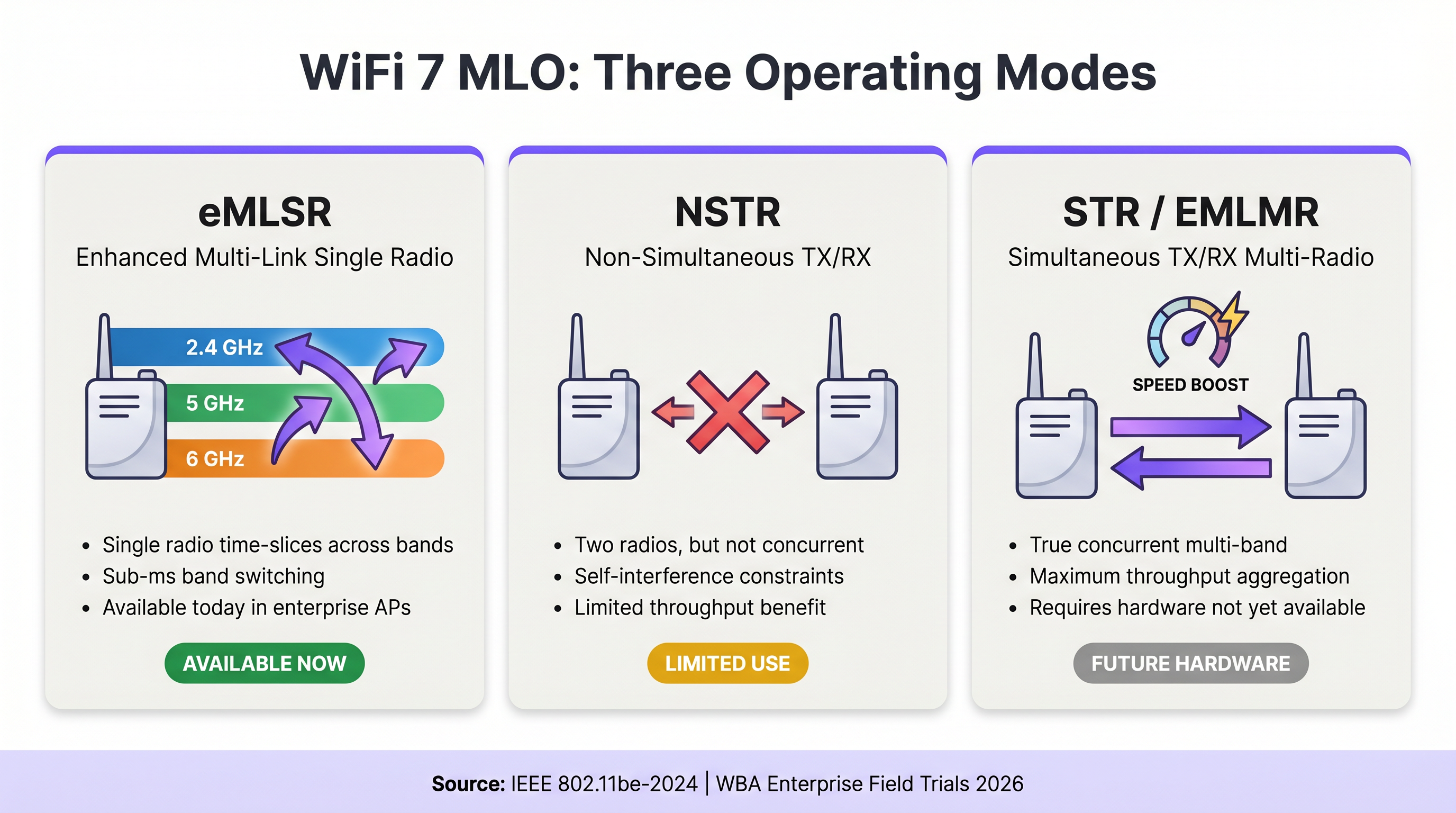
১. এনহ্যান্সড মাল্টি-লিংক সিঙ্গেল রেডিও (eMLSR)
এনহ্যান্সড মাল্টি-লিংক সিঙ্গেল রেডিও হলো বর্তমান এন্টারপ্রাইজ অ্যাক্সেস পয়েন্ট এবং ক্লায়েন্ট ডিভাইসগুলিতে উপলব্ধ মৌলিক MLO বাস্তবায়ন। এই মোডে, ক্লায়েন্ট ডিভাইস একটি সিঙ্গেল রেডিও ব্যবহার করে যা দ্রুত একাধিক ব্যান্ড জুড়ে টাইম-স্লাইস করে। গুরুত্বপূর্ণভাবে, ডিভাইসটি পৃথক রিসিভ চেইন বজায় রাখে, যা এটিকে একই সাথে 5 GHz এবং 6 GHz ব্যান্ড শুনতে দেয়। যখন ট্রান্সমিট বা রিসিভ করার সুযোগ আসে, তখন এটি ডায়নামিকভাবে তার প্রাইমারি রেডিওটিকে সর্বোত্তম ব্যান্ডে স্যুইচ করে।
যদিও eMLSR প্রকৃত যুগপৎ ট্রান্সমিশন এবং রিসেপশন প্রদান করে না, এটি সাব-মিলিসেকেন্ড ব্যান্ড স্যুইচিং অফার করে। এটি লিগ্যাসি ব্যান্ড স্টিয়ারিংয়ের তুলনায় একটি বিশাল লাফ, যা প্রায়-সিমলেস ফেইলওভার প্রদান করে এবং কনজেস্টেড পরিবেশে ল্যাটেন্সি উল্লেখযোগ্যভাবে হ্রাস করে। ২০২৫ এবং ২০২৬ সালের এন্টারপ্রাইজ ডিপ্লয়মেন্টের জন্য, eMLSR হলো বাস্তবসম্মত সমাধান যা MLO-এর বেশিরভাগ তাৎক্ষণিক সুবিধা প্রদান করে। ওয়্যারলেস ব্রডব্যান্ড অ্যালায়েন্সের ফেজ ২ এন্টারপ্রাইজ ফিল্ড ট্রায়ালগুলি নিশ্চিত করেছে যে eMLSR কো-চ্যানেল ইন্টারফারেন্সের অধীনে ৭৫% পর্যন্ত ডাউনলিংক এবং ১১৬% আপলিংক থ্রুপুট উন্নতি প্রদান করে, পাশাপাশি রিয়েল-টাইম ট্র্যাফিকের জন্য ডাউনলিংক ল্যাটেন্সি ৪৪% পর্যন্ত হ্রাস করে।
২. নন-সাইমালটেনিয়াস ট্রান্সমিট অ্যান্ড রিসিভ (NSTR)
নন-সাইমালটেনিয়াস ট্রান্সমিট অ্যান্ড রিসিভ একাধিক ফিজিক্যাল রেডিও ব্যবহার করে কিন্তু সেলফ-ইন্টারফারেন্স সীমাবদ্ধতার কারণে সেগুলিকে একই সাথে কাজ করতে বাধা দেয়। যদি কোনো ডিভাইস 5 GHz ব্যান্ডে ট্রান্সমিট করে, তবে এর ফলে সৃষ্ট রেডিও ফ্রিকোয়েন্সি নয়েজ এটিকে একই সাথে 6 GHz ব্যান্ডে নির্ভরযোগ্যভাবে ডেটা রিসিভ করতে বাধা দেয়। eMLSR-এর ডায়নামিক অ্যাজিলিটি বা প্রকৃত যুগপৎ অপারেশনের চূড়ান্ত লক্ষ্যের তুলনায় NSTR-কে মূলত সীমিত বাস্তব-বিশ্বের উপযোগিতাসহ একটি মধ্যবর্তী পদক্ষেপ হিসেবে দেখা হয়।
৩. সাইমালটেনিয়াস ট্রান্সমিট অ্যান্ড রিসিভ (STR / EMLMR)
Multi-Link Operation স্পেসিফিকেশনের চূড়ান্ত পর্যায় হলো সাইমালটেনিয়াস ট্রান্সমিট অ্যান্ড রিসিভ, যা এনহ্যান্সড মাল্টি-লিংক মাল্টি-রেডিও (EMLMR) সক্ষম করে। এই মোডটি একটি ডিভাইসকে একই সাথে একাধিক ব্যান্ড জুড়ে ডেটা ট্রান্সমিট এবং রিসিভ করতে দেয়, থ্রুপুট একত্রিত করে এবং WiFi 7-এর তাত্ত্বিক সর্বোচ্চ পারফরম্যান্স প্রদান করে। STR অর্জনের জন্য সেলফ-ইন্টারফারেন্স প্রশমিত করতে সাব-মাইক্রোসেকেন্ড টাইমিং অ্যালাইনমেন্ট এবং অত্যাধুনিক স্পেকট্রাম রিসোর্স শিডিউলিং (SRS) সক্ষম অত্যন্ত উন্নত হার্ডওয়্যার প্রয়োজন। ২০২৬ সালের শুরুর দিক পর্যন্ত, কোনো কনজিউমার বা এন্টারপ্রাইজ হার্ডওয়্যার সম্পূর্ণরূপে প্রকৃত STR বাস্তবায়ন করেনি, যা এটিকে বর্তমান ডিপ্লয়মেন্ট বিবেচনার পরিবর্তে একটি ভবিষ্যৎ সক্ষমতায় পরিণত করেছে।
ইমপ্লিমেন্টেশন গাইড: MLO বনাম লিগ্যাসি ব্যান্ড স্টিয়ারিং
WiFi 7 রোলআউটের পরিকল্পনা করা নেটওয়ার্ক ইঞ্জিনিয়ারদের জন্য, সবচেয়ে তাৎক্ষণিক অপারেশনাল পরিবর্তন হলো ঐতিহ্যবাহী ব্যান্ড স্টিয়ারিংয়ের অপ্রচলিত হয়ে যাওয়া। ঐতিহাসিকভাবে, এন্টারপ্রাইজ ওয়্যারলেস LAN কন্ট্রোলারগুলি 2.4 GHz-এ তাদের প্রোব রিকোয়েস্টগুলি উপেক্ষা করে ডুয়াল-ব্যান্ড ক্লায়েন্টদের কম কনজেস্টেড 5 GHz স্পেকট্রামে বাধ্য করতে ব্যান্ড স্টিয়ারিং ব্যবহার করত। এই নেটওয়ার্ক-কেন্দ্রিক পদ্ধতিটি স্বভাবতই ব্যাঘাতমূলক ছিল, কারণ ক্লায়েন্ট ডিভাইসটি স্টিয়ারিং লজিক সম্পর্কে অবগত ছিল না এবং জোরপূর্বক ট্রানজিশনের সময় ড্রপড কানেকশনের সম্মুখীন হতো।
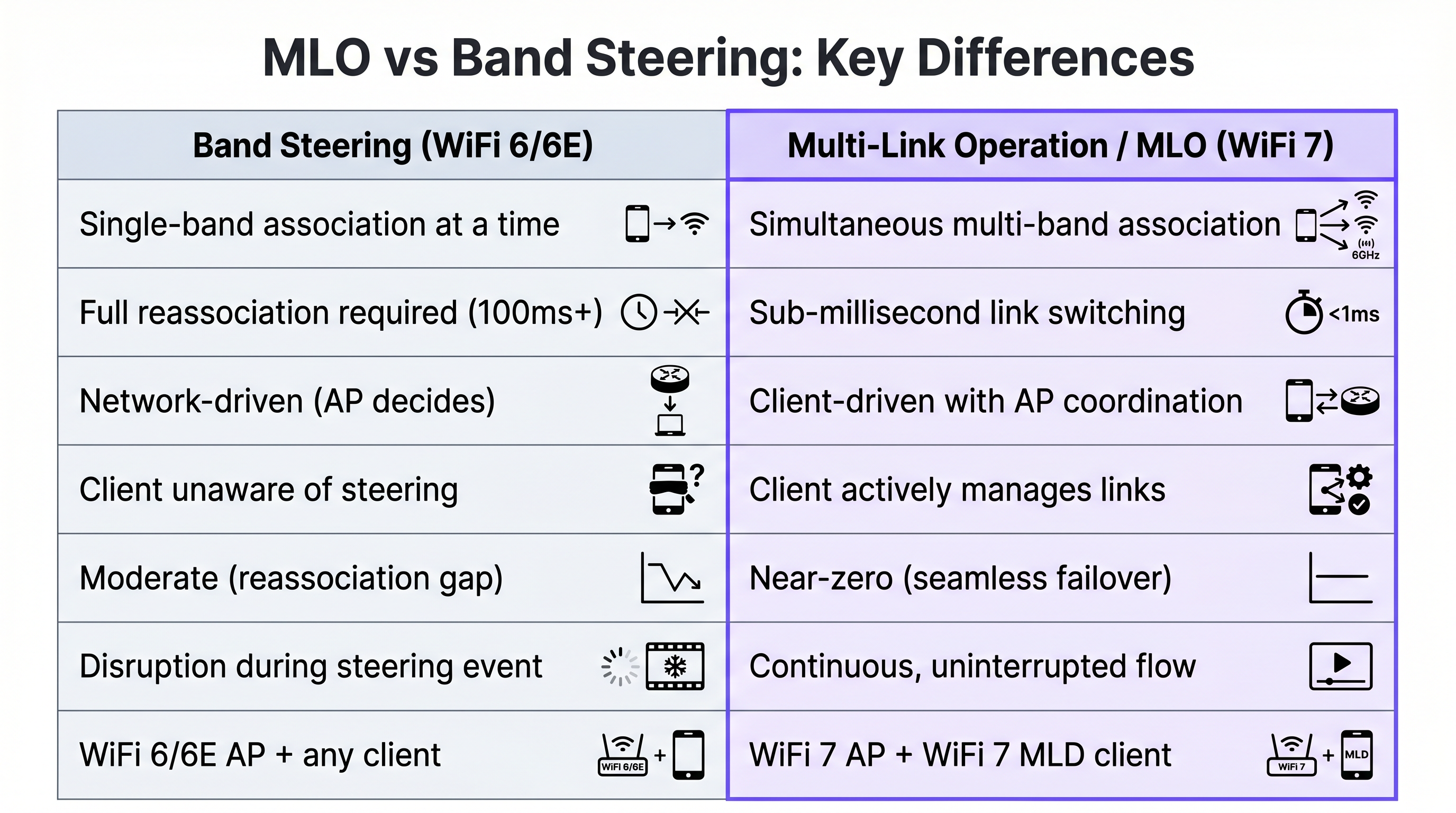
MLO এই প্যারাডাইমটিকে একটি ক্লায়েন্ট-চালিত, AP-সমন্বিত পদ্ধতি দিয়ে প্রতিস্থাপন করে। যেহেতু ক্লায়েন্ট একই সাথে একাধিক লিংকের সচেতনতা বজায় রাখে, এটি অন্তর্নিহিত লজিক্যাল কানেকশন না ভেঙে রিয়েল-টাইম চ্যানেল কন্ডিশনের উপর ভিত্তি করে নির্বিঘ্নে ট্র্যাফিক স্থানান্তর করতে পারে। এটি উচ্চ-ঘনত্বের ভেন্যুগুলিতে Guest WiFi ডিপ্লয়মেন্টের জন্য বিশেষভাবে গুরুত্বপূর্ণ যেখানে রোমিং এবং ইন্টারফারেন্স ধ্রুবক চ্যালেঞ্জ। বিমানবন্দর এবং রেল টার্মিনালের মতো Transport হাবগুলির জন্য, যেখানে যাত্রীরা কভারেজ জোনগুলির মধ্য দিয়ে দ্রুত চলাচল করে, রিঅ্যাসোসিয়েশন বিলম্ব দূরীকরণ সরাসরি মোবাইল চেক-ইন এবং ওয়েফাইন্ডিং অ্যাপ্লিকেশনগুলির গুণমান উন্নত করে।
ডিপ্লয়মেন্ট রেডিনেস এবং ইকোসিস্টেম
একটি MLO ডিপ্লয়মেন্টের সাফল্য সম্পূর্ণভাবে ক্লায়েন্ট ইকোসিস্টেমের উপর নির্ভরশীল। একটি WiFi 7 অ্যাক্সেস পয়েন্ট শুধুমাত্র একটি WiFi 7 MLD-সক্ষম ক্লায়েন্টের সাথে যোগাযোগ করার সময় MLO ব্যবহার করতে পারে। লিগ্যাসি WiFi 6 এবং 6E ডিভাইসগুলি স্বাভাবিকভাবে কানেক্ট হবে কিন্তু মাল্টি-লিংক সক্ষমতা থেকে উপকৃত হবে না।
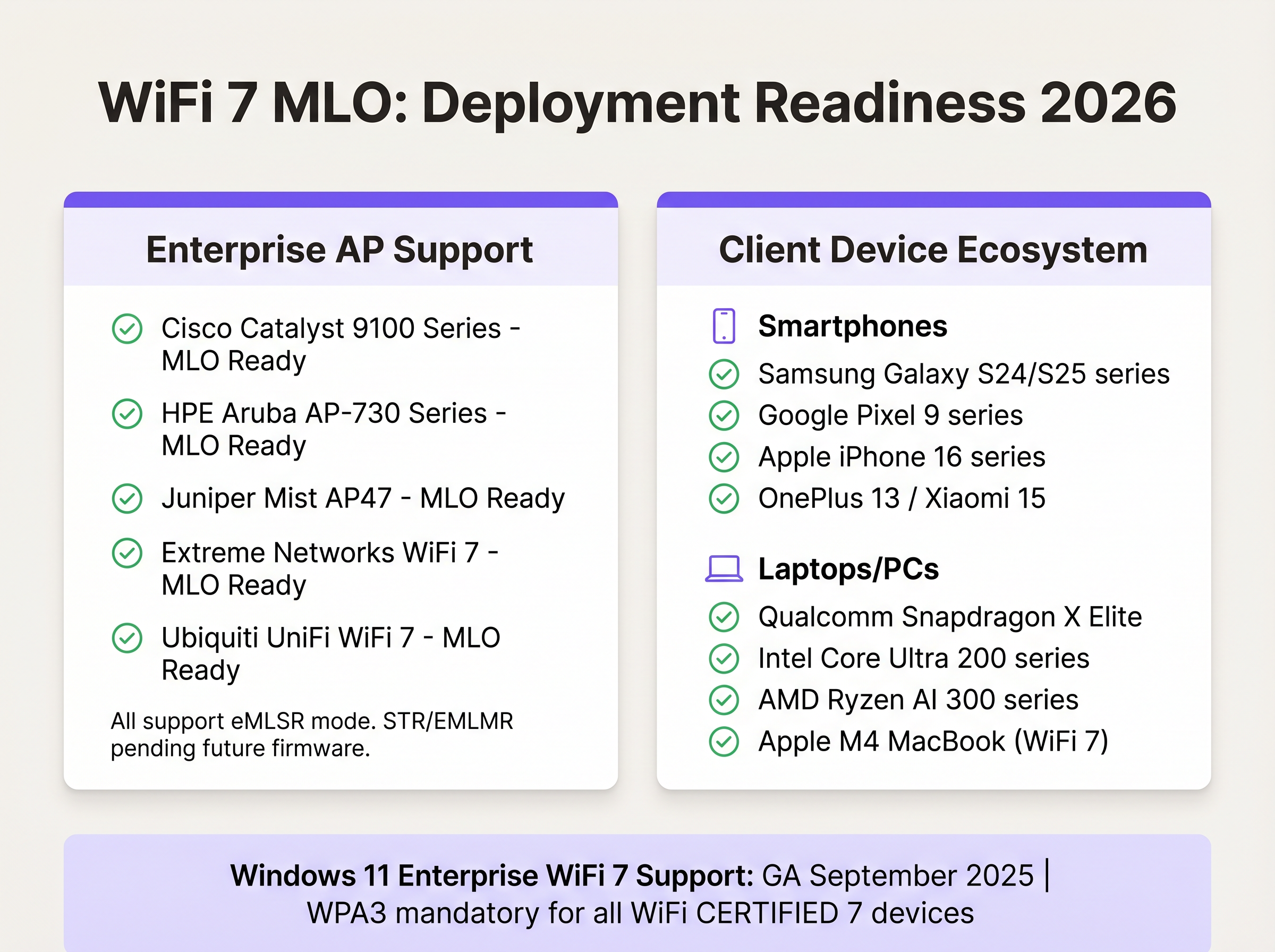
২০২৬ সাল পর্যন্ত, এন্টারপ্রাইজ ইকোসিস্টেম দ্রুত পরিপক্ক হচ্ছে। Cisco, HPE Aruba, এবং Juniper Mist-এর মতো প্রধান অ্যাক্সেস পয়েন্ট ভেন্ডররা eMLSR সমর্থনকারী শক্তিশালী WiFi 7 হার্ডওয়্যার অফার করে। ক্লায়েন্ট সাইডে, Samsung Galaxy S24/S25 সিরিজ এবং Apple iPhone 16 সিরিজের মতো ফ্ল্যাগশিপ স্মার্টফোনগুলি, পাশাপাশি Qualcomm Snapdragon X Elite এবং Intel Core Ultra প্রসেসর দ্বারা চালিত ল্যাপটপগুলি নেটিভ MLO সাপোর্ট প্রদান করে। তদুপরি, সেপ্টেম্বর ২০২৫-এ Windows 11 Enterprise WiFi 7 সাপোর্টের সাধারণ প্রাপ্যতা ব্যাপক কর্পোরেট অ্যাডপশনকে আনব্লক করেছে।
| ভেন্ডর | প্ল্যাটফর্ম | MLO মোড | স্ট্যাটাস |
|---|---|---|---|
| Cisco | Catalyst 9100 Series | eMLSR | অ্যাভেইলেবল |
| HPE Aruba | AP-730 Series | eMLSR | অ্যাভেইলেবল |
| Juniper Mist | AP47 | eMLSR | অ্যাভেইলেবল |
| Extreme Networks | WiFi 7 APs | eMLSR | অ্যাভেইলেবল |
| Ubiquiti | UniFi WiFi 7 | eMLSR | অ্যাভেইলেবল |
| সকল ভেন্ডর | STR / EMLMR | ট্রু সাইমালটেনিয়াস | ফিউচার ফার্মওয়্যার |
এন্টারপ্রাইজ রোলআউটের জন্য বেস্ট প্র্যাকটিস
একটি WiFi 7 নেটওয়ার্ক ডিজাইন করার সময়, আর্কিটেক্টদের অবশ্যই MLO সুবিধাগুলি সর্বাধিক করতে তাদের RF প্ল্যানিং মানিয়ে নিতে হবে। SSID দ্বারা ব্যান্ডগুলিকে আক্রমণাত্মকভাবে আলাদা করার ঐতিহ্যবাহী পদ্ধতিটি আর সর্বোত্তম নয় এবং এটি MLO পারফরম্যান্সের জন্য সক্রিয়ভাবে ক্ষতিকারক।
ইউনিফাইড SSID কনফিগারেশন। MLO সক্ষম করতে, অ্যাক্সেস পয়েন্টগুলিকে অবশ্যই সমস্ত অংশগ্রহণকারী ব্যান্ড জুড়ে (সাধারণত 5 GHz এবং 6 GHz, এবং ঐচ্ছিকভাবে 2.4 GHz) একটি ইউনিফাইড SSID সম্প্রচার করতে হবে। ফ্রিকোয়েন্সি দ্বারা SSID বিভক্ত করা (যেমন, 'Corp-5G' এবং 'Corp-6G') মৌলিকভাবে MLO কার্যকারিতা ভেঙে দেয়, কারণ ক্লায়েন্টকে অবশ্যই ব্যান্ডগুলিকে একটি সিঙ্গেল লজিক্যাল সত্তা হিসেবে উপলব্ধি করতে হবে। এই ইউনিফাইড পদ্ধতিটি আধুনিক Guest WiFi আর্কিটেকচারগুলির সাথে ভালোভাবে সামঞ্জস্যপূর্ণ যেখানে সিমলেস অনবোর্ডিং সর্বাধিক গুরুত্বপূর্ণ।
বাধ্যতামূলক WPA3 এনফোর্সমেন্ট। Wi-Fi Alliance সমস্ত Wi-Fi CERTIFIED 7 ডিভাইসের জন্য WPA3 সিকিউরিটি বাধ্যতামূলক করে। তদুপরি, জটিল নেগোসিয়েশন এবং লিংক ম্যানেজমেন্ট প্রক্রিয়াগুলি সুরক্ষিত করতে MLO-এর জন্য প্রোটেক্টেড ম্যানেজমেন্ট ফ্রেম (PMF) প্রয়োজন। একটি WiFi 7 মাইগ্রেশন শুরু করার আগে নেটওয়ার্ক অ্যাডমিনিস্ট্রেটরদের অবশ্যই নিশ্চিত করতে হবে যে RADIUS সার্ভার এবং আইডেন্টিটি প্রোভাইডাররা WPA3-Enterprise প্রয়োজনীয়তাগুলির সাথে সম্পূর্ণ কমপ্লায়েন্ট। বিস্তারিত কমপ্লায়েন্স কৌশলগুলির জন্য, আমাদের ISO 27001 Guest WiFi: A Compliance Primer দেখুন। PCI DSS বা GDPR বাধ্যবাধকতার অধীনে কাজ করা সংস্থাগুলির মনে রাখা উচিত যে WPA3-এর উন্নত ক্রিপ্টোগ্রাফিক প্রয়োজনীয়তাগুলি (GCMP-256 এবং SAE-GDH সহ) WPA2-এর তুলনায় একটি শক্তিশালী কমপ্লায়েন্স বেসলাইন প্রদান করে।
ট্র্যাফিক আইডেন্টিফায়ার (TID) ম্যাপিং। উন্নত এন্টারপ্রাইজ ডিপ্লয়মেন্টগুলির TID-টু-লিংক ম্যাপিং (T2LM) ব্যবহার করা উচিত। এই ফিচারটি অ্যাক্সেস পয়েন্টকে নির্দিষ্ট ক্যাটাগরির ট্র্যাফিককে নির্ধারিত লিংকে অ্যাসাইন করার অনুমতি দেয়। উদাহরণস্বরূপ, ল্যাটেন্সি-সেনসিটিভ ভয়েস এবং ভিডিও ট্র্যাফিক একচেটিয়াভাবে ক্লিন 6 GHz ব্যান্ডে ম্যাপ করা যেতে পারে, যেখানে বাল্ক ডেটা ট্রান্সফার 5 GHz ব্যান্ডে নামিয়ে দেওয়া হয়। এই গ্র্যানুলার কন্ট্রোল Healthcare পরিবেশের জন্য অপরিহার্য যেখানে রোগীর বিনোদন ট্র্যাফিকের চেয়ে টেলিমেট্রি ডেটাকে অগ্রাধিকার দিতে হবে। Retail পরিবেশে, পারফরম্যান্স এবং সিকিউরিটি উভয় কারণেই পয়েন্ট-অফ-সেল ট্রানজ্যাকশন ট্র্যাফিককে সাধারণ গেস্ট ব্রাউজিং থেকে আলাদা করা যেতে পারে।
DNS ফিল্টারিং ইন্টিগ্রেশন। গেস্ট অ্যাক্সেসের জন্য ইউনিফাইড MLO SSID ডিপ্লয় করার সময়, DNS ফিল্টারিং আরও বেশি গুরুত্বপূর্ণ হয়ে ওঠে কারণ একটি সিঙ্গেল SSID এখন সমস্ত ব্যান্ড জুড়ে বিস্তৃত পরিসরের ডিভাইসগুলিকে পরিষেবা দেয়। একটি WiFi 7 রোলআউটের পরিপূরক বাস্তবায়ন নির্দেশনার জন্য DNS Filtering for Guest WiFi: Blocking Malware and Inappropriate Content -এ আমাদের গাইডটি দেখুন।
ট্রাবলশুটিং এবং রিস্ক মিটিগেশন
এর সুবিধা থাকা সত্ত্বেও, MLO নেটওয়ার্ক ট্রাবলশুটিংয়ে নতুন জটিলতা নিয়ে আসে। প্রাথমিক ঝুঁকির মধ্যে রয়েছে অ্যাসিমেট্রিক লিংক কোয়ালিটি, যেখানে একটি ক্লায়েন্ট একটি মারাত্মকভাবে দুর্বল ব্যান্ডে কানেকশন বজায় রাখে কারণ সেকেন্ডারি ব্যান্ডটি বাহ্যিকভাবে স্থিতিশীল বলে মনে হয়।
অ্যাসিমেট্রিক পাওয়ার লেভেল। যদি 6 GHz রেডিওর ট্রান্সমিট পাওয়ার 5 GHz রেডিওর তুলনায় উল্লেখযোগ্যভাবে কম হয়, তবে ক্লায়েন্টরা 'স্টিকি' আচরণের সম্মুখীন হতে পারে, 6 GHz লিংকটি কার্যকরভাবে ব্যবহার করতে অস্বীকার করতে পারে। RF ডিজাইন পর্বে নেটওয়ার্ক ইঞ্জিনিয়ারদের অবশ্যই ব্যান্ড জুড়ে সেল সাইজ সাবধানে ব্যালেন্স করতে হবে。
লিগ্যাসি ক্লায়েন্ট স্টারভেশন। মিশ্র পরিবেশে, লিগ্যাসি WiFi 6 ক্লায়েন্টরা আক্রমণাত্মক WiFi 7 MLD ক্লায়েন্টদের বিরুদ্ধে এয়ারটাইমের জন্য প্রতিযোগিতা করতে সংগ্রাম করতে পারে যারা দ্রুত ব্যান্ডগুলির মধ্যে লাফ দিতে পারে। ট্রানজিশন পিরিয়ডের সময় কঠোর এয়ারটাইম ফেয়ারনেস পলিসি বাস্তবায়ন করা অত্যন্ত গুরুত্বপূর্ণ। এটি Hospitality পরিবেশে একটি বিশেষ তীব্র উদ্বেগের বিষয় যেখানে গেস্ট ডিভাইসগুলির মিশ্রণ একাধিক WiFi প্রজন্ম জুড়ে বিস্তৃত।
Captive Portal ইন্টারাপশন। Retail এবং Hospitality পরিবেশে, আক্রমণাত্মক লিংক স্যুইচিং কখনও কখনও দুর্বলভাবে কনফিগার করা Captive Portal-এ ফলস রি-অথেনটিকেশন ট্রিগার করতে পারে। নেটওয়ার্ক ইনফ্রাস্ট্রাকচার পার-লিংক MAC অ্যাড্রেসের পরিবর্তে MLD MAC অ্যাড্রেস ব্যবহার করে সঠিকভাবে ARP রিজলভ করে তা নিশ্চিত করা এই সমস্যার সমাধান করে। Purple-এর Guest WiFi প্ল্যাটফর্ম নেটিভভাবে MLD MAC অ্যাবস্ট্রাকশন পরিচালনা করে, এই ধরনের অনবোর্ডিং ব্যর্থতা প্রতিরোধ করে।
অ্যানালিটিক্স ভিজিবিলিটি। ঐতিহ্যবাহী WiFi Analytics প্ল্যাটফর্ম যা MAC অ্যাড্রেস দ্বারা ক্লায়েন্টদের ট্র্যাক করে তারা MLO পরিবেশে চ্যালেঞ্জের সম্মুখীন হতে পারে যেখানে পার-লিংক MAC অ্যাড্রেসগুলি MLD MAC থেকে আলাদা। সঠিক ক্লায়েন্ট ট্র্যাকিং, ডুয়েল টাইম অ্যানালাইসিস এবং ফুটফল রিপোর্টিংয়ের জন্য আপনার অ্যানালিটিক্স ইনফ্রাস্ট্রাকচার MLD MAC অ্যাড্রেসগুলিকে কোরিলেট করতে আপডেট করা হয়েছে তা নিশ্চিত করুন।
ROI এবং বিজনেস ইমপ্যাক্ট
একটি WiFi 7 মাইগ্রেশনের রিটার্ন অন ইনভেস্টমেন্ট (ROI) র স্পিডের পরিবর্তে অপারেশনাল দক্ষতা এবং ইউজার এক্সপেরিয়েন্স দ্বারা চালিত হয়। একটি স্টেডিয়াম বা কনফারেন্স সেন্টারের জন্য, বিপর্যয়কর ল্যাটেন্সি স্পাইক ছাড়াই হাজার হাজার কনকারেন্ট কানেকশন সমর্থন করার ক্ষমতা সরাসরি রেভিনিউ জেনারেশনকে প্রভাবিত করে, মোবাইল কনসেশন অর্ডারিং থেকে শুরু করে ইন্টারেক্টিভ ফ্যান এক্সপেরিয়েন্স পর্যন্ত।
ব্যান্ড স্টিয়ারিংয়ের অন্তর্নিহিত ব্যাঘাতমূলক রিঅ্যাসোসিয়েশনগুলি দূর করার মাধ্যমে, MLO 'ড্রপড কানেকশন' বা 'পুওর রোমিং' সম্পর্কিত হেল্পডেস্ক টিকিটগুলি নাটকীয়ভাবে হ্রাস করে। WBA ফেজ ২ ফিল্ড ট্রায়ালগুলি প্রমাণ করেছে যে ইন্টারফারেন্স ঘটলে eMLSR পারফরম্যান্স বজায় রাখে, নন-MLO ডিভাইসগুলিতে দেখা পারফরম্যান্স ড্রপ এড়ায় — যা ঘন ভেন্যু পরিবেশে একটি গুরুত্বপূর্ণ ডিফারেন্সিয়েটর।
তদুপরি, ওয়্যারলেস নেটওয়ার্কের উন্নত নির্ভরযোগ্যতা ডেডিকেটেড ওভারলে নেটওয়ার্কের প্রয়োজন ছাড়াই Wayfinding এবং এনভায়রনমেন্টাল Sensors -এর মতো উদ্যোগগুলিকে সমর্থন করে IoT ইনফ্রাস্ট্রাকচার গ্রহণকে ত্বরান্বিত করে। সাম্প্রতিক বৃহৎ-স্কেল ডিপ্লয়মেন্টগুলিতে যেমন প্রদর্শিত হয়েছে, যেমন LAFC স্টেডিয়াম রোলআউট — WiFi 7 ডিপ্লয় করা প্রথম MLS ভেন্যু — MLO এন্টারপ্রাইজ মোবিলিটির পরবর্তী দশকের জন্য প্রয়োজনীয় রেজিলিয়েন্ট ভিত্তি প্রদান করে।
লাস্ট-মাইল অ্যাক্সেস লেয়ার হিসেবে WiFi 7 ইন্টিগ্রেট করা SD-WAN আর্কিটেক্টদের জন্য, MLO-এর নির্ভরযোগ্যতার উন্নতিগুলি The Core SD-WAN Benefits for Modern Businesses -এ আলোচিত WAN-লেভেল রিডানডেন্সির সরাসরি পরিপূরক। মাল্টি-পাথ WAN এবং মাল্টি-লিংক WiFi-এর সংমিশ্রণ একটি সত্যিকারের রেজিলিয়েন্ট এন্ড-টু-এন্ড আর্কিটেকচার তৈরি করে।
| মেট্রিক | লিগ্যাসি WiFi 6 (ব্যান্ড স্টিয়ারিং) | WiFi 7 MLO (eMLSR) | উন্নতি |
|---|---|---|---|
| ব্যান্ড স্যুইচিং ল্যাটেন্সি | ১০০–৩০০ ms | < ১ ms | ~২০০x দ্রুত |
| ইন্টারফারেন্সের অধীনে আপলিংক থ্রুপুট | বেসলাইন | +১১৬% | WBA ফিল্ড ট্রায়াল |
| ইন্টারফারেন্সের অধীনে ডাউনলিংক থ্রুপুট | বেসলাইন | +৭৫% | WBA ফিল্ড ট্রায়াল |
| আপলিংক ল্যাটেন্সি (রিয়েল-টাইম ট্র্যাফিক) | বেসলাইন | -৬৬% | WBA ফিল্ড ট্রায়াল |
| ব্যান্ড স্যুইচের সময় প্যাকেট লস | মাঝারি | প্রায়-শূন্য | সিমলেস ফেইলওভার |
রেফারেন্স
[১] IEEE Standards Association. "IEEE 802.11be-2024: Extremely High Throughput (EHT)." ২০২৪। [২] Wireless Broadband Alliance. "Phase 2 Wi-Fi 7 MLO Enterprise Field Trials Report." মার্চ ২০২৬। [৩] HPE Aruba Networking. "Wi-Fi 7 Features and Benefits Technical Documentation." ডিসেম্বর ২০২৫। [৪] RTINGS. "The Disappointing Truth About Wi-Fi 7: The Dream Of Multi-Link Operation Isn't Yet Here." ফেব্রুয়ারি ২০২৬। [৫] Microsoft. "Introducing Wi-Fi 7 for enterprise connectivity — Windows IT Pro Blog." সেপ্টেম্বর ২০২৫। [৬] Forbes. "What Every CIO Can Learn From MLS's First Wi-Fi 7 Stadium." মার্চ ২০২৬।
মূল সংজ্ঞাসমূহ
Multi-Link Operation (MLO)
একটি বাধ্যতামূলক WiFi 7 (IEEE 802.11be) ফিচার যা মাল্টি-লিংক ডিভাইসগুলিকে একটি সিঙ্গেল লজিক্যাল কানেকশনের মাধ্যমে একাধিক ফ্রিকোয়েন্সি ব্যান্ড (2.4, 5, এবং 6 GHz) জুড়ে একই সাথে যুক্ত হতে এবং যোগাযোগ করতে সক্ষম করে, যা সিমলেস ফেইলওভার এবং হ্রাসকৃত ল্যাটেন্সি প্রদান করে।
মৌলিক প্রযুক্তি যা লিগ্যাসি ব্যান্ড স্টিয়ারিংকে প্রতিস্থাপন করে। WiFi 7 হার্ডওয়্যার স্পেসিফিকেশন মূল্যায়ন করার সময় এবং নতুন ডিপ্লয়মেন্টের জন্য SSID আর্কিটেকচার পরিকল্পনা করার সময় আইটি টিমগুলি এই শব্দটির সম্মুখীন হয়।
Multi-Link Device (MLD)
যেকোনো নেটওয়ার্ক নোড — ক্লায়েন্ট ডিভাইস বা অ্যাক্সেস পয়েন্ট — যা Multi-Link Operation সমর্থন করতে সক্ষম। একটি MLD একাধিক ফিজিক্যাল রেডিওকে একটি MLD MAC অ্যাড্রেস এবং একাধিক পার-লিংক MAC অ্যাড্রেসসহ একটি সিঙ্গেল MAC-লেয়ার সত্তায় অ্যাবস্ট্রাক্ট করে।
MLO-এর জন্য নেটওয়ার্ক রেডিনেস অডিট করার সময়, আইটি টিমগুলিকে অবশ্যই যাচাই করতে হবে যে অ্যাক্সেস পয়েন্ট এবং এন্ড-ইউজার এন্ডপয়েন্ট উভয়ই সার্টিফাইড MLD। লিগ্যাসি WiFi 6 ডিভাইসগুলি MLD নয় এবং MLO-তে অংশগ্রহণ করতে পারে না।
Enhanced Multi-Link Single Radio (eMLSR)
একটি MLO অপারেটিং মোড যেখানে একটি ডিভাইস একই সাথে একাধিক ব্যান্ড শোনার জন্য পৃথক রিসিভ চেইন বজায় রাখে, তারপর সর্বোত্তম ব্যান্ডে ট্রান্সমিট বা রিসিভ করার জন্য তার সিঙ্গেল রেডিওকে দ্রুত টাইম-স্লাইস করে। স্যুইচিং সাব-মিলিসেকেন্ড টাইমফ্রেমে ঘটে।
২০২৫/২০২৬ এন্টারপ্রাইজ হার্ডওয়্যারে বাস্তবায়িত প্রাথমিক MLO মোড। নেটওয়ার্ক আর্কিটেক্টদের প্রকিউরমেন্ট রিকোয়ারমেন্টে স্পষ্টভাবে eMLSR সাপোর্ট উল্লেখ করা উচিত।
Simultaneous Transmit and Receive (STR / EMLMR)
একটি উন্নত MLO মোড যা একটি ডিভাইসকে একটি ব্যান্ডে ট্রান্সমিট করার সময় একই সাথে অন্যটিতে রিসিভ করতে সক্ষম করে, সামগ্রিক থ্রুপুট সর্বাধিক করে। সাব-মাইক্রোসেকেন্ড হার্ডওয়্যার টাইমিং অ্যালাইনমেন্ট প্রয়োজন যা শিপিং এন্টারপ্রাইজ ইকুইপমেন্টে এখনও উপলব্ধ নয়।
একটি ভবিষ্যৎ-অবস্থার সক্ষমতা। আইটি লিডারদের ভেন্ডর মার্কেটিং সম্পর্কে সতর্ক হওয়া উচিত যা বোঝায় যে STR আজ উপলব্ধ; ২০২৬ সালের শুরুর দিক পর্যন্ত এটি কোনো শিপিং এন্টারপ্রাইজ অ্যাক্সেস পয়েন্টে উপস্থিত নেই।
TID-to-Link Mapping (T2LM)
একটি WiFi 7 প্রোটোকল ফিচার যা নেটওয়ার্ককে নির্দিষ্ট ট্র্যাফিক আইডেন্টিফায়ার (TID) — যেমন ভয়েস, ভিডিও বা ব্যাকগ্রাউন্ড ডেটা — ডেডিকেটেড ফিজিক্যাল ফ্রিকোয়েন্সি ব্যান্ডে অ্যাসাইন করার অনুমতি দেয়, যা পলিসি-চালিত ট্র্যাফিক প্রায়োরিটাইজেশন সক্ষম করে।
বাল্ক ডেটা ট্রান্সফার থেকে মিশন-ক্রিটিকাল ল্যাটেন্সি-সেনসিটিভ অ্যাপ্লিকেশনগুলিকে আলাদা করতে নেটওয়ার্ক আর্কিটেক্টদের দ্বারা ব্যবহৃত হয়। স্বাস্থ্যসেবা, শিল্প এবং আর্থিক ট্রেডিং পরিবেশে বিশেষভাবে মূল্যবান।
Upper MAC (U-MAC)
MLD আর্কিটেকচারের লজিক্যাল অংশ যা সমস্ত ফিজিক্যাল লিংক জুড়ে সামগ্রিক কানেকশন স্টেট, সিকিউরিটি অ্যাসোসিয়েশন (PMKSA), এনক্রিপশন এবং সিকোয়েন্স নাম্বারিংয়ের জন্য দায়ী।
নিশ্চিত করে যে যখন একটি ক্লায়েন্ট ব্যান্ডের মধ্যে স্যুইচ করে, তখন এটিকে সিকিউরিটি কীগুলি পুনরায় নেগোসিয়েট করতে বা সেশনটি পুনরায় চালু করতে হয় না, যা সত্যিকারের সিমলেস রোমিং সক্ষম করে।
Lower MAC (L-MAC)
MLD আর্কিটেকচারের ফিজিক্যাল অংশ যা একটি নির্দিষ্ট ফ্রিকোয়েন্সি ব্যান্ডের জন্য চ্যানেল অ্যাক্সেস, বিকনিং, RTS/CTS কন্ট্রোল ফ্রেম এবং হার্ডওয়্যার-লেভেল ট্রান্সমিশনের জন্য দায়ী।
প্রতিটি ব্যান্ডের জন্য স্বাধীনভাবে র রেডিও ফ্রিকোয়েন্সি কনটেনশন পরিচালনা করে, যা U-MAC-কে স্থানীয় ইন্টারফারেন্স ইভেন্টগুলি থেকে অ্যাবস্ট্রাক্ট থাকতে দেয়।
Protected Management Frames (PMF)
একটি IEEE 802.11w সিকিউরিটি মেকানিজম যা নেটওয়ার্ক ম্যানেজমেন্ট ট্র্যাফিককে এনক্রিপ্ট করে, ম্যানেজমেন্ট প্লেনে ডিঅথেনটিকেশন অ্যাটাক, স্পুফিং এবং ম্যান-ইন-দ্য-মিডল অ্যাটাক প্রতিরোধ করে।
সমস্ত WiFi 7 ডিপ্লয়মেন্টের জন্য বাধ্যতামূলক এবং MLO-এর জন্য একটি পূর্বশর্ত। PMF সাপোর্টবিহীন লিগ্যাসি ক্লায়েন্টরা আধুনিক সুরক্ষিত MLO নেটওয়ার্কগুলিতে যোগ দিতে অক্ষম হবে, যার জন্য সতর্ক ট্রানজিশন প্ল্যানিং প্রয়োজন।
সমাধানকৃত উদাহরণসমূহ
একটি ৪০০-রুমের বিলাসবহুল হোটেল স্মার্ট রুম IoT (লাইটিং, HVAC) এবং হাই-ব্যান্ডউইথ গেস্ট স্ট্রিমিং সমর্থন করার জন্য WiFi 7-এ আপগ্রেড করছে। বর্তমান WiFi 6 নেটওয়ার্কটি আক্রমণাত্মক ব্যান্ড স্টিয়ারিংয়ের কারণে স্টাফরা ফ্লোরগুলির মধ্যে রোম করার সময় ড্রপড VoIP কলের শিকার হয়। এটি সমাধান করার জন্য নেটওয়ার্ক আর্কিটেক্টের কীভাবে নতুন WiFi 7 ইনফ্রাস্ট্রাকচার কনফিগার করা উচিত?
আর্কিটেক্টের সমস্ত করিডোর এবং উচ্চ-ঘনত্বের এলাকা জুড়ে eMLSR সমর্থনকারী WiFi 7 অ্যাক্সেস পয়েন্ট ডিপ্লয় করা উচিত, বিশেষ করে সিঁড়ি এবং লিফট লবিতে কভারেজ ওভারল্যাপের দিকে মনোযোগ দেওয়া উচিত যেখানে রোমিং ইভেন্টগুলি সবচেয়ে ঘন ঘন হয়। গুরুত্বপূর্ণ কনফিগারেশন পরিবর্তন হলো সমস্ত ফ্রিকোয়েন্সি ব্যান্ডকে একটি সিঙ্গেল, ইউনিফাইড SSID-এর অধীনে একত্রিত করা — উদাহরণস্বরূপ, 'Hotel_Staff_Secure' — যা 5 GHz এবং 6 GHz উভয়তেই সম্প্রচার করে। ফ্রিকোয়েন্সি ব্যান্ড দ্বারা SSID বিভক্ত করা স্পষ্টভাবে এড়ানো উচিত, কারণ এটি ক্লায়েন্টের আপার MAC-কে একটি মাল্টি-লিংক অ্যাসোসিয়েশন স্থাপন করতে বাধা দেয় এবং নেটওয়ার্কটিকে লিগ্যাসি সিঙ্গেল-ব্যান্ড আচরণে ফিরিয়ে দেয়। প্রোটেক্টেড ম্যানেজমেন্ট ফ্রেম বাধ্যতামূলক হিসেবে সেট করে WPA3-Enterprise প্রয়োগ করা উচিত। পরিশেষে, ওয়্যারলেস LAN কন্ট্রোলারে TID-টু-লিংক ম্যাপিং কনফিগার করা উচিত যাতে ভয়েস ট্র্যাফিক (TID 6 এবং 7) কঠোরভাবে 6 GHz ব্যান্ডে ম্যাপ করা যায়, যা স্টাফ ডিভাইসগুলির জন্য নিখুঁত VoIP পারফরম্যান্স নিশ্চিত করে এবং গেস্ট স্ট্রিমিং ট্র্যাফিককে রিয়েল-টাইম প্রাপ্যতার উপর ভিত্তি করে ডায়নামিকভাবে 5 GHz বা 6 GHz ব্যবহার করার অনুমতি দেয়।
একটি বড় রিটেইল ডিস্ট্রিবিউশন ওয়্যারহাউস অটোনোমাস গাইডেড ভেহিকল (AGV) ডিপ্লয় করছে যার সেফটি শাটডাউন রোধ করতে সাব-২০ms ল্যাটেন্সি প্রয়োজন। ওয়্যারহাউসে উল্লেখযোগ্য মেটালিক র্যাকিং রয়েছে যা মারাত্মক মাল্টিপাথ ইন্টারফারেন্স এবং দ্রুত সিগন্যাল ডিগ্রেডেশন ঘটায়। এই নির্দিষ্ট চ্যালেঞ্জের জন্য লিগ্যাসি WiFi 6-এর চেয়ে WiFi 7 MLO কেন একটি ভালো সমাধান, এবং প্রকিউরমেন্ট রিকোয়ারমেন্টে কোন নির্দিষ্ট মোড উল্লেখ করা উচিত?
প্রকিউরমেন্ট স্পেসিফিকেশনে eMLSR মোড সমর্থনকারী WiFi 7 অ্যাক্সেস পয়েন্ট এবং ক্লায়েন্ট মডিউল প্রয়োজন। লিগ্যাসি WiFi 6 সিঙ্গেল-ব্যান্ড অ্যাসোসিয়েশনের উপর নির্ভর করে: যখন একটি AGV একটি মেটালিক র্যাকের পিছনে চলে যায় এবং তার 5 GHz সিগন্যাল হারিয়ে ফেলে, তখন এটিকে 2.4 GHz ব্যান্ডে একটি সম্পূর্ণ রিঅ্যাসোসিয়েশন শুরু করতে হয়। এই প্রক্রিয়ায় ১০০-৩০০ মিলিসেকেন্ড সময় লাগে, যা ২০ms সেফটি থ্রেশহোল্ড অতিক্রম করে এবং AGV-কে একটি ইমার্জেন্সি স্টপ ট্রিগার করতে বাধ্য করে। eMLSR মোডে WiFi 7 MLO-এর সাথে, AGV ক্লায়েন্ট একাধিক ব্যান্ড জুড়ে যুগপৎ লজিক্যাল অ্যাসোসিয়েশন বজায় রাখে। এটি সক্রিয়ভাবে একই সাথে 5 GHz এবং 2.4 GHz উভয়ই শোনে। যখন মেটালিক র্যাকিংয়ের কারণে 5 GHz সিগন্যাল দুর্বল হয়ে যায়, তখন AGV ১ মিলিসেকেন্ডের কম সময়ে তার ট্রান্সমিশন 2.4 GHz লিংকে স্যুইচ করে — যা ২০ms সেফটি রিকোয়ারমেন্টের মধ্যে স্বাচ্ছন্দ্যে থাকে। প্রকিউরমেন্ট স্পেসিফিকেশনে TID-টু-লিংক ম্যাপিং সাপোর্টও প্রয়োজন যাতে সেফটি-ক্রিটিকাল টেলিমেট্রি স্ট্রিমকে সর্বদা সবচেয়ে নির্ভরযোগ্য উপলব্ধ ব্যান্ডে পিন করা যায়।
অনুশীলনী প্রশ্নসমূহ
Q1. আপনার বিশ্ববিদ্যালয়ের ক্যাম্পাস WiFi 7-এ মাইগ্রেট করছে। বর্তমান নেটওয়ার্ক পৃথক SSID ব্যবহার করে: 'Campus-Legacy' (2.4 GHz) এবং 'Campus-Fast' (5 GHz এবং 6 GHz)। আইটি ডিরেক্টর WiFi 7 চিপসেটসহ নতুন স্টুডেন্ট ল্যাপটপগুলির জন্য Multi-Link Operation-এর সুবিধাগুলি সর্বাধিক করতে চান। আপনার নতুন WiFi 7 অ্যাক্সেস পয়েন্টগুলিতে SSIDগুলি কীভাবে কনফিগার করা উচিত এবং কেন?
ইঙ্গিত: বিবেচনা করুন কীভাবে MLO-এর আপার MAC ফিজিক্যাল লিংকগুলিকে একটি সিঙ্গেল লজিক্যাল কানেকশনে অ্যাবস্ট্রাক্ট করে এবং সেই অ্যাবস্ট্রাকশনটি কাজ করার জন্য কী SSID কনফিগারেশন প্রয়োজন।
মডেল উত্তর দেখুন
আপনাকে অবশ্যই নেটওয়ার্কগুলিকে একটি সিঙ্গেল, ইউনিফাইড SSID-এ একত্রিত করতে হবে — উদাহরণস্বরূপ, 'Campus-Secure' — যা সমস্ত উপলব্ধ ব্যান্ড (2.4, 5, এবং 6 GHz) জুড়ে সম্প্রচারিত হয়। ফ্রিকোয়েন্সি দ্বারা SSID বিভক্ত করা ক্লায়েন্টের আপার MAC-কে একটি মাল্টি-লিংক অ্যাসোসিয়েশন স্থাপন করতে বাধা দেয়, MLO কার্যকারিতা সম্পূর্ণরূপে নিষ্ক্রিয় করে এবং ডিভাইসটিকে লিগ্যাসি সিঙ্গেল-ব্যান্ড অপারেশনে ফিরে যেতে বাধ্য করে। ইউনিফাইড SSID ক্লায়েন্টকে অ্যাসোসিয়েশনের সময় AP-এর সাথে মাল্টি-লিংক সক্ষমতা নিয়ে আলোচনা করার অনুমতি দেয়, যা সিমলেস ব্যান্ড স্যুইচিং এবং eMLSR-এর সম্পূর্ণ নির্ভরযোগ্যতা সুবিধাগুলি সক্ষম করে।
Q2. একজন হাসপাতালের আইটি ডিরেক্টর ওয়ার্ড ডিপ্লয়মেন্টের জন্য দুটি WiFi 7 অ্যাক্সেস পয়েন্ট মূল্যায়ন করছেন। ভেন্ডর A 'সর্বোচ্চ থ্রুপুটের জন্য সাইমালটেনিয়াস ট্রান্সমিট অ্যান্ড রিসিভ (STR)'-এর ভারী মার্কেটিং করে। ভেন্ডর B 'সাব-মিলিসেকেন্ড ফেইলওভার এবং প্রমাণিত নির্ভরযোগ্যতার জন্য অপ্টিমাইজড eMLSR'-এর উপর জোর দেয়। হাসপাতালের প্রাথমিক প্রয়োজনীয়তা হলো পেশেন্ট মনিটরিং ইকুইপমেন্ট বহনকারী মোবাইল টেলিমেট্রি কার্টগুলির জন্য অবিচ্ছিন্ন, নিরবচ্ছিন্ন কানেক্টিভিটি নিশ্চিত করা। ২০২৬ সালের ডিপ্লয়মেন্টের জন্য কোন ভেন্ডরের পদ্ধতিটি বেশি প্রাসঙ্গিক, এবং আইটি ডিরেক্টরের ভেন্ডর A-কে কী প্রশ্ন জিজ্ঞাসা করা উচিত?
ইঙ্গিত: মার্কেটিং দাবির বিপরীতে হার্ডওয়্যার সক্ষমতার বর্তমান অবস্থা মূল্যায়ন করুন এবং নির্দিষ্ট ইউজ কেস রিকোয়ারমেন্টের সাথে প্রযুক্তিগত পছন্দটি সারিবদ্ধ করুন।
মডেল উত্তর দেখুন
eMLSR-এর উপর ভেন্ডর B-এর ফোকাস ২০২৬ সালের ডিপ্লয়মেন্টের জন্য বেশি প্রাসঙ্গিক এবং বাস্তবসম্মত। ২০২৬ সালের শুরুর দিক পর্যন্ত, প্রকৃত STR-এর জন্য হার্ডওয়্যার সিনক্রোনাইজেশন সক্ষমতা প্রয়োজন যা শিপিং এন্টারপ্রাইজ ইকুইপমেন্টে এখনও উপলব্ধ নয়। তদুপরি, হাসপাতালের প্রাথমিক প্রয়োজন হলো নির্ভরযোগ্যতা — টেলিমেট্রির জন্য অবিচ্ছিন্ন কানেক্টিভিটি — র থ্রুপুট নয়। eMLSR ওয়ার্ডগুলির মধ্য দিয়ে কার্টগুলি রোম করার সময় রেজিলিয়েন্ট কানেকশন বজায় রাখার জন্য প্রয়োজনীয় দ্রুত, সাব-মিলিসেকেন্ড ব্যান্ড স্যুইচিং প্রদান করে। আইটি ডিরেক্টরের ভেন্ডর A-কে জিজ্ঞাসা করা উচিত: 'আপনার হার্ডওয়্যার কি IEEE 802.11be-তে সংজ্ঞায়িত EMLMR, SRS, এবং STR-MLMR বাস্তবায়ন করে, এবং আপনি কি বিকন ফ্রেম ক্যাপচার প্রদান করতে পারেন যা নিশ্চিত করে যে এই সক্ষমতাগুলি ক্লায়েন্টদের কাছে বিজ্ঞাপিত হয়?' যদি ভেন্ডর এই প্রমাণ প্রদান করতে না পারে, তবে STR মার্কেটিং দাবিটি কার্যকরী হওয়ার চেয়ে বরং উচ্চাকাঙ্ক্ষী হওয়ার সম্ভাবনাই বেশি।
Q3. রিটেইল পরিবেশে WiFi 7-এর একটি পাইলট ডিপ্লয়মেন্টের সময়, ইঞ্জিনিয়াররা লক্ষ্য করেন যে লিগ্যাসি WiFi 6 বারকোড স্ক্যানারগুলি বর্ধিত ল্যাটেন্সি এবং ড্রপড প্যাকেটের সম্মুখীন হচ্ছে, যেখানে নতুন WiFi 7 ট্যাবলেটগুলি নিখুঁতভাবে কাজ করে। WiFi 7 APগুলি ইউনিফাইড SSID এবং WPA3 দিয়ে সঠিকভাবে কনফিগার করা হয়েছে। লিগ্যাসি ডিভাইসের অবনতির সম্ভাব্য কারণ কী এবং কী কনফিগারেশন পরিবর্তন বাস্তবায়ন করা উচিত?
ইঙ্গিত: বিবেচনা করুন কীভাবে একাধিক ব্যান্ড এবং দ্রুত লিংক স্যুইচিং ব্যবহার করা উন্নত ক্লায়েন্টরা শেয়ার্ড RF পরিবেশে পুরানো, সিঙ্গেল-ব্যান্ড ডিভাইসগুলির জন্য উপলব্ধ এয়ারটাইমকে প্রভাবিত করতে পারে।
মডেল উত্তর দেখুন
সম্ভাব্য কারণ হলো এয়ারটাইম স্টারভেশন। eMLSR ব্যবহার করা WiFi 7 MLD ক্লায়েন্টরা ক্লিয়ার স্পেকট্রাম খুঁজে পেতে ব্যান্ডগুলির মধ্যে দ্রুত লাফ দিতে পারে, উপলব্ধ এয়ারটাইম আক্রমণাত্মকভাবে গ্রাস করে। একটি মিশ্র পরিবেশে, লিগ্যাসি WiFi 6 বারকোড স্ক্যানারগুলি — যা একটি সিঙ্গেল ব্যান্ডে কাজ করে এবং পুরানো কনটেনশন মেকানিজম ব্যবহার করে — ট্রান্সমিশন সুযোগের জন্য প্রতিযোগিতা করতে সংগ্রাম করে। সমাধান হলো ওয়্যারলেস LAN কন্ট্রোলারে কঠোর এয়ারটাইম ফেয়ারনেস পলিসি বাস্তবায়ন করা। এটি নিশ্চিত করে যে লিগ্যাসি ডিভাইসগুলি রেডিও রিসোর্সের একটি গ্যারান্টিযুক্ত শতাংশ পায়, যা ট্রানজিশন পিরিয়ডের সময় WiFi 7 ক্লায়েন্টদের উপলব্ধ এয়ারটাইম একচেটিয়াভাবে ব্যবহার করতে বাধা দেয়। দীর্ঘমেয়াদে, সংস্থার লিগ্যাসি স্ক্যানারগুলিকে WiFi 7 MLD-সক্ষম হার্ডওয়্যার দিয়ে প্রতিস্থাপন করার পরিকল্পনা করা উচিত।
এই সিরিজে পড়া চালিয়ে যান
Wi-Fi 7 (802.11be) ব্যাখ্যা: এন্টারপ্রাইজ WiFi-এর জন্য কী পরিবর্তন হচ্ছে
এই গাইডটি 2026–2027 সালে ইনফ্রাস্ট্রাকচার রিফ্রেশের পরিকল্পনা করা IT ম্যানেজার, নেটওয়ার্ক আর্কিটেক্ট এবং CTO-দের জন্য Wi-Fi 7 (IEEE 802.11be)-এর ওপর একটি সুনির্দিষ্ট টেকনিক্যাল রেফারেন্স প্রদান করে। এটি চারটি মূল আর্কিটেকচারাল অগ্রগতি কভার করে — মাল্টি-লিঙ্ক অপারেশন (MLO), 320 MHz চ্যানেল, 4K-QAM মডুলেশন এবং মাল্টি-RU — সাথে Wi-Fi 6E-এর বিপরীতে একটি স্পষ্ট তুলনা, হসপিটালিটি এবং রিটেইল থেকে রিয়েল-ওয়ার্ল্ড ডিপ্লয়মেন্ট সিনারিও এবং প্রয়োজনীয় হার্ডওয়্যার ও সুইচিং আপগ্রেডগুলোর একটি অকপট মূল্যায়ন। Purple হার্ডওয়্যার-অ্যাগনস্টিক এবং যেকোনো Wi-Fi 7 ডিপ্লয়মেন্ট সমর্থন করে, যা এই গাইডটিকে AP রিফ্রেশের পাশাপাশি তাদের গেস্ট WiFi এবং অ্যানালিটিক্স স্ট্যাক মূল্যায়নকারী দলগুলোর জন্য একটি স্বাভাবিক এন্ট্রি পয়েন্ট করে তোলে।
Wi-Fi 6E বনাম Wi-Fi 7: আপনার কি 6E এড়িয়ে সরাসরি 7-এ যাওয়া উচিত?
২০২৬ সালের ওয়্যারলেস হার্ডওয়্যার রিফ্রেশের মূল্যায়নকারী আইটি ডিরেক্টর এবং নেটওয়ার্ক আর্কিটেক্টদের জন্য একটি ব্যাপক সিদ্ধান্ত গ্রহণের গাইড। এটি Wi-Fi 6E এবং Wi-Fi 7-এর একটি প্রযুক্তিগত তুলনা, একটি বর্তমান ভেন্ডর প্রাইসিং ম্যাট্রিক্স এবং হসপিটালিটি, রিটেইল এবং পাবলিক সেক্টর জুড়ে হাই-ডেনসিটি ভেন্যুগুলির জন্য কার্যকর ডিপ্লয়মেন্ট সুপারিশ প্রদান করে — যা টিমগুলিকে তাদের নির্দিষ্ট অপারেশনাল প্রয়োজনীয়তার জন্য Wi-Fi 7 প্রিমিয়াম যুক্তিসঙ্গত কিনা তা নির্ধারণ করতে সহায়তা করে।
উচ্চ-ঘনত্বের ভেন্যুগুলির জন্য Wi-Fi 7: স্টেডিয়াম, কনফারেন্স হল এবং টার্মিনাল
এই টেকনিক্যাল রেফারেন্স গাইডটি আইটি লিডার এবং নেটওয়ার্ক আর্কিটেক্টদের স্টেডিয়াম এবং ট্রানজিট টার্মিনালের মতো উচ্চ-ঘনত্বের ভেন্যুগুলিতে Wi-Fi 7 ডিপ্লয় করার জন্য কার্যকর কৌশল প্রদান করে। এটি অন্বেষণ করে যে কীভাবে মাল্টি-লিংক অপারেশন (MLO), 4K-QAM এবং আন্ডার-সিট AP ডিজাইন ব্যাপকভাবে ক্যাপাসিটি উন্নত করে, হার্ডওয়্যারের প্রয়োজনীয়তা হ্রাস করে এবং পরিমাপযোগ্য ROI প্রদান করে।