
GDPR आणि Guest WiFi: वेन्यू मार्केटर्स आणि IT साठी अनुपालन मार्गदर्शिका
हे मार्गदर्शक IT व्यवस्थापक आणि वेन्यू ऑपरेटर्सना Guest WiFi सेवा पूर्णपणे GDPR अनुपालन असल्याची खात्री करण्यासाठी एक व्यावहारिक फ्रेमवर्क प्रदान करते. यामध्ये तांत्रिक आर्किटेक्चर, संमती यंत्रणा, डेटा धारणा आणि अनुपालनाला सुरक्षित फर्स्ट-पार्टी डेटा मालमत्तेमध्ये कसे रूपांतरित करावे याबद्दल माहिती दिली आहे.
हे मार्गदर्शक ऐका
पॉडकास्ट ट्रान्सक्रिप्ट पहा
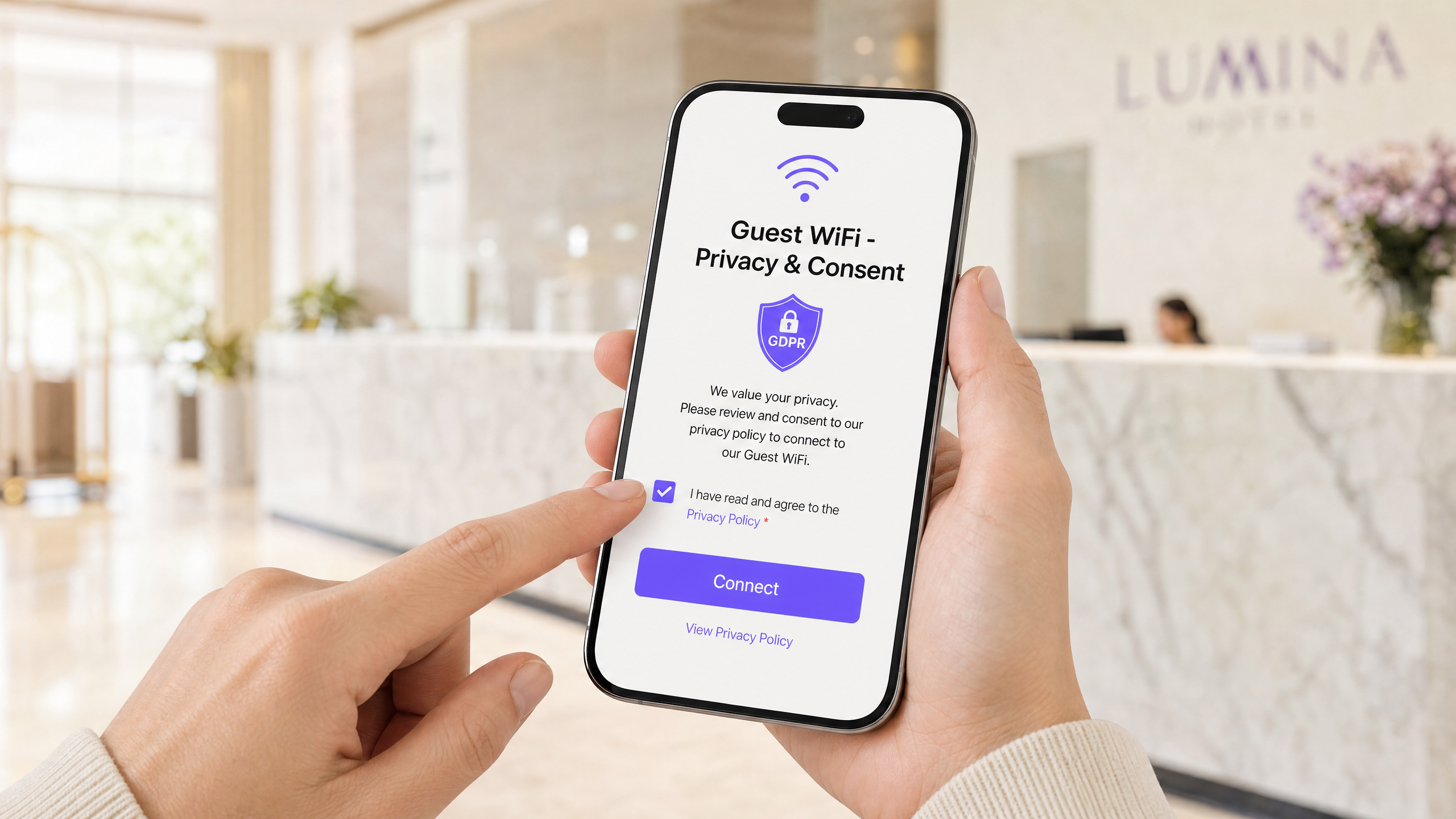
कार्यकारी सारांश
Guest WiFi हा एक नियमन केलेला डेटा संकलन एंडपॉइंट आहे. सार्वजनिक नेटवर्क ॲक्सेस प्रदान करणारे प्रत्येक हॉटेल, रिटेल चेन, स्टेडियम आणि कॉन्फरन्स सेंटर, पाहुणे कनेक्ट होताच General Data Protection Regulation (GDPR) अंतर्गत डेटा कंट्रोलर बनते. अनुपालन न केल्यास ICO €२० दशलक्ष किंवा जागतिक वार्षिक उलाढालीच्या ४% पर्यंत दंड आकारू शकते. डेटा लीक झाल्यानंतर मॅरियट इंटरनॅशनलला ICO कडून $१२४ दशलक्षचा प्रस्तावित दंड ठोठावण्यात आला होता.
हे मार्गदर्शक IT व्यवस्थापक, नेटवर्क आर्किटेक्ट्स आणि वेन्यू ऑपरेटर्सना त्यांच्या Guest WiFi सेवा पूर्णपणे अनुपालन करणाऱ्या आहेत याची खात्री करण्यासाठी एक व्यावहारिक, कृतीयोग्य फ्रेमवर्क प्रदान करते. आम्ही Guest WiFi द्वारे गोळा केलेल्या डेटाचे विशिष्ट प्रकार, संमती आणि डेटा हाताळणीसाठीच्या कायदेशीर आवश्यकता आणि अनुपालन उपाय लागू करण्यासाठी वेंडर-तटस्थ सर्वोत्तम पद्धतींचा शोध घेतो. मुख्य तंत्रज्ञान अधिकाऱ्यासाठी (Chief Technology Officer), हे दस्तऐवज कायदेशीर आणि आर्थिक जोखीम कशा कमी करायच्या हे स्पष्ट करते. ऑपरेशन्स डायरेक्टरसाठी, हे दर्शवते की कशा प्रकारे अनुपालन करणारे Guest WiFi डिप्लॉयमेंट ग्राहकांचा विश्वास वाढवू शकते आणि मौल्यवान, नैतिकदृष्ट्या मिळवलेली व्यावसायिक माहिती प्रदान करू शकते.
तांत्रिक सखोल विश्लेषण
Guest WiFi साठी GDPR अनुपालन समजून घेण्याची सुरुवात प्रक्रियेत असलेल्या डेटाच्या स्पष्ट मूल्यांकनाने होते. या नियमांतर्गत, वैयक्तिक डेटाची व्याख्या व्यापकपणे ओळखल्या गेलेल्या किंवा ओळखता येण्याजोग्या नैसर्गिक व्यक्तीशी संबंधित कोणतीही माहिती म्हणून केली जाते. Guest WiFi नेटवर्कच्या संदर्भात, यामध्ये अनेक संस्थांच्या कल्पनेपेक्षा डेटा पॉइंट्सची विस्तृत श्रेणी समाविष्ट असते.
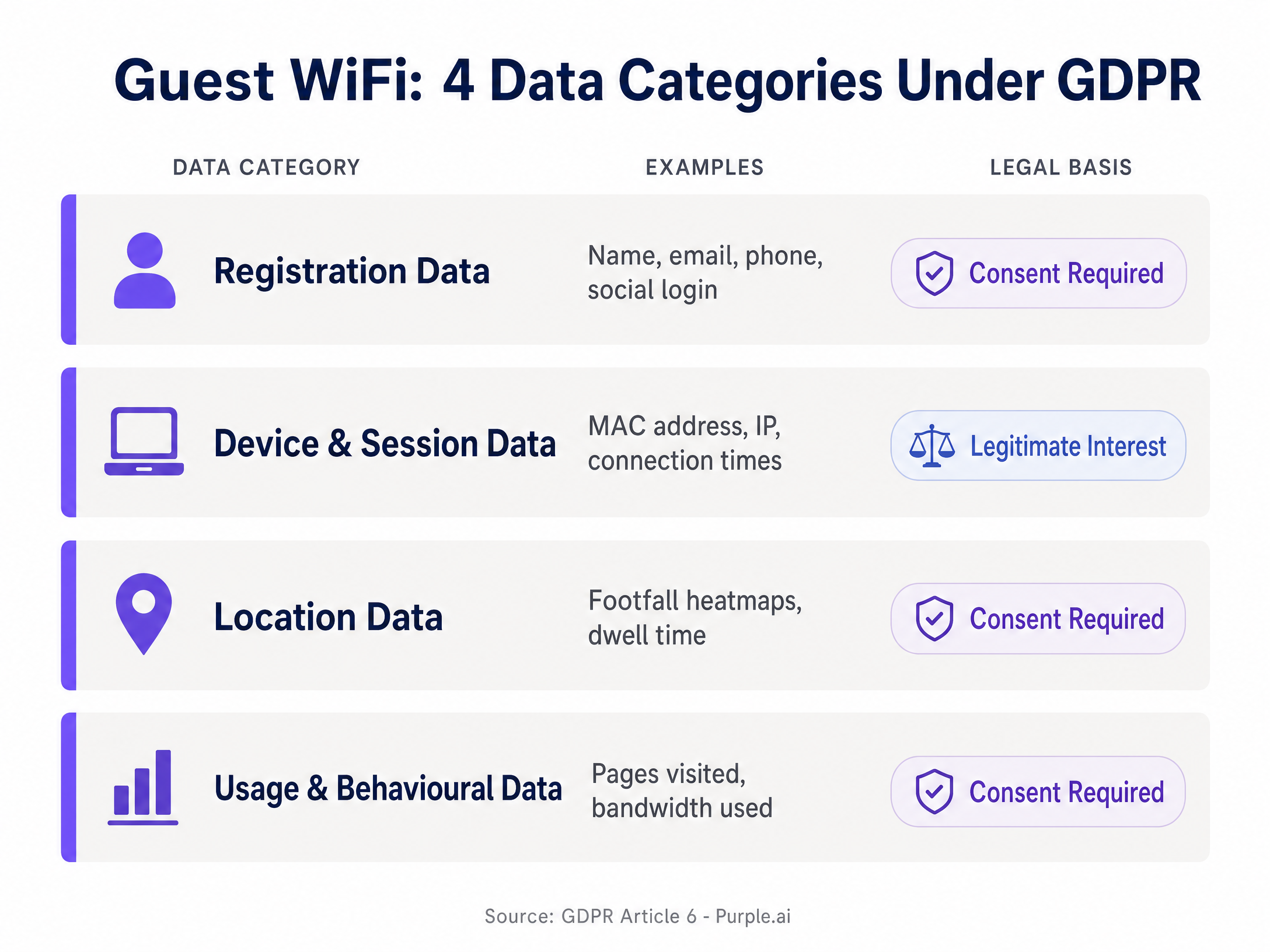
Guest WiFi मधील डेटा श्रेणी
Guest WiFi नेटवर्कद्वारे गोळा केलेला डेटा चार प्राथमिक श्रेणींमध्ये विभागला जाऊ शकतो. प्रत्येकाचे GDPR अनुपालनासाठी वेगळे परिणाम आहेत, विशेषतः प्रक्रियेचा कायदेशीर आधार आणि आवश्यक धारणा कालावधी या संदर्भात.
- नोंदणी डेटा (Registration Data): नाव, ईमेल पत्ता, फोन नंबर आणि सोशल मीडिया प्रोफाइल डेटा. कायदेशीर आधार Consent (संमती) आहे. हा डेटा गोळा करण्यासाठी तुम्ही स्पष्ट संमती मिळवणे आवश्यक आहे आणि केवळ अत्यंत आवश्यक असलेली माहिती विचारण्यासाठी डेटा मिनिमायझेशन तत्त्वे लागू करणे आवश्यक आहे.
- डिव्हाइस आणि सेशन डेटा (Device and Session Data): MAC address, IP address, कनेक्शनची वेळ आणि सेशनचा कालावधी. नेटवर्क सुरक्षा आणि ट्रबलशूटिंगसाठी कायदेशीर आधार सामान्यतः Legitimate Interest (कायदेशीर स्वारस्य) असतो, बशर्ते तुम्ही Legitimate Interest Assessment आयोजित आणि दस्तऐवजीकरण केले असेल.
- स्थान डेटा (Location Data): फूटफॉल हीटमॅप्स आणि ड्वेल टाइम ट्रॅकिंग. कायदेशीर आधार Consent (संमती) आहे. एकत्रित केल्यावरही, वैयक्तिक डिव्हाइसवरून केलेले प्रारंभिक संकलन हा वैयक्तिक डेटाच असतो.
- वापर आणि वर्तणूक डेटा (Usage and Behavioural Data): भेट दिलेली पृष्ठे आणि वापरलेली बँडविड्थ. कायदेशीर आधार Consent (संमती) आहे. तुम्ही काय गोळा करत आहात आणि का करत आहात याबद्दल तुम्ही स्पष्ट असणे आवश्यक आहे.
Captive Portal संमती यंत्रणा
Captive Portal हा तुमचा प्राथमिक अनुपालन इंटरफेस आहे. हे स्प्लॅश पेज आहे जे पाहुणे इंटरनेटवर प्रवेश करण्यापूर्वी पाहतात. सर्वात सामान्य अनुपालन अपयश म्हणजे बंडलिंग, जिथे वेन्यू पाहुण्यांना ऑनलाइन जाण्याची अट म्हणून मार्केटिंग ईमेल स्वीकारण्याची सक्ती करतो. GDPR अंतर्गत, संमती स्वेच्छेने दिली पाहिजे. तुम्ही नेटवर्क ॲक्सेसला मार्केटिंग संमतीसह बंडल केल्यास, ती संमती अवैध ठरते.
तुमच्या Captive Portal मध्ये किमान दोन स्वतंत्र संमती घटक असणे आवश्यक आहे:
- नेटवर्क ॲक्सेससाठी तुमच्या सेवा अटी स्वीकारण्यासाठी एक अनिवार्य चेकबॉक्स.
- मार्केटिंग कम्युनिकेशन्स प्राप्त करण्यासाठी संमती देणारा एक पर्यायी, अनटिक केलेला चेकबॉक्स.
GDPR Recital 32 स्पष्टपणे आधीच टिक केलेल्या (pre-ticked) बॉक्सेसना प्रतिबंधित करते. संमती संरचनेच्या पलीकडे, वापरकर्त्याने कोणताही डेटा सबमिट करण्यापूर्वी तुमच्या पोर्टलने स्पष्ट आणि संक्षिप्त गोपनीयता सूचना देणे आवश्यक आहे. तुम्ही कोणता डेटा गोळा करता, तो का गोळा करता, तो किती काळ ठेवता आणि तो कोणासोबत शेअर करता हे स्पष्ट केले पाहिजे. तुमच्या सिस्टमने प्रत्येक संमती इव्हेंटची नोंद ठेवली पाहिजे: कोणी संमती दिली, कधी दिली, कशासाठी दिली आणि त्यांनी पाहिलेली गोपनीयता सूचनेची अचूक आवृत्ती कोणती होती. हा संमती ऑडिट ट्रेल तुमचा अनुपालनाचा पुरावा आहे.
नेटवर्क आर्किटेक्चर आणि सुरक्षा
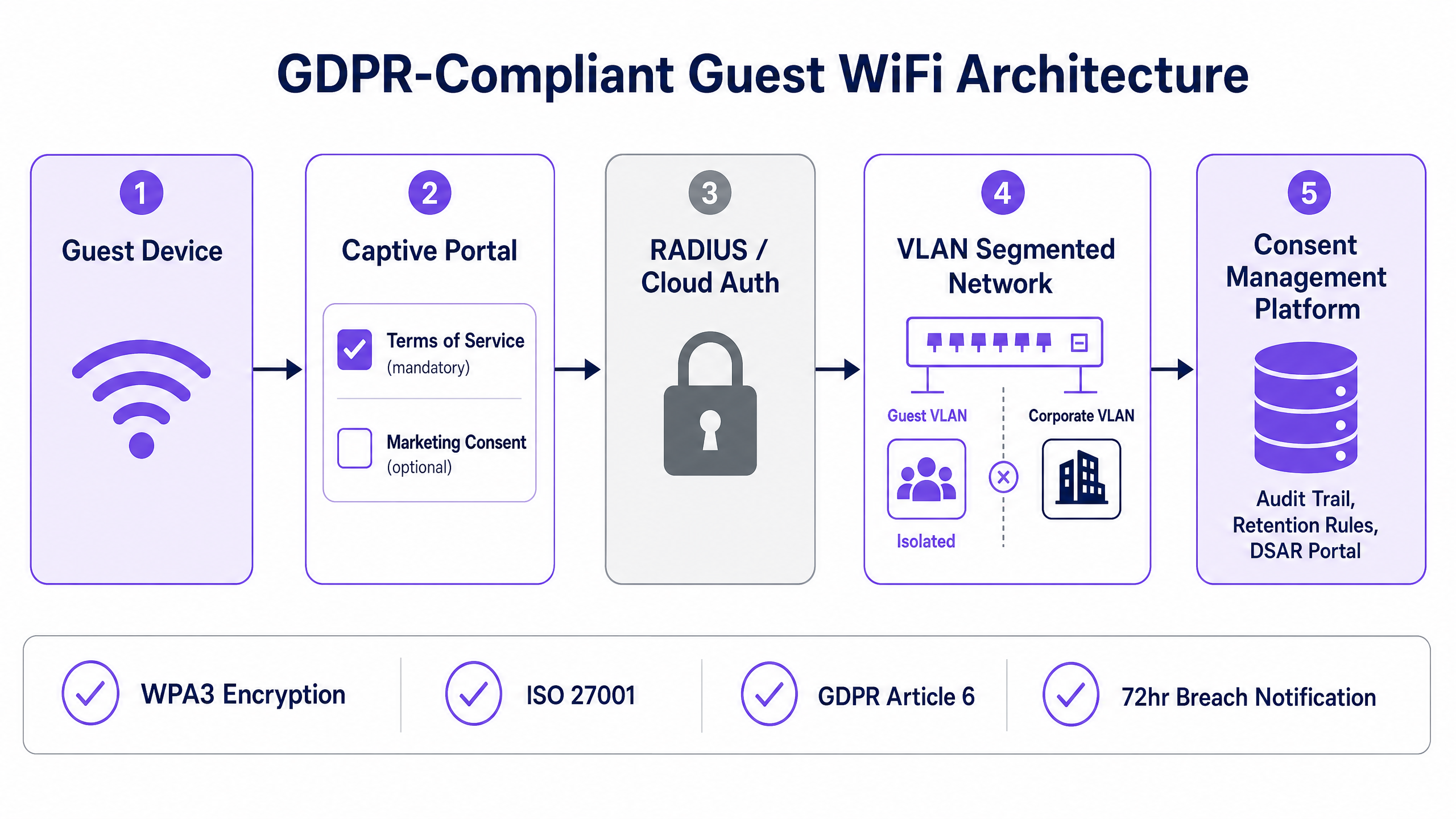
नेटवर्क आर्किटेक्चरच्या दृष्टिकोनातून, VLAN सेगमेंटेशन अत्यंत आवश्यक आहे. Guest WiFi ट्रॅफिक एका समर्पित VLAN वर विलग केले पाहिजे, जे तुमच्या कॉर्पोरेट नेटवर्कपासून पूर्णपणे वेगळे असेल. अतिथी उपकरणांना अंतर्गत सबनेटमध्ये प्रवेश करण्यापासून रोखण्यासाठी ॲक्सेस कंट्रोल लिस्ट वापरा आणि क्लायंट आयसोलेशन सक्षम करा जेणेकरून अतिथी उपकरणे एकमेकांशी संवाद साधू शकणार नाहीत. तुम्ही Cisco Meraki, HPE Aruba, Ruckus, Juniper Mist किंवा Ubiquiti UniFi डिप्लॉय करत असाल तरीही हे लागू होते.
ऑथेंटिकेशनसाठी, तुमच्या वायरलेस LAN कंट्रोलरला क्लाउड RADIUS सर्व्हरसह समाकलित करा. जेव्हा एखादा वापरकर्ता Captive Portal फ्लो पूर्ण करतो, तेव्हा प्लॅटफॉर्म कंट्रोलरला RADIUS Access-Accept संदेश पाठवतो, ज्यामुळे नेटवर्क ॲक्सेस मिळतो. हे ऑथेंटिकेशन लेयर आणि डेटा संकलन लेयर यांच्यात स्पष्ट फरक तयार करते.
एन्क्रिप्शनवर: तुमचे हार्डवेअर सपोर्ट करत असेल तिथे WPA3 डिप्लॉय करा. WPA3 हे Simultaneous Authentication of Equals वापरते, जे WPA2 च्या फोर-वे हँडशेक मधील त्रुटी दूर करते आणि ऑफलाइन डिक्शनरी हल्ल्यांविरुद्ध अधिक मजबूत संरक्षण प्रदान करते. किमान, AES एन्क्रिप्शनसह WPA2 लागू करा. तुमचे Captive Portal वैध TLS प्रमाणपत्रासह HTTPS वर चालवले गेले पाहिजे. HTTP वर वैयक्तिक डेटा गोळा करणारा फॉर्म देणे ही एक गंभीर सुरक्षा चूक आहे.
अंमलबजावणी मार्गदर्शिका
अनुपालन करणाऱ्या Guest WiFi सोल्यूशनची अंमलबजावणी करण्यासाठी काळजीपूर्वक नियोजन आणि अंमलबजावणी आवश्यक आहे. खालील पायऱ्या अंमलबजावणीसाठी वेंडर-तटस्थ दृष्टिकोन दर्शवतात.
पायरी १: सध्याच्या डेटा प्रवाहांचे ऑडिट करा
तुमचे सध्याचे Guest WiFi नेटवर्क नेमका कोणता डेटा गोळा करते याचा नकाशा तयार करा. प्रत्येक फील्ड ओळखा तुमच्या Captive Portal वर, तुमच्या वायरलेस कंट्रोलरद्वारे जनरेट केलेली प्रत्येक लॉग फाइल आणि प्रत्येक थर्ड-पार्टी इंटिग्रेशन. प्रत्येक डेटा पॉइंटचा उद्देश दस्तऐवजीकरण करा. जर तुम्ही एखाद्या विशिष्ट डेटा पॉइंटच्या संकलनाचे समर्थन करू शकत नसाल, तर तो काढून टाका.
पायरी २: Captive Portal ची पुनर्रचना करा
नेटवर्क अटी आणि मार्केटिंग संमतीसाठी स्वतंत्र, अनटिक केलेल्या चेकबॉक्ससह सुसंगत Captive Portal लागू करा. भाषा सोपी आणि मूल्याची देवाणघेवाण स्पष्ट असल्याची खात्री करा. तुमच्या संपूर्ण गोपनीयता धोरणाशी थेट लिंक जोडा.
पायरी ३: डेटा धारणा (Data Retention) स्वयंचलित करा
तुमच्या WiFi Analytics प्लॅटफॉर्ममध्ये स्वयंचलित हटवण्याची धोरणे कॉन्फिगर करा. मोठ्या प्रमाणावर मॅन्युअल पद्धतीने डेटा हटवणे व्यवहार्य नाही.
- सेशन लॉग: ३० दिवसांनंतर काढून टाका.
- नेटवर्क सुरक्षा लॉग: १२ महिन्यांपर्यंत ठेवा.
- संमती रेकॉर्ड: सेवा संबंधांच्या कालावधीसाठी अधिक दोन वर्षे ठेवा.
- मार्केटिंग प्रोफाइल: वापरकर्त्याने संमती मागे घेतल्यास त्वरित हटवा.
पायरी ४: नेटवर्क एज सुरक्षित करा
अतिथी ट्रॅफिकला समर्पित VLAN वर विभाजित करा. क्लायंट आयसोलेशन लागू करा. जेथे सपोर्ट असेल तेथे WPA3 एन्क्रिप्शन लागू करा. तुमचा Captive Portal HTTPS वरून चालवला जात असल्याची खात्री करा.
पायरी ५: प्राधान्य केंद्र (Preference Centre) लागू करा
अतिथींना एक सेल्फ-सर्व्हिस प्राधान्य केंद्र प्रदान करा जेथे ते त्यांच्या संमती सेटिंग्ज व्यवस्थापित करू शकतात आणि डेटा सब्जेक्ट ऍक्सेस विनंत्या (DSARs) सबमिट करू शकतात. यामुळे तुमच्या IT टीमवरील ऑपरेशनल भार कमी होतो आणि तुम्ही डेटा सब्जेक्टच्या अधिकारांचा कार्यक्षमतेने आदर करू शकता याची खात्री होते.
सर्वोत्तम पद्धती
अनुपालन राखण्यासाठी आणि एक मजबूत Guest WiFi धोरण तयार करण्यासाठी, या उद्योग-मानक सर्वोत्तम पद्धतींचे पालन करा:
- DPIA आयोजित करा: कोणत्याही मोठ्या प्रमाणावर लोकेशन ट्रॅकिंग किंवा वर्तणूक प्रोफाइलिंग क्षमता तैनात करण्यापूर्वी GDPR कलम ३५ अंतर्गत डेटा संरक्षण प्रभाव मूल्यांकन (Data Protection Impact Assessment) कायदेशीररित्या अनिवार्य आहे.
- DPA वर स्वाक्षरी करा: तुमच्या वतीने अतिथी डेटावर प्रक्रिया करणाऱ्या प्रत्येक थर्ड-पार्टी प्लॅटफॉर्मसह तुमच्याकडे स्वाक्षरी केलेले डेटा प्रोसेसिंग परिशिष्ट (Data Processing Addendum) असल्याची खात्री करा.
- डेटा संकलन कमीत कमी ठेवा: तुम्हाला प्रत्यक्षात आवश्यक असलेला आणि वापरण्याचा हेतू असलेला डेटाच विचारा. जर तुम्ही Retail ठिकाण असाल, तर इंटरनेट प्रवेश प्रदान करण्यासाठी तुम्हाला खरोखरच अतिथीच्या जन्मतारखेची आवश्यकता आहे का?
- उल्लंघनांसाठी तयार रहा: तुम्हाला उल्लंघनाची माहिती मिळताच ७२ तासांचा सूचना कालावधी सुरू होतो. ही कालमर्यादा तुमच्या घटना प्रतिसाद योजनेत समाविष्ट करा आणि तपास पूर्ण झाला नसला तरीही तुमच्या टीमला ७२ तासांच्या आत ICO ला सूचित करण्याचे माहित असल्याची खात्री करा.
त्रुटी निवारण आणि जोखीम कमी करणे
Guest WiFi उपयोजनांमधील सामान्य अपयशाचे प्रकार सहसा GDPR आवश्यकतांच्या गैरसमजातून उद्भवतात.
अपयशाचा प्रकार: संमतीचा थकवा (Consent Fatigue) जर तुमचा पोर्टल खूप क्लिष्ट असेल, तर अतिथी कनेक्शन सोडून देतील किंवा आंधळेपणाने क्लिक करतील. भाषा सोपी ठेवा. मूल्याची देवाणघेवाण स्पष्टपणे स्पष्ट करा. उदाहरणार्थ, "जलद, विनामूल्य WiFi आणि आमच्याकडून अधूनमधून मिळणाऱ्या ऑफरसाठी तुमचा ईमेल द्या."
अपयशाचा प्रकार: डेटा सब्जेक्टच्या अधिकारांकडे दुर्लक्ष करणे GDPR अंतर्गत, अतिथींना त्यांच्या डेटामध्ये प्रवेश करण्याचा, तो दुरुस्त करण्याचा आणि तो हटवण्याचा अधिकार आहे. तुमच्याकडे या विनंत्या हाताळण्यासाठी प्रक्रिया नसल्यास, तुम्हाला मोठ्या जोखमीचा सामना करावा लागू शकतो. सेल्फ-सर्व्हिस प्राधान्य केंद्र ही सर्वात प्रभावी जोखीम कमी करण्याची रणनीती आहे.
अपयशाचा प्रकार: अनिश्चित काळासाठी डेटा धारणा अनिश्चित काळासाठी डेटा ठेवणे हे GDPR च्या स्टोरेज मर्यादा तत्त्वाचे थेट उल्लंघन आहे. तुमच्याकडे स्वयंचलित हटवण्याची धोरणे नसल्यास, तुम्ही प्रत्येक दिवसासोबत जोखीम वाढवत आहात. रेकॉर्ड त्यांच्या धारणा कालावधीच्या शेवटी पोहोचल्यावर ते स्वयंचलितपणे काढून टाकण्यासाठी तुमच्या प्लॅटफॉर्ममध्ये धारणा नियम कॉन्फिगर करा.
ROI आणि व्यावसायिक प्रभाव
Guest WiFi साठी GDPR अनुपालन हा केवळ खर्च नाही; तो एक धोरणात्मक सक्षमकर्ता आहे. एक सुसंगत प्लॅटफॉर्म नियामक दंडाचा धोका कमी करतो, ग्राहकांचा विश्वास निर्माण करतो आणि नैतिकदृष्ट्या प्राप्त केलेली व्यावसायिक माहिती प्रदान करतो.
जब एखादा अतिथी सुसंगत Captive Portal द्वारे मार्केटिंग संवादांसाठी सक्रियपणे ऑप्ट-इन करतो, त्या संपर्काची गुणवत्ता बंडल केलेल्या ऑप्ट-इनपेक्षा लक्षणीयरीत्या जास्त असते. स्पष्टपणे संमती देणारे अतिथी पुढील संवादांमध्ये व्यस्त राहण्याची अधिक शक्यता असते, ज्यामुळे तुमच्या मार्केटिंग मोहिमांसाठी उच्च रूपांतरण दर मिळतात.
शिवाय, एक सुव्यवस्थित Guest WiFi प्लॅटफॉर्म अभ्यागतांच्या वर्तनाबद्दल मौल्यवान अंतर्दृष्टी प्रदान करतो. Hospitality वातावरणात, हा डेटा कर्मचाऱ्यांच्या संख्येचे नियोजन करण्यास, मांडणी अनुकूल करण्यास आणि एकंदर अतिथी अनुभव सुधारण्यास मदत करू शकतो. तुमच्या Guest WiFi धोरणाचा एक मूलभूत घटक म्हणून अनुपालनाकडे पाहून, तुम्ही नियामक आवश्यकतेला मोजता येण्याजोग्या व्यावसायिक मालमत्तेत रूपांतरित करता.
या विषयांवर अधिक सखोल माहितीसाठी आमचे पॉडकास्ट ऐका:
महत्वाच्या व्याख्या
Data Controller
The entity that determines the purposes and means of processing personal data. When you provide Guest WiFi, you are the Data Controller.
This designation makes the venue legally responsible for compliance, regardless of which vendor supplies the WiFi hardware or software.
Data Processor
The entity that processes personal data on behalf of the Data Controller. Your WiFi analytics vendor is a Data Processor.
A signed Data Processing Addendum (DPA) is legally required before sharing data with a Processor.
MAC Address
Media Access Control address. A unique identifier assigned to a network interface controller for use as a network address in communications within a network segment.
Under GDPR, a MAC address is considered personal data when it can be linked to an identifiable individual.
Captive Portal
A web page that the user of a public-access network is obliged to view and interact with before access is granted.
This is the primary interface for collecting consent and serving privacy notices to guests.
VLAN Segmentation
The practice of dividing a physical network into multiple logical networks.
Guest WiFi traffic must be isolated on a dedicated VLAN to prevent access to the corporate network.
Legitimate Interest
A lawful basis for processing personal data when the processing is necessary for your legitimate interests or the legitimate interests of a third party, unless there is a good reason to protect the individual's personal data which overrides those legitimate interests.
Often used as the basis for basic session logging for network security and troubleshooting.
Data Subject Access Request (DSAR)
A request made by an individual to access the personal data an organisation holds about them.
Venues must have a process to handle DSARs efficiently, often facilitated by a self-service preference centre.
WPA3
Wi-Fi Protected Access 3. The latest security certification program developed by the Wi-Fi Alliance.
Provides stronger encryption and protection against offline dictionary attacks compared to WPA2. Should be deployed where hardware supports it.
सोडवलेली उदाहरणे
A 200-room hotel wants to collect guest emails to drive loyalty programme sign-ups. Their current system requires guests to accept marketing to get online.
Deploy a compliant captive portal with separate consent checkboxes. The mandatory checkbox covers terms of service. The optional, unticked checkbox covers marketing consent. The hotel will likely see a lower raw volume of marketing opt-ins compared to the bundled approach, but the quality and legality of the list improves dramatically. Guests who actively opt in are far more likely to engage with subsequent communications. Premier Inn, which uses Purple across its estate, operates exactly this model.
A stadium IT team wants to use WiFi analytics to monitor crowd density and manage safety, but the legal team is concerned that tracking device locations without consent is a GDPR violation.
Update the captive portal privacy notice to explicitly disclose that location data is processed for crowd management and safety purposes. Implement MAC address pseudonymisation at the edge, on the access points themselves, before the data reaches the cloud analytics platform. The analytics system then works with pseudonymous identifiers rather than raw MAC addresses.
सराव प्रश्न
Q1. A retail chain wants to implement WiFi footfall tracking across 50 stores to measure dwell time. The IT Director suggests logging raw MAC addresses centrally for analysis. Is this compliant?
टीप: Consider the definition of personal data and the principle of data minimisation.
नमुना उत्तर पहा
No, this is high risk. Raw MAC addresses are personal data. The recommended approach is to implement MAC address pseudonymisation at the edge (on the access points) before transmitting the data to the central analytics platform. Additionally, a Data Protection Impact Assessment (DPIA) must be conducted before deployment, and clear signage must inform shoppers that analytics are in operation.
Q2. During an audit, you discover that your captive portal requires users to accept both the network terms of service and marketing emails via a single checkbox to connect to the WiFi. What is the immediate required action?
टीप: Review the requirements for valid consent under GDPR Article 6.
नमुना उत्तर पहा
Immediately redesign the captive portal to unbundle the consent. Implement two separate checkboxes: a mandatory one for the network terms of service, and an optional, unticked checkbox for marketing consent. The current bundled approach renders all collected marketing consent invalid under GDPR.
Q3. A guest submits a Data Subject Access Request (DSAR) asking for all data your venue holds on them, including WiFi session logs. Your current retention policy is to keep session logs indefinitely. What are the implications?
टीप: Consider the storage limitation principle.
नमुना उत्तर पहा
Keeping session logs indefinitely violates the GDPR storage limitation principle. You must fulfill the DSAR by providing the requested data, but you must also urgently implement an automated data retention policy. Session logs should typically be purged after 30 days. Holding them indefinitely exposes the venue to significant regulatory risk.
या मालिकेमध्ये पुढे वाचा
Guest WiFi Captive Portals सह WeChat प्रमाणीकरण समाकलित करणे
हे मार्गदर्शक एंटरप्राइझ guest WiFi captive portals मध्ये WeChat OAuth 2.0 प्रमाणीकरण कसे समाकलित करावे हे स्पष्ट करते. यामध्ये ड्युअल-प्लॅटफॉर्म नोंदणी आवश्यकता, फर्स्ट-पार्टी डेटा कॅप्चरसाठी स्कोप निवड, RADIUS Change of Authorization द्वारे नेटवर्क अंमलबजावणी आणि GDPR आणि चीनच्या PIPL चे पालन समाविष्ट आहे. हॉस्पिटॅलिटी, रिटेल आणि इव्हेंट्समधील व्हेन्यू ऑपरेटर्सना मोठ्या प्रमाणावर WeChat login guest wifi तैनात करण्यासाठी ठोस अंमलबजावणीच्या पायऱ्या, वास्तविक जगातील केस स्टडीज आणि सुरक्षा बळकटीकरण मार्गदर्शन मिळेल.
Cisco SUDI समजून घेणे: नेटवर्क ॲक्सेस कंट्रोलमधील हार्डवेअर-आधारित डिव्हाइस ओळख
हे मार्गदर्शक Cisco SUDI च्या तांत्रिक आर्किटेक्चरचे तपशील देते, ज्यामध्ये हार्डवेअर-अँकर्ड ओळख नेटवर्क ॲक्सेस कंट्रोल कशा प्रकारे सुरक्षित करते हे स्पष्ट केले आहे. हे IT लीडर्सना त्यांच्या एंटरप्राइझ ठिकाणी 802.1X EAP-TLS ऑथेंटिकेशन तैनात करण्यासाठी आणि झिरो टच प्रोव्हिजनिंग (Zero Touch Provisioning) स्वयंचलित करण्यासाठी अंमलबजावणीच्या कृतीयोग्य पायऱ्या प्रदान करते.
WeChat WiFi प्रमाणीकरण समाकलित करणे: APAC ग्राहकांसाठी Captive Portal ऑनबोर्डिंग
WeChat कडे 1.41 अब्ज मासिक सक्रिय वापरकर्ते आहेत, ज्यामुळे ती जागतिक स्तरावर चिनी ग्राहकांसाठी प्राथमिक डिजिटल ओळख बनली आहे. हे मार्गदर्शक APAC ठिकाणांसाठी एंटरप्राइझ captive portals मध्ये WeChat OAuth 2.0 प्रमाणीकरण कसे समाकलित करावे हे स्पष्ट करते, ज्यामध्ये प्लॅटफॉर्म नोंदणी, स्कोप निवड, RADIUS Change of Authorisation अंमलबजावणी आणि GDPR आणि चीनच्या PIPL सह दुहेरी-फ्रेमवर्क अनुपालनाचा समावेश आहे. हे IT व्यवस्थापक, नेटवर्क आर्किटेक्ट्स आणि या तिमाहीत कारवाई करू इच्छिणाऱ्या ठिकाण ऑपरेशन्स संचालकांसाठी उद्दिष्टित आहे.