
हॉटेल अतिथी WiFi व्यवस्थापन: PMS, पोर्टल्स आणि ब्रँड मानकांचे एकत्रीकरण
हे तांत्रिक मार्गदर्शक एंटरप्राइझ-ग्रेड हॉटेल WiFi नेटवर्कची रचना कशी करावी याबद्दल तपशीलवार माहिती देते, ज्यामध्ये VLAN विभागणी, स्वयंचलित सत्र व्यवस्थापनासाठी PMS एकत्रीकरण आणि GDPR-सुसंगत डेटा कॅप्चरसाठी Captive Portal ऑप्टिमायझेशन यावर लक्ष केंद्रित केले आहे.
हे मार्गदर्शक ऐका
पॉडकास्ट ट्रान्सक्रिप्ट पहा
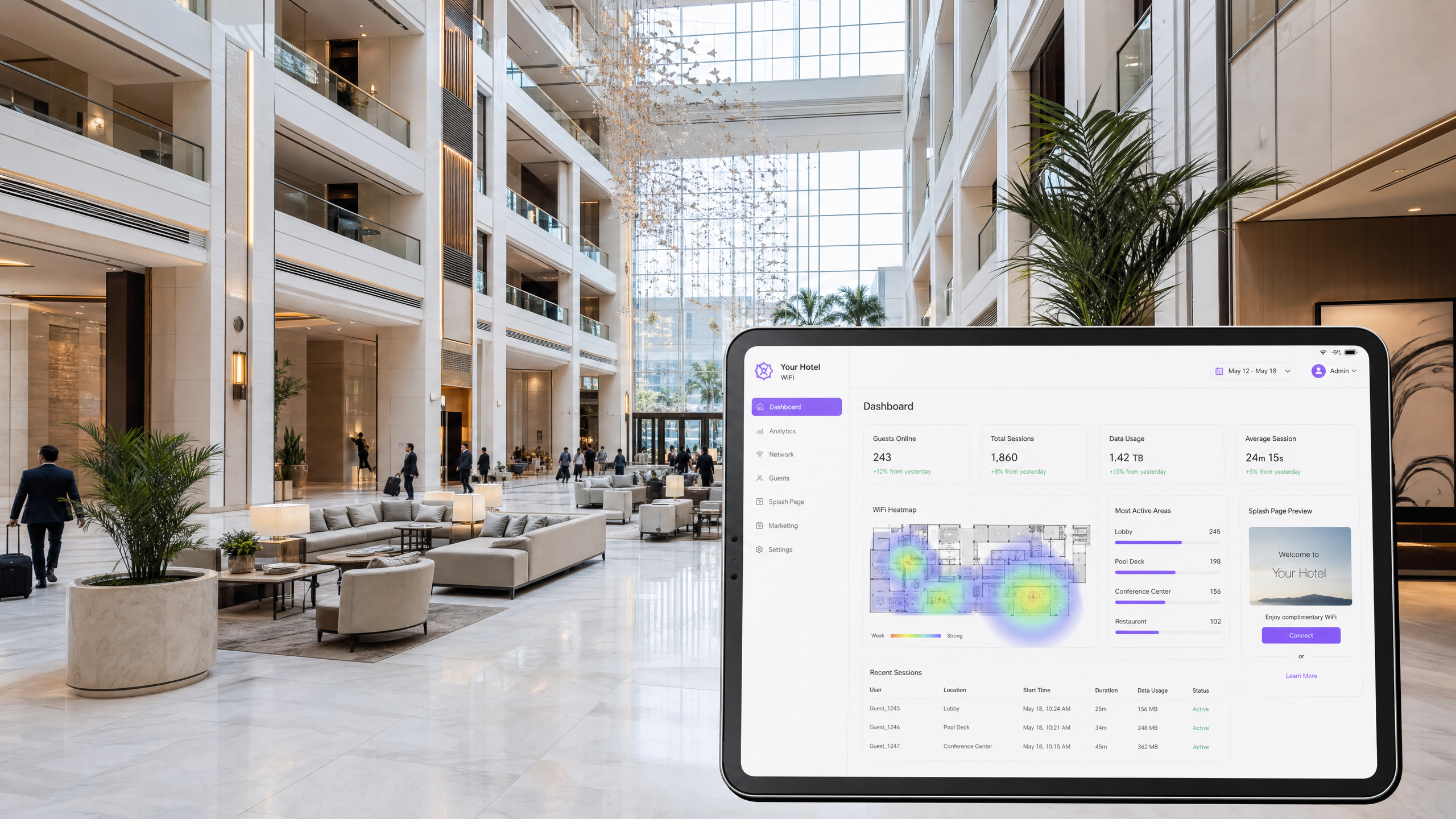
कार्यकारी सारांश
हॉटेल अतिथी WiFi आता केवळ एक उपयुक्तता राहिलेली नाही; ती एक महत्त्वपूर्ण ऑपरेशनल प्रणाली आणि फर्स्ट-पार्टी डेटा कॅप्चरसाठी प्राथमिक चॅनेल आहे. हे तांत्रिक संदर्भ मार्गदर्शक हॉस्पिटॅलिटी वातावरणात एंटरप्राइझ-ग्रेड WiFi ची रचना, उपयोजन आणि व्यवस्थापन कसे करावे याबद्दल तपशीलवार माहिती देते. यामध्ये नेटवर्क विभागणी, प्रॉपर्टी मॅनेजमेंट सिस्टम (PMS) एकत्रीकरण, Captive Portal ऑप्टिमायझेशन आणि संपूर्ण चेनमध्ये ब्रँड मानकांची अंमलबजावणी समाविष्ट आहे. IT संचालक, नेटवर्क आर्किटेक्ट्स आणि व्हेन्यू ऑपरेशन्स संचालकांसाठी, ध्येय स्पष्ट आहे: तुमच्या Guest WiFi इन्फ्रास्ट्रक्चरसह अखंडपणे समाकलित होणारे जलद, सुरक्षित कनेक्शन प्रदान करणे आणि तुमच्या WiFi Analytics प्लॅटफॉर्मला फीड करण्यासाठी सुसंगत डेटा कॅप्चर करणे.
तुम्ही बुटीक हॉटेल व्यवस्थापित करत असाल किंवा ५०० मालमत्तांचा जागतिक पोर्टफोलिओ, तांत्रिक आवश्यकता सारख्याच आहेत: ट्रॅफिक वेगळे करणे, PMS द्वारे सत्र व्यवस्थापन स्वयंचलित करणे आणि सुसंगत सुरक्षा धोरणे लागू करणे. Purple हे हार्डवेअर-अज्ञेयवादी क्लाउड ओव्हरले प्रदान करते जे Cisco Meraki, HPE Aruba, Ruckus, Juniper Mist, Ubiquiti UniFi, Cambium, Extreme आणि Fortinet उपयोजनांमध्ये हे शक्य करते.
तांत्रिक सखोल विश्लेषण
नेटवर्क विभागणी आणि VLAN आर्किटेक्चर
हॉटेलच्या वातावरणातील फ्लॅट नेटवर्क ही एक गंभीर सुरक्षा असुरक्षितता आणि अनुपालन अपयश आहे. हॉटेल नेटवर्कने विविध घटकांना सेवा दिली पाहिजे: अतिथी, कर्मचारी, बिल्डिंग मॅनेजमेंट सिस्टम आणि IoT उपकरणे. सुरक्षित हॉटेल WiFi चा पाया म्हणजे IEEE 802.1Q द्वारे परिभाषित केल्यानुसार व्हर्च्युअल लोकल एरिया नेटवर्क (VLANs) चा वापर करून तार्किक विभागणी करणे होय.
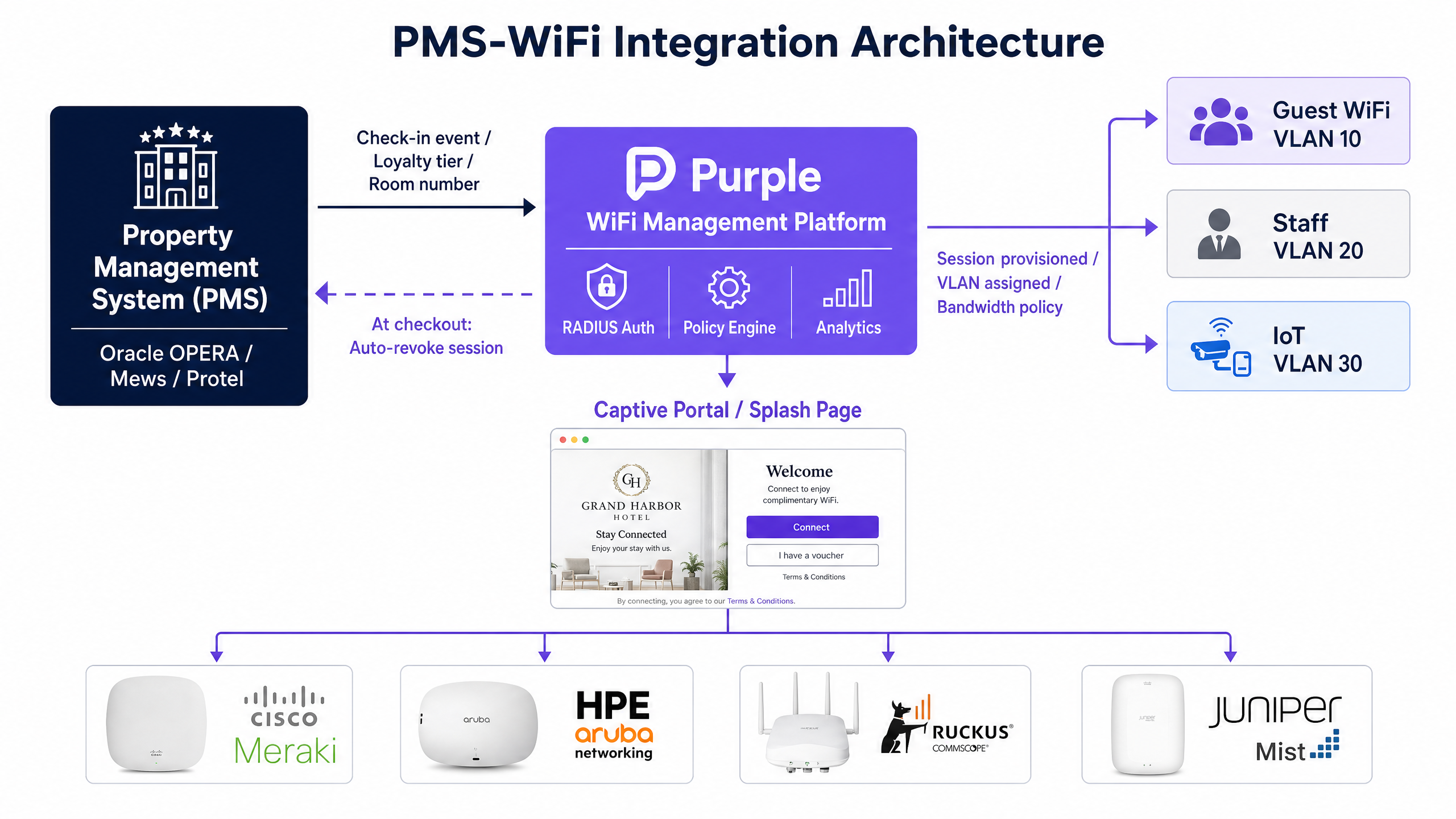
तुम्ही प्रत्येक ट्रॅफिक क्लाससाठी एक समर्पित VLAN नियुक्त करणे आवश्यक आहे. मानक उपयोजनासाठी किमान चार VLAN आवश्यक आहेत: Guest WiFi, कर्मचारी, IoT/बिल्डिंग सिस्टम आणि पेमेंट टर्मिनल्ससाठी PCI-स्कोप केलेले नेटवर्क. तुमच्या फायरवॉलने या विभागांमध्ये 'डिफॉल्ट-डिनाय' (default-deny) धोरण लागू केले पाहिजे. अतिथी ट्रॅफिक थेट इंटरनेटवर मार्गस्थ (route) झाले पाहिजे, जे प्रॉपर्टी मॅनेजमेंट सिस्टम, पॉइंट-ऑफ-सेल (POS) टर्मिनल्स आणि कर्मचारी संपर्कापासून पूर्णपणे वेगळे असेल.
वायरलेस एजसाठी, प्रत्येक Service Set Identifier (SSID) एका विशिष्ट VLAN शी मॅप करतो. अतिथी SSID वर, तुम्ही क्लायंट आयसोलेशन (client isolation) सक्षम केले पाहिजे. क्लायंट आयसोलेशन एकाच SSID वरील उपकरणांना एकमेकांशी थेट संवाद साधण्यापासून रोखते, ज्यामुळे एखाद्या तडजोड केलेल्या (compromised) उपकरणाद्वारे इतर अतिथींच्या उपकरणांमध्ये हस्तक्षेप करण्याचा धोका कमी होतो.
PMS एकत्रीकरण आणि स्वयंचलित सत्र व्यवस्थापन
तुमचे WiFi व्यवस्थापन प्लॅटफॉर्म आणि तुमची प्रॉपर्टी मॅनेजमेंट सिस्टम (PMS) - जसे की Oracle OPERA, Mews किंवा Protel - यामधील एकत्रीकरण हा आधुनिक हॉस्पिटॅलिटी नेटवर्कचा मुख्य कणा आहे. PMS कडे अतिथीची ओळख, खोलीचे वाटप, चेक-इन स्थिती आणि लॉयल्टी टियर यासंबंधीची अचूक माहिती असते.
जेव्हा एखादा अतिथी चेक-इन करतो, तेव्हा PMS WiFi प्लॅटफॉर्मला API कॉल किंवा वेबहुक पाठवते. प्लॅटफॉर्म अतिथी सत्राची पूर्व-तरतूद करतो, त्यांच्या लॉयल्टी टियरवर आधारित योग्य बँडविड्थ धोरण लागू करतो. जेव्हा अतिथी कनेक्ट होतो, प्रमाणीकरण (authentication) अखंडपणे होते. महत्त्वाचे म्हणजे, जेव्हा अतिथी चेक-आउट करतो, तेव्हा PMS WiFi प्लॅटफॉर्मला प्रवेश त्वरित रद्द करण्याचा संकेत देतो. यामुळे जुन्या क्रेडेंशियल्सचा सुरक्षिततेचा धोका टळतो आणि माजी अतिथींना बँडविड्थ वापरण्यापासून रोखले जाते.
Captive Portals आणि फर्स्ट-पार्टी डेटा कॅप्चर
Captive Portal हे असे प्रवेशद्वार आहे जिथे इन्फ्रास्ट्रक्चर गुंतवणुकीचे व्यावसायिक मूल्यात रूपांतर होते. ही केवळ प्रवेश नियंत्रण यंत्रणा नाही; फर्स्ट-पार्टी डेटा कॅप्चरसाठी हे registre तुमचे प्राथमिक इंजिन आहे.
अतिथी ईमेल, सोशल लॉगिन किंवा SMS पडताळणीद्वारे प्रमाणीकृत होतात. हे एक सत्यापित ओळख कॅप्चर करते, जी नंतर त्यांच्या डिव्हाइसच्या MAC पत्त्याशी, भेटीच्या वेळेच्या शिक्क्याशी (timestamp) आणि थांबण्याच्या कालावधीशी (dwell time) जोडली जाते. हा डेटा थेट तुमच्या CRM मध्ये फीड केला जातो, ज्यामुळे लक्ष्यित प्री-स्टे ईमेल, पोस्ट-स्टे सर्वेक्षणे आणि स्थान-आधारित ऑफर सक्षम होतात.
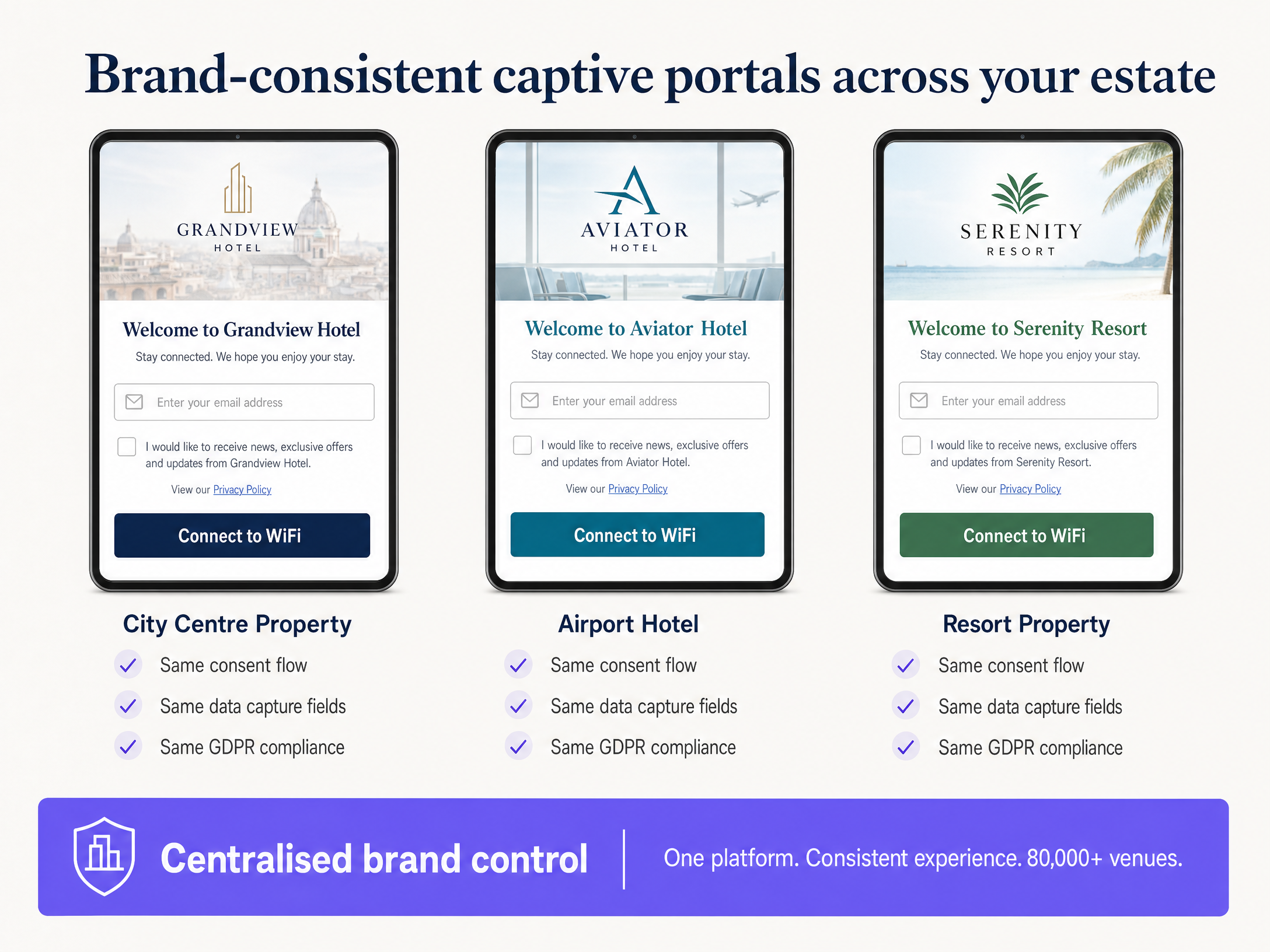
अनुपालन (Compliance) बंधनकारक आहे. GDPR-सुसंगत Captive Portal ने स्पष्ट गोपनीयता सूचना सादर केली पाहिजे आणि विपणन संपर्कांसाठी स्पष्ट, असंबद्ध संमती कॅप्चर केली पाहिजे. WiFi मध्ये प्रवेश करण्याची संमती ही विपणन (marketing) प्राप्त करण्याच्या संमतीवर अवलंबून नसावी. Purple हे मूळतः हाताळते, प्रत्येक वापरकर्ता प्रोफाइलसाठी तपशीलवार ऑडिट ट्रेल्स राखते.
अंमलबजावणी मार्गदर्शक
टप्पा १: साइट सर्वेक्षण आणि क्षमता नियोजन
कोणतेही हार्डवेअर कॉन्फिगर करण्यापूर्वी, प्रेडिक्टिव मॉडेलिंग टूल्सचा वापर करून सखोल RF साइट सर्वेक्षण करा. हॉटेलच्या वातावरणासाठी, खोलीच्या आतील कव्हरेज हे लक्ष्य असते. प्रति खोली एक ॲक्सेस पॉइंट (AP), किंवा किमान दोन खोल्यांमागे एक AP तैनात करा. कॉरिडॉरमध्ये प्लेसमेंट टाळा, ज्यामुळे कव्हरेज शॅडो तयार होतात आणि कार्यप्रदर्शन खालावते. पीक समवर्ती (concurrent) वापरासाठी तुमच्या इंटरनेट अपलिंकचा आकार निश्चित करा. प्रति खोली ५ ते १० Mbps चे नियोजन करा; २०० खोल्यांच्या मालमत्तेसाठी ८०० Mbps ते १.६ Gbps ची कमिटेड लीज्ड लाइन आवश्यक आहे.
टप्पा २: आर्किटेक्चर आणि धोरण डिझाइन
प्रत्येक डिव्हाइस प्रकार एका समर्पित VLAN शी मॅप करा. तुमचे इंटर-VLAN राउटिंग नियम आणि डिफॉल्ट-डिनाय फायरवॉल धोरणे दस्तऐवजीकरण (document) करा. तुमचे प्रमाणीकरण मानक निश्चित करा: कर्मचारी नेटवर्कसाठी IEEE 802.1X सह WPA3-Enterprise, आणि अतिथींसाठी HTTPS अंमलबजावणी आणि क्लायंट आयसोलेशनसह WPA3-Personal किंवा मुक्त नेटवर्क.
टप्पा ३: PMS आणि पोर्टल एकत्रीकरण
तुमच्या PMS आणि WiFi प्लॅटफॉर्ममधील API कनेक्शन कॉन्फिगर करा. ब्रँड मानकांशी सुसंगत राहण्यासाठी Captive Portal डिझाइन करा. iOS, Android आणि Windows उपकरणांवर एंड-टू-एंड अतिथी प्रवासाची चाचणी घ्या. PMS मध्ये चेक-आउट केल्यावर सत्र रद्द करणे (session revocation) योग्यरित्या ट्रिगर होते की नाही याची पडताळणी करा.
सर्वोत्तम पद्धती
- क्लायंट लागू करा आयसोलेशन: उपकरणांमधील लॅटरल मूव्हमेंट रोखण्यासाठी अतिथींच्या बाजूने असलेल्या SSIDs वर नेहमी क्लायंट आयसोलेशन सक्षम करा.
- भूमिका-आधारित प्रवेश स्वयंचलित करा: कर्मचारी नेटवर्कसाठी IEEE 802.1X आणि RADIUS प्रमाणीकरण वापरा. वापरकर्त्याच्या भूमिकांवर आधारित VLANs आणि QoS धोरणे डायनॅमिकपणे नियुक्त करण्यासाठी Microsoft Entra ID, Okta किंवा Google Workspace सह समाकलित करा.
- ब्रँड मानके केंद्रीकृत करा: श्रेणीबद्ध धोरण इंजिनसह क्लाउड-व्यवस्थापित प्लॅटफॉर्म वापरा. मुख्यालय स्तरावर SSIDs, सुरक्षा प्रोटोकॉल आणि captive portal ब्रँडिंग परिभाषित करा, ज्यामुळे ब्रँड मानके न मोडता प्रादेशिक किंवा मालमत्ता-स्तरावरील वारसा मिळू शकेल.
- IoT ट्रॅफिक वेगळे करा: स्मार्ट टीव्ही, थर्मोस्टॅट्स आणि व्हॉइस असिस्टंट्सना कडक इग्रेस फिल्टरिंगसह समर्पित IoT VLAN वर वेगळे करा.
त्रुटी निवारण आणि जोखीम कमी करणे
- धीमी गती: हॉटेलमधील धीम्या WiFi चे सर्वात सामान्य कारण म्हणजे अपुरा पुरवठा असलेला WAN अपलिंक आहे, RF हस्तक्षेप नाही. तुमच्या इंटरनेट सर्किटच्या वापरावर लक्ष ठेवा. जर अपलिंक पूर्णपणे भरलेला असेल, तर ॲक्सेस पॉइंट्स अपग्रेड केल्याने अतिथींच्या अनुभवात सुधारणा होणार नाही.
- विभाजन अपयश: चुकीच्या पद्धतीने कॉन्फिगर केलेले स्विच ट्रंक पोर्ट्स एकाच ब्रॉडकास्ट डोमेनवर एकाधिक VLANs संकुचित करू शकतात, ज्यामुळे तुमचे विभाजन नकळत खंडित होते. स्विच कॉन्फिगरेशनचे नियमितपणे ऑडिट करा.
- प्रमाणीकरण अडथळा: ज्या captive portal मध्ये जास्त डेटा प्रविष्ट करावा लागतो, त्यामुळे अतिथी कनेक्शन प्रक्रिया सोडून देऊ शकतात. फॉर्म संक्षिप्त ठेवा.
ROI आणि व्यावसायिक प्रभाव
योग्यरित्या डिझाइन केलेले हॉटेल WiFi नेटवर्क मोजता येण्याजोगे परतावे देते. हे कनेक्टिव्हिटी समस्यांशी संबंधित IT सपोर्ट तिकिटे कमी करते, ज्यामुळे कार्यक्षमतेत वाढ होते. हे अतिथींच्या समाधानाचा स्कोअर सुधारते, ज्याचा थेट संबंध RevPAR शी असतो. सर्वात महत्त्वाचे म्हणजे, हे सत्यापित अतिथींचा एक सुसंगत, फर्स्ट-पार्टी डेटाबेस तयार करते, ज्यामुळे ऑनलाइन ट्रॅव्हल एजन्सीज (OTAs) वरील अवलंबित्व कमी होते आणि थेट-बुकिंग विपणन मोहिमांना बळ मिळते.
महत्वाच्या व्याख्या
VLAN (Virtual Local Area Network)
A logical subnetwork that groups a collection of devices from different physical LANs. Essential for isolating guest traffic from operational systems.
Used to separate guest WiFi, staff devices, IoT hardware, and payment terminals onto isolated broadcast domains for security and PCI compliance.
PMS (Property Management System)
The central software platform used by hotels to manage reservations, check-ins, billing, and room status.
Integrating the PMS with the WiFi platform allows for automated session provisioning, loyalty tier bandwidth allocation, and immediate access revocation upon checkout.
Captive Portal
A web page that users must view and interact with before access is granted to a public WiFi network.
Used in hospitality to authenticate guests, present terms of service, and capture first-party marketing data.
Client Isolation
A wireless network security feature that prevents connected devices from communicating directly with each other.
Mandatory on guest SSIDs to stop a compromised device from scanning or attacking other guests on the same network.
IEEE 802.1X
An IEEE Standard for port-based Network Access Control, providing an authentication mechanism to devices wishing to attach to a LAN or WLAN.
The gold standard for staff network authentication, allowing dynamic VLAN assignment based on the user's role defined in an identity provider like Microsoft Entra ID.
RADIUS (Remote Authentication Dial-In User Service)
A networking protocol that provides centralized Authentication, Authorization, and Accounting management for users who connect and use a network service.
Used in conjunction with 802.1X to verify staff credentials and apply specific network policies.
SSID (Service Set Identifier)
The public name of a wireless network.
Hotels typically broadcast multiple SSIDs (e.g., 'Guest WiFi', 'Staff Network'), each mapped to a specific VLAN.
WPA3-Enterprise
The highest level of Wi-Fi security, requiring each user to authenticate with unique credentials rather than a shared password.
Required for staff and operational networks to ensure individual accountability and enable dynamic policy enforcement.
सोडवलेली उदाहरणे
A 150-room boutique hotel using Oracle OPERA requires a secure WiFi deployment that differentiates bandwidth for loyalty members and automatically revokes access at checkout.
Deploy one Wi-Fi 6 access point per room. Configure four VLANs: Guest (VLAN 10), Staff (VLAN 20), IoT (VLAN 30), and POS (VLAN 40). Integrate the Purple platform with Oracle OPERA via API. When a guest checks in, OPERA sends the loyalty tier to Purple. Purple provisions the session, applying a 50 Mbps policy for standard guests and a 100 Mbps policy for premium members. At checkout, OPERA triggers an API call that immediately revokes the MAC address session in Purple.
A global hotel brand with 400 properties needs to ensure consistent captive portal branding and GDPR compliance across all venues, despite using different local ISPs and hardware vendors (Cisco Meraki, HPE Aruba, and Ruckus).
Implement a cloud overlay platform like Purple above the heterogeneous hardware layer. Define a global policy template at Brand HQ that dictates the SSID name, the captive portal design, and the specific GDPR consent checkboxes. Apply this template hierarchically to all 400 properties. Local IT teams can manage their specific APs and switches, but they cannot alter the captive portal flow or data capture requirements.
सराव प्रश्न
Q1. A hotel is upgrading its network to support mobile check-in and digital room keys. The IT team plans to put the electronic door locks on the same VLAN as the guest WiFi to simplify routing. What is the primary risk of this approach?
टीप: Consider the principle of logical segmentation and lateral movement.
नमुना उत्तर पहा
Placing IoT devices like electronic locks on the guest VLAN exposes critical building infrastructure to untrusted devices. A compromised guest smartphone could attempt to probe or attack the locks. The correct approach is to place the locks on a dedicated IoT VLAN (e.g., VLAN 30) with strict ingress/egress filtering, entirely isolated from the guest VLAN.
Q2. A regional manager reports that the WiFi at a 300-room property is 'too slow', despite recent upgrades to Wi-Fi 6 access points in the corridors. What are the two most likely architectural causes of this poor performance?
टीप: Consider both WAN capacity and RF propagation principles.
नमुना उत्तर पहा
First, the internet uplink is likely under-provisioned. A 300-room property requires a committed leased line of at least 1.5 Gbps to handle peak concurrent streaming. Second, corridor AP placement is a flawed design; the RF signal degrades significantly when passing through heavy fire doors and bathroom plumbing. APs should be relocated to the guest rooms.
Q3. The marketing team wants to automatically assign returning guests to a higher bandwidth tier to reward loyalty. How should the network architecture be designed to support this requirement?
टीप: What system holds the source of truth for guest identity, and how does it communicate with the network?
नमुना उत्तर पहा
The architecture requires an API integration between the Property Management System (PMS) and the WiFi management platform. When the guest connects, the WiFi platform queries the PMS using the device MAC address or authenticated email. The PMS returns the guest's loyalty status, and the WiFi platform dynamically applies a QoS policy to allocate higher bandwidth.
या मालिकेमध्ये पुढे वाचा
Starlink वर Captive Portal कसे सेट करावे: दुर्गम आणि सागरी ठिकाणांसाठी एक मार्गदर्शक
या मार्गदर्शकामध्ये मूळ Starlink हार्डवेअरला बायपास कसे करावे आणि एंटरप्राइझ राउटिंग उपकरणांचा वापर करून क्लाउड-व्यवस्थापित captive portal कसे समाकलित करावे याचे तपशील दिले आहेत. तुम्ही CGNAT मर्यादा कशी ओलांडायची, VLAN विभागणी कशी लागू करायची, सॅटेलाइट बँडविड्थ मर्यादा कशा व्यवस्थापित करायच्या आणि नियामक अनुपालन कसे सुनिश्चित करायचे हे शिकाल.
Captive Portal सर्वोत्तम पद्धती: उच्च रूपांतरण आणि अनुपालनासाठी डिझाइन करणे
हा तांत्रिक मार्गदर्शक आयटी व्यवस्थापक, नेटवर्क आर्किटेक्ट्स आणि ठिकाण ऑपरेशन्स संचालकांना नेटवर्क सुरक्षा आणि उच्च युझर रूपांतरण यामध्ये संतुलन राखणारे captive portals तैनात करण्यासाठी एक संपूर्ण आराखडा देतो. यामध्ये VLAN सेगमेंटेशन आणि RADIUS ऑथेंटिकेशनपासून ते GDPR-सुसंगत संमती डिझाइन आणि ऑथेंटिकेशन पद्धत निवडीपर्यंतच्या संपूर्ण आर्किटेक्चरचा समावेश आहे. 2024 मधील Purple च्या 80,000+ ठिकाणांवरील आणि 440 दशलक्ष लॉगिनच्या ऑपरेशनल अनुभवातून घेतलेली, प्रत्येक शिफारस वास्तविक अंमलबजावणी डेटावर आधारित आहे.
कमाल नेटवर्क सुरक्षा आणि युझर कन्व्हर्जनसाठी Captive Portals कसे ऑप्टिमाइझ करावे
हे मार्गदर्शक एंटरप्राइझ ठिकाणांवर captive portals ऑप्टिमाइझ करण्यासाठी संपूर्ण तांत्रिक ब्ल्यूप्रिंट प्रदान करते, ज्यामध्ये नेटवर्क सेगमेंटेशन आर्किटेक्चर, ऑथेंटिकेशन पद्धतीची निवड, GDPR-सुसंगत संमती डिझाइन आणि कन्व्हर्जन ऑप्टिमायझेशन समाविष्ट आहे. हे हॉटेल्स, रिटेल चेन्स, स्टेडियम्स आणि सार्वजनिक क्षेत्रातील संस्थांमधील IT मॅनेजर्स, नेटवर्क आर्किटेक्ट्स आणि CTOs यांच्यासाठी लिहिले गेले आहे ज्यांना फर्स्ट-पार्टी डेटा कॅप्चरसह नेटवर्क सुरक्षेचा समतोल राखायचा आहे. Purple हे २०२४ मध्ये ४४ कोटी (440 million) लॉगइन्ससह ८०,००0+ पेक्षा जास्त ठिकाणांवर captive portal इन्फ्रास्ट्रक्चर चालवते आणि येथील फ्रेमवर्क तो कार्यात्मक अनुभव दर्शवतात.