

मल्टी-साइट WiFi डिप्लॉयमेंट्ससाठी PoE बजेट नियोजन
हे मार्गदर्शक मल्टी-साइट WiFi डिप्लॉयमेंट्समध्ये पॉवर ओव्हर इथरनेट (PoE) बजेटची गणना करण्यासाठी एक व्यावहारिक चौकट प्रदान करते. यात WiFi 6E आणि 7 साठी PoE++ मध्ये संक्रमण, स्विच आकारणी धोरणे आणि पॉवर ओव्हरसबस्क्रिप्शनचे धोके कमी करताना पायाभूत सुविधांना भविष्यवेधी बनवण्याच्या पद्धतींचा समावेश आहे.
🎧 हे मार्गदर्शक ऐका
ट्रान्सक्रिप्ट पहा

कार्यकारी सारांश
मल्टी-साइट ठिकाणे व्यवस्थापित करणाऱ्या CTOs आणि IT संचालकांसाठी—रिटेल चेनपासून हॉस्पिटॅलिटी पोर्टफोलिओपर्यंत—पुढील पिढीच्या वायरलेसमध्ये संक्रमण आता केवळ RF आव्हान राहिलेले नाही; हे एक मूलभूत पॉवर आव्हान आहे. WiFi 6E चा उदय आणि WiFi 7 च्या आगामी रोलआउटमुळे एंटरप्राइझ ॲक्सेस पॉइंट्सच्या पॉवर आवश्यकतांमध्ये लक्षणीय बदल झाले आहेत. मागील पिढ्यांसाठी लेगसी 802.3af आणि 802.3at मानके पुरेशी असली तरी, आधुनिक उच्च-घनतेचे APs अधिकाधिक 802.3bt (PoE++) ची मागणी करत आहेत.
शेकडो स्विचेसमधील PoE बजेटची अचूक गणना करण्यात अयशस्वी झाल्यास गंभीर डिप्लॉयमेंट बिघाड होऊ शकतो, जिथे APs शांतपणे कमी पॉवर स्थितींमध्ये वाटाघाटी करतात, रेडिओ अक्षम करतात आणि नेटवर्क थ्रुपुटला अपंग करतात. हे मार्गदर्शक एकूण PoE बजेटची गणना करण्यासाठी, वितरण स्विचेसचे आकार निश्चित करण्यासाठी आणि ब्राउनआउट्स किंवा मध्य-जीवनचक्रात सक्तीने हार्डवेअर बदलण्याची जोखीम न घेता प्रगत Guest WiFi आणि WiFi Analytics ला समर्थन देण्यासाठी स्विचिंग पायाभूत सुविधांना भविष्यवेधी बनवण्यासाठी एक विक्रेता-तटस्थ, कृतीयोग्य चौकट प्रदान करते.
तांत्रिक सखोल अभ्यास: PoE मानकांचा विकास
IEEE ने एंडपॉइंटच्या मागण्या पूर्ण करण्यासाठी सतत नवीन पॉवर ओव्हर इथरनेट मानकांना मान्यता दिली आहे. पॉवर सोर्सिंग इक्विपमेंट (PSE) द्वारे वितरित केलेली पॉवर आणि पॉवर्ड डिव्हाइस (PD) द्वारे प्राप्त झालेली पॉवर यांच्यातील फरक समजून घेणे केबलच्या नुकसानीमुळे महत्त्वाचे आहे.
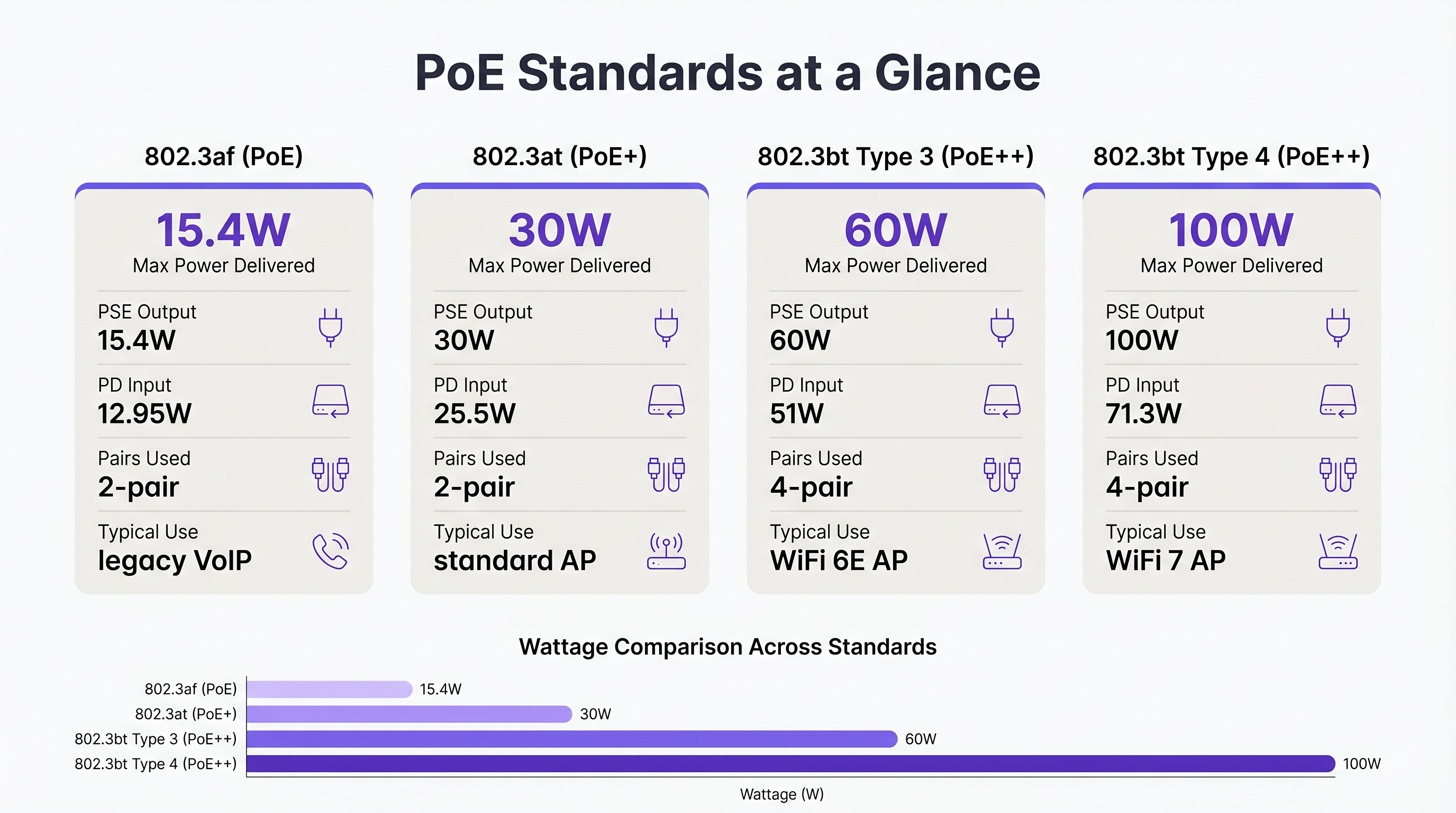
- 802.3af (PoE): स्विच पोर्टवर 15.4W पर्यंत पॉवर पुरवते, डिव्हाइसला 12.95W प्रदान करते. ऐतिहासिकदृष्ट्या लेगसी VoIP फोन आणि मूलभूत सेन्सर्ससाठी वापरले जाते.
- 802.3at (PoE+): पोर्टवर 30W पर्यंत पॉवर पुरवते, डिव्हाइसला 25.5W प्रदान करते. हे मानक WiFi 5 आणि WiFi 6 ॲक्सेस पॉइंट्ससाठी मानक राहिले आहे.
- 802.3bt Type 3 (PoE++): पोर्टवर 60W पर्यंत पॉवर पुरवते, डिव्हाइसला 51W प्रदान करते. हे उच्च-कार्यक्षमतेच्या WiFi 6E APs साठी नवीन आधार आहे, ज्यात Wayfinding आणि सुरक्षिततेसाठी अनेक रेडिओ आणि समर्पित स्कॅनिंग ॲरे असतात.
- 802.3bt Type 4 (PoE++): पोर्टवर 100W पर्यंत पॉवर पुरवते, डिव्हाइसला 71.3W प्रदान करते. हे मानक अल्ट्रा-उच्च-घनतेच्या WiFi 7 APs आणि जटिल IoT ॲग्रिगेटर्ससाठी आवश्यक आहे.
WiFi 6E आणि 7 ला PoE++ ची गरज का आहे
आधुनिक ॲक्सेस पॉइंट्स हे मूलतः एज कंप्यूट डिव्हाइसेस आहेत. एक सामान्य WiFi 6E AP 2.4 GHz, 5 GHz आणि 6 GHz बँड्सवर एकाच वेळी रेडिओ चालवतो. याव्यतिरिक्त, अनेक एंटरप्राइझ APs मध्ये BLE/Zigbee ( Sensors आणि ॲसेट ट्रॅकिंगसाठी वापरले जाते) साठी चौथा रेडिओ आणि सतत WIPS/WIDS (Wireless Intrusion Prevention/Detection Systems) साठी पाचवा समर्पित स्कॅनिंग रेडिओ समाविष्ट असतो. मल्टी-गिगाबिट इथरनेट इंटरफेस (2.5GbE किंवा 5GbE) सह हे घटक चालवल्याने, पॉवरचा वापर PoE+ च्या 25.5W मर्यादेच्या पलीकडे जातो.
जर WiFi 6E AP PoE+ स्विचशी जोडलेला असेल, तर तो सामान्यतः पॉवरची वाटाघाटी करण्यासाठी LLDP (Link Layer Discovery Protocol) वापरतो. जर अपुरी पॉवर उपलब्ध असेल, तर AP खराब झालेल्या स्थितीत जाईल—अनेकदा 6 GHz रेडिओ अक्षम करेल किंवा सर्व रेडिओची ट्रान्समिट पॉवर कमी करेल. यामुळे असे नेटवर्क तयार होते जे डॅशबोर्डवर कार्यक्षम दिसते परंतु अंतिम वापरकर्त्यासाठी खराब कार्य करते.
अंमलबजावणी मार्गदर्शक: मल्टी-साइट बजेटची गणना करणे
राष्ट्रीय Retail चेन अपग्रेड करण्यासारख्या मल्टी-साइट डिप्लॉयमेंटचे नियोजन करताना, तुम्हाला प्रत्येक IDF (Intermediate Distribution Frame) स्विचसाठी एकूण PoE बजेटची गणना करणे आवश्यक आहे.
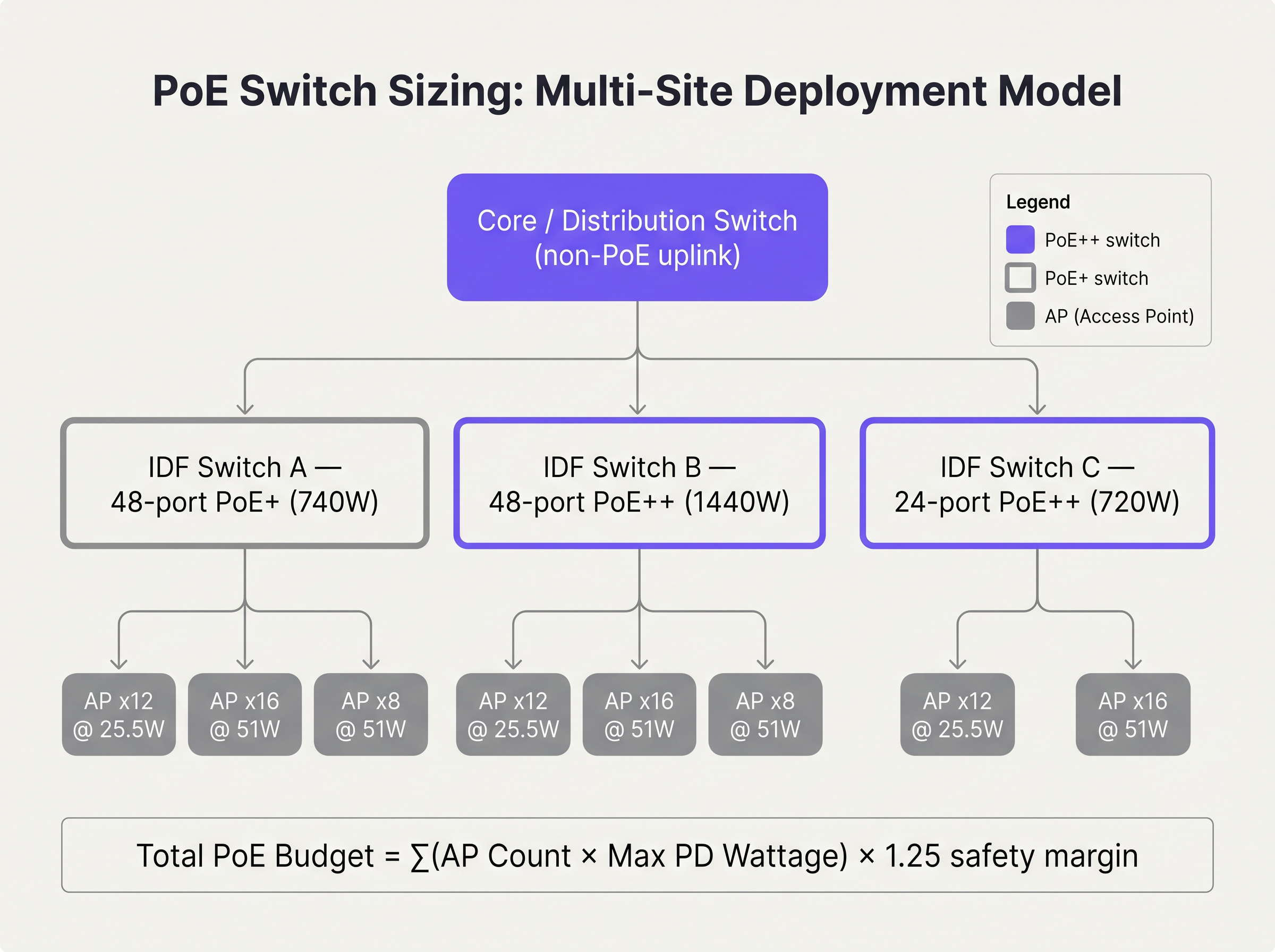
पायरी 1: एंडपॉइंट पॉवर आवश्यकतांचे ऑडिट करा
स्विचशी कनेक्ट होणाऱ्या सर्व PDs ची एक विस्तृत यादी तयार करा. सामान्य पॉवर वापरांवर अवलंबून राहू नका; विक्रेत्याने निर्दिष्ट केलेला कमाल पॉवर वापर वापरा. उदाहरणार्थ, जर 24 WiFi 6E APs प्रत्येकी 45W च्या कमाल वापरासह डिप्लॉय करत असाल, तर मूलभूत आवश्यकता 1,080W आहे.
पायरी 2: सुरक्षा मार्जिन लागू करा
स्विच त्याच्या PoE क्षमतेच्या 100% वर चालण्यासाठी कधीही डिझाइन करू नका. तुम्हाला केबलची झीज, थर्मल नुकसान आणि भविष्यातील विस्ताराचा विचार करणे आवश्यक आहे. 20% ते 25% सुरक्षा मार्जिन लागू करणे ही एक मानक उद्योग प्रथा आहे.
Total Budget = (Sum of Max PD Draw) × 1.25
आमच्या उदाहरणात: 1,080W × 1.25 = 1,350W.
पायरी 3: स्विच पॉवर सप्लाय निवडा
एक मानक 48-पोर्ट PoE+ स्विचमध्ये सामान्यतः 740W पॉवर सप्लाय असतो. ही आमच्या 1,350W गरजेसाठी पूर्णपणे अपुरी आहे. आर्किटेक्टने 1440W किंवा त्याहून अधिक पॉवर सप्लाय असलेला स्विच निर्दिष्ट करणे आवश्यक आहे, किंवा लोड वितरित करण्यासाठी APs दोन स्टॅक केलेल्या स्विचेसमध्ये विभाजित करणे आवश्यक आहे.
एंटरप्राइझ वातावरणासाठी सर्वोत्तम पद्धती
- केबल इन्फ्रास्ट्रक्चर अपग्रेड्स: PoE++ ट्विस्टेड-पेअर केबलच्या चारही जोड्यांवर पॉवर ढकलते. Hospitality सारख्या वातावरणात जिथे केबल्स अनेकदा सीलिंग ट्रेमध्ये घट्ट बांधलेल्या असतात, तिथे यामुळे लक्षणीय उष्णता निर्माण होते. वाढलेली उष्णता केबलचा रेझिस्टन्स वाढवते, ज्यामुळे व्होल्टेज ड्रॉप होतो. थर्मल लोड हाताळण्यासाठी आणि मल्टी-गिगाबिट थ्रुपुटला समर्थन देण्यासाठी नवीन PoE++ डिप्लॉयमेंट्ससाठी नेहमी कॅटेगरी 6A (Cat6A) केबलिंग निर्दिष्ट करा.
- LLDP कॉन्फिगरेशन: LLDP-MED जागतिक स्तरावर आणि सर्व AP-फेसिंग इंटरफेसवर सक्षम असल्याची खात्री करा. यामुळे स्विच आणि AP ला पॉवर आवश्यकतांची सूक्ष्म अचूकतेने गतिशीलपणे वाटाघाटी करता येते, ज्यामुळे अनेकदा बजेट वाया घालवणाऱ्या स्थिर वर्ग-आधारित वाटपांवर अवलंबून राहावे लागत नाही.
- पोर्ट प्राधान्य कॉन्फिगरेशन: स्टॅक केलेल्या कॉन्फिगरेशनमध्ये पॉवर सप्लाय निकामी झाल्यास, स्विच PoE लोड कमी करण्यास सुरुवात करेल. पोर्ट प्राधान्ये (क्रिटिकल, हाय, लो) कॉन्फिगर करा जेणेकरून आवश्यक पायाभूत सुविधा (उदा. लॉबी किंवा पेमेंट टर्मिनल्स कव्हर करणारे APs) पॉवरवर राहतील तर दुय्यम उपकरणे (उदा., डिजिटल साइनेज) वगळले जातात.
समस्यानिवारण आणि जोखीम कमी करणे
ओव्हरसबस्क्रिप्शनचा सापळा
ओव्हरसबस्क्रिप्शन तेव्हा होते जेव्हा सर्व कनेक्ट केलेल्या उपकरणांची एकूण संभाव्य ऊर्जा वापर स्विचच्या वीज पुरवठ्यापेक्षा जास्त होते, जरी सध्याचा वापर मर्यादेत असला तरीही. उदाहरणार्थ, 740W बजेट असलेला स्विच प्रत्येक 20W (एकूण 600W) वापरणाऱ्या 30 APs ला यशस्वीरित्या ऊर्जा देऊ शकतो. तथापि, फर्मवेअर अपडेट किंवा बूट सायकल दरम्यान, ते APs तात्पुरते त्यांच्या कमाल 30W (एकूण 900W) वापरापर्यंत वाढू शकतात. या वाढीमुळे स्विचचे पॉवर प्रोटेक्शन ट्रिप होईल, ज्यामुळे संपूर्ण नेटवर्क सेगमेंटचा रोलिंग रीबूट होईल.
शमन: नेहमी कमाल वापराच्या आधारावर गणना करा, सामान्य वापराच्या आधारावर नाही. तंत्रज्ञांना अनधिकृत PoE उपकरणे एज स्विचमध्ये प्लग करण्यापासून रोखण्यासाठी कठोर बदल नियंत्रण लागू करा.
ROI आणि व्यवसायावर परिणाम
तुमच्या स्विचिंग इन्फ्रास्ट्रक्चरला भविष्यासाठी तयार ठेवण्यासाठी सुरुवातीला जास्त कॅपिटल एक्सपेंडिचर (CapEx) लागतो. 48-पोर्ट मल्टी-गिगाबिट PoE++ स्विच हा मानक गिगाबिट PoE+ स्विचपेक्षा लक्षणीयरीत्या अधिक महाग असतो. तथापि, 'रिप-अँड-रिप्लेस' सायकल टाळल्याने ROI (गुंतवणुकीवरील परतावा) साध्य होतो.
आज WiFi 6 तैनात करणाऱ्या आरोग्यसेवा प्रदात्याचा विचार करा. जर त्यांनी PoE+ स्विच तैनात केले, तर ते सुरुवातीला पैसे वाचवतात. परंतु जेव्हा ते चार वर्षांत उच्च-घनतेच्या वैद्यकीय टेलीमेट्रीला समर्थन देण्यासाठी अपरिहार्यपणे WiFi 7 वर अपग्रेड करतील, तेव्हा ते स्विच कालबाह्य होतील. आज PoE++ इन्फ्रास्ट्रक्चरमध्ये गुंतवणूक केल्याने, पुढील वायरलेस अपग्रेड सायकलमध्ये फक्त एज APs बदलण्याची आवश्यकता असते, ज्यामुळे हार्डवेअर खर्च आणि उपयोजन डाउनटाइम लक्षणीयरीत्या कमी होतो.
याव्यतिरिक्त, पुरेशी वीज अतिथी WiFi सत्र कालावधी: UX आणि सुरक्षितता संतुलित करणे आणि सतत सुरक्षा स्कॅनिंग यांसारखी प्रगत वैशिष्ट्ये योग्यरित्या कार्य करतात याची खात्री करते, ज्यामुळे व्यवसायाला अनुपालन उल्लंघनांपासून आणि खराब वापरकर्ता अनुभवांपासून संरक्षण मिळते.
ऑडिओ ब्रीफिंग
या 10 मिनिटांच्या ब्रीफिंगमध्ये आमच्या वरिष्ठ सोल्युशन्स आर्किटेक्टला PoE नियोजनाच्या वास्तविकतेवर चर्चा करताना ऐका:
महत्त्वाच्या संज्ञा आणि व्याख्या
Power Sourcing Equipment (PSE)
The device that provides power onto the Ethernet cable, typically a PoE switch or midspan injector.
When sizing switches, you are evaluating the total power capacity of the PSE.
Powered Device (PD)
The endpoint device receiving power from the Ethernet cable, such as an access point or IP camera.
The PD determines the power demand. Its maximum draw dictates the budget requirements.
802.3at (PoE+)
The IEEE standard delivering up to 30W at the switch port.
The legacy standard that is increasingly insufficient for modern WiFi 6E and WiFi 7 deployments.
802.3bt (PoE++)
The IEEE standard delivering up to 60W (Type 3) or 100W (Type 4) at the switch port.
The necessary standard for powering multi-radio, high-density access points.
LLDP-MED
Link Layer Discovery Protocol - Media Endpoint Discovery. An extension of LLDP that allows PSE and PD to negotiate exact power requirements.
Crucial for optimising the power budget dynamically rather than relying on static class allocations.
Oversubscription
A state where the potential maximum power draw of all connected devices exceeds the switch's power supply capacity.
A dangerous design flaw that leads to unpredictable network outages during load spikes.
Port Priority
A switch configuration that determines which ports lose power first if the total budget is exceeded.
Essential for ensuring critical infrastructure remains online during a partial power failure.
Voltage Drop
The loss of electrical potential along the length of a cable due to resistance.
The reason why a switch delivering 60W at the port only guarantees 51W at the device.
केस स्टडीज
A 200-room hotel is upgrading its wireless infrastructure. The design calls for 80 WiFi 6E APs (Max draw: 41W) and 20 IP Security Cameras (Max draw: 12W). The IT director plans to use three 48-port switches, each with a 740W power supply. Will this design succeed?
No, this design will fail due to power oversubscription.
Total AP power: 80 APs × 41W = 3,280W. Total Camera power: 20 Cameras × 12W = 240W. Total required power (without margin): 3,520W.
Total available power: 3 switches × 740W = 2,220W.
The design is short by at least 1,300W. The switches will shed load, causing APs to drop offline or negotiate down to disabled radios.
A stadium concourse deployment features long cable runs (up to 90 metres) from the IDF to the APs. The APs require 802.3bt Type 3 (60W). What physical layer considerations must be addressed?
The deployment must utilise Cat6A cabling, and cable bundles must be kept small. PoE++ over long distances generates significant heat, especially in the centre of large cable bundles. Heat increases resistance, which leads to voltage drop. If voltage drops too low over the 90m run, the AP will not receive the required 51W.
परिस्थिती विश्लेषण
Q1. You are deploying 15 WiFi 6E APs (Max draw: 45W) in a new retail branch. You have an existing 24-port switch with a 370W power supply. What is your recommendation?
💡 संकेत:Calculate the total maximum draw and compare it to the existing supply.
शिफारस केलेला दृष्टिकोन दाखवा
The total maximum draw is 675W (15 × 45W). The existing 370W switch is entirely insufficient and will fail. Recommendation: Replace the switch with a 24-port PoE++ switch featuring at least a 1000W power supply to accommodate the load and a safety margin.
Q2. During a network audit, you notice that several WiFi 6E APs are operating with their 6 GHz radios disabled, despite being configured correctly in the controller. What is the most likely physical layer cause?
💡 संकेत:Consider what happens when an AP does not receive enough power via LLDP negotiation.
शिफारस केलेला दृष्टिकोन दाखवा
The APs are likely connected to an older 802.3at (PoE+) switch. Because they are not receiving the required 802.3bt (PoE++) power, they have negotiated down to a lower power state, which typically involves disabling advanced radios like 6 GHz to remain operational.
Q3. You are designing a high-density stadium deployment. To save costs, the procurement team suggests using existing Cat5e cabling for the new 802.3bt Type 4 (100W) APs. How do you respond?
💡 संकेत:Consider the thermal implications of pushing 100W over four pairs in large cable bundles.
शिफारस केलेला दृष्टिकोन दाखवा
Reject the suggestion. Pushing 100W over Cat5e, especially in bundled cable trays common in stadiums, generates excessive heat. This increases resistance, causing severe voltage drop and potential fire hazards. Cat6A must be specified to handle the thermal load and ensure full power delivery to the APs.




