
স্টাফ WiFi ব্যবহারের শর্তাবলী: আইনি এবং কমপ্লায়েন্সের প্রয়োজনীয় বিষয়সমূহ
এই গাইডটি এন্টারপ্রাইজ ভেন্যুগুলোর জন্য স্টাফ WiFi ব্যবহারের শর্তাবলী খসড়া এবং প্রয়োগ করার আইনি ও প্রযুক্তিগত প্রয়োজনীয় বিষয়গুলো কভার করে। এটি একটি Acceptable Use Policy (AUP)-তে কী অন্তর্ভুক্ত করতে হবে, কীভাবে GDPR এবং PCI DSS-এর প্রয়োজনীয়তাগুলো পূরণ করতে হবে এবং কর্পোরেট সম্পদ রক্ষা করতে কীভাবে পরিচয়-ভিত্তিক প্রমাণীকরণ এবং নেটওয়ার্ক সেগমেন্টেশন স্থাপন করতে হবে তা বিস্তারিতভাবে বর্ণনা করে। হোটেল, রিটেইল চেইন, স্টেডিয়াম এবং পাবলিক-সেক্টর প্রতিষ্ঠানের IT ম্যানেজার, HR টিম এবং অপারেশন ডিরেক্টররা এখানে কার্যকর নির্দেশিকা পাবেন যা তারা এই ত্রৈমাসিকেই বাস্তবায়ন করতে পারবেন।
এই গাইডটি শুনুন
পডকাস্ট ট্রান্সক্রিপ্ট দেখুন
আমাদের মূল সিরিজের অংশ: Enterprise WiFi Security Guide →
এক্সিকিউটিভ সামারি
স্টাফ নেটওয়ার্ক অ্যাক্সেস সুরক্ষিত করার জন্য কেবল প্রযুক্তিগত নিয়ন্ত্রণের চেয়েও বেশি কিছু প্রয়োজন। এর জন্য পরিচয়-ভিত্তিক প্রমাণীকরণ (identity-based authentication), নেটওয়ার্ক সেগমেন্টেশন এবং DNS-স্তরের কন্টেন্ট ফিল্টারিং দ্বারা সমর্থিত একটি স্পষ্ট, প্রয়োগযোগ্য Acceptable Use Policy (AUP) প্রয়োজন। যেহেতু hospitality, retail এবং পাবলিক সেক্টর জুড়ে ভেন্যুগুলোর পরিধি বৃদ্ধি পাচ্ছে, তাই ঝুঁকির ক্ষেত্রও আনুপাতিকভাবে প্রসারিত হচ্ছে। একটি শেয়ার্ড নেটওয়ার্কে থাকা একজন কর্মচারীর একটিমাত্র আপোসকৃত (compromised) ডিভাইস PCI DSS এবং GDPR-এর প্রয়োজনীয়তা লঙ্ঘন করতে পারে, যা জরিমানা এবং কার্যক্ষম ব্যাঘাত ঘটাতে পারে।
এই গাইডটি IT ম্যানেজার, নেটওয়ার্ক আর্কিটেক্ট এবং ভেন্যু অপারেশন ডিরেক্টরদের স্টাফ WiFi ব্যবহারের শর্তাবলী খসড়া এবং প্রয়োগ করার জন্য একটি সুনির্দিষ্ট ফ্রেমওয়ার্ক প্রদান করে। আমরা কর্মচারী পর্যবেক্ষণের স্বচ্ছতার আইনি প্রয়োজনীয়তা, কমপ্লায়েন্সের জন্য প্রয়োজনীয় প্রযুক্তিগত আর্কিটেকচার এবং কীভাবে Purple-এর Identity-Based Networks অভ্যন্তরীণ অপব্যবহার থেকে কর্পোরেট সম্পদ রক্ষা করে তা কভার করেছি। মূল নীতিটি সহজ: আপনার স্টাফ WiFi নীতিটি সুনির্দিষ্ট, স্বচ্ছ এবং প্রযুক্তিগতভাবে প্রয়োগযোগ্য হতে হবে। যে নীতি কেবল কাগজে কলমে থাকে তা কোনো নীতি নয়।
টেকনিক্যাল ডিপ-ডাইভ
কেন শেয়ার্ড পাসওয়ার্ড ব্যর্থ হয়
হসপিটালিটি এবং রিটেইল সেক্টরে বেশিরভাগ স্টাফ WiFi নেটওয়ার্ক এখনও একটি একক শেয়ার্ড পাসওয়ার্ড সহ WPA2-Personal-এ চলে। সেই পাসওয়ার্ডটি হোয়াইটবোর্ডে লেখা থাকে, Slack চ্যানেলে শেয়ার করা হয় এবং কর্মচারীরা চলে যাওয়ার পরও কখনো পরিবর্তন করা হয় না। এটি কোনো ছোটখাটো অসুবিধা নয়। এটি একটি কাঠামোগত নিরাপত্তা ব্যর্থতা। যখন একজন কর্মচারী চলে যান, তখন কর্পোরেট নেটওয়ার্কে তাদের অ্যাক্সেস অনির্দিষ্টকালের জন্য থেকে যায়। এখানে কোনো অডিট ট্রেইল থাকে না, ব্যবহারকারী-ভিত্তিক কোনো সেশন কি (session key) থাকে না এবং সবাইকে ব্যাহত না করে একটি আপোসকৃত ডিভাইসকে আলাদা করার কোনো উপায় থাকে না।
IEEE 802.1X স্ট্যান্ডার্ড, WPA3-Enterprise এনক্রিপশনের সাথে মিলিত হয়ে এই সমস্যার সমাধান করে। প্রতিটি ব্যবহারকারী একটি কেন্দ্রীয় ডিরেক্টরির সাথে যুক্ত নিজস্ব ক্রেডেনশিয়াল দিয়ে প্রমাণীকরণ করেন। প্রতিটি সেশন অনন্য এনক্রিপশন কি (encryption keys) ব্যবহার করে, তাই একই অ্যাক্সেস পয়েন্টে থাকা একটি ডিভাইস অন্য ব্যবহারকারীর ট্রাফিক ইন্টারসেপ্ট বা বাধাগ্রস্ত করতে পারে না। Purple এটিকে Identity-Based Networks-এর মাধ্যমে বাস্তবায়ন করে, যা শেয়ার্ড পাসওয়ার্ডের পরিবর্তে Microsoft Entra ID, Okta, বা Google Workspace-এর মাধ্যমে পরিচালিত সার্টিফিকেট-ভিত্তিক অ্যাক্সেস প্রদান করে। যখন HR ডিরেক্টরি থেকে কোনো স্টাফ সদস্যকে সরিয়ে দেয়, তখন Purple SCIM (System for Cross-domain Identity Management)-এর মাধ্যমে কয়েক মিনিটের মধ্যে তাদের WiFi অ্যাক্সেস বাতিল করে দেয়। কোনো টিকিট তৈরি করার প্রয়োজন নেই। পুরো এস্টেট জুড়ে পাসওয়ার্ড পরিবর্তন করার কোনো ঝামেলা নেই।
নেটওয়ার্ক সেগমেন্টেশন এবং PCI DSS কমপ্লায়েন্স
কার্যকর স্টাফ WiFi নিরাপত্তা আইসোলেশন বা পৃথকীকরণের মাধ্যমে শুরু হয়। কমপ্লায়েন্স অডিটের পরিধি সীমিত করতে এবং সম্ভাব্য লঙ্ঘন প্রতিরোধ করতে আপনাকে অবশ্যই স্টাফ ট্রাফিককে গেস্ট এবং পেমেন্ট নেটওয়ার্ক থেকে আলাদা করতে হবে। VLANs (Virtual Local Area Networks) স্থাপন করা হলো স্ট্যান্ডার্ড পদ্ধতি, এবং এটি PCI DSS কমপ্লায়েন্সের একটি মৌলিক প্রয়োজনীয়তা।
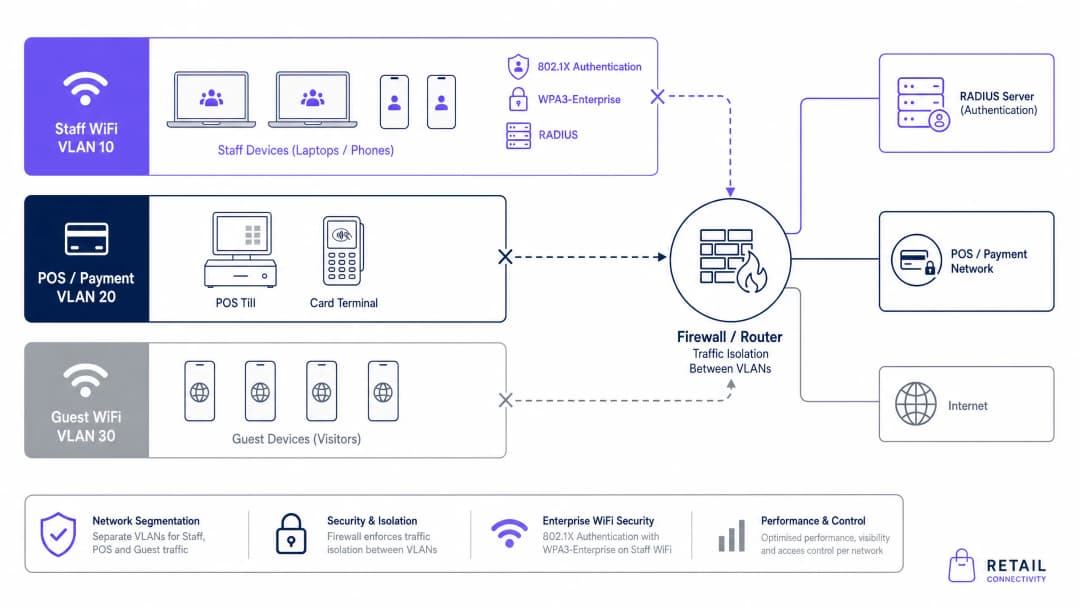
একটি রিটেইল পরিবেশের জন্য, আপনার কমপক্ষে তিনটি পৃথক VLAN প্রয়োজন: Guest WiFi, Staff WiFi এবং Point of Sale (POS)। এই সেগমেন্টেশন নিশ্চিত করে যে একটি আপোসকৃত স্টাফ ডিভাইস কার্ডহোল্ডার ডেটা পরিবেশে পৌঁছাতে পারবে না। PCI DSS v4.0-এর জন্য কমপ্লায়েন্স মূল্যায়নের অংশ হিসেবে প্রতি বছর নেটওয়ার্ক সেগমেন্টেশন যাচাই করা প্রয়োজন। Purple সমস্ত প্রধান এন্টারপ্রাইজ ওয়্যারলেস ভেন্ডর - Cisco Meraki, HPE Aruba, Ruckus, Juniper Mist, Ubiquiti UniFi, Cambium, Extreme এবং Fortinet-এর সাথে স্ট্যান্ডার্ড RADIUS এবং VLAN ট্যাগিংয়ের মাধ্যমে সংহত (integrate) হয়, তাই কমপ্লায়েন্স অর্জনের জন্য আপনাকে বিদ্যমান হার্ডওয়্যার পরিবর্তন করতে হবে না।
GDPR এবং পর্যবেক্ষণের স্বচ্ছতা
UK GDPR এবং Data Protection Act 2018 কর্মচারী পর্যবেক্ষণের ক্ষেত্রে কঠোর প্রয়োজনীয়তা আরোপ করে। পর্যবেক্ষণ অনুমোদিত, তবে কেবল তখনই যখন এটি বৈধ, আনুপাতিক এবং স্বচ্ছ হয়। Information Commissioner's Office (ICO) স্পষ্টভাবে জানিয়েছে: স্টাফদের পর্যবেক্ষণ করার প্রযুক্তিগত ক্ষমতা থাকলেই আপনি এটি করার আইনি অধিকার পাবেন না।
একটি আইনি ভিত্তি প্রতিষ্ঠা করতে, বেশিরভাগ প্রতিষ্ঠান বৈধ স্বার্থের (legitimate interests) ওপর নির্ভর করে। এর জন্য এটি নথিবদ্ধ করা প্রয়োজন যে পর্যবেক্ষণটি একটি নির্দিষ্ট নিরাপত্তা বা কার্যক্ষম উদ্দেশ্য পূরণ করে, সেই উদ্দেশ্য অর্জনের জন্য এটি প্রয়োজনীয় এবং গোপনীয়তার হস্তক্ষেপটি আনুপাতিক। কর্মসংস্থানের ক্ষেত্রে সম্মতি (consent) সাধারণত অনুপযুক্ত কারণ নিয়োগকর্তা এবং কর্মচারীর মধ্যে ক্ষমতার ভারসাম্যের অভাবের অর্থ হলো সম্মতিটি স্বাধীনভাবে দেওয়া সম্ভব নয়।
এর ব্যবহারিক অর্থ হলো আপনার স্টাফ WiFi ব্যবহারের শর্তাবলীতে স্পষ্টভাবে উল্লেখ থাকতে হবে যে কী কী ডেটা সংগ্রহ করা হচ্ছে (সংযোগের সময়, ডিভাইসের আইডেন্টিফায়ার, ব্যান্ডউইথ ব্যবহার, DNS কোয়েরি), কেন এটি সংগ্রহ করা হচ্ছে, কার কাছে এর অ্যাক্সেস রয়েছে এবং কতক্ষণ এটি সংরক্ষণ করা হবে। এই তথ্যটি অবশ্যই AUP, কর্মচারী হ্যান্ডবুক এবং কর্মসংস্থান চুক্তিতে থাকতে হবে। স্টাফদের এটি স্বীকার করতে হবে। পর্যবেক্ষণ শুরু করার আগে কর্মচারীদের অবহিত করা হয়েছিল তা যদি আপনি প্রমাণ করতে না পারেন, তবে আপনি ঝুঁকির মুখে পড়বেন।
আপনার নির্দিষ্ট সেটআপ নিয়ে কোনো প্রশ্ন আছে?
আমাদের টিম ৮০,০০০ ভেন্যুতে ভেন্যু অপারেটর, IT ম্যানেজার এবং নেটওয়ার্ক ইঞ্জিনিয়ারদের সাথে কাজ করে। একটি ২০ মিনিটের কল বুক করুন এবং আপনার মতো অন্যরা কীভাবে এর সমাধান করেছেন তা আমরা আপনাকে দেখাব।
ইমপ্লিমেন্টেশন গাইড
Acceptable Use Policy-এর খসড়া তৈরি করা
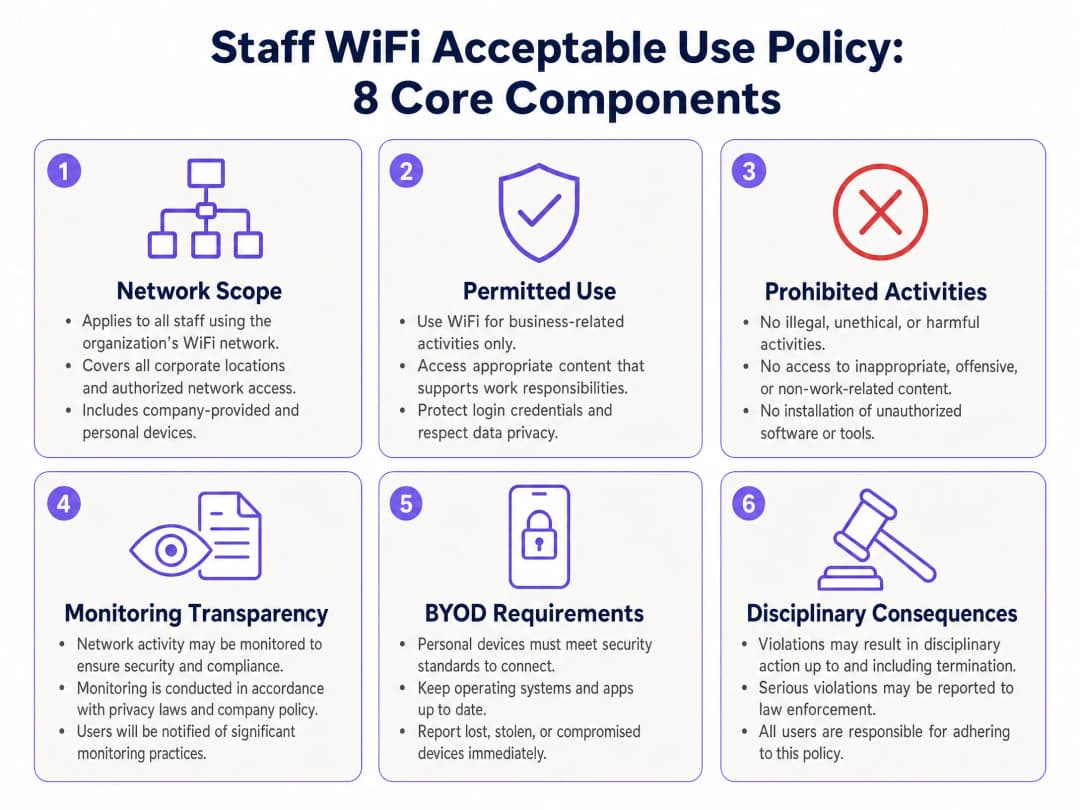
আপনার AUP হলো নেটওয়ার্ক পর্যবেক্ষণ এবং শাস্তিমূলক ব্যবস্থার আইনি ভিত্তি। এটি অবশ্যই আটটি মূল ক্ষেত্র কভার করবে।
১. নেটওয়ার্কের পরিধি (Network scope)। নির্দিষ্ট করুন যে এই নীতিটি কর্পোরেট নেটওয়ার্কের সাথে সংযুক্ত সমস্ত কর্মচারী, ঠিকাদার এবং অনুমোদিত ব্যবহারকারীদের ক্ষেত্রে প্রযোজ্য, তারা কোম্পানির দেওয়া ডিভাইস ব্যবহার করছেন নাকি তাদের নিজস্ব ব্যক্তিগত ডিভাইস (BYOD) ব্যবহার করছেন তা বিবেচনা না করেই।
২. অনুমোদিত ব্যবহার (Permitted use)। স্পষ্টভাবে উল্লেখ করুন যে নেটওয়ার্কটি ব্যবসায়িক উদ্দেশ্যে প্রদান করা হয়েছে। আনুষঙ্গিক ব্যক্তিগত ব্যবহার সহ্য করা হতে পারে, তবে এটি উৎপাদনশীলতায় হস্তক্ষেপ করতে পারবে না বা অতিরিক্ত ব্যান্ডউইথ ব্যবহার করতে পারবে না।
৩. নিষিদ্ধ কার্যক্রম (Prohibited activities)। অবৈধ কার্যক্রম, অনুপযুক্ত কন্টেন্ট অ্যাক্সেস করা, অননুমোদিত সফটওয়্যার ইনস্টল করা, নিরাপত্তা নিয়ন্ত্রণ বাইপাস করার চেষ্টা করা এবং প্রতিযোগীদের সিস্টেমে অ্যাক্সেস করতে নেটওয়ার্ক ব্যবহার করা স্পষ্টভাবে নিষিদ্ধ করুন।
৪. পর্যবেক্ষণের স্বচ্ছতা (Monitoring transparency)। উল্লেখ করুন যে নিরাপত্তা এবং কর্মক্ষমতা ব্যবস্থাপনার জন্য নেটওয়ার্কের কার্যক্রম পর্যবেক্ষণ করা হতে পারে। কী ডেটা সংগ্রহ করা হয় এবং কীভাবে তা ব্যবহার করা হয় তা বিস্তারিত জানান। এটি আপনার GDPR-এর আইনি ভিত্তির বিবৃতি।
৫. BYOD-এর প্রয়োজনীয়তা (BYOD requirements)। স্টাফরা ব্যক্তিগত ডিভাইস ব্যবহার করলে, ন্যূনতম নিরাপত্তার প্রয়োজনীয়তাগুলো নির্দিষ্ট করুন: সমর্থিত অপারেটিং সিস্টেম, আপ-টু-ডেট সিকিউরিটি প্যাচ এবং স্ক্রিন লক সক্রিয় থাকা। স্টাফদের হারিয়ে যাওয়া বা চুরি হওয়া ডিভাইস অবিলম্বে রিপোর্ট করতে বলুন।
৬. ডেটা হ্যান্ডলিংয়ের বাধ্যবাধকতা (Data handling obligations)। স্টাফদের মনে করিয়ে দিন যে তারা যেন অরক্ষিত সংযোগের মাধ্যমে সংবেদনশীল গ্রাহক বা কর্পোরেট ডেটা আদান-প্রদান না করেন এবং কর্পোরেট নেটওয়ার্ক ডেটা ক্লাসিফিকেশন নিয়ন্ত্রণের বিকল্প নয়।
৭. শাস্তিমূলক পরিণতি (Disciplinary consequences)। নীতি লঙ্ঘন করার পরিণতিগুলো স্পষ্টভাবে উল্লেখ করুন, যার মধ্যে মৌখিক সতর্কবার্তা থেকে শুরু করে চাকরি থেকে বরখাস্ত এবং গুরুতর লঙ্ঘনের জন্য আইন প্রয়োগকারী সংস্থার কাছে পাঠানো অন্তর্ভুক্ত।
৮. নীতি পর্যালোচনা চক্র (Policy review cycle)। অন্তত প্রতি বছর AUP পর্যালোচনা করার এবং সমস্ত স্টাফদের পরিবর্তনগুলো জানানোর প্রতিশ্রুতি দিন।
প্রযুক্তিগত নিয়ন্ত্রণ স্থাপন করা
কেবল নীতিই যথেষ্ট নয়। আপনাকে এটি প্রযুক্তিগতভাবে প্রয়োগ করতে হবে। নিম্নলিখিত ধাপগুলো বেশিরভাগ এন্টারপ্রাইজ ভেন্যুর ক্ষেত্রে প্রযোজ্য।
প্রথমত, আপনার আইডেন্টিটি প্রোভাইডারকে Purple-এর ক্লাউড RADIUS-এর সাথে সংহত (integrate) করুন। Microsoft Entra ID, Okta, বা Google Workspace-কে Purple-এর প্রমাণীকরণ অবকাঠামোর সাথে সংযুক্ত করুন। এটি অন-প্রেমিস RADIUS সার্ভারের প্রয়োজনীয়তা দূর করে এবং ৯৯.৯৯৯% আপটাইম SLA (Purple-এর নিজস্ব ডেটা) সহ মাল্টি-রিজিয়ন ফেইলওভার প্রদান করে।
দ্বিতীয়ত, WPA3-Enterprise দ্বারা সুরক্ষিত একটি ডেডিকেটেড স্টাফ SSID ব্রডকাস্ট করতে আপনার অ্যাক্সেস পয়েন্টগুলো কনফিগার করুন। স্টাফদের প্রমাণীকৃত পরিচয়ের ভিত্তিতে তাদের ডিভাইসগুলোকে একটি ডেডিকেটেড VLAN-এ অ্যাসাইন করুন। রোল-ভিত্তিক VLAN অ্যাসাইনমেন্ট আপনাকে একই অবকাঠামো থেকে ম্যানেজার, ঠিকাদার এবং সাধারণ স্টাফদের বিভিন্ন স্তরের নেটওয়ার্ক অ্যাক্সেস দেওয়ার সুবিধা দেয়।
তৃতীয়ত, আপনার ডিরেক্টরি এবং Purple-এর মধ্যে SCIM সিঙ্ক্রোনাইজেশন সক্ষম করুন। এটি অনবোর্ডিং এবং অফবোর্ডিং উভয়কেই স্বয়ংক্রিয় করে। যখন একজন নতুন কর্মচারী যোগ দেন, তখন ডিরেক্টরিতে থাকা তাদের অ্যাকাউন্ট স্বয়ংক্রিয়ভাবে তাদের WiFi অ্যাক্সেস প্রদান করে। যখন তারা চলে যান, তখন কয়েক মিনিটের মধ্যে অ্যাক্সেস বাতিল হয়ে যায়।
চতুর্থত, DNS-স্তরের কন্টেন্ট ফিল্টারিংয়ের জন্য Purple Shield স্থাপন করুন। Shield ক্ষতিকারক ডোমেন এবং অনুপযুক্ত কন্টেন্ট লোড হওয়ার আগেই ব্লক করে দেয়, যা ডিপ প্যাকেট ইন্সপেকশনের প্রয়োজন ছাড়াই আপনার AUP-এর নিষিদ্ধ কার্যক্রমের ধারাটি প্রয়োগ করে। Shield DNS স্তরে বিজ্ঞাপন এবং ট্র্যাকারগুলো সরিয়ে দেয়, যা মোট ডাউনলোড করা ডেটা ৪৪% হ্রাস করে এবং DNS কোয়েরি ৬২% কমিয়ে দেয় (Purple-এর নিজস্ব ডেটা)। ব্যস্ত সময়ে, আপনি গুরুত্বপূর্ণ অ্যাপ্লিকেশনগুলোর জন্য ব্যান্ডউইথ সুরক্ষিত রাখতে উচ্চ-ব্যান্ডউইথের স্ট্রিমিং পরিষেবাগুলোর গতি সীমিত (throttle) করতে পারেন।
সেরা অনুশীলনসমূহ
অফবোর্ডিং স্বয়ংক্রিয় করুন। নেটওয়ার্ক অ্যাক্সেস সরাসরি আপনার HR সিস্টেমের সাথে যুক্ত করুন। যখন কোনো কর্মচারীর স্ট্যাটাস নিষ্ক্রিয় (inactive) হয়ে যায়, তখন তাদের WiFi অ্যাক্সেস অবিলম্বে বন্ধ হয়ে যেতে হবে। ম্যানুয়াল প্রক্রিয়াগুলো ফাঁকফোকর তৈরি করে। Purple ব্যবহারকারী IT টিমগুলো সাধারণত অ্যাক্সেস ম্যানেজমেন্ট স্বয়ংক্রিয় করার পরে WiFi সাপোর্ট টিকিট ৮০% হ্রাস পেতে দেখে (Purple-এর নিজস্ব ডেটা)।
একটি Data Protection Impact Assessment (DPIA) পরিচালনা করুন। যেকোনো নতুন পর্যবেক্ষণ ক্ষমতা বাস্তবায়নের আগে, উচ্চ-ঝুঁকিপূর্ণ প্রক্রিয়াকরণ কার্যক্রমের জন্য UK GDPR-এর প্রয়োজনীয়তা অনুযায়ী একটি DPIA সম্পন্ন করুন। কর্মচারী পর্যবেক্ষণকে উচ্চ-ঝুঁকিপূর্ণ হিসেবে শ্রেণীবদ্ধ করা হয় কারণ এতে ব্যক্তিদের পদ্ধতিগত ট্র্যাকিং জড়িত থাকে। মূল্যায়নটি নথিবদ্ধ করুন এবং অডিটের উদ্দেশ্যে সংরক্ষণ করুন।
কেবল ডিভাইসের ধরন নয়, ভূমিকা (role) অনুযায়ী সেগমেন্ট করুন। ঠিকাদারদের সময়-সীমিত অ্যাক্সেস দিতে রোল-ভিত্তিক VLAN অ্যাসাইনমেন্ট ব্যবহার করুন যা স্বয়ংক্রিয়ভাবে মেয়াদোত্তীর্ণ হয়ে যায়। এটি বিশেষ করে hospitality পরিবেশের জন্য প্রাসঙ্গিক যেখানে এজেন্সি স্টাফ এবং মৌসুমী কর্মী নিয়োগ সাধারণ বিষয়।
নীতিগুলো প্রতি বছর পর্যালোচনা করুন। নিয়মকানুন পরিবর্তিত হয়। PCI DSS v4.0 ২০২৪ সালে নতুন প্রয়োজনীয়তা প্রবর্তন করেছে। ICO থেকে প্রাপ্ত UK GDPR নির্দেশিকা নিয়মিত আপডেট করা হয়। একটি বার্ষিক নীতি পর্যালোচনার সময়সূচী নির্ধারণ করুন যাতে IT, HR এবং আইনি দলগুলো জড়িত থাকে।
কেবল ম্যানেজারদের নয়, স্টাফদেরও প্রশিক্ষণ দিন। অনবোর্ডিং ম্যানুয়ালের মধ্যে AUP-কে চাপা দিয়ে রাখবেন না। সংক্ষিপ্ত, ব্যবহারিক প্রশিক্ষণ সেশন পরিচালনা করুন যা অরক্ষিত WiFi-এর ঝুঁকি এবং নেটওয়ার্ক নীতিগুলোর পেছনের কারণগুলো ব্যাখ্যা করে। যে স্টাফরা কারণটি বুঝতে পারেন, তাদের নীতি মেনে চলার সম্ভাবনা অনেক বেশি থাকে।
ট্রাবলশুটিং এবং ঝুঁকি প্রশমন
| ব্যর্থতার ধরন | ঝুঁকি | প্রশমন |
|---|---|---|
| শেয়ার্ড WPA2 পাসওয়ার্ড | প্রাক্তন কর্মচারীরা অনির্দিষ্টকালের জন্য অ্যাক্সেস ধরে রাখে | আইডেন্টিটি প্রোভাইডার ইন্টিগ্রেশন সহ 802.1X-এ স্থানান্তরিত হন |
| একই সাবনেটে স্টাফ এবং POS | PCI DSS পরিধি লঙ্ঘন, লঙ্ঘন নিয়ন্ত্রণে ব্যর্থতা | কঠোর VLAN সেগমেন্টেশন বাস্তবায়ন করুন |
| AUP-তে পর্যবেক্ষণের কোনো প্রকাশ (disclosure) নেই | GDPR লঙ্ঘন, শাস্তিমূলক ব্যবস্থায় প্রমাণ গ্রহণযোগ্য নয় | AUP আপডেট করুন এবং স্বাক্ষরিত স্বীকৃতি গ্রহণ করুন |
| ম্যানুয়াল অফবোর্ডিং প্রক্রিয়া | চলে যাওয়ার পরেও অ্যাক্সেস থেকে যায় | HR সিস্টেমের সাথে SCIM সিঙ্ক্রোনাইজেশন সক্ষম করুন |
| কোনো কন্টেন্ট ফিল্টারিং নেই | ম্যালওয়্যার প্রবেশ, ব্যান্ডউইথ শেষ হওয়া, AUP প্রয়োগের ঘাটতি | DNS স্তরে Purple Shield স্থাপন করুন |
| ন্যূনতম নিরাপত্তা মান ছাড়া BYOD | কর্পোরেট নেটওয়ার্কে আপোসকৃত ব্যক্তিগত ডিভাইস | AUP-তে BYOD-এর প্রয়োজনীয়তাগুলো সংজ্ঞায়িত এবং প্রয়োগ করুন |
এন্টারপ্রাইজ WiFi নিরাপত্তা আর্কিটেকচারের একটি বিস্তৃত ধারণার জন্য, আমাদের Enterprise WiFi Security: A Complete Guide for 2026 দেখুন। যদি আপনার প্রাথমিক উদ্বেগ ব্যাক-অফ-হাউস রিটেইল নেটওয়ার্ক হয়, তবে Staff WiFi Policies for Retail: Securing Back-of-House Networks গাইডটিতে রিটেইল-নির্দিষ্ট স্থাপনার পরিস্থিতি বিস্তারিতভাবে কভার করা হয়েছে।
ROI এবং ব্যবসায়িক প্রভাব
একটি শক্তিশালী স্টাফ WiFi নীতি এবং সুরক্ষিত আর্কিটেকচার বাস্তবায়ন পরিমাপযোগ্য ফলাফল প্রদান করে। আইডেন্টিটি প্রোভাইডার ইন্টিগ্রেশনের মাধ্যমে অনবোর্ডিং এবং অফবোর্ডিং স্বয়ংক্রিয় করা WiFi অ্যাক্সেস সম্পর্কিত IT সাপোর্ট টিকিট ৮০% পর্যন্ত কমিয়ে দেয় (৮০,০০০+ লাইভ ভেন্যু থেকে Purple-এর নিজস্ব ডেটা)। এই দক্ষতা IT টিমগুলোকে পাসওয়ার্ড রিসেট করার পরিবর্তে কৌশলগত কাজে মনোযোগ দেওয়ার সুযোগ দেয়।
Purple Shield স্থাপন করা মোট ডাউনলোড করা ডেটা ৪৪% হ্রাস করে এবং পেজ লোড হওয়ার সময় ৫৩% উন্নত করে (Purple-এর নিজস্ব ডেটা)। যে ভেন্যুতে স্টাফরা ক্লাউড-ভিত্তিক অ্যাপ্লিকেশনের ওপর নির্ভর করেন, সেখানে এটি সরাসরি উৎপাদনশীলতা বাড়ায়। একটি রিটেইল পরিবেশে, এটি পিক ট্রেডিং আওয়ার বা ব্যস্ত সময়ে POS-এর কার্যক্ষমতা রক্ষা করে।
কমপ্লায়েন্সের দৃষ্টিকোণ থেকে, একটি PCI DSS অডিট ব্যর্থতা বা GDPR প্রয়োগকারী পদক্ষেপের খরচ সঠিক নিয়ন্ত্রণগুলো বাস্তবায়নের খরচের চেয়ে অনেক বেশি। ICO ডেটা সুরক্ষার নিয়ম লঙ্ঘনের জন্য ২০২৩ সালে মোট £৭.৫ মিলিয়নেরও বেশি জরিমানা জারি করেছে। স্বচ্ছতা ছাড়া নেটওয়ার্ক পর্যবেক্ষণ এবং নথিপত্র ছাড়া সঠিক সেগমেন্টেশন উভয়ই অডিট ব্যর্থতার কারণ হতে পারে।
Purple হলো ISO 27001, GDPR, CCPA এবং Cyber Essentials প্রত্যয়িত, এবং এটি ৩৫০ মিলিয়ন অনন্য ব্যবহারকারী সহ ৮০,০০০+ লাইভ ভেন্যুতে কাজ করে। যেসব ভেন্যু transport এবং healthcare পরিবেশে অবস্থিত যেখানে কমপ্লায়েন্সের প্রয়োজনীয়তাগুলো অত্যন্ত কঠোর, সেখানে Purple-এর অডিট ট্রেইল - ব্যবহারকারী, ডিভাইস, সময় এবং অবস্থান সহ প্রতিটি প্রমাণীকরণ ইভেন্ট লগ করা - আপনার অডিটরদের প্রয়োজনীয় নথিপত্র সরবরাহ করে।
আপনার WiFi অবকাঠামোর কার্যকারিতা কীভাবে পরিমাপ করবেন সে সম্পর্কে আরও জানতে, WiFi Analytics দেখুন।
মূল সংজ্ঞাসমূহ
Acceptable Use Policy (AUP)
একটি প্রতিষ্ঠানের IT সম্পদ, যার মধ্যে এর WiFi নেটওয়ার্কও অন্তর্ভুক্ত, সেগুলোর অনুমোদিত এবং নিষিদ্ধ ব্যবহারগুলো সংজ্ঞায়িত করে এমন নিয়মের একটি নথিবদ্ধ সেট।
কর্মচারী পর্যবেক্ষণ এবং শাস্তিমূলক ব্যবস্থার আইনি ভিত্তি। একটি বর্তমান, স্বাক্ষরিত AUP ছাড়া, পর্যবেক্ষণের ডেটা শাস্তিমূলক কার্যধারায় গ্রহণযোগ্য নাও হতে পারে।
IEEE 802.1X
পোর্ট-ভিত্তিক নেটওয়ার্ক অ্যাক্সেস নিয়ন্ত্রণের জন্য একটি IEEE স্ট্যান্ডার্ড যা নেটওয়ার্ক অ্যাক্সেস দেওয়ার আগে ব্যক্তিগত ব্যবহারকারীর প্রমাণীকরণ দাবি করে।
প্রমাণীকরণ স্ট্যান্ডার্ড যা শেয়ার্ড পাসওয়ার্ডের পরিবর্তে প্রতিটি ব্যবহারকারীর জন্য অনন্য ক্রেডেনশিয়াল প্রদান করে, যা স্বয়ংক্রিয় অনবোর্ডিং এবং অফবোর্ডিং সক্ষম করে।
WPA3-Enterprise
কর্পোরেট নেটওয়ার্কের জন্য সর্বশেষ WiFi নিরাপত্তা প্রোটোকল, যা 802.1X প্রমাণীকরণের মাধ্যমে প্রতিটি ব্যবহারকারীর সেশনের জন্য ব্যক্তিগতকৃত এনক্রিপশন প্রদান করে।
নিশ্চিত করে যে একই অ্যাক্সেস পয়েন্টে থাকা সত্ত্বেও ব্যবহারকারীরা একে অপরের ট্রাফিক ইন্টারসেপ্ট করতে পারবে না। এন্টারপ্রাইজ-গ্রেড স্টাফ WiFi নিরাপত্তার জন্য প্রয়োজনীয়।
VLAN (Virtual Local Area Network)
একটি লজিক্যাল সাবনেটওয়ার্ক যা বিভিন্ন ভৌত অবস্থান থেকে ডিভাইসগুলোকে একটি বিচ্ছিন্ন ব্রডকাস্ট ডোমেনে গ্রুপ করে।
গেস্ট এবং পেমেন্ট নেটওয়ার্ক থেকে স্টাফ ট্রাফিক আলাদা করতে ব্যবহৃত হয়, যা লঙ্ঘন নিয়ন্ত্রণ করে এবং PCI DSS সেগমেন্টেশনের প্রয়োজনীয়তা পূরণ করে।
RADIUS (Remote Authentication Dial-In User Service)
একটি নেটওয়ার্কিং প্রোটোকল যা নেটওয়ার্ক অ্যাক্সেসের জন্য কেন্দ্রীভূত প্রমাণীকরণ, অনুমোদন এবং অ্যাকাউন্টিং (AAA) ব্যবস্থাপনা প্রদান করে।
802.1X-এর পেছনের ইঞ্জিন, যা একটি কেন্দ্রীয় ডিরেক্টরির বিপরীতে ব্যবহারকারীর ক্রেডেনশিয়াল যাচাই করে এবং পরিচয়ের ভিত্তিতে VLAN মেম্বারশিপ অ্যাসাইন করে।
SCIM (System for Cross-domain Identity Management)
একটি ওপেন স্ট্যান্ডার্ড যা IT সিস্টেমগুলোর মধ্যে ব্যবহারকারীর পরিচয় তথ্যের আদান-প্রদান স্বয়ংক্রিয় করে, যেমন একটি HR প্ল্যাটফর্ম এবং একটি নেটওয়ার্ক অ্যাক্সেস কন্ট্রোলারের মধ্যে।
যখন কোনো কর্মচারীকে কর্পোরেট ডিরেক্টরি থেকে সরিয়ে দেওয়া হয়, তখন Purple-কে তাৎক্ষণিকভাবে WiFi অ্যাক্সেস বাতিল করার অনুমতি দেয়, যা অফবোর্ডিংয়ের ফাঁকফোকর বন্ধ করে।
DNS Filtering
একটি সংযোগ স্থাপন করার আগে, ডোমেন নেম সিস্টেম রেজোলিউশন স্তরে নির্দিষ্ট ডোমেনগুলোতে অ্যাক্সেস ব্লক করার প্রক্রিয়া।
যেভাবে Purple Shield ডিপ প্যাকেট ইন্সপেকশনের প্রয়োজন ছাড়াই ক্ষতিকারক বা অনুপযুক্ত কন্টেন্টে অ্যাক্সেস রোধ করে AUP প্রয়োগ করে।
PCI DSS (Payment Card Industry Data Security Standard)
যেসব প্রতিষ্ঠান কার্ডহোল্ডার ডেটা প্রক্রিয়া, সংরক্ষণ বা প্রেরণ করে তাদের জন্য একটি তথ্য নিরাপত্তা স্ট্যান্ডার্ড।
স্টাফদের ডিভাইসগুলো যাতে পেমেন্ট পরিবেশে অ্যাক্সেস করতে না পারে তা নিশ্চিত করতে কঠোর নেটওয়ার্ক সেগমেন্টেশন প্রয়োজন। কমপ্লায়েন্স মূল্যায়নের অংশ হিসেবে প্রতি বছর যাচাই করা হয়।
DPIA (Data Protection Impact Assessment)
ব্যক্তিদের অধিকার এবং স্বাধীনতার জন্য উচ্চ ঝুঁকির কারণ হতে পারে এমন প্রক্রিয়াকরণ কার্যক্রমের জন্য UK GDPR দ্বারা প্রয়োজনীয় একটি প্রক্রিয়া।
কর্মচারী নেটওয়ার্ক পর্যবেক্ষণ বাস্তবায়নের আগে বাধ্যতামূলক। পর্যবেক্ষণের বৈধ স্বার্থের ভিত্তি এবং আনুপাতিকতা নথিবদ্ধ করে।
BYOD (Bring Your Own Device)
একটি নীতি যা কর্মচারীদের কর্পোরেট নেটওয়ার্কের সাথে সংযোগ করতে ব্যক্তিগত মালিকানাধীন ডিভাইস ব্যবহার করার অনুমতি দেয়।
স্টাফ WiFi নেটওয়ার্কের সাথে সংযুক্ত ব্যক্তিগত ডিভাইসগুলোর জন্য ন্যূনতম নিরাপত্তার প্রয়োজনীয়তাগুলো সংজ্ঞায়িত করে নির্দিষ্ট AUP ধারার প্রয়োজন হয়।
সমাধানকৃত উদাহরণসমূহ
একটি ২০০ কক্ষের হোটেলের স্টাফ WiFi নেটওয়ার্ক সুরক্ষিত করা প্রয়োজন। বর্তমানে, হাউসকিপার, রিসেপশনিস্ট এবং ম্যানেজমেন্ট সবাই একটি একক WPA2 পাসওয়ার্ড শেয়ার করে। IT ম্যানেজার প্রাক্তন কর্মচারীদের অ্যাক্সেস ধরে রাখা এবং স্টাফদের ডিভাইসের মাধ্যমে প্রোপার্টি ম্যানেজমেন্ট সিস্টেম সংক্রমিত হওয়ার ঝুঁকি নিয়ে চিন্তিত।
হোটেলটি একটি শেয়ার্ড পাসওয়ার্ড মডেল থেকে 802.1X প্রমাণীকরণে স্থানান্তরিত হয়। প্রথমত, তারা তাদের বিদ্যমান Microsoft Entra ID ডিরেক্টরিকে Purple-এর ক্লাউড RADIUS-এর সাথে সংহত করে। এরপর, তারা WPA3-Enterprise দ্বারা সুরক্ষিত একটি ডেডিকেটেড স্টাফ SSID ব্রডকাস্ট করতে তাদের Cisco Meraki অ্যাক্সেস পয়েন্টগুলো কনফিগার করে। স্টাফরা Purple অ্যাপের মাধ্যমে তাদের ব্যক্তিগত Microsoft ক্রেডেনশিয়াল ব্যবহার করে প্রমাণীকরণ করেন। নেটওয়ার্কটি সেগমেন্ট করা হয়েছে, যেখানে স্টাফদের ডিভাইসগুলোকে VLAN 10-এ, প্রোপার্টি ম্যানেজমেন্ট সিস্টেমকে VLAN 20-এ এবং গেস্ট WiFi-কে VLAN 30-এ রাখা হয়েছে। SCIM সিঙ্ক্রোনাইজেশন সক্ষম করা হয়েছে যাতে HR কোনো অ্যাকাউন্ট নিষ্ক্রিয় করলে কয়েক মিনিটের মধ্যে WiFi অ্যাক্সেস বাতিল হয়ে যায়। ক্ষতিকারক কন্টেন্ট ফিল্টার করতে এবং কাজের সময় উচ্চ-ব্যান্ডউইথের স্ট্রিমিংয়ের গতি সীমিত করতে Purple Shield স্থাপন করা হয়েছে।
৫০টি লোকেশন বিশিষ্ট একটি রিটেইল চেইন স্টাফ WiFi Acceptable Use Policy বাস্তবায়ন করতে চায় কিন্তু তাদের UK স্টোরগুলোতে কর্মচারী পর্যবেক্ষণের ক্ষেত্রে GDPR কমপ্লায়েন্স নিয়ে চিন্তিত। বর্তমান নীতি সংক্রান্ত নথিপত্রটি পাঁচ বছরের পুরোনো এবং এতে নেটওয়ার্ক পর্যবেক্ষণের কোনো উল্লেখ নেই।
রিটেইলার তাদের AUP আপডেট করে স্পষ্টভাবে উল্লেখ করে যে নিরাপত্তা এবং কর্মক্ষমতা ব্যবস্থাপনার জন্য সংযোগের লগ, ব্যান্ডউইথ ব্যবহার এবং DNS কোয়েরি ডেটা রেকর্ড করা হয়। এই আপডেট করা নীতিটি সমস্ত কর্মচারীদের মধ্যে বিতরণ করা হয়, যাদের একটি স্বীকৃতিপত্রে স্বাক্ষর করতে হবে। রিটেইলার পর্যবেক্ষণের জন্য বৈধ স্বার্থের (legitimate interest) ভিত্তি নথিবদ্ধ করে একটি DPIA পরিচালনা করে। প্রযুক্তিগতভাবে, Purple প্রমাণীকরণ ইভেন্টগুলো (ব্যবহারকারী, ডিভাইস, সময়, অবস্থান) লগ করে এবং Shield DNS-স্তরের কার্যক্রম লগ করে, যা এনক্রিপ্ট করা ট্রাফিক পেলোডগুলো পরীক্ষা না করেই একটি বিস্তৃত অডিট ট্রেইল প্রদান করে। রিটেইলার ডেটা মিনিমাইজেশন নীতির সাথে সামঞ্জস্য রেখে ডেটা সংরক্ষণের সময়সীমা ৯০ দিন পর্যন্ত সীমিত করে।
অনুশীলনী প্রশ্নসমূহ
Q1. অন্যান্য শাখা থেকে আসা পরিদর্শনে আসা কর্মচারীদের অ্যাক্সেস সহজ করতে একজন আঞ্চলিক ব্যবস্থাপক অনুরোধ করেছেন যেন নতুন স্টাফ WiFi নেটওয়ার্ক একটি একক পাসওয়ার্ড ব্যবহার করে যা প্রতি মাসে পরিবর্তিত হয়। IT আর্কিটেক্টের কীভাবে প্রতিক্রিয়া জানানো উচিত এবং তাদের কী বিকল্প প্রস্তাব করা উচিত?
ইঙ্গিত: একটি মাল্টি-সাইট এস্টেট জুড়ে পাসওয়ার্ড পরিবর্তন করার কার্যক্ষম ওভারহেড এবং প্রতিটি মাসিক চক্রের সময় যে নিরাপত্তা ঘাটতি থেকে যায় তা বিবেচনা করুন।
মডেল উত্তর দেখুন
IT আর্কিটেক্টের অনুরোধটি প্রত্যাখ্যান করা উচিত। একটি শেয়ার্ড পাসওয়ার্ড, এমনকি প্রতি মাসে পরিবর্তন করা হলেও, কেউ চলে যাওয়ার পর ৩০ দিন পর্যন্ত নেটওয়ার্কটিকে অরক্ষিত রাখে। একটি মাল্টি-সাইট এস্টেট জুড়ে প্রতি মাসে একটি নতুন পাসওয়ার্ড বিতরণ করা উল্লেখযোগ্য কার্যক্ষম ওভারহেড তৈরি করে এবং প্রতিটি রোটেশন চক্রে সাপোর্ট টিকিট তৈরি করে। সঠিক বিকল্পটি হলো কেন্দ্রীয় ডিরেক্টরির সাথে সংহত 802.1X প্রমাণীকরণ। পরিদর্শনে আসা কর্মচারীরা যেকোনো সাইটে স্বয়ংক্রিয়ভাবে সংযোগ করতে তাদের বিদ্যমান কর্পোরেট ক্রেডেনশিয়াল ব্যবহার করবেন। এখানে বিতরণ করার মতো কোনো পাসওয়ার্ড নেই, পরিচালনা করার মতো কোনো রোটেশন চক্র নেই এবং কেউ চলে গেলে কোনো অ্যাক্সেস ঘাটতি থাকে না। এটি একই সাথে আরও ভালো নিরাপত্তা এবং আরও ভালো ব্যবহারকারীর অভিজ্ঞতা প্রদান করে।
Q2. একটি PCI DSS অডিটের সময়, অ্যাসেসর লক্ষ্য করেন যে স্টাফদের ডিভাইস এবং POS টার্মিনালগুলো একই নেটওয়ার্ক সেগমেন্টে রয়েছে। তাৎক্ষণিক ঝুঁকি কী এবং কী কী প্রতিকারমূলক পদক্ষেপ প্রয়োজন?
ইঙ্গিত: কার্ডহোল্ডার ডেটা পরিবেশের জন্য পরিধির প্রভাব এবং প্রতিকারের সময়সীমার ওপর ফোকাস করুন।
মডেল উত্তর দেখুন
তাৎক্ষণিক ঝুঁকি হলো সম্পূর্ণ স্টাফ নেটওয়ার্কটি PCI DSS কার্ডহোল্ডার ডেটা পরিবেশের পরিধির মধ্যে চলে আসে, যা অডিটের পরিধি এবং প্রতিকারের খরচ উল্লেখযোগ্যভাবে বাড়িয়ে দেয়। যেকোনো আপোসকৃত স্টাফ ডিভাইস সম্ভাব্যভাবে POS টার্মিনালগুলোতে পৌঁছাতে পারে। প্রতিকারের জন্য কঠোর VLAN সেগমেন্টেশন বাস্তবায়ন করা প্রয়োজন: স্টাফ ডিভাইসের জন্য একটি ডেডিকেটেড VLAN, POS টার্মিনালগুলোর জন্য একটি পৃথক VLAN এবং তাদের মধ্যে ল্যাটারাল মুভমেন্ট বা পারস্পরিক যোগাযোগ রোধ করতে ফায়ারওয়াল নিয়ম। অডিট বন্ধ করার আগে এটি অবশ্যই যাচাই এবং নথিবদ্ধ করতে হবে। ভবিষ্যতে, 802.1X-এর মাধ্যমে রোল-ভিত্তিক VLAN অ্যাসাইনমেন্ট নিশ্চিত করে যে ডিভাইসগুলো প্রমাণীকৃত পরিচয়ের ভিত্তিতে স্বয়ংক্রিয়ভাবে সঠিক সেগমেন্টে স্থাপন করা হয়েছে।
Q3. একটি প্রতিষ্ঠান অস্বাভাবিক ব্যান্ডউইথ ব্যবহার শনাক্ত করতে নেটওয়ার্ক পর্যবেক্ষণ বাস্তবায়ন করতে চায় যা ডেটা এক্সফিল্ট্রেশন (data exfiltration) নির্দেশ করতে পারে। তাদের কর্মচারী হ্যান্ডবুকটি তিন বছর ধরে আপডেট করা হয়নি এবং এতে নেটওয়ার্ক পর্যবেক্ষণের কোনো উল্লেখ নেই। পর্যবেক্ষণ সরঞ্জামগুলো সক্রিয় করার আগে কী করা আবশ্যক?
ইঙ্গিত: যেকোনো পর্যবেক্ষণ শুরু করার আগে UK GDPR-এর অধীনে আইনি প্রয়োজনীয়তার ক্রমটি বিবেচনা করুন।
মডেল উত্তর দেখুন
যেকোনো পর্যবেক্ষণ সরঞ্জাম সক্রিয় করার আগে, প্রতিষ্ঠানটিকে অবশ্যই তিনটি ধাপ সম্পন্ন করতে হবে। প্রথমত, Acceptable Use Policy এবং কর্মচারী হ্যান্ডবুক আপডেট করে স্পষ্টভাবে উল্লেখ করুন যে নেটওয়ার্কের কার্যক্রম পর্যবেক্ষণ করা হয়, কী ডেটা সংগ্রহ করা হয়, কেন এটি সংগ্রহ করা হয় এবং কতক্ষণ এটি সংরক্ষণ করা হয়। দ্বিতীয়ত, একটি DPIA পরিচালনা করুন যা পর্যবেক্ষণের জন্য বৈধ স্বার্থের ভিত্তি নথিবদ্ধ করে এবং প্রমাণ করে যে গোপনীয়তার হস্তক্ষেপটি নিরাপত্তা উদ্দেশ্যের সাথে আনুপাতিক। তৃতীয়ত, আপডেট করা নীতিটি সমস্ত স্টাফদের মধ্যে বিতরণ করুন এবং স্বাক্ষরিত স্বীকৃতি গ্রহণ করুন। কেবল এই ধাপগুলো সম্পন্ন এবং নথিবদ্ধ হওয়ার পরেই পর্যবেক্ষণ সক্রিয় করা বৈধ হবে। নিরাপত্তার যৌক্তিকতা যাই হোক না কেন, পূর্ববর্তী স্বচ্ছতা ছাড়া পর্যবেক্ষণ করা একটি UK GDPR লঙ্ঘন।
Q4. একটি হোটেলের IT টিমকে তাদের শিফটের সময় এজেন্সি হাউসকিপিং স্টাফদের স্টাফ WiFi-এর সাথে সংযোগ করার অনুমতি দিতে বলা হয়েছে, কিন্তু এই কর্মীরা কর্পোরেট ডিরেক্টরিতে নেই। অ্যাক্সেস কীভাবে প্রদান এবং নিয়ন্ত্রণ করা উচিত?
ইঙ্গিত: অস্থায়ী কর্মীদের জন্য সময়-সীমিত অ্যাক্সেস, নেটওয়ার্ক আইসোলেশন এবং অফবোর্ডিংয়ের চ্যালেঞ্জ বিবেচনা করুন।
মডেল উত্তর দেখুন
এজেন্সি স্টাফদের কর্পোরেট ডিরেক্টরিতে যুক্ত করার পরিবর্তে সময়-সীমিত গেস্ট ক্রেডেনশিয়াল প্রদান করা উচিত যা তাদের কাজের শেষে স্বয়ংক্রিয়ভাবে মেয়াদোত্তীর্ণ হয়ে যায়। Purple স্বয়ংক্রিয় মেয়াদের সাথে ঠিকাদার অ্যাক্সেস ম্যানেজমেন্ট সমর্থন করে, তাই ম্যানুয়াল হস্তক্ষেপ ছাড়াই অ্যাক্সেস বন্ধ হয়ে যায়। এই ক্রেডেনশিয়ালগুলো কেবল ইন্টারনেট অ্যাক্সেস সহ একটি সীমাবদ্ধ VLAN-এ অ্যাক্সেস প্রদান করবে, যা অভ্যন্তরীণ সিস্টেম থেকে বিচ্ছিন্ন। AUP-তে অবশ্যই ঠিকাদারদের স্পষ্টভাবে কভার করতে হবে এবং ক্রেডেনশিয়াল পাওয়ার আগে এজেন্সি স্টাফদের নীতিটি স্বীকার করতে হবে। এই পদ্ধতিটি একটি সম্পূর্ণ অডিট ট্রেইল বজায় রাখার পাশাপাশি অস্থায়ী কর্মীদের সাথে সম্পর্কিত অফবোর্ডিং ঝুঁকি এড়ায়।
এই সিরিজে পড়া চালিয়ে যান
CIPA compliance: ভেন্যু অপারেটরদের জন্য একটি কমপ্লায়েন্স চেকলিস্ট
আপনি সিদ্ধান্ত নিতে পারবেন CIPA আপনার WiFi-কে বাধ্য করে কিনা, তারপর নেটওয়ার্ক সেগমেন্ট করতে পারবেন, Purple Shield-এর মাধ্যমে DNS রাউট করতে পারবেন এবং বাইপাস রুট বন্ধ করতে পারবেন। Form 486 বা Form 479 সার্টিফিকেশনের জন্য কী প্রমাণ রাখতে হবে তাও আপনি জানতে পারবেন। এই চেকলিস্টটি প্রতিটি প্রয়োজনীয়তার জন্য একজন দায়িত্বশীল ব্যক্তি নির্ধারণ করে, যাতে আপনার পরবর্তী ফান্ডিং বছরের সার্টিফিকেশনে কোনো কিছুই বাদ না পড়ে।
WPA3 transition mode কানেকশন ব্যর্থতা: Cisco Meraki, HPE Aruba এবং Ruckus-এর জন্য একটি ডিপ্লয়মেন্ট চেকলিস্ট
ডিভাইসগুলো কেন একটি WPA3 SAE transition mode SSID-তে ব্যর্থ হচ্ছে তা নির্ণয় করতে এবং Cisco Meraki, HPE Aruba বা Ruckus-এ এটি সমাধান করতে এই চেকলিস্টটি ব্যবহার করুন। আপনি 802.11 স্ট্যাটাস কোডগুলোর সাথে কারণগুলো মেলাবেন, PMF, 802.11r এবং 6GHz সমস্যাগুলো আলাদা করবেন এবং কখন একটি WPA3-only SSID-তে স্থানান্তরিত হতে হবে তা সিদ্ধান্ত নেবেন।
সেরা DNS filtering: ব্যবসার জন্য একটি বিস্তৃত নির্দেশিকা
এই প্রযুক্তিগত রেফারেন্স নির্দেশিকাটি ব্যাখ্যা করে যে কীভাবে এন্টারপ্রাইজ DNS filtering কোনো সংযোগ স্থাপন করার আগেই রেজোলিউশন স্তরে ক্ষতিকারক ডোমেনগুলিকে ব্লক করে পাবলিক নেটওয়ার্কগুলিকে সুরক্ষিত করে। এটি আইটি ডিরেক্টর, নেটওয়ার্ক আর্কিটেক্ট এবং ভেন্যু অপারেশন টিমকে ডেপ্লয়মেন্ট আর্কিটেকচার, ফায়ারওয়াল কনফিগারেশন এবং কমপ্লায়েন্স প্রসঙ্গ প্রদান করে যা তাদের আতিথেয়তা, খুচরা বিক্রয় এবং পাবলিক সেক্টরের পরিবেশ জুড়ে Guest WiFi সুরক্ষিত করতে প্রয়োজন। Purple Shield ৮০,০০০+ লাইভ ভেন্যু জুড়ে DNS স্তরে ম্যালওয়্যার, বটনেট এবং অনুপযুক্ত সামগ্রী ব্লক করে।
আপনার নির্দিষ্ট সেটআপ নিয়ে কোনো প্রশ্ন আছে?
আমাদের টিম ৮০,০০০ ভেন্যুতে ভেন্যু অপারেটর, IT ম্যানেজার এবং নেটওয়ার্ক ইঞ্জিনিয়ারদের সাথে কাজ করে। একটি ২০ মিনিটের কল বুক করুন এবং আপনার মতো অন্যরা কীভাবে এর সমাধান করেছেন তা আমরা আপনাকে দেখাব।