
প্রোব রিকোয়েস্ট কী? ডিভাইসগুলি কীভাবে নেটওয়ার্ক আবিষ্কার করে তা বোঝা
এই প্রযুক্তিগত রেফারেন্স গাইডটি IEEE 802.11 প্রোব রিকোয়েস্ট, সক্রিয় বনাম প্যাসিভ স্ক্যানিং এবং ভেন্যু অ্যানালিটিক্সে MAC র্যান্ডমাইজেশনের প্রভাব সম্পর্কে গভীর আলোচনা করে। এটি নেটওয়ার্ক আর্কিটেক্টদের জন্য উচ্চ-ঘনত্বের স্থাপন অপ্টিমাইজ করতে, প্রোব স্টর্ম প্রশমিত করতে এবং প্রমাণীকৃত পরিচয় স্তর ব্যবহার করে সঠিক, GDPR-সম্মত ডেটা সংগ্রহ নিশ্চিত করার জন্য কার্যকর বাস্তবায়ন কৌশল সরবরাহ করে।
এই গাইডটি শুনুন
পডকাস্ট ট্রান্সক্রিপ্ট দেখুন
নির্বাহী সারসংক্ষেপ
এন্টারপ্রাইজ নেটওয়ার্ক আর্কিটেক্ট এবং ভেন্যু অপারেশনস ডিরেক্টরদের জন্য, প্রোব রিকোয়েস্ট হলো ওয়্যারলেস ডিভাইস আবিষ্কারের মৌলিক প্রক্রিয়া। এটি একটি লেয়ার 2 ম্যানেজমেন্ট ফ্রেম যা নির্ধারণ করে যে সংযোগহীন ডিভাইসগুলি Retail , Hospitality , এবং Transport পরিবেশে অ্যাক্সেস পয়েন্টগুলির সাথে কীভাবে সনাক্ত এবং সংযুক্ত হয়। তবে, প্রোব-ভিত্তিক অ্যানালিটিক্সের ল্যান্ডস্কেপ মৌলিকভাবে পরিবর্তিত হয়েছে। iOS এবং Android জুড়ে MAC অ্যাড্রেস র্যান্ডমাইজেশনের সর্বব্যাপী বাস্তবায়নের সাথে, শুধুমাত্র অপ্রমাণিত প্রোব ডেটার উপর নির্ভরশীল ঐতিহ্যবাহী ফুটফল ট্র্যাকিং এবং ডওয়েল টাইম পরিমাপ আর কার্যকর বা অনুগত নয়।
এই গাইডটি প্রোব রিকোয়েস্ট এবং রেসপন্স চক্রের প্রযুক্তিগত মেকানিক্স উন্মোচন করে, সক্রিয় এবং প্যাসিভ স্ক্যানিংয়ের মধ্যে গুরুত্বপূর্ণ পার্থক্য অন্বেষণ করে এবং উচ্চ-ঘনত্বের স্থাপনায় প্রোব স্টর্মের অপারেশনাল প্রভাব বিস্তারিতভাবে তুলে ধরে। আরও গুরুত্বপূর্ণভাবে, এটি হার্ডওয়্যার-ভিত্তিক ট্র্যাকিং থেকে Guest WiFi এবং WiFi Analytics প্ল্যাটফর্ম ব্যবহার করে প্রমাণীকৃত, পরিচয়-চালিত অ্যানালিটিক্সে স্থানান্তরের জন্য একটি কৌশলগত রোডম্যাপ সরবরাহ করে, যা শক্তিশালী নেটওয়ার্ক কার্যকারিতা এবং কার্যকর ব্যবসায়িক বুদ্ধিমত্তা নিশ্চিত করে।
প্রযুক্তিগত গভীর আলোচনা: আবিষ্কারের মেকানিক্স
IEEE 802.11 স্টেট মেশিন
একটি ডিভাইস IP ট্র্যাফিক প্রেরণ করার আগে, এটিকে অবশ্যই 802.11 সংযোগ স্টেট মেশিন অতিক্রম করতে হবে: ডিসকভারি, অথেন্টিকেশন এবং অ্যাসোসিয়েশন। প্রোব রিকোয়েস্ট শুধুমাত্র ডিসকভারি পর্যায়ে কাজ করে। এটি একটি সাবটাইপ 4 ম্যানেজমেন্ট ফ্রেম হিসাবে শ্রেণীবদ্ধ করা হয়, যা ক্লায়েন্ট ডিভাইস (STA) দ্বারা উপলব্ধ বেসিক সার্ভিস সেট (BSS) সনাক্ত করতে প্রেরণ করা হয়।
আবিষ্কারের দুটি প্রাথমিক পদ্ধতি রয়েছে:
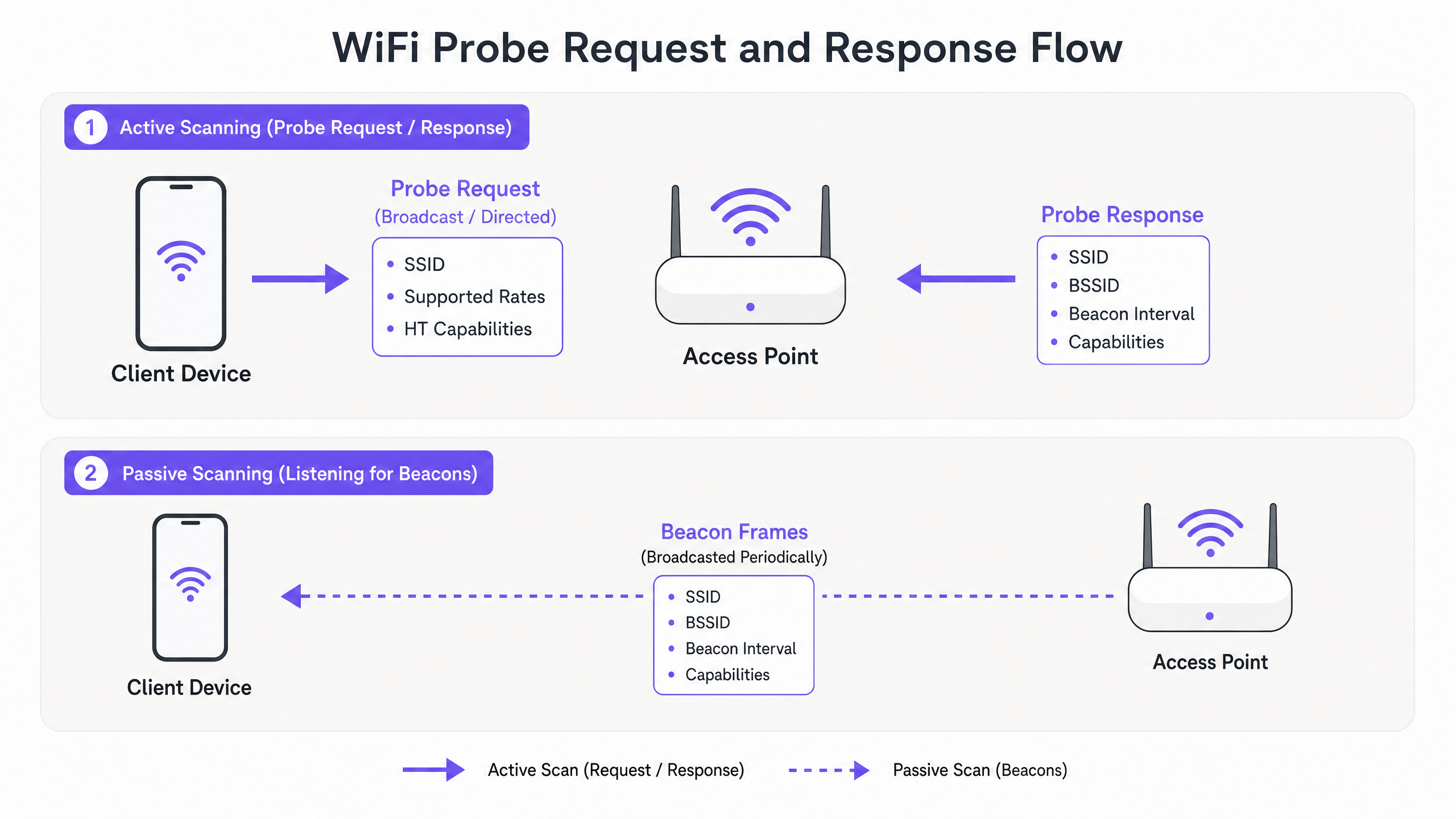
- প্যাসিভ স্ক্যানিং: ক্লায়েন্ট ডিভাইস তার রেডিওকে একটি নির্দিষ্ট চ্যানেলে টিউন করে এবং অ্যাক্সেস পয়েন্ট (AP) দ্বারা পর্যায়ক্রমে (সাধারণত প্রতি 100ms) সম্প্রচারিত বীকন ফ্রেমের জন্য শোনে। এই পদ্ধতি ব্যাটারির আয়ু সংরক্ষণ করে কিন্তু আবিষ্কারের বিলম্ব বাড়ায়।
- সক্রিয় স্ক্যানিং: ক্লায়েন্ট ডিভাইস সক্রিয়ভাবে বিভিন্ন চ্যানেলে প্রোব রিকোয়েস্ট ফ্রেম প্রেরণ করে এবং APs থেকে প্রোব রেসপন্স ফ্রেমের জন্য অপেক্ষা করে। এটি আবিষ্কারকে ত্বরান্বিত করে কিন্তু এয়ারটাইম এবং শক্তি খরচ করে।
ব্রডকাস্ট বনাম ডিরেক্টেড প্রোব রিকোয়েস্ট
সক্রিয় স্ক্যানিং দুই ধরনের প্রোব রিকোয়েস্ট ব্যবহার করে:
- ব্রডকাস্ট (ওয়াইল্ডকার্ড) প্রোব রিকোয়েস্ট: সার্ভিস সেট আইডেন্টিফায়ার (SSID) ফিল্ড নাল (দৈর্ঘ্য শূন্য) সেট করা হয়। ডিভাইসটি পরিসরের মধ্যে যেকোনো AP-তে সম্প্রচার করছে, কার্যকরভাবে জিজ্ঞাসা করছে, "কে আছে সেখানে?" এই ফ্রেম গ্রহণকারী সমস্ত AP, যদি তাদের SSID লুকানোর জন্য কনফিগার করা না থাকে, তাহলে একটি প্রোব রেসপন্স দিয়ে উত্তর দেবে।
- ডিরেক্টেড প্রোব রিকোয়েস্ট: SSID ফিল্ডে একটি নির্দিষ্ট নেটওয়ার্ক নাম থাকে। ডিভাইসটি তার পছন্দের নেটওয়ার্ক তালিকা (PNL) থেকে একটি পরিচিত নেটওয়ার্কের জন্য জিজ্ঞাসা করছে। শুধুমাত্র সেই নির্দিষ্ট SSID হোস্ট করা APs প্রতিক্রিয়া জানাবে। এই প্রক্রিয়াটি লুকানো নেটওয়ার্কগুলিতে স্বয়ংক্রিয়ভাবে সংযোগ করার চেষ্টা করা ডিভাইসগুলির জন্য অত্যন্ত গুরুত্বপূর্ণ।
একটি প্রোব রিকোয়েস্ট ফ্রেমের গঠন
একটি স্ট্যান্ডার্ড প্রোব রিকোয়েস্ট ফ্রেমে গুরুত্বপূর্ণ ইনফরমেশন এলিমেন্টস (IEs) থাকে যা AP-কে ক্লায়েন্টের ক্ষমতা সম্পর্কে অবহিত করে। মূল ক্ষেত্রগুলির মধ্যে রয়েছে:
- MAC হেডার: ফ্রেম কন্ট্রোল, ডিউরেশন, ডেস্টিনেশন অ্যাড্রেস (সাধারণত ব্রডকাস্ট অ্যাড্রেস
ff:ff:ff:ff:ff:ff), সোর্স অ্যাড্রেস (ক্লায়েন্টের MAC), এবং BSSID ধারণ করে। - SSID: লক্ষ্য নেটওয়ার্কের নাম (অথবা ব্রডকাস্টের জন্য নাল)।
- সাপোর্টেড রেটস: ক্লায়েন্ট যে মৌলিক এবং অপারেশনাল ডেটা রেট সমর্থন করে তা সংজ্ঞায়িত করে (যেমন, লিগ্যাসি 802.11b এর জন্য 1, 2, 5.5, 11 Mbps, আধুনিক OFDM রেট পর্যন্ত)।
- এক্সটেন্ডেড সাপোর্টেড রেটস: ক্লায়েন্ট দ্বারা সমর্থিত অতিরিক্ত ডেটা রেট।
- HT/VHT/HE ক্যাপাবিলিটিস: হাই থ্রুপুট (802.11n), ভেরি হাই থ্রুপুট (802.11ac), বা হাই এফিসিয়েন্সি (802.11ax/WiFi 6) বৈশিষ্ট্যগুলির জন্য সমর্থন নির্দেশ করে, যার মধ্যে স্পেশিয়াল স্ট্রিম এবং চ্যানেল প্রস্থ অন্তর্ভুক্ত।
পরবর্তী অ্যাসোসিয়েশন পর্যায়ে সর্বোত্তম সংযোগ প্যারামিটার নিয়ে আলোচনার জন্য APs-এর জন্য এই ক্ষমতাগুলি বোঝা অপরিহার্য।
MAC র্যান্ডমাইজেশনের প্রভাব
ঐতিহাসিকভাবে, প্রোব রিকোয়েস্টের সোর্স অ্যাড্রেস ছিল ডিভাইসের বিশ্বব্যাপী অনন্য, বার্ন-ইন MAC অ্যাড্রেস। এই স্থায়িত্ব ভেন্যু অপারেটরদের সংযোগহীন ডিভাইসগুলি ট্র্যাক করতে, ডওয়েল টাইম পরিমাপ করতে এবং শুধুমাত্র প্রোব রিকোয়েস্টগুলি প্যাসিভভাবে শুনে ফুটফল হিটম্যাপ তৈরি করতে অনুমতি দিত।
তবে, স্থায়ী শনাক্তকারীগুলির সম্প্রচার সম্পর্কিত গোপনীয়তার উদ্বেগ MAC র্যান্ডমাইজেশনের বাস্তবায়নের দিকে পরিচালিত করে।
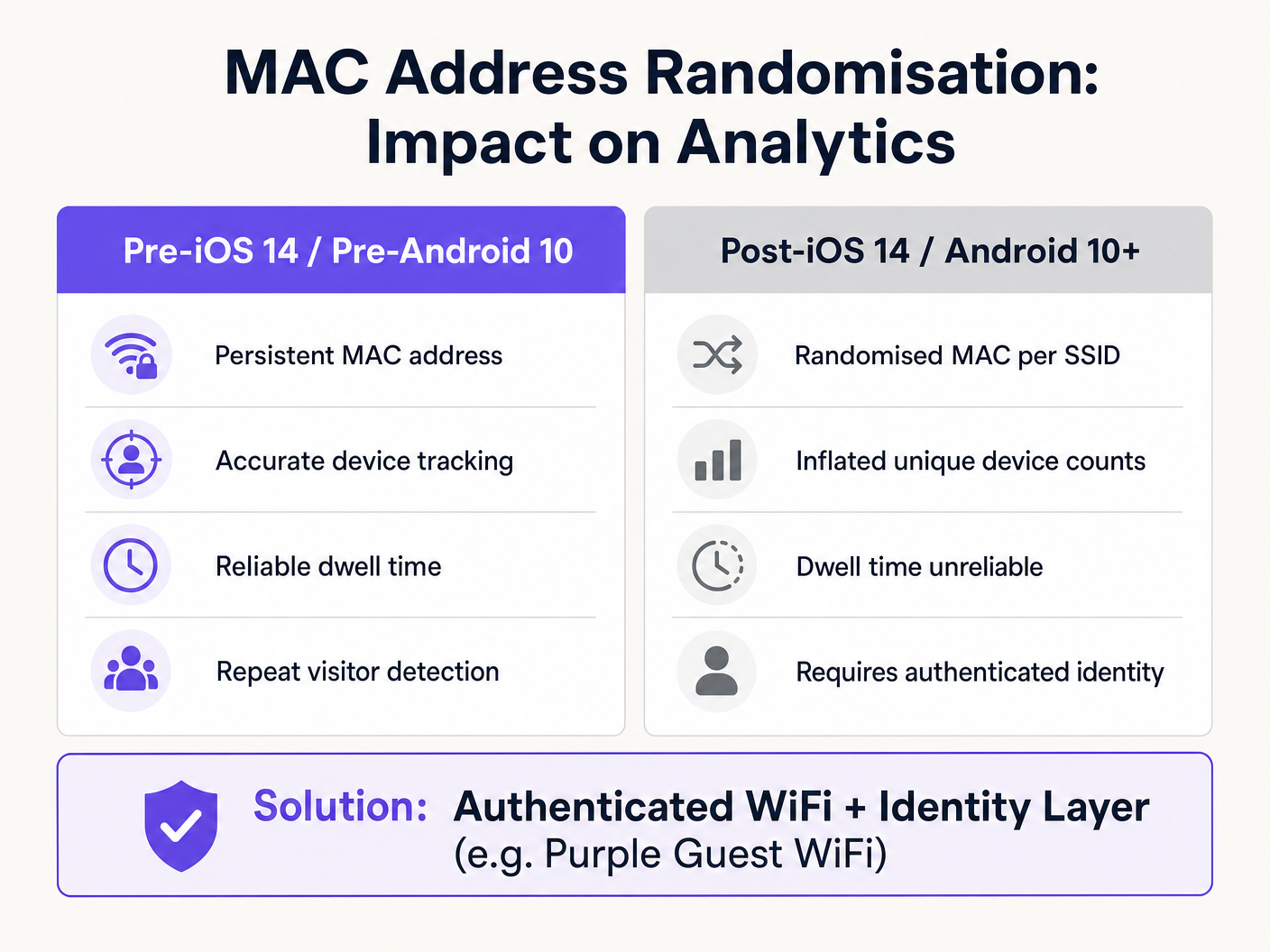
iOS 14 এবং Android 10-এ প্রবর্তিত, আধুনিক অপারেটিং সিস্টেমগুলি এখন প্রোব রিকোয়েস্ট প্রেরণ করার সময় একটি র্যান্ডমাইজড, স্থানীয়ভাবে পরিচালিত MAC অ্যাড্রেস তৈরি করে।
অপ্রমাণিত ট্র্যাকিংয়ের সমাপ্তি
অপারেশনাল প্রভাব গভীর:
- স্ফীত ডিভাইস গণনা: একটি একক ডিভাইস সময়ের সাথে একাধিক র্যান্ডমাইজড MAC অ্যাড্রেস তৈরি করতে পারে, যা ঐতিহ্যবাহী অ্যানালিটিক্স সিস্টেমে অনন্য ভিজিটর মেট্রিক্সকে কৃত্রিমভাবে স্ফীত করে।
- ভাঙ্গা ডওয়েল টাইম: একটি ডিভাইসের ভেন্যু জুড়ে যাত্রা ট্র্যাক করা অসম্ভব যদি তার শনাক্তকারী পরিদর্শনের মাঝখানে পরিবর্তিত হয়।
- পুনরাবৃত্ত ভিজিটর ডেটার ক্ষতি: একটি স্থায়ী শনাক্তকারী ছাড়া, প্রোব ডেটার মাধ্যমে একজন নতুন ভিজিটরকে একজন প্রত্যাবর্তনকারী ভিজিটর থেকে আলাদা করা অসম্ভব।
আইপরিচয়-চালিত সমাধান
বিশ্লেষণাত্মক নির্ভুলতা পুনরুদ্ধার করতে, ট্র্যাকিং দৃষ্টান্তকে লেয়ার ২ হার্ডওয়্যার শনাক্তকারী থেকে লেয়ার ৭ প্রমাণীকৃত পরিচয়ে স্থানান্তরিত করতে হবে। একটি শক্তিশালী Captive Portal বা নির্বিঘ্ন অনবোর্ডিং ফ্লো (যেমন How a wi fi assistant Enables Passwordless Access in 2026 ) বাস্তবায়নের মাধ্যমে, ভেন্যুগুলি একটি স্থায়ী, সম্মতিপ্রাপ্ত পরিচয় (যেমন, ইমেল, সামাজিক প্রোফাইল, বা লয়্যালটি আইডি) সংগ্রহ করে।
একবার একজন ব্যবহারকারী প্রমাণীকরণ করলে, Purple প্ল্যাটফর্ম বর্তমান MAC অ্যাড্রেসকে (যদি সেই নির্দিষ্ট SSID-এর জন্য র্যান্ডমাইজ করাও হয়) ব্যবহারকারীর স্থায়ী প্রোফাইলের সাথে সংযুক্ত করে। এটি নিশ্চিত করে যে পরবর্তী ভিজিট এবং গতিবিধি প্রমাণীকৃত পরিচয়ের বিরুদ্ধে সঠিকভাবে ট্র্যাক করা হয়, MAC র্যান্ডমাইজেশনের সীমাবদ্ধতা সম্পূর্ণরূপে এড়িয়ে যায়। এই পদ্ধতিটি How To Improve Guest Satisfaction: The Ultimate Playbook -এ বর্ণিত কৌশলগুলি বাস্তবায়নের জন্য অপরিহার্য।
বাস্তবায়ন নির্দেশিকা: উচ্চ-ঘনত্বের জন্য অপ্টিমাইজ করা
স্টেডিয়াম বা বড় খুচরা স্থানের মতো পরিবেশে, হাজার হাজার ডিভাইস থেকে আসা প্রোব অনুরোধের বিশাল পরিমাণ নেটওয়ার্ক কর্মক্ষমতাকে মারাত্মকভাবে হ্রাস করতে পারে। এই ঘটনাটি, যা Probe Storm নামে পরিচিত, মূল্যবান এয়ারটাইম খরচ করে, যার ফলে প্রকৃত ডেটা স্থানান্তরের জন্য কম ক্ষমতা থাকে।
প্রোব স্টর্ম প্রশমিত করা
নেটওয়ার্ক স্থপতিদের ম্যানেজমেন্ট ফ্রেম ওভারহেড পরিচালনার জন্য সক্রিয় কনফিগারেশন কৌশল বাস্তবায়ন করতে হবে:
১. প্রোব রেসপন্স দমন: APs কনফিগার করুন যাতে একটি নির্দিষ্ট থ্রেশহোল্ডের (যেমন, -75 dBm) নিচে Received Signal Strength Indicator (RSSI) সহ ডিভাইসগুলি থেকে ব্রডকাস্ট প্রোব অনুরোধগুলি উপেক্ষা করা হয়। যদি একটি ডিভাইস নির্ভরযোগ্য সংযোগ স্থাপনের জন্য খুব দূরে থাকে, তাহলে AP-এর তার প্রোবগুলিতে প্রতিক্রিয়া জানাতে এয়ারটাইম নষ্ট করা উচিত নয়। ২. নিম্ন ডেটা রেট নিষ্ক্রিয় করা: লিগ্যাসি ডেটা রেট (যেমন, 1, 2, 5.5, 11 Mbps) নিষ্ক্রিয় করে এবং সর্বনিম্ন বাধ্যতামূলক বেসিক রেট 12 Mbps বা 24 Mbps-এ সেট করে, ম্যানেজমেন্ট ফ্রেমগুলি (যা সর্বনিম্ন বেসিক রেটে স্থানান্তরিত হয়) উল্লেখযোগ্যভাবে কম এয়ারটাইম খরচ করে। ৩. ব্যান্ড স্টিয়ারিং: সক্ষম ক্লায়েন্টদের সক্রিয়ভাবে 5 GHz বা 6 GHz ব্যান্ডে পরিচালিত করুন। 2.4 GHz ব্যান্ডে সীমিত নন-ওভারল্যাপিং চ্যানেল রয়েছে এবং এটি প্রোব স্টর্ম থেকে সৃষ্ট ভিড়ের প্রতি অত্যন্ত সংবেদনশীল। ৪. SSID সীমিত করা: একটি AP দ্বারা সম্প্রচারিত প্রতিটি SSID-এর জন্য নিজস্ব বিকন ফ্রেম এবং প্রোব রেসপন্স প্রয়োজন। ম্যানেজমেন্ট ওভারহেড কমাতে SSID-এর সংখ্যাকে একেবারে ন্যূনতম (আদর্শভাবে প্রতি AP-তে তিনটির বেশি নয়) সীমাবদ্ধ করুন।
নিরাপত্তা এবং সম্মতি
নির্দেশিত প্রোবের গোপনীয়তা প্রকাশ
নির্দেশিত প্রোব অনুরোধগুলি একটি অনন্য নিরাপত্তা ঝুঁকি তৈরি করে। যেহেতু তারা পূর্বে সংযুক্ত নেটওয়ার্কগুলির নাম (PNL) সম্প্রচার করে, তাই এই ফ্রেমগুলি ক্যাপচারকারী একজন আক্রমণকারী একজন ব্যবহারকারীর গতিবিধির একটি প্রোফাইল তৈরি করতে পারে (যেমন, তাদের বাড়ির নেটওয়ার্ক, নিয়োগকর্তা, বা ঘন ঘন যাতায়াত করা ক্যাফেগুলি শনাক্ত করা)।
এছাড়াও, এটি ডিভাইসটিকে Evil Twin attacks-এর ঝুঁকিতে ফেলে। একজন আক্রমণকারী শিকারের PNL থেকে একটি SSID সম্প্রচার করে একটি দূষিত AP স্থাপন করতে পারে। শিকারের ডিভাইস, তার নির্দেশিত প্রোব রেসপন্সে পরিচিত SSID শনাক্ত করে, স্বয়ংক্রিয়ভাবে দূষিত AP-এর সাথে যুক্ত হতে পারে, যার ফলে ট্র্যাফিক ইন্টারসেপশনের ঝুঁকিতে পড়ে।
প্রশমন: WPA3-Enterprise বা WPA3-Enhanced Open (OWE) বাস্তবায়ন অ্যাসোসিয়েশনের পরে ইন্টারসেপশনের ঝুঁকি হ্রাস করে, তবে নেটওয়ার্ক হাইজিন (ব্যবহারকারীদের দ্বারা ম্যানুয়ালি পাবলিক নেটওয়ার্ক ভুলে যাওয়া) PNL প্রকাশের বিরুদ্ধে প্রাথমিক প্রতিরক্ষা হিসাবে রয়ে গেছে।
GDPR এবং বৈধ আগ্রহ
UK GDPR এবং EU GDPR-এর অধীনে, MAC অ্যাড্রেস সংগ্রহ করা—এমনকি যদি হ্যাশ করা বা র্যান্ডমাইজ করাও হয়—ব্যক্তিগত ডেটা প্রক্রিয়াকরণ হিসাবে গণ্য হতে পারে যদি এটি কোনও ব্যক্তির সাথে সংযুক্ত করা যায়। প্রোব-ভিত্তিক অ্যানালিটিক্স স্থাপন করার সময়, সংস্থাগুলিকে অবশ্যই:
- একটি স্পষ্ট আইনি ভিত্তি স্থাপন করুন (সাধারণত বেনামী ফুটফলের জন্য বৈধ আগ্রহ, অথবা লক্ষ্যযুক্ত বিপণনের জন্য সম্মতি)।
- দর্শকদের WiFi স্ক্যানিং চালু আছে তা জানিয়ে সুস্পষ্ট সাইনেজ বাস্তবায়ন করুন।
- একটি স্পষ্ট অপ্ট-আউট প্রক্রিয়া প্রদান করুন।
একটি প্রমাণীকৃত Guest WiFi মডেলে স্থানান্তরিত হওয়া সম্মতি প্রক্রিয়াকে সহজ করে, কারণ অনবোর্ডিং প্রক্রিয়ার সময় সুস্পষ্ট সম্মতি সংগ্রহ করা হয়।
ROI এবং ব্যবসায়িক প্রভাব
প্রোব অনুরোধগুলি বোঝা এবং পরিচালনা করা কেবল একটি প্রযুক্তিগত অনুশীলন নয়; এটি সরাসরি নীচের লাইনকে প্রভাবিত করে।
- নেটওয়ার্ক কর্মক্ষমতা: সঠিক প্রোব স্টর্ম প্রশমন সংযুক্ত ব্যবহারকারীদের জন্য উচ্চ থ্রুপুট এবং কম ল্যাটেন্সি নিশ্চিত করে, যা সরাসরি অতিথিদের সন্তুষ্টি এবং অপারেশনাল দক্ষতাকে প্রভাবিত করে।
- সঠিক অ্যানালিটিক্স: ত্রুটিপূর্ণ প্রোব-ভিত্তিক ট্র্যাকিং থেকে প্রমাণীকৃত পরিচয় স্তরে স্থানান্তরিত হওয়া নিশ্চিত করে যে বিপণন এবং অপারেশন দলগুলি নির্ভরযোগ্য ডেটার উপর ভিত্তি করে সিদ্ধান্ত নেয়। এটি প্রচারাভিযানের অ্যাট্রিবিউশন পরিমাপ, প্রকৃত ফুটফলের উপর ভিত্তি করে কর্মী স্তর অপ্টিমাইজ করা এবং লক্ষ্যযুক্ত ব্যস্ততার মাধ্যমে রাজস্ব বৃদ্ধি করার জন্য অত্যন্ত গুরুত্বপূর্ণ।
- ঝুঁকি প্রশমন: ম্যানেজমেন্ট ফ্রেমের সক্রিয় ব্যবস্থাপনা এবং গোপনীয়তা বিধিমালা মেনে চলা সংস্থাটিকে সম্মতি জরিমানা এবং সুনাম ক্ষয় থেকে রক্ষা করে।
ডিভাইস আবিষ্কারের মেকানিক্স আয়ত্ত করার মাধ্যমে, IT নেতারা এমন নেটওয়ার্ক তৈরি করতে পারেন যা কেবল স্থিতিস্থাপক এবং উচ্চ কার্যকারিতাসম্পন্ন নয়, বরং এন্টারপ্রাইজ ইন্টেলিজেন্সের জন্য মৌলিক সম্পদ হিসাবেও কাজ করে। অবস্থান-ভিত্তিক ট্র্যাকিং সম্পর্কে আরও তথ্যের জন্য, The Mechanics of WiFi Wayfinding: Trilateration and RSSI Explained পর্যালোচনা করুন।
মূল সংজ্ঞাসমূহ
Probe Request
A Layer 2 management frame transmitted by a client device to discover available 802.11 networks in its vicinity.
The fundamental mechanism for network discovery before a device authenticates or associates.
Probe Response
A management frame transmitted by an Access Point in reply to a Probe Request, containing network capabilities and configuration parameters.
Provides the client with the necessary information to initiate the association process.
MAC Randomisation
A privacy feature where a device generates a temporary, locally administered MAC address instead of its permanent hardware address when scanning for networks.
Renders legacy, unauthenticated footfall analytics inaccurate by inflating unique device counts.
Probe Storm
A condition in high-density environments where the sheer volume of probe requests and responses consumes a significant percentage of available airtime.
Causes severe network performance degradation, requiring specific AP configuration mitigations.
Preferred Network List (PNL)
A list maintained by a client device containing the SSIDs of networks it has previously connected to.
Devices broadcast these SSIDs in Directed Probe Requests, creating potential privacy and security risks.
RSSI (Received Signal Strength Indicator)
A measurement of the power present in a received radio signal.
Used in Probe Response Suppression to filter out requests from distant devices.
Management Frame
802.11 frames used to establish and maintain communications between clients and APs (e.g., Beacons, Probes, Authentication frames).
Unlike data frames, they carry network control information and must be carefully managed to preserve airtime.
Band Steering
A technique used by APs to encourage dual-band clients to connect to the less congested 5 GHz or 6 GHz bands rather than 2.4 GHz.
A key strategy for mitigating the impact of probe storms on legacy bands.
সমাধানকৃত উদাহরণসমূহ
A 400-store retail chain is experiencing severe WiFi performance degradation during peak weekend hours. The IT dashboard shows high channel utilisation on the 2.4 GHz band, but data throughput is low. How should the network architect address this?
- Conduct a packet capture to confirm the presence of a probe storm. 2. Implement Probe Response Suppression, configuring APs to ignore probe requests with an RSSI weaker than -75 dBm. 3. Disable legacy 802.11b data rates (1, 2, 5.5, 11 Mbps) to force management frames to transmit at higher speeds, consuming less airtime. 4. Enable aggressive band steering to push dual-band clients to 5 GHz.
A marketing director at a large conference centre reports that their footfall analytics dashboard shows 50,000 unique visitors, but ticket sales indicate only 15,000 attendees. What is causing this discrepancy and how can it be resolved?
The discrepancy is caused by MAC address randomisation. Unconnected devices are transmitting probe requests with rotating MAC addresses, causing the legacy analytics platform to count single devices multiple times. The solution is to deploy an authenticated Guest WiFi portal. By requiring users to log in (e.g., via email or social SSO), the venue ties analytics to a persistent identity rather than a rotating hardware identifier.
অনুশীলনী প্রশ্নসমূহ
Q1. You are designing the WiFi network for a 50,000-seat stadium. During a test event, you observe 60% channel utilisation on 2.4 GHz, but very little actual data traffic. Which configuration change will have the most immediate positive impact?
ইঙ্গিত: Consider how management frames are transmitted and how to reduce their footprint on the airtime.
মডেল উত্তর দেখুন
Disable the lowest mandatory basic data rates (1, 2, 5.5, 11 Mbps) and implement Probe Response Suppression for clients with an RSSI weaker than -75 dBm. This forces management frames to transmit faster (taking up less airtime) and stops the APs from responding to devices too far away to connect reliably.
Q2. A client requests a footfall tracking solution that does not require users to connect to the WiFi, citing a desire for 'frictionless analytics'. How should you advise them?
ইঙ্গিত: Factor in modern mobile OS privacy features and the limitations of Layer 2 tracking.
মডেল উত্তর দেখুন
Advise the client that unauthenticated, probe-based footfall tracking is no longer reliable due to MAC address randomisation in iOS 14+ and Android 10+. Unconnected devices will appear as multiple unique visitors, severely inflating the data. The recommended architecture is to deploy a seamless, authenticated Guest WiFi portal to capture persistent Layer 7 identities, ensuring accurate data and GDPR compliance.
Q3. An executive is concerned about the security implications of devices broadcasting their Preferred Network Lists (PNL). What is the specific attack vector they are worried about, and how is it executed?
ইঙ্গিত: Think about how an attacker might use the information contained in a Directed Probe Request.
মডেল উত্তর দেখুন
The executive is concerned about an Evil Twin attack. An attacker captures a Directed Probe Request containing an SSID from the device's PNL. The attacker then stands up a rogue access point broadcasting that exact SSID. Because the device trusts the network name, it may automatically associate with the rogue AP, allowing the attacker to intercept traffic or launch man-in-the-middle attacks.