
পাবলিক গেস্ট নেটওয়ার্কে আইনি দায়বদ্ধতা এবং কন্টেন্ট ফিল্টারিং
এই নির্দেশিকাটি আইটি ম্যানেজার, নেটওয়ার্ক আর্কিটেক্ট এবং CTO-দের পাবলিক গেস্ট WiFi নেটওয়ার্কে কন্টেন্ট ফিল্টারিং স্থাপনের জন্য একটি সুনির্দিষ্ট প্রযুক্তিগত এবং আইনি কাঠামো প্রদান করে। এতে GDPR, ইউকে অনলাইন সেফটি অ্যাক্ট ২০২৩ এবং PCI DSS-এর অধীনে নিয়ন্ত্রক বাধ্যবাধকতাগুলোর পাশাপাশি DNS ফিল্টারিং, Captive Portal অথেন্টিকেশন, অ্যাপ্লিকেশন-লেয়ার ফায়ারওয়ালিং এবং VLAN সেগমেন্টেশনের জন্য একটি বহুমুখী আর্কিটেকচার আলোচনা করা হয়েছে। হসপিটালিটি, রিটেইল, হেলথকেয়ার এবং ট্রান্সপোর্ট খাতের ভেন্যু অপারেটররা একটি আইনিভাবে সুরক্ষিত, উচ্চ-ক্ষমতাসম্পন্ন গেস্ট নেটওয়ার্ক তৈরি করার জন্য বাস্তবায়নযোগ্য পদক্ষেপ, বাস্তব-ক্ষেত্রের কেস স্টাডি এবং সিদ্ধান্ত গ্রহণের কাঠামো খুঁজে পাবেন।
এই গাইডটি শুনুন
পডকাস্ট ট্রান্সক্রিপ্ট দেখুন

কার্যনির্বাহী সারসংক্ষেপ
পাবলিক ভেন্যুগুলো তদারকি করা আইটি ম্যানেজার, নেটওয়ার্ক আর্কিটেক্ট এবং চিফ টেকনোলজি অফিসারদের (CTO) জন্য Guest WiFi স্থাপন করা একটি মৌলিক পরিচালনগত প্রয়োজনীয়তা। তবে, শক্তিশালী কন্টেন্ট ফিল্টারিং ছাড়া ইন্টারনেটে উন্মুক্ত অ্যাক্সেস প্রদান করা ভেন্যুটিকে মারাত্মক আইনি, আর্থিক এবং সুনামগত ঝুঁকির মুখে ফেলে। আপনি যখন পাবলিক ইন্টারনেট অ্যাক্সেস প্রদান করেন, তখন আপনার প্রতিষ্ঠান একটি ইন্টারনেট সার্ভিস প্রোভাইডার (ISP) এর ভূমিকা গ্রহণ করে। যদি আপনার পাবলিক IP অ্যাড্রেস থেকে কোনো ক্ষতিকারক বা অবৈধ ট্রাফিক — যেমন কপিরাইট লঙ্ঘন, পিয়ার-টু-পিয়ার (P2P) পাইরেসি, বা নিষিদ্ধ সামগ্রীতে অ্যাক্সেস — তৈরি হয়, তবে এর দায়ভার প্রায়শই ভেন্যু অপারেটরের ওপর বর্তায়।
এই নির্দেশিকাটি বাধ্যতামূলক কন্টেন্ট ফিল্টারিং বাস্তবায়নের জন্য একটি সুনির্দিষ্ট প্রযুক্তিগত কাঠামো প্রদান করে। আমরা সেফ হারবার (safe harbour) সুরক্ষা বজায় রাখা, নিয়ন্ত্রক সম্মতি নিশ্চিত করা (GDPR, ইউকে অনলাইন সেফটি অ্যাক্ট ২০২৩ এবং PCI DSS v4.0 সহ) এবং স্কেলে নেটওয়ার্কের কার্যক্ষমতা বজায় রাখার জন্য প্রয়োজনীয় আর্কিটেকচার অন্বেষণ করব। WiFi Analytics -এর সাথে শক্তিশালী ফিল্টারিং একীভূত করার মাধ্যমে, Retail , Hospitality , Healthcare এবং Transport খাতের ভেন্যুগুলো একটি নির্বিঘ্ন গেস্ট অভিজ্ঞতা বজায় রেখে ঝুঁকি হ্রাস করতে পারে।
প্রযুক্তিগত গভীর বিশ্লেষণ
আইনি প্রেক্ষাপট এবং সেফ হারবার
কন্টেন্ট ফিল্টারিংয়ের প্রাথমিক চালিকাশক্তি হলো পাবলিক WiFi-এর আইনি দায়বদ্ধতা। বেশিরভাগ বিচারব্যবস্থায়, ISP এবং পাবলিক WiFi প্রদানকারীরা "সেফ হারবার" (safe harbour) বিধান দ্বারা সুরক্ষিত থাকে — উদাহরণস্বরূপ, মার্কিন যুক্তরাষ্ট্রে ডিজিটাল মিলেনিয়াম কপিরাইট অ্যাক্ট (DMCA), অথবা ইইউ-তে ই-কমার্স নির্দেশিকা এবং এর পরবর্তী কাঠামোগুলো। তবে, এই সুরক্ষাগুলো স্পষ্টভাবে শর্তসাপেক্ষ। যোগ্য হওয়ার জন্য, প্রদানকারীদের অবশ্যই প্রমাণ করতে হবে যে তারা অবৈধ কার্যকলাপ প্রতিরোধ করতে যৌক্তিক প্রযুক্তিগত পদক্ষেপ গ্রহণ করেছে এবং প্রয়োজন হলে আইন প্রয়োগকারী সংস্থাকে সহায়তা করতে পারে।
একটি অডিট ট্রেইল এবং সক্রিয় ফিল্টারিং ছাড়া, কোনো ভেন্যু প্রমাণ করতে পারে না যে তারা যৌক্তিক পদক্ষেপ নিয়েছে, যা সেফ হারবার সুরক্ষাগুলোকে সম্পূর্ণরূপে বাতিল করে দেয়। এটি বিশেষ করে পাবলিক সেক্টর ডেপ্লয়মেন্ট এবং শিক্ষা প্রতিষ্ঠানের জন্য অত্যন্ত গুরুত্বপূর্ণ, যেখানে জবাবদিহিতার প্রয়োজনীয়তা আরও বেশি কঠোর। সুরক্ষামূলক-সংবেদনশীল পরিবেশে WiFi পরিচালনার প্রেক্ষাপটের জন্য, WiFi in Schools: The 2026 Administrator & IT Guide দেখুন।
ফিল্টার না করা নেটওয়ার্কের জন্য তিনটি প্রাথমিক আইনি ঝুঁকির ক্ষেত্র নিচে দেওয়া হলো। প্রথমত, P2P পাইরেসির মাধ্যমে কপিরাইট লঙ্ঘন: স্বত্বাধিকারীরা টরেন্ট প্রোটোকলের মাধ্যমে কপিরাইটযুক্ত ফাইল শেয়ার করা IP অ্যাড্রেসগুলো সনাক্ত করতে স্বয়ংক্রিয় মনিটরিং ব্যবহার করেন। ইউকে ডিজিটাল ইকোনমি অ্যাক্ট ২০১৭-এর মতো নিয়মাবলীর অধীনে, কোনো ভেন্যুর পাবলিক IP-এর সাথে সম্পর্কিত বারবার লঙ্ঘন সার্ভিসের গতি কমিয়ে দেওয়া, দেওয়ানি জরিমানা বা স্বত্বাধিকারীদের কাছ থেকে মামলার কারণ হতে পারে। দ্বিতীয়ত, ক্ষতিকারক বা অবৈধ কন্টেন্টে অ্যাক্সেস: ইউকে অনলাইন সেফটি অ্যাক্ট ২০২৩ ইন্টারনেট অ্যাক্সেস প্রদানকারীদের ওপর একটি কঠোর যত্নশীলতার দায়িত্ব (duty of care) অর্পণ করে। গুরুতর লঙ্ঘনের জন্য Ofcom ১৮ মিলিয়ন পাউন্ড বা বৈশ্বিক টার্নওভারের ১০% পর্যন্ত জরিমানা করতে পারে। যদি কোনো গেস্ট আপনার নেটওয়ার্কের মাধ্যমে অবৈধ সামগ্রী অ্যাক্সেস করেন এবং আপনি যদি ইন্ডাস্ট্রি-স্ট্যান্ডার্ড ব্লকিং (যেমন ইন্টারনেট ওয়াচ ফাউন্ডেশন ব্লকলিস্ট) বাস্তবায়ন না করে থাকেন, তবে আপনার প্রতিষ্ঠান কঠোর নিয়ন্ত্রক তদন্তের মুখোমুখি হবে। তৃতীয়ত, ডেটা গোপনীয়তা এবং লগিং সম্মতি: GDPR এবং ইউকে GDPR-এর অধীনে, সংগৃহীত যেকোনো নেটওয়ার্ক মেটাডেটা — IP লিজ, MAC অ্যাড্রেস, টাইমস্ট্যাম্প — ব্যক্তিগত ডেটা হিসেবে গণ্য হয়। ভেন্যুগুলোকে আইন প্রয়োগকারী সংস্থার জন্য সংযোগের লগ সংরক্ষণ করার আইনি বাধ্যবাকতা (সাধারণত ইউকে টেলিকমিউনিকেশন নিয়মাবলীর অধীনে ১২ মাস) এবং GDPR-এর ডেটা মিনিমাইজেশন নীতির মধ্যে ভারসাম্য বজায় রাখতে হবে।
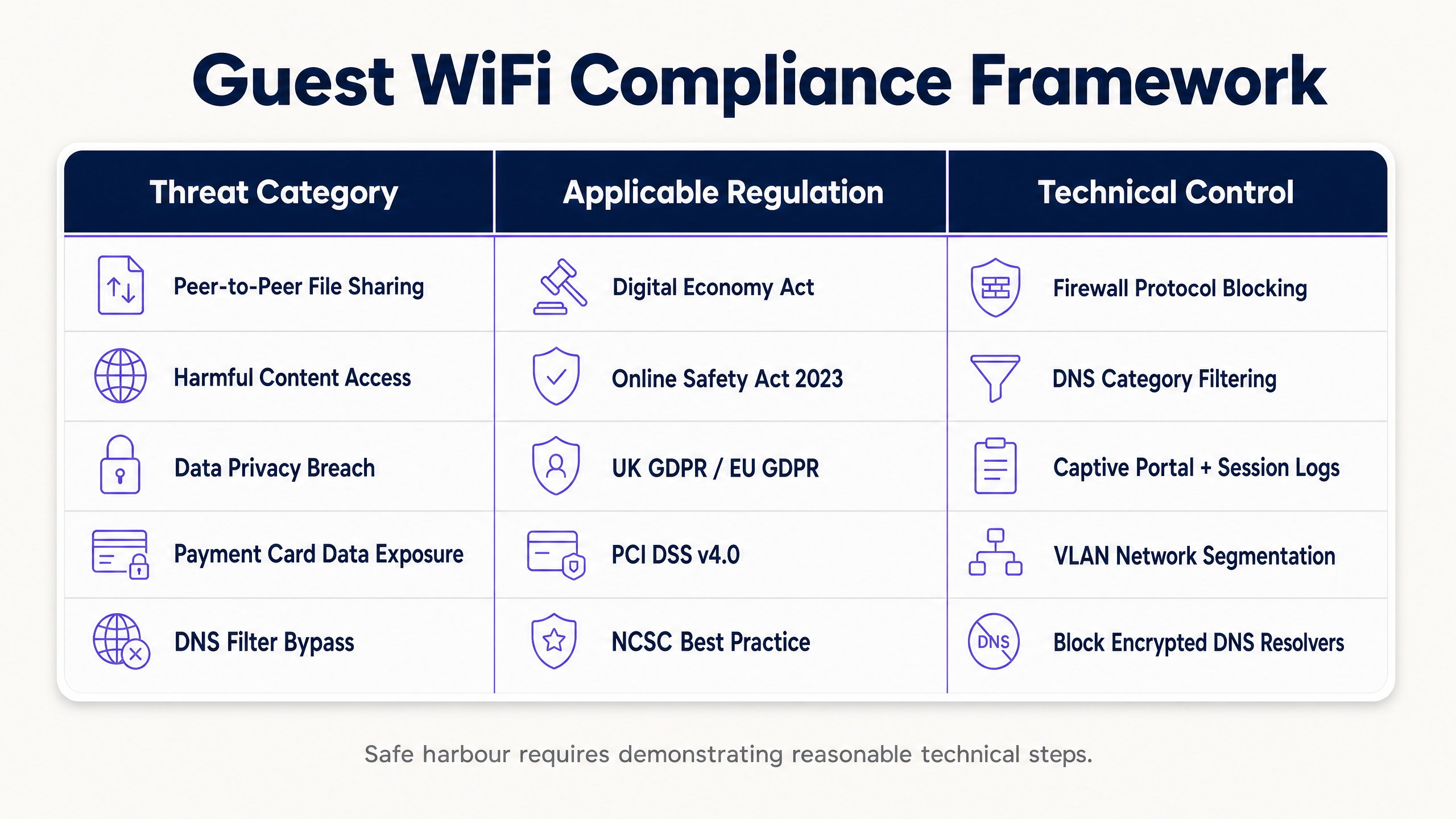
বহুমুখী নিরাপত্তা আর্কিটেকচার
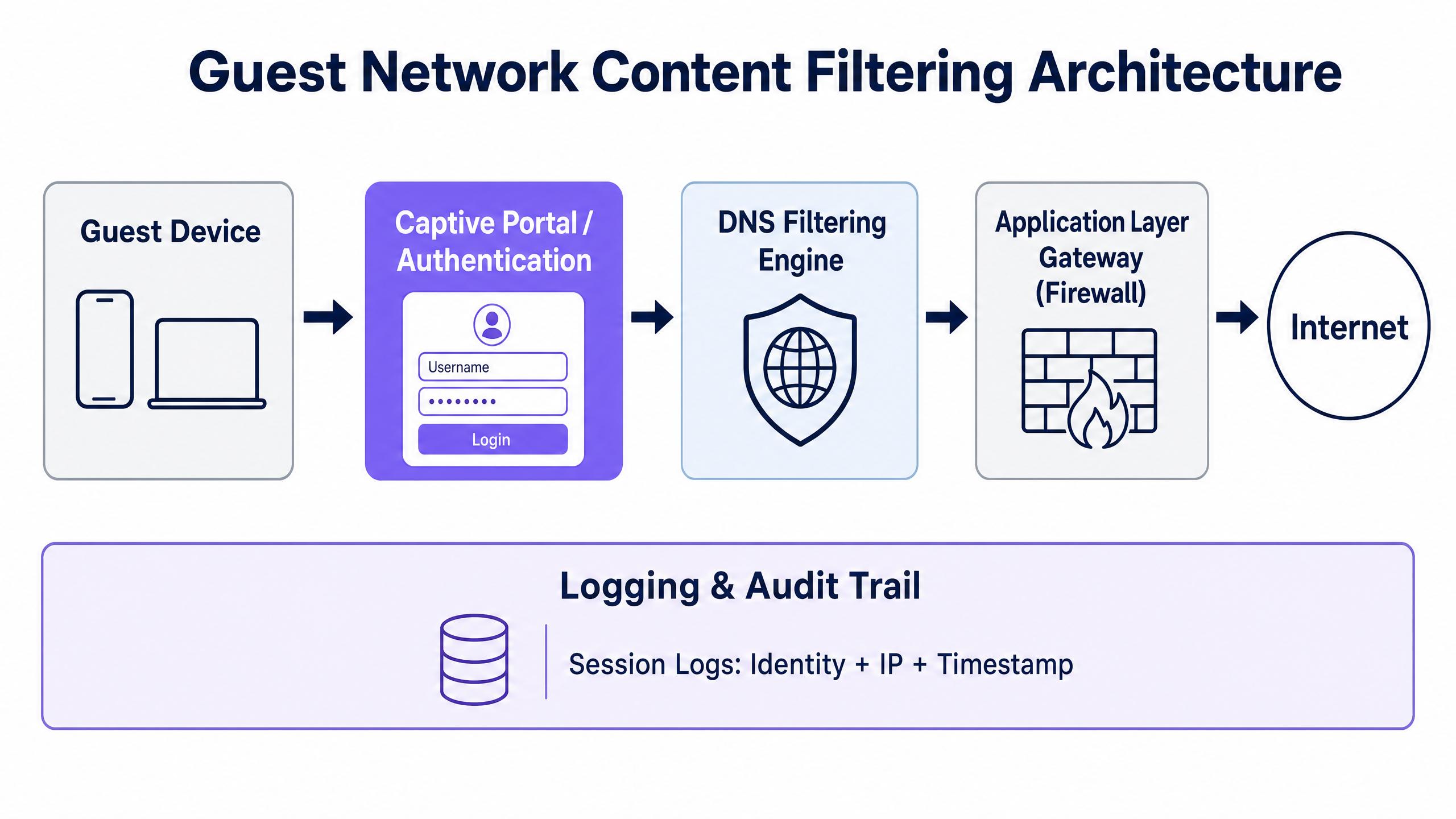
গেস্ট এবং এন্টারপ্রাইজ উভয়কে রক্ষা করার জন্য একটি গভীর প্রতিরক্ষামূলক (defence-in-depth) পদ্ধতির প্রয়োজন। একটি একক ফায়ারওয়াল নিয়ম বা মৌলিক DNS ফিল্টার মাঝারি ধরনের অভিজ্ঞ ব্যবহারকারীদের দ্বারা সহজেই বাইপাস করা যেতে পারে। একটি শক্তিশালী গেস্ট নেটওয়ার্ক আর্কিটেকচারকে অবশ্যই চারটি পৃথক নিয়ন্ত্রণ স্তরে একটি বহুমুখী নিরাপত্তা স্ট্যাক বাস্তবায়ন করতে হবে।
লেয়ার ১ — অথেন্টিকেশন এবং আইডেন্টিটি (Captive Portal): নেটওয়ার্ক অ্যাক্সেস দেওয়ার আগে, ব্যবহারকারীদের অবশ্যই একটি Captive Portal-এর মাধ্যমে অথেন্টিকেট করতে হবে। এটি একটি ডিভাইসের ফিজিক্যাল MAC অ্যাড্রেস এবং এর নির্ধারিত লোকাল IP লিজকে একটি যাচাইকৃত আইডেন্টিটির সাথে যুক্ত করে — যেমন একটি SMS-যাচাইকৃত ফোন নম্বর, ইমেল ঠিকানা বা সোশ্যাল মিডিয়া প্রোফাইল। এই প্রক্রিয়াটি ভেন্যু থেকে ব্যক্তিগত ব্যবহারকারীর ওপর আইনি দায়ভার স্থানান্তরের জন্য প্রয়োজনীয় গুরুত্বপূর্ণ অডিট ট্রেইল স্থাপন করে। উচ্চতর নিরাপত্তা নিশ্চিতকরণের প্রয়োজন এমন এন্টারপ্রাইজ পরিবেশের জন্য, একটি Network Access Control (NAC) solution একীভূত করা বা 802.1X authentication with Cloud RADIUS বাস্তবায়ন করা নিশ্চিত করে যে কেবল অনুমোদিত, নীতি-সম্মত ডিভাইসগুলোই সংযোগ করতে পারে।
লেয়ার ২ — DNS-লেয়ার ফিল্টারিং: নেটওয়ার্কের প্রান্তে ক্ষতিকারক কন্টেন্ট ব্লক করার জন্য DNS ফিল্টারিং হলো সবচেয়ে স্কেলযোগ্য এবং কম-লেটেন্সি পদ্ধতি। যখন একটি গেস্ট ডিভাইস কোনো ডোমেন রেজোলিউশনের অনুরোধ করে, তখন অনুরোধটি একটি সুরক্ষিত, ক্লাউড-ভিত্তিক DNS রিজলভারের কাছে পাঠানো হয়। রিজলভারটি কন্টেন্টের ধরন (প্রাপ্তবয়স্ক, জুয়া, P2P, ম্যালওয়্যার, ফিশিং) দ্বারা শ্রেণীবদ্ধ একটি রিয়েল-টাইম থ্রেট ইন্টেলিজেন্স ডেটাবেসের সাথে ডোমেনটি পরীক্ষা করে। যদি ডোমেনটি কোনো ব্লক করা বিভাগের অধীনে পড়ে, তবে রিজলভারটি একটি লোকাল ব্লক পেজের ঠিকানা ফেরত পাঠায়, যা সংযোগটি স্থাপন হতে বাধা দেয়। স্টেডিয়াম বা বড় রিটেইল এস্টেটের মতো উচ্চ-থ্রুপুট ডেপ্লয়মেন্টের জন্য, লোকাল ক্যাশিং সহ ক্লাউড-ভিত্তিক DNS ফিল্টারিং অত্যন্ত নগণ্য লেটেন্সি তৈরি করে — সাধারণত ২০ মিলিসেকেন্ডের কম।
লেয়ার ৩ — অ্যাপ্লিকেশন-লেয়ার গেটওয়ে (নেক্সট-জেনারেশন ফায়ারওয়াল): যেহেতু DNS ফিল্টারিং কেবল ডোমেন নাম ব্লক করে, তাই ব্যবহারকারীরা সরাসরি পরিচিত IP অ্যাড্রেসে সংযোগ করে বা এনক্রিপ্ট করা DNS টানেল ব্যবহার করে এটি বাইপাস করতে পারে।। তাই ব্যবহৃত পোর্ট বা DNS সার্ভার নির্বিশেষে BitTorrent, Tor এবং সাধারণ VPN সিগনেচারের মতো নির্দিষ্ট প্রোটোকলগুলো সনাক্ত এবং ব্লক করতে নেটওয়ার্ক গেটওয়েকে অবশ্যই deep packet inspection (DPI) ব্যবহার করে অ্যাপ্লিকেশন-লেয়ার ফিল্টারিং প্রয়োগ করতে হবে। DPI থ্রুপুট ওভারহেড তৈরি করে, তাই এটি সমস্ত ট্রাফিকের পরিবর্তে কেবল উচ্চ-ঝুঁকিপূর্ণ প্রোটোকল ক্যাটাগরিতে বেছে বেছে প্রয়োগ করা উচিত।
Layer 4 — Network Segmentation (VLANs): ডেডিকেটেড VLAN এবং কঠোর অ্যাক্সেস কন্ট্রোল লিস্ট (ACL)-এর মাধ্যমে গেস্ট নেটওয়ার্ককে অবশ্যই কর্পোরেট রিসোর্স, পয়েন্ট-অফ-সেল (POS) সিস্টেম এবং ব্যাক-অফ-হাউস ইনফ্রাস্ট্রাকচার থেকে সম্পূর্ণ আলাদা রাখতে হবে। PCI DSS v4.0-এর অধীনে, গেস্ট ট্রাফিক যদি কার্ডহোল্ডার ডেটা এনভায়রনমেন্ট (CDE) থেকে কঠোরভাবে আলাদা করা না হয়, তবে সম্পূর্ণ গেস্ট নেটওয়ার্কটি PCI অডিটের আওতায় চলে আসে, যা কমপ্লায়েন্স খরচ এবং অডিটের জটিলতা নাটকীয়ভাবে বাড়িয়ে দেয়।
ইমপ্লিমেন্টেশন গাইড
ধাপ ১: নেটওয়ার্ক সেগমেন্টেশন এবং VLAN কনফিগারেশন
সমস্ত কোর সুইচ এবং ওয়্যারলেস কন্ট্রোলারে গেস্ট ট্রাফিকের জন্য একটি ডেডিকেটেড VLAN কনফিগার করুন। গেস্ট VLAN এবং যেকোনো অভ্যন্তরীণ কর্পোরেট VLAN-এর মধ্যে ইন্টার-VLAN রাউটিং নিষ্ক্রিয় করা আছে তা নিশ্চিত করুন। আপনার ফায়ারওয়ালে একটি অ্যাক্সেস কন্ট্রোল লিস্ট (ACL) প্রয়োগ করুন যা গেস্ট সাবনেটকে যেকোনো RFC 1918 প্রাইভেট IP রেঞ্জ অ্যাক্সেস করা থেকে স্পষ্টভাবে ব্লক করে, পাশাপাশি ইন্টারনেটে অন্য সমস্ত আউটবাউন্ড ট্রাফিকের অনুমতি দেয়। এই একটিমাত্র কনফিগারেশন ধাপ গেস্ট নেটওয়ার্ককে PCI DSS-এর আওতামুক্ত করে এবং কোনো গেস্ট ডিভাইস হ্যাক বা আপোস হওয়ার ক্ষেত্রে ল্যাটারাল মুভমেন্ট প্রতিরোধ করে।
ধাপ ২: DNS ফিল্টারিং ডিপ্লয়মেন্ট এবং DoH মিটিগেশন
গেস্টরা যাতে DNS over HTTPS (DoH) বা DNS over TLS (DoT) ব্যবহার করে DNS-লেয়ার ফিল্টার বাইপাস করতে না পারে, সেজন্য নেটওয়ার্ক গেটওয়েকে অবশ্যই সমস্ত DNS ট্রাফিককে নির্ধারিত সুরক্ষিত রিজলভারের মাধ্যমে পাঠাতে বাধ্য করতে হবে। গেস্ট VLAN থেকে সমস্ত আউটবাউন্ড UDP/TCP পোর্ট ৫৩ রিকোয়েস্ট ইন্টারসেপ্ট করতে এবং সেগুলোকে আপনার সুরক্ষিত DNS ফিল্টারিং IP-তে রিডাইরেক্ট করতে একটি ডেস্টিনেশন NAT (DNAT) রুল কনফিগার করুন। DoH মিটিগেশনের জন্য, আউটবাউন্ড TCP পোর্ট ৮৫৩ (DoT) ব্লক করুন এবং ফায়ারওয়ালের বিল্ট-ইন DNS over HTTPS অ্যাপ্লিকেশন ব্লকিং ক্যাটাগরি অথবা আপনার থ্রেট ইন্টেলিজেন্স প্রোভাইডার দ্বারা পরিচালিত একটি কিউরেটেড IP ব্লকলিস্ট ব্যবহার করে পোর্ট ৪৪৩-এর মাধ্যমে পরিচিত পাবলিক DoH রিজলভার IP-তে অ্যাক্সেস সীমিত করুন।
ধাপ ৩: Captive Portal এবং সেশন লগিং সেটআপ
আপনার ওয়্যারলেস অ্যাক্সেস পয়েন্টগুলোকে — যেমন Cisco Wireless APs — একটি সেন্ট্রালাইজড Captive Portal প্ল্যাটফর্মের সাথে ইন্টিগ্রেট করুন। পোর্টালটিকে অবশ্যই টার্মস অফ সার্ভিস এবং প্রাইভেসি পলিসির জন্য ব্যবহারকারীর স্পষ্ট সম্মতি গ্রহণ করতে হবে। GDPR এবং UK GDPR-এর অধীনে, একটি স্প্লিট-রিটেনশন শিডিউল বজায় রাখুন: আইন প্রয়োগকারী সংস্থার ডেটা সংরক্ষণের প্রয়োজনীয়তা মেনে চলার জন্য একটি এনক্রিপ্ট করা, অ্যাক্সেস-নিয়ন্ত্রিত স্টোরে ১২ মাসের জন্য কানেকশন মেটাডেটা লগ (MAC অ্যাড্রেস, অ্যাসাইন করা IP, সেশন টাইমস্ট্যাম্প) সংরক্ষণ করুন, যেখানে কোনো ব্যবহারকারী সম্মতি প্রত্যাহার করলে বা মুছে ফেলার অনুরোধ জানালে মার্কেটিং প্রোফাইল ডেটা অবিলম্বে মুছে ফেলতে হবে।
ধাপ ৪: কনটেন্ট ফিল্টারিং পলিসি কনফিগারেশন
ভেন্যুর ধরণের উপর ভিত্তি করে একটি টিয়ার্ড কনটেন্ট ফিল্টারিং পলিসি ডিপ্লয় করুন। ন্যূনতম পক্ষে, সমস্ত পাবলিক গেস্ট নেটওয়ার্কে অবশ্যই নিম্নলিখিত ক্যাটাগরিগুলো ব্লক করতে হবে: ম্যালওয়্যার এবং ফিশিং ডোমেন, পিয়ার-টু-পিয়ার ফাইল শেয়ারিং প্রোটোকল, অ্যাডাল্ট ও স্পষ্ট কনটেন্ট এবং পরিচিত প্রক্সি ও অ্যানোনিমাইজার সার্ভিস। পরিবার বা অপ্রাপ্তবয়স্কদের পরিষেবা দেয় এমন ভেন্যুগুলো — যেমন বিনোদন কেন্দ্র, লাইব্রেরি বা পরিবহন হাব — রিজলভার স্তরে DNS কোয়েরি রিরাইট করে সার্চ ইঞ্জিনের SafeSearch মোড প্রয়োগ করা উচিত এবং Friendly WiFi সার্টিফিকেশন স্ট্যান্ডার্ড পূরণের জন্য Internet Watch Foundation (IWF) URL ব্লকলিস্টের সাথে ইন্টিগ্রেট করা উচিত।
সেরা অনুশীলনসমূহ
Friendly WiFi স্ট্যান্ডার্ড মেনে চলা
পরিবার, স্থানীয় কর্তৃপক্ষ বা শিক্ষাপ্রতিষ্ঠানের জন্য উন্মুক্ত পাবলিক ভেন্যুগুলোর জন্য Friendly WiFi সার্টিফিকেশন অর্জন করার জোরালো সুপারিশ করা হয়। UK Council for Child Internet Safety (UKCCIS)-এর সহযোগিতায় তৈরি এই স্ট্যান্ডার্ডটি জনসাধারণকে আশ্বস্ত করে যে আপনার গেস্ট নেটওয়ার্ক অবৈধ উপাদান এবং স্পষ্ট কনটেন্টে অ্যাক্সেস সক্রিয়ভাবে ব্লক করে। ভেন্যুর প্রবেশদ্বারে এবং Captive Portal স্প্ল্যাশ পেজে Friendly WiFi Approved প্রতীকটি প্রদর্শন করা সরাসরি গ্রাহকের বিশ্বাস বাড়ায় এবং ভেন্যুটিকে প্রতিযোগীদের থেকে আলাদা করে।
কনটেন্ট ফিল্টারিং পলিসি ম্যাট্রিক্স
IT ম্যানেজারদের ভেন্যুর ধরণ এবং ব্যান্ডউইথ ক্ষমতার উপর ভিত্তি করে একটি টিয়ার্ড কনটেন্ট ফিল্টারিং পলিসি ডিপ্লয় করা উচিত:
| ভেন্যুর ধরণ | প্রধান ফোকাস | বাধ্যতামূলক ব্লক ক্যাটাগরি | ঐচ্ছিক / ব্যান্ডউইথ কন্ট্রোল |
|---|---|---|---|
| রিটেইল ও মল | সিকিউরিটি ও কমপ্লায়েন্স | ম্যালওয়্যার, ফিশিং, অ্যাডাল্ট, P2P | হাই-ব্যান্ডউইথ ভিডিও স্ট্রিমিং সীমিত করা |
| হসপিটালিটি ও হোটেল | পারফরম্যান্স ও লায়াবিলিটি | ম্যালওয়্যার, P2P পাইরেসি, অ্যাডাল্ট | সেশন প্রতি ডাইনামিক ব্যান্ডউইথ থ্রটলিং |
| হেলথকেয়ার ও ক্লিনিক | প্রাইভেসি ও সেফগার্ডিং | ম্যালওয়্যার, অ্যাডাল্ট, জুয়া, P2P | VPN টানেল সম্পূর্ণ ব্লক করা |
| স্কুল ও কলেজ | চাইল্ড সেফগার্ডিং | অ্যাডাল্ট, ভায়োলেন্স, প্রক্সি/VPN, P2P | কঠোর অ্যাপ্লিকেশন কন্ট্রোল, সোশ্যাল মিডিয়া লিমিট |
| স্টেডিয়াম ও অ্যারেনা | থ্রুপুট ও কমপ্লায়েন্স | ম্যালওয়্যার, P2P, অ্যাডাল্ট | ডিভাইস প্রতি কঠোর ব্যান্ডউইথ ক্যাপ |
সেন্ট্রালাইজড মাল্টি-সাইট পলিসি ম্যানেজমেন্ট
একাধিক ভেন্যুতে পরিচালিত প্রতিষ্ঠানগুলোর জন্য — যেমন হোটেল চেইন, রিটেইল এস্টেট বা স্থানীয় কর্তৃপক্ষ — সেন্ট্রালাইজড পলিসি ম্যানেজমেন্ট অত্যন্ত জরুরি। সমস্ত অ্যাক্সেস পয়েন্ট এবং গেটওয়েতে একযোগে পলিসি আপডেট পাঠানোর জন্য একটি সিঙ্গেল প্যান অফ গ্লাস (single pane of glass) পুরো এস্টেট জুড়ে সামঞ্জস্যপূর্ণ কমপ্লায়েন্স নিশ্চিত করে। সেন্ট্রালাইজড ম্যানেজমেন্ট ছাড়া পরিচালিত যেকোনো ভেন্যু মূলত একটি অডিট না করা নেটওয়ার্ক চালাচ্ছে, যা কোনো নিয়ন্ত্রক তদন্তে সমর্থনযোগ্য নয়।
ট্রাবলশুটিং এবং ঝুঁকি প্রশমন
সমস্যা ১: ব্যবহারকারীরা VPN-এর মাধ্যমে ফিল্টার বাইপাস করছেন
কমার্শিয়াল VPN ক্লায়েন্ট ব্যবহারকারী গেস্টরা তাদের ট্রাফিক এন্ড-টু-এন্ড এনক্রিপ্ট করে, যা DNS এবং অ্যাপ্লিকেশন-লেয়ার ফিল্টার উভয়কেই বাইপাস করে। এর প্রশমন কৌশল হলো আপনার Next-Generation Fireগেটওয়েতে সাধারণ VPN প্রোটোকলগুলো প্রতিরোধ এবং ব্লক করুন। তবে, এটি মনে রাখা দরকার যে একজন গেস্ট সফলভাবে VPN ব্যবহার করার অর্থ হলো তাদের ট্রাফিক আপনার IP ঠিকানা থেকে নয়, বরং VPN প্রদানকারীর IP ঠিকানা থেকে বের হচ্ছে। অনেক ক্ষেত্রে, এটি আসলে আপনার ঝুঁকি বাড়ানোর পরিবর্তে কমিয়ে দেয়, কারণ দায়বদ্ধতা VPN প্রদানকারীর ওপর স্থানান্তরিত হয়।
সমস্যা ২: বৈধ ব্যবসায়িক অ্যাপ্লিকেশনগুলো অতিরিক্ত ব্লক করা
আক্রমণাত্মক ফিল্টারিং নীতিগুলো প্রায়শই বৈধ এন্টারপ্রাইজ SaaS প্ল্যাটফর্মগুলোকে ব্লক করে দেয়, যার ফলে কর্পোরেট গেস্টরা সংযোগ ব্যর্থতার কথা রিপোর্ট করেন। এর সমাধান হলো প্রয়োজনীয় এন্টারপ্রাইজ ডোমেনগুলোর — Microsoft 365, Google Workspace, Zoom, Salesforce এবং অনুরূপ প্ল্যাটফর্ম — একটি কিউরেটেড হোয়াইটলিস্ট বজায় রাখা যা এই কঠোর ফিল্টারিং বিভাগগুলোকে বাইপাস করে। কর্পোরেট VPN এন্ডপয়েন্টগুলোতে অ্যাক্সেসের প্রয়োজন এমন প্রমাণীকৃত ব্যবসায়িক ক্লায়েন্টদের জন্য কম কঠোর ফিল্টারিং সহ একটি পৃথক "Corporate Guest" SSID মোতায়েন করার কথা বিবেচনা করুন।
সমস্যা ৩: MAC অ্যাড্রেস র্যান্ডমাইজেশনের কারণে অডিট ট্রেইল ব্যাহত হওয়া
আধুনিক মোবাইল অপারেটিং সিস্টেমগুলো (iOS 14+, Android 10+) প্রতিটি নতুন নেটওয়ার্ক সংযোগে ডিভাইসের MAC অ্যাড্রেস র্যান্ডমাইজ করে, যা স্থায়ী ডিভাইস ট্র্যাকিং প্রতিরোধ করে। এর সমাধান হলো হার্ডওয়্যার MAC অ্যাড্রেসের পরিবর্তে Captive Portal সেশন টোকেনের ওপর ভিত্তি করে অডিট ট্রেইল তৈরি করা। যখন একজন ব্যবহারকারী পোর্টালের মাধ্যমে প্রমাণীকরণ করেন, তখন তাদের যাচাইকৃত পরিচয় তাদের সক্রিয় DHCP লিজ এবং সেশন ID-র সাথে যুক্ত হয়। যদি MAC অ্যাড্রেস পরিবর্তিত হয়, তবে ব্যবহারকারীকে অবশ্যই Captive Portal-এর মাধ্যমে পুনরায় প্রমাণীকরণ করতে হবে, যা একটি নতুন বৈধ লগ এন্ট্রি তৈরি করে।
সমস্যা ৪: "সেট অ্যান্ড ফরগেট" নীতিগত ব্যর্থতা
থ্রেট ইন্টেলিজেন্স ডেটাবেসগুলো ক্রমাগত আপডেট হয়। একটি কন্টেন্ট ফিল্টারিং নীতি যা মোতায়েন করার সময় ব্যাপক ছিল, তা কয়েক সপ্তাহের মধ্যে হাজার হাজার নতুন নিবন্ধিত ক্ষতিকারক ডোমেন মিস করতে পারে। আপনার DNS ফিল্টারিং প্রদানকারী যাতে স্বয়ংক্রিয়, রিয়েল-টাইম থ্রেট ফিড আপডেট অফার করে তা নিশ্চিত করুন এবং ব্লক করা ও হোয়াইটলিস্ট করা বিভাগগুলো এখনও ভেন্যুর অপারেশনাল প্রয়োজনীয়তা এবং বর্তমান থ্রেট ল্যান্ডস্কেপের সাথে সামঞ্জস্যপূর্ণ কিনা তা মূল্যায়ন করতে একটি ত্রৈমাসিক নীতি পর্যালোচনার সময়সূচী নির্ধারণ করুন।
ROI এবং ব্যবসায়িক প্রভাব
গেস্ট নেটওয়ার্কগুলোতে শক্তিশালী কন্টেন্ট ফিল্টারিং এবং আইনি কমপ্লায়েন্স ফ্রেমওয়ার্ক বাস্তবায়ন করা কেবল ঝুঁকি কমানোর বাইরেও বাস্তব অপারেশনাল এবং আর্থিক রিটার্ন প্রদান করে।
ব্যান্ডউইথ অপ্টিমাইজেশন এবং খরচ সাশ্রয়: ফিল্টার না করা গেস্ট নেটওয়ার্কগুলো প্রায়শই ব্যবহারকারীদের দ্বারা P2P প্রোটোকল চালানো বা ক্রমাগত হাই-ডেফিনিশন ভিডিও স্ট্রিম করার মাধ্যমে অপব্যবহৃত হয়। সক্রিয়ভাবে P2P নেটওয়ার্কগুলো ব্লক করে এবং অপ্রয়োজনীয় স্ট্রিমিংサービスগুলোর গতি সীমিত করে, ভেন্যুগুলো তাদের মোট নেটওয়ার্ক ব্যান্ডউইথের ৪০% পর্যন্ত পুনরুদ্ধার করতে পারে। এই অপ্টিমাইজেশন সরাসরি ব্যয়বহুল লিজড লাইন আপগ্রেড কেনার প্রয়োজনীয়তাকে বিলম্বিত বা দূর করে, যা পুনরাবৃত্তিমূলক টেলিকমিউনিকেশন খরচে বার্ষিক হাজার হাজার পাউন্ড সাশ্রয় করে।
আইনি প্রতিরক্ষা এবং দায়বদ্ধতার ঢাল: একটি একক কপিরাইট লঙ্ঘনের মামলা বা অনলাইন সেফটি অ্যাক্টের অধীনে একটি নিয়ন্ত্রক তদন্তের আর্থিক পরিণতি মারাত্মক হতে পারে। একটি সম্পূর্ণ অডিট করা, ফিল্টার করা নেটওয়ার্ক একটি রক্ষণাত্মক সেফ হারবার ঢাল প্রদান করে। যদি কোনো অবৈধ কার্যকলাপ সনাক্ত করা হয়, তবে ভেন্যুটি আইন প্রয়োগকারী সংস্থার অনুরোধের সাথে কমপ্লায়েন্স প্রদর্শনের জন্য অবিলম্বে নিরাপদ, বেনামী সংযোগ লগ সরবরাহ করতে পারে, যা ব্যবসা থেকে দায়বদ্ধতা সরিয়ে দেয় এবং বিশ্বব্যাপী বার্ষিক টার্নওভারের ৪% পর্যন্ত GDPR জরিমানা এড়ায়।
উন্নত ব্র্যান্ডের সুনাম এবং গেস্টের আস্থা: আধুনিক গ্রাহকদের জন্য, ডিজিটাল নিরাপত্তা একটি মূল পার্থক্যকারী উপাদান। আপনার ভেন্যুর প্রবেশদ্বারে বা আপনার Captive Portal স্প্ল্যাশ পেজে Friendly WiFi সার্টিফিকেশন প্রদর্শন করা পরিবার, কর্পোরেট ক্লায়েন্ট এবং পাবলিক সেক্টর পার্টনারদের আশ্বস্ত করে যে আপনার ডিজিটাল পরিবেশ নিরাপদ এবং পেশাদারভাবে পরিচালিত। এই আস্থা সরাসরি বর্ধিত ডওয়েল টাইম (অবস্থানের সময়), উচ্চতর গেস্ট সন্তুষ্টির স্কোর এবং আপনার খুচরা বা আতিথেয়তা এস্টেট জুড়ে শক্তিশালী ব্র্যান্ড আনুগত্যে রূপান্তরিত হয়।
তথ্যসূত্র
[1] ইউকে পার্লামেন্ট। ডিজিটাল ইকোনমি অ্যাক্ট ২০১৭। Legislation.gov.uk ।
[2] ইউএস কপিরাইট অফিস। ডিজিটাল মিলেনিয়াম কপিরাইট অ্যাক্ট (DMCA)। Copyright.gov ।
[3] Purple.ai। স্কুলে WiFi: ২০২৬ অ্যাডমিনিস্ট্রেটর এবং আইটি গাইড। /blog/wifi-in-schools ।
[4] Friendly WiFi। আপনার পাবলিক WiFi কি নিরাপদ? অনলাইন সেফটি অ্যাক্ট বোঝা। FriendlyWiFi.com ।
[5] Spotipo। আপনার Captive Portals কি আইনিসম্মত? অঞ্চলভেদে GDPR, ডেটা ধারণ এবং গোপনীয়তার নিয়মাবলী। Spotipo.com ।
[6] Purple.ai। ক্লাউড RADIUS-এর সাথে কীভাবে 802.1X প্রমাণীকরণ বাস্তবায়ন করবেন। /guides/implementing-8021x-with-cloud-radius ।
[7] TitanHQ। গেস্ট WiFi-এর জন্য ওয়েব ফিল্টারিং। TitanHQ.com ।
[8] Purple.ai। সিসকো ওয়্যারলেস APs: পণ্য ও স্থাপনার ২০২৬ গাইড। /blog/cisco-wireless-ap ।
মূল সংজ্ঞাসমূহ
Safe Harbour
A legal protection that shields internet access providers from liability for illegal content or activity transmitted over their networks, provided they can demonstrate they took reasonable technical steps to prevent abuse and cooperate with law enforcement. Safe harbour is conditional, not automatic.
IT teams encounter this concept when evaluating the legal risk of deploying an unfiltered guest network. The key operational implication is that safe harbour requires both active filtering and a verifiable audit trail — neither alone is sufficient.
DNS Filtering
A network security technique that intercepts DNS resolution requests and blocks or redirects queries for domains categorised as malicious, illegal, or policy-violating before a connection is established. Operates at the DNS layer (UDP/TCP port 53) and is typically delivered as a cloud-based service.
The primary content filtering mechanism for guest WiFi deployments. IT teams should be aware that DNS filtering alone is insufficient without complementary controls to block DNS over HTTPS (DoH) bypass attempts.
DNS over HTTPS (DoH)
A protocol that encrypts DNS resolution queries within standard HTTPS traffic (TCP port 443), making them indistinguishable from regular web traffic. DoH allows devices to bypass network-level DNS filtering by sending queries directly to a public DoH resolver rather than the network's managed DNS server.
The most significant technical bypass vector for DNS-based content filtering. Network architects must explicitly block known DoH resolver IPs and TCP port 853 (DoT) at the gateway to prevent guests from circumventing content filtering policies.
Captive Portal
A web-based authentication gateway that intercepts all HTTP/HTTPS traffic from a newly connected guest device and redirects it to a login or terms-of-service acceptance page before granting full internet access. The captive portal is the primary mechanism for creating a legally defensible audit trail.
Essential for any public guest network. The captive portal ties a verified user identity to a network session, MAC address, and IP lease — the three elements required to respond to a law enforcement data request or defend against a copyright infringement claim.
VLAN Segmentation
The practice of logically separating network traffic into distinct virtual local area networks (VLANs) at the switch and router level, preventing traffic from one VLAN from reaching devices on another without explicit routing rules. Guest traffic must be isolated in a dedicated VLAN, separate from corporate, POS, and management networks.
A mandatory PCI DSS v4.0 requirement for any venue that processes payment card data. Without VLAN segmentation, the guest network falls within the PCI cardholder data environment (CDE) scope, dramatically increasing audit complexity and compliance costs.
Deep Packet Inspection (DPI)
A firewall technique that analyses the full content of network packets — including payload data — rather than just packet headers. DPI can identify and block specific application protocols (such as BitTorrent or Tor) regardless of the port number used, making it effective against protocol-level bypass attempts.
Used at the application-layer gateway to block P2P protocols and VPN tunnels that bypass DNS-layer filtering. DPI introduces measurable throughput overhead and should be applied selectively to high-risk protocol categories rather than all guest traffic.
UK GDPR / EU GDPR
The General Data Protection Regulation as retained in UK law post-Brexit (UK GDPR) and as applied across EU member states (EU GDPR). Both frameworks require lawful basis for processing personal data, data minimisation, transparent privacy notices, and the ability to respond to data subject access requests. Fines can reach £17.5 million or 4% of global annual turnover under UK GDPR.
Applies directly to any venue collecting guest WiFi connection metadata (IP addresses, MAC addresses, session timestamps) or user-provided data (email, phone number) via a captive portal. The venue is the data controller; the captive portal provider is the data processor.
PCI DSS v4.0
The Payment Card Industry Data Security Standard version 4.0, which defines security requirements for any organisation that stores, processes, or transmits payment card data. Requirement 1.3 mandates strict network segmentation between the cardholder data environment (CDE) and all other networks, including guest WiFi.
Relevant to any hospitality or retail venue where guests may use the same physical premises as payment card processing systems. Failure to segment the guest network from the CDE brings the entire guest network into PCI audit scope, requiring full compliance assessment of all guest WiFi infrastructure.
Internet Watch Foundation (IWF) Blocklist
A dynamically maintained URL blocklist produced by the UK-based Internet Watch Foundation, containing URLs confirmed to host child sexual abuse material (CSAM) and other illegal imagery. Integration with the IWF blocklist is a mandatory requirement for the Friendly WiFi certification and is considered an industry-standard minimum for any public WiFi deployment in the UK.
IT teams should verify that their DNS filtering provider maintains an active integration with the IWF URL list and that updates are applied in real time. This is a non-negotiable baseline for any UK public venue and is increasingly expected by public sector procurement frameworks.
Friendly WiFi Certification
A UK government-backed certification scheme developed in collaboration with the UK Council for Child Internet Safety (UKCCIS) that verifies a public WiFi network actively filters illegal and harmful content, including integration with the IWF blocklist and enforcement of adult content restrictions. Certified venues may display the Friendly WiFi Approved symbol.
Relevant for hospitality, retail, transport, and public sector venues. The certification provides a visible, trusted signal of compliance to guests and is increasingly referenced in public sector procurement requirements. It also provides a defensible record of due diligence in the event of a regulatory investigation.
সমাধানকৃত উদাহরণসমূহ
A 350-room full-service hotel chain with 12 properties across the UK needs to deploy a compliant guest WiFi solution. Each property has a mix of leisure guests, corporate travellers, and conference delegates. The IT director has received a cease and desist letter from a rights holder regarding P2P activity traced to one of their public IPs. The chain has no current content filtering in place, no captive portal, and no session logging. What is the recommended remediation architecture?
The remediation should be executed in three phases. Phase 1 (Week 1–2): Emergency VLAN segmentation. On all 12 properties, immediately configure a dedicated guest VLAN (e.g., VLAN 200) on all core switches and wireless controllers. Apply an ACL at the gateway to block all inter-VLAN routing between guest and corporate networks. This immediately removes the guest network from PCI DSS scope and prevents any further lateral movement risk. Phase 2 (Week 2–4): Deploy cloud-based DNS filtering. Provision a cloud DNS filtering service across all 12 sites via centralised management. Configure the guest VLAN DHCP scope to assign the secure DNS resolver IPs as primary and secondary DNS servers. Enable the following blocking categories at minimum: P2P/Torrenting, Malware, Phishing, Adult Content, and Proxy/Anonymisers. Configure a DNAT rule on each site's gateway to intercept all port 53 traffic from the guest VLAN and redirect it to the managed DNS resolvers. Block outbound TCP port 853 and known DoH resolver IPs to prevent DNS bypass. Phase 3 (Week 4–6): Deploy captive portal and session logging. Integrate the wireless controllers with a centralised captive portal platform. Configure the portal to require email or SMS authentication before granting internet access. Ensure session logs capture: authenticated identity, MAC address, assigned local IP, NAT public IP, session start/end timestamps. Configure automated log retention for 12 months in an encrypted, access-controlled storage system. Produce a data processing agreement (DPA) with the portal provider to satisfy GDPR Article 28 requirements.
A national retail chain operating 85 stores wants to offer free guest WiFi as a footfall driver and marketing data capture tool. The CTO is concerned about three specific risks: (1) the network being used for illegal content access in stores near schools, (2) GDPR compliance for the data collected at the captive portal, and (3) bandwidth abuse by customers streaming video for extended periods. How should the network be architected to address all three concerns simultaneously?
The architecture should integrate three distinct control planes. For concern 1 (harmful content): Deploy a cloud DNS filtering service with the Friendly WiFi certification-compliant category set enabled across all 85 stores. This includes mandatory integration with the Internet Watch Foundation (IWF) URL blocklist, enforcement of SafeSearch on all major search engines and video platforms via DNS query rewriting, and blocking of adult content, violence, and proxy/anonymiser categories. Apply this policy uniformly across all stores regardless of proximity to schools — a consistent policy is easier to audit and defend than a location-based policy. For concern 2 (GDPR compliance): Configure the captive portal with a GDPR-compliant consent flow: a clear privacy notice displayed before authentication, an unticked marketing consent checkbox that is separate from the terms of service acceptance, and a split data retention schedule — connection metadata retained for 12 months in an encrypted log store, marketing profiles retained only while active consent is maintained. Ensure a signed Data Processing Agreement (DPA) is in place with the captive portal provider. For concern 3 (bandwidth management): Implement per-device bandwidth caps at the wireless controller level (e.g., 5 Mbps download / 2 Mbps upload per device). Configure QoS policies to deprioritise high-bandwidth streaming protocols during peak trading hours. Use the DNS filtering service to throttle or block access to high-bandwidth streaming platforms during defined peak hours (e.g., 12:00–14:00 and 17:00–19:00), while permitting access during off-peak periods as a guest benefit.
অনুশীলনী প্রশ্নসমূহ
Q1. A conference centre hosting 5,000 delegates per day has deployed a guest WiFi network with no captive portal and no content filtering. During a major industry event, the venue's IT team receives a notification from their ISP that the venue's public IP address has been flagged for repeated copyright infringement activity. The venue's legal team asks whether the venue is liable. What is your assessment, and what immediate technical steps should be taken?
ইঙ্গিত: Consider what 'reasonable technical steps' means in the context of safe harbour protections, and which layers of the filtering stack are absent in this scenario.
মডেল উত্তর দেখুন
The venue is in a highly exposed legal position. Without a captive portal, there is no audit trail linking any specific individual to the infringing activity — the venue cannot identify the responsible user to law enforcement or to the rights holder. Without content filtering, the venue cannot demonstrate it took reasonable technical steps to prevent infringement, which is the core condition for safe harbour protection under the Digital Economy Act. The immediate technical steps are: (1) Deploy an emergency DNS filtering policy blocking P2P tracker domains and BitTorrent protocol signatures at the application-layer gateway — this stops the active infringement within hours. (2) Enable a captive portal requiring email or SMS authentication before granting internet access — this creates an audit trail for all future sessions. (3) Configure session logging to capture identity, MAC address, assigned IP, and timestamps, retained for 12 months. (4) Issue a written response to the ISP confirming the steps taken and the date of implementation. These steps will not retroactively resolve the existing claim, but they establish a defensible compliance posture for all future activity and demonstrate good faith to the rights holder and any regulator.
Q2. A regional hotel group is deploying a new guest WiFi platform across 20 properties. The IT architect proposes using a cloud-based DNS filtering service as the sole content filtering control, arguing that it is sufficient for compliance. A security consultant disagrees. Who is correct, and what specific technical gaps does DNS filtering alone leave unaddressed?
ইঙ্গিত: Think about how a guest could bypass DNS filtering entirely without using any specialist tools, and what protocols operate independently of DNS resolution.
মডেল উত্তর দেখুন
The security consultant is correct. DNS filtering alone is insufficient for three specific reasons. First, DNS over HTTPS (DoH) bypass: any guest using a modern browser with DoH enabled (Chrome, Firefox, Edge all support this by default) can send encrypted DNS queries directly to a public DoH resolver over port 443, completely bypassing the managed DNS filter. Without a complementary firewall rule blocking known DoH resolver IPs and TCP port 853 (DoT), the DNS filter is trivially circumvented. Second, direct IP connections: DNS filtering only blocks domain name resolution. A user who knows the direct IP address of a blocked resource (e.g., a torrent tracker) can connect directly without issuing a DNS query, bypassing the filter entirely. Third, P2P protocol operation: BitTorrent and similar P2P protocols do not rely solely on DNS for peer discovery — they use distributed hash tables (DHT) and peer exchange (PEX) mechanisms that operate independently of DNS. Only application-layer deep packet inspection at the gateway can reliably identify and block BitTorrent traffic. The correct architecture pairs cloud DNS filtering with a Next-Generation Firewall configured to block DoH resolvers, known P2P protocols, and Tor exit nodes.
Q3. A large retail chain is expanding its guest WiFi programme to include marketing data capture via a captive portal. The marketing team wants to collect email addresses and phone numbers from all connecting guests and retain them indefinitely for re-marketing campaigns. The IT team flags GDPR concerns. What specific GDPR requirements apply, and how should the data architecture be configured to achieve the marketing goal while remaining compliant?
ইঙ্গিত: Consider the distinction between connection metadata (required for law enforcement) and marketing profile data (subject to consent and data minimisation), and the specific requirements for valid marketing consent under GDPR.
মডেল উত্তর দেখুন
Several specific GDPR requirements apply. First, lawful basis: collecting email addresses and phone numbers for marketing requires explicit, freely given consent under GDPR Article 6(1)(a). The captive portal must present an unticked marketing consent checkbox that is entirely separate from the terms of service acceptance — bundling marketing consent with WiFi access terms is explicitly prohibited under GDPR Recital 43. Second, data minimisation: the chain should only collect data it will actively use. If SMS marketing is not planned, collecting phone numbers has no lawful basis. Third, retention: marketing profile data must not be retained indefinitely. The chain must implement an automated purge process for inactive contacts (e.g., those who have not engaged with marketing communications in 12 months) and must delete any profile immediately upon a data subject deletion request (Article 17). Fourth, the split retention architecture: connection metadata (IP, MAC, session timestamps) must be retained for 12 months in a separate, access-controlled log store for law enforcement compliance. This data must not be merged with the marketing database. The compliant architecture is: captive portal with a GDPR consent screen displaying what data is collected and why, a separate unticked marketing consent checkbox, connection metadata stored in an encrypted log database with 12-month automated purge, and marketing profiles stored in a separate CRM with automated inactive-contact purge and immediate deletion capability. A signed Data Processing Agreement (DPA) must be in place with both the captive portal provider and the CRM provider.
এই সিরিজে পড়া চালিয়ে যান
ডেটা অ্যানালিটিক্স এবং স্প্ল্যাশ পেজের মাধ্যমে গেস্ট WiFi মনিটাইজ করা
এই নির্ভরযোগ্য নির্দেশিকাটি IT ম্যানেজার, নেটওয়ার্ক আর্কিটেক্ট এবং CTO-দের গেস্ট WiFi-কে একটি খরচ কেন্দ্র থেকে একটি উচ্চ-ফলনশীল ফার্স্ট-পার্টি ডেটা সম্পদে রূপান্তর করার জন্য একটি ব্যাপক প্রযুক্তিগত ফ্রেমওয়ার্ক প্রদান করে। এটি পরিমাপযোগ্য ভেন্যু রাজস্ব বৃদ্ধির জন্য নেটওয়ার্ক আর্কিটেকচার, ডেটা অ্যানালিটিক্স ইন্টিগ্রেশন, Captive Portal অপ্টিমাইজেশান এবং গ্লোবাল কমপ্লায়েন্স কৌশলগুলির রূপরেখা দেয়।
নেটওয়ার্ক-লেভেল অ্যাড ব্লকিংয়ের মাধ্যমে শিক্ষার্থীদের মনোযোগ বিঘ্নিত হওয়া কমানো
এই প্রামাণিক টেকনিক্যাল রেফারেন্স গাইডটি শিক্ষামূলক পরিবেশে নেটওয়ার্ক-লেভেল অ্যাড ব্লকিংয়ের আর্কিটেকচার, ডিপ্লয়মেন্ট এবং বিজনেস ইমপ্যাক্টের বিস্তারিত বিবরণ দেয়। এটি আইটি ম্যানেজার এবং নেটওয়ার্ক আর্কিটেক্টদের ব্যান্ডউইথ পুনরুদ্ধার, কমপ্লায়েন্স জোরদার এবং ম্যালভার্টাইজিং ঝুঁকি দূর করার জন্য কার্যকর কৌশল প্রদান করে।
পরিবার-বান্ধব WiFi: শপিং সেন্টারগুলির জন্য সেরা অনুশীলন
এই টেকনিক্যাল রেফারেন্স গাইডটি রিটেইল পরিবেশে গেস্ট WiFi নেটওয়ার্কগুলিতে ক্যাটাগরি-ভিত্তিক URL ফিল্টারিং প্রয়োগ করার জন্য অ্যাকশনেবল পদ্ধতি প্রদান করে। এটি কমপ্লায়েন্স নিশ্চিত করতে এবং ব্র্যান্ডের সুনাম রক্ষা করতে নেটওয়ার্ক আর্কিটেকচার, পলিসি সংজ্ঞা এবং ঝুঁকি প্রশমন কৌশলগুলির বিশদ বিবরণ দেয়।