
গেস্ট WiFi-এর জন্য SMS বনাম Email ভেরিফিকেশন: কোনটি বেছে নেবেন
গেস্ট WiFi Captive Portal-গুলোর জন্য SMS এবং ইমেইল ভেরিফিকেশন পদ্ধতির একটি ব্যাপক, ডেটা-চালিত টেকনিক্যাল তুলনা, যেখানে কনভার্শন রেট, আর্কিটেকচার, ভেরিফিকেশন প্রতি খরচ, কমপ্লায়েন্সের প্রয়োজনীয়তা এবং ভেন্যু-নির্দিষ্ট ডিপ্লয়মেন্ট সুপারিশগুলো কভার করা হয়েছে। গেস্ট WiFi সাইন-আপ ফ্লো ডিজাইন বা অপ্টিমাইজ করা আইটি ম্যানেজার, নেটওয়ার্ক আর্কিটেক্ট এবং ভেন্যু অপারেশন ডিরেক্টরদের জন্য এটি পড়া অপরিহার্য।
এই গাইডটি শুনুন
পডকাস্ট ট্রান্সক্রিপ্ট দেখুন
কার্যনির্বাহী সারাংশ
আইটি ম্যানেজার, নেটওয়ার্ক আর্কিটেক্ট এবং ভেন্যু অপারেশন ডিরেক্টরদের জন্য, Guest WiFi -এর জন্য সঠিক অথেনটিকেশন পদ্ধতি নির্বাচন করা হলো ইউজার এক্সপেরিয়েন্স, ডেটার গুণমান এবং অপারেশনাল খরচের একটি গুরুত্বপূর্ণ ভারসাম্য। এই গাইডটি Captive Portal-এর জন্য SMS এবং Email ভেরিফিকেশন পদ্ধতির একটি ডেটা-চালিত তুলনা প্রদান করে। যদিও SMS উচ্চ-সমাগমপূর্ণ পরিবেশে উন্নত কনভার্শন রেট (৮৫-৯২%) এবং গতি প্রদান করে, এর প্রতিটি মেসেজের জন্য একটি নির্দিষ্ট খরচ রয়েছে। অন্যদিকে, ইমেইল ভেরিফিকেশন উল্লেখযোগ্য খরচ সাশ্রয় এবং গভীর CRM ইন্টিগ্রেশনের সম্ভাবনা অফার করে, যা দ্রুত থ্রুপুটের চেয়ে দীর্ঘমেয়াদী এনগেজমেন্টকে অগ্রাধিকার দেওয়া ভেন্যুগুলোর জন্য আদর্শ। Retail , Hospitality এবং পাবলিক ভেন্যু জুড়ে টেকনিক্যাল ট্রেড-অফ, কমপ্লায়েন্সের প্রয়োজনীয়তা এবং বাস্তব-বিশ্বের ডিপ্লয়মেন্ট পরিস্থিতি বোঝার মাধ্যমে, টেকনিক্যাল লিডাররা এমন একটি সাইন-আপ ফ্লো তৈরি করতে পারেন যা ঘর্ষণ কমিয়ে ROI সর্বাধিক করে।
এই বিষয়ে Purple টেকনিক্যাল ব্রিফিং শুনুন:
টেকনিক্যাল ডিপ-ডাইভ: আর্কিটেকচার এবং পারফরম্যান্স
আপনার নির্বাচিত ভেরিফিকেশন পদ্ধতির অন্তর্নিহিত আর্কিটেকচার সরাসরি নেটওয়ার্ক পারফরম্যান্স, ইউজার কনভার্শন এবং ব্যাকএন্ড ডেটার গুণমানকে প্রভাবিত করে। ডিপ্লয়মেন্ট স্ট্র্যাটেজি চূড়ান্ত করার আগে এই মেকানিক্সগুলো বোঝা অপরিহার্য。
SMS ভেরিফিকেশন আর্কিটেকচার
SMS ভেরিফিকেশন একটি আউট-অফ-ব্যান্ড অথেনটিকেশন (out-of-band authentication) ফ্লো-এর উপর নির্ভর করে। যখন কোনো ইউজার Captive Portal স্প্ল্যাশ স্ক্রিনে তাদের মোবাইল নম্বর এন্টার করেন, তখন সিস্টেমটি একটি SMS গেটওয়ে প্রোভাইডারের (যেমন Twilio, AWS SNS, বা Vonage) কাছে একটি API কল ট্রিগার করে, যা সেলুলার নেটওয়ার্কের মাধ্যমে ডিভাইসে একটি ওয়ান-টাইম পাসওয়ার্ড (OTP) পাঠায়। এর সবচেয়ে বড় সুবিধা হলো আধুনিক iOS এবং Android অপারেটিং সিস্টেমগুলো ইনকামিং OTP-গুলোকে নেটিভভাবে ইন্টারসেপ্ট করে এবং সরাসরি ব্রাউজার ফিল্ডে অটোফিল করার অফার দেয়, যার ফলে ইউজারের অ্যাপ্লিকেশন পরিবর্তন করার প্রয়োজন হয় না।
| মেট্রিক | SMS ভেরিফিকেশন |
|---|---|
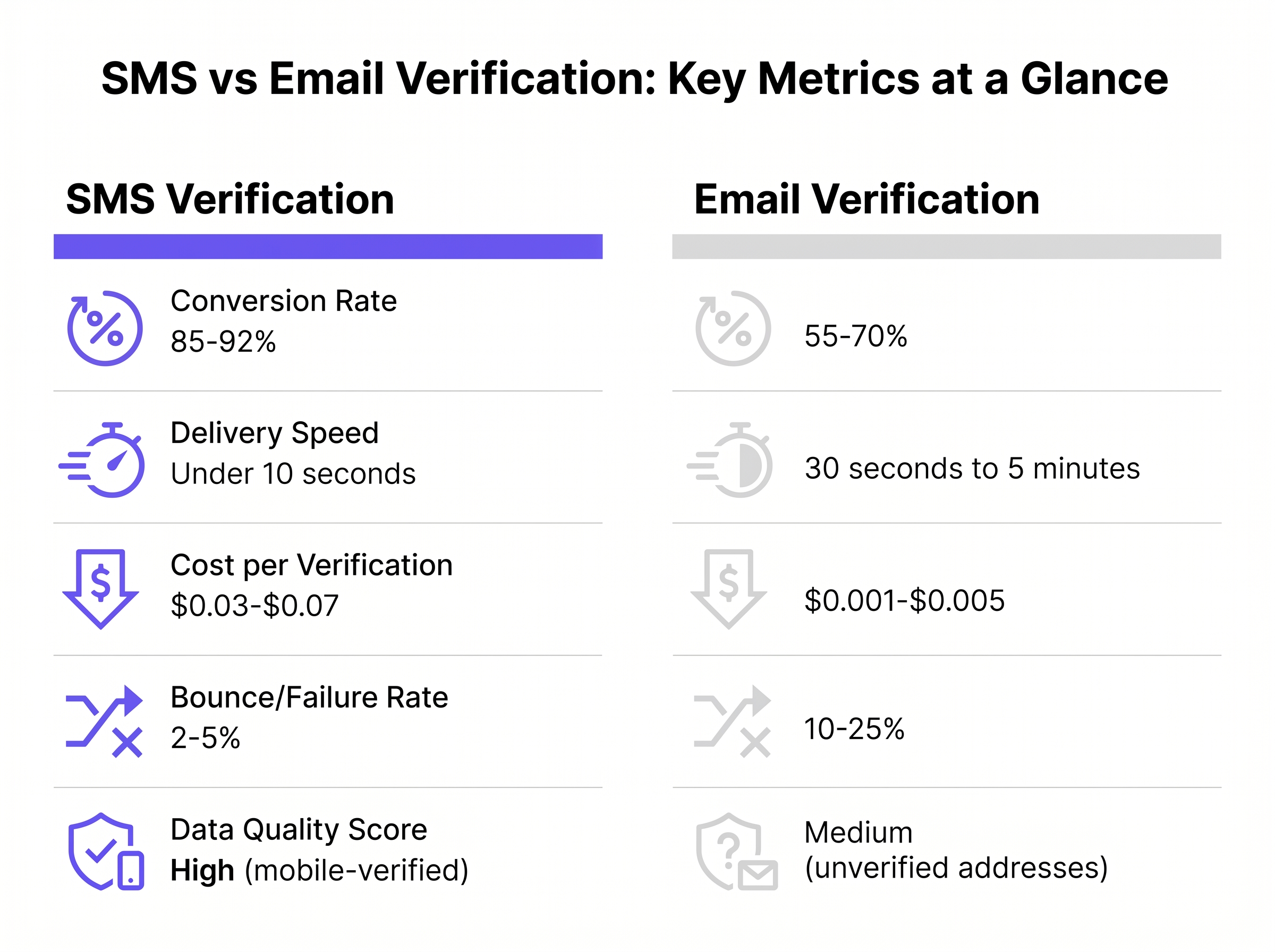
| ডেলিভারি স্পিড | ১০ সেকেন্ডের নিচে |
| কনভার্শন রেট | ৮৫-৯২% |
| ভেরিফিকেশন প্রতি খরচ | $০.০৩-$০.০৭ |
| বাউন্স / ফেইলিওর রেট | ২-৫% |
| ডেটার গুণমান | উচ্চ (মোবাইল-ভেরিফাইড) |
WiFi SMS ভেরিফিকেশনের প্রাথমিক টেকনিক্যাল সীমাবদ্ধতা হলো সেলুলার কভারেজের উপর নির্ভরতা। দুর্বল ইনডোর সেলুলার রিসেপশন আছে এমন পরিবেশে — ভূগর্ভস্থ Retail স্পেস, ভারী শিল্ডযুক্ত হাসপাতালের ওয়ার্ড, বা বেসমেন্ট কনফারেন্স স্যুট — SMS ডেলিভারি ব্যর্থ হবে, যা ইউজারকে Captive Portal-এ আটকে রাখবে। অধিকন্তু, আন্তর্জাতিক ডিপ্লয়মেন্টের ক্ষেত্রে API কল পাঠানোর আগে সঠিক কান্ট্রি কোড প্রয়োগ করা নিশ্চিত করতে পোর্টালে শক্তিশালী ফোন নম্বর ভ্যালিডেশন লজিক প্রয়োজন, কারণ একটি ভুল নম্বরের ফলে সাইলেন্ট ফেইলিওর ঘটবে।
Email ভেরিফিকেশন আর্কিটেকচার
ইমেইল ভেরিফিকেশনে সাধারণত ইউজারের দেওয়া ঠিকানায় SMTP-এর মাধ্যমে পাঠানো একটি ম্যাজিক লিঙ্ক বা একটি নিউমেরিক OTP ব্যবহার করা হয়। ইউজারকে অবশ্যই Captive Portal স্প্ল্যাশ স্ক্রিন থেকে বেরিয়ে তাদের ইমেইল ক্লায়েন্ট খুলতে হবে, কোডটি সংগ্রহ করতে হবে বা লিঙ্কে ক্লিক করতে হবে এবং অথেনটিকেশন সম্পূর্ণ করতে পোর্টালে ফিরে আসতে হবে। এই মাল্টি-স্টেপ, মাল্টি-অ্যাপ্লিকেশন ওয়ার্কফ্লো হলো ঘর্ষণের প্রাথমিক উৎস।
| মেট্রিক | ইমেইল ভেরিফিকেশন |
|---|---|
| ডেলিভারি স্পিড | ৩০ সেকেন্ড থেকে ৫ মিনিট |
| কনভার্শন রেট | ৫৫-৭০% |
| ভেরিফিকেশন প্রতি খরচ | $০.০০১-$০.০০৫ |
| বাউন্স / ফেইলিওর রেট | ১০-২৫% |
| ডেটার গুণমান | মাঝারি (আনভেরিফাইড ঠিকানা সাধারণ) |
ইমেইল ভেরিফিকেশনের জন্য একটি গুরুত্বপূর্ণ আর্কিটেকচারাল নির্ভরতা হলো Walled Garden (নেটওয়ার্ক কন্ট্রোলারে প্রি-অথেনটিকেশন ACL-এর মাধ্যমে বাস্তবায়িত)। এই কনফিগারেশনটি ক্লায়েন্ট ডিভাইসকে সম্পূর্ণ নেটওয়ার্ক অ্যাক্সেস দেওয়ার আগে সীমিত ইন্টারনেট অ্যাক্সেস প্রদান করে — বিশেষ করে সাধারণ ইমেইল প্রোভাইডার যেমন Gmail, Outlook এবং Apple Mail-এ পৌঁছানোর জন্য। এই Walled Garden নিয়মগুলোর ভুল কনফিগারেশন হলো প্রোডাকশন ডিপ্লয়মেন্টে ইমেইল ভেরিফিকেশন ব্যর্থতার সবচেয়ে সাধারণ কারণ।
ইমপ্লিমেন্টেশন গাইড: ভেন্যু-নির্দিষ্ট ডিপ্লয়মেন্ট সুপারিশ
সর্বোত্তম ভেরিফিকেশন পদ্ধতি ডিপ্লয় করার জন্য ভেন্যুর নির্দিষ্ট অপারেশনাল বাস্তবতার সাথে প্রযুক্তির সামঞ্জস্য করা প্রয়োজন। নিম্নলিখিত নির্দেশিকাটি ভেন্ডর-নিরপেক্ষ এবং প্রধান নেটওয়ার্ক কন্ট্রোলার প্ল্যাটফর্মগুলোতে প্রযোজ্য।
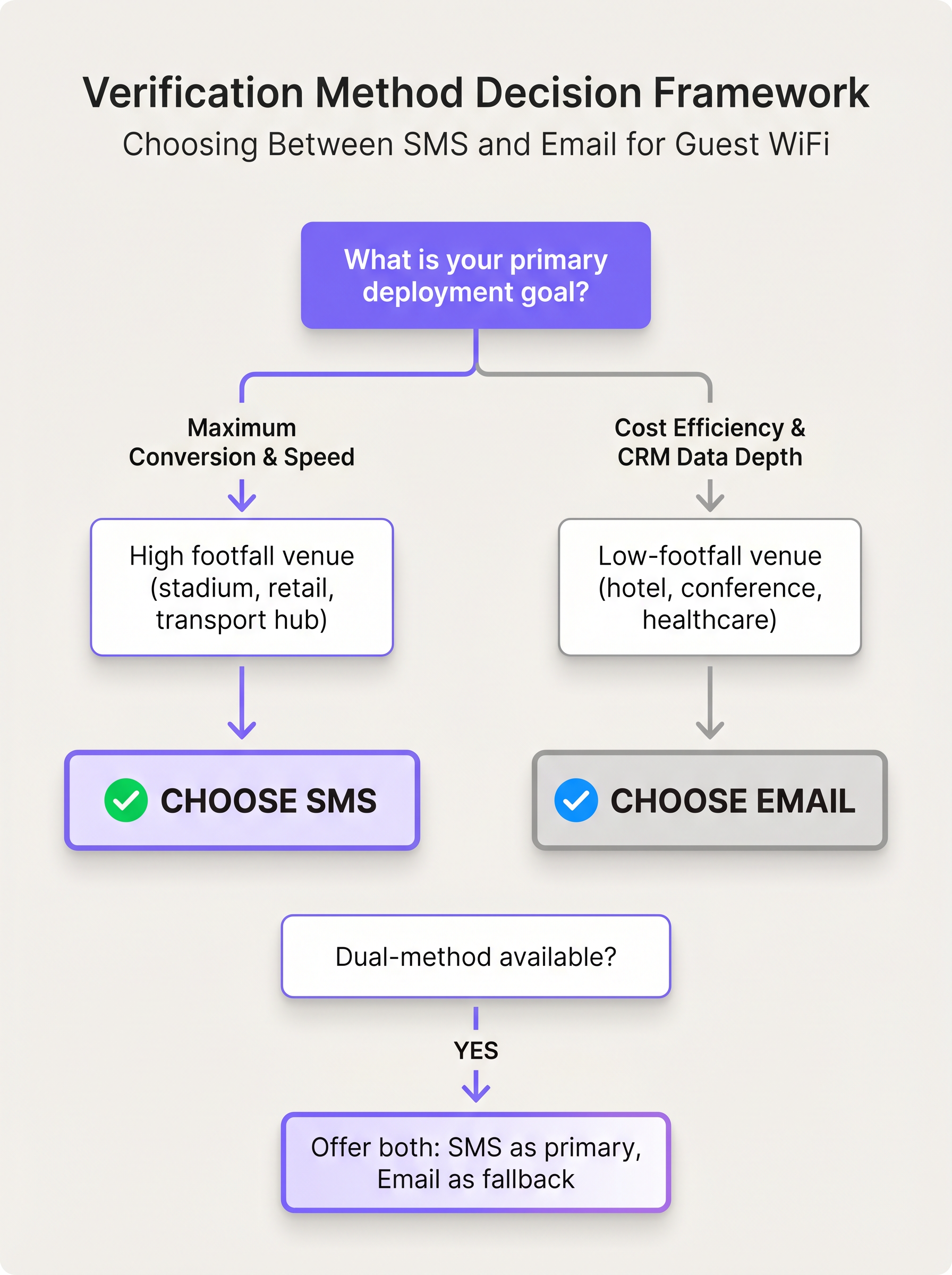
উচ্চ-ঘনত্ব, ক্ষণস্থায়ী ভেন্যু (স্টেডিয়াম, ট্রান্সপোর্ট হাব, রিটেইল কনকোর্স)
স্টেডিয়াম কনকোর্স বা এয়ারপোর্ট টার্মিনালের মতো পরিবেশে, থ্রুপুট হলো একটি গুরুত্বপূর্ণ মেট্রিক। ইউজারদের তাৎক্ষণিক অ্যাক্সেস প্রয়োজন এবং গড় কানেকশনের সময়কাল সংক্ষিপ্ত। Captive Portal-এ ব্যয় করা প্রতিটি সেকেন্ড হলো সম্ভাব্য পরিত্যাগের একটি সেকেন্ড।
সুপারিশ: প্রাথমিক পদ্ধতি হিসেবে SMS ভেরিফিকেশন ডিপ্লয় করুন, সাথে ইমেইলকে একটি বাধ্যতামূলক ফলব্যাক হিসেবে রাখুন।
১০ সেকেন্ডের কম সমাপ্তির সময় Captive Portal-এ থাকার সময় কমিয়ে দেয়, যা DHCP সার্ভার এবং RADIUS ইনফ্রাস্ট্রাকচারের উপর লোড কমায়। ভেরিফিকেশন প্রতি উচ্চ খরচ উল্লেখযোগ্যভাবে বেশি শতাংশ ইউজারের সফল অনবোর্ডিং দ্বারা ন্যায্য বলে প্রমাণিত হয় — যা WiFi Analytics এবং রিয়েল-টাইম ক্রাউড ফ্লো মনিটরিংয়ে সরাসরি ইনপুট দেয়। এই পরিবেশগুলোর জন্য নেটওয়ার্ক ডিজাইন করার বিষয়ে আরও জানতে, High-Density WiFi Design: Stadium and Arena Best Practices গাইডটি দেখুন।
কম-সমাগম, দীর্ঘ-অবস্থান ভেন্যু (হোটেল, কনফারেন্স সেন্টার, কর্পোরেট ক্যাম্পাস)
একটি Hospitality সেটিংয়ে, গেস্টদের সম্পর্ক দীর্ঘস্থায়ী হয় — প্রায়শই কয়েক দিন ধরে বিস্তৃত থাকে — এবং WiFi সাইন-আপ প্রায়শই একটি লয়্যালটি প্রোগ্রাম বা প্রপার্টি ম্যানেজমেন্ট সিস্টেমের (PMS) সাথে যুক্ত থাকে।
সুপারিশ: API-এর মাধ্যমে সরাসরি PMS বা CRM-এর সাথে ইন্টিগ্রেট করে ইমেইল ভেরিফিকেশন ডিপ্লয় করুন।
হাজার হাজার বর্ধিত গেস্ট স্টে-এর ক্ষেত্রে খরচ সাশ্রয় যথেষ্ট। আরও গুরুত্বপূর্ণভাবে, একটি ইমেইল ঠিকানা হলো বেশিরভাগ হোটেল লয়্যালটি প্রোগ্রামের জন্য প্রাথমিক ইউনিক আইডেন্টিফায়ার, যা এটিকে অনবোর্ডিংয়ের সময় ক্যাপচার করার জন্য সবচেয়ে বাণিজ্যিকভাবে মূল্যবান ডেটা পয়েন্ট করে তোলে। এই প্রেক্ষাপটে ধীর ডেলিভারি স্পিড গ্রহণযোগ্য, কারণ গেস্টরা সাধারণত তাদের রুমে বা টেবিলে স্থির থাকেন, কনকোর্সের মধ্য দিয়ে তাড়াহুড়ো করেন না।
ডুয়াল-মেথড ডিপ্লয়মেন্ট (সব ভেন্যুর জন্য বেস্ট প্র্যাকটিস)
যেকোনো ভেন্যুর জন্য সর্বোত্তম আর্কিটেকচার হলো একই সাথে উভয় পদ্ধতি অফার করা, যেখানে SMS প্রাথমিক বিকল্প হিসেবে এবং ইমেইল ফলব্যাক হিসেবে উপস্থাপিত হয়। এই পদ্ধতিটি ইউজার ডেমোগ্রাফিক জুড়ে অ্যাক্সেসিবিলিটি সর্বাধিক করে এবং প্রতিটি পৃথক পদ্ধতির ফেইলিওর মোডগুলো প্রশমিত করে।
বেস্ট প্র্যাকটিস এবং কমপ্লায়েন্স
নির্বাচিত পদ্ধতি যাই হোক না কেন, ডেটা প্রাইভেসি রেগুলেশন এবং সিকিউরিটি স্ট্যান্ডার্ড মেনে চলা বাধ্যতামূলক।
GDPR এবং CCPA কমপ্লায়েন্স: নেটওয়ার্কের শর্তাবলীর (Terms and Conditions) স্বীকৃতি অবশ্যই মার্কেটিং কমিউনিকেশনের অপ্ট-ইন থেকে যৌক্তিক এবং দৃশ্যত আলাদা হতে হবে। WiFi অ্যাক্সেসের শর্ত হিসেবে মার্কেটিং সম্মতি বাধ্য করা অবাধে প্রদত্ত সম্মতির উপর GDPR অনুচ্ছেদ ৭-এর নীতি লঙ্ঘন করে। সংগৃহীত ফোন নম্বর এবং ইমেইল ঠিকানা উভয়ই GDPR-এর অধীনে ব্যক্তিগত ডেটা গঠন করে এবং সেই অনুযায়ী পরিচালনা করতে হবে, যার মধ্যে প্রসেসিংয়ের জন্য ডকুমেন্টেড আইনি ভিত্তি এবং স্পষ্ট ডেটা রিটেনশন পলিসি অন্তর্ভুক্ত।
Walled Garden মেইনটেন্যান্স: ইমেইল ভেরিফিকেশন ব্যবহার করলে, Walled Garden IP এবং ডোমেইন তালিকাগুলো ক্রমাগত পর্যালোচনা করতে হবে। প্রধান ইমেইল প্রোভাইডাররা নিয়মিত তাদের CDN ইনফ্রাস্ট্রাকচার আপডেট করে, এবং একটি পুরানো Walled Garden কনফিগারেশন নীরবে ইউজারদের একটি সাবসেটের জন্য ইমেইল ডেলিভারি ব্যাহত করবে।
MAC র্যান্ডমাইজেশন অ্যাড্রেস করা: আধুনিক মোবাইল অপারেটিং সিস্টেমগুলো ইউজারের প্রাইভেসি রক্ষা করতে MAC অ্যাড্রেস র্যান্ডমাইজেশন ব্যবহার করে। SMS এবং ইমেইল ভেরিফিকেশন উভয়ই সেশনটিকে একটি রোটেটিং হার্ডওয়্যার অ্যাড্রেসের পরিবর্তে একটি ভেরিফাইড, স্থায়ী আইডেন্টিটি — একটি ফোন নম্বর বা ইমেইল ঠিকানার — সাথে যুক্ত করে WiFi Analytics -এ এর প্রভাব সরাসরি প্রশমিত করে। ফুটফল অ্যানালিটিক্সের উপর নির্ভরশীল ভেন্যু অপারেটরদের জন্য, ওপেন অ্যাক্সেস অফার করার পরিবর্তে ভেরিফিকেশন বাধ্যতামূলক করার জন্য এটি একটি জোরালো অপারেশনাল যুক্তি।
টেলিকম রেগুলেশন: SMS ভেরিফিকেশন অনেক বিচারব্যবস্থায় ক্যারিয়ার-স্তরের রেগুলেশনের অধীন। মার্কিন যুক্তরাষ্ট্রে, TCPA কমার্শিয়াল SMS মেসেজিং নিয়ন্ত্রণ করে এবং যুক্তরাজ্যে, ICO-এর PECR প্রযোজ্য। কমপ্লায়েন্ট থাকার জন্য নিশ্চিত করুন যে OTP মেসেজ টেমপ্লেটটি স্পষ্টভাবে একটি ট্রানজ্যাকশনাল (মার্কেটিং নয়) মেসেজ হিসেবে চিহ্নিত করা হয়েছে।
ট্রাবলশুটিং এবং রিস্ক মিটিগেশন
ফেইলিওর মোড ১ — SMS ডেলিভারি ফেইলিওর সবচেয়ে সাধারণ কারণ হলো দুর্বল ইনডোর সেলুলার কভারেজ বা ভুলভাবে ফর্ম্যাট করা আন্তর্জাতিক ডায়ালিং কোড। মিটিগেশনের জন্য একটি ডুয়াল-মেথড ফলব্যাক বাস্তবায়ন করা প্রয়োজন: যদি ৩০ সেকেন্ডের মধ্যে SMS পৌঁছাতে ব্যর্থ হয়, তবে পোর্টালটি স্বয়ংক্রিয়ভাবে ইমেইল ভেরিফিকেশন বিকল্পটি প্রদর্শন করবে। ফর্ম্যাটিং ত্রুটিগুলো কমাতে UI-তে অবশ্যই একটি বিশিষ্ট, প্রি-পপুলেটেড কান্ট্রি কোড সিলেক্টর অন্তর্ভুক্ত থাকতে হবে।
ফেইলিওর মোড ২ — ইমেইল Walled Garden ব্লকিং যদি Captive Portal-এর প্রি-অথেনটিকেশন ACL-গুলোতে ইউজারের ইমেইল প্রোভাইডারের জন্য সঠিক IP রেঞ্জ এবং ডোমেইন অন্তর্ভুক্ত না থাকে, তবে ভেরিফিকেশন ইমেইলটি পুনরুদ্ধার করা যাবে না। মিটিগেশনের জন্য Walled Garden কনফিগারেশনগুলোর নিয়মিত অডিটিং এবং টেস্টিং প্রয়োজন, যেখানে নেটওয়ার্ক কন্ট্রোলার ইমেইল প্রোভাইডারদের দ্বারা CDN পরিবর্তনগুলো বিবেচনা করার জন্য ওয়াইল্ডকার্ড ডোমেইন এন্ট্রিগুলো সমর্থন করে সেখানে সেগুলো ব্যবহার করতে হবে।
ফেইলিওর মোড ৩ — Captive Portal ডিটেকশন কনফ্লিক্ট যখন iOS বা Android-এর কোনো ইউজার OTP পুনরুদ্ধার করতে Captive Portal মিনি-ব্রাউজার থেকে তাদের ইমেইল অ্যাপে স্যুইচ করেন, তখন OS WiFi কানেকশনটিকে বিচ্ছিন্ন হিসেবে ব্যাখ্যা করতে পারে এবং এটি ড্রপ করতে পারে। এটি বিশেষ করে Apple-এর Captive Network Assistant-এর ক্ষেত্রে সাধারণ। এর মিটিগেশন হলো ইমেইল ভেরিফিকেশনের জন্য নিউমেরিক OTP-এর পরিবর্তে একটি "ম্যাজিক লিঙ্ক" পদ্ধতি বাস্তবায়ন করা, কারণ লিঙ্কটি সরাসরি ফুল ব্রাউজারে খোলা যেতে পারে, যা মিনি-ব্রাউজার সেশনটিকে সম্পূর্ণভাবে বাইপাস করে।
ROI এবং বিজনেস ইমপ্যাক্ট
প্রতিটি পদ্ধতির আর্থিক দিকটি ভেন্যুর বাণিজ্যিক উদ্দেশ্য এবং সংগৃহীত ডেটা থেকে উৎপন্ন WiFi Analytics ভ্যালুর প্রেক্ষাপটে মূল্যায়ন করতে হবে।
সরাসরি খরচ তুলনা: ইমেইল ভেরিফিকেশন খরচ নগণ্য — সাধারণত প্রতি সেন্ডে এক সেন্টের ভগ্নাংশ। SMS ভেরিফিকেশনে প্রতি মেসেজে $০.০৩-$০.০৭ এর একটি নির্দিষ্ট খরচ থাকে। প্রতি মাসে ১,০০,০০০ অথেনটিকেশন প্রসেস করা একটি ভেন্যুর জন্য, SMS-এ মাসিক $৭,০০০ পর্যন্ত খরচ হতে পারে, যেখানে ইমেইলে খরচ হবে $৫০-এর নিচে। তবে, ৫৫-৭০% ইমেইল রেটের বিপরীতে ৮৫-৯২% SMS কনভার্শন রেট মানে হলো SMS একই সমাগম থেকে প্রায় ৩০% বেশি ইউজারকে অনবোর্ড করে — যা অ্যানালিটিক্স এবং মার্কেটিং ডেটা সংগ্রহের জন্য একটি উল্লেখযোগ্য বৃদ্ধি।
ভেরিফাইড ডেটা থেকে ভ্যালু তৈরি: SMS ভেরিফিকেশনের খরচ ডেটার ডাউনস্ট্রিম ভ্যালুর বিপরীতে বিবেচনা করতে হবে। ভেরিফাইড মোবাইল নম্বরগুলো টার্গেটেড, লোকেশন-ভিত্তিক SMS মার্কেটিং ক্যাম্পেইন সক্ষম করে। যদি ১০,০০০ ভেরিফাইড নম্বরে পাঠানো একটি ক্যাম্পেইন $১০ অফারে ৩% রিডেম্পশন রেট তৈরি করে, তবে $৩০০-$৭০০ ভেরিফিকেশন খরচ একটি উল্লেখযোগ্য মার্জিনের সাথে পুনরুদ্ধার করা হয়। Heatmap Analysis for Venue Traffic: A Practical Guide প্রদর্শন করে যে কীভাবে ভেরিফাইড আইডেন্টিটি ডেটা, WiFi Analytics -এর সাথে মিলিত হয়ে, অ্যাকশনেবল ইনসাইট তৈরি করতে পারে যা সরাসরি মার্চেন্ডাইজিং এবং স্টাফিং সিদ্ধান্তগুলোকে অবহিত করে।
স্ট্র্যাটেজিক অ্যালাইনমেন্ট: শেষ পর্যন্ত, পছন্দটি অবশ্যই বৃহত্তর ডিজিটাল স্ট্র্যাটেজির সাথে সামঞ্জস্যপূর্ণ হতে হবে। যদি লক্ষ্য হয় দ্রুত অনবোর্ডিং এবং রিয়েল-টাইম Wayfinding বা ক্রাউড ম্যানেজমেন্ট, তবে SMS হলো আর্কিটেকচারালভাবে উচ্চতর পছন্দ। যদি লক্ষ্য হয় দীর্ঘমেয়াদী CRM ডেটাবেস বৃদ্ধি এবং ইমেইল মার্কেটিং, তবে ইমেইল ভেরিফিকেশন হলো সঠিক ডিপ্লয়মেন্ট সিদ্ধান্ত।
মূল সংজ্ঞাসমূহ
Captive Portal
একটি ওয়েব পেজ যা একটি পাবলিক অ্যাক্সেস নেটওয়ার্কের ইউজারকে বৃহত্তর নেটওয়ার্ক অ্যাক্সেস দেওয়ার আগে দেখতে এবং ইন্টারঅ্যাক্ট করতে বাধ্য করা হয়। সাধারণত নেটওয়ার্ক কন্ট্রোলারে DNS রিডাইরেকশনের মাধ্যমে বাস্তবায়িত হয়।
গেস্ট WiFi অথেনটিকেশনের জন্য প্রাথমিক ইন্টারফেস এবং সেই পয়েন্ট যেখানে SMS বনাম ইমেইল ভেরিফিকেশন সিদ্ধান্ত বাস্তবায়িত হয় এবং এন্ড ইউজার দ্বারা অভিজ্ঞ হয়।
Walled Garden
একটি সীমাবদ্ধ নেটওয়ার্ক পরিবেশ যা ইন্টারনেট রিসোর্সগুলোতে ইউজারের অ্যাক্সেস নিয়ন্ত্রণ করে, সম্পূর্ণ নেটওয়ার্ক অথেনটিকেশনের আগে IP অ্যাড্রেস বা ডোমেইনগুলোর একটি নির্দিষ্ট, পূর্ব-অনুমোদিত সেটে অ্যাক্সেসের অনুমতি দেয়।
ইমেইল ভেরিফিকেশন ডিপ্লয়মেন্টের জন্য গুরুত্বপূর্ণ। ইমেইল প্রোভাইডার ইনফ্রাস্ট্রাকচারে অ্যাক্সেসের অনুমতি দেয় এমন একটি সঠিকভাবে কনফিগার করা Walled Garden ছাড়া, ইউজাররা তাদের ইনবক্সে পাঠানো OTP পুনরুদ্ধার করতে পারবেন না।
আউট-অফ-ব্যান্ড অথেনটিকেশন (Out-of-Band Authentication)
একটি অথেনটিকেশন মেকানিজম যা ইউজারের পরিচয় যাচাই করতে একটি সেকেন্ডারি, স্বাধীন কমিউনিকেশন চ্যানেল ব্যবহার করে। ভেরিফিকেশন সিগন্যালটি প্রাথমিক অ্যাক্সেস রিকোয়েস্টের চেয়ে ভিন্ন নেটওয়ার্ক পাথের মাধ্যমে ভ্রমণ করে।
SMS ভেরিফিকেশন হলো একটি আউট-অফ-ব্যান্ড পদ্ধতি: অ্যাক্সেস রিকোয়েস্টটি WiFi-এর মাধ্যমে করা হয়, কিন্তু OTP সেলুলার নেটওয়ার্কের মাধ্যমে বিতরণ করা হয়। এই স্বাধীনতা একটি অর্থপূর্ণ নিরাপত্তা সুবিধা প্রদান করে।
MAC র্যান্ডমাইজেশন
আধুনিক মোবাইল অপারেটিং সিস্টেমগুলোতে (iOS 14+, Android 10+) একটি প্রাইভেসি ফিচার যা WiFi নেটওয়ার্কগুলোর সাথে কানেক্ট করার সময় ডিভাইসের স্থায়ী হার্ডওয়্যার MAC অ্যাড্রেসের পরিবর্তে একটি র্যান্ডমাইজড, প্রতি-নেটওয়ার্ক MAC অ্যাড্রেস ব্যবহার করে।
ডিভাইস-ভিত্তিক অ্যানালিটিক্স এবং রিপিট ভিজিটর ট্র্যাকিংকে মারাত্মকভাবে প্রভাবিত করে। SMS বা ইমেইল ভেরিফিকেশন বাধ্যতামূলক করা সেশনটিকে একটি স্থায়ী, ভেরিফাইড আইডেন্টিটির সাথে যুক্ত করে এর সমাধান করে।
ওয়ান-টাইম পাসওয়ার্ড (OTP)
একটি পাসওয়ার্ড যা শুধুমাত্র একটি লগইন সেশন বা ট্রানজ্যাকশনের জন্য বৈধ, অ্যালগরিদমিকভাবে জেনারেট করা হয় এবং সাধারণত একটি ছোট উইন্ডোতে (৩০-৩০০ সেকেন্ড) সময়-সীমাবদ্ধ থাকে।
ইউজারের প্রদত্ত কন্ট্যাক্ট ডিটেইলে অ্যাক্সেস আছে তা নিশ্চিত করতে SMS এবং ইমেইল ভেরিফিকেশন ফ্লো উভয় ক্ষেত্রেই ব্যবহৃত স্ট্যান্ডার্ড ভেরিফিকেশন টোকেন।
DHCP পুল এক্সহশন (DHCP Pool Exhaustion)
একটি নেটওয়ার্ক অবস্থা যেখানে DHCP সার্ভার তার কনফিগার করা স্কোপের মধ্যে সমস্ত উপলব্ধ IP অ্যাড্রেস অ্যাসাইন করেছে, যা নতুন ক্লায়েন্ট ডিভাইসগুলোকে একটি অ্যাড্রেস পেতে এবং নেটওয়ার্কের সাথে কানেক্ট হতে বাধা দেয়।
উচ্চ-ঘনত্বের ভেন্যুগুলোতে একটি উল্লেখযোগ্য অপারেশনাল ঝুঁকি। ধীর ভেরিফিকেশন পদ্ধতি (যেমন, ইমেইল) যার কারণে ক্লায়েন্টরা বর্ধিত সময়ের জন্য প্রি-অথেনটিকেটেড অবস্থায় IP অ্যাড্রেস ধরে রাখে, তা পিক পিরিয়ডে পুল নিঃশেষ হতে অবদান রাখতে পারে।
প্রি-অথেনটিকেশন ACL
অ্যাক্সেস কন্ট্রোল লিস্ট যা একটি ক্লায়েন্ট ডিভাইসের নেটওয়ার্ক সেশনে প্রয়োগ করা হয়, সেই ডিভাইসটি সফলভাবে Captive Portal অথেনটিকেশন প্রক্রিয়া সম্পন্ন করার আগে।
Walled Garden পলিসিগুলো প্রয়োগ করতে নেটওয়ার্ক কন্ট্রোলারগুলোতে (যেমন, Cisco, Aruba, Ruckus) ব্যবহৃত টেকনিক্যাল মেকানিজম, যা সম্পূর্ণ অথেনটিকেশনের আগে নির্দিষ্ট রিসোর্সগুলোতে সীমিত অ্যাক্সেসের অনুমতি দেয়।
সিন্থেটিক আইডেন্টিটি
একটি বানোয়াট বা ডিসপোজেবল আইডেন্টিটি, সাধারণত অস্থায়ী বা এলোমেলোভাবে জেনারেট করা কন্ট্যাক্ট ডিটেইল ব্যবহার করে তৈরি করা হয়, যা প্রকৃত ব্যক্তিগত তথ্য প্রদান না করে পরিষেবাগুলোতে অ্যাক্সেস পেতে ব্যবহৃত হয়।
ইমেইল ভেরিফিকেশন অস্থায়ী ইমেইল পরিষেবাগুলোর (যেমন, Mailinator, Guerrilla Mail) মাধ্যমে সিন্থেটিক আইডেন্টিটির প্রতি সংবেদনশীল। SMS ভেরিফিকেশন উল্লেখযোগ্যভাবে এই ঝুঁকি প্রশমিত করে, কারণ এর জন্য একটি ফিজিক্যাল SIM কার্ড প্রয়োজন।
সমাধানকৃত উদাহরণসমূহ
একটি ৫০,০০০ আসনের স্টেডিয়াম একটি বড় আন্তর্জাতিক টুর্নামেন্টের আগে তাদের গেস্ট WiFi নেটওয়ার্ক আপগ্রেড করছে। মার্কেটিং টিম প্রতিটি কানেক্টেড ফ্যানের কাছ থেকে ভেরিফাইড কন্ট্যাক্ট ডেটা সংগ্রহ করতে চায়, কিন্তু নেটওয়ার্ক অপারেশন টিম উদ্বিগ্ন যে ইউজাররা Captive Portal স্প্ল্যাশ স্ক্রিনে খুব বেশি সময় কাটালে পিক হাফ-টাইম পিরিয়ডে DHCP পুল নিঃশেষ হয়ে যেতে পারে। তাদের কোন ভেরিফিকেশন পদ্ধতি ডিপ্লয় করা উচিত এবং কীভাবে তাদের ফলব্যাক কনফিগার করা উচিত?
স্টেডিয়ামের উচিত প্রাথমিক অথেনটিকেশন পদ্ধতি হিসেবে SMS ভেরিফিকেশন ডিপ্লয় করা, যা ৩০-সেকেন্ডের OTP মেয়াদোত্তীর্ণের সাথে কনফিগার করা এবং সেই উইন্ডোর মধ্যে SMS নিশ্চিত না হলে ইমেইল ভেরিফিকেশনে একটি স্বয়ংক্রিয় ফলব্যাক থাকবে। Captive Portal-এ একটি প্রি-পপুলেটেড কান্ট্রি কোড সিলেক্টর উপস্থাপন করা উচিত যা ডিফল্টরূপে হোস্ট দেশের ডায়ালিং কোড দেখাবে, সাথে এটি পরিবর্তন করার একটি সহজ মেকানিজম থাকবে। ফলব্যাক হিসেবে প্রধান ইমেইল প্রোভাইডারদের অ্যাক্সেস করার অনুমতি দেওয়ার জন্য Walled Garden কনফিগার করতে হবে। পুল নিঃশেষ হওয়ার ঝুঁকি প্রশমিত করতে প্রত্যাশিত সেশনের দৈর্ঘ্যের জন্য ন্যূনতম কার্যকর সময়কাল পর্যন্ত DHCP লিজ টাইম পর্যালোচনা এবং হ্রাস করা উচিত।
৫০০টি লোকেশন সহ একটি জাতীয় রিটেইল চেইন বিভিন্ন স্টোর জুড়ে ডওয়েল টাইম এবং রিপিট ভিজিট রেট ট্র্যাক করতে গেস্ট WiFi বাস্তবায়ন করতে চায়, যা তাদের বিদ্যমান ইমেইল মার্কেটিং প্ল্যাটফর্মে ডেটা ফিড করবে। তাদের একটি সীমিত আইটি বাজেট এবং একটি ছোট সেন্ট্রাল আইটি টিম রয়েছে যারা সমস্ত ৫০০টি ডিপ্লয়মেন্ট বজায় রাখার জন্য দায়ী। তাদের কোন ভেরিফিকেশন পদ্ধতি এবং ইন্টিগ্রেশন আর্কিটেকচার গ্রহণ করা উচিত?
রিটেইল চেইনের উচিত প্রাথমিক পদ্ধতি হিসেবে ইমেইল ভেরিফিকেশন বাস্তবায়ন করা। Captive Portal-কে অবশ্যই একটি শক্তিশালী, কেন্দ্রীয়ভাবে পরিচালিত Walled Garden টেমপ্লেটের সাথে কনফিগার করতে হবে যা অথেনটিকেশন সম্পূর্ণ হওয়ার আগে প্রধান ইমেইল প্রোভাইডারদের (Gmail, Outlook, Yahoo, Apple Mail) অ্যাক্সেস করার অনুমতি দেয়। ভেরিফাইড ঠিকানাগুলো স্বয়ংক্রিয়ভাবে সিঙ্ক করতে এবং একটি ওয়েলকাম জার্নি ট্রিগার করতে পোর্টালটিকে একটি ওয়েবহুক বা REST API-এর মাধ্যমে সরাসরি তাদের বিদ্যমান ইমেইল মার্কেটিং প্ল্যাটফর্মের (যেমন, Mailchimp, Klaviyo, Salesforce Marketing Cloud) সাথে ইন্টিগ্রেট করা উচিত। সেন্ট্রাল আইটি টিমের উপর মেইনটেন্যান্সের বোঝা কমাতে একই সাথে সমস্ত ৫০০টি লোকেশনে Walled Garden কনফিগারেশন আপডেটগুলো পুশ করতে একটি সেন্ট্রালাইজড নেটওয়ার্ক ম্যানেজমেন্ট প্ল্যাটফর্ম ব্যবহার করা উচিত।
অনুশীলনী প্রশ্নসমূহ
Q1. একজন হাসপাতালের আইটি ডিরেক্টরকে রোগী এবং দর্শনার্থীদের জন্য পাঁচটি ক্যাম্পাস জুড়ে গেস্ট WiFi বাস্তবায়ন করতে হবে। রিইনফোর্সড কংক্রিট নির্মাণ এবং চিকিৎসা সরঞ্জামের শিল্ডিংয়ের কারণে ভবনগুলোতে কুখ্যাতভাবে দুর্বল ইনডোর সেলুলার রিসেপশন রয়েছে। হাসপাতালের মার্কেটিং টিম তাদের পেশেন্ট কমিউনিকেশন ইমেইল তালিকা বাড়াতে চায়। তাদের কোন ভেরিফিকেশন স্ট্র্যাটেজি গ্রহণ করা উচিত এবং মূল কনফিগারেশন প্রয়োজনীয়তাগুলো কী কী?
ইঙ্গিত: পরিবেশের শারীরিক সীমাবদ্ধতা এবং প্রতিটি ভেরিফিকেশন পদ্ধতির আর্কিটেকচারাল নির্ভরতা, সেইসাথে উল্লিখিত ব্যবসায়িক উদ্দেশ্য বিবেচনা করুন।
মডেল উত্তর দেখুন
হাসপাতালটিকে অবশ্যই ইমেইল ভেরিফিকেশনকে অগ্রাধিকার দিতে হবে। যেহেতু SMS OTP ডেলিভারি করার জন্য সেলুলার নেটওয়ার্কের উপর নির্ভর করে, দুর্বল ইনডোর রিসেপশনের ফলে উচ্চ ফেইলিওর রেট হবে এবং রোগী ও দর্শনার্থীরা হতাশ হবেন। ইমেইল ভেরিফিকেশন OTP ডেলিভারি করার জন্য WiFi নেটওয়ার্ক নিজেই (Walled Garden অ্যাক্সেসের মাধ্যমে) ব্যবহার করে, যা সেলুলার রিসেপশন সমস্যাটিকে সম্পূর্ণভাবে বাইপাস করে। মূল কনফিগারেশন প্রয়োজনীয়তাগুলোর মধ্যে রয়েছে: (১) প্রধান ইমেইল প্রোভাইডারদের অ্যাক্সেসের অনুমতি দেয় এমন একটি সঠিকভাবে কনফিগার করা Walled Garden, (২) মার্কেটিং অপ্ট-ইন থেকে নেটওয়ার্ক ToS স্বীকৃতির GDPR-কমপ্লায়েন্ট পৃথকীকরণ, এবং (৩) ভেরিফাইড ঠিকানাগুলো সিঙ্ক করতে হাসপাতালের CRM-এর সাথে API ইন্টিগ্রেশন। ইমেইল তালিকা বাড়ানোর মার্কেটিং উদ্দেশ্যটিও এই পদ্ধতির দ্বারা সরাসরি পরিবেশিত হয়।
Q2. আপনি একটি কনফারেন্স সেন্টারে একটি নতুন ইমেইল ভেরিফিকেশন ডিপ্লয়মেন্টের জন্য Walled Garden কনফিগার করছেন। আপনি Gmail এবং Outlook-এর জন্য IP রেঞ্জগুলো হোয়াইটলিস্ট করেছেন, কিন্তু ইউজাররা রিপোর্ট করছেন যে OTP পুনরুদ্ধার করতে তাদের ইমেইল অ্যাপে স্যুইচ করার পরে, তারা যখন ফিরে আসেন তখন Captive Portal পেজটি লোড হতে ব্যর্থ হয়। এর সবচেয়ে সম্ভাব্য কারণ কী এবং আপনি কীভাবে এটি সমাধান করবেন?
ইঙ্গিত: প্রি-অথেনটিকেশন পর্বে অ্যাপ্লিকেশনগুলোর মধ্যে স্যুইচ করার সময় একটি মোবাইল ডিভাইসের WiFi কানেকশন অবস্থার কী ঘটে সে সম্পর্কে চিন্তা করুন এবং OS Captive Portal ডিটেকশন মেকানিজমের ভূমিকা বিবেচনা করুন।
মডেল উত্তর দেখুন
সবচেয়ে সম্ভাব্য কারণ হলো iOS বা Android-এ OS-স্তরের Captive Network Assistant (CNA) আচরণ। যখন ইউজার CNA মিনি-ব্রাউজার থেকে তাদের ইমেইল অ্যাপে স্যুইচ করেন, তখন OS WiFi কানেকশনটিকে বিচ্ছিন্ন বা Captive Portal-কে আনরেসপন্সিভ হিসেবে ব্যাখ্যা করতে পারে এবং হয় WiFi কানেকশন ড্রপ করতে পারে বা CNA সেশন বন্ধ করতে পারে। এর সমাধান হলো ইমেইল ভেরিফিকেশনের জন্য নিউমেরিক OTP থেকে ম্যাজিক লিঙ্ক পদ্ধতিতে স্যুইচ করা। একটি ম্যাজিক লিঙ্ক সরাসরি ডিভাইসের ফুল ব্রাউজারে (CNA মিনি-ব্রাউজারে নয়) খোলা যেতে পারে, যা সেশন স্টেট সমস্যাটিকে বাইপাস করে। উপরন্তু, নিশ্চিত করুন যে Walled Garden-কে Captive Portal-এর নিজস্ব ডোমেইন অ্যাক্সেসযোগ্য করার অনুমতি দেওয়ার জন্য কনফিগার করা হয়েছে, যাতে ক্লিক করা হলে লিঙ্কটি সঠিকভাবে কাজ করে।
Q3. একটি রিটেইল চেইনের একজন মার্কেটিং ম্যানেজার SMS ভেরিফিকেশন ব্যবহার করার জন্য জোর দিচ্ছেন কারণ তিনি শুনেছেন যে এর কনভার্শন রেট বেশি। তবে, তাদের প্রাথমিক ক্যাম্পেইনের উদ্দেশ্য হলো একটি মাসিক ইমেইল নিউজলেটারের জন্য একটি ডেটাবেস বৃদ্ধি করা। আপনি তাদের কীভাবে পরামর্শ দেবেন এবং আপনি কোন বিকল্প আর্কিটেকচার প্রস্তাব করবেন?
ইঙ্গিত: ব্যবসায়িক উদ্দেশ্য পূরণের জন্য প্রয়োজনীয় নির্দিষ্ট ধরণের ডেটার সাথে ভেরিফিকেশন পদ্ধতিটি সারিবদ্ধ করুন এবং বিবেচনা করুন যে SMS-এর উচ্চতর কনভার্শন রেট আসলে উল্লিখিত লক্ষ্যটি পূরণ করে কিনা।
মডেল উত্তর দেখুন
এই নির্দিষ্ট উদ্দেশ্যের জন্য একমাত্র পদ্ধতি হিসেবে SMS-এর বিরুদ্ধে পরামর্শ দিন। যদিও SMS-এর কনভার্শন রেট বেশি, এটি শুধুমাত্র সরাসরি একটি মোবাইল নম্বর ক্যাপচার করে। যদি ব্যবসায়িক উদ্দেশ্য একটি মাসিক ইমেইল নিউজলেটার পাঠানো হয়, তবে একটি ইমেইল ঠিকানা হলো প্রয়োজনীয় ডেটা পয়েন্ট। একমাত্র পদ্ধতি হিসেবে SMS ব্যবহার করার জন্য হয় ইমেইল ঠিকানা ক্যাপচার করার জন্য একটি সেকেন্ডারি স্টেপ প্রয়োজন হবে (ঘর্ষণ বৃদ্ধি করে এবং কার্যকর কনভার্শন রেট হ্রাস করে), অথবা ব্যবসাকে তার প্রয়োজনীয় ডেটা ছাড়াই ছেড়ে দেবে। প্রস্তাবিত আর্কিটেকচার হলো প্রাথমিক পদ্ধতি হিসেবে ইমেইল ভেরিফিকেশন, যা সরাসরি একটি একক ধাপে প্রয়োজনীয় ডেটা পয়েন্ট ক্যাপচার করে। যদি মার্কেটিং ম্যানেজার কনভার্শন রেট নিয়ে উদ্বিগ্ন হন, তবে একটি ডুয়াল-মেথড পদ্ধতি (SMS প্রাথমিক, ইমেইল ফলব্যাক) অফার করা যেতে পারে, তবে ইমেইল ক্যাপচারটি অবশ্যই SMS ফ্লোতেও একটি বাধ্যতামূলক ফিল্ড হতে হবে।
এই সিরিজে পড়া চালিয়ে যান
Captive Portal লগইন: ট্রাবলশুটিং এবং ব্যাখ্যা
এই নির্দেশিকাটি এন্টারপ্রাইজ গেস্ট WiFi পরিবেশে captive portal লগইন সিস্টেম বোঝা, স্থাপন এবং ট্রাবলশুটিং করার জন্য একটি বিস্তৃত প্রযুক্তিগত রেফারেন্স প্রদান করে। এটি আধুনিক captive portals দ্বারা ব্যবহৃত সুনির্দিষ্ট HTTP রিডাইরেক্ট এবং DNS হাইজ্যাকিং মেকানিজম ব্যাখ্যা করে, কীভাবে HSTS এবং সুরক্ষিত HTTPS ব্রাউজারগুলো লোকাল রিডাইরেক্ট ব্লক করতে পারে তা বিস্তারিতভাবে তুলে ধরে, এবং ক্লায়েন্ট-সাইড সমাধান (VPN নিষ্ক্রিয় করা, MAC র্যান্ডমাইজেশন বন্ধ করা, NeverSSL ব্যবহার করা) এবং অপারেটর-সাইড সমাধান (walled garden কনফিগারেশন, DHCP লিজ টাইম অপ্টিমাইজেশন, DNS ইন্টারসেপশন ভেরিফিকেশন) উভয়ই কভার করে একটি স্পষ্ট, কার্যকর ট্রাবলশুটিং চেকলিস্ট প্রদান করে। ভেন্যু অপারেটর, আইটি ম্যানেজার এবং নেটওয়ার্ক আর্কিটেক্টরা গেস্ট সাপোর্ট টিকিট কমাতে এবং তাদের ওয়্যারলেস অবকাঠামোর ROI সর্বাধিক করতে এই নির্দেশিকাটিকে অপরিহার্য মনে করবেন।
আপনার ব্যবসার জন্য কীভাবে একটি WiFi হটস্পট সেট আপ করবেন
এই প্রামাণিক গাইডটি আইটি লিডার, নেটওয়ার্ক আর্কিটেক্ট এবং ভেন্যু অপারেশন ডিরেক্টরদের জন্য সুরক্ষিত, কমপ্লায়েন্ট এবং ব্যবসা-উন্নয়নকারী গেস্ট WiFi হটস্পট ডেপ্লয় করার একটি ব্যবহারিক, ভেন্ডর-নিরপেক্ষ ব্লুপ্রিন্ট প্রদান করে। এটি গুরুত্বপূর্ণ আর্কিটেকচার সিদ্ধান্তগুলো কভার করে—VLAN সেগমেন্টেশন এবং Captive Portal কনফিগারেশন থেকে শুরু করে GDPR কমপ্লায়েন্স এবং ট্র্যাফিক শেপিং পর্যন্ত—এবং দেখায় কীভাবে Purple-এর Guest WiFi এবং অ্যানালিটিক্স সক্ষমতা ব্যবহার করে নেটওয়ার্ক ইনফ্রাস্ট্রাকচারকে একটি কস্ট সেন্টার থেকে রেভিনিউ-ড্রাইভিং অ্যানালিটিক্স প্ল্যাটফর্মে রূপান্তর করা যায়।
Purple বনাম Cisco Spaces (DNA Spaces): কখন কোনটি বেছে নেবেন
এই টেকনিক্যাল রেফারেন্স গাইডটি এন্টারপ্রাইজ Captive Portal এবং গেস্ট WiFi ডিপ্লয়মেন্টের জন্য Purple এবং Cisco Spaces (পূর্বে DNA Spaces)-এর একটি বিস্তৃত তুলনা প্রদান করে। এটি আইটি লিডারদের ইনফ্রাস্ট্রাকচার সম্পর্কে সঠিক সিদ্ধান্ত নিতে সাহায্য করার জন্য আর্কিটেকচারাল পার্থক্য, মার্কেটিং অটোমেশনের গভীরতা এবং হার্ডওয়্যার ভেন্ডর লক-ইনের গুরুত্বপূর্ণ প্রশ্নটির মূল্যায়ন করে।