
कंट्रोलर-आधारित विरुद्ध क्लाउड-व्यवस्थापित ॲक्सेस पॉइंट्सची तुलना
हे तांत्रिक संदर्भ मार्गदर्शक एंटरप्राइझ वातावरणासाठी कंट्रोलर-आधारित आणि क्लाउड-व्यवस्थापित Access Point आर्किटेक्चर्सची तुलना करते. हे IT नेत्यांना डिप्लॉयमेंट मॉडेल्स, मालकीचा एकूण खर्च (TCO) आणि Purple सारख्या गेस्ट इंटेलिजन्स प्लॅटफॉर्मसह एकत्रीकरण क्षमतांचे मूल्यांकन करण्यासाठी विक्रेता-तटस्थ फ्रेमवर्क प्रदान करते.
हे मार्गदर्शक ऐका
पॉडकास्ट ट्रान्सक्रिप्ट पहा
कार्यकारी सारांश
एंटरप्राइझ ठिकाणांच्या ऑपरेटर्ससाठी, कंट्रोलर-आधारित आणि क्लाउड-व्यवस्थापित Access Points (APs) मधील आर्किटेक्चरल निर्णय पुढील पाच ते सात वर्षांसाठी त्यांच्या नेटवर्कची ऑपरेशनल चपळता, सुरक्षा स्थिती आणि मालकीचा एकूण खर्च (TCO) परिभाषित करतो. Hospitality , Retail आणि Transport मधील ठिकाणे त्यांची भौतिक जागा डिजिटल करत असताना, WiFi आता केवळ एक सुविधा राहिलेली नाही; ते IoT सेन्सर्स, पॉइंट-ऑफ-सेल (POS) सिस्टीम आणि गेस्ट इंटेलिजन्स प्लॅटफॉर्मसाठी एक महत्त्वपूर्ण वाहतूक स्तर आहे.
ऐतिहासिकदृष्ट्या, स्टेडियम आणि मोठ्या कॉन्फरन्स सेंटर्सच्या उच्च-घनतेच्या मागण्यांमुळे जटिल RF समन्वय आणि अखंड रोमिंग हाताळण्यासाठी ऑन-प्रिमाइसेस वायरलेस LAN कंट्रोलर्स (WLCs) आवश्यक होते. तथापि, AI-चालित रेडिओ रिसोर्स मॅनेजमेंट (RRM) द्वारे वाढवलेल्या आधुनिक क्लाउड-व्यवस्थापित आर्किटेक्चर्सने भौतिक कंट्रोलर उपकरणांचे व्यवस्थापन करण्याच्या ऑपरेशनल ओव्हरहेडचा खर्च कमी करून ही कार्यक्षमतेतील तफावत लक्षणीयरीत्या भरून काढली आहे.
हे तांत्रिक संदर्भ मार्गदर्शक नेटवर्क आर्किटेक्ट्स आणि IT डायरेक्टर्सना AP आर्किटेक्चर्सचे मूल्यांकन करण्यासाठी विक्रेता-तटस्थ फ्रेमवर्क प्रदान करते. हे कंट्रोल प्लेन व्यवस्थापनातील तांत्रिक फरक तपशीलवार स्पष्ट करते, वास्तविक-जगातील डिप्लॉयमेंट परिस्थिती तपासते आणि मोजता येण्याजोगे व्यावसायिक परिणाम साधण्यासाठी हे आर्किटेक्चर्स एंटरप्राइझ Guest WiFi आणि WiFi Analytics प्लॅटफॉर्मसह कसे एकत्रित होतात हे दर्शवते.
तांत्रिक सखोल अभ्यास: आर्किटेक्चर आणि कंट्रोल प्लेन्स
कंट्रोलर-आधारित आणि क्लाउड-व्यवस्थापित APs मधील मूलभूत फरक व्यवस्थापन आणि कंट्रोल प्लेन्स कुठे असतात आणि APs उर्वरित नेटवर्क इन्फ्रास्ट्रक्चरशी कसे संवाद साधतात यात आहे.
कंट्रोलर-आधारित आर्किटेक्चर
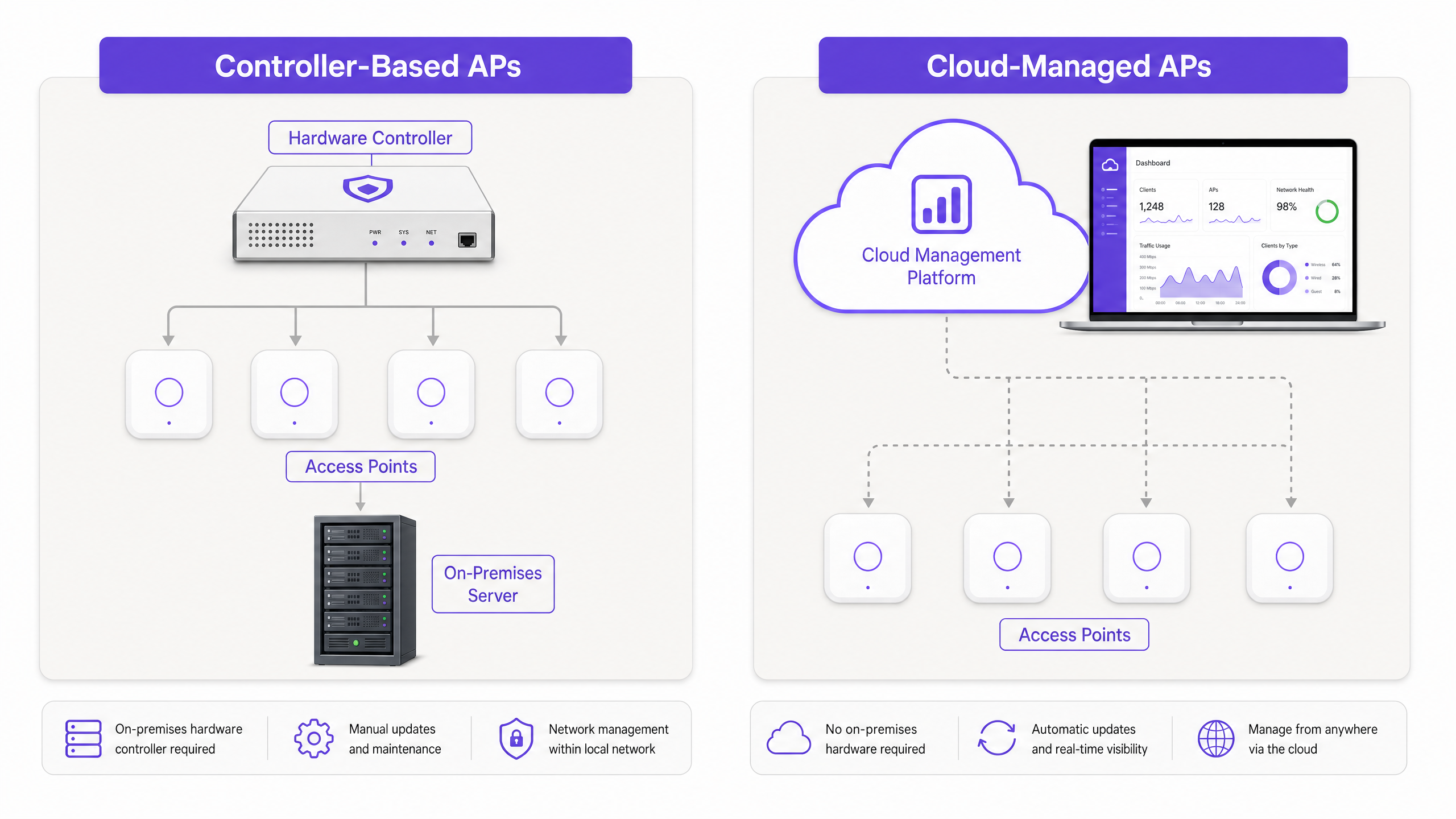
पारंपारिक कंट्रोलर-आधारित मॉडेलमध्ये, "लाइटवेट" APs त्यांचे व्यवस्थापन आणि अनेकदा त्यांचा डेटा ट्रॅफिक केंद्रीकृत हार्डवेअर किंवा व्हर्च्युअल उपकरण—वायरलेस LAN कंट्रोलर (WLC) येथे समाप्त करतात. APs भौतिक लेयर 1 आणि लेयर 2 रेडिओ फ्रिक्वेन्सी (RF) फंक्शन्स हाताळतात, परंतु बुद्धिमत्ता केंद्रीकृत असते.
- प्रोटोकॉल अवलंबित्व: APs वायरलेस ॲक्सेस पॉइंट्स (CAPWAP) प्रोटोकॉल (RFC 5415) च्या कंट्रोल आणि प्रोव्हिजनिंगचा वापर करून WLC शी संवाद साधतात.
- केंद्रीकृत प्रक्रिया: रोमिंग निर्णय, प्रमाणीकरण हँडशेक्स (जसे की 802.1X/EAP) आणि डायनॅमिक RF चॅनेल असाइनमेंट्स कंट्रोलरद्वारे प्रक्रिया केल्या जातात.
- डेटा प्लेन टनेलिंग: अनेक डिप्लॉयमेंट्समध्ये, क्लायंट डेटा ट्रॅफिक वायर्ड नेटवर्कवर बाहेर पडण्यापूर्वी WLC कडे परत टनेल केले जाते. हे मोठ्या कॅम्पसमध्ये केंद्रीकृत धोरण अंमलबजावणी आणि सरलीकृत VLAN व्यवस्थापनास अनुमती देते, परंतु यामुळे संभाव्य अडचण निर्माण होते.
उच्च-घनतेच्या वातावरणासाठी फायदे: कंट्रोलर-आधारित सिस्टीम अति-उच्च-घनतेच्या वातावरणात (उदा. स्टेडियम, मोठे सभागृह) उत्कृष्ट कार्य करतात. WLC कडे शेकडो APs मधील RF वातावरणाचे रिअल-टाइम, समग्र दृश्य असल्यामुळे, ते को-चॅनेल हस्तक्षेप कमी करण्यास समन्वय साधू शकते आणि मिलिसेकंद अचूकतेने 802.11r फास्ट BSS ट्रान्झिशन (FT) रोमिंग व्यवस्थापित करू शकते.
क्लाउड-व्यवस्थापित आर्किटेक्चर
क्लाउड-व्यवस्थापित आर्किटेक्चर्स कंट्रोल प्लेनचे विकेंद्रीकरण करतात. APs स्वतः स्थानिक RF व्यवस्थापन आणि डेटा फॉरवर्डिंगच्या बाबतीत "फॅट" किंवा स्वायत्त असतात, परंतु ते क्लाउड-होस्टेड व्यवस्थापन प्लॅटफॉर्मद्वारे केंद्रीकृतपणे ऑर्केस्ट्रेट केले जातात.
- आउट-ऑफ-बँड व्यवस्थापन: AP विक्रेत्याच्या क्लाउडशी सुरक्षित व्यवस्थापन टनेल (सामान्यतः HTTPS/TLS) स्थापित करते. कॉन्फिगरेशन, टेलिमेट्री आणि फर्मवेअर अपडेट्स या कनेक्शनद्वारे प्रवाहित होतात.
- स्थानिक ब्रेकआउट: क्लायंट डेटा ट्रॅफिक क्लाउडवर टनेल केले जात नाही. ते AP कनेक्ट केलेल्या स्विच पोर्टवर स्थानिकरित्या बाहेर पडते.
- स्थानिक टिकाऊपणा: जर क्लाउडशी इंटरनेट कनेक्शन खंडित झाले, तर AP विद्यमान क्लायंटना सेवा देणे, नवीन क्लायंटना प्रमाणीकरण करणे (स्थानिक RADIUS किंवा PSK वापरले असल्यास) आणि ट्रॅफिक राउट करणे सुरू ठेवते. तथापि, कनेक्शन पुनर्संचयित होईपर्यंत IT टीम रिअल-टाइम दृश्यमानता आणि कॉन्फिगरेशन बदल पुश करण्याची क्षमता गमावते.
सुरक्षा आणि अनुपालन परिणाम
दोन्ही आर्किटेक्चर्स WPA3-एंटरप्राइझ, 802.1X प्रमाणीकरण आणि रोग AP डिटेक्शनसह एंटरप्राइझ-ग्रेड सुरक्षा मानकांना समर्थन देतात. तथापि, अनुपालनाचा भार भिन्न असतो.
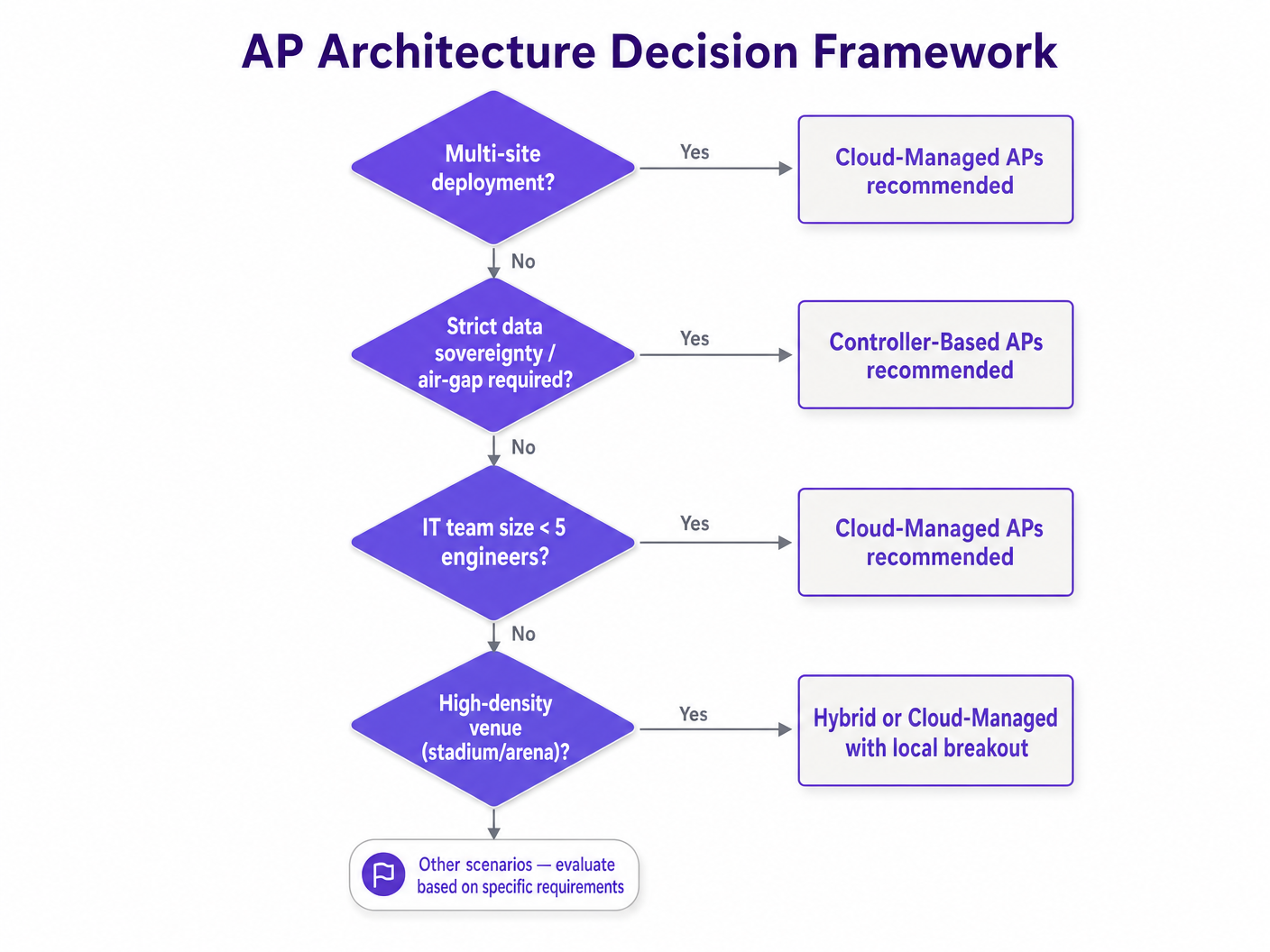
क्लाउड-व्यवस्थापित सिस्टीमसह, IT टीम्सने हे सुनिश्चित केले पाहिजे की विक्रेत्याचे क्लाउड प्लॅटफॉर्म संबंधित नियामक आवश्यकता (उदा. SOC 2 Type II, ISO 27001) पूर्ण करते आणि डेटा रेसिडेन्सी GDPR किंवा स्थानिक गोपनीयता कायद्यांशी जुळते. कठोर एअर-गॅपिंगची आवश्यकता असलेल्या अत्यंत संवेदनशील वातावरणासाठी—जसे की काही सरकारी किंवा संरक्षण सुविधा—स्थानिक LAN मध्ये पूर्णपणे कार्यरत असलेली कंट्रोलर-आधारित प्रणाली मानक राहते.
पेमेंट डेटा हाताळणाऱ्या वातावरणासाठी, दोन्ही आर्किटेक्चर्स PCI DSS अनुपालन प्राप्त करू शकतात. तथापि, नेटवर्क सेगमेंटेशन महत्त्वपूर्ण आहे. AP आर्किटेक्चर काहीही असले तरी, गेस्ट नेटवर्क, कॉर्पोरेट डिव्हाइसेस आणि POS टर्मिनल्स स्वतंत्र VLANs वर वेगळे केले पाहिजेत.
अंमलबजावणी मार्गदर्शक: डिप्लॉयमेंट आणि एकत्रीकरण
तुमच्या निवडलेल्या आर्किटेक्चरचा ऑपरेशनल परिणाम डिप्लॉयमेंट आणि चालू व्यवस्थापनादरम्यान, विशेषतः मल्टी-साइट परिस्थितींमध्ये, सर्वात स्पष्ट होतो.
झिरो-टच प्रोव्हिजनिंग विरुद्ध स्टेज्ड डिप्लॉयमेंट
क्लाउड-व्यवस्थापित: क्लाउड-व्यवस्थापित APs चा प्राथमिक ऑपरेशनल फायदा झिरो-टच प्रोव्हिजनिंग (ZTP) आहे. एक AP थेट दूरस्थ रिटेल स्टोअर किंवा हॉटेलमध्ये पाठवला जाऊ शकतो. प्लग इन केल्यावर, ते प्राप्त करते DHCP द्वारे IP पत्ता मिळवतो, क्लाउडशी संपर्क साधतो, त्याचे पूर्व-कॉन्फिगर केलेले प्रोफाइल डाउनलोड करतो आणि ब्रॉडकास्टिंग सुरू करतो. यामुळे महागड्या "ट्रक रोल्स" किंवा दूरस्थ ठिकाणी अत्यंत कुशल नेटवर्क अभियंते तैनात करण्याची गरज दूर होते.
कंट्रोलर-आधारित: कंट्रोलर-आधारित APs तैनात करण्यासाठी सामान्यतः अधिक स्टेजिंगची आवश्यकता असते. AP ला WLC शोधता आले पाहिजे (बहुतेकदा DHCP पर्याय 43 किंवा DNS रिझोल्यूशनद्वारे). WLC आणि APs दरम्यान फर्मवेअर अनेकदा व्यक्तिचलितपणे जुळवावे लागते. अनेक साइट्सवर रोलआउटसाठी, यासाठी अनेकदा शिपिंग करण्यापूर्वी हार्डवेअरची केंद्रीय स्तरावर स्टेजिंग करणे किंवा प्रत्येक साइटवर अभियंते तैनात करणे आवश्यक असते.
अतिथी बुद्धिमत्ता आणि विश्लेषण एकत्रित करणे
भौतिक APs तैनात करणे ही केवळ पायाभरणी आहे. नेटवर्कमधून व्यावसायिक मूल्य मिळवण्यासाठी, ठिकाणांनी त्यांचे हार्डवेअर Purple सारख्या अतिथी बुद्धिमत्ता प्लॅटफॉर्मसह एकत्रित केले पाहिजे.
Purple एक हार्डवेअर-अज्ञेयवादी आच्छादन म्हणून कार्य करते, जे प्रमुख विक्रेत्यांच्या (Cisco, Meraki, Aruba, Ruckus, Extreme) कंट्रोलर-आधारित आणि क्लाउड-व्यवस्थापित दोन्ही प्रणालींसह अखंडपणे एकत्रित होते.
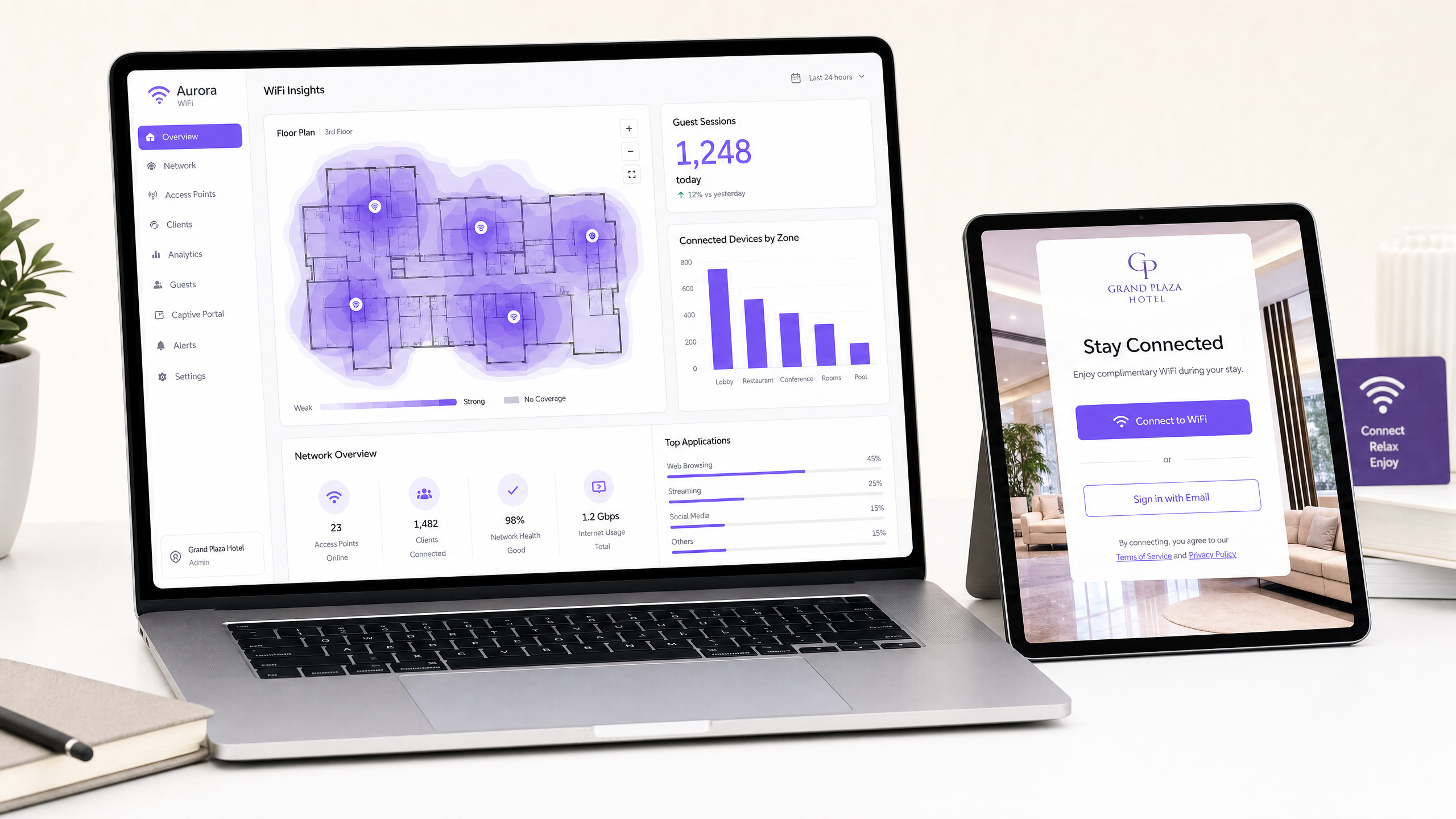
- प्रमाणीकरण आणि ऑनबोर्डिंग: Purple कॅप्टिव्ह पोर्टल सादरीकरण आणि प्रमाणीकरण हाताळते (सोशल लॉगिन, फॉर्म भरणे किंवा How a wi fi assistant Enables Passwordless Access in 2026 द्वारे). AP आर्किटेक्चरला फक्त RADIUS प्रमाणीकरण आणि अकाउंटिंगला समर्थन देण्याची आवश्यकता आहे, अप्रमाणित वापरकर्त्यांना Purple पोर्टलवर पुनर्निर्देशित करते.
- विश्लेषण डेटा: Purple त्याच्या विश्लेषण डॅशबोर्डला शक्ती देण्यासाठी APs कडून उपस्थिती आणि स्थान डेटा घेते. डेटा API द्वारे क्लाउड डॅशबोर्डवरून पुश केला गेला असो किंवा थेट स्थानिक WLC वरून पाठवला गेला असो, परिणामी मिळणारे अंतर्दृष्टी—थांबण्याचा वेळ, परत येण्याचे दर आणि पादचारी संख्या—सारखेच असतात. हा डेटा कसा तयार होतो याबद्दल अधिक सखोल माहितीसाठी, Heatmapping vs Presence Analytics: Technical Differences वरील आमचे मार्गदर्शक पहा.
सर्वोत्तम पद्धती आणि जोखीम कमी करणे
निवडलेल्या आर्किटेक्चरची पर्वा न करता, काही मूलभूत सर्वोत्तम पद्धती तैनातीची जोखीम कमी करतात आणि दीर्घकालीन स्थिरता सुनिश्चित करतात.
- व्यवस्थापन ट्रॅफिकला प्राधान्य द्या: क्लाउड-व्यवस्थापित तैनातीसाठी, APs चे क्लाउडशी असलेले कनेक्शन महत्त्वाचे आहे. WAN सर्किटवर व्यवस्थापन ट्रॅफिकला QoS-प्राधान्य दिले असल्याची खात्री करा. जर ठिकाण अतिथी ट्रॅफिक आणि व्यवस्थापन या दोन्हीसाठी इंटरनेट कनेक्शन सामायिक करत असेल, तर पीक अवर्समध्ये संतृप्त लिंकमुळे APs क्लाउड डॅशबोर्डवर ऑफलाइन दिसू शकतात.
- स्टेज केलेले फर्मवेअर अपग्रेड्स: क्लाउड प्लॅटफॉर्म अनेकदा फर्मवेअर अपडेट्स आपोआप पुश करतात. यामुळे सुरक्षा पॅच त्वरित लागू होतात याची खात्री असली तरी, यामुळे अनपेक्षित बग्सचा धोका निर्माण होतो. तुमच्या क्लाउड डॅशबोर्डला अपडेट्स स्टेज करण्यासाठी कॉन्फिगर करा—संपूर्ण इस्टेटमध्ये रोलआउट करण्यापूर्वी APs च्या लहान उपसंच (उदा. IT ऑफिस) वर नवीन फर्मवेअरची चाचणी करा.
- केवळ कव्हरेजसाठी नाही, तर घनतेसाठी डिझाइन करा: आधुनिक तैनाती सिग्नलच्या कमतरतेमुळे क्वचितच अयशस्वी होतात; त्या क्षमता संपल्यामुळे किंवा सह-चॅनेल हस्तक्षेपांमुळे अयशस्वी होतात. योग्य प्रेडिक्टिव्ह आणि सक्रिय RF सर्वेक्षण करा, विशेषतः लॉबी किंवा कॉन्फरन्स रूमसारख्या उच्च-घनतेच्या क्षेत्रांमध्ये योग्य चॅनेल ओव्हरलॅप आणि ट्रान्समिट पॉवर सेटिंग्ज सुनिश्चित करा. एकूण अनुभव सुधारण्याबद्दलच्या अंतर्दृष्टीसाठी, How To Improve Guest Satisfaction: The Ultimate Playbook चे पुनरावलोकन करा.
- VLAN आर्किटेक्चरचे मानकीकरण करा: सर्व साइट्सवर सुसंगत VLAN स्कीमा लागू करा. व्यवस्थापन इंटरफेस, कॉर्पोरेट उपकरणे, IoT सेन्सर्स आणि अतिथी ट्रॅफिक वेगळे करा.
ROI आणि व्यावसायिक परिणाम
कंट्रोलर-आधारित आणि क्लाउड-व्यवस्थापित APs मधील निर्णय 5 ते 7 वर्षांच्या जीवनचक्रावरील एकूण मालकी खर्चाच्या (TCO) विश्लेषणाद्वारे घेतला पाहिजे.
- भांडवली खर्च (CapEx): WLC उपकरणांच्या खर्चामुळे आणि संबंधित रिडंडंसी आवश्यकतांमुळे कंट्रोलर-आधारित प्रणालींमध्ये अनेकदा प्रारंभिक CapEx जास्त असतो. क्लाउड-व्यवस्थापित APs मध्ये सामान्यतः हार्डवेअर खर्च कमी असतो परंतु त्यांना सतत सदस्यता परवान्याची आवश्यकता असते.
- कार्यकारी खर्च (OpEx): क्लाउड-व्यवस्थापित प्रणाली अनेक-साइट तैनातीमध्ये सातत्याने कमी OpEx दर्शवतात. झिरो-टच प्रोव्हिजनिंग, केंद्रीकृत समस्यानिवारण आणि स्वयंचलित फर्मवेअर व्यवस्थापनामुळे निर्माण होणारी बचत अनेकदा आवर्ती परवाना खर्चाची भरपाई करते.
- व्यवसाय चपळता: नवीन साइट्स वेगाने तैनात करण्याची, नेटवर्क-व्यापी धोरण बदल त्वरित लागू करण्याची आणि विश्लेषण प्लॅटफॉर्मसह अखंडपणे एकत्रित होण्याची क्षमता एक मूर्त व्यावसायिक फायदा प्रदान करते, विशेषतः किरकोळ आणि आदरातिथ्य यांसारख्या वेगाने बदलणाऱ्या क्षेत्रांमध्ये.
त्यांच्या कार्यात्मक क्षमता आणि साइट टोपोलॉजीशी जुळणारे आर्किटेक्चर निवडून, आणि त्यावर Purple सारखे हार्डवेअर-अज्ञेयवादी बुद्धिमत्ता प्लॅटफॉर्म स्तरित करून, एंटरप्राइझ IT टीम्स त्यांचे WiFi नेटवर्क एका आवश्यक खर्च केंद्रातून एक धोरणात्मक, महसूल-सक्षम मालमत्तेमध्ये रूपांतरित करू शकतात.
महत्वाच्या व्याख्या
WLC (Wireless LAN Controller)
A centralised hardware or virtual appliance that manages configuration, RF coordination, and security policies for multiple 'lightweight' access points.
The core component of a controller-based architecture, representing both a powerful management tool and a potential single point of failure.
CAPWAP
Control and Provisioning of Wireless Access Points. A standard protocol (RFC 5415) used by WLCs to manage a collection of APs.
The tunnel through which controller-based APs receive instructions and often route client data traffic.
Zero-Touch Provisioning (ZTP)
The ability to deploy network hardware at a remote site without manual configuration; the device automatically connects to a cloud platform to download its profile.
The primary driver for operational expenditure (OpEx) savings in multi-site cloud-managed deployments.
Local Survivability
The ability of a cloud-managed AP to continue routing local traffic and authenticating users even if the WAN connection to the cloud dashboard is lost.
A critical evaluation metric for cloud platforms, ensuring that a WAN outage does not result in a complete LAN failure.
Out-of-Band Management
An architecture where management traffic (telemetry, configuration) is separated from user data traffic.
The foundational security principle of cloud-managed APs, ensuring user data remains on the local network.
802.11r (Fast BSS Transition)
An IEEE standard that permits continuous connectivity aboard wireless devices in motion, with fast and secure handoffs from one AP to another.
Crucial for seamless roaming in high-density environments; historically handled better by centralised controllers.
Data Sovereignty
The concept that digital data is subject to the laws of the country in which it is located.
A key consideration when evaluating cloud-managed platforms to ensure compliance with regulations like GDPR.
Air-Gapped Network
A network security measure employed to ensure that a secure computer network is physically isolated from unsecured networks, such as the public Internet.
Environments requiring true air-gapping mandate the use of on-premises controller-based architectures.
सोडवलेली उदाहरणे
A national retail chain is deploying guest WiFi across 300 mid-sized stores. They have a lean central IT team of four engineers and no on-site technical staff. They require analytics to track dwell time and footfall.
Deploy cloud-managed APs across all locations. Utilise Zero-Touch Provisioning (ZTP) to ship APs directly to store managers, who simply plug them into the PoE switch. Configure the cloud dashboard to push a standardised SSIDs and VLAN configuration. Integrate the cloud controller with Purple via API/RADIUS for captive portal and analytics.
A newly constructed 60,000-seat sports stadium requires pervasive WiFi for fan engagement, ticketing, and POS systems. The environment will experience massive, simultaneous client onboarding and requires seamless roaming as crowds move through concourses.
Deploy a controller-based architecture with redundant high-availability WLC appliances in the on-site data centre. Utilise high-density directional antennas. Configure the WLC for aggressive load balancing, band steering, and 802.11r Fast BSS Transition.
सराव प्रश्न
Q1. A boutique hotel chain is upgrading its WiFi across 15 properties. The IT Director wants to move to cloud-managed APs but the Compliance Officer is concerned about PCI DSS compliance for the point-of-sale (POS) terminals in the restaurants. What is the correct architectural approach?
टीप: Consider how data plane traffic is handled in cloud-managed deployments and the requirements of network segmentation.
नमुना उत्तर पहा
Cloud-managed APs are fully suitable, provided proper network segmentation is implemented. The IT team must configure separate VLANs for guest WiFi and the POS network. Because cloud-managed APs utilise out-of-band management, the POS data traffic will break out locally and will not traverse the vendor's cloud, satisfying PCI DSS requirements for the data plane. The vendor's cloud platform must hold appropriate security attestations (e.g., SOC 2) for the management plane.
Q2. During a peak trading event, the primary WAN link at a retail store fails. The store falls back to a low-bandwidth 4G connection. The cloud-managed APs remain online, but the IT team reports they cannot push configuration changes to the store via the dashboard. Why is this happening, and how should the network have been designed to prevent it?
टीप: Consider the relationship between management traffic, data traffic, and QoS on constrained links.
नमुना उत्तर पहा
The APs are operating in 'local survivability' mode. The low-bandwidth 4G connection is likely saturated by essential POS or guest traffic, causing the management tunnels (HTTPS/TLS) to the cloud controller to drop or time out. To prevent this, the network architect should have implemented Quality of Service (QoS) rules on the edge router/firewall to guarantee a minimum bandwidth allocation and prioritise the AP management traffic over the failover link.
Q3. A university campus with an existing controller-based architecture wants to deploy Purple for guest analytics. The network team states they cannot integrate because they do not use cloud-managed APs. Is this correct?
टीप: Consider Purple's integration methodology and hardware dependencies.
नमुना उत्तर पहा
No, this is incorrect. Purple is hardware-agnostic and does not require a cloud-managed architecture. The university's existing Wireless LAN Controllers (WLCs) can be configured to integrate with Purple using standard RADIUS authentication and accounting protocols, redirecting guest traffic to the Purple captive portal. The analytics data will be generated identically to a cloud-managed deployment.