
Comparando Access Points Baseados em Controladora vs. Gerenciados em Nuvem
Este guia de referência técnica compara as arquiteturas de Access Point baseadas em controladora e gerenciadas em nuvem para ambientes corporativos. Ele fornece aos líderes de TI uma estrutura neutra em relação a fornecedores para avaliar modelos de implantação, custo total de propriedade e recursos de integração com plataformas de inteligência de visitantes como a Purple.
Ouça este guia
Ver transcrição do podcast
कार्यकारी सारांश
एंटरप्राइज़ वेन्यू ऑपरेटरों के लिए, कंट्रोलर-बेस्ड और क्लाउड-मैनेज्ड एक्सेस पॉइंट्स (APs) के बीच आर्किटेक्चरल निर्णय अगले पांच से सात वर्षों के लिए उनके नेटवर्क की परिचालन चपलता, सुरक्षा स्थिति और कुल स्वामित्व लागत (TCO) को परिभाषित करता है। जैसे-जैसे Hospitality , Retail , और Transport में वेन्यू अपने भौतिक स्थानों को डिजिटल बनाते हैं, WiFi अब केवल एक सुविधा नहीं रह गया है; यह IoT सेंसर, पॉइंट-ऑफ़-सेल (POS) सिस्टम और गेस्ट इंटेलिजेंस प्लेटफ़ॉर्म के लिए महत्वपूर्ण ट्रांसपोर्ट लेयर है。
ऐतिहासिक रूप से, स्टेडियमों और बड़े सम्मेलन केंद्रों की उच्च-घनत्व मांगों ने जटिल RF समन्वय और निर्बाध रोमिंग को संभालने के लिए ऑन-प्रिमाइसेस वायरलेस LAN कंट्रोलर्स (WLCs) को अनिवार्य कर दिया था। हालाँकि, आधुनिक क्लाउड-मैनेज्ड आर्किटेक्चर ने, AI-संचालित रेडियो रिसोर्स मैनेजमेंट (RRM) द्वारा संवर्धित होकर, भौतिक कंट्रोलर उपकरणों के प्रबंधन के परिचालन ओवरहेड को समाप्त करते हुए इस प्रदर्शन अंतर को काफी हद तक कम कर दिया है।
यह तकनीकी संदर्भ मार्गदर्शिका नेटवर्क आर्किटेक्ट्स और IT निदेशकों को AP आर्किटेक्चर के मूल्यांकन के लिए एक वेंडर-न्यूट्रल फ्रेमवर्क प्रदान करती है। यह कंट्रोल प्लेन प्रबंधन में तकनीकी अंतरों का विवरण देती है, वास्तविक दुनिया के परिनियोजन परिदृश्यों की जांच करती है, और यह रेखांकित करती है कि ये आर्किटेक्चर मापने योग्य व्यावसायिक परिणाम प्राप्त करने के लिए एंटरप्राइज़ Guest WiFi और WiFi Analytics प्लेटफ़ॉर्म के साथ कैसे एकीकृत होते हैं。
तकनीकी डीप-डाइव: आर्किटेक्चर और कंट्रोल प्लेन
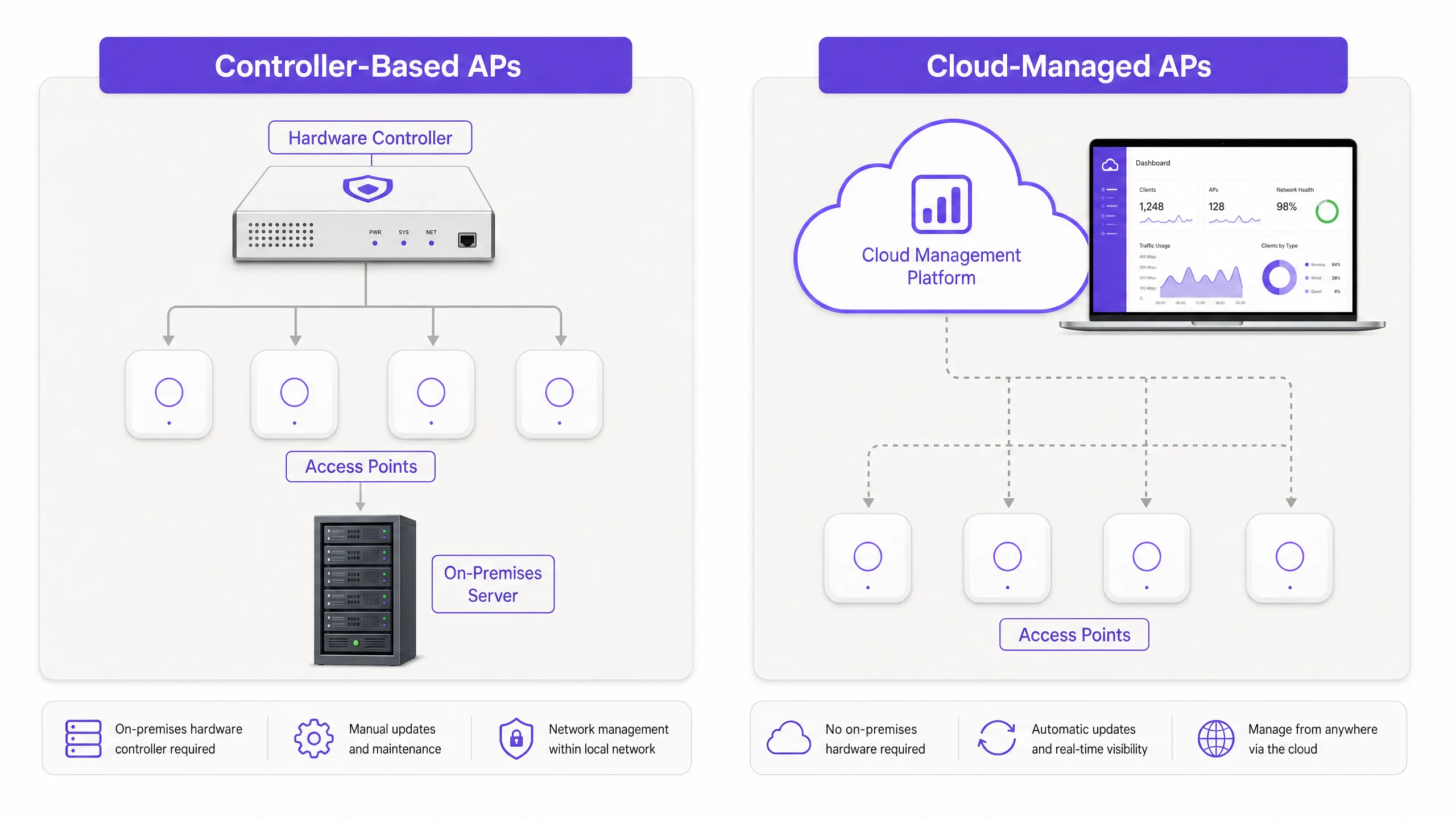
कंट्रोलर-बेस्ड और क्लाउड-मैनेज्ड APs के बीच मूलभूत अंतर इस बात में निहित है कि प्रबंधन और कंट्रोल प्लेन कहाँ स्थित हैं, और APs बाकी नेटवर्क इंफ्रास्ट्रक्चर के साथ कैसे इंटरैक्ट करते हैं。
कंट्रोलर-बेस्ड आर्किटेक्चर
एक पारंपरिक कंट्रोलर-बेस्ड मॉडल में, "लाइटवेट" APs अपने प्रबंधन और अक्सर अपने डेटा ट्रैफ़िक को एक केंद्रीकृत हार्डवेयर या वर्चुअल उपकरण—वायरलेस LAN कंट्रोलर (WLC) पर समाप्त करते हैं। APs भौतिक लेयर 1 और लेयर 2 रेडियो फ़्रीक्वेंसी (RF) कार्यों को संभालते हैं, लेकिन इंटेलिजेंस केंद्रीकृत होती है。
- प्रोटोकॉल निर्भरता: APs कंट्रोल एंड प्रोविज़निंग ऑफ़ वायरलेस एक्सेस पॉइंट्स (CAPWAP) प्रोटोकॉल (RFC 5415) का उपयोग करके WLC के साथ संचार करते हैं।
- केंद्रीकृत प्रोसेसिंग: रोमिंग निर्णय, प्रमाणीकरण हैंडशेक (जैसे 802.1X/EAP), और डायनामिक RF चैनल असाइनमेंट कंट्रोलर द्वारा प्रोसेस किए जाते हैं。
- डेटा प्लेन टनलिंग: कई डिप्लॉयमेंट में, क्लाइंट डेटा ट्रैफ़िक को वायर्ड नेटवर्क पर ब्रेक आउट होने से पहले वापस WLC में टनल किया जाता है। यह एक बड़े कैंपस में केंद्रीकृत नीति प्रवर्तन और सरलीकृत VLAN प्रबंधन की अनुमति देता है, लेकिन यह एक संभावित अड़चन (bottleneck) पैदा करता है。
उच्च-घनत्व वाले वातावरण के लिए लाभ: कंट्रोलर-बेस्ड सिस्टम अल्ट्रा-हाई-डेंसिटी वातावरण (जैसे, स्टेडियम, बड़े ऑडिटोरियम) में उत्कृष्ट होते हैं। क्योंकि WLC के पास सैकड़ों APs में RF वातावरण का वास्तविक समय, समग्र दृश्य होता है, यह को-चैनल इंटरफेरेंस शमन का समन्वय कर सकता है और मिलीसेकंड सटीकता के साथ 802.11r फास्ट BSS ट्रांज़िशन (FT) रोमिंग का प्रबंधन कर सकता है。
क्लाउड-मैनेज्ड आर्किटेक्चर
क्लाउड-मैनेज्ड आर्किटेक्चर कंट्रोल प्लेन को विकेंद्रीकृत करते हैं। स्थानीय RF प्रबंधन और डेटा फ़ॉरवर्डिंग के संदर्भ में APs स्वयं "फैट" या स्वायत्त होते हैं, लेकिन उन्हें क्लाउड-होस्टेड प्रबंधन प्लेटफ़ॉर्म के माध्यम से केंद्रीय रूप से ऑर्केस्ट्रेटेड किया जाता है。
- आउट-ऑफ़-बैंड मैनेजमेंट: AP वेंडर के क्लाउड के लिए एक सुरक्षित प्रबंधन टनल (आमतौर पर HTTPS/TLS) स्थापित करता है। कॉन्फ़िगरेशन, टेलीमेट्री और फ़र्मवेयर अपडेट इस कनेक्शन के माध्यम से प्रवाहित होते हैं。
- लोकल ब्रेकआउट: क्लाइंट डेटा ट्रैफ़िक को क्लाउड पर टनल नहीं किया जाता है। यह स्थानीय रूप से उस स्विच पोर्ट पर ब्रेक आउट होता है जिससे AP जुड़ा होता है।
- लोकल सर्वाइवेबिलिटी: यदि क्लाउड से इंटरनेट कनेक्शन कट जाता है, तो AP मौजूदा क्लाइंट्स को सेवा देना, नए क्लाइंट्स को प्रमाणित करना (यदि स्थानीय RADIUS या PSK का उपयोग किया जाता है), और ट्रैफ़िक को रूट करना जारी रखता है। हालाँकि, IT टीम वास्तविक समय की दृश्यता और कनेक्शन बहाल होने तक कॉन्फ़िगरेशन परिवर्तन पुश करने की क्षमता खो देती है。
सुरक्षा और अनुपालन निहितार्थ
दोनों आर्किटेक्चर WPA3-Enterprise, 802.1X प्रमाणीकरण और दुष्ट (rogue) AP पहचान सहित एंटरप्राइज़-ग्रेड सुरक्षा मानकों का समर्थन करते हैं। हालाँकि, अनुपालन का बोझ अलग-अलग होता है。
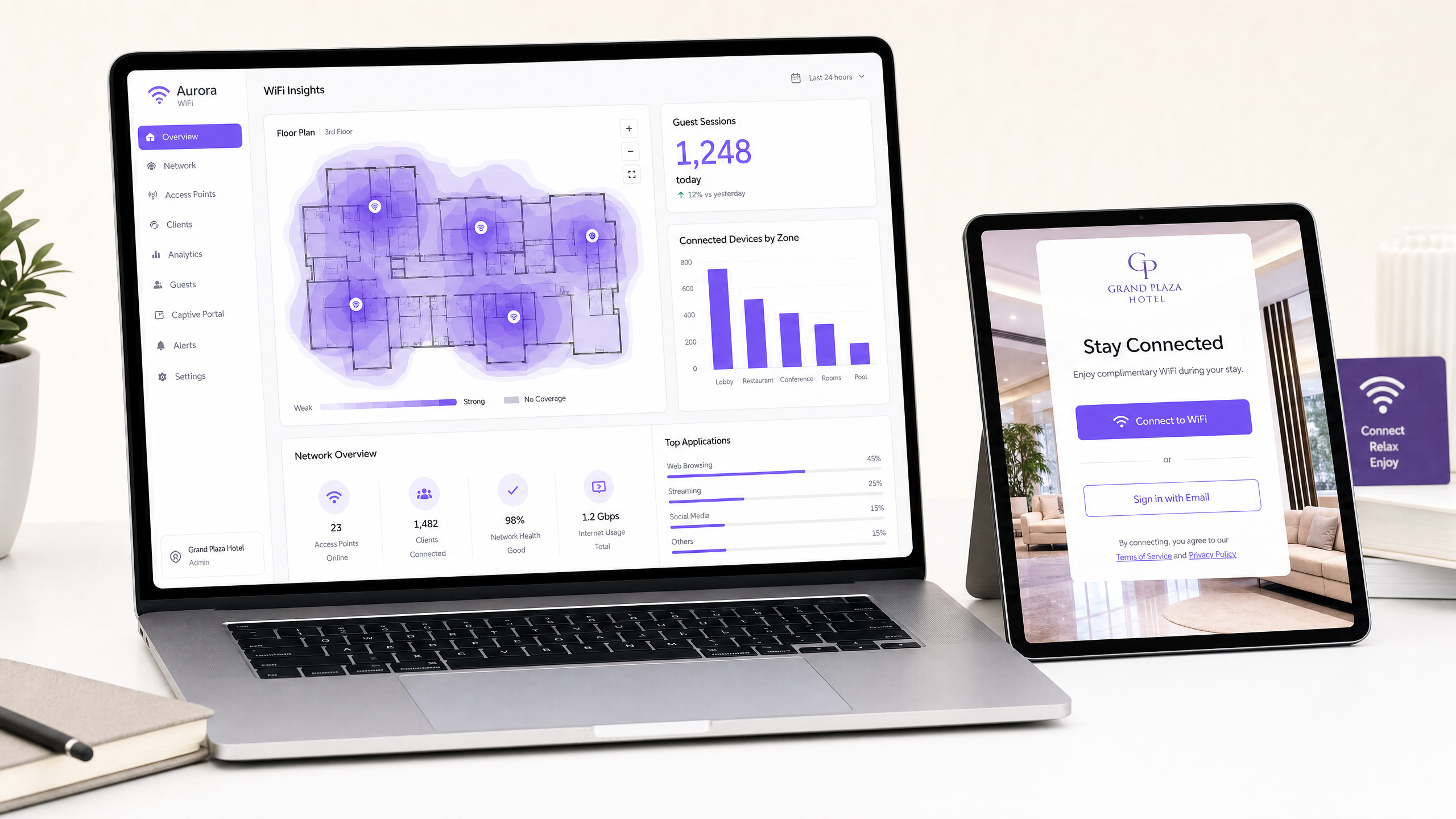
क्लाउड-मैनेज्ड सिस्टम के साथ, IT टीमों को यह सुनिश्चित करना चाहिए कि वेंडर का क्लाउड प्लेटफ़ॉर्म प्रासंगिक विनियामक आवश्यकताओं (जैसे, SOC 2 Type II, ISO 27001) को पूरा करता है और डेटा रेजीडेंसी GDPR या स्थानीय गोपनीयता कानूनों के अनुरूप है। अत्यधिक संवेदनशील वातावरण के लिए जिन्हें सख्त एयर-गैपिंग की आवश्यकता होती है—जैसे कि कुछ सरकारी या रक्षा सुविधाएँ—पूरी तरह से स्थानीय LAN के भीतर काम करने वाला कंट्रोलर-बेस्ड सिस्टम मानक बना हुआ है。
भुगतान डेटा को संभालने वाले वातावरण के लिए, दोनों आर्किटेक्चर PCI DSS अनुपालन प्राप्त कर सकते हैं। हालाँकि, नेटवर्क सेगमेंटेशन महत्वपूर्ण है। AP आर्किटेक्चर की परवाह किए बिना, गेस्ट नेटवर्क, कॉर्पोरेट डिवाइस और POS टर्मिनलों को अलग-अलग VLAN पर आइसोलेट किया जाना चाहिए。
कार्यान्वयन मार्गदर्शिका: डिप्लॉयमेंट और एकीकरण
आपके चुने हुए आर्किटेक्चर का परिचालन प्रभाव डिप्लॉयमेंट और चल रहे प्रबंधन के दौरान सबसे अधिक स्पष्ट हो जाता है, विशेष रूप से मल्टी-साइट परिदृश्यों में。
ज़ीरो-टच प्रोविज़निंग बनाम स्टेज़्ड डिप्लॉयमेंट
क्लाउड-मैनेज्ड: क्लाउड-मैनेज्ड APs का प्राथमिक परिचालन लाभ ज़ीरो-टच प्रोविज़निंग (ZTP) है। एक AP को सीधे दूरस्थ रिटेल स्टोर या होटल में भेजा जा सकता है। प्लग इन होने पर, यह DHCP के माध्यम से एक IP पता प्राप्त करता है, क्लाउड तक पहुँचता है, अपनी पूर्व-कॉन्फ़िगर की गई प्रोफ़ाइल डाउनलोड करता है, और प्रसारण शुरू करता है। यह महंगे "ट्रक रोल्स" या दूरस्थ साइटों पर अत्यधिक कुशल नेटवर्क इंजीनियरों को तैनात करने की आवश्यकता को समाप्त करता है。
कंट्रोलर-बेस्ड: कंट्रोलर-बेस्ड APs को तैनात करने के लिए आमतौर पर अधिक स्टेजिंग की आवश्यकता होती है। AP को WLC (अक्सर DHCP विकल्प 43 या DNS रिज़ॉल्यूशन के माध्यम से) खोजने में सक्षम होना चाहिए। फ़र्मवेयर को अक्सर WLC और APs के बीच मैन्युअल रूप से संरेखित किया जाना चाहिए। मल्टी-साइट रोलआउट के लिए, इसके लिए अक्सर शिपिंग से पहले हार्डवेयर को केंद्रीय रूप से स्टेज करने, या प्रत्येक साइट पर इंजीनियरों को तैनात करने की आवश्यकता होती है。
गेस्ट इंटेलिजेंस और एनालिटिक्स को एकीकृत करना
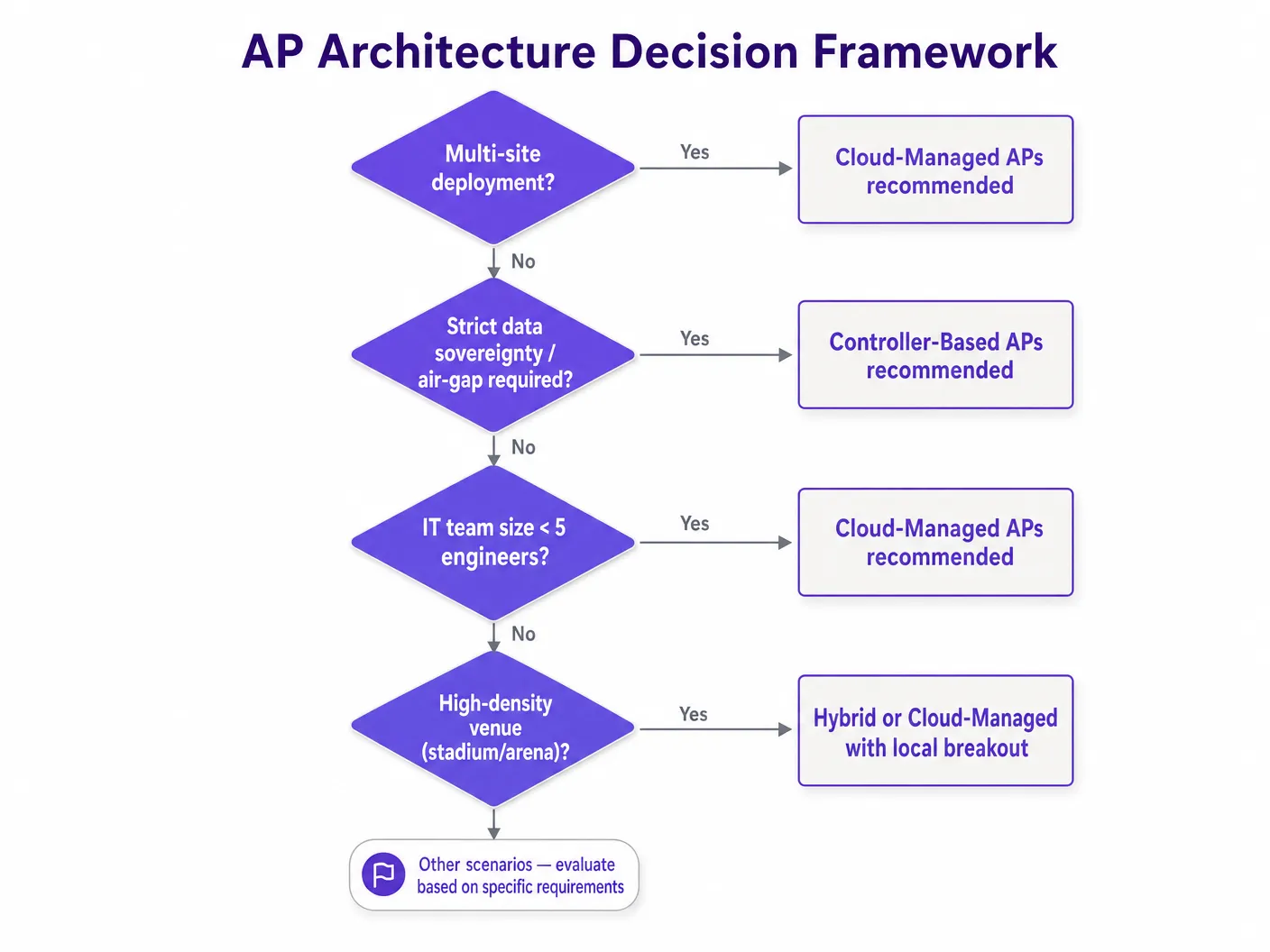
भौतिक APs को तैनात करना केवल आधार है। नेटवर्क से व्यावसायिक मूल्य निकालने के लिए, वेन्यू को अपने हार्डवेयर को Purple जैसे गेस्ट इंटेलिजेंस प्लेटफ़ॉर्म के साथ एकीकृत करना चाहिए。
Purple एक हार्डवेयर-एग्नोस्टिक ओवरले के रूप में कार्य करता है, जो प्रमुख वेंडरों (Cisco, Meraki, Aruba, Ruckus, Extreme) के कंट्रोलर-बेस्ड और क्लाउड-मैनेज्ड दोनों सिस्टम के साथ सहजता से एकीकृत होता है。
- प्रमाणीकरण और ऑनबोर्डिंग: Purple Captive Portal प्रस्तुति और प्रमाणीकरण (सोशल लॉगिन, फॉर्म फिल, या How a wi fi assistant Enables Passwordless Access in 2026 के माध्यम से) को संभालता है। AP आर्किटेक्चर को केवल RADIUS प्रमाणीकरण और अकाउंटिंग का समर्थन करने की आवश्यकता है, जो अप्रमाणित उपयोगकर्ताओं को Purple पोर्टल पर रीडायरेक्ट करता है。
- एनालिटिक्स डेटा: Purple अपने एनालिटिक्स डैशबोर्ड को पावर देने के लिए APs से उपस्थिति और स्थान डेटा प्राप्त करता है। चाहे डेटा क्लाउड डैशबोर्ड से API के माध्यम से पुश किया गया हो या सीधे स्थानीय WLC से भेजा गया हो, परिणामी अंतर्दृष्टि—ड्वेल टाइम, रिटर्न रेट और फुटफॉल—समान हैं। यह डेटा कैसे उत्पन्न होता है, इसके बारे में गहराई से जानने के लिए, Heatmapping vs Presence Analytics: Technical Differences पर हमारी मार्गदर्शिका देखें。
सर्वोत्तम प्रथाएँ और जोखिम न्यूनीकरण
चुने गए आर्किटेक्चर की परवाह किए बिना, कुछ मूलभूत सर्वोत्तम प्रथाएँ डिप्लॉयमेंट जोखिमों को कम करती हैं और दीर्घकालिक स्थिरता सुनिश्चित करती हैं。
- प्रबंधन ट्रैफ़िक को प्राथमिकता दें: क्लाउड-मैनेज्ड डिप्लॉयमेंट के लिए, क्लाउड से APs का कनेक्शन महत्वपूर्ण है। सुनिश्चित करें कि WAN सर्किट पर प्रबंधन ट्रैफ़िक QoS-प्राथमिकता प्राप्त है। यदि वेन्यू गेस्ट ट्रैफ़िक और प्रबंधन दोनों के लिए एक इंटरनेट कनेक्शन साझा करता है, तो पीक आवर्स के दौरान एक संतृप्त लिंक APs को क्लाउड डैशबोर्ड पर ऑफ़लाइन दिखाई देने का कारण बन सकता है。
- स्टेज़्ड फ़र्मवेयर अपग्रेड: क्लाउड प्लेटफ़ॉर्म अक्सर फ़र्मवेयर अपडेट स्वचालित रूप से पुश करते हैं। जबकि यह सुनिश्चित करता है कि सुरक्षा पैच तुरंत लागू किए गए हैं, यह अप्रत्याशित बग का जोखिम पेश करता है। अपडेट को स्टेज करने के लिए अपने क्लाउड डैशबोर्ड को कॉन्फ़िगर करें—संपूर्ण एस्टेट में रोल आउट करने से पहले APs के एक छोटे उपसमूह (जैसे, IT कार्यालय) पर नए फ़र्मवेयर का परीक्षण करें。
- घनत्व के लिए डिज़ाइन करें, केवल कवरेज के लिए नहीं: आधुनिक डिप्लॉयमेंट शायद ही कभी सिग्नल की कमी के कारण विफल होते हैं; वे क्षमता की कमी या को-चैनल इंटरफेरेंस के कारण विफल होते हैं। उचित पूर्वानुमानित और सक्रिय RF सर्वेक्षण करें, उचित चैनल ओवरलैप और ट्रांसमिट पावर सेटिंग्स सुनिश्चित करें, विशेष रूप से लॉबी या सम्मेलन कक्ष जैसे उच्च-घनत्व वाले क्षेत्रों में। समग्र अनुभव को बेहतर बनाने के बारे में अंतर्दृष्टि के लिए, How To Improve Guest Satisfaction: The Ultimate Playbook की समीक्षा करें。
- VLAN आर्किटेक्चर का मानकीकरण करें: सभी साइटों पर एक सुसंगत VLAN स्कीमा लागू करें। प्रबंधन इंटरफेस, कॉर्पोरेट डिवाइस, IoT सेंसर और गेस्ट ट्रैफ़िक को अलग करें。
ROI और व्यावसायिक प्रभाव
कंट्रोलर-बेस्ड और क्लाउड-मैनेज्ड APs के बीच का निर्णय 5-से-7-वर्षीय जीवनचक्र में कुल स्वामित्व लागत (TCO) विश्लेषण द्वारा संचालित होना चाहिए。
- पूंजीगत व्यय (CapEx): WLC उपकरणों की लागत और संबंधित अतिरेक (redundancy) आवश्यकताओं के कारण कंट्रोलर-बेस्ड सिस्टम में अक्सर उच्च प्रारंभिक CapEx होता है। क्लाउड-मैनेज्ड APs में आमतौर पर हार्डवेयर लागत कम होती है लेकिन चल रहे सब्सक्रिप्शन लाइसेंसिंग की आवश्यकता होती है。
- परिचालन व्यय (OpEx): क्लाउड-मैनेज्ड सिस्टम लगातार मल्टी-साइट डिप्लॉयमेंट में कम OpEx प्रदर्शित करते हैं। ज़ीरो-टच प्रोविज़निंग, केंद्रीकृत समस्या निवारण और स्वचालित फ़र्मवेयर प्रबंधन द्वारा उत्पन्न बचत अक्सर आवर्ती लाइसेंसिंग लागतों की भरपाई करती है。
- व्यावसायिक चपलता: नई साइटों को तेज़ी से तैनात करने, नेटवर्क-व्यापी नीति परिवर्तनों को तुरंत पुश करने और एनालिटिक्स प्लेटफ़ॉर्म के साथ सहजता से एकीकृत करने की क्षमता एक ठोस व्यावसायिक लाभ प्रदान करती है, विशेष रूप से रिटेल और हॉस्पिटैलिटी जैसे तेज़ी से आगे बढ़ने वाले क्षेत्रों में。
अपनी परिचालन क्षमताओं और साइट टोपोलॉजी के साथ संरेखित आर्किटेक्चर का चयन करके, और शीर्ष पर Purple जैसे हार्डवेयर-एग्नोस्टिक इंटेलिजेंस प्लेटफ़ॉर्म को लेयर करके, एंटरप्राइज़ IT टीमें अपने WiFi नेटवर्क को एक आवश्यक लागत केंद्र से एक रणनीतिक, राजस्व-सक्षम संपत्ति में बदल सकती हैं。
Definições principais
WLC (Wireless LAN Controller)
Um hardware centralizado ou dispositivo virtual que gerencia a configuração, coordenação de RF e políticas de segurança para múltiplos access points 'lightweight'.
O componente central de uma arquitetura baseada em controladora, representando tanto uma poderosa ferramenta de gerenciamento quanto um potencial ponto único de falha.
CAPWAP
Control and Provisioning of Wireless Access Points. Um protocolo padrão (RFC 5415) usado por WLCs para gerenciar uma coleção de APs.
O túnel através do qual os APs baseados em controladora recebem instruções e, frequentemente, roteiam o tráfego de dados dos clientes.
Zero-Touch Provisioning (ZTP)
A capacidade de implantar hardware de rede em um local remoto sem configuração manual; o dispositivo se conecta automaticamente a uma plataforma em nuvem para baixar seu perfil.
O principal fator para redução de despesas operacionais (OpEx) em implantações gerenciadas em nuvem em múltiplos locais.
Local Survivability
A capacidade de um AP gerenciado em nuvem de continuar roteando o tráfego local e autenticando usuários mesmo se a conexão WAN com o painel de controle na nuvem for perdida.
Uma métrica de avaliação crítica para plataformas em nuvem, garantindo que uma interrupção na WAN não resulte em uma falha completa da LAN.
Out-of-Band Management
Uma arquitetura onde o tráfego de gerenciamento (telemetria, configuração) é separado do tráfego de dados do usuário.
O princípio fundamental de segurança dos APs gerenciados em nuvem, garantindo que os dados do usuário permaneçam na rede local.
802.11r (Fast BSS Transition)
Um padrão IEEE que permite conectividade contínua em dispositivos sem fio em movimento, com transições rápidas e seguras de um AP para outro.
Crucial para roaming contínuo em ambientes de alta densidade; historicamente melhor gerenciado por controladoras centralizadas.
Data Sovereignty
O conceito de que os dados digitais estão sujeitos às leis do país no qual estão localizados.
Uma consideração fundamental ao avaliar plataformas gerenciadas em nuvem para garantir a conformidade com regulamentações como o GDPR.
Air-Gapped Network
Uma medida de segurança de rede empregada para garantir que uma rede de computadores segura esteja fisicamente isolada de redes não seguras, como a internet pública.
Ambientes que exigem isolamento físico real (air-gapping) exigem o uso de arquiteturas locais baseadas em controladora.
Exemplos práticos
Uma rede varejista nacional está implantando WiFi para visitantes em 300 lojas de médio porte. Eles têm uma equipe de TI central enxuta de quatro engenheiros e nenhum pessoal técnico no local. Eles exigem análises para rastrear o tempo de permanência e o fluxo de pessoas.
Implantar APs gerenciados em nuvem em todos os locais. Utilizar o Zero-Touch Provisioning (ZTP) para enviar os APs diretamente aos gerentes das lojas, que simplesmente os conectam ao switch PoE. Configurar o painel de controle em nuvem para aplicar SSIDs padronizados e configuração de VLAN. Integrar a controladora em nuvem com a Purple via API/RADIUS para Captive Portal e análises.
Um estádio esportivo recém-construído com capacidade para 60.000 pessoas exige WiFi onipresente para engajamento dos torcedores, bilheteria e sistemas de PDV. O ambiente experimentará uma integração massiva e simultânea de clientes e exige roaming contínuo à medida que a multidão se desloca pelos corredores.
Implantar uma arquitetura baseada em controladora com dispositivos WLC redundantes de alta disponibilidade no data center local. Utilizar antenas direcionais de alta densidade. Configurar a WLC para balanceamento de carga agressivo, direcionamento de banda (band steering) e Transição Rápida de BSS 802.11r.
Questões práticas
Q1. Uma rede de hotéis boutique está atualizando seu WiFi em 15 propriedades. O Diretor de TI deseja migrar para APs gerenciados em nuvem, mas o Diretor de Conformidade está preocupado com a conformidade com o PCI DSS para os terminais de ponto de venda (POS) nos restaurantes. Qual é a abordagem arquitetônica correta?
Dica: Considere como o tráfego do plano de dados é tratado em implantações gerenciadas em nuvem e os requisitos de segmentação de rede.
Ver resposta modelo
Os APs gerenciados em nuvem são totalmente adequados, desde que uma segmentação de rede apropriada seja implementada. A equipe de TI deve configurar VLANs separadas para o WiFi de convidados e para a rede POS. Como os APs gerenciados em nuvem utilizam gerenciamento fora de banda (out-of-band), o tráfego de dados do POS sairá localmente e não passará pela nuvem do fornecedor, atendendo aos requisitos do PCI DSS para o plano de dados. A plataforma de nuvem do fornecedor deve possuir as certificações de segurança apropriadas (ex: SOC 2) para o plano de gerenciamento.
Q2. Durante um evento de pico de vendas, o link WAN principal de uma loja de varejo falha. A loja faz o failover para uma conexão 4G de baixa largura de banda. Os APs gerenciados em nuvem permanecem online, mas a equipe de TI relata que não consegue enviar alterações de configuração para a loja através do painel. Por que isso está acontecendo e como a rede deveria ter sido projetada para evitar isso?
Dica: Considere a relação entre o tráfego de gerenciamento, o tráfego de dados e o QoS em links limitados.
Ver resposta modelo
Os APs estão operando no modo de 'sobrevivência local'. A conexão 4G de baixa largura de banda provavelmente está saturada pelo tráfego essencial de POS ou de convidados, fazendo com que os túneis de gerenciamento (HTTPS/TLS) para a controladora em nuvem caiam ou sofram timeout. Para evitar isso, o arquiteto de rede deveria ter implementado regras de Qualidade de Serviço (QoS) no roteador/firewall de borda para garantir uma alocação mínima de largura de banda e priorizar o tráfego de gerenciamento dos APs no link de failover.
Q3. Um campus universitário com uma arquitetura existente baseada em controladora deseja implantar o Purple para análise de dados de convidados. A equipe de rede afirma que não pode realizar a integração porque não utiliza APs gerenciados em nuvem. Isso está correto?
Dica: Considere a metodologia de integração do Purple e as dependências de hardware.
Ver resposta modelo
Não, isso está incorreto. O Purple é agnóstico em relação ao hardware e não requer uma arquitetura gerenciada em nuvem. As controladoras de LAN sem fio (WLCs) existentes da universidade podem ser configuradas para se integrar ao Purple usando protocolos padrão de autenticação e bilhetagem RADIUS, redirecionando o tráfego de convidados para o Captive Portal do Purple. Os dados analíticos serão gerados de forma idêntica a uma implantação gerenciada em nuvem.
Continue a ler esta série
O que é um WLC (Wireless LAN Controller) e você ainda precisa de um?
Este guia abrangente explora a evolução dos Wireless LAN Controllers (WLCs) e fornece uma estrutura técnica para determinar a arquitetura correta em 2026. Ele abrange modelos de hardware tradicional, gerenciados em nuvem e sem controladora, detalhando seu impacto na conformidade, escalabilidade e experiência do visitante.
Power over Ethernet (PoE) para Access Points: Um Guia de Implementação
Este guia fornece a técnicos de infraestrutura, arquitetos de rede e tomadores de decisão de TI uma referência técnica definitiva para a implantação de access points Power over Ethernet (PoE) em locais corporativos, incluindo hotéis, redes de varejo, estádios e instalações do setor público. Ele abrange os padrões IEEE de 802.3af a 802.3bt, cálculo de orçamento de energia, requisitos de cabeamento, segmentação de VLAN e conformidade de segurança, com cenários de implementação concretos e benchmarks de ROI mensuráveis. Compreender a arquitetura PoE é fundamental para qualquer implantação de [Guest WiFi](/guest-wifi) ou [WiFi Analytics](/guest-wifi-marketing-analytics-platform), pois a confiabilidade da camada física determina diretamente a qualidade da captura de dados, a experiência do usuário e o tempo de atividade operacional.
Mesh Network vs Access Points: Qual é o Melhor para Grandes Locais?
Este guia técnico oferece uma comparação definitiva entre redes mesh e access points cabeados tradicionais para locais de grande escala, cobrindo arquitetura, trade-offs de desempenho e estratégia de implantação. Ele equipa gerentes de TI, arquitetos de rede e CTOs com frameworks práticos para projetar infraestruturas de WiFi de alto desempenho e em conformidade para os setores de hotelaria, varejo, eventos e setor público. O guia também mapeia essas decisões arquitetônicas para a plataforma de análise e guest WiFi agnóstica de hardware da Purple, demonstrando como a escolha certa de infraestrutura gera resultados de negócios mensuráveis.