
Controller-Based बनाम Cloud-Managed Access Points की तुलना
यह तकनीकी संदर्भ मार्गदर्शिका एंटरप्राइज़ वातावरण के लिए controller-based और cloud-managed Access Point आर्किटेक्चर की तुलना करती है। यह IT लीडर्स को डेप्लॉयमेंट मॉडल, कुल स्वामित्व लागत, और Purple जैसे गेस्ट इंटेलिजेंस प्लेटफॉर्म के साथ एकीकरण क्षमताओं के मूल्यांकन के लिए एक वेंडर-न्यूट्रल ढांचा प्रदान करती है।
Video overview
इस गाइड को सुनें
पॉडकास्ट ट्रांसक्रिप्ट देखें
हमारी मुख्य श्रृंखला का हिस्सा: Guest WiFi Guide →
कार्यकारी सारांश (Executive Summary)
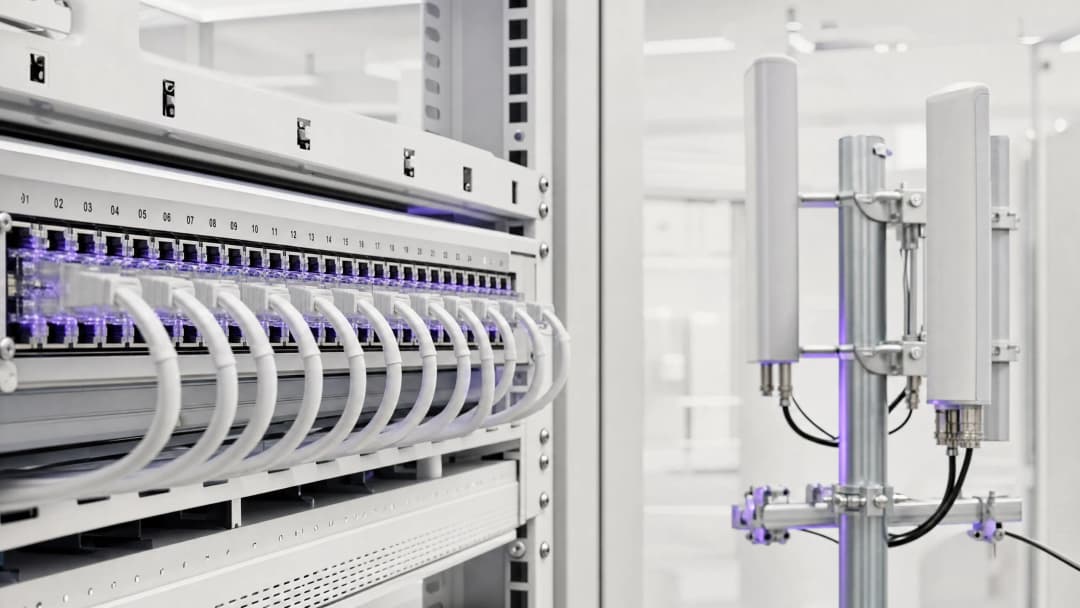
एंटरप्राइज वेन्यू ऑपरेटरों के लिए, कंट्रोलर-आधारित और क्लाउड-मैनेज्ड एक्सेस पॉइंट्स (APs) के बीच आर्किटेक्चरल निर्णय अगले पांच से सात वर्षों के लिए उनके नेटवर्क की परिचालन चपलता, सुरक्षा स्थिति और कुल स्वामित्व लागत (TCO) को परिभाषित करता है। जैसे-जैसे Hospitality, Retail, और Transport के वेन्यू अपने भौतिक स्थानों को डिजिटल बना रहे हैं, WiFi अब केवल एक सुविधा नहीं रह गया है; यह IoT सेंसर, पॉइंट-ऑफ-सेल (POS) सिस्टम और गेस्ट इंटेलिजेंस प्लेटफॉर्म के लिए महत्वपूर्ण ट्रांसपोर्ट लेयर है।
ऐतिहासिक रूप से, स्टेडियमों और बड़े कन्वेंशन सेंटरों की उच्च-घनत्व वाली मांगों के लिए जटिल RF समन्वय और निर्बाध रोमिंग को संभालने के लिए ऑन-प्रिमाइसेस वायरलेस LAN कंट्रोलर (WLCs) की आवश्यकता होती थी। हालांकि, आधुनिक क्लाउड-मैनेज्ड आर्किटेक्चर ने, AI-संचालित रेडियो रिसोर्स मैनेजमेंट (RRM) द्वारा संवर्धित होकर, भौतिक कंट्रोलर उपकरणों के प्रबंधन के परिचालन ओवरहेड को समाप्त करते हुए इस प्रदर्शन अंतर को काफी कम कर दिया है।
यह तकनीकी संदर्भ गाइड नेटवर्क आर्किटेक्ट्स और IT निदेशकों को AP आर्किटेक्चर के मूल्यांकन के लिए एक वेंडर-न्यूट्रल ढांचा प्रदान करती है। यह कंट्रोल प्लेन प्रबंधन में तकनीकी अंतरों का विवरण देती है, वास्तविक दुनिया के परिनियोजन परिदृश्यों की जांच करती है, और यह बताती है कि मापने योग्य व्यावसायिक परिणाम प्राप्त करने के लिए ये आर्किटेक्चर एंटरप्राइज Guest WiFi और WiFi Analytics प्लेटफॉर्म के साथ कैसे एकीकृत होते हैं।
Technical Deep-Dive: आर्किटेक्चर और कंट्रोल प्लेन
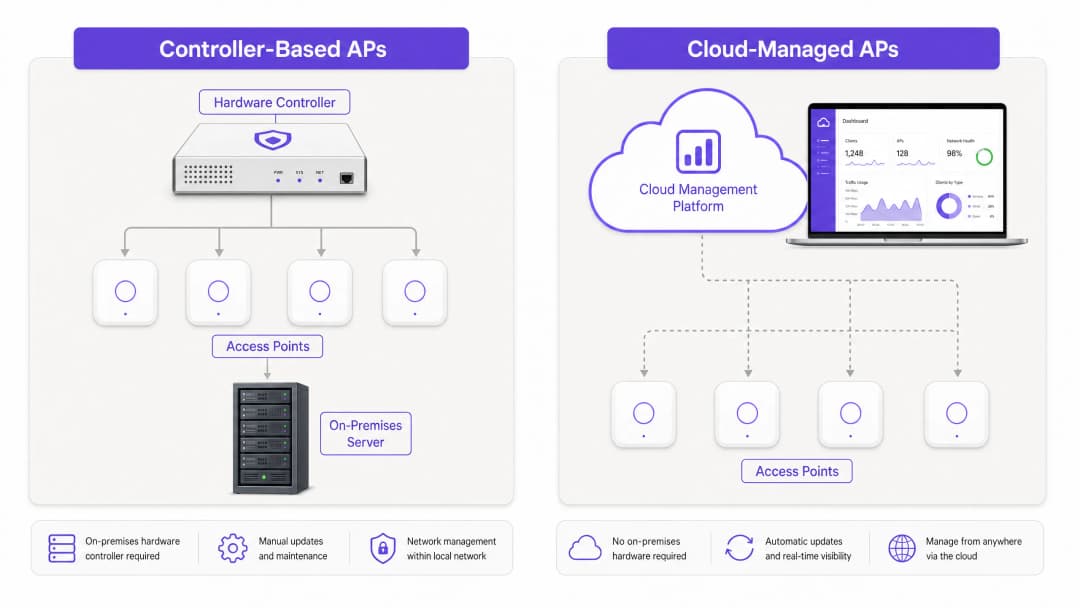
कंट्रोलर-आधारित और क्लाउड-मैनेज्ड APs के बीच बुनियादी अंतर इस बात में है कि मैनेजमेंट और कंट्रोल प्लेन कहाँ स्थित होते हैं, और APs बाकी नेटवर्क इन्फ्रास्ट्रक्चर के साथ कैसे इंटरैक्ट करते हैं।
कंट्रोलर-आधारित आर्किटेक्चर
एक पारंपरिक कंट्रोलर-आधारित मॉडल में, "लाइटवेट" APs अपने मैनेजमेंट और अक्सर अपने डेटा ट्रैफ़िक को एक सेंट्रलाइज्ड हार्डवेयर या वर्चुअल अप्लायंस - एक Wireless LAN Controller (WLC) पर समाप्त करते हैं। APs फिजिकल लेयर 1 और लेयर 2 रेडियो फ्रीक्वेंसी (RF) फ़ंक्शन को संभालते हैं, लेकिन इंटेलिजेंस सेंट्रलाइज्ड होती है।
- प्रोटोकॉल निर्भरता: APs Control and Provisioning of Wireless Access Points (CAPWAP) प्रोटोकॉल (RFC 5415) का उपयोग करके WLC के साथ कम्युनिकेट करते हैं।
- सेंट्रलाइज्ड प्रोसेसिंग: रोमिंग के निर्णय, ऑथेंटिकेशन हैंडशेक (जैसे कि 802.1X/EAP), और डायनेमिक RF चैनल असाइनमेंट कंट्रोलर द्वारा प्रोसेस किए जाते हैं।
- डेटा प्लेन टनलिंग: कई डिप्लॉयमेंट्स में, क्लाइंट डेटा ट्रैफ़िक को वायर्ड नेटवर्क पर भेजने से पहले वापस WLC में टनल किया जाता है। यह एक बड़े कैंपस में सेंट्रलाइज्ड पॉलिसी एन्फोर्समेंट और आसान VLAN मैनेजमेंट की अनुमति देता है, लेकिन यह एक संभावित बॉटलनेक भी पैदा कर सकता है।
हाई-डेंसिटी एन्वायरनमेंट के लिए लाभ: कंट्रोलर-आधारित सिस्टम अल्ट्रा-हाई-डेंसिटी एन्वायरनमेंट (जैसे स्टेडियम, बड़े ऑडिटोरियम) में बेहतरीन काम करते हैं। चूंकि WLC के पास सैकड़ों APs के पार RF एन्वायरनमेंट का रियल-टाइम, समग्र व्यू होता है, इसलिए यह को-चैनल इंटरफेरेंस मिटिगेशन को कोऑर्डिनेट कर सकता है और मिलीसेकंड की सटीकता के साथ 802.11r फास्ट BSS ट्रांजिशन (FT) रोमिंग को मैनेज कर सकता है।
क्लाउड-मैनेज्ड आर्किटेक्चर
क्लाउड-मैनेज्ड आर्किटेक्चर कंट्रोल प्लेन को डिसेंट्रलाइज्ड करते हैं। लोकल RF मैनेजमेंट और डेटा फ़ॉरवर्डिंग के मामले में APs स्वयं "फैट" या ऑटोनॉमस होते हैं, लेकिन वे क्लाउड-होस्टेड मैनेजमेंट प्लेटफ़ॉर्म के माध्यम से सेंट्रलाइज्ड रूप से ऑर्केस्ट्रेट किए जाते हैं।
- आउट-ऑफ-बैंड मैनेजमेंट: AP वेंडर के क्लाउड पर एक सिक्योर मैनेजमेंट टनल (आमतौर पर HTTPS/TLS) स्थापित करता है। कॉन्फ़िगरेशन, टेलीमेट्री और फ़र्मवेयर अपडेट इसी कनेक्शन के माध्यम से प्रवाहित होते हैं।
- लोकल ब्रेकआउट: क्लाइंट डेटा ट्रैफ़िक क्लाउड पर टनल नहीं किया जाता है। यह उस स्विच पोर्ट पर स्थानीय रूप से ब्रेकआउट होता है जिससे AP कनेक्टेड है।
- लोकल सर्वाइवेबिलिटी: यदि क्लाउड से इंटरनेट कनेक्शन टूट जाता है, तो AP मौजूदा क्लाइंट्स को सेवा देना जारी रखता है, नए क्लाइंट्स को ऑथेंटिकेट करता है (यदि लोकल RADIUS या PSK का उपयोग किया जा रहा है), और ट्रैफ़िक को रूट करता है। हालांकि, कनेक्टिविटी बहाल होने तक IT टीम रियल-टाइम विजिबिलिटी और कॉन्फ़िगरेशन परिवर्तन लागू करने की क्षमता खो देती है।
सुरक्षा और अनुपालन (Compliance) के प्रभाव
दोनों आर्किटेक्चर एंटरप्राइज-ग्रेड सुरक्षा मानकों का समर्थन करते हैं, जिसमें WPA3-Enterprise, 802.1X ऑथेंटिकेशन और रॉग AP डिटेक्शन शामिल हैं। हालांकि, कम्प्लायंस का बोझ अलग-अलग होता है।
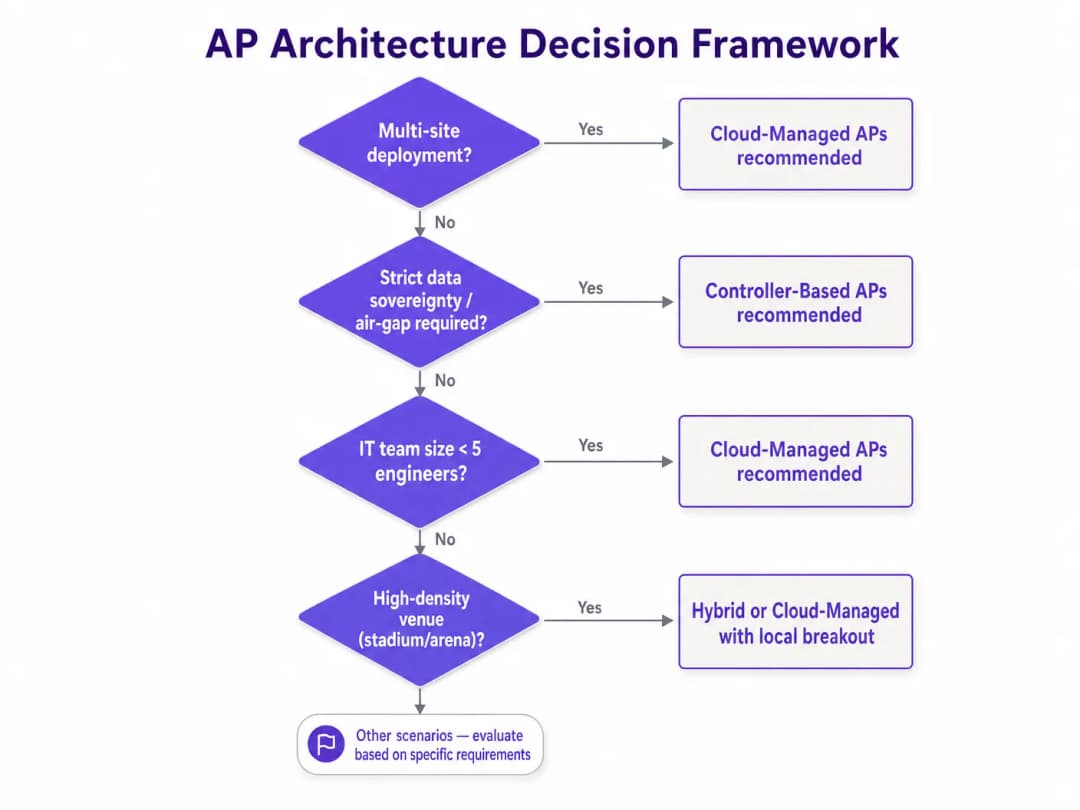
क्लाउड-प्रबंधित प्रणालियों के साथ, IT टीमों को यह सुनिश्चित करना होगा कि विक्रेता का क्लाउड प्लेटफ़ॉर्म प्रासंगिक नियामक आवश्यकताओं (जैसे SOC 2 Type II, ISO 27001) को पूरा करता है और डेटा निवास GDPR या स्थानीय गोपनीयता कानूनों का अनुपालन करता है। अत्यधिक संवेदनशील वातावरण जिन्हें सख्त एयर-गैपिंग की आवश्यकता होती है - जैसे कि कुछ सरकारी या रक्षा सुविधाएं - पूरी तरह से स्थानीय LAN के भीतर काम करने वाली कंट्रोलर-आधारित प्रणाली ही मानक बनी हुई है।
भुगतान डेटा को संभालने वाले वातावरण के लिए, दोनों आर्किटेक्चर PCI-DSS अनुपालन प्राप्त कर सकते हैं। हालांकि, नेटवर्क विखंडन महत्वपूर्ण है। AP आर्किटेक्चर चाहे जो भी हो, अतिथि नेटवर्क, कॉर्पोरेट डिवाइस और POS टर्मिनलों को अलग-अलग VLAN पर अलग किया जाना चाहिए।
अपने विशिष्ट सेटअप को लेकर कोई सवाल हैं?
हमारी टीम 80,000 से अधिक वेन्यू में वेन्यू ऑपरेटरों, IT मैनेजरों और नेटवर्क इंजीनियरों के साथ काम करती है। 20 मिनट का कॉल बुक करें और हम आपको दिखाएंगे कि आपके जैसे अन्य लोगों ने इसे कैसे हल किया।
कार्यान्वयन गाइड: परिनियोजन और एकीकरण
आपके द्वारा चुने गए आर्किटेक्चर का परिचालन प्रभाव परिनियोजन और निरंतर प्रबंधन के दौरान सबसे अधिक स्पष्ट होता है, विशेष रूप से बहु-साइट परिदृश्यों में।
ज़ीरो-टच प्रोविज़निंग बनाम चरणबद्ध परिनियोजन
क्लाउड-प्रबंधित: क्लाउड-प्रबंधित AP का प्राथमिक परिचालन लाभ ज़ीरो-टच प्रोविज़निंग (ZTP) है। एक AP को सीधे किसी दूरस्थ रिटेल स्टोर या होटल में भेजा जा सकता है। प्लग इन करने पर, यह DHCP के माध्यम से एक IP पता प्राप्त करता है, क्लाउड तक पहुँचता है, अपने पूर्व-कॉन्फ़िगर किए गए प्रोफ़ाइल को डाउनलोड करता है, और प्रसारण शुरू करता है। यह महंगे "ट्रक रोल्स" या दूरस्थ साइटों पर अत्यधिक कुशल नेटवर्क इंजीनियरों को तैनात करने की आवश्यकता को समाप्त करता है।
कंट्रोलर-आधारित: कंट्रोलर-आधारित AP को आमतौर पर तैनात करने के लिए अधिक स्टेजिंग की आवश्यकता होती है। AP को WLC (अक्सर DHCP Option 43 या DNS रिज़ॉल्यूशन के माध्यम से) को खोजने में सक्षम होना चाहिए। फर्मवेयर को अक्सर WLC और AP के बीच मैन्युअल रूप से संरेखित करना पड़ता है। बहु-साइट रोलआउट के लिए, इसके लिए अक्सर शिपिंग से पहले हार्डवेयर को केंद्रीय रूप से स्टेज करने, या प्रत्येक साइट पर इंजीनियरों को तैनात करने की आवश्यकता होती है।
अतिथि बुद्धिमत्ता और एनालिटिक्स को एकीकृत करना
भौतिक AP को तैनात करना केवल बुनियादी ढांचा है। नेटवर्क से व्यावसायिक मूल्य निकालने के लिए, स्थानों को अपने हार्डवेयर को Purple जैसे अतिथि बुद्धिमत्ता प्लेटफ़ॉर्म के साथ एकीकृत करना होगा।
Purple एक हार्डवेयर-अज्ञेयवादी ओवरले के रूप में कार्य करता है, जो प्रमुख विक्रेताओं (Cisco, Meraki, Aruba, Ruckus, Extreme) के कंट्रोलर-आधारित और क्लाउड-प्रबंधित दोनों प्रणालियों के साथ सहजता से एकीकृत होता है।
- प्रमाणीकरण और ऑनबोर्डिंग: Purple Captive Portal प्रस्तुति और प्रमाणीकरण को संभालता है (सोशल लॉगिन, फॉर्म भरने या How a WiFi Assistant Enables Passwordless Access in 2026 के माध्यम से)। AP आर्किटेक्चर को केवल RADIUS प्रमाणीकरण और लेखांकन का समर्थन करने की आवश्यकता होती है, जो अप्रमाणित उपयोगकर्ताओं को Purple पोर्टल पर पुनर्निर्देशित करता है।* Analytics Data: Purple अपने एनालिटिक्स डैशबोर्ड को पावर देने के लिए APs से उपस्थिति और स्थान का डेटा प्राप्त करता है। चाहे डेटा क्लाउड डैशबोर्ड से API के माध्यम से भेजा जाए या सीधे स्थानीय WLC से भेजा जाए, प्राप्त होने वाले इनसाइट्स - रुकने का समय (dwell time), लौटने की दर (return rates), और फुटफॉल - बिल्कुल समान होते हैं। यह डेटा कैसे जनरेट होता है, इसके बारे में गहराई से जानने के लिए, Heatmapping vs Presence Analytics: Technical Differences पर हमारी गाइड देखें।

सर्वश्रेष्ठ अभ्यास और जोखिम न्यूनीकरण
चुने गए आर्किटेक्चर के बावजूद, कुछ बुनियादी सर्वश्रेष्ठ अभ्यास परिनियोजन (deployment) के जोखिमों को कम करते हैं और दीर्घकालिक स्थिरता सुनिश्चित करते हैं।
- मैनेजमेंट ट्रैफ़िक को प्राथमिकता दें: क्लाउड-प्रबंधित परिनियोजन के लिए, APs का क्लाउड से कनेक्शन बेहद महत्वपूर्ण है। सुनिश्चित करें कि WAN सर्किट पर मैनेजमेंट ट्रैफ़िक को QoS-प्राथमिकता दी गई है। यदि वेन्यू गेस्ट ट्रैफ़िक और मैनेजमेंट दोनों के लिए एक ही इंटरनेट कनेक्शन साझा करता है, तो पीक ऑवर्स के दौरान संतृप्त (saturated) लिंक के कारण APs क्लाउड डैशबोर्ड पर ऑफ़लाइन दिखाई दे सकते हैं।
- चरणबद्ध फ़र्मवेयर अपग्रेड (Staged Firmware Upgrades): क्लाउड प्लेटफ़ॉर्म अक्सर फ़र्मवेयर अपडेट को स्वचालित रूप से पुश करते हैं। हालांकि यह सुनिश्चित करता है कि सुरक्षा पैच तुरंत लागू हों, लेकिन यह अप्रत्याशित बग का जोखिम भी लाता है। अपडेट को चरणबद्ध करने के लिए अपने क्लाउड डैशबोर्ड को कॉन्फ़िगर करें - पूरे एस्टेट में रोल आउट करने से पहले APs के एक छोटे से हिस्से (जैसे IT ऑफिस) पर नए फ़र्मवेयर का परीक्षण करें।
- डेन्सिटी के लिए डिज़ाइन करें, केवल कवरेज के लिए नहीं: आधुनिक परिनियोजन शायद ही कभी सिग्नल की कमी के कारण विफल होते हैं; वे क्षमता की कमी या को-चैनल हस्तक्षेप के कारण विफल होते हैं। उचित प्रेडिक्टिव और एक्टिव RF सर्वे करें, जिससे उचित चैनल ओवरलैप और ट्रांसमिट पावर सेटिंग्स सुनिश्चित हो सकें, विशेष रूप से लॉबी या कॉन्फ्रेंस रूम जैसे उच्च-डेन्सिटी वाले क्षेत्रों में। समग्र अनुभव को बेहतर बनाने के बारे में इनसाइट्स के लिए, How To Improve Guest Satisfaction: The Ultimate Playbook देखें।
- VLAN आर्किटेक्चर को मानकीकृत करें: सभी साइटों पर एक सुसंगत VLAN स्कीमा लागू करें। मैनेजमेंट इंटरफेस, कॉर्पोरेट डिवाइस, IoT सेंसर, और गेस्ट ट्रैफ़िक को अलग करें।
ROI और व्यावसायिक प्रभाव
कंट्रोलर-आधारित और क्लाउड-प्रबंधित APs के बीच का निर्णय 5 से 7 साल के लाइफसाइकिल पर स्वामित्व की कुल लागत (TCO) के विश्लेषण द्वारा संचालित होना चाहिए।
- कैपिटल एक्सपेंडिचर (CapEx): WLC एप्लायंसेज की लागत और संबंधित रिडंडेंसी आवश्यकताओं के कारण कंट्रोलर-आधारित सिस्टम में अक्सर अग्रिम CapEx अधिक होता है। क्लाउड-प्रबंधित APs में आमतौर पर हार्डवेयर की लागत कम होती है लेकिन इसके लिए निरंतर सब्सक्रिप्शन लाइसेंसिंग की आवश्यकता होती है।
- परिचालन व्यय (OpEx): क्लाउड-मैनेज्ड सिस्टम लगातार मल्टी-साइट परिनियोजन में कम OpEx प्रदर्शित करते हैं। जीरो-टच प्रोविजनिंग, केंद्रीकृत समस्या निवारण और स्वचालित फर्मवेयर प्रबंधन द्वारा उत्पन्न बचत अक्सर आवर्ती लाइसेंसिंग लागतों की भरपाई करती है।
- व्यावसायिक चपलता (Business Agility): नए साइटों को तेजी से तैनात करने, नेटवर्क-व्यापी नीति परिवर्तनों को तुरंत लागू करने और एनालिटिक्स प्लेटफॉर्म के साथ मूल रूप से एकीकृत करने की क्षमता एक विशिष्ट व्यावसायिक लाभ प्रदान करती है, विशेष रूप से रिटेल और हॉस्पिटैलिटी जैसे तेजी से बदलते क्षेत्रों में।
अपनी परिचालन क्षमताओं और साइट टोपोलॉजी के साथ संरेखित आर्किटेक्चर का चयन करके, और इसके ऊपर Purple जैसे हार्डवेयर-अज्ञेयवादी इंटेलिजेंस प्लेटफॉर्म को जोड़कर, एंटरप्राइज IT टीमें अपने WiFi नेटवर्क को एक आवश्यक लागत केंद्र से एक रणनीतिक, राजस्व-सक्षम संपत्ति में बदल सकती हैं।
मुख्य परिभाषाएं
WLC (Wireless LAN Controller)
एक केंद्रीकृत हार्डवेयर या वर्चुअल एप्लायंस जो कई 'लाइटवेट' एक्सेस पॉइंट्स के लिए कॉन्फ़िगरेशन, RF समन्वय और सुरक्षा नीतियों का प्रबंधन करता है।
एक controller-based आर्किटेक्चर का मुख्य घटक, जो एक शक्तिशाली प्रबंधन उपकरण और विफलता का एक संभावित एकल बिंदु (single point of failure) दोनों का प्रतिनिधित्व करता है।
CAPWAP
कंट्रोल एंड प्रोविज़निंग ऑफ़ वायरलेस एक्सेस पॉइंट्स। APs के संग्रह को प्रबंधित करने के लिए WLCs द्वारा उपयोग किया जाने वाला एक मानक प्रोटोकॉल (RFC 5415)।
वह टनल जिसके माध्यम से controller-based APs निर्देश प्राप्त करते हैं और अक्सर क्लाइंट डेटा ट्रैफ़िक को रूट करते हैं।
Zero-Touch Provisioning (ZTP)
मैनुअल कॉन्फ़िगरेशन के बिना दूरस्थ स्थान पर नेटवर्क हार्डवेयर डेप्लॉय करने की क्षमता; डिवाइस अपने प्रोफ़ाइल को डाउनलोड करने के लिए स्वचालित रूप से क्लाउड प्लेटफ़ॉर्म से कनेक्ट होता है।
मल्टी-साइट cloud-managed डेप्लॉयमेंट में परिचालन व्यय (OpEx) की बचत के लिए मुख्य चालक।
Local Survivability
क्लाउड डैशबोर्ड से WAN कनेक्शन टूटने पर भी स्थानीय ट्रैफ़िक को रूट करना और उपयोगकर्ताओं को प्रमाणित करना जारी रखने की एक cloud-managed AP की क्षमता।
क्लाउड प्लेटफ़ॉर्म के लिए एक महत्वपूर्ण मूल्यांकन मीट्रिक, जो यह सुनिश्चित करता है कि WAN आउटेज के परिणामस्वरूप पूर्ण LAN विफलता न हो।
Out-of-Band Management
एक आर्किटेक्चर जहां प्रबंधन ट्रैफ़िक (टेलीमेट्री, कॉन्फ़िगरेशन) को उपयोगकर्ता डेटा ट्रैफ़िक से अलग किया जाता है।
Cloud-managed APs का बुनियादी सुरक्षा सिद्धांत, जो यह सुनिश्चित करता है कि उपयोगकर्ता का डेटा स्थानीय नेटवर्क पर ही रहे।
802.11r (Fast BSS Transition)
एक IEEE मानक जो गतिमान वायरलेस उपकरणों पर निरंतर कनेक्टिविटी की अनुमति देता है, जिसमें एक AP से दूसरे AP पर त्वरित और सुरक्षित हैंडऑफ़ शामिल है।
हाई-डेंसिटी वाले वातावरण में निर्बाध रोमिंग के लिए अत्यंत महत्वपूर्ण; ऐतिहासिक रूप से इसे केंद्रीकृत कंट्रोलर द्वारा बेहतर ढंग से नियंत्रित किया जाता है।
Data Sovereignty
यह अवधारणा कि डिजिटल डेटा उस देश के कानूनों के अधीन है जिसमें वह स्थित है।
GDPR जैसे नियमों का अनुपालन सुनिश्चित करने के लिए cloud-managed प्लेटफॉर्मों का मूल्यांकन करते समय एक प्रमुख विचार।
Air-Gapped Network
एक नेटवर्क सुरक्षा उपाय जिसका उपयोग यह सुनिश्चित करने के लिए किया जाता है कि एक सुरक्षित कंप्यूटर नेटवर्क भौतिक रूप से असुरक्षित नेटवर्क जैसे कि सार्वजनिक इंटरनेट से पूरी तरह अलग रहे।
ऐसे वातावरण जहां पूरी तरह से एयर-गैपिंग की आवश्यकता होती है, वहां ऑन-प्रिमाइसेस कंट्रोलर-आधारित आर्किटेक्चर का उपयोग अनिवार्य होता है।
हल किए गए उदाहरण
एक राष्ट्रीय रिटेल चेन 300 मध्यम आकार के स्टोर में guest WiFi डेप्लॉय कर रही है। उनके पास चार इंजीनियरों की एक छोटी केंद्रीय IT टीम है और कोई ऑन-साइट तकनीकी कर्मचारी नहीं है। उन्हें ड्वेल टाइम और फुटफॉल को ट्रैक करने के लिए एनालिटिक्स की आवश्यकता है।
सभी स्थानों पर cloud-managed APs डेप्लॉय करें। APs को सीधे स्टोर प्रबंधकों को भेजने के लिए Zero-Touch Provisioning (ZTP) का उपयोग करें, जो उन्हें बस PoE स्विच में प्लग करते हैं। एक मानकीकृत SSID और VLAN कॉन्फ़िगरेशन को पुश करने के लिए क्लाउड डैशबोर्ड कॉन्फ़िगर करें। Captive Portal और एनालिटिक्स के लिए API/RADIUS के माध्यम से क्लाउड कंट्रोलर को Purple के साथ एकीकृत करें।
एक नवनिर्मित 60,000 सीटों वाले खेल स्टेडियम को प्रशंसकों की भागीदारी, टिकटिंग और POS सिस्टम के लिए व्यापक WiFi की आवश्यकता है। इस वातावरण में बड़े पैमाने पर, एक साथ क्लाइंट ऑनबोर्डिंग होगी और भीड़ के इधर-उधर जाने पर निर्बाध रोमिंग की आवश्यकता होगी।
ऑन-साइट डेटा सेंटर में रिडंडेंट हाई-अवेलेबिलिटी WLC एप्लायंसेज के साथ एक controller-based आर्किटेक्चर डेप्लॉय करें। हाई-डेंसिटी वाले डायरेक्शनल एंटेना का उपयोग करें। आक्रामक लोड बैलेंसिंग, बैंड स्टीयरिंग, और 802.11r फास्ट BSS ट्रांज़िशन के लिए WLC को कॉन्फ़िगर करें।
अभ्यास प्रश्न
Q1. एक बुटीक होटल श्रृंखला अपने 15 प्रॉपर्टीज़ में WiFi को अपग्रेड कर रही है। IT डायरेक्टर क्लाउड-प्रबंधित APs पर जाना चाहते हैं लेकिन कम्प्लायंस ऑफिसर रेस्टोरेंट में पॉइंट-ऑफ-सेल (POS) टर्मिनलों के लिए PCI DSS कम्प्लायंस को लेकर चिंतित हैं। सही आर्किटेक्चरल दृष्टिकोण क्या है?
संकेत: विचार करें कि क्लाउड-प्रबंधित डिप्लॉयमेंट में डेटा प्लेन ट्रैफ़िक को कैसे संभाला जाता है और नेटवर्क सेगमेंटेशन की क्या आवश्यकताएं हैं।
मॉडल उत्तर देखें
क्लाउड-प्रबंधित APs पूरी तरह से उपयुक्त हैं, बशर्ते उचित नेटवर्क सेगमेंटेशन लागू किया जाए। IT टीम को गेस्ट WiFi और POS नेटवर्क के लिए अलग-अलग VLANs कॉन्फ़िगर करने होंगे। चूंकि क्लाउड-प्रबंधित APs आउट-ऑफ-बैंड मैनेजमेंट का उपयोग करते हैं, इसलिए POS डेटा ट्रैफ़िक स्थानीय रूप से ब्रेक आउट होगा और वेंडर के क्लाउड से होकर नहीं गुजरेगा, जो डेटा प्लेन के लिए PCI DSS आवश्यकताओं को पूरा करता है। वेंडर के क्लाउड प्लेटफ़ॉर्म के पास मैनेजमेंट प्लेन के लिए उपयुक्त सुरक्षा प्रमाणपत्र (जैसे, SOC 2) होने चाहिए।
Q2. पीक ट्रेडिंग इवेंट के दौरान, एक रिटेल स्टोर पर प्राइमरी WAN लिंक विफल हो जाता है। स्टोर कम-बैंडविड्थ वाले 4G कनेक्शन पर बैकअप लेता है। क्लाउड-प्रबंधित APs ऑनलाइन रहते हैं, लेकिन IT टीम रिपोर्ट करती है कि वे डैशबोर्ड के माध्यम से स्टोर पर कॉन्फ़िगरेशन परिवर्तन पुश नहीं कर पा रहे हैं। ऐसा क्यों हो रहा है, और इसे रोकने के लिए नेटवर्क को कैसे डिज़ाइन किया जाना चाहिए था?
संकेत: सीमित लिंक पर मैनेजमेंट ट्रैफ़िक, डेटा ट्रैफ़िक और QoS के बीच संबंध पर विचार करें।
मॉडल उत्तर देखें
APs 'लोकल सर्वाइवेबिलिटी' मोड में काम कर रहे हैं। कम-बैंडविड्थ वाला 4G कनेक्शन संभवतः आवश्यक POS या गेस्ट ट्रैफ़िक से भरा हुआ है, जिससे क्लाउड कंट्रोलर के मैनेजमेंट टनल (HTTPS/TLS) ड्रॉप या टाइम आउट हो रहे हैं। इसे रोकने के लिए, नेटवर्क आर्किटेक्ट को एज राउटर/फ़ायरवॉल पर Quality of Service (QoS) नियम लागू करने चाहिए थे ताकि न्यूनतम बैंडविड्थ आवंटन की गारंटी दी जा सके और फ़ेलओवर लिंक पर AP मैनेजमेंट ट्रैफ़िक को प्राथमिकता दी जा सके।
Q3. एक यूनिवर्सिटी कैंपस जिसमें पहले से कंट्रोलर-आधारित आर्किटेक्चर मौजूद है, वह गेस्ट एनालिटिक्स के लिए Purple को डिप्लॉय करना चाहता है। नेटवर्क टीम का कहना है कि वे इंटीग्रेट नहीं कर सकते क्योंकि वे क्लाउड-प्रबंधित APs का उपयोग नहीं करते हैं। क्या यह सही है?
संकेत: Purple के इंटीग्रेशन के तरीके और हार्डवेयर निर्भरता पर विचार करें।
मॉडल उत्तर देखें
नहीं, यह गलत है। Purple हार्डवेयर-स्वतंत्र है और इसके लिए क्लाउड-प्रबंधित आर्किटेक्चर की आवश्यकता नहीं होती है। यूनिवर्सिटी के मौजूदा वायरलेस LAN कंट्रोलर (WLCs) को मानक RADIUS ऑथेंटिकेशन और अकाउंटिंग प्रोटोकॉल का उपयोग करके Purple के साथ इंटीग्रेट करने के लिए कॉन्फ़िगर किया जा सकता है, जो गेस्ट ट्रैफ़िक को Purple Captive Portal पर रीडायरेक्ट करता है। एनालिटिक्स डेटा क्लाउड-प्रबंधित डिप्लॉयमेंट की तरह ही समान रूप से जेनरेट किया जाएगा।
इस श्रृंखला में आगे पढ़ें
WLC (Wireless LAN Controller) क्या है और क्या आपको अभी भी इसकी आवश्यकता है?
यह व्यापक गाइड Wireless LAN Controller (WLCs) के विकास का पता लगाती है और 2026 में सही आर्किटेक्चर निर्धारित करने के लिए एक तकनीकी ढांचा प्रदान करती है। इसमें पारंपरिक हार्डवेयर, क्लाउड-मैनेज्ड और कंट्रोलर-लेस मॉडल शामिल हैं, जो अनुपालन, स्केलेबिलिटी और गेस्ट अनुभव पर उनके प्रभाव का विवरण देते हैं।
Mesh Network बनाम Access Points: बड़े स्थानों के लिए कौन सा बेहतर है?
यह तकनीकी गाइड बड़े पैमाने के स्थानों के लिए mesh networks और पारंपरिक वायर्ड access points के बीच एक निश्चित तुलना प्रदान करता है, जिसमें आर्किटेक्चर, प्रदर्शन समझौतों और परिनियोजन रणनीति को शामिल किया गया है। यह IT प्रबंधकों, नेटवर्क आर्किटेक्ट्स और CTOs को हॉस्पिटैलिटी, रिटेल, इवेंट्स और सार्वजनिक क्षेत्र के वातावरण के लिए उच्च-प्रदर्शन, अनुपालन वाले WiFi इंफ्रास्ट्रक्चर को डिजाइन करने के लिए कार्रवाई योग्य फ्रेमवर्क से लैस करता है। यह गाइड इन आर्किटेक्चरल निर्णयों को Purple के हार्डवेयर-अज्ञेयवादी guest WiFi और एनालिटिक्स प्लेटफॉर्म से भी जोड़ता है, जिससे यह प्रदर्शित होता है कि कैसे सही इंफ्रास्ट्रक्चर का चुनाव मापने योग्य व्यावसायिक परिणाम प्रदान करता है।
Cisco Meraki बनाम Aruba: Guest WiFi के लिए एक तकनीकी तुलना
एंटरप्राइज guest WiFi परिनियोजन के लिए Cisco Meraki और HPE Aruba की एक आधिकारिक तकनीकी तुलना। यह गाइड IT प्रबंधकों और आर्किटेक्ट्स को आर्किटेक्चर, ऑथेंटिकेशन, नेटवर्क सेगमेंटेशन और हार्डवेयर-अज्ञेयवादी एनालिटिक्स एकीकरण पर व्यावहारिक अंतर्दृष्टि प्रदान करती है।
अपने विशिष्ट सेटअप को लेकर कोई सवाल हैं?
हमारी टीम 80,000 से अधिक वेन्यू में वेन्यू ऑपरेटरों, IT मैनेजरों और नेटवर्क इंजीनियरों के साथ काम करती है। 20 मिनट का कॉल बुक करें और हम आपको दिखाएंगे कि आपके जैसे अन्य लोगों ने इसे कैसे हल किया।