
रोग AP डिटेक्शन: इम्पर्सोनेशन हल्ल्यांपासून ठिकाणच्या WiFi चे संरक्षण करणे
हे मार्गदर्शक आयटी मॅनेजर, नेटवर्क आर्किटेक्ट आणि व्हेन्यू ऑपरेशन्स डायरेक्टर्ससाठी रोग अॅक्सेस पॉइंट्स आणि इव्हिल ट्विन हल्ल्यांना शोधून काढण्यासाठी आणि निष्प्रभ करण्यासाठी वायरलेस इंट्रूजन प्रिव्हेन्शन सिस्टीम्स (WIPS) तैनात करण्यावर एक सर्वसमावेशक तांत्रिक संदर्भ प्रदान करते. यात डिटेक्शन पद्धती, कायदेशीर उपाय, अनुपालन आवश्यकता आणि हॉस्पिटॅलिटी, रिटेल आणि सार्वजनिक क्षेत्रातील वातावरणातील वास्तविक-जगातील अंमलबजावणी परिस्थिती समाविष्ट आहे. येथे वर्णन केलेल्या धोरणांची अंमलबजावणी करणाऱ्या संस्था त्यांची वायरलेस सुरक्षा स्थिती मजबूत करतील, अनुपालन जोखीम कमी करतील आणि त्यांच्या इन्फ्रास्ट्रक्चर आणि वापरकर्त्यांचे WiFi इम्पर्सोनेशन धोक्यांपासून संरक्षण करतील.
हे मार्गदर्शक ऐका
पॉडकास्ट ट्रान्सक्रिप्ट पहा
कार्यकारी सारांश
एंटरप्राइझ ठिकाणांसाठी — मग ती विस्तीर्ण हॉटेल संकुले असोत, जास्त गर्दीची रिटेल ठिकाणे असोत किंवा गजबजलेली ट्रान्सपोर्ट हब असोत — WiFi ही एक अत्यंत महत्त्वाची ऑपरेशनल मालमत्ता आहे. तथापि, वायरलेस कम्युनिकेशन्सच्या खुल्या स्वरूपामुळे महत्त्वपूर्ण सुरक्षा धोके निर्माण होतात, ज्यामध्ये प्रामुख्याने रोग अॅक्सेस पॉइंट्स (rogue access points) आणि इव्हिल ट्विन हल्ल्यांचा (evil twin attacks) समावेश आहे. रोग AP हे एक अनधिकृत वायरलेस डिव्हाइस आहे जे परवानगीशिवाय कॉर्पोरेट नेटवर्कशी कनेक्ट केलेले असते, तर इव्हिल ट्विन वापरकर्त्याचा ट्रॅफिक इंटरसेप्ट करण्यासाठी आणि क्रेडेंशियल्स चोरण्यासाठी अधिकृत SSID ची तोतयागिरी करते.
हे मार्गदर्शक आयटी मॅनेजर, नेटवर्क आर्किटेक्ट आणि व्हेन्यू ऑपरेशन्स डायरेक्टर्ससाठी या धोक्यांना शोधून काढण्यासाठी आणि निष्प्रभ करण्यासाठी वायरलेस इंट्रूजन प्रिव्हेन्शन सिस्टीम्स (WIPS) तैनात करण्यावर एक सर्वसमावेशक तांत्रिक संदर्भ प्रदान करते. मजबूत रोग AP डिटेक्शन लागू करून, संस्था त्यांच्या नेटवर्क इन्फ्रास्ट्रक्चरचे रक्षण करू शकतात, वापरकर्त्याच्या डेटाचे संरक्षण करू शकतात आणि PCI DSS, ISO 27001 आणि GDPR सारख्या मानकांचे पालन करू शकतात. आम्ही डिटेक्शन पद्धती, कायदेशीर उपाय आणि Guest WiFi आणि WiFi Analytics यांसारख्या व्यापक नेटवर्किंग आणि अॅनालिटिक्स प्लॅटफॉर्मसह धोरणात्मक एकत्रीकरण एक्सप्लोर करतो. ROI चे उदाहरण स्पष्ट आहे: इव्हिल ट्विनचा एक यशस्वी हल्ला ज्यामुळे डेटा ब्रीच होतो, तो संपूर्ण WIPS डिप्लॉयमेंटच्या खर्चापेक्षा कितीतरी पटीने जास्त नियामक दंड निर्माण करू शकतो.
तांत्रिक सखोल माहिती
धोक्याचे स्वरूप समजून घेणे
स्वस्त, सहज उपलब्ध वायरलेस हार्डवेअरच्या प्रसारामुळे WiFi-आधारित हल्ल्यांचा धोका मूलभूतपणे वाढला आहे. WiFi Pineapple सारखी उपकरणे — जी £100 पेक्षा कमी किमतीत उपलब्ध आहेत — हल्लेखोरांना Hotel_Guest_Free किंवा Airport_WiFi सारख्या अधिकृत नेटवर्कची हुबेहूब नक्कल करणारे SSID ब्रॉडकास्ट करण्याची परवानगी देतात. जेव्हा वापरकर्त्याचे डिव्हाइस आपोआप या अधिक मजबूत, तोतया सिग्नलशी कनेक्ट होते, तेव्हा हल्लेखोराला मॅन-इन-द-मिडल (MitM) पोझिशन मिळते, ज्यामुळे ते क्रेडेंशियल्स, सेशन टोकन्स आणि ट्रान्झिटमधील संवेदनशील डेटा इंटरसेप्ट करू शकतात.
दोन प्राथमिक धोक्यांच्या श्रेणींमध्ये फरक करणे आवश्यक आहे, कारण त्यांना वेगवेगळ्या डिटेक्शन आणि मिटिगेशन धोरणांची आवश्यकता असते:
| धोक्याचा प्रकार | व्याख्या | ठिकाणच्या LAN शी कनेक्ट केलेले आहे का? | प्राथमिक धोका | मिटिगेशन पद्धत |
|---|---|---|---|---|
| रोग AP | वायर्ड नेटवर्कशी भौतिकरित्या कनेक्ट केलेले अनधिकृत डिव्हाइस | होय | कॉर्पोरेट LAN बॅकडोअर, VLAN बायपास | SNMP द्वारे वायर्ड पोर्ट शटडाउन |
| इव्हिल ट्विन | वापरकर्त्याचा ट्रॅफिक इंटरसेप्ट करण्यासाठी स्पूफ केलेले SSID ब्रॉडकास्ट करणारे AP | नाही | क्रेडेंशियल चोरी, अतिथींवर MitM हल्ला | लक्ष्यित वायरलेस नियंत्रण + भौतिकरित्या काढून टाकणे |
या दोन प्रकारच्या धोक्यांमधील फरक केवळ तात्विक नाही — तुमची प्रतिसाद धोरण ठरवण्यात हा सर्वात महत्त्वाचा घटक आहे. इव्हिल ट्विनला रोग AP मानणे (आणि स्विच पोर्ट शोधण्यात वेळ वाया घालवणे) किंवा रोग AP ला इव्हिल ट्विन मानणे (आणि पोर्ट शटडाउन ऐवजी वायरलेस नियंत्रणाचा प्रयत्न करणे) या दोन्ही ऑपरेशनल दृष्ट्या महागड्या चुका आहेत.
WIPS डिटेक्शन पद्धती
एंटरप्राइझ WIPS सोल्यूशन्स अनधिकृत ब्रॉडकास्टिंग डिव्हाइसेस ओळखण्यासाठी बहु-स्तरीय दृष्टिकोन वापरतात. प्रत्येक स्तर समजून घेतल्याने नेटवर्क आर्किटेक्ट्सना योग्य संवेदनशीलता आणि अचूकतेसह डिटेक्शन पॉलिसी कॉन्फिगर करण्याची अनुमती मिळते.
1. MAC अॅड्रेस फिल्टरिंग आणि BSSID ट्रॅकिंग. WIPS सेन्सर्स सर्व बेसिक सर्व्हिस सेट आयडेंटिफायर्स (BSSIDs) लॉग करून, RF वातावरणाचे सतत स्कॅनिंग करतात. जर एखादे ज्ञात कॉर्पोरेट SSID अनोळखी MAC अॅड्रेसद्वारे ब्रॉडकास्ट केले गेले, तर त्वरित अलर्ट ट्रिगर होतो. ही सर्वात मूलभूत डिटेक्शन यंत्रणा आहे आणि इव्हिल ट्विन हल्ल्यांविरूद्ध संरक्षणाची पहिली फळी आहे.
2. सिग्नेचर-आधारित डिटेक्शन. प्रगत सिस्टीम्स विसंगती शोधण्यासाठी बीकन फ्रेम्स आणि प्रोब रिस्पॉन्सचे विश्लेषण करतात. एंटरप्राइझ SSID ब्रॉडकास्ट करणारा कंझ्युमर-ग्रेड राउटर अनेकदा तुमच्या इन्व्हेंटरीमधील अधिकृत एंटरप्राइझ APs च्या तुलनेत भिन्न टायमिंग वैशिष्ट्ये, भिन्न व्हेंडर-विशिष्ट इन्फॉर्मेशन एलिमेंट्स (IEs) किंवा भिन्न समर्थित डेटा रेट्स प्रदर्शित करतो. हे सिग्नेचर्स WIPS ला स्पूफ केलेले नेटवर्क ओळखण्याची परवानगी देतात, जरी हल्लेखोराने SSID आणि चॅनेल कॉन्फिगरेशन काळजीपूर्वक क्लोन केले असले तरीही.
3. वायर्ड/वायरलेस कोरिलेशन. ही एक महत्त्वपूर्ण क्षमता आहे जी एंटरप्राइझ WIPS ला बेसिक वायरलेस स्कॅनिंगपासून वेगळे करते. सिस्टीम RF वातावरणात आढळलेल्या MAC अॅड्रेसची तुलना वायर्ड नेटवर्कच्या स्विच CAM टेबल्सवर उपस्थित असलेल्या MAC अॅड्रेसशी करते. जर एखादे डिव्हाइस एअरवेव्ह आणि वायर्ड स्विच पोर्ट या दोन्हीवर परवानगीशिवाय आढळले, तर त्याचे वर्गीकरण गंभीर रोग AP म्हणून केले जाते. हे कोरिलेशन स्वयंचलित, लक्ष्यित वायर्ड नियंत्रण सक्षम करते.
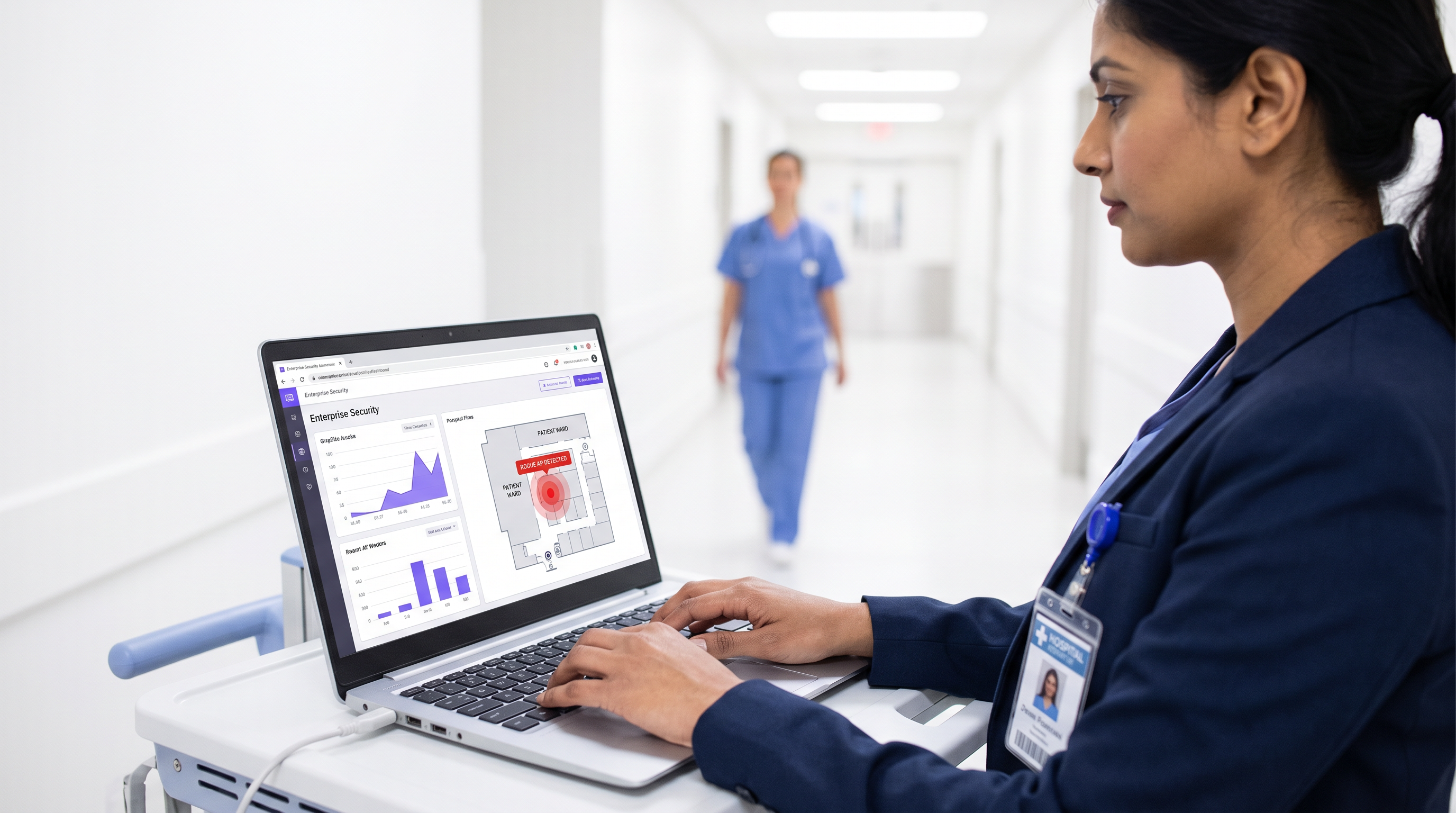
हॉस्पिटल नेटवर्क इंजिनिअर WIPS डॅशबोर्डचे निरीक्षण करत आहे, ज्यामध्ये विशिष्ट वॉर्डमध्ये रोग AP अलर्ट दर्शविला आहे. फ्लोअरप्लॅन ओव्हरले जलद भौतिक हस्तक्षेपास सक्षम करते.
WPA3 आणि PMF आव्हान
WPA3 ची ओळख आणि प्रोटेक्टेड मॅनेजमेंट फ्रेम्स (PMF, IEEE 802.11w मध्ये परिभाषित) ची अनिवार्य अंमलबजावणी WIPS नियंत्रण लँडस्केपमध्ये लक्षणीय बदल करते. PMF मॅनेजमेंट फ्रेम्स एन्क्रिप्ट करते — ज्यामध्ये डीऑथेंटिकेशन आणि डिसअसोसिएशन फ्रेम्सचा समावेश आहे — ज्याचा वापर पारंपारिक WIPS सिस्टीम्स वायरलेस नियंत्रणासाठी करतात. एंटरप्राइझ वातावरणात WPA3 चा अवलंब वाढत असताना, ठिकाणांनी हे मान्य केले पाहिजे की वायरलेस डीऑथेंटिकेशन नियंत्रण आधुनिक क्लायंट्सविरूद्ध हळूहळू कमी प्रभावी होईल.
हे WPA3 टाळण्याचे कारण नाही — उलटपक्षी. PMF ही एक सुरक्षा सुधारणा आहे जी वापरकर्त्यांना डीऑथेंटिकेशन-आधारित हल्ल्यांपासून वाचवते. तथापि, यासाठी धोरणात्मक बदल आवश्यक आहे: सर्वसमावेशक संरक्षण राखण्यासाठी ठिकाणांनी वायर्ड नियंत्रण, 802.1X ऑथेंटिकेशन, भौतिक हस्तक्षेपासाठी WIPS लोकेशन अॅनालिटिक्स आणि वापरकर्ता शिक्षण यावर अधिक अवलंबून राहिले पाहिजे.
अंमलबजावणी मार्गदर्शक
धोरणात्मक सेन्सर डिप्लॉयमेंट
प्रभावी रोग AP डिटेक्शनसाठी संपूर्ण ठिकाणाच्या क्षेत्रामध्ये सर्वसमावेशक RF दृश्यमानता आवश्यक आहे. ठिकाणांनी समर्पित WIPS सेन्सर्स किंवा टाइमस्लाइसिंग मोडमध्ये विद्यमान APs वापरणे यापैकी एक निवडणे आवश्यक आहे, जिथे AP क्लायंट्सना सेवा देणे आणि वातावरणाचे स्कॅनिंग करणे या दरम्यान आळीपाळीने काम करते.
| डिप्लॉयमेंट मॉडेल | यासाठी सर्वोत्तम | फायदे | मर्यादा |
|---|---|---|---|
| समर्पित सेन्सर्स | हेल्थकेअर, फायनान्स, सरकारी, उच्च-सुरक्षा रिटेल | सतत 24/7 स्कॅनिंग, क्लायंटवर कोणताही परिणाम नाही | उच्च CapEx, अतिरिक्त इन्फ्रास्ट्रक्चर |
| टाइमस्लाइसिंग APs | हॉस्पिटॅलिटी, सामान्य रिटेल, कॉन्फरन्स ठिकाणे | कमी खर्च, विद्यमान इन्फ्रास्ट्रक्चरचा फायदा घेते | सर्व्हिंग विंडो दरम्यान तात्पुरते धोके चुकू शकतात |
Healthcare सुविधा आणि वित्तीय संस्थांसाठी, समर्पित सेन्सर्स हा शिफारस केलेला दृष्टिकोन आहे. Hospitality आणि Retail डिप्लॉयमेंटसाठी, टाइमस्लाइसिंग APs एक किफायतशीर बेसलाइन प्रदान करतात जी बहुतेक अनुपालन आवश्यकता पूर्ण करते. Transport हब — विमानतळ, रेल्वे स्थानके — सामान्यतः मोठ्या संख्येने तात्पुरते वापरकर्ते आणि वाढीव धोक्याची पातळी लक्षात घेता समर्पित सेन्सर्सची हमी देतात.
कॉन्फिगरेशन टप्पे
खालील क्रम नवीन WIPS डिप्लॉयमेंटसाठी व्हेंडर-न्यूट्रल सर्वोत्तम सराव दर्शवतो:
पायरी 1 — वातावरणाची बेसलाइन तयार करा. कोणतेही स्वयंचलित मिटिगेशन सक्षम करण्यापूर्वी, WIPS ला 7-14 दिवसांसाठी केवळ-मॉनिटर मोडमध्ये चालवा. हे शेजारील नेटवर्कसह कायदेशीर RF वातावरणाची सर्वसमावेशक बेसलाइन स्थापित करते आणि निरुपद्रवी उपकरणांविरूद्ध नियंत्रण क्रिया ट्रिगर करण्यापासून फॉल्स पॉझिटिव्हला प्रतिबंधित करते.
पायरी 2 — अधिकृत AP सूची परिभाषित करा. सर्व मंजूर इन्फ्रास्ट्रक्चरचे MAC अॅड्रेस आणि अपेक्षित BSSIDs सह WIPS पॉप्युलेट करा. ही सूची एक जिवंत दस्तऐवज म्हणून राखली जाणे आवश्यक आहे, जेव्हा जेव्हा APs जोडले जातात, बदलले जातात किंवा स्थलांतरित केले जातात तेव्हा ती अपडेट केली जावी.
पायरी 3 — अलर्टिंग थ्रेशोल्ड कॉन्फिगर करा. रोग APs (वायर्ड कनेक्शनची पुष्टी) आणि इंटरफेअरिंग APs (वायर्ड कनेक्शन नाही) साठी भिन्न पॉलिसी सेट करा. सिग्नलची ताकद आणि संवेदनशील क्षेत्रांच्या सान्निध्यावर आधारित अलर्टला प्राधान्य द्या. -80 dBm पेक्षा कमकुवत असलेल्या अवर्गीकृत उपकरणांसाठी अलर्ट दाबण्यासाठी RSSI थ्रेशोल्ड कॉन्फिगर करा, कारण हे जवळजवळ निश्चितपणे ठिकाणाच्या भौतिक परिमितीच्या बाहेर असतात.
पायरी 4 — नेटवर्क अॅक्सेस कंट्रोलसह इंटिग्रेट करा. पुष्टी केलेल्या रोग उपकरणांशी कनेक्ट केलेले स्विच पोर्ट स्वयंचलितपणे अक्षम करण्यासाठी WIPS SNMP किंवा मॅनेजमेंट API द्वारे वायर्ड इन्फ्रास्ट्रक्चरशी संवाद साधू शकते याची खात्री करा. ही उपलब्ध असलेली सर्वात प्रभावी आणि कायदेशीररित्या स्पष्ट नियंत्रण यंत्रणा आहे.
पायरी 5 — लक्ष्यित वायरलेस नियंत्रण पॉलिसी सक्षम करा. इव्हिल ट्विन धोक्यांसाठी, केवळ स्पूफ केलेल्या नेटवर्कच्या विशिष्ट BSSID ला आणि केवळ त्याच्याशी सक्रियपणे कनेक्ट होण्याचा प्रयत्न करणार्या क्लायंटला लक्ष्य करण्यासाठी वायरलेस नियंत्रण कॉन्फिगर करा. नियंत्रणाची भौगोलिक व्याप्ती ठिकाणाच्या सीमांच्या पलीकडे विस्तारत नाही याची खात्री करण्यासाठी त्याचे दस्तऐवजीकरण करा.
पायरी 6 — लोकेशन अॅनालिटिक्स इंटिग्रेट करा. रोग उपकरणांच्या स्थानांचे ट्रायँग्युलेशन सक्षम करण्यासाठी WIPS अलर्ट डेटा लोकेशन अॅनालिटिक्स क्षमतांसह कनेक्ट करा — जसे की WiFi Analytics द्वारे उपलब्ध आहे. हे भौतिक सुरक्षा कार्यसंघांना उपकरणे कार्यक्षमतेने शोधून काढण्यास आणि काढून टाकण्यास अनुमती देते.
सर्वोत्तम पद्धती
कायदेशीर आणि नैतिक उपाय
जेव्हा एखादा रोग AP किंवा इव्हिल ट्विन आढळतो, तेव्हा त्याला निष्प्रभ करण्याची तात्काळ प्रवृत्ती असते. तथापि, अंदाधुंद वायरलेस नियंत्रणामुळे नियामक फ्रेमवर्कचे उल्लंघन होऊ शकते — ज्यामध्ये यूकेमधील Ofcom नियम आणि युनायटेड स्टेट्समधील FCC भाग 15 नियमांचा समावेश आहे — जर ते शेजारील कायदेशीर नेटवर्कमध्ये व्यत्यय आणत असेल. खालील फ्रेमवर्क कायदेशीररित्या अनुपालन उपायांचे नियमन करते:
> पुष्टी केलेल्या रोग APs साठी वायर्ड नियंत्रण (Wired Containment) हा नेहमीच पसंतीचा पहिला प्रतिसाद असतो. SNMP द्वारे स्विच पोर्ट अक्षम करणे हे स्पष्टपणे ठिकाण ऑपरेटरच्या अधिकारात आहे आणि यात कोणताही नियामक धोका नाही.
> तुमच्या वापरकर्त्यांवर सक्रियपणे हल्ला करणार्या इव्हिल ट्विन्ससाठी लक्ष्यित वायरलेस नियंत्रण (Targeted Wireless Containment) अनुज्ञेय आहे, बशर्ते ते स्पूफ केलेल्या BSSID पर्यंत अचूकपणे मर्यादित असेल आणि शेजारील नेटवर्कवर परिणाम करत नसेल. दाट लोकवस्तीच्या वातावरणात ही क्षमता सक्षम करण्यापूर्वी कायदेशीर पुनरावलोकन करणे उचित आहे.
अनुपालन एकत्रीकरण
सुरक्षित वायरलेस वातावरण राखणे ही अनेक अनुपालन फ्रेमवर्कची मुख्य आवश्यकता आहे. व्यापक अनुपालन दस्तऐवजीकरणासह WIPS रिपोर्टिंग एकत्रित केल्याने मॅन्युअल ऑडिटचा ओव्हरहेड लक्षणीयरीत्या कमी होतो. अनुपालन आवश्यकतांच्या तपशीलवार माहितीसाठी, आमचे ISO 27001 Guest WiFi: A Compliance Primer वरील मार्गदर्शक पहा.
| मानक | संबंधित आवश्यकता | WIPS चे योगदान |
|---|---|---|
| PCI DSS 4.0 | आवश्यकता 11.1: अनधिकृत वायरलेस APs साठी त्रैमासिक चाचणी करा | सतत स्वयंचलित स्कॅनिंग त्रैमासिक आवश्यकतेपेक्षा जास्त आहे |
| ISO 27001 | A.8.20: नेटवर्क सुरक्षा नियंत्रणे | WIPS दस्तऐवजीकरण केलेली, ऑडिट करण्यायोग्य वायरलेस सुरक्षा नियंत्रणे प्रदान करते |
| GDPR | कलम 32: योग्य तांत्रिक सुरक्षा उपाय | WIPS प्रोअॅक्टिव्ह डेटा संरक्षण उपाय प्रदर्शित करते |
| Ofcom / FCC | परवानाकृत स्पेक्ट्रममधील हस्तक्षेपास मनाई | लक्ष्यित नियंत्रण धोरणे नियामक अनुपालन सुनिश्चित करतात |
WIPS सोबत DNS-स्तरीय फिल्टरिंग तैनात करणार्या ठिकाणांसाठी, DNS Filtering for Guest WiFi: Blocking Malware and Inappropriate Content वरील मार्गदर्शक पूरक कॉन्फिगरेशन मार्गदर्शन प्रदान करते.

दोन सुरक्षा विश्लेषक स्विच पोर्ट शटडाउनद्वारे वायर्ड नियंत्रण क्रिया अंमलात आणत आहेत, जो पुष्टी केलेल्या रोग AP ला सर्वात सुरक्षित आणि कायदेशीररित्या स्पष्ट प्रतिसाद आहे.
ट्रबलशूटिंग आणि जोखीम कमी करणे
फॉल्स पॉझिटिव्ह व्यवस्थापित करणे
अलर्ट फटीग (सततच्या अलर्टमुळे येणारा कंटाळा) हा WIPS डिप्लॉयमेंटमधील सर्वात सामान्य आणि सर्वात हानिकारक अपयश मोड आहे. जेव्हा सुरक्षा कार्यसंघ फॉल्स पॉझिटिव्ह अलर्टने भारावून जातात, तेव्हा ते सिस्टीमकडे दुर्लक्ष करायला शिकतात — जे WIPS अजिबात नसण्यापेक्षा वाईट आहे. खालील उपाय फॉल्स पॉझिटिव्हच्या प्राथमिक स्त्रोतांना संबोधित करतात:
सिग्नल स्ट्रेंथ थ्रेशोल्ड्स. -80 dBm पेक्षा कमकुवत RSSI असलेल्या अवर्गीकृत APs साठी अलर्ट दाबण्यासाठी सिस्टीम कॉन्फिगर करा. या सिग्नल पातळीवरील उपकरणे जवळजवळ निश्चितपणे ठिकाणाच्या भौतिक परिमितीच्या बाहेर असतात आणि कोणताही विश्वासार्ह धोका निर्माण करत नाहीत.
SSID अलाउलिस्टिंग. बेसलाइन कालावधीत ओळखल्या गेलेल्या ज्ञात, निरुपद्रवी शेजारील नेटवर्कची अद्ययावित सूची राखा. या सूचीचे त्रैमासिक पुनरावलोकन करा आणि अपडेट करा.
क्लायंट कनेक्शन स्टेटस प्राधान्यक्रम. जेव्हा कॉर्पोरेट क्लायंट सक्रियपणे अनधिकृत डिव्हाइसशी कनेक्ट होण्याचा प्रयत्न करत असतील तेव्हाच अलर्ट वाढवण्यासाठी अलर्ट प्राधान्य कॉन्फिगर करा. कोणत्याही संबंधित क्लायंट नसलेल्या रोग AP ला सक्रियपणे ट्रॅफिक सर्व्ह करणार्या AP पेक्षा कमी प्राधान्य असते.
वायर्ड कोरिलेशन पुष्टीकरण. स्वयंचलित नियंत्रण ट्रिगर करण्यापूर्वी, रोग AP वर्गीकरणासाठी वायर्ड कोरिलेशन पुष्टीकरण आवश्यक करा. हे केवळ RF निरीक्षणांवर आधारित स्वयंचलित पोर्ट शटडाउन प्रतिबंधित करते.
सामान्य डिप्लॉयमेंटमधील चुका
फॉल्स पॉझिटिव्हच्या पलीकडे, इतर अनेक अपयश मोड्स सामान्यतः WIPS डिप्लॉयमेंटवर परिणाम करतात:
अपूर्ण AP इन्व्हेंटरी. जर अधिकृत AP सूची राखली गेली नाही, तर कायदेशीर इन्फ्रास्ट्रक्चर अपग्रेड्स रोग AP अलर्ट ट्रिगर करतील. एक बदल व्यवस्थापन प्रक्रिया स्थापित करा ज्यामध्ये कोणत्याही वायरलेस इन्फ्रास्ट्रक्चर बदलामध्ये अनिवार्य पायरी म्हणून WIPS इन्व्हेंटरी अपडेट्सचा समावेश असेल.
अपुरी सेन्सर कव्हरेज. RF डेड झोन असे ब्लाइंड स्पॉट्स तयार करतात जिथे रोग उपकरणे न सापडता ऑपरेट करू शकतात. कार पार्क, लोडिंग बे आणि इमारतीला लागून असलेल्या बाह्य क्षेत्रांसह संपूर्ण ठिकाणाच्या क्षेत्रामध्ये सेन्सर कव्हरेज सत्यापित करण्यासाठी डिप्लॉयमेंटनंतरचे RF सर्वेक्षण करा.
SNMP इंटिग्रेशन अपयश. स्वयंचलित वायर्ड नियंत्रण WIPS आणि नेटवर्क स्विचेस मधील विश्वसनीय SNMP संवादावर अवलंबून असते. या इंटिग्रेशनची नियमितपणे चाचणी करा आणि फर्मवेअर अपडेट्स किंवा स्विच बदलल्यानंतर ते कार्यशील राहील याची खात्री करण्यासाठी नेटवर्क मॉनिटरिंगमध्ये त्याचा समावेश करा.
ROI आणि व्यावसायिक प्रभाव
मजबूत रोग AP डिटेक्शनमध्ये गुंतवणूक करणे हे केवळ सुरक्षा स्वच्छतेच्या पलीकडे जाते — ते ठिकाणाची ब्रँड प्रतिष्ठा, ऑपरेशनल सातत्य आणि नियामक स्थितीचे रक्षण करते. व्यावसायिक केस सरळ आहे:
नियामक जोखीम कमी करणे. इव्हिल ट्विन हल्ल्यामुळे होणाऱ्या नोंदवण्यायोग्य GDPR ब्रीचमुळे जागतिक वार्षिक उलाढालीच्या 4% पर्यंत दंड होऊ शकतो. समर्पित सेन्सर्स आणि विद्यमान इन्फ्रास्ट्रक्चरसह इंटिग्रेशनसह संपूर्ण एंटरप्राइझ WIPS डिप्लॉयमेंटसाठी सामान्यतः या धोक्याच्या तुलनेत खूपच कमी खर्च येतो.
अनुपालन कार्यक्षमता. स्वयंचलित WIPS रिपोर्टिंग PCI DSS आवश्यकता 11.1 पूर्ण करते आणि ISO 27001 ऑडिटसाठी पुरावे प्रदान करते, ज्या ठिकाणांवर पूर्वी मॅन्युअल स्कॅनिंगवर अवलंबून होते तेथे त्रैमासिक वायरलेस सर्वेक्षणांशी संबंधित मॅन्युअल प्रयत्न अंदाजे 60-80% ने कमी करते.
ऑपरेशनल सातत्य. कॉर्पोरेट LAN शी कनेक्ट केलेले रोग APs लक्षणीय नेटवर्क अस्थिरता आणू शकतात, विशेषतः जर ते राउटिंग लूप किंवा DHCP संघर्ष निर्माण करत असतील. स्वयंचलित डिटेक्शन आणि नियंत्रण या घटनांचे निराकरण करण्यासाठी लागणारा सरासरी वेळ तासांवरून मिनिटांवर आणते.
प्लॅटफॉर्म इंटिग्रेशन मूल्य. Wayfinding आणि Sensors सारख्या प्लॅटफॉर्मसह WIPS डेटा एकत्रित केल्याने ठिकाणाच्या RF वातावरणाचे एक एकीकृत ऑपरेशनल चित्र तयार होते. पॅटर्न ओळखण्यासाठी सुरक्षा अलर्ट्स फूट ट्रॅफिक डेटाशी जोडले जाऊ शकतात — उदाहरणार्थ, इव्हिल ट्विन हल्ले जे सातत्याने पीक अभ्यागत कालावधीत होतात — ज्यामुळे प्रतिक्रियात्मक ऐवजी प्रोअॅक्टिव्ह सुरक्षा व्यवस्थापन सक्षम होते.
वायरलेस सुरक्षा व्यापक नेटवर्क आर्किटेक्चर निर्णयांसह कशी एकत्रित होते याचा विचार करणार्या ठिकाणांसाठी, The Core SD WAN Benefits for Modern Businesses हा लेख सॉफ्टवेअर-डिफाइन्ड नेटवर्किंग स्तरित वायरलेस सुरक्षा धोरणाला कसे पूरक ठरू शकते यावर संबंधित संदर्भ प्रदान करतो.
महत्वाच्या व्याख्या
रोग अॅक्सेस पॉइंट (Rogue Access Point)
एक अनधिकृत वायरलेस अॅक्सेस पॉइंट जो स्थानिक नेटवर्क प्रशासकाच्या स्पष्ट परवानगीशिवाय सुरक्षित नेटवर्कवर स्थापित केला गेला आहे, सामान्यतः ठिकाणच्या वायर्ड LAN शी कनेक्ट केलेला असतो.
चांगल्या वायरलेस कव्हरेजच्या शोधात असलेल्या कर्मचार्यांद्वारे अनेकदा तैनात केलेले, रोग APs एंटरप्राइझ सुरक्षा नियंत्रणे बायपास करतात आणि कॉर्पोरेट LAN मध्ये एक अनियंत्रित बॅकडोअर तयार करतात. ते वायर्ड नियंत्रण पॉलिसींचे प्राथमिक लक्ष्य आहेत.
इव्हिल ट्विन हल्ला (Evil Twin Attack)
एक फसवणूक करणारा Wi-Fi अॅक्सेस पॉइंट जो वापरकर्त्यांना कनेक्ट करण्यासाठी फसवण्यासाठी कायदेशीर वाटणारे SSID ब्रॉडकास्ट करतो, ज्यामुळे हल्लेखोराला मॅन-इन-द-मिडल पोझिशनद्वारे ट्रॅफिक इंटरसेप्ट करण्यास आणि क्रेडेंशियल्स चोरण्यास सक्षम करतो.
इव्हिल ट्विन्स ठिकाणच्या वायर्ड नेटवर्कपासून स्वतंत्रपणे कार्य करतात, ज्यामुळे ते पारंपारिक नेटवर्क मॉनिटरिंगसाठी अदृश्य होतात. त्यांना शोधण्यासाठी WIPS हे प्राथमिक साधन आहे आणि पूर्ण मिटिगेशनसाठी शेवटी त्यांना भौतिकरित्या काढून टाकणे आवश्यक आहे.
WIPS (वायरलेस इंट्रूजन प्रिव्हेन्शन सिस्टीम)
एक समर्पित नेटवर्क डिव्हाइस किंवा एकत्रित सॉफ्टवेअर सोल्यूशन जे अनधिकृत अॅक्सेस पॉइंट्सच्या उपस्थितीसाठी रेडिओ स्पेक्ट्रमचे निरीक्षण करते आणि धोक्यांना निष्प्रभ करण्यासाठी स्वयंचलितपणे उपाययोजना करू शकते.
ठिकाण ऑपरेटर्ससाठी RF सुरक्षा राखण्यासाठी आणि वायरलेस अनुपालनाची अंमलबजावणी करण्यासाठी प्राथमिक साधन. WIPS सोल्यूशन्स समर्पित हार्डवेअर सेन्सर्सपासून ते एंटरप्राइझ-ग्रेड अॅक्सेस पॉइंट्समध्ये एकत्रित केलेल्या सॉफ्टवेअर वैशिष्ट्यांपर्यंत असतात.
BSSID (बेसिक सर्व्हिस सेट आयडेंटिफायर)
वायरलेस अॅक्सेस पॉइंटच्या रेडिओ इंटरफेसचा MAC अॅड्रेस, जो RF वातावरणात विशिष्ट AP ला अनन्यपणे ओळखण्यासाठी वापरला जातो.
WIPS कायदेशीर एंटरप्राइझ APs आणि स्पूफ केलेल्या नेटवर्कमध्ये फरक करण्यासाठी BSSIDs वापरते. इव्हिल ट्विन कायदेशीर AP सारखेच SSID सामायिक करेल परंतु त्याचा वेगळा, अनोळखी BSSID असेल.
वायर्ड/वायरलेस कोरिलेशन
रोग वायरलेस डिव्हाइस कॉर्पोरेट LAN शी कनेक्ट केलेले आहे की नाही हे निर्धारित करण्यासाठी, RF वातावरणात आढळलेल्या MAC अॅड्रेसची वायर्ड नेटवर्कच्या स्विच CAM टेबल्सवर उपस्थित असलेल्या MAC अॅड्रेसशी तुलना करण्याची प्रक्रिया.
धोक्याच्या वर्गीकरणासाठी ही सर्वात गंभीर WIPS क्षमता आहे. हे निर्धारित करते की शोधलेले डिव्हाइस खरे रोग AP (वायर्ड) आहे की बाह्य इव्हिल ट्विन (केवळ वायरलेस), जे योग्य नियंत्रण धोरण ठरवते.
प्रोटेक्टेड मॅनेजमेंट फ्रेम्स (PMF)
एक IEEE 802.11w मानक, जे WPA3 मध्ये अनिवार्य आहे, जे डीऑथेंटिकेशन आणि डिसअसोसिएशन फ्रेम्ससह वायरलेस मॅनेजमेंट फ्रेम्ससाठी क्रिप्टोग्राफिक संरक्षण प्रदान करते.
PMF वापरकर्त्यांना डीऑथेंटिकेशन-आधारित हल्ल्यांपासून वाचवते परंतु WIPS ला WPA3 क्लायंट्सविरूद्ध पारंपारिक वायरलेस नियंत्रण वापरण्यापासून प्रतिबंधित करते. WPA3 कडे स्थलांतरित होणाऱ्या ठिकाणांनी त्यानुसार त्यांची नियंत्रण धोरणे अपडेट करणे आवश्यक आहे.
डीऑथेंटिकेशन फ्रेम
IEEE 802.11 प्रोटोकॉलमधील मॅनेजमेंट फ्रेमचा एक प्रकार जो क्लायंट आणि अॅक्सेस पॉइंटमधील कनेक्शन संपुष्टात आणण्यासाठी वापरला जातो.
क्लायंट असोसिएशन व्यवस्थापित करण्यासाठी नेटवर्कद्वारे कायदेशीररित्या वापरले जाते आणि वायरलेस नियंत्रणासाठी WIPS द्वारे वापरले जाते. तसेच क्लायंट्सना कायदेशीर APs पासून डिस्कनेक्ट करण्यासाठी आणि इव्हिल ट्विनकडे रोम करण्यासाठी हल्लेखोरांद्वारे शस्त्रासारखे वापरले जाते. PMF या फ्रेम्सना WPA3 क्लायंट्सविरूद्ध हल्ला किंवा नियंत्रण वेक्टर म्हणून कुचकामी बनवते.
टाइमस्लाइसिंग
एक WIPS डिप्लॉयमेंट पद्धत जिथे अॅक्सेस पॉइंट क्लायंट ट्रॅफिक सर्व्ह करणे आणि धोक्यांसाठी RF वातावरणाचे स्कॅनिंग करणे या दरम्यान आळीपाळीने काम करतो, दोन्ही कार्यांसाठी समान रेडिओ हार्डवेअर वापरतो.
समर्पित सेन्सर्ससाठी एक किफायतशीर पर्याय, सामान्य हॉस्पिटॅलिटी आणि रिटेल वातावरणासाठी योग्य. यात तडजोड अशी आहे की AP च्या क्लायंट-सर्व्हिंग विंडो दरम्यान उद्भवणारे धोके विलंबाने शोधले जाऊ शकतात.
CAM टेबल (कंटेंट अॅड्रेसेबल मेमरी)
नेटवर्क स्विचेसद्वारे राखलेले एक टेबल जे MAC अॅड्रेसना भौतिक स्विच पोर्ट्सवर मॅप करते ज्यावर ती उपकरणे पाहिली गेली आहेत.
RF वातावरणात दिसणारे डिव्हाइस वायर्ड नेटवर्कशी देखील कनेक्ट केलेले आहे की नाही हे निर्धारित करण्यासाठी WIPS सिस्टीम्स वायर्ड/वायरलेस कोरिलेशनचा भाग म्हणून स्विच CAM टेबल्सची चौकशी करतात.
RSSI (रिसिव्हड सिग्नल स्ट्रेंथ इंडिकेटर)
प्राप्त झालेल्या रेडिओ सिग्नलच्या पॉवर लेव्हलचे मोजमाप, जे डेसिबल्स प्रति मिलिवॅट (dBm) मध्ये व्यक्त केले जाते. अधिक नकारात्मक मूल्ये कमकुवत सिग्नल दर्शवतात.
WIPS दूरच्या, कमी-जोखमीच्या उपकरणांना फिल्टर करण्यासाठी आणि ठिकाणामधील रोग उपकरणांचे भौतिक स्थान ट्रायँग्युलेट करण्यासाठी RSSI थ्रेशोल्ड वापरते. ठिकाणाच्या परिमितीबाहेरील उपकरणांचे अलर्ट दाबण्यासाठी सामान्यतः -80 dBm चा थ्रेशोल्ड वापरला जातो.
सोडवलेली उदाहरणे
दाट शहरी भागातील 500 खोल्यांच्या रिसॉर्ट हॉटेलमध्ये अतिथींकडून 'Resort_Guest_Free' नावाच्या नेटवर्कवर क्रेडेंशियल्स विचारले जात असल्याच्या तक्रारी येत आहेत, जे अधिकृत Captive Portal अनुभवापेक्षा थोडे वेगळे आहे. हॉटेलच्या आयटी ऑपरेशन्स डायरेक्टरला इव्हिल ट्विन हल्ल्याचा संशय आहे. तपास आणि मिटिगेशन कसे केले जावे?
टप्पा 1 — धोक्याची पडताळणी. आयटी डायरेक्टर WIPS मॅनेजमेंट कन्सोलमध्ये प्रवेश करतात आणि लॉबी झोनसाठी अलीकडील RF अलर्ट्सचे पुनरावलोकन करतात. सिस्टीमने 'Resort_Guest_Free' SSID ब्रॉडकास्ट करणार्या अनधिकृत BSSID ला अंदाजे -60 dBm च्या मजबूत सिग्नलसह फ्लॅग केले आहे, जे इमारतीच्या परिमितीच्या आत आहे.
टप्पा 2 — धोक्याचे वर्गीकरण. WIPS वायर्ड/वायरलेस कोरिलेशन करते, फ्लॅग केलेल्या BSSID ची वायर्ड नेटवर्कच्या स्विच CAM टेबल्सशी तुलना करते. हे डिव्हाइस हॉटेलच्या LAN वर उपस्थित नसल्याची पुष्टी केली जाते. हे धोक्याचे वर्गीकरण रोग AP ऐवजी इव्हिल ट्विन म्हणून करते, जे प्रतिसाद धोरण ठरवते.
टप्पा 3 — तात्काळ वापरकर्ता संरक्षण. आयटी डायरेक्टर लक्ष्यित वायरलेस नियंत्रण सक्षम करतात, WIPS ला विशेषतः स्पूफ केलेल्या BSSID ला आणि त्याच्याशी सक्रियपणे कनेक्ट होण्याचा प्रयत्न करणार्या कोणत्याही क्लायंटला डीऑथेंटिकेशन फ्रेम्स पाठवण्याची सूचना देतात. भौतिक धोका शोधला जाईपर्यंत हे अतिथींना दुर्भावनायुक्त नेटवर्कशी कनेक्ट होण्यापासून वाचवते.
टप्पा 4 — भौतिक स्थान आणि काढून टाकणे. WIPS लोकेशन अॅनालिटिक्स वापरून — लॉबीमधील एकाधिक अॅक्सेस पॉइंट्सवरून सिग्नल स्ट्रेंथ रीडिंगचे ट्रायँग्युलेशन करून — सिस्टीम मुख्य प्रवेशद्वाराजवळील विशिष्ट बसण्याच्या जागेवर डिव्हाइसच्या स्थानाचा अंदाज लावते. आयटी डायरेक्टर भौतिक सुरक्षेशी समन्वय साधतात, जे लॉबीच्या खुर्चीखालील बॅगमध्ये लपवलेले WiFi Pineapple डिव्हाइस ओळखतात आणि जप्त करतात.
टप्पा 5 — घटनेनंतरचे पुनरावलोकन. घटनेचे दस्तऐवजीकरण केले जाते, वायरलेस नियंत्रण अक्षम केले जाते आणि आयटी टीम कोणतेही अतिथी इव्हिल ट्विनशी यशस्वीरित्या कनेक्ट झाले होते का याचे पुनरावलोकन करते. संभाव्य कायदेशीर कारवाईसाठी WIPS लॉग जतन केले जातात.
200 स्टोअर्स असलेली एक मोठी रिटेल चेन PCI DSS 4.0 ऑडिटची तयारी करत आहे. नेटवर्क आर्किटेक्टला हे सुनिश्चित करणे आवश्यक आहे की पॉइंट-ऑफ-सेल VLAN शी कनेक्ट केलेले अनधिकृत अॅक्सेस पॉइंट्स स्वयंचलितपणे शोधले जातील आणि निष्प्रभ केले जातील आणि या मॉनिटरिंगचे पुरावे ऑडिटर्ससाठी उपलब्ध असतील. कोणते कॉन्फिगरेशन आणि इंटिग्रेशन टप्पे आवश्यक आहेत?
पायरी 1 — सेन्सर डिप्लॉयमेंट धोरण. PoS वातावरणाची उच्च-सुरक्षा आवश्यकता लक्षात घेता, आर्किटेक्ट टाइमस्लाइसिंग APs वर अवलंबून राहण्याऐवजी प्रत्येक स्टोअरमध्ये समर्पित WIPS सेन्सर्स तैनात करतात. हे पीक ट्रेडिंग वेळेत PoS नेटवर्कवर कोणताही कार्यप्रदर्शन परिणाम न करता सतत 24/7 मॉनिटरिंग सुनिश्चित करते.
पायरी 2 — VLAN-जागरूक वायर्ड कोरिलेशन. WIPS SNMP द्वारे स्टोअर नेटवर्क स्विचेससह एकत्रित केले जाते. महत्त्वाचे म्हणजे, कोरिलेशन पॉलिसी विशेषतः PoS VLAN ला नियुक्त केलेल्या स्विच पोर्ट्सवर आढळलेल्या कोणत्याही अनधिकृत डिव्हाइसला फ्लॅग करण्यासाठी कॉन्फिगर केली जाते, केवळ सामान्य नेटवर्कवर नाही.
पायरी 3 — स्वयंचलित मिटिगेशन पॉलिसी. एक कठोर स्वयंचलित प्रतिसाद पॉलिसी तयार केली जाते: जर एखादा अनधिकृत MAC अॅड्रेस वायरलेस सिग्नल ब्रॉडकास्ट करताना आढळला आणि त्याच वेळी PoS VLAN ला नियुक्त केलेल्या स्विच पोर्टवर आढळला, तर WIPS शोधल्याच्या 60 सेकंदांच्या आत स्वयंचलितपणे SNMP 'पोर्ट अॅडमिनिस्ट्रेटिव्हली डाउन' कमांड जारी करते.
पायरी 4 — अलर्ट एस्केलेशन. स्वयंचलित पोर्ट शटडाउन प्रादेशिक आयटी मॅनेजर आणि केंद्रीय सुरक्षा ऑपरेशन्स टीमला त्वरित अलर्ट ट्रिगर करतात, ज्यामध्ये संपूर्ण इव्हेंट लॉग जोडलेले असतात.
पायरी 5 — अनुपालन रिपोर्टिंग. सर्व शोधलेल्या रोग APs, घेतलेल्या स्वयंचलित कृती आणि वर्तमान अधिकृत AP इन्व्हेंटरीचे त्रैमासिक सारांश तयार करण्यासाठी शेड्यूल्ड रिपोर्ट्स कॉन्फिगर केले जातात. हे रिपोर्ट्स थेट PCI DSS आवश्यकता 11.1 ला संबोधित करण्यासाठी फॉरमॅट केले जातात आणि अनुपालन व्यवस्थापन प्रणालीमध्ये संग्रहित केले जातात.
सराव प्रश्न
Q1. तुम्ही एका गजबजलेल्या आंतरराष्ट्रीय विमानतळासाठी WiFi इन्फ्रास्ट्रक्चर व्यवस्थापित करत आहात. WIPS तुम्हाला 'Airport_Free_WiFi' — तुमचा कायदेशीर SSID — ब्रॉडकास्ट करणार्या डिव्हाइसबद्दल अलर्ट करते ज्याचा MAC अॅड्रेस तुमच्या अधिकृत AP इन्व्हेंटरीमध्ये नाही. वायर्ड/वायरलेस कोरिलेशन पुष्टी करते की डिव्हाइस तुमच्या वायर्ड नेटवर्कवर नाही. सिग्नलची ताकद -58 dBm आहे, जे दर्शवते की डिव्हाइस टर्मिनल इमारतीच्या आत आहे. तुमचा तात्काळ प्रतिसाद काय असेल आणि त्यानंतर कोणती पावले उचलली जातील?
टीप: तुमच्या LAN वरील रोग AP आणि बाह्य इव्हिल ट्विन मधील फरक, दाट लोकवस्तीच्या सार्वजनिक जागेत वायरलेस नियंत्रणाचे कायदेशीर परिणाम आणि प्रतिसादात भौतिक सुरक्षेची भूमिका विचारात घ्या.
नमुना उत्तर पहा
हा एक पुष्टी झालेला इव्हिल ट्विन हल्ला आहे. कारण डिव्हाइस वायर्ड नेटवर्कवर नाही, स्विच पोर्ट शटडाउन लागू होत नाही. तात्काळ प्रतिसाद म्हणजे लक्ष्यित वायरलेस नियंत्रण सक्षम करणे — केवळ स्पूफ केलेल्या BSSID शी सक्रियपणे कनेक्ट होण्याचा प्रयत्न करणार्या क्लायंटला डीऑथेंटिकेट करणे — भौतिक धोका शोधला जाईपर्यंत वापरकर्त्यांचे संरक्षण करण्यासाठी. त्याच वेळी, टर्मिनलमध्ये डिव्हाइसचे स्थान ट्रायँग्युलेट करण्यासाठी WIPS लोकेशन अॅनालिटिक्स सक्रिय करा. ओळखल्या गेलेल्या ठिकाणी कर्मचार्यांना पाठवण्यासाठी विमानतळ सुरक्षेशी समन्वय साधा. घटनेचे पूर्ण दस्तऐवजीकरण करा आणि संभाव्य कायदेशीर कारवाईसाठी WIPS लॉग जतन करा. शेजारील कायदेशीर नेटवर्क किंवा एअरलाइन सिस्टीमवर परिणाम करू शकणारे व्यापक वायरलेस नियंत्रण सक्षम करू नका.
Q2. कॉर्पोरेट ऑफिस बिल्डिंगमध्ये नव्याने तैनात केलेले WIPS दररोज 200 हून अधिक अलर्ट जनरेट करत आहे, ज्यापैकी बहुतांश शेजारील कॉफी शॉप आणि शेजारील कार्यालयांमधील मोबाइल हॉटस्पॉट्स आणि कंझ्युमर APs मधून येत आहेत. सुरक्षा टीमने अलर्टकडे पूर्णपणे दुर्लक्ष करण्यास सुरुवात केली आहे. ऑपरेशनल परिणामकारकता पुनर्संचयित करण्यासाठी नेटवर्क आर्किटेक्टने सिस्टीम कशी रीकॉन्फिगर करावी?
टीप: सिग्नल स्ट्रेंथ थ्रेशोल्ड्स, SSID अलाउलिस्टिंग आणि क्लायंट कनेक्शन स्टेटस आणि वायर्ड कोरिलेशनवर आधारित अलर्टला प्राधान्य देण्याचे महत्त्व विचारात घ्या.
नमुना उत्तर पहा
प्राथमिक उपाय म्हणजे -80 dBm चा RSSI थ्रेशोल्ड कॉन्फिगर करणे, या पातळीच्या खालील सर्व अवर्गीकृत उपकरणांसाठी अलर्ट दाबणे. हे शेजारील कॉफी शॉप आणि कार्यालयांमधील बहुतांश अलर्ट त्वरित काढून टाकेल. याव्यतिरिक्त, बेसलाइन कालावधीत ओळखल्या गेलेल्या ज्ञात निरुपद्रवी शेजारील नेटवर्कची SSID अलाउलिस्ट तयार करा. अलर्ट प्राधान्यक्रम कॉन्फिगर करा जेणेकरून केवळ पुष्टी केलेले वायर्ड कनेक्शन असलेली उपकरणे किंवा कॉर्पोरेट क्लायंट सक्रियपणे कनेक्ट होत असलेली उपकरणेच सुरक्षा टीमकडे पाठवली जातील. उर्वरित अलर्टचे रिअल-टाइम ऐवजी साप्ताहिक पुनरावलोकन केले जावे. हे बदल खऱ्या धोक्यांचे डिटेक्शन जतन करताना अलर्टचे प्रमाण अंदाजे 80-90% ने कमी करतील.
Q3. नेटवर्क अपग्रेड दरम्यान, तुमची संस्था 300-खोल्यांच्या हॉटेल प्रॉपर्टीमध्ये सर्व कॉर्पोरेट SSIDs साठी WPA3 अनिवार्य करते. एक ज्युनियर नेटवर्क इंजिनिअर विचारतो की विद्यमान WIPS वायरलेस नियंत्रण पॉलिसी WPA3 क्लायंट्सना लक्ष्य करणार्या इव्हिल ट्विन हल्ल्यांविरूद्ध प्रभावी राहतील का. तुम्ही कसा प्रतिसाद द्याल आणि तुम्ही कोणत्या आर्किटेक्चरल बदलांची शिफारस कराल?
टीप: IEEE 802.11w (प्रोटेक्टेड मॅनेजमेंट फ्रेम्स) चा डीऑथेंटिकेशन-आधारित नियंत्रणावरील प्रभाव आठवा आणि कोणते पर्यायी मिटिगेशन धोरणे उपलब्ध आहेत याचा विचार करा.
नमुना उत्तर पहा
पारंपारिक वायरलेस नियंत्रण क्लायंट्सना रोग BSSID पासून डिस्कनेक्ट करण्यासाठी WIPS स्पूफिंग डीऑथेंटिकेशन फ्रेम्सवर अवलंबून असते. WPA3 प्रोटेक्टेड मॅनेजमेंट फ्रेम्स (PMF / 802.11w) अनिवार्य करते, जे या फ्रेम्सचे क्रिप्टोग्राफिकरित्या संरक्षण करतात. WIPS PMF-संरक्षित डीऑथ फ्रेम्स स्पूफ करू शकत नाही, त्यामुळे वायरलेस नियंत्रण WPA3 क्लायंट्सविरूद्ध कुचकामी ठरेल. संस्थेने तिची नियंत्रण धोरण तीन प्रकारे अपडेट करणे आवश्यक आहे: प्रथम, इव्हिल ट्विन उपकरणांना वेगाने भौतिकरित्या काढून टाकणे सक्षम करण्यासाठी WIPS लोकेशन अॅनालिटिक्समध्ये गुंतवणूक करा; दुसरे, कॉर्पोरेट SSIDs वर 802.1X ऑथेंटिकेशन लागू करा जेणेकरून क्लायंट इव्हिल ट्विनशी कनेक्ट झाला तरीही, तो वैध क्रेडेंशियल्सशिवाय ऑथेंटिकेट करू शकणार नाही; तिसरे, वायर्ड नियंत्रण क्षमता मजबूत आणि चाचणी केलेली असल्याची खात्री करा, कारण WPA3 चा अवलंब कितीही असला तरीही खऱ्या रोग APs विरूद्ध हे पूर्णपणे प्रभावी राहते.
Q4. एक कॉन्फरन्स सेंटर दरवर्षी 50 इव्हेंट्स आयोजित करते, प्रत्येक इव्हेंटमध्ये वेगळा आयोजक तात्पुरते WiFi इन्फ्रास्ट्रक्चर तैनात करतो. ठिकाणच्या आयटी मॅनेजरला हे सुनिश्चित करणे आवश्यक आहे की आयोजकाने तैनात केलेले APs ठिकाणच्या कोर नेटवर्कवर सुरक्षा धोके निर्माण करणार नाहीत. कोणती WIPS पॉलिसी आणि ऑपरेशनल प्रक्रिया लागू केली जावी?
टीप: सुरक्षा राखून कायदेशीर तात्पुरत्या इन्फ्रास्ट्रक्चरला कसे सामावून घ्यावे आणि डायनॅमिक वातावरणासाठी अधिकृत AP सूची कशी व्यवस्थापित केली जावी याचा विचार करा.
नमुना उत्तर पहा
आयटी मॅनेजरने इव्हेंट-आधारित AP नोंदणी प्रक्रिया लागू केली पाहिजे: प्रत्येक आयोजकाने इव्हेंटपूर्वी त्यांच्या तात्पुरत्या APs चे MAC अॅड्रेस सबमिट करणे आवश्यक आहे, आणि हे इव्हेंटच्या कालावधीसाठी WIPS अधिकृत सूचीमध्ये जोडले जातात आणि त्यानंतर लगेच काढून टाकले जातात. WIPS पॉलिसी ठिकाणच्या वायर्ड नेटवर्कवरील कोणत्याही नोंदणी नसलेल्या AP ला गंभीर रोग AP म्हणून मानण्यासाठी कॉन्फिगर केली जावी, ज्यामुळे स्वयंचलित पोर्ट शटडाउन ट्रिगर होईल. आयोजक APs एका समर्पित, वेगळ्या VLAN वर प्रोव्हिजन केले जावेत ज्यांना ठिकाणच्या कोर नेटवर्कमध्ये प्रवेश नसेल, जेणेकरून आयोजकाने नोंदणी नसलेला AP तैनात केला तरीही, धोक्याची व्याप्ती मर्यादित राहील. इव्हेंटनंतर, WIPS स्कॅनने पुष्टी केली पाहिजे की सर्व तात्पुरते APs काढून टाकले गेले आहेत आणि अधिकृत सूची अपडेट केली गेली आहे.
या मालिकेमध्ये पुढे वाचा
Wi-Fi सुरक्षेचे भविष्य: AI-आधारित NAC आणि थ्रेट डिटेक्शन
हे अधिकृत मार्गदर्शक जुन्या WPA2 कडून AI-आधारित नेटवर्क ॲक्सेस कंट्रोल (NAC) आणि थ्रेट डिटेक्शनकडे एंटरप्राइझ Wi-Fi सुरक्षेच्या उत्क्रांतीचा शोध घेते. IT लीडर्ससाठी डिझाइन केलेले, हे Purple च्या आयडेंटिटी-आधारित नेटवर्क्सचा वापर करून रिटेल, हॉस्पिटॅलिटी आणि स्टेडियम्ससारख्या हाय-डेन्सिटी वातावरणांना सुरक्षित करण्यासाठी कृतीयोग्य डिप्लॉयमेंट धोरणे प्रदान करते.
NAC आणि MPSK सह IoT डिव्हाइस सिक्युरिटी व्यवस्थापित करणे
हे तांत्रिक मार्गदर्शक एंटरप्राइझ ठिकाणे मल्टिपल प्री-शेअर्ड की (MPSK) आर्किटेक्चर आणि नेटवर्क ॲक्सेस कंट्रोल (NAC) वापरून हेडलेस IoT डिव्हाइसेस कसे सुरक्षित करू शकतात हे तपशीलवार सांगते. हे मायक्रो-सेगमेंटेशन साध्य करण्यासाठी, सिक्युरिटी ब्लास्ट रेडियस नियंत्रित करण्यासाठी आणि स्केलेबिलिटीशी तडजोड न करता कंप्लायन्स राखण्यासाठी कृती करण्यायोग्य अंमलबजावणीच्या पायऱ्या प्रदान करते.
RadSec: TLS वरील RADIUS मुळे WiFi प्रमाणीकरण सुरक्षा कशी सुधारते
हा अधिकृत तांत्रिक संदर्भ स्पष्ट करतो की RadSec (RFC 6614) पारंपारिक RADIUS ट्रॅफिकला TLS एन्क्रिप्शनमध्ये रॅप करून एंटरप्राइझ WiFi प्रमाणीकरण कसे सुरक्षित करते. IT व्यवस्थापक आणि नेटवर्क आर्किटेक्ट्ससाठी डिझाइन केलेले, हे कॉर्पोरेट आणि अतिथी नेटवर्कवर अनएन्क्रिप्टेड UDP RADIUS ट्रॅफिकचे धोके कमी करण्यासाठी आर्किटेक्चर, डिप्लॉयमेंट धोरणे आणि व्यावहारिक पायऱ्या कव्हर करते.