
WiFi सुरक्षेचे भविष्य: AI-चालित NAC आणि थ्रेट डिटेक्टशन
हे अधिकृत मार्गदर्शक जुन्या WPA2 पासून AI-चालित Network Access Control (NAC) आणि थ्रेट डिटेक्टशनपर्यंत एंटरप्राइझ WiFi सुरक्षेच्या उत्क्रांतीचा वेध घेते. IT प्रमुखांसाठी डिझाइन केलेले, हे Purple च्या ओळख-आधारित नेटवर्क्सचा वापर करून रिटेल, हॉस्पिटॅलिटी आणि स्टेडियम यांसारख्या उच्च-घनतेच्या वातावरणास सुरक्षित करण्यासाठी कृतीयोग्य उपयोजन धोरणे प्रदान करते.
हे मार्गदर्शक ऐका
पॉडकास्ट ट्रान्सक्रिप्ट पहा
आमच्या मुख्य मालिकेचा भाग: Enterprise WiFi Security Guide →

कार्यकारी सारांश
किरकोळ विक्री साखळी (रिटेल चेन्स), क्रीडांगणे आणि आदरातिथ्य क्षेत्र (हॉस्पिटॅलिटी व्हेन्यूज) यांसारख्या हाय-डेन्सिटी वातावरणाचे व्यवस्थापन करणाऱ्या आयटी व्यवस्थापक आणि नेटवर्क आर्किटेक्ट्ससाठी वायरलेस सुरक्षेची जोखीम आता पूर्वीपेक्षा खूप जास्त वाढली आहे. WPA2 पर्सनल आणि स्टॅटिक प्री-शेअर्ड की (PSKs) सारख्या जुन्या ऑथेंटिकेशन पद्धती पूर्णपणे निरुपयोगी ठरत आहेत, कारण त्या डिव्हाइसच्या स्थितीबद्दल कोणतीही दृश्यमानता प्रदान करत नाहीत आणि नेटवर्कला क्रेडेंशियल शेअरिंग तसेच लॅटरल मूव्हमेंट हल्ल्यांच्या धोक्यात आणतात.
एंटरप्राइज वायरलेस सुरक्षेचे भविष्य आता ओळख-चालित (आयडेंटिटी-ड्रिव्हन) आणि AI-सक्षम आहे. हे मार्गदर्शक AI-ड्रिव्हन Network Access Control (NAC) आणि सतत धोके शोधण्याची प्रणाली (थ्रेट डिटेक्शन) तैनात करण्यासाठी तांत्रिक सखोल माहिती प्रदान करते. 802.1X, डायनॅमिक VLAN स्टीयरिंग आणि मशीन लर्निंग-आधारित विसंगती शोध प्रणालीकडे (अनोमली डिटेक्शन) वळून, आयटी टीम्स नेटवर्कच्या टोकावर (एजवर) झिरो-ट्रस्ट नेटवर्क ॲक्सेस (ZTNA) साध्य करू शकतात. Purple चे Guest WiFi आणि WiFi Analytics यांसारखे प्लॅटफॉर्म्स आयटी व्यवस्थापनाचा अतिरिक्त ताण न वाढवता अखंड, सुसंगत आणि अत्यंत सुरक्षित कनेक्टिव्हिटी प्रदान करण्यासाठी या प्रगत सुरक्षा फ्रेमवर्कसह कसे समाकलित होतात, याचा आपण अभ्यास करणार आहोत.
तांत्रिक सखोल विश्लेषण: AI-ड्रिव्हन NAC कडील संक्रमण
जुन्या वायरलेस सुरक्षेचे अपयश
पारंपारिक एंटरप्राइज नेटवर्क बऱ्याचदा स्टॅटिक VLAN असाइनमेंट आणि शेअर केलेल्या क्रेडेंशियलवर अवलंबून असतात. एका विस्तृत Hospitality किंवा Retail वातावरणात, हा दृष्टिकोन तीन आघाड्यांवर अपयशी ठरतो:
- ओळखीच्या संदर्भाचा अभाव (लॅक ऑफ आयडेंटिटी कॉन्टेक्स्ट): शेअर केलेल्या PSK द्वारे कनेक्ट केलेले डिव्हाइस केवळ एक MAC ॲड्रेस असते. वापरकर्त्याच्या ओळखीशी त्याचा कोणताही क्रिप्टोग्राफिक संबंध नसतो.
- लॅटरल मूव्हमेंटची असुरक्षितता: एकदा का एखाद्या हल्लेखोराने शेअर केलेली की मिळवली की, त्याला संपूर्ण ब्रॉडकास्ट डोमेनमध्ये अनियंत्रित प्रवेश मिळतो.
- ऑपरेशनल ओव्हरहेड: शेकडो ठिकाणांवर व्यक्तिचलितपणे (मॅन्युअली) MAC अलोव-लिस्ट व्यवस्थापित करणे आणि की वारंवार बदलणे अशक्यप्राय आहे.
AI-ड्रिव्हन NAC आर्किटेक्चर
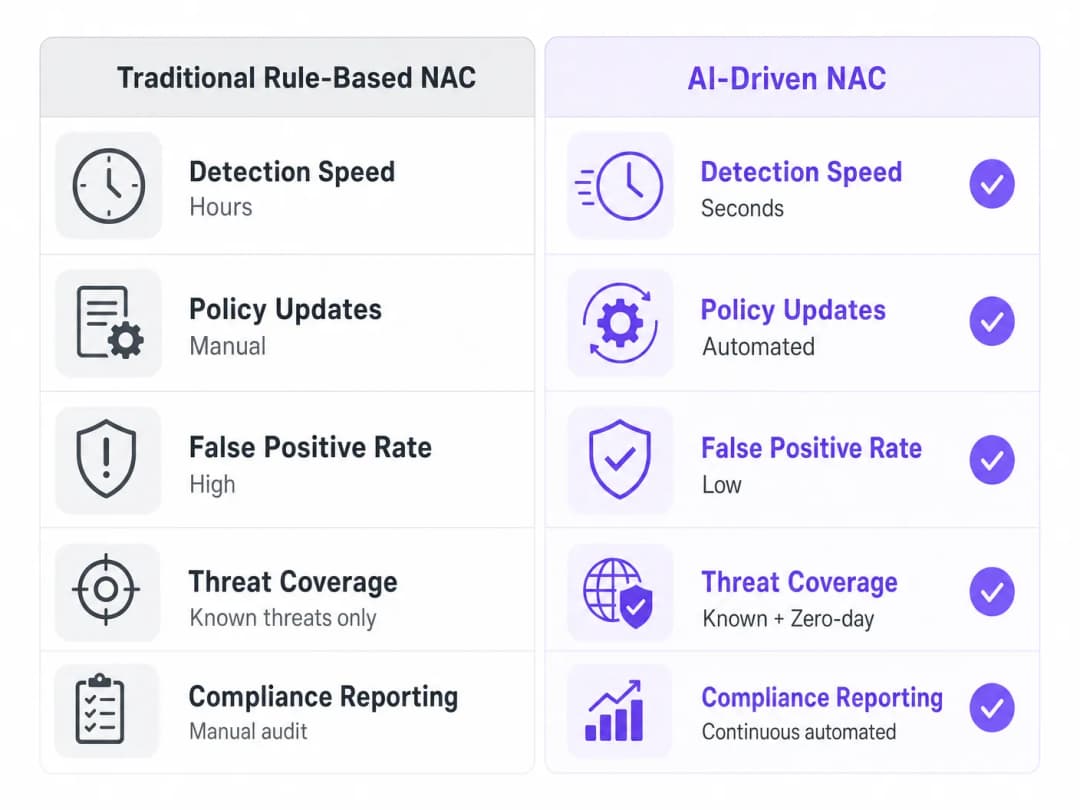
आधुनिक Network Access Control स्टॅटिक नियमांना डायनॅमिक, संदर्भ-संवेदनशील (कॉन्टेक्स्ट-अवेअर) पॉलिसीसह पुनर्स्थित करते. जेव्हा हे AI आणि मशीन लर्निंगसह समाकलित केले जाते, तेव्हा NAC इंजिन केवळ वापरकर्त्याचे ऑथेंटिकेशन करत नाही; तर ते डिव्हाइसच्या वर्तनाचे सतत मूल्यांकन देखील करते.

मुख्य घटक:
- 802.1X / WPA3-Enterprise: सुरक्षित प्रवेशाचा पाया. नेटवर्क प्रवेश मंजूर करण्यापूर्वी RADIUS सर्व्हर किंवा आयडेंटिटी प्रदाता (IdP) च्या विरोधात क्रेडेंशियल सत्यापित करण्यासाठी हे EAP (एक्सटेन्सिबल ऑथेंटिकेशन प्रोटोकॉल) चा वापर करते.
- Dynamic VLAN Steering: यशस्वी प्रमाणीकरण झाल्यावर, RADIUS सर्व्हर विशिष्ट गुणधर्म (उदा. Filter-Id किंवा Tunnel-Private-Group-Id) परत पाठवतो. ऍक्सेस पॉईंट किंवा स्विच या गुणधर्मांचा वापर करून डिव्हाइसला स्वयंचलितपणे योग्य नेटवर्क सेगमेंटमध्ये (उदा. Staff, Guest, IoT) समाविष्ट करतो. विशिष्ट व्हेंडरच्या अंमलबजावणीसाठी, How to Configure NAC Policies for VLAN Steering in Cisco Meraki वरील आमचे मार्गदर्शक पहा.
- वर्तणूक बेसलाइनिंग (Behavioural Baselining): मशीन लर्निंग अल्गोरिदम वेगवेगळ्या प्रकारच्या डिव्हाइसेससाठी सामान्य वर्तनाचा एक बेसलाइन तयार करतात. उदाहरणार्थ, स्मार्ट थर्मोस्टॅटने केवळ त्याच्या नियुक्त क्लाउड कंट्रोलरशीच संवाद साधला पाहिजे.
- रिअल-टाइम थ्रेट डिटेक्शन: जर थर्मोस्टॅटने अचानक पॉईंट ऑफ सेल (POS) टर्मिनलशी SSH कनेक्शन सुरू केले, तर AI इंजिन मिलिसेकंदांमध्ये ही विसंगती ओळखते आणि स्वयंचलित पॉलिसी प्रतिसाद ट्रिगर करते - जसे की डिव्हाइसला अलग ठेवणे (quarantining) किंवा सेशन समाप्त करणे.
तुमच्या विशिष्ट सेटअपबद्दल काही प्रश्न आहेत का?
आमची टीम ८०,००० हून अधिक वेन्यूजमधील वेन्यू ऑपरेटर्स, IT मॅनेजर्स आणि नेटवर्क इंजिनिअर्ससोबत काम करते. २० मिनिटांचा कॉल बुक करा आणि तुमच्यासारख्या इतरांनी ही समस्या कशी सोडवली हे आम्ही तुम्हाला दाखवू.
अंमलबजावणी मार्गदर्शक: टप्प्याटप्प्याने घेतलेला दृष्टिकोन
वितरित एंटरप्राइझमध्ये AI-आधारित NAC उपयोजित करण्यासाठी व्यवसायात कोणताही अडथळा येऊ नये म्हणून एक पद्धतशीर दृष्टिकोन आवश्यक आहे.
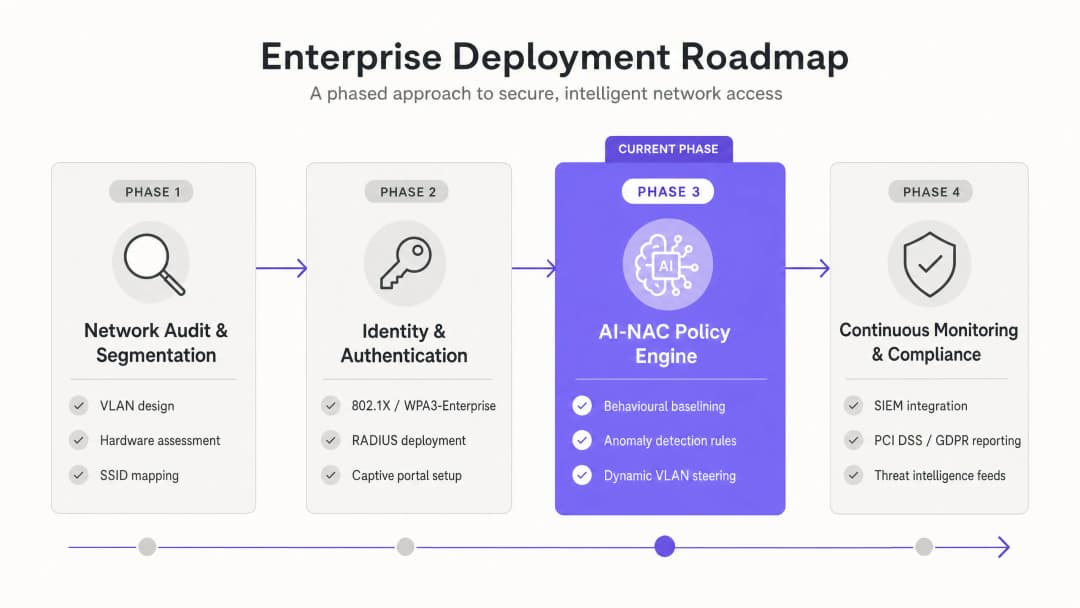
टप्पा १: नेटवर्क ऑडिट आणि सेगमेंटेशन
NAC ची अंमलबजावणी करण्यापूर्वी, मूळ नेटवर्क आर्किटेक्चरने बारीक-सारीक सेगमेंटेशनला सपोर्ट करणे आवश्यक आहे.
- सर्व विद्यमान SSIDs आणि VLANs चा नकाशा तयार करा.
- Guests, Staff, IoT डिव्हाइसेस आणि PCI-नियंत्रित एंडपॉइंट्स वेगळे करणारी एक मजबूत VLAN योजना डिझाइन करा.
- विद्यमान ऍक्सेस पॉईंट्स आणि स्विचेस 802.1X आणि RADIUS Change of Authorization (CoA) ला सपोर्ट करत असल्याची खात्री करा.
टप्पा २: ओळख आणि प्रमाणीकरण
सामायिक पासवर्डकडून ओळख-आधारित प्रवेशाकडे वळा.
- ऑन-प्रिमाइसेस हार्डवेअरची गरज दूर करण्यासाठी क्लाउड-नेटिव्ह RADIUS इन्फ्रास्ट्रक्चर (जसे की Purple चे RADIUS-as-a-Service) तैनात करा.
- EAP-TLS (प्रमाणपत्र-आधारित) किंवा PEAP-MSCHAPv2 वापरून कर्मचाऱ्यांच्या प्रमाणीकरणासाठी कॉर्पोरेट IdPs (उदा. Microsoft Entra ID, Okta) सोबत एकत्रित करा.
- सुसंगत Captive Portal चा वापर करून अभ्यागतांसाठी सुरक्षित ऑनबोर्डिंगची अंमलबजावणी करा.
टप्पा ३: AI-NAC पॉलिसी इंजिन कॉन्फिगरेशन
इंटेलिजेंट राउटिंग आणि मॉनिटरिंग वैशिष्ट्ये सक्षम करा.
- वापरकर्ता गट किंवा डिव्हाइस प्रोफाइलिंगच्या आधारे डायनॅमिक VLAN स्टीयरिंग लागू करण्यासाठी RADIUS रिटर्न गुणधर्म कॉन्फिगर करा.
- वायरलेस कंट्रोलर किंवा ओव्हरले प्लॅटफॉर्मवर मशीन लर्निंग ट्रॅफिक विश्लेषण सक्षम करा.
- उच्च-जोखमीचे वर्तन दर्शविणाऱ्या (उदा. पोर्ट स्कॅनिंग किंवा वारंवार अयशस्वी प्रमाणीकरण) डिव्हाइसेससाठी स्वयंचलित क्वारंटाइन पॉलिसी परिभाषित करा.
टप्पा ४: सतत देखरेख आणि अनुपालन
वायरलेस सुरक्षा रचनेला व्यापक एंटरप्राइझ सुरक्षा ऑपरेशन्ससह एकत्रित करा.
- वायर्ड/वायरलेस टेलिमेट्री आणि ऑथेंटिकेशन लॉग्स एका SIEM (Security Information and Event Management) प्लॅटफॉर्मवर फॉरवर्ड करा.
- PCI-DSS आणि GDPR साठी कॉम्प्लायन्स रिपोर्टिंग स्वयंचलित करा. उदाहरणार्थ, Purple चे प्लॅटफॉर्म हे सुनिश्चित करते की गेस्ट डेटा गोळा करण्याची प्रक्रिया UK GDPR आणि PECR फ्रेमवर्कचे काटेकोरपणे पालन करेल.
Enterprise WiFi सुरक्षेसाठी सर्वोत्तम पद्धती
- सर्टिफिकेट-आधारित ऑथेंटिकेशन लागू करा (EAP-TLS): कर्मचारी आणि कॉर्पोरेट उपकरणांसाठी, EAP-TLS हा सर्वोत्तम पर्याय आहे. हे क्रेडेंशियल चोरीची शक्यता संपुष्टात आणते कारण ऑथेंटिकेशन हे पासवर्ड ऐवजी MDM (Mobile Device Management) द्वारे डिव्हाइसवर इन्स्टॉल केलेल्या क्रिप्टोग्राफिक सर्टिफिकेटवर अवलंबून असते.
- आयडेंटिटी-आधारित गेस्ट WiFi चा वापर करा: Transport हब किंवा रिटेल स्टोअर्समधील सार्वजनिक ॲक्सेससाठी, मॅनेज्ड Captive Portal वापरा जे MAC ॲड्रेसला प्रमाणित ओळख (ईमेल, SMS किंवा सोशल लॉगिन) सोबत लिंक करते. हे ऑडिट ट्रेल प्रदान करते आणि शक्तिशाली मार्केटिंग ॲनालिटिक्स सक्षम करते.
- मायक्रो-सेगमेंटेशन लागू करा: केवळ एका 'IoT' VLAN वर अवलंबून राहू नका. उपकरणांना त्यांच्या कार्यानुसार विभाजित करा (उदा. HVAC, सुरक्षा कॅमेरे, डिजिटल सायनेज) जेणेकरून एखाद्या तडजोड केलेल्या एंडपॉइंटची व्याप्ती मर्यादित राहील.
- WPA3 वापरा: सर्व नवीन उपयोजनांसाठी WPA3 अनिवार्य करा. WPA3-Enterprise अनिवार्य Protected Management Frames (PMF) सादर करते, जे डी-ऑथेंटिकेशन हल्ल्यांपासून संरक्षण करतात.
ट्रबलशूटिंग आणि जोखीम कमी करणे
स्वयंचलित सिस्टीम असल्या तरीही, IT टीम्सनी बिघाड होण्याच्या प्रकारांचा अंदाज लावला पाहिजे:
- RADIUS टाईमआऊट/अयशस्वी होणे: जर NAC इंजिन क्लाउड RADIUS सर्व्हरपर्यंत पोहोचू शकले नाही, तर डिव्हाइसेस ऑथेंटिकेट होण्यास अपयशी ठरतील. जोखीम कमी करण्याचा उपाय: प्रतिबंधित VLAN वरील गंभीर पायाभूत सुविधांसाठी 'फेल-ओपन' पॉलिसी लागू करा, किंवा मल्टी-रीजन RADIUS फेलओव्हर सुनिश्चित करा.
- असंगती शोधण्यात चुकीचे सकारात्मक (False Positives) परिणाम: अत्यंत आक्रमक AI मॉडेल्स कायदेशीर डिव्हाइसेसना क्वारंटाईन करू शकतात, ज्यामुळे ऑपरेशनल डाउनटाइम होऊ शकतो. जोखीम कमी करण्याचा उपाय: स्वयंचलित अंमलबजावणी सक्षम करण्यापूर्वी अचूक बेसलाईन तयार करण्यासाठी पहिले 14 - 30 दिवस AI इंजिन 'मॉनिटर-ओन्ली' मोडमध्ये चालवा.
- जुन्या उपकरणांची विसंगतता: जुनी IoT उपकरणे (उदा. जुने बारकोड स्कॅनर) कदाचित 802.1X ला सपोर्ट करणार नाहीत. जोखीम कमी करण्याचा उपाय: विशेषतः या उपकरणांसाठी Identity PSK (iPSK) किंवा MAC Authentication Bypass (MAB) वापरा, त्यांना युनिक पासफ्रेजेस द्या आणि कडक ACLs द्वारे त्यांचा ॲक्सेस मर्यादित करा.
ROI आणि व्यावसायिक प्रभाव
AI-चालित NAC आर्किटेक्चरकडे संक्रमण केल्याने केवळ जोखीम कमी होत नाही, तर मोजता येण्याजोगे व्यावसायिक मूल्य देखील मिळते:
- कमी झालेला IT OpEx: डिव्हाइस ऑनबोर्डिंग आणि VLAN असाइनमेंट स्वयंचलित केल्याने WiFi कनेक्टिव्हिटी आणि पासवर्ड रीसेटशी संबंधित हेल्पडेस्क तिकिटे लक्षणीयरीत्या कमी होतात.
- सरलीकृत कॉम्प्लायन्स: स्वयंचलित रिपोर्टिंग आणि कडक सेगमेंटेशन PCI-DSS ऑडिट सुलभ करतात, ज्यामुळे सहसा ऑडिटची व्याप्ती कमी होते आणि कॉम्प्लायन्स खर्चात हजारो रुपयांची बचत होते.
- वर्धित ग्राहक अंतर्दृष्टी: सुरक्षित ओळख प्रमाणीकरण Purple सारख्या प्लॅटफॉर्मसह समाकलित करून, ठिकाणे डेमोग्राफिक डेटा आणि ड्वेल टाईम सुरक्षितपणे गोळा करू शकतात, ज्यामुळे GDPR चे पालन राखून लक्ष्यित विपणन मोहिमा राबवता येतात.
महत्वाच्या व्याख्या
Network Access Control (NAC)
एक सुरक्षा सोल्यूशन जे नेटवर्कमध्ये प्रवेश करू इच्छिणाऱ्या डिव्हाइसेसवर धोरण लागू करते, ज्यामुळे केवळ प्रमाणित आणि अनुपालन करणाऱ्या एंडपॉईंट्सनाच प्रवेश मिळण्याची खात्री होते.
स्थिर पासवर्डकडून ओळख-आधारित, झिरो-ट्रस्ट नेटवर्क आर्किटेक्चरकडे जाणाऱ्या IT टीम्ससाठी अत्यंत महत्त्वाचे आहे.
802.1X
पोर्ट-आधारित नेटवर्क ॲक्सेस कंट्रोलसाठी एक IEEE मानक जे LAN किंवा WLAN ला जोडू इच्छिणाऱ्या डिव्हाइसेसना प्रमाणीकरण यंत्रणा प्रदान करते.
एंटरप्राइझ WiFi सुरक्षेचा पाया, ज्याला नेटवर्क ट्रॅफिकला अनुमती देण्यापूर्वी क्रेडेंशियल सत्यापित करण्यासाठी RADIUS सर्व्हरची आवश्यकता असते.
Dynamic VLAN Steering
कनेक्ट केलेल्या SSID ऐवजी एखाद्या डिव्हाइसच्या ओळखीच्या किंवा भूमिकेच्या आधारे त्याला विशिष्ट व्हर्च्युअल लोकल एरिया नेटवर्क (VLAN) वर स्वयंचलितपणे नियुक्त करण्याची प्रक्रिया.
ठिकाणांना एकाच SSID चे प्रसारण करण्यास अनुमती देते आणि बॅकएंडवर कर्मचारी, पाहुणे आणि IoT डिव्हाइसेसचे सुरक्षितपणे वर्गीकरण करते.
RADIUS (Remote Authentication Dial-In User Service)
एक नेटवर्किंग प्रोटोकॉल जो नेटवर्क सेवा कनेक्ट करणाऱ्या आणि वापरणाऱ्या युजर्ससाठी केंद्रीकृत प्रमाणीकरण, अधिकृतता आणि लेखा (AAA) व्यवस्थापन प्रदान करतो.
एंटरप्राइझ WiFi चे मुख्य केंद्र, जे ऑन-प्रिमाइसेस पायाभूत सुविधा कमी करण्यासाठी सहसा क्लाउड सेवा (RADIUS-as-a-Service) म्हणून उपयोजित केले जाते.
EAP-TLS
Extensible Authentication Protocol-Transport Layer Security. अत्यंत सुरक्षित, परस्पर प्रमाणीकरणासाठी क्लायंट आणि सर्व्हर दोन्हीवर डिजिटल प्रमाणपत्रे वापरणारी एक प्रमाणीकरण पद्धत.
कॉर्पोरेट उपकरणांसाठी सर्वात सुरक्षित प्रमाणीकरण पद्धत, जी पासवर्डशी संबंधित असुरक्षितता दूर करते.
Identity PSK (iPSK)
एकाच SSID वर एकापेक्षा जास्त युनिक Pre-Shared Keys वापरण्याची अनुमती देणारे वैशिष्ट्य, ज्यामध्ये प्रत्येक की विशिष्ट डिव्हाइसच्या MAC ॲड्रेस आणि पॉलिसीशी जोडलेली असते.
802.1X प्रमाणीकरणास सपोर्ट करू न शकणार्या हेडलेस IoT डिव्हाइसेसना (जसे की प्रिंटर किंवा स्मार्ट टीव्ही) सुरक्षित करण्यासाठी आवश्यक.
Behavioural Baselining
विशिष्ट डिव्हाइस किंवा वापरकर्त्यासाठी ठराविक कालावधीत नेटवर्क क्रियाकलापाचा सामान्य पॅटर्न स्थापित करण्यासाठी मशीन लर्निंगचा वापर.
AI-संचलित थ्रेट डिटेक्शन सिस्टीमला विसंगती ओळखण्यास सक्षम करते, जसे की थर्मोस्टॅटने अचानक डेटाबेसमध्ये प्रवेश करण्याचा प्रयत्न करणे.
Protected Management Frames (PMF)
एक WiFi सुरक्षा वैशिष्ट्य जे मॅनेजमेंट ॲक्शन फ्रेम्स कूटबद्ध (encrypt) करते, ज्यामुळे हल्लेखोर क्लायंटचे कनेक्शन तोडण्यासाठी त्यांचे बनावट रूप तयार करू शकत नाहीत.
WPA3 मध्ये अनिवार्य, हे हॅकर्सद्वारे हँडशेक कॅप्चर करण्यासाठी किंवा सेवा खंडित करण्यासाठी सामान्यतः वापरल्या जाणाऱ्या डी-ऑथेंटिकेशन हल्ल्यांचा प्रभाव कमी करते.
सोडवलेली उदाहरणे
एका ४०० खोल्यांच्या हॉटेलला त्याचे नेटवर्क सुरक्षित करणे आवश्यक आहे. सध्या, कर्मचारी, पाहुणे आणि स्मार्ट टीव्ही सर्व एकाच पासवर्डसह समान WPA2-Personal नेटवर्क वापरत आहेत. IT संचालकाने AI-चालित NAC चा वापर करून या आर्किटेक्चरची पुनर्रचना कशी करावी?
- क्लाउड RADIUS सर्व्हर उपयोजित करा आणि 802.1X प्रमाणीकरणासाठी ॲक्सेस पॉईंट्स कॉन्फिगर करा.
- PEAP किंवा EAP-TLS द्वारे कर्मचाऱ्यांच्या प्रवेशासाठी RADIUS सर्व्हरला हॉटेलच्या Azure AD सह समाकलित करा.
- अभ्यागतांसाठी कॅप्टिव्ह पोर्टलसह Purple Guest WiFi लागू करा, त्यांना क्लायंट आयसोलेशन सक्षम असलेल्या स्वतंत्र Guest VLAN (उदा. VLAN 100) वर ठेवा.
- स्मार्ट टीव्हीसाठी Identity PSK (iPSK) वापरा. NAC इंजिन प्रत्येक टीव्हीला एक युनिक प्री-शेअर्ड की नियुक्त करते आणि त्यांना स्वयंचलितपणे एका प्रतिबंधित IoT VLAN (उदा. VLAN 200) कडे वळवते जे केवळ IPTV व्यवस्थापन सर्व्हरशी संप्रेषण करू शकते.
- स्मार्ट टीव्हीवरील विसंगत आउटबाउंड ट्रॅफिकचे निरीक्षण करण्यासाठी AI वर्तणूक बेसलाइनिंग सक्षम करा.
एक रिटेल साखळी ५० ठिकाणी मोबाईल Point of Sale (mPOS) टॅब्लेट सुरू करत आहे. वायरलेस नेटवर्कवर हे डिव्हाइस सुरक्षित आणि PCI-DSS चे पालन करत राहतील याची ते कशी खात्री करू शकतात?
- सर्व mPOS टॅब्लेट एका MDM सोल्यूशनमध्ये नोंदणीकृत करा आणि प्रत्येक डिव्हाइसवर युनिक क्लायंट प्रमाणपत्रे पाठवा.
- EAP-TLS प्रमाणीकरणासह WPA3-Enterprise ची आवश्यकता असण्यासाठी वायरलेस नेटवर्क कॉन्फिगर करा.
- प्रमाणीकरणादरम्यान पोश्चर चेक (उदा. MDM प्रोफाइल आणि OS आवृत्ती सत्यापित करणे) करण्यासाठी NAC इंजिन कॉन्फिगर करा.
- यशस्वी प्रमाणीकरण आणि पोश्चर प्रमाणीकरण झाल्यावर, टॅब्लेटला एका समर्पित, अत्यंत प्रतिबंधित PCI VLAN कडे डायनॅमिकली वळवा.
- टॅब्लेटचे सतत निरीक्षण करण्यासाठी AI थ्रेट डिटेक्टशन वापरा. जर टॅब्लेटने अनधिकृत बाह्य IP शी कनेक्ट करण्याचा प्रयत्न केला, तर NAC इंजिन डिव्हाइसला क्वारंटाईन करण्यासाठी स्वयंचलितपणे RADIUS CoA जारी करते.
सराव प्रश्न
Q1. एका हॉस्पिटलचे IT संचालक वायरलेस नेटवर्क अपग्रेड करत आहेत. त्यांच्याकडे 500 जुने इन्फ्युजन पंप आहेत जे फक्त WPA2-Personal ला सपोर्ट करतात आणि 802.1X ला सपोर्ट करण्यासाठी अपग्रेड केले जाऊ शकत नाहीत. उर्वरित नेटवर्क WPA3-Enterprise वर हलवताना ही डिव्हाइसेस कशी सुरक्षित करावीत?
टीप: एंटरप्राइझ प्रमाणीकरण प्रोटोकॉलला सपोर्ट न करणाऱ्या डिव्हाइसेसना युनिक क्रेडेंशियल कसे लागू करायचे याचा विचार करा.
नमुना उत्तर पहा
IT संचालकांनी इन्फ्युजन पंपसाठी Identity PSK (iPSK) किंवा MAC Authentication Bypass (MAB) लागू केले पाहिजे. NAC/RADIUS सर्व्हरद्वारे प्रत्येक पंपच्या MAC ॲड्रेसला एक युनिक पासफ्रेज देऊन, नेटवर्क या जुन्या डिव्हाइसेसना डायनॅमिक पद्धतीने अत्यंत प्रतिबंधित मेडिकल IoT VLAN मध्ये पाठवू शकते. उर्वरित नेटवर्क (कर्मचाऱ्यांचे लॅपटॉप, टॅब्लेट) त्याच फिजिकल इन्फ्रास्ट्रक्चरवर EAP-TLS सह WPA3-Enterprise चा सुरक्षितपणे वापर करू शकते.
Q2. AI-संचलित NAC सोल्यूशन तैनात केल्यानंतर, नेटवर्क ऑपरेशन्स टीमला अलर्ट मिळतात की कॉन्फरन्स सेंटरमधील अनेक स्मार्ट टीव्ही ऑटोमॅटिकली क्वारंटाइन केले जात आहेत, ज्यामुळे एका मोठ्या कार्यक्रमात व्यत्यय येत आहे. याचे संभाव्य कारण काय आहे आणि त्याचे निराकरण कसे करावे?
टीप: मशीन लर्निंग विसंगती शोध यंत्रणा (anomaly detection) तैनात करण्याच्या लाइफसायकलचा विचार करा.
नमुना उत्तर पहा
संभाव्य कारण असे आहे की AI ॲनोमली डिटेक्शन स्मार्ट टीव्हीसाठी अचूक बिहेवियरल बेसलाइन स्थापित करण्यापूर्वीच 'enforcement' मोडमध्ये सक्षम केले गेले होते. याचे निराकरण करण्यासाठी, IT टीमने ताबडतोब AI पॉलिसी इंजिनला 'monitor-only' मोडमध्ये हलवले पाहिजे, टीव्ही क्वारंटाइनमधून बाहेर काढले पाहिजेत आणि ऑटोमॅटेड एन्फोर्समेंट पुन्हा सुरू करण्यापूर्वी सिस्टीमला 14 - 30 दिवसांसाठी डिव्हाइसेसचे सामान्य ट्रॅफिक पॅटर्न समजून घेण्याची परवानगी दिली पाहिजे.
Q3. एका रिटेल व्यवसायाला मार्केटिंगसाठी ग्राहकांचा डेटा कॅप्चर करत असताना 200 स्टोअर्समध्ये विनामूल्य Guest WiFi ऑफर करायचे आहे. त्यांना हे देखील सुनिश्चित करणे आवश्यक आहे की या पब्लिक नेटवर्कमुळे पॉईंट-ऑफ-सेल टर्मिनल्ससाठी त्यांच्या PCI-DSS अनुपालनात (compliance) तडजोड होणार नाही. यासाठी शिफारस केलेले आर्किटेक्चर कोणते आहे?
टीप: सेगमेंटेशन आणि कॅप्टिव्ह पोर्टलच्या भूमिकेवर लक्ष केंद्रित करा.
नमुना उत्तर पहा
व्यवसायाने युझर ऑनबोर्डिंग, संमती कॅप्चर (GDPR) आणि प्रमाणीकरण हाताळण्यासाठी ओपन SSID वर Purple Guest WiFi सारखे व्यवस्थापित कॅप्टिव्ह पोर्टल सोल्यूशन तैनात केले पाहिजे. महत्त्वाचे म्हणजे, मूळ नेटवर्क इन्फ्रास्ट्रक्चरमध्ये VLAN सेगमेंटेशन वापरणे आवश्यक आहे. गेस्ट ट्रॅफिक थेट इंटरनेटवर जाणाऱ्या एका स्वतंत्र Guest VLAN वर ठेवले पाहिजे आणि क्लायंट आयसोलेशन सक्षम केले पाहिजे. POS टर्मिनल्स संपूर्णपणे वेगळ्या, प्रतिबंधित PCI VLAN वर असणे आवश्यक आहे, जे 802.1X किंवा iPSK द्वारे सुरक्षित केलेले असेल, जेणेकरून Guest नेटवर्क PCI-DSS ऑडिटच्या कक्षेबाहेर राहील.
या मालिकेमध्ये पुढे वाचा
कर्मचारी आणि अतिथी WiFi नेटवर्क सुरक्षितपणे कसे विभाजित करावे: एंटरप्राइझ LAN साठी सर्वोत्तम पद्धती
ही मार्गदर्शिका IT व्यवस्थापक आणि नेटवर्क आर्किटेक्ट्सना कर्मचारी आणि अतिथी WiFi ट्रॅफिकचे योग्य वर्गीकरण करून एंटरप्राइझ LAN सुरक्षित करण्यासाठी एक वेंडर-न्यूट्रल, तांत्रिक आराखडा प्रदान करते. यामध्ये सामायिक पासफ्रेजेस काढून टाकण्यासाठी आणि कॉर्पोरेट मालमत्तांचे संरक्षण करण्यासाठी आवश्यक असलेले 802.1X ऑथेंटिकेशन, क्लाउड RADIUS, VLAN आयसोलेशन आणि क्रेडेंशियल लाइफसायकल व्यवस्थापन समाविष्ट आहे.
सर्वोत्तम DNS filtering: व्यवसायांसाठी एक व्यापक मार्गदर्शक
हे तांत्रिक संदर्भ मार्गदर्शक स्पष्ट करते की कशा प्रकारे एंटरप्राइझ DNS filtering हे कनेक्शन स्थापित होण्यापूर्वीच - रिझोल्यूशन लेयरवर दुर्भावनापूर्ण डोमेन्स ब्लॉक करून सार्वजनिक नेटवर्क सुरक्षित करते. हे IT संचालक, नेटवर्क आर्किटेक्ट आणि वेन्यू ऑपरेशन्स टीम्सना डेव्हलपमेंट आर्किटेक्चर, फायरवॉल कॉन्फिगरेशन आणि अनुपालन संदर्भ प्रदान करते जे त्यांना हॉस्पिटॅलिटी, रिटेल आणि सार्वजनिक क्षेत्रातील वातावरणात Guest WiFi सुरक्षित करण्यासाठी आवश्यक आहे. Purple Shield हे ८०,००० पेक्षा जास्त थेट वेन्यूवर DNS स्तरावर मालवेअर, बॉटनेट्स आणि अयोग्य कंटेंट ब्लॉक करते.
Cisco SUDI समजून घेणे: Secure Network Access Control मधील Hardware-Anchored Identity
हे मार्गदर्शक स्पष्ट करते की Cisco SUDI कशा प्रकारे एंटरप्राइझ नेटवर्क इन्फ्रास्ट्रक्चरसाठी hardware-anchored, गुपित-सुरक्षित (cryptographically secure) ओळख प्रदान करते. तुमच्या वेन्यूच्या नेटवर्क ॲक्सेस कंट्रोल सुरक्षित करण्यासाठी स्पूफ करता येण्याजोग्या MAC ॲड्रेसेस ऐवजी अपरिवर्तनीय 802.1AR सर्टिफिकेट्स वापरण्याची पद्धत जाणून घ्या.
तुमच्या विशिष्ट सेटअपबद्दल काही प्रश्न आहेत का?
आमची टीम ८०,००० हून अधिक वेन्यूजमधील वेन्यू ऑपरेटर्स, IT मॅनेजर्स आणि नेटवर्क इंजिनिअर्ससोबत काम करते. २० मिनिटांचा कॉल बुक करा आणि तुमच्यासारख्या इतरांनी ही समस्या कशी सोडवली हे आम्ही तुम्हाला दाखवू.