
WiFi सुरक्षा का भविष्य: AI-संचालित NAC और ख़तरे का पता लगाना
यह आधिकारिक गाइड लेगेसी WPA2 से AI-संचालित Network Access Control (NAC) और ख़तरे का पता लगाने वाली तकनीक तक एंटरप्राइज WiFi सुरक्षा के विकास की पड़ताल करती है। IT लीडर्स के लिए डिज़ाइन की गई, यह गाइड Purple के पहचान-आधारित नेटवर्क का उपयोग करके रिटेल, हॉस्पिटैलिटी और स्टेडियमों जैसे उच्च-घनत्व वाले वातावरण को सुरक्षित करने के लिए व्यावहारिक डिप्लॉयमेंट रणनीतियाँ प्रदान करती है।
इस गाइड को सुनें
पॉडकास्ट ट्रांसक्रिप्ट देखें
हमारी मुख्य श्रृंखला का हिस्सा: Enterprise WiFi Security Guide →

कार्यकारी सारांश (Executive Summary)
उच्च-घनत्व वाले वातावरणों - जैसे रिटेल चेन, स्टेडियम और हॉस्पिटैलिटी स्थलों - का प्रबंधन करने वाले IT प्रबंधकों और नेटवर्क आर्किटेक्ट्स के लिए, वायरलेस सुरक्षा का जोखिम कभी भी इतना अधिक नहीं था। WPA2 Personal और स्टैटिक प्री-शेयर्ड कीज़ (PSKs) जैसी लीगेसी प्रमाणीकरण विधियाँ मौलिक रूप से कमज़ोर हो चुकी हैं, जो डिवाइस की स्थिति पर शून्य दृश्यता प्रदान करती हैं और नेटवर्क को क्रेडेंशियल साझाकरण और लेटरल मूवमेंट हमलों के प्रति संवेदनशील बनाती हैं।
एंटरप्राइज़ वायरलेस सुरक्षा का भविष्य पहचान-संचालित और AI-संचालित है। यह गाइड AI-संचालित Network Access Control (NAC) और निरंतर खतरे का पता लगाने (थ्रेट डिटेक्शन) को तैनात करने के बारे में एक गहन तकनीकी जानकारी प्रदान करता है। 802.1X, डायनेमिक VLAN स्टीयरिंग, और मशीन लर्निंग-आधारित विसंगति का पता लगाने (अनोमली डिटेक्शन) की ओर स्थानांतरित होकर, IT टीमें एज पर ज़ीरो-ट्रस्ट नेटवर्क एक्सेस (ZTNA) प्राप्त कर सकती हैं। हम यह पता लगाएंगे कि कैसे Purple के Guest WiFi और WiFi Analytics जैसे प्लेटफॉर्म इन उन्नत सुरक्षा ढांचों के साथ एकीकृत होकर IT ओवरहेड को बढ़ाए बिना सहज, अनुपालन योग्य और अत्यधिक सुरक्षित कनेक्टिविटी प्रदान करते हैं।
तकनीकी गहन अध्ययन: AI-संचालित NAC की ओर बदलाव
लीगेसी वायरलेस सुरक्षा की विफलता
पारंपरिक एंटरप्राइज़ नेटवर्क अक्सर स्टैटिक VLAN असाइनमेंट और साझा क्रेडेंशियल्स पर निर्भर करते हैं। एक बड़े Hospitality या Retail वातावरण में, यह दृष्टिकोण तीन मोर्चों पर विफल रहता है:
- पहचान के संदर्भ की कमी: साझा PSK के माध्यम से जुड़ा एक डिवाइस केवल एक MAC एड्रेस होता है। उपयोगकर्ता की पहचान से इसका कोई क्रिप्टोग्राफिक लिंक नहीं होता है।
- लेटरल मूवमेंट के प्रति संवेदनशीलता: एक बार जब कोई हमलावर साझा की (key) से समझौता कर लेता है, तो वह ब्रॉडकास्ट डोमेन तक निर्बाध पहुंच प्राप्त कर लेता है।
- परिचालन ओवरहेड: सैकड़ों स्थानों पर मैन्युअल रूप से MAC अनुमति सूचियों (allowlists) को प्रबंधित करना और कीज़ को रोटेट करना टिकाऊ नहीं है।
AI-संचालित NAC आर्किटेक्चर
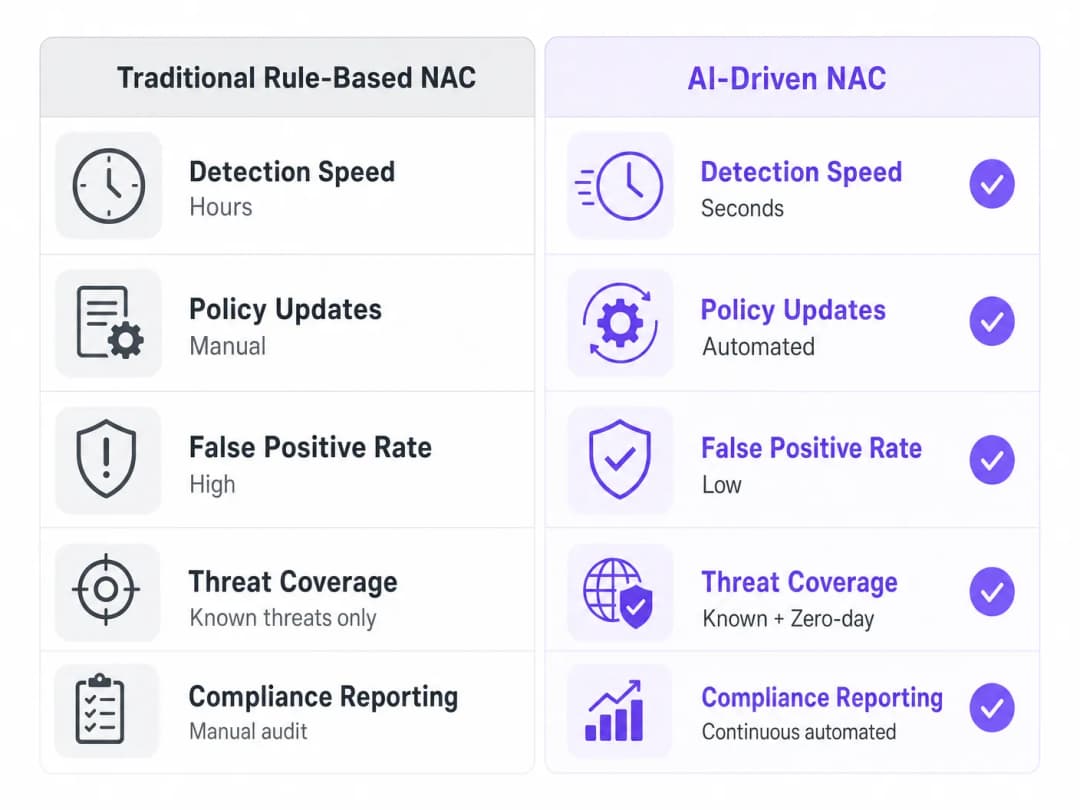
आधुनिक Network Access Control स्टैटिक नियमों को डायनेमिक, संदर्भ-जागरूक नीतियों से बदल देता है। जब AI और मशीन लर्निंग के साथ एकीकृत किया जाता है, तो NAC इंजन केवल उपयोगकर्ता को प्रमाणित नहीं करता है; यह डिवाइस के व्यवहार का लगातार मूल्यांकन करता है।

मुख्य घटक:
- 802.1X / WPA3-Enterprise: सुरक्षित पहुंच का आधार। यह नेटवर्क एक्सेस देने से पहले RADIUS सर्वर या पहचान प्रदाता (IdP) के खिलाफ क्रेडेंशियल्स को सत्यापित करने के लिए EAP (एक्स्टेंसिबल ऑथेंटिकेशन प्रोटोकॉल) का उपयोग करता है।
- डायनेमिक VLAN स्टीयरिंग: सफल प्रमाणीकरण पर, RADIUS सर्वर विशिष्ट विशेषताएँ (जैसे, Filter-Id या Tunnel-Private-Group-Id) लौटाता है। एक्सेस पॉइंट या स्विच इन विशेषताओं का उपयोग डिवाइस को डायनेमिक रूप से सही नेटवर्क सेगमेंट (जैसे, स्टाफ, गेस्ट, IoT) में रखने के लिए करता है। विशिष्ट वेंडर इम्प्लीमेंटेशन के लिए, How to Configure NAC Policies for VLAN Steering in Cisco Meraki पर हमारा गाइड देखें।
- व्यवहार संबंधी बेसलाइनिंग: मशीन लर्निंग एल्गोरिदम विभिन्न डिवाइस प्रकारों के लिए सामान्य व्यवहार का एक बेसलाइन स्थापित करते हैं। उदाहरण के लिए, एक स्मार्ट थर्मोस्टेट को केवल अपने निर्दिष्ट क्लाउड कंट्रोलर के साथ ही संचार करना चाहिए।
- रीयल-टाइम थ्रेट डिटेक्शन: यदि थर्मोस्टेट अचानक पॉइंट ऑफ सेल (POS) टर्मिनल से एक SSH कनेक्शन शुरू करता है, तो AI इंजन मिलीसेकंड में इस विसंगति को फ़्लैग करता है और एक स्वचालित पॉलिसी प्रतिक्रिया को ट्रिगर करता है - जैसे कि डिवाइस को क्वारंटीन करना या सेशन को समाप्त करना।
अपने विशिष्ट सेटअप को लेकर कोई सवाल हैं?
हमारी टीम 80,000 से अधिक वेन्यू में वेन्यू ऑपरेटरों, IT मैनेजरों और नेटवर्क इंजीनियरों के साथ काम करती है। 20 मिनट का कॉल बुक करें और हम आपको दिखाएंगे कि आपके जैसे अन्य लोगों ने इसे कैसे हल किया।
इम्प्लीमेंटेशन गाइड: एक चरणबद्ध दृष्टिकोण
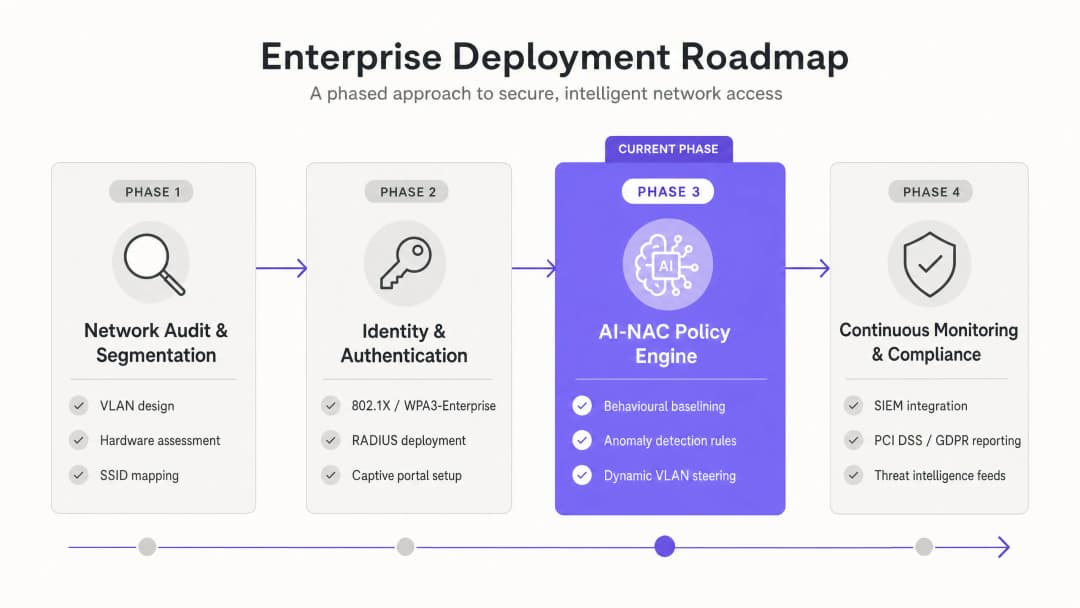
एक वितरित एंटरप्राइज़ में AI-संचालित NAC को लागू करने के लिए व्यावसायिक व्यवधान से बचने के लिए एक संरचित दृष्टिकोण की आवश्यकता होती है।
चरण 1: नेटवर्क ऑडिट और सेगमेंटेशन
NAC को लागू करने से पहले, अंतर्निहित नेटवर्क आर्किटेक्चर को विस्तृत सेगमेंटेशन का समर्थन करना चाहिए।
- सभी मौजूदा SSIDs और VLANs का मैप तैयार करें।
- गेस्ट, स्टाफ, IoT डिवाइसेस और PCI-विनियमित एंडपॉइंट्स को अलग करने के लिए एक मजबूत VLAN स्कीमा डिज़ाइन करें।
- सुनिश्चित करें कि मौजूदा एक्सेस पॉइंट्स और स्विच 802.1X और RADIUS Change of Authorization (CoA) का समर्थन करते हैं।
चरण 2: पहचान और प्रमाणीकरण
साझा किए गए पासवर्ड से हटकर पहचान-आधारित एक्सेस को अपनाएं।
- ऑन-प्रिमाइसेस हार्डवेयर को समाप्त करने के लिए एक क्लाउड-नेटीव RADIUS इन्फ्रास्ट्रक्चर (जैसे Purple का RADIUS-as-a-Service) तैनात करें।
- EAP-TLS (प्रमाणपत्र-आधारित) या PEAP-MSCHAPv2 का उपयोग करके स्टाफ प्रमाणीकरण के लिए कॉर्पोरेट IdPs (जैसे, Microsoft Entra ID, Okta) के साथ एकीकृत करें।
- एक अनुपालन योग्य Captive Portal का उपयोग करके आगंतुकों के लिए सुरक्षित ऑनबोर्डिंग लागू करें।
चरण 3: AI-NAC पॉलिसी इंजन कॉन्फ़िगरेशन
इंटेलिजेंट राउटिंग और मॉनिटरिंग फीचर्स को सक्षम करें।
- यूज़र ग्रुप या डिवाइस प्रोफाइलिंग के आधार पर डायनेमिक VLAN स्टीयरिंग को लागू करने के लिए RADIUS रिटर्न एट्रिब्यूट्स को कॉन्फ़िगर करें।
- वायरलेस कंट्रोलर या ओवरले प्लेटफॉर्म पर मशीन लर्निंग ट्रैफ़िक विश्लेषण को सक्षम करें।
- उच्च जोखिम वाले व्यवहार (जैसे, पोर्ट स्कैनिंग या अत्यधिक विफल प्रमाणीकरण) प्रदर्शित करने वाले उपकरणों के लिए स्वचालित क्वारंटीन नीतियां परिभाषित करें।
चरण 4: निरंतर निगरानी और अनुपालन
वायरलेस सुरक्षा स्थिति को व्यापक एंटरप्राइज़ सुरक्षा संचालन के साथ एकीकृत करें।* वायरलेस टेलीमेट्री और ऑथेंटिकेशन लॉग को एक SIEM (Security Information and Event Management) प्लेटफॉर्म पर फॉरवर्ड करें।
- PCI-DSS और GDPR के लिए कंप्लायंस रिपोर्टिंग को ऑटोमेट करें। उदाहरण के लिए, Purple का प्लेटफॉर्म यह सुनिश्चित करता है कि गेस्ट डेटा कलेक्शन UK GDPR और PECR फ्रेमवर्क का सख्ती से पालन करे।
एंटरप्राइज WiFi सिक्योरिटी के लिए बेस्ट प्रैक्टिसेस
- सर्टिफिकेट-बेस्ड ऑथेंटिकेशन (EAP-TLS) लागू करें: स्टाफ और कॉर्पोरेट डिवाइसेज के लिए, EAP-TLS गोल्ड स्टैंडर्ड है। यह क्रेडेंशियल चोरी की समस्या को समाप्त करता है क्योंकि ऑथेंटिकेशन पासवर्ड के बजाय MDM (Mobile Device Management) के माध्यम से डिवाइस पर इंस्टॉल किए गए क्रिप्टोग्राफिक सर्टिफिकेट पर निर्भर करता है।
- आइडेंटिटी-बेस्ड गेस्ट WiFi का लाभ उठाएं: ट्रान्सपोर्ट हब या रिटेल स्टोर्स में पब्लिक एक्सेस के लिए, एक मैनेज्ड कैप्टिव पोर्टल (Captive Portal) का उपयोग करें जो MAC एड्रेस को एक वेरिफाइड आइडेंटिटी (ईमेल, SMS, या सोशल लॉगिन) से जोड़ता है। यह एक ऑडिट ट्रेल प्रदान करता है और शक्तिशाली मार्केटिंग एनालिटिक्स को सक्षम बनाता है।
- माइक्रो-सेगमेंटेशन लागू करें: केवल एक 'IoT' VLAN पर निर्भर न रहें। कॉम्प्रोमाइज्ड एंडपॉइंट के प्रभाव क्षेत्र को सीमित करने के लिए डिवाइसेज को उनके कार्य (जैसे, HVAC, सिक्योरिटी कैमरा, डिजिटल साइनेज) के आधार पर सेगमेंट करें।
- WPA3 अपनाएं: सभी नए डिप्लॉयमेंट्स के लिए WPA3 को अनिवार्य करें। WPA3-Enterprise अनिवार्य प्रोटेक्टेड मैनेजमेंट फ्रेम्स (PMF) पेश करता है, जो डी-ऑथेंटिकेशन हमलों से बचाव करते हैं।
ट्रबलशूटिंग और जोखिम न्यूनीकरण (रिस्क मिटिगेशन)
ऑटोमेटेड सिस्टम के बावजूद, IT टीमों को संभावित विफलताओं का पूर्वानुमान लगाना चाहिए:
- RADIUS टाइमआउट/विफलता: यदि NAC इंजन क्लाउड RADIUS सर्वर तक नहीं पहुंच पाता है, तो डिवाइसेज ऑथेंटिकेट होने में विफल रहेंगे। निवारण: एक रेस्ट्रिक्टेड VLAN पर महत्वपूर्ण इन्फ्रास्ट्रक्चर के लिए 'फेल-ओपन' पॉलिसी लागू करें, या मल्टी-रीजन RADIUS फेलओवर सुनिश्चित करें।
- एनोमली डिटेक्शन में गलत पॉजिटिव्स (फॉल्स पॉजिटिव्स): अत्यधिक आक्रामक AI मॉडल वैध डिवाइसेज को क्वारंटाइन कर सकते हैं, जिससे ऑपरेशनल डाउनटाइम हो सकता है। निवारण: ऑटोमेटेड एनफोर्समेंट को सक्षम करने से पहले एक सटीक बेसलाइन बनाने के लिए पहले 14 - 30 दिनों के लिए AI इंजन को केवल 'मॉनिटर-ओनली' मोड में चलाएं।
- लेगेसी डिवाइस असंगतता: पुराने IoT डिवाइसेज (जैसे, लेगेसी बारकोड स्कैनर) 802.1X का समर्थन नहीं कर सकते हैं। निवारण: विशेष रूप से इन डिवाइसेज के लिए Identity PSK (iPSK) या MAC Authentication Bypass (MAB) का उपयोग करें, उन्हें यूनिक पासफ्रेज असाइन करें और सख्त ACLs के माध्यम से उनकी पहुंच को सीमित करें।
ROI और बिजनेस इम्पैक्ट
AI-ड्रिवन NAC आर्किटेक्चर पर स्विच करना जोखिम कम करने के अलावा मापने योग्य बिजनेस वैल्यू प्रदान करता है:
- कम IT OpEx: डिवाइस ऑनबोर्डिंग और VLAN असाइनमेंट को ऑटोमेट करने से WiFi कनेक्टिविटी और पासवर्ड रीसेट से संबंधित हेल्पडेस्क टिकटों में काफी कमी आती है।
- सरलीकृत कंप्लायंस: ऑटोमेटेड रिपोर्टिंग और सख्त सेगमेंटेशन PCI-DSS ऑडिट को आसान बनाते हैं, जिससे अक्सर ऑडिट का दायरा कम हो जाता है और कंप्लायंस लागत में हजारों की बचत होती है।* बेहतर ग्राहक अंतर्दृष्टि (Customer Insights): सुरक्षित पहचान सत्यापन को Purple जैसे प्लेटफॉर्म के साथ एकीकृत करके, स्थान सुरक्षित रूप से जनसांख्यिकीय डेटा और ठहरने का समय (dwell times) एकत्र कर सकते हैं, जिससे GDPR compliance बनाए रखते हुए लक्षित मार्केटिंग अभियानों को बढ़ावा मिलता है।
मुख्य परिभाषाएं
Network Access Control (NAC)
एक सुरक्षा समाधान जो नेटवर्क तक पहुँचने का प्रयास करने वाले उपकरणों पर नीति लागू करता है, यह सुनिश्चित करता है कि केवल ऑथेंटिकेट और अनुपालन करने वाले एंडपॉइंट्स को ही प्रवेश दिया जाए।
IT टीमों के लिए स्टेटिक पासवर्ड से पहचान-आधारित, ज़ीरो-ट्रस्ट नेटवर्क आर्किटेक्चर की ओर बढ़ने के लिए महत्वपूर्ण है।
802.1X
पोर्ट-आधारित नेटवर्क एक्सेस कंट्रोल के लिए एक IEEE मानक जो LAN या WLAN से जुड़ने के इच्छुक उपकरणों को एक ऑथेंटिकेशन तंत्र प्रदान करता है।
एंटरप्राइज WiFi सुरक्षा की नींव, जिसके लिए नेटवर्क ट्रैफ़िक की अनुमति देने से पहले क्रेडेंशियल को मान्य करने के लिए एक RADIUS सर्वर की आवश्यकता होती है।
Dynamic VLAN Steering
किसी डिवाइस को उसकी पहचान या भूमिका के आधार पर एक विशिष्ट वर्चुअल लोकल एरिया नेटवर्क (VLAN) में स्वचालित रूप से असाइन करने की प्रक्रिया, न कि उस SSID के आधार पर जिससे वह कनेक्ट हुआ था।
वेन्यू को एक सिंगल SSID प्रसारित करने की अनुमति देता है और बैकएंड पर स्टाफ, मेहमानों और IoT उपकरणों को सुरक्षित रूप से विभाजित करता है।
RADIUS (Remote Authentication Dial-In User Service)
एक नेटवर्किंग प्रोटोकॉल जो नेटवर्क सेवा से जुड़ने और उसका उपयोग करने वाले उपयोगकर्ताओं के लिए केंद्रीकृत ऑथेंटिकेशन, ऑथराइजेशन और एकाउंटिंग (AAA) प्रबंधन प्रदान करता है।
एंटरप्राइज WiFi का इंजन रूम, जिसे अक्सर ऑन-प्रिमाइसेस इंफ्रास्ट्रक्चर को कम करने के लिए क्लाउड सर्विस (RADIUS-as-a-Service) के रूप में तैनात किया जाता है।
EAP-TLS
Extensible Authentication Protocol-Transport Layer Security. एक ऑथेंटिकेशन विधि जो अत्यधिक सुरक्षित, पारस्परिक ऑथेंटिकेशन के लिए क्लाइंट और सर्वर दोनों पर डिजिटल सर्टिफिकेट का उपयोग करती है।
कॉरपोरेट उपकरणों के लिए सबसे सुरक्षित ऑथेंटिकेशन विधि, जो पासवर्ड से जुड़ी संवेदनशीलताओं को समाप्त करती है।
Identity PSK (iPSK)
एक विशेषता जो एकल SSID पर कई विशिष्ट Pre-Shared Keys का उपयोग करने की अनुमति देती है, जिसमें प्रत्येक कुंजी एक विशिष्ट डिवाइस MAC एड्रेस और पॉलिसी से जुड़ी होती है।
उन हेडलेस IoT उपकरणों (जैसे प्रिंटर या स्मार्ट TV) को सुरक्षित करने के लिए आवश्यक है जो 802.1X ऑथेंटिकेशन का समर्थन नहीं कर सकते हैं।
व्यवहार संबंधी बेसलाइनिंग (Behavioural Baselining)
समय के साथ किसी विशिष्ट डिवाइस या उपयोगकर्ता के लिए नेटवर्क गतिविधि का एक सामान्य पैटर्न स्थापित करने के लिए मशीन लर्निंग का उपयोग।
AI-संचालित थ्रेट डिटेक्शन सिस्टम को असामान्यताओं की पहचान करने में सक्षम बनाता है, जैसे कि एक थर्मोस्टेट अचानक डेटाबेस तक पहुँचने का प्रयास कर रहा हो।
Protected Management Frames (PMF)
एक WiFi सुरक्षा विशेषता जो मैनेजमेंट एक्शन फ्रेम को एन्क्रिप्ट करती है, जिससे हमलावरों को क्लाइंट को डिस्कनेक्ट करने के लिए उनके साथ छेड़छाड़ करने से रोका जा सकता है।
WPA3 में अनिवार्य, यह डी-ऑथेंटिकेशन हमलों को कम करता है जो आमतौर पर हैकर्स द्वारा हैंडशेक कैप्चर करने या सेवा को बाधित करने के लिए उपयोग किए जाते हैं।
हल किए गए उदाहरण
एक 400 कमरों वाले होटल को अपने नेटवर्क को सुरक्षित करने की आवश्यकता है। वर्तमान में, कर्मचारी, मेहमान और स्मार्ट टीवी सभी एक ही पासवर्ड के साथ एक ही WPA2-Personal नेटवर्क साझा करते हैं। IT डायरेक्टर को AI-संचालित NAC का उपयोग करके इस आर्किटेक्चर को फिर से कैसे डिज़ाइन करना चाहिए?
- एक क्लाउड RADIUS सर्वर डिप्लॉय करें और 802.1X ऑथेंटिकेशन के लिए एक्सेस पॉइंट्स को कॉन्फ़िगर करें।
- PEAP या EAP-TLS के माध्यम से स्टाफ एक्सेस के लिए RADIUS सर्वर को होटल के Azure AD के साथ इंटीग्रेट करें।
- आगंतुकों के लिए Captive Portal के साथ Purple Guest WiFi लागू करें, उन्हें क्लाइंट आइसोलेशन सक्षम के साथ एक अलग Guest VLAN (जैसे, VLAN 100) पर रखें।
- स्मार्ट टीवी के लिए Identity PSK (iPSK) का उपयोग करें। NAC इंजन प्रत्येक टीवी को एक अद्वितीय प्री-शेयर्ड की (pre-shared key) आवंटित करता है और स्वचालित रूप से उन्हें एक प्रतिबंधित IoT VLAN (जैसे, VLAN 200) पर ले जाता है जो केवल IPTV मैनेजमेंट सर्वर के साथ संचार कर सकता है।
- असामान्य आउटबाउंड ट्रैफ़िक के लिए स्मार्ट टीवी की निगरानी करने के लिए AI व्यावहारिक बेसलाइनिंग सक्षम करें।
एक रिटेल चेन 50 स्थानों पर मोबाइल पॉइंट ऑफ़ सेल (mPOS) टैबलेट रोल आउट कर रही है। वे यह कैसे सुनिश्चित कर सकते हैं कि ये डिवाइस वायरलेस नेटवर्क पर सुरक्षित रहें और PCI-DSS के अनुरूप रहें?
- सभी mPOS टैबलेट को एक MDM समाधान में नामांकित करें और प्रत्येक डिवाइस पर अद्वितीय क्लाइंट सर्टिफिकेट पुश करें।
- EAP-TLS ऑथेंटिकेशन के साथ WPA3-Enterprise की आवश्यकता के लिए वायरलेस नेटवर्क को कॉन्फ़िगर करें।
- ऑथेंटिकेशन के दौरान पोस्चर चेक (जैसे, MDM प्रोफाइल और OS वर्जन को सत्यापित करना) करने के लिए NAC इंजन को कॉन्फ़िगर करें।
- सफल ऑथेंटिकेशन और पोस्चर सत्यापन के बाद, टैबलेट को गतिशील रूप से एक समर्पित, अत्यधिक प्रतिबंधित PCI VLAN पर ले जाएं।
- लगातार टैबलेट की निगरानी के लिए AI ख़तरे का पता लगाने वाली तकनीक का उपयोग करें। यदि कोई टैबलेट अनधिकृत बाहरी IP से कनेक्ट करने का प्रयास करता है, तो NAC इंजन डिवाइस को क्वारंटाइन करने के लिए स्वचालित रूप से एक RADIUS CoA जारी करता है।
अभ्यास प्रश्न
Q1. एक अस्पताल के IT निदेशक वायरलेस नेटवर्क को अपग्रेड कर रहे हैं। उनके पास 500 विरासत (लीगेसी) इन्फ्यूजन पंप हैं जो केवल WPA2-Personal का समर्थन करते हैं और उन्हें 802.1X का समर्थन करने के लिए अपग्रेड नहीं किया जा सकता है। नेटवर्क के बाकी हिस्सों को WPA3-Enterprise पर ले जाते समय इन उपकरणों को कैसे सुरक्षित किया जाना चाहिए?
संकेत: विचार करें कि उन उपकरणों पर अद्वितीय क्रेडेंशियल कैसे लागू किए जाएं जो एंटरप्राइज ऑथेंटिकेशन प्रोटोकॉल का समर्थन नहीं करते हैं।
मॉडल उत्तर देखें
IT निदेशक को इन्फ्यूजन पंपों के लिए Identity PSK (iPSK) या MAC Authentication Bypass (MAB) लागू करना चाहिए। NAC/RADIUS सर्वर के माध्यम से प्रत्येक पंप के MAC एड्रेस के लिए एक विशिष्ट पासफ़्रेज़ असाइन करके, नेटवर्क इन लीगेसी उपकरणों को गतिशील रूप से एक अत्यधिक प्रतिबंधित मेडिकल IoT VLAN में भेज सकता है। नेटवर्क का बाकी हिस्सा (कर्मचारियों के लैपटॉप, टैबलेट) उसी भौतिक बुनियादी ढांचे पर EAP-TLS के साथ WPA3-Enterprise का सुरक्षित रूप से उपयोग कर सकता है।
Q2. AI-संचालित NAC समाधान को तैनात करने के बाद, नेटवर्क ऑपरेशंस टीम को अलर्ट प्राप्त होते हैं कि कॉन्फ्रेंस सेंटर में कई स्मार्ट TV स्वचालित रूप से क्वारंटाइन किए जा रहे हैं, जिससे एक बड़ा कार्यक्रम बाधित हो रहा है। इसका संभावित कारण क्या है और इसे कैसे हल किया जाना चाहिए?
संकेत: मशीन लर्निंग विसंगति पहचान (अनोमली डिटेक्शन) को तैनात करने के लाइफसाइकिल के बारे में सोचें।
मॉडल उत्तर देखें
संभावित कारण यह है कि AI विसंगति पहचान को 'लागू' (enforcement) मोड में सक्रिय कर दिया गया था, इससे पहले कि उसे स्मार्ट TV के लिए एक सटीक व्यावहारिक बेसलाइन स्थापित करने का समय मिले। इसे हल करने के लिए, IT टीम को तुरंत AI पॉलिसी इंजन को 'केवल-निगरानी' (monitor-only) मोड में ले जाना चाहिए, TV को क्वारंटाइन से बाहर निकालना चाहिए, और स्वचालित प्रवर्तन को फिर से सक्षम करने से पहले सिस्टम को 14 - 30 दिनों के लिए उपकरणों के सामान्य ट्रैफ़िक पैटर्न को सीखने देना चाहिए।
Q3. एक रिटेल व्यवसाय विपणन के लिए ग्राहक डेटा कैप्चर करते हुए 200 स्टोरों में मुफ्त गेस्ट WiFi की पेशकश करना चाहता है। उन्हें यह भी सुनिश्चित करना होगा कि यह सार्वजनिक नेटवर्क पॉइंट-ऑफ-सेल टर्मिनलों के लिए उनके PCI DSS अनुपालन से समझौता न करे। अनुशंसित आर्किटेक्चर क्या है?
संकेत: सेगमेंटेशन और captive portal की भूमिका पर ध्यान केंद्रित करें।
मॉडल उत्तर देखें
व्यवसाय को उपयोगकर्ता ऑनबोर्डिंग, सहमति कैप्चर (GDPR), और ऑथेंटिकेशन को संभालने के लिए एक ओपन SSID पर Purple गेस्ट WiFi जैसे प्रबंधित captive portal समाधान को तैनात करना चाहिए। महत्वपूर्ण रूप से, अंतर्निहित नेटवर्क बुनियादी ढांचे को VLAN सेगमेंटेशन का उपयोग करना चाहिए। गेस्ट ट्रैफ़िक को एक अलग गेस्ट VLAN पर रखा जाना चाहिए जो सीधे इंटरनेट पर रूट करता है, जिसमें क्लाइंट आइसोलेशन सक्षम हो। POS टर्मिनलों को पूरी तरह से अलग, प्रतिबंधित PCI VLAN पर होना चाहिए, जिसे 802.1X या iPSK के माध्यम से सुरक्षित किया गया हो, जिससे यह सुनिश्चित हो सके कि गेस्ट नेटवर्क PCI DSS ऑडिट के दायरे से पूरी तरह बाहर है।
इस श्रृंखला में आगे पढ़ें
स्टाफ और गेस्ट WiFi नेटवर्क को सुरक्षित रूप से कैसे खंडित करें: एंटरप्राइज LANs के लिए सर्वोत्तम अभ्यास
यह गाइड IT प्रबंधकों और नेटवर्क आर्किटेक्ट्स को स्टाफ और गेस्ट WiFi ट्रैफ़िक को ठीक से खंडित करके एंटरप्राइज LANs को सुरक्षित करने के लिए एक विक्रेता-तटस्थ, तकनीकी खाका प्रदान करती है। इसमें 802.1X प्रमाणीकरण, क्लाउड RADIUS, VLAN आइसोलेशन और साझा पासफ़्रेज़ को समाप्त करने और कॉर्पोरेट संपत्तियों की सुरक्षा के लिए आवश्यक क्रेडेंशियल लाइफसाइकल मैनेजमेंट शामिल है।
सर्वश्रेष्ठ DNS फ़िल्टरिंग: व्यवसायों के लिए एक व्यापक गाइड
यह तकनीकी संदर्भ गाइड बताती है कि कैसे उद्यम DNS फ़िल्टरिंग रिज़ॉल्यूशन परत पर दुर्भावनापूर्ण डोमेन को ब्लॉक करके सार्वजनिक नेटवर्क को सुरक्षित करती है - इससे पहले कि कोई कनेक्शन स्थापित हो। यह IT निदेशकों, नेटवर्क आर्किटेक्ट्स और वेन्यू ऑपरेशंस टीमों को परिनियोजन आर्किटेक्चर, फ़ायरवॉल कॉन्फ़िगरेशन और अनुपालन संदर्भ प्रदान करता है जिसकी उन्हें हॉस्पिटैलिटी, रिटेल और सार्वजनिक क्षेत्र के वातावरण में Guest WiFi की सुरक्षा के लिए आवश्यकता होती है। Purple Shield 80,000 से अधिक लाइव वेन्यू में DNS स्तर पर मैलवेयर, बॉटनेट और अनुपयुक्त सामग्री को ब्लॉक करता है।
Cisco SUDI को समझना: सुरक्षित नेटवर्क एक्सेस कंट्रोल में हार्डवेयर-एंकर वाली पहचान
यह गाइड बताती है कि कैसे Cisco SUDI एंटरप्राइज नेटवर्क इन्फ्रास्ट्रक्चर के लिए हार्डवेयर-एंकर वाली, क्रिप्टोग्राफिक रूप से सुरक्षित पहचान प्रदान करता है। सीखें कि अपने स्थल के नेटवर्क एक्सेस कंट्रोल को सुरक्षित करने के लिए आसानी से स्पूफ होने वाले MAC एड्रेस को अपरिवर्तनीय 802.1AR प्रमाणपत्रों से कैसे बदलें।
अपने विशिष्ट सेटअप को लेकर कोई सवाल हैं?
हमारी टीम 80,000 से अधिक वेन्यू में वेन्यू ऑपरेटरों, IT मैनेजरों और नेटवर्क इंजीनियरों के साथ काम करती है। 20 मिनट का कॉल बुक करें और हम आपको दिखाएंगे कि आपके जैसे अन्य लोगों ने इसे कैसे हल किया।