
आउटडोअर WiFi डिप्लॉयमेंट: वेदरप्रूफिंग, PoE आणि मेश पर्याय
हे अधिकृत मार्गदर्शक आउटडोअर WiFi डिप्लॉयमेंटसाठी महत्त्वपूर्ण इंजिनिअरिंग विचारांचा तपशील देते, ज्यामध्ये वेदरप्रूफिंग (IP रेटिंग्ज), लांब केबल रन्ससाठी पॉवर ओव्हर इथरनेट (PoE) धोरणे आणि मेश व वायर्ड बॅकहॉलमधील आर्किटेक्चरल ट्रेड-ऑफ्सवर लक्ष केंद्रित केले आहे. हे आयटी लीडर्सना प्रतिकूल आउटडोअर वातावरणात लवचिक, हाय-परफॉर्मन्स कनेक्टिव्हिटी सुनिश्चित करण्यासाठी कृतीयोग्य शिफारसी प्रदान करते.
हे मार्गदर्शक ऐका
पॉडकास्ट ट्रान्सक्रिप्ट पहा
कार्यकारी सारांश
आउटडोअर वातावरणात WiFi डिप्लॉय करणे—मग ते एखादे मोठे रिसॉर्ट असो, ओपन-एअर रिटेल पार्क असो किंवा 50,000-आसनांचे स्टेडियम असो—घरातील कार्पेट केलेल्या जागांपेक्षा मूलभूतपणे भिन्न अशी भौतिक आणि आर्किटेक्चरल आव्हाने उभी करते. आयटी मॅनेजर्स आणि नेटवर्क आर्किटेक्ट्सनी आउटडोअर वातावरणाला नेटवर्किंग उपकरणांसाठी सक्रियपणे प्रतिकूल मानले पाहिजे. ओलावा, अति तापमान, वीज आणि वाढलेले भौतिक अंतर हे सर्व कार्यप्रदर्शन कमी करण्यासाठी आणि हार्डवेअर नष्ट करण्यासाठी कारणीभूत ठरतात.
हे मार्गदर्शक आउटडोअर WiFi डिप्लॉयमेंटसाठी एक सर्वसमावेशक फ्रेमवर्क प्रदान करते. आम्ही ॲक्सेस पॉइंट्स (APs) आणि केबलिंगसाठी आवश्यक असलेल्या अनिवार्य इनग्रेस प्रोटेक्शन (IP) रेटिंग्जचे, पॉवर ओव्हर इथरनेट (PoE) साठी 100-मीटर इथरनेट मर्यादा ओलांडण्याच्या धोरणांचे आणि वायरलेस मेश विरुद्ध वायर्ड बॅकहॉल कधी वापरावे याच्या महत्त्वपूर्ण विश्लेषणाचे परीक्षण करतो. या इंजिनिअरिंग तत्त्वांचे पालन करून, वेन्यू ऑपरेटर्स हे सुनिश्चित करू शकतात की त्यांचे आउटडोअर नेटवर्क्स हाय-डेन्सिटी Guest WiFi साठी आवश्यक असलेले निश्चित कार्यप्रदर्शन आणि WiFi Analytics साठी विश्वसनीय डेटा संकलन प्रदान करतात.
तांत्रिक सखोल माहिती (Technical Deep-Dive)
वेदरप्रूफिंग आणि IP रेटिंग सिस्टीम
कोणत्याही आउटडोअर डिप्लॉयमेंटचा पाया भौतिक लवचिकता (physical resilience) हा असतो. पर्यावरणीय संरक्षणाची व्याख्या करण्यासाठी इनग्रेस प्रोटेक्शन (IP) रेटिंग सिस्टीम हे इंडस्ट्री स्टँडर्ड आहे. एंटरप्राइझ आउटडोअर डिप्लॉयमेंट्ससाठी, कंझ्युमर-ग्रेड किंवा "वेदर-रेझिस्टंट" हार्डवेअर अपुरे आहे.
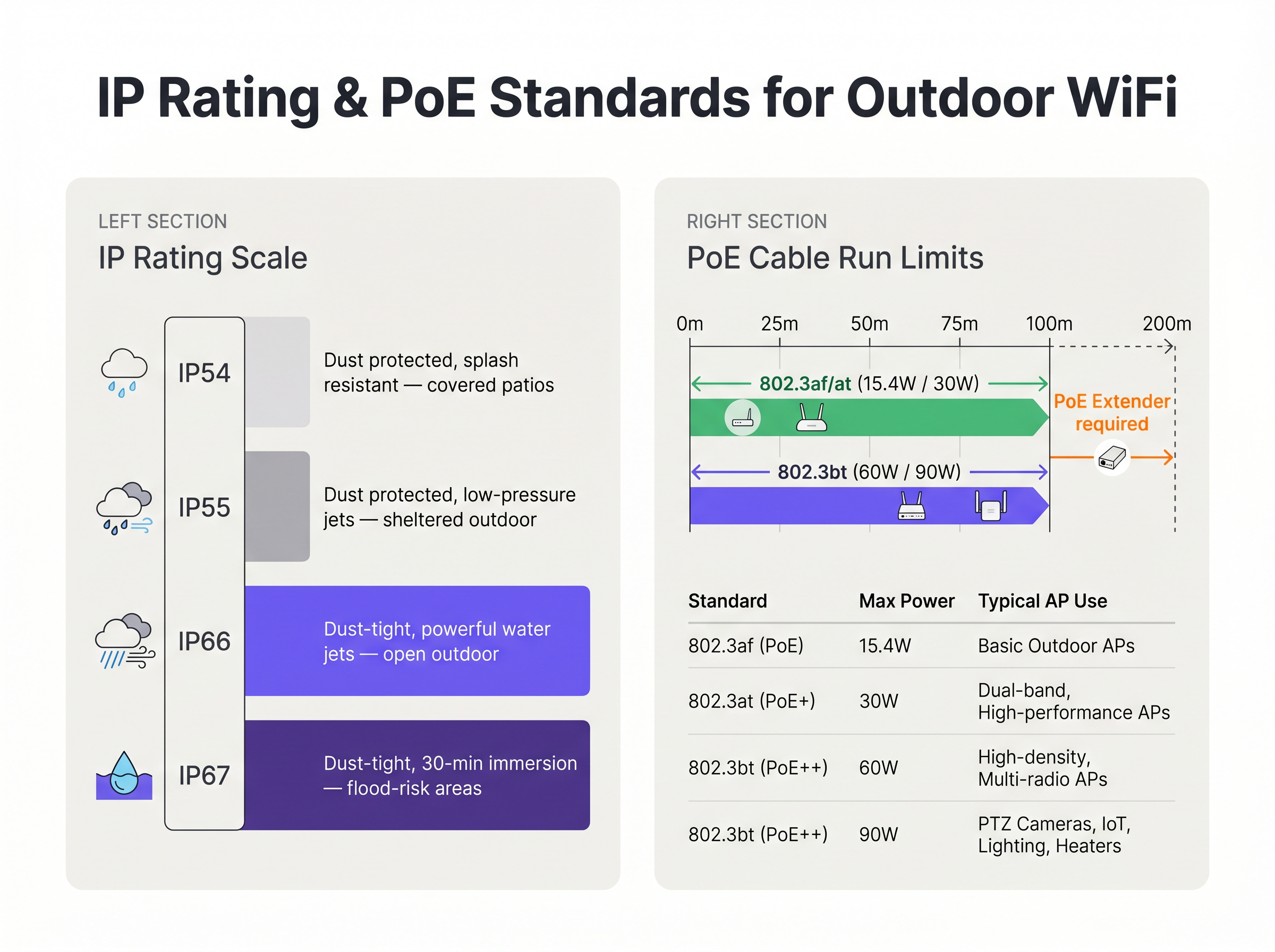
- IP54/IP55: केवळ अत्यंत निवाऱ्याच्या जागांसाठी योग्य, जसे की खोल कव्हर केलेले पॅटिओस किंवा थेट पावसापासून संरक्षित लोडिंग बेज.
- IP66: सामान्य आउटडोअर डिप्लॉयमेंटसाठी किमान स्टँडर्ड. हे सुनिश्चित करते की युनिट पूर्णपणे डस्ट-टाइट आहे आणि कोणत्याही दिशेने येणाऱ्या पाण्याच्या शक्तिशाली फवाऱ्यांचा सामना करू शकते.
- IP67: उघड्या वातावरणासाठी सुवर्ण मानक (gold standard), जे पाण्यात तात्पुरते बुडण्यापासून संरक्षण देते. पूरप्रवण क्षेत्रे, मरिना किंवा तीव्र उष्णकटिबंधीय वादळांचा धोका असलेल्या प्रदेशांसाठी हे अनिवार्य आहे.
महत्त्वाची गोष्ट म्हणजे, AP हाऊसिंग हे क्वचितच निकामी होण्याचे कारण असते. सर्वात सामान्य असुरक्षितता म्हणजे केबल इनग्रेस. अयोग्यरित्या सील केलेले RJ45 कनेक्टर्स पाण्याला इथरनेट केबलमधून थेट AP च्या चेसिसमध्ये किंवा परत PoE स्विचमध्ये जाण्याची परवानगी देतात. डिप्लॉयमेंट्समध्ये निर्मात्याने मंजूर केलेले वेदरप्रूफ केबल ग्लँड्स, आउटडोअर-रेटेड (UV-स्टेबिलाइज्ड) CAT6A केबलिंग आणि पाण्याला कनेक्टरपासून दूर नेण्यासाठी अनिवार्य ड्रिप लूप्स वापरणे आवश्यक आहे.
वाढीव अंतरासाठी पॉवर ओव्हर इथरनेट (PoE)
आउटडोअर डिप्लॉयमेंट्स अनेकदा स्टँडर्ड इथरनेट ओव्हर ट्विस्टेड पेअरसाठी IEEE 802.3 द्वारे निर्दिष्ट केलेल्या 100-मीटर कमाल चॅनेल लांबीपेक्षा जास्त असतात. जेव्हा एखादा AP जवळच्या इंटरमीडिएट डिस्ट्रिब्युशन फ्रेम (IDF) पासून 150 मीटर अंतरावर असलेल्या लाइट पोलवर बसवला जातो, तेव्हा इंजिनिअर्सनी योग्य पॉवर आणि डेटा डिलिव्हरी पद्धत निवडणे आवश्यक आहे.
- लोकल पॉवरसह फायबर ऑप्टिक: सिंगल-मोड फायबर चालवल्याने डेटासाठी अक्षरशः अमर्यादित अंतर मिळते, परंतु AP च्या ठिकाणी स्थानिक पॉवर सोर्स आवश्यक असतो. यामध्ये अनेकदा स्ट्रीट लाइटिंग पॉवर सर्किट्स टॅप करणे समाविष्ट असते, जे केवळ रात्रीच चालू असू शकतात, ज्यामुळे महागडे इनलाइन बॅटरी बॅकअप किंवा रिवायरिंग आवश्यक होते.
- PoE एक्स्टेंडर्स: इनलाइन रिपीटर्स डेटा सिग्नल रीजनरेट करू शकतात आणि PoE पॉवर पुढे पाठवू शकतात, ज्यामुळे पोहोच प्रभावीपणे 200 मीटरपर्यंत दुप्पट होते. तथापि, ते निकामी होण्याचे अतिरिक्त पॉईंट्स निर्माण करतात आणि त्यांना स्वतःला वेदरप्रूफ NEMA एन्क्लोजर्समध्ये ठेवणे आवश्यक आहे.
- लाँग-रीच PoE स्विचेस: विशेष स्विचेस स्टँडर्ड कॉपरवर 250 मीटरपर्यंत पॉवर आणि डेटा ढकलू शकतात, परंतु हे सामान्यतः लिंकला 10 Mbps पर्यंत ऑटो-निगोशिएट करण्यास भाग पाडते. लो-बँडविड्थ Sensors साठी हे पुरेसे असले तरी, हाय-डेन्सिटी युझर ट्रॅफिकसाठी ते पूर्णपणे अपुरे आहे.
याव्यतिरिक्त, आधुनिक हाय-डेन्सिटी आउटडोअर APs, विशेषतः थंड हवामानासाठी अंतर्गत हीटर्स असलेले, लक्षणीय पॉवरची मागणी करतात. त्यांना वारंवार IEEE 802.3bt (PoE++) ची आवश्यकता असते, जे 60W किंवा 90W पर्यंत पॉवर घेतात. अंतर्निहित स्विच इन्फ्रास्ट्रक्चर सर्व वापरलेल्या पोर्ट्सवर हे पॉवर बजेट टिकवून ठेवण्यास सक्षम असले पाहिजे.
बॅकहॉल आर्किटेक्चर: मेश विरुद्ध वायर्ड
आउटडोअर AP ला कोर नेटवर्कशी परत कसे जोडायचे हा आर्किटेक्चरल निर्णय डिप्लॉयमेंटचे दीर्घकालीन कार्यप्रदर्शन आणि विश्वासार्हता ठरवतो.
वायर्ड बॅकहॉल (सुवर्ण मानक) प्रत्येक AP पर्यंत कॉंड्युट ट्रेंच करणे आणि फायबर किंवा कॉपर ओढणे हा सर्वात मजबूत उपाय आहे. हे निश्चित लेटन्सीची हमी देते, जास्तीत जास्त ॲग्रिगेट थ्रूपुट प्रदान करते आणि बॅकहॉल लिंक RF हस्तक्षेपापासून (interference) मुक्त असल्याची खात्री करते. स्टेडियम्स आणि Transport हब्स सारख्या कायमस्वरूपी वेन्यूजसाठी, दीर्घकालीन ROI साठी वायर्ड बॅकहॉल हे एकमेव स्वीकार्य आर्किटेक्चर आहे.
वायरलेस मेश (व्यावहारिक पर्याय) जेव्हा ट्रेंचिंग आर्थिकदृष्ट्या परवडणारे नसते, भौतिकदृष्ट्या अशक्य असते (उदा. हेरिटेज साइट्स), किंवा डिप्लॉयमेंट तात्पुरती असते, तेव्हा वायरलेस मेश वापरले जाते. मेश APs वायर्ड कनेक्शन असलेल्या रूट नोडशी वायरलेस पद्धतीने कनेक्ट होतात.
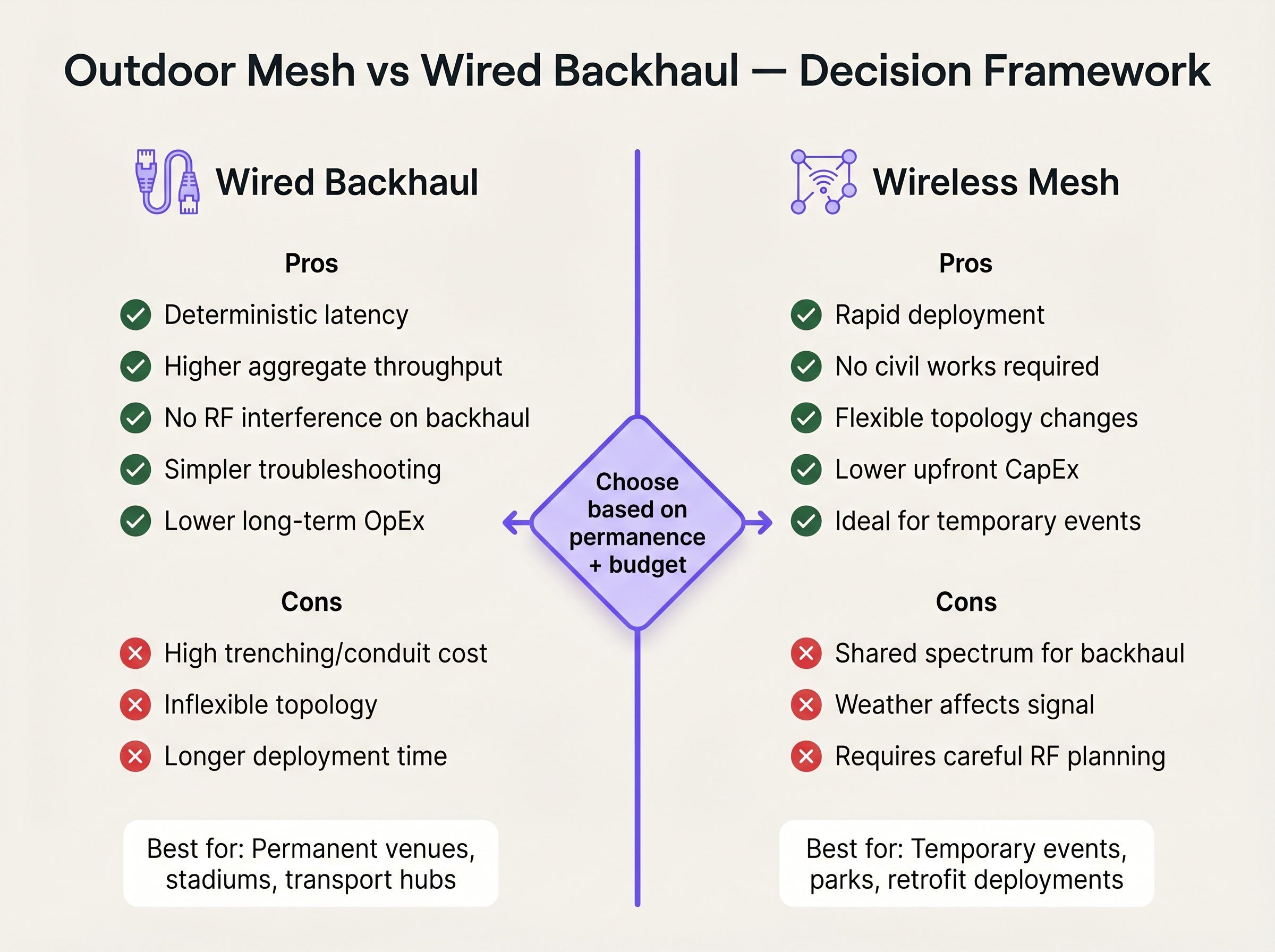
मेश सिव्हिल वर्क्स CapEx आणि डिप्लॉयमेंटचा वेळ लक्षणीयरीत्या कमी करत असले तरी, ते महत्त्वपूर्ण तांत्रिक तडजोडी आणते. प्रत्येक वायरलेस हॉप प्रभावीपणे त्या मार्गासाठी उपलब्ध बँडविड्थ निम्मी करते, कारण रेडिओला डेटा प्राप्त करून तो पुन्हा ट्रान्समिट करावा लागतो. शिवाय, बॅकहॉल लिंक क्लायंट डिव्हाइसेससारखेच RF स्पेक्ट्रम शेअर करते, ज्यामुळे ते हस्तक्षेप आणि हवामानामुळे होणाऱ्या सिग्नल डिग्रेडेशनला बळी पडू शकते. मेश अपरिहार्य असल्यास, इंजिनिअर्सनी ट्राय-रेडिओ APs डिप्लॉय करणे आवश्यक आहे, क्लायंट-फेसिंग क्षमता टिकवून ठेवण्यासाठी केवळ बॅकहॉल लिंकसाठी 5 GHz किंवा 6 GHz रेडिओ समर्पित करणे आवश्यक आहे.
अंमलबजावणी मार्गदर्शक (Implementation Guide)
1. साइट सर्व्हे आणि RF प्लॅनिंग
आउटडोअर RF वातावरण गुंतागुंतीचे असते. सिग्नल क्षीण करण्यासाठी भिंतींशिवाय ते अधिक दूरवर पसरतात, ज्यामुळे व्यवस्थापन न केल्यास गंभीर को-चॅनेल हस्तक्षेप (co-channel interference) होतो. विशेष सॉफ्टवेअर वापरून प्रेडिक्टिव्ह सर्व्हे करा, त्यानंतर AP-ऑन-अ-स्टिक ॲक्टिव्ह सर्व्हे करा. रिकाम्या जागेत सिग्नल ब्रॉडकास्ट करणाऱ्या ओम्निडायरेक्शनल अँटेना वापरण्याऐवजी, जिथे युजर्स एकत्र येतात तिथे अचूकपणे RF ऊर्जा केंद्रित करण्यासाठी डायरेक्शनल पॅच अँटेना वापरा.
2. फिजिकल माउंटिंग आणि ग्राउंडिंग
मेटल पोलवर AP माउंट केल्याने विजेचा धोका निर्माण होतो. [1]
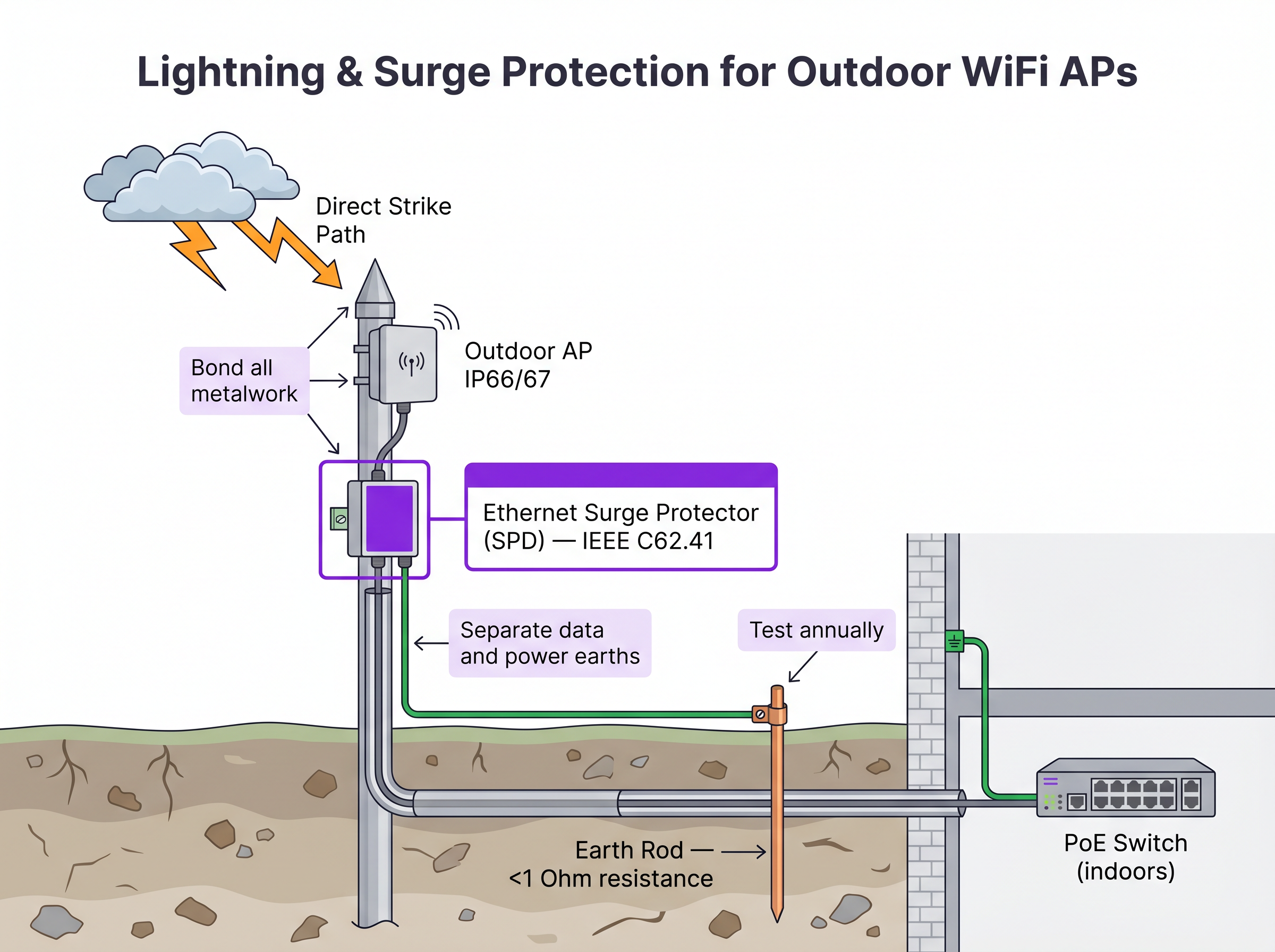
- सर्ज प्रोटेक्शन डिव्हाइसेस (SPDs): इनडोअर स्विचिंग इन्फ्रास्ट्रक्चरचे संरक्षण करण्यासाठी AP च्या बाजूला आणि बिल्डिंग इनग्रेस पॉईंट या दोन्ही ठिकाणी इनलाइन इथरनेट SPDs इन्स्टॉल करा.
- बॉन्डिंग: AP माउंट, पोल आणि SPDs 1 ओहम पेक्षा कमी रेझिस्टन्स असलेल्या समर्पित अर्थ रॉडशी जोडलेले (bonded) असल्याची खात्री करा.
- विंड लोड: माउंटिंग हार्डवेअर आणि पोल स्वतः स्थानिक कमाल विंड लोड कॅल्क्युलेशन्सचा सामना करू शकतात याची पडताळणी करा, विशेषतः मोठ्या डायरेक्शनल अँटेनासाठी.
3. कॉन्फिगरेशन आणि सिक्युरिटी
आउटडोअर APs दुर्भावनापूर्ण ॲक्टर्ससाठी भौतिकदृष्ट्या ॲक्सेसिबल असतात.
- AP वरील न वापरलेले इथरनेट पोर्ट्स डिसेबल करा.
- AP ला जोडणाऱ्या स्विच पोर्टवर IEEE 802.1X पोर्ट-आधारित नेटवर्क ॲक्सेस कंट्रोल (NAC) लागू करा. जर AP काढला गेला आणि एखादे रोग (rogue) डिव्हाइस केबलमध्ये प्लग केले गेले, तर स्विचने डायनॅमिकली पोर्ट डिसेबल करणे आवश्यक आहे. तपशीलवार NAC तुलनेसाठी, आमचे मार्गदर्शक पहा: Aruba ClearPass vs Cisco ISE: NAC Platform Comparison .
- मॅनेजमेंट ट्रॅफिक एका समर्पित VLAN वर वेगळे (segregated) केले असल्याची खात्री करा.
ROI आणि बिझनेस इम्पॅक्ट
एंटरप्राइझ-ग्रेड आउटडोअर WiFi इन्फ्रास्ट्रक्चरमध्ये गुंतवणूक केल्याने वेन्यूची नफाक्षमता आणि ऑपरेशनल कार्यक्षमतेवर थेट परिणाम होतो. Hospitality वेन्यूजसाठी, सर्वव्यापी आउटडोअर कव्हरेज अतिथींचे समाधान स्कोअर वाढवते आणि पूल आणि समुद्रकिनाऱ्यांवर मोबाईल ऑर्डरिंग सक्षम करते. Retail वातावरणात, हे कर्बसाइड पिकअप आणि आउटडोअर पॉईंट-ऑफ-सेल (POS) सिस्टीम्स सुलभ करते.
इनडोअर हार्डवेअर आउटडोअर डिप्लॉय करण्याच्या खोट्या बचतीला टाळून, किंवा जिथे ट्रेंचिंग शक्य होते तिथे मेशवर जास्त अवलंबून राहणे टाळून, आयटी टीम्स खराब हवामानात आपत्कालीन हार्डवेअर निकामी होण्याचा धोका कमी करतात आणि इंटरमिटेंट RF बॅकहॉल समस्यांचे ट्रबलशूटिंग करण्याच्या सततच्या OpEx ड्रेनला दूर करतात. योग्यरित्या इंजिनिअर केलेले आउटडोअर नेटवर्क Wayfinding सारख्या प्रगत लोकेशन-आधारित सेवांसाठी आणि ऑपरेशनल प्लॅटफॉर्म्ससह इंटिग्रेशनसाठी आवश्यक असलेला विश्वसनीय पाया प्रदान करते, जसे की Connecting WiFi Events to 1,500+ Apps with Zapier and Purple मध्ये तपशीलवार दिले आहे.
संदर्भ (References)
[1] लोकल आणि मेट्रोपॉलिटन एरिया नेटवर्क्ससाठी IEEE स्टँडर्ड. "IEEE 802.3-2018 - इथरनेटसाठी IEEE स्टँडर्ड", IEEE स्टँडर्ड्स असोसिएशन.
महत्वाच्या व्याख्या
IP67 (इनग्रेस प्रोटेक्शन)
एक इक्विपमेंट रेटिंग जे प्रमाणित करते की डिव्हाइस पूर्णपणे डस्ट-टाइट (6) आहे आणि 30 मिनिटांसाठी 1 मीटर खोल पाण्यात तात्पुरते बुडणे सहन करू शकते (7).
अस्तित्व टिकवून ठेवण्यासाठी मुसळधार वादळे किंवा पुराचा धोका असलेल्या भागात आउटडोअर हार्डवेअरसाठी अनिवार्य बेसलाइन.
IEEE 802.3bt (PoE++)
पॉवर ओव्हर इथरनेट स्टँडर्ड जे स्टँडर्ड ट्विस्टेड-पेअर केबलिंगवर 60W (Type 3) किंवा 90W (Type 4) पर्यंत DC पॉवर वितरीत करण्यास सक्षम आहे.
आधुनिक, हाय-डेन्सिटी आउटडोअर APs साठी आवश्यक आहे जे एकाधिक रेडिओ, समर्पित सिक्युरिटी स्कॅनिंग रेडिओ आणि अंतर्गत हीटिंग एलिमेंट्सना पॉवर देतात.
ड्रिप लूप
डिव्हाइस एन्क्लोजरमध्ये प्रवेश करण्यापूर्वी केबलमध्ये जाणीवपूर्वक तयार केलेला खालच्या दिशेने असलेला U-आकार.
एक महत्त्वपूर्ण फिजिकल इन्स्टॉलेशन तंत्र जे केबलवरून खाली वाहणाऱ्या पाण्याला इक्विपमेंट चेसिसमध्ये प्रवेश करण्याऐवजी लूपच्या तळावरून खाली पडण्यास भाग पाडते.
सर्ज प्रोटेक्शन डिव्हाइस (SPD)
अतिरिक्त करंट ग्राउंडकडे वळवून व्होल्टेज स्पाइक्सपासून इलेक्ट्रिकल उपकरणांचे संरक्षण करण्यासाठी डिझाइन केलेले एक इनलाइन घटक.
आउटडोअर APs जवळील वीज कोसळल्यामुळे इथरनेट केबलमधून कोर स्विचिंग इन्फ्रास्ट्रक्चरमध्ये विनाशकारी सर्जेस पाठवण्यापासून रोखण्यासाठी आउटडोअर नेटवर्किंगसाठी आवश्यक.
वायरलेस मेश बॅकहॉल
एक नेटवर्क टोपोलॉजी जिथे ॲक्सेस पॉइंट्स थेट केबल कनेक्शनद्वारे जोडण्याऐवजी इतर ॲक्सेस पॉइंट्सद्वारे वायरलेस पद्धतीने कोर नेटवर्कशी कनेक्ट होतात.
जेव्हा केबल्स ट्रेंच करणे अशक्य किंवा खूप महाग असते तेव्हा वापरले जाते, परंतु बँडविड्थ डिग्रेडेशन आणि लेटन्सी कमी करण्यासाठी काळजीपूर्वक RF प्लॅनिंग आवश्यक असते.
को-चॅनेल इंटरफेरन्स (CCI)
जेव्हा एकाच नेटवर्कवरील एकाधिक ॲक्सेस पॉइंट्स एकाच वेळी एकाच फ्रिक्वेन्सी चॅनेलवर ट्रान्समिट करतात तेव्हा होणारे सिग्नल डिग्रेडेशन.
आउटडोअर डिप्लॉयमेंट्समधील एक गंभीर समस्या जिथे सिग्नल ब्लॉक करण्यासाठी भौतिक भिंतींशिवाय अधिक दूरवर प्रवास करतात, ज्यामुळे काळजीपूर्वक चॅनेल प्लॅनिंग आणि डायरेक्शनल अँटेना आवश्यक असतात.
डायरेक्शनल पॅच अँटेना
सर्व दिशांना ब्रॉडकास्ट करण्याऐवजी विशिष्ट दिशेने (उदा. 60-अंश कोन) RF ऊर्जा केंद्रित करण्यासाठी डिझाइन केलेला अँटेना.
स्टेडियम्ससारख्या हाय-डेन्सिटी आउटडोअर डिप्लॉयमेंट्ससाठी कव्हरेजचे सेक्टरायझेशन करण्यासाठी आणि APs ला एकमेकांमध्ये हस्तक्षेप करण्यापासून रोखण्यासाठी महत्त्वपूर्ण.
802.1X पोर्ट-बेस्ड NAC
एक सिक्युरिटी प्रोटोकॉल ज्यामध्ये नेटवर्क स्विचने ट्रॅफिक पास करण्याची परवानगी देण्यापूर्वी डिव्हाइसला ऑथेंटिकेट करणे आवश्यक असते.
आउटडोअर APs साठी महत्त्वपूर्ण सुरक्षा नियंत्रण; हल्लेखोराला AP अनप्लग करण्यापासून आणि अंतर्गत कॉर्पोरेट नेटवर्कमध्ये प्रवेश मिळवण्यासाठी लॅपटॉप कनेक्ट करण्यापासून प्रतिबंधित करते.
सोडवलेली उदाहरणे
एका लक्झरी रिसॉर्टला मुख्य इमारतीच्या IDF पासून 180 मीटर अंतरावर असलेल्या पूल एरियामध्ये हाय-डेन्सिटी WiFi कव्हरेज प्रदान करणे आवश्यक आहे. जमीन महागड्या सजावटीच्या दगडांनी पक्की केलेली आहे, ज्यामुळे ट्रेंचिंग करणे अत्यंत अवांछनीय आहे. कनेक्टिव्हिटी कशी इंजिनिअर केली जावी?
- ट्रेंचिंग टाळा: मुख्य इमारतीपासून पूल एरियातील मध्यवर्ती पोलपर्यंत मल्टी-गिगाबिट वायरलेस बॅकहॉल स्थापित करण्यासाठी समर्पित 60 GHz रेडिओ वापरून पॉईंट-टू-पॉईंट (PtP) वायरलेस ब्रिजचा वापर करा. 60 GHz उच्च बँडविड्थ प्रदान करते आणि 5 GHz क्लायंट WiFi मधील हस्तक्षेप टाळते.
- लोकल डिस्ट्रिब्युशन: पूल पोलवर, एक वेदरप्रूफ NEMA एन्क्लोजर इन्स्टॉल करा ज्यामध्ये हार्डनड, टेंपरेचर-रेटेड PoE स्विच असेल.
- पॉवर: पूल एरियाच्या लाइटिंग किंवा युटिलिटी पॉवर सर्किटमध्ये टॅप करून NEMA एन्क्लोजरला लोकल AC पॉवर प्रदान करा, हे सुनिश्चित करा की ते 24/7 अनस्विच्ड सर्किटवर आहे.
- AP डिप्लॉयमेंट: IP67-रेटेड, ड्युअल-बँड आउटडोअर APs ला हार्डनड PoE स्विचशी कनेक्ट करा. पाण्यावरून होणारे सिग्नल रिफ्लेक्शन कमी करण्यासाठी, लाउंजर्स आणि कबानांवर कव्हरेज केंद्रित करण्यासाठी डायरेक्शनल पॅच अँटेना वापरा.
एक म्युनिसिपल पार्क Guest WiFi डिप्लॉय करत आहे. APs मेटल लॅम्पपोस्टवर माउंट केले जातील. हवामान आणि इलेक्ट्रिकल घटनांमुळे नेटवर्कचे नुकसान टाळण्यासाठी कोणते विशिष्ट फिजिकल लेयर प्रोटेक्शन्स लागू केले पाहिजेत?
- केबल इनग्रेस: आउटडोअर-रेटेड, UV-स्टेबिलाइज्ड CAT6A केबल वापरा. निर्मात्याने पुरवलेल्या वेदरप्रूफ केबल ग्लँडचा वापर करून AP वर कनेक्शन टर्मिनेट करा. सर्वात महत्त्वाचे म्हणजे, केबल AP मध्ये प्रवेश करण्यापूर्वी त्यात एक 'ड्रिप लूप' तयार करा, ज्यामुळे पाणी कनेक्टरमध्ये जाण्याऐवजी लूपच्या तळावरून खाली पडेल याची खात्री होईल.
- लाइटनिंग प्रोटेक्शन: पोलवर एक इनलाइन इथरनेट सर्ज प्रोटेक्शन डिव्हाइस (SPD) इन्स्टॉल करा, जे मेटल पोलशी (जर पोल योग्यरित्या अर्थ केलेला असेल) किंवा समर्पित अर्थ रॉडशी जोडलेले असेल.
- बिल्डिंग प्रोटेक्शन: ज्या ठिकाणी इथरनेट केबल कोर स्विच असलेल्या इमारतीत प्रवेश करते तिथे दुसरे SPD इन्स्टॉल करा, आणि ते इमारतीच्या मुख्य अर्थ टर्मिनलशी जोडा.
सराव प्रश्न
Q1. तुम्ही 3 दिवस चालणाऱ्या एका मोठ्या आउटडोअर म्युझिक फेस्टिव्हलसाठी WiFi डिझाइन करत आहात. ट्रेंचिंगला परवानगी नाही. तुम्हाला मुख्य स्टेज व्ह्यूइंग एरियाला कव्हरेज प्रदान करणे आवश्यक आहे, जे वायर्ड नेटवर्क ड्रॉपपासून 300 मीटर अंतरावर आहे. सर्वात योग्य बॅकहॉल आर्किटेक्चर कोणते आहे?
टीप: इव्हेंटचा कालावधी आणि दाट गर्दीच्या कार्यप्रदर्शनाच्या आवश्यकतांचा विचार करा.
नमुना उत्तर पहा
वायर्ड ड्रॉपपासून मुख्य स्टेज एरियापर्यंत कनेक्शन शूट करण्यासाठी पॉईंट-टू-पॉईंट (PtP) वायरलेस ब्रिज (शक्यतो 60 GHz) वापरला जावा. तेथून, लोकलाइज्ड वायरलेस मेश किंवा तात्पुरते केबलिंग गर्दीला सेवा देणाऱ्या वैयक्तिक APs ला कनेक्शन वितरित करू शकते. हे ट्रेंचिंग टाळते आणि उच्च-क्षमतेचा बॅकबोन प्रदान करते, जे स्टँडर्ड मल्टी-हॉप मेश 300 मीटरवर प्रदान करू शकत नाही.
Q2. लाइटिंग पोलवर माउंट केलेला आउटडोअर AP इंटरमिटेंट पॉवर रीबूट्स अनुभवत आहे. केबल रन 115 मीटर CAT6 आहे. स्विच 802.3at (30W) PoE+ प्रदान करत आहे. निकामी होण्याची दोन सर्वात संभाव्य कारणे कोणती आहेत?
टीप: फिजिकल लेयर मर्यादा आणि पॉवर आवश्यकता या दोन्हीचे मूल्यांकन करा.
नमुना उत्तर पहा
- अंतरावरील व्होल्टेज ड्रॉप: 115m रन 100m इथरनेट स्टँडर्डपेक्षा जास्त आहे. कॉपर केबलमधील रेझिस्टन्समुळे व्होल्टेज ड्रॉप होतो, याचा अर्थ लोड अंतर्गत ऑपरेट करण्यासाठी AP ला पुरेशी पॉवर मिळणार नाही. 2) अपुरे PoE बजेट: आधुनिक आउटडोअर APs, विशेषतः हीटर्स असलेल्यांना, अनेकदा 802.3bt (60W) ची आवश्यकता असते. जर स्विच फक्त 30W प्रदान करत असेल, तर AP जेव्हा उपलब्ध असलेल्यापेक्षा जास्त पॉवर घेण्याचा प्रयत्न करेल तेव्हा तो रीबूट होईल.
Q3. इमारतीच्या छतावर नव्याने इन्स्टॉल केलेल्या आउटडोअर AP च्या ऑडिट दरम्यान, तुमच्या लक्षात येते की CAT6A केबल AP पोर्टवरून थेट खाली जाते आणि रूफ मेम्ब्रेनमध्ये ड्रिल केलेल्या छिद्रामध्ये जाते. AP ला IP67 रेटिंग आहे. महत्त्वपूर्ण इन्स्टॉलेशन त्रुटी कोणती आहे आणि धोका काय आहे?
टीप: भौतिक पृष्ठभागांवर पाणी कसे वागते याचा विचार करा.
नमुना उत्तर पहा
ड्रिप लूप नसणे ही महत्त्वपूर्ण त्रुटी आहे. ड्रिप लूपशिवाय, पाणी केबलच्या बाहेरील बाजूने खाली वाहेल आणि थेट छतावरील प्रवेश बिंदूवर साचेल, किंवा ग्लँड निकामी झाल्यास AP च्या RJ45 कनेक्टरमध्ये जाईल. AP चे IP67 रेटिंग असूनही, इमारतीत किंवा AP चेसिसमध्ये पाणी शिरण्याचा धोका आहे, ज्यामुळे हार्डवेअर निकामी होऊ शकते.
या मालिकेमध्ये पुढे वाचा
WLC (Wireless LAN Controller) म्हणजे काय आणि तुम्हाला अजूनही त्याची गरज आहे का?
हे सर्वसमावेशक मार्गदर्शक Wireless LAN Controllers (WLCs) च्या उत्क्रांतीचे अन्वेषण करते आणि 2026 मध्ये योग्य आर्किटेक्चर निश्चित करण्यासाठी तांत्रिक फ्रेमवर्क प्रदान करते. यात पारंपारिक हार्डवेअर, क्लाउड-व्यवस्थापित आणि कंट्रोलर-लेस मॉडेल्सचा समावेश आहे, जे अनुपालन, स्केलेबिलिटी आणि अतिथी अनुभवावर त्यांच्या परिणामांचे तपशीलवार वर्णन करते.
Power over Ethernet (PoE) Access Points साठी: एक अंमलबजावणी मार्गदर्शक
This guide provides infrastructure technicians, network architects, and IT decision-makers with a definitive technical reference for deploying Power over Ethernet (PoE) access points across enterprise venues including hotels, retail estates, stadiums, and public-sector facilities. It covers IEEE standards from 802.3af through 802.3bt, power budget calculation, cabling requirements, VLAN segmentation, and security compliance, with concrete implementation scenarios and measurable ROI benchmarks. Understanding PoE architecture is foundational to any [Guest WiFi](/guest-wifi) or [WiFi Analytics](/guest-wifi-marketing-analytics-platform) deployment, as the reliability of the physical layer directly determines the quality of data capture, user experience, and operational uptime.
मेश नेटवर्क विरुद्ध ॲक्सेस पॉईंट्स: मोठ्या ठिकाणांसाठी कोणते चांगले आहे?
हे तांत्रिक मार्गदर्शक मोठ्या प्रमाणावरील ठिकाणांसाठी मेश नेटवर्क आणि पारंपारिक वायर्ड ॲक्सेस पॉईंट्स यांच्यातील निश्चित तुलना प्रदान करते, ज्यात आर्किटेक्चर, कार्यक्षमतेतील तडजोडी आणि डिप्लॉयमेंट रणनीती यांचा समावेश आहे. हे IT व्यवस्थापक, नेटवर्क आर्किटेक्ट आणि CTOs यांना हॉस्पिटॅलिटी, रिटेल, इव्हेंट्स आणि सार्वजनिक क्षेत्रातील वातावरणासाठी उच्च-कार्यक्षम, अनुरूप WiFi इन्फ्रास्ट्रक्चर्स डिझाइन करण्यासाठी कृतीयोग्य फ्रेमवर्क प्रदान करते. हे मार्गदर्शक Purple च्या हार्डवेअर-ॲग्नोस्टिक गेस्ट WiFi आणि ॲनालिटिक्स प्लॅटफॉर्मशी हे आर्किटेक्चरल निर्णय जोडते, ज्यामुळे योग्य इन्फ्रास्ट्रक्चर निवड कशी मोजता येण्याजोगे व्यावसायिक परिणाम देते हे दर्शविते.