
WiFi Repeater विरुद्ध Extender: एंटरप्राइझ वापराची प्रकरणे
हे तांत्रिक संदर्भ मार्गदर्शक एंटरप्राइझ वातावरणासाठी WiFi repeaters आणि extenders यांच्यातील निश्चित तुलना प्रदान करते. हे IT व्यवस्थापक आणि नेटवर्क आर्किटेक्टना विशिष्ट ठिकाणाच्या गरजांसाठी योग्य हार्डवेअर तैनात करण्यासाठी आवश्यक निर्णय फ्रेमवर्कसह सुसज्ज करते, ज्यामुळे इष्टतम कार्यप्रदर्शन, अनुपालन आणि ROI सुनिश्चित होते.
हे मार्गदर्शक ऐका
पॉडकास्ट ट्रान्सक्रिप्ट पहा
कार्यकारी सारांश
एंटरप्राइझ ठिकाणांसाठी—उच्च-घनतेच्या स्टेडियमपासून ते विस्तृत रिटेल फ्लोअरपर्यंत—WiFi repeater विरुद्ध WiFi extender (access point) तैनात करण्यामधील निर्णय ही एक महत्त्वपूर्ण पायाभूत सुविधा निवड आहे. ग्राहक बाजारात अनेकदा अदलाबदल करून वापरले जात असले तरी, या तंत्रज्ञानामध्ये मूलभूतपणे भिन्न नेटवर्क आर्किटेक्चर आहेत. एक WiFi repeater विद्यमान सिग्नल कॅप्चर करतो आणि पुन्हा प्रसारित करतो, त्यामुळे थ्रूपुट नैसर्गिकरित्या अर्धे होते. याउलट, एक WiFi extender, वायर्ड Access Point म्हणून कार्य करतो, मुख्य नेटवर्कला समर्पित कनेक्शन प्रदान करतो, ज्यामुळे पूर्ण बँडविड्थ वितरण सुनिश्चित होते. हे मार्गदर्शक दोन्ही आर्किटेक्चरमध्ये तांत्रिक सखोल माहिती प्रदान करते, IT नेत्यांना तैनाती ऑप्टिमाइझ करण्यासाठी, अनुपालन राखण्यासाठी (जसे की PCI DSS आणि GDPR), आणि मजबूत कनेक्टिव्हिटीद्वारे ROI वाढवण्यासाठी आवश्यक फ्रेमवर्कसह सुसज्ज करते.
तांत्रिक सखोल माहिती: आर्किटेक्चर आणि मानके
या उपकरणांच्या भौतिक आणि लॉजिकल स्तरांना समजून घेणे एंटरप्राइझ नेटवर्क डिझाइनसाठी आवश्यक आहे.
WiFi Repeater आर्किटेक्चर
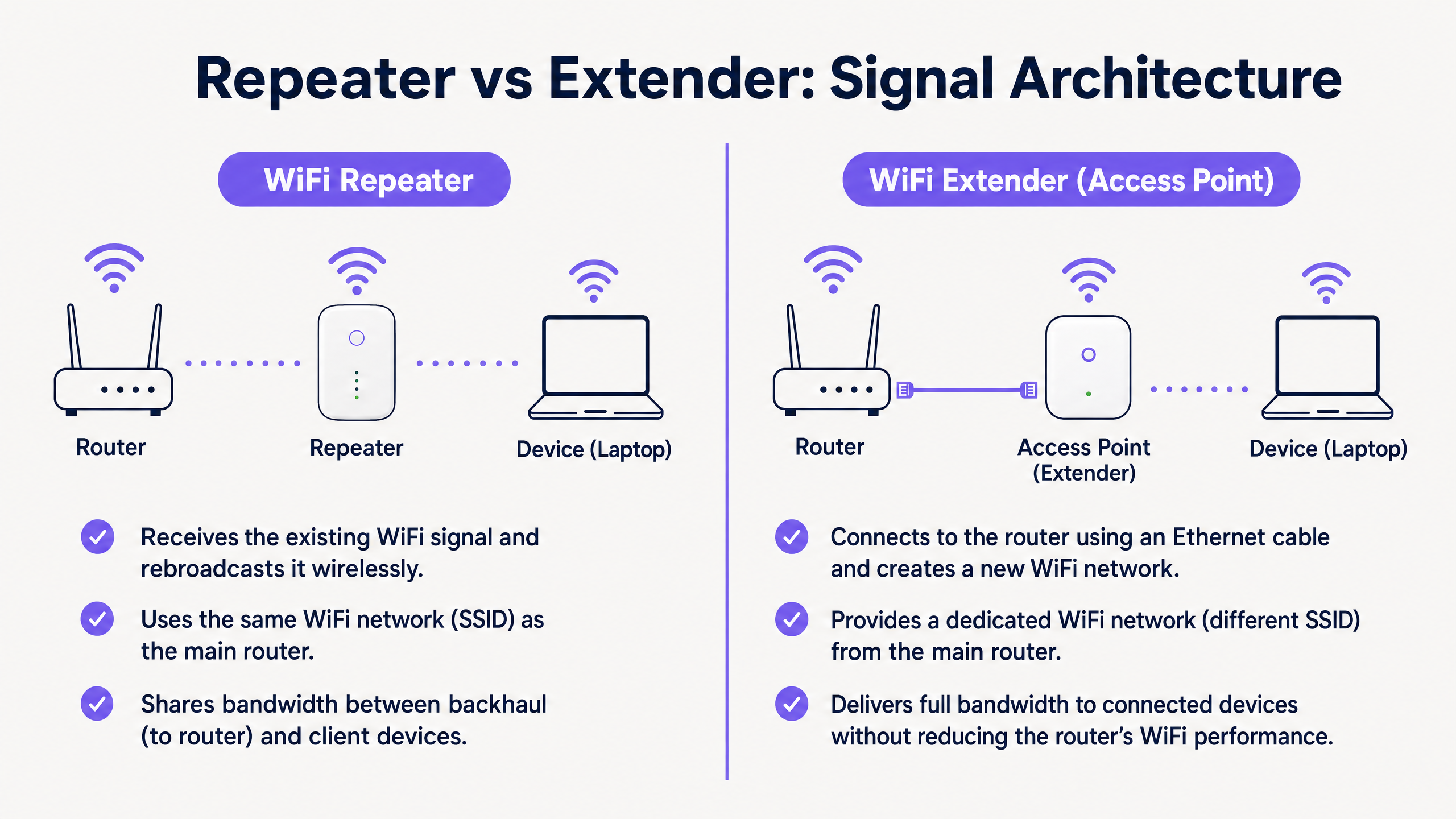
एक WiFi repeater पूर्णपणे वायरलेसपणे कार्य करतो. यात दोन वायरलेस रेडिओ असतात (किंवा कधीकधी फक्त एक, हाफ-डुप्लेक्स मोडमध्ये कार्यरत). तो WiFi द्वारे प्राथमिक राउटरला कनेक्ट होतो आणि एकाच वेळी क्लायंट उपकरणांना प्रसारित करतो.
कारण त्याला राउटरकडून डेटा प्राप्त करण्यासाठी आणि क्लायंटला डेटा प्रसारित करण्यासाठी समान रेडिओ वापरावा लागतो, उपलब्ध बँडविड्थ प्रभावीपणे अर्धी होते. याला हाफ-डुप्लेक्स पेनल्टी म्हणून ओळखले जाते. उच्च-घनतेच्या वातावरणात, ही लेटन्सी आणि थ्रूपुट घट अस्वीकार्य आहे.
WiFi Extender (Access Point) आर्किटेक्चर
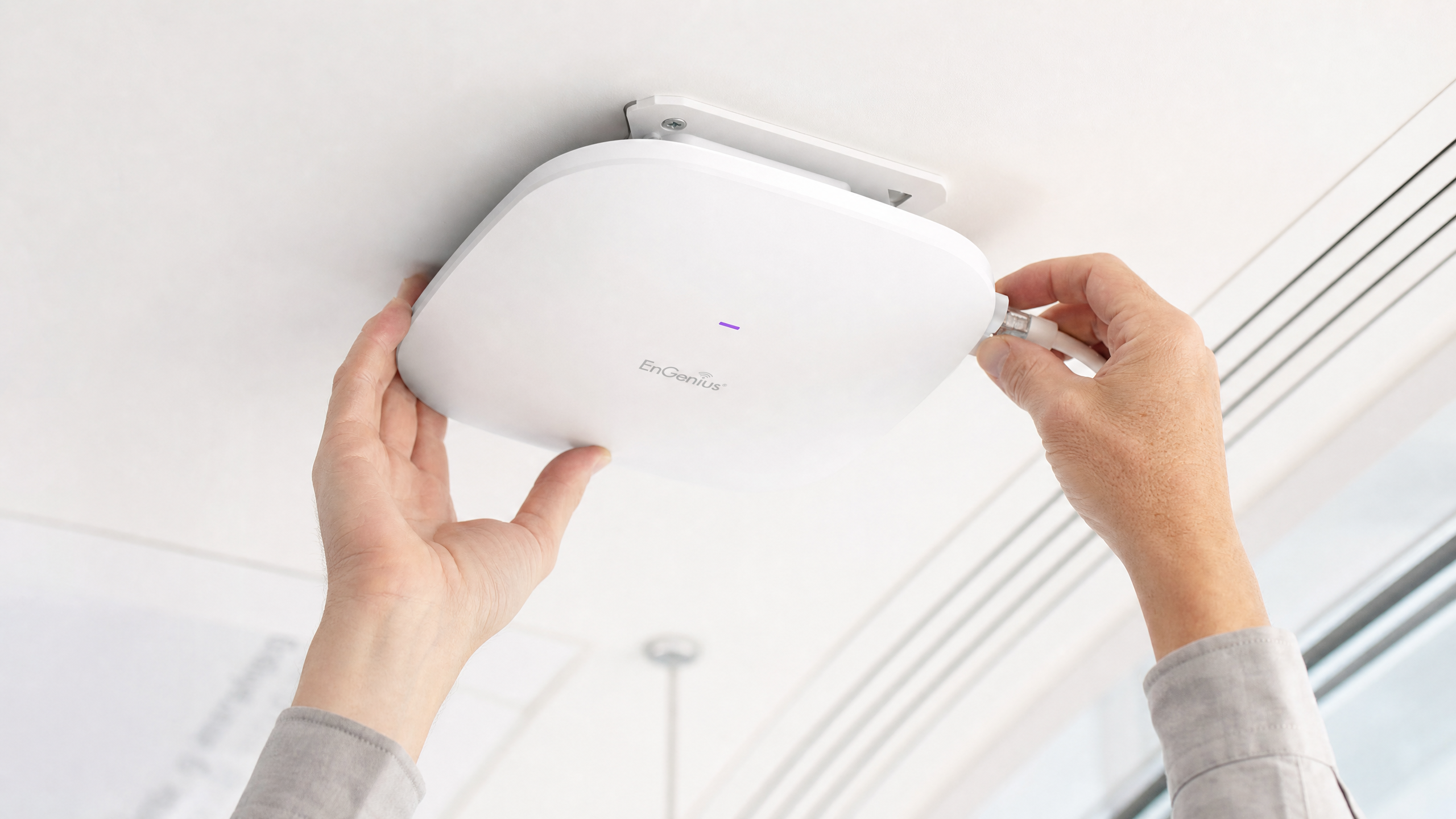
एक खरा एंटरप्राइझ WiFi extender हा Access Point (AP) असतो. तो भौतिक इथरनेट केबलद्वारे (Cat6 किंवा त्याहून चांगले) मुख्य नेटवर्कला कनेक्ट होतो, अनेकदा सुलभ तैनातीसाठी Power over Ethernet (PoE) वापरतो.
वायर्ड बॅकहॉल वापरून, AP त्याची संपूर्ण वायरलेस क्षमता क्लायंट उपकरणांना सेवा देण्यासाठी समर्पित करतो. हे आर्किटेक्चर उच्च थ्रूपुट, अखंड रोमिंग (IEEE 802.11r/k/v सारख्या मानकांचा वापर करून) आणि WPA3-Enterprise आणि 802.1X प्रमाणीकरण यांसारख्या मजबूत सुरक्षा प्रोटोकॉलना समर्थन देते.
मुख्य फरक एका दृष्टीक्षेपात
| वैशिष्ट्य | WiFi Repeater | WiFi Extender (Access Point) |
|---|---|---|
| बॅकहॉल | वायरलेस | वायर्ड (इथरनेट) |
| थ्रूपुट | अर्धे (हाफ-डुप्लेक्स) | पूर्ण क्षमता |
| SSID | सामान्यतः प्राथमिक सारखेच | समान किंवा भिन्न असू शकते |
| लेटन्सी | उच्च | कमी |
| एंटरप्राइझ उपयुक्तता | फक्त तात्पुरते/कमी-घनतेसाठी | कायमस्वरूपी/उच्च-घनतेसाठी |
अंमलबजावणी मार्गदर्शक
व्यावसायिक ठिकाणासाठी नेटवर्क डिझाइन करताना, भौतिक वातावरण हार्डवेअरची निवड ठरवते.
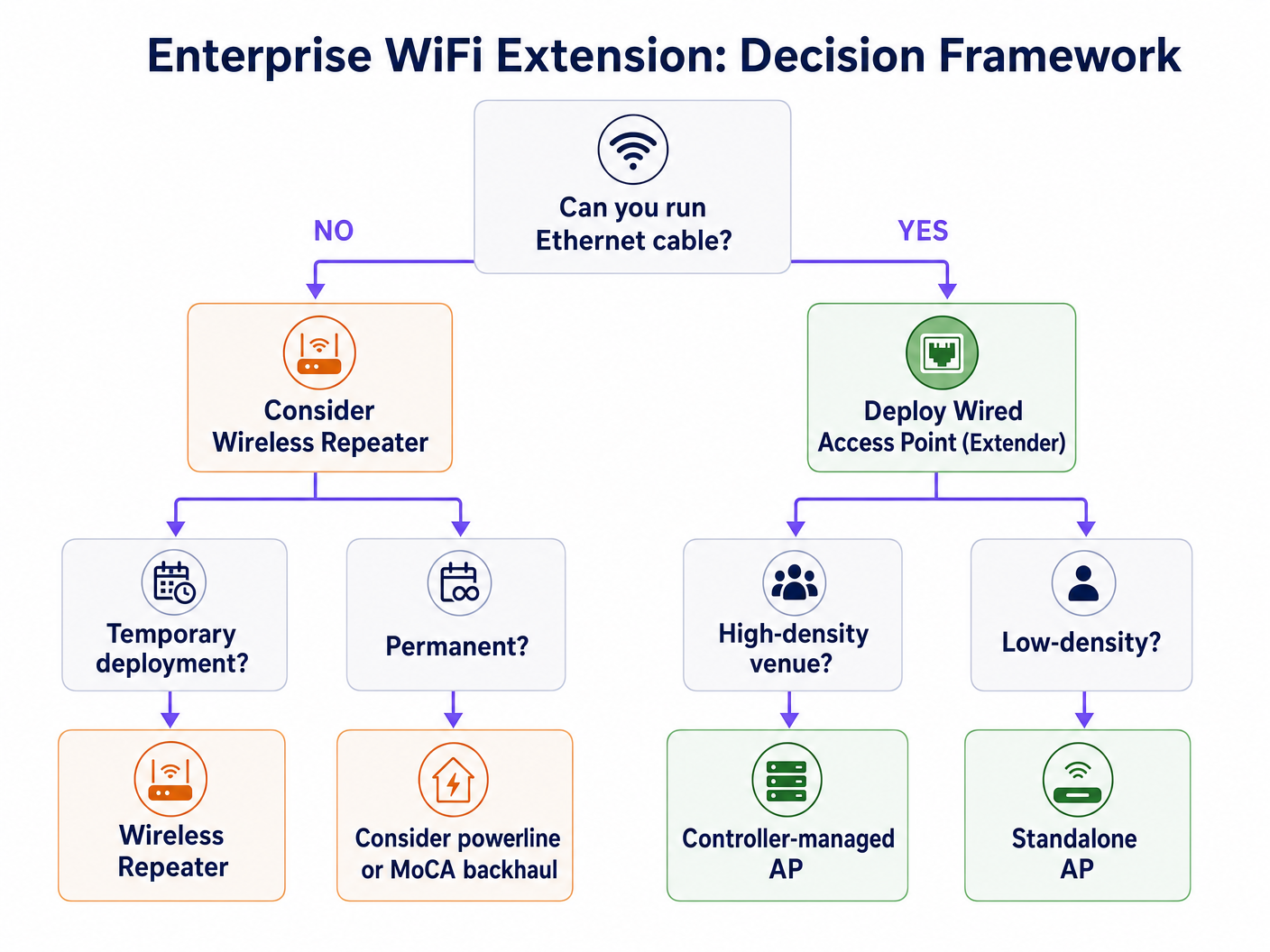
परिस्थिती 1: उच्च-घनतेचे स्टेडियम
एका स्टेडियममध्ये, हजारो समवर्ती कनेक्शनना कमाल थ्रूपुटची मागणी असते. येथे repeaters तैनात केल्याने सह-चॅनेल हस्तक्षेप आणि हाफ-डुप्लेक्स पेनल्टीमुळे त्वरित नेटवर्क कोसळेल.
शिफारस: उच्च-घनतेच्या संरचनेत वायर्ड Access Points (Extenders) तैनात करा. दिशात्मक अँटेना वापरा आणि मजबूत वायर्ड बॅकहॉल सुनिश्चित करा. ही पायाभूत सुविधा प्रगत WiFi Analytics आणि स्थान-आधारित सेवांना समर्थन देण्यासाठी महत्त्वपूर्ण आहे.
परिस्थिती 2: ऐतिहासिक हॉटेल
वारसा-सूचीबद्ध हॉटेलमध्ये जिथे नवीन इथरनेट केबल्स चालवणे शारीरिकरित्या अशक्य आहे किंवा कायदेशीररित्या प्रतिबंधित आहे, तिथे पारंपारिक AP तैनाती आव्हानात्मक आहे.
शिफारस: वायरलेस repeater आकर्षक वाटत असले तरी, ते पाहुण्यांच्या अपेक्षांसाठी अनेकदा अपुरे असते. समर्पित वायरलेस बॅकहॉल बँडसह प्रगत मेश सिस्टमचा विचार करा, किंवा स्थानिक APs ला वायर्ड बॅकहॉल प्रदान करण्यासाठी विद्यमान कोएक्सियल इन्फ्रास्ट्रक्चर (MoCA) चा लाभ घ्या. तुम्हाला repeaters वापरणे आवश्यक असल्यास, ते प्राथमिक सिग्नलच्या कडेला, डेड झोनमध्ये नसून, धोरणात्मकपणे ठेवलेले असल्याची खात्री करा. पाहुण्यांचे समाधान कसे सुधारावे याबद्दल अधिक वाचा: How To Improve Guest Satisfaction: The Ultimate Playbook .
सर्वोत्तम पद्धती आणि एकत्रीकरण
निवडलेल्या हार्डवेअरची पर्वा न करता, ओव्हरलेइंग व्यवस्थापन प्लॅटफॉर्मवरच व्यावसायिक मूल्य प्राप्त होते.
- हार्डवेअर-अज्ञेयवादी व्यवस्थापन: तुमचे ॲनालिटिक्स आणि captive portal सोल्यूशन्स हार्डवेअर-अज्ञेयवादी असल्याची खात्री करा. Purple चे प्लॅटफॉर्म प्रमुख विक्रेत्यांशी (Cisco, Aruba, Meraki) अखंडपणे समाकलित होते, ज्यामुळे तुम्हाला भौतिक वातावरणाच्या मागणीनुसार APs आणि repeaters मिक्स आणि मॅच करण्याची परवानगी मिळते, दृश्यमानता न गमावता.
- अखंड प्रमाणीकरण: मजबूत प्रमाणीकरण यंत्रणा लागू करा. प्रोफाइल-आधारित प्रमाणीकरण, जसे की OpenRoaming (जिथे Purple Connect परवान्याअंतर्गत विनामूल्य ओळख प्रदाता म्हणून कार्य करते), वापरकर्त्यांसाठी सुरक्षित, घर्षणरहित प्रवेश प्रदान करते, तसेच एंटरप्राइझ-ग्रेड सुरक्षा सुनिश्चित करते. How a wi fi assistant Enables Passwordless Access in 2026 बद्दल अधिक जाणून घ्या.
- डेटा पृथक्करण: Retail आणि Hospitality वातावरणासाठी, PCI DSS अनुपालन राखण्यासाठी VLANs वापरून Guest WiFi ट्रॅफिकला ऑपरेशनल ट्रॅफिकपासून (उदा. PoS सिस्टम) काटेकोरपणे वेगळे करा.
समस्यानिवारण आणि जोखीम कमी करणे
- 'स्टिकी क्लायंट' समस्या: उपकरणे अनेकदा जवळच्या AP कडे रोमिंग करण्याऐवजी दूरच्या AP कडून कमकुवत सिग्नलला धरून ठेवतात. तुमची पायाभूत सुविधा क्लायंट रोमिंग सक्रियपणे व्यवस्थापित करण्यासाठी 802.11k/v ला समर्थन देते याची खात्री करा.
- सह-चॅनेल हस्तक्षेप: प्राथमिक राउटरच्या समान चॅनेलवर प्रसारित करणारे repeaters आवाज वाढवतात. काळजीपूर्वक चॅनेल नियोजन आवश्यक आहे.
- सुरक्षा भेद्यता: Repeaters मध्ये अनेकदा एंटरप्राइझ-गसुरक्षा वैशिष्ट्ये अपग्रेड करा. सर्व उपकरणे WPA3 ला समर्थन देतात आणि तुमच्या केंद्रीय RADIUS सर्व्हरशी समाकलित होऊ शकतात याची खात्री करा.
ROI आणि व्यवसायावर परिणाम
योग्य पायाभूत सुविधांमध्ये गुंतवणूक केल्याने थेट नफ्यावर परिणाम होतो. एक मजबूत वायर्ड AP नेटवर्क प्रगत स्थान विश्लेषण सक्षम करते. हीटमॅपिंग वि. उपस्थिती विश्लेषण: तांत्रिक फरक समजून घेतल्याने स्थळांना फ्लोअर लेआउट्स आणि कर्मचाऱ्यांची नेमणूक अनुकूल करण्यास अनुमती मिळते. शिवाय, रिटेल मीडिया आणि लक्ष्यित सहभागाद्वारे नेटवर्कचे मुद्रीकरण करण्यासाठी एक स्थिर कनेक्शन ही एक पूर्वअट आहे.
महत्वाच्या व्याख्या
Half-Duplex
A communication mode where data can flow in both directions, but only one direction at a time.
This is the primary technical limitation of standard WiFi repeaters, resulting in halved throughput.
Backhaul
The connection between the access point/repeater and the core network router.
A wired backhaul (Ethernet) provides full capacity, while a wireless backhaul shares the radio spectrum with client devices.
SSID (Service Set Identifier)
The public name of a wireless network.
Repeaters often clone the primary SSID, while extenders can broadcast the same or a distinct SSID depending on the roaming configuration.
802.11r/k/v
A set of IEEE standards that facilitate fast and seamless roaming of client devices between different access points.
Essential for enterprise environments to prevent the 'sticky client' problem where devices cling to a weak signal.
PoE (Power over Ethernet)
A technology that allows network cables to carry electrical power.
Crucial for deploying wired access points in ceilings or high walls without requiring a separate electrical outlet.
RSSI (Received Signal Strength Indicator)
A measurement of the power present in a received radio signal.
Critical data point used by platforms like Purple for location analytics and heatmapping.
VLAN (Virtual Local Area Network)
A logical subnetwork that groups a collection of devices on a single physical LAN.
Mandatory for segregating guest traffic from operational traffic to maintain security and compliance (e.g., PCI DSS).
Mesh Network
A network topology where nodes connect directly, dynamically and non-hierarchically to as many other nodes as possible.
An advanced alternative to simple repeaters, often utilizing a dedicated radio band for the wireless backhaul to maintain throughput.
सोडवलेली उदाहरणे
A 200-room heritage hotel needs to provide seamless WiFi coverage. Running new Ethernet cables to the guest rooms is prohibited due to the building's listed status. The current setup uses standard wireless repeaters in the hallways, resulting in poor speeds and frequent disconnects.
- Conduct a comprehensive RF site survey to identify existing signal propagation and dead zones.
- Abandon the standard wireless repeaters, as the half-duplex penalty is exacerbating the poor performance.
- Implement a managed mesh WiFi system that utilizes a dedicated, discrete 5GHz or 6GHz radio exclusively for wireless backhaul between nodes.
- Where possible, leverage existing coaxial cabling (using MoCA adapters) to provide a wired backhaul to strategic access points without drilling new holes.
- Configure the network to support 802.11r/k/v for seamless client roaming between nodes.
A large retail chain is deploying a new Guest WiFi network across 50 locations to support an indoor mapping and location-based marketing initiative. The IT director is considering using high-end wireless repeaters to save on cabling costs.
- Reject the use of wireless repeaters for this deployment.
- Specify the installation of enterprise-grade, wired Access Points (Extenders) with PoE (Power over Ethernet).
- Ensure AP placement is optimized for location analytics, not just coverage, requiring a higher density of APs.
- Integrate the hardware with a hardware-agnostic analytics platform (like Purple) to normalize the location data across all 50 sites.
- Implement strict VLAN segregation between the Guest WiFi and the PoS/operational network.
सराव प्रश्न
Q1. Your organisation is deploying a temporary pop-up retail store in a leased space for three weeks. The landlord provides a primary router in the back office, but the signal does not reach the point-of-sale terminals at the front. Running cables is prohibited. What is the most appropriate hardware solution?
टीप: Consider the duration of the deployment and the physical constraints.
नमुना उत्तर पहा
In this specific, temporary scenario with physical constraints, a high-quality wireless repeater or a simple mesh system is appropriate. While a wired AP is always preferred for throughput, the temporary nature and cabling restrictions make a wireless solution the pragmatic choice, provided the PoS systems do not require massive bandwidth.
Q2. A hospital IT director needs to ensure seamless roaming for mobile medical carts (WoWs) moving between wards. The current infrastructure uses a mix of older routers configured as repeaters. Staff complain of dropped connections when moving. What architectural change is required?
टीप: Focus on the 'sticky client' problem and backhaul architecture.
नमुना उत्तर पहा
The hospital must rip and replace the repeater infrastructure. They need to deploy enterprise-grade wired Access Points (Extenders) with a unified controller. Crucially, the new system must support IEEE 802.11r/k/v to actively manage client hand-offs between APs, eliminating the dropped connections experienced with the disjointed repeater setup.
Q3. You are tasked with implementing Purple's location analytics in a large shopping centre. The centre management wants to use cheaper wireless repeaters to expand coverage to the car park. Why should you advise against this?
टीप: Consider how location analytics platforms calculate device position.
नमुना उत्तर पहा
You must advise against repeaters because they obscure accurate RSSI (Received Signal Strength Indicator) data. When a device connects to a repeater, the core network often sees the MAC address and signal strength of the repeater, not the client device. This renders precise location tracking and heatmapping impossible. Wired APs are mandatory for accurate analytics.