

WiFi उपस्थिति द्वारा ट्रिगर किया गया इवेंट-ड्रिवन मार्केटिंग ऑटोमेशन
यह आर्किटेक्चरल संदर्भ मार्गदर्शिका वरिष्ठ IT और ऑपरेशंस लीडर्स को WiFi उपस्थिति द्वारा ट्रिगर किए गए इवेंट-ड्रिवन मार्केटिंग ऑटोमेशन को डिज़ाइन करने के लिए एक ब्लूप्रिंट प्रदान करती है। इसमें इन्फ्रास्ट्रक्चर आवश्यकताएँ, लेटेंसी प्रबंधन, डी-डुप्लीकेशन रणनीतियाँ और गोपनीयता अनुपालन फ्रेमवर्क शामिल हैं जो एंटरप्राइज़-स्केल परिनियोजन के लिए आवश्यक हैं।
🎧 इस गाइड को सुनें
ट्रांसक्रिप्ट देखें
कार्यकारी सारांश
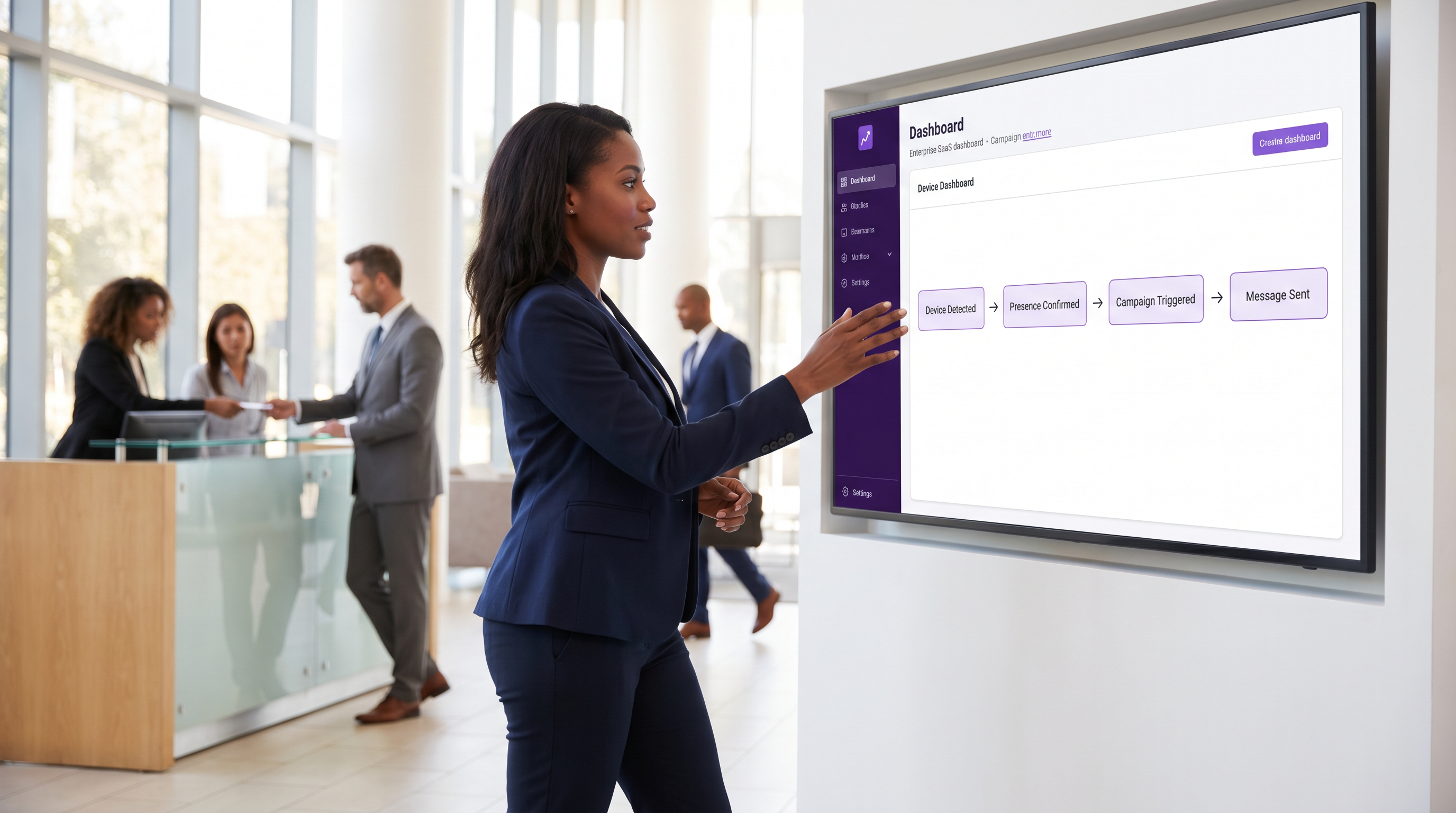
आधुनिक स्थानों के लिए—रिटेल चेन और हॉस्पिटैलिटी समूहों से लेकर बड़े स्टेडियमों तक—मौजूदा वायरलेस नेटवर्क इन्फ्रास्ट्रक्चर वास्तविक समय ग्राहक जुड़ाव के लिए एक कम उपयोग की गई संपत्ति का प्रतिनिधित्व करता है। WiFi उपस्थिति द्वारा ट्रिगर किया गया इवेंट-ड्रिवन मार्केटिंग ऑटोमेशन निष्क्रिय नेटवर्क कनेक्टिविटी को एक सक्रिय जुड़ाव चैनल में बदल देता है। यह मार्गदर्शिका उपस्थिति-आधारित ऑटोमेशन को लागू करने के लिए एक निश्चित आर्किटेक्चरल ब्लूप्रिंट प्रदान करती है, जो कच्चे नेटवर्क इवेंट्स को प्रासंगिक, अनुपालन-योग्य मार्केटिंग कार्यों में बदलने की तकनीकी यांत्रिकी पर केंद्रित है। नेटवर्क इन्फ्रास्ट्रक्चर और मार्केटिंग टेक्नोलॉजी के बीच की खाई को पाटकर, IT लीडर्स कठोर गोपनीयता और सुरक्षा मानकों को बनाए रखते हुए मापने योग्य व्यावसायिक प्रभाव प्रदान कर सकते हैं।
कार्यकारी ब्रीफिंग पॉडकास्ट सुनें:
तकनीकी गहन विश्लेषण: चार-परत वास्तुकला
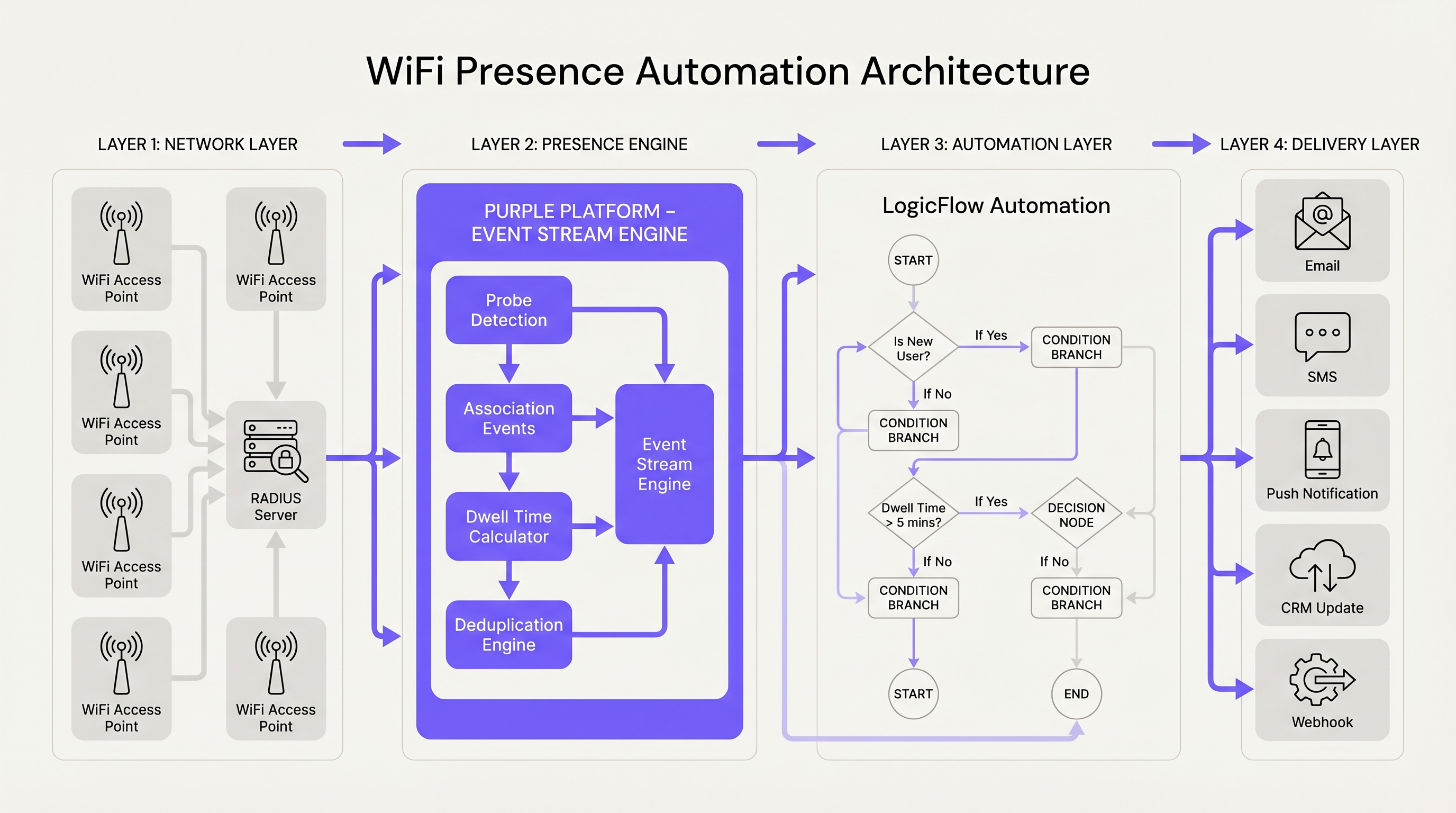
एक मजबूत WiFi उपस्थिति ऑटोमेशन सिस्टम को आर्किटेक्ट करने के लिए एक डीकपल्ड, चार-परत दृष्टिकोण की आवश्यकता होती है। चिंताओं का यह पृथक्करण सुनिश्चित करता है कि मार्केटिंग लॉजिक में बदलाव के लिए नेटवर्क के पुनर्गठन की आवश्यकता नहीं होती है, और नेटवर्क अपग्रेड स्वचालित अभियानों को बाधित नहीं करते हैं।
परत 1: नेटवर्क परत
उपस्थिति पहचान की नींव भौतिक इन्फ्रास्ट्रक्चर—एक्सेस पॉइंट, वायरलेस LAN कंट्रोलर और RADIUS सर्वर पर निर्भर करती है। इस परत पर महत्वपूर्ण आर्किटेक्चरल निर्णय यह निर्धारित करना है कि कौन से नेटवर्क इवेंट डाउनस्ट्रीम ऑटोमेशन को ट्रिगर करेंगे। जबकि लेगेसी सिस्टम अक्सर निष्क्रिय प्रोब रिक्वेस्ट पर निर्भर करते थे, आधुनिक कार्यान्वयन को प्रमाणित सत्र इवेंट्स को प्राथमिकता देनी चाहिए। आधुनिक मोबाइल ऑपरेटिंग सिस्टम में डिफ़ॉल्ट MAC एड्रेस रैंडमाइजेशन की शुरुआत के बाद से, प्रोब-आधारित ट्रैकिंग तकनीकी रूप से अविश्वसनीय और कानूनी रूप से जोखिम भरी हो गई है। इसके बजाय, Guest WiFi Captive Portal लॉगिन से जुड़े एसोसिएशन इवेंट्स का लाभ उठाना एक स्थायी, सहमति-लिंक्ड पहचानकर्ता प्रदान करता है जो MAC रैंडमाइजेशन से बचा रहता है।
परत 2: प्रेजेंस इंजन
कच्चे नेटवर्क इवेंट्स स्वाभाविक रूप से शोरगुल वाले होते हैं और व्यावसायिक तर्क को ट्रिगर करने से पहले प्रोसेसिंग की आवश्यकता होती है। Purple के इवेंट स्ट्रीम द्वारा संचालित प्रेजेंस इंजन, एसोसिएशन इवेंट्स को ग्रहण करता है और महत्वपूर्ण फ़िल्टरिंग करता है। इसमें 'ड्राइव-बाय' संकेतों को खत्म करने के लिए प्रोब डिटेक्शन फ़िल्टरिंग, यह सुनिश्चित करने के लिए कि डिवाइस न्यूनतम सीमा तक स्थान पर रहा है, निवास समय की गणना, और परिष्कृत डी-डुप्लीकेशन शामिल है। Retail या Hospitality जैसे उच्च-घनत्व वाले वातावरण में, एक ही अतिथि यात्रा दर्जनों एसोसिएशन और रोमिंग इवेंट्स उत्पन्न कर सकती है। प्रेजेंस इंजन इन्हें एक एकल, स्वच्छ 'उपस्थिति' सिग्नल में समेट देता है।
परत 3: ऑटोमेशन परत
एक बार एक स्वच्छ उपस्थिति सिग्नल स्थापित हो जाने के बाद, यह ऑटोमेशन परत को पास हो जाता है। Purple इकोसिस्टम में, इसे LogicFlow द्वारा संभाला जाता है। यह परत पूर्वनिर्धारित व्यावसायिक नियमों, जैसे उपयोगकर्ता विभाजन, विज़िट आवृत्ति और अभियान दमन विंडो के विरुद्ध उपस्थिति इवेंट का मूल्यांकन करती है। उदाहरण के लिए, एक नियम यह निर्धारित कर सकता है कि 'वेलकम बैक' अभियान तभी सक्रिय होता है जब उपयोगकर्ता ने पिछले 30 दिनों में विज़िट न किया हो और कम से कम पाँच मिनट के लिए नेटवर्क पर मौजूद रहा हो।
परत 4: डिलीवरी परत
अंतिम परत कार्रवाई को निष्पादित करने के लिए जिम्मेदार है। यह एक SMS भेजना, एक ईमेल भेजना, एक स्थान एप्लिकेशन के माध्यम से एक पुश नोटिफिकेशन ट्रिगर करना, या एक बाहरी CRM को अपडेट करने के लिए एक वेबहुक को सक्रिय करना हो सकता है। डिलीवरी परत को प्रारंभिक प्रमाणीकरण चरण के दौरान कैप्चर की गई सहमति वरीयताओं का कड़ाई से पालन करना चाहिए, जिससे गोपनीयता नियमों का अनुपालन सुनिश्चित हो सके।
कार्यान्वयन मार्गदर्शिका: लेटेंसी और डी-डुप्लीकेशन
सफल परिनियोजन दो महत्वपूर्ण तकनीकी बाधाओं के प्रबंधन पर निर्भर करता है: एंड-टू-एंड लेटेंसी और इवेंट डी-डुप्लीकेशन।
एंड-टू-एंड लेटेंसी का प्रबंधन
उपस्थिति ऑटोमेशन में लेटेंसी को एक डिवाइस के नेटवर्क से जुड़ने और अतिथि को ट्रिगर किए गए संचार प्राप्त होने के बीच बीते समय के रूप में परिभाषित किया गया है। स्वीकार्य लेटेंसी स्थान के प्रकार के अनुसार काफी भिन्न होती है। एक Transport हब में, एक ट्रिगर को सेकंडों के भीतर सक्रिय होना चाहिए, जबकि एक होटल परिनियोजन उच्च लेटेंसी को सहन कर सकता है।
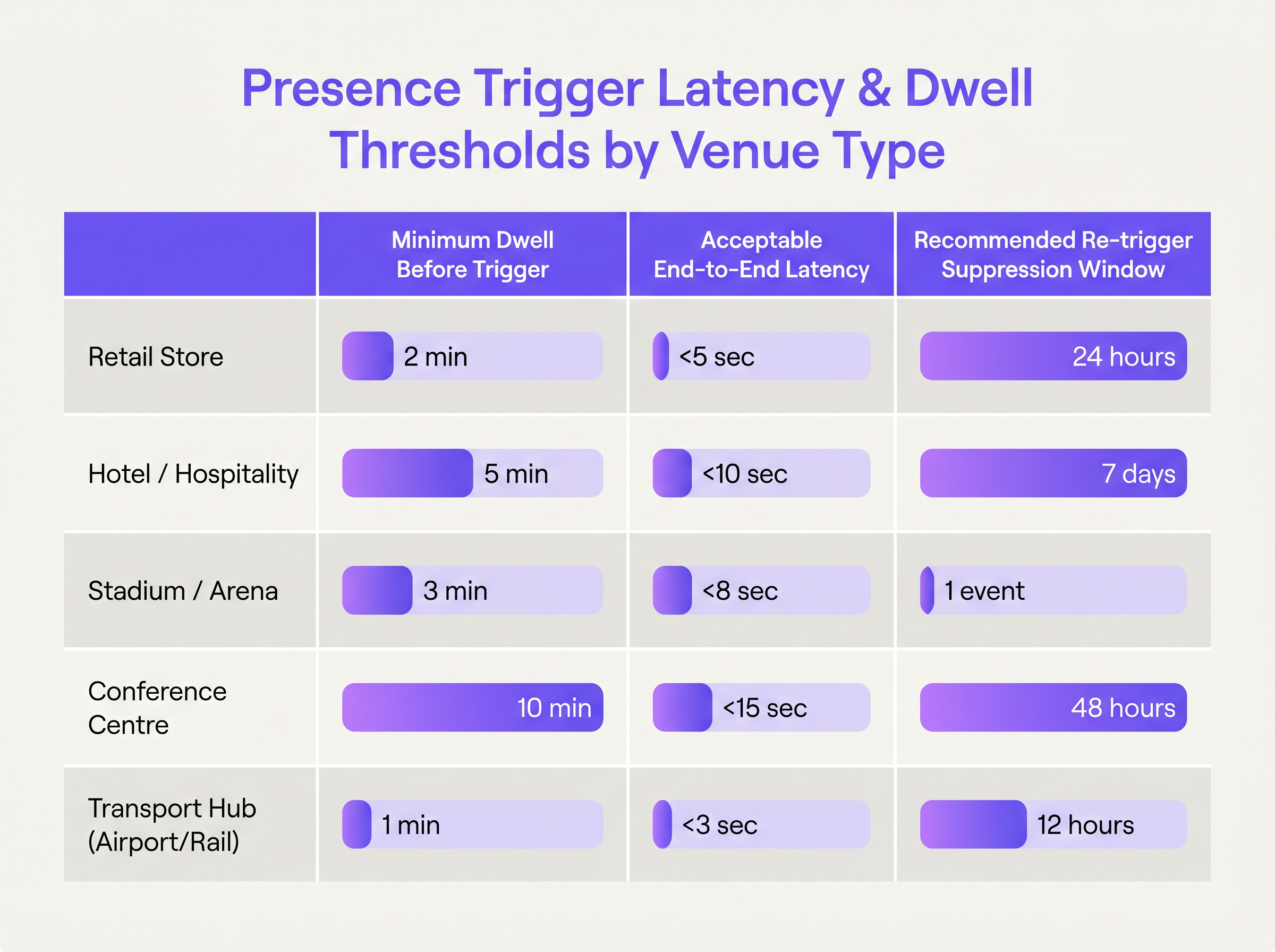
दस सेकंड से कम की लेटेंसी प्राप्त करने के लिए, आर्किटेक्ट्स को नेटवर्क-टू-प्लेटफ़ॉर्म इवेंट ट्रांसमिशन (आमतौर पर syslog या कंट्रोलर से API पुश के माध्यम से) को अनुकूलित करना चाहिए और उपयुक्त डिलीवरी चैनल का चयन करना चाहिए। SMS और पुश नोटिफिकेशन वास्तविक समय के ट्रिगर्स के लिए उपयुक्त हैं, जबकि ईमेल को अंतर्निहित डिलीवरी देरी के कारण अतुल्यकालिक संचार के लिए आरक्षित किया जाना चाहिए।
डी-डुप्लीकेशन चुनौती
डी-डुप्लीकेशन डिवाइस स्तर और अभियान स्तर दोनों पर होना चाहिए। डिवाइस-स्तर डी-डुप्लीकेशन में एक 'सत्र विंडो' को परिभाषित करना शामिल है—आमतौर पर 15 से 30 मिनट। यदि कोई डिवाइस इस विंडो के भीतर डिस्कनेक्ट होता है और फिर से कनेक्ट होता है, तो इसे एक नई विज़िट के बजाय मौजूदा सत्र की निरंतरता माना जाता है। अभियान-स्तर डी-डुप्लीकेशन के लिए संदेश थकान को रोकने के लिए दमन विंडो को कॉन्फ़िगर करने की आवश्यकता होती है। एक सामान्य गलती क्रॉस-डिवाइस डी-डुप्लीकेशन को लागू करने में विफल होना है, जहाँ एक उपयोगकर्ता स्मार्टफोन और लैपटॉप दोनों से कनेक्ट होता है, जिसके परिणामस्वरूप डुप्लिकेट अभियान ट्रिगर होते हैं। इसे MAC एड्रेस को WiFi Analytics के भीतर एक एकल प्रमाणित उपयोगकर्ता प्रोफ़ाइल (जैसे, एक ईमेल पता) से लिंक करके कम किया जाता है।एनालिटिक्स) प्लेटफॉर्म।
गोपनीयता और अनुपालन फ्रेमवर्क
उपस्थिति-आधारित ऑटोमेशन को लागू करने के लिए गोपनीयता और सुरक्षा फ्रेमवर्क का कड़ाई से पालन करना आवश्यक है। एक तकनीकी रूप से त्रुटिरहित प्रणाली जो अनुपालन मानकों का उल्लंघन करती है, वह उद्यम के लिए अस्वीकार्य जोखिम पैदा करती है।
GDPR और PECR अनुपालन
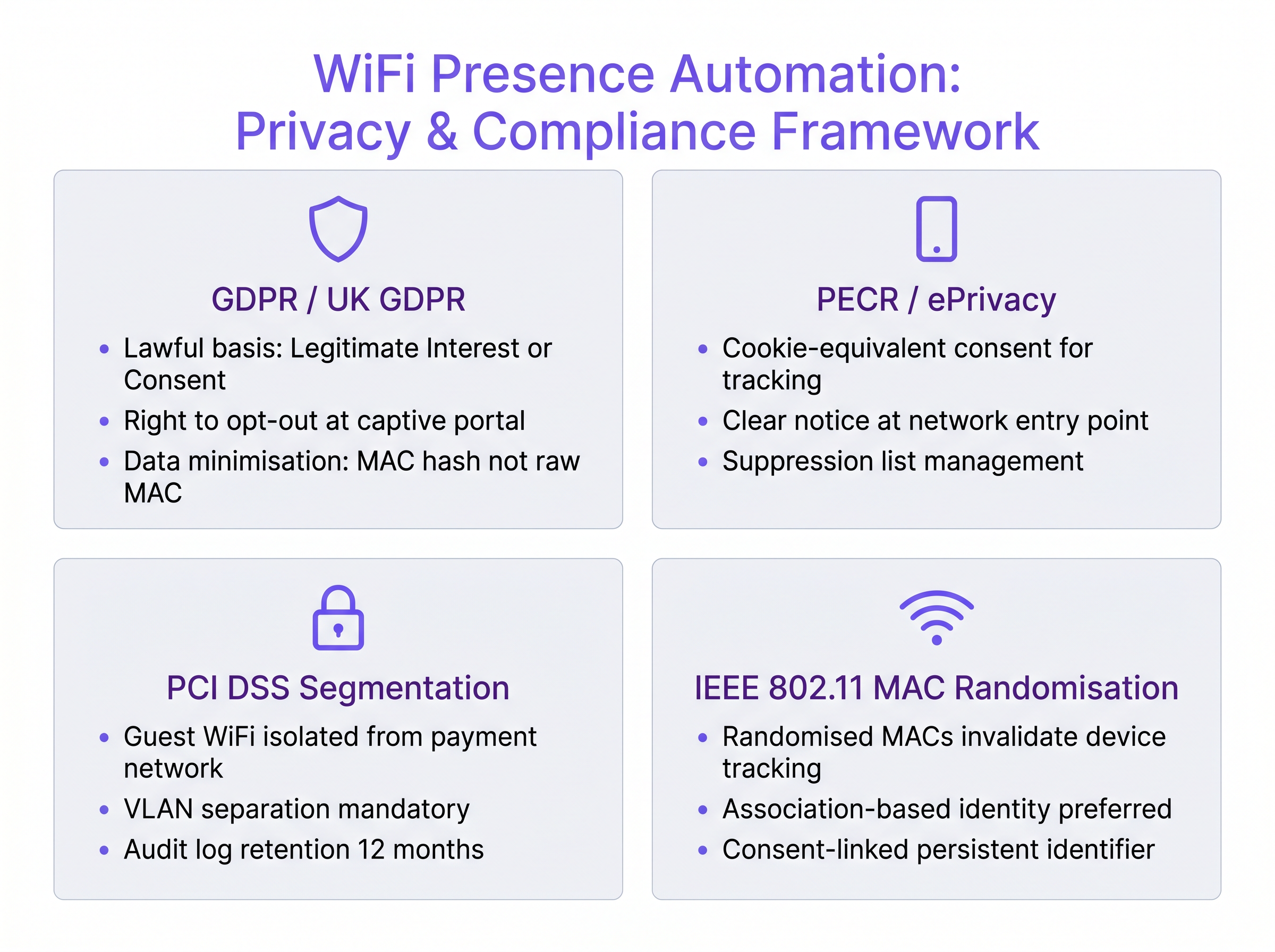
जनरल डेटा प्रोटेक्शन रेगुलेशन (GDPR) के तहत, स्थान डेटा को संसाधित करने के लिए एक वैध आधार की आवश्यकता होती है। जबकि 'वैध हित' का कभी-कभी उपयोग किया जाता है, Captive Portal पर प्राप्त स्पष्ट 'सहमति' मार्केटिंग ऑटोमेशन के लिए सबसे बचाव योग्य दृष्टिकोण है। इसके अलावा, गोपनीयता और इलेक्ट्रॉनिक संचार विनियम (PECR) इलेक्ट्रॉनिक मार्केटिंग संचार (SMS, ईमेल) के लिए विशिष्ट, सूचित सहमति अनिवार्य करते हैं। पहले से टिक किए गए बॉक्स अमान्य हैं; सक्रिय ऑप्ट-इन आवश्यक है।
सुरक्षा और विभाजन
नेटवर्क सुरक्षा के दृष्टिकोण से, अतिथि WiFi इंफ्रास्ट्रक्चर को कॉर्पोरेट और भुगतान नेटवर्क से कड़ाई से अलग किया जाना चाहिए। कार्डधारक डेटा को संसाधित करने वाले वातावरण में, PCI DSS अनुपालन VLAN पृथक्करण और फ़ायरवॉल अलगाव को अनिवार्य करता है। उपस्थिति ऑटोमेशन प्लेटफॉर्म को केवल अलग-थलग अतिथि नेटवर्क सेगमेंट के साथ इंटरैक्ट करना चाहिए। नेटवर्क एक्सेस को सुरक्षित करने पर अधिक जानकारी के लिए, Aruba ClearPass बनाम Cisco ISE: NAC प्लेटफॉर्म तुलना पर हमारी मार्गदर्शिका देखें।
ROI और व्यावसायिक प्रभाव
इवेंट-ड्रिवन मार्केटिंग ऑटोमेशन का व्यावसायिक मूल्य रूपांतरण दर में वृद्धि और परिचालन दक्षता में मापा जाता है। बैच-एंड-ब्लास्ट मार्केटिंग से वास्तविक समय, प्रासंगिक जुड़ाव में बदलाव करके, स्थल आमतौर पर जुड़ाव दरों में 3x से 5x की वृद्धि देखते हैं। उदाहरण के लिए, एक स्टेडियम जो किसी प्रशंसक के नेटवर्क से जुड़ने के 15 मिनट बाद एक SMS मर्चेंडाइज ऑफर ट्रिगर करता है, वह उच्च-इरादे वाले ठहरने के समय का लाभ उठाता है। इसके अलावा, इन उपस्थिति घटनाओं को व्यापक एंटरप्राइज़ वर्कफ़्लो में एकीकृत करना—जैसे Zapier और Purple के साथ 1,500+ ऐप्स से WiFi इवेंट्स को कनेक्ट करना —IT टीमों को परिचालन कार्यों को स्वचालित करने की अनुमति देता है, जैसे कि जब कोई VIP अतिथि परिसर में आता है तो कर्मचारियों को सचेत करना। आधुनिक व्यवसायों के लिए कोर SD WAN लाभ में चर्चा की गई नेटवर्क दक्षता लाभों के समान, मार्केटिंग वर्कफ़्लो को स्वचालित करना मैन्युअल ओवरहेड को कम करता है और बड़े पैमाने पर सुसंगत निष्पादन सुनिश्चित करता है।
मुख्य शब्द और परिभाषाएं
MAC Randomisation
A privacy feature in modern operating systems where a device broadcasts a randomly generated MAC address instead of its true hardware address when scanning for networks.
Crucial for IT teams to understand because it invalidates legacy presence analytics systems that rely on passive probe tracking.
Probe Request
A frame sent by a client device to discover available 802.11 networks within its proximity.
Useful for footfall counting, but insufficient for marketing automation due to lack of identity and consent.
Association Event
The moment a wireless client successfully connects and authenticates to an Access Point.
The primary, reliable trigger point for event-driven marketing automation.
Dwell Time
The continuous duration a device remains associated with the network during a single visit.
Used as a condition in automation logic to differentiate between a transient passerby and an engaged customer.
Suppression Window
A defined period during which a specific automated campaign will not fire again for the same user, regardless of trigger conditions being met.
Essential for preventing message fatigue and maintaining a positive user experience.
Captive Portal
A web page that the user of a public-access network is obliged to view and interact with before access is granted.
The critical juncture for capturing user identity and securing legal consent for marketing automation.
LogicFlow
A visual workflow automation engine that evaluates presence events against business rules to trigger downstream actions.
Allows marketing teams to manage campaign logic without requiring network engineers to alter infrastructure configurations.
VLAN Segmentation
The practice of partitioning a physical network into multiple distinct broadcast domains.
A mandatory security requirement to isolate guest WiFi traffic from corporate or payment processing systems.
केस स्टडीज
A 400-room resort hotel wants to trigger a 'Welcome to the Spa' SMS offer when a guest connects to the WiFi network near the spa facilities. They are currently using probe requests for detection, but the marketing team reports that the campaign is firing inconsistently, and some guests are receiving the message multiple times a day.
- Migrate from probe-based detection to authenticated association events. Probe requests use randomised MAC addresses, causing the system to treat a single device as multiple new visitors. 2. Implement Location-Based Triggers using specific Access Point (AP) MAC addresses located in the spa zone, rather than the general venue SSID. 3. Configure a Dwell Time Threshold of 3 minutes to filter out guests merely walking past the spa to the elevators. 4. Set a Campaign Suppression Window of 7 days to ensure a guest only receives the offer once per typical stay, preventing message fatigue.
A large retail chain wants to integrate their WiFi presence events with their central CRM (Salesforce) to update customer profiles in real-time when they enter a store. The IT team is concerned about API rate limits being exceeded during peak weekend trading hours.
- Do not use direct, synchronous API calls from the WiFi controller to the CRM for every association event. 2. Route all association events through the Purple Event Stream Engine to perform device-level deduplication, collapsing multiple micro-disconnects into a single 'Visit Started' event. 3. Configure a webhook in LogicFlow to send only the processed 'Visit Started' event to an enterprise integration middleware (e.g., Zapier or a custom AWS Lambda function). 4. Implement a queuing mechanism in the middleware to batch CRM updates or apply rate-limiting logic before pushing the data to Salesforce.
परिदृश्य विश्लेषण
Q1. A stadium IT director wants to send a push notification via the venue's mobile app the moment a fan connects to the WiFi at the entrance gates. They are currently seeing a 45-second delay between connection and notification delivery. Where should they investigate first to reduce latency?
💡 संकेत:Consider the components of the latency budget: Network-to-platform, Platform processing, and Delivery channel.
अनुशंसित दृष्टिकोण दिखाएं
They should investigate the network-to-platform event transmission. In a high-density environment like a stadium, if the wireless controller is batching syslog events or API updates rather than streaming them in real-time, it introduces significant artificial latency before the automation platform even receives the trigger signal. Secondary investigation should verify the push notification gateway's processing queue.
Q2. A retail marketing team requests that the IT department configure the network to track all devices walking past their storefront windows to trigger a 'Come Inside' SMS campaign. How should the IT architect respond?
💡 संकेत:Consider the technical reality of modern mobile devices and the legal requirements for electronic marketing.
अनुशंसित दृष्टिकोण दिखाएं
The IT architect must reject the request on both technical and compliance grounds. Technically, tracking devices outside the store relies on passive probe requests, which use randomised MAC addresses, making reliable identification impossible. Legally, under PECR and GDPR, sending an SMS requires explicit, prior opt-in consent, which cannot be obtained from a device merely walking past. The architect should propose an alternative: triggering campaigns only for users who have previously authenticated via the captive portal and explicitly opted into SMS marketing.
Q3. During testing of a new presence automation deployment in a hospital waiting room, the system is correctly identifying devices, but the 'Welcome to the Clinic' email is firing every time a patient's device roams between two adjacent access points. What configuration is missing?
💡 संकेत:Consider how the system differentiates between a network roaming event and a new visit.
अनुशंसित दृष्टिकोण दिखाएं
The system is missing device-level deduplication (specifically, a session window configuration). The Event Stream Engine needs to be configured to recognise that a disassociation followed immediately by a reassociation to a different AP within the same venue constitutes a roaming event within an ongoing session, not a new visit. The session window should be set to at least 15-30 minutes to collapse these micro-events.




