
NAC वातावरणात OCSP आणि CRL सह सर्टिफिकेट रिव्होकेशन ऑटोमेट करणे
हे तांत्रिक संदर्भ मार्गदर्शक IT मॅनेजर्स आणि नेटवर्क आर्किटेक्ट्सना Network Access Control (NAC) वातावरणात सर्टिफिकेट रिव्होकेशन ऑटोमेट करण्याविषयी सविस्तर माहिती पुरवते. यामध्ये OCSP आणि CRL मधील आर्किटेक्चरल तडजोडींचा शोध घेतला आहे, वेंडर-तटस्थ अंमलबजावणी मार्गदर्शन दिले आहे आणि रिअल-टाइम पॉलिसी अंमलबजावणीच्या व्यावसायिक प्रभावाचा आराखडा मांडला आहे.
हे मार्गदर्शक ऐका
पॉडकास्ट ट्रान्सक्रिप्ट पहा
आमच्या मुख्य मालिकेचा भाग: Enterprise WiFi Security Guide →

कार्यकारी सारांश (Executive Summary)
उच्च-घनता असलेली ठिकाणे - जसे की hospitality ठिकाणे, retail मालमत्ता आणि सार्वजनिक-क्षेत्रातील उपयोजन व्यवस्थापित करणाऱ्या एंटरप्राइझ IT संचालक आणि नेटवर्क आर्किटेक्ट्ससाठी - प्रमाणपत्र लाइफसायकल व्यवस्थापन ही एक अत्यंत महत्त्वाची सुरक्षा सीमा आहे. IEEE 802.1X कॉर्पोरेट आणि BYOD उपकरणांसाठी मजबूत प्रमाणीकरण प्रदान करत असले तरी, सुरक्षा भंग होईपर्यंत विश्वास रद्द करण्याच्या (revoke trust) यंत्रणेकडे सहसा दुर्लक्ष केले जाते.
Online Certificate Status Protocol (OCSP) आणि Certificate Revocation Lists (CRL) द्वारे Network Access Control (NAC) वातावरणात प्रमाणपत्र रद्द करण्याचे स्वयंचलित करणे हे एंडपॉइंट बंद करणे आणि नेटवर्क धोरण अंमलबजावणी मधील अंतर कमी करते. हे मार्गदर्शक स्वयंचलित रद्द करण्याच्या आर्किटेक्चरल यंत्रणेचा शोध घेते, आणि OCSP च्या रिअल-टाइम क्षमतेची CRL च्या ऑफलाइन लवचिकतेशी तुलना करते.
Mobile Device Management (MDM) प्लॅटफॉर्म, Certificate Authorities (CAs), आणि NAC पॉलिसी इंजिन एकत्रित करून, संस्था Zero-Trust Network Access प्राप्त करू शकतात जिथे तडजोड केलेली किंवा बंद केलेली उपकरणे त्वरित प्रतिबंधित केली जातात. हे तांत्रिक संदर्भ मार्गदर्शक कृती करण्यायोग्य उपयोजन मार्गदर्शन, जोखीम-कमी करण्याच्या धोरणे प्रदान करते आणि ही कर्मचारी-केंद्रित सुरक्षा स्थिती Purple च्या Guest WiFi आणि WiFi Analytics प्लॅटफॉर्म सारख्या लोकांसाठी उपलब्ध असणाऱ्या पायाभूत सुविधांना कशी पूरक ठरते याचा शोध घेते.
तांत्रिक सखोल विश्लेषण (Technical Deep-Dive)
EAP-TLS सह IEEE 802.1X वापरणाऱ्या कोणत्याही एंटरप्राइझ नेटवर्कमध्ये, उपकरणे सामायिक क्रेडेंशियल्स ऐवजी डिजिटल प्रमाणपत्रांचा वापर करून प्रमाणित होतात. हा दृष्टीकोन आधुनिक सुरक्षा आर्किटेक्चरसाठी मूलभूत आहे, जो उपकरण-बद्ध ओळख प्रदान करतो आणि SCEP सारख्या प्रोटोकॉलद्वारे MDM प्लॅटफॉर्मसह अखंडपणे समाकलित होतो (अधिक वाचनासाठी, पहा The Role of SCEP and NAC in Modern MDM Infrastructure). तथापि, प्रमाणपत्रांचे एक निश्चित लाइफसायकल असते. जेव्हा एखादे उपकरण गहाळ होते, एखादा कर्मचारी निघून जातो किंवा खाजगी की (private key) सुरक्षित राहत नाही, तेव्हा नेटवर्क पायाभूत सुविधांना त्या प्रमाणपत्रावर यापुढे विश्वास न ठेवण्याचे स्पष्टपणे निर्देश दिले जाणे आवश्यक आहे.
हे रद्द करण्याचे निर्देश दोन प्राथमिक यंत्रणेद्वारे दिले जातात: CRL आणि OCSP.
Certificate Revocation List (CRL) आर्किटेक्चर
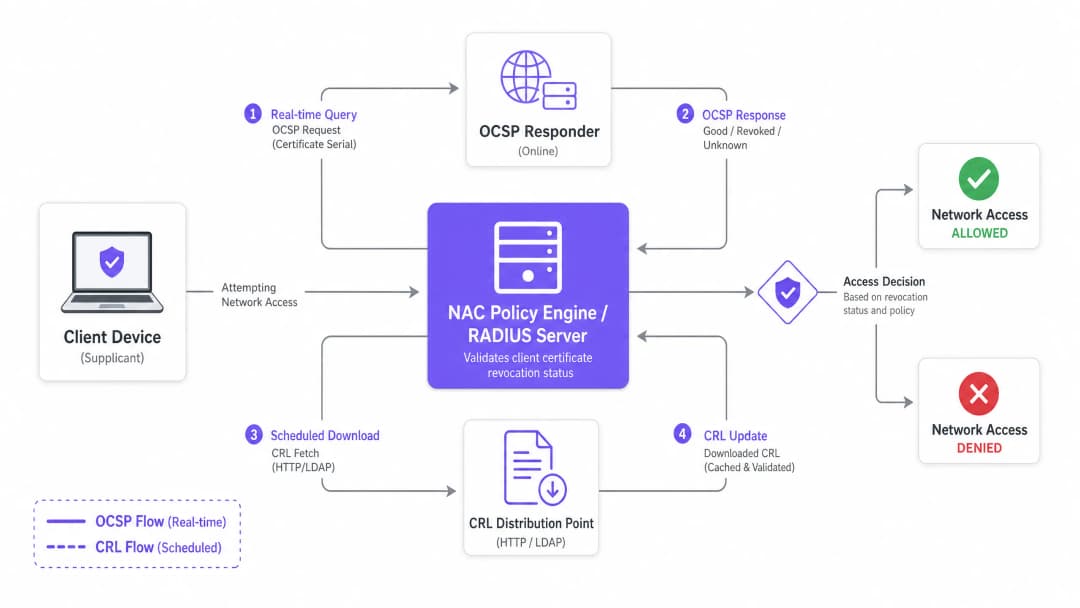
CRL ही Certificate Authority द्वारे डिजिटल स्वाक्षरी केलेली फाइल आहे ज्यामध्ये रद्द केलेल्या परंतु अद्याप मुदत संपली नसलेल्या सर्व प्रमाणपत्रांचे अनुक्रमांक (serial numbers) असतात. NAC पॉलिसी इंजिन (जे RADIUS सर्व्हर म्हणून कार्य करते) वेळोवेळी ही सूची HTTP किंवा LDAP द्वारे CRL Distribution Point (CDP) वरून डाउनलोड करते.
EAP-TLS हँडशेक दरम्यान, RADIUS सर्व्हर येणाऱ्या क्लायंट प्रमाणपत्राचा अनुक्रमांक त्याच्या स्थानिक पातळीवर कॅश केलेल्या CRL शी पडताळून पाहतो. जर अनुक्रमांक उपस्थित असेल, तर प्रमाणीकरण नाकारले जाते.
आर्किटेक्चरल वैशिष्ट्ये:
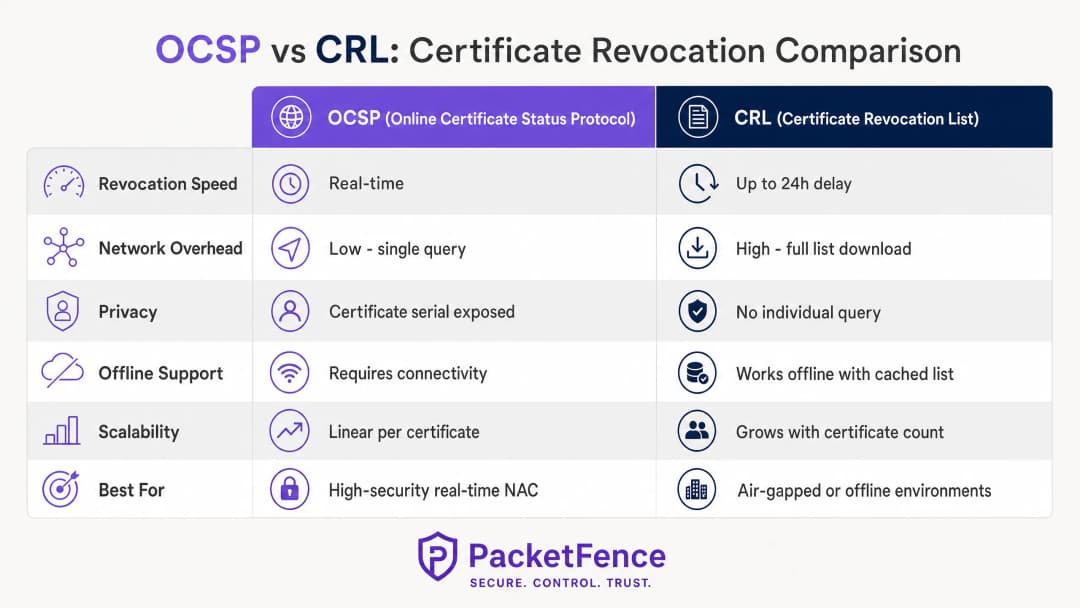
- ऑफलाइन लवचिकता: RADIUS सर्व्हर CRL कॅश करत असल्याने, CA किंवा CDP पर्यंत पोहोचणे शक्य नसले तरीही रिव्होकेशन तपासणी सुरू राहते.
- लेटन्सी: सर्वात मोठा तोटा म्हणजे रिव्होकेशन आणि अंमलबजावणी दरम्यान असणारी लेटन्सी. जर एखादे प्रमाणपत्र सकाळी ०९:०० वाजता रिव्होक केले आणि CRL रिफ्रेश इंटरव्हल २४ तास असेल, तर तडजोड केलेल्या डिव्हाइसला पुढील डाउनलोड होईपर्यंत नेटवर्क ॲक्सेस मिळत राहतो.
- थ्रुपुट ओव्हरहेड: हजारो प्रमाणपत्रे असलेल्या वातावरणात, CRL फाइल्स काही मेगाबाइट्सपर्यंत वाढू शकतात, ज्यामुळे रिफ्रेश सायकल दरम्यान बँडविड्थवर ताण पडतो.
Online Certificate Status Protocol (OCSP) आर्किटेक्चर
OCSP रिअल-टाइम रिव्होकेशन तपासणी सक्षम करून CRL च्या लेटन्सी मर्यादा दूर करते. संपूर्ण यादी डाउनलोड करण्याऐवजी, RADIUS सर्व्हर प्रमाणपत्राचा सिरियल नंबर असलेली एक लक्ष्यित क्वेरी OCSP रिस्पॉन्डरकडे पाठवतो. रिस्पॉन्डर स्वाक्षरी केलेली स्थिती परत करतो: Good, Revoked, किंवा Unknown.
आर्किटेक्चरल वैशिष्ट्ये:
- रिअल-टाइम अंमलबजावणी: रिव्होकेशनचे निर्णय त्वरित लागू होतात. एकदा CA ने OCSP रिस्पॉन्डर अपडेट केले की, तडजोड केलेल्या डिव्हाइसचा पुढील ऑथेंटिकेशनचा प्रयत्न अपयशी ठरेल.
- उपलब्धतेवर अवलंबित्व: NAC पॉलिसी इंजिन OCSP रिस्पॉन्डरच्या हाय-अव्हॅलेबिलिटीवर अवलंबून असते. जर रिस्पॉन्डरपर्यंत पोहोचणे शक्य नसेल, तर नेटवर्क प्रशासकाने एक फेल्युअर पॉलिसी परिभाषित केली पाहिजे: "फेल ओपन" (सुरक्षेशी तडजोड करून प्रवेश अधिकृत करणे) किंवा "फेल क्लोज्ड" (उपलब्धतेशी तडजोड करून प्रवेश नाकारणे).
- OCSP स्टेपलिंग: लोड आणि प्रायव्हसीच्या चिंता कमी करण्यासाठी, OCSP स्टेपलिंग क्लायंट डिव्हाइसला स्वाक्षरी केलेला OCSP रिस्पॉन्स मिळवण्याची आणि तो TLS हँडशेकला जोडण्याची परवानगी देते, जरी सप्लिकंट सपोर्ट बदलू शकतो.
गेस्ट आणि ॲनालिटिक्स प्लॅटफॉर्म्ससह एकत्रीकरण
जिथे OCSP आणि CRL कर्मचारी आणि कॉर्पोरेट डिव्हाइसेसच्या कठोर सुरक्षा आवश्यकता व्यवस्थापित करतात, तिथे लोकांसाठी वापरल्या जाणाऱ्या नेटवर्कला वेगळ्या आर्किटेक्चरची आवश्यकता असते. सार्वजनिक ठिकाणांसाठी, Purple सारख्या समर्पित पब्लिक प्लॅटफॉर्मसह मजबूत स्टाफ NAC समाकलित केल्याने सर्वसमावेशक कव्हरेज सुनिश्चित होते. Purple चा प्लॅटफॉर्म सार्वजनिक विभागासाठी Captive Portal ऑथेंटिकेशन, सेवा शर्तींची स्वीकृती आणि डेटा कॅप्चर हाताळतो, तर मूळ नेटवर्क इन्फ्रास्ट्रक्चर (बहुतेकदा समान फिजिकल ॲक्सेस पॉइंट्स आणि स्विचेस) कॉर्पोरेट SSIDs साठी 802.1X आणि OCSP लागू करते. दोन्ही विभागांसाठी रेडिओ वातावरण समजून घेणे अत्यंत महत्त्वाचे आहे; स्पेक्ट्रम नियोजनासाठी Wi Fi Frequencies: A Guide to Wi-Fi Frequencies in 2026 पहा.
तुमच्या विशिष्ट सेटअपबद्दल काही प्रश्न आहेत का?
आमची टीम ८०,००० हून अधिक वेन्यूजमधील वेन्यू ऑपरेटर्स, IT मॅनेजर्स आणि नेटवर्क इंजिनिअर्ससोबत काम करते. २० मिनिटांचा कॉल बुक करा आणि तुमच्यासारख्या इतरांनी ही समस्या कशी सोडवली हे आम्ही तुम्हाला दाखवू.
अंमलबजावणी मार्गदर्शक
स्वयंचलित प्रमाणपत्र रिव्होकेशन तैनात करण्यासाठी PKI, MDM आणि NAC डोमेन्समध्ये समन्वयाची आवश्यकता असते. लवचिक रिव्होकेशन पाइपलाइन स्थापित करण्यासाठी या वेंडर-न्यूट्रल अंमलबजावणी चरणांचे अनुसरण करा.
पायरी १: रिव्होकेशन ट्रिगर्स परिभाषित करा
स्वयंचलनीकरण एंडपॉइंट व्यवस्थापन स्तरावर सुरू होते. जेव्हा विशिष्ट अटी पूर्ण होतात तेव्हा तुमच्या सर्टिफिकेट ऑथॉरिटीला रिव्होकेशन API कॉल ट्रिगर करण्यासाठी तुमचे MDM प्लॅटफॉर्म (उदा. Microsoft Intune, Jamf Pro) कॉन्फिगर करा:
- जेव्हा एखादे डिव्हाइस MDM मधून अनएनरोल केले जाते
- जेव्हा एखादे डिव्हाइस नॉन-कंप्लायंट म्हणून चिन्हांकित केले जाते
- जेव्हा डिरेक्टरी सर्व्हिसमध्ये युझर अकाउंट डिसेबल केले जाते
पायरी २: रिव्होकेशन इन्फ्रास्ट्रक्चर कॉन्फिगर करा
CRL डिप्लॉयमेंटसाठी:
- CRL ला हायली-अवेलेबल CDP वर (उदा. लोड-बॅलन्स्ड इंटरनल वेब सर्व्हर) पब्लिश करण्यासाठी CA कॉन्फिगर करा.
- तुमच्या जोखीम सहनशीलतेच्या आधारे CRL पब्लिकेशन इंटरव्हल सेट करा (उदा. दर ४ तासांनी).
- कॅशे नेहमी अपडेटेड राहील याची खात्री करण्यासाठी पब्लिकेशन इंटरव्हलपेक्षा थोड्या कमी कालावधीच्या अंतराने CRL फेच करण्यासाठी RADIUS सर्व्हर कॉन्फिगर करा.
OCSP डिप्लॉयमेंटसाठी:
- हाय अवेलेबिलिटी सुनिश्चित करण्यासाठी लोड बॅलन्सरच्या मागे किमान दोन OCSP रिस्पॉन्सर्स डिप्लॉय करा.
- OCSP रिस्पॉन्सर्सना रिव्होकेशन अपडेट्स त्वरित पाठवण्यासाठी CA कॉन्फिगर करा.
- EAP-TLS ऑथेंटिकेशन दरम्यान लोड-बॅलन्स्ड OCSP व्हर्च्युअल IP ला क्वेरी करण्यासाठी RADIUS सर्व्हर कॉन्फिगर करा.
पायरी ३: फॉलबॅक पॉलिसीज स्थापित करा
एकाच मेकॅनिझमवर अवलंबून राहू नका. OCSP ला प्रायमरी रिव्होकेशन चेक म्हणून वापरण्यासाठी तुमचा RADIUS सर्व्हर कॉन्फिगर करा, आणि जर OCSP रिस्पॉन्सरशी संपर्क होऊ शकला नाही, तर स्थानिक पातळीवर कॅशे केलेल्या CRL वर फॉलबॅक करा. हे सामान्य परिस्थितीत रिअल-टाइम अंमलबजावणी आणि इन्फ्रास्ट्रक्चर आउटेज दरम्यान ऑफलाइन लवचिकता प्रदान करते.
पायरी ४: फेल्युअर बिहेव्हियर परिभाषित करा
जर OCSP आणि कॅशे केलेले CRL दोन्ही अनुपलब्ध असतील, तर ऑथेंटिकेशन विनंती कशी हाताळायची हे RADIUS सर्व्हरने ठरवणे आवश्यक आहे.
- उच्च-सुरक्षा पर्यावरण (उदा. Healthcare): "fail closed" कॉन्फिगर करा. संभाव्य तडजोड केलेल्या डिव्हाइसेसना कनेक्ट होण्यापासून रोखण्यासाठी प्रवेश नाकारा.
- प्रमाणित पर्यावरण (उदा. transport हब्स): अलर्टिंगसह "fail open" कॉन्फिगर करा. ऑपरेशन्स अखंड सुरू ठेवण्यासाठी प्रवेश मंजूर करा, परंतु SOC साठी हाय-प्रायोरिटी अलर्ट जनरेट करा.
सर्वोत्तम पद्धती
- डेल्टा CRLs लागू करा: मोठ्या पर्यावरणात CRLs वर अवलंबून असल्यास, डेल्टा CRLs लागू करा. या फाइल्समध्ये शेवटचा पूर्ण बेस CRL पब्लिश झाल्यापासूनचे केवळ रिव्होकेशन बदल असतात, ज्यामुळे डाउनलोडचा आकार आणि बँडविड्थचा वापर लक्षणीयरीत्या कमी होतो.
- OCSP लॅटन्सी मॉनिटर करा: OCSP क्वेरी EAP-TLS हँडशेक दरम्यान इनलाइन होतात. जर OCSP रिस्पॉन्सरला उत्तर देण्यासाठी ५००ms वेळ लागला, तर ऑथेंटिकेशनला ५००ms चा उशीर होतो. रिस्पॉन्सर लॅटन्सी मॉनिटर करा आणि रिस्पॉन्सची वेळ खालावल्यास हॉरिझॉन्टली स्केल करा.
- शॉर्ट-लिव्ह्ड सर्टिफिकेट्स: स्वयंचलित SCEP/EST रिन्यूअलद्वारे सर्टिफिकेट व्हॅलिडिटी कालावधी कमी करण्याचा विचार करा (उदा. १ वर्षावरून ७ दिवसांपर्यंत). शॉर्ट-लिव्ह्ड सर्टिफिकेट्स नैसर्गिकरित्या लवकर एक्सपायर होतात, ज्यामुळे मजबूत रिव्होकेशन इन्फ्रास्ट्रक्चरवरील अवलंबित्व कमी होते.
- व्यापक नेटवर्क धोरणाशी सुसंगत करा: तुमचे NAC उपयोजन तुमच्या वाईड-एरिया नेटवर्क आर्किटेक्चरशी सुसंगत असल्याची खात्री करा. आधुनिक WAN डिझाइनच्या सखोल माहितीसाठी, SD WAN vs MPLS: The 2026 Enterprise Network Guide पहा.
त्रुटी निवारण आणि जोखीम कमी करणे
ऑटोमेटेड रिव्होकेशन अयशस्वी होण्याचे सर्वात सामान्य कारण म्हणजे CA-ते-NAC पाइपलाइनमधील त्रुटी, ज्यामुळे "फेल क्लोज्ड" घटना घडू शकते आणि कायदेशीर वापरकर्त्यांचा प्रवेश नाकारला जाऊ शकतो.
जोखीम: OCSP रिस्पॉन्डर आऊटेज जोखीम कमी करण्याचे उपाय: एकाधिक फॉल्ट डोमेन्सवर ॲक्टिव्ह-ॲक्टिव्ह क्लस्टरमध्ये रिस्पॉन्डर्स तैनात करा. लोड बॅलन्सरवर सर्वसमावेशक आरोग्य तपासणी (health checks) लागू करा ज्या केवळ TCP पोर्ट 80 ची उपलब्धता तपासणार नाहीत, तर रिस्पॉन्डरच्या CA डेटाबेसमध्ये क्वेरी करण्याच्या क्षमतेची देखील पडताळणी करतील.
जोखीम: जुनी CRL कॅशे जोखीम कमी करण्याचे उपाय: नेटवर्क विभाजन किंवा CDP आऊटेजमुळे RADIUS सर्व्हर नवीन CRL डाउनलोड करण्यात अयशस्वी होऊ शकतात. स्थानिक पातळीवर कॅशे केलेली CRL निर्धारित प्रकाशन कालावधीपेक्षा जुनी असल्यास अलर्ट देणारी मॉनिटरिंग यंत्रणा लागू करा.
जोखीम: अपूर्ण MDM रिव्होकेशन जोखीम कमी करण्याचे उपाय: जर MDM ने CA ला रिव्होकेशन कॉल ट्रिगर केला नाही, तर प्रमाणपत्र वैध राहते. एक रिकॉन्सिलिएशन स्क्रिप्ट लागू करा जी वेळोवेळी MDM च्या सक्रिय उपकरणांच्या सूचीची तुलना CA च्या वैध प्रमाणपत्रांच्या सूचीशी करेल आणि कोणतीही विसंगती आढळल्यास ती स्वयंचलितपणे रद्द (revoke) करेल.
ROI आणि व्यावसायिक प्रभाव
प्रमाणपत्र रद्द करण्याची प्रक्रिया (certificate revocation) स्वयंचलित केल्याने सुरक्षा एका रिॲक्टिव्ह, मॅन्युअल प्रक्रियेकडून एका प्रोॲक्टिव्ह, ऑटोमेटेड संरक्षण यंत्रणेमध्ये बदलते.
- जोखीम कमी करणे: डिव्हाइस सुरक्षिततेशी तडजोड होणे आणि नेटवर्क आयसोलेशन यामधील एक्सपोजर विंडो काढून टाकून, संस्था लॅटरल मूव्हमेंट आणि डेटा चोरीचा धोका लक्षणीयरीत्या कमी करतात. PCI-DSS आणि GDPR सारख्या फ्रेमवर्कचे पालन राखण्यासाठी हे अत्यंत महत्त्वाचे आहे.
- कार्यक्षम कार्यक्षमता: रिव्होकेशन पाइपलाइन स्वयंचलित केल्याने, कर्मचारी नोकरी सोडून गेल्यास हेल्पडेस्क कर्मचाऱ्यांना मॅन्युअल पद्धतीने RADIUS कॉन्फिगरेशन किंवा CA डेटाबेस अपडेट करण्याची आवश्यकता उरत नाही, ज्यामुळे मोठ्या उपक्रमांमध्ये दरवर्षी शेकडो तासांची बचत होते.
- एकत्रित प्रवेश धोरण (Unified Access Strategy): कॉर्पोरेट उपकरणांसाठी एक मजबूत NAC वातावरण आयटी टीम्सना मुख्य पायाभूत सुविधा सुरक्षित राहतील या खात्रीसह समांतर सेवा आत्मविश्वासाने तैनात करण्यास अनुमती देते, जसे की Purple चे ॲनालिटिक्स-चालित गेस्ट WiFi किंवा लोकेशन-आधारित सेवा (पहा BLE Low Energy Explained for Enterprise).
या विषयावरील आमचे तांत्रिक विश्लेषण खाली ऐका:
महत्वाच्या व्याख्या
EAP-TLS (Extensible Authentication Protocol - Transport Layer Security)
802.1X नेटवर्क ऑथेंटिकेशनसाठी सर्वात सुरक्षित मानक, ज्यामध्ये क्लायंट आणि सर्व्हर दोघांनाही त्यांची ओळख सिद्ध करण्यासाठी डिजिटल सर्टिफिकेट्स सादर करणे आवश्यक असते.
पासवर्ड-आधारित ऑथेंटिकेशनशी संबंधित जोखीम दूर करण्यासाठी IT टीम्स EAP-TLS तैनात करतात, ज्यामुळे केवळ व्यवस्थापित, सर्टिफिकेट-धारक डिव्हाइसेस कॉर्पोरेट नेटवर्कशी कनेक्ट होऊ शकतात.
OCSP (Online Certificate Status Protocol)
X.509 डिजिटल प्रमाणपत्राची निरसन स्थिती रिअल-टाइममध्ये मिळवण्यासाठी वापरला जाणारा एक इंटरनेट प्रोटोकॉल.
ॲक्सेस पॉलिसी त्वरित लागू करण्याची आवश्यकता असलेल्या वातावरणासाठी अत्यंत महत्त्वाचे, जसे की जेव्हा एखादा कर्मचारी कामावरून कमी केला जातो आणि त्याचे डिव्हाइस त्वरित डिस्कनेक्ट करणे आवश्यक असते.
CRL (प्रमाणपत्र निरसन सूची)
जारी करणाऱ्या प्रमाणपत्र प्राधिकरणाद्वारे निरस्त केलेल्या प्रमाणपत्र अनुक्रमांकांची वेळोवेळी प्रकाशित केलेली, डिजिटली स्वाक्षरी केलेली सूची.
ऑफलाइन किंवा एअर-गॅप केलेल्या नेटवर्कमध्ये प्राथमिक निरसन यंत्रणा म्हणून किंवा OCSP साठी अत्यंत लवचिक फॉलबॅक यंत्रणा म्हणून वापरले जाते.
OCSP Stapling
अशी एक यंत्रणा जिथे क्लायंट डिव्हाइस स्वतःचा OCSP प्रतिसाद मिळवते आणि तो TLS हँडशेकला 'स्टॅपल्स' करून RADIUS सर्व्हरसमोर सादर करते.
RADIUS सर्व्हर आणि OCSP रिस्पॉन्सडरवरील भार कमी करते आणि एखादे डिव्हाइस नेमके केव्हा आणि कुठे ऑथेंटिकेट करत आहे हे CA ला पाहण्यापासून रोखून गोपनीयता सुधारते.
Delta CRL
शेवटचे पूर्ण Base CRL प्रकाशित झाल्यापासून केवळ निरस्त केलेली प्रमाणपत्रे असलेली एक लहान निरसन सूची.
मोठ्या प्रमाणात डिप्लॉयमेंट करण्यासाठी नेटवर्कची गर्दी रोखण्यासाठी आवश्यक आहे, कारण पूर्ण CRLs प्रचंड मोठे होऊ शकतात आणि रिफ्रेश सायकल दरम्यान लक्षणीय बँडविड्थ वापरू शकतात.
CDP (CRL वितरण बिंदू)
असे स्थान, सामान्यतः HTTP किंवा LDAP URL, जिथे प्रमाणपत्र प्राधिकरण क्लायंट आणि RADIUS सर्व्हरना डाउनलोड करण्यासाठी CRL प्रकाशित करते.
आयटी टीम्सनी हे सुनिश्चित केले पाहिजे की CDP अत्यंत उपलब्ध आहे आणि सर्व NAC पॉलिसी इंजिनवरून पोहोचण्यायोग्य आहे; जर CDP बंद झाला, तर RADIUS सर्व्हर त्यांचे कॅशे अपडेट करू शकत नाहीत.
Fail Open / Fail Closed
निरसन पायाभूत सुविधा (OCSP किंवा CDP) पोहोचण्यायोग्य नसताना काय घडावे हे ठरवणारा पॉलिसी निर्णय. Fail Open प्रवेश मंजूर करतो; Fail Closed प्रवेश नाकारतो.
कार्यक्षम अपटाइमच्या विरुद्ध सुरक्षा स्थिती संतुलित करणारा एक महत्त्वपूर्ण व्यावसायिक निर्णय. यासाठी आयटी ऑपरेशन्स आणि CISO या दोघांच्याही मंजुरीची आवश्यकता असते.
SCEP (सिंपल सर्टिफिकेट एनरोलमेंट प्रोटोकॉल)
वापरकर्त्याच्या हस्तक्षेपाशिवाय व्यवस्थापित डिव्हाइसेसना डिजिटल प्रमाणपत्रे स्वयंचलितपणे जारी करण्यासाठी MDM प्लॅटफॉर्मद्वारे वापरला जाणारा प्रोटोकॉल.
स्वयंचलित जीवनचक्राचा प्रारंभ बिंदू. SCEP प्रमाणपत्र जारी करते आणि नंतर डिव्हाइस वापरातून काढून टाकल्यावर MDM हे CA ला ते निरस्त करण्यासाठी ट्रिगर करते.
सोडवलेली उदाहरणे
एक ५०० बेड असलेले हॉस्पिटल नेटवर्क त्यांच्या सर्व वैद्यकीय IoT डिव्हाइसेस आणि स्टाफ लॅपटॉप्ससाठी क्रेडेंशियल-आधारित 802.1X वरून सर्टिफिकेट-आधारित EAP-TLS वर मायग्रेट करत आहे. CISO ने आदेश दिला आहे की एखादे डिव्हाइस चोरीला गेल्याची नोंद झाल्यास, त्याचा नेटवर्क ॲक्सेस ५ मिनिटांच्या आत बंद झाला पाहिजे. नेटवर्क टीमला सतत बाह्य सेवांना क्वेरी पाठवाव्या लागल्यास RADIUS सर्व्हरच्या लोडबद्दल काळजी वाटत आहे. अशा वेळी रिव्होकेशन आर्किटेक्चरची रचना कशी असावी?
हॉस्पिटलने ५ मिनिटांचे रिव्होकेशन SLA पूर्ण करण्यासाठी OCSP तैनात केले पाहिजे, कारण CRL रिफ्रेश इंटरव्हल्स नेटवर्कवर मोठा अतिरिक्त ताण न आणता हे लक्ष्य विश्वसनीयपणे पूर्ण करू शकत नाहीत. नेटवर्क टीमच्या लोडच्या चिंतेचे निवारण करण्यासाठी, आर्किटेक्चरमध्ये हॉस्पिटलच्या डेटा सेंटरमध्ये स्थानिक पातळीवर OCSP Responders लागू केले पाहिजेत, जे लेटन्सी कमी करण्यासाठी RADIUS सर्व्हर्सच्या जवळ असतील. RADIUS सर्व्हर्स स्थानिक OCSP VIP कडे क्वेरी पाठवण्यासाठी कॉन्फिगर केले पाहिजेत. लवचिकता सुनिश्चित करण्यासाठी, RADIUS सर्व्हर्स स्थानिक पातळीवर कॅश केलेल्या CRL वर फॉलबॅकसह कॉन्फिगर केलेले असणे आवश्यक आहे, जे दर तासाला अपडेट होईल. आरोग्य सेवा क्षेत्राच्या कडक अनुपालन आवश्यकतांमुळे बिघाड झाल्यास पॉलिसी 'fail closed' वर सेट केली पाहिजे.
१,२०० स्टोअर्स असलेली एक जागतिक रिटेल चेन पॉईंट-ऑफ-सेल (POS) टॅबलेट्सना सर्टिफिकेट्स प्रोव्हिजन करण्यासाठी SCEP चा वापर करते. या स्टोअर्समध्ये मर्यादित WAN बँडविड्थ आहे. IT डायरेक्टरला सर्टिफिकेट रिव्होकेशन लागू करायचे आहे पण त्यांना काळजी आहे की १,२०० ब्रांच RADIUS सर्व्हर्सवर मोठ्या CRL फाइल्स डाउनलोड केल्याने WAN लिंक्सवर प्रचंड ताण येईल. यासाठी सर्वोत्तम डिप्लॉयमेंट स्ट्रॅटेजी कोणती आहे?
रिटेल चेनने Delta CRLs आणि OCSP Stapling चा वापर करून हायब्रीड दृष्टिकोन लागू केला पाहिजे. प्रथम, CA ला साप्ताहिक बेस CRL आणि दर ४ तासांनी Delta CRL (ज्यामध्ये केवळ अलीकडील रिव्होकेशन्स असतील) प्रकाशित करण्यासाठी कॉन्फिगर केले पाहिजे. ब्रांच RADIUS सर्व्हर्स दिवसा केवळ लहान Delta CRLs डाउनलोड करतील, ज्यामुळे WAN वरील प्रभाव कमी होईल. पर्याय म्हणून, जर POS टॅबलेट्सचे EAP सप्लिकंट्स त्यास सपोर्ट करत असतील, तर OCSP Stapling सक्षम केले पाहिजे. यामुळे OCSP रिस्पॉन्स मिळवण्याचा भार ब्रांच RADIUS सर्व्हरवरून थेट टॅबलेटवर स्थलांतरित होतो, जो मानक HTTPS वरून थेट मुख्य CA कडून रिस्पॉन्स मिळवू शकतो, ज्यामुळे RADIUS सर्व्हरचा प्रोसेसिंग लोड पूर्णपणे वाचतो.
सराव प्रश्न
Q1. तुमची संस्था 50 रिमोट शाखा कार्यालयांमध्ये 802.1X डिप्लॉय करत आहे. केंद्रीय डेटा सेंटरचे WAN लिंक्स अत्यंत व्यस्त आहेत आणि वारंवार पॅकेट्स गमावतात. तुम्हाला शाखेच्या कॉर्पोरेट लॅपटॉपसाठी प्रमाणपत्र निरसन लागू करायचे आहे. आपण कोणते आर्किटेक्चर निवडले पाहिजे?
टीप: रिअल-टाइम प्रोटोकॉलवर पॅकेट गमावण्याच्या होणाऱ्या प्रभावाचा आणि कॅश केलेल्या डेटाच्या लवचिकतेचा विचार करा.
नमुना उत्तर पहा
आपण CRL-आधारित आर्किटेक्चर लागू केले पाहिजे, विशेषतः Base आणि Delta CRLs वापरून. कारण WAN लिंक्स व्यस्त आणि अविश्वसनीय आहेत, रिअल-टाइम OCSP क्वेरीज वारंवार टाईम-आउट होतील, ज्यामुळे ऑथेंटिकेशनमध्ये उशीर किंवा अपयश येईल. शाखेच्या RADIUS सर्व्हर्सना ऑफ-पीक तासांमध्ये Delta CRLs डाउनलोड आणि कॅश करण्यासाठी कॉन्फिगर करून, स्थानिक RADIUS सर्व्हर ऑथेंटिकेशनच्या प्रयत्नादरम्यान WAN लिंक पूर्णपणे बंद असली तरीही, आपल्या कॅशच्या आधारे त्वरित निरसन तपासणी करू शकतो.
Q2. सुरक्षा ऑडिटमधून असे समोर आले आहे की जेव्हा तुमचा प्राथमिक OCSP रिस्पॉन्सडर देखभालीसाठी ऑफलाइन जातो, तेव्हा सर्व कॉर्पोरेट वापरकर्ते WiFi नेटवर्कमधून पूर्णपणे लॉक आउट होतात. देखभालीचा वापरकर्त्यांच्या कनेक्टिव्हिटीवर परिणाम होऊ नये अशी व्यवसायाची मागणी आहे, परंतु CISO हे धोरण 'Fail Open' मध्ये बदलण्यास नकार देतात. आपण याचे निराकरण कसे कराल?
टीप: तुम्ही अपयशाचे धोरण बदलू शकत नसल्यास, तुम्हाला सेवेची उपलब्धता बदलली पाहिजे.
नमुना उत्तर पहा
तुम्ही OCSP सेवेसाठी हाय अवेलेबिलिटी लागू केली पाहिजे. किमान एक अतिरिक्त OCSP रिस्पॉन्सडर डिप्लॉय करा आणि दोन्ही एका लोड बॅलन्सरच्या मागे ठेवा. लोड बॅलन्सरच्या व्हर्च्युअल आयपी (VIP) वर क्वेरी करण्यासाठी RADIUS सर्व्हर कॉन्फिगर करा. देखभालीदरम्यान, आपण प्राथमिक रिस्पॉन्सडरवरील कनेक्शन्स थांबवून ते ऑफलाइन करू शकता आणि लोड बॅलन्सर सर्व OCSP क्वेरीज दुसऱ्या रिस्पॉन्सडरकडे अखंडपणे पाठवेल, ज्यामुळे व्यवसायाची अपटाइम आवश्यकता आणि CISO चे 'Fail Closed' धोरण या दोन्ही गोष्टी पूर्ण होतील.
Q3. तुम्ही तुमचे MDM डिव्हाइस 'हरवले' म्हणून चिन्हांकित केल्यावर स्वयंचलितपणे प्रमाणपत्रे रद्द करण्यासाठी कॉन्फिगर केले आहे. तुम्ही चाचणी iPad ला हरवले म्हणून चिन्हांकित करून सिस्टीमची चाचणी घेता. MDM प्रमाणपत्र रद्द केल्याची पुष्टी करते, परंतु १० मिनिटांनंतर, iPad कॉर्पोरेट WiFi शी यशस्वीरित्या कनेक्ट होतो. RADIUS सर्व्हर दर २४ तासांनी प्रकाशित होणारी CRL वापरण्यासाठी कॉन्फिगर केला आहे. याचे मूळ कारण काय आहे आणि तुम्ही ते कसे दुरुस्त कराल?
टीप: CA कडून RADIUS सर्व्हरच्या अंमलबजावणी इंजिनपर्यंतच्या निरसन डेटाच्या टाइमलाइनचा मागोवा घ्या.
नमुना उत्तर पहा
याचे मूळ कारण CRL प्रकाशन आणि रिफ्रेश सायकलमधील विलंब (latency) आहे. MDM ने CA ला यशस्वीरित्या प्रमाणपत्र रद्द करण्यास सांगितले असले तरी, CA पुढील २४ तासांच्या सायकलपर्यंत ती अपडेट केलेली स्थिती CRL वितरण बिंदूवर प्रकाशित करणार नाही आणि RADIUS सर्व्हर त्याची स्वतःची कॅशे कालबाह्य होईपर्यंत ती डाउनलोड करणार नाही. हे दुरुस्त करण्यासाठी, तुम्ही एकतर रिअल-टाइम तपासणीसाठी OCSP वर स्थलांतरित झाले पाहिजे, किंवा तुमच्या आवश्यक अंमलबजावणीच्या वेळेची पूर्तता करण्यासाठी CRL प्रकाशन आणि डाउनलोडचे अंतर कमालीचे कमी (उदा. १ तास) केले पाहिजे.
या मालिकेमध्ये पुढे वाचा
PPSK WPA3: वैशिष्ट्ये आणि उपयोजन मॉडेल्सची तुलना
हे तांत्रिक संदर्भ मार्गदर्शक PPSK आणि WPA3-SAE ची तुलना करते, मल्टी-टेनंट वातावरणासाठी त्यांचे आर्किटेक्चरल फरक आणि उपयोजन मॉडेल्स स्पष्ट करते. हे IT व्यवस्थापक आणि मालमत्ता विकासकांसाठी Purple च्या ओळख-आधारित उपायांचा वापर करून सुरक्षित, स्वतंत्र WiFi नेटवर्क मिळवण्याबाबत व्यावहारिक मार्गदर्शन प्रदान करते.
कर्मचारी WiFi साठी बँडविड्थ व्यवस्थापित करणे: शेपिंग, QoS आणि ट्रॅफिक कमी करणे
हे मार्गदर्शक व्यावसायिक ठिकाणी कर्मचारी WiFi साठी बँडविड्थ व्यवस्थापित करण्याच्या व्यावहारिक पद्धतींचे तपशील देते. यामध्ये ट्रॅफिक शेपिंग, QoS अंमलबजावणी आणि पायाभूत सुविधांमध्ये सुधारणा न करता Purple Shield तैनात केल्याने नेटवर्क लोड कसा कमी होतो याचा समावेश आहे.
Per-Device PSK (iPSK, DPSK, MPSK) चा वापर करून WiFi SSID ची संख्या कशी कमी करावी
हा अधिकृत तांत्रिक संदर्भ मार्गदर्शक स्पष्ट करतो की IT टीम्स प्रति-डिव्हाइस PSK (xPSK) चा वापर करून एकाच SSID मध्ये एकाधिक विशिष्ट उद्देशांसाठी तयार केलेले नेटवर्क्स एकत्र करून SSID बीकन ओव्हरहेडमुळे होणारी WiFi परफॉर्मन्सची घसरण कशी दूर करू शकतात. यामध्ये Cisco iPSK, HPE Aruba MPSK, Ruckus DPSK, Juniper Mist PPSK, आणि Ubiquiti UniFi PPSK मधील व्हेंडर लँडस्केपचा समावेश आहे, ज्यामध्ये डायनॅमिक VLAN असाइनमेंट, IoT ऑनबोर्डिंग आणि PCI DSS अनुपालनावर व्यावहारिक अंमलबजावणीचे मार्गदर्शन आहे. हॉस्पिटॅलिटी, रिटेल, स्टेडियम आणि सार्वजनिक क्षेत्रातील संस्थांमधील वेन्यू ऑपरेटर्सना यामध्ये कृतीयोग्य आर्किटेक्चर मार्गदर्शन आणि वास्तविक जगातील व्यावहारिक उदाहरणे मिळतील.
तुमच्या विशिष्ट सेटअपबद्दल काही प्रश्न आहेत का?
आमची टीम ८०,००० हून अधिक वेन्यूजमधील वेन्यू ऑपरेटर्स, IT मॅनेजर्स आणि नेटवर्क इंजिनिअर्ससोबत काम करते. २० मिनिटांचा कॉल बुक करा आणि तुमच्यासारख्या इतरांनी ही समस्या कशी सोडवली हे आम्ही तुम्हाला दाखवू.