
विद्यार्थी वसतिगृहांमध्ये Public IP संपुष्टात येण्याच्या समस्येचे व्यवस्थापन करणे
हे मार्गदर्शक दाट विद्यार्थी वसतीगृहे आणि multi-tenant WiFi वातावरणात IPv4 संपुष्टात येण्याच्या समस्येचे व्यवस्थापन करण्यासाठी Carrier-Grade NAT (CGNAT) आणि Port Address Translation (PAT) तैनात करणाऱ्या नेटवर्क आर्किटेक्ट्ससाठी एक निश्चित तांत्रिक संदर्भ प्रदान करते. यामध्ये NAT444 आर्किटेक्चर, RFC 6598 सामायिक ॲड्रेस स्पेस, Port Block Allocation चे आकारमान ठरवणे, GDPR-compliant लॉगिंग धोरणे आणि dual-stack IPv6 स्थलांतर मार्ग समाविष्ट आहे. हे मार्गदर्शक मर्यादित public IP पूलवर शेकडो किंवा हजारो एकाच वेळी सक्रिय असलेल्या उपकरणांचे व्यवस्थापन करणाऱ्या कोणत्याही ऑपरेटरसाठी अत्यंत आवश्यक आहे, जे व्यावहारिक कॉन्फिगरेशन मार्गदर्शन, वास्तविक जगातील केस स्टडीज आणि ROI विश्लेषण प्रदान करते.
Video overview
हे मार्गदर्शक ऐका
पॉडकास्ट ट्रान्सक्रिप्ट पहा
आमच्या मुख्य मालिकेचा भाग: Multi-Tenant WiFi मार्गदर्शक →
Student housing and MDU CGNAT capacity planner
Calculate subscriber-to-public-IP ratios, Port Block Allocation (PBA) sizing, session table memory footprint, and IPv4 market cost savings for high-density multi-tenant networks.
Network parameters
मुख्य सारांश
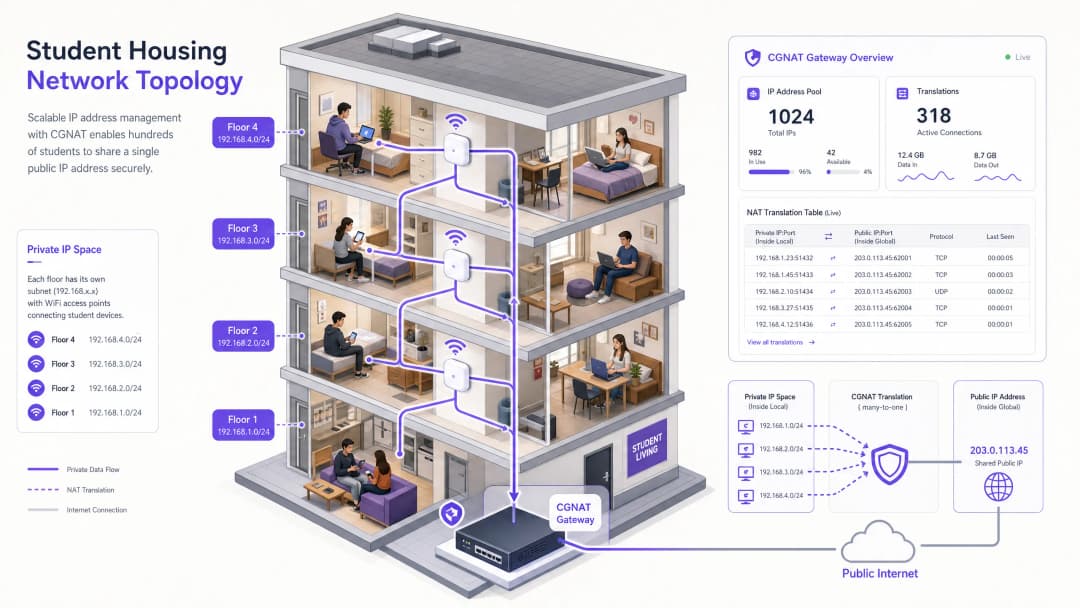
IPv4 ॲड्रेस संपण्याचा वेग वाढत असताना, दाट लोकवस्तीच्या मल्टी-टेनंट वातावरणातील - जसे की विद्यार्थ्यांची निवासस्थाने, हॉस्पिटॅलिटी आणि मोठी सार्वजनिक ठिकाणे - येथील IT व्यवस्थापक आणि नेटवर्क आर्किटेक्ट्सना मोठ्या ऑपरेशनल आव्हानांचा सामना करावा लागत आहे. १,००० रहिवासी असलेल्या विद्यार्थ्यांच्या एकाच निवासस्थान ब्लॉकमुळे ७,००० पेक्षा जास्त एकाच वेळी कनेक्ट केलेली IP उपकरणे तयार होऊ शकतात. मानक पोर्ट ॲड्रेस ट्रान्सलेशन (PAT) आर्किटेक्चर्स या स्केलवर अपयशी ठरतात, ज्यामुळे पोर्ट संपतात, कनेक्शन खंडित होतात आणि युझर अनुभवाची गुणवत्ता खालावते.
हे तांत्रिक संदर्भ मार्गदर्शक IP संपण्याचे व्यवस्थापन करण्यासाठी NAT444 मॉडेलचा वापर करून करिअर-ग्रेड NAT (CGNAT) चे आर्किटेक्चर आणि उपयोजन दर्शवते. RFC 6598 सामायिक ॲड्रेस स्पेसचा लाभ घेऊन आणि धोरणात्मक पोर्ट ब्लॉक अलोकेशन (PBA) लागू करून, नेटवर्क ऑपरेटर्स उच्च सबस्क्राइबर घनता - प्रति पब्लिक IP १२८ युझर्सपर्यंत - साध्य करू शकतात, तसेच GDPR आणि कायदेशीर इंटरसेप्ट नियमांचे पालन देखील राखू शकतात. Guest WiFi आणि WiFi Analytics सारख्या प्लॅटफॉर्मचा वापर करणाऱ्या ठिकाणांसाठी, एक मजबूत CGNAT आर्किटेक्चर अतिरिक्त IPv4 ब्लॉक्स खरेदी करण्याच्या भांडवली खर्चाशिवाय (CapEx) स्थिर कनेक्टिव्हिटी आणि अचूक डेटा संकलन सुनिश्चित करते.
टेक्निकल डीप डाइव
विद्यार्थी निवासातील स्केलची समस्या
आधुनिक विद्यार्थी निवासातील डिव्हाइसची घनता इतर कोणत्याही व्यवस्थापित नेटवर्क वातावरणापेक्षा वेगळी असते. एक रहिवासी सामान्यतः एक स्मार्टफोन, एक लॅपटॉप, एक स्मार्ट टीव्ही, एक गेमिंग कन्सोल आणि कमीत कमी एक स्मार्ट होम डिव्हाइस जोडतो. प्रति रहिवासी पाच ते सात डिव्हाइसेससह, १,००० बेडच्या कॅम्पसमध्ये एकाच वेळी येणारा सेशन लोड हा समान आकाराच्या हॉटेलपेक्षाही खूप जास्त असतो. वापरण्याच्या पॅटर्नमुळे ही आव्हाने अधिक वाढतात: संध्याकाळच्या पीक अवर्समध्ये (१८:०० - २३:००) गेमिंग, व्हिडिओ स्ट्रीमिंग आणि सोशल मीडिया या सर्वांमध्ये जवळजवळ एकाच वेळी, उच्च-बँडविड्थ क्रियाकलाप पाहायला मिळतात, जे सर्व सतत बॅकग्राउंड कनेक्शन्स चालू ठेवतात.
प्रादेशिक इंटरनेट नोंदणी (RIR) स्तरावर IPv4 ॲड्रेस स्पेस पूर्णपणे संपली आहे. युरोप आणि मध्य पूर्वेतील वाटप व्यवस्थापित करणाऱ्या RIPE NCC ने २०१९ मध्ये आपले अंतिम /८ वाटप धोरण गाठले. खुल्या बाजारात अतिरिक्त सार्वजनिक IPv4 ब्लॉक्स मिळविण्याचा खर्च आता प्रति ॲड्रेस $४० ते $६० दरम्यान आहे - शेकडो सबनेट व्यवस्थापित करणाऱ्या कोणत्याही ऑपरेटरसाठी हा एक प्रतिबंधात्मक CapEx आहे.
मानक PAT च्या मर्यादा
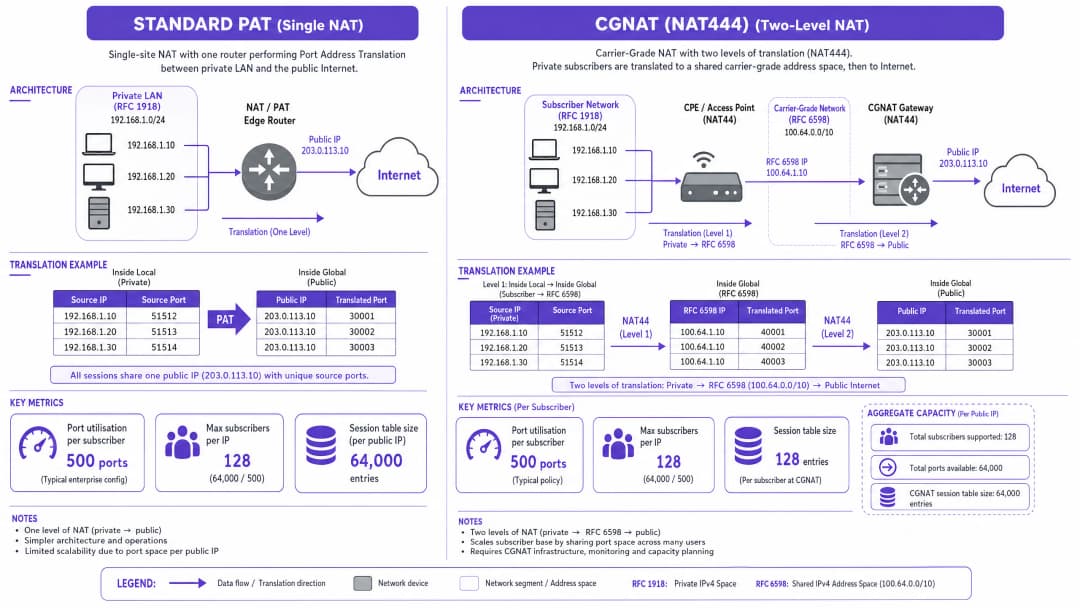
पारंपारिक सिंगल साईट डिप्लॉयमेंटमध्ये, पोर्ट ॲड्रेस ट्रान्सलेशन (PAT) संपूर्ण खाजगी LAN (RFC 1918 स्पेस: 10.0.0.0/8, 172.16.0.0/12, 192.168.0.0/16) ला एकाच सार्वजनिक IP ॲड्रेसवर मॅप करते. एकाच IPv4 ॲड्रेसमध्ये TCP आणि UDP वर ६५,५३५ उपलब्ध पोर्ट असतात. लहान ऑफिससाठी हे पुरसे असले, तरी दाट विद्यार्थी निवासात, क्लाउड सिंक्रोनाइझेशन, मेसेजिंग प्लॅटफॉर्म, स्ट्रीमिंग सर्व्हिसेस यांसारख्या बॅकग्राउंड ॲप्लिकेशन्सच्या वाढीचा अर्थ असा आहे की एकच युझर शेकडो सिम्युलेटर पोर्ट सहज वापरू शकतो. जेव्हा PAT एज राउटरचे उपलब्ध पोर्ट संपतात, तेव्हा नवीन सेशन विनंत्या शांतपणे नाकारल्या जातात. हे ॲप्लिकेशन टाईमआऊट, अयशस्वी VoIP कॉल्स आणि हेल्पडेस्क तिकिटांमध्ये वाढ म्हणून दिसून येते.
CGNAT (NAT444) आर्किटेक्चर
सिंगल लेव्हल NAT च्या मर्यादा ओलांडण्यासाठी, एंटरप्राइझ नेटवर्क्सनी कॅरियर-ग्रेड NAT आर्किटेक्चर, विशेषतः NAT444 मॉडेलचा अवलंब करणे आवश्यक आहे. हे नाव भाषांतर साखळीत समाविष्ट असलेल्या IPv4 ॲड्रेस स्पेसच्या तीन स्तरांचा संदर्भ देते.
लेव्हल १ - CPE / ॲक्सेस पॉइंट लेव्हल: सबस्क्राइबर डिव्हाइसेसना RFC 1918 स्पेस (उदा. 192.168.x.x) मधून खाजगी IP ॲड्रेस दिले जातात. ॲक्सेस पॉइंट किंवा कस्टमर प्रिमिसिस इक्विपमेंट (CPE) पहिले NAT भाषांतर करते.
लेव्हल २ - CGNAT गेटवे: CPE खाजगी RFC 1918 ॲड्रेसचे RFC 6598 शेअर्ड ॲड्रेस स्पेस (100.64.0.0/10) मध्ये भाषांतर करते. ही मध्यवर्ती जागा विशेषतः सेवा प्रदाता पायाभूत सुविधा आणि CGNAT गेटवे दरम्यान वापरण्यासाठी राखीव आहे. इतर RFC 1918 रेंजऐवजी RFC 6598 वापरल्याने जटिल मल्टी-टेनंट वातावरणात ॲड्रेस ओव्हरलॅप आणि राउटिंग संघर्ष टाळता येतात.
लेव्हल ३ - पब्लिक इंटरनेट: CGNAT गेटवे RFC 6598 ॲड्रेसवरून शेअर्ड सार्वजनिक IPv4 ॲड्रेसवर अंतिम भाषांतर करतो. हा असा ॲड्रेस आहे जो बाह्य सेवांना दृश्यमान असतो.
Port Block Allocation: महत्त्वपूर्ण डिझाईन निर्णय
CGNAT उपयोजनामधील सर्वात महत्त्वपूर्ण कॉन्फिगरेशन निवड म्हणजे पोर्ट वाटप धोरण. यासाठी दोन दृष्टिकोन अस्तित्वात आहेत:
डायनॅमिक पोर्ट वाटप (DPA): सामायिक पूल मधून प्रत्येक सेशनच्या आधारावर पोर्ट्सचे वाटप केले जाते. हे पोर्ट वापर कार्यक्षमता वाढवते परंतु प्रत्येक सेशनच्या सेटअप आणि टियरडाऊनसाठी लॉग नोंद तयार करते - ज्यामुळे मोठ्या प्रमाणावर अनुपालन आणि पायाभूत सुविधांवर प्रचंड ताण पडतो.
पोर्ट ब्लॉक वाटप (PBA): प्रत्येक ग्राहकाला त्यांच्या पहिल्या सेशनच्या सुरुवातीला पोर्ट्सचा एक सलग ब्लॉक वाटप केला जातो. ग्राहकाचे सेशन संपेपर्यंत तो ब्लॉक वाटप केलेलाच राहतो. हा दृष्टिकोन केवळ ब्लॉक वाटप आणि रिलीज झाल्यावरच लॉग जनरेट करतो, ज्यामुळे लॉग व्हॉल्यूम ९८% पर्यंत कमी होतो.
| कॉन्फिगरेशन पॅरामीटर | शिफारस केलेले मूल्य | तर्कसंगती |
|---|---|---|
| प्रति ग्राहक पोर्ट्स (PBA ब्लॉक आकार) | ५०० | पूल संपल्याशिवाय आधुनिक वेब ऍप्लिकेशन वापरासाठी पुरेसे आहे |
| प्रति ग्राहक कमाल समवर्ती सेशन्स | २,००० | एकाच संसर्गित डिव्हाइसला पूल संपवण्यापासून रोखते |
| सेशन टाइमआउट (TCP स्थापित) | ७,४४० सेकंद (RFC 5382) | NAT वर्तनासाठी IETF च्या शिफारसींशी सुसंगत आहे |
| सेशन टाइमआउट (UDP) | ३०० सेकंद | जुने UDP मॅपिंग पोर्ट जागा वापरण्यापासून रोखतात |
उद्योग बेंचमार्क: १०० पेक्षा जास्त ISPs मध्ये कार्यरत असणारे तज्ज्ञ CGNAT विक्रेता NFWare, प्रति सार्वजनिक IP वर जास्तीत जास्त १२८ ग्राहक आणि प्रति ग्राहक ५०० पोर्ट्स वाटप करण्याची शिफारस करतात. या मर्यादेपलीकडे जाणे - उदाहरणार्थ, प्रति ग्राहक २५० पोर्ट्ससह प्रति IP २५६ ग्राहकांपर्यंत वाढवणे - पीक लोड दरम्यान सेशन ड्रॉप होण्याचा धोका लक्षणीयरीत्या वाढवते.
दीर्घकालीन स्थलांतर मार्ग म्हणून ड्युअल-स्टॅक IPv6
CGNAT हे एक तात्पुरते निवारण धोरण आहे, कायमस्वरूपी उपाय नाही. योग्य आर्किटेक्चरल दिशा म्हणजे ड्युअल-स्टॅक उपयोजन: CGNAT सह IPv4 सोबत मूळ स्वरूपात IPv6 चालवणे. आधुनिक डिव्हाइसेस आणि प्रमुख CDNs (Google, Netflix, Meta, Cloudflare) उपलब्ध असताना IPv6 ला जोरदार पसंती देतात. चांगल्या प्रकारे कॉन्फिगर केलेल्या ड्युअल-स्टॅक वातावरणात, एकूण रहदारीपैकी ६० - ७०% रहदारी IPv6 कडे वळवली जाऊ शकते, ज्यामुळे IPv4 CGNAT पूलवरील भार कमालीचा कमी होतो आणि त्याचे प्रभावी आयुष्य वाढते.
healthcare आणि transport वातावरणासाठी जेथे जुन्या डिव्हाइसेसचे समर्थन महत्त्वपूर्ण आहे, ड्युअल-स्टॅक एक स्पष्ट स्थलांतर मार्ग देखील प्रदान करतो: IPv6-सक्षम डिव्हाइसेस मूळ स्वरूपात स्थलांतरित होतात, तर जुने केवळ IPv4-असलेले डिव्हाइसेस वापरकर्त्याला कोणताही त्रास न होता CGNAT द्वारे कार्य करत राहतात.

अंमलबजावणी मार्गदर्शक
पायरी 1: तुमच्या सध्याच्या IP वाटप आणि डिव्हाइस घनतेचे ऑडिट करा
CGNAT उपयोजित करण्यापूर्वी, एक बेसलाइन स्थापित करा. तुमच्या विद्यमान नेटवर्क व्यवस्थापन प्रणालींमधून खालील डेटा गोळा करा:
- प्रति सबनेट सर्वोच्च समवर्ती (concurrent) डिव्हाइस संख्या
- प्रति डिव्हाइस सरासरी आणि सर्वोच्च सेशन्स
- सध्याची सार्वजनिक IP वापर टक्केवारी
- विद्यमान NAT टाइमआउट कॉन्फिगरेशन्स
हा डेटा थेट तुमच्या PBA ब्लॉक आकार आणि सार्वजनिक IP पूलच्या आवश्यकतांची माहिती देतो.
पायरी 2: RFC 6598 ट्रान्झिट नेटवर्क डिझाइन करा
कॅरियर-ग्रेड ट्रान्झिट नेटवर्कसाठी 100.64.0.0/10 ब्लॉकचे वाटप करा. तुमच्या कॅम्पस टोपोलॉजीशी जुळण्यासाठी सबनेटींगची योजना आखा - साधारणपणे प्रति इमारत किंवा ॲक्सेस लेयर सेगमेंटसाठी /24 किंवा /23. तुमची राउटिंग इन्फ्रास्ट्रक्चर RFC 6598 प्रिफिक्स सार्वजनिक इंटरनेट किंवा पीअरिंग भागीदारांपर्यंत लीक करणार नाही याची खात्री करा.
पायरी 3: CGNAT गेटवेज तैनात आणि कॉन्फिगर करा
CGNAT गेटवे सामान्यतः एक समर्पित हार्डवेअर ॲप्लायन्स किंवा कमोडिटी सर्व्हर हार्डवेअरवर चालणारे व्हर्च्युअलाइज्ड नेटवर्क फंक्शन (VNF) असते. मुख्य कॉन्फिगरेशन पॅरामीटर्स:
- NAT पूल: तुमचा सार्वजनिक IPv4 ब्लॉक NAT पूलला नियुक्त करा. पूलचा आकार तुमच्या लक्ष्यित सबस्क्राइबर-टू-IP गुणोत्तरासाठी योग्य असल्याची खात्री करा.
- PBA कॉन्फिगरेशन: ब्लॉक आकार 500 पोर्टवर सेट करा. प्रति सबस्क्राइबर जास्तीत जास्त ब्लॉक्स 1 वर कॉन्फिगर करा (बेस ब्लॉक आकार वाढवण्याऐवजी, सबस्क्राइबरने त्यांचा पहिला ब्लॉक संपवल्यास तो 2 पर्यंत वाढवण्याच्या पर्यायासह).
- लॉगिंग: तुमच्या SIEM वर सिसलॉग (syslog) आउटपुट कॉन्फिगर करा. PBA सह, प्रत्येक लॉग नोंद नोंदवते: सबस्क्राइबर अंतर्गत IP, नियुक्त सार्वजनिक IP, नियुक्त पोर्ट ब्लॉकची सुरुवात, ब्लॉकचा शेवट, वाटपाची वेळ आणि रिलीजची वेळ.
- सेशन मर्यादा: गैरवापर रोखण्यासाठी प्रति सबस्क्राइबर कमाल 2,000 समवर्ती सेशन्स लागू करा.
पायरी 4: आयडेंटिटी आणि ऑथेंटिकेशन लेयरसह एकत्रित करा
Guest WiFi प्लॅटफॉर्मचा वापर करणाऱ्या वातावरणात, Captive Portal ऑथेंटिकेशन लेव्हल 1 NAT सीमेवर किंवा त्यापूर्वी होणे आवश्यक आहे. हे सुनिश्चित करते की आयडेंटिटी प्रदाता ट्रॅफिक CGNAT पूलमध्ये एकत्रित होण्यापूर्वी MAC पत्ते आणि वापरकर्ता क्रेडेन्शियल्स अचूकपणे अनन्य अंतर्गत IP पत्त्यांशी मॅप करू शकतो. Purple चा प्लॅटफॉर्म हे ॲक्सेस पॉइंट स्तरावर हाताळतो, ज्यामुळे NAT ट्रान्सलेशन साखळीद्वारे कायम राहणारे स्पष्ट वापरकर्ता-टू-IP बाइंडिंग राखले जाते.
पासवर्डशिवाय प्रवेश उपयोजनांसाठी - How a WiFi Assistant Enables Passwordless Access in 2026 मध्ये वर्णन केल्याप्रमाणे - हाच नियम लागू होतो: अचूक सेशन विशेषता सुनिश्चित करण्यासाठी CGNAT गेटवेच्या अपस्ट्रीममध्ये आयडेंटिटी बाइंडिंग स्थापित करणे आवश्यक आहे.
पायरी 5: IPv6 ड्युअल-स्टॅक कॉन्फिगर करा
सर्व ॲक्सेस पॉइंट्सवर IPv6 सक्षम करा आणि DHCPv6 किंवा SLAAC द्वारे प्रति VLAN /64 प्रिफिक्स वितरित करा. तुमच्या अपस्ट्रीम प्रदात्याद्वारे IPv6 मार्ग घोषित करा. तुमच्या IPv4 NAT पूलचा आकार कमी करण्यापूर्वी, प्रमुख CDN ट्रॅफिक (Google, Netflix, YouTube) AAAA रेकॉर्ड्सवर रिझोल्व्ह होत आहे आणि IPv6 द्वारे राउट होत आहे याची पडताळणी करा.
तुमच्या विशिष्ट सेटअपबद्दल काही प्रश्न आहेत का?
आमची टीम ८०,००० हून अधिक वेन्यूजमधील वेन्यू ऑपरेटर्स, IT मॅनेजर्स आणि नेटवर्क इंजिनिअर्ससोबत काम करते. २० मिनिटांचा कॉल बुक करा आणि तुमच्यासारख्या इतरांनी ही समस्या कशी सोडवली हे आम्ही तुम्हाला दाखवू.
सर्वोत्तम पद्धती
शक्य असेल तिथे Deterministic NAT लागू करा. Deterministic NAT ग्राहकाचा अंतर्गत IP पत्ता आणि त्यांना नियुक्त केलेला सार्वजनिक IP आणि पोर्ट ब्लॉक यामध्ये अल्गोरिदमिक मॅपिंगचा वापर करतो. हे मॅपिंग गणितीयदृष्ट्या मोजता येण्याजोगे असल्याने, सेशन टेबल राखण्याची किंवा लॉग करण्याची आवश्यकता नसते - कायदेशीररित्या ट्रॅक करण्याच्या (lawful intercept) उद्देशांसाठी मागणीनुसार मॅपिंग रिव्हर्स-इंजिनिअर केले जाऊ शकते. अनुपालनाची (compliance) काळजी घेणाऱ्या उपयोजनांसाठी हा सर्वोत्तम दर्जाचा पर्याय आहे.
CGNAT Gateway Load वितरित करा. सर्व CGNAT ट्रॅफिक एकाच उपकरणाद्वारे केंद्रित करणे टाळा. सिंगल पॉईंट ऑफ फेल्युअर (single point of failure) टाळण्यासाठी कॅम्पस किंवा इमारतींमध्ये गेटवे वितरित करा. वितरित केलेले गेटवे IP प्रतिष्ठेचा (IP reputation) धोका देखील कमी करतात: संशयास्पद ट्रॅफिक पॅटर्नमुळे (CAPTCHA समस्या) पूल मधील सार्वजनिक IP एखाद्या CDN द्वारे चिन्हांकित केला गेल्यास, त्याचा परिणाम केवळ वापरकर्त्यांच्या विशिष्ट उपसंचावर होतो.
IP प्रतिष्ठेचे सक्रियपणे निरीक्षण करा. IP प्रतिष्ठा फीड्सचे (उदा. Spamhaus, SURBL) सदस्यत्व घ्या आणि तुमच्या सार्वजनिक NAT पूल IP वर लक्ष ठेवा. एखादा सक्रिय पत्ता ब्लॅकलिस्ट झाल्यास वापरण्यासाठी स्वच्छ IP चा राखीव पूल तयार ठेवा. हे विशेषतः विद्यार्थ्यांच्या निवासाच्या ठिकाणी महत्त्वपूर्ण आहे, जेथे लहान संख्येने वापरकर्ते अशा क्रियाकलापांमध्ये गुंतलेले असू शकतात ज्यामुळे गैरवापराचे ध्वज (abuse flags) ट्रिगर होतात.
प्रति-ग्राहक सेशन मर्यादा लागू करा. प्रति ग्राहक २,००० समवर्ती (concurrent) सेशन्सची कडक मर्यादा एका संक्रमित उपकरणाला - उदाहरणार्थ, DDoS ॲम्प्लीफिकेशन हल्ल्यात भाग घेणाऱ्या उपकरणाला - त्या सार्वजनिक IP ला वाटप केलेला संपूर्ण पोर्ट ब्लॉक संपवण्यापासून रोखते. नेटवर्क कार्यप्रदर्शनाच्या निरीक्षणाबद्दल अधिक तपशीलांसाठी, WiFi सिग्नलची ताकद आणि कव्हरेज कसे मोजावे यावरील आमचे मार्गदर्शक पहा.
ॲक्सेस नियंत्रणासाठी IEEE 802.1X शी सुसंगत रहा. ॲक्सेस लेयरवर IEEE 802.1X पोर्ट-आधारित प्रमाणीकरण (authentication) तैनात केल्याने केवळ प्रमाणित उपकरणांनाच IP वाटप मिळण्याची खात्री होते. यामुळे अनधिकृत उपकरणांद्वारे पोर्ट वाटप वापरण्याचा धोका कमी होतो आणि कायदेशीर हस्तक्षेपाच्या उद्देशांसाठी स्पष्ट ऑडिट ट्रेल मिळतो.
त्रुटी निवारण आणि जोखीम कमी करणे
लॉगिंग आणि अनुपालनाचा (Compliance) बोजा
UK आणि युरोपमध्ये, GDPR आणि Investigatory Powers Act 2016 अंतर्गत, नेटवर्क ऑपरेटर विशिष्ट टाइमस्टॅम्पवर सार्वजनिक IP पत्ता आणि पोर्ट नंबरचा मूळ विशिष्ट वापरकर्त्यापर्यंत शोधण्यास सक्षम असणे आवश्यक आहे. हे कायदेशीर बंधन असून यात कोणतीही तडजोड केली जाऊ शकत नाही.
जोखीम: डायनॅमिक CGNAT सह, प्रत्येक सेशन सेटअप आणि टियरडाउन लॉग केल्याने दररोज टेराबाइट्सचा syslog डेटा तयार होतो. डायनॅमिक वाटप असलेले १,०००-वापरकर्त्यांचे उपयोजन दररोज ५०० दशलक्ष लॉग नोंदी तयार करू शकते. यामुळे SIEM इन्फ्रास्ट्रक्चरवर ताण येतो, स्टोरेज खर्च वाढतो आणि फॉरेन्सिक तपास व्यावहारिकदृष्ट्या अशक्य होतो.
जोखीम कमी करणे: Port Block Allocation लॉगिंगचे प्रमाण ९८% पर्यंत कमी करते. PBA सह, तुम्ही केवळ ब्लॉक वाटप आणि रिलीज इव्हेंट्स लॉग करता - सामान्यतः प्रति वापरकर्ता सेशनमध्ये शेकडो किंवा हजारांऐवजी केवळ दोन लॉग नोंदी. UK च्या डेटा रिटेंशन आवश्यकतांचे पालन करण्यासाठी तुमचे SIEM हे लॉग किमान १२ महिन्यांसाठी राखून ठेवते याची खात्री करा.
CAPTCHA आणि IP प्रतिष्ठेच्या समस्या
जेव्हा 128 युजर्स एकच पब्लिक IP शेअर करतात, तेव्हा एकत्रित ट्रॅफिक व्हॉल्यूममुळे प्रमुख वेबसाईट्सवर रेट-लिमिटिंग किंवा अँटी-बॉट प्रोटेक्शन्स ट्रिगर होऊ शकतात. Google चे reCAPTCHA, Cloudflare चे बॉट मॅनेजमेंट आणि तत्सम सिस्टम्स IP-आधारित ह्युरिस्टिक्स वापरतात ज्यामुळे शेअर केलेल्या CGNAT IP चे बॉट सोर्स म्हणून चुकीचे वर्गीकरण होऊ शकते.
निवारण: तुमचा CGNAT पूल एकाधिक पब्लिक IPs वर वितरित करा. रेप्युटेशन स्कोअरचे सक्रियपणे निरीक्षण करा. DNS-आधारित रेप्युटेशन समस्या टाळण्यासाठी DNS-over-HTTPS (DoH) किंवा DNS-over-TLS (DoT) उपयोजित करण्याचा विचार करा. युजर्सना शिक्षित करा की शेअर केलेल्या-IP वातावरणात अधूनमधून CAPTCHA प्रॉम्प्ट येणे हे एक ज्ञात वर्तन आहे.
ॲप्लिकेशन कॉम्पॅटिबिलिटीच्या समस्या
काही ॲप्लिकेशन्स - विशेषतः पीअर-टू-पीअर प्रोटोकॉल्स, काही ठराविक VoIP इम्प्लिमेंटेशन्स आणि जुने गेमिंग प्लॅटफॉर्म्स - हे परसिस्टंट पोर्ट मॅपिंग किंवा इनबाउंड कनेक्शन इनिशिएशनवर अवलंबून असतात. हे डबल NAT अंतर्गत खंडित होऊ शकतात.
निवारण: VoIP साठी, तुमचा CGNAT गेटवे SIP साठी ALG (ॲप्लिकेशन लेअर गेटवे) ला सपोर्ट करतो याची खात्री करा. गेमिंगसाठी, UPnP प्रॉक्सी किंवा वेगळ्या, कमी दाट NAT पूलसह समर्पित गेमिंग VLAN लागू करण्याचा विचार करा. retail वातावरणासाठी जिथे पॉइंट-ऑफ-सेल सिस्टम्सना इनबाउंड कनेक्टिव्हिटी आवश्यक असते, ती डिव्हाइसेस एका स्वतंत्र VLAN वर ठेवा जी CGNAT लेयरला पूर्णपणे बायपास करते.
ROI आणि व्यावसायिक प्रभाव
कॅपिटल एक्स्पेंडिचर (CapEx) बचत
CGNAT उपयोजित केल्याने त्वरित आणि भरीव CapEx बचत होते. प्रति IPv4 ॲड्रेस $50 च्या मार्केट रेटनुसार, 1:1 डिव्हाइस-टू-IP गुणोत्तर आवश्यक असलेल्या 5,000 खाटांच्या युनिव्हर्सिटीला अंदाजे 35,000 IP ॲड्रेसेस खरेदी करावे लागतील - ज्याची किंमत $1.75 दशलक्ष असेल. 128:1 गुणोत्तरासह CGNAT उपयोजित करून, त्याच उपयोजनासाठी 300 पेक्षा कमी पब्लिक IPs आवश्यक आहेत, ज्यामुळे IP खरेदीचा खर्च अंदाजे $15,000 पर्यंत कमी होतो.
CGNAT गेटवे हार्डवेअर किंवा व्हर्च्युअलाईज्ड नेटवर्क फंक्शन्सच्या खर्चाचा विचार केल्यानंतरही (कॅम्पस-स्केल उपयोजनासाठी सामान्यतः $20,000 - $80,000), निव्वळ बचत भरीव आहे.
ऑपरेशनल एक्स्पेंडिचर (OpEx) घट
स्थिर कनेक्टिव्हिटी थेट हेल्पडेस्कचा ओव्हरहेड कमी करते. पोर्ट एक्झॉशन इव्हेंट्स - मोठ्या प्रमाणावर चालणाऱ्या स्टँडर्ड PAT चा प्राथमिक फेल्युअर मोड - मोठ्या प्रमाणावर सपोर्ट तिकीट्स जनरेट करतात. योग्य सेशन लिमिट्स आणि PBA सह उत्तम प्रकारे कॉन्फिगर केलेले CGNAT उपयोजन हा फेल्युअर मोड काढून टाकते, परिणामी नेटवर्कशी संबंधित हेल्पडेस्कच्या प्रमाणात अंदाजे 30 - 40% घट होते.
स्टुडंट हाउसिंगमध्ये स्पर्धात्मक फायदा
स्पर्धात्मक विद्यार्थी गृहनिर्माण बाजारपेठेत, संभाव्य भाडेकरूंसाठी नेटवर्क गुणवत्ता हा प्राथमिक निवड निकष आहे. जे ऑपरेटर्स सातत्यपूर्ण, हाय-थ्रूपुट कनेक्टिव्हिटी दाखवू शकतात - ज्याची पडताळणी अपटाईम, सेशन गुणवत्ता आणि डिव्हाइस घनता मेट्रिक्स दर्शविणाऱ्या WiFi Analytics डॅशबोर्डद्वारे केली जाते - ते प्रीमियम भाडे दर मिळवू शकतात आणि उच्च ऑक्युपन्सी साध्य करू शकतात. पायाभूत सुविधांची ही स्थिरता प्रगत स्थान-आधारित सेवा तैनात करण्यासाठी देखील पाया आहे, जसे की Purple launched offline maps mode for seamless, secure navigation for WiFi hotspots मध्ये हायलाइट केले आहे.
केस स्टडी 1: ८००-बेडचे युनिव्हर्सिटी रेसिडेन्स हॉल
UK विद्यापीठाद्वारे चालवल्या जाणाऱ्या एका ८००-बेडच्या रेसिडेन्स हॉलमध्ये संध्याकाळच्या गर्दीच्या वेळी तीव्र कनेक्टिव्हिटी समस्या येत होत्या. तपासणीत असे दिसून आले की त्यांचे सिंगल-लेव्हल PAT कॉन्फिगरेशन, जे /29 पब्लिक सबनेट (६ वापरण्यायोग्य IP) वापरत होते, दररोज संध्याकाळी १९:३० पर्यंत उपलब्ध पोर्ट्स पूर्णपणे संपवत होते. ऑपरेटरने PBA सह CGNAT सोल्यूशन तैनात केले (प्रति सबस्क्राइबर ५०० पोर्ट्स, प्रति IP १२८ सबस्क्रायबर्स), /27 पब्लिक सबनेट (३० वापरण्यायोग्य IP) वर अपग्रेड केले, आणि IPv6 ड्युअल-स्टॅक सक्षम केले. तैनातीनंतरच्या मेट्रिक्समध्ये सुरुवातीच्या डायनॅमिक अलोकेशन पायलटच्या तुलनेत पोर्ट संपण्याच्या घटनांमध्ये ९४% घट, नेटवर्कशी संबंधित हेल्पडेस्क तिकिटांमध्ये ३८% घट आणि CGNAT लॉग व्हॉल्यूममध्ये ६५% घट दिसून आली. तैनातीनंतर ६० दिवसांच्या आत, IPv6 ऑफलोड दर ६२% वर पोहोचला.
केस स्टडी 2: १,२००-खोल्यांचे पर्पज-बिल्ट स्टुडंट अकॅमोडेशन (PBSA) ऑपरेटर
दोन UK शहरांमध्ये तीन साइट्स व्यवस्थापित करणाऱ्या खाजगी PBSA ऑपरेटरला चौथी साइट सुरू करण्यापूर्वी त्यांच्या नेटवर्क आर्किटेक्चरचे प्रमाणीकरण करणे आवश्यक होते. त्यांच्या अस्तित्वात असलेल्या पायाभूत सुविधांमध्ये सिंगल-लेव्हल NAT आणि तदर्थ VLAN सेगमेंटेशनचे मिश्रण वापरले जात होते, ज्यामध्ये कोणतीही सुसंगत लॉगिंग रणनीती नव्हती. तिन्ही साइट्सवर डिटरमिनिस्टिक NAT सह CGNAT तैनात केले गेले, ज्यामुळे सेशन लॉगिंगच्या अतिरिक्त लोडशिवाय गणितीयदृष्ट्या मोजता येणारे सबस्क्राइबर-टू-IP मॅपिंग सक्षम झाले. या दृष्टिकोनाने कायदेशीर इंटरसेप्ट अनुपालनाबाबत ऑपरेटरच्या कायदेशीर टीमचे समाधान केले, सेशन लॉगसाठी SIEM स्टोरेज खर्च काढून टाकला, आणि चौथ्या साइटसाठी एक सुसंगत आर्किटेक्चर टेम्पलेट प्रदान केले. ऑपरेटरने Captive Portal ऑथेंटिकेशनसाठी Purple चे Guest WiFi प्लॅटफॉर्म देखील समाकलित केले, जेणेकरून विश्लेषण अहवालांमध्ये अचूक वापरकर्ता विशेषता सुनिश्चित करण्यासाठी CGNAT गेटवेच्या अपस्ट्रीमवर ओळख बंधन स्थापित केले गेले.
महत्वाच्या व्याख्या
CGNAT (Carrier-Grade NAT)
असे नेटवर्क आर्किटेक्चर ज्यामध्ये ऑपरेटर केंद्रीकृत गेटवेवर Network Address Translation करतो, ज्यामुळे एकाधिक सबस्क्राइबर्सना एकच पब्लिक IPv4 ॲड्रेस शेअर करणे शक्य होते. RFC 6264 आणि RFC 6888 मध्ये व्याख्या केलेले आहे. याला Large-Scale NAT (LSN) किंवा CGN म्हणूनही ओळखले जाते.
जेव्हा नेटवर्कवरील सर्व उपकरणांना सेवा देण्यासाठी एकच पब्लिक IP अपुरा पडतो, तेव्हा IT टीम्सना CGNAT चा सामना करावा लागतो. विद्यार्थी वसतिगृहांमध्ये, अतिरिक्त पब्लिक ॲड्रेस स्पेस खरेदी न करता IPv4 संपुष्टात येण्याच्या समस्येचे व्यवस्थापन करण्यासाठी CGNAT ही प्राथमिक यंत्रणा आहे.
NAT444
एक विशिष्ट CGNAT टोपोलॉजी ज्यामध्ये IPv4 ॲड्रेस स्पेसच्या तीन लेअर्सचा समावेश होतो: सबस्क्राइबर प्रायव्हेट ॲड्रेसेस (RFC 1918), करिअर-ग्रेड शेअर्ड ॲड्रेसेस (RFC 6598), आणि पब्लिक इंटरनेट ॲड्रेसेस. हे नाव ज्या तीन IPv4 नेटवर्कमधून प्रवास केला जातो त्याचा संदर्भ देते.
मल्टी-टेनंट वातावरणात CGNAT डिप्लॉयमेंटसाठी NAT444 हे मानक आर्किटेक्चर आहे. इंटरमीडिएट नेटवर्क योग्यरित्या डिझाइन करण्यासाठी आणि ॲड्रेस ओव्हरलॅप टाळण्यासाठी नेटवर्क आर्किटेक्ट्सना थ्री-लेअर मॉडेल समजणे आवश्यक आहे.
RFC 6598 Shared Address Space
100.64.0.0/10 IPv4 ॲड्रेस ब्लॉक (100.64.0.0 ते 100.127.255.255) जो IANA द्वारे CPE आणि CGNAT गेटवे मधील इंटरमीडिएट नेटवर्कमध्ये वापरण्यासाठी राखीव ठेवलेला आहे. ही स्पेस पब्लिक इंटरनेटवर राउट करण्यायोग्य नाही आणि विशेषतः NAT444 डिप्लॉयमेंटमध्ये ॲड्रेस संघर्ष रोखण्यासाठी डिझाइन केली गेली आहे.
IT टीम्सनी इंटरमीडिएट CGNAT नेटवर्कसाठी RFC 6598 वापरणे आवश्यक आहे - RFC 1918 नाही. या सेगमेंटसाठी RFC 1918 वापरल्यास, सबस्क्राइबर नेटवर्क्समध्ये समान RFC 1918 श्रेणी वापरल्या गेल्यास ॲड्रेस ओव्हरलॅपचे धोके निर्माण होतात.
Port Block Allocation (PBA)
एक CGNAT पोर्ट असाइनमेंट धोरण ज्यामध्ये प्रत्येक सबस्क्राइबरला त्यांच्या सेशनच्या कालावधीसाठी पोर्ट्सचा सलग ब्लॉक (उदा. ५०० पोर्ट्स) नियुक्त केला जातो, प्रत्येक कनेक्शनसाठी स्वतंत्रपणे पोर्ट वाटप करण्याऐवजी. RFC 7422 मध्ये व्याख्या केलेले आहे.
GDPR चे पालन करणाऱ्या CGNAT डिप्लॉयमेंट्ससाठी PBA हा शिफारस केलेला दृष्टिकोन आहे. हे डायनॅमिक पोर्ट वाटपाच्या तुलनेत लॉगिंग ओव्हरहेड ९८% पर्यंत कमी करते, ज्यामुळे कायदेशीर इंटरसेप्ट अनुपालन मोठ्या प्रमाणावर ऑपरेशनलदृष्ट्या सुलभ होते.
Deterministic NAT
एक CGNAT कॉन्फिगरेशन ज्यामध्ये सबस्क्राइबरचा अंतर्गत IP ॲड्रेस आणि त्यांचा नियुक्त केलेला पब्लिक IP आणि पोर्ट ब्लॉक यामधील मॅपिंग अल्गोरिदमिक पद्धतीने मोजले जाते, सेशन टेबल न राखता. हे मॅपिंग गणितीयदृष्ट्या रिव्हर्सिबल आहे, ज्यामुळे लॉग शोधल्याशिवाय सबस्क्राइबरची ओळख पटवता येते.
अनुपालनाबाबत जागरूक असलेल्या डिप्लॉयमेंट्ससाठी Deterministic NAT हे सर्वोत्तम मानक आहे. हे लॉगिंग ओव्हरहेड पूर्णपणे काढून टाकते आणि कायदेशीर इंटरसेप्ट आवश्यकता पूर्ण करते, कारण सबस्क्राइबरला ज्ञात अल्गोरिदम वापरून पब्लिक IP, पोर्ट आणि टाइमस्टॅम्पवरून ओळखता येऊ शकते.
PAT (Port Address Translation)
Network Address Translation चा असा प्रकार ज्यामध्ये युनिक सोर्स पोर्ट नंबर्सचा वापर करून कनेक्शन्स वेगळे ठेवून एकाधिक प्रायव्हेट IP ॲड्रेसेस एकाच पब्लिक IP ॲड्रेसवर मॅप केले जातात. याला NAT ओव्हरलोड किंवा many-to-one NAT असेही म्हणतात.
बहुतांश एंटरप्राइझ एज राउटरमध्ये वापरले जाणारे PAT हे मानक सिंगल-लेव्हल NAT आहे. हे CGNAT च्या आधीचे मॉडेल आहे आणि मोठ्या प्रमाणावर पोर्ट संपुष्टात येण्याच्या समस्येमुळे दाट मल्टी-टेनंट वातावरणासाठी ते अपुरे आहे.
Session Table
NAT गेटवेद्वारे देखरेख ठेवली जाणारी एक डेटा रचना जी प्रत्येक सक्रिय कनेक्शनसाठी, अंतर्गत (खाजगी) IP पत्ता आणि पोर्ट, आणि बाह्य (सार्वजनिक) IP पत्ता आणि पोर्ट यांच्यातील मॅपिंगची नोंद ठेवते. सेशन टेबल हे CGNAT द्वारे वापरले जाणारे मुख्य मेमरी आणि प्रोसेसिंग रिसोर्स आहे.
सेशन टेबलचा आकार हा CGNAT गेटवेसाठी क्षमता नियोजनाचा एक महत्त्वपूर्ण पॅरामीटर आहे. प्रति सबस्क्राइबर कमाल २,००० सेशन्ससह १,०००-सबस्क्राइबर डिप्लॉयमेंटसाठी किमान २० लाख नोंदींच्या सेशन टेबल क्षमतेची आवश्यकता असते. सेशन टेबलचा आकार गरजेपेक्षा लहान असल्यास कनेक्शन अपयशी ठरतात.
Dual-Stack
अशी नेटवर्क रचना ज्यामध्ये एकाच नेटवर्क इन्फ्रास्ट्रक्चर आणि एंड डिव्हाइसेसवर IPv4 आणि IPv6 दोन्ही प्रोटोकॉल एकाच वेळी सक्रिय असतात. Dual-stack क्षमता असलेली डिव्हाइसेस IPv6-सक्षम गंतव्यस्थानांशी (destinations) जोडण्यासाठी IPv6 ला प्राधान्य देतात.
CGNAT उपयोजनांसाठी Dual-stack ही शिफारस केलेली संक्रमण धोरण (transition strategy) आहे. IPv6-सक्षम ट्रॅफिकला मूळ IPv6 पाथवर ऑफलोड करून, dual-stack मुळे IPv4 CGNAT पूलवरील लोड कमी होतो आणि IPv6-मुख्य नेटवर्ककडे जाण्याचा मार्ग सुलभ होतो.
RFC 1918 Private Address Space
खाजगी नेटवर्क वापरासाठी राखीव ठेवलेल्या तीन IPv4 पत्त्यांच्या श्रेणी: 10.0.0.0/8, 172.16.0.0/12, आणि 192.168.0.0/16. हे पत्ते सार्वजनिक इंटरनेटवर राउट करण्यायोग्य नसतात आणि अंतर्गत नेटवर्क ॲड्रेसिंगसाठी वापरले जातात.
CGNAT उपयोजनांमध्ये ग्राहक उपकरणांच्या ॲड्रेसिंगसाठी RFC 1918 पत्त्यांचा वापर केला जातो. नेटवर्क आर्किटेक्ट्सनी हे सुनिश्चित केले पाहिजे की ग्राहक नेटवर्कमध्ये वापरल्या जाणाऱ्या RFC 1918 श्रेणी (ranges) या मध्यवर्ती CGNAT नेटवर्कमध्ये वापरल्या जाणाऱ्या श्रेणींशी ओव्हरलॅप होणार नाहीत - म्हणूनच मध्यवर्ती स्तरासाठी RFC 6598 चा वापर केला जातो.
Lawful Intercept
कायदा अंमलबजावणी संस्थांद्वारे संप्रेषणाची (communications) कायदेशीररित्या अधिकृत अडवणूक. युनायटेड किंगडममध्ये, हे इन्व्हेस्टिगेटरी पॉवर्स ॲक्ट २०१६ (Investigatory Powers Act 2016) द्वारे नियंत्रित केले जाते. कायदेशीर अडवणुकीची विनंती मिळाल्यानंतर नेटवर्क ऑपरेटर विशिष्ट सार्वजनिक IP पत्ता, पोर्ट आणि टाइमस्टँपशी संबंधित ग्राहकाची ओळख पटविण्यास सक्षम असणे आवश्यक आहे.
कायदेशीररीत्या अडवणूक (lawful intercept) नियमांचे पालन करणे हा CGNAT लॉगिंग आवश्यकतांचा मुख्य चालक आहे. सार्वजनिक IP आणि पोर्ट डेटावरून ग्राहकांची ओळख पटवण्यासाठी ऑपरेटरने पुरेसे लॉग्स ठेवणे आवश्यक आहे. PBA आणि Deterministic NAT या दोन अशा रचना आहेत ज्या लॉगिंग इन्फ्रास्ट्रक्चरवर ताण न पडता मोठ्या प्रमाणावर हे शक्य करतात.
सोडवलेली उदाहरणे
६००-बेडच्या एका विद्यार्थी निवास ब्लॉकमध्ये सध्या मानक PAT सह एकच /29 public सबनेट (६ वापरण्यायोग्य IP) वापरला जातो. संध्याकाळच्या गर्दीच्या वेळेत (१९:००-२३:००), वापरकर्ते मोठ्या प्रमाणावर कनेक्टिव्हिटी अपयशाची तक्रार करतात. नेटवर्क टीमने PAT राउटरवर पोर्ट संपुष्टात आल्याची (port exhaustion) पुष्टी केली आहे. ऑपरेटरकडे CGNAT गेटवे हार्डवेअरसाठी बजेट आहे परंतु ते /27 (३० वापरण्यायोग्य IP) च्या पुढे अतिरिक्त public IP मिळवू शकत नाहीत. अशी CGNAT तैनाती डिझाइन करा जी पोर्ट संपुष्टात येण्याची समस्या दूर करेल आणि भविष्यात ९०० बेडपर्यंतच्या वाढीस मदत करेल.
पायरी १ - बेसलाइन मूल्यांकन: प्रति रहिवासी ५ उपकरणांनुसार ६०० बेडसाठी, कमाल एकाच वेळी सक्रिय उपकरणांची संख्या अंदाजे ३,००० आहे. प्रति सदस्य ५०० पोर्ट्सवर (PBA), प्रत्येक public IP १२८ सदस्यांना सपोर्ट करतो. /27 मधील ३० वापरण्यायोग्य IP सह, सैद्धांतिक कमाल सदस्य क्षमता ३,८४० आहे - जी प्रति रहिवासी ४.३ उपकरणांनुसार ९०० बेडसाठी पुरेशी आहे. पायरी २ - RFC 6598 इंटरमीडिएट नेटवर्क: इंटरमीडिएट करिअर-ग्रेड नेटवर्कसाठी 100.64.0.0/20 चे वाटप करा, जे CPE-to-CGNAT गेटवे ट्रॅफिकसाठी ४,०९६ ॲड्रेस प्रदान करेल. प्रति इमारत विंग सबनेट: 100.64.0.0/24, 100.64.1.0/24, इत्यादी. पायरी ३ - CGNAT गेटवे आकारमान: किमान ७,६८,००० एंट्रीज (३,००० सदस्य × प्रति सदस्य २,००० कमाल सेशन्स, २०% अतिरिक्त क्षमतेसह) च्या सेशन टेबल क्षमतेसह CGNAT गेटवे तैनात करा. ५००-पोर्ट ब्लॉक्ससह PBA कॉन्फिगर करा. प्रति सदस्य कमाल ब्लॉक्स १ वर सेट करा, ५०० पेक्षा जास्त एकाच वेळचे सेशन्स असणाऱ्या सदस्यांसाठी २ ब्लॉक्सपर्यंत ओव्हरफ्लोला अनुमती द्या. पायरी ४ - IPv6 Dual-Stack: सर्व ॲक्सेस पॉइंट्सवर IPv6 सक्षम करा. SLAAC द्वारे /64 प्रिफिक्स वितरित करा. ९० दिवसांच्या आत ६०% IPv6 ऑफलोडचे लक्ष्य ठेवा, ज्यामुळे IPv4 CGNAT वरील लोड प्रभावीपणे १,२०० एकाच वेळच्या IPv4 सदस्यांपर्यंत कमी होईल - जे /27 क्षमतेच्या आत सहज बसेल. पायरी ५ - लॉगिंग: फक्त PBA ब्लॉक असाइनमेंट/रिलीज इव्हेंट्ससह SIEM मध्ये syslog कॉन्फिगर करा. लॉग किमान १२ महिन्यांसाठी जतन करा. पायरी ६ - सेशन मर्यादा: गैरवापर रोखण्यासाठी CGNAT गेटवेवर प्रति सदस्य कमाल २,००० सेशन्स लागू करा.
एका PBSA ऑपरेटरने डायनॅमिक पोर्ट वाटप वापरून १,०००-बेडच्या साईटवर CGNAT तैनात केले आहे. त्यांच्या कायदेशीर टीमने निदर्शनास आणून दिले आहे की सध्याच्या लॉगिंग दृष्टिकोनामुळे दररोज ४००GB चा syslog डेटा तयार होतो, ज्यामुळे SIEM वर प्रचंड ताण पडत आहे आणि कायद्याची अंमलबजावणी करणाऱ्या संस्थांच्या वैध अडवणूक (lawful intercept) विनंत्या पूर्ण करणे अव्यवहार्य बनत आहे. लॉग व्हॉल्यूम व्यवस्थापन करण्यायोग्य पातळीवर आणून UK च्या वैध अडवणूक बंधनांची पूर्तता करण्यासाठी लॉगिंग धोरण पुन्हा डिझाइन करा.
पायरी १ - Port Block Allocation वर स्थलांतरित करा: डायनॅमिक पोर्ट वाटपाऐवजी प्रति सबस्क्रायबर ५०० पोर्ट्ससह PBA वापरा. यामुळे लॉग इव्हेंट्सचे प्रमाण थेट एका प्रति-सत्र वरून एक प्रति-ब्लॉक-असाइनमेंट आणि एक प्रति-ब्लॉक-रिलीझ इतके कमी होते. दररोज सरासरी ३ ब्लॉक असाइनमेंट/रिलीझ सायकल असलेल्या १,०००-युझरच्या डिप्लॉयमेंटसाठी, यामुळे दररोज सुमारे ६,००० लॉग नोंदी तयार होतात - जे डायनॅमिक वाटपाच्या बेसलाइनच्या तुलनेत ९९% पेक्षा जास्त घट दर्शवते. पायरी २ - लॉग स्कीमा: प्रत्येक PBA लॉग नोंद खालील गोष्टी अचूक टिपत असल्याची खात्री करा: (a) सबस्क्रायबरचा अंतर्गत IP ॲड्रेस, (b) नियुक्त केलेला पब्लिक IP ॲड्रेस, (c) नियुक्त केलेल्या पोर्ट ब्लॉकची सुरुवात आणि शेवट, (d) ब्लॉक असाइनमेंटची वेळ (UTC), (e) ब्लॉक रिलीजची वेळ (UTC), (f) सबस्क्रायबर आयडेंटिफायर (MAC ॲड्रेस किंवा RADIUS युझरनेम). पायरी ३ - Deterministic NAT पर्याय: जर CGNAT प्लॅटफॉर्म याला सपोर्ट करत असेल, तर Deterministic NAT वर स्थलांतरित करा. यामुळे नियमित ऑपरेशन्ससाठी लॉगिंगची आवश्यकता पूर्णपणे नाहीशी होते, कारण मॅपिंग हे गणिताच्या आधारे मोजता येण्याजोगे असते. केवळ नॉन-डिटरमिनिस्टिक ओव्हरफ्लो केसेससाठी PBA लॉग ठेवा. पायरी ४ - रिटेन्शन पॉलिसी: छेडछाड-प्रतिरोधक लॉग स्टोअरमध्ये (उदा. write-once S3-सुसंगत ऑब्जेक्ट स्टोरेज) १२ महिन्यांसाठी लॉग जपून ठेवा. ॲक्सेस कंट्रोल्स लागू करा जेणेकरून कायदेशीर अडवणुकीच्या विनंत्यांसाठी लॉग रिकव्हरी करण्यासाठी ड्युअल ऑथोरायझेशन आवश्यक असेल. पायरी ५ - इन्सिडेंट रिस्पॉन्स प्रक्रिया: कायदेशीर अडवणुकीच्या विनंत्यांना प्रतिसाद देण्याची प्रक्रिया दस्तऐवजीकरण करा, ज्यामध्ये Deterministic NAT अंतर्गत पब्लिक IP, पोर्ट आणि टाइमस्टॅम्पवरून सबस्क्रायबर रिव्हर्स-कंप्युट करण्याचे सूत्र समाविष्ट असेल.
एका युनिव्हर्सिटीच्या IT टीमने कळवले आहे की विद्यार्थ्यांना Google, Netflix आणि गेमिंग प्लॅटफॉर्म्सकडून वारंवार CAPTCHA आव्हाने आणि रेट-लिमिटिंगचा सामना करावा लागत आहे. तपासणीत असे समोर आले आहे की २०० विद्यार्थी एकाच पब्लिक IP ॲड्रेसचा CGNAT द्वारे वापर करत आहेत. टीमला सांगण्यात आले आहे की अल्पावधीत अधिक पब्लिक IP मिळवणे शक्य नाही. IP वाटप न बदलता कोणते त्वरित उपाय अंमलात आणता येतील?
पायरी १ - सबस्क्रायबर डेन्सिटी कमी करा: २००:१ हे गुणोत्तर मुख्य कारण आहे. अतिरिक्त पब्लिक IP नसतानाही, CGNAT पूल कार्यक्षमतेने वापरला जात आहे का ते तपासा. IPv6 ड्युअल-स्टॅक पूर्णपणे सक्षम असल्याची खात्री करा - जर ६०% ट्रॅफिक IPv6 वर स्थलांतरित झाले, तर प्रभावी IPv4 सबस्क्रायबर संख्या प्रति IP अंदाजे ८० पर्यंत खाली येईल, जी शिफारस केलेल्या १२८:१ मर्यादेच्या आत आहे. पायरी २ - IP रोटेशन: पब्लिक IP पूलसाठी रोटेशन पॉलिसी लागू करा. जर CGNAT गेटवे सपोर्ट करत असेल, तर प्रत्येक सबस्क्रायबर ग्रुपला नियुक्त केलेल्या पब्लिक IP चे वेळोवेळी रोटेशन कॉन्फिगर करा. यामुळे कोणत्याही एका IP वर सातत्याने नकारात्मक प्रतिष्ठा निर्माण होण्यापासून रोखता येते. पायरी ३ - DNS ऑप्टिमायझेशन: क्लायंटना पुरवलेले DNS रिझोल्व्हर्स प्राधान्याने AAAA रेकॉर्ड्स परत करत असल्याची खात्री करा. अनेक CAPTCHA ट्रिगर्स हे DNS-आधारित असतात - जर एखादा क्लायंट विनाकारण IPv4 ॲड्रेसवर सर्व्हिस रिझोल्व्ह करत असेल, तर तो IPv6 चा मूळ रूपात वापर करू शकत असतानाही CGNAT मधून रूट होतो. पायरी ४ - सेशन टाइमआउट ट्यूनिंग: नॉन-DNS UDP ट्रॅफिकसाठी UDP सेशन टाइमआउट्स डीफॉल्ट (अनेकदा ३०० सेकंद) वरून ६० सेकंदांवर कमी करा. यामुळे पोर्टची जागा जलद मोकळी होते आणि बाह्य सेवांच्या दृष्टीने दिसणारे सेशनचे प्रमाण कमी होते. पायरी ५ - प्रभावित प्लॅटफॉर्म्सशी संपर्क साधा: सातत्याने ब्लॅकलिस्टिंगच्या समस्या उद्भवल्यास, प्रमुख IP प्रतिष्ठा डेटाबेसमध्ये (Spamhaus, SURBL) डिलिस्टिंगसाठी विनंत्या पाठवा. हा IP एका कायदेशीर शैक्षणिक संस्थेला सेवा देणारा सामायिक CGNAT ॲड्रेस असल्याचे दस्तऐवजीकरण करून स्पष्ट करा.
सराव प्रश्न
Q1. २,०००-बेडच्या विद्यार्थ्यांच्या निवास कॅम्पसमध्ये /26 सार्वजनिक सबनेट (६२ वापरण्यायोग्य IPs) आहे. नेटवर्क टीम CGNAT उपयोजनाचे नियोजन करत आहे. खालील गोष्टींची गणना करा: (a) शिफारस केलेल्या १२८:१ गुणोत्तरावर जास्तीत जास्त ग्राहकांना दिले जाऊ शकणारे समर्थन, (b) उपलब्ध एकूण पोर्ट क्षमता, (c) शिफारस केलेला PBA ब्लॉक आकार, आणि (d) सध्याचा /26 पुरेसा आहे की अतिरिक्त IPs आवश्यक आहेत.
टीप: एका /26 मधील एकूण वापरण्यायोग्य IPs पासून सुरुवात करा, नंतर १२८:१ ग्राहक गुणोत्तर लागू करा. वास्तविक डिव्हाइसेस-प्रति-रहिवासी गुणोत्तरावर २,०००-बेडच्या डिव्हाइस संख्येसोबत निकालाची तुलना करा. आपल्या अंतिम शिफारसीमध्ये IPv6 dual-stack ऑफलोडचा विचार करा.
नमुना उत्तर पहा
एक /26 सबनेट ६२ वापरण्यायोग्य सार्वजनिक IPs प्रदान करतो. प्रति IP १२८ ग्राहक या दराने, कमाल IPv4 CGNAT क्षमता ६२ × १२८ = ७,९३६ ग्राहक आहे. प्रति रहिवासी ५ डिव्हाइसेस गृहीत धरल्यास, २,००० बेड अंदाजे १०,००० एकाच वेळी कार्यरत असणारे डिव्हाइसेस निर्माण करतात. IPv6 शिवाय, /26 अपुरा आहे (७,९३६ < १०,०००). तथापि, ६०% ऑफलोड प्राप्त करणाऱ्या IPv6 dual-stack मुळे, प्रभावी IPv4 लोड अंदाजे ४,००० डिव्हाइसेसवर घसरतो - जो ७,९३६ च्या /26 क्षमतेच्या आत उत्तम प्रकारे बसतो. शिफारस केलेला PBA ब्लॉक आकार प्रति ग्राहक ५०० पोर्ट्स आहे. एकूण पोर्ट क्षमता: ६२ IPs × ६४,००० वापरण्यायोग्य पोर्ट्स = ३,९६८,००० पोर्ट्स. प्रति ग्राहक ५०० पोर्ट्सनुसार: ३,९६८,००० / ५०० = कमाल ७,९३६ ग्राहक. शिफारस: प्रति ग्राहक ५०० पोर्ट्सवर PBA सह CGNAT उपयोजित करा, एक पूर्व-आवश्यकता म्हणून IPv6 dual-stack सक्षम करा, आणि सध्याचा /26 पुरेसा आहे. जर IPv6 ऑफलोड ५०% पेक्षा जास्त असण्याची शाश्वती देता येत नसेल, तर बफर म्हणून अतिरिक्त /27 मिळवा.
Q2. ५०० खाटांच्या विद्यार्थ्यांच्या वसतिगृहातील CGNAT उपयोजन अनुपालनविषयक चिंता निर्माण करत आहे. ऑपरेटरच्या कायदेशीर पथकाला कायदा अंमलबजावणी संस्थेकडून एका विशिष्ट सार्वजनिक IP पत्त्यासाठी (203.0.113.45), पोर्ट 51432, वेळ २५-११-२०२५ २१:४७:३३ UTC रोजी वैध व्यत्यय आणण्याची (lawful intercept) विनंती प्राप्त झाली आहे. CGNAT गेटवे डायनॅमिक पोर्ट वाटपाने कॉन्फिगर केलेला आहे. SIEM मध्ये १८० दिवसांचे लॉग्स आहेत परंतु फॉरेन्सिक टीमच्या अहवालानुसार लॉग्समधून विशिष्ट ग्राहकाचा शोध घेण्यासाठी प्रत्येक विनंतीमागे ४ तासांपेक्षा जास्त वेळ लागत आहे. याचे मूळ कारण ओळखा आणि प्रतिसादाचा वेळ १५ मिनिटांपेक्षा कमी करणारा उपाय सुचवा.
टीप: ४-तासांचा प्रतिसाद वेळ हा लॉगिंग आर्किटेक्चरचा एक परिणाम आहे, डेटा रिटेन्शनची समस्या नाही. डायनॅमिक वाटपाच्या तुलनेत PBA अंतर्गत कोणती माहिती लॉग केली जाते आणि Deterministic NAT मुळे प्रतिसाद प्रक्रियेत पूर्णपणे कसा बदल होईल याचा विचार करा.
नमुना उत्तर पहा
मूळ कारण: डायनॅमिक पोर्ट वाटप प्रत्येक सेशनमागे एक लॉग एंट्री तयार करते. ५०० युजर्स × प्रति युजर प्रति तास शेकडो सेशन्स यामुळे SIEM मध्ये दररोज कोट्यवधी लॉग एंट्रीज जमा होतात. IP, पोर्ट आणि वेळेनुसार एकच लॉग शोधण्यासाठी अब्जावधी रेकॉर्ड्समध्ये फुल-टेक्स्ट शोध घ्यावा लागतो - म्हणूनच ४ तासांचा वेळ लागतो. उपाय पर्याय १ (PBA): पोर्ट ब्लॉक अलोकेशनवर स्थलांतरित करा. PBA सह, पोर्ट 51432 च्या लॉग एंट्रीमध्ये ब्लॉक असाइनमेंट रेकॉर्ड केले जाईल (उदा. पोर्ट्स 51001-51500 हे ग्राहक 192.168.1.23 ला २१:३०:०० UTC वाजता दिले गेले आणि २३:१५:०० UTC वाजता मोकळे केले गेले). सार्वजनिक IP + पोर्ट श्रेणी + वेळ यावर एकच इंडेक्स केलेली क्वेरी काही सेकंदात निकाल देते. अंदाजे प्रतिसाद वेळ: २ मिनिटांपेक्षा कमी. उपाय पर्याय २ (Deterministic NAT): जर प्लॅटफॉर्म याला सपोर्ट करत असेल, तर Deterministic NAT वर स्थलांतरित करा. पोर्ट 51432 हे कोणत्याही लॉग क्वेरीशिवाय ग्राहकाच्या अंतर्गत IP मध्ये गणितीयदृष्ट्या रिव्हर्स-कॉम्प्युट केले जाऊ शकते. प्रतिसाद वेळ: ३० सेकंदांपेक्षा कमी. तातडीची कारवाई: PBA स्थलांतराचे नियोजन चालू असताना सध्याचा प्रतिसाद वेळ कमी करण्यासाठी विद्यमान SIEM लॉग्सना (public_ip, port, timestamp) वर इंडेक्स करा.
Q3. एक नेटवर्क आर्किटेक्ट नवीन ८०० खाटांच्या PBSA विकासासाठी CGNAT पायाभूत सुविधा डिझाइन करत आहे. अपस्ट्रीम ISP ने एक '/27' सार्वजनिक सबनेट प्रदान केले आहे आणि IPv6 ट्रान्झिट उपलब्ध असल्याची पुष्टी केली आहे. ऑपरेटरला Captive Portal प्रमाणीकरणासाठी Purple चे Guest WiFi प्लॅटफॉर्म देखील तैनात करायचे आहे. CGNAT गेटवेच्या संदर्भात Captive Portal प्रमाणीकरणाच्या योग्य स्थानाचे वर्णन करा आणि चुकीच्या स्थानामुळे अनुपालनाचा धोका कसा निर्माण होतो ते स्पष्ट करा.
टीप: Captive Portal ला कोणती माहिती कॅप्चर करणे आवश्यक आहे (युजर ओळख, डिव्हाइस MAC, अंतर्गत IP) आणि NAT ट्रान्सलेशन साखळीतील कोणत्या टप्प्यावर ही माहिती अद्याप उपलब्ध असते याचा विचार करा. अंतर्गत IP पत्ता CGNAT गेटवेमधून गेल्यानंतर त्याचे काय होते याचा विचार करा.
नमुना उत्तर पहा
Captive Portal प्रमाणीकरण हे लेव्हल १ NAT सीमेवर किंवा त्यापूर्वी झाले पाहिजे - म्हणजेच, ट्रॅफिक RFC 6598 अंतर्गत नेटवर्कमध्ये प्रवेश करण्यापूर्वी, ॲक्सेस पॉइंट किंवा CPE लेयरवर झाले पाहिजे. योग्य स्थान: Purple चे Guest WiFi प्लॅटफॉर्म ॲक्सेस पॉइंटवर युजरचे प्रमाणीकरण करते. प्लॅटफॉर्म हे बाइंडिंग रेकॉर्ड करतो: युजर ओळख → MAC पत्ता → RFC 1918 अंतर्गत IP → टाइमस्टॅम्प. CGNAT गेटवे आपले ट्रान्सलेशन करण्यापूर्वी हे बाइंडिंग स्थापित केले जाते. त्यानंतर CGNAT गेटवे RFC 1918 IP ला सार्वजनिक IP आणि पोर्ट ब्लॉकवर मॅप करतो आणि PBA लॉग रेकॉर्ड करतो: RFC 1918 IP → सार्वजनिक IP → पोर्ट ब्लॉक → टाइमस्टॅम्प. संपूर्ण साखळी तयार करण्यासाठी हे दोन लॉग रेकॉर्ड RFC 1918 IP आणि टाइमस्टॅम्पवर एकत्र केले जाऊ शकतात: युजर ओळख → सार्वजनिक IP + पोर्ट. चुकीचे स्थान (CGNAT गेटवे नंतर Captive Portal): जर प्रमाणीकरण CGNAT गेटवेनंतर झाले, तर प्लॅटफॉर्मला केवळ सार्वजनिक IP आणि पोर्ट दिसतो - अंतर्गत IP नाही. या टप्प्यावर एकाच CGNAT IP च्या मागे असलेले अनेक युजर्स ओळखता येत नाहीत. प्लॅटफॉर्म एक विश्वासार्ह युजर-टू-IP बाइंडिंग तयार करू शकत नाही, ज्यामुळे वैध व्यत्यय विशेषता (lawful intercept attribution) अशक्य होते आणि GDPR च्या उत्तरदायित्व आवश्यकतांचे उल्लंघन होते. हाच अनुपालनाचा धोका आहे. Purple च्या आर्किटेक्चरसह, ओळख बाइंडिंग CGNAT लेयरच्या अपस्ट्रीममध्ये स्थापित केले जाते, ज्यामुळे Analytics प्लॅटफॉर्म आणि अनुपालन लॉग साखळी दोन्हीमध्ये अचूक युजर विशेषता सुनिश्चित होते.
वारंवार विचारले जाणारे प्रश्न
What is Carrier-Grade NAT (CGNAT) and why is it needed in student housing?
Carrier-Grade NAT (CGNAT), also known as Large-Scale NAT (LSN) or NAT444, is a network architecture defined in RFC 6888 where network translation occurs at a centralised operator gateway. In dense student accommodation and multi-tenant residential buildings, thousands of student devices (laptops, phones, gaming consoles, smart TVs) quickly exhaust standard single-public-IP PAT capacity. CGNAT maps private RFC 1918 subnets across an intermediate RFC 6598 shared address space (100.64.0.0/10) to a compact pool of public IPv4 addresses, avoiding costly public IP address block purchases.
What is the recommended subscriber-to-public-IP ratio for multi-tenant CGNAT?
The industry standard golden rule for residential multi-tenant networks is a maximum ratio of 128 subscribers per public IPv4 address. When using Port Block Allocation (PBA) with a block size of 500 ports per subscriber, each public IP (providing ~63,000 usable ports from port 1024 upward) cleanly accommodates 126 subscribers with dedicated, non-overlapping port ranges, preventing session starvation during peak evening streaming and gaming.
How does Port Block Allocation (PBA) solve lawful intercept logging challenges?
Under traditional dynamic PAT, the gateway must log every single TCP and UDP session establishment and teardown to satisfy lawful intercept regulations (such as RIPA or the Investigatory Powers Act), producing terabytes of log data per week that overwhelm SIEM infrastructure. Port Block Allocation (RFC 7422) allocates a fixed contiguous block of ports (e.g., 500 ports) to a subscriber for their entire lease duration. The gateway logs only the block allocation event, reducing logging volume by up to 98%.
Why must captive portal authentication sit upstream of the CGNAT gateway?
To maintain regulatory compliance, accurate analytics, and lawful intercept audit trails, captive portal authentication and user identity binding (such as Purple Guest WiFi) must be positioned upstream on the internal Layer 2/Layer 3 access edge before traffic reaches the CGNAT translation gateway. This preserves the direct 1:1 binding between the authenticated user identity, MAC address, and internal IP address before packet headers are translated into RFC 6598 or public pool addresses.
How does deploying IPv6 dual-stack extend the life of an IPv4 CGNAT pool?
IPv6 dual-stack allows modern operating systems and major content platforms (such as YouTube, Netflix, Meta, and Google) to establish end-to-end native IPv6 connections without traversing the CGNAT translation engine. In university and student housing environments, enabling native IPv6 offloads 50% to 65% of total egress network traffic from the IPv4 translation tables, effectively doubling or tripling the capacity and lifespan of the existing public IPv4 pool.
या मालिकेमध्ये पुढे वाचा
बहुभाडेकरू कार्यालयीन इमारतींसाठी WiFi नेटवर्कचे डिझाइन करणे
हे मार्गदर्शक IT व्यवस्थापक, नेटवर्क आर्किटेक्ट आणि CTOs ना बहुभाडेकरू कार्यालयीन इमारतींमध्ये स्केलेबल, सुरक्षित आणि वेगळे केलेले WiFi नेटवर्क डिझाइन करण्यासाठी विक्रेता-तटस्थ ब्लू प्रिंट प्रदान करते. यामध्ये IEEE 802.1Q अंतर्गत VLAN विभाजन, 802.1X आणि RADIUS द्वारे डायनॅमिक VLAN असाइनमेंट, हाय-डेन्सिटी वातावरणासाठी RF नियोजन, आणि GDPR आणि PCI-DSS अंतर्गत अनुपालन बाबींचा समावेश आहे. स्थळ संचालक आणि इमारत व्यवस्थापकांना प्रत्यक्ष उपयोजनापूर्वी उपयुक्त आर्किटेक्चर मार्गदर्शन, वास्तविक-जगातील केस स्टडीज आणि टाळण्यासारख्या कॉन्फिगरेशन त्रुटी मिळतील.
Mean time to innocence: WiFi चे दोषारोपण कसे टाळायचे
Mean time to innocence (MTTI) हा एक महत्त्वाचा मेट्रिक आहे जो नेटवर्कची समस्या ही त्यांची चूक नाही हे सिद्ध करण्यासाठी आयटी टीम्स किती वेळ घालवतात हे ठरवतो. हा मार्गदर्शक मल्टी-टेनंट वातावरणात एकमेकांवर दोषारोप करणे टाळण्यासाठी आणि सरासरी रिझोल्यूशन वेळ (MTTR) कमी करण्यासाठी सामायिक पुराव्यांच्या मदतीने पाच-पाच पायऱ्यांची एक ऑब्झर्वेबिलिटी कार्यपद्धती तपशीलवार सांगतो.
सामायिक WiFi इन्फ्रास्ट्रक्चरसाठी कायदेशीर आणि अनुपालन आवश्यकता
हे अधिकृत तांत्रिक संदर्भ मार्गदर्शक सामायिक WiFi इन्फ्रास्ट्रक्चर उपयोजित आणि व्यवस्थापित करण्यासाठी महत्त्वाच्या कायदेशीर, नियामक आणि आर्किटेक्चरल आवश्यकतांचे वर्णन करते. हे IT व्यवस्थापक, नेटवर्क आर्किटेक्ट आणि वेन्यू ऑपरेटर्सना मजबूत डेटा संरक्षण, कठोर पेमेंट सुरक्षा अनुपालन आणि एंटरप्राइझ मानके वापरून उच्च-कार्यक्षमता भाडेकरू अलगाव सुनिश्चित करण्यासाठी कृती करण्यायोग्य फ्रेमवर्क प्रदान करते.
तुमच्या विशिष्ट सेटअपबद्दल काही प्रश्न आहेत का?
आमची टीम ८०,००० हून अधिक वेन्यूजमधील वेन्यू ऑपरेटर्स, IT मॅनेजर्स आणि नेटवर्क इंजिनिअर्ससोबत काम करते. २० मिनिटांचा कॉल बुक करा आणि तुमच्यासारख्या इतरांनी ही समस्या कशी सोडवली हे आम्ही तुम्हाला दाखवू.