
Student Housing में Public IP की कमी का प्रबंधन करना
यह गाइड सघन student housing और multi-tenant WiFi परिवेशों में IPv4 की कमी को प्रबंधित करने के लिए Carrier-Grade NAT (CGNAT) और Port Address Translation (PAT) को लागू करने वाले नेटवर्क आर्किटेक्ट्स के लिए एक निश्चित तकनीकी संदर्भ प्रदान करती है। इसमें NAT444 आर्किटेक्चर, RFC 6598 शेयर्ड एड्रेस स्पेस, Port Block Allocation साइजिंग, GDPR-अनुपालन वाली लॉगिंग रणनीतियां और एक डुअल-स्टैक IPv6 माइग्रेशन पाथ शामिल हैं। यह गाइड सीमित public IP पूल पर सैकड़ों या हजारों समवर्ती उपकरणों का प्रबंधन करने वाले किसी भी ऑपरेटर के लिए आवश्यक है, जो व्यावहारिक कॉन्फ़िगरेशन मार्गदर्शन, वास्तविक दुनिया के केस स्टडीज और ROI विश्लेषण प्रदान करती है।
Video overview
इस गाइड को सुनें
पॉडकास्ट ट्रांसक्रिप्ट देखें
हमारी मुख्य श्रृंखला का हिस्सा: Multi-Tenant WiFi गाइड →
Student housing and MDU CGNAT capacity planner
Calculate subscriber-to-public-IP ratios, Port Block Allocation (PBA) sizing, session table memory footprint, and IPv4 market cost savings for high-density multi-tenant networks.
Network parameters
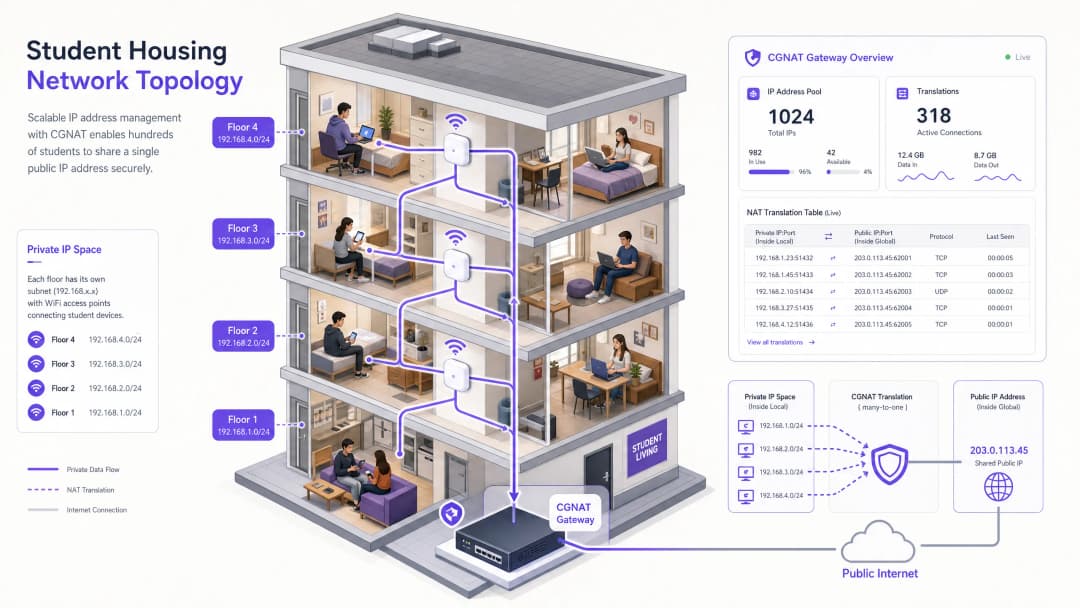
कार्यकारी सारांश (Executive Summary)
जैसे-जैसे IPv4 एड्रेस की कमी तेजी से बढ़ रही है, सघन मल्टी-टेनेंट वातावरण - जैसे कि छात्र आवास, hospitality, और बड़े सार्वजनिक स्थलों में IT प्रबंधकों और नेटवर्क आर्किटेक्ट्स को महत्वपूर्ण परिचालन चुनौतियों का सामना करना पड़ रहा है। 1,000 निवासियों वाले एक एकल छात्र आवास ब्लॉक में 7,000 से अधिक समवर्ती IP-कनेक्टेड डिवाइस उत्पन्न हो सकते हैं। मानक पोर्ट एड्रेस ट्रांसलेशन (PAT) आर्किटेक्चर इस पैमाने पर विफल हो जाते हैं, जिसके परिणामस्वरूप पोर्ट की कमी, कनेक्शन टूटना और उपयोगकर्ता अनुभव में गिरावट आती है।
यह तकनीकी संदर्भ मार्गदर्शिका IP की कमी को प्रबंधित करने के लिए NAT444 मॉडल का उपयोग करके कैरियर-ग्रेड NAT (CGNAT) के आर्किटेक्चर और परिनियोजन की रूपरेखा तैयार करती है। RFC 6598 साझा एड्रेस स्पेस का लाभ उठाकर और रणनीतिक पोर्ट ब्लॉक आवंटन (PBA) को लागू करके, नेटवर्क ऑपरेटर उच्च सब्सक्राइबर घनत्व - प्रति सार्वजनिक IP पर 128 उपयोगकर्ताओं तक - प्राप्त कर सकते हैं, जबकि GDPR और कानूनी अवरोधन नियमों का अनुपालन बनाए रख सकते हैं। Guest WiFi और WiFi Analytics जैसे प्लेटफॉर्म का उपयोग करने वाले स्थलों के लिए, एक मजबूत CGNAT आर्किटेक्चर अतिरिक्त IPv4 ब्लॉक खरीदने के पूंजीगत व्यय (CapEx) के बिना स्थिर कनेक्टिविटी और सटीक डेटा संग्रह सुनिश्चित करता है।
Technical Deep Dive
Student Accommodation में स्केल की समस्या
आधुनिक student accommodation में डिवाइस की डेंसिटी लगभग किसी भी अन्य मैनेज्ड नेटवर्क एनवायरनमेंट से बिल्कुल अलग होती है। एक अकेला निवासी आम तौर पर एक स्मार्टफोन, एक लैपटॉप, एक स्मार्ट TV, एक गेमिंग कंसोल और कम से कम एक स्मार्ट होम डिवाइस को कनेक्ट करता है। प्रति निवासी पांच से सात डिवाइस होने पर, 1,000-बेड वाले कैंपस में कनकंरेंट सेशन का ऐसा लोड होता है जो समान आकार के होटल को भी पीछे छोड़ देता है। यह चुनौती उपयोग के पैटर्न से और बढ़ जाती है: शाम के पीक आवर्स (18:00 - 23:00) में गेमिंग, वीडियो स्ट्रीमिंग और सोशल मीडिया पर लगभग एक साथ, हाई-बैंडविड्थ एक्टिविटी देखने को मिलती है, जो सभी लगातार बैकग्राउंड कनेक्शन बनाए रखते हैं।
IPv4 एड्रेस स्पेस वास्तव में Regional Internet Registry (RIR) स्तर पर समाप्त हो चुका है। RIPE NCC, जो यूरोप और मिडिल ईस्ट में एलोकेशन को मैनेज करता है, 2019 में अपनी अंतिम /8 एलोकेशन पॉलिसी तक पहुंच गया था। ओपन मार्केट में अतिरिक्त पब्लिक IPv4 ब्लॉक्स को प्राप्त करने की लागत अब $40 और $60 प्रति एड्रेस के बीच है - जो सैकड़ों सबनेट्स को मैनेज करने वाले किसी भी ऑपरेटर के लिए एक निषेधात्मक CapEx है।
स्टैंडर्ड PAT की सीमाएं
पारंपरिक सिंगल साइट डिप्लॉयमेंट में, Port Address Translation (PAT) एक पूरे प्राइवेट LAN (RFC 1918 स्पेस: 10.0.0.0/8, 172.16.0.0/12, 192.168.0.0/16) को एक सिंगल पब्लिक IP एड्रेस पर मैप करता है। एक सिंगल IPv4 एड्रेस में TCP और UDP में 65,535 उपलब्ध पोर्ट होते हैं। हालांकि यह एक छोटे ऑफिस के लिए पर्याप्त है, लेकिन डेंस student accommodation में, बैकग्राउंड एप्लिकेशन्स - क्लाउड सिंक्रोनाइजेशन, मैसेजिंग प्लेटफॉर्म, स्ट्रीमिंग सर्विसेज - के प्रसार का मतलब है कि एक अकेला यूजर आसानी से सैकड़ों सिमलटेनियस पोर्ट्स का उपयोग कर सकता है। जब PAT एज राउटर अपने उपलब्ध पोर्ट्स को समाप्त कर देता है, तो नए सेशन रिक्वेस्ट को चुपचाप खारिज कर दिया जाता है। यह एप्लिकेशन टाइमआउट, असफल VoIP कॉल्स और हेल्पडेस्क टिकट्स में वृद्धि के रूप में सामने आता है।
CGNAT (NAT444) आर्किटेक्चर
सिंगल लेवल NAT की सीमाओं से आगे बढ़ने के लिए, एंटरप्राइज नेटवर्क्स को एक Carrier-Grade NAT आर्किटेक्चर, विशेष रूप से NAT444 मॉडल को अपनाना चाहिए। यह नाम ट्रांसलेशन चेन में शामिल IPv4 एड्रेस स्पेस के तीन लेयर्स को संदर्भित करता है।
लेवल 1 - CPE / एक्सेस पॉइंट लेयर: सब्सक्राइबर डिवाइसेज को RFC 1918 स्पेस (जैसे, 192.168.x.x) से प्राइवेट IP एड्रेस अलॉट किए जाते हैं। एक्सेस पॉइंट या कस्टमर प्रेमाइसेस इक्विपमेंट (CPE) पहला NAT ट्रांसलेशन करता है।
लेवल 2 - CGNAT गेटवे: CPE प्राइवेट RFC 1918 एड्रेस को RFC 6598 शेयर्ड एड्रेस स्पेस (100.64.0.0/10) में ट्रांसलेट करता है। यह इंटरमीडिएट स्पेस विशेष रूप से सर्विस प्रोवाइडर इंफ्रास्ट्रक्चर और CGNAT गेटवे के बीच उपयोग के लिए सुरक्षित है। दूसरे RFC 1918 रेंज के बजाय RFC 6598 का उपयोग करने से जटिल मल्टी टेनेंट एनवायरनमेंट में एड्रेस ओवरलैप और रूटिंग विवादों से बचाव होता है।
लेवल 3 - पब्लिक इंटरनेट: CGNAT गेटवे RFC 6598 एड्रेस से एक शेयर्ड पब्लिक IPv4 एड्रेस में अंतिम ट्रांसलेशन करता है। यही वह एड्रेस है जो बाहरी सर्विसेज के लिए विजिबल होता है।
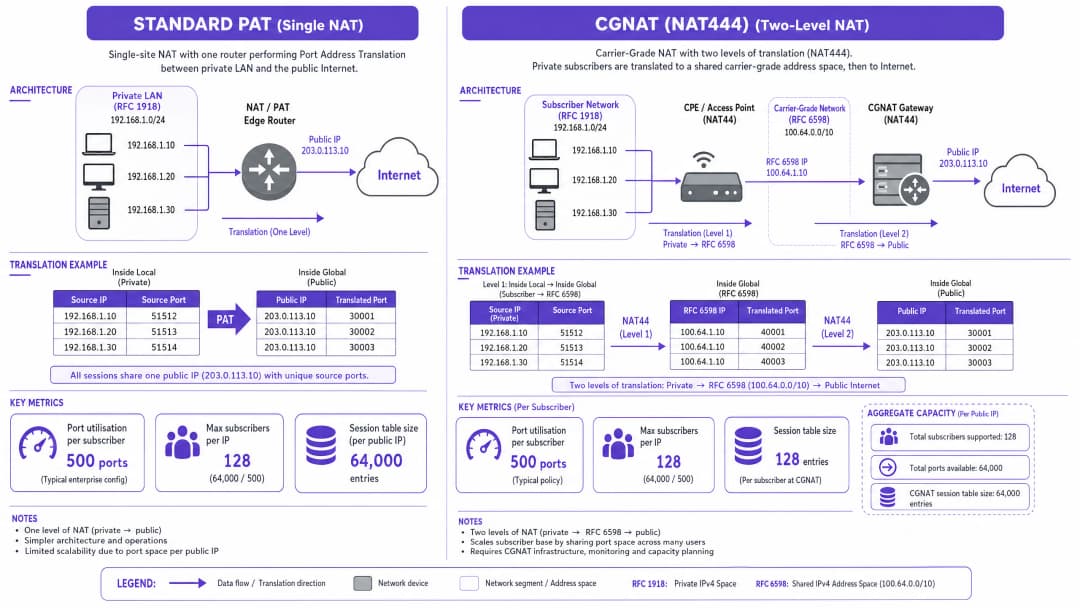
पोर्ट ब्लॉक आवंटन (Port Block Allocation): महत्वपूर्ण डिज़ाइन निर्णय
CGNAT परिनियोजन में सबसे महत्वपूर्ण कॉन्फ़िगरेशन विकल्प पोर्ट आवंटन रणनीति है। इसके दो दृष्टिकोण मौजूद हैं:
डायनेमिक पोर्ट आवंटन (DPA): पोर्ट्स को एक साझा पूल से प्रति सत्र (session) के आधार पर आवंटित किया जाता है। यह पोर्ट उपयोग दक्षता को अधिकतम करता है लेकिन प्रत्येक सत्र की स्थापना और समाप्ति के लिए एक लॉग प्रविष्टि उत्पन्न करता है - जिससे बड़े पैमाने पर अनुपालन और बुनियादी ढांचे पर भारी बोझ पड़ता है।
पोर्ट ब्लॉक आवंटन (PBA): प्रत्येक ग्राहक को उनके पहले सत्र की शुरुआत पर पोर्ट्स का एक निरंतर ब्लॉक आवंटित किया जाता है। यह ब्लॉक तब तक आवंटित रहता है जब तक कि ग्राहक का सत्र समाप्त नहीं हो जाता। यह दृष्टिकोण केवल तभी लॉग उत्पन्न करता है जब एक ब्लॉक आवंटित और जारी किया जाता है, जिससे लॉग वॉल्यूम 98% तक कम हो जाता है।
| कॉन्फ़िगरेशन पैरामीटर | अनुशंसित मान | तर्क |
|---|---|---|
| प्रति ग्राहक पोर्ट (PBA ब्लॉक आकार) | 500 | पूल समाप्त हुए बिना आधुनिक वेब एप्लीकेशन उपयोग के लिए पर्याप्त |
| प्रति ग्राहक अधिकतम समवर्ती सत्र (Concurrent Sessions) | 2,000 | किसी एकल संक्रमित डिवाइस को पूल समाप्त करने से रोकता है |
| सत्र टाइमआउट (TCP स्थापित) | 7,440 सेकंड (RFC 5382) | NAT व्यवहार के लिए IETF अनुशंसाओं के अनुरूप है |
| सत्र टाइमआउट (UDP) | 300 सेकंड | बासी UDP मैपिंग को पोर्ट स्पेस का उपभोग करने से रोकता है |
उद्योग मानक: NFWare, जो कि 100 से अधिक ISPs में परिनियोजन वाला एक विशेषज्ञ CGNAT विक्रेता है, प्रति पब्लिक IP अधिकतम 128 ग्राहकों के साथ प्रति ग्राहक 500 पोर्ट आवंटित करने की अनुशंसा करता है। इस सीमा से आगे जाना - उदाहरण के लिए, प्रत्येक को 250 पोर्ट्स के साथ प्रति IP 256 ग्राहकों तक खींचना - पीक लोड के दौरान सत्र छूटने (session drops) के जोखिम को काफी बढ़ा देता है।
दीर्घकालिक माइग्रेशन पथ के रूप में डुअल-स्टैक IPv6
CGNAT एक शमन रणनीति है, स्थायी समाधान नहीं। सही आर्किटेक्चरल दिशा एक डुअल-स्टैक परिनियोजन है: CGNAT के साथ IPv4 के साथ-साथ मूल रूप से IPv6 चलाना। आधुनिक डिवाइस और प्रमुख CDNs (Google, Netflix, Meta, Cloudflare) उपलब्ध होने पर IPv6 को दृढ़ता से प्राथमिकता देते हैं। एक अच्छी तरह से कॉन्फ़िगर किए गए डुअल-स्टैक वातावरण में, कुल ट्रैफ़िक का 60-70% IPv6 पर स्थानांतरित किया जा सकता है, जिससे IPv4 CGNAT पूल पर लोड नाटकीय रूप से कम हो जाता है और इसका प्रभावी जीवनकाल बढ़ जाता है।
स्वास्थ्य सेवा और परिवहन वातावरण के लिए जहाँ विरासत (legacy) डिवाइस सपोर्ट महत्वपूर्ण है, डुअल-स्टैक एक स्पष्ट माइग्रेशन पथ भी प्रदान करता है: IPv6-सक्षम डिवाइस मूल रूप से माइग्रेट होते हैं, जबकि विरासत केवल-IPv4 डिवाइस बिना किसी उपयोगकर्ता-सामना व्यवधान के CGNAT के माध्यम से कार्य करना जारी रखते हैं।

कार्यान्वयन गाइड
चरण 1: अपने वर्तमान IP आवंटन और डिवाइस डेंसिटी का ऑडिट करें
CGNAT को लागू करने से पहले, एक बेसलाइन स्थापित करें। अपने मौजूदा नेटवर्क प्रबंधन सिस्टम से निम्नलिखित डेटा एकत्र करें:
- प्रति सबनेट अधिकतम समवर्ती डिवाइस संख्या
- प्रति डिवाइस औसत और अधिकतम सत्र
- वर्तमान सार्वजनिक IP उपयोग प्रतिशत
- मौजूदा NAT टाइमआउट कॉन्फ़िगरेशन
यह डेटा सीधे आपके PBA ब्लॉक आकार और सार्वजनिक IP पूल आवश्यकताओं को सूचित करता है।
चरण 2: RFC 6598 ट्रांजिट नेटवर्क डिजाइन करें
करियर-ग्रेड ट्रांजिट नेटवर्क के लिए 100.64.0.0/10 ब्लॉक आवंटित करें। अपने कैंपस टोपोलॉजी से मेल खाने के लिए सबनेटिंग की योजना बनाएं - आमतौर पर प्रति बिल्डिंग या एक्सेस लेयर सेगमेंट में एक /24 या /23। सुनिश्चित करें कि आपका राउटिंग इंफ्रास्ट्रक्चर RFC 6598 प्रीफिक्स को सार्वजनिक इंटरनेट या पीयरिंग पार्टनर्स को लीक न करे।
चरण 3: CGNAT गेटवे तैनात और कॉन्फ़िगर करें
CGNAT गेटवे आमतौर पर एक समर्पित हार्डवेयर उपकरण या कमोडिटी सर्वर हार्डवेयर पर चलने वाला वर्चुअलाइज्ड नेटवर्क फ़ंक्शन (VNF) होता है। मुख्य कॉन्फ़िगरेशन पैरामीटर:
- NAT पूल: अपने सार्वजनिक IPv4 ब्लॉक को NAT पूल में असाइन करें। सुनिश्चित करें कि पूल का आकार आपके लक्षित सब्सक्राइबर-टू-IP अनुपात के लिए उपयुक्त है।
- PBA कॉन्फ़िगरेशन: ब्लॉक आकार को 500 पोर्ट पर सेट करें। प्रति सब्सक्राइबर अधिकतम ब्लॉक को 1 पर कॉन्फ़िगर करें (बेस ब्लॉक आकार बढ़ाने के बजाय, यदि कोई सब्सक्राइबर अपना प्रारंभिक ब्लॉक समाप्त कर देता है, तो इसे 2 तक बढ़ाने के विकल्प के साथ)।
- लॉगिंग: अपने SIEM में syslog आउटपुट कॉन्फ़िगर करें। PBA के साथ, प्रत्येक लॉग प्रविष्टि रिकॉर्ड करती है: सब्सक्राइबर का आंतरिक IP, असाइन किया गया सार्वजनिक IP, असाइन किए गए पोर्ट ब्लॉक की शुरुआत, ब्लॉक का अंत, आवंटन का टाइमस्टैम्प, और रिलीज़ का टाइमस्टैम्प।
- सत्र सीमाएं: दुरुपयोग को रोकने के लिए प्रति सब्सक्राइबर अधिकतम 2,000 समवर्ती सत्र लागू करें।
चरण 4: पहचान और प्रमाणीकरण लेयर के साथ एकीकृत करें
Guest WiFi प्लेटफ़ॉर्म का उपयोग करने वाले वातावरण में, Captive Portal प्रमाणीकरण लेवल 1 NAT सीमा पर या उससे पहले होना चाहिए। यह सुनिश्चित करता है कि ट्रैफ़िक को CGNAT पूल में एकत्रित करने से पहले पहचान प्रदाता MAC पते और उपयोगकर्ता क्रेडेंशियल को विशिष्ट आंतरिक IP पते पर सटीक रूप से मैप कर सके। Purple का प्लेटफ़ॉर्म इसे एक्सेस पॉइंट स्तर पर संभालता है, जिससे एक स्पष्ट उपयोगकर्ता-से-IP बाइंडिंग बनी रहती है जो NAT ट्रांसलेशन चेन के माध्यम से बनी रहती है।
पासवर्डलेस एक्सेस डिप्लॉयमेंट के लिए - जैसा कि How a WiFi Assistant Enables Passwordless Access in 2026 में वर्णित है - यही सिद्धांत लागू होता है: सटीक सत्र एट्रिब्यूशन सुनिश्चित करने के लिए CGNAT गेटवे के अपस्ट्रीम में पहचान बाइंडिंग स्थापित की जानी चाहिए।
चरण 5: IPv6 डुअल-स्टैक कॉन्फ़िगर करें
सभी एक्सेस पॉइंट पर IPv6 सक्षम करें और DHCPv6 या SLAAC के माध्यम से प्रति VLAN एक /64 प्रीफिक्स वितरित करें। अपने अपस्ट्रीम प्रदाता के माध्यम से IPv6 रूट घोषित करें। अपने IPv4 NAT पूल का आकार कम करने से पहले, सत्यापित करें कि प्रमुख CDN ट्रैफ़िक (Google, Netflix, YouTube) AAAA रिकॉर्ड पर रिज़ॉल्यूशन कर रहा है और IPv6 के माध्यम से रूट हो रहा है।
अपने विशिष्ट सेटअप को लेकर कोई सवाल हैं?
हमारी टीम 80,000 से अधिक वेन्यू में वेन्यू ऑपरेटरों, IT मैनेजरों और नेटवर्क इंजीनियरों के साथ काम करती है। 20 मिनट का कॉल बुक करें और हम आपको दिखाएंगे कि आपके जैसे अन्य लोगों ने इसे कैसे हल किया।
सर्वोत्तम प्रथाएं
जहाँ संभव हो वहाँ Deterministic NAT लागू करें। Deterministic NAT सब्सक्राइबर के इंटरनल IP एड्रेस और उनके असाइन किए गए पब्लिक IP और पोर्ट ब्लॉक के बीच एक एल्गोरिद्मिक मैपिंग का उपयोग करता है। चूंकि मैपिंग गणितीय रूप से कैलकुलेट की जा सकती है, इसलिए किसी सेशन टेबल को बनाए रखने या लॉग करने की आवश्यकता नहीं होती है - कानूनी इंटरसेप्ट उद्देश्यों के लिए मांग पर मैपिंग को रिवर्स-इंजीनियर किया जा सकता है। अनुपालन-सचेत डिप्लॉयमेंट के लिए यह एक गोल्ड स्टैंडर्ड है।
CGNAT Gateway लोड को वितरित करें। सभी CGNAT ट्रैफ़िक को एक ही उपकरण के माध्यम से केंद्रित करने से बचें। विफलता के सिंगल पॉइंट को रोकने के लिए कैंपस या इमारतों में गेटवे वितरित करें। वितरित गेटवे IP प्रतिष्ठा जोखिम को भी कम करते हैं: यदि पूल में किसी पब्लिक IP को संदिग्ध ट्रैफ़िक पैटर्न (CAPTCHA मुद्दों) के लिए CDN द्वारा चिह्नित किया जाता है, तो केवल उपयोगकर्ताओं का एक सबसेट ही प्रभावित होता है।
IP प्रतिष्ठा की सक्रिय रूप से निगरानी करें। IP प्रतिष्ठा फ़ीड्स (जैसे, Spamhaus, SURBL) की सदस्यता लें और अपने पब्लिक NAT पूल IP की निगरानी करें। यदि कोई सक्रिय एड्रेस ब्लैकलिस्ट हो जाता है, तो रोटेट करने के लिए साफ IP का एक रिज़र्व पूल बनाए रखें। यह विशेष रूप से छात्र आवास में महत्वपूर्ण है, जहाँ कम संख्या में उपयोगकर्ता ऐसी गतिविधियों में शामिल हो सकते हैं जो दुरुपयोग फ़्लैग को ट्रिगर करती हैं।
प्रति-सब्सक्राइबर सेशन सीमाएं लागू करें। प्रति सब्सक्राइबर 2,000 समवर्ती सेशन की सख्त सीमा एक भी संक्रमित डिवाइस - उदाहरण के लिए, DDoS एम्प्लीफिकेशन हमले में भाग लेने वाला - को उस पब्लिक IP को आवंटित पूरे पोर्ट ब्लॉक को समाप्त करने से रोकती है। नेटवर्क प्रदर्शन की निगरानी पर अधिक विवरण के लिए, WiFi सिग्नल की ताकत और कवरेज को मापने के तरीके पर हमारी गाइड देखें।
एक्सेस कंट्रोल के लिए IEEE 802.1X के साथ संरेखित करें। एक्सेस लेयर पर IEEE 802.1X पोर्ट-आधारित प्रमाणीकरण को डिप्लॉय करने से यह सुनिश्चित होता है कि केवल प्रमाणित डिवाइस ही IP आवंटन प्राप्त करें। यह दुष्ट डिवाइसों द्वारा पोर्ट आवंटन का उपभोग करने के जोखिम को कम करता है और कानूनी इंटरसेप्ट उद्देश्यों के लिए एक स्पष्ट ऑडिट ट्रेल प्रदान करता है।
समस्या निवारण और जोखिम शमन
लॉगिंग और अनुपालन का बोझ
यूके और यूरोप में, GDPR और इन्वेस्टिगेटरी पावर्स एक्ट 2016 के तहत, नेटवर्क ऑपरेटरों को एक विशिष्ट टाइमस्टैम्प पर एक विशिष्ट उपयोगकर्ता के साथ एक पब्लिक IP एड्रेस और पोर्ट नंबर को ट्रेस करने में सक्षम होना चाहिए। यह एक गैर-परक्राम्य कानूनी दायित्व है।
जोखिम: डायनेमिक CGNAT के साथ, प्रत्येक सेशन सेटअप और टियरडाउन को लॉग करने से प्रतिदिन टेराबाइट्स का सिसलॉग डेटा उत्पन्न होता है। डायनेमिक आवंटन वाला 1,000-उपयोगकर्ता डिप्लॉयमेंट प्रतिदिन 500 मिलियन लॉग प्रविष्टियां उत्पन्न कर सकता है। यह SIEM इन्फ्रास्ट्रक्चर को प्रभावित करता है, स्टोरेज लागत को बढ़ाता है, और फोरेंसिक जांच को अव्यावहारिक बनाता है।
शमन: पोर्ट ब्लॉक आवंटन लॉगिंग वॉल्यूम को 98% तक कम कर देता है। PBA के साथ, आप केवल ब्लॉक आवंटन और रिलीज़ इवेंट्स को लॉग करते हैं - आमतौर पर सैकड़ों या हजारों के बजाय प्रति उपयोगकर्ता सेशन में केवल दो लॉग प्रविष्टियां। सुनिश्चित करें कि आपका SIEM यूके डेटा रिटेंशन आवश्यकताओं का अनुपालन करने के लिए इन लॉग्स को कम से कम 12 महीनों तक सुरक्षित रखे।
CAPTCHA और IP प्रतिष्ठा के मुद्दे
जब 128 उपयोगकर्ता एक ही पब्लिक IP साझा करते हैं, तो एकत्रित ट्रैफ़िक वॉल्यूम प्रमुख वेबसाइटों पर दर-सीमित करने (rate-limiting) या एंटी-बॉट सुरक्षा को सक्रिय कर सकता है। Google का reCAPTCHA, Cloudflare का बॉट प्रबंधन और इसी तरह की प्रणालियां IP-आधारित हेयुरिस्टिक्स का उपयोग करती हैं जो साझा CGNAT IP को बॉट स्रोत के रूप में गलत वर्गीकृत कर सकती हैं।
शमन: अपने CGNAT पूल को कई पब्लिक IPs में वितरित करें। प्रतिष्ठा स्कोर की सक्रिय रूप से निगरानी करें। DNS-आधारित प्रतिष्ठा समस्याओं को रोकने के लिए DNS-over-HTTPS (DoH) या DNS-over-TLS (DoT) को तैनात करने पर विचार करें। उपयोगकर्ताओं को शिक्षित करें कि साझा-IP वातावरण में कभी-कभार CAPTCHA संकेत आना एक सामान्य व्यवहार है।
एप्लिकेशन अनुकूलता संबंधी समस्याएं
कुछ एप्लिकेशन - विशेष रूप से पीयर-टू-पीयर प्रोटोकॉल, कुछ VoIP कार्यान्वयन और पुराने गेमिंग प्लेटफॉर्म - लगातार पोर्ट मैपिंग या इनबाउंड कनेक्शन की शुरुआत पर भरोसा करते हैं। ये डबल NAT के तहत बाधित हो सकते हैं।
शमन: VoIP के लिए, सुनिश्चित करें कि आपका CGNAT गेटवे SIP के लिए ALG (एप्लिकेशन लेयर गेटवे) का समर्थन करता है। गेमिंग के लिए, एक UPnP प्रॉक्सी या एक अलग, कम-घनत्व वाले NAT पूल के साथ एक समर्पित गेमिंग VLAN को लागू करने पर विचार करें। रिटेल वातावरण के लिए जहां पॉइंट-ऑफ-सेल सिस्टम को इनबाउंड कनेक्टिविटी की आवश्यकता होती है, उन डिवाइसों को एक अलग VLAN पर रखें जो CGNAT लेयर को पूरी तरह से बायपास करता है।
ROI और व्यावसायिक प्रभाव
पूंजीगत व्यय (CapEx) बचत
CGNAT को तैनात करने से तत्काल और पर्याप्त CapEx बचत होती है। $50 प्रति IPv4 एड्रेस की बाजार दर पर, 5,000-बेड वाले विश्वविद्यालय को 1:1 डिवाइस-टू-IP अनुपात की आवश्यकता के लिए लगभग 35,000 IP एड्रेस खरीदने होंगे - जिसकी लागत $1.75 मिलियन होगी। 128:1 अनुपात के साथ CGNAT को तैनात करके, उसी परिनियोजन के लिए 300 से कम पब्लिक IPs की आवश्यकता होती है, जिससे IP अधिग्रहण की लागत घटकर लगभग $15,000 रह जाती है।
CGNAT गेटवे हार्डवेयर या वर्चुअलाइज्ड नेटवर्क फ़ंक्शंस की लागत (आमतौर पर परिसर-स्तरीय परिनियोजन के लिए $20,000 - $80,000) को जोड़ने के बाद भी, शुद्ध बचत काफी अधिक है।
परिचालन व्यय (OpEx) में कमी
स्थिर कनेक्टिविटी सीधे हेल्पडेस्क ओवरहेड को कम करती है। पोर्ट समाप्त होने की घटनाएं - बड़े पैमाने के मानक PAT की प्राथमिक विफलता मोड - भारी मात्रा में सहायता टिकट उत्पन्न करती हैं। उपयुक्त सत्र सीमाओं और PBA के साथ एक अच्छी तरह से कॉन्फ़िगर किया गया CGNAT परिनियोजन इस विफलता मोड को समाप्त करता है, जिसके परिणामस्वरूप नेटवर्क से संबंधित हेल्पडेस्क वॉल्यूम में अनुमानित 30-40% की कमी आती है।
छात्र आवास में प्रतिस्पर्धात्मक लाभ
प्रतिस्पर्धी छात्र आवास बाजार में, नेटवर्क की गुणवत्ता संभावित किरायेदारों के लिए एक प्राथमिक चयन मानदंड है। वे ऑपरेटर जो निरंतर, उच्च-थ्रूपुट कनेक्टिविटी का प्रदर्शन कर सकते हैं - जिसे अपटाइम, सत्र की गुणवत्ता और डिवाइस घनत्व मेट्रिक्स दिखाने वाले WiFi Analytics डैशबोर्ड के माध्यम से सत्यापित किया जाता है - वे प्रीमियम किराया दरों का आदेश देते हैं और उच्च अधिभोग दर प्राप्त करते हैं। यह बुनियादी ढांचा स्थिरता उन्नत स्थान-आधारित सेवाओं को तैनात करने की नींव भी है, जैसा कि Purple launched offline maps mode for seamless, secure navigation for WiFi hotspots में उजागर किया गया है।
केस स्टडी 1: 800-बेड यूनिवर्सिटी रेजिडेंस हॉल
यूके के एक विश्वविद्यालय द्वारा संचालित 800-बेड वाले रेजिडेंस हॉल में शाम के व्यस्त घंटों के दौरान लगातार कनेक्टिविटी की समस्याएं आ रही थीं। जांच से पता चला कि उनका सिंगल-लेवल PAT कॉन्फ़िगरेशन, जो /29 पब्लिक सबनेट (6 उपयोग योग्य IP) का उपयोग कर रहा था, हर शाम 19:30 बजे तक उपलब्ध पोर्ट्स को पूरी तरह समाप्त कर रहा था। ऑपरेटर ने PBA (500 पोर्ट प्रति सब्सक्राइबर, 128 सब्सक्राइबर प्रति IP) के साथ एक CGNAT समाधान तैनात किया, /27 पब्लिक सबनेट (30 उपयोग योग्य IP) में अपग्रेड किया, और IPv6 डुअल-स्टैक सक्षम किया। तैनाती के बाद के मेट्रिक्स ने शुरुआती डायनेमिक एलोकेशन पायलट की तुलना में पोर्ट समाप्ति की घटनाओं में 94% की कमी, नेटवर्क से संबंधित हेल्पडेस्क टिकटों में 38% की कमी और CGNAT लॉग वॉल्यूम में 65% की कमी दिखाई। तैनाती के 60 दिनों के भीतर, IPv6 ऑफलोड दर 62% तक पहुंच गई।
केस स्टडी 2: 1,200-कमरों वाला पर्पज-बिल्ट स्टूडेंट अकोमोडेशन (PBSA) ऑपरेटर
दो यूके शहरों में तीन स्थानों का प्रबंधन करने वाले एक निजी PBSA ऑपरेटर को चौथा स्थान खोलने से पहले अपने नेटवर्क आर्किटेक्चर को मानकीकृत करने की आवश्यकता थी। उनके मौजूदा बुनियादी ढांचे में सिंगल-लेवल NAT और बिना किसी सुसंगत लॉगिंग रणनीति के तदर्थ VLAN सेगमेंटेशन का मिश्रण उपयोग किया जा रहा था। तीनों स्थानों पर नियतात्मक NAT के साथ एक CGNAT तैनाती लागू की गई थी, जिससे सत्र लॉगिंग ओवरहेड के बिना गणितीय रूप से गणना योग्य सब्सक्राइबर-टू-IP मैपिंग सक्षम हो गई। इस दृष्टिकोण ने कानूनी रूप से वैध इंटरसेप्ट अनुपालन के संबंध में ऑपरेटर की कानूनी टीम को संतुष्ट किया, सत्र लॉग के लिए SIEM स्टोरेज लागत को समाप्त कर दिया, और चौथे स्थान के लिए एक सुसंगत आर्किटेक्चर टेम्पलेट प्रदान किया। ऑपरेटर ने Captive Portal प्रमाणीकरण के लिए Purple के Guest WiFi प्लेटफॉर्म को भी एकीकृत किया, जिससे एनालिटिक्स रिपोर्ट में सटीक उपयोगकर्ता एट्रिब्यूशन सुनिश्चित करने के लिए CGNAT गेटवे के अपस्ट्रीम में पहचान बाइंडिंग स्थापित की जा सके।
मुख्य परिभाषाएं
CGNAT (Carrier-Grade NAT)
एक नेटवर्क आर्किटेक्चर जिसमें एक ऑपरेटर एक केंद्रीकृत गेटवे पर नेटवर्क एड्रेस ट्रांसलेशन करता है, जिससे कई सब्सक्राइबर एक ही पब्लिक IPv4 एड्रेस को साझा करने में सक्षम होते हैं। इसे RFC 6264 और RFC 6888 में परिभाषित किया गया है। इसे Large-Scale NAT (LSN) या CGN के रूप में भी जाना जाता है।
IT टीमों को CGNAT का सामना तब करना पड़ता है जब एक नेटवर्क पर सभी उपकरणों को सेवा देने के लिए एक एकल पब्लिक IP अपर्याप्त होता है। छात्र आवासों में, अतिरिक्त पब्लिक एड्रेस स्पेस खरीदे बिना IPv4 की कमी को प्रबंधित करने के लिए CGNAT प्राथमिक तंत्र है।
NAT444
एक विशिष्ट CGNAT टोपोलॉजी जिसमें IPv4 एड्रेस स्पेस की तीन परतें शामिल होती हैं: सब्सक्राइबर प्राइवेट एड्रेस (RFC 1918), कैरियर-ग्रेड शेयर्ड एड्रेस (RFC 6598), और पब्लिक इंटरनेट एड्रेस। यह नाम उन तीन IPv4 नेटवर्कों को संदर्भित करता है जिनसे होकर डेटा गुजरता है।
NAT444 मल्टी-टेनेंट वातावरण में CGNAT परिनियोजन के लिए मानक आर्किटेक्चर है। नेटवर्क आर्किटेक्ट्स को मध्यवर्ती नेटवर्क को सही ढंग से डिजाइन करने और एड्रेस ओवरलैप से बचने के लिए तीन-परत वाले मॉडल को समझना चाहिए।
RFC 6598 शेयर्ड एड्रेस स्पेस
100.64.0.0/10 IPv4 एड्रेस ब्लॉक (100.64.0.0 से 100.127.255.255) जिसे IANA द्वारा एक CPE और एक CGNAT गेटवे के बीच मध्यवर्ती नेटवर्क में उपयोग के लिए आरक्षित किया गया है। यह स्पेस पब्लिक इंटरनेट पर रूटेबल नहीं है और इसे विशेष रूप से NAT444 परिनियोजन में एड्रेस संघर्षों को रोकने के लिए डिज़ाइन किया गया है।
IT टीमों को मध्यवर्ती CGNAT नेटवर्क के लिए RFC 6598 का उपयोग करना चाहिए - न कि RFC 1918 का। इस सेगमेंट के लिए RFC 1918 का उपयोग करने से एड्रेस ओवरलैप का जोखिम पैदा होता है जब सब्सक्राइबर नेटवर्क में समान RFC 1918 रेंज का उपयोग किया जाता है।
पोर्ट ब्लॉक एलोकेशन (PBA)
एक CGNAT पोर्ट असाइनमेंट रणनीति जिसमें प्रत्येक सब्सक्राइबर को उनके सेशन की अवधि के लिए पोर्ट्स का एक सन्निहित ब्लॉक (जैसे, 500 पोर्ट) असाइन किया जाता है, न कि प्रति कनेक्शन व्यक्तिगत रूप से पोर्ट आवंटित किए जाते हैं। इसे RFC 7422 में परिभाषित किया गया है।
PBA GDPR-अनुरूप CGNAT परिनियोजन के लिए अनुशंसित दृष्टिकोण है। यह डायनेमिक पोर्ट एलोकेशन की तुलना में लॉगिंग ओवरहेड को 98% तक कम करता है, जिससे बड़े पैमाने पर कानूनी इंटरसेप्ट अनुपालन को संचालित करना व्यावहारिक रूप से संभव हो जाता है।
डिटरमिनिस्टिक NAT
एक CGNAT कॉन्फ़िगरेशन जिसमें किसी सब्सक्राइबर के इंटरनल IP एड्रेस और उनके असाइन किए गए पब्लिक IP तथा पोर्ट ब्लॉक के बीच मैपिंग की गणना एल्गोरिद्म के अनुसार की जाती है, बिना किसी सेशन टेबल को बनाए रखे। यह मैपिंग गणितीय रूप से प्रतिवर्ती है, जो लॉग पुनर्प्राप्ति के बिना सब्सक्राइबर की पहचान करने में सक्षम बनाती है।
अनुपालन के प्रति सचेत रहने वाले परिनियोजनों के लिए डिटरमिनिस्टिक NAT स्वर्ण मानक है। यह कानूनी इंटरसेप्ट आवश्यकताओं को पूरा करते हुए लॉगिंग ओवरहेड को पूरी तरह से समाप्त कर देता है, क्योंकि ज्ञात एल्गोरिदम का उपयोग करके एक पब्लिक IP, पोर्ट और टाइमस्टैम्प से सब्सक्राइबर की पहचान की जा सकती है।
PAT (Port Address Translation)
नेटवर्क एड्रेस ट्रांसलेशन का एक रूप जिसमें विशिष्ट सोर्स पोर्ट नंबरों का उपयोग करके कनेक्शनों को अलग करके कई प्राइवेट IP एड्रेस को एक ही पब्लिक IP एड्रेस पर मैप किया जाता है। इसे NAT ओवरलोड या मेनी-टू-वन NAT भी कहा जाता है।
अधिकांश एंटरप्राइज़ एज राउटर्स में उपयोग किया जाने वाला PAT मानक सिंगल-लेवल NAT है। यह CGNAT का पूर्ववर्ती है और बड़े पैमाने पर पोर्ट की कमी के कारण घने मल्टी-टेनेंट वातावरण के लिए अपर्याप्त है।
सेशन टेबल
एक NAT गेटवे द्वारा प्रबंधित डेटा संरचना जो प्रत्येक सक्रिय कनेक्शन के लिए आंतरिक (निजी) IP एड्रेस और पोर्ट, तथा बाहरी (सार्वजनिक) IP एड्रेस और पोर्ट के बीच के मैपिंग को रिकॉर्ड करती है। सेशन टेबल CGNAT द्वारा उपभोग किया जाने वाला प्राथमिक मेमोरी और प्रोसेसिंग संसाधन है।
सेशन टेबल का आकार CGNAT गेटवे के लिए एक महत्वपूर्ण क्षमता नियोजन पैरामीटर है। प्रति सब्सक्राइबर अधिकतम 2,000 सेशन वाले 1,000-सब्सक्राइबर परिनियोजन के लिए कम से कम 2 मिलियन प्रविष्टियों की सेशन टेबल क्षमता की आवश्यकता होती है। सेशन टेबल का आकार छोटा रखने से कनेक्शन विफल हो जाते हैं।
Dual-Stack
एक नेटवर्क कॉन्फ़िगरेशन जिसमें IPv4 और IPv6 दोनों प्रोटोकॉल एक ही नेटवर्क इंफ्रास्ट्रक्चर और एंड डिवाइसेस पर एक साथ सक्रिय होते हैं। Dual-stack क्षमता वाले डिवाइसेस IPv6-सक्षम गंतव्यों के कनेक्शन के लिए IPv6 को प्राथमिकता देंगे।
CGNAT डिप्लॉयमेंट के लिए Dual-stack एक अनुशंसित ट्रांज़िशन रणनीति है। IPv6-सक्षम ट्रैफ़िक को नेटिव IPv6 पाथ पर ऑफ़लोड करके, dual-stack IPv4 CGNAT पूल पर लोड को कम करता है और IPv6-प्राथमिक नेटवर्क की ओर एक माइग्रेशन पाथ प्रदान करता है।
RFC 1918 Private Address Space
निजी नेटवर्क उपयोग के लिए आरक्षित तीन IPv4 एड्रेस रेंज: 10.0.0.0/8, 172.16.0.0/12, और 192.168.0.0/16। ये एड्रेस सार्वजनिक इंटरनेट पर रूट करने योग्य नहीं हैं और आंतरिक नेटवर्क एड्रेसिंग के लिए उपयोग किए जाते हैं।
CGNAT डिप्लॉयमेंट में सब्सक्राइबर डिवाइस एड्रेसिंग के लिए RFC 1918 एड्रेस का उपयोग किया जाता है। नेटवर्क आर्किटेक्ट्स को यह सुनिश्चित करना चाहिए कि सब्सक्राइबर नेटवर्क में उपयोग की जाने वाली RFC 1918 रेंज इंटरमीडिएट CGNAT नेटवर्क में उपयोग की जाने वाली रेंज के साथ ओवरलैप न करें - यही कारण है कि इंटरमीडिएट लेयर के लिए RFC 6598 का उपयोग किया जाता है।
Lawful Intercept
कानून प्रवर्तन एजेंसियों द्वारा संचार का कानूनी रूप से अधिकृत इंटरसेप्शन। UK में, यह इन्वेस्टिगेटरी पावर्स एक्ट 2016 द्वारा शासित होता है। नेटवर्क ऑपरेटरों को एक lawful intercept अनुरोध प्राप्त होने पर एक विशिष्ट सार्वजनिक IP एड्रेस, पोर्ट और टाइमस्टैम्प से जुड़े सब्सक्राइबर की पहचान करने में सक्षम होना चाहिए।
Lawful intercept अनुपालन CGNAT लॉगिंग आवश्यकताओं का प्राथमिक प्रेरक है। ऑपरेटरों को सार्वजनिक IP और पोर्ट डेटा से सब्सक्राइबर्स की पहचान करने के लिए पर्याप्त लॉग सुरक्षित रखने चाहिए। PBA और Deterministic NAT दो ऐसे आर्किटेक्चर हैं जो लॉगिंग इंफ्रास्ट्रक्चर को प्रभावित किए बिना बड़े पैमाने पर इसे व्यवहार्य बनाते हैं।
हल किए गए उदाहरण
एक 600-बेड वाले student housing ब्लॉक में वर्तमान में मानक PAT के साथ एक सिंगल /29 public सबनेट (6 उपयोग करने योग्य IPs) का उपयोग किया जाता है। शाम के व्यस्त घंटों (19:00-23:00) के दौरान, उपयोगकर्ता व्यापक कनेक्टिविटी विफलताओं की रिपोर्ट करते हैं। नेटवर्क टीम ने PAT राउटर पर पोर्ट समाप्त होने (port exhaustion) की पुष्टि की है। ऑपरेटर के पास CGNAT गेटवे हार्डवेयर के लिए बजट है लेकिन वह /27 (30 उपयोग करने योग्य IPs) से अधिक अतिरिक्त public IPs प्राप्त नहीं कर सकता है। एक CGNAT परिनियोजन (deployment) को डिज़ाइन करें जो पोर्ट समाप्त होने की समस्या को दूर करे और 900 बेड तक की भविष्य की वृद्धि का समर्थन करे।
चरण 1 - बेसलाइन मूल्यांकन: प्रति निवासी 5 उपकरणों के साथ 600 बेड पर, व्यस्त घंटों में समवर्ती उपकरणों की संख्या लगभग 3,000 है। प्रति सब्सक्राइबर 500 पोर्ट (PBA) पर, प्रत्येक public IP 128 ग्राहकों का समर्थन करता है। /27 में 30 उपयोग करने योग्य IPs के साथ, सैद्धांतिक अधिकतम सब्सक्राइबर क्षमता 3,840 है - जो प्रति निवासी 4.3 उपकरणों के साथ 900 बेड के लिए पर्याप्त है। चरण 2 - RFC 6598 इंटरमीडिएट नेटवर्क: इंटरमीडिएट कैरियर-ग्रेड नेटवर्क के लिए 100.64.0.0/20 आवंटित करें, जो CPE-से-CGNAT गेटवे ट्रैफ़िक के लिए 4,096 पते प्रदान करता है। प्रति बिल्डिंग विंग सबनेट: 100.64.0.0/24, 100.64.1.0/24, आदि। चरण 3 - CGNAT गेटवे साइजिंग: कम से कम 768,000 एंट्रीज (3,000 सब्सक्राइबर × 2,000 अधिकतम सेशन प्रति सब्सक्राइबर, 20% हेडरूम के साथ) की सेशन टेबल क्षमता वाला एक CGNAT गेटवे तैनात करें। 500-पोर्ट ब्लॉक्स के साथ PBA कॉन्फ़िगर करें। प्रति सब्सक्राइबर अधिकतम ब्लॉक्स को 1 पर सेट करें, जिसमें 500 से अधिक समवर्ती सेशन्स वाले ग्राहकों के लिए 2 ब्लॉक्स तक ओवरफ़्लो की अनुमति हो। चरण 4 - IPv6 डुअल-स्टैक: सभी एक्सेस पॉइंट्स पर IPv6 सक्षम करें। SLAAC के माध्यम से /64 प्रीफ़िक्स वितरित करें। 90 दिनों के भीतर 60% IPv6 ऑफ़लोड का लक्ष्य रखें, जो प्रभावी रूप से IPv4 CGNAT लोड को 1,200 समवर्ती IPv4 ग्राहकों तक कम कर देता है - जो /27 क्षमता के भीतर है। चरण 5 - लॉगिंग: केवल PBA ब्लॉक असाइनमेंट/रिलीज़ इवेंट्स के साथ SIEM में syslog कॉन्फ़िगर करें। लॉग्स को न्यूनतम 12 महीनों के लिए सुरक्षित रखें। चरण 6 - सेशन सीमाएं: दुरुपयोग को रोकने के लिए CGNAT गेटवे पर प्रति सब्सक्राइबर अधिकतम 2,000 सेशन्स लागू करें।
एक PBSA ऑपरेटर ने डायनेमिक पोर्ट एलोकेशन का उपयोग करके 1,000-बेड की साइट पर CGNAT तैनात किया है। उनकी कानूनी टीम ने इंगित किया है कि वर्तमान लॉगिंग दृष्टिकोण प्रति दिन 400GB syslog डेटा उत्पन्न करता है, जो SIEM को ओवरलोड कर रहा है और कानून प्रवर्तन से वैध इंटरसेप्ट (lawful intercept) अनुरोधों को पूरा करना व्यावहारिक रूप से असंभव बना रहा है। UK के वैध इंटरसेप्ट दायित्वों को पूरा करते हुए लॉग वॉल्यूम को एक प्रबंधनीय स्तर तक कम करने के लिए लॉगिंग रणनीति को फिर से डिज़ाइन करें।
चरण 1 - Port Block Allocation पर माइग्रेट करें: डायनामिक पोर्ट एलोकेशन को PBA से बदलें जिसमें प्रति सब्सक्राइबर 500 पोर्ट हों। यह तुरंत लॉग इवेंट्स को प्रति-सेशन एक से घटाकर प्रति-ब्लॉक-असाइनमेंट एक और प्रति-ब्लॉक-रिलीज़ एक कर देता है। प्रति दिन औसतन 3 ब्लॉक असाइनमेंट/रिलीज़ साइकिल वाले 1,000-यूज़र के डेप्लॉयमेंट के लिए, यह प्रति दिन लगभग 6,000 लॉग एंट्री जनरेट करता है - जो डायनामिक एलोकेशन बेसलाइन से 99% से अधिक की कमी है। चरण 2 - लॉग स्कीमा: सुनिश्चित करें कि प्रत्येक PBA लॉग एंट्री कैप्चर करे: (a) सब्सक्राइबर का इंटरनल IP एड्रेस, (b) असाइन किया गया पब्लिक IP एड्रेस, (c) असाइन किए गए पोर्ट ब्लॉक की शुरुआत और समाप्ति, (d) ब्लॉक असाइनमेंट का टाइमस्टैम्प (UTC), (e) ब्लॉक रिलीज़ का टाइमस्टैम्प (UTC), (f) सब्सक्राइबर आइडेंटिफ़ायर (MAC एड्रेस या RADIUS यूज़रनेम)। चरण 3 - Deterministic NAT विकल्प: यदि CGNAT प्लेटफ़ॉर्म इसका समर्थन करता है, तो Deterministic NAT पर माइग्रेट करें। यह रूटीन ऑपरेशन्स के लिए लॉगिंग को पूरी तरह से समाप्त कर देता है, क्योंकि मैपिंग गणितीय रूप से कंप्यूट करने योग्य होती है। PBA लॉग केवल नॉन-डिटरमिनिस्टिक ओवरफ़्लो मामलों के लिए ही रखें। चरण 4 - रिटेंशन पॉलिसी: टेम्पर-एविडेंट लॉग स्टोर (जैसे, राइट-वंस S3-कम्पैटिबल ऑब्जेक्ट स्टोरेज) में 12 महीनों के लिए लॉग रिटेन करें। एक्सेस कंट्रोल लागू करें ताकि लॉफुल इंटरसेप्ट रिक्वेस्ट के लिए लॉग रिट्रीवल के लिए डुअल ऑथराइजेशन की आवश्यकता हो। चरण 5 - इंसिडेंट रिस्पॉन्स प्रोसीजर: लॉफुल इंटरसेप्ट रिक्वेस्ट का जवाब देने के लिए प्रोसीजर को डॉक्यूमेंट करें, जिसमें Deterministic NAT के तहत पब्लिक IP, पोर्ट और टाइमस्टैम्प से सब्सक्राइबर को रिवर्स-कंप्यूट करने का फ़ॉर्मूला शामिल हो।
एक यूनिवर्सिटी की IT टीम रिपोर्ट करती है कि छात्रों को Google, Netflix और गेमिंग प्लेटफ़ॉर्म से बार-बार CAPTCHA चुनौतियों और रेट-लिमिटिंग का सामना करना पड़ रहा है। जांच से पता चलता है कि 200 छात्र CGNAT के माध्यम से एक ही पब्लिक IP एड्रेस शेयर कर रहे हैं। टीम को बताया गया है कि शॉर्ट टर्म में अधिक पब्लिक IP प्राप्त करना संभव नहीं है। IP एलोकेशन को बदले बिना कौन से तत्काल समाधान लागू किए जा सकते हैं?
चरण 1 - सब्सक्राइबर डेंसिटी कम करें: 200:1 का रेशियो इसका मुख्य कारण है। अतिरिक्त पब्लिक IP के बिना भी, यह रिव्यू करें कि क्या CGNAT पूल का कुशलतापूर्वक उपयोग किया जा रहा है। सुनिश्चित करें कि IPv6 डुअल-स्टैक पूरी तरह से इनेबल्ड है - यदि 60% ट्रैफ़िक IPv6 पर ऑफ़लोड हो जाता है, तो प्रभावी IPv4 सब्सक्राइबर काउंट प्रति IP घटकर लगभग 80 हो जाता है, जो 128:1 की अनुशंसित सीमा के भीतर है। चरण 2 - IP रोटेशन: पब्लिक IP पूल के लिए एक रोटेशन पॉलिसी लागू करें। यदि CGNAT गेटवे इसका समर्थन करता है, तो प्रत्येक सब्सक्राइबर ग्रुप को असाइन किए गए पब्लिक IP के पीरियोडिक रोटेशन को कॉन्फ़िगर करें। यह किसी एक IP पर लगातार नेगेटिव रेप्युटेशन बनने से रोकता है। चरण 3 - DNS ऑप्टिमाइज़ेशन: सुनिश्चित करें कि क्लाइंट्स को प्रदान किए गए DNS रिसॉल्वर्स मुख्य रूप से AAAA रिकॉर्ड्स ही रिटर्न करें। कई CAPTCHA ट्रिगर्स DNS-बेस्ड होते हैं - यदि कोई क्लाइंट अनावश्यक रूप से किसी सर्विस को IPv4 एड्रेस पर रिसॉल्व करता है, तो यह CGNAT के माध्यम से रूट होता है जबकि यह नेटिव रूप से IPv6 का उपयोग कर सकता था। चरण 4 - सेशन टाइमआउट ट्यूनिंग: नॉन-DNS UDP ट्रैफ़िक के लिए UDP सेशन टाइमआउट को डिफ़ॉल्ट (अक्सर 300 सेकंड) से घटाकर 60 सेकंड करें। यह पोर्ट स्पेस को तेज़ी से खाली करता है और बाहरी सर्विसेज़ के दृष्टिकोण से स्पष्ट सेशन वॉल्यूम को कम करता है। चरण 5 - प्रभावित प्लेटफ़ॉर्म्स से कम्युनिकेट करें: लगातार ब्लैकलिस्टिंग की समस्याओं के लिए, प्रमुख IP रेप्युटेशन डेटाबेस (Spamhaus, SURBL) को डी-लिस्टिंग रिक्वेस्ट भेजें। डॉक्यूमेंट करें कि यह IP एक शेयर्ड CGNAT एड्रेस है जो एक वैध शैक्षणिक संस्थान की सेवा कर रहा है।
अभ्यास प्रश्न
Q1. एक 2,000-बेड वाले छात्र आवास परिसर में एक /26 सार्वजनिक सबनेट (62 उपयोग करने योग्य IPs) है। नेटवर्क टीम एक CGNAT डिप्लॉयमेंट की योजना बना रही है। गणना करें: (a) अनुशंसित 128:1 अनुपात पर समर्थित सब्सक्राइबर्स की अधिकतम संख्या, (b) उपलब्ध कुल पोर्ट क्षमता, (c) अनुशंसित PBA ब्लॉक आकार, और (d) क्या मौजूदा /26 पर्याप्त है या अतिरिक्त IPs की आवश्यकता है।
संकेत: एक /26 में कुल उपयोग करने योग्य IPs से शुरू करें, फिर 128:1 सब्सक्राइबर अनुपात लागू करें। परिणाम की तुलना एक वास्तविक डिवाइस-प्रति-निवासी अनुपात पर 2,000-बेड वाले डिवाइस काउंट से करें। अपनी अंतिम अनुशंसा में IPv6 dual-stack ऑफ़लोड पर विचार करें।
मॉडल उत्तर देखें
एक /26 सबनेट 62 उपयोग करने योग्य सार्वजनिक IPs प्रदान करता है। प्रति IP 128 सब्सक्राइबर्स पर, अधिकतम IPv4 CGNAT क्षमता 62 × 128 = 7,936 सब्सक्राइबर्स है। प्रति निवासी 5 डिवाइसेस पर, 2,000 बेड लगभग 10,000 समवर्ती डिवाइसेस उत्पन्न करते हैं। IPv6 के बिना, /26 अपर्याप्त है (7,936 < 10,000)। हालांकि, IPv6 dual-stack के साथ 60% ऑफ़लोड प्राप्त करने पर, प्रभावी IPv4 लोड घटकर लगभग 4,000 डिवाइसेस हो जाता है - जो 7,936 की /26 क्षमता के भीतर है। अनुशंसित PBA ब्लॉक आकार प्रति सब्सक्राइबर 500 पोर्ट है। कुल पोर्ट क्षमता: 62 IPs × 64,000 उपयोग करने योग्य पोर्ट = 3,968,000 पोर्ट। प्रति सब्सक्राइबर 500 पोर्ट पर: 3,968,000 / 500 = अधिकतम 7,936 सब्सक्राइबर्स। अनुशंसा: प्रति सब्सक्राइबर 500 पोर्ट पर PBA के साथ CGNAT डिप्लॉय करें, एक पूर्व-आवश्यकता के रूप में IPv6 dual-stack सक्षम करें, और मौजूदा /26 पर्याप्त है। यदि IPv6 ऑफ़लोड 50% से अधिक सुनिश्चित नहीं किया जा सकता है, तो बफ़र के रूप में एक अतिरिक्त /27 प्राप्त करें।
Q2. एक 500 बिस्तरों वाले छात्र छात्रावास में CGNAT डिप्लॉयमेंट से अनुपालन संबंधी चिंताएं उत्पन्न हो रही हैं। ऑपरेटर की कानूनी टीम को कानून प्रवर्तन से एक विशिष्ट सार्वजनिक IP एड्रेस (203.0.113.45), पोर्ट 51432, टाइमस्टैम्प 2025-11-15 21:47:33 UTC पर एक वैध इंटरसेप्ट अनुरोध प्राप्त हुआ है। CGNAT गेटवे को डायनेमिक पोर्ट एलोकेशन के साथ कॉन्फ़िगर किया गया है। SIEM में 180 दिनों के लॉग हैं लेकिन फोरेंसिक टीम की रिपोर्ट है कि लॉग से विशिष्ट सब्सक्राइबर का पता लगाने में प्रति अनुरोध 4 घंटे से अधिक का समय लग रहा है। इसके मूल कारण की पहचान करें और एक ऐसा समाधान प्रस्तावित करें जो प्रतिक्रिया समय को 15 मिनट से कम कर दे।
संकेत: 4 घंटे का रिस्पॉन्स समय लॉगिंग आर्किटेक्चर का एक लक्षण है, न कि डेटा रिटेंशन की समस्या। विचार करें कि डायनेमिक एलोकेशन बनाम PBA के तहत क्या जानकारी लॉग की जाती है, और Deterministic NAT रिस्पॉन्स प्रक्रिया को पूरी तरह से कैसे बदल देगा।
मॉडल उत्तर देखें
मूल कारण: डायनेमिक पोर्ट एलोकेशन प्रति सेशन एक लॉग प्रविष्टि उत्पन्न करता है। 500 उपयोगकर्ताओं × प्रति उपयोगकर्ता प्रति घंटे सैकड़ों सेशन के साथ, SIEM में प्रतिदिन लाखों लॉग प्रविष्टियाँ होती हैं। IP, पोर्ट और टाइमस्टैम्प द्वारा एकल प्रविष्टि का पता लगाने के लिए संभावित रूप से अरबों रिकॉर्ड्स में फुल-टेक्स्ट खोज की आवश्यकता होती है - इसलिए 4 घंटे का प्रतिक्रिया समय लगता है। समाधान विकल्प 1 (PBA): पोर्ट ब्लॉक एलोकेशन (PBA) पर माइग्रेट करें। PBA के साथ, पोर्ट 51432 के लिए लॉग प्रविष्टि ब्लॉक असाइनमेंट को रिकॉर्ड करेगी (जैसे, पोर्ट 51001-51500 को 21:30:00 UTC पर सब्सक्राइबर 192.168.1.23 को असाइन किया गया, 23:15:00 UTC पर जारी किया गया)। सार्वजनिक IP + पोर्ट रेंज + टाइमस्टैम्प पर एक एकल अनुक्रमित क्वेरी कुछ ही सेकंड में परिणाम देती है। अनुमानित प्रतिक्रिया समय: 2 मिनट से कम। समाधान विकल्प 2 (डिटरमिनिस्टिक NAT): यदि प्लेटफॉर्म इसका समर्थन करता है, तो डिटरमिनिस्टिक NAT पर माइग्रेट करें। पोर्ट 51432 को बिना किसी लॉग क्वेरी के सब्सक्राइबर के आंतरिक IP पर गणितीय रूप से रिवर्स-कंप्यूट किया जा सकता है। प्रतिक्रिया समय: 30 सेकंड से कम। तत्काल कार्रवाई: वर्तमान प्रतिक्रिया समय को कम करने के लिए मौजूदा SIEM लॉग को (public_ip, port, timestamp) पर अनुक्रमित करें, जबकि PBA माइग्रेशन की योजना बनाई जा रही है।
Q3. एक नेटवर्क आर्किटेक्ट एक नए 800 बिस्तरों वाले PBSA विकास के लिए CGNAT इन्फ्रास्ट्रक्चर डिजाइन कर रहा है। अपस्ट्रीम ISP ने एक /27 सार्वजनिक सबनेट प्रदान किया है और पुष्टि की है कि IPv6 ट्रांजिट उपलब्ध है। ऑपरेटर Captive Portal प्रमाणीकरण के लिए Purple के Guest WiFi प्लेटफॉर्म को भी डिप्लॉय करना चाहता है। CGNAT गेटवे के सापेक्ष Captive Portal प्रमाणीकरण के सही प्लेसमेंट का वर्णन करें, और समझाएं कि गलत प्लेसमेंट से अनुपालन जोखिम क्यों पैदा होता है।
संकेत: इस बात पर विचार करें कि Captive Portal को कौन सी जानकारी कैप्चर करने की आवश्यकता है (उपयोगकर्ता पहचान, डिवाइस MAC, आंतरिक IP) और NAT ट्रांसलेशन श्रृंखला में किस बिंदु पर यह जानकारी अभी भी उपलब्ध है। सोचें कि CGNAT गेटवे से गुजरने के बाद आंतरिक IP एड्रेस का क्या होता है।
मॉडल उत्तर देखें
Captive Portal प्रमाणीकरण लेवल 1 NAT सीमा पर या उससे पहले होना चाहिए - अर्थात, एक्सेस पॉइंट या CPE लेयर पर, इससे पहले कि ट्रैफ़िक RFC 6598 मध्यवर्ती नेटवर्क में प्रवेश करे। सही प्लेसमेंट: Purple का Guest WiFi प्लेटफॉर्म एक्सेस पॉइंट पर उपयोगकर्ता को प्रमाणित करता है। प्लेटफॉर्म बाइंडिंग रिकॉर्ड करता है: उपयोगकर्ता पहचान → MAC एड्रेस → RFC 1918 आंतरिक IP → टाइमस्टैम्प। यह बाइंडिंग CGNAT गेटवे द्वारा अपना ट्रांसलेशन करने से पहले स्थापित की जाती है। CGNAT गेटवे तब RFC 1918 IP को एक सार्वजनिक IP और पोर्ट ब्लॉक में मैप करता है, और PBA लॉग रिकॉर्ड करता है: RFC 1918 IP → सार्वजनिक IP → पोर्ट ब्लॉक → टाइमस्टैम्प। एक पूर्ण श्रृंखला बनाने के लिए दोनों लॉग रिकॉर्ड को RFC 1918 IP और टाइमस्टैम्प पर जोड़ा जा सकता है: उपयोगकर्ता पहचान → सार्वजनिक IP + पोर्ट। गलत प्लेसमेंट (CGNAT गेटवे के बाद Captive Portal): यदि प्रमाणीकरण CGNAT गेटवे के बाद होता है, तो प्लेटफॉर्म केवल सार्वजनिक IP और पोर्ट देखता है - आंतरिक IP नहीं। एक ही CGNAT IP के पीछे के कई उपयोगकर्ताओं में इस बिंदु पर अंतर नहीं किया जा सकता है। प्लेटफॉर्म एक विश्वसनीय उपयोगकर्ता-से-IP बाइंडिंग नहीं बना सकता है, जिससे कानूनी इंटरसेप्ट एट्रिब्यूशन असंभव हो जाता है और GDPR जवाबदेही आवश्यकताओं का उल्लंघन होता है। यह अनुपालन जोखिम है। Purple के आर्किटेक्चर के साथ, पहचान बाइंडिंग को CGNAT लेयर के अपस्ट्रीम में स्थापित किया जाता है, जिससे एनालिटिक्स प्लेटफॉर्म और अनुपालन लॉग श्रृंखला दोनों में सटीक उपयोगकर्ता एट्रिब्यूशन सुनिश्चित होता है।
अक्सर पूछे जाने वाले प्रश्न
What is Carrier-Grade NAT (CGNAT) and why is it needed in student housing?
Carrier-Grade NAT (CGNAT), also known as Large-Scale NAT (LSN) or NAT444, is a network architecture defined in RFC 6888 where network translation occurs at a centralised operator gateway. In dense student accommodation and multi-tenant residential buildings, thousands of student devices (laptops, phones, gaming consoles, smart TVs) quickly exhaust standard single-public-IP PAT capacity. CGNAT maps private RFC 1918 subnets across an intermediate RFC 6598 shared address space (100.64.0.0/10) to a compact pool of public IPv4 addresses, avoiding costly public IP address block purchases.
What is the recommended subscriber-to-public-IP ratio for multi-tenant CGNAT?
The industry standard golden rule for residential multi-tenant networks is a maximum ratio of 128 subscribers per public IPv4 address. When using Port Block Allocation (PBA) with a block size of 500 ports per subscriber, each public IP (providing ~63,000 usable ports from port 1024 upward) cleanly accommodates 126 subscribers with dedicated, non-overlapping port ranges, preventing session starvation during peak evening streaming and gaming.
How does Port Block Allocation (PBA) solve lawful intercept logging challenges?
Under traditional dynamic PAT, the gateway must log every single TCP and UDP session establishment and teardown to satisfy lawful intercept regulations (such as RIPA or the Investigatory Powers Act), producing terabytes of log data per week that overwhelm SIEM infrastructure. Port Block Allocation (RFC 7422) allocates a fixed contiguous block of ports (e.g., 500 ports) to a subscriber for their entire lease duration. The gateway logs only the block allocation event, reducing logging volume by up to 98%.
Why must captive portal authentication sit upstream of the CGNAT gateway?
To maintain regulatory compliance, accurate analytics, and lawful intercept audit trails, captive portal authentication and user identity binding (such as Purple Guest WiFi) must be positioned upstream on the internal Layer 2/Layer 3 access edge before traffic reaches the CGNAT translation gateway. This preserves the direct 1:1 binding between the authenticated user identity, MAC address, and internal IP address before packet headers are translated into RFC 6598 or public pool addresses.
How does deploying IPv6 dual-stack extend the life of an IPv4 CGNAT pool?
IPv6 dual-stack allows modern operating systems and major content platforms (such as YouTube, Netflix, Meta, and Google) to establish end-to-end native IPv6 connections without traversing the CGNAT translation engine. In university and student housing environments, enabling native IPv6 offloads 50% to 65% of total egress network traffic from the IPv4 translation tables, effectively doubling or tripling the capacity and lifespan of the existing public IPv4 pool.
इस श्रृंखला में आगे पढ़ें
Multi-Tenant कार्यालय भवनों के लिए WiFi नेटवर्क डिजाइन करना
यह गाइड IT मैनेजरों, नेटवर्क आर्किटेक्ट्स और CTOs को multi-tenant कार्यालय भवनों में स्केलेबल, सुरक्षित और पृथक WiFi नेटवर्क डिजाइन करने के लिए एक वेंडर-न्यूट्रल ब्लूप्रिंट प्रदान करती है। इसमें IEEE 802.1Q के तहत VLAN सेगमेंटेशन, 802.1X और RADIUS के माध्यम से डायनेमिक VLAN असाइनमेंट, उच्च-घनत्व वाले वातावरण के लिए RF प्लानिंग, और GDPR और PCI-DSS के तहत अनुपालन संबंधी विचार शामिल हैं। वेन्यू ऑपरेटरों और बिल्डिंग मैनेजरों को डिप्लॉयमेंट से पहले कार्रवाई योग्य आर्किटेक्चर मार्गदर्शन, वास्तविक दुनिया के केस स्टडीज और कॉन्फ़िगरेशन की गलतियों से बचने के उपाय मिलेंगे।
Mean time to innocence: कैसे साबित करें कि समस्या WiFi की नहीं है
Mean time to innocence (MTTI) वह महत्वपूर्ण मीट्रिक है जो यह बताती है कि IT टीमें यह साबित करने में कितना समय खर्च करती हैं कि नेटवर्क की समस्या उनकी गलती नहीं है। यह गाइड मल्टी-टेनेंट वातावरण में आरोप-प्रत्यारोप को समाप्त करने के लिए पांच-चरणों वाली ऑब्जर्वेबिलिटी कार्यप्रणाली का विवरण देती है, जिससे आपसी दोषारोपण की जगह साझा साक्ष्यों को लाया जा सके और mean time to resolution (MTTR) को कम किया जा सके।
Shared WiFi इंफ्रास्ट्रक्चर के लिए कानूनी और अनुपालन आवश्यकताएं
यह आधिकारिक तकनीकी संदर्भ मार्गदर्शिका साझा WiFi इंफ्रास्ट्रक्चर को तैनात और प्रबंधित करने के लिए महत्वपूर्ण कानूनी, नियामक और आर्किटेक्चरल आवश्यकताओं को रेखांकित करती है। यह IT प्रबंधकों, नेटवर्क आर्किटेक्ट्स और वेन्यू ऑपरेटरों को एंटरप्राइज मानकों का उपयोग करके मजबूत डेटा सुरक्षा, सख्त भुगतान सुरक्षा अनुपालन और उच्च-प्रदर्शन टेनेंट अलगाव सुनिश्चित करने के लिए व्यावहारिक रूपरेखा प्रदान करती है।
अपने विशिष्ट सेटअप को लेकर कोई सवाल हैं?
हमारी टीम 80,000 से अधिक वेन्यू में वेन्यू ऑपरेटरों, IT मैनेजरों और नेटवर्क इंजीनियरों के साथ काम करती है। 20 मिनट का कॉल बुक करें और हम आपको दिखाएंगे कि आपके जैसे अन्य लोगों ने इसे कैसे हल किया।