
ছাত্রাবাসে পাবলিক IP ফুরিয়ে যাওয়া পরিচালনা করা
ঘন বসতিপূর্ণ ছাত্রাবাস এবং মাল্টি-টেন্যান্ট WiFi পরিবেশে IPv4 ফুরিয়ে যাওয়া পরিচালনা করতে Carrier-Grade NAT (CGNAT) এবং Port Address Translation (PAT) স্থাপনের জন্য এই গাইডটি নেটওয়ার্ক আর্কিটেক্টদের জন্য একটি সুনির্দিষ্ট প্রযুক্তিগত রেফারেন্স প্রদান করে। এটি NAT444 আর্কিটেকচার, RFC 6598 শেয়ার্ড অ্যাড্রেস স্পেস, Port Block Allocation সাইজিং, GDPR-সম্মত লগিং কৌশল এবং একটি ডুয়াল-স্ট্যাক IPv6 মাইগ্রেশন পাথ কভার করে। একটি সীমিত পাবলিক IP পুলে শত শত বা হাজার হাজার সমবর্তী ডিভাইস পরিচালনা করছেন এমন যেকোনো অপারেটরের জন্য এই গাইডটি অপরিহার্য, যা কার্যকরী কনফিগারেশন নির্দেশিকা, বাস্তব-জগতের কেস স্টাডি এবং ROI বিশ্লেষণ প্রদান করে।
Video overview
এই গাইডটি শুনুন
পডকাস্ট ট্রান্সক্রিপ্ট দেখুন
আমাদের মূল সিরিজের অংশ: মাল্টি-টেন্যান্ট WiFi গাইড →
Student housing and MDU CGNAT capacity planner
Calculate subscriber-to-public-IP ratios, Port Block Allocation (PBA) sizing, session table memory footprint, and IPv4 market cost savings for high-density multi-tenant networks.
Network parameters
কার্যনির্বাহী সংক্ষিপ্তসার
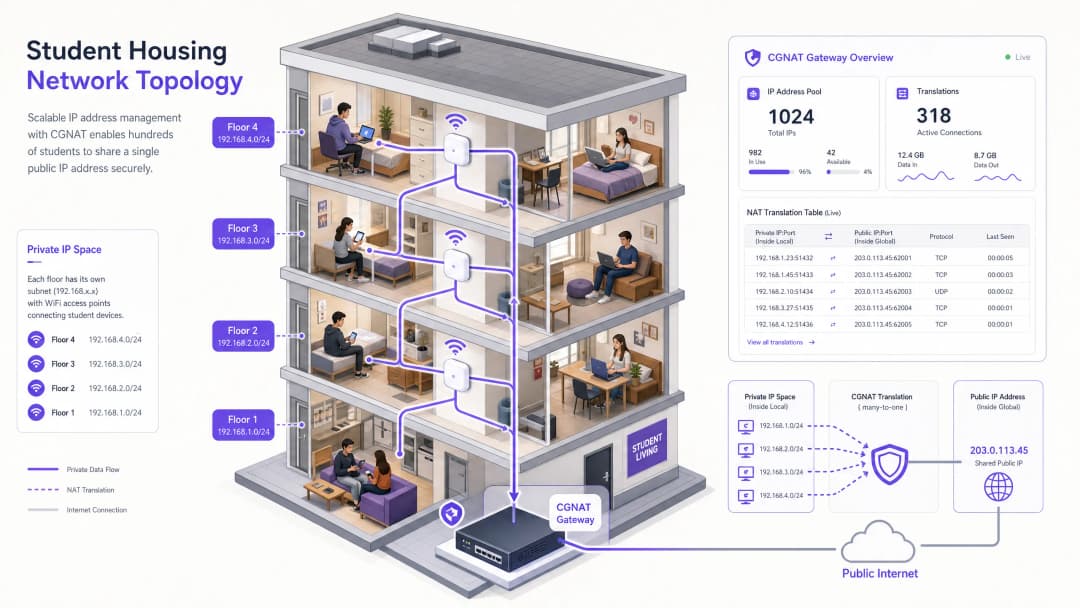
IPv4 অ্যাড্রেসের সংকট দ্রুত বৃদ্ধি পাওয়ার সাথে সাথে, ঘন মাল্টি-টেন্যান্ট পরিবেশ - যেমন ছাত্রাবাস, আতিথেয়তা, এবং বৃহৎ পাবলিক ভেন্যুগুলির IT ম্যানেজার এবং নেটওয়ার্ক আর্কিটেক্টরা উল্লেখযোগ্য পরিচালনগত চ্যালেঞ্জের মুখোমুখি হচ্ছেন। ১,০০০ জন বাসিন্দা বিশিষ্ট একটি একক ছাত্রাবাস ব্লক ৭,০০০-এরও বেশি সমবর্তী IP-সংযুক্ত ডিভাইস তৈরি করতে পারে। স্ট্যান্ডার্ড Port Address Translation (PAT) আর্কিটেকচারগুলি এই স্কেলে ব্যর্থ হয়, যার ফলে পোর্ট নিঃশেষ হয়ে যায়, সংযোগ বিচ্ছিন্ন হয় এবং ব্যবহারকারীর অভিজ্ঞতা হ্রাস পায়।
এই প্রযুক্তিগত রেফারেন্স গাইডটি IP সংকট পরিচালনা করার জন্য NAT444 মডেল ব্যবহার করে Carrier-Grade NAT (CGNAT) এর আর্কিটেকচার এবং স্থাপনার রূপরেখা প্রদান করে। RFC 6598 শেয়ার্ড অ্যাড্রেস স্পেস ব্যবহার করে এবং কৌশলগত Port Block Allocation (PBA) প্রয়োগ করে, নেটওয়ার্ক অপারেটররা উচ্চ গ্রাহক ঘনত্ব অর্জন করতে পারেন - প্রতি পাবলিক IP তে ১২৮ জন পর্যন্ত ব্যবহারকারী - এবং একই সাথে GDPR এবং আইনি বাধা সংক্রান্ত প্রবিধান মেনে চলা নিশ্চিত করতে পারেন। যে সমস্ত ভেন্যু Guest WiFi এবং WiFi Analytics এর মতো প্ল্যাটফর্ম ব্যবহার করে, তাদের জন্য একটি শক্তিশালী CGNAT আর্কিটেকচার অতিরিক্ত IPv4 ব্লক কেনার মূলধন ব্যয় (CapEx) ছাড়াই স্থিতিশীল সংযোগ এবং সঠিক ডেটা সংগ্রহ নিশ্চিত করে।
Technical Deep Dive
Student Accommodation-এ স্কেলের সমস্যা
আধুনিক student accommodation-এ ডিভাইসের ঘনত্ব অন্য যেকোনো ম্যানেজড নেটওয়ার্ক পরিবেশের থেকে আলাদা। একজন একক বাসিন্দা সাধারণত একটি স্মার্টফোন, একটি ল্যাপটপ, একটি স্মার্ট TV, একটি গেমিং কনসোল এবং অন্তত একটি স্মার্ট হোম ডিভাইস কানেক্ট করেন। প্রতি বাসিন্দার পাঁচ থেকে সাতটি ডিভাইস হিসেবে, একটি ১,০০০ শয্যার ক্যাম্পাসে কনকারেন্ট সেশন লোড তৈরি হয় যা সমমানের একটি হোটেলকেও হার মানায়। ব্যবহারের প্যাটার্নের কারণে চ্যালেঞ্জটি আরও জটিল হয়: সন্ধ্যার পিক আওয়ারে (১৮:০০ - ২৩:০০) গেমিং, ভিডিও স্ট্রিমিং এবং সোশ্যাল মিডিয়া জুড়ে প্রায় একই সাথে, উচ্চ-ব্যান্ডউইথের অ্যাক্টিভিটি দেখা যায়, যার সবকটিই পারসিস্টেন্ট ব্যাকগ্রাউন্ড কানেকশন বজায় রাখে।
Regional Internet Registry (RIR) স্তরে IPv4 অ্যাড্রেস স্পেস কার্যকরভাবে শেষ হয়ে গেছে। RIPE NCC, যা ইউরোপ এবং মধ্যপ্রাচ্যে বরাদ্দ পরিচালনা করে, ২০১৯ সালে তার চূড়ান্ত /8 বরাদ্দ নীতিতে পৌঁছেছে। ওপেন মার্কেটে অতিরিক্ত পাবলিক IPv4 ব্লক কেনার খরচ এখন প্রতিটি অ্যাড্রেসের জন্য $৪০ থেকে $৬০ এর মধ্যে - যা শত শত সাবনেট পরিচালনা করা যেকোনো অপারেটরের জন্য একটি ব্যয়বহুল CapEx।
স্ট্যান্ডার্ড PAT এর সীমাবদ্ধতা
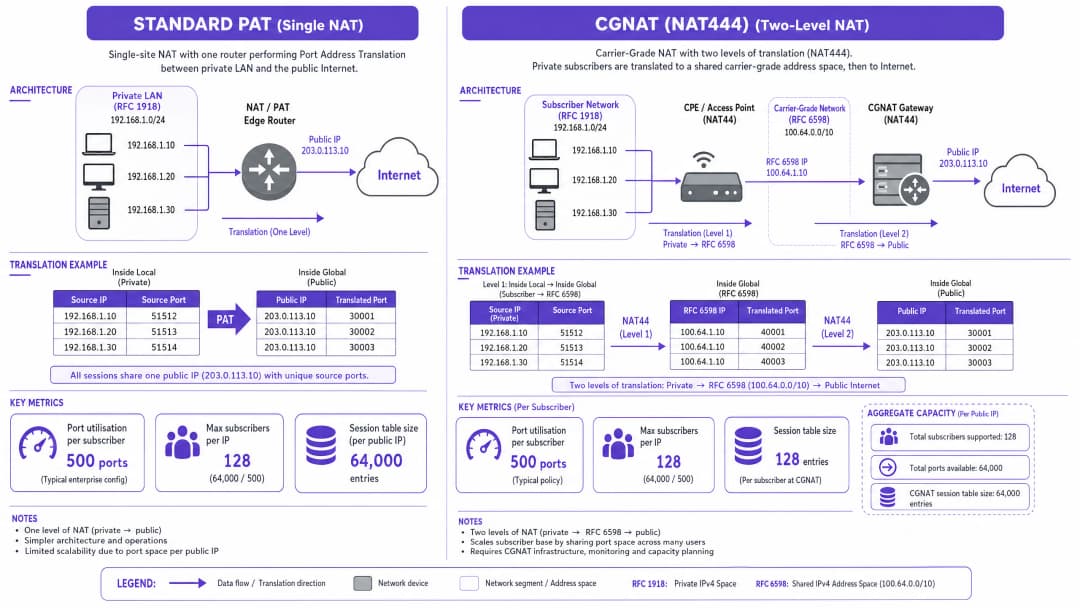
ঐতিহ্যবাহী সিঙ্গেল সাইট ডেপ্লয়মেন্টে, Port Address Translation (PAT) একটি সম্পূর্ণ প্রাইভেট LAN (RFC 1918 স্পেস: 10.0.0.0/8, 172.16.0.0/12, 192.168.0.0/16)-কে একটি মাত্র পাবলিক IP অ্যাড্রেসে ম্যাপ করে। একটি একক IPv4 অ্যাড্রেসে TCP এবং UDP জুড়ে ৬৫,৫৩৫টি উপলব্ধ পোর্ট থাকে। যদিও এটি একটি ছোট অফিসের জন্য যথেষ্ট, ঘনবসতিপূর্ণ student accommodation-এ ব্যাকগ্রাউন্ড অ্যাপ্লিকেশনের বিস্তার - যেমন ক্লাউড সিঙ্কোনাইজেশন, মেসেজিং প্ল্যাটফর্ম, স্ট্রিমিং সার্ভিস - এর অর্থ হল একজন একক ব্যবহারকারী সহজেই শত শত যুগপৎ পোর্ট গ্রাস করতে পারেন। যখন PAT এজ রাউটার তার উপলব্ধ পোর্টগুলো শেষ করে ফেলে, তখন নতুন সেশনের অনুরোধগুলো নীরবে বাতিল হয়ে যায়। এটি অ্যাপ্লিকেশনের টাইমআউট, ব্যর্থ VoIP কল এবং হেল্পডেস্ক টিকিটের বৃদ্ধি হিসেবে প্রকাশ পায়।
CGNAT (NAT444) আর্কিটেকচার
সিঙ্গেল লেভেল NAT-এর সীমাবদ্ধতা কাটিয়ে উঠতে, এন্টারপ্রাইজ নেটওয়ার্কগুলোকে অবশ্যই একটি Carrier-Grade NAT আর্কিটেকচার, বিশেষ করে NAT444 মডেল গ্রহণ করতে হবে। এই নামটি ট্রান্সলেশন চেইনের সাথে জড়িত IPv4 অ্যাড্রেস স্পেসের তিনটি স্তরকে নির্দেশ করে।
লেভেল ১ - CPE / অ্যাক্সেস পয়েন্ট লেয়ার: সাবস্ক্রাইবার ডিভাইসগুলোকে RFC 1918 স্পেস (যেমন, 192.168.x.x) থেকে প্রাইভেট IP অ্যাড্রেস বরাদ্দ করা হয়। অ্যাক্সেস পয়েন্ট বা কাস্টমার প্রিমিসেস ইকুইপমেন্ট (CPE) প্রথম NAT ট্রান্সলেশন সম্পন্ন করে।
লেভেল ২ - CGNAT গেটওয়ে: CPE প্রাইভেট RFC 1918 অ্যাড্রেসটিকে RFC 6598 শেয়ার্ড অ্যাড্রেস স্পেসে (100.64.0.0/10) রূপান্তর করে। এই ইন্টারমিডিয়েট স্পেসটি বিশেষভাবে সার্ভিস প্রোভাইডার ইনফ্রাস্ট্রাকচার এবং CGNAT গেটওয়ের মধ্যে ব্যবহারের জন্য সংরক্ষিত। অন্য একটি RFC 1918 রেঞ্জের পরিবর্তে RFC 6598 ব্যবহার করা জটিল মাল্টি-টেন্যান্ট পরিবেশে অ্যাড্রেস ওভারল্যাপ এবং রাউটিং দ্বন্দ্ব প্রতিরোধ করে।
লেভেল ৩ - পাবলিক ইন্টারনেট: CGNAT গেটওয়ে RFC 6598 অ্যাড্রেস থেকে একটি শেয়ার্ড পাবলিক IPv4 অ্যাড্রেসে চূড়ান্ত ট্রান্সলেশন সম্পন্ন করে। এটিই সেই অ্যাড্রেস যা বাহ্যিক পরিষেবাগুলোর কাছে দৃশ্যমান হয়।
Port Block Allocation: অত্যন্ত গুরুত্বপূর্ণ ডিজাইন সংক্রান্ত সিদ্ধান্ত
একটি CGNAT ডেপ্লয়মেন্টের সবচেয়ে গুরুত্বপূর্ণ কনফিগারেশন পছন্দ হলো পোর্ট বরাদ্দের কৌশল। এর দুটি পদ্ধতি রয়েছে:
ডাইনামিক পোর্ট অ্যালোকেশন (DPA): একটি শেয়ার্ড পুল থেকে সেশন প্রতি ভিত্তিতে পোর্ট বরাদ্দ করা হয়। এটি পোর্ট ব্যবহারের দক্ষতা সর্বোচ্চ করে কিন্তু প্রতিটি সেশন সেটআপ এবং টিয়ারডাউনের জন্য একটি করে লগ এন্ট্রি তৈরি করে - যা স্কেল করার সময় একটি বিশাল কমপ্লায়েন্স এবং অবকাঠামোগত বোঝা তৈরি করে।
পোর্ট ব্লক অ্যালোকেশন (PBA): প্রতিটি গ্রাহককে তাদের প্রথম সেশন শুরু করার সময় পোর্টের একটি ধারাবাহিক ব্লক বরাদ্দ করা হয়। গ্রাহকের সেশন বন্ধ না হওয়া পর্যন্ত ব্লকটি বরাদ্দ থাকে। এই পদ্ধতিতে কেবল তখনই লগ তৈরি হয় যখন একটি ব্লক বরাদ্দ এবং রিলিজ করা হয়, যা লগের পরিমাণ ৯৮% পর্যন্ত কমিয়ে দেয়।
| কনফিগারেশন প্যারামিটার | প্রস্তাবিত মান | যৌক্তিকতা |
|---|---|---|
| গ্রাহক প্রতি পোর্ট (PBA ব্লক সাইজ) | ৫০০ | পুল শেষ না করেই আধুনিক ওয়েব অ্যাপ্লিকেশন ব্যবহারের জন্য যথেষ্ট |
| গ্রাহক প্রতি সর্বোচ্চ সমসাময়িক সেশন | ২,০০০ | একটিমাত্র সংক্রমিত ডিভাইসকে পুরো পুল খালি করা থেকে প্রতিরোধ করে |
| সেশন টাইমআউট (TCP প্রতিষ্ঠিত) | ৭,৪৪০ সেকেন্ড (RFC ৫৩৮২) | NAT আচরণের জন্য IETF-এর সুপারিশের সাথে সামঞ্জস্যপূর্ণ |
| সেশন টাইমআউট (UDP) | ৩০০ সেকেন্ড | বাসি UDP ম্যাপিংগুলিকে পোর্ট স্পেস গ্রাস করা থেকে প্রতিরোধ করে |
ইন্ডাস্ট্রি বেঞ্চমার্ক: ১০০ টিরও বেশি ISP-তে ডেপ্লয়মেন্ট করা বিশেষজ্ঞ CGNAT বিক্রেতা NFWare, গ্রাহক প্রতি ৫০০টি পোর্ট বরাদ্দ সহ পাবলিক IP প্রতি সর্বোচ্চ ১২৮ জন গ্রাহক রাখার পরামর্শ দেয়। এই সীমার বাইরে যাওয়া - উদাহরণস্বরূপ, প্রতিটি গ্রাহকের জন্য ২৫০টি পোর্ট সহ IP প্রতি ২৫৬ জন গ্রাহক পর্যন্ত প্রসারিত করা - পিক লোডের সময় সেশন ড্রপ হওয়ার ঝুঁকি উল্লেখযোগ্যভাবে বাড়িয়ে দেয়।
দীর্ঘমেয়াদী মাইগ্রেশন পাথ হিসেবে ডুয়াল-স্ট্যাক IPv6
CGNAT একটি প্রশমন কৌশল মাত্র, কোনো স্থায়ী সমাধান নয়। সঠিক আর্কিটেকচারাল দিকনির্দেশনা হলো একটি ডুয়াল-স্ট্যাক ডেপ্লয়মেন্ট: CGNAT-এর সাথে IPv4-এর পাশাপাশি নেটিভভাবে IPv6 চালানো। আধুনিক ডিভাইস এবং প্রধান CDN গুলি (Google, Netflix, Meta, Cloudflare) উপলব্ধ থাকলে IPv6-কে জোরালোভাবে অগ্রাধিকার দেয়। একটি সঠিকভাবে কনফিগার করা ডুয়াল-স্ট্যাক পরিবেশে, মোট ট্রাফিকের ৬০-৭০% IPv6-এ অফলোড করা যেতে পারে, যা IPv4 CGNAT পুলের উপর লোড নাটকীয়ভাবে হ্রাস করে এবং এর কার্যকর জীবনকাল প্রসারিত করে।
healthcare এবং transport পরিবেশের জন্য যেখানে লেগাসি ডিভাইস সাপোর্ট অত্যন্ত গুরুত্বপূর্ণ, ডুয়াল-স্ট্যাক একটি স্পষ্ট মাইগ্রেশন পাথও প্রদান করে: IPv6-সক্ষম ডিভাইসগুলি নেটিভভাবে মাইগ্রেট করে, অন্যদিকে লেগাসি শুধুমাত্র-IPv4 ডিভাইসগুলি ব্যবহারকারীর কোনো ব্যাঘাত ছাড়াই CGNAT-এর মাধ্যমে কাজ চালিয়ে যায়।

ইমপ্লিমেন্টেশন গাইড
ধাপ ১: আপনার বর্তমান IP বরাদ্দ এবং ডিভাইসের ঘনত্ব অডিট করুন
CGNAT ডিপ্লয় করার আগে, একটি বেসলাইন তৈরি করুন। আপনার বিদ্যমান নেটওয়ার্ক ম্যানেজমেন্ট সিস্টেম থেকে নিম্নলিখিত ডেটা সংগ্রহ করুন:
- সাবনেট প্রতি পিক কনকারেন্ট ডিভাইস কাউন্ট
- ডিভাইস প্রতি গড় এবং পিক সেশন
- বর্তমান পাবলিক IP ব্যবহারের শতাংশ
- বিদ্যমান NAT টাইমআউট কনফিগারেশন
এই ডেটা সরাসরি আপনার PBA ব্লক সাইজ এবং পাবলিক IP পুলের প্রয়োজনীয়তা নির্ধারণ করে।
ধাপ ২: RFC 6598 ট্রানজিট নেটওয়ার্ক ডিজাইন করুন
ক্যারিয়ার-গ্রেড ট্রানজিট নেটওয়ার্কের জন্য 100.64.0.0/10 ব্লক বরাদ্দ করুন। আপনার ক্যাম্পাসের টপোলজির সাথে মিল রেখে সাবনেটিং পরিকল্পনা করুন - সাধারণত প্রতি বিল্ডিং বা অ্যাক্সেস লেয়ার সেগমেন্টের জন্য একটি /24 বা /23। নিশ্চিত করুন যে আপনার রাউটিং ইনফ্রাস্ট্রাকচার পাবলিক ইন্টারনেট বা পিয়ারিং পার্টনারদের কাছে RFC 6598 প্রিফিক্স লিক না করে।
ধাপ ৩: CGNAT গেটওয়ে ডিপ্লয় এবং কনফিগার করুন
CGNAT গেটওয়ে সাধারণত একটি ডেডিকেটেড হার্ডওয়্যার অ্যাপ্লায়েন্স বা কমোডিটি সার্ভার হার্ডওয়্যারে চলমান একটি ভার্চুয়ালাইজড নেটওয়ার্ক ফাংশন (VNF)। মূল কনফিগারেশন প্যারামিটারসমূহ:
- NAT পুল: NAT পুলে আপনার পাবলিক IPv4 ব্লক অ্যাসাইন করুন। নিশ্চিত করুন যে পুলের আকার আপনার টার্গেটেড সাবস্ক্রাইবার-টু-IP অনুপাতের জন্য উপযুক্ত।
- PBA কনফিগারেশন: ব্লকের আকার ৫০০টি পোর্টে সেট করুন। সাবস্ক্রাইবার প্রতি সর্বোচ্চ ব্লক ১ এ কনফিগার করুন (বেস ব্লকের আকার না বাড়িয়ে, কোনো সাবস্ক্রাইবার তাদের প্রাথমিক ব্লক শেষ করে ফেললে এটিকে ২ পর্যন্ত বাড়ানোর বিকল্প সহ)।
- লগিং: আপনার SIEM-এ সিসলগ আউটপুট কনফিগার করুন। PBA এর সাথে, প্রতিটি লগ এন্ট্রি রেকর্ড করে: সাবস্ক্রাইবারের ইন্টারনাল IP, অ্যাসাইন করা পাবলিক IP, অ্যাসাইন করা পোর্ট ব্লকের শুরু, ব্লকের শেষ, বরাদ্দের টাইমস্ট্যাম্প এবং রিলিজের টাইমস্ট্যাম্প।
- সেশন লিমিট: অপব্যবহার রোধ করতে সাবস্ক্রাইবার প্রতি সর্বোচ্চ ২,০০০টি কনকারেন্ট সেশন প্রয়োগ করুন।
ধাপ ৪: আইডেন্টিটি এবং অথেন্টিকেশন লেয়ারের সাথে ইন্টিগ্রেট করুন
যেসব এনভায়রনমেন্টে Guest WiFi প্ল্যাটফর্ম ব্যবহার করা হচ্ছে, সেখানে Captive Portal অথেন্টিকেশন অবশ্যই লেভেল ১ NAT বাউন্ডারিতে বা তার আগে হতে হবে। এটি নিশ্চিত করে যে ট্রাফিক CGNAT পুলে একত্রিত হওয়ার আগে আইডেন্টিটি প্রোভাইডার নির্ভুলভাবে MAC অ্যাড্রেস এবং ব্যবহারকারীর ক্রেডেন্সিয়ালকে অনন্য ইন্টারনাল IP অ্যাড্রেসের সাথে ম্যাপ করতে পারে। Purple এর প্ল্যাটফর্ম এটি অ্যাক্সেস পয়েন্ট স্তরে পরিচালনা করে, একটি স্পষ্ট ইউজার-টু-IP বাইন্ডিং বজায় রাখে যা NAT ট্রান্সলেশন চেইনের মাধ্যমে স্থায়ী হয়।
পাসওয়ার্ডবিহীন অ্যাক্সেস ডিপ্লয়মেন্টের জন্য - যেমনটা How a WiFi Assistant Enables Passwordless Access in 2026-এ বর্ণনা করা হয়েছে - একই নীতি প্রযোজ্য: নির্ভুল সেশন অ্যাট্রিবিউশন নিশ্চিত করতে আইডেন্টিটি বাইন্ডিং অবশ্যই CGNAT গেটওয়ের আপস্ট্রিমে স্থাপন করতে হবে।
ধাপ ৫: IPv6 ডুয়াল-স্ট্যাক কনফিগার করুন
সব অ্যাক্সেস পয়েন্টে IPv6 সক্ষম করুন এবং DHCPv6 বা SLAAC এর মাধ্যমে VLAN প্রতি একটি /64 প্রিফিক্স ডিস্ট্রিবিউট করুন। আপনার আপস্ট্রিম প্রোভাইডারের মাধ্যমে IPv6 রুট ডিক্লেয়ার করুন। আপনার IPv4 NAT পুলের আকার হ্রাস করার আগে, যাচাই করুন যে প্রধান CDN ট্রাফিক (Google, Netflix, YouTube) AAAA রেকর্ডে রিজলভ হচ্ছে এবং IPv6 এর মাধ্যমে রাউট হচ্ছে।
আপনার নির্দিষ্ট সেটআপ নিয়ে কোনো প্রশ্ন আছে?
আমাদের টিম ৮০,০০০ ভেন্যুতে ভেন্যু অপারেটর, IT ম্যানেজার এবং নেটওয়ার্ক ইঞ্জিনিয়ারদের সাথে কাজ করে। একটি ২০ মিনিটের কল বুক করুন এবং আপনার মতো অন্যরা কীভাবে এর সমাধান করেছেন তা আমরা আপনাকে দেখাব।
সেরা অনুশীলনসমূহ
যেখানে সম্ভব Deterministic NAT প্রয়োগ করুন। Deterministic NAT একজন সাবস্ক্রাইবারের ইন্টারনাল IP অ্যাড্রেস এবং তাদের জন্য নির্ধারিত পাবলিক IP এবং পোর্ট ব্লকের মধ্যে একটি অ্যালগরিদমিক ম্যাপিং ব্যবহার করে। যেহেতু ম্যাপিংটি গাণিতিকভাবে গণনাযোগ্য, তাই কোনো সেশন টেবিল রক্ষণাবেক্ষণ বা লগ করার প্রয়োজন নেই - আইনি নজরদারির উদ্দেশ্যে প্রয়োজনের সময় ম্যাপিংটি রিভার্স-ইঞ্জিনিয়ার করা যেতে পারে। কমপ্লায়েন্স-সচেতন স্থাপনার জন্য এটি সবচেয়ে সেরা মানদণ্ড।
CGNAT গেটওয়ের লোড বন্টন করুন। সমস্ত CGNAT ট্রাফিক একটি মাত্র অ্যাপ্লায়েন্সের মাধ্যমে ঘনীভূত করা এড়িয়ে চলুন। কোনো একক ত্রুটি এড়াতে ক্যাম্পাস বা বিল্ডিংজুড়ে গেটওয়েগুলো বন্টন করুন। বন্টনকৃত গেটওয়েগুলো IP রেপুটেশন ঝুঁকিও কমায়: যদি পুলের একটি পাবলিক IP কোনো CDN দ্বারা সন্দেহজনক ট্রাফিক প্যাটার্নের (CAPTCHA সমস্যা) জন্য চিহ্নিত হয়, তবে কেবল ব্যবহারকারীদের একটি নির্দিষ্ট অংশ প্রভাবিত হয়।
সক্রিয়ভাবে IP রেপুটেশন মনিটর করুন। IP রেপুটেশন ফিডে সাবস্ক্রাইব করুন (যেমন, Spamhaus, SURBL) এবং আপনার পাবলিক NAT পুলের IPগুলো মনিটর করুন। একটি সক্রিয় অ্যাড্রেস ব্ল্যাকলিস্টেড হয়ে গেলে পরিবর্তন করার জন্য পরিষ্কার IP-র একটি রিজার্ভ পুল বজায় রাখুন। এটি বিশেষ করে ছাত্রাবাসগুলোর ক্ষেত্রে অত্যন্ত গুরুত্বপূর্ণ, যেখানে অল্প সংখ্যক ব্যবহারকারী এমন ক্রিয়াকলাপে জড়িত হতে পারে যা অপব্যবহারের ফ্ল্যাগ ট্রিগার করে।
প্রতি সাবস্ক্রাইবার প্রতি সেশন সীমা প্রয়োগ করুন। প্রতি সাবস্ক্রাইবারের জন্য সর্বোচ্চ ২,০০০টি সমসাময়িক সেশনের কঠোর সীমা একটি মাত্র সংক্রমিত ডিভাইসকে - উদাহরণস্বরূপ, একটি DDoS অ্যামপ্লিফিকেশন অ্যাটাকে অংশ নেওয়া ডিভাইস - সেই পাবলিক IP-তে বরাদ্দকৃত সম্পূর্ণ পোর্ট ব্লকটি শেষ করা থেকে বাধা দেয়। নেটওয়ার্ক পারফরম্যান্স মনিটরিং সম্পর্কে আরও বিশদ বিবরণের জন্য, কীভাবে WiFi সিগন্যালের শক্তি এবং কভারেজ পরিমাপ করতে হয় সে সম্পর্কে আমাদের গাইডটি দেখুন।
অ্যাক্সেস নিয়ন্ত্রণের জন্য IEEE 802.1X এর সাথে সারিবদ্ধ করুন। অ্যাক্সেস লেয়ারে IEEE 802.1X পোর্ট-ভিত্তিক অথেন্টিকেশন স্থাপন করা নিশ্চিত করে যে কেবল অথেন্টিকেটেড ডিভাইসগুলোই IP বরাদ্দ পায়। এটি অননুমোদিত ডিভাইসগুলোর পোর্ট বরাদ্দ গ্রাস করার ঝুঁকি হ্রাস করে এবং আইনি নজরদারির উদ্দেশ্যে একটি স্পষ্ট অডিট ট্রেইল প্রদান করে।
ট্রাবলশুটিং এবং ঝুঁকি হ্রাস
লগিং এবং কমপ্লায়েন্সের বোঝা
যুক্তরাজ্য এবং ইউরোপে, GDPR এবং Investigatory Powers Act 2016-এর অধীনে, নেটওয়ার্ক অপারেটরদের অবশ্যই একটি নির্দিষ্ট টাইমস্ট্যাম্পে একটি নির্দিষ্ট ব্যবহারকারীর সাথে একটি পাবলিক IP অ্যাড্রেস এবং পোর্ট নম্বর ট্রেস করতে সক্ষম হতে হবে। এটি একটি অ-আলোচনাযোগ্য আইনি বাধ্যবাধকতা।
ঝুঁকি: ডায়নামিক CGNAT-এর সাহায্যে, প্রতিটি সেশন সেটআপ এবং টিয়ারডাউন লগ করার ফলে প্রতিদিন টেরাবাইট পরিমাণের সিসলগ ডেটা তৈরি হয়। ডায়নামিক অ্যালোকেশন সহ ১,০০০ ব্যবহারকারীর একটি স্থাপনা প্রতিদিন ৫০০ মিলিয়ন লগ এন্ট্রি তৈরি করতে পারে। এটি SIEM অবকাঠামোকে অভিভূত করে, স্টোরেজ খরচ বাড়িয়ে দেয় এবং ফরেনসিক তদন্তকে অবাস্তব করে তোলে।
ঝুঁকি হ্রাস: পোর্ট ব্লক অ্যালোকেশন (PBA) লগিং ভলিউম ৯৮% পর্যন্ত কমিয়ে দেয়। PBA-এর সাহায্যে, আপনি কেবল ব্লক বরাদ্দ এবং রিলিজ ইভেন্টগুলো লগ করেন - সাধারণত ব্যবহারকারীর প্রতি সেশনে শত বা হাজারের পরিবর্তে কেবল দুটি লগ এন্ট্রি। যুক্তরাজ্যের ডেটা রিটেনশন প্রয়োজনীয়তা মেনে চলতে আপনার SIEM এই লগগুলো ন্যূনতম ১২ মাসের জন্য সংরক্ষণ করে তা নিশ্চিত করুন।
CAPTCHA এবং IP রেপুটেশন সংক্রান্ত সমস্যা
যখন ১২৮ জন ব্যবহারকারী একটি একক পাবলিক আইপি শেয়ার করেন, তখন একত্রিত ট্রাফিক ভলিউম প্রধান ওয়েবসাইটগুলোতে রেট-লিমিটিং বা অ্যান্টি-বট সুরক্ষা ট্রিগার করতে পারে। Google-এর reCAPTCHA, Cloudflare-এর বট ম্যানেজমেন্ট এবং অনুরূপ সিস্টেমগুলো আইপি-ভিত্তিক হিউরিস্টিকস ব্যবহার করে যা একটি শেয়ার করা CGNAT আইপি-কে বট সোর্স হিসেবে ভুল শ্রেণিবদ্ধ করতে পারে।
শমন পদ্ধতি: আপনার CGNAT পুলকে একাধিক পাবলিক আইপির মধ্যে বিতরণ করুন। রেপুটেশন স্কোরগুলো সক্রিয়ভাবে পর্যবেক্ষণ করুন। ডিএনএস-ভিত্তিক রেপুটেশন সমস্যা প্রতিরোধ করতে DNS-over-HTTPS (DoH) বা DNS-over-TLS (DoT) মোতায়েন করার কথা বিবেচনা করুন। ব্যবহারকারীদের বুঝিয়ে বলুন যে শেয়ার করা আইপি পরিবেশে মাঝে মাঝে CAPTCHA প্রম্পট আসা একটি স্বাভাবিক আচরণ।
অ্যাপ্লিকেশন সামঞ্জস্যতার সমস্যা
কিছু অ্যাপ্লিকেশন - বিশেষ করে পিয়ার-টু-পিয়ার প্রোটোকল, নির্দিষ্ট VoIP ইমপ্লিমেন্টেশন এবং পুরানো গেমিং প্ল্যাটফর্মগুলো - পারসিস্টেন্ট পোর্ট ম্যাপিং বা ইনবাউন্ড কানেকশন ইনিশিয়েশনের ওপর নির্ভর করে। এগুলো ডাবল NAT-এর অধীনে কাজ করা বন্ধ করে দিতে পারে।
শমন পদ্ধতি: VoIP-এর জন্য, আপনার CGNAT গেটওয়ে যাতে SIP-এর জন্য ALG (Application Layer Gateway) সাপোর্ট করে তা নিশ্চিত করুন। গেমিংয়ের জন্য, একটি UPnP প্রক্সি বা একটি আলাদা, কম ঘনত্বের NAT পুল সহ একটি ডেডিকেটেড গেমিং VLAN ইমপ্লিমেন্ট করার কথা বিবেচনা করুন। রিটেইল পরিবেশের জন্য যেখানে পয়েন্ট-অফ-সেল সিস্টেমগুলোর ইনবাউন্ড কানেক্টিভিটি প্রয়োজন, সেই ডিভাইসগুলোকে একটি সম্পূর্ণ আলাদা VLAN-এ রাখুন যা CGNAT লেয়ারটিকে সম্পূর্ণভাবে বাইপাস করে।
ROI এবং ব্যবসায়িক প্রভাব
ক্যাপিটাল এক্সপেন্ডিচার (CapEx) সাশ্রয়
CGNAT মোতায়েন করা তাৎক্ষণিক এবং যথেষ্ট পরিমাণে CapEx সাশ্রয় করে। প্রতিটি IPv4 ঠিকানার জন্য ৫০ ডলারের বাজারদরে, ১:১ ডিভাইস-টু-আইপি অনুপাতের প্রয়োজন এমন একটি ৫,০০০ শয্যার বিশ্ববিদ্যালয়ের আনুমানিক ৩৫,০০০ আইপি ঠিকানা কেনার প্রয়োজন হবে - যার খরচ ১.৭৫ মিলিয়ন ডলার। একটি ১২৮:১ অনুপাত সহ CGNAT মোতায়েন করে, একই মোতায়েনের জন্য ৩০০টিরও কম পাবলিক আইপির প্রয়োজন হয়, যা আইপি ক্রয়ের খরচ কমিয়ে আনুমানিক ১৫,০০০ ডলারে নিয়ে আসে।
এমনকি CGNAT গেটওয়ে হার্ডওয়্যার বা ভার্চুয়ালাইজড নেটওয়ার্ক ফাংশনের খরচ (সাধারণত একটি ক্যাম্পাস-স্কেল মোতায়েনের জন্য ২০,০০০ ডলার - ৮০,০০০ ডলার) হিসাব করার পরেও, নেট সাশ্রয় অত্যন্ত আকর্ষণীয়।
অপারেশনাল এক্সপেন্ডিচার (OpEx) হ্রাস
স্থিতিশীল কানেক্টিভিটি সরাসরি হেল্পডেস্কের ওভারহেড হ্রাস করে। পোর্ট নিঃশেষ হয়ে যাওয়ার ঘটনা - যা লার্জ-স্কেল স্ট্যান্ডার্ড PAT-এর প্রাথমিক ফেইলিওর মোড - অতিরিক্ত পরিমাণে সাপোর্ট টিকিটের সৃষ্টি করে। উপযুক্ত সেশন লিমিট এবং PBA সহ একটি সু-কনফিগার করা CGNAT মোতায়েন এই ফেইলিওর মোডকে দূর করে, যার ফলে নেটওয়ার্ক-সম্পর্কিত হেল্পডেস্কের কাজের চাপ আনুমানিক ৩০-৪০% হ্রাস পায়।
স্টুডেন্ট হাউজিংয়ে প্রতিযোগিতামূলক সুবিধা
প্রতিযোগিতাপূর্ণ স্টুডেন্ট হাউজিং বাজারে, সম্ভাব্য ভাড়াটেদের জন্য নেটওয়ার্কের মান একটি প্রাথমিক নির্বাচনের মাপকাঠি। যে অপারেটররা ধারাবাহিক, হাই-থ্রুপুট কানেক্টিভিটি প্রদর্শন করতে পারে - যা আপটাইম, সেশন কোয়ালিটি এবং ডিভাইস ডেনসিটি মেট্রিক্স প্রদর্শনকারী WiFi Analytics ড্যাশবোর্ডের মাধ্যমে যাচাইকৃত - তারা প্রিমিয়াম ভাড়ার হার এবং উচ্চতর অকুপেন্সি অর্জন করে। এই অবকাঠামোগত স্থিতিশীলতা উন্নত লোকেশন-ভিত্তিক পরিষেবাগুলি বাস্তবায়নেরও ভিত্তি, যেমনটি Purple launched offline maps mode for seamless, secure navigation for WiFi hotspots এ তুলে ধরা হয়েছে।
কেস স্টাডি ১: ৮০০-বেডের ইউনিভার্সিটি রেসিডেন্স হল
যুক্তরাজ্যের একটি বিশ্ববিদ্যালয় দ্বারা পরিচালিত একটি ৮০০-বেডের রেসিডেন্স হলে সন্ধ্যার পিক আওয়ারে ক্রনিক কানেক্টিভিটি সমস্যা দেখা দিচ্ছিল। অনুসন্ধানে জানা গেছে যে তাদের সিঙ্গেল-লেভেল PAT কনফিগারেশন, যা একটি /29 পাবলিক সাবনেট (৬টি ব্যবহারযোগ্য IP) ব্যবহার করছিল, প্রতিদিন সন্ধ্যা ১৯:৩০ এর মধ্যে উপলব্ধ পোর্টগুলি নিঃশেষ করে ফেলছিল। অপারেটরটি PBA (প্রতি সাবস্ক্রাইবার পিছু ৫০০ পোর্ট, IP প্রতি ১২৮ জন সাবস্ক্রাইবার) সহ একটি CGNAT সমাধান স্থাপন করে, যা একটি /27 পাবলিক সাবনেটে (৩০টি ব্যবহারযোগ্য IP) আপগ্রেড করা হয় এবং IPv6 ডুয়াল-স্ট্যাক সক্রিয় করা হয়। স্থাপনের পরবর্তী মেট্রিক্স দেখিয়েছে যে প্রাথমিক ডায়নামিক অ্যালোকেশন পাইলটের তুলনায় পোর্ট নিঃশেষের ঘটনা ৯৪% হ্রাস পেয়েছে, নেটওয়ার্ক-সম্পর্কিত হেল্পডেস্ক টিকিটের সংখ্যা ৩৮% হ্রাস পেয়েছে এবং CGNAT লগ ভলিউম ৬৫% হ্রাস পেয়েছে। স্থাপনের ৬০ দিনের মধ্যে, IPv6 অফলোড রেট ৬২%-এ পৌঁছেছে।
কেস স্টাডি ২: ১,২০০-রুমের পারপাস-বিল্ট স্টুডেন্ট অ্যাকোমোডেশন (PBSA) অপারেটর
যুক্তরাজ্যের দুটি শহর জুড়ে তিনটি সাইট পরিচালনাকারী একটি বেসরকারি PBSA অপারেটরের চতুর্থ সাইট খোলার আগে তাদের নেটওয়ার্ক আর্কিটেকচার মানসম্মত করার প্রয়োজন ছিল। তাদের বিদ্যমান অবকাঠামোতে সিঙ্গেল-লেভেল NAT এবং অ্যাড-হক VLAN সেগমেনটেশনের মিশ্রণ ব্যবহার করা হচ্ছিল এবং কোনো সুসংগত লগিং কৌশল ছিল না। তিনটি সাইট জুড়েই ডিটারমিনিস্টিক NAT সহ একটি CGNAT স্থাপন করা হয়েছিল, যা সেশন লগিং ওভারহেড ছাড়াই গাণিতিকভাবে গণনাযোগ্য সাবস্ক্রাইবার-টু-IP ম্যাপিং সক্ষম করে। এই পদ্ধতিটি আইনি বাধা মেনে চলার বিষয়ে অপারেটরের আইনি দলকে সন্তুষ্ট করেছে, সেশন লগের জন্য SIEM স্টোরেজ খরচ দূর করেছে এবং চতুর্থ সাইটের জন্য একটি সামঞ্জস্যপূর্ণ আর্কিটেকচার টেমপ্লেট প্রদান করেছে। অপারেটরটি Captive Portal অথেন্টিকেশনের জন্য Purple-এর Guest WiFi প্ল্যাটফর্মকেও একীভূত করেছে, যা অ্যানালিটিক্স রিপোর্টে সঠিক ব্যবহারকারী অ্যাট্রিবিউশন নিশ্চিত করতে CGNAT গেটওয়ের আপস্ট্রিমে আইডেন্টিটি বাইন্ডিং প্রতিষ্ঠা করেছে।
মূল সংজ্ঞাসমূহ
CGNAT (Carrier-Grade NAT)
একটি নেটওয়ার্ক আর্কিটেকচার যেখানে একজন অপারেটর একটি সেন্ট্রালাইজড গেটওয়েতে নেটওয়ার্ক অ্যাড্রেস ট্রান্সলেশন সম্পাদন করে, যা একাধিক সাবস্ক্রাইবারকে একটি একক পাবলিক IPv4 অ্যাড্রেস শেয়ার করতে সক্ষম করে। RFC 6264 এবং RFC 6888 এ সংজ্ঞায়িত। এটি Large-Scale NAT (LSN) বা CGN নামেও পরিচিত।
একটি নেটওয়ার্কে সমস্ত ডিভাইসে পরিষেবা দেওয়ার জন্য একটি একক পাবলিক IP অপর্যাপ্ত হলে IT টিমগুলি CGNAT এর সম্মুখীন হয়। স্টুডেন্ট হাউজিংয়ে, অতিরিক্ত পাবলিক অ্যাড্রেস স্পেস না কিনে IPv4 নিঃশেষকরণ পরিচালনা করার জন্য CGNAT হল প্রাথমিক প্রক্রিয়া।
NAT444
একটি নির্দিষ্ট CGNAT টপোলজি যা IPv4 অ্যাড্রেস স্পেসের তিনটি লেয়ারের সাথে সম্পর্কিত: সাবস্ক্রাইবার প্রাইভেট অ্যাড্রেস (RFC 1918), ক্যারিয়ার-গ্রেড শেয়ার্ড অ্যাড্রেস (RFC 6598), এবং পাবলিক ইন্টারনেট অ্যাড্রেস। নামটি মূলত তিনটি ট্রাভার্সড IPv4 নেটওয়ার্ককে নির্দেশ করে।
মাল্টি-টেন্যান্ট পরিবেশে CGNAT ডিপ্লয়মেন্টের জন্য NAT444 হল স্ট্যান্ডার্ড আর্কিটেকচার। ইন্টারমিডিয়েট নেটওয়ার্কটি সঠিকভাবে ডিজাইন করতে এবং অ্যাড্রেস ওভারল্যাপ এড়াতে নেটওয়ার্ক আর্কিটেক্টদের অবশ্যই থ্রি-লেয়ার মডেলটি বুঝতে হবে।
RFC 6598 শেয়ার্ড অ্যাড্রেস স্পেস
একটি CPE এবং একটি CGNAT গেটওয়ের মধ্যবর্তী নেটওয়ার্কে ব্যবহারের জন্য IANA দ্বারা সংরক্ষিত 100.64.0.0/10 IPv4 অ্যাড্রেস ব্লক (100.64.0.0 থেকে 100.127.255.255)। এই স্পেসটি পাবলিক ইন্টারনেটে রাউটেবল নয় এবং এটি বিশেষত NAT444 ডিপ্লয়মেন্টে অ্যাড্রেস দ্বন্দ্ব প্রতিরোধ করার জন্য ডিজাইন করা হয়েছে।
ইন্টারমিডিয়েট CGNAT নেটওয়ার্কের জন্য IT টিমগুলিকে অবশ্যই RFC 6598 ব্যবহার করতে হবে - RFC 1918 নয়। এই সেগমেন্টের জন্য RFC 1918 ব্যবহার করলে সাবস্ক্রাইবার নেটওয়ার্কে একই RFC 1918 রেঞ্জ ব্যবহার করা হলে অ্যাড্রেস ওভারল্যাপের ঝুঁকি তৈরি হয়।
পোর্ট ব্লক অ্যালোকেশন (PBA)
একটি CGNAT পোর্ট অ্যাসাইনমেন্ট কৌশল যেখানে প্রতিটি সংযোগের জন্য পৃথকভাবে পোর্ট বরাদ্দ করার পরিবর্তে প্রতিটি সাবস্ক্রাইবারকে তাদের সেশনের সময়কালের জন্য পোর্টের একটি সংলগ্ন ব্লক (যেমন, ৫০০টি পোর্ট) বরাদ্দ করা হয়। RFC 7422 এ সংজ্ঞায়িত।
GDPR-সম্মত CGNAT ডিপ্লয়মেন্টের জন্য PBA হল প্রস্তাবিত পদ্ধতি। এটি ডায়নামিক পোর্ট অ্যালোকেশনের তুলনায় লগিং ওভারহেড ৯৮% পর্যন্ত হ্রাস করে, যা আইনি বাধা কমপ্লায়েন্স স্কেলে পরিচালনা করা সহজ করে তোলে।
ডিটারমিনিস্টিক NAT
একটি CGNAT কনফিগারেশন যেখানে কোনো সেশন টেবিল বজায় না রেখে, একজন সাবস্ক্রাইবারের ইন্টারনাল IP অ্যাড্রেস এবং তাদের নির্ধারিত পাবলিক IP ও পোর্ট ব্লকের মধ্যকার ম্যাপিং অ্যালগরিদমিকভাবে গণনা করা হয়। ম্যাপিংটি গাণিতিকভাবে রিভার্সিবল, যা লগ পুনরুদ্ধার ছাড়াই সাবস্ক্রাইবার সনাক্তকরণ সক্ষম করে।
কমপ্লায়েন্স-সচেতন ডিপ্লয়মেন্টের জন্য ডিটারমিনিস্টিক NAT হল গোল্ড স্ট্যান্ডার্ড। এটি আইনসম্মত ইন্টারসেপ্ট প্রয়োজনীয়তা পূরণ করার সাথে সাথে লগিং ওভারহেড সম্পূর্ণরূপে দূর করে, কারণ পরিচিত অ্যালগরিদম ব্যবহার করে একটি পাবলিক IP, পোর্ট এবং টাইমস্ট্যাম্প থেকে সাবস্ক্রাইবারকে সনাক্ত করা যেতে পারে।
PAT (Port Address Translation)
নেটওয়ার্ক অ্যাড্রেস ট্রান্সলেশনের একটি রূপ যাতে অনন্য সোর্স পোর্ট নম্বর ব্যবহার করে সংযোগগুলিকে আলাদা করার মাধ্যমে একাধিক প্রাইভেট IP অ্যাড্রেসকে একটি একক পাবলিক IP অ্যাড্রেসে ম্যাপ করা হয়। এটি NAT ওভারলোড বা মেনি-টু-ওয়ান NAT নামেও পরিচিত।
বেশিরভাগ এন্টারপ্রাইজ এজ রাউটারে ব্যবহৃত PAT হল স্ট্যান্ডার্ড সিঙ্গেল-লেভেল NAT। এটি CGNAT এর পূর্বসূরি এবং স্কেলে পোর্ট শেষ হয়ে যাওয়ার কারণে ঘন মাল্টি-টেন্যান্ট পরিবেশের জন্য এটি অপর্যাপ্ত।
সেশন টেবিল
একটি NAT গেটওয়ে দ্বারা পরিচালিত একটি ডেটা স্ট্রাকচার যা প্রতিটি সক্রিয় কানেকশনের জন্য ইন্টারনাল (প্রাইভেট) IP অ্যাড্রেস ও পোর্ট এবং এক্সটারনাল (পাবলিক) IP অ্যাড্রেস ও পোর্টের মধ্যে ম্যাপিং রেকর্ড করে। সেশন টেবিল হলো CGNAT দ্বারা ব্যবহৃত প্রধান মেমরি এবং প্রসেসিং রিসোর্স।
CGNAT গেটওয়ের জন্য সেশন টেবিল সাইজিং একটি অত্যন্ত গুরুত্বপূর্ণ ক্যাপাসিটি প্ল্যানিং প্যারামিটার। প্রতি সাবস্ক্রাইবারে সর্বোচ্চ ২,০০০ সেশন সহ ১,০০০ সাবস্ক্রাইবারের একটি ডিপ্লয়মেন্টের জন্য কমপক্ষে ২০ লক্ষ এন্ট্রির সেশন টেবিল ক্যাপাসিটি প্রয়োজন। সেশন টেবিল কম আকারের হলে সংযোগ ব্যর্থ হতে পারে।
Dual-Stack
একটি নেটওয়ার্ক কনফিগারেশন যেখানে একই নেটওয়ার্ক ইনফ্রাস্ট্রাকচার এবং এন্ড ডিভাইসে একই সাথে IPv4 এবং IPv6 উভয় প্রোটোকলই সক্রিয় থাকে। Dual-stack সক্ষমতাসম্পন্ন ডিভাইসগুলো IPv6-সক্ষম ডেস্টিনেশনে কানেকশনের জন্য IPv6-কে অগ্রাধিকার দেবে।
CGNAT ডিপ্লয়মেন্টের জন্য Dual-stack হলো একটি সুপারিশকৃত ট্রানজিশন স্ট্র্যাটেজি। IPv6-সক্ষম ট্রাফিককে নেটিভ IPv6 পাথে অফলোড করার মাধ্যমে, Dual-stack মূলত IPv4 CGNAT পুলের উপর লোড হ্রাস করে এবং একটি IPv6-প্রাইমারি নেটওয়ার্কের দিকে মাইগ্রেশনের পথ তৈরি করে।
RFC 1918 Private Address Space
প্রাইভেট নেটওয়ার্ক ব্যবহারের জন্য সংরক্ষিত তিনটি IPv4 অ্যাড্রেস রেঞ্জ: 10.0.0.0/8, 172.16.0.0/12, এবং 192.168.0.0/16। এই অ্যাড্রেসগুলো পাবলিক ইন্টারনেটে রাউট করা যায় না এবং ইন্টারনাল নেটওয়ার্ক অ্যাড্রেসিংয়ের জন্য ব্যবহৃত হয়।
CGNAT ডিপ্লয়মেন্টে সাবস্ক্রাইবার ডিভাইস অ্যাড্রেসিংয়ের জন্য RFC 1918 অ্যাড্রেস ব্যবহৃত হয়। নেটওয়ার্ক আর্কিটেক্টদের অবশ্যই নিশ্চিত করতে হবে যেন সাবস্ক্রাইবার নেটওয়ার্কে ব্যবহৃত RFC 1918 রেঞ্জগুলো ইন্টারমিডিয়েট CGNAT নেটওয়ার্কে ব্যবহৃত রেঞ্জের সাথে ওভারল্যাপ না করে - আর এই কারণেই ইন্টারমিডিয়েট লেয়ারের জন্য RFC 6598 ব্যবহৃত হয়।
Lawful Intercept
আইন প্রয়োগকারী সংস্থাগুলো দ্বারা যোগাযোগের আইনগতভাবে অনুমোদিত ইন্টারসেপশন বা নজরদারি। যুক্তরাজ্যে এটি Investigatory Powers Act 2016 দ্বারা পরিচালিত হয়। একটি Lawful intercept অনুরোধ পাওয়ার পর নেটওয়ার্ক অপারেটরদের অবশ্যই একটি নির্দিষ্ট পাবলিক IP অ্যাড্রেস, পোর্ট এবং টাইমস্ট্যাম্পের সাথে যুক্ত সাবস্ক্রাইবারকে শনাক্ত করতে সক্ষম হতে হবে।
Lawful intercept কমপ্লায়েন্স হলো CGNAT লগিং প্রয়োজনীয়তার প্রধান চালিকাশক্তি। পাবলিক IP এবং পোর্ট ডেটা থেকে সাবস্ক্রাইবারদের শনাক্ত করার জন্য অপারেটরদের অবশ্যই পর্যাপ্ত লগ সংরক্ষণ করতে হবে। PBA এবং Deterministic NAT হলো এমন দুটি আর্কিটেকচার যা লগিং ইনফ্রাস্ট্রাকচারকে অতিরিক্ত ভারাক্রান্ত না করেই বড় স্কেলে এটিকে সম্ভব করে তোলে।
সমাধানকৃত উদাহরণসমূহ
একটি ৬০০ শয্যার ছাত্রাবাস বর্তমানে স্ট্যান্ডার্ড PAT সহ একটি একক /29 পাবলিক সাবনেট (৬টি ব্যবহারযোগ্য IP) ব্যবহার করে। সন্ধ্যার ব্যস্ত সময়ে (১৯:০০-২৩:০০), ব্যবহারকারীরা ব্যাপকভাবে সংযোগ বিচ্ছিন্ন হওয়ার কথা রিপোর্ট করছেন। নেটওয়ার্ক টিম PAT রাউটারে পোর্ট শেষ হয়ে যাওয়ার বিষয়টি নিশ্চিত করেছে। অপারেটরের কাছে CGNAT গেটওয়ে হার্ডওয়্যারের জন্য বাজেট আছে কিন্তু তারা একটি /27 (৩০টি ব্যবহারযোগ্য IP) এর বাইরে অতিরিক্ত পাবলিক IP সংগ্রহ করতে পারছে না। এমন একটি CGNAT ডেপ্লয়মেন্ট ডিজাইন করুন যা পোর্ট ফুরিয়ে যাওয়ার সমস্যা দূর করে এবং ভবিষ্যতে ৯০০ শয্যা পর্যন্ত বৃদ্ধি সমর্থন করে।
ধাপ ১ - বেসলাইন মূল্যায়ন: প্রতি বাসিন্দার ৫টি ডিভাইস ধরে ৬০০ শয্যার জন্য, পিক টাইমে সমবর্তী ডিভাইসের সংখ্যা প্রায় ৩,০০০। প্রতি সাবস্ক্রাইবার পিছু ৫০০ পোর্ট (PBA) সহ, প্রতিটি পাবলিক IP ১২৮ জন সাবস্ক্রাইবারকে সমর্থন করে। /27-এ ৩০টি ব্যবহারযোগ্য IP সহ, তাত্ত্বিক সর্বোচ্চ সাবস্ক্রাইবার ক্ষমতা হলো ৩,৮৪০ - যা প্রতি বাসিন্দার ৪.৩টি ডিভাইস ধরে ৯০০ শয্যার জন্য যথেষ্ট। ধাপ ২ - RFC 6598 ইন্টারমিডিয়েট নেটওয়ার্ক: ইন্টারমিডিয়েট ক্যারিয়ার-গ্রেড নেটওয়ার্কের জন্য 100.64.0.0/20 বরাদ্দ করুন, যা CPE-টু-CGNAT গেটওয়ে ট্রাফিকের জন্য ৪,০৯৬টি অ্যাড্রেস প্রদান করে। প্রতি বিল্ডিং উইং সাবনেট: 100.64.0.0/24, 100.64.1.0/24 ইত্যাদি। ধাপ ৩ - CGNAT গেটওয়ে সাইজিং: কমপক্ষে ৭৬৮,০০০ এন্ট্রি (৩,০০০ সাবস্ক্রাইবার × সাবস্ক্রাইবার প্রতি সর্বোচ্চ ২,০০০ সেশন, ২০% হেডরুম সহ) সেশন টেবিল ক্ষমতাসম্পন্ন একটি CGNAT গেটওয়ে স্থাপন করুন। ৫০০-পোর্ট ব্লকের সাথে PBA কনফিগার করুন। প্রতি সাবস্ক্রাইবারে সর্বোচ্চ ১টি ব্লক সেট করুন, যেখানে ৫০০টির বেশি সমবর্তী সেশন ব্যবহারকারী সাবস্ক্রাইবারদের জন্য ২টি ব্লক পর্যন্ত ওভারফ্লো অনুমোদিত। ধাপ ৪ - IPv6 ডুয়াল-স্ট্যাক: সমস্ত অ্যাক্সেস পয়েন্টে IPv6 সক্ষম করুন। SLAAC এর মাধ্যমে /64 প্রিফিক্স বিতরণ করুন। ৯০ দিনের মধ্যে ৬০% IPv6 অফলোড করার লক্ষ্য রাখুন, যা কার্যকরভাবে IPv4 CGNAT লোডকে ১,২০০ সমবর্তী IPv4 সাবস্ক্রাইবারে নামিয়ে আনে - যা /27 ক্ষমতার মধ্যে সহজেই সম্ভব। ধাপ ৫ - লগিং: শুধুমাত্র PBA ব্লক অ্যাসাইনমেন্ট/রিলিজ ইভেন্ট সহ SIEM-এ syslog কনফিগার করুন। ন্যূনতম ১২ মাসের জন্য লগ সংরক্ষণ করুন। ধাপ ৬ - সেশন সীমা: অপব্যবহার রোধ করতে CGNAT গেটওয়েতে প্রতি সাবস্ক্রাইবারের জন্য সর্বোচ্চ ২,০০০ সেশন প্রয়োগ করুন।
একজন PBSA অপারেটর ডাইনামিক পোর্ট অ্যালোকেশন ব্যবহার করে একটি ১,০০০ শয্যার সাইট জুড়ে CGNAT মোতায়েন করেছে। তাদের লিগ্যাল টিম জানিয়েছে যে বর্তমান লগিং পদ্ধতির ফলে প্রতিদিন ৪০০GB syslog ডেটা তৈরি হচ্ছে, যা SIEM-কে ওভারহোয়েল্ম করছে এবং আইন প্রয়োগকারী সংস্থার আইনানুগ ইন্টারসেপ্ট অনুরোধগুলি পূরণ করা অসম্ভব করে তুলছে। লগের পরিমাণ একটি সহনীয় পর্যায়ে নামিয়ে আনার সাথে সাথে UK-এর আইনানুগ ইন্টারসেপ্ট বাধ্যবাধকতাগুলি পূরণ করতে লগিং কৌশলটি পুনরায় ডিজাইন করুন।
ধাপ ১ - Port Block Allocation (PBA)-এ মাইগ্রেট করুন: প্রতি সাবস্ক্রাইবার পিছু ৫০০টি পোর্টের PBA দিয়ে ডায়নামিক পোর্ট অ্যালোকেশন প্রতিস্থাপন করুন। এটি সাথে সাথে লগ ইভেন্টকে প্রতি-সেশন থেকে কমিয়ে প্রতি-ব্লক-অ্যাসাইনমেন্ট এবং প্রতি-ব্লক-রিলিজ-এ নিয়ে আসে। প্রতিদিন ব্যবহারকারী প্রতি গড়ে ৩টি ব্লক অ্যাসাইনমেন্ট/রিলিজ সাইকেল সহ ১,০০০ জন ব্যবহারকারীর একটি ডেপ্লয়মেন্টের জন্য এটি প্রতিদিন প্রায় ৬,০০০টি লগ এন্ট্রি তৈরি করে - যা ডায়নামিক অ্যালোকেশনের বেসলাইন থেকে ৯৯%-এরও বেশি হ্রাস পায়। ধাপ ২ - লগ স্কিমা: নিশ্চিত করুন প্রতিটি PBA লগ এন্ট্রি এগুলো ক্যাপচার করছে: (ক) সাবস্ক্রাইবারের ইন্টারনাল IP অ্যাড্রেস, (খ) অ্যাসাইন করা পাবলিক IP অ্যাড্রেস, (গ) অ্যাসাইন করা পোর্ট ব্লকের শুরু এবং শেষ, (ঘ) ব্লক অ্যাসাইনমেন্টের টাইমস্ট্যাম্প (UTC), (ঙ) ব্লক রিলিজের টাইমস্ট্যাম্প (UTC), (চ) সাবস্ক্রাইবার আইডেন্টিফায়ার (MAC অ্যাড্রেস বা RADIUS ইউজারনেম)। ধাপ ৩ - Deterministic NAT অপশন: CGNAT প্ল্যাটফর্ম এটি সাপোর্ট করলে Deterministic NAT-এ মাইগ্রেট করুন। এটি রুটিন অপারেশনের জন্য লগিং সম্পূর্ণরূপে দূর করে, কারণ ম্যাপিংটি গাণিতিকভাবে গণনাযোগ্য। শুধুমাত্র নন-ডিটারমিনিস্টিক ওভারফ্লো কেসের জন্য PBA লগ সংরক্ষণ করুন। ধাপ ৪ - রিটেনশন পলিসি: একটি টেম্পার-এভিডেন্ট লগ স্টোরে (যেমন, রাইট-ওয়ান্স S3-কম্প্যাটিবল অবজেক্ট স্টোরেজ) ১২ মাসের জন্য লগ সংরক্ষণ করুন। অ্যাক্সেস কন্ট্রোল ইমপ্লিমেন্ট করুন যাতে আইনসম্মতভাবে ইন্টারসেপ্ট রিকোয়েস্টের জন্য লগ পুনরুদ্ধারে দ্বৈত অনুমোদনের প্রয়োজন হয়। ধাপ ৫ - ইনসিডেন্ট রেসপন্স প্রসিডিউর: Deterministic NAT-এর অধীনে একটি পাবলিক IP, পোর্ট এবং টাইমস্ট্যাম্প থেকে সাবস্ক্রাইবারকে রিভার্স-কম্পিউট করার ফর্মুলা সহ আইনসম্মত ইন্টারসেপ্ট রিকোয়েস্টের প্রতিক্রিয়া জানানোর প্রসিডিউরটি ডকুমেন্ট করুন।
একটি বিশ্ববিদ্যালয়ের IT টিম জানিয়েছে যে শিক্ষার্থীরা Google, Netflix এবং গেমিং প্ল্যাটফর্ম থেকে ঘন ঘন CAPTCHA চ্যালেঞ্জ এবং রেট-লিমিটিংয়ের সম্মুখীন হচ্ছে। তদন্তে দেখা গেছে যে ২০০ জন শিক্ষার্থী CGNAT-এর মাধ্যমে একটি মাত্র পাবলিক IP অ্যাড্রেস শেয়ার করছে। টিমকে বলা হয়েছে যে স্বল্প মেয়াদে আরও পাবলিক IP নেওয়া সম্ভব নয়। IP অ্যালোকেশন পরিবর্তন না করে অবিলম্বে কী কী সমাধান প্রয়োগ করা যেতে পারে?
ধাপ ১ - সাবস্ক্রাইবার ডেনসিটি কমান: ২০০:১ অনুপাতটিই মূল কারণ। অতিরিক্ত পাবলিক IP ছাড়াই, CGNAT পুলটি দক্ষতার সাথে ব্যবহার করা হচ্ছে কিনা তা রিভিউ করুন। নিশ্চিত করুন যে IPv6 ডুয়াল-স্ট্যাক সম্পূর্ণরূপে সক্রিয় আছে - যদি ৬০% ট্রাফিক IPv6-এ অফলোড হয়, তবে কার্যকর IPv4 সাবস্ক্রাইবার সংখ্যা IP প্রতি প্রায় ৮০-এ নেমে আসে, যা ১২৮:১-এর প্রস্তাবিত থ্রেশহোল্ডের মধ্যেই থাকে। ধাপ ২ - IP রোটেশন: পাবলিক IP পুলে একটি রোটেশন পলিসি ইমপ্লিমেন্ট করুন। যদি CGNAT গেটওয়ে এটি সাপোর্ট করে, তবে প্রতিটি সাবস্ক্রাইবার গ্রুপকে অ্যাসাইন করা পাবলিক IP-এর পর্যায়ক্রমিক রোটেশন কনফিগার করুন। এটি কোনো একক IP-কে স্থায়ী নেতিবাচক রেপুটেশন তৈরি করা থেকে বিরত রাখে। ধাপ ৩ - DNS অপ্টিমাইজেশন: ক্লায়েন্টদের দেওয়া DNS রিজলভারগুলো যাতে অগ্রাধিকার ভিত্তিতে AAAA রেকর্ড রিটার্ন করে তা নিশ্চিত করুন। অনেক CAPTCHA ট্রিগার মূলত DNS-ভিত্তিক হয় - যদি কোনো ক্লায়েন্ট অপ্রয়োজনীয়ভাবে একটি সার্ভিসকে IPv4 অ্যাড্রেসে রিজলভ করে, তবে নেটিভভাবে IPv6 ব্যবহার করার সুযোগ থাকা সত্ত্বেও এটি CGNAT-এর মাধ্যমে রুট করে। ধাপ ৪ - সেশন টাইমআউট টিউনিং: নন-DNS UDP ট্রাফিকের জন্য UDP সেশন টাইমআউট ডিফল্ট (সাধারণত ৩০০ সেকেন্ড) থেকে কমিয়ে ৬০ সেকেন্ডে নিয়ে আসুন। এটি দ্রুত পোর্ট স্পেস খালি করে এবং এক্সটার্নাল সার্ভিসের দৃষ্টিকোণ থেকে আপাত সেশন ভলিউম কমিয়ে দেয়। ধাপ ৫ - ক্ষতিগ্রস্ত প্ল্যাটফর্মগুলোর সাথে যোগাযোগ করুন: স্থায়ী ব্ল্যাকলিস্টিং সমস্যার জন্য প্রধান IP রেপুটেশন ডাটাবেসে (Spamhaus, SURBL) ডিলিস্টিংয়ের আবেদন জমা দিন। ডকুমেন্ট আকারে উপস্থাপন করুন যে এই IP-টি একটি শেয়ার্ড CGNAT অ্যাড্রেস যা একটি বৈধ শিক্ষা প্রতিষ্ঠানে পরিষেবা দিচ্ছে।
অনুশীলনী প্রশ্নসমূহ
Q1. একটি ২,০০০ শয্যাবিশিষ্ট স্টুডেন্ট অ্যাকোমোডেশন ক্যাম্পাসে একটি /26 পাবলিক সাবনেট (৬২টি ব্যবহারযোগ্য IP) রয়েছে। নেটওয়ার্ক টিম একটি CGNAT ডিপ্লয়মেন্টের পরিকল্পনা করছে। গণনা করুন: (a) সুপারিশকৃত 128:1 অনুপাতে সর্বোচ্চ কতজন সাবস্ক্রাইবারকে সাপোর্ট দেওয়া সম্ভব, (b) মোট উপলব্ধ পোর্ট ক্যাপাসিটি, (c) সুপারিশকৃত PBA ব্লক সাইজ, এবং (d) বিদ্যমান /26-টি পর্যাপ্ত কিনা নাকি অতিরিক্ত IP-র প্রয়োজন রয়েছে।
ইঙ্গিত: একটি /26-এ মোট ব্যবহারযোগ্য IP দিয়ে শুরু করুন, তারপর 128:1 সাবস্ক্রাইবার অনুপাত প্রয়োগ করুন। একটি বাস্তবসম্মত ডিভাইস-প্রতি-অধিবাসী অনুপাতে ২,০০০ শয্যার ডিভাইস সংখ্যার সাথে ফলাফলটি তুলনা করুন। আপনার চূড়ান্ত সুপারিশে IPv6 dual-stack অফলোডের বিষয়টি বিবেচনা করুন।
মডেল উত্তর দেখুন
একটি /26 সাবনেট ৬২টি ব্যবহারযোগ্য পাবলিক IP প্রদান করে। IP প্রতি ১২৮ জন সাবস্ক্রাইবার হিসেবে, সর্বোচ্চ IPv4 CGNAT ক্যাপাসিটি হলো 62 × 128 = 7,936 জন সাবস্ক্রাইবার। আবাসিক প্রতি ৫টি ডিভাইস হিসেবে, ২,০০০ শয্যার জন্য প্রায় ১০,০০০টি সমবর্তী ডিভাইস তৈরি হয়। IPv6 ছাড়া, এই /26 পর্যাপ্ত নয় (7,936 < 10,000)। তবে, IPv6 dual-stack-এর মাধ্যমে ৬০% অফলোড অর্জন করা গেলে, কার্যকর IPv4 লোড প্রায় ৪,০০০ ডিভাইসে নেমে আসে - যা /26-এর ৭,৯৩৬ ক্যাপাসিটির মধ্যেই থাকে। সুপারিশকৃত PBA ব্লক সাইজ হলো সাবস্ক্রাইবার প্রতি ৫০০ পোর্ট। মোট পোর্ট ক্যাপাসিটি: 62 IPs × 64,000 ব্যবহারযোগ্য পোর্ট = 3,968,000 পোর্ট। সাবস্ক্রাইবার প্রতি ৫০০ পোর্ট হিসেবে: 3,968,000 / 500 = সর্বোচ্চ 7,936 জন সাবস্ক্রাইবার। সুপারিশ: সাবস্ক্রাইবার প্রতি ৫০০ পোর্টে PBA সহ CGNAT ডিপ্লয় করুন, পূর্বশর্ত হিসেবে IPv6 dual-stack চালু করুন, তাহলে বিদ্যমান /26-ই পর্যাপ্ত হবে। যদি IPv6 অফলোড ৫০%-এর বেশি নিশ্চিত করা না যায়, তবে বাফার হিসেবে একটি অতিরিক্ত /27 সংগ্রহ করুন।
Q2. একটি ৫০০ শয্যাবিশিষ্ট স্টুডেন্ট হলের CGNAT ডেপ্লয়মেন্ট কমপ্লায়েন্স সংক্রান্ত উদ্বেগের সৃষ্টি করছে। অপারেটরের লিগ্যাল টিম আইনশৃঙ্খলা রক্ষাকারী বাহিনীর কাছ থেকে একটি নির্দিষ্ট পাবলিক IP ঠিকানা (203.0.113.45), পোর্ট 51432, এবং টাইমস্ট্যাম্প 2025-11-15 21:47:33 UTC-এর জন্য একটি আইনসম্মত ইন্টারসেপ্টের অনুরোধ পেয়েছে। CGNAT গেটওয়েটি ডাইনামিক পোর্ট অ্যালোকেশনের সাথে কনফিগার করা হয়েছে। SIEM-এ ১৮০ দিনের লগ রয়েছে তবে ফরেনসিক টিম জানিয়েছে যে লগ থেকে নির্দিষ্ট গ্রাহককে খুঁজে বের করতে প্রতি অনুরোধে ৪ ঘণ্টার বেশি সময় লাগছে। মূল কারণটি সনাক্ত করুন এবং একটি প্রতিকার প্রস্তাব করুন যা রেসপন্স টাইম ১৫ মিনিটের নিচে নামিয়ে আনবে।
ইঙ্গিত: ৪ ঘণ্টার রেসপন্স টাইম হলো লগিং আর্কিটেকচারের একটি লক্ষণ, এটি কোনো ডেটা রিটেনশন সমস্যা নয়। ডাইনামিক অ্যালোকেশন বনাম PBA-র অধীনে কী ধরনের তথ্য লগ করা হয় এবং কীভাবে Deterministic NAT রেসপন্স প্রক্রিয়াটিকে সম্পূর্ণ বদলে দেবে তা বিবেচনা করুন।
মডেল উত্তর দেখুন
মূল কারণ: ডাইনামিক পোর্ট অ্যালোকেশন প্রতি সেশনে একটি করে লগ এন্ট্রি তৈরি করে। ৫০০ জন ব্যবহারকারী × প্রতি ঘণ্টায় ব্যবহারকারী প্রতি শত শত সেশনের কারণে SIEM-এ প্রতিদিন লক্ষ লক্ষ লগ এন্ট্রি জমা হয়। IP, পোর্ট এবং টাইমস্ট্যাম্প দ্বারা একটি একক এন্ট্রি সনাক্ত করতে সম্ভাব্য শত কোটি রেকর্ডের মধ্যে ফুল-টেক্সট সার্চ করতে হয় - যার ফলে ৪ ঘণ্টার রেসপন্স টাইম লাগে। প্রতিকার বিকল্প ১ (PBA): Port Block Allocation-এ স্থানান্তরিত হোন। PBA-এর মাধ্যমে, পোর্ট 51432-এর লগ এন্ট্রিটি ব্লক অ্যাসাইনমেন্ট রেকর্ড করবে (যেমন, 21:30:00 UTC-এ গ্রাহক 192.168.1.23-কে বরাদ্দ করা পোর্ট 51001-51500, যা 23:15:00 UTC-এ রিলিজ করা হয়েছে)। পাবলিক IP + পোর্ট রেঞ্জ + টাইমস্ট্যাম্পের ওপর একটি একক ইনডেক্সড কোয়েরি কয়েক সেকেন্ডের মধ্যে ফলাফল প্রদান করে। আনুমানিক রেসপন্স টাইম: ২ মিনিটের কম। প্রতিকার বিকল্প ২ (Deterministic NAT): যদি প্ল্যাটফর্মটি এটি সমর্থন করে, তবে Deterministic NAT-এ স্থানান্তরিত হোন। পোর্ট 51432 গাণিতিক উপায়ে রিভার্স-কম্পিউট করে কোনো লগ কোয়েরি ছাড়াই গ্রাহকের ইন্টারনাল IP-তে রূপান্তর করা যেতে পারে। রেসপন্স টাইম: ৩০ সেকেন্ডের কম। তাত্ক্ষণিক পদক্ষেপ: PBA মাইগ্রেশনের পরিকল্পনা করার সময় বর্তমান রেসপন্স টাইম কমাতে বিদ্যমান SIEM লগগুলোকে (public_ip, port, timestamp) দিয়ে ইনডেক্স করুন।
Q3. একজন নেটওয়ার্ক আর্কিটেক্ট একটি নতুন ৮০০ শয্যাবিশিষ্ট PBSA ডেভেলপমেন্টের জন্য CGNAT ইনফ্রাস্ট্রাকচার ডিজাইন করছেন। আপস্ট্রিম ISP একটি /27 পাবলিক সাবনেট প্রদান করেছে এবং নিশ্চিত করেছে যে IPv6 ট্রানজিট উপলব্ধ রয়েছে। অপারেটর Captive Portal অথেন্টিকেশনের জন্য Purple-এর Guest WiFi প্ল্যাটফর্মও ডেপ্লয় করতে চায়। CGNAT গেটওয়ের সাপেক্ষে Captive Portal অথেন্টিকেশনের সঠিক অবস্থান বর্ণনা করুন এবং ভুল অবস্থানের কারণে কীভাবে কমপ্লায়েন্স ঝুঁকি তৈরি হয় তা ব্যাখ্যা করুন।
ইঙ্গিত: Captive Portal-কে কোন তথ্যগুলো ক্যাপচার করতে হবে (ব্যবহারকারীর পরিচয়, ডিভাইসের MAC, ইন্টারনাল IP) এবং NAT ট্রান্সলেশন চেইনের কোন পয়েন্টে এই তথ্যগুলো এখনও উপলব্ধ থাকে তা বিবেচনা করুন। CGNAT গেটওয়ের মধ্য দিয়ে যাওয়ার পর ইন্টারনাল IP ঠিকানার কী ঘটে তা চিন্তা করুন।
মডেল উত্তর দেখুন
Captive Portal অথেন্টিকেশন অবশ্যই লেভেল ১ NAT বাউন্ডারিতে বা তার আগে হতে হবে - অর্থাৎ, অ্যাক্সেস পয়েন্ট বা CPE লেয়ারে, ট্রাফিক RFC 6598 ইন্টারমিডিয়েট নেটওয়ার্কে প্রবেশ করার আগে। সঠিক অবস্থান: Purple-এর Guest WiFi প্ল্যাটফর্ম অ্যাক্সেস পয়েন্টে ব্যবহারকারীকে অথেন্টিকেট করে। প্ল্যাটফর্মটি বাইন্ডিং রেকর্ড করে: ব্যবহারকারীর পরিচয় → MAC ঠিকানা → RFC 1918 ইন্টারনাল IP → টাইমস্ট্যাম্প। CGNAT গেটওয়ে তার ট্রান্সলেশন সম্পন্ন করার আগেই এই বাইন্ডিংটি প্রতিষ্ঠিত হয়। এরপর CGNAT গেটওয়ে RFC 1918 IP-কে একটি পাবলিক IP এবং পোর্ট ব্লকে ম্যাপ করে এবং PBA লগ রেকর্ড করে: RFC 1918 IP → পাবলিক IP → পোর্ট ব্লক → টাইমস্ট্যাম্প। এই দুটি লগ রেকর্ডকে RFC 1918 IP এবং টাইমস্ট্যাম্পের ভিত্তিতে যুক্ত করে একটি সম্পূর্ণ চেইন তৈরি করা যেতে পারে: ব্যবহারকারীর পরিচয় → পাবলিক IP + পোর্ট। ভুল অবস্থান (CGNAT গেটওয়ের পরে Captive Portal): যদি CGNAT গেটওয়ের পরে অথেন্টিকেশন ঘটে, তবে প্ল্যাটফর্মটি কেবল পাবলিক IP এবং পোর্ট দেখতে পায় - ইন্টারনাল IP নয়। এই অবস্থায় একই CGNAT IP-র পেছনের একাধিক ব্যবহারকারীকে আলাদা করা অসম্ভব। প্ল্যাটফর্মটি একটি নির্ভরযোগ্য ইউজার-টু-IP বাইন্ডিং তৈরি করতে পারে না, যা আইনসম্মত ইন্টারসেপ্ট অ্যাট্রিবিউশনকে অসম্ভব করে তোলে এবং GDPR-এর জবাবদিহিতার প্রয়োজনীয়তা লঙ্ঘন করে। এটিই হলো কমপ্লায়েন্স ঝুঁকি। Purple-এর আর্কিটেকচারের মাধ্যমে, আইডেন্টিটি বাইন্ডিংটি CGNAT লেয়ারের আপস্ট্রিমে প্রতিষ্ঠিত হয়, যা অ্যানালিটিক্স প্ল্যাটফর্ম এবং কমপ্লায়েন্স লগ চেইন উভয় ক্ষেত্রেই সঠিক ব্যবহারকারী অ্যাট্রিবিউশন নিশ্চিত করে।
প্রায়শই জিজ্ঞাসিত প্রশ্নাবলী
What is Carrier-Grade NAT (CGNAT) and why is it needed in student housing?
Carrier-Grade NAT (CGNAT), also known as Large-Scale NAT (LSN) or NAT444, is a network architecture defined in RFC 6888 where network translation occurs at a centralised operator gateway. In dense student accommodation and multi-tenant residential buildings, thousands of student devices (laptops, phones, gaming consoles, smart TVs) quickly exhaust standard single-public-IP PAT capacity. CGNAT maps private RFC 1918 subnets across an intermediate RFC 6598 shared address space (100.64.0.0/10) to a compact pool of public IPv4 addresses, avoiding costly public IP address block purchases.
What is the recommended subscriber-to-public-IP ratio for multi-tenant CGNAT?
The industry standard golden rule for residential multi-tenant networks is a maximum ratio of 128 subscribers per public IPv4 address. When using Port Block Allocation (PBA) with a block size of 500 ports per subscriber, each public IP (providing ~63,000 usable ports from port 1024 upward) cleanly accommodates 126 subscribers with dedicated, non-overlapping port ranges, preventing session starvation during peak evening streaming and gaming.
How does Port Block Allocation (PBA) solve lawful intercept logging challenges?
Under traditional dynamic PAT, the gateway must log every single TCP and UDP session establishment and teardown to satisfy lawful intercept regulations (such as RIPA or the Investigatory Powers Act), producing terabytes of log data per week that overwhelm SIEM infrastructure. Port Block Allocation (RFC 7422) allocates a fixed contiguous block of ports (e.g., 500 ports) to a subscriber for their entire lease duration. The gateway logs only the block allocation event, reducing logging volume by up to 98%.
Why must captive portal authentication sit upstream of the CGNAT gateway?
To maintain regulatory compliance, accurate analytics, and lawful intercept audit trails, captive portal authentication and user identity binding (such as Purple Guest WiFi) must be positioned upstream on the internal Layer 2/Layer 3 access edge before traffic reaches the CGNAT translation gateway. This preserves the direct 1:1 binding between the authenticated user identity, MAC address, and internal IP address before packet headers are translated into RFC 6598 or public pool addresses.
How does deploying IPv6 dual-stack extend the life of an IPv4 CGNAT pool?
IPv6 dual-stack allows modern operating systems and major content platforms (such as YouTube, Netflix, Meta, and Google) to establish end-to-end native IPv6 connections without traversing the CGNAT translation engine. In university and student housing environments, enabling native IPv6 offloads 50% to 65% of total egress network traffic from the IPv4 translation tables, effectively doubling or tripling the capacity and lifespan of the existing public IPv4 pool.
এই সিরিজে পড়া চালিয়ে যান
Multi-Tenant অফিস বিল্ডিংয়ের জন্য WiFi নেটওয়ার্ক ডিজাইন করা
এই নির্দেশিকাটি IT ম্যানেজার, নেটওয়ার্ক আর্কিটেক্ট এবং CTO-দের মাল্টি-টেন্যান্ট অফিস বিল্ডিং জুড়ে স্কেলযোগ্য, নিরাপদ এবং বিচ্ছিন্ন WiFi নেটওয়ার্ক ডিজাইন করার জন্য একটি ভেন্ডর-নিরপেক্ষ ব্লুপ্রিন্ট প্রদান করে। এতে IEEE 802.1Q-এর অধীনে VLAN সেগমেন্টেশন, 802.1X এবং RADIUS-এর মাধ্যমে ডাইনামিক VLAN অ্যাসাইনমেন্ট, উচ্চ-ঘনত্বের পরিবেশের জন্য RF প্ল্যানিং এবং GDPR ও PCI-DSS-এর অধীনে কমপ্লায়েন্স সংক্রান্ত বিষয়গুলো কভার করা হয়েছে। ভেন্যু অপারেটর এবং বিল্ডিং ম্যানেজাররা এখানে কার্যকর আর্কিটেকচারাল নির্দেশিকা, বাস্তব-জগতের কেস স্টাডি এবং ডেপ্লয়মেন্টের আগে এড়ানোর মতো কনফিগারেশন ত্রুটিগুলো খুঁজে পাবেন।
Mean time to innocence: কীভাবে প্রমাণ করবেন যে এটি WiFi এর সমস্যা নয়
Mean time to innocence (MTTI) হলো একটি গুরুত্বপূর্ণ মেট্রিক যা নির্ধারণ করে যে IT টিমগুলো একটি নেটওয়ার্ক সমস্যা তাদের কারণে ঘটেনি তা প্রমাণ করতে কতটা সময় ব্যয় করে। এই নির্দেশিকাটি মাল্টি-টেন্যান্ট পরিবেশে দোষারোপের খেলা বন্ধ করতে এবং পারস্পরিক প্রমাণের মাধ্যমে সমাধান করার গড় সময় (MTTR) কমিয়ে আনতে একটি পাঁচ ধাপের অবজারভেবিলিটি পদ্ধতি বিস্তারিতভাবে আলোচনা করে।
ভাগ করা WiFi পরিকাঠামোর আইনি এবং সম্মতি সংক্রান্ত প্রয়োজনীয়তা
এই নির্ভরযোগ্য প্রযুক্তিগত রেফারেন্স গাইডটি ভাগ করা WiFi পরিকাঠামো স্থাপন এবং পরিচালনার জন্য অত্যন্ত গুরুত্বপূর্ণ আইনি, নিয়ন্ত্রণমূলক এবং আর্কিটেকচারাল প্রয়োজনীয়তার রূপরেখা প্রদান করে। এটি IT ম্যানেজার, নেটওয়ার্ক আর্কিটেক্ট এবং ভেন্যু অপারেটরদের এন্টারপ্রাইজ মানদণ্ড ব্যবহার করে শক্তিশালী ডেটা সুরক্ষা, কঠোর পেমেন্ট নিরাপত্তা সম্মতি এবং উচ্চ-ক্ষমতাসম্পন্ন টেন্যান্ট আইসোলেশন নিশ্চিত করার জন্য কার্যকর ফ্রেমওয়ার্ক সরবরাহ করে।
আপনার নির্দিষ্ট সেটআপ নিয়ে কোনো প্রশ্ন আছে?
আমাদের টিম ৮০,০০০ ভেন্যুতে ভেন্যু অপারেটর, IT ম্যানেজার এবং নেটওয়ার্ক ইঞ্জিনিয়ারদের সাথে কাজ করে। একটি ২০ মিনিটের কল বুক করুন এবং আপনার মতো অন্যরা কীভাবে এর সমাধান করেছেন তা আমরা আপনাকে দেখাব।