
ভাগ করা WiFi পরিকাঠামোর আইনি এবং সম্মতি সংক্রান্ত প্রয়োজনীয়তা
এই নির্ভরযোগ্য প্রযুক্তিগত রেফারেন্স গাইডটি ভাগ করা WiFi পরিকাঠামো স্থাপন এবং পরিচালনার জন্য অত্যন্ত গুরুত্বপূর্ণ আইনি, নিয়ন্ত্রণমূলক এবং আর্কিটেকচারাল প্রয়োজনীয়তার রূপরেখা প্রদান করে। এটি IT ম্যানেজার, নেটওয়ার্ক আর্কিটেক্ট এবং ভেন্যু অপারেটরদের এন্টারপ্রাইজ মানদণ্ড ব্যবহার করে শক্তিশালী ডেটা সুরক্ষা, কঠোর পেমেন্ট নিরাপত্তা সম্মতি এবং উচ্চ-ক্ষমতাসম্পন্ন টেন্যান্ট আইসোলেশন নিশ্চিত করার জন্য কার্যকর ফ্রেমওয়ার্ক সরবরাহ করে।
এই গাইডটি শুনুন
পডকাস্ট ট্রান্সক্রিপ্ট দেখুন
আমাদের মূল সিরিজের অংশ: Multi-Tenant WiFi Guide →
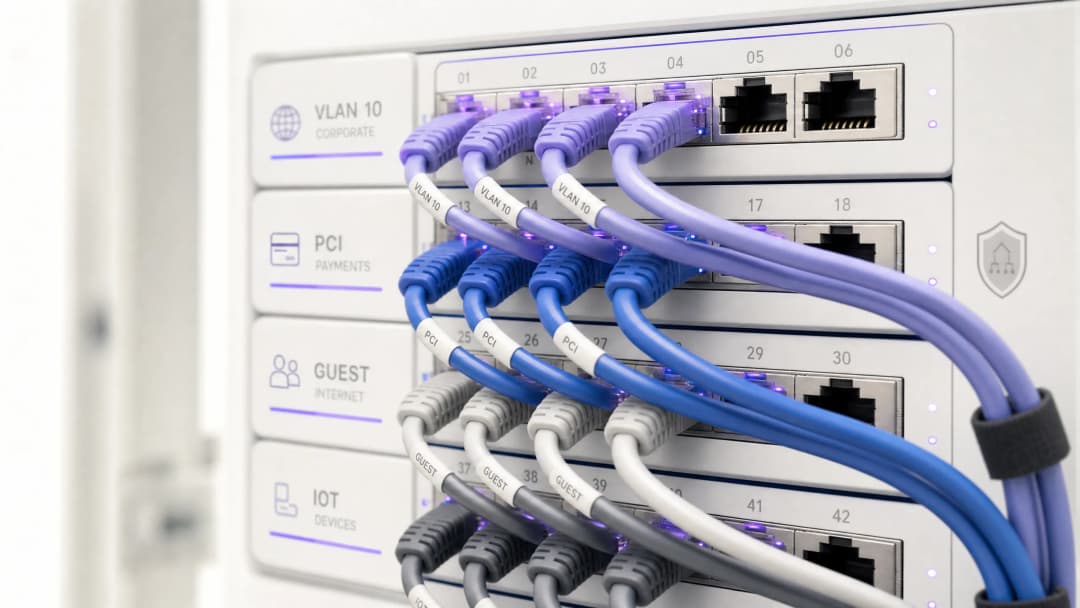
এক্সিকিউটিভ সামারি
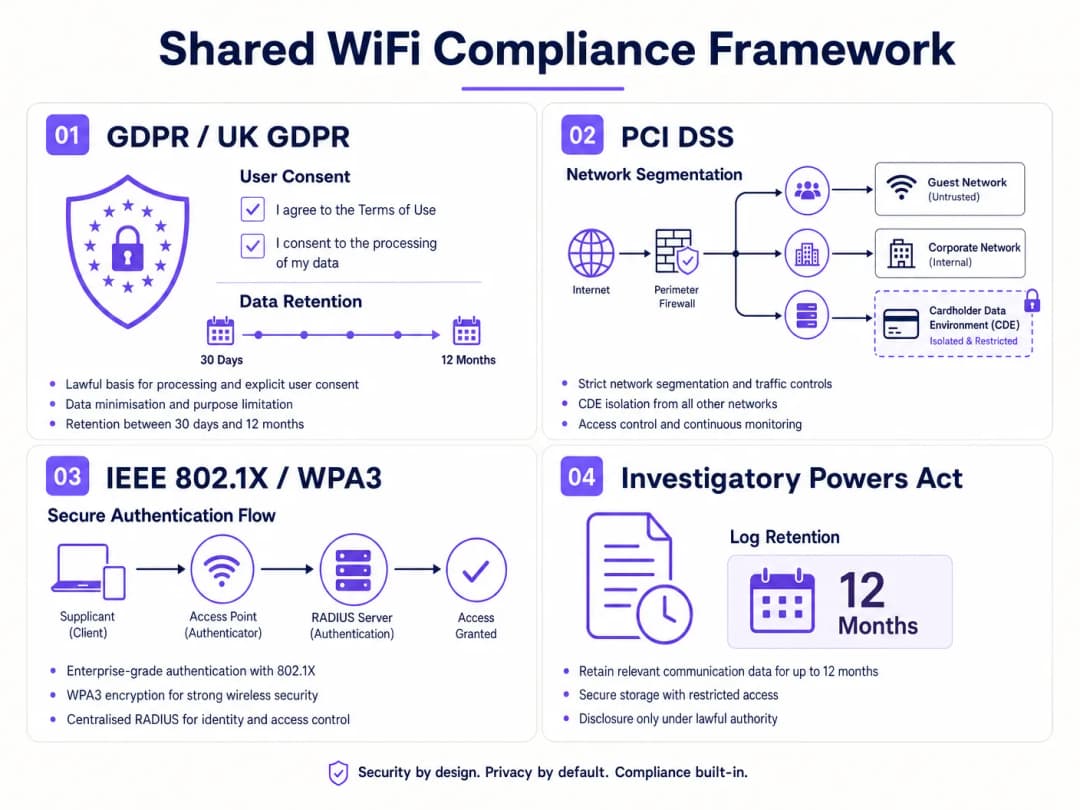
আধুনিক এন্টারপ্রাইজ ভেন্যুগুলো একটি হাইপার - কানেক্টেড এবং অত্যন্ত নিয়ন্ত্রিত পরিবেশে পরিচালিত হয়। একটি শেয়ার্ড ওয়্যারলেস অবকাঠামো প্রদান করা - তা কোনো হোটেল, রিটেল ডেভেলপমেন্ট, পরিবহন হাব বা পাবলিক - সেক্টর ক্যাম্পাসেই হোক না কেন - তা এখন আর কোনো সাধারণ ইউটিলিটি নয়; এটি একটি নিয়ন্ত্রিত কার্যক্রম। কোনো প্রতিষ্ঠান যখন একটিমাত্র ফিজিক্যাল নেটওয়ার্কের মাধ্যমে একাধিক স্বাধীন টেন্যান্ট, কর্মী এবং পাবলিক গেস্টদের ট্রাফিক রুট করে বা ডেটা সংগ্রহ করে, তখনই তারা উল্লেখযোগ্য আইনি দায়বদ্ধতার মধ্যে পড়ে। এই বাধ্যবাধকতাগুলো GDPR [1] এর মতো ডেটা গোপনীয়তা নিয়মাবলী, পেমেন্ট কার্ড সিকিউরিটি স্ট্যান্ডার্ড (PCI-DSS 4.0) [2] এবং যুক্তরাজ্যের ইনভেস্টিগেটরি পাওয়ারস অ্যাক্টের [3] মতো জাতীয় নিরাপত্তা আইনের পরিধির মধ্যে পড়ে।
চিফ টেকনোলজি অফিসার (CTO) এবং চিফ ইনফরমেশন সিকিউরিটি অফিসার (CISO) দের জন্য, এই নেটওয়ার্কগুলো সঠিকভাবে ডিজাইন করতে ব্যর্থ হলে এন্টারপ্রাইজগুলো কঠোর নিয়ন্ত্রক জরিমানার সম্মুখীন হতে পারে - যা GDPR-এর অধীনে গ্লোবাল বার্ষিক টার্নওভারের 4% পর্যন্ত হতে পারে - এবং এটি বিপর্যয়কর নিরাপত্তা লঙ্ঘনের ঝুঁকি তৈরি করে। ভেন্যু অপারেশনস ডিরেক্টরের জন্য, নিয়ম অমান্য করা মানে ব্যবসায়িক ধারাবাহিকতা, টেন্যান্ট ধরে রাখা এবং গ্রাহকের বিশ্বাসের ওপর সরাসরি আঘাত।
এই গাইডটি এই চ্যালেঞ্জগুলো মোকাবেলা করার জন্য একটি ব্যাপক, ভেন্ডর - নিরপেক্ষ আর্কিটেকচারাল ব্লুপ্রিন্ট প্রদান করে। ভার্চুয়াল নেটওয়ার্ক সেগমেন্টেশন (VLANs), শক্তিশালী আইডেন্টিটি - ভিত্তিক অ্যাক্সেস কন্ট্রোল (IEEE 802.1X) এবং স্বয়ংক্রিয় কনসেন্ট ম্যানেজমেন্ট বাস্তবায়নের মাধ্যমে, প্রতিষ্ঠানগুলো তাদের শেয়ার্ড ওয়্যারলেস নেটওয়ার্ককে একটি উচ্চ - ঝুঁকিপূর্ণ দায় থেকে একটি সুরক্ষিত, নিয়মসম্মত এবং অত্যন্ত মূল্যবান ব্যবসায়িক সম্পদে রূপান্তর করতে পারে। Purple-এর Guest WiFi এবং WiFi Analytics এর মতো এন্টারপ্রাইজ ইন্টেলিজেন্স প্ল্যাটফর্মগুলোর সংমিশ্রণ নিশ্চিত করে যে, ব্যবহারকারীর অভিজ্ঞতা ব্যাহত না করেই কমপ্লায়েন্স অর্জন করা সম্ভব এবং এটি একটি সুরক্ষিত, ফার্স্ট - পার্টি ডেটা সংগ্রহ এবং কর্মক্ষম দক্ষতা বৃদ্ধির সহায়ক হিসেবে কাজ করে।
টেকনিক্যাল ডিপ - ডাইভ
একটি সিঙ্গেল - ভেন্যু ওয়্যারলেস ডিপ্লয়মেন্ট থেকে একটি শেয়ার্ড, মাল্টি - টেন্যান্ট অবকাঠামোতে স্থানান্তরের জন্য নেটওয়ার্ক ডিজাইন দর্শনে একটি মৌলিক পরিবর্তন প্রয়োজন: একটি ফ্ল্যাট, ট্রাস্টেড পরিবেশ থেকে একটি সেগমেন্টেড, জিরো - ট্রাস্ট ফ্রেমওয়ার্কে রূপান্তর। মূল উদ্দেশ্য হলো একাধিক স্বাধীন টেন্যান্ট যেন নিরাপত্তা, পারফরম্যান্স বা গোপনীয়তার সাথে আপস না করে একটি একক ফিজিক্যাল অবকাঠামোতে একসাথে অবস্থান করতে পারে।
VLAN সেগমেন্টেশনের মৌলিক গুরুত্ব
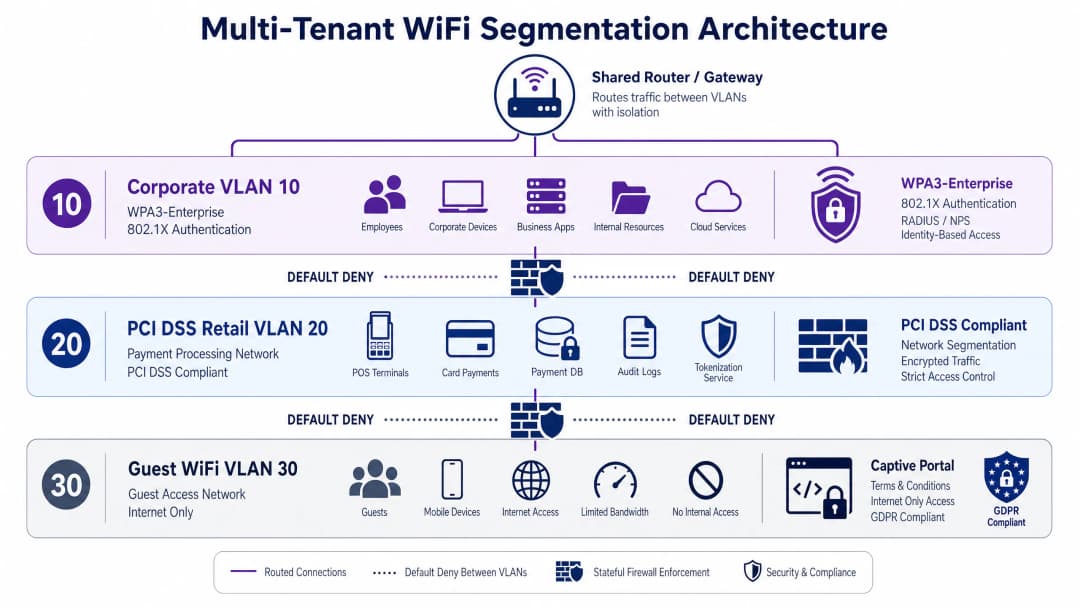
যেকোনো মাল্টি-টেন্যান্ট নেটওয়ার্কের মূল ভিত্তি হলো Virtual Local Area Network (VLAN)। IEEE 802.1Q স্ট্যান্ডার্ড দ্বারা সংজ্ঞায়িত, VLAN একটি একক ফিজিক্যাল নেটওয়ার্ক সুইচকে একাধিক, যৌক্তিকভাবে পৃথক ব্রডকাস্ট ডোমেনে বিভক্ত করার অনুমতি দেয় [4]। একটি শেয়ারড ভেন্যুতে এর অর্থ হলো, একজন টেন্যান্টের ট্রাফিক - উদাহরণস্বরূপ, VLAN 10-এ থাকা একটি রিটেল স্টোর - অন্য টেন্যান্টের ট্রাফিকের কাছে সম্পূর্ণ অদৃশ্য এবং দুর্গম থাকে, যেমন VLAN 20-এ থাকা একটি কর্পোরেট অফিস, এমনকি তাদের ডিভাইসগুলো একই ফিজিক্যাল অ্যাক্সেস পয়েন্টের সাথে সংযুক্ত থাকলেও।
আর্কিটেকচারাল নিয়ম: সঠিক VLAN প্রয়োগ ছাড়া, টেন্যান্টের পৃথকীকরণ কেবল বাহ্যিক রূপ মাত্র। একটি একক, ফ্ল্যাট LAN-এ একাধিক SSID কোনো নিরাপত্তা আইসোলেশন অফার করে না; নেটওয়ার্কের যেকোনো ডিভাইস ব্রডকাস্ট ট্রাফিক নিরীক্ষণ করতে পারে এবং ল্যাটারাল রেকনেসাঁ পরিচালনা করতে পারে।
কঠোর টেন্যান্ট আইসোলেশন বলবৎ করতে, নেটওয়ার্ক কোরে অবশ্যই স্টেটফুল, ইন্টার-VLAN ফায়ারওয়াল নিয়ম প্রয়োগ করতে হবে। ডিফল্টরূপে, সমস্ত ইন্টার-VLAN রাউটিং অবশ্যই ব্লক করতে হবে (Default Deny)। ট্রাফিককে কেবল তখনই VLAN সীমানা অতিক্রম করার অনুমতি দেওয়া উচিত যদি এটি সুনির্দিষ্ট, অত্যন্ত সীমাবদ্ধ ফায়ারওয়াল নিয়মের সাথে মিলে যায় (যেমন, একটি শেয়ারড লোকাল প্রিন্টার বা পেমেন্ট গেটওয়েতে নির্দিষ্ট পোর্ট রাউটিং করা)।
প্রমাণীকরণ স্ট্যান্ডার্ড: WPA3 এবং IEEE 802.1X
শেয়ারড অবকাঠামোতে সুরক্ষিত অ্যাক্সেসের জন্য প্রমাণীকরণ প্রোটোকলটিকে নির্দিষ্ট টেন্যান্টের ঝুঁকির প্রোফাইলের সাথে মেলানো প্রয়োজন। একটি সবার জন্য প্রযোজ্য প্রি-শেয়ারড কী (PSK) পদ্ধতি একটি গুরুতর নিরাপত্তা দুর্বলতা এবং এন্টারপ্রাইজ পরিবেশে সরাসরি কমপ্লায়েন্স ব্যর্থতা।
- কর্পোরেট এবং নিয়ন্ত্রিত টেন্যান্টস: এই পরিবেশগুলোতে IEEE 802.1X পোর্ট-ভিত্তিক নেটওয়ার্ক অ্যাক্সেস নিয়ন্ত্রণের সাথে যুক্ত WPA3-Enterprise প্রয়োজন [5]। এই আর্কিটেকচারটি স্ট্যাটিক পাসওয়ার্ডগুলোকে একটি Extensible Authentication Protocol (EAP) পদ্ধতির মাধ্যমে প্রমাণীকৃত ব্যক্তিগত, ডাইনামিক ক্রেডেনশিয়াল দ্বারা প্রতিস্থাপন করে, যেমন EAP-TLS (সার্টিফিকেট-ভিত্তিক) বা PEAP-MSCHAPv2 (ক্রেডেনশিয়াল-ভিত্তিক), যা একটি কেন্দ্রীয় RADIUS (Remote Authentication Dial-In User Service) সার্ভারের সাথে যোগাযোগ করে। এটি নিশ্চিত করে যে যখন কোনো কর্মচারী চলে যান বা কোনো ডিভাইস আপোসকৃত হয়, তখন অন্য কোনো ব্যবহারকারী বা টেন্যান্টকে প্রভাবিত না করেই তাদের অ্যাক্সেস অবিলম্বে বাতিল করা যেতে পারে। বিস্তারিত স্থাপনার ধাপগুলোর জন্য, How to Implement 802.1X Authentication with Cloud RADIUS সংক্রান্ত আমাদের গাইডটি দেখুন।
- IoT এবং হেডলেস ডিভাইস: স্মার্ট বিল্ডিং সেন্সর, ডিজিটাল সাইনেজ এবং পরিবেশগত নিয়ন্ত্রণ ব্যবস্থার প্রায়শই 802.1X প্রমাণীকরণ করার ক্ষমতা থাকে না। এই ডিভাইসগুলোর জন্য, Multi-Pre-Shared Key (MPSK) বা Dynamic PSK (DPSK) প্রযুক্তি স্থাপন করতে হবে। এটি নেটওয়ার্ককে প্রতিটি ডিভাইসে একটি অনন্য, পৃথক PSK বরাদ্দ করার অনুমতি দেয়, যা এন্টারপ্রাইজ-গ্রেড ক্লায়েন্ট সফ্টওয়্যারের প্রয়োজন ছাড়াই স্বয়ংক্রিয়ভাবে এটিকে একটি সীমাবদ্ধ IoT VLAN-এ ম্যাপ করে।* পাবলিক গেস্ট অ্যাক্সেস: পাসওয়ার্ডের ঝামেলা ছাড়াই প্যাসিভ ওয়্যারলেস স্নীপিং থেকে পাবলিক গেস্ট ট্রাফিক রক্ষা করতে, ভেন্যুগুলির উচিত Opportunistic Wireless Encryption (OWE)-এর উপর ভিত্তি করে WPA3-Enhanced Open মোতায়েন করা [6]। OWE স্বয়ংক্রিয়ভাবে প্রতিটি গেস্ট ডিভাইসের জন্য পৃথক, এনক্রিপ্ট করা ওয়্যারলেস সেশন স্থাপন করে, যা একটি Captive Portal-এর মাধ্যমে নির্বিঘ্ন অনবোর্ডিং ফ্লো বজায় রাখার পাশাপাশি ওপেন নেটওয়ার্কে গোপনীয়তা নিশ্চিত করে।
ডেটা প্রোটেকশন লেয়ার: GDPR এবং UK GDPR কমপ্লায়েন্স
যখন একটি ভেন্যু একটি গেস্ট WiFi নেটওয়ার্ক পরিচালনা করে, তখন এটি GDPR এবং UK GDPR-এর অধীনে আইনত একটি Data Controller হিসাবে শ্রেণীবদ্ধ হয়। Captive Portal প্রদানকারী Data Processor হিসাবে কাজ করে। এই পার্থক্যটি অত্যন্ত গুরুত্বপূর্ণ: গেস্ট ডেটা কীভাবে ক্যাপচার, প্রসেস এবং সংরক্ষণ করা হচ্ছে তার জন্য ভেন্যুর চূড়ান্ত আইনি দায়বদ্ধতা থাকে।
GDPR-এর আর্টিকেল 4-এর অধীনে, ব্যক্তিগত ডেটার মধ্যে এমন যেকোনো তথ্য অন্তর্ভুক্ত থাকে যা সরাসরি বা পরোক্ষভাবে সনাক্তযোগ্য একজন ব্যক্তির সাথে সম্পর্কিত [1]। একটি গেস্ট WiFi পরিবেশে, এর মধ্যে স্পষ্ট ডেটা (Captive Portal-এর মাধ্যমে ক্যাপচার করা নাম, ইমেল ঠিকানা, ফোন নম্বর, বা সোশ্যাল মিডিয়া প্রোফাইল) এবং অন্তর্নিহিত ডেটা (ওয়্যারলেস কন্ট্রোলার দ্বারা স্বয়ংক্রিয়ভাবে ক্যাপচার করা MAC অ্যাড্রেস, IP অ্যাড্রেস, সেশন টাইমস্ট্যাম্প এবং ডিভাইসের লোকেশন ডেটা) উভয়ই অন্তর্ভুক্ত থাকে।
এই ব্যক্তিগত ডেটা আইনত প্রসেস করতে, ভেন্যুগুলোকে অবশ্যই GDPR আর্টিকেল 6-এর অধীনে একটি বৈধ আইনি ভিত্তি স্থাপন করতে হবে। বেসিক নেটওয়ার্ক কানেক্টিভিটি এবং সিকিউরিটি লগিংয়ের জন্য, ভেন্যুগুলো Legitimate Interest (আর্টিকেল 6(1)(f)) দাবি করতে পারে। তবে, ভেন্যু যদি মার্কেটিং, আচরণগত প্রোফাইলিং বা অ্যানালিটিক্সের জন্য এই ডেটা ব্যবহার করতে চায়, তবে তাকে অবশ্যই Explicit Consent (আর্টিকেল 6(1)(a)) গ্রহণ করতে হবে।
সম্মতির মানদণ্ড: সম্মতি অবশ্যই মুক্তভাবে দেওয়া, সুনির্দিষ্ট, অবহিত এবং দ্ব্যর্থহীন হতে হবে। এটি একটি স্পষ্ট, সম্মতিসূচক পদক্ষেপের মাধ্যমে নির্দেশিত হতে হবে। নেটওয়ার্ক অ্যাক্সেসের জন্য ব্যবহারের শর্তাবলীর সাথে মার্কেটিংয়ের সম্মতি যুক্ত করা এই নিয়মের সরাসরি লঙ্ঘন।
এই মানদণ্ড পূরণ করতে, Captive Portal স্প্ল্যাশ পেজটি প্রতিটি পৃথক প্রসেসিং উদ্দেশ্যের জন্য আলাদা, টিক না দেওয়া চেকবক্সের সাথে ডিজাইন করতে হবে। উদাহরণস্বরূপ, একজন ব্যবহারকারীকে মার্কেটিং যোগাযোগে অংশ নিতে বাধ্য না করে অনলাইনে যাওয়ার জন্য নেটওয়ার্ক ব্যবহারের শর্তাবলী গ্রহণ করার সুযোগ দিতে হবে। তদুপরি, সিস্টেমটিকে অবশ্যই একটি বিস্তারিত, টেম্পার-প্রুফ Consent Audit Trail বজায় রাখতে হবে, যেখানে ঠিক কে সম্মতি দিয়েছেন, কখন দিয়েছেন, তাদের কী প্রকাশ করা হয়েছিল এবং সেই মুহূর্তে সক্রিয় থাকা গোপনীয়তা নীতির সঠিক সংস্করণটি লগ করা থাকে।
ডেটা ধারণ এবং নিয়ন্ত্রক দ্বন্দ্ব
নেটওয়ার্ক লগ ধারণ পরিচালনার ক্ষেত্রে আইটি টিমগুলো একটি জটিল, দ্বিমুখী চ্যালেঞ্জের মুখোমুখি হয়। তাদের অবশ্যই GDPR-এর Data Minimisation নীতি (প্রয়োজনের চেয়ে বেশি সময় ব্যক্তিগত ডেটা না রাখা) এবং লগ ধারণকে বাধ্যতামূলককারী জাতীয় নিরাপত্তা আইনগুলোর মধ্যে ভারসাম্য বজায় রাখতে হবে।
উদাহরণস্বরূপ, UK Investigatory Powers Act 2016 (IPA) অনুযায়ী যোগাযোগ পরিষেবা প্রদানকারীদের গুরুত্বর অপরাধের তদন্তে আইন প্রয়োগকারী সংস্থাকে সহায়তা করার জন্য ১২ মাস পর্যন্ত Internet Connection Records (ICRs) সংরক্ষণ করা প্রয়োজন [3]। একইভাবে, বিভিন্ন ইউরোপীয় জাতীয় টেলিযোগাযোগ নিয়ন্ত্রক সংস্থাগুলো ৩০ দিন থেকে ১২ মাস পর্যন্ত সংযোগ লগ সংরক্ষণ বাধ্যতামূলক করে থাকে।
এই বিরোধ এড়াতে, ভেন্যুগুলোকে অবশ্যই একটি Tiered Retention Architecture বাস্তবায়ন করতে হবে যা ডেটা শ্রেণিবিভাগের ভিত্তিতে স্টোরেজ শিডিউল পৃথক এবং স্বয়ংক্রিয় করে:
১. Network Session Logs (IP বরাদ্দ, MAC addresses, টাইমস্ট্যাম্প): বিধিবদ্ধ আইন প্রয়োগকারী সংস্থার বাধ্যবাধকতা পূরণ করতে একটি সুরক্ষিত, এনক্রিপ্ট করা syslog রিপোজিটরিতে সীমিত অ্যাক্সেস সহ ১২ মাসের জন্য সংরক্ষণ করা হয় এবং তারপরে স্বয়ংক্রিয়ভাবে মুছে ফেলা হয়। ২. Captive Portal Registration Data (সম্মতিহীন): সেশন সমাপ্তির ৩০ দিনের মধ্যে মুছে ফেলা বা সম্পূর্ণ বেনামী করা হয়। ৩. Marketing Profiles (সম্মতিপ্রাপ্ত): ব্যবহারকারী তার সম্মতি প্রত্যাহার (অপ্ট আউট) না করা পর্যন্ত সংরক্ষণ করা হয়। নিষ্ক্রিয় প্রোফাইলগুলো (যেমন, যেসব ব্যবহারকারী ১৮০ দিন ধরে সংযোগ করেননি) স্বয়ংক্রিয়ভাবে মুছে ফেলার জন্য বা পুনরায় সম্মতি নেওয়ার ক্যাম্পেইনের জন্য চিহ্নিত করতে হবে।
Implementation Guide
একটি সুরক্ষিত, অনুগত, মাল্টি-টেন্যান্ট ওয়্যারলেস নেটওয়ার্ক মোতায়েনের জন্য একটি কাঠামোগত, পর্যায়-ভিত্তিক পদ্ধতির প্রয়োজন। এই বিভাগটি নেটওয়ার্ক আর্কিটেক্ট এবং IT ম্যানেজারদের জন্য ভেন্ডর-নিরপেক্ষ সর্বোত্তম অনুশীলনগুলোর উপর দৃষ্টি নিবদ্ধ করে গুরুত্বপূর্ণ কনফিগারেশন ধাপগুলোর রূপরেখা প্রদান করে।
Step 1: Physical and Logical VLAN Configuration
কোর সুইচে VLAN স্কিমা সংজ্ঞায়িত করে এবং 802.1Q ট্রাঙ্কিং ব্যবহার করে সমস্ত ডিস্ট্রিবিউশন সুইচ এবং অ্যাক্সেস পয়েন্টগুলোর (APs) মধ্যে এটি প্রচার করে কাজ শুরু করুন। ট্রাফিক ডোমেনগুলোকে সম্পূর্ণরূপে বিচ্ছিন্ন করতে আলাদা সাবনেট এবং VLAN IDs বরাদ্দ করুন:
Configure Core Switch:
  vlan 10 -> Name: Corporate_Tenant (Subnet: 10.10.10.0/24)
  vlan 20 -> Name: Retail_POS_PCI (Subnet: 10.20.20.0/24)
  vlan 30 -> Name: Guest_WiFi (Subnet: 172.16.0.0/16)
এজ সুইচগুলোতে, ওয়্যারলেস অ্যাক্সেস পয়েন্টগুলোর সাথে সংযোগকারী পোর্টগুলোকে Trunk Ports হিসেবে কনফিগার করুন, যা VLANs ১০, ২০ এবং ৩০-এর অনুমতি দেয়। টেন্যান্টের মাধ্যমে ম্যানেজমেন্ট ট্রাফিক ইন্টারসেপ্ট হওয়া থেকে রক্ষা করতে নেটিভ (আনট্যাগড) VLAN-টিকে একটি নন-রাউটিং ম্যানেজমেন্ট VLAN (যেমন, VLAN ৯৯) হিসেবে সেট করা নিশ্চিত করুন।
Step 2: Access Control List (ACL) and Firewall Enforcement
Layer 3 বাউন্ডারিতে (সাধারণত কোর সুইচ বা সিকিউরিটি গেটওয়ে), কঠোর ইন্টার-VLAN ব্লকিং প্রয়োগ করুন। সমস্ত ইন্টার-VLAN ট্রাফিকের ডিফল্ট অবস্থা অবশ্যই ব্লকড হতে হবে। ল্যাটারাল মুভমেন্ট রোধ করতে স্টেটফুল Access Control Lists (ACLs) বা ফায়ারওয়াল নিয়ম প্রয়োগ করুন:
Create Access-List (Cisco IOS Example):
  ip access-list extended BLOCK_LATERAL
    deny ip 172.16.0.0 0.0.255.255 10.10.10.0 0.0.0.255 (Block Guest to Corp)
    deny ip 172.16.0.0 0.0.255.255 10.20.20.0 0.0.0.255 (Block Guest to PCI)
    permit ip 172.16.0.0 0.0.255.255 any (Permit Guest to WAN)
VLAN 30-এর SVI (Switch Virtual Interface)-এ এই ACL ইনবাউন্ড প্রয়োগ করুন। PCI-scoped VLAN 20-এর জন্য, একটি স্টেটফুল ইন্সপেকশন নিয়ম কনফিগার করুন যা অন্য সব VLAN থেকে আসা সমস্ত ইনবাউন্ড ট্রাফিককে ব্লক করে, এবং নির্দিষ্ট পেমেন্ট প্রসেসর IP অ্যাড্রেসগুলোতে শুধুমাত্র আউটবাউন্ড এনক্রিপ্টেড TLS সেশন অনুমোদন করে।
ধাপ ৩: এন্টারপ্রাইজ RADIUS এবং 802.1X ইন্টিগ্রেশন
কর্পোরেট গ্রাহকদের জন্য, ওয়্যারলেস কন্ট্রোলারটিকে একটি সুরক্ষিত RADIUS সার্ভারের (যেমন FreeRADIUS, Microsoft NPS, অথবা একটি ক্লাউড-ভিত্তিক RADIUS সমাধান) সাথে ইন্টিগ্রেট করুন। 802.1X অথেনটিকেশন সহ WPA3-Enterprise (AES-CCMP বা GCMP-256 এনক্রিপশন) ব্যবহার করার জন্য কর্পোরেট SSID কনফিগার করুন।
সার্টিফিকেট-ভিত্তিক অথেনটিকেশন (EAP-TLS) সম্পাদন করতে RADIUS সার্ভারটি কনফিগার করুন। একটি MDM (Mobile Device Management) প্ল্যাটফর্মের মাধ্যমে সমস্ত কর্পোরেট ডিভাইসে ইউনিক ক্লায়েন্ট সার্টিফিকেট জেনারেট এবং ডিস্ট্রিবিউট করুন। এটি ব্যবহারকারীর ক্রেডেনশিয়াল ফাঁস হয়ে গেলেও, অননুমোদিত ব্যক্তিগত ডিভাইসগুলোকে কর্পোরেট নেটওয়ার্কে সংযুক্ত হতে বাধা দেয়।
ধাপ ৪: Captive Portal এবং কনসেন্ট ক্যাপচার সেটআপ
পাবলিক গেস্ট WiFi (VLAN 30) এর জন্য, সমস্ত আনঅথেনটিকেটেড HTTP/HTTPS ট্রাফিককে একটি এক্সটার্নাল captive portal-এ রিডাইরেক্ট করতে ওয়্যারলেস কন্ট্রোলারটি কনফিগার করুন। পোর্টালটি একটি বৈধ SSL/TLS সার্টিফিকেট সহ একটি সুরক্ষিত, HTTPS-এনাবল্ড সার্ভারে হোস্ট করা হয়েছে কিনা তা নিশ্চিত করুন।
Purple-এর মতো কমপ্লায়েন্স-কেন্দ্রিক প্ল্যাটফর্ম ব্যবহার করে, নিম্নলিখিত UI এলিমেন্টগুলো কার্যকর করতে captive portal স্প্ল্যাশ পেজটি ডিজাইন করুন:
১. স্পষ্ট প্রাইভেসি নোটিশ: কোন কোন ডেটা সংগ্রহ করা হচ্ছে (যেমন- নাম, ইমেল, MAC অ্যাড্রেস) এবং প্রসেস করার উদ্দেশ্য ব্যাখ্যা করে একটি স্পষ্ট, সহজে পাঠযোগ্য সারসংক্ষেপ প্রদর্শন করুন। ২. আলাদা কনসেন্ট চেকবক্স: মার্কেটিং অপ্ট-ইন করার জন্য আলাদা, আনটিকড, নন-ম্যান্ডেটরি চেকবক্স প্রয়োগ করুন। 'ব্যবহারের শর্তাবলী গ্রহণ করুন' চেকবক্সটি অবশ্যই মার্কেটিং অপ্ট-ইন থেকে আলাদা হতে হবে। ৩. ডেটা সাবজেক্ট রাইটস লিঙ্ক: ভেন্যুর সম্পূর্ণ প্রাইভেসি পলিসি এবং একটি সেলফ-সার্ভিস পোর্টালের সরাসরি, কার্যকরী লিঙ্ক প্রদান করুন যেখানে অতিথিরা ডেটা অ্যাক্সেস বা মুছে ফেলার (DSARs) অনুরোধ করতে পারেন।
আপনার নির্দিষ্ট সেটআপ নিয়ে কোনো প্রশ্ন আছে?
আমাদের টিম ৮০,০০০ ভেন্যুতে ভেন্যু অপারেটর, IT ম্যানেজার এবং নেটওয়ার্ক ইঞ্জিনিয়ারদের সাথে কাজ করে। একটি ২০ মিনিটের কল বুক করুন এবং আপনার মতো অন্যরা কীভাবে এর সমাধান করেছেন তা আমরা আপনাকে দেখাব।
সর্বোত্তম অনুশীলন এবং রেগুলেটরি ম্যাপিং
দীর্ঘমেয়াদী কমপ্লায়েন্স নিশ্চিত করতে, IT টিমগুলোকে অবশ্যই তাদের টেকনিক্যাল কন্ট্রোলগুলোকে প্রতিষ্ঠিত আন্তর্জাতিক নিয়মাবলী এবং স্ট্যান্ডার্ডের সাথে সামঞ্জস্যপূর্ণ করতে হবে। নিচের টেবিলটি নির্দিষ্ট রেগুলেটরি প্রয়োজনীয়তাগুলোর সাথে সংশ্লিষ্ট টেকনিক্যাল কন্ট্রোল এবং আর্কিটেকচারাল সর্বোত্তম অনুশীলনগুলোকে ম্যাপ করে।
| রেগুলেশন / স্ট্যান্ডার্ড | নির্দিষ্ট প্রয়োজনীয়তা | টেকনিক্যাল কন্ট্রোল / সর্বোত্তম অনুশীলন | Purple প্ল্যাটফর্মের সক্ষমতা |
|---|---|---|---|
| GDPR / UK GDPR [1] | আর্টিকেল ৬: প্রসেস করার বৈধ ভিত্তি; আর্টিকেল ৭: সম্মতির শর্তাবলী। | captive portal-এ আনটিকড, গ্র্যানুলার কনসেন্ট চেকবক্স; সুরক্ষিত, অপরিবর্তনীয় কনসেন্ট লগিং। | কমপ্লায়েন্ট কনসেন্ট লগিং এবং অডিট-রেডি এক্সপোর্ট সহ স্বয়ংক্রিয়, বহুভাষিক captive portal। |
| PCI DSS 4.0 [2] | প্রয়োজনীয়তা ১.২: কার্ডহোল্ডার ডেটা এনভায়রনমেন্ট (CDE) এবং অন্যান্য নেটওয়ার্কের মধ্যে ট্রাফিক সীমিত করুন। | লেয়ার ৩ VLAN সেগমেন্টেশন; স্টেটফুল ডিফল্ট-ডিনাই ফায়ারওয়াল নিয়ম; POS নেটওয়ার্কের ফিজিক্যাল/লজিক্যাল আইসোলেশন। | সম্পূর্ণ নেটওয়ার্ক আইসোলেশন সামঞ্জস্যতা; সেগমেন্টেড VLAN জুড়ে ভেন্ডর-নিরপেক্ষ ডেপ্লয়মেন্ট। |
| PCI DSS 4.0 [2] | প্রয়োজনীয়তা ১১.৪: অননুমোদিত ওয়্যারলেস অ্যাক্সেস পয়েন্ট (Rogue APs) সনাক্ত এবং প্রতিরোধ করুন। | ওয়্যারলেস ইনট্রুশন প্রিভেনশন সিস্টেম (WIPS) বাস্তবায়ন করুন; ত্রৈমাসিক ওয়্যারলেস স্ক্যান পরিচালনা করুন। | অননুমোদিত বা rogue অ্যাক্সেস পয়েন্ট চিহ্নিত করতে এন্টারপ্রাইজ কন্ট্রোলার API-এর সাথে ইন্টিগ্রেশন। |
| UK Investigatory Powers Act [3] | ধারা ৮৭: আইন প্রয়োগকারী সংস্থার জন্য ইন্টারনেট কানেকশন রেকর্ড (ICRs) সংরক্ষণ। | পৃথক syslog স্টোরেজ; IP-to-MAC ম্যাপিং এবং সেশন টাইমস্ট্যাম্পের ১২ মাস সংরক্ষণ। | কমপ্লায়েন্ট আর্কাইভিং সহ সুরক্ষিত, অফ-সাইট রিটেনশন রিপোজিটরিতে অটোমেটেড syslog ফরওয়ার্ডিং। |
| IEEE 802.1X / WPA3 [5] | সুরক্ষিত ওভার-দ্য-এয়ার এনক্রিপশন এবং শক্তিশালী পোর্ট-ভিত্তিক অ্যাক্সেস নিয়ন্ত্রণ। | কর্পোরেট নেটওয়ার্কের জন্য WPA3-Enterprise; পাবলিক গেস্ট নেটওয়ার্কের জন্য WPA3-Enhanced Open (OWE)। | এন্টারপ্রাইজ RADIUS-এর সাথে নিরবচ্ছিন্ন ইন্টিগ্রেশন এবং উন্নত WPA3 সিকিউরিটি স্ট্যান্ডার্ডের জন্য সমর্থন। |
ইন্ডাস্ট্রি-নির্দিষ্ট বাস্তবায়ন সেরা অনুশীলন
- হসপিটালিটি (হোটেল ও রিসোর্ট): গেস্ট নেটওয়ার্কগুলোকে অবশ্যই AP স্তরে Private VLANs (PVLANs) বা Client Isolation ব্যবহার করে রুম প্রতি বা গেস্ট প্রতি সেগমেন্ট করতে হবে। এটি ১০১ নম্বর রুমের গেস্টদের ১০২ নম্বর রুমের ডিভাইসগুলো (যেমন স্মার্ট টিভি বা ল্যাপটপ) স্ক্যান বা অ্যাক্সেস করা প্রতিরোধ করে। সাইটে কাজ করা রিটেইল এবং ফুড-অ্যান্ড-বেভারেজ ভাড়াটেদের জন্য, তাদের পয়েন্ট-অফ-সেল (POS) সিস্টেমগুলোকে হসপিটালিটি গেস্ট স্কোপ থেকে সম্পূর্ণ বাইরে রাখতে কঠোর VLAN সেগমেন্টেশন প্রয়োগ করুন [৭]। গভীর ভার্টিকাল ইনসাইটের জন্য আমাদের Hospitality Industry Guide দেখুন।
- রিটেইল চেইন ও মল: রিটেইলারদের অবশ্যই তাদের প্রাইমারি POS নেটওয়ার্কগুলোকে পাবলিক গেস্ট WiFi এবং ব্যাক-অফিস কর্পোরেট নেটওয়ার্ক উভয় থেকে আইসোলেট করতে হবে। যদি লোকেশন-ভিত্তিক অ্যানালিটিক্স ডেপ্লয় করা হয় (যেমন WiFi প্রোব রিকোয়েস্টের মাধ্যমে কাস্টমার ডুয়েলিং টাইম ট্র্যাক করা), তবে সম্মতি ছাড়া সনাক্তযোগ্য ব্যক্তিদের ট্র্যাকিং প্রতিরোধ করতে সিস্টেমটিকে অবশ্যই এজ-এ তাৎক্ষণিকভাবে MAC অ্যাড্রেস হ্যাশ বা অ্যানোনিমাইজ করতে হবে। কীভাবে কমপ্লায়েন্ট ডেটা ক্যাপচারের সাথে মার্কেটিং ইন্টেলিজেন্সের ভারসাম্য বজায় রাখা যায় তা জানতে আমাদের Retail Industry Guide এক্সপ্লোর করুন।
- পাবলিক সেক্টর এবং শিক্ষা: পাবলিক নেটওয়ার্কে ক্ষতিকারক বা বেআইনি উপাদানের অ্যাক্সেস ব্লক করতে পৌরসভা এবং স্কুল জেলাগুলিকে অবশ্যই কঠোর কন্টেন্ট ফিল্টারিং প্রয়োগ করতে হবে [8]। উপরন্তু, প্রশাসনিক সিস্টেম, শিক্ষার্থীদের রেকর্ড এবং পাবলিক গেস্ট নেটওয়ার্কগুলি যাতে সম্পূর্ণরূপে বিচ্ছিন্ন থাকে তা নিশ্চিত করতে নেটওয়ার্কগুলিকে সেগমেন্ট করতে হবে। শিক্ষা-নির্দিষ্ট কমপ্লায়েন্সের জন্য, আমাদের বিস্তারিত নির্দেশিকা দেখুন WiFi in Schools: The 2026 Administrator & IT Guide।
ট্রাবলশুটিং এবং ঝুঁকি হ্রাস
এমনকি সবচেয়ে যত্ন সহকারে ডিজাইন করা নেটওয়ার্কেও কনফিগারেশনে ত্রুটি বা অপারেশনাল ব্যর্থতা ঘটতে পারে যা কমপ্লায়েন্সকে ব্যাহত করে। এই বিভাগটি সাধারণ ব্যর্থতার রূপরেখা প্রদান করে এবং প্রযুক্তিগত সমাধানের কৌশলগুলি সরবরাহ করে।
সাধারণ ব্যর্থতার ধরন এবং প্রযুক্তিগত সমাধান
১. 'কোলাহলপূর্ণ প্রতিবেশী' এবং ব্যান্ডউইথ নিঃশেষ হওয়া
- ঝুঁকি: একজন একক ব্যবহারকারী বা পাবলিক গেস্ট অতিরিক্ত ব্যান্ডউইথ ব্যবহার করে (যেমন, হাই-ডেফিনিশন ভিডিও স্ট্রিমিং), যা গুরুত্বপূর্ণ ব্যবসায়িক অ্যাপ্লিকেশন বা অন্যান্য ব্যবহারকারীদের জন্য নেটওয়ার্কের কার্যকারিতা হ্রাস করে।
- সমাধান: Quality of Service (QoS) পলিসি এবং কঠোর রেট-লিমিটিং প্রয়োগ করুন। গেস্ট VLAN-এ প্রতি ব্যবহারকারী সেশনে আপস্ট্রিম এবং ডাউনস্ট্রিম ব্যান্ডউইথ ক্যাপ প্রয়োগ করুন (যেমন, ৫ Mbps ডাউন, ১ Mbps আপ)। WAN প্রান্তে, গেস্ট নেটওয়ার্ক ব্যবহারের পরিমাণ যাই হোক না কেন, গুরুত্বপূর্ণ কর্পোরেট এবং পেমেন্ট প্রসেসিং VLAN-এর জন্য একটি ন্যূনতম ডেডিকেটেড ব্যান্ডউইথ পুল নিশ্চিত করতে ক্লাস-ভিত্তিক কিউয়িং কনফিগার করুন।
২. VLAN লিক এবং ভুল কনফিগার করা সুইচ পোর্ট
- ঝুঁকি: একটি সুইচ পোর্ট ভুল কনফিগার করা হলে (যেমন, ভুল VLAN-এ অ্যাসাইন করা একটি আনট্যাগড অ্যাক্সেস পোর্ট, বা ট্রাঙ্ক পোর্ট দিয়ে ম্যানেজমেন্ট ট্রাফিক লিক হওয়া), যা ফায়ারওয়াল অতিক্রম না করেই প্যাকেটগুলিকে এক ব্যবহারকারীর সীমানা থেকে অন্য ব্যবহারকারীর সীমানায় যাওয়ার অনুমতি দেয়।
- সমাধান: MAC স্পুফিং এবং অননুমোদিত IP অ্যাড্রেস অ্যাসাইনমেন্ট প্রতিরোধ করতে সমস্ত সুইচে Dynamic ARP Inspection (DAI), DHCP Snooping, এবং IP Source Guard প্রয়োগ করুন। অননুমোদিত VLAN পরিবর্তন বা পোর্ট ভুল কনফিগারেশন সনাক্ত করতে স্বয়ংক্রিয় কনফিগারেশন-কমপ্লায়েন্স টুল ব্যবহার করে দ্বিবার্ষিক নেটওয়ার্ক অডিট পরিচালনা করুন।
৩. রোগ অ্যাক্সেস পয়েন্ট এবং 'ইভিল টুইন' আক্রমণ
- ঝুঁকি: একজন আক্রমণকারী একটি অননুমোদিত অ্যাক্সেস পয়েন্ট স্থাপন করে যা ভেন্যুর গেস্ট WiFi-এর মতো একই SSID ব্রডকাস্ট করে এবং একটি প্রতারণামূলক Captive Portal-এর মাধ্যমে গেস্ট লগইন ক্রেডেনশিয়াল এবং ব্যক্তিগত তথ্য সংগ্রহ করে।
- সমাধান: সমস্ত এন্টারপ্রাইজ AP-তে Wireless Intrusion Prevention System (WIPS) সক্ষম করুন। তরঙ্গগুলি সক্রিয়ভাবে পর্যবেক্ষণ করতে, কর্পোরেট বা গেস্ট SSID ব্রডকাস্টকারী অননুমোদিত AP সনাক্ত করতে এবং ডি-অথেন্টিকেশন ফ্রেম ব্যবহার করে স্বয়ংক্রিয়ভাবে ক্ষতিকারক ডিভাইসগুলিকে নিয়ন্ত্রণ করতে WIPS কনফিগার করুন। WPA3-Enterprise এবং WPA3-Enhanced Open প্রয়োগ করুন, যা প্যাসিভ ইভসড্রপিং এবং অফলাইন ডিকশনারি আক্রমণের ঝুঁকি কমায়।
৪. সম্মতি অডিট ট্রেইল ব্যর্থতা
- ঝুঁকি: Captive portal প্ল্যাটফর্মটি কোনো গেস্টের মার্কেটিং অপ্ট-ইন টাইমস্ট্যাম্প রেকর্ড করতে ব্যর্থ হয় বা এটি ভুলভাবে রেকর্ড করে, যার ফলে কোনো রেগুলেটরি অডিটের সময় ভেন্যুটি কমপ্লায়েন্স প্রমাণ করতে অসমর্থ হয়।
- প্রশমন: Purple-এর মতো একটি শক্তিশালী, ক্লাউড-ভিত্তিক প্ল্যাটফর্ম স্থাপন করুন যা ভৌগোলিকভাবে বিচ্ছিন্ন একাধিক ডেটা সেন্টারে কনসেন্ট লগ রেপ্লিকেট করে। কনসেন্ট লগ যাতে পরিবর্তন করা না যায় তা নিশ্চিত করতে ক্রিপ্টোগ্রাফিক হ্যাশিং সহ একটি রিড-অনলি, অ্যাপেন্ড-অনলি ডেটাবেসে সেগুলি সংরক্ষণ করার বিষয়টি নিশ্চিত করুন। ডেটাবেস রাইট সফলভাবে হচ্ছে কিনা তা যাচাই করতে দৈনিক স্বয়ংক্রিয় হেলথ চেক রান করুন।
ROI এবং ব্যবসায়িক প্রভাব
IT লিডাররা প্রায়শই আইনি এবং কমপ্লায়েন্সের প্রয়োজনীয়তাগুলোকে কেবল খরচ এবং ঝুঁকি প্রশমনের দৃষ্টিকোণ থেকে দেখেন। তবে, একটি সুপরিকল্পিত ও কমপ্লায়েন্ট শেয়ার্ড WiFi ইনফ্রাস্ট্রাকচার হলো অপারেশনাল দক্ষতা, গ্রাহকের বিশ্বাস এবং পরিমাপযোগ্য ব্যবসায়িক মূল্যের একটি শক্তিশালী চালিকাশক্তি।
কমপ্লায়েন্সের খরচ-সুবিধা বিশ্লেষণ
কমপ্লায়েন্স মেনে না চলার আর্থিক প্রভাব অত্যন্ত মারাত্মক। GDPR-এর অধীনে, গুরুতর লঙ্ঘনের জন্য সর্বোচ্চ জরিমানা হলো €২০ মিলিয়ন বা বিশ্বব্যাপী বার্ষিক টার্নওভারের ৪%, যা বেশি [১]। একটি বড় হোটেল গ্রুপ বা রিটেইল মাল্টিন্যাশনালের জন্য, একটিমাত্র কমপ্লায়েন্স ব্যর্থতার কারণে বহু মিলিয়ন পাউন্ড জরিমানা হতে পারে, যার মধ্যে সংশ্লিষ্ট আইনি ফি, ফরেনসিক তদন্তের খরচ এবং ব্র্যান্ডের সুনামের মারাত্মক ক্ষতি অন্তর্ভুক্ত নয়।
বিপরীতে, Purple-এর মতো একটি কমপ্লায়েন্ট, এন্টারপ্রাইজ-গ্রেড সলিউশন বাস্তবায়নের খরচ এই ঝুঁকির তুলনায় অত্যন্ত সামান্য। একাধিক খণ্ডিত নেটওয়ার্ক ইউটিলিটিগুলোকে একটি একক, সেন্ট্রালি ম্যানেজড, মাল্টি-ট্যানেন্ট ফিজিক্যাল ইনফ্রাস্ট্রাকচারে একত্রিত করে প্রতিষ্ঠানগুলো উল্লেখযোগ্য Capital Expenditure (CapEx) এবং Operational Expenditure (OpEx) সাশ্রয় করতে পারে:
- ইনফ্রাস্ট্রাকচার একত্রীকরণ: প্রতিটি ট্যানেন্ট বা সার্ভিসের জন্য আলাদা ফিজিক্যাল ক্যাবলিং, সুইচ এবং অ্যাক্সেস পয়েন্ট স্থাপন করার পরিবর্তে, একটি একক হাই-পারফরম্যান্স ফিজিক্যাল নেটওয়ার্ককে লজিক্যালি সেগমেন্ট করা হয়। এটি হার্ডওয়্যার ক্রয়ের খরচ ৪০% পর্যন্ত হ্রাস করে এবং শক্তির ব্যবহার ও চলমান রক্ষণাবেক্ষণের খরচ নাটকীয়ভাবে কমিয়ে দেয়।
- সেন্ট্রালাইজড ম্যানেজমেন্ট: একটি একক, ক্লাউড-ভিত্তিক ড্যাশবোর্ড থেকে একাধিক ট্যানেন্ট পরিচালনা করা অভ্যন্তরীণ IT টিমের প্রশাসনিক চাপ কমায়। কোনো নতুন ট্যানেন্ট যুক্ত করা, ব্যান্ডউইথ লিমিট অ্যাডজাস্ট করা বা captive portal প্রাইভেসি পলিসি আপডেট করার কাজ কয়েক দিনের পরিবর্তে কয়েক মিনিটেই করা সম্ভব, যা একটি বিশাল অপারেশনাল দক্ষতা বৃদ্ধি করে।
কমপ্লায়েন্সকে একটি স্ট্র্যাটেজিক অ্যাসেটে রূপান্তর করা
একটি কমপ্লায়েন্ট captive portal স্থাপন করার মাধ্যমে, ভেন্যুগুলো তাদের ভিজিটরদের কাছ থেকে বৈধভাবে উচ্চ-মানের, ফার্স্ট-পার্টি ডেটা সংগ্রহ করতে পারে। এই ডেটা মার্কেটিং এবং বিজনেস ইন্টেলিজেন্সের জন্য অত্যন্ত মূল্যবান, যদি এটি নৈতিকভাবে এবং স্বচ্ছভাবে সংগ্রহ করা হয়ে থাকে:
- নৈতিক মার্কেটিং ডাটাবেস: যেহেতু অতিথিরা কমপ্লায়েন্ট, আনটিকড চেকবক্সের মাধ্যমে সক্রিয় এবং স্বচ্ছভাবে মার্কেটিং যোগাযোগে সম্মতি দিয়েছেন, তাই এর ফলে তৈরি মার্কেটিং ডাটাবেসে নন-সেগমেন্টেড বা অ-কমপ্লায়েন্ট তালিকার তুলনায় উল্লেখযোগ্যভাবে বেশি এনগেজমেন্ট, কম আনসাবস্ক্রাইব রেট এবং চমৎকার কনভার্সন মেট্রিক্স দেখা যায়।
- গ্র্যানুলার ভিজিটর অ্যানালিটিক্স: কমপ্লায়েন্ট, অ্যানোনিমাইজড লোকেশন ট্র্যাকিং ব্যবহার করে, ভেন্যু অপারেটররা ভিজিটরদের আচরণ সম্পর্কে গভীর অন্তর্দৃষ্টি পান - যেমন ফুটফল প্যাটার্ন, গড় ডওয়েল টাইম এবং পুনরাবৃত্ত পরিদর্শনের ফ্রিকোয়েন্সি। এই ডেটা রিটেল ভাড়াটেদের সাথে শেয়ার করা যেতে পারে যাতে তারা স্টাফিং অপ্টিমাইজ করতে পারে, উইন্ডো ডিসপ্লে মূল্যায়ন করতে পারে এবং মার্কেটিং ROI পরিমাপ করতে পারে, যা প্রতিযোগিতামূলক রিয়েল এস্টেট বাজারে একটি শক্তিশালী পার্থক্যকারী তৈরি করে।
এই ধারণাগুলোর উপর একটি বিস্তারিত অডিও ব্রিফিং শুনতে, নিচের পেশাদার পডকাস্ট পর্বটি শুনুন:
References
- European Parliament and Council. (2016). Regulation (EU) 2016/679 (General Data Protection Regulation). Official Journal of the European Union. https://gdpr-info.eu/
- PCI Security Standards Council. (2022). Payment Card Industry (PCI) Data Security Standard, Version 4.0. https://www.pcisecuritystandards.org/
- UK Parliament. (2016). Investigatory Powers Act 2016. UK Statute Law Database. https://www.legislation.gov.uk/ukpga/2016/25/contents
- IEEE Computer Society. (2018). IEEE Standard for Local and Metropolitan Area Networks—Bridges and Bridged Networks (IEEE Std 802.1Q-2018). IEEE Xplore. https://ieeexplore.ieee.org/document/8403927
- Wi-Fi Alliance. (2018). WPA3™ Security White Paper. https://www.wi-fi.org/
- IETF RFC 8110. (2017). Opportunistic Wireless Encryption (OWE). Internet Engineering Task Force. https://tools.ietf.org/html/rfc8110
- PCI Security Standards Council. (2009). PCI DSS Wireless Guidelines. https://www.pcisecuritystandards.org/pdfs/PCI_DSS_v2_Wireless_Guidelines.pdf
- Federal Communications Commission. (2001). Children's Internet Protection Act (CIPA). FCC Consumer Guide. https://www.fcc.gov/consumers/guides/childrens-internet-protection-act
মূল সংজ্ঞাসমূহ
ভার্চুয়াল ল্যান (VLAN)
একটি লজিক্যাল সাবনেটওয়ার্ক যা বিভিন্ন ফিজিক্যাল LAN থেকে ডিভাইসের একটি সংগ্রহকে একত্রিত করে, IEEE 802.1Q ট্যাগের সাহায্যে তাদের ব্রডকাস্ট ডোমেনগুলোকে আলাদা করে।
শেয়ার্ড ফিজিক্যাল হার্ডওয়্যারে কর্পোরেট, গেস্ট এবং পেমেন্ট নেটওয়ার্কগুলোকে আলাদা করতে মাল্টি-টেন্যান্ট পরিবেশের জন্য অত্যন্ত গুরুত্বপূর্ণ।
IEEE 802.1X
পোর্ট-ভিত্তিক নেটওয়ার্ক অ্যাক্সেস কন্ট্রোল (PNAC) এর জন্য একটি IEEE স্ট্যান্ডার্ড যা LAN বা WLAN-এ সংযুক্ত হতে ইচ্ছুক ডিভাইসগুলোকে একটি প্রমাণীকরণ প্রক্রিয়া প্রদান করে।
কর্পোরেট এবং টেন্যান্ট নেটওয়ার্ক সুরক্ষিত করার মানদণ্ড, যা একটি RADIUS সার্ভারের বিপরীতে পৃথকভাবে ডিভাইসগুলোকে প্রমাণীকরণ করে।
WPA3-Enterprise
এন্টারপ্রাইজ নেটওয়ার্কের জন্য ওয়াই-ফাই সুরক্ষিত অ্যাক্সেস সুরক্ষার সর্বশেষ প্রজন্ম, যার জন্য ১৯২-বিট ক্রিপ্টোগ্রাফিক শক্তি এবং বাধ্যতামূলক প্রটেক্টেড ম্যানেজমেন্ট ফ্রেম (PMF) প্রয়োজন।
একটি শেয়ার্ড ওয়্যারলেস পরিবেশে উচ্চ-সুরক্ষা সম্পন্ন, নিয়ন্ত্রিত এবং কর্পোরেট টেন্যান্টদের জন্য বাধ্যতামূলক।
WPA3-Enhanced Open (OWE)
অপোর্চুনিস্টিক ওয়্যারলেস এনক্রিপশনের উপর ভিত্তি করে একটি ওয়াই-ফাই অ্যালায়েন্স স্ট্যান্ডার্ড যা ব্যবহারকারীর পাসওয়ার্ডের প্রয়োজন ছাড়াই ওপেন, পাবলিক ওয়্যারলেস নেটওয়ার্কের জন্য পৃথক ডেটা এনক্রিপশন প্রদান করে।
পাবলিক গেস্ট WiFi-এর জন্য সর্বোত্তম অনুশীলনের মানদণ্ড, যা সহজে অ্যাক্সেস বজায় রেখে ব্যবহারকারীদের স্থানীয় প্যাসিভ স্নিফিং থেকে রক্ষা করে।
ডেটা কন্ট্রোলার
কোনো প্রাকৃতিক বা আইনি ব্যক্তি, সরকারি কর্তৃপক্ষ, সংস্থা বা অন্য কোনো সংস্থা যা একা বা যৌথভাবে অন্যদের সাথে ব্যক্তিগত ডেটা প্রক্রিয়াকরণের উদ্দেশ্য এবং উপায় নির্ধারণ করে।
গেস্ট WiFi-এ, ভেন্যু অপারেটর হলেন ডেটা কন্ট্রোলার এবং GDPR-এর অধীনে চূড়ান্ত আইনি দায়বদ্ধতা বহন করেন।
ডেটা প্রসেসর
একজন প্রাকৃতিক বা আইনি ব্যক্তি, সরকারি কর্তৃপক্ষ, সংস্থা বা অন্য কোনো সংস্থা যা কন্ট্রোলারের পক্ষে ব্যক্তিগত ডেটা প্রক্রিয়া করে।
গেস্ট WiFi প্ল্যাটফর্ম প্রদানকারী (যেমন, Purple) ডেটা প্রসেসর হিসেবে কাজ করে, কন্ট্রোলারের নির্দেশাবলী অনুসারে ডেটা পরিচালনা করে।
কার্ডহোল্ডার ডেটা এনভায়রনমেন্ট (CDE)
সেই সমস্ত মানুষ, প্রক্রিয়া এবং প্রযুক্তি যা কার্ডহোল্ডারের ডেটা বা সংবেদনশীল প্রমাণীকরণ ডেটা সংরক্ষণ, প্রক্রিয়া বা প্রেরণ করে।
PCI DSS কমপ্লায়েন্সের প্রাথমিক লক্ষ্য; অবশ্যই গেস্ট এবং কর্পোরেট ওয়্যারলেস নেটওয়ার্ক থেকে সম্পূর্ণ আলাদা হতে হবে।
ইন্টারনেট কানেকশন রেকর্ড (ICR)
একটি নির্দিষ্ট ডিভাইস দ্বারা অ্যাক্সেস করা ইন্টারনেট পরিষেবাগুলির একটি রেকর্ড, যার মধ্যে IP addresses, পোর্ট নম্বর এবং সংযোগের টাইমস্ট্যাম্প অন্তর্ভুক্ত থাকে, তবে যোগাযোগের নির্দিষ্ট বিষয়বস্তু বাদ দেওয়া হয়।
UK Investigatory Powers Act-এর অধীনে, আইন প্রয়োগকারী সংস্থার অ্যাক্সেসের জন্য যোগাযোগ প্রদানকারীদের ১২ মাসের জন্য ICRs সংরক্ষণ করার প্রয়োজন হতে পারে।
সমাধানকৃত উদাহরণসমূহ
লন্ডনের একটি ঐতিহাসিক ২৫০-রুমের হোটেলে গ্রাউন্ড-ফ্লোরে পাঁচটি স্বাধীন দোকান সহ একটি রিটেল আর্কেড এবং প্রতি সপ্তাহে কর্পোরেট ইভেন্ট আয়োজনকারী একটি বড় কনফারেন্স সেন্টার রয়েছে। হোটেলটি একটি একক ফিজিক্যাল ফাইবার-অপটিক ইন্টারনেট সংযোগ পরিচালনা করে। হোটেলটিকে হোটেলের অতিথিদের নিরাপদ WiFi অ্যাক্সেস প্রদান করতে হবে, খুচরা বিক্রেতা টেন্যান্টদের জন্য আইসোলেটেড পেমেন্ট-প্রসেসিং নেটওয়ার্ক প্রদান করতে হবে এবং কর্পোরেট কনফারেন্স ক্লায়েন্টদের জন্য উচ্চ-ক্ষমতাসম্পন্ন, ডেডিকেটেড ওয়্যারলেস ক্ষমতা প্রদান করতে হবে - এই সমস্ত কিছুই UK GDPR, PCI-DSS এবং UK Investigatory Powers Act মেনে সম্পন্ন করতে হবে।
নেটওয়ার্ক আর্কিটেক্ট এন্টারপ্রাইজ-গ্রেড হার্ডওয়্যারে VLAN-এর মাধ্যমে বিভক্ত একটি মাল্টি-টেন্যান্ট ওয়্যারলেস নেটওয়ার্ক বাস্তবায়ন করেন। তিনটি পৃথক VLAN কনফিগার করা হয়েছে: হোটেলের অতিথিদের জন্য VLAN 100, রিটেল POS-এর জন্য VLAN 200 (PCI-DSS আওতাভুক্ত), এবং কনফারেন্স ক্লায়েন্টদের জন্য VLAN 300।
১. হোটেল গেস্ট নেটওয়ার্ক (VLAN 100): কোনো পাসওয়ার্ড ছাড়াই ওভার-দ্য-এয়ার এনক্রিপশন প্রদান করতে WPA3-Enhanced Open (OWE) দিয়ে কনফিগার করা হয়েছে। ব্যবহারকারীদের Purple দ্বারা হোস্ট করা একটি নিরাপদ, HTTPS-সক্ষম Captive Portal-এ রিডাইরেক্ট করা হয়। পোর্টালে মার্কেটিং অপ্ট-ইন করার জন্য পৃথক, আনটিক করা চেকবক্স রয়েছে। UK Investigatory Powers Act-এর বাধ্যবাধকতা পূরণ করতে সেশন লগগুলো একটি লোকাল সিসলগ সার্ভারে ফরোয়ার্ড করা হয় এবং ১২ মাসের জন্য সংরক্ষণ করা হয়, যেখানে Captive Portal মার্কেটিং প্রোফাইলগুলো শুধুমাত্র সেই সমস্ত অতিথিদের জন্য CRM-এ সিঙ্ক করা হয় যারা স্পষ্টভাবে অপ্ট-ইন করেছেন।
২. রিটেল POS নেটওয়ার্ক (VLAN 200): কোর গেটওয়েতে একটি স্টেটফুল 'ডিফল্ট ডিনাই' ফায়ারওয়াল পলিসি ব্যবহার করে অন্য সমস্ত VLAN থেকে সম্পূর্ণরূপে বিচ্ছিন্ন করা হয়েছে। পেমেন্ট গেটওয়ের নির্দিষ্ট IP অ্যাড্রেসগুলোতে শুধুমাত্র আউটবাউন্ড TLS 1.3 ট্রাফিকের অনুমতি দেওয়া হয়েছে। কোনো গেস্ট বা কর্পোরেট ডিভাইস এই VLAN-এ ট্রাফিক রাউট করতে পারে না। PCI-DSS সম্মতি বজায় রাখতে ত্রৈমাসিক এক্সটার্নাল ভালনারেবিলিটি স্ক্যানের সময়সূচী নির্ধারণ করা হয়েছে।
৩. কনফারেন্স নেটওয়ার্ক (VLAN 300): WPA3-Enterprise এবং IEEE 802.1X প্রমাণীকরণের সাথে কনফিগার করা হয়েছে। RADIUS সার্ভারে ডাইনামিক VLAN অ্যাসাইনমেন্ট কনফিগার করা হয়েছে যাতে কোনো কর্পোরেট ক্লায়েন্ট তাদের অনন্য ক্রেডেনশিয়াল দিয়ে প্রমাণীকরণ করলে, তারা ডাইনামিকভাবে একটি ডেডিকেটেড সাব-VLAN-এ ম্যাপ হয়ে যায় এবং গ্যারান্টিযুক্ত Quality of Service (QoS) ব্যান্ডউইথ পুল হিসেবে ১০০ Mbps সিমেট্রিক পায়, যা গেস্টদের স্ট্রিমিং থেকে সৃষ্ট 'গোলমেলে প্রতিবেশী' সমস্যা প্রতিরোধ করে।
যুক্তরাজ্য এবং ইউরোপ জুড়ে ১৫০টি স্টোর সহ একটি জাতীয় রিটেল চেইন স্থানীয় মার্কেটিং ক্যাম্পেইনের জন্য গ্রাহকদের ইমেল অ্যাড্রেস সংগ্রহ করতে পাবলিক গেস্ট WiFi স্থাপন করতে চায়। তারা মানুষের আনাগোনা, স্টোরে থাকার সময় এবং বারবার আসা গ্রাহকদের হার পরিমাপ করার জন্য WiFi লোকেশন অ্যানালিটিক্স (প্রোব রিকোয়েস্ট ট্র্যাকিং) ব্যবহার করে। তাদের অবশ্যই নিশ্চিত করতে হবে যে তাদের ডেটা সংগ্রহ এবং লোকেশন ট্র্যাকিং যেন সম্পূর্ণভাবে GDPR এবং UK GDPR মেনে চলে।
খুচরা চেইনটি তাদের সমস্ত ১৫০টি সাইটে Purple-এর এন্টারপ্রাইজ গেস্ট WiFi এবং অ্যানালিটিক্স প্ল্যাটফর্ম মোতায়েন করেছে।
১. Captive Portal Setup: Captive portal-টি একটি জিও-অ্যাওয়ার (অবস্থান-সচেতন) ভাষা নির্বাচক দিয়ে কনফিগার করা হয়েছে। যেকোনো রেজিস্ট্রেশন ফিল্ড প্রদর্শনের আগে এটি স্থানীয় ভাষায় একটি স্পষ্ট, সংক্ষিপ্ত গোপনীয়তা বিজ্ঞপ্তি উপস্থাপন করে। ফর্মটিতে শুধুমাত্র গ্রাহকের নাম এবং ইমেল ঠিকানা চাওয়া হয় (ডেটা মিনিমাইজেশন)। মার্কেটিং অপ্ট-ইন-এর জন্য একটি পৃথক, আনটিকড চেকবক্স প্রয়োগ করা হয়েছে, যেখানে স্পষ্ট ব্যাখ্যা দেওয়া আছে যে অপ্ট-ইন করা ঐচ্ছিক এবং এটি তাদের ফ্রি WiFi অ্যাক্সেস করার ক্ষমতাকে প্রভাবিত করে না।
২. লোকেশন অ্যানালিটিক্স কমপ্লায়েন্স: স্পষ্ট সম্মতি ছাড়া নিয়ম মেনে ফুটফল ট্র্যাক করার জন্য (যেহেতু ডিভাইস কানেক্ট করার আগে, WiFi সক্রিয় থাকলে প্রোব রিকোয়েস্টগুলো স্বয়ংক্রিয়ভাবে ক্যাপচার হয়ে যায়), ওয়্যারলেস কন্ট্রোলারগুলোকে একটি সালটেড SHA-256 অ্যালগরিদম ব্যবহার করে এজ-এই সমস্ত ক্যাপচার করা MAC অ্যাড্রেস অবিলম্বে হ্যাশ করার জন্য কনফিগার করা হয়েছে। সল্ট প্রতি ২৪ ঘণ্টায় স্বয়ংক্রিয়ভাবে পরিবর্তিত হয়। এই প্রক্রিয়াটি স্থায়ীভাবে ডিভাইসের আইডেন্টিফায়ারগুলোকে বেনামী করে দেয়, যা ব্যক্তিগত ডেটাকে সামগ্রিক, অ-শনাক্তযোগ্য পরিসংখ্যানগত ডেটাতে রূপান্তরিত করে, যা GDPR-এর আওতার বাইরে।
৩. ডেটা সাবজেক্টের অধিকার: Captive portal-এর সাথে একটি ডেডিকেটেড, সেলফ-সার্ভিস প্রাইভেসি পোর্টাল লিঙ্ক করা আছে। গ্রাহকরা খুচরা বিক্রেতার কাছে থাকা তাদের সমস্ত ব্যক্তিগত ডেটা দেখতে, তাদের পছন্দগুলো আপডেট করতে বা অবিলম্বে মুছে ফেলার অনুরোধ করতে (GDPR-এর আর্টিকেল ১৭ এর অধীনে তাদের মুছে ফেলার অধিকার প্রয়োগ করতে) তাদের ইমেল ঠিকানা লিখতে পারেন।
অনুশীলনী প্রশ্নসমূহ
Q1. একজন আইটি ম্যানেজার একটি রিটেল শপিং সেন্টারের জন্য একটি শেয়ার্ড ওয়্যারলেস নেটওয়ার্ক কনফিগার করছেন। সেন্টারের ম্যানেজমেন্ট টিম মার্কেটিংয়ের জন্য ভিজিটরদের ইমেল ঠিকানা সংগ্রহ করতে চায় এবং ভাড়াটেদের লিজের মূল্য নির্ধারণের সুবিধার্থে মলের মধ্যে ডিভাইসের গতিবিধি ট্র্যাক করতে চায়। মার্কেটিং ডিরেক্টর শুধুমাত্র সেইসব ভিজিটরদের 'ফ্রি হাই-স্পিড WiFi' দেওয়ার পরামর্শ দিচ্ছেন যারা মার্কেটিং নিউজলেটারে অপ্ট-ইন করবেন। এই পদ্ধতিটি কি GDPR-এর অধীনে সম্মতিপূর্ণ, এবং নেটওয়ার্কটি কীভাবে কনফিগার করা উচিত?
ইঙ্গিত: GDPR-এর 'অবাধভাবে প্রদত্ত' সম্মতি এবং ডেটা মিনিমাইজেশনের নীতিগুলি বিবেচনা করুন এবং কীভাবে লোকেশন ট্র্যাকিং পরিচালনা করা উচিত তা ভাবুন।
মডেল উত্তর দেখুন
এই পদ্ধতিটি GDPR-এর অধীনে সম্মতিপূর্ণ নয়। নেটওয়ার্ক অ্যাক্সেসের সাথে মার্কেটিং অপ্ট-ইন যুক্ত করা আর্টিকেল ৭(৪) এর 'অবাধভাবে প্রদত্ত' সম্মতির প্রয়োজনীয়তা লঙ্ঘন করে। মার্কেটিংয়ে সম্মতি দিতে বাধ্য না করে, ব্যবহারকারীরা যাতে নেটওয়ার্কের ব্যবহারের শর্তাবলী (Terms of Use) গ্রহণ করে ফ্রি WiFi অ্যাক্সেস করতে পারেন, সেভাবে নেটওয়ার্কটি কনফিগার করতে হবে। লোকেশন ট্র্যাকিংয়ের ক্ষেত্রে, যেহেতু ভিজিটরদের ডিভাইসগুলি স্বয়ংক্রিয়ভাবে প্রোব রিকোয়েস্ট ব্রডকাস্ট করে, তাই MAC addresses অবশ্যই নেটওয়ার্ক এজে একটি দৈনিক রোটেটিং সল্ট সহ সল্টেড SHA-256 অ্যালগরিদম ব্যবহার করে অবিলম্বে হ্যাশ এবং বেনামী করতে হবে। এটি ব্যক্তিগত ট্র্যাকিং ডেটাকে বেনামী পরিসংখ্যানগত ফুটফল ডেটাতে রূপান্তরিত করে, যা সম্মতি নিশ্চিত করার পাশাপাশি মল ম্যানেজমেন্টকে লিজের মূল্য নির্ধারণের জন্য প্রয়োজনীয় অপারেশনাল অন্তর্দৃষ্টি প্রদান করে।
Q2. একটি হোটেলের রেস্তোরাঁ এবং বারের পয়েন্ট-অফ-সেল (POS) সিস্টেমটি গেস্ট WiFi নেটওয়ার্কের মতো একই ফিজিক্যাল সুইচ পরিকাঠামোতে চলে। একটি কমপ্লায়েন্স অডিটের সময়, QSA (Qualified Security Assessor) নেটওয়ার্কটিকে PCI DSS 4.0-এর জন্য নন-কমপ্লায়েন্ট হিসেবে চিহ্নিত করে। হোটেলের আইটি ডিরেক্টর যুক্তি দেন যে যেহেতু গেস্ট WiFi এবং POS ভিন্ন SSID ব্যবহার করে, তাই তারা নিরাপদে আইসোলেটেড রয়েছে। নেটওয়ার্ক আর্কিটেক্টের কীভাবে এই বিরোধের সমাধান করা উচিত?
ইঙ্গিত: শুধুমাত্র SSIDs নেটওয়ার্ক সেগমেন্টেশন প্রদান করে না। Layer ২ এবং Layer ৩ পৃথকীকরণের কথা চিন্তা করুন।
মডেল উত্তর দেখুন
QSA-এর সিদ্ধান্ত সঠিক এবং আইটি ডিরেক্টরের যুক্তিটি অকার্যকর। SSIDs শুধুমাত্র ওয়্যারলেস এন্ট্রি পয়েন্ট; এগুলি যদি একই ফ্ল্যাট Local Area Network (LAN)-এর সাথে ম্যাপ করা থাকে, তবে গেস্ট নেটওয়ার্কের ডিভাইসগুলি সহজেই POS ট্রাফিক স্নীফ করতে পারে, ARP পয়জনিং করতে পারে বা ল্যাটারাল অ্যাটাক চালাতে পারে। এই সমস্যার সমাধান করতে এবং নেটওয়ার্কটিকে PCI DSS 4.0 কমপ্লায়েন্সে আনতে, নেটওয়ার্ক আর্কিটেক্টকে সুইচ এবং অ্যাক্সেস পয়েন্টগুলিতে পৃথক VLANs কনফিগার করতে হবে (যেমন, POS-এর জন্য VLAN ২০, গেস্টের জন্য VLAN ৩০)। কোর গেটওয়েতে অবশ্যই এই VLAN-গুলির মধ্যে একটি স্টেটফুল 'Default Deny' ফায়ারওয়াল পলিসি প্রয়োগ করতে হবে, যা সমস্ত ইন্টার-VLAN রাউটিং ব্লক করবে। গেস্ট VLAN-এর শুধুমাত্র WAN (ইন্টারনেট) এ অ্যাক্সেস থাকতে হবে এবং POS VLAN-টিকে পেমেন্ট প্রসেসরের সাথে আউটবাউন্ড এনক্রিপ্টেড TLS সেশনে সীমাবদ্ধ রাখতে হবে, যা গেস্ট নেটওয়ার্কটিকে PCI DSS কমপ্লায়েন্সের আওতা থেকে সম্পূর্ণরূপে সরিয়ে দেবে।
Q3. যুক্তরাজ্যে একটি সিভিক সেন্টার পরিচালনাকারী একটি পাবলিক সেক্টর সংস্থা তিন মাস আগে একটি সাইবার অপরাধের ঘটনার সাথে যুক্ত একটি নির্দিষ্ট IP address-এর সংযোগ লগ হস্তান্তরের জন্য আইন প্রয়োগকারী সংস্থার কাছ থেকে একটি আনুষ্ঠানিক অনুরোধ পায়। সংস্থার DPO (Data Protection Officer) যুক্তি দেন যে GDPR ডেটা মিনিমাইজেশন নীতিগুলির অধীনে তারা ৩০ দিন পরে সমস্ত সংযোগ লগ মুছে ফেলে, তাই তাদের কাছে আর সেই ডেটা নেই। এটি কি সংস্থাকে আইনি দায়বদ্ধতার মুখোমুখি করে, এবং লগ সংরক্ষণ কীভাবে আর্কিটেক্ট করা উচিত?
ইঙ্গিত: UK Investigatory Powers Act-এর সংবিধিবদ্ধ বাধ্যবাধকতার সাথে GDPR-এর ডেটা মিনিমাইজেশন নীতির ভারসাম্য বজায় রাখুন।
মডেল উত্তর দেখুন
হ্যাঁ, এটি সংস্থাকে উল্লেখযোগ্য আইনি দায়বদ্ধতার মুখোমুখি করে। যদিও GDPR ডেটা মিনিমাইজেশনকে উৎসাহিত করে, তবুও আর্টিকেল 6(1)(c) আইনি বাধ্যবাধকতা মেনে চলার জন্য প্রয়োজনীয় প্রক্রিয়াকরণের একটি আইনি ভিত্তি প্রদান করে। UK-তে, Investigatory Powers Act 2016 নির্দেশ দেয় যে কমিউনিকেশনস সার্ভিস প্রোভাইডারদের (যার মধ্যে বৃহৎ আকারের পাবলিক WiFi পরিচালনাকারী পাবলিক সেক্টর অপারেটররা অন্তর্ভুক্ত থাকতে পারে) অবশ্যই ১২ মাস পর্যন্ত ইন্টারনেট কানেকশন রেকর্ড (ICRs) সংরক্ষণ করতে হবে। ৩০ দিন পর সব লগ মুছে ফেলার মাধ্যমে, সংস্থাটি IPA-এর অধীনে তার সংবিধিবদ্ধ বাধ্যবাধকতা পালনে ব্যর্থ হয়েছে। নেটওয়ার্ক আর্কিটেক্টকে অবশ্যই একটি স্তরভিত্তিক সংরক্ষণ আর্কিটেকচার বাস্তবায়ন করতে হবে: সেশন কানেকশন লগ (IP-থেকে-MAC ম্যাপিং এবং টাইমস্ট্যাম্প) একটি সুরক্ষিত, এনক্রিপ্ট করা syslog সার্ভারে ফরওয়ার্ড করতে হবে এবং সীমিত অ্যাক্সেস সহ ঠিক ১২ মাসের জন্য সংরক্ষণ করতে হবে, যেখানে Captive Portal-এ ক্যাপচার করা ব্যক্তিগত মার্কেটিং ডেটা আলাদাভাবে পরিচালনা করা হবে এবং মার্কেটিংয়ের সম্মতি না থাকলে ৩০ দিনের মধ্যে মুছে ফেলা বা অ্যানোনিমাইজ করা হবে।
সূত্রসমূহ
- https://gdpr-info.eu/
- https://www.pcisecuritystandards.org/
- https://www.legislation.gov.uk/ukpga/2016/25/contents
- https://ieeexplore.ieee.org/document/8403927
- https://www.wi-fi.org/
- https://tools.ietf.org/html/rfc8110
- https://www.pcisecuritystandards.org/pdfs/PCIDSSv2WirelessGuidelines.pdf
- https://www.fcc.gov/consumers/guides/childrens-internet-protection-act
এই সিরিজে পড়া চালিয়ে যান
আবাসিক ভবনে কেন হোটেল-স্টাইলের গেস্ট WiFi ব্যর্থ হয়
আপনি বুঝতে পারবেন কেন BTR ব্লক, স্টুডেন্ট হল এবং MDU-তে বসবাসকারীরা ক্রমাগত WiFi ত্রুটির অভিযোগ করে থাকেন এবং এমন একটি প্রমাণীকরণ মডেল বেছে নিতে পারবেন যা এই সমস্যা সমাধান করে। এর উত্তর হলো আপনার বিদ্যমান অ্যাক্সেস পয়েন্টে প্রতিটি পরিবারের জন্য একটি করে iPSK কী ব্যবহার করা এবং একই সাথে দর্শনার্থীদের জন্য একটি পৃথক captive portal নেটওয়ার্ক রাখা।
Multi-Tenant অফিস বিল্ডিংয়ের জন্য WiFi নেটওয়ার্ক ডিজাইন করা
এই নির্দেশিকাটি IT ম্যানেজার, নেটওয়ার্ক আর্কিটেক্ট এবং CTO-দের মাল্টি-টেন্যান্ট অফিস বিল্ডিং জুড়ে স্কেলযোগ্য, নিরাপদ এবং বিচ্ছিন্ন WiFi নেটওয়ার্ক ডিজাইন করার জন্য একটি ভেন্ডর-নিরপেক্ষ ব্লুপ্রিন্ট প্রদান করে। এতে IEEE 802.1Q-এর অধীনে VLAN সেগমেন্টেশন, 802.1X এবং RADIUS-এর মাধ্যমে ডাইনামিক VLAN অ্যাসাইনমেন্ট, উচ্চ-ঘনত্বের পরিবেশের জন্য RF প্ল্যানিং এবং GDPR ও PCI-DSS-এর অধীনে কমপ্লায়েন্স সংক্রান্ত বিষয়গুলো কভার করা হয়েছে। ভেন্যু অপারেটর এবং বিল্ডিং ম্যানেজাররা এখানে কার্যকর আর্কিটেকচারাল নির্দেশিকা, বাস্তব-জগতের কেস স্টাডি এবং ডেপ্লয়মেন্টের আগে এড়ানোর মতো কনফিগারেশন ত্রুটিগুলো খুঁজে পাবেন।
Mean time to innocence: কীভাবে প্রমাণ করবেন যে এটি WiFi এর সমস্যা নয়
Mean time to innocence (MTTI) হলো একটি গুরুত্বপূর্ণ মেট্রিক যা নির্ধারণ করে যে IT টিমগুলো একটি নেটওয়ার্ক সমস্যা তাদের কারণে ঘটেনি তা প্রমাণ করতে কতটা সময় ব্যয় করে। এই নির্দেশিকাটি মাল্টি-টেন্যান্ট পরিবেশে দোষারোপের খেলা বন্ধ করতে এবং পারস্পরিক প্রমাণের মাধ্যমে সমাধান করার গড় সময় (MTTR) কমিয়ে আনতে একটি পাঁচ ধাপের অবজারভেবিলিটি পদ্ধতি বিস্তারিতভাবে আলোচনা করে।
আপনার নির্দিষ্ট সেটআপ নিয়ে কোনো প্রশ্ন আছে?
আমাদের টিম ৮০,০০০ ভেন্যুতে ভেন্যু অপারেটর, IT ম্যানেজার এবং নেটওয়ার্ক ইঞ্জিনিয়ারদের সাথে কাজ করে। একটি ২০ মিনিটের কল বুক করুন এবং আপনার মতো অন্যরা কীভাবে এর সমাধান করেছেন তা আমরা আপনাকে দেখাব।