
Requisiti legali e di conformità per l'infrastruttura WiFi condivisa
Questa guida di riferimento tecnico autorevole delinea i requisiti legali, normativi e architetturali critici per la distribuzione e la gestione di un'infrastruttura WiFi condivisa. Fornisce ai responsabili IT, agli architetti di rete e ai gestori di sedi framework operativi per garantire una solida protezione dei dati, una rigorosa conformità alla sicurezza dei pagamenti e un isolamento dei tenant ad alte prestazioni utilizzando standard enterprise.
Video overview
Ascolta questa guida
Visualizza trascrizione del podcast
Parte della nostra serie principale: Guida al WiFi multi-tenant →
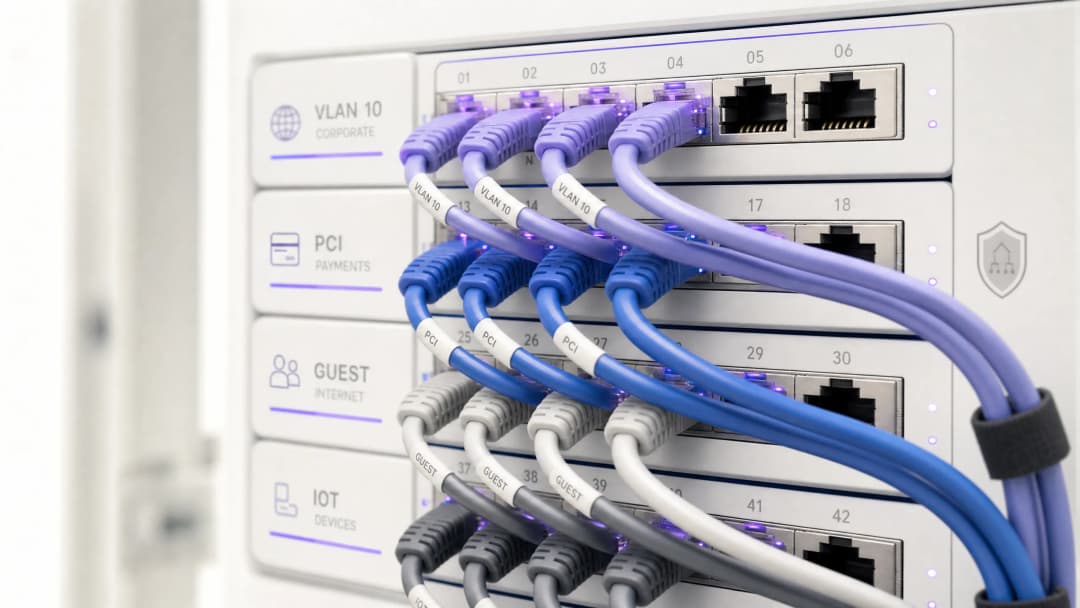
Sintesi Esecutiva
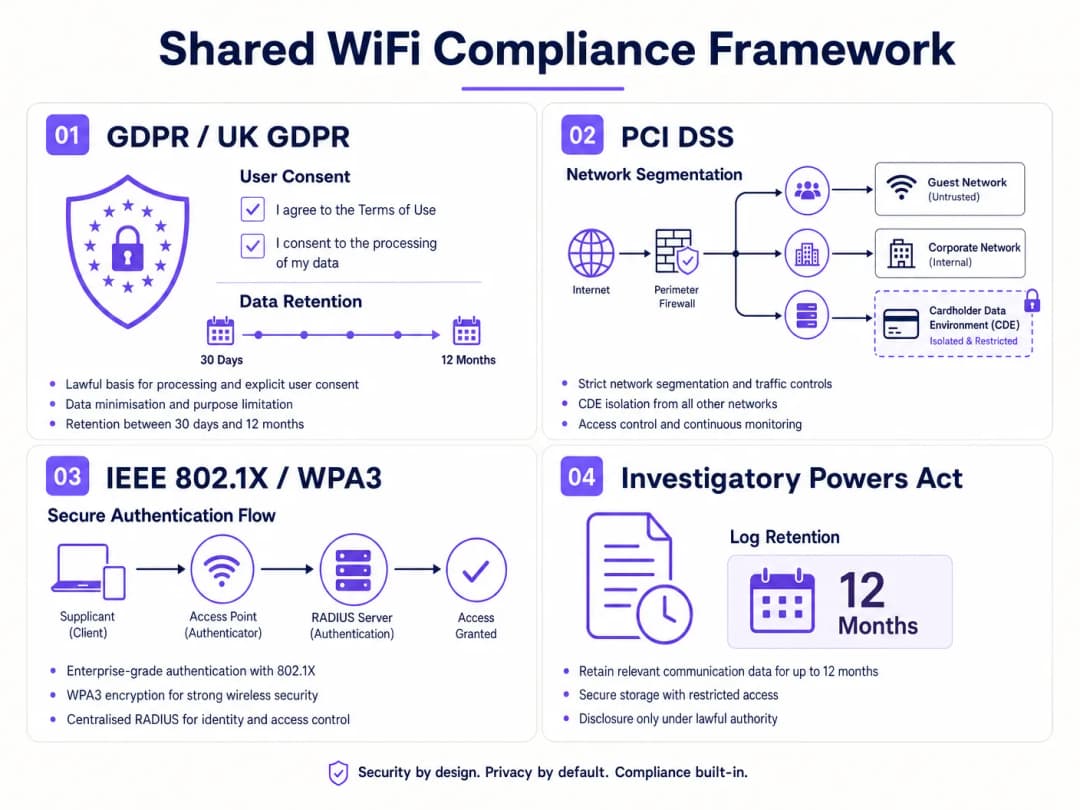
Le moderne sedi aziendali operano in un panorama iperconnesso e altamente regolamentato. La fornitura di un'infrastruttura wireless condivisa - che si tratti di un hotel, di un centro commerciale, di uno snodo di trasporti o di un campus del settore pubblico - non è più un semplice servizio di utilità; è un'attività regolamentata. Nel momento in cui un'organizzazione instrada il traffico o raccoglie dati da più tenant indipendenti, dipendenti e ospiti pubblici su un'unica rete fisica, si assume responsabilità legali sostanziali. Questi obblighi spaziano dalle normative sulla privacy dei dati come il GDPR [1], agli standard di sicurezza delle carte di pagamento (PCI-DSS 4.0) [2], fino alle legislazioni sulla sicurezza nazionale come il UK Investigatory Powers Act [3].
Per il Chief Technology Officer (CTO) e il Chief Information Security Officer (CISO), la mancata corretta progettazione di queste reti espone l'azienda a severe sanzioni normative - fino al 4% del fatturato annuo globale ai sensi del GDPR - e a violazioni della sicurezza catastrofiche. Per il Direttore delle Operazioni della Sede, la mancata conformità rappresenta una minaccia diretta alla continuità aziendale, alla fidelizzazione dei tenant e alla fiducia dei clienti.
Questa guida fornisce un modello architetturale completo e neutrale rispetto ai fornitori per affrontare queste sfide. Implementando la segmentazione delle reti virtuali (VLAN), un solido controllo degli accessi basato sull'identità (IEEE 802.1X) e la gestione automatizzata del consenso, le organizzazioni possono trasformare la propria rete WiFi condivisa da una passività ad alto rischio in una risorsa aziendale sicura, conforme e di grande valore. L'integrazione di piattaforme di enterprise intelligence come Guest WiFi e WiFi Analytics di Purple garantisce che la conformità non venga raggiunta a scapito dell'esperienza utente, ma agisca piuttosto come un fattore abilitante per l'acquisizione sicura di dati di prima parte e per l'efficienza operativa.
Approfondimento Tecnico
Il passaggio da un'implementazione wireless in una singola sede a un'infrastruttura condivisa e multi-tenant richiede un cambiamento fondamentale nella filosofia di progettazione della rete: da un ambiente piatto e affidabile a un framework segmentato e zero-trust. L'obiettivo primario è garantire che più tenant indipendenti coesistano su un'unica infrastruttura fisica senza compromettere la sicurezza, le prestazioni o la privacy.
L'Imperativo Fondamentale della Segmentazione VLAN
La pietra miliare di qualsiasi rete multi-tenant è la Virtual Local Area Network (VLAN). Come definito dallo standard IEEE 802.1Q, le VLAN consentono di suddividere un singolo switch di rete fisico in più domini di broadcast logicamente separati [4]. In una struttura condivisa, ciò significa che il traffico di un tenant - ad esempio, un negozio al dettaglio sulla VLAN 10 - è completamente invisibile e inaccessibile al traffico di un altro tenant, come un ufficio aziendale sulla VLAN 20, anche quando i loro dispositivi si connettono agli stessi access point fisici.
Regola Architetturale: Senza una corretta implementazione delle VLAN, la separazione dei tenant è puramente estetica. Più SSID su una singola LAN piatta non offrono alcun isolamento di sicurezza; qualsiasi dispositivo sulla rete può intercettare il traffico di broadcast ed effettuare una ricognizione laterale.
Per imporre un rigoroso isolamento dei tenant, il nucleo della rete deve implementare regole di firewall inter-VLAN di tipo stateful. Per impostazione predefinita, tutto il routing inter-VLAN deve essere bloccato (Default Deny). Il traffico deve essere autorizzato ad attraversare i confini della VLAN solo se corrisponde a regole di firewall esplicite e altamente limitate (ad esempio, indirizzando porte specifiche verso una stampante locale condivisa o un gateway di pagamento).
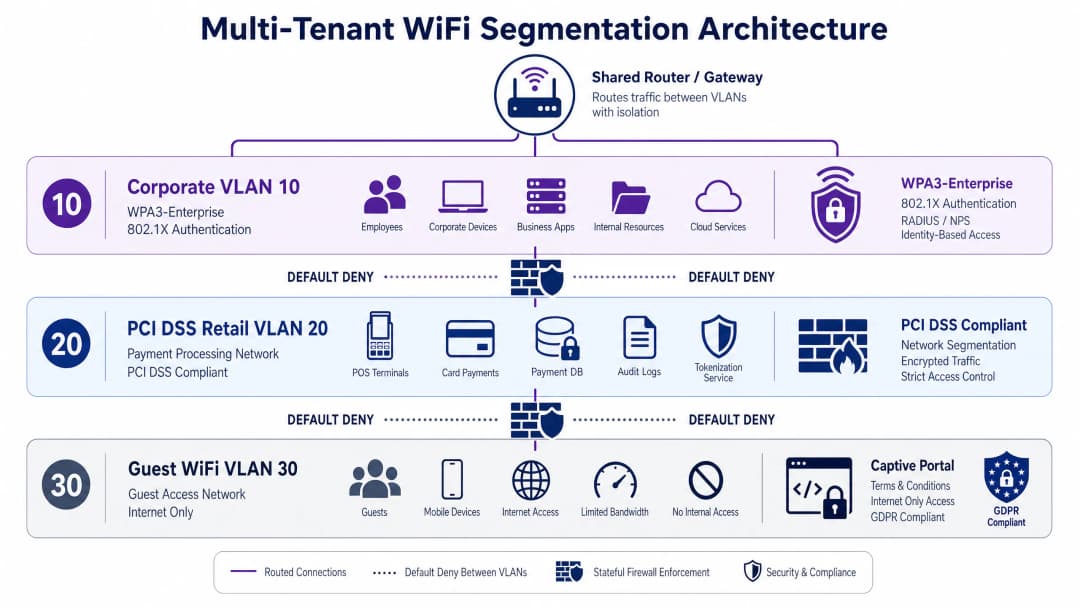
Standard di autenticazione: WPA3 e IEEE 802.1X
La protezione dell'accesso all'infrastruttura condivisa richiede l'adeguamento del protocollo di autenticazione al profilo di rischio specifico del tenant. Un approccio basato su un'unica chiave pre-condivisa (PSK) per tutti rappresenta una vulnerabilità di sicurezza critica e un fallimento diretto della conformità negli ambienti aziendali.
- Tenant aziendali e regolamentati: Questi ambienti richiedono il protocollo WPA3-Enterprise abbinato al controllo dell'accesso alla rete basato su porta IEEE 802.1X [5]. Questa architettura sostituisce le password statiche con credenziali individuali e dinamiche autenticate tramite un metodo Extensible Authentication Protocol (EAP), come EAP-TLS (basato su certificati) o PEAP-MSCHAPv2 (basato su credenziali), che comunica con un server RADIUS (Remote Authentication Dial-In User Service) centrale. In questo modo si garantisce che quando un dipendente lascia l'azienda o un dispositivo viene compromesso, il suo accesso possa essere revocato istantaneamente senza influire su altri utenti o tenant. Per i passaggi dettagliati relativi alla distribuzione, consulta la nostra guida su Come implementare l'autenticazione 802.1X con Cloud RADIUS.
- IoT e dispositivi headless: I sensori degli edifici intelligenti, la segnaletica digitale e i controlli ambientali spesso non sono in grado di eseguire l'autenticazione 802.1X. Per questi dispositivi è necessario implementare tecnologie Multi-Pre-Shared Key (MPSK) o Dynamic PSK (DPSK). Ciò consente alla rete di assegnare una PSK univoca e individuale a ciascun dispositivo, mappandola automaticamente su una VLAN IoT limitata senza richiedere un software client di livello aziendale.
- Accesso Ospiti Pubblico: Per proteggere il traffico degli ospiti pubblici dallo sniffing wireless passivo senza introdurre l'ostacolo delle password, le strutture dovrebbero implementare WPA3-Enhanced Open, basato su Opportunistic Wireless Encryption (OWE) [6]. L'OWE stabilisce automaticamente sessioni wireless individuali e crittografate per ciascun dispositivo ospite, garantendo la privacy sulle reti aperte e mantenendo un flusso di onboarding fluido attraverso un Captive Portal.
Il Livello di Protezione dei Dati: Conformità GDPR e UK GDPR
Quando una struttura gestisce una rete WiFi per gli ospiti, viene legalmente classificata come Titolare del Trattamento ai sensi del GDPR e del UK GDPR. Il fornitore del Captive Portal agisce come Responsabile del Trattamento. Questa distinzione è fondamentale: la struttura conserva la responsabilità legale finale sul modo in cui i dati degli ospiti vengono acquisiti, elaborati e archiviati.
Ai sensi dell'Articolo 4 del GDPR, i dati personali includono qualsiasi informazione relativa a una persona fisica identificata o identificabile [1]. In un ambiente WiFi per gli ospiti, ciò comprende sia dati espliciti (nomi, indirizzi email, numeri di telefono o profili di social media acquisiti tramite il Captive Portal) sia dati impliciti (indirizzi MAC, indirizzi IP, timestamp delle sessioni e dati di localizzazione dei dispositivi acquisiti automaticamente dal controller wireless).
Per elaborare legalmente questi dati personali, le strutture devono stabilire una base giuridica valida ai sensi dell'Articolo 6 del GDPR. Per la connettività di rete di base e la registrazione della sicurezza, le strutture possono invocare il Legittimo Interesse (Articolo 6(1)(f)). Tuttavia, se la struttura desidera utilizzare questi dati per finalità di marketing, profilazione comportamentale o analisi, deve ottenere il Consenso Esplicito (Articolo 6(1)(a)).
Standard di Consenso: Il consenso deve essere libero, specifico, informato e inequivocabile. Deve essere indicato da un'azione positiva e chiara. Vincolare il consenso al marketing all'accettazione dei termini di servizio per l'accesso alla rete costituisce una violazione diretta del regolamento.
Per soddisfare questo standard, la splash page del Captive Portal deve essere progettata con caselle di controllo separate e non selezionate per ciascuna finalità di trattamento distinta. Ad esempio, un utente deve poter accettare le Condizioni d'Uso della rete per navigare senza essere costretto ad aderire alle comunicazioni di marketing. Inoltre, il sistema deve mantenere un registro di controllo dettagliato e a prova di manomissione, l'Audit Trail dei Consensi, registrando esattamente chi ha prestato il consenso, quando, quali informative gli sono state mostrate e la versione esatta dell'informativa sulla privacy attiva in quel momento.
Conservazione dei Dati e Conflitto Normativo
I team IT affrontano una sfida complessa su due fronti nella gestione della conservazione dei log di rete. Devono bilanciare il principio del GDPR di Minimizzazione dei Dati (conservare i dati personali per un periodo non superiore a quanto strettamente necessario) con le leggi di sicurezza nazionale che impongono la conservazione dei log.
Ad esempio, lo UK Investigatory Powers Act 2016 (IPA) richiede ai fornitori di servizi di comunicazione di conservare gli Internet Connection Records (ICRs) fino a 12 mesi per assistere le forze dell'ordine nelle indagini sui reati gravi [3]. Allo stesso modo, diverse normative nazionali europee sulle telecomunicazioni impongono la conservazione dei log di connessione per periodi che variano da 30 giorni a 12 mesi.
Per gestire questo conflitto, le strutture devono implementare una Tiered Retention Architecture (architettura di conservazione a livelli) che segreghi e automatizzi i piani di conservazione in base alla classificazione dei dati:
- Log di sessione di rete (allocazioni IP, indirizzi MAC, timestamp): conservati per 12 mesi in un repository syslog sicuro e crittografato con accesso limitato per soddisfare gli obblighi di legge previsti per le forze dell'ordine, quindi eliminati automaticamente.
- Dati di registrazione del Captive Portal (senza consenso): eliminati o completamente anonimizzati entro 30 giorni dal termine della sessione.
- Profili di marketing (con consenso): conservati fino a quando l'utente non revoca il consenso (opt-out). I profili inattivi (ad esempio, gli utenti che non si connettono da 180 giorni) devono essere contrassegnati automaticamente per l'eliminazione o per campagne di rinnovo del consenso.
Guida all'implementazione
La distribuzione di una rete wireless multi-tenant sicura e conforme richiede un approccio strutturato a fasi. Questa sezione descrive i passaggi di configurazione fondamentali, concentrandosi sulle migliori pratiche indipendenti dal fornitore per gli architetti di rete e i responsabili IT.
Passaggio 1: Configurazione fisica e logica della VLAN
Iniziare definendo lo schema della VLAN sullo switch principale (core switch) e propagarlo su tutti gli switch di distribuzione e gli access point (AP) utilizzando il trunking 802.1Q. Allocare subnet e ID VLAN distinti per isolare completamente i domini di traffico:
Configure Core Switch:
  vlan 10 -> Name: Corporate_Tenant (Subnet: 10.10.10.0/24)
  vlan 20 -> Name: Retail_POS_PCI (Subnet: 10.20.20.0/24)
  vlan 30 -> Name: Guest_WiFi (Subnet: 172.16.0.0/16)
Sugli switch di periferia (edge switch), configurare le porte che si collegano agli Access Point wireless come Trunk Ports, consentendo le VLAN 10, 20 e 30. Assicurarsi che la VLAN nativa (non taggata) sia impostata su una VLAN di gestione non instradabile (ad esempio, VLAN 99) per proteggere il traffico di gestione dalle intercettazioni dei tenant.
Passaggio 2: Applicazione delle liste di controllo degli accessi (ACL) e del firewall
Al confine del Layer 3 (tipicamente lo switch principale o il gateway di sicurezza), applicare un blocco rigoroso tra le VLAN. Lo stato predefinito per tutto il traffico inter-VLAN deve essere bloccato. Implementare liste di controllo degli accessi (ACL) di tipo stateful o regole del firewall per impedire i movimenti laterali:
Create Access-List (Cisco IOS Example):
  ip access-list extended BLOCK_LATERAL
    deny ip 172.16.0.0 0.0.255.255 10.10.10.0 0.0.0.255 (Block Guest to Corp)
    deny ip 172.16.0.0 0.0.255.255 10.20.20.0 0.0.0.255 (Block Guest to PCI)
    permit ip 172.16.0.0 0.0.255.255 any (Permit Guest to WAN)
Applicare questa ACL in entrata sulla SVI (Switch Virtual Interface) per la VLAN 30. Per la VLAN 20 compresa nell'ambito PCI-DSS, configurare una regola di stateful inspection che blocchi tutto il traffico in entrata da tutte le altre VLAN, consentendo solo sessioni TLS crittografate in uscita verso gli indirizzi IP specifici del processore di pagamento.
Passaggio 3: Integrazione Enterprise RADIUS e 802.1X
Per i clienti aziendali, integrare il controller wireless con un server RADIUS sicuro (come FreeRADIUS, Microsoft NPS o una soluzione RADIUS basata su cloud). Configurare l'SSID aziendale per utilizzare WPA3-Enterprise (crittografia AES-CCMP o GCMP-256) con autenticazione 802.1X.
Configurare il server RADIUS per eseguire l'autenticazione basata su certificati (EAP-TLS). Generare e distribuire certificati client univoci a tutti i dispositivi aziendali tramite una piattaforma MDM (Mobile Device Management). Ciò impedisce ai dispositivi personali non autorizzati di connettersi alla rete aziendale, anche in caso di fuga di credenziali dell'utente.
Passaggio 4: Configurazione del Captive Portal e dell'Acquisizione del Consenso
Per il WiFi Guest pubblico (VLAN 30), configurare il controller wireless per reindirizzare tutto il traffico HTTP/HTTPS non autenticato a un Captive Portal esterno. Assicurarsi che il portale sia ospitato su un server sicuro abilitato per HTTPS con un certificato SSL/TLS valido.
Utilizzando una piattaforma incentrata sulla conformità come Purple, progettare la pagina di benvenuto del Captive Portal per applicare i seguenti elementi dell'interfaccia utente:
- Informativa sulla Privacy Chiara: Mostrare un riepilogo in evidenza e facilmente leggibile che spieghi quali dati vengono raccolti (es. nome, e-mail, indirizzo MAC) e le finalità del trattamento.
- Caselle di Controllo del Consenso Separate: Implementare caselle di controllo separate, non selezionate e non obbligatorie per l'adesione al marketing. La casella di controllo "Accetta Termini d'Uso" deve essere separata dall'adesione al marketing.
- Link ai Diritti dell'Interessato: Fornire link diretti e funzionali all'Informativa sulla Privacy completa della struttura e a un portale self-service in cui gli ospiti possono richiedere l'accesso o la cancellazione dei dati (DSAR).
Hai domande sulla tua configurazione specifica?
Il nostro team collabora con gestori di sedi, responsabili IT e ingegneri di rete in 80.000 sedi. Prenota una chiamata di 20 minuti e ti mostreremo come altri professionisti come te hanno risolto il problema.
Best Practice e Mappatura Normativa
Per garantire la conformità a lungo termine, i team IT devono allineare i propri controlli tecnici con le normative e gli standard internazionali stabiliti. La tabella seguente mappa i requisiti normativi specifici ai corrispondenti controlli tecnici e alle best practice architetturali.
| Normativa / Standard | Requisito Specifico | Controllo Tecnico / Best Practice | Funzionalità della Piattaforma Purple |
|---|---|---|---|
| GDPR / UK GDPR [1] | Articolo 6: Liceità del trattamento; Articolo 7: Condizioni per il consenso. | Caselle di controllo del consenso non selezionate e granulari sul Captive Portal; registrazione del consenso sicura e immutabile. | Captive Portal automatizzati e multilingue con registrazione del consenso conforme ed esportazioni pronte per gli audit. |
| PCI DSS 4.0 [2] | Requisito 1.2: Limitare il traffico tra il Cardholder Data Environment (CDE) e le altre reti. | Segmentazione VLAN Layer 3; regole del firewall stateful di tipo default-deny; isolamento fisico o logico delle reti POS. | Compatibilità totale con l'isolamento della rete; distribuzione indipendente dal fornitore su VLAN segmentate. |
| PCI DSS 4.0 [2] | Requisito 11.4: Rilevare e prevenire gli access point wireless non autorizzati (Rogue AP). | Implementare sistemi WIPS (Wireless Intrusion Prevention System); eseguire scansioni wireless trimestrali. | Integrazione con le API dei controller aziendali per segnalare access point non autorizzati o rogue. |
| UK Investigatory Powers Act [3] | Sezione 87: Conservazione dei registri delle connessioni Internet (ICR) per l'applicazione della legge. | Archiviazione syslog segregata; conservazione di 12 mesi della mappatura da IP a MAC e dei timestamp delle sessioni. | Inoltro automatizzato dei syslog a repository di conservazione sicuri e fuori sede con archiviazione conforme. |
| IEEE 802.1X / WPA3 [5] | Crittografia wireless sicura e controllo robusto dell'accesso basato su porta. | WPA3-Enterprise per le reti aziendali; WPA3-Enhanced Open (OWE) per le reti WiFi ospiti pubbliche. | Integrazione perfetta con RADIUS aziendali e supporto per standard di sicurezza WPA3 avanzati. |
Best Practice di Implementazione Specifiche per il Settore
- Hospitality (Hotel e Resort): Le reti ospiti devono essere segmentate per camera o per ospite utilizzando le Private VLAN (PVLAN) o il Client Isolation a livello di AP. Ciò impedisce agli ospiti della camera 101 di scansionare o accedere ai dispositivi (come smart TV o laptop) nella camera 102. Per i negozi e i servizi di ristorazione che operano in loco, è necessario applicare una rigorosa segregazione VLAN per mantenere i loro sistemi Point-of-Sale (POS) completamente fuori dalla portata della rete ospiti dell'hotel [7]. Consultare la nostra Guida per il Settore Hospitality per approfondimenti verticali dettagliati.
- Catene di Negozi e Centri Commerciali: I rivenditori devono isolare le loro reti POS principali sia dalla rete WiFi ospiti pubblica sia dalle reti aziendali di back-office. Se si implementano analisi basate sulla posizione (come il tracciamento dei tempi di sosta dei clienti tramite le richieste di probe WiFi), il sistema deve eseguire immediatamente l'hashing o l'anonimizzazione degli indirizzi MAC all'edge per impedire il tracciamento di individui identificabili senza il loro consenso. Esplorare la nostra Guida per il Settore Retail per scoprire come bilanciare l'acquisizione di dati conforme con la marketing intelligence.
- Settore pubblico e istruzione: i comuni e i distretti scolastici devono applicare un filtraggio dei contenuti rigoroso (conformità CIPA negli Stati Uniti o linee guida locali per il filtraggio del settore pubblico nel Regno Unito) per bloccare l'accesso a materiale dannoso o illegale sulle reti pubbliche [8]. Inoltre, le reti devono essere segmentate per garantire che i sistemi amministrativi, i registri degli studenti e le reti WiFi pubbliche per gli ospiti siano completamente isolati. Per la conformità specifica per il settore dell'istruzione, consulta la nostra guida completa su WiFi in Schools: The 2026 Administrator & IT Guide.
Risoluzione dei problemi e mitigazione dei rischi
Anche le reti progettate con la massima cura possono subire derive di configurazione o guasti operativi che ne compromettono la conformità. Questa sezione descrive le modalità di guasto più comuni e fornisce strategie di mitigazione tecnica.
Modalità di guasto comuni e mitigazioni tecniche
1. Il problema del "vicino rumoroso" e l'esaurimento della larghezza di banda
- Rischio: un singolo tenant o un ospite pubblico consuma una larghezza di banda eccessiva (ad esempio, streaming video in alta definizione), degradando le prestazioni della rete per le applicazioni aziendali critiche o per gli altri tenant.
- Mitigazione: applica criteri di Quality of Service (QoS) e una rigida limitazione della velocità. Applica limiti di larghezza di banda a monte e a valle per sessione utente sulla VLAN ospite (ad esempio, 5 Mbps in download, 1 Mbps in upload). All'estremità della WAN, configura l'accodamento basato sulle classi per garantire un pool di larghezza di banda dedicato minimo per le VLAN aziendali critiche e per l'elaborazione dei pagamenti, indipendentemente dall'utilizzo della rete ospiti.
2. Perdite di VLAN e porte degli switch configurate in modo errato
- Rischio: una porta dello switch è configurata in modo errato (ad esempio, una porta di accesso non contrassegnata assegnata alla VLAN errata o una porta trunk che perde traffico di gestione), consentendo ai pacchetti di attraversare i confini del tenant senza passare attraverso il firewall.
- Mitigazione: implementa Dynamic ARP Inspection (DAI), DHCP Snooping e IP Source Guard su tutti gli switch per impedire lo spoofing MAC e l'assegnazione non autorizzata di indirizzi IP. Conduci verifiche di rete semestrali utilizzando strumenti automatizzati di conformità della configurazione per rilevare modifiche non autorizzate alle VLAN o configurazioni errate delle porte.
3. Access Point non autorizzati e attacchi "Evil Twin"
- Rischio: un utente malintenzionato distribuisce un access point non autorizzato che trasmette lo stesso SSID della rete WiFi ospiti della struttura, acquisendo le credenziali di accesso degli ospiti e i dati personali tramite un captive portal contraffatto.
- Mitigazione: abilita il Wireless Intrusion Prevention System (WIPS) su tutti gli AP aziendali. Configura il WIPS per monitorare attivamente le trasmissioni via etere, rilevare gli AP non autorizzati che trasmettono SSID aziendali o ospiti e contenere automaticamente i dispositivi non autorizzati utilizzando frame di deautenticazione. Imponi l'uso di WPA3-Enterprise e WPA3-Enhanced Open, che mitigano il rischio di intercettazione passiva e attacchi con dizionario offline.
4. Errori nel registro di controllo del consenso
- Rischio: La piattaforma del captive portal non riesce a registrare il timestamp dell'opt-in di marketing di un ospite o lo registra in modo errato, lasciando la sede impossibilitata a dimostrare la conformità durante un audit normativo.
- Mitigazione: Distribuisci una piattaforma robusta e basata su cloud come Purple che replica i log del consenso su più data center isolati geograficamente. Assicurati che i log del consenso siano archiviati in un database di sola lettura e di sola aggiunta con hashing crittografico per garantire l'integrità dei log. Implementa controlli quotidiani automatizzati sullo stato di salute per verificare che le scritture sul database avvengano con successo.
ROI e Impatto Aziendale
I leader IT spesso vedono i requisiti legali e di conformità esclusivamente attraverso la lente dei costi e della mitigazione dei rischi. Tuttavia, un'infrastruttura WiFi condivisa ben progettata e conforme è un potente motore di efficienza operativa, fiducia dei clienti e valore aziendale misurabile.
Il Rapporto Costi-Benefici della Conformità
L'impatto finanziario della non conformità è severo. Ai sensi del GDPR, la sanzione massima per una violazione grave è di 20 milioni di euro o il 4% del fatturato annuo globale, a seconda di quale sia il valore più alto [1]. Per un grande gruppo alberghiero o una multinazionale della vendita al dettaglio, un singolo fallimento di conformità può comportare una sanzione di milioni di sterline, senza includere le spese legali associate, i costi di indagine forense e i danni catastrofici alla reputazione del marchio.
Al contrario, il costo di implementazione di una soluzione di livello aziendale conforme come Purple è una frazione di questa esposizione al rischio. Consolidando molteplici utilità di rete frammentate in un'unica infrastruttura fisica multi-tenant gestita centralmente, le organizzazioni ottengono significativi risparmi in termini di Spese in Conto Capitale (CapEx) e Spese Operative (OpEx):
- Consolidamento dell'Infrastruttura: Invece di distribuire cablaggi fisici, switch e access point separati per ciascun tenant o servizio, un'unica rete fisica ad alte prestazioni viene segmentata logicamente. Ciò riduce i costi di acquisizione dell'hardware fino al 40% e riduce drasticamente il consumo energetico e i costi di manutenzione continua.
- Gestione Centralizzata: La gestione di più tenant da un'unica dashboard basata su cloud riduce il carico amministrativo sui team IT interni. L'onboarding di un nuovo tenant, la regolazione dei limiti di larghezza di banda o l'aggiornamento delle informative sulla privacy del captive portal possono essere eseguiti in pochi minuti anziché in giorni, rappresentando un enorme guadagno in termini di efficienza operativa.
Trasformare la Conformità in una Risorsa Strategica
Distribuendo un captive portal conforme, le sedi possono acquisire legalmente dati di prima parte di alta qualità dai loro visitatori. Questi dati sono di grande valore per il marketing e la business intelligence, a condizione che siano stati acquisiti in modo etico e trasparente:
- Database di Marketing Etico: Poiché gli ospiti hanno espresso il proprio consenso in modo attivo e trasparente alle comunicazioni di marketing tramite caselle di controllo deselezionate conformi, il database di marketing risultante mostra un coinvolgimento significativamente più elevato, tassi di disiscrizione inferiori e metriche di conversione superiori rispetto alle liste non segmentate o non conformi.
- Analisi Granulare dei Visitatori: Sfruttando il tracciamento della posizione conforme e anonimizzato, i gestori delle strutture ottengono informazioni approfondite sul comportamento dei visitatori - come i flussi di passanti, i tempi medi di sosta e le frequenze delle visite ripetute. Questi dati possono essere condivisi con i locatari commerciali per aiutarli a ottimizzare il personale, valutare l'efficacia delle vetrine e misurare il ROI del marketing, creando un potente elemento di differenziazione nei mercati immobiliari competitivi.
Per ascoltare un briefing audio dettagliato su questi concetti, ascolta l'episodio del podcast professionale qui sotto:
References
- European Parliament and Council. (2016). Regulation (EU) 2016/679 (General Data Protection Regulation). Official Journal of the European Union. https://gdpr-info.eu/
- PCI Security Standards Council. (2022). Payment Card Industry (PCI) Data Security Standard, Version 4.0. https://www.pcisecuritystandards.org/
- UK Parliament. (2016). Investigatory Powers Act 2016. UK Statute Law Database. https://www.legislation.gov.uk/ukpga/2016/25/contents
- IEEE Computer Society. (2018). IEEE Standard for Local and Metropolitan Area Networks—Bridges and Bridged Networks (IEEE Std 802.1Q-2018). IEEE Xplore. https://ieeexplore.ieee.org/document/8403927
- Wi-Fi Alliance. (2018). WPA3™ Security White Paper. https://www.wi-fi.org/
- IETF RFC 8110. (2017). Opportunistic Wireless Encryption (OWE). Internet Engineering Task Force. https://tools.ietf.org/html/rfc8110
- PCI Security Standards Council. (2009). PCI DSS Wireless Guidelines. https://www.pcisecuritystandards.org/pdfs/PCI_DSS_v2_Wireless_Guidelines.pdf
- Federal Communications Commission. (2001). Children's Internet Protection Act (CIPA). FCC Consumer Guide. https://www.fcc.gov/consumers/guides/childrens-internet-protection-act
Definizioni chiave
Virtual LAN (VLAN)
Una sottorete logica che raggruppa un insieme di dispositivi provenienti da diverse LAN fisiche, isolando i loro domini di broadcast mediante l'etichettatura IEEE 802.1Q.
Cruciale per ambienti multi-tenant al fine di segregare le reti aziendali, degli ospiti e dei pagamenti su hardware fisico condiviso.
IEEE 802.1X
Uno standard IEEE per il controllo dell'accesso alla rete basato su porta (PNAC) che fornisce un meccanismo di autenticazione ai dispositivi che desiderano connettersi a una LAN o WLAN.
Lo standard per la sicurezza delle reti aziendali e dei tenant, che autentica i singoli dispositivi rispetto a un server RADIUS.
WPA3-Enterprise
L'ultima generazione di sicurezza WiFi Protected Access per le reti aziendali, che richiede una forza crittografica a 192 bit e Protected Management Frames (PMF) obbligatori.
Obbligatorio per i tenant aziendali, regolamentati e ad alta sicurezza in un ambiente wireless condiviso.
WPA3-Enhanced Open (OWE)
Uno standard WiFi Alliance basato su Opportunistic Wireless Encryption che fornisce la crittografia dei dati individuali per le reti wireless aperte e pubbliche senza richiedere password utente.
Lo standard di best practice per il guest WiFi pubblico, che protegge gli utenti dallo sniffing passivo locale mantenendo la facilità di accesso.
Titolare del Trattamento (Data Controller)
La persona fisica o giuridica, l'autorità pubblica, il servizio o altro organismo che, singolarmente o insieme ad altri, determina le finalità e i mezzi del trattamento di dati personali.
Nel guest WiFi, il gestore della struttura è il Titolare del Trattamento e si assume la responsabilità legale finale ai sensi del GDPR.
Responsabile del Trattamento (Data Processor)
La persona fisica o giuridica, l'autorità pubblica, il servizio o altro organismo che tratta dati personali per conto del titolare del trattamento.
Il fornitore della piattaforma guest WiFi (ad esempio, Purple) agisce come Responsabile del Trattamento, gestendo i dati secondo le istruzioni del titolare.
Cardholder Data Environment (CDE)
Le persone, i processi e le tecnologie che memorizzano, elaborano o trasmettono i dati dei titolari di carta o i dati di autenticazione sensibili.
L'obiettivo primario della conformità PCI-DSS; deve essere completamente isolato dalle reti wireless ospiti e aziendali.
Registro delle Connessioni Internet (ICR)
Un record dei servizi internet a cui accede un dispositivo specifico, inclusi indirizzi IP, numeri di porta e timestamp di connessione, ma escluso il contenuto specifico delle comunicazioni.
Ai sensi del UK Investigatory Powers Act, ai fornitori di comunicazioni può essere richiesto di conservare gli ICR per 12 mesi per l'accesso da parte delle forze dell'ordine.
Esempi pratici
Un hotel storico di 250 camere a Londra presenta una galleria commerciale al piano terra con cinque negozi indipendenti e un grande centro congressi che ospita eventi aziendali settimanali. L'hotel gestisce una singola connessione internet fisica in fibra ottica. L'hotel deve fornire un accesso WiFi sicuro agli ospiti della struttura, offrire reti isolate per l'elaborazione dei pagamenti ai tenant commerciali e garantire una capacità wireless dedicata ad alte prestazioni ai clienti dei congressi aziendali, il tutto nel rispetto delle normative UK GDPR, PCI-DSS e del UK Investigatory Powers Act.
L'architetto di rete implementa una rete wireless multi-tenant segmentata tramite VLAN su hardware di livello enterprise. Vengono configurate tre VLAN distinte: VLAN 100 per gli Ospiti dell'Hotel, VLAN 200 per i POS Retail (ambito PCI-DSS) e VLAN 300 per i Clienti dei Congressi.
Rete Ospiti Hotel (VLAN 100): Configurata con WPA3-Enhanced Open (OWE) per fornire la crittografia via etere senza password. Gli utenti vengono reindirizzati a un Captive Portal sicuro, abilitato per HTTPS e ospitato da Purple. Il portale presenta caselle di controllo separate e non selezionate per l'adesione al marketing. I log di sessione vengono inoltrati a un server syslog locale e conservati per 12 mesi per soddisfare gli obblighi del UK Investigatory Powers Act, mentre i profili di marketing del Captive Portal vengono sincronizzati con il CRM solo per gli ospiti che hanno esplicitamente prestato il consenso.
Rete POS Retail (VLAN 200): Completamente isolata da tutte le altre VLAN utilizzando una policy di firewall stateful 'Default Deny' sul gateway principale. È consentito solo il traffico TLS 1.3 in uscita verso gli indirizzi IP specifici del gateway di pagamento. Nessun dispositivo ospite o aziendale può instradare il traffico verso questa VLAN. Vengono programmate scansioni trimestrali delle vulnerabilità esterne per mantenere la conformità PCI-DSS.
Rete Congressi (VLAN 300): Configurata con autenticazione WPA3-Enterprise e IEEE 802.1X. L'assegnazione dinamica della VLAN è configurata sul server RADIUS in modo che, quando un cliente aziendale si autentica con le proprie credenziali univoche, venga mappato dinamicamente su una sotto-VLAN dedicata con un pool di larghezza di banda QoS (Quality of Service) garantito di 100 Mbps simmetrici, prevenendo il problema del 'vicino rumoroso' causato dallo streaming degli ospiti.
Una catena di vendita al dettaglio nazionale con 150 negozi nel Regno Unito e in Europa desidera distribuire un servizio WiFi pubblico per ospiti al fine di acquisire gli indirizzi e-mail dei clienti per campagne di marketing localizzate. Utilizza inoltre l'analisi della posizione WiFi (tracciamento delle probe request) per misurare l'affluenza, i tempi di sosta nei negozi e i tassi di fidelizzazione dei clienti. Deve garantire che l'acquisizione dei dati e il tracciamento della posizione siano pienamente conformi alle normative GDPR e UK GDPR.
La catena di negozi implementa la piattaforma enterprise di guest WiFi e analytics di Purple in tutte le 150 sedi.
Configurazione del Captive Portal: Il captive portal è configurato con un selettore di lingua in grado di rilevare la posizione geografica. Presenta un'informativa sulla privacy chiara e concisa nella lingua locale prima della visualizzazione di qualsiasi campo di registrazione. Il modulo richiede solo il nome e l'indirizzo email del cliente (minimizzazione dei dati). Viene implementata una casella di controllo separata e non spuntata per l'adesione al marketing, con una chiara spiegazione che l'adesione è facoltativa e non influisce sulla possibilità di accedere al WiFi gratuito.
Conformità dell'analisi di localizzazione: Per tracciare l'affluenza in modo conforme senza il consenso esplicito (poiché le richieste di probe vengono acquisite automaticamente quando un dispositivo ha il WiFi abilitato, prima di connettersi), i controller wireless sono configurati per eseguire immediatamente l'hashing di tutti gli indirizzi MAC acquisiti all'edge utilizzando un algoritmo SHA-256 con salt. Il salt viene ruotato automaticamente ogni 24 ore. Questo processo rende anonimi in modo permanente gli identificatori dei dispositivi, convertendoli da dati personali in dati statistici aggregati e non identificabili, che esulano dall'ambito del GDPR.
Diritti degli interessati: Un portale per la privacy self-service dedicato è collegato dal captive portal. I clienti possono inserire il proprio indirizzo email per visualizzare tutti i dati personali conservati dal rivenditore, aggiornare le proprie preferenze o richiedere la cancellazione immediata (esercitando il proprio Diritto alla Cancellazione ai sensi dell'Articolo 17 del GDPR).
Domande di esercitazione
Q1. Un responsabile IT sta configurando una rete wireless condivisa per un centro commerciale. Il team di gestione del centro desidera raccogliere gli indirizzi email dei visitatori per finalità di marketing e anche tracciare il movimento dei dispositivi all'interno della struttura per ottimizzare i prezzi di locazione degli inquilini. Il direttore marketing suggerisce di offrire il "WiFi gratuito ad alta velocità" solo ai visitatori che si iscrivono alla newsletter di marketing. Questo approccio è conforme al GDPR e come dovrebbe essere configurata la rete?
Suggerimento: Considera i principi del GDPR relativi al consenso "liberamente espresso" e alla minimizzazione dei dati, e come deve essere gestito il tracciamento della posizione.
Visualizza risposta modello
Questo approccio non è conforme al GDPR. Vincolare l'iscrizione al marketing all'accesso alla rete viola il requisito del consenso "liberamente espresso" dell'Articolo 7(4). La rete deve essere configurata per consentire agli utenti di accedere al WiFi gratuito accettando i Termini di Utilizzo della rete, senza essere obbligati a fornire il consenso al marketing. Per quanto riguarda il tracciamento della posizione, poiché i dispositivi dei visitatori trasmettono automaticamente richieste di probe, gli indirizzi MAC devono essere immediatamente sottoposti a hashing e anonimizzati all'edge della rete utilizzando un algoritmo SHA-256 salato con un salt che ruota quotidianamente. Questo converte i dati personali di tracciamento in dati statistici anonimi sull'affluenza, garantendo la conformità e fornendo comunque alla gestione del centro commerciale le informazioni operative necessarie per tariffare le locazioni.
Q2. Il sistema Point-of-Sale (POS) del ristorante e del bar di un hotel funziona sulla stessa infrastruttura di switch fisici della rete WiFi per gli ospiti. Durante un audit di conformità, il QSA (Qualified Security Assessor) segnala la rete come non conforme per lo standard PCI DSS 4.0. Il direttore IT dell'hotel sostiene che, poiché il WiFi per gli ospiti e il POS utilizzano SSID diversi, sono isolati in modo sicuro. In che modo l'architetto di rete dovrebbe risolvere questa controversia?
Suggerimento: Gli SSID da soli non forniscono la segmentazione della rete. Pensa alla separazione a Livello 2 e Livello 3.
Visualizza risposta modello
Il QSA ha ragione e l'argomentazione del direttore IT non è valida. Gli SSID sono semplicemente punti di accesso wireless; se rimandano alla stessa rete locale flat (LAN), i dispositivi sulla rete ospiti possono facilmente intercettare il traffico POS, eseguire ARP poisoning o lanciare attacchi laterali. Per risolvere questo problema e rendere la rete conforme allo standard PCI DSS 4.0, l'architetto di rete deve configurare VLAN separate sullo switch e sugli access point (ad esempio, VLAN 20 per il POS, VLAN 30 per gli Ospiti). Il gateway principale deve imporre una politica di firewall stateful "Default Deny" tra queste VLAN, bloccando tutto il routing inter-VLAN. La VLAN degli ospiti deve avere accesso solo alla WAN (internet), e la VLAN del POS deve essere limitata a sessioni TLS crittografate in uscita verso il processore di pagamento, rimuovendo completamente la rete ospiti dall'ambito di conformità PCI DSS.
Q3. Un'organizzazione del settore pubblico che gestisce un centro civico nel Regno Unito riceve una richiesta formale da parte delle forze dell'ordine per la consegna dei log di connessione di uno specifico indirizzo IP associato a un incidente di criminalità informatica avvenuto tre mesi fa. Il DPO (Data Protection Officer) dell'organizzazione sostiene che, in base ai principi di minimizzazione dei dati del GDPR, i log di connessione vengono eliminati dopo 30 giorni, pertanto non dispongono più di tali dati. Questo espone l'organizzazione a responsabilità legali e come dovrebbe essere progettata la conservazione dei log?
Suggerimento: Bilancia il principio di minimizzazione dei dati del GDPR con gli obblighi di legge del UK Investigatory Powers Act.
Visualizza risposta modello
Sì, questo espone l'organizzazione a una significativa responsabilità legale. Sebbene il GDPR promuova la minimizzazione dei dati, l'Articolo 6(1)(c) fornisce una base giuridica per il trattamento quando questo è necessario per adempiere a un obbligo legale. Nel Regno Unito, l'Investigatory Powers Act 2016 impone ai fornitori di servizi di comunicazione (che possono includere operatori del settore pubblico di reti WiFi pubbliche su larga scala) di conservare i registri delle connessioni Internet (ICR) fino a 12 mesi. Cancellando tutti i log dopo 30 giorni, l'organizzazione ha violato i propri obblighi di legge previsti dall'IPA. L'architetto di rete deve implementare un'architettura di conservazione a livelli: i log di connessione delle sessioni (mappature da IP a MAC e timestamp) devono essere inoltrati a un server syslog sicuro e crittografato e conservati per esattamente 12 mesi con accesso limitato, mentre i dati personali di marketing acquisiti sul Captive Portal devono essere gestiti separatamente ed eliminati o anonimizzati entro 30 giorni se non è stato fornito il consenso al marketing.
Fonti
- https://gdpr-info.eu/
- https://www.pcisecuritystandards.org/
- https://www.legislation.gov.uk/ukpga/2016/25/contents
- https://ieeexplore.ieee.org/document/8403927
- https://www.wi-fi.org/
- https://tools.ietf.org/html/rfc8110
- https://www.pcisecuritystandards.org/pdfs/PCIDSSv2WirelessGuidelines.pdf
- https://www.fcc.gov/consumers/guides/childrens-internet-protection-act
Continua a leggere questa serie
Perché il WiFi per gli ospiti in stile hotel non funziona negli edifici residenziali
Sarai in grado di diagnosticare il motivo per cui i residenti nei blocchi BTR, negli alloggi per studenti e nei complessi residenziali (MDU) continuano a segnalare problemi di rete e di scegliere il modello di autenticazione ideale per risolverli. La risposta è una chiave iPSK per nucleo familiare sui tuoi access point esistenti, mantenendo una rete Captive Portal separata per i visitatori.
Progettazione di reti WiFi per edifici per uffici multi-tenant
Questa guida fornisce a responsabili IT, architetti di rete e CTO un modello indipendente dal fornitore per la progettazione di reti WiFi scalabili, sicure e isolate in edifici per uffici multi-tenant. Copre la segmentazione VLAN in conformità a IEEE 802.1Q, l'assegnazione dinamica delle VLAN tramite 802.1X e RADIUS, la pianificazione RF per ambienti ad alta densità e le considerazioni di conformità ai sensi di GDPR e PCI DSS. Gli operatori delle strutture e i gestori degli edifici troveranno linee guida sull'architettura pratiche, casi di studio reali ed errori di configurazione da evitare prima della distribuzione.
Mean time to innocence: come dimostrare che non è colpa del WiFi
Il Mean time to innocence (MTTI) è la metrica critica che definisce il tempo speso dai team IT per dimostrare che un problema di rete non è di loro responsabilità. Questa guida descrive una metodologia di osservabilità in cinque passaggi per eliminare il rimpallo di responsabilità negli ambienti multi-tenant, sostituendo le accuse con prove condivise per ridurre il mean time to resolution (MTTR).
Hai domande sulla tua configurazione specifica?
Il nostro team collabora con gestori di sedi, responsabili IT e ingegneri di rete in 80.000 sedi. Prenota una chiamata di 20 minuti e ti mostreremo come altri professionisti come te hanno risolto il problema.