
MDU साठी मल्टी-टेनंट WiFi आर्किटेक्चर डिझाइन करणे
हे मार्गदर्शक MDU मधील एकापेक्षा जास्त युनिट्समध्ये स्केलेबल, सुरक्षित आणि आयसोलेटेड WiFi नेटवर्क्स तैनात करण्यासाठी आर्किटेक्चरल ब्ल्यूप्रिंट प्रदान करते. यामध्ये VLAN सेगमेंटेशन, RF प्लॅनिंग, 802.1X ऑथेंटिकेशन आणि सुधारित ROI साठी सेंट्रलाइज्ड मॅनेजमेंटसह टेनंट आयसोलेशनचा समतोल कसा राखायचा यासारख्या महत्त्वपूर्ण बाबींचा समावेश आहे.
Video overview
हे मार्गदर्शक ऐका
पॉडकास्ट ट्रान्सक्रिप्ट पहा
आमच्या मुख्य मालिकेचा भाग: मल्टी-टेनंट WiFi मार्गदर्शक →

कार्यकारी सारांश (Executive Summary)
मल्टी-ड्वेलिंग युनिट्स (MDUs) चे व्यवस्थापन करणारे CTOs आणि मुख्य आर्किटेक्ट्स - मग ते विस्तीर्ण आदरातिथ्य संकुल असोत, संमिश्र-वापराची किरकोळ विक्रीची ठिकाणे असोत किंवा सार्वजनिक क्षेत्रातील गृहनिर्माण असोत - त्यांना एकाच सततच्या आव्हानाचा सामना करावा लागतो: एका सामायिक भौतिक पायाभूत सुविधांवर स्वतंत्र भाडेकरूंना सुरक्षित, उच्च-कार्यक्षमता असलेली कनेक्टिव्हिटी प्रदान करणे. पारंपारिक सिंगल-टेनंट नेटवर्क डिझाइन हे MDU आवश्यकतांच्या भाराखाली कोलमडतात, ज्यामुळे सुरक्षिततेतील त्रुटी, ब्रॉडकास्ट डोमेन सॅच्युरेशन आणि न परवडणारे सपोर्ट ओव्हरहेड निर्माण होते.
मल्टी-टेनंट WiFi आर्किटेक्चर डिझाइन करण्यासाठी भौतिक अलगीकरणाकडून (physical isolation) लॉजिकल सेगमेंटेशनकडे जाणे आवश्यक आहे. हे संदर्भ मार्गदर्शक MDU उपयोजनांसाठी निश्चित आर्किटेक्चरल ब्ल्यूप्रिंटची रूपरेषा दर्शवते. आम्ही कठोर ट्रॅफिक अलगीकरणासाठी IEEE 802.1Q VLAN टॅगिंगची अंमलबजावणी, प्रवेश नियंत्रणासाठी 802.1X RADIUS प्रमाणीकरणाची आवश्यकता आणि ऑपरेशनल दृश्यमानता राखण्यासाठी केंद्रित क्लाउड कंट्रोलर्सच्या महत्त्वपूर्ण भूमिकेचे परीक्षण करू. या व्हेंडर-तटस्थ तत्त्वांचा अवलंब करून, वेन्यू ऑपरेटर्स अनुपालन जोखीम (जसे की PCI-DSS आणि GDPR) कमी करू शकतात, कार्यात्मक खर्च (OpEx) कमी करू शकतात आणि कनेक्टिव्हिटीला एका खर्च केंद्राकडून एका कमाई करण्यायोग्य सेवा स्तरामध्ये रूपांतरित करू शकतात.
तांत्रिक सखोल विश्लेषण (Technical Deep Dive)
पायाभरणी: VLANs द्वारे लॉजिकल सेगमेंटेशन
कोणत्याही मल्टी-टेनंट आर्किटेक्चरची पायाभरणी म्हणजे कठोर नेटवर्क सेगमेंटेशन आहे. सामायिक भौतिक वातावरणात, प्रत्येक भाडेकरूसाठी स्वतंत्र स्विचेस आणि केबलिंग तैनात करणे व्यावसायिकदृष्ट्या व्यावहारिक नाही. त्याऐवजी, IEEE 802.1Q व्हर्च्युअल लोकल एरिया नेटवर्क्स (VLANs) चा वापर करून लेयर 2 वर अलगीकरण साध्य केले जाते.
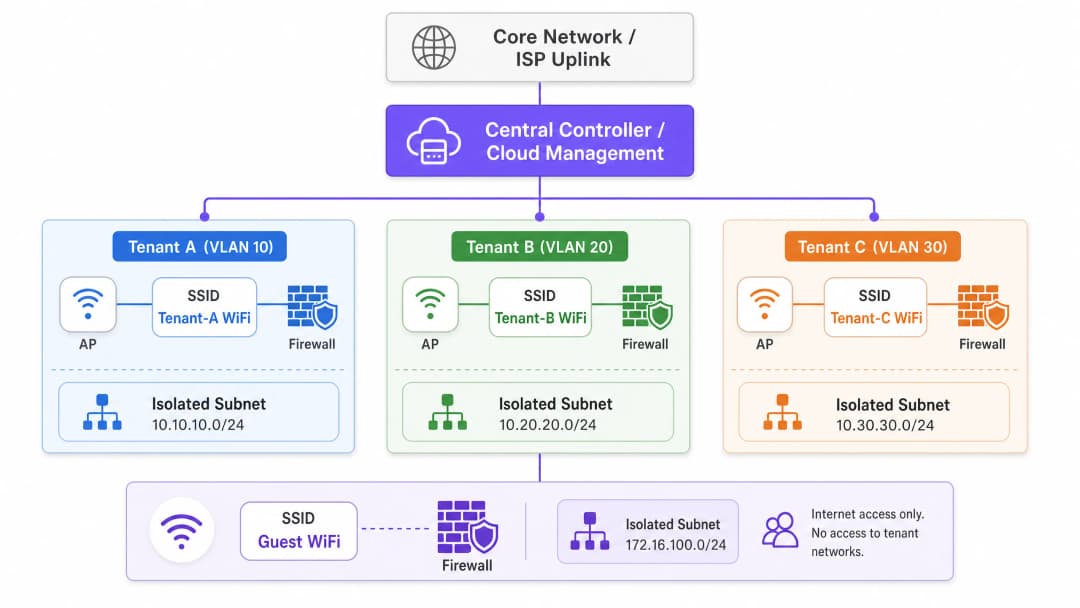
या मॉडेलमध्ये, एक सिंगल ॲक्सेस पॉइंट (AP) विविध भाडेकरू प्रोफाईलना सेवा देण्यासाठी एकाधिक SSIDs ब्रॉडकास्ट करतो, किंवा RADIUS द्वारे डायनॅमिक VLAN असाइनमेंटचा वापर करतो. जेव्हा एखादा क्लायंट नेटवर्कशी जोडला जातो, तेव्हा त्यांच्या ट्रॅफिकला AP एजवर विशिष्ट VLAN ID सह टॅग केले जाते. हे टॅग सामायिक स्विच फॅब्रिकवरील ट्रंक लिंक्समधून फ्रेम जात असताना कायम राहते, ज्यामुळे Tenant A (उदा. VLAN 10) डेटा लिंक लेयरवर Tenant B (उदा. VLAN 20) पासून पूर्णपणे वेगळा राहतो याची खात्री होते.
तथापि, VLANs केवळ अलगीकरण प्रदान करतात, अंगभूत सुरक्षितता नाही. भाडेकरू नेटवर्क्स दरम्यान लॅटरल मूव्हमेंट रोखण्यासाठी, डिस्ट्रिब्युशन किंवा कोर लेयरवरील फायरवॉल पॉलिसीद्वारे इंटर-VLAN राउटिंग कठोरपणे नियंत्रित केले पाहिजे. झिरो ट्रस्ट दृष्टीकोन असे सांगतो की जोपर्यंत विशिष्ट, आवश्यक सेवांसाठी स्पष्टपणे परवानगी दिली जात नाही तोपर्यंत भाडेकरू VLANs मधील ट्रॅफिक पूर्णपणे नाकारले जाते.

प्रमाणीकरण आणि एन्क्रिप्शन मानके
एंटरप्राइज-ग्रेड मल्टी-टेनंट वातावरणासाठी, Pre-Shared Keys (PSKs) अपुरे पडतात. ते सहज शेअर केले जाऊ शकतात, सर्व युजर्सवर परिणाम न करता बदलणे कठीण असते आणि वैयक्तिक जबाबदारी निश्चित करत नाहीत. यासाठीचे आर्किटेक्चरल मानक RADIUS ऑथेंटिकेशनसह IEEE 802.1X हे आहे.
802.1X अंतर्गत, प्रत्येक युजर किंवा डिव्हाइस युनिक क्रेडेंशियल्स किंवा डिजिटल सर्टिफिकेट्स वापरून स्वतंत्रपणे ऑथेंटिकेट होते. RADIUS सर्व्हर केवळ ओळख पडताळत नाही तर ऑथेंटिकेटरला (AP किंवा स्विच) Vendor-Specific Attributes (VSAs) देखील पाठवू शकतो, ज्यामुळे युजर कोणत्या SSID ला कनेक्ट करतो याकडे दुर्लक्ष करून त्याला त्याच्या नियुक्त VLAN वर डायनॅमिकली असाइन केले जाते. यामुळे SSID चा अनावश्यक विस्तार लक्षणीयरीत्या कमी होतो, जो एअरटाइम कार्यक्षमता राखण्यासाठी अत्यंत महत्त्वाचा आहे.
एन्क्रिप्शनसाठी, WPA3-Enterprise चे सध्याचे बंधनकारक मानक आहे. हे अत्यंत संवेदनशील वातावरणासाठी एक मजबूत 192-बिट सुरक्षा सुट प्रदान करते आणि WPA2 ला प्रभावित करणाऱ्या ऑफलाइन डिक्शनरी हल्ल्यांचा धोका कमी करते.
अतिथी (Guest) आणि IoT आयसोलेशन
कॉर्पोरेट किंवा टेनंट ट्रॅफिक व्यतिरिक्त, MDU आर्किटेक्चरमध्ये दोन स्वतंत्र ट्रॅफिक प्रोफाइल्स सामावून घेणे आवश्यक आहे: अतिथी आणि Internet of Things (IoT) डिव्हाइसेस.
- अतिथी नेटवर्क: अतिथींना अडथळा नसलेल्या इंटरनेट प्रवेशाची आवश्यकता असते परंतु त्यांना टेनंटच्या डेटापासून पूर्णपणे वेगळे ठेवणे आवश्यक आहे. हे सहसा Captive Portal द्वारे हाताळले जाते. या लेयरचे व्यवस्थापन करण्याबद्दल आणि व्यवसाय बुद्धिमत्तेसाठी (business intelligence) त्याचा लाभ घेण्याबद्दल सविस्तर माहितीसाठी, Guest WiFi आणि संबंधित WiFi Analytics क्षमतेचे आमचे सर्वसमावेशक विहंगावलोकन पहा.
- IoT डिव्हाइसेस: आधुनिक MDUs स्मार्ट थर्मोस्टॅट्स, IP कॅमेरे आणि बिल्डिंग मॅनेजमेंट सिस्टीम्सनी सुसज्ज असतात. ही डिव्हाइसेस बऱ्याचदा स्क्रीन नसलेली (headless) असतात, त्यांना पॅच करणे कठीण असते आणि त्यांच्यावर सुरक्षा हल्ल्याचा मोठा धोका असतो. त्यांना कडक इग्रेस फिल्टरिंगसह समर्पित IoT VLANs वर आयसोलेट करणे आवश्यक आहे, जेणेकरून केवळ विशिष्ट मॅनेजमेंट सर्व्हरसह संवाद साधण्याची परवानगी मिळेल.
तुमच्या विशिष्ट सेटअपबद्दल काही प्रश्न आहेत का?
आमची टीम ८०,००० हून अधिक वेन्यूजमधील वेन्यू ऑपरेटर्स, IT मॅनेजर्स आणि नेटवर्क इंजिनिअर्ससोबत काम करते. २० मिनिटांचा कॉल बुक करा आणि तुमच्यासारख्या इतरांनी ही समस्या कशी सोडवली हे आम्ही तुम्हाला दाखवू.
अंमलबजावणी मार्गदर्शक (Implementation Guide)
या आर्किटेक्चरची अंमलबजावणी करण्यासाठी लॉजिकल डिझाइनपासून प्रत्यक्ष प्रमाणीकरणापर्यंत पद्धतशीर दृष्टिकोन आवश्यक आहे.
पायरी १: लॉजिकल नेटवर्क डिझाइन
IP ॲड्रेसिंग स्कीम आणि VLAN मॅपिंग परिभाषित करून सुरुवात करा. एक पद्धतशीर दृष्टिकोन ओव्हरलॅपिंग सबनेट्स प्रतिबंधित करतो आणि राउटिंग सोपे करतो.
- मॅनेजमेंट VLAN (उदा. VLAN 1): केवळ नेटवर्क इन्फ्रास्ट्रक्चरसाठी (APs, स्विचेस). युजरला प्रवेश नाही.
- टेनंट VLANs (उदा. VLANs 100 - 199): वैयक्तिक टेनंट किंवा बिझनेस युनिट्ससाठी समर्पित सबनेट्स.
- अतिथी VLAN (उदा. VLAN 200): केवळ इंटरनेट प्रवेश, अत्यंत मर्यादित.
- IoT/फॅसिलिटीज VLAN (उदा. VLAN 300): बिल्डिंग मॅनेजमेंट सिस्टीम्ससाठी.
पायरी २: RF प्लॅनिंग आणि साईट सर्व्हे
Hospitality किंवा Retail सारख्या उच्च-घनतेच्या वातावरणात, को-चॅनेल इंटरफेरियन्स (CCI) हे खराब कामगिरीचे मुख्य कारण असते. यासाठी केवळ प्रेडिक्टिव्ह सर्व्हे पुरेसा नाही; भिंतींचे अडथळे आणि शेजारील इंटरफेरियन्स विचारात घेण्यासाठी प्रत्यक्ष, ऑन-साइट RF सर्व्हे अनिवार्य आहे.
- 5 GHz / 6 GHz प्राधान्यीकरण: अधिक नॉन-ओव्हरलॅपिंग चॅनेल्सचा लाभ घेण्यासाठी क्लायंट्सना 5 GHz बँड किंवा WiFi 6E वापरताना 6 GHz बँडवर पुश करा. स्पेक्ट्रम व्यवस्थापनाच्या सखोल आकलनासाठी, आमच्या Wi Fi Frequencies: A Guide to Wi-Fi Frequencies in 2026 या मार्गदर्शकाचे पुनरावलोकन करा.
- चॅनेल रुंदी: दाट लोकवस्तीच्या MDU मध्ये, चॅनेलचा जास्तीत जास्त पुनर्वापर करण्यासाठी चॅनेलची रुंदी 2.4 GHz बँडवर 20 MHz आणि 5 GHz बँडवर 40 MHz पर्यंत मर्यादित ठेवा.
- तुम्हाला सध्याच्या उपयोजनामध्ये कार्यक्षमतेच्या समस्या येत असल्यास, How to Analyze and Change Your WiFi Channel for Maximum Speed (किंवा इटालियन आवृत्ती: Come analizzare e modificare il canale WiFi per la massima velocità) चा सल्ला घ्या.
पायरी 3: पायाभूत सुविधा कॉन्फिगरेशन
- स्विच फॅब्रिक: ट्रंक पोर्ट काळजीपूर्वक कॉन्फिगर करा. ऍक्सेस स्विचेस आणि कोरमधील अपलिंक्सवर केवळ आवश्यक VLANs ना परवानगी असल्याची खात्री करा.
- ऍक्सेस पॉईंट्स: एकाधिक BSSIDs चे समर्थन करण्यास आणि क्लाउड कंट्रोलरसह एकत्रित करण्यास सक्षम असलेले APs तैनात करा. एअरटाइम वाचवण्यासाठी प्रति रेडिओ कमाल 3 - 4 पर्यंत ब्रॉडकास्ट SSIDs ची संख्या मर्यादित करा.
- कंट्रोलर पॉलिसी: एखादा आक्रमक क्लायंट सामायिक WAN अपलिंक सॅच्युरेट करण्यापासून रोखण्यासाठी प्रति भाडेकरू किंवा प्रति वापरकर्ता बँडविड्थ मर्यादा परिभाषित करा.
सर्वोत्तम पद्धती
- केंद्रीकृत क्लाउड व्यवस्थापन: एकाच विंडोशिवाय वितरित MDU वातावरणाचे व्यवस्थापन करण्याचा ऑपरेशनल ओव्हरहेड अशक्य आहे. क्लाउड कंट्रोलर झिरो-टच प्रोव्हिजनिंग, फर्मवेअर व्यवस्थापन आणि केंद्रीकृत पॉलिसी अंमलबजावणी सक्षम करतो.
- डायनॅमिक VLAN असाइनमेंट: "Tenant_A_WiFi", "Tenant_B_WiFi" इ. ब्रॉडकास्ट करण्याऐवजी, एकच "MDU_Secure" SSID ब्रॉडकास्ट करा आणि प्रमाणित वापरकर्त्यांना त्यांच्या योग्य VLAN वर डायनॅमिकपणे नियुक्त करण्यासाठी 802.1X/RADIUS वापरा. हे बीकन ओव्हरहेड लक्षणीयरीत्या कमी करते.
- स्थान-आधारित सेवा: मालमत्ता ट्रॅकिंग किंवा वेफाइंडिंगसाठी आधुनिक APs मध्ये एकात्मिक BLE (ब्लूटूथ लो एनर्जी) चा लाभ घ्या. याबद्दल अधिक जाणून घेण्यासाठी, BLE Low Energy Explained for Enterprise वाचा.
- पर्यावरणासाठी अनुकूल करा: एका MDU ऑफिस स्पेसला त्याच्या भौतिक मांडणीनुसार विशिष्ट ट्यूनिंगची आवश्यकता असते. पर्यावरण-विशिष्ट समायोजनांसाठी Office Wi Fi: Optimize Your Modern Office Wi-Fi Network पहा.
त्रुटी निवारण आणि जोखीम कमी करणे
सामान्य बिघाड मोड
- ट्रंक पोर्ट चुकीचे कॉन्फिगरेशन: मल्टी-भाडेकरू सेटअपमध्ये "कनेक्ट केलेले, इंटरनेट नाही" चे सर्वात सामान्य कारण. जर AP आणि गेटवेमधील ट्रंक लिंकवरून एखादा VLAN गहाळ असेल, तर DHCP विनंत्या अयशस्वी होतील.
- शमन उपाय: स्वयंचलित कॉन्फिगरेशन ऑडिटिंग लागू करा आणि स्पॅनिंग ट्री टोपोलॉजीचे काटेकोरपणे दस्तऐवजीकरण करा.2. SSID Overhead: एकाच AP वर 10 SSIDs ब्रॉडकास्ट करण्याचा अर्थ असा आहे की रेडिओ आपला बराच वेळ केवळ बीकन फ्रेम्स ट्रान्समिट करण्यात घालवतो, ज्यामुळे प्रत्यक्ष डेटा ट्रान्समिशनसाठी खूपच कमी एअरटाइम उरतो.
- निवारण: SSIDs एकत्रित करा आणि डायनॅमिक VLAN असाइनमेंट वापरा.
- मॅनेजमेंट प्लेन एक्सपोजर: जर भाडेकरू (tenant) AP किंवा स्विचच्या मॅनेजमेंट इंटरफेसला पिंग किंवा ॲक्सेस करू शकत असेल, तर नेटवर्क मूलभूतपणे धोक्यात आले आहे.
- निवारण: एक समर्पित, आउट-ऑफ-बँड मॅनेजमेंट VLAN वापरा आणि मॅनेजमेंट सबनेटवर भाडेकरू सबनेटमधील सर्व RFC 1918 ट्रॅफिक ब्लॉक करणाऱ्या कडक ऍक्सेस कंट्रोल लिस्ट्स (ACLs) लागू करा.
ROI आणि व्यावसायिक प्रभाव
मजबूत मल्टी-टेनंट आर्किटेक्चरमध्ये स्थलांतरित केल्याने नेटवर्क एका गरजेच्या समस्येतून एका धोरणात्मक मालमत्तेमध्ये रूपांतरित होते.
- कमी झालेले OpEx: केंद्रीकृत व्यवस्थापन आणि लॉजिकल सेगमेंटेशनमुळे ऑन-साइट भेटींची (ट्रक रोल्स) आवश्यकता कमी होते. सपोर्ट डेस्क समस्यांचे दूरस्थपणे निदान करू शकतात, ज्यामुळे त्रुटी सामायिक इन्फ्रास्ट्रक्चरमध्ये आहे की भाडेकरूच्या विशिष्ट कॉन्फिगरेशनमध्ये आहे हे ओळखता येते.
- अनुपालन आणि जोखीम कमी करणे: पेमेंट कार्ड इंडस्ट्री (PCI) डेटा (उदा. रिटेल युनिट्समध्ये) किंवा संवेदनशील रुग्णाचा डेटा (उदा. मिश्र-वापर असलेल्या इमारतींमध्ये असलेल्या Healthcare सुविधांमध्ये) वेगळा करून, अनुपालन ऑडिटची व्याप्ती लक्षणीयरीत्या कमी होते, ज्यामुळे सल्लागार शुल्कात मोठी बचत होते.
- कमाई (Monetisation): एका स्थिर, विभागलेल्या आर्किटेक्चरसह, वेन्यू ऑपरेटर्स भाडेकरूंना स्तर-आधारित बँडविड्थ पॅकेजेस देऊ शकतात, ज्यामुळे आवर्ती महसूल मिळतो. शिवाय, गेस्ट WiFi नेटवर्कचा वापर डेटा कॅप्चर आणि मार्केटिंगसाठी केला जाऊ शकतो, ज्यामुळे ग्राहकांच्या संख्येचे (footfall) कृती करण्यायोग्य माहितीमध्ये रूपांतर होते.
या आर्किटेक्चरल सिद्धांतांवर सखोल चर्चेसाठी आमचा तांत्रिक ब्रीफिंग पॉडकास्ट खाली ऐका:
महत्वाच्या व्याख्या
VLAN (Virtual Local Area Network)
नेटवर्क डिव्हाइसेसचा एक लॉजिकल गट जो त्यांच्या फिजिकल लोकेशनचा विचार न करता एकाच लोकल LAN वर असल्यासारखा दिसतो.
एकाच फिजिकल स्विचेस आणि APs सामायिक करणाऱ्या विविध टेनंट्सचा ट्रॅफिक लॉजिकली वेगळा करण्यासाठी, ब्रॉडकास्ट ट्रॅफिक कमी करण्यासाठी आणि परफॉर्मन्स सुधारण्यासाठी MDUs मध्ये वापरले जाते.
IEEE 802.1Q
इथरनेट फ्रेममध्ये ३२-बिट टॅग समाविष्ट करून इथरनेट नेटवर्कवर VLANs ना सपोर्ट करणारे नेटवर्किंग मानक.
हा एक अंतर्निहित प्रोटोकॉल आहे जो एकाच ट्रंक केबलला एकापेक्षा जास्त आयसोलेटेड टेनंट नेटवर्क्सचा ट्रॅफिक नेण्याची परवानगी देतो.
IEEE 802.1X
पोर्ट-आधारित नेटवर्क ॲक्सेस कंट्रोल (PNAC) साठीचा एक IEEE मानक, जो LAN किंवा WLAN शी कनेक्ट होऊ इच्छिणाऱ्या डिव्हाइसेसना ऑथेंटिकेशन यंत्रणा प्रदान करतो.
एंटरप्राइझ MDU डिप्लॉयमेंटसाठी हे आवश्यक आहे, हे शेअर केलेल्या पासवर्डवर अवलंबून राहण्याऐवजी वैयक्तिक वापरकर्ता ऑथेंटिकेशन (RADIUS द्वारे) करण्याची अनुमती देते, ज्यामुळे डायनॅमिक VLAN असाइनमेंट सक्षम होते.
RADIUS (Remote Authentication Dial-In User Service)
एक नेटवर्किंग प्रोटोकॉल जो नेटवर्क सेवा कनेक्ट करणाऱ्या आणि वापरणाऱ्या वापरकर्त्यांसाठी सेंट्रलाइज्ड ऑथेंटिकेशन, ऑथरायझेशन आणि अकाउंटिंग (AAA) व्यवस्थापन प्रदान करतो.
802.1X डिप्लॉयमेंटमधील सर्व्हर घटक जो क्रेडेंशियल्सची पडताळणी करतो आणि टेनंट डिव्हाइस कोणत्या VLAN ला असाइन करायचे हे AP ला सांगतो.
Trunk Port
एक नेटवर्क स्विच पोर्ट जो एकाच वेळी अनेक VLANs साठी ट्रॅफिक वाहून नेण्यासाठी कॉन्फिगर केला जातो, ट्रॅफिक वेगळे ठेवण्यासाठी 802.1Q टॅग्ज वापरतो.
ॲक्सेस स्विचेस आणि कोर नेटवर्कमधील महत्त्वपूर्ण लिंक. ट्रंक पोर्ट चुकीच्या पद्धतीने कॉन्फिगर करणे हे टेनंट कनेक्टिव्हिटी निकामी होण्याचे सर्वात सामान्य कारण आहे.
Co-Channel Interference (CCI)
दोन किंवा अधिक ॲक्सेस पॉइंट्स एकमेकांच्या रेंजमध्ये अगदी एकाच फ्रिक्वेन्सी चॅनलवर ट्रान्समिट करत असताना होणारा हस्तक्षेप.
दाट लोकवस्तीच्या MDUs मध्ये (जसे की हॉटेल्स किंवा अपार्टमेंट ब्लॉक्स) ही एक मोठी समस्या आहे ज्यामुळे डिव्हाइसेसना चॅनल मोकळे होण्याची वाट पाहावी लागते, ज्यामुळे नेटवर्क थ्रुपुट कमालीचे कमी होते.
Dynamic VLAN Assignment
अशी प्रक्रिया जिथे एक RADIUS सर्व्हर नेटवर्क ॲक्सेस डिव्हाइसला (AP किंवा स्विच) ऑथेंटिकेट केलेल्या वापरकर्त्याला त्यांच्या ओळखीच्या आधारे विशिष्ट VLAN मध्ये ठेवण्याचे निर्देश देतो.
हे ठिकाण चालवणाऱ्यांना सर्व टेनंट्ससाठी एकच सुरक्षित SSID ब्रॉडकास्ट करण्याची आणि ऑथेंटिकेशननंतर त्यांना त्यांच्या आयसोलेटेड नेटवर्कवर असाइन करण्याची अनुमती देते, ज्यामुळे RF एअरटाइम वाचतो.
Captive Portal
एक वेब पेज जे सार्वजनिक - ॲक्सेस नेटवर्कच्या वापरकर्त्याला ॲक्सेस मिळण्यापूर्वी पाहणे आणि त्यासोबत संवाद साधणे आवश्यक असते.
इंटरनेट ॲक्सेस देण्यापूर्वी सेवा अटी लागू करण्यासाठी, मार्केटिंग डेटा गोळा करण्यासाठी किंवा पेमेंटवर प्रक्रिया करण्यासाठी MDU मधील Guest VLAN वर वापरले जाते.
सोडवलेली उदाहरणे
एका मिश्र-वापर रिटेल आणि ऑफिस कॉम्प्लेक्सला (MDU) १५ स्वतंत्र रिटेल टेनंट्स, एक सामायिक कॉर्पोरेट ऑफिस स्पेस आणि पब्लिक गेस्ट WiFi साठी सुरक्षित WiFi प्रदान करणे आवश्यक आहे. खर्च कमी करण्यासाठी व्हेन्यू ऑपरेटरला सिंगल फिजिकल नेटवर्क इन्फ्रास्ट्रक्चर वापरायचे आहे, परंतु रिटेलर्ससाठी PCI DSS अनुपालन सुनिश्चित करणे आवश्यक आहे.
- सेंट्रल क्लाउड कंट्रोलरद्वारे व्यवस्थापित केलेले एंटरप्राइझ-ग्रेड APs तैनात करा.
- केवळ नेटवर्क डिव्हाइसेससाठी 'Management' VLAN (VLAN 10) तयार करा.
- क्लायंट आयसोलेशन सक्षम असलेले आणि Captive Portal असलेले 'Guest' VLAN (VLAN 20) तयार करा. हा ट्रॅफिक थेट इंटरनेटवर रूट करा, ज्यामुळे अंतर्गत नेटवर्क्स बायपास होतील.
- ऑफिस स्पेससाठी, 802.1X ऑथेंटिकेशन वापरून 'Corporate' VLAN (VLAN 30) तयार करा.
- रिटेल टेनंट्ससाठी, Dynamic VLAN Assignment लागू करा. 802.1X वापरून एकच 'Retail_Secure' SSID ब्रॉडकास्ट करा. जेव्हा एखादे रिटेल डिव्हाइस सेंट्रल RADIUS सर्व्हरद्वारे ऑथेंटिकेट होते, तेव्हा सर्व्हर एक Vendor-Specific Attribute (VSA) पास करतो जो डिव्हाइसला त्याच्या विशिष्ट टेनंट VLAN मध्ये (उदा. VLANs 101-115) नियुक्त करतो.
- रिटेल VLANs दरम्यान सर्व इंटर-VLAN रूटिंग ब्लॉक करण्यासाठी कोर फायरवॉल कॉन्फिगर करा, ज्यामुळे PCI DSS साठी आवश्यक असलेले कडक आयसोलेशन सुनिश्चित होईल.
एक ४०० खोल्यांचे हॉटेल ([Hospitality](/industries/hospitality)) त्याचे नेटवर्क अपग्रेड करत आहे. त्यांना प्रत्येक खोलीत गेस्ट डिव्हाइसेस, हाऊसकीपिंगसाठी स्टाफ टॅब्लेट्स आणि नवीन IoT स्मार्ट थर्मोस्टॅट्स सपोर्ट करणे आवश्यक आहे. त्यांना सध्या संध्याकाळच्या पीक अवर्समध्ये वारंवार ड्रॉपआउट्सचा अनुभव येतो.
- इंटरफेरियन्स ओळखण्यासाठी आणि AP प्लेसमेंटची योजना आखण्यासाठी एक ॲक्टिव्ह RF साइट सर्व्हे करा (डेंसिटी हाताळण्यासाठी हॉलवे ऐवजी इन-रूम किंवा प्रत्येक दुसऱ्या खोलीत तैनात करणे योग्य राहील).
- ट्रॅफिकचे लॉजिकल सेगमेंटेशन करा: Guest (VLAN 100), Staff (VLAN 200), IoT (VLAN 300).
- पीक अवर्समध्ये काही युजर्समुळे WAN लिंक सॅच्युरेट होण्यापासून रोखण्यासाठी Guest SSID वर प्रति-युझर बँडविड्थ मर्यादा (उदा. 10 Mbps डाऊन / 5 Mbps अप) लागू करा.
- IoT थर्मोस्टॅट्ससाठी, WPA3-Personal (सपोर्ट असल्यास) किंवा प्रगत सप्लिकंट्स नसतील तर MAC Authentication Bypass (MAB) सह समर्पित हिडन SSID वापरा. VLAN 300 वर कडक इग्रेस फिल्टरिंग लागू करा जेणेकरून थर्मोस्टॅट्स केवळ विशिष्ट क्लाउड मॅनेजमेंट सर्व्हरशीच कम्युनिकेट करू शकतील.
सराव प्रश्न
Q1. तुम्ही एका नवीन ५० युनिट्सच्या प्रीमियम अपार्टमेंट कॉम्प्लेक्ससाठी WiFi आर्किटेक्चर डिझाइन करत आहात. डेव्हलपरला विक्रीचा महत्त्वाचा मुद्दा म्हणून 'Included Gigabit WiFi' ऑफर करायचे आहे. ते प्रत्येक अपार्टमेंटच्या कॉम्स कपाटात एक मानक ग्राहक - दर्जाचा वायरलेस राउटर स्थापित करण्याचा प्रस्ताव मांडतात, जे सर्व एका सेंट्रल अनमॅनेज्ड स्विचला वायरने जोडलेले असतील. या प्रस्तावातील प्राथमिक आर्किटेक्चरल त्रुटी कोणत्या आहेत आणि एंटरप्राइझ पर्याय काय आहे?
टीप: RF इंटरफेरन्स, व्यवस्थापकीय ओव्हरहेड आणि ब्रॉडकास्ट डोमेनच्या आकाराचा विचार करा.
नमुना उत्तर पहा
प्रस्तावित डिझाइनमध्ये गंभीर त्रुटी आहेत. १) RF इंटरफेरन्स: ५० स्वतंत्र ग्राहक राउटरमुळे प्रचंड प्रमाणात Co-Channel Interference (CCI) होईल, ज्यामुळे परफॉर्मन्स गंभीरपणे खालावेल. २) व्यवस्थापन: यात कोणतेही सेंट्रल व्हिजिबिलिटी नसते; ट्रबलशूटिंग करण्यासाठी ५० वैयक्तिक राउटरमध्ये ॲक्सेस करणे आवश्यक आहे. ३) सुरक्षा: अनमॅनेज्ड स्विचचा अर्थ असा आहे की सर्व अपार्टमेंट्स एकच ब्रॉडकास्ट डोमेन शेअर करतात, ज्यामुळे टेनंट्स एकमेकांचे ट्रॅफिक संभाव्यपणे इंटरसेप्ट करू शकतात.
यावर एंटरप्राइझ पर्याय म्हणजे अपार्टमेंट्समध्ये सेंट्रली मॅनेज्ड, एंटरप्राइझ - ग्रेड APs (उदा. Wi-Fi 6/6E) तैनात करणे, जे मॅनेज्ड PoE स्विचेसला जोडलेले असतील. Dynamic VLAN Assignment सह 802.1X ऑथेंटिकेशन लागू करा जेणेकरून प्रत्येक टेनंट त्यांच्या स्वतःच्या VLAN वर लॉजिकली आयसोलेटेड असेल, मग ते कोणत्याही AP शी कनेक्ट झाले तरीही. हे सेंट्रल व्हिजिबिलिटी, RF कोऑर्डिनेशन आणि कडक सुरक्षा आयसोलेशन प्रदान करते.
Q2. मल्टी-टेनंट ऑफिस बिल्डिंगच्या कमिशनिंग फेज दरम्यान, टेनंट A (VLAN १० वर) रिपोर्ट करतो की ते इंटरनेट ॲक्सेस करू शकत नाहीत. तुम्ही पडताळणी करता की AP हे SSID ब्रॉडकास्ट करत आहे, क्लायंट यशस्वीरित्या कनेक्ट होतो आणि 802.1X ऑथेंटिकेशन पास होते. तथापि, क्लायंट डिव्हाइस स्वतःला एक APIPA ॲड्रेस (169.254.x.x) असाइन करत आहे. इन्फ्रास्ट्रक्चरमधील सर्वात संभाव्य कॉन्फिगरेशन त्रुटी कोणती आहे?
टीप: AP कडून DHCP सर्व्हरकडे जाणाऱ्या DHCP रिक्सवेस्टच्या मार्गाचा मागोवा घ्या.
नमुना उत्तर पहा
सर्वात संभाव्य समस्या म्हणजे Access Point आणि Access Switch दरम्यान, किंवा Access Switch आणि Core/Distribution switch दरम्यान चुकीचे कॉन्फिगर केलेले ट्रंक पोर्ट आहे. क्लायंटला APIPA पत्ता मिळाल्यामुळे, DHCP Discover ब्रॉडकास्ट DHCP सर्व्हरपर्यंत पोहोचत नाही. जर ऑथेंटिकेशन यशस्वी झाले, तर RADIUS सर्व्हर योग्यरित्या VLAN 10 असाइन करत आहे, परंतु जर मार्गावरील 802.1Q ट्रंक लिंक्सवर VLAN 10 ला स्पष्टपणे परवानगी दिली नसेल, तर ट्रॅफिक स्विच पोर्टवर ड्रॉप होते. इंजिनिअरने सर्व अपलिंक्सवर 'switchport trunk allowed vlan' कॉन्फिगरेशन तपासणे आवश्यक आहे.
Q3. एका स्टेडियमला ([Transport](/industries/transport) हब / इव्हेंट स्पेस) ऑपरेशन्स कर्मचारी, तिकीट विक्रेते आणि सार्वजनिक अतिथी WiFi साठी मल्टी-टेनंट नेटवर्कची आवश्यकता आहे. वेळ वाचवण्यासाठी, ज्युनियर इंजिनिअर प्रत्येकासाठी स्वतंत्र पासवर्डसह WPA2-PSK वापरून तीन SSIDs तयार करण्याचा सल्ला देतो. तिकीट विक्रेत्यांसाठी हे का अमान्य आहे, आणि त्याऐवजी काय लागू केले पाहिजे?
टीप: पेमेंट प्रक्रियेसाठी आवश्यक असणाऱ्या कंप्लायन्स आवश्यकतांचा विचार करा.
नमुना उत्तर पहा
तिकीट विक्रेत्यांसाठी WPA2-PSK वापरणे अमान्य आहे कारण ते पेमेंट्स स्वीकारतात, ज्यामुळे ते PCI DSS (Payment Card Industry Data Security Standard) कंप्लायन्सच्या अधीन येतात. PSKs कमजोर सुरक्षा देतात, सहजपणे शेअर केले जाऊ शकतात आणि वैयक्तिक वापरकर्त्याची जबाबदारी निश्चित करत नाहीत. शिवाय, शेअर केलेले PSK नेटवर्क उपकरणांना एकमेकांशी संवाद साधण्यापासून (क्लायंट आयसोलेशन) स्वभावाने रोखत नाही.
त्याऐवजी, वैयक्तिक आणि ऑडिट करण्यायोग्य प्रवेश प्रदान करण्यासाठी आर्किटेक्चरने RADIUS ऑथेंटिकेशनसह 802.1X (शक्यतो WPA3-Enterprise वापरून) लागू केले पाहिजे. तिकीट विक्रेत्यांना एका समर्पित, कडकपणे आयसोलेट केलेल्या VLAN वर ठेवले पाहिजे, ज्यामध्ये कोअर फायरवॉलचे नियम तिकीट VLAN आणि अतिथी किंवा ऑपरेशन्स VLANs मधील कोणत्याही राउटिंगला स्पष्टपणे नकार देतील.
या मालिकेमध्ये पुढे वाचा
विद्यार्थी निवास नेटवर्क्समध्ये बँडविड्थ व्यवस्थापित करणे
हे मार्गदर्शक IT व्यवस्थापक, नेटवर्क आर्किटेक्ट्स आणि प्रॉपर्टी ऑपरेशन्स डायरेक्टर्सना हाय-डेन्सिटी विद्यार्थी निवास वातावरणात WiFi बँडविड्थ व्यवस्थापित करण्यासाठी एक वेंडर-न्यूट्रल तांत्रिक संदर्भ प्रदान करते. यामध्ये VLAN सेगमेंटेशन, क्वालिटी ऑफ सर्व्हिस (QoS) पॉलिसी डिझाइन, आयडेंटिटी-बेस्ड ट्रॅफिक शेपिंग आणि ॲप्लिकेशन-लेयर व्हिजिबिलिटी यांचा समावेश आहे - जे स्केलेबल, फेअर-ॲक्सेस नेटवर्कचे चार मुख्य आधारस्तंभ आहेत. वास्तविक-जगातील डिप्लॉयमेंट परिस्थिती, मोजता येण्याजोगे परिणाम आणि निर्णय फ्रेमवर्कसह, मोठ्या प्रमाणावर निवासी नेटवर्क इन्फ्रास्ट्रक्चरसाठी जबाबदार असलेल्या कोणत्याही टीमसाठी हे एक ऑपरेशनल प्लेबुक आहे.
फ्लॅट्स आणि को-वर्किंग स्पेसेससाठी WPA2-Enterprise विरुद्ध Personal
हे अधिकृत तांत्रिक संदर्भ मार्गदर्शक फ्लॅट्स आणि को-वर्किंग स्पेसेससारख्या मल्टी-टेनंट वातावरणासाठी WPA2-Personal विरुद्ध WPA2-Enterprise चे मूल्यांकन करते. हे नेटवर्क आर्किटेक्ट्स आणि IT मॅनेजर्सना 802.1X ऑथेंटिकेशन, डायनॅमिक VLAN असाइनमेंट आणि सुरक्षा अनुपालनाबद्दल उपयुक्त माहिती प्रदान करते, आणि सामायिक केलेले पासवर्ड्स आधुनिक सामायिक ठिकाणी कसे अस्वीकार्य जोखीम निर्माण करतात हे दर्शवते. ठिकाण चालवणाऱ्या ऑपरेटर्सना या तिमाहीत मायग्रेशनचा निर्णय घेण्यासाठी ठोस अंमलबजावणी मार्गदर्शन, वास्तविक केस स्टडीज आणि ROI विश्लेषण मिळेल.
सामायिक WiFi नेटवर्कसाठी मायक्रो-सेगमेंटेशनच्या सर्वोत्तम पद्धती
हे तांत्रिक संदर्भ मार्गदर्शक सामायिक WiFi पायाभूत सुविधांवर मायक्रो-सेगमेंटेशन लागू करण्यासाठी व्यावहारिक धोरणे प्रदान करते. IT व्यवस्थापक आणि नेटवर्क आर्किटेक्ट्स जोखीम कमी करण्यासाठी, अनुपालन सुनिश्चित करण्यासाठी आणि नेटवर्क कार्यक्षमता ऑप्टिमाइझ करण्यासाठी अतिथी, IoT आणि कर्मचारी ट्रॅफिक सुरक्षितपणे कसे आयसोलेट करू शकतात याचे तपशील यात दिले आहेत.
तुमच्या विशिष्ट सेटअपबद्दल काही प्रश्न आहेत का?
आमची टीम ८०,००० हून अधिक वेन्यूजमधील वेन्यू ऑपरेटर्स, IT मॅनेजर्स आणि नेटवर्क इंजिनिअर्ससोबत काम करते. २० मिनिटांचा कॉल बुक करा आणि तुमच्यासारख्या इतरांनी ही समस्या कशी सोडवली हे आम्ही तुम्हाला दाखवू.