
पर्सनलायझेशनमुळे ग्राहकांची निष्ठा आणि विक्री कशी वाढते
हे तांत्रिक संदर्भ मार्गदर्शक मोठ्या प्रमाणावर ग्राहकांच्या पर्सनलायझेशनसाठी WiFi ॲनालिटिक्सचा वापर करण्याच्या आर्किटेक्चरल आवश्यकता आणि व्यावसायिक प्रभावाचा तपशील देते. हे IT मॅनेजर्स, नेटवर्क आर्किटेक्ट्स आणि ठिकाण ऑपरेशन्स डायरेक्टर्ससाठी जुन्या अतिथी प्रवेश इन्फ्रास्ट्रक्चरला प्राथमिक डेटा इनजेशन लेयरमध्ये रूपांतरित करण्यासाठी कृती करण्यायोग्य डिप्लॉयमेंट मार्गदर्शन प्रदान करते, जे मोजता येण्याजोगी निष्ठा आणि महसूल वाढवते. डेटा स्कीमा डिझाईन, CRM इंटिग्रेशन, GDPR अनुपालन आणि हॉस्पिटॅलिटी, रिटेल आणि इव्हेंट्समधील वास्तविक जगातील केस स्टडीजचा समावेश करून, हे मार्गदर्शक तांत्रिक टीम्सना अशा नेटवर्कचे आर्किटेक्चर तयार करण्यासाठी आवश्यक असलेल्या फ्रेमवर्कसह सुसज्ज करते जे सक्रियपणे महसूल वाढीमध्ये योगदान देते.
हे मार्गदर्शक ऐका
पॉडकास्ट ट्रान्सक्रिप्ट पहा
आमच्या मुख्य मालिकेचा भाग: WiFi Marketing Guide →

कार्यकारी सारांश
हॉस्पिटॅलिटी, रिटेल आणि सार्वजनिक क्षेत्रातील ठिकाण चालकांना एका सततच्या आव्हानाचा सामना करावा लागतो: अनामिक पाहुण्यांच्या गर्दीचे मोजता येण्याजोग्या ग्राहक निष्ठेत आणि महसुलात रूपांतर करणे. जुन्या नेटवर्क इन्फ्रास्ट्रक्चरमध्ये अतिथींच्या प्रवेशाला केवळ एक खर्च केंद्र (cost centre) मानले जात असे, परंतु आधुनिक एज प्लॅटफॉर्म्सनी ॲक्सेस पॉईंटला प्राथमिक डेटा इनजेशन लेयरमध्ये रूपांतरित केले आहे.
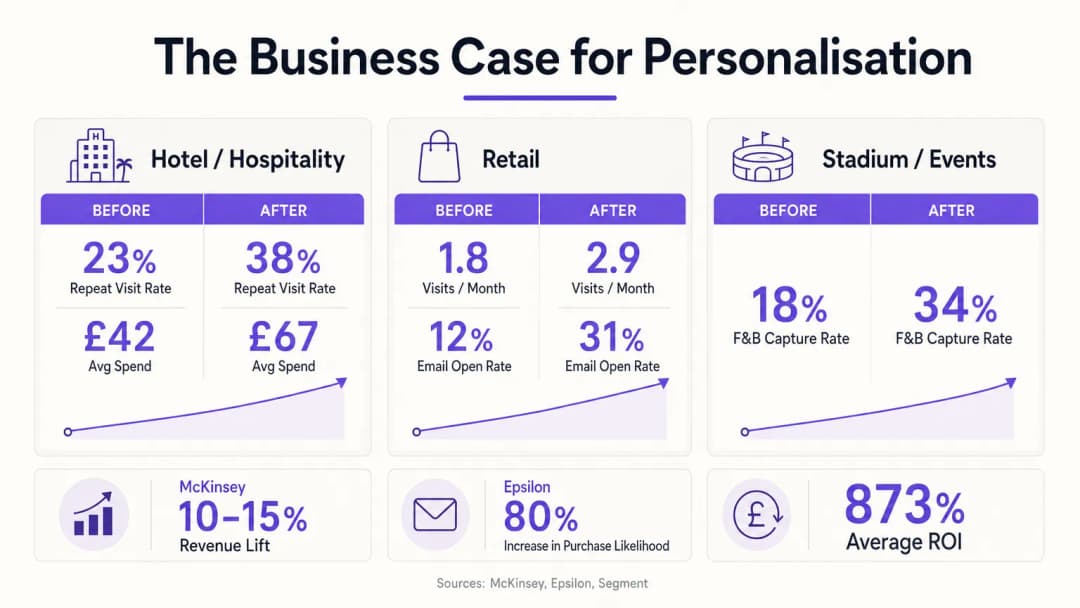
हे तांत्रिक संदर्भ मार्गदर्शक मोठ्या प्रमाणावर पर्सनलायझेशन लागू करण्यासाठी आवश्यक असलेल्या आर्किटेक्चरल बदलांचे परीक्षण करते. कॅप्टिव्ह पोर्टल ऑथेंटिकेशनला कस्टमर रिलेशनशिप मॅनेजमेंट (CRM) सिस्टीम्स आणि मार्केटिंग ऑटोमेशनसोबत इंटिग्रेट करून, IT आणि मार्केटिंग टीम्स असे संदर्भात्मक अनुभव देऊ शकतात जे सिद्ध व्यावसायिक परिणाम साध्य करतात. उद्योग डेटा दर्शवितो की मजबूत पर्सनलायझेशन धोरणांमुळे महसुलात 10% ते 15% वाढ होते, तर 80% ग्राहक त्यांच्या गरजेनुसार तयार केलेले अनुभव देणाऱ्या ब्रँड्सकडून खरेदी करण्याची अधिक शक्यता नोंदवतात.
IT मॅनेजर्स आणि नेटवर्क आर्किटेक्ट्ससाठी, बेसिक कनेक्टिव्हिटीकडून इंटेलिजेंट ॲनालिटिक्स ओव्हरलेकडे जाण्यासाठी डेटा स्कीमा, API इंटिग्रेशन्स आणि कंप्लायन्स फ्रेमवर्क्सचा काळजीपूर्वक विचार करणे आवश्यक आहे. हे मार्गदर्शक कृती करण्यायोग्य डिप्लॉयमेंट पद्धती, आर्किटेक्चरल ब्लूप्रिंट्स आणि वास्तविक जगातील केस स्टडीज प्रदान करते जे महसुलात सक्रियपणे योगदान देणारे नेटवर्क कसे तयार करावे हे दर्शवितात.
तांत्रिक सखोल माहिती (Technical Deep-Dive)
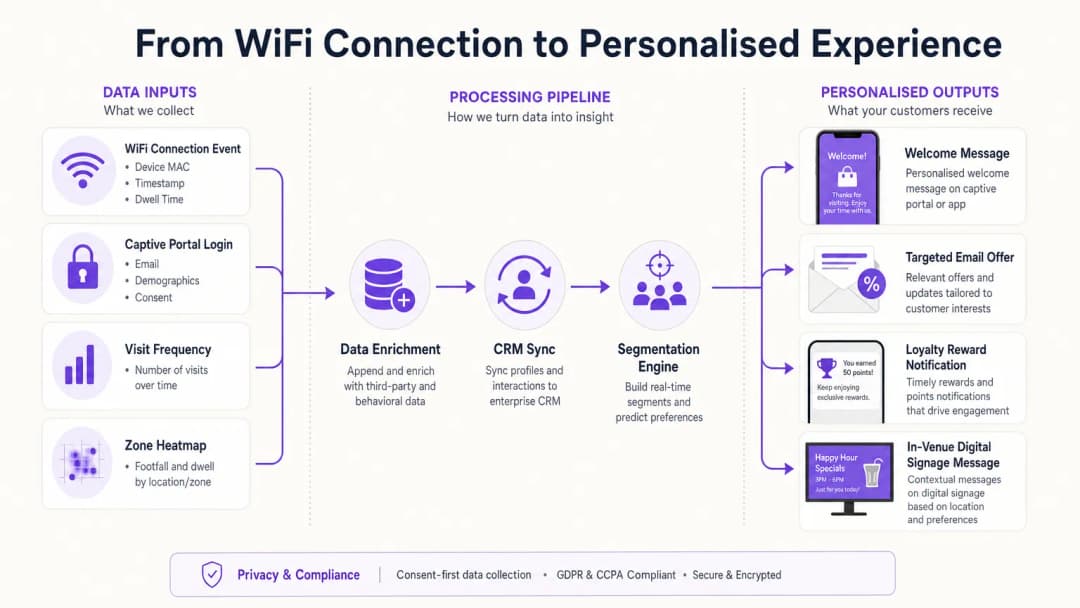
स्केलेबल पर्सनलायझेशनचा पाया आयसोलेटेड network सायलोसमधून इंटिग्रेटेड डेटा इकोसिस्टीममध्ये जाण्यावर अवलंबून असतो. जेव्हा एखादा वापरकर्ता Guest WiFi द्वारे ऑथेंटिकेट करतो, तेव्हा नेटवर्क हाय-फिडेलिटी टेलिमेट्री कॅप्चर करते — ज्यामध्ये डिव्हाइस MAC ॲड्रेसेस, ड्वेल टाइम्स, झोन ट्रान्झिशन्स आणि ऑथेंटिकेशन पेलोड्सचा समावेश असतो.
डेटा इनजेशन आणि स्कीमा मॅपिंग
या टेलिमेट्रीचा फायदा घेण्यासाठी, ॲनालिटिक्स ओव्हरलेने डेटाला युनिफाईड स्कीमामध्ये नॉर्मलाईज करणे आवश्यक आहे. या प्रक्रियेत डिटरमिनिस्टिक डेटा (उदा. कॅप्टिव्ह पोर्टल लॉगिन दरम्यान प्रदान केलेले ईमेल ॲड्रेसेस आणि डेमोग्राफिक तपशील) आणि प्रोबॅबिलिस्टिक डेटा (उदा. AP ट्रायँग्युलेशन आणि RSSI व्हॅल्यंवरून काढलेले वर्तणुकीचे नमुने) दोन्ही कॅप्चर करणे समाविष्ट आहे.
यातून तयार होणारा डेटा लेक थेट ठिकाणाच्या CRM आणि मार्केटिंग ऑटोमेशन प्लॅटफॉर्म्समध्ये फीड केला जातो. Purple चे WiFi Analytics प्लॅटफॉर्म एक簡 सेंट्रल इनजेशन इंजिन म्हणून कार्य करते, जे कच्च्या RADIUS अकाउंटिंग पॅकेट्स आणि HTTP रिडायरेक्ट पेलोड्सना डाउनस्ट्रीम वापरासाठी योग्य अशा स्ट्रक्चर्ड JSON ऑब्जेक्ट्समध्ये पार्स करते.
इंटिग्रेशन आर्किटेक्चर
यशस्वी डिप्लॉयमेंट्स बाह्य सिस्टीम्ससोबत नेटवर्क टेलिमेट्री सिंक्रोनाइझ करण्यासाठी मजबूत API आर्किटेक्चर्सवर अवलंबून असतात. RESTful APIs रिअल-टाइम डेटा ट्रान्सफर सुलभ करतात, ज्यामुळे ट्रिगर्ड वर्कफ्लोज सक्षम होतात, जसे की उच्च-मूल्य असलेल्या ग्राहकाने नेटवर्कवर ऑथेंटिकेट केल्याक्षणी वेलकम ईमेल पाठवणे.
अशा परिस्थितीचा विचार करा जिथे ग्राहक Retail वातावरणात प्रवेश करतो. नेटवर्क कंट्रोलर डिव्हाइस प्रोब रिक्वेस्ट्स शोधतो आणि MAC ॲड्रेसला ज्ञात ग्राहक प्रोफाईलशी जोडतो. त्यानंतर ॲनालिटिक्स प्लॅटफॉर्म CRM ला वेबहूक ट्रिगर करते, जे ग्राहकाच्या खरेदी इतिहासाचे मूल्यांकन करते आणि कॅप्टिव्ह पोर्टल किंवा ब्रँडच्या मोबाईल ॲप्लिकेशनवर पर्सनलाईज्ड ऑफर पाठवते.
Hospitality डिप्लॉयमेंट्समध्ये, हेच आर्किटेक्चर प्रॉपर्टी मॅनेजमेंट सिस्टीम (PMS) इंटिग्रेशन सक्षम करते. जेव्हा एखादा परत येणारा अतिथी चेक-इन करतो आणि हॉटेलच्या WiFi शी कनेक्ट होतो, तेव्हा सिस्टीम त्यांच्या प्रोफाईलचा ऐतिहासिक मुक्कामाच्या डेटाशी क्रॉस-रेफरन्स करते आणि रूम अपग्रेड्स किंवा F&B प्रमोशन्ससाठी टार्गेटेड अपसेलसह कॅप्टिव्ह पोर्टल वर एक पर्सनलाईज्ड वेलकम मेसेज पाठवते.
| डेटा प्रकार (Data Type) | स्रोत (Source) | डाउनस्ट्रीम वापर (Downstream Use) |
|---|---|---|
| ईमेल ॲड्रेस | कॅप्टिव्ह पोर्टल लॉगिन | CRM प्रोफाईल निर्मिती, ईमेल मोहिमा |
| MAC ॲड्रेस | नेटवर्क असोसिएशन | भेट वारंवारता ट्रॅकिंग, ड्वेल ॲनालिसिस |
| झोन ड्वेल टाइम | AP ट्रायँग्युलेशन | संदर्भात्मक ट्रिगर्ड ऑफर्स |
| भेट वारंवारता | RADIUS अकाउंटिंग | लॉयल्टी टियर असाइनमेंट |
| डेमोग्राफिक्स | प्रोग्रेसिव्ह प्रोफायलिंग | ऑडियन्स सेगमेंटेशन |
अंमलबजावणी मार्गदर्शक (Implementation Guide)
पर्सनलायझेशन-केंद्रित नेटवर्क आर्किटेक्चर डिप्लॉय करण्यासाठी डेटा अचूकता, सिस्टीम इंटरऑपरेबिलिटी आणि नियामक अनुपालन सुनिश्चित करण्यासाठी संरचित दृष्टिकोनाची आवश्यकता असते.
टप्पा 1: इन्फ्रास्ट्रक्चर असेसमेंट
ॲनालिटिक्स ओव्हरले डिप्लॉय करण्यापूर्वी, विद्यमान WLAN इन्फ्रास्ट्रक्चरचे मूल्यांकन करा. वायरलेस कंट्रोलर्स आणि ॲक्सेस पॉईंट्स आवश्यक प्रोटोकॉल्स — RADIUS, SNMP आणि Syslog — ला सपोर्ट करतात आणि सततच्या टेलिमेट्री रिपोर्टिंगशी संबंधित वाढीव प्रोसेसिंग ओव्हरहेड हाताळू शकतात याची खात्री करा. Purple चे प्लॅटफॉर्म हार्डवेअर-अग्नोस्टिक आहे, जे Cisco, Juniper, Ruckus आणि इतर आघाडीच्या व्हेंडर्सच्या विद्यमान इन्फ्रास्ट्रक्चरसोबत इंटिग्रेट होते, ज्यामुळे डिप्लॉयमेंटसाठी आवश्यक असलेला भांडवली खर्च लक्षणीयरीत्या कमी होतो.
टप्पा 2: कॅप्टिव्ह पोर्टल कॉन्फिगरेशन
युझर फ्रिक्शन आणि डेटा ॲक्विझिशन यांच्यात समतोल राखण्यासाठी कॅप्टिव्ह पोर्टल डिझाईन करा. प्रोग्रेसिव्ह प्रोफायलिंग तंत्र लागू करा, सुरुवातीच्या लॉगिन दरम्यान कमीतकमी माहितीची विनंती करा आणि त्यानंतरच्या भेटींदरम्यान हळूहळू ग्राहक प्रोफाईल तयार करा. पोर्टल डिझाईन कॉर्पोरेट ब्रँड मार्गदर्शक तत्त्वांशी सुसंगत असल्याची आणि सोशल लॉगिन किंवा OpenRoaming इंटिग्रेशन्स सारख्या अखंड ऑथेंटिकेशन पद्धती ऑफर करत असल्याची खात्री करा. सर्व डेटा संकलन स्पष्ट, GDPR-सुसंगत संमती यंत्रणेवर आधारित असणे आवश्यक आहे.
टप्पा 3: सिस्टीम इंटिग्रेशन
WiFi ॲनालिटिक्स प्लॅटफॉर्म आणि ठिकाणाचे CRM, मार्केटिंग ऑटोमेशन आणि प्रॉपर्टी मॅनेजमेंट सिस्टीम्स यांच्यात द्विदिशात्मक डेटा फ्लो स्थापित करा. डेटा सुसंगतता सुनिश्चित करण्यासाठी मजबूत मिडलवेअर किंवा थेट API इंटिग्रेशन्सचा वापर करा. गुंतागुंतीच्या वातावरणासाठी, सर्व ग्राहक संवादांसाठी मध्यवर्ती भांडार म्हणून काम करण्यासाठी कस्टमर डेटा प्लॅटफॉर्म (CDP) डिप्लॉय करण्याचा विचार करा. हे विशेषतः Transport हब्स आणि पाहिले जाते आणि मल्टी-साइट रिटेल चेन्ससाठी प्रासंगिक आहे जिथे ग्राहकांचा प्रवास अनेक भौतिक स्थानांवर पसरलेला असतो.
टप्पा 4: कॅम्पेन लॉजिक आणि ऑटोमेशन
डेटा पाईपलाईन स्थापित झाल्यानंतर, नेटवर्क इव्हेंट्सचे ग्राहक क्रियांमध्ये रूपांतर करणारे मार्केटिंग ऑटोमेशन नियम कॉन्फिगर करा. ट्रिगर अटी परिभाषित करा (उदा. पहिली भेट, 5 वी भेट, विशिष्ट झोनमध्ये 30 मिनिटांपेक्षा जास्त ड्वेल टाइम) आणि त्यांना संबंधित कॅम्पेन क्रियांशी मॅप करा. ऑफरची प्रासंगिकता आणि कन्व्हर्जन रेट्स सतत ऑप्टिमाइझ करण्यासाठी A/B टेस्टिंग फ्रेमवर्क्स स्थापित करा.
तुमच्या विशिष्ट सेटअपबद्दल काही प्रश्न आहेत का?
आमची टीम ८०,००० हून अधिक वेन्यूजमधील वेन्यू ऑपरेटर्स, IT मॅनेजर्स आणि नेटवर्क इंजिनिअर्ससोबत काम करते. २० मिनिटांचा कॉल बुक करा आणि तुमच्यासारख्या इतरांनी ही समस्या कशी सोडवली हे आम्ही तुम्हाला दाखवू.
सर्वोत्तम पद्धती (Best Practices)
पर्सनलायझेशन उपक्रमांचा प्रभाव जास्तीत जास्त वाढवण्यासाठी, IT आणि मार्केटिंग टीम्सनी खालील व्हेंडर-न्यूट्रल सर्वोत्तम पद्धतींचे पालन केले पाहिजे.
डेटा गुणवत्तेला प्राधान्य द्या. सदोष किंवा चुकीचा डेटा CRM मध्ये जाण्यापासून रोखण्यासाठी एंट्री पॉईंटवर डेटा व्हॅलिडेशन नियम लागू करा. उच्च डेटा फिडेलिटी राखण्यासाठी डेटाबेसचे नियमितपणे ऑडिट करा आणि तो स्वच्छ करा. दहा डुप्लिकेट, अपूर्ण प्रोफाईल्सपेक्षा एकच अधिकृत ग्राहक रेकॉर्ड अधिक मोलाचा असतो.
प्रायव्हसी-फर्स्ट दृष्टिकोन स्वीकारा. सर्व डेटा संकलन पद्धती GDPR आणि CCPA सारख्या प्रादेशिक नियमांचे पालन करत असल्याची खात्री करा. कॅप्टिव्ह पोर्टल मध्ये स्पष्ट, पारदर्शक संमती यंत्रणा लागू करा आणि वापरकर्त्यांना त्यांच्या डेटा प्राधान्यांचे व्यवस्थापन करण्यासाठी प्रवेशयोग्य साधने प्रदान करा. नियमांचे पालन न केल्यास महत्त्वपूर्ण आर्थिक आणि प्रतिष्ठेचा धोका निर्माण होतो.
संदर्भात्मक ट्रिगर्स लागू करा. अत्यंत संबंधित मेसेजिंग वितरीत करण्यासाठी रिअल-टाइम लोकेशन डेटाचा फायदा घ्या. हॉस्पिटॅलिटी सेटिंगमध्ये, जेव्हा एखादा अतिथी वेलनेस सेंटरजवळ असलेल्या AP शी कनेक्ट होतो तेव्हा स्पा प्रमोशन ट्रिगर करा. रिटेलमध्ये, जेव्हा एखादा ग्राहक कपड्यांच्या झोनमध्ये 10 मिनिटांपेक्षा जास्त वेळ घालवतो तेव्हा फिटिंग रूम असिस्टन्स ऑफर ट्रिगर करा.
IT आणि मार्केटिंग उद्दिष्टे संरेखित करा. IT आणि मार्केटिंग विभागांमध्ये क्रॉस-फंक्शनल सहकार्याला प्रोत्साहन द्या. IT ने हे सुनिश्चित केले पाहिजे की इन्फ्रास्ट्रक्चर आवश्यक टेलिमेट्री विश्वसनीयरित्या वितरीत करू शकते, तर मार्केटिंगने व्यावसायिक नियम आणि कॅम्पेन लॉजिक परिभाषित केले पाहिजे. या टीम्समधील विसंवाद हे अयशस्वी डिप्लॉयमेंट्सचे सर्वात सामान्य कारण आहे.
व्यापक ग्राहक अनुभव धोरण तयार करणाऱ्या संस्थांसाठी, Como Construir uma Estratégia de Experiência do Cliente आणि Cómo construir una estrategia de experiencia del cliente हे मार्गदर्शक पूरक फ्रेमवर्क्स प्रदान करतात.
ट्रबलशूटिंग आणि जोखीम निवारण
इंटेलिजेंट नेटवर्क ओव्हरले डिप्लॉय केल्याने नवीन गुंतागुंत आणि संभाव्य फेल्युअर डोमेन्स निर्माण होतात. सेवा उपलब्धता आणि डेटा इंटिग्रिटी राखण्यासाठी प्रोॲक्टिव्ह जोखीम निवारण आवश्यक आहे.
API रेट लिमिटिंग. ट्रान्सपोर्ट हब्स किंवा स्टेडियम्स सारखी उच्च-घनतेची ठिकाणे मोठ्या प्रमाणात टेलिमेट्री डेटा तयार करू शकतात, ज्यामुळे डाउनस्ट्रीम APIs च्या रेट लिमिट्स ओलांडल्या जाऊ शकतात. डेटा इग्रेस व्यवस्थापित करण्यासाठी इंटेलिजेंट क्यूइंग आणि बॅचिंग यंत्रणा लागू करा. कमी-मूल्य असलेले इव्हेंट्स (उदा. ट्रान्झिएंट रोमिंग) फिल्टर करा आणि केवळ महत्त्वपूर्ण स्टेट बदलांसाठी वेबहूक्स ट्रिगर करा.
MAC रँडमायझेशन. आधुनिक मोबाईल ऑपरेटिंग सिस्टीम्स वापरकर्त्याच्या गोपनीयतेचे रक्षण करण्यासाठी MAC रँडमायझेशन वापरतात, ज्यामुळे सेशन्स दरम्यान प्रोबॅबिलिस्टिक डिव्हाइस ट्रॅकिंग खंडित होते. अचूक ट्रॅकिंग राखण्यासाठी, वापरकर्त्यांना कॅप्टिव्ह पोर्टल द्वारे ऑथेंटिकेट करण्यासाठी किंवा ठिकाणाचे मोबाईल ॲप्लिकेशन डाउनलोड करण्यासाठी प्रोत्साहित करा, जे डिटरमिनिस्टिक आयडेंटिफायर्स वापरू शकते. Passpoint किंवा OpenRoaming द्वारे सर्टिफिकेट-आधारित ऑथेंटिकेशन सर्वात मजबूत दीर्घकालीन उपाय प्रदान करते.
नेटवर्क कंजेक्शन. सततचे टेलिमेट्री रिपोर्टिंग मर्यादित बॅकहॉल लिंक्सवर लक्षणीय बँडविड्थ वापरू शकते. कोअर नेटवर्कवरील भार कमी करण्यासाठी रिपोर्टिंग इंटरव्हल्स ऑप्टिमाइझ करा आणि शक्य तिथे एज प्रोसेसिंगचा फायदा घ्या. हाय-थ्रूपुट आवश्यकता असलेल्या ठिकाणांसाठी, सातत्यपूर्ण बॅकहॉल परफॉर्मन्स सुनिश्चित करण्यासाठी समर्पित leased line चा विचार करा.
डेटा सुसंगतता अपयश. जर एखादी सिस्टीम तात्पुरती अनुपलब्ध असेल तर द्विदिशात्मक API इंटिग्रेशन्समुळे डेटा विसंगतीचा धोका निर्माण होतो. थोड्या काळासाठी आउटेज दरम्यान कोणतेही ग्राहक इव्हेंट्स गमावले जाणार नाहीत याची खात्री करण्यासाठी आयडेम्पोटेंट API कॉल्स आणि मजबूत रिट्राय लॉजिक लागू करा.
ROI आणि व्यावसायिक प्रभाव
पर्सनलायझेशन धोरणाचे अंतिम उद्दिष्ट मोजता येण्याजोगे व्यावसायिक मूल्य निर्माण करणे हे आहे. नेटवर्क ॲनालिटिक्सचा फायदा घेऊन, ठिकाण चालक गुणात्मक गृहितकांवरून परिमाणात्मक परफॉर्मन्स मेट्रिक्सकडे जाऊ शकतात.
यश मोजणे
डिप्लॉयमेंटच्या प्रभावाचे मूल्यांकन करण्यासाठी स्पष्ट की परफॉर्मन्स इंडिकेटर्स (KPIs) स्थापित करा. खालील तक्ता उद्योग डिप्लॉयमेंट्सवर आधारित प्राथमिक मेट्रिक्स आणि त्यांचे अपेक्षित बेंचमार्क्स दर्शवितो.
| KPI | बेसलाईन (डिप्लॉयमेंट-पूर्व) | लक्ष्य (डिप्लॉयमेंट-नंतर) | मोजमाप पद्धत |
|---|---|---|---|
| रिपीट व्हिजिट रेट | 23% | 35%+ | WiFi ॲनालिटिक्स / CRM |
| सरासरी ट्रान्झॅक्शन व्हॅल्यू | बेसलाईन | +15% ते +25% | POS इंटिग्रेशन |
| ईमेल कॅम्पेन ओपन रेट | 12% | 28%+ | मार्केटिंग ऑटोमेशन |
| F&B कॅप्चर रेट (स्टेडियम्स) | 18% | 30%+ | POS / WiFi कोरिलेशन |
| कस्टमर LIFE TIME VALUE | बेसलाईन | +20% | CRM ॲनालिटिक्स |
या मेट्रिक्सचे सतत विश्लेषण करून आणि पर्सनलायझेशन अल्गोरिदम्स रिफाईन करून, संस्था त्यांच्या नेटवर्क इन्फ्रास्ट्रक्चरचा ROI जास्तीत जास्त वाढवू शकतात. Purple चे प्लॅटफॉर्म त्याच्या 80,000+ व्हेन्यू डिप्लॉयमेंट्समध्ये सरासरी 873% ROI नोंदवते, जे नेटवर्कला केवळ एक युटिलिटी मानण्याऐवजी धोरणात्मक व्यावसायिक मालमत्ता मानण्याची परिवर्तनशील व्यावसायिक क्षमता दर्शवते.
महत्वाच्या व्याख्या
कॅप्टिव्ह पोर्टल
एक वेब पेज जे सार्वजनिक-प्रवेश नेटवर्कच्या वापरकर्त्याला प्रवेश मिळण्यापूर्वी पाहणे आणि संवाद साधणे बंधनकारक असते. हे निश्चित ग्राहक डेटासाठी प्राथमिक इनजेशन पॉईंट म्हणून काम करते.
IT टीम्स स्वीकार्य वापर धोरणे लागू करण्यासाठी, मार्केटिंग संमती मिळवण्यासाठी आणि बॅकएंड डेटाबेसद्वारे वापरकर्त्यांना ऑथेंटिकेट करण्यासाठी कॅप्टिव्ह पोर्टल कॉन्फिगर करतात. कॅप्टिव्ह पोर्टलच्या डिझाईनचा थेट परिणाम डेटा गुणवत्ता आणि नेटवर्कचा वापर करण्याच्या दरावर होतो.
प्रोग्रेसिव्ह प्रोफायलिंग
पहिल्याच भेटीत संपूर्ण फॉर्म भरण्याची मागणी करण्याऐवजी अनेक संवादांद्वारे हळूहळू ग्राहकांची माहिती गोळा करण्याचे तंत्र.
वापरकर्त्याचा अनुभव सुधारताना आणि ऑथेंटिकेशनमधील अडथळे कमी करताना हळूहळू मजबूत ग्राहक प्रोफाईल तयार करण्यासाठी वापरले जाते. ग्राहकांशी थेट संबंध येणाऱ्या ठिकाणी उच्च नेटवर्क वापर दर राखण्यासाठी हे अत्यंत महत्त्वाचे आहे.
MAC रँडमायझेशन
आधुनिक मोबाईल ऑपरेटिंग सिस्टीम्स (iOS 14+, Android 10+) द्वारे लागू केलेले एक गोपनीयता वैशिष्ट्य जे वायरलेस नेटवर्क स्कॅन करताना किंवा कनेक्ट करताना तात्पुरता, यादृच्छिक (random) मीडिया ऍक्सेस कंट्रोल (MAC) ऍड्रेस तयार करते.
हे वैशिष्ट्य वेगवेगळ्या सेशन्समध्ये प्रोबॅबिलिस्टिक डिव्हाइस ट्रॅकिंग गुंतागुंतीचे बनवते, ज्यामुळे अचूक दीर्घकालीन ॲनालिटिक्ससाठी कॅप्टिव्ह पोर्टल किंवा Passpoint/OpenRoaming द्वारे डिटरमिनिस्टिक ऑथेंटिकेशन आवश्यक बनते.
टेलिमेट्री
एक स्वयंचलित संप्रेषण प्रक्रिया ज्याद्वारे दूरस्थ किंवा दुर्गम ठिकाणी मोजमाप आणि इतर डेटा गोळा केला जातो आणि मॉनिटरिंग आणि विश्लेषणासाठी प्राप्त करणाऱ्या उपकरणांकडे पाठवला जातो.
WiFi ॲनालिटिक्समध्ये, टेलिमेट्रीमध्ये ॲक्सेस पॉईंट्स आणि वायरलेस कंट्रोलर्सद्वारे व्युत्पन्न केलेले सिग्नल स्ट्रेंथ (RSSI), असोसिएशन स्टेट्स, रोमिंग इव्हेंट्स आणि ड्वेल टाइम्स यासारख्या डेटा पॉईंट्सचा समावेश होतो.
वेबहूक
कस्टम HTTP कॉलबॅकसह वेब ॲप्लिकेशनचे वर्तन वाढवण्याची किंवा बदलण्याची पद्धत, जी स्त्रोत सिस्टीममधील विशिष्ट इव्हेंट्सद्वारे ट्रिगर केली जाते आणि रिअल-टाइममध्ये गंतव्य URL वर पाठवली जाते.
ॲनालिटिक्स प्लॅटफॉर्मवरून बाह्य CRM किंवा मार्केटिंग ऑटोमेशन सिस्टीम्समध्ये रिअल-टाइम इव्हेंट डेटा — जसे की ग्राहकाने WiFi वर लॉग इन करणे — पाठवण्यासाठी वेबहूक्सचा मोठ्या प्रमाणावर वापर केला जातो.
कस्टमर डेटा प्लॅटफॉर्म (CDP)
एक प्रकारचा पॅकेज केलेला सॉफ्टवेअर जो इतर सिस्टीम्ससाठी प्रवेशयोग्य असा कायमस्वरूपी, युनिफाईड ग्राहक डेटाबेस तयार करतो, ज्यासाठी तो अनेक स्रोतांकडून डेटा गोळा करतो, तो स्वच्छ करतो आणि एकाच ग्राहक प्रोफाईलमध्ये जोडतो.
प्रगत एंटरप्राइझ डिप्लॉयमेंट्स WiFi टेलिमेट्रीला POS डेटा, लॉयल्टी प्रोग्राम मेट्रिक्स आणि ई-कॉमर्स संवादांसह एकाच, कृती करण्यायोग्य ग्राहक दृष्टिकोनात एकत्रित करण्यासाठी CDPs चा वापर करतात.
ड्वेल टाइम
WiFi ॲनालिटिक्स प्लॅटफॉर्मद्वारे मोजल्यानुसार, एखादे डिव्हाइस नेटवर्कशी किंवा विशिष्ट भौतिक झोनमध्ये किती वेळ जोडलेले राहते तो कालावधी.
ठिकाणाच्या कामगिरीचे आणि ग्राहकांच्या प्रतिबद्धतेचे मूल्यांकन करण्यासाठी एक महत्त्वपूर्ण मेट्रिक. वाढलेला ड्वेल टाइम हा प्रतिबद्धतेचा एक मजबूत संकेत आहे आणि बऱ्याचदा प्रति भेट जास्त महसुलाशी थेट संबंधित असतो.
ओम्नीचॅनेल ॲट्रिब्युशन
विविध चॅनेल्स — भौतिक स्टोअर, वेबसाइट, मोबाईल ॲप — मधील सर्व ग्राहक टचपॉईंट्सचा मागोवा घेण्याची आणि त्यांचे मूल्यमापन करण्याची प्रक्रिया जी खरेदीसारख्या इच्छित परिणामासाठी योगदान देते.
WiFi ॲनालिटिक्स अचूक ओम्नीचॅनेल ॲट्रिब्युशन मॉडेल्स तयार करण्यासाठी आवश्यक असलेला भौतिक-जगातील महत्त्वपूर्ण डेटा प्रवाह प्रदान करते, ज्यामुळे ऑनलाईन आणि ऑफलाईन ग्राहक वर्तनातील दरी सांधली जाते.
RADIUS (Remote Authentication Dial-In User Service)
एक क्लायंट/सर्व्हर नेटवर्किंग प्रोटोकॉल जो नेटवर्क सेवा कनेक्ट करणाऱ्या आणि वापरणाऱ्या वापरकर्त्यांसाठी केंद्रीकृत ऑथेंटिकेशन, ऑथोरायझेशन आणि अकाउंटिंग (AAA) व्यवस्थापन प्रदान करतो.
RADIUS अकाउंटिंग पॅकेट्स हे एंटरप्राइझ WiFi डिप्लॉयमेंट्समधील कच्च्या टेलिमेट्री डेटाचे प्राथमिक स्त्रोत आहेत, जो सेशन सुरू/बंद होण्याचे इव्हेंट्स, डेटा वापर आणि डिव्हाइस आयडेंटिफायर्स कॅप्चर करतात.
सोडवलेली उदाहरणे
एक 200-खोल्यांची बुटीक हॉटेल चेन अशा पाहुण्यांना टार्गेट करून F&B महसूल वाढवू इच्छिते जे लॉबी लाउंजचा वारंवार वापर करतात परंतु मुख्य रेस्टॉरंटमध्ये क्वचितच जेवतात. या उद्दिष्टाला पाठबळ देण्यासाठी IT टीमने नेटवर्कचे आर्किटेक्चर कसे तयार करावे?
IT टीमने लॉबी लाउंज आणि मुख्य रेस्टॉरंटमधील ॲक्सेस पॉईंट्सना WiFi ॲनालिटिक्स प्लॅटफॉर्ममध्ये वेगवेगळ्या झोन्समध्ये कॉन्फिगर केले पाहिजे. त्यांनी ॲनालिटिक्स प्लॅटफॉर्म आणि हॉटेलची Property Management System (PMS) आणि मार्केटिंग ऑटोमेशन टूल यांच्यात API इंटिग्रेशन लागू केले पाहिजे. जेव्हा एखादा पाहुणा कॅप्टिव्ह पोर्टलद्वारे ऑथेंटिकेट करतो, तेव्हा सिस्टीम त्यांच्या प्रोफाईलचा क्रॉस-रेफरन्स घेते. जर ॲनालिटिक्स इंजिनला लॉबी झोनमध्ये जास्त ड्वेल टाइम आढळला परंतु रेस्टॉरंट झोनमध्ये अलीकडील कोणताही POS ट्रान्झॅक्शन आढळला नाही, तर ते मार्केटिंग प्लॅटफॉर्मला वेबहूक ट्रिगर करते, जे त्वरित ईमेल किंवा SMS द्वारे वैयक्तिकृत, मर्यादित वेळेची डायनिंग सूट पाठवते. कॅम्पेन लॉजिकमध्ये तातडी निर्माण करण्यासाठी आणि ऑफर नंतर वापरण्याऐवजी सध्याच्या भेटीदरम्यानच वापरली जाईल याची खात्री करण्यासाठी 30-मिनिटांची एक्स्पायरी विंडो समाविष्ट असावी.
एका मोठ्या रिटेल चेनला मोठ्या प्रमाणावर अशा 'विंडो शॉपर्स'चा सामना करावा लागत आहे जे प्रत्यक्ष स्टोअरमध्ये वस्तू पाहतात परंतु शेवटी प्रतिस्पर्ध्यांकडून ऑनलाईन खरेदी करतात. हा गमावलेला महसूल परत मिळवण्यासाठी नेटवर्क आर्किटेक्चर कसे ऑप्टिमाइझ केले जाऊ शकते?
नेटवर्क आर्किटेक्ट्सनी कॅप्टिव्ह पोर्टलवर प्रोग्रेसिव्ह प्रोफायलिंग धोरण लागू केले पाहिजे, ज्यामध्ये ऑथेंटिकेशनच्या बदल्यात उच्च-मूल्याचे प्रोत्साहन (उदा. 15% डिस्काउंट कोड) दिले जाईल. ॲनालिटिक्स प्लॅटफॉर्म रिटेलरच्या ई-कॉमर्स प्लॅटफॉर्म आणि CRM सोबत इंटिग्रेट केलेला असणे आवश्यक आहे. विशिष्ट विभागांमधील ग्राहकाचा इन-स्टोअर ड्वेल टाइम विश्लेषित करून आणि त्याचा त्यांच्या ऑनलाईन ब्राउझिंग इतिहासाशी क्रॉस-रेफरन्स घेऊन, CRM अत्यंत लक्ष्यित, वैयक्तिकृत फॉलो-अप मोहिमा तयार करू शकते. शिवाय, जर ग्राहकाने इन-स्टोअर WiFi शी कनेक्ट असताना त्यांच्या ऑनलाईन बास्केटमध्ये एखादी वस्तू जोडली परंतु चेकआउट केले नाही, तर सिस्टीम प्रत्यक्ष POS वर खरेदी पूर्ण करण्यासाठी अनुकूल प्रोत्साहनासह त्वरित 'abandoned basket' नोटिफिकेशन ट्रिगर करू शकते.
सराव प्रश्न
Q1. तुमची संस्था 50 रिटेल ठिकाणी नवीन WiFi ॲनालिटिक्स ओव्हरले डिप्लॉय करत आहे. मार्केटिंग डायरेक्टरला CRM त्वरित भरण्यासाठी सुरुवातीच्या कॅप्टिव्ह पोर्टल लॉगिन दरम्यान 15 वेगवेगळे डेटा पॉईंट्स (भौतिक पत्ता, फोन नंबर आणि तपशीलवार प्राधान्यांसह) कॅप्चर करायचे आहेत. IT आर्किटेक्ट म्हणून तुमची काय शिफारस आहे?
टीप: नेटवर्क वापर दरांवर वापरकर्त्याच्या अडथळ्यांचा होणारा परिणाम आणि प्रोग्रेसिव्ह प्रोफायलिंगच्या संकल्पनेचा विचार करा.
नमुना उत्तर पहा
सुरुवातीच्या लॉगिन दरम्यान 15 डेटा पॉईंट्सची मागणी न करण्याचा सल्ला द्या. या पातळीवरील अडथळ्यांमुळे नेटवर्क वापरण्याचे प्रमाण गंभीरपणे कमी होईल, ज्यामुळे एकूण डेटा पूल लहान होईल आणि संपूर्ण पर्सनलायझेशन धोरण कमकुवत होईल. त्याऐवजी, प्रोग्रेसिव्ह प्रोफायलिंग धोरण लागू करा. पहिल्या भेटीदरम्यान केवळ आवश्यक डिटरमिनिस्टिक डेटा — ईमेल पत्ता आणि मार्केटिंग संमती — कॅप्चर करा. त्यानंतरच्या भेटींवर, कॅप्टिव्ह पोर्टल डायनॅमिकपणे एक किंवा दोन अतिरिक्त डेटा पॉईंट्सची विनंती करू शकते. हा दृष्टिकोन मार्केटिंग टीमच्या समृद्ध डेटाच्या गरजेचा IT च्या अखंड वापरकर्ता अनुभवाच्या आवश्यकतेशी समतोल राखतो आणि शेवटी एक मोठा, उच्च-गुणवत्तेचा डेटासेट देईल.
Q2. एक स्टेडियम क्लायंट WiFi कनेक्शन इव्हेंट्सवर आधारित रिअल-टाइम, इन-सीट F&B ऑफर्स ट्रिगर करण्याचा प्रयत्न करताना लक्षणीय लेटन्सीचा सामना करत आहे. ॲनालिटिक्स प्लॅटफॉर्म सध्या 80,000 क्षमतेच्या गर्दीद्वारे व्युत्पन्न केलेल्या प्रत्येक असोसिएशन आणि रोमिंग इव्हेंटसाठी CRM ला वैयक्तिक API कॉल्स पाठवण्यासाठी कॉन्फिगर केलेला आहे. तुम्ही ही आर्किटेक्चरल अडचण कशी सोडवाल?
टीप: कच्ची टेलिमेट्री आणि कृती करण्यायोग्य व्यावसायिक इव्हेंट्समधील फरकाचे मूल्यांकन करा आणि डेटा इग्रेस धोरणांचा विचार करा.
नमुना उत्तर पहा
सध्याचे आर्किटेक्चर कच्च्या, कमी-मूल्याच्या टेलिमेट्रीसह CRM API वर प्रचंड ताण आणत आहे. WiFi ॲनालिटिक्स प्लॅटफॉर्ममध्ये एज फिल्टरिंग आणि बॅचिंग लागू करा. प्रथम, तात्पुरते रोमिंग इव्हेंट्स फिल्टर करा आणि केवळ महत्त्वपूर्ण स्टेट बदलांसाठी — विशेषतः सुरुवातीचे ऑथेंटिकेशन किंवा विशिष्ट कन्सेशन झोनमध्ये दीर्घकाळ ड्वेल टाइमसाठी — वेबहूक्स ट्रिगर करा. दुसरे म्हणजे, वेळेचे बंधन नसलेल्या डेटासाठी, रिअल-टाइम API कॉल्सकडून असिंक्रोनस बॅच प्रोसेसिंगकडे वळा, ज्यामुळे ठराविक अंतराने एकत्रित डेटा पेलोड्स पाठवले जातील. यामुळे API लोड अंदाजे 90% कमी होतो आणि मार्केटिंग प्लॅटफॉर्मला रिअल-टाइम ऑफर वितरणासाठी आवश्यक संदर्भात्मक ट्रिगर्स मिळणे देखील सुनिश्चित होते.
Q3. अलीकडील iOS अपडेटनंतर जे आक्रमकपणे MAC रँडमायझेशन वापरते, मार्केटिंग टीमने तुमच्या ठिकाणाच्या नेटवर्कवर वारंवार येणाऱ्या अभ्यागतांचा मागोवा घेण्याच्या क्षमतेत तीव्र घट झाल्याची नोंद केली आहे. ट्रॅकिंग अचूकता पुनर्संचयित करण्यासाठी तुम्ही कोणते तांत्रिक धोरण लागू केले पाहिजे?
टीप: प्रोबॅबिलिस्टिक ट्रॅकिंग पद्धती आणि डिटरमिनिस्टिक ऑथेंटिकेशनमधील फरक स्पष्ट करा.
नमुना उत्तर पहा
प्रोबॅबिलिस्टिक ट्रॅकिंग (MAC ॲड्रेस वापरून) ऐवजी डिटरमिनिस्टिक ऑथेंटिकेशनवर अवलंबून राहणे सुरू करा. सेशन टाईमआउटचा कालावधी कमी करून नेटवर्कला वारंवार कॅप्टिव्ह पोर्टल री-ऑथेंटिकेशनची आवश्यकता भासेल असे कॉन्फिगर करा. वापरकर्त्यांना सोशल लॉगिन किंवा लॉयल्टी प्रोग्राम आयडी यांसारख्या कायमस्वरूपी क्रेडेंशियल्सचा वापर करून ऑथेंटिकेट करण्यासाठी जोरदार प्रोत्साहन द्या. जर त्या ठिकाणाचे मोबाईल ॲप असेल, तर एक SDK इंटिग्रेट करा जे स्थिर, ॲप-विशिष्ट आयडेंटिफायर वापरते. सर्वात मजबूत दीर्घकालीन उपायासाठी, Passpoint किंवा OpenRoaming द्वारे सर्टिफिकेट-आधारित ऑथेंटिकेशन लागू करा, जे कायमस्वरूपी, डिव्हाइस-बाउंड क्रेडेंशियल वापरून MAC रँडमायझेशनला पूर्णपणे बायपास करते.
या मालिकेमध्ये पुढे वाचा
पुनरावृत्ती भेटी वाढवण्यासाठी मार्केटिंगमध्ये SMS चा कसा वापर करावा
हे तांत्रिक संदर्भ मार्गदर्शक स्पष्ट करते की एंटरप्राइझ स्थाने वारंवार येणाऱ्या भेटींना चालना देण्यासाठी SMS मार्केटिंग इंजिनसह WiFi विश्लेषण कसे समाकलित करू शकतात. हे रिअल-टाइम प्रेझेन्स डेटा कॅप्चर करण्यासाठी, शारीरिक वर्तनावर आधारित स्वयंचलित SMS मोहिमा सुरू करण्यासाठी आणि रिटर्न रेट्सवर थेट परिणाम मोजण्यासाठी आवश्यक असलेल्या आर्किटेक्चरचा तपशील देते. नेटवर्क इन्फ्रास्ट्रक्चरला मार्केटिंग ऑटोमेशनसह संरेखित करून, IT आणि ऑपरेशन्स टीम्स ग्राहकांना टिकवून ठेवण्यासाठी उच्च-उत्पन्न देणारा चॅनेल स्थापित करू शकतात.
ग्राहक अनुभव धोरण कसे तयार करावे
हे तांत्रिक संदर्भ मार्गदर्शक IT लीडर्स, नेटवर्क आर्किटेक्ट्स आणि व्हेन्यू ऑपरेशन्स डायरेक्टर्सना डेटा-चालित ग्राहक अनुभव धोरण कसे तयार करावे यावर एक व्यावहारिक फ्रेमवर्क प्रदान करते. यात अतिथी WiFi ऑथेंटिकेशन आणि Captive Portal डिझाइनपासून ते अवकाशीय ॲनालिटिक्स, CRM इंटिग्रेशन आणि मोजता येण्याजोग्या ROI पर्यंतचे संपूर्ण आर्किटेक्चर समाविष्ट आहे — ज्यामध्ये हॉस्पिटॅलिटी, रिटेल आणि सार्वजनिक-क्षेत्रातील वातावरणातून काढलेले ठोस अंमलबजावणी परिस्थिती आहेत. Purple चे अतिथी WiFi आणि ॲनालिटिक्स प्लॅटफॉर्म संपूर्णपणे सक्षम इन्फ्रास्ट्रक्चर लेयर म्हणून स्थित आहे.
स्टोअरमध्ये ग्राहक डेटा कसा गोळा करावा: किरकोळ विक्रेत्यांसाठी मार्गदर्शक
हे तांत्रिक संदर्भ मार्गदर्शक आयटी व्यवस्थापक, नेटवर्क आर्किटेक्ट्स आणि व्हेन्यू ऑपरेशन्स डायरेक्टर्सना भौतिक रिटेल स्थानांवर फर्स्ट-पार्टी ग्राहक डेटासेट तयार करण्यासाठी व्यावहारिक फ्रेमवर्कसह सुसज्ज करते. यात Guest WiFi, POS सिस्टीम, लॉयल्टी प्रोग्राम्स आणि सर्वेक्षण किओस्कसाठी उपयोजन आर्किटेक्चर, अनुपालन दायित्वे आणि एकत्रीकरण धोरणे समाविष्ट आहेत. हे मार्गदर्शक रिटेल, हॉस्पिटॅलिटी आणि इव्हेंट्स वातावरणातील ठोस अंमलबजावणी परिस्थितींसह, प्रत्येक संकलन पद्धतीला मोजता येण्याजोग्या व्यावसायिक परिणामांशी जोडते.
तुमच्या विशिष्ट सेटअपबद्दल काही प्रश्न आहेत का?
आमची टीम ८०,००० हून अधिक वेन्यूजमधील वेन्यू ऑपरेटर्स, IT मॅनेजर्स आणि नेटवर्क इंजिनिअर्ससोबत काम करते. २० मिनिटांचा कॉल बुक करा आणि तुमच्यासारख्या इतरांनी ही समस्या कशी सोडवली हे आम्ही तुम्हाला दाखवू.